NASA
June 2026 Satellite Puzzler
- Earth
- Earth Observatory
- Image of the Day
- EO Explorer
- Topics
- More Content
- About
June 2026 Satellite Puzzler
- Earth
- Earth Observatory
- Image of the Day
- EO Explorer
- Topics
- More Content
- About
NASA Knows: What Is Mass Distribution?
This article is for students grades 5-8.
Mass distribution affects everything from galaxy shapes to aircraft design to planetary rotation. It’s used to map stars in our universe, figure out what planets are made of, and even to determine how luggage is loaded onto an airplane.
Mass distribution can be a tricky thing to understand. So, let’s explore it using an everyday example: a soccer ball.
How Does Mass Distribution Affect Center of Mass?Have you ever kicked a soccer ball and wondered why it curves, spins, or sometimes wobbles? Mass distribution plays a part.
On the outside, soccer balls look simple – a series of geometric shapes woven together in a pattern. But on the inside, they are carefully engineered. The key to a great soccer ball is something you can’t see: how the mass is distributed inside the ball.
When engineers build a soccer ball, they try to make sure its mass is evenly balanced in all areas. This is because the way a ball spins and flies depends on how its mass is arranged. If one part of the ball is slightly heavier, its center of mass shifts. If the ball’s center of mass isn’t precisely balanced, the ball won’t move smoothly.
______________________________________________________________________
Words to Know
mass: the measurement of the amount of matter in an object
mass distribution: how mass is spread within an object
center of mass: the unique point around which the mass of an object is perfectly balanced
______________________________________________________________________
How Is Mass Distribution Measured?Scientists and engineers use tools like precision scales, computer models, and repeated testing to determine an object’s mass distribution. These efforts help them design balanced airplanes, rockets, and even soccer balls. Their goal is to achieve dynamic balance, meaning the object can travel smoothly without unexpected movements.
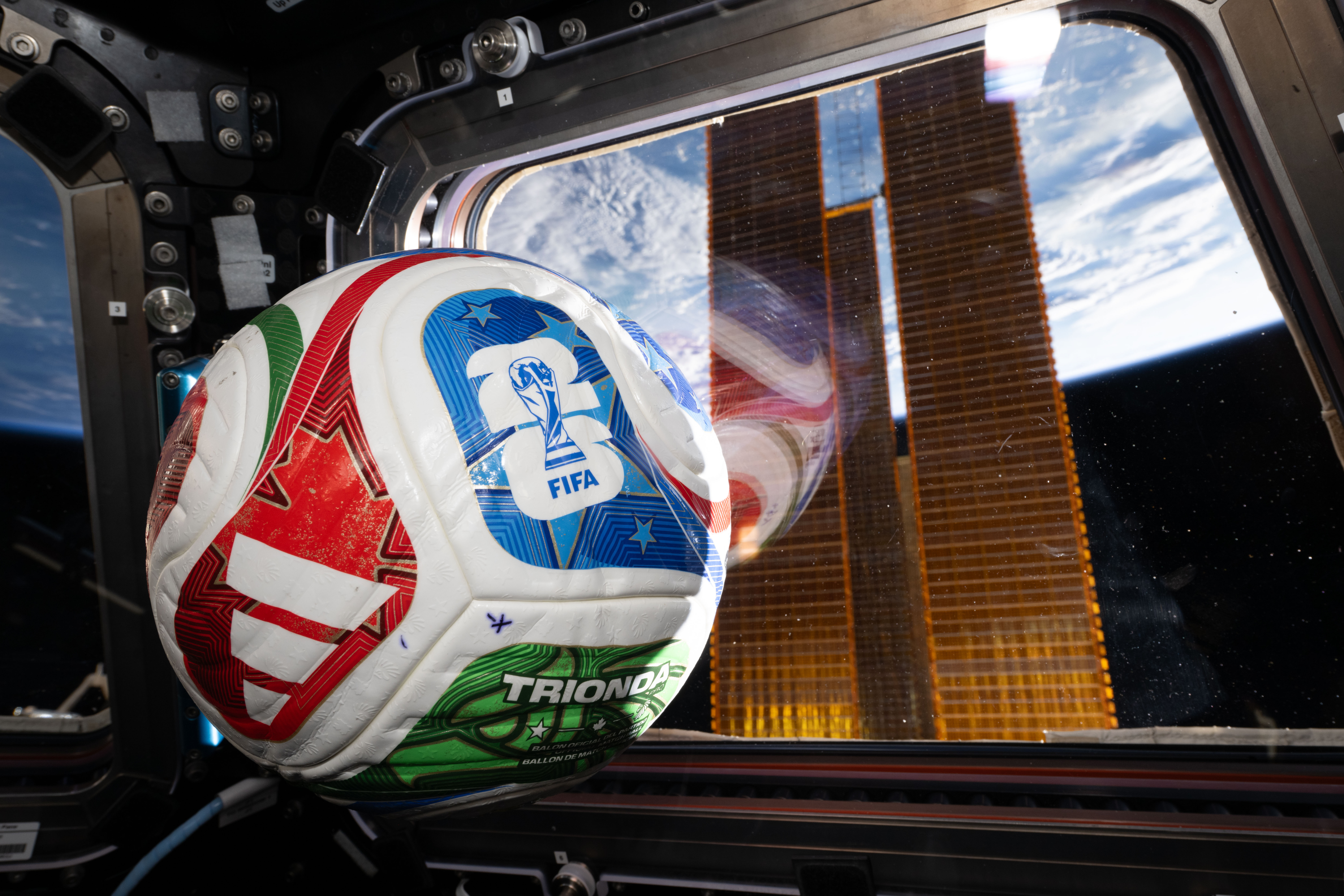
How Does Gravity Affect How We Study Mass Distribution?On Earth, gravity hides some of the details about how objects move. In microgravity, astronauts can observe motion more clearly. In 2019, Adidas partnered with NASA and sent soccer balls to the International Space Station.
Astronauts conducted tests to help engineers confirm their designs and understand the physics behind ball motion in ways they simply can’t on Earth. The results of the space station experiments have already helped improve the accuracy and consistency of modern soccer balls.
Try It YourselfYou don’t need to go to space to explore the physics of a ball in motion. Try this experiment at home or school:
- Grab different types of sports balls (soccer ball, basketball, tennis ball)
- Spin each one on the ground or between your hands
- Watch for wobbling, flipping, or smooth spinning
Can you tell which balls are well balanced? Or which ones might have uneven mass distribution?
Career CornerAre you interested in a career that explores the science and engineering of mass distribution? Many different occupations can help you strike the perfect balance. Here are a few examples:
Computer-Aided Design (CAD) Technician/Drafter: These specialists convert sketches and engineering designs into technical drawings. They use powerful computer software to create detailed 3D and 2D drawings of objects. A two-year associate degree from a technical or community college is key to this career path.
Computational fluid dynamics engineer: These engineers use computer simulation tools to model and analyze fluid behavior in real-world situations. They might study airflow around sport ball designs or explore ways to improve aircraft wings. They need a strong background in engineering and the ability to analyze complex problems.
Physicist: These scientists study matter and energy. They develop models and theories to explain how things work, conduct experiments, and use math to better understand the universe. A career in physics demands a strong understanding of math and complex problem-solving and usually requires an advanced college degree.
More to Explore:NASA Knows: What Is Mass Distribution?
This article is for students grades 5-8.
Mass distribution affects everything from galaxy shapes to aircraft design to planetary rotation. It’s used to map stars in our universe, figure out what planets are made of, and even to determine how luggage is loaded onto an airplane.
Mass distribution can be a tricky thing to understand. So, let’s explore it using an everyday example: a soccer ball.
How Does Mass Distribution Affect Center of Mass?Have you ever kicked a soccer ball and wondered why it curves, spins, or sometimes wobbles? Mass distribution plays a part.
On the outside, soccer balls look simple – a series of geometric shapes woven together in a pattern. But on the inside, they are carefully engineered. The key to a great soccer ball is something you can’t see: how the mass is distributed inside the ball.
When engineers build a soccer ball, they try to make sure its mass is evenly balanced in all areas. This is because the way a ball spins and flies depends on how its mass is arranged. If one part of the ball is slightly heavier, its center of mass shifts. If the ball’s center of mass isn’t precisely balanced, the ball won’t move smoothly.
______________________________________________________________________
Words to Know
mass: the measurement of the amount of matter in an object
mass distribution: how mass is spread within an object
center of mass: the unique point around which the mass of an object is perfectly balanced
______________________________________________________________________
How Is Mass Distribution Measured?Scientists and engineers use tools like precision scales, computer models, and repeated testing to determine an object’s mass distribution. These efforts help them design balanced airplanes, rockets, and even soccer balls. Their goal is to achieve dynamic balance, meaning the object can travel smoothly without unexpected movements.
How Does Gravity Affect How We Study Mass Distribution?On Earth, gravity hides some of the details about how objects move. In microgravity, astronauts can observe motion more clearly. In 2019, Adidas partnered with NASA and sent soccer balls to the International Space Station.
Astronauts conducted tests to help engineers confirm their designs and understand the physics behind ball motion in ways they simply can’t on Earth. The results of the space station experiments have already helped improve the accuracy and consistency of modern soccer balls.
Try It YourselfYou don’t need to go to space to explore the physics of a ball in motion. Try this experiment at home or school:
- Grab different types of sports balls (soccer ball, basketball, tennis ball)
- Spin each one on the ground or between your hands
- Watch for wobbling, flipping, or smooth spinning
Can you tell which balls are well balanced? Or which ones might have uneven mass distribution?
Career CornerAre you interested in a career that explores the science and engineering of mass distribution? Many different occupations can help you strike the perfect balance. Here are a few examples:
Computer-Aided Design (CAD) Technician/Drafter: These specialists convert sketches and engineering designs into technical drawings. They use powerful computer software to create detailed 3D and 2D drawings of objects. A two-year associate degree from a technical or community college is key to this career path.
Computational fluid dynamics engineer: These engineers use computer simulation tools to model and analyze fluid behavior in real-world situations. They might study airflow around sport ball designs or explore ways to improve aircraft wings. They need a strong background in engineering and the ability to analyze complex problems.
Physicist: These scientists study matter and energy. They develop models and theories to explain how things work, conduct experiments, and use math to better understand the universe. A career in physics demands a strong understanding of math and complex problem-solving and usually requires an advanced college degree.
More to Explore:San Francisco’s Metropolitan Mosaic
- Earth
- Earth Observatory
- Image of the Day
- EO Explorer
- Topics
- More Content
- About
San Francisco’s Metropolitan Mosaic
- Earth
- Earth Observatory
- Image of the Day
- EO Explorer
- Topics
- More Content
- About
How NASA Science and Artemis Are Shaping the 2026 FIFA World Cup
As the FIFA World Cup approaches, NASA is bringing space science and engineering to soccer fans worldwide. From June 11 to July 19, 2026, NASA will host an exhibit at FIFA Fan Festival™ Houston where visitors can learn how research aboard the International Space Station benefits life on Earth and experience missions in low Earth orbit, the Moon, and beyond through the Artemis program.
On June 11, as the FIFA World Cup begins, NASA’s exhibit at Fan Festival Houston will open to the public. The event is free to attend and open for every match of the tournament in East Downtown, Houston. On June 20, Johnson Space Center Director Vanessa Wyche will introduce select Artemis II crew members following their historic mission around the Moon. The crew will participate in World Cup activities ahead of the Netherlands-Sweden match in Houston and will appear on the Fan Festival Houston main stage to share their experience with fans.
The connection between NASA and the World Cup goes beyond the exhibit floor, reaching all the way to orbit. NASA spinoff technologies are innovations developed for space exploration that go on to shape commercial products and everyday life – even on the soccer field.
For more than 25 years, research aboard the International Space Station has enabled breakthroughs in science, technology, and human health while advancing innovations that benefit people on Earth. That work includes studies that improve understanding of the aerodynamics and physics involved in soccer ball flight.
In partnership with the ISS National Laboratory in 2019, researchers used the station’s microgravity environment to study how a soccer ball’s internal mass affects its motion, stability, and rotation. The findings have improved understanding of how embedded technologies, including match-ball sensors, can influence performance during play. The research contributed to studies used in the development and evaluation of soccer balls for major international tournaments, including FIFA World Cup competition.
Understanding the relationship between an object’s center of mass and its geometric center is key to predicting how free-flying objects move, including spacecraft, satellites, and aircraft.
Since 2022, Adidas has embedded electronics inside official match balls used in major tournaments. The sensors track speed, position, and contact in real time to support officiating and broadcast technology. But those sensors also add mass in specific locations inside the ball, and uneven mass distribution can affect how a ball moves through the air.
The space-based research has helped improve understanding of how internal mass, including embedded sensors, can influence stability and rotation in real-world playing conditions.
This work builds on earlier research into how spinning objects behave in microgravity.
Engineers at NASA’s Ames Research Center in Silicon Valley, California tested Adidas’ Brazuca ball, developed for the 2014 FIFA World Cup, in wind tunnel conditions at the Fluid Mechanics Laboratory. Researchers studied aerodynamic behavior, including how low-spin kicks can produce “knuckling,” where the ball moves unpredictably due to unstable airflow across the seams. NASA engineers measured the speeds and flow conditions where this effect was most pronounced.
Adjustments in panel shape, seam depth, and surface texture can influence flight consistency, helping determine whether a ball curves, dips, or holds its line during play.
Now, NASA and Adidas are presenting that science through a STEMonstration that compares how differently balanced soccer balls spin and move in microgravity. The experiment shows how the same physics that governs motion in space also shape the game millions watch on Earth.
Through research aboard the International Space Station and technology developed for exploration, NASA continues to demonstrate how discoveries made for space can benefit people on Earth—including athletes and fans participating in the world’s most popular sport.
Watch the soccer ball STEMonstration video:
Explore More 3 min read San Francisco’s Metropolitan MosaicUrban development, green spaces, and maritime activity converge in this Northern California city.
Article 16 hours ago 6 min read Spacewalking With Scott Wray, Artemis EVA Training Lead Article 1 week ago 5 min read NASA Uses Mineralogical Marker to Understand Ancient Martian ClimateScientists analyzed 20 Martian samples collected by NASA’s Curiosity Rover and found that differences in…
Article 2 weeks agoHow NASA Science and Artemis Are Shaping the 2026 FIFA World Cup
As the FIFA World Cup approaches, NASA is bringing space science and engineering to soccer fans worldwide. From June 11 to July 19, 2026, NASA will host an exhibit at FIFA Fan Festival™ Houston where visitors can learn how research aboard the International Space Station benefits life on Earth and experience missions in low Earth orbit, the Moon, and beyond through the Artemis program.
On June 11, as the FIFA World Cup begins, NASA’s exhibit at Fan Festival Houston will open to the public. The event is free to attend and open for every match of the tournament in East Downtown, Houston. On June 20, Johnson Space Center Director Vanessa Wyche will introduce select Artemis II crew members following their historic mission around the Moon. The crew will participate in World Cup activities ahead of the Netherlands-Sweden match in Houston and will appear on the Fan Festival Houston main stage to share their experience with fans.
The connection between NASA and the World Cup goes beyond the exhibit floor, reaching all the way to orbit. NASA spinoff technologies are innovations developed for space exploration that go on to shape commercial products and everyday life – even on the soccer field.
For more than 25 years, research aboard the International Space Station has enabled breakthroughs in science, technology, and human health while advancing innovations that benefit people on Earth. That work includes studies that improve understanding of the aerodynamics and physics involved in soccer ball flight.
In partnership with the ISS National Laboratory in 2019, researchers used the station’s microgravity environment to study how a soccer ball’s internal mass affects its motion, stability, and rotation. The findings have improved understanding of how embedded technologies, including match-ball sensors, can influence performance during play. The research contributed to studies used in the development and evaluation of soccer balls for major international tournaments, including FIFA World Cup competition.
Understanding the relationship between an object’s center of mass and its geometric center is key to predicting how free-flying objects move, including spacecraft, satellites, and aircraft.
Since 2022, Adidas has embedded electronics inside official match balls used in major tournaments. The sensors track speed, position, and contact in real time to support officiating and broadcast technology. But those sensors also add mass in specific locations inside the ball, and uneven mass distribution can affect how a ball moves through the air.
The space-based research has helped improve understanding of how internal mass, including embedded sensors, can influence stability and rotation in real-world playing conditions.
This work builds on earlier research into how spinning objects behave in microgravity.
Engineers at NASA’s Ames Research Center in Silicon Valley, California tested Adidas’ Brazuca ball, developed for the 2014 FIFA World Cup, in wind tunnel conditions at the Fluid Mechanics Laboratory. Researchers studied aerodynamic behavior, including how low-spin kicks can produce “knuckling,” where the ball moves unpredictably due to unstable airflow across the seams. NASA engineers measured the speeds and flow conditions where this effect was most pronounced.
Adjustments in panel shape, seam depth, and surface texture can influence flight consistency, helping determine whether a ball curves, dips, or holds its line during play.
Now, NASA and Adidas are presenting that science through a STEMonstration that compares how differently balanced soccer balls spin and move in microgravity. The experiment shows how the same physics that governs motion in space also shape the game millions watch on Earth.
Through research aboard the International Space Station and technology developed for exploration, NASA continues to demonstrate how discoveries made for space can benefit people on Earth—including athletes and fans participating in the world’s most popular sport.
Watch the soccer ball STEMonstration video:
Explore More 3 min read San Francisco’s Metropolitan MosaicUrban development, green spaces, and maritime activity converge in this Northern California city.
Article 20 hours ago 6 min read Spacewalking With Scott Wray, Artemis EVA Training Lead Article 1 week ago 5 min read NASA Uses Mineralogical Marker to Understand Ancient Martian ClimateScientists analyzed 20 Martian samples collected by NASA’s Curiosity Rover and found that differences in…
Article 2 weeks agoSupersonic!
Supersonic!
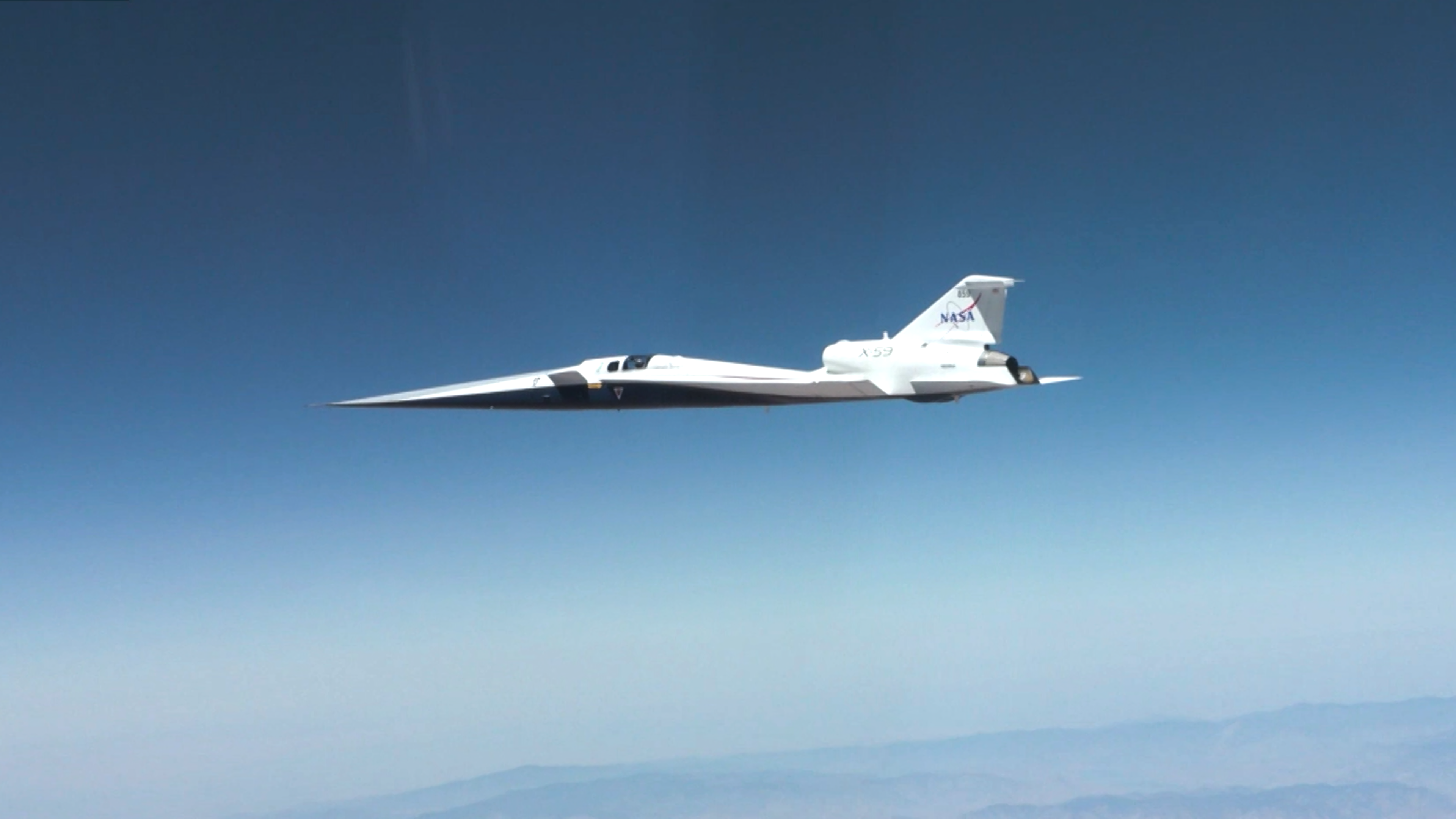
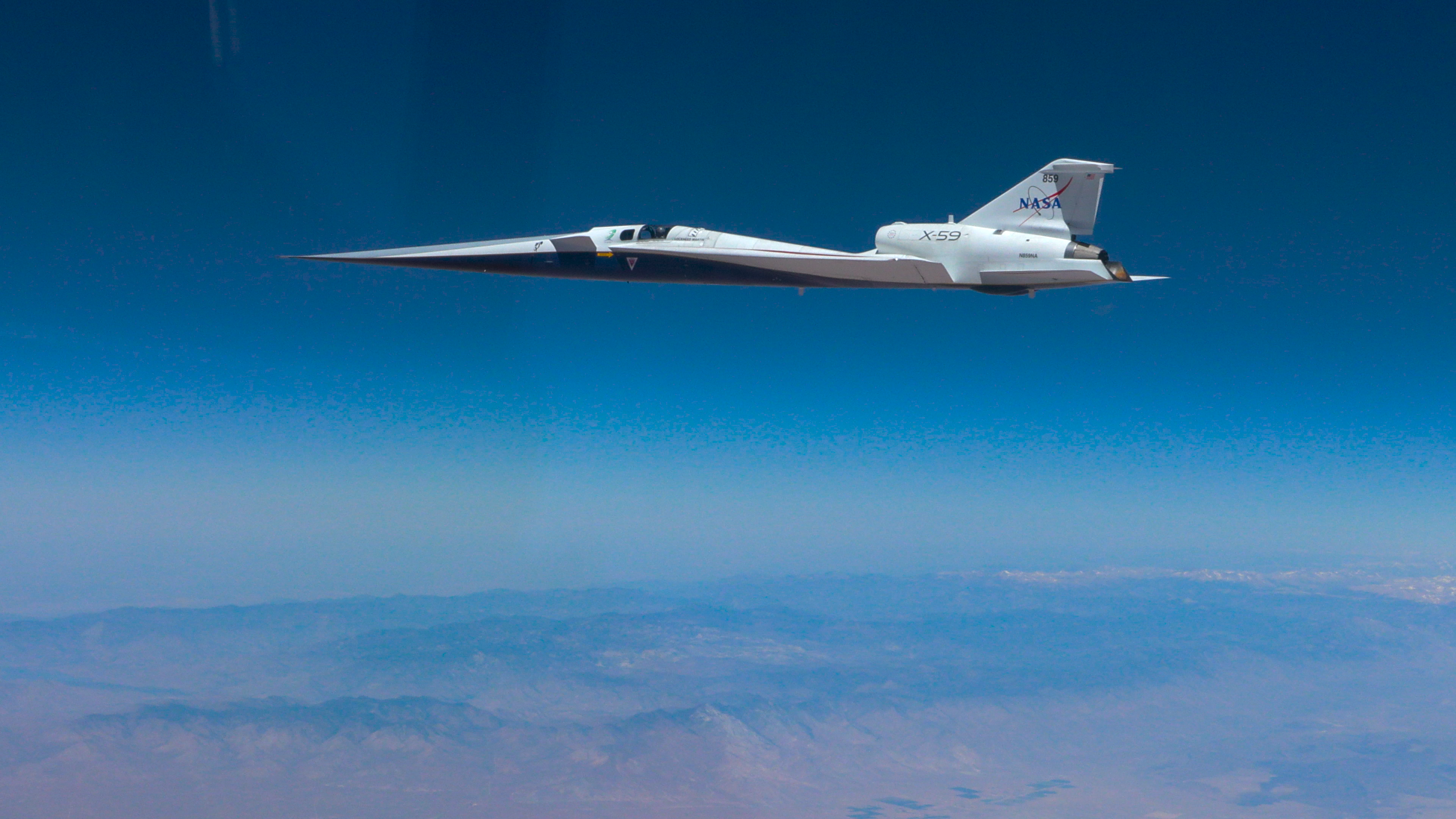
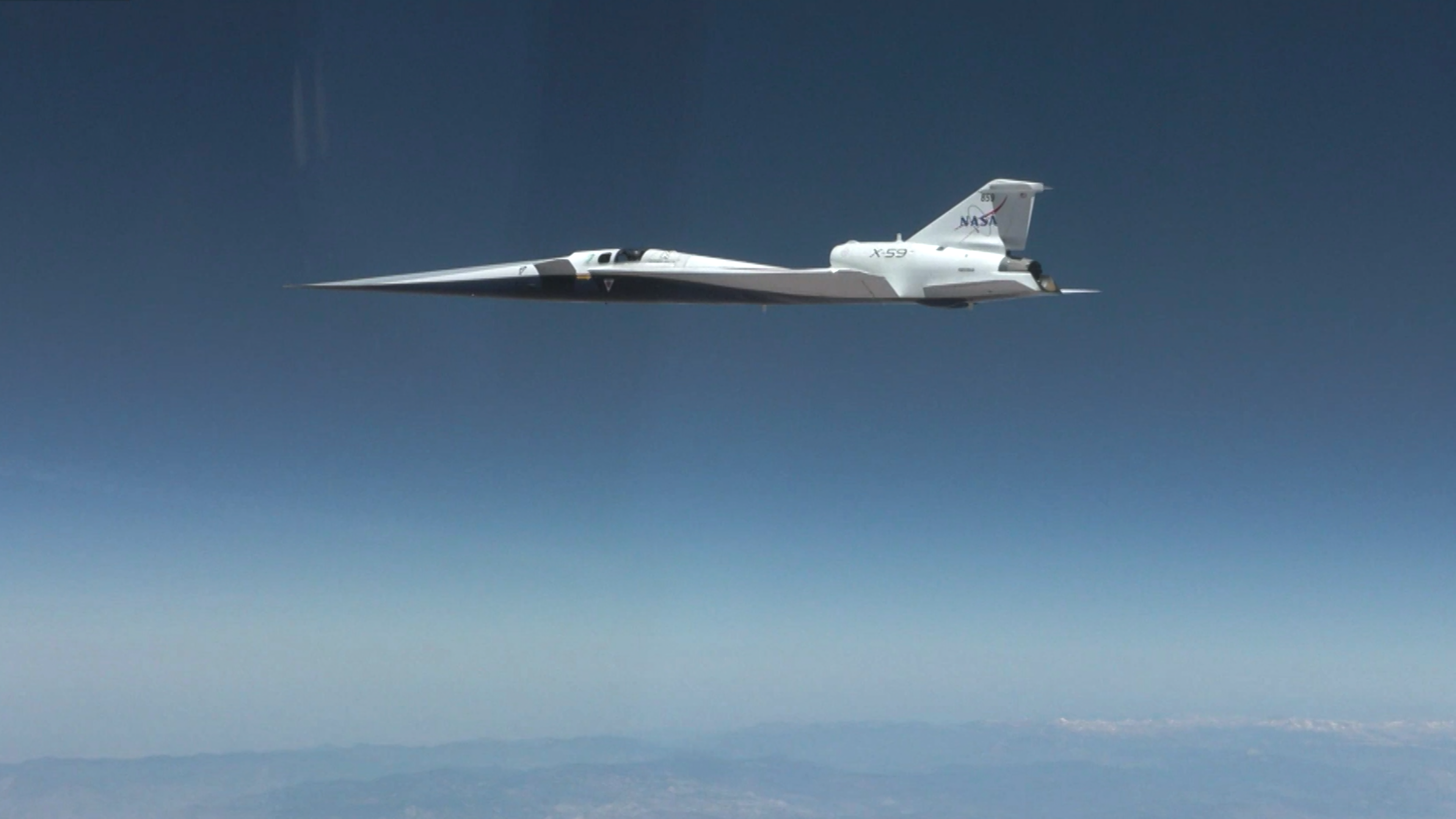
On June 5, 2026, NASA’s experimental X-59 aircraft flew faster than the speed of sound for the first time, setting the stage for demonstrating its quiet supersonic capabilities later this year. NASA test pilot Jim “Clue” Less took off and landed at Edwards Air Force Base in California, reaching a top speed of approximately Mach 1.1 (713 mph). The flight lasted 81 minutes, with the team focusing on flying qualities at both subsonic and then supersonic speeds.
The X-59 is the centerpiece of NASA’s Quesst mission, which aims to demonstrate quiet supersonic flight and help enable commercial supersonic flight over land worldwide. These advancements will help travelers reach their preferred destinations faster, spending less time in the air.
Learn more about the milestone and Quesst.
Image credit: NASA/Lori Losey
Supersonic!
On June 5, 2026, NASA’s experimental X-59 aircraft flew faster than the speed of sound for the first time, setting the stage for demonstrating its quiet supersonic capabilities later this year. NASA test pilot Jim “Clue” Less took off and landed at Edwards Air Force Base in California, reaching a top speed of approximately Mach 1.1 (713 mph). The flight lasted 81 minutes, with the team focusing on flying qualities at both subsonic and then supersonic speeds.
The X-59 is the centerpiece of NASA’s Quesst mission, which aims to demonstrate quiet supersonic flight and help enable commercial supersonic flight over land worldwide. These advancements will help travelers reach their preferred destinations faster, spending less time in the air.
Learn more about the milestone and Quesst.
Image credit: NASA/Lori Losey
NASA’s INCUS Satellites Progress Toward Launch
Blue Canyon Technologies Photojournal Navigation Downloads NASA’s INCUS Satellites Progress Toward Launch
JPEG (10.32 MB)
Description
One of the three satellites that make up NASA’s INCUS (Investigation of Convective Updrafts) mission sits on a fixture at the facilities of Blue Canyon Technologies in Lafayette, Colorado. The satellite completed testing in preparation for launch in late May 2026. The mission will make the first space-based survey of the dynamics of tropical convective storms.
The three nearly identical satellites will fly in tight coordination in low Earth orbit, with the first and second satellites separated by 30 seconds, and the second and third satellite separated by 90 seconds.
Each satellites carries a radar designed to observe the vertical motion of air and water — known as convective mass flux — as storms develop and evolve. The middle satellite will also carry a microwave radiometer.
The INCUS mission is set to launch in 2027 from NASA’s Wallops Flight Facility in Virginia.
Funded through the Earth Venture Mission-3 acquisition under NASA’s Earth System Science Pathfinder Program and led by principal investigator Sue van den Heever at Colorado State University in Fort Collins, INCUS is one of several missions fulfilling the clouds, convection, and precipitation requirements of NASA’s Earth System Observatory, a set of interconnected missions set to study our home planet’s dynamic natural systems and how they interact. The mission is also part of FALCON (Fleet for the Atmosphere Linking Commercial Observations with NASA), a fleet of atmosphere-observing satellites that will combine hardware contributions from NASA centers, universities, and commercial partners.
Keep Exploring Discover More Topics From Photojournal
Photojournal
Search Photojournal
Photojournal’s Latest Content
Feedback
NASA’s INCUS Satellites Progress Toward Launch
Blue Canyon Technologies Photojournal Navigation Downloads NASA’s INCUS Satellites Progress Toward Launch
JPEG (10.32 MB)
Description
One of the three satellites that make up NASA’s INCUS (Investigation of Convective Updrafts) mission sits on a fixture at the facilities of Blue Canyon Technologies in Lafayette, Colorado. The satellite completed testing in preparation for launch in late May 2026. The mission will make the first space-based survey of the dynamics of tropical convective storms.
The three nearly identical satellites will fly in tight coordination in low Earth orbit, with the first and second satellites separated by 30 seconds, and the second and third satellite separated by 90 seconds.
Each satellites carries a radar designed to observe the vertical motion of air and water — known as convective mass flux — as storms develop and evolve. The middle satellite will also carry a microwave radiometer.
The INCUS mission is set to launch in 2027 from NASA’s Wallops Flight Facility in Virginia.
Funded through the Earth Venture Mission-3 acquisition under NASA’s Earth System Science Pathfinder Program and led by principal investigator Sue van den Heever at Colorado State University in Fort Collins, INCUS is one of several missions fulfilling the clouds, convection, and precipitation requirements of NASA’s Earth System Observatory, a set of interconnected missions set to study our home planet’s dynamic natural systems and how they interact. The mission is also part of FALCON (Fleet for the Atmosphere Linking Commercial Observations with NASA), a fleet of atmosphere-observing satellites that will combine hardware contributions from NASA centers, universities, and commercial partners.
Keep Exploring Discover More Topics From Photojournal
Photojournal
Search Photojournal
Photojournal’s Latest Content
Feedback
Digging Back in Time in the UAE
- Earth
- Earth Observatory
- Image of the Day
- EO Explorer
- Topics
- More Content
- About
Digging Back in Time in the UAE
- Earth
- Earth Observatory
- Image of the Day
- EO Explorer
- Topics
- More Content
- About
NASA’s X-59 Aircraft Flies Supersonic for First Time
4 min read
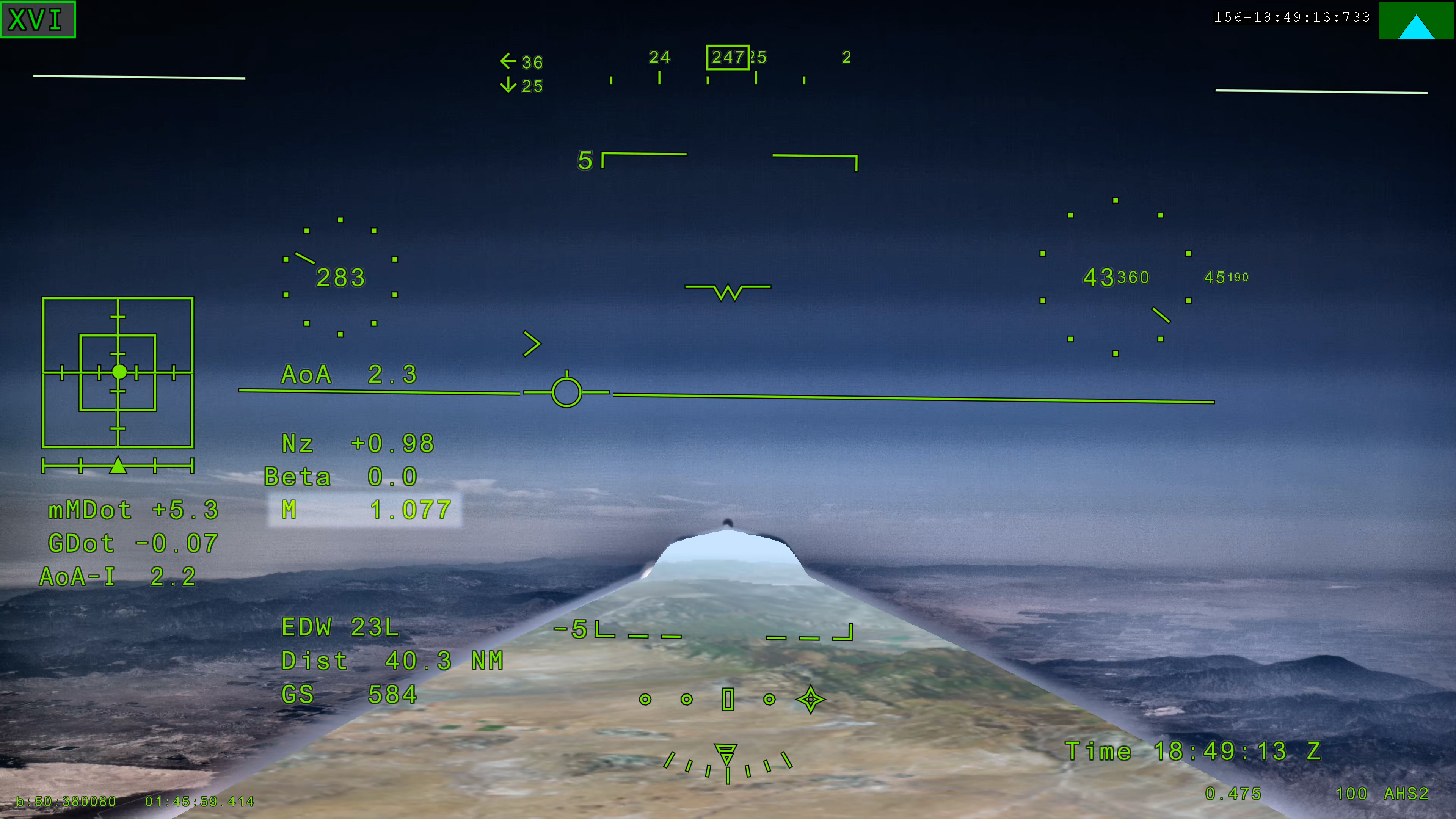
Preparations for Next Moonwalk Simulations Underway (and Underwater) NASA’s X 59 eXternal Vision System shows Mach 1.077 on Friday, June 5, 2026, marking the aircraft’s first time reaching supersonic speed in support of NASA’s Quesst mission. The moment represents a milestone for the aircraft as it transitions to include test flights faster than the speed of sound. NASANASA’s experimental X-59 aircraft marked a major milestone Friday, June 5, when it flew faster than the speed of sound for the first time, setting the stage for demonstrating its quiet supersonic capabilities later this year.
NASA test pilot Jim “Clue” Less took off and landed at Edwards Air Force Base in California, reaching a top speed of approximately Mach 1.1 (713 mph) and altitude of 43,400 feet. The X-59’s flight began at 11:08 a.m. PDT and lasted 81 minutes, with the team focusing on flying qualities at both subsonic and then supersonic speeds.
In the coming days, we expect to take the next step and push to Mach 1.4jared isaacman
NASA Administrator
”X-59 is getting ready for its quiet supersonic debut. Since the aircraft’s first flight on Oct. 28, 2025, the team has made tremendous progress, flying 16 times in the last 90 days and getting into a steady test rhythm. In the coming days, we expect to take the next step and push to Mach 1.4,” said NASA Administrator Jared Isaacman “I’m grateful to the NASA team and Lockheed Martin Skunk Works for their help getting us to this point, and I hope this is the first of many collaborations as we rebuild NASA’s X-plane portfolio.”
The X-59 is designed to fly at supersonic speeds while creating only a quiet thump instead of a loud sonic boom. For this flight, a NASA F‑15 chase plane flew nearby to monitor the X‑59. The loud sonic booms from the F-15 obscured any sound made by the X-59.
“The X-59’s first supersonic flight is a testament to America’s enduring leadership in science, engineering, and aerospace innovation,” said Michael Kratsios, Assistant to the President for Science and Technology and Director of the Office of Science and Technology Policy. “This achievement comes as the Trump Administration continues work to unleash supersonic flight and enable American ingenuity.”
This first supersonic flight is a significant milestone, but an event even more critical to the mission is upcoming. In just days, the aircraft is expected to make its first “mission conditions” flight, reaching a cruising speed of Mach 1.4 (925 mph) and altitude of approximately 55,000 feet. The X-59 also will be accompanied by a chase plane for this flight.
NASA’s X-59 quiet supersonic research aircraft completed its first supersonic flight Friday, June 5, 2026, marking the first time the aircraft exceeded the speed of sound in support of NASA’s Quesst mission. The milestone represents a major step in flight testing as the aircraft expands into the supersonic portion of its flight envelope. NASA / Lori LoseyThis speed and altitude are the base conditions for the X-59 when it will eventually fly over several U.S. communities enabling NASA to gather data about how people may perceive its quiet thump. NASA will share this data with U.S. and international regulators to help establish new data-driven noise standards to enable a future viable market for supersonic commercial flight over land.
For the last several months, the X-59 has been participating in an ongoing series of flights where the plane has been flying at a wide range of speeds and altitudes – a process known as envelope expansion. These tests are the first phase of the X-59’s flight testing. They are focused on performance and involve chase plane monitoring. When the aircraft completes this phase it will enter another, focused on its sound profile in order to verify its quiet thump capability.
The X-59 is the centerpiece of NASA’s Quesst mission, which aims to demonstrate quiet supersonic flight and help enable commercial supersonic flight over land worldwide. These advancements will help travelers reach their preferred destinations faster, spending less time in the air.
Through Quesst’s development of the X-59, NASA also will deliver design tools and technology for quiet supersonic airliners that will achieve the high speeds desired by commercial operators without disturbing people on the ground. NASA will validate design tools through ground and flight testing, providing U.S. aircraft manufacturers the ability to explore new quiet supersonic concepts, and provide them with confidence that their resulting designs will meet quiet flight requirements.
Read more about NASA’s Quesst mission and the X-59. Facebook logo @NASA@NASAaero@NASAes @NASA@NASAaero@NASA_es Instagram logo @NASA@NASAaero@NASA_es Linkedin logo @NASA Explore More 6 min read NASA’s X-59 Prepares for First Supersonic Flight Article 2 weeks ago 4 min read Keeping NASA Flying: Ground Crews Ensure Aircraft Readiness Article 2 weeks ago 4 min read NASA Announces Winners in University Aeronautics Competition Article 3 weeks ago Keep Exploring Discover More Topics From NASAMissions
Artemis
Aeronautics STEM
Explore NASA’s History
Share Details Last Updated Jun 08, 2026 EditorJim BankeContactMatt Kamletmatthew.r.kamlet@nasa.govKristen Hatfieldkristen.m.hatfield@nasa.govLocationArmstrong Flight Research Center Related TermsNASA’s X-59 Aircraft Flies Supersonic for First Time
4 min read
Preparations for Next Moonwalk Simulations Underway (and Underwater) NASA’s X 59 eXternal Vision System shows Mach 1.077 on Friday, June 5, 2026, marking the aircraft’s first time reaching supersonic speed in support of NASA’s Quesst mission. The moment represents a milestone for the aircraft as it transitions to include test flights faster than the speed of sound. NASANASA’s experimental X-59 aircraft marked a major milestone Friday, June 5, when it flew faster than the speed of sound for the first time, setting the stage for demonstrating its quiet supersonic capabilities later this year.
NASA test pilot Jim “Clue” Less took off and landed at Edwards Air Force Base in California, reaching a top speed of approximately Mach 1.1 (713 mph) and altitude of 43,400 feet. The X-59’s flight began at 11:08 a.m. PDT and lasted 81 minutes, with the team focusing on flying qualities at both subsonic and then supersonic speeds.
In the coming days, we expect to take the next step and push to Mach 1.4jared isaacman
NASA Administrator
”X-59 is getting ready for its quiet supersonic debut. Since the aircraft’s first flight on Oct. 28, 2025, the team has made tremendous progress, flying 16 times in the last 90 days and getting into a steady test rhythm. In the coming days, we expect to take the next step and push to Mach 1.4,” said NASA Administrator Jared Isaacman “I’m grateful to the NASA team and Lockheed Martin Skunk Works for their help getting us to this point, and I hope this is the first of many collaborations as we rebuild NASA’s X-plane portfolio.”
The X-59 is designed to fly at supersonic speeds while creating only a quiet thump instead of a loud sonic boom. For this flight, a NASA F‑15 chase plane flew nearby to monitor the X‑59. The loud sonic booms from the F-15 obscured any sound made by the X-59.
“The X-59’s first supersonic flight is a testament to America’s enduring leadership in science, engineering, and aerospace innovation,” said Michael Kratsios, Assistant to the President for Science and Technology and Director of the Office of Science and Technology Policy. “This achievement comes as the Trump Administration continues work to unleash supersonic flight and enable American ingenuity.”
This first supersonic flight is a significant milestone, but an event even more critical to the mission is upcoming. In just days, the aircraft is expected to make its first “mission conditions” flight, reaching a cruising speed of Mach 1.4 (925 mph) and altitude of approximately 55,000 feet. The X-59 also will be accompanied by a chase plane for this flight.
NASA’s X-59 quiet supersonic research aircraft completed its first supersonic flight Friday, June 5, 2026, marking the first time the aircraft exceeded the speed of sound in support of NASA’s Quesst mission. The milestone represents a major step in flight testing as the aircraft expands into the supersonic portion of its flight envelope.NASA / Lori LoseyThis speed and altitude are the base conditions for the X-59 when it will eventually fly over several U.S. communities enabling NASA to gather data about how people may perceive its quiet thump. NASA will share this data with U.S. and international regulators to help establish new data-driven noise standards to enable a future viable market for supersonic commercial flight over land.
For the last several months, the X-59 has been participating in an ongoing series of flights where the plane has been flying at a wide range of speeds and altitudes – a process known as envelope expansion. These tests are the first phase of the X-59’s flight testing. They are focused on performance and involve chase plane monitoring. When the aircraft completes this phase it will enter another, focused on its sound profile in order to verify its quiet thump capability.
The X-59 is the centerpiece of NASA’s Quesst mission, which aims to demonstrate quiet supersonic flight and help enable commercial supersonic flight over land worldwide. These advancements will help travelers reach their preferred destinations faster, spending less time in the air.
Through Quesst’s development of the X-59, NASA also will deliver design tools and technology for quiet supersonic airliners that will achieve the high speeds desired by commercial operators without disturbing people on the ground. NASA will validate design tools through ground and flight testing, providing U.S. aircraft manufacturers the ability to explore new quiet supersonic concepts, and provide them with confidence that their resulting designs will meet quiet flight requirements.
Read more about NASA’s Quesst mission and the X-59. Facebook logo @NASA@NASAaero@NASAes @NASA@NASAaero@NASA_es Instagram logo @NASA@NASAaero@NASA_es Linkedin logo @NASA Explore More 6 min read NASA’s X-59 Prepares for First Supersonic Flight Article 2 weeks ago 4 min read Keeping NASA Flying: Ground Crews Ensure Aircraft Readiness Article 2 weeks ago 4 min read NASA Announces Winners in University Aeronautics Competition Article 3 weeks ago Keep Exploring Discover More Topics From NASAMissions
Artemis
Aeronautics STEM
Explore NASA’s History
Share Details Last Updated Jun 06, 2026 EditorJim BankeContactMatt Kamletmatthew.r.kamlet@nasa.govKristen Hatfieldkristen.m.hatfield@nasa.govLocationArmstrong Flight Research Center Related Terms