
Feed aggregator
NASA Photographer Captures Images from F-18 Over Washington
2 min read
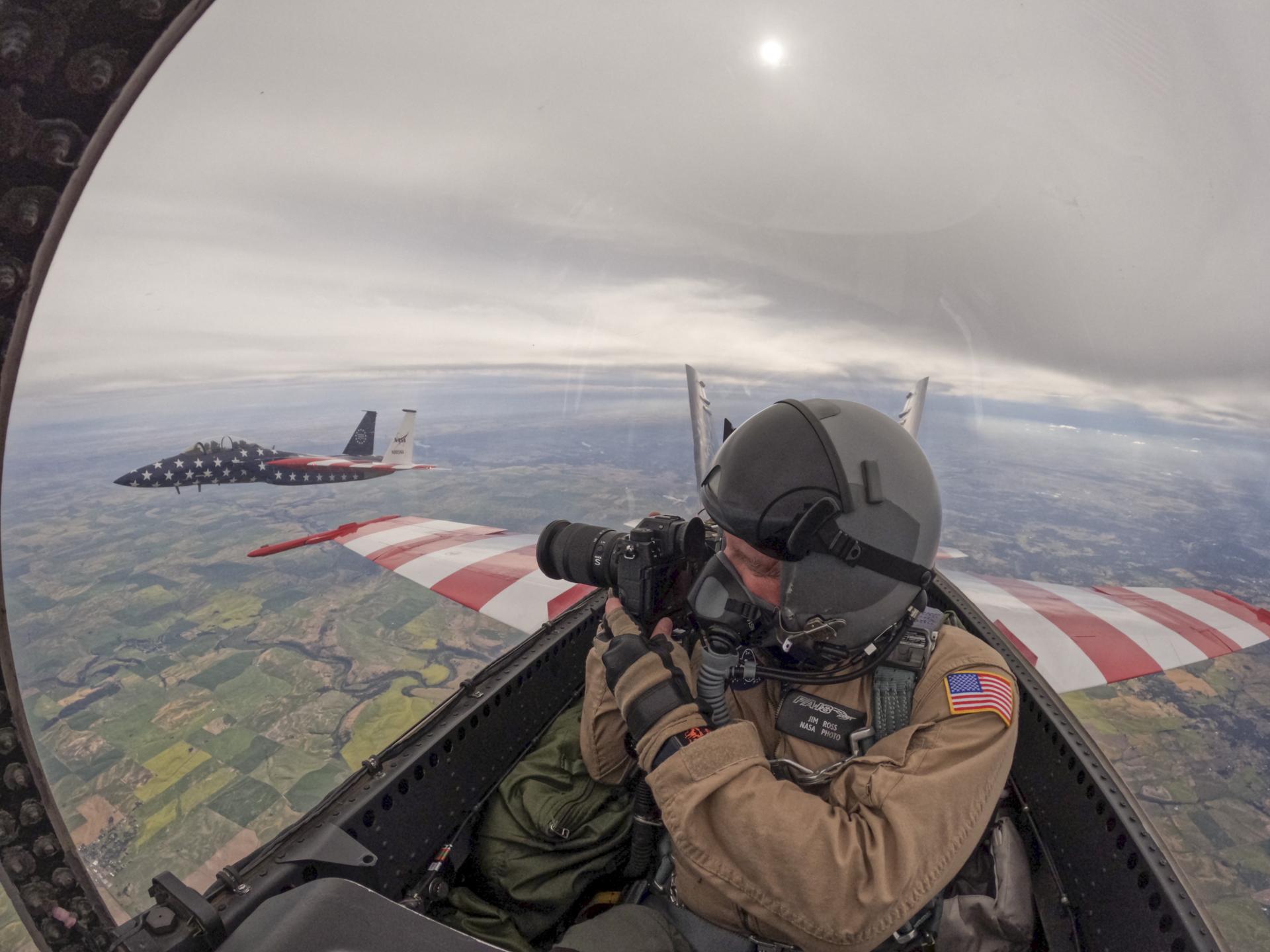
Preparations for Next Moonwalk Simulations Underway (and Underwater) NASA photographer Jim Ross flies above the Washington Monument in Washington on Saturday, July 4, 2026, in an F-18 aircraft, as part of a flyover to celebrate America’s 250th birthday. This aircraft is from NASA’s Armstrong Flight Research Center in Edwards, California, and it joined other NASA aircraft for the flyover.NASA/Jim Ross
NASA flight photographers capture history from a perspective few ever experience, getting a rare bird’s-eye view of the agency’s missions in action. Their photos document key NASA research and give the public a front-row seat to the work happening behind the scenes.
Jim Ross, a photographer at NASA’s Armstrong Flight Research Center in Edwards, California, flew over Washington during the Fourth of July celebration to document a NASA flyover commemorating America’s 250th birthday. He’s captured some of the agency’s most exhilarating milestones, like early SR-71 flights, the delivery flight of Space Shuttle Endeavour to Los Angeles, and first flights of NASA’s X-59 quiet supersonic research aircraft.
“I grew up in Bozeman, Montana, when it was still considered a small town, so if someone told that little kid that he would be flying in a F-18 over the National Mall, he would have never believed it,” Ross said. “I love documenting history, and having the opportunity to capture flights and launches has kept me doing it for almost 37 years.”
Ross began his aviation photography career in 1989 when he joined the staff at NASA Armstrong (then Dryden). He became the photo lead in 1997, a title he retains.
Check out his images from the flyover here: https://www.nasa.gov/gallery/freedom-250/
NASA photographer Jim Ross takes a selfie from the rear seat of a NASA F/A‑18 during a cross‑country flight from Spokane, Washington, to Washington, D.C., on Thursday, July 2, 2026. The agency’s F‑15, flying alongside the aircraft, is visible through the window. Both aircraft, from NASA’s Armstrong Flight Research Center in Edwards, California, participated in the Freedom 250 flyover with other NASA and military aircraft on Saturday, July 4, 2026.NASA/Jim Ross NASA photographer Jim Ross flies above Washington on Saturday, July 4, 2026, in an F-18 aircraft, as part of a flyover to celebrate America’s 250th birthday. This aircraft is from NASA’s Armstrong Flight Research Center in Edwards, California, and it joined other NASA aircraft for the flyover. A NASA F-15 is seen flying to the side of the NASA F-18.NASA/Jim Ross Share Details Last Updated Jul 10, 2026 EditorDede DiniusContactTeresa Whitingteresa.whiting@nasa.gov Related Terms Explore More 3 min read NASA Study Points to Smoother Air Taxi Rides Article 5 hours ago 3 min read A Day of Flight Testing at NASA Armstrong Article 2 weeks ago 5 min read NASA’s Newest Wind Tunnel Builds on Legacy of Innovation Article 2 weeks ago Keep Exploring Discover More Topics From NASA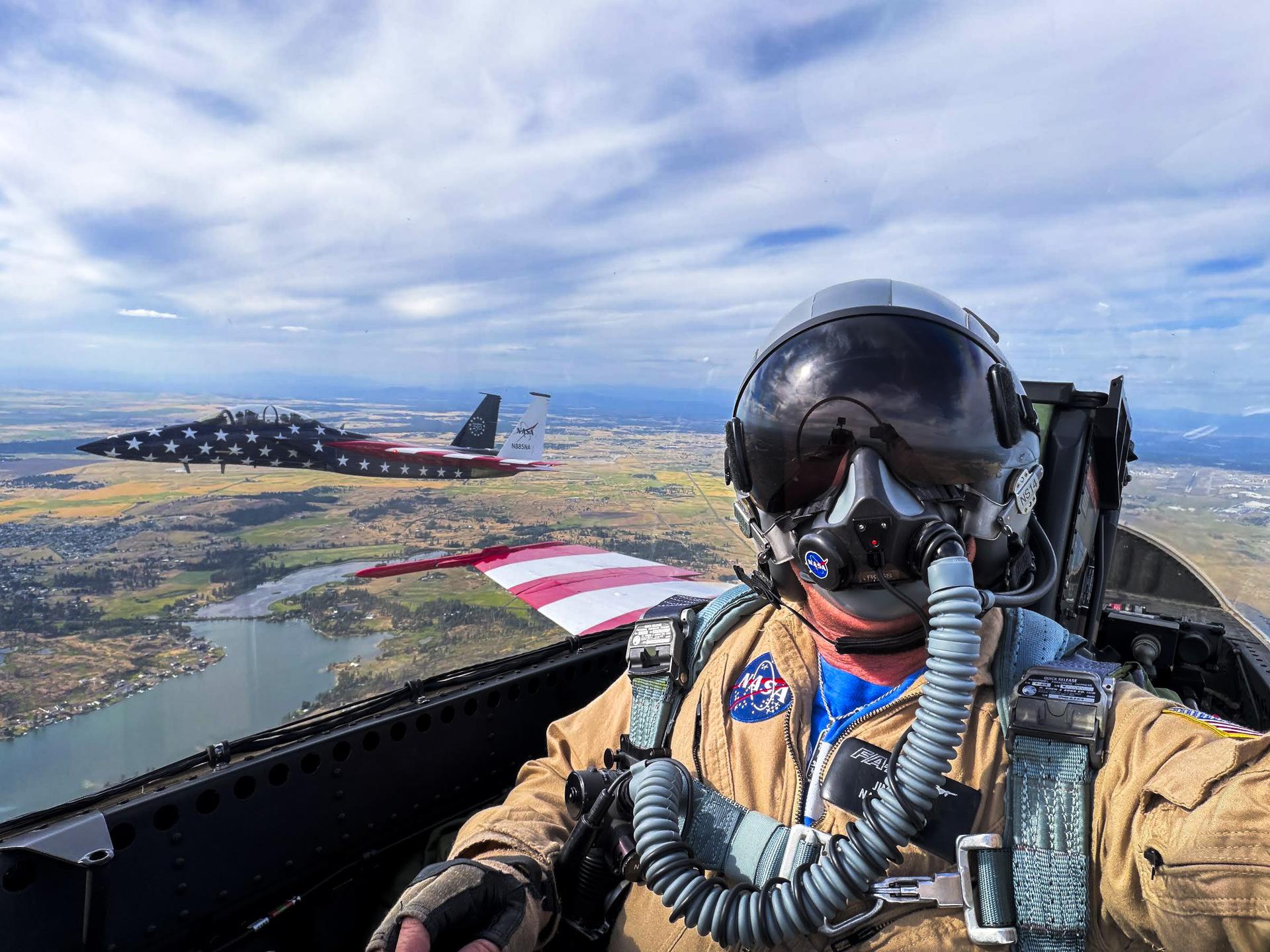
Armstrong Flight Research Center
Aircraft Flown at Armstrong
Aeronautics
Armstrong Flight Operations
How could loosened radiation exposure rules affect public health?
A proposed rule change could expose more Americans to higher doses of radiation from nuclear facilities
Only Binary Stars Can Create Interacting Supernovae
When a massive star reaches the end of its life, it explodes as a supernova that can light up the sky for months. But some supernovae stay luminous for much longer, and astrophysicists have wondered what causes their extended brightness. New research points to binary stars, where one star expels material right before the explosion that creates a cocoon of circumstellar medium.
UN space database aimed at easing global tensions is mysteriously down
UN space database aimed at easing global tensions is mysteriously down
Waxing Gibbous Moon
Waxing Gibbous Moon
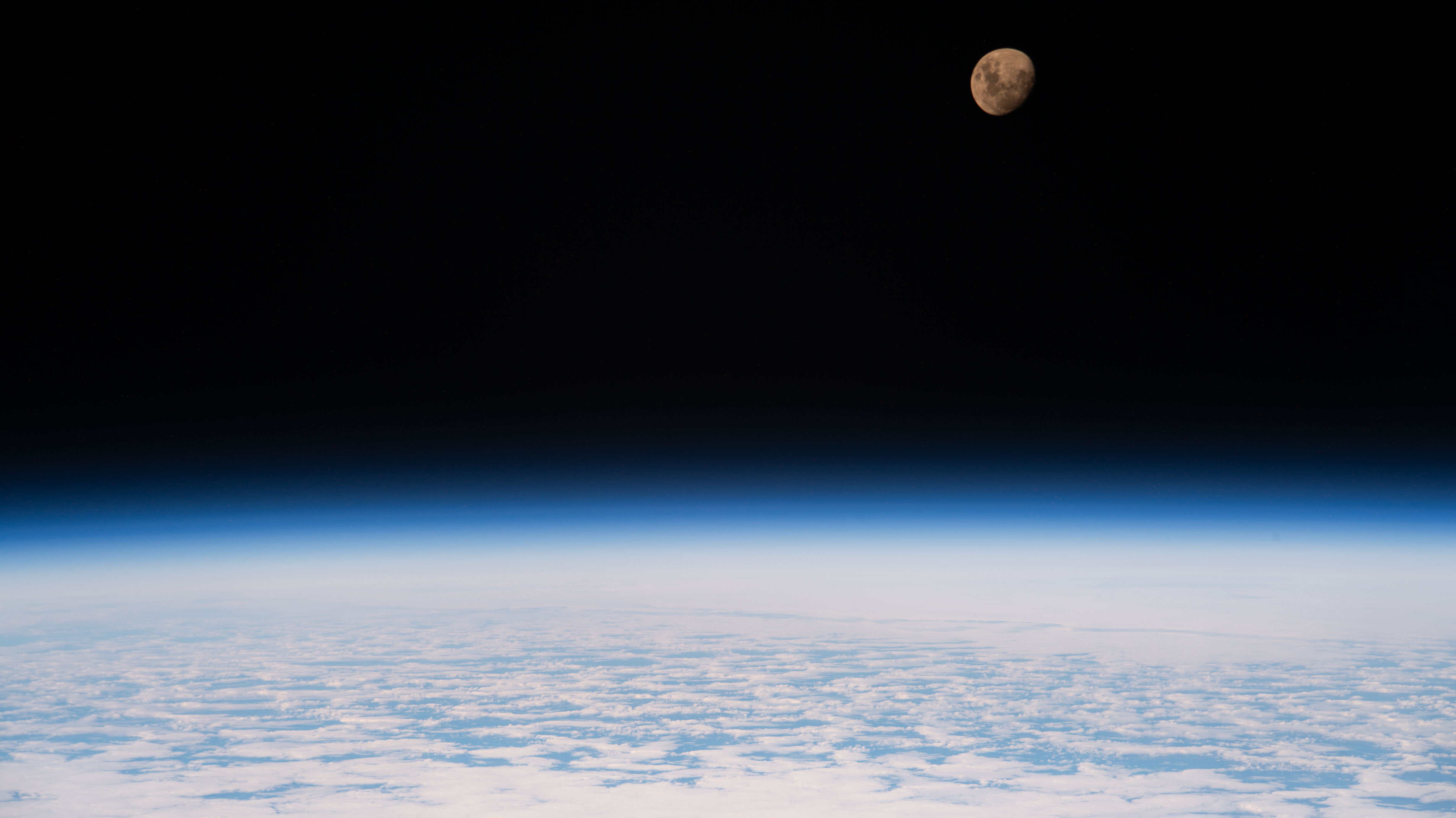
The waxing gibbous moon is nestled in the darkness of space in this June 26, 2026, image from the International Space Station. The space station was 264 miles above the Indian Ocean southeast of Madagascar at the time.
The waxing gibbous phase comes before the full moon phase. During this time, the Moon appears brighter in the night sky to viewers on Earth.
Image credit: NASA
Waxing Gibbous Moon
The waxing gibbous moon is nestled in the darkness of space in this June 26, 2026, image from the International Space Station. The space station was 264 miles above the Indian Ocean southeast of Madagascar at the time.
The waxing gibbous phase comes before the full moon phase. During this time, the Moon appears brighter in the night sky to viewers on Earth.
Image credit: NASA
Global warming already causing crop losses of over $20 billion a year
Global warming already causing crop losses of over $20 billion a year
8 things to know about this year’s solar eclipse
From the path of totality and the spectacular Baily's beads to why this eclipse will be especially beautiful at sunset, discover what makes the 12 August 2026 total solar eclipse so special.
Featuring ESA Reserve Astronaut Sara García Alonso and ESA Astronaut Candidate Pablo Álvarez Fernández.
Spanish
Aquí presentamos 9 cosas que debes saber sobre el eclipse solar total de este año.
Desde la franja de totalidad y las espectaculares perlas de Baily hasta qué hará este eclipse aún más especial al atardecer, descubre por qué el eclipse solar total del 12 de Agosto 2026 será tan único!
Con Sara García Alonso, astronauta de reserva de la ESA, y Pablo Álvarez Fernández, astronauta de la ESA en formación.
Week in images: 06-10 July 2026
Week in images: 06-10 July 2026
Discover our week through the lens
Mathematicians put AI to work on Fermat's last theorem
Mathematicians put AI to work on Fermat's last theorem
Why the controversy over de-extinction risks missing the point
Efforts to revive the thylacine and woolly mammoth are forcing conservationists to face a long-overdue debate over what kind of natural world we want to build
Is Earth the only planet with total solar eclipses?
Other planets have moons, too. Do they get eclipses like we do?
The sneaky maths trick for solving problems without answering them
The sneaky maths trick for solving problems without answering them
‘Dark’ comets sprouting tails could help solve interstellar mysteries
A strange class of comet could explain the enigmatic behavior of ‘Oumuamua, the first known interstellar object—and even shed light on how Earth became habitable