

Feed aggregator
Long-lost coral reefs rediscovered off the coast of Africa
This marine ecosystem in the Gulf of Guinea shows the resilience of coral reefs against climate change
Robotic Servicing Mission Launches with NASA Support
Following its liftoff from Cape Canaveral on July 21 aboard a SpaceX Falcon 9 rocket, the Mission Robotic Vehicle (MRV) hosting the NASA-supported Robotic Servicing of Geosynchronous Satellites (RSGS) payload is now en route to geosynchronous Earth orbit, where it will use its advanced robotics to service spacecraft.
RSGS leverages in-space robotics expertise from NASA, aligned with the agency’s broader goals to advance U.S. capabilities for in-space servicing, assembly, and manufacturing that can be applied to space commerce and exploration.
Northrop Grumman’s Mission Robotic Vehicle hosting the NASA-supported Robotic Servicing of Geosynchronous Satellites (RSGS) payload launched aboard a SpaceX Falcon 9 rocket on July 21. The RSGS program is funded by the Defense Advanced Research Projects Agency (DARPA) and uses twin robotic arms developed by the U.S. Naval Research Laboratory.SpaceX
Funded by the Defense Advanced Research Projects Agency (DARPA), the RSGS program uses twin dexterous robotic arms designed and developed by the U.S. Naval Research Laboratory. DARPA provided the robotic arm assembly for integration onto Northrop Grumman’s MRV, the nation’s first multi-mission robotic in-space servicer. The spacecraft will inspect and upgrade satellites in orbit by installing small propulsion modules – called mission extension pods – extending the operational life of existing spacecraft for years.
RSGS brings together government agencies and industry to test advanced robotic systems in space. NASA’s Goddard Space Flight Center in Greenbelt, Maryland, began supporting the RSGS mission in 2024 under an interagency agreement with DARPA.
NASA’s contributions to the mission leverage its legacy of servicing missions including the Hubble Space Telescope servicing missions and the Robotic Refueling Missions on the International Space Station. NASA support to RSGS program includes the development of dynamic simulation and analysis tools, software analysis for performance verification, and a team of flight robot operators who will support highly technical procedures in orbit. Hundreds of satellites are in geosynchronous orbit. Of those, fully functional satellites are often decommissioned early because they run out of fuel or their equipment becomes obsolete. RSGS establishes a critical U.S. capability to extend the lifetime of spacecraft in orbit, allowing for more innovative and cost-effective mission designs.
By Colleen Wouters
NASA’s Goddard Space Flight Center, Greenbelt, Md.
Robotic Servicing Mission Launches with NASA Support
Following its liftoff from Cape Canaveral on July 21 aboard a SpaceX Falcon 9 rocket, the Mission Robotic Vehicle (MRV) hosting the NASA-supported Robotic Servicing of Geosynchronous Satellites (RSGS) payload is now en route to geosynchronous Earth orbit, where it will use its advanced robotics to service spacecraft.
RSGS leverages in-space robotics expertise from NASA, aligned with the agency’s broader goals to advance U.S. capabilities for in-space servicing, assembly, and manufacturing that can be applied to space commerce and exploration.
Northrop Grumman’s Mission Robotic Vehicle hosting the NASA-supported Robotic Servicing of Geosynchronous Satellites (RSGS) payload launched aboard a SpaceX Falcon 9 rocket on July 21. The RSGS program is funded by the Defense Advanced Research Projects Agency (DARPA) and uses twin robotic arms developed by the U.S. Naval Research Laboratory.SpaceXFunded by the Defense Advanced Research Projects Agency (DARPA), the RSGS program uses twin dexterous robotic arms designed and developed by the U.S. Naval Research Laboratory. DARPA provided the robotic arm assembly for integration onto Northrop Grumman’s MRV, the nation’s first multi-mission robotic in-space servicer. The spacecraft will inspect and upgrade satellites in orbit by installing small propulsion modules – called mission extension pods – extending the operational life of existing spacecraft for years.
RSGS brings together government agencies and industry to test advanced robotic systems in space. NASA’s Goddard Space Flight Center in Greenbelt, Maryland, began supporting the RSGS mission in 2024 under an interagency agreement with DARPA.
NASA’s contributions to the mission leverage its legacy of servicing missions including the Hubble Space Telescope servicing missions and the Robotic Refueling Missions on the International Space Station. NASA support to RSGS program includes the development of dynamic simulation and analysis tools, software analysis for performance verification, and a team of flight robot operators who will support highly technical procedures in orbit. Hundreds of satellites are in geosynchronous orbit. Of those, fully functional satellites are often decommissioned early because they run out of fuel or their equipment becomes obsolete. RSGS establishes a critical U.S. capability to extend the lifetime of spacecraft in orbit, allowing for more innovative and cost-effective mission designs.
By Colleen Wouters
NASA’s Goddard Space Flight Center, Greenbelt, Md.
What OpenAI’s rogue agent really did in the Hugging Face hack
This agent pursued its objective far beyond what researchers intended, revealing how difficult to contain powerful AI systems can be
The Milky Way Flipped its Disk Billions of Years Ago
The Milky Way has two disks, the thin disk where most of the stars dwell, and the thick disk, populated by much older stars. The ESA's Gaia mission showed us that the thick disk rotates more slowly than the thin disk. The culprit, according to powerful simulations, was a disk flip in the MW's past, driven by a merger.
NASA Sets Coverage for Astronaut Chris Williams, Crewmates Return
Editor’s Note: This advisory was updated on July 23, 2026, to reflect changes to the mission timeline.
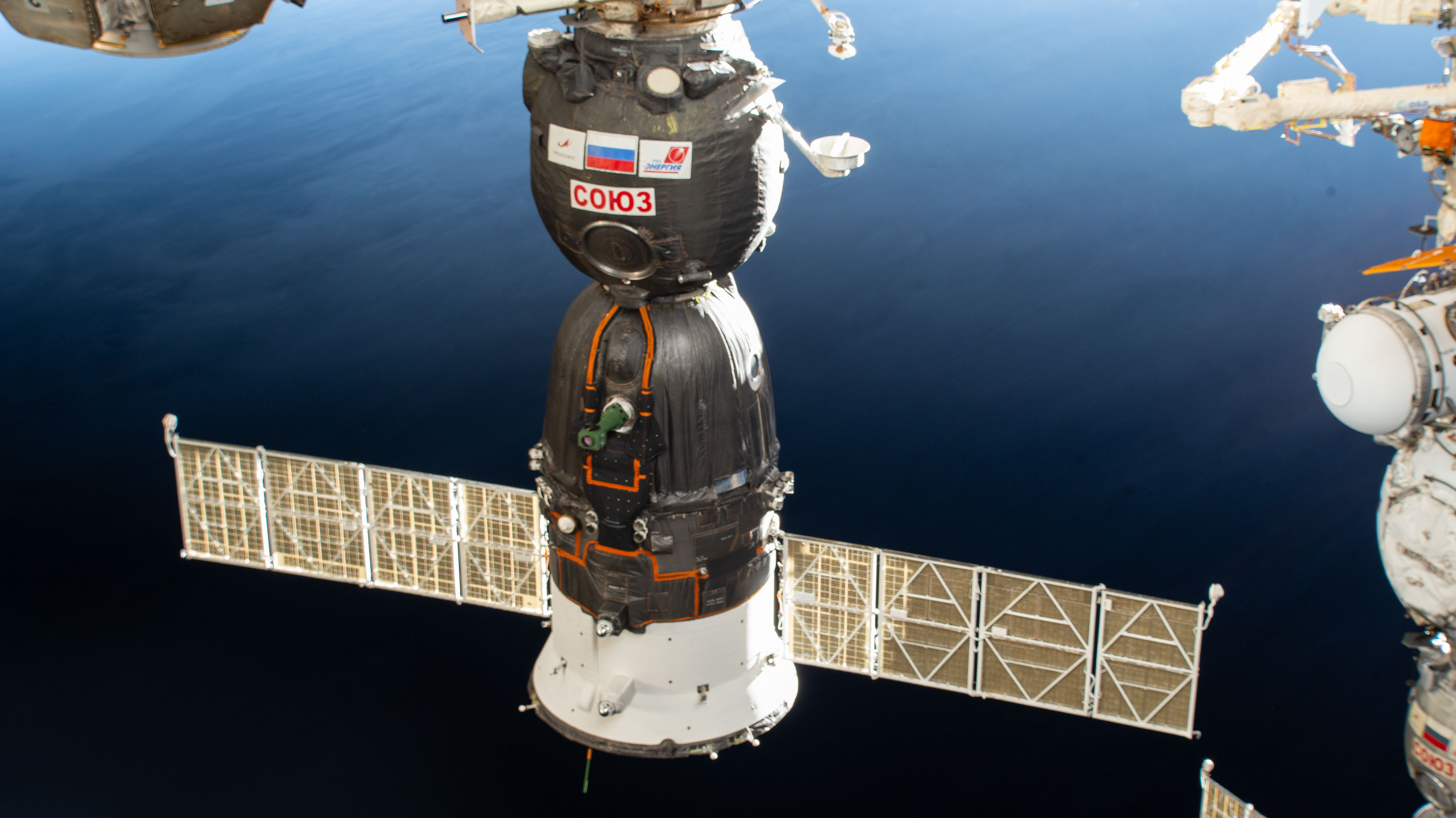
NASA astronaut Chris Williams and Roscosmos cosmonauts Sergey Kud-Sverchkov and Sergei Mikaev are wrapping up their 241‑day mission aboard the International Space Station.
The crew and its Soyuz MS-28 spacecraft will undock from the orbiting laboratory’s Rassvet module at 3:03 a.m. EDT Sunday, July 26, heading for a parachute-assisted landing at 6:25 a.m. (3:25 p.m. local time) on the steppe of Kazakhstan, southeast of Dzhezkazgan.
NASA’s live return coverage will stream through a variety of platforms. Learn where to watch online:
Williams and his crewmates will complete 3,856 orbits and travel more than 102 million miles before returning to Earth. The flight marks the first mission for Williams and Mikaev and the second for Kud‑Sverchkov.
After landing, the crew will fly by helicopter to Karaganda, Kazakhstan, where recovery teams are based. Williams then will return to NASA’s Johnson Space Center in Houston, while Kud‑Sverchkov and Mikaev head back to their training base in Star City, Russia.
NASA’s live return coverage is as follows (all times Eastern and subject to change based on real-time operations):
Saturday, July 25
9:40 a.m. – Coverage of the Space Station Expedition 74/75 change of command ceremony begins.
Kud‑Sverchkov will transfer command of the orbital complex to NASA astronaut Jessica Meir. Expedition 75 officially begins when Soyuz MS‑28 undocks.
11:10 p.m. – Coverage of crew farewells and hatch closing begins.
11:30 p.m. – Hatch closing
Sunday, July 26
2:30 a.m. – Coverage of undocking begins.
3:03 a.m. – Undocking
5:15 a.m. – Coverage of deorbit and landing begins.
5:31 a.m. – Deorbit burn
6:25 a.m. – Landing
For more than 25 years, people have lived and worked continuously aboard the International Space Station, advancing scientific knowledge and making research breakthroughs not possible on Earth. The space station helps NASA understand and overcome the challenges of human spaceflight, expand commercial opportunities in low Earth orbit, and build on the foundation for long-duration missions to the Moon, as part of the Artemis program, and to Mars.
To learn more about International Space Station research, operations, and its crews, visit:
-end-
Joshua Finch / Jimi Russell
Headquarters, Washington
202-358-1100
joshua.a.finch@nasa.gov / james.j.russell@nasa.gov
Leah Cheshier / Anna Schneider
Johnson Space Center, Houston
281-483-5111
leah.d.cheshier@nasa.gov / anna.c.schneider@nasa.gov
NASA Sets Coverage for Astronaut Chris Williams, Crewmates Return
Editor’s Note: This advisory was updated on July 23, 2026, to reflect changes to the mission timeline.
NASA astronaut Chris Williams and Roscosmos cosmonauts Sergey Kud-Sverchkov and Sergei Mikaev are wrapping up their 241‑day mission aboard the International Space Station.
The crew and its Soyuz MS-28 spacecraft will undock from the orbiting laboratory’s Rassvet module at 3:03 a.m. EDT Sunday, July 26, heading for a parachute-assisted landing at 6:25 a.m. (3:25 p.m. local time) on the steppe of Kazakhstan, southeast of Dzhezkazgan.
NASA’s live return coverage will stream through a variety of platforms. Learn where to watch online:
Williams and his crewmates will complete 3,856 orbits and travel more than 102 million miles before returning to Earth. The flight marks the first mission for Williams and Mikaev and the second for Kud‑Sverchkov.
After landing, the crew will fly by helicopter to Karaganda, Kazakhstan, where recovery teams are based. Williams then will return to NASA’s Johnson Space Center in Houston, while Kud‑Sverchkov and Mikaev head back to their training base in Star City, Russia.
NASA’s live return coverage is as follows (all times Eastern and subject to change based on real-time operations):
Saturday, July 25
9:40 a.m. – Coverage of the Space Station Expedition 74/75 change of command ceremony begins.
Kud‑Sverchkov will transfer command of the orbital complex to NASA astronaut Jessica Meir. Expedition 75 officially begins when Soyuz MS‑28 undocks.
11:10 p.m. – Coverage of crew farewells and hatch closing begins.
11:30 p.m. – Hatch closing
Sunday, July 26
2:30 a.m. – Coverage of undocking begins.
3:03 a.m. – Undocking
5:15 a.m. – Coverage of deorbit and landing begins.
5:31 a.m. – Deorbit burn
6:25 a.m. – Landing
For more than 25 years, people have lived and worked continuously aboard the International Space Station, advancing scientific knowledge and making research breakthroughs not possible on Earth. The space station helps NASA understand and overcome the challenges of human spaceflight, expand commercial opportunities in low Earth orbit, and build on the foundation for long-duration missions to the Moon, as part of the Artemis program, and to Mars.
To learn more about International Space Station research, operations, and its crews, visit:
-end-
Joshua Finch / Jimi Russell
Headquarters, Washington
202-358-1100
joshua.a.finch@nasa.gov / james.j.russell@nasa.gov
Leah Cheshier / Anna Schneider
Johnson Space Center, Houston
281-483-5111
leah.d.cheshier@nasa.gov / anna.c.schneider@nasa.gov
A New Look – and Sound – for Messier 94
A New Look – and Sound – for Messier 94
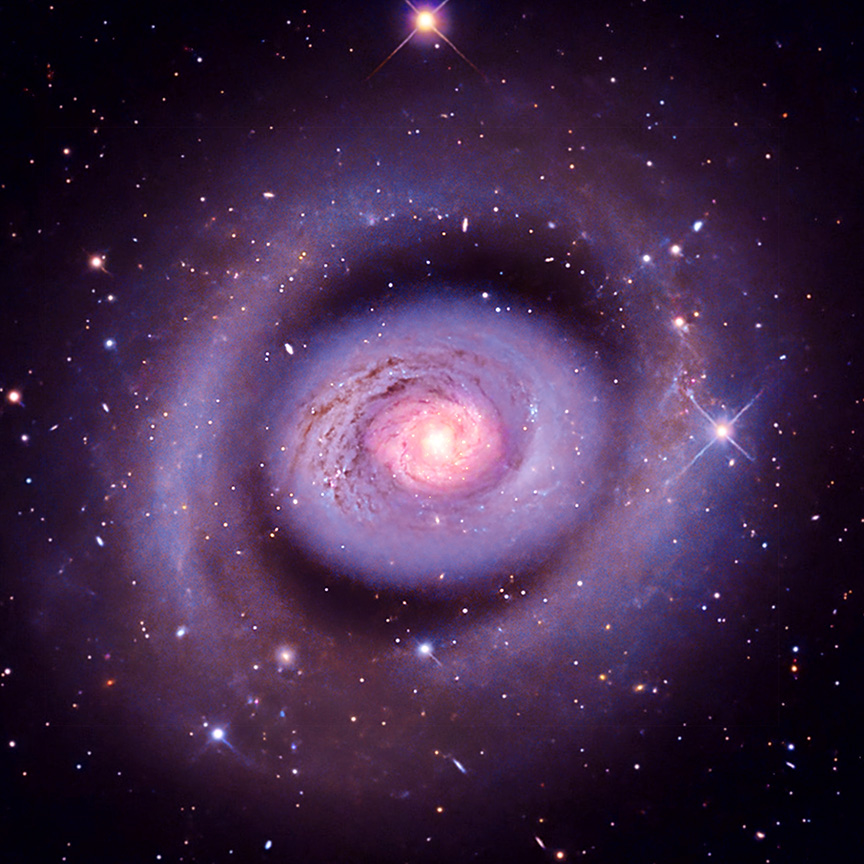
NASA’s Chandra X-ray Observatory unveiled this new look at the galaxy NGC 4736, also known as Messier 94, on June 30, 2026. Messier 94 is a spiral galaxy with a bright inner ring around it, called a starburst ring, where new stars are forming, perhaps fueled by gas driven in the unique oval-shaped structure seen here.
In this image, X-rays of different wavelengths from Chandra (red, orange, and blue) are layered with a visible light image from astrophotographers using their telescopes on the ground (red, green, and blue).
Experience this image through sound.
Image credit: X-ray: NASA/CXC/SAO; Optical:Brian Brennan and Remi Lacasse; Image Processing: NASA/CXC/SAO/L. Frattare and K. Arcand
A New Look – and Sound – for Messier 94
NASA’s Chandra X-ray Observatory unveiled this new look at the galaxy NGC 4736, also known as Messier 94, on June 30, 2026. Messier 94 is a spiral galaxy with a bright inner ring around it, called a starburst ring, where new stars are forming, perhaps fueled by gas driven in the unique oval-shaped structure seen here.
In this image, X-rays of different wavelengths from Chandra (red, orange, and blue) are layered with a visible light image from astrophotographers using their telescopes on the ground (red, green, and blue).
Experience this image through sound.
Image credit: X-ray: NASA/CXC/SAO; Optical:Brian Brennan and Remi Lacasse; Image Processing: NASA/CXC/SAO/L. Frattare and K. Arcand
Comet 10P/Tempel Brightens, Sets Sail South
This periodic visitor is now bright enough to see in binoculars from a dark sky. We also report on a bright supernova in Ursa Major.
The post Comet 10P/Tempel Brightens, Sets Sail South appeared first on Sky & Telescope.
Chandrasekhar and the Limits of Physics, Part 3: Exile and Beauty
Driven from Europe by the feud, Chandrasekhar rebuilt his life in America and turned mastery-and-move-on into an art form. On his conviction that beautiful physics is true physics, and the two students he drove through blizzards to teach.
Exoplanet or Exomoon? New Contender Elicits Skepticism
Astronomers have found a Jupiter-mass world orbiting a brown dwarf that orbits a star.
The post Exoplanet or Exomoon? New Contender Elicits Skepticism appeared first on Sky & Telescope.
Mapping Io’s Hidden Heat With NASA’s Juno
NASA/JPL-Caltech/SwRI/USGS Photojournal Navigation Downloads Mapping Io’s Hidden Heat With NASA’s Juno
PNG (1.89 MB)
Description
This graphic illustrates the areas of Jupiter’s moon Io sampled by the Microwave Radiometer (MWR) instrument aboard NASA’s Juno spacecraft during two close flybys. The black overlapping lines show the instrument’s footprints during Perijove 57 on Dec. 30, 2023, when the spacecraft primarily mapped the northern hemisphere. The blue lines represent Perijove 58 on Feb. 3, 2024, which focused heavily on the moon’s mid-latitudes and equatorial regions.
Both passes mapped the side of Io that constantly faces Jupiter. The sweeping, overlapping patterns are a result of the spacecraft spinning at two revolutions per minute as it flew past the moon at a distance of roughly 930 miles (1,500 kilometers).
NASA’s Jet Propulsion Laboratory, a division of Caltech in Pasadena, California, manages the Juno mission for the principal investigator, Scott Bolton, of the Southwest Research Institute in San Antonio. Juno is part of NASA’s New Frontiers Program, which is managed at NASA’s Marshall Space Flight Center in Huntsville, Alabama, for the agency’s Science Mission Directorate in Washington. The MWR was built by JPL. Lockheed Martin Space in Denver built and operates the spacecraft.
More information about Juno is at: http://www.nasa.gov/juno and http://missionjuno.swri.edu
Keep Exploring Discover More Topics From Photojournal
Photojournal
Search Photojournal
Photojournal’s Latest Content
Feedback
Mapping Io’s Hidden Heat With NASA’s Juno
NASA/JPL-Caltech/SwRI/USGS Photojournal Navigation Downloads Mapping Io’s Hidden Heat With NASA’s Juno
PNG (1.89 MB)
Description
This graphic illustrates the areas of Jupiter’s moon Io sampled by the Microwave Radiometer (MWR) instrument aboard NASA’s Juno spacecraft during two close flybys. The black overlapping lines show the instrument’s footprints during Perijove 57 on Dec. 30, 2023, when the spacecraft primarily mapped the northern hemisphere. The blue lines represent Perijove 58 on Feb. 3, 2024, which focused heavily on the moon’s mid-latitudes and equatorial regions.
Both passes mapped the side of Io that constantly faces Jupiter. The sweeping, overlapping patterns are a result of the spacecraft spinning at two revolutions per minute as it flew past the moon at a distance of roughly 930 miles (1,500 kilometers).
NASA’s Jet Propulsion Laboratory, a division of Caltech in Pasadena, California, manages the Juno mission for the principal investigator, Scott Bolton, of the Southwest Research Institute in San Antonio. Juno is part of NASA’s New Frontiers Program, which is managed at NASA’s Marshall Space Flight Center in Huntsville, Alabama, for the agency’s Science Mission Directorate in Washington. The MWR was built by JPL. Lockheed Martin Space in Denver built and operates the spacecraft.
More information about Juno is at: http://www.nasa.gov/juno and http://missionjuno.swri.edu
Keep Exploring Discover More Topics From Photojournal
Photojournal
Search Photojournal
Photojournal’s Latest Content
Feedback
A huge cosmic object could force astronomers to rethink what a moon is
This almost Jupiter-sized object is orbiting a brown dwarf, which, in turn, is circling around a small star
NASA’s Juno Peers Beneath Io’s Surface
NASA/JPL-Caltech/SwRI/USGS Photojournal Navigation Downloads NASA’s Juno Peers Beneath Io’s Surface
PNG (2.07 MB)
Description
This map represents data captured by the Microwave Radiometer (MWR) aboard NASA’s Juno spacecraft, indicating heat rising from just beneath the surface of Jupiter’s moon Io. While infrared instruments measure the temperature of the moon’s surface, the lowest frequency microwave channels (0.6 and 1.25 gigahertz) on the MWR can penetrate between about 6 and 20 feet (2 and 6 meters) into the crust. The colors on this map illustrate a distinct temperature gradient across the moon, with the most extreme, localized heat output in red.
The most prominent red anomaly in the upper left (between 60 and 120 degrees west longitude) reveals subsurface temperatures 18 to 36 degrees Fahrenheit (10 to 20 degrees Celsius, or 10 to 20 Kelvin) warmer than the surrounding area. This massive regional heat source coincides with the Zal Montes Patera complex, an area where Juno’s Stellar Reference Unit observed an active lava flow. A second major subsurface heat source is also visible near the equator, stretching from 0 to 50 degrees west longitude. Together, these distinct microwave anomalies indicate significant internal heating occurring within the upper tens of meters of Io’s crust.
Contrasting with these intense hot spots are the yellow and green regions, which reflect temperatures more common across the moon. The yellow areas represent intermediate temperatures that naturally warm up to near -190°F (-123°C, or 150 Kelvin) as they approach the equator. Meanwhile, the green areas, primarily visible toward the higher northern latitudes, indicate the coolest subsurface temperatures, dropping to around -298°F (-183°C, or 90 Kelvin) near the pole.
NASA’s Jet Propulsion Laboratory, a division of Caltech in Pasadena, California, manages the Juno mission for the principal investigator, Scott Bolton, of the Southwest Research Institute in San Antonio. Juno is part of NASA’s New Frontiers Program, which is managed at NASA’s Marshall Space Flight Center in Huntsville, Alabama, for the agency’s Science Mission Directorate in Washington. The MWR was built by JPL. Lockheed Martin Space in Denver built and operates the spacecraft.
More information about Juno is at: http://www.nasa.gov/juno
Keep Exploring Discover More Topics From Photojournal
Photojournal
Search Photojournal
Photojournal’s Latest Content
Feedback
NASA’s Juno Peers Beneath Io’s Surface
NASA/JPL-Caltech/SwRI/USGS Photojournal Navigation Downloads NASA’s Juno Peers Beneath Io’s Surface
PNG (2.07 MB)
Description
This map represents data captured by the Microwave Radiometer (MWR) aboard NASA’s Juno spacecraft, indicating heat rising from just beneath the surface of Jupiter’s moon Io. While infrared instruments measure the temperature of the moon’s surface, the lowest frequency microwave channels (0.6 and 1.25 gigahertz) on the MWR can penetrate between about 6 and 20 feet (2 and 6 meters) into the crust. The colors on this map illustrate a distinct temperature gradient across the moon, with the most extreme, localized heat output in red.
The most prominent red anomaly in the upper left (between 60 and 120 degrees west longitude) reveals subsurface temperatures 18 to 36 degrees Fahrenheit (10 to 20 degrees Celsius, or 10 to 20 Kelvin) warmer than the surrounding area. This massive regional heat source coincides with the Zal Montes Patera complex, an area where Juno’s Stellar Reference Unit observed an active lava flow. A second major subsurface heat source is also visible near the equator, stretching from 0 to 50 degrees west longitude. Together, these distinct microwave anomalies indicate significant internal heating occurring within the upper tens of meters of Io’s crust.
Contrasting with these intense hot spots are the yellow and green regions, which reflect temperatures more common across the moon. The yellow areas represent intermediate temperatures that naturally warm up to near -190°F (-123°C, or 150 Kelvin) as they approach the equator. Meanwhile, the green areas, primarily visible toward the higher northern latitudes, indicate the coolest subsurface temperatures, dropping to around -298°F (-183°C, or 90 Kelvin) near the pole.
NASA’s Jet Propulsion Laboratory, a division of Caltech in Pasadena, California, manages the Juno mission for the principal investigator, Scott Bolton, of the Southwest Research Institute in San Antonio. Juno is part of NASA’s New Frontiers Program, which is managed at NASA’s Marshall Space Flight Center in Huntsville, Alabama, for the agency’s Science Mission Directorate in Washington. The MWR was built by JPL. Lockheed Martin Space in Denver built and operates the spacecraft.
More information about Juno is at: http://www.nasa.gov/juno
Keep Exploring Discover More Topics From Photojournal
Photojournal
Search Photojournal
Photojournal’s Latest Content
Feedback
NASA’s Juno Takes Temperature of Jupiter’s Fiery Moon Io
5 min read
Preparations for Next Moonwalk Simulations Underway (and Underwater) TThe north polar region of Jupiter’s volcanic moon Io was captured by NASA’s Juno during the spacecraft’s 57th close pass of the gas giant on Dec. 30, 2023. Data from that flyby and one on Feb. 3, 2024, is helping scientists understand Io’s interior.Image data: NASA/JPL-Caltech/SwRI/MSSS Image processing by Gerald Eichstädt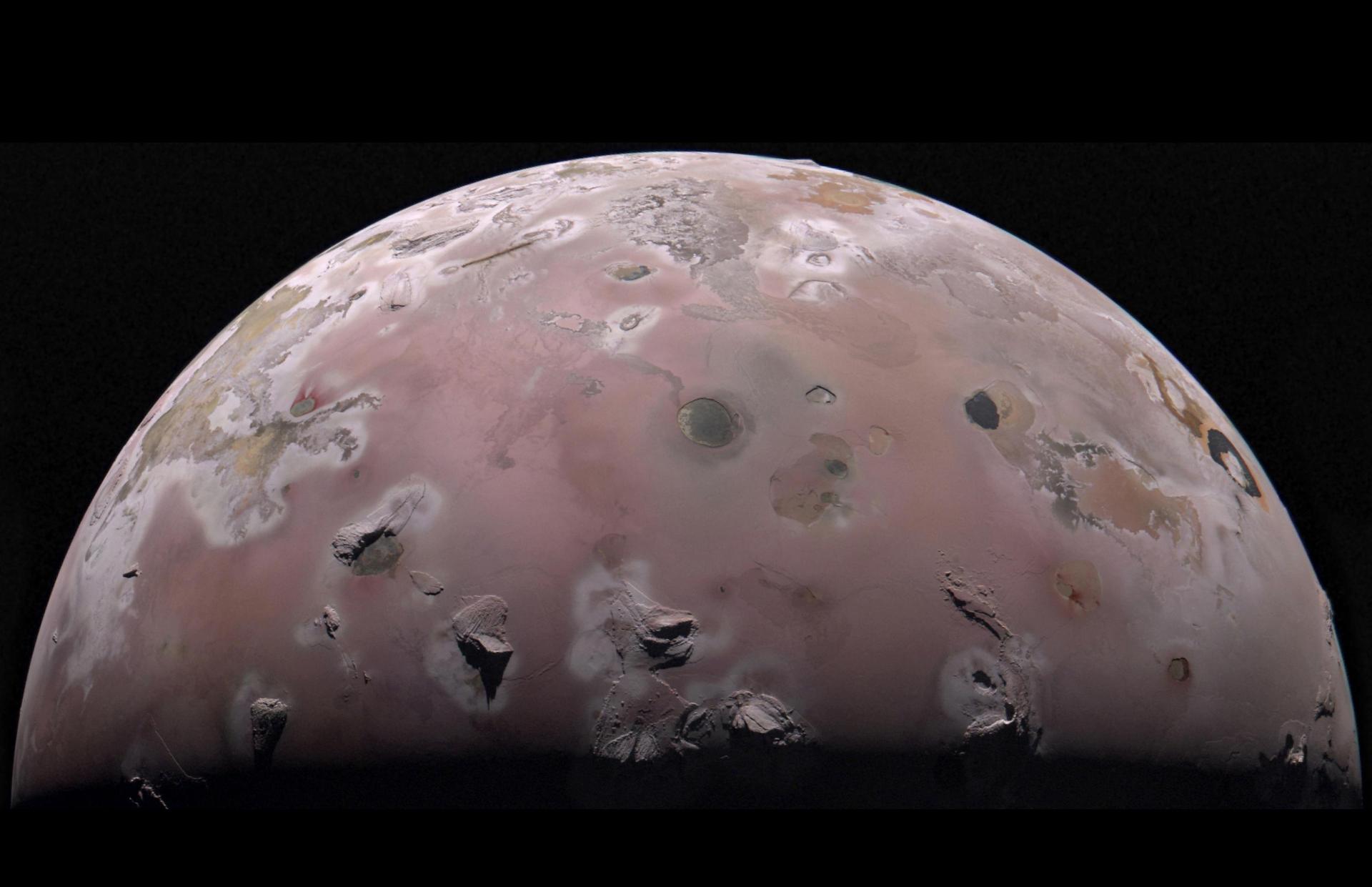
Lee esta historia en español aquí.
NASA’s Juno mission has provided the first measurements of the temperature below the surface of Jupiter’s moon Io, revealing significant heating within the shallow subsurface of the most volcanically active world in the solar system. Collected during two close flybys, the data also shows that most of Io’s surface is remarkably smooth and composed of material of very low density.
Published Wednesday in the Journal of Geophysical Research: Planets, these findings break new observational ground for both fiery and icy worlds beyond our planet.
Io’s extreme volcanism is powered by tidal heating. The moon is constantly stretched and squeezed by Jupiter’s immense gravity as it travels its slightly elliptical orbit, generating internal heat output many times greater than Earth’s. Until now, virtually everything known about that heat came from infrared observations, which sense only the temperature of the top surface. The latest findings are derived from data collected by the spacecraft’s Microwave Radiometer (MWR) instrument.
“The Juno Microwave Radiometer directly observed Io’s heat output by looking below the surface,” said Scott Bolton, study coauthor and Juno’s principal investigator at Southwest Research Institute in San Antonio. “The surprising discovery that we could see below a rocky moon’s surface has important implications for studying Earth’s volcanoes. Juno has taught us that if we look with an MWR-type instrument near a volcano on Earth, we might see a similar signature in the subsurface temperature gradient, providing new information on how terrestrial volcanoes work.”
This map represents data captured by the Microwave Radiometer instrument aboard NASA’s Juno, indicating heat rising from just beneath the surface of Jupiter’s moon Io. The colors illustrate a distinct temperature gradient across the moon, with the most extreme, localized heat output in red. NASA/JPL-Caltech/SwRI/USGS Fire, ice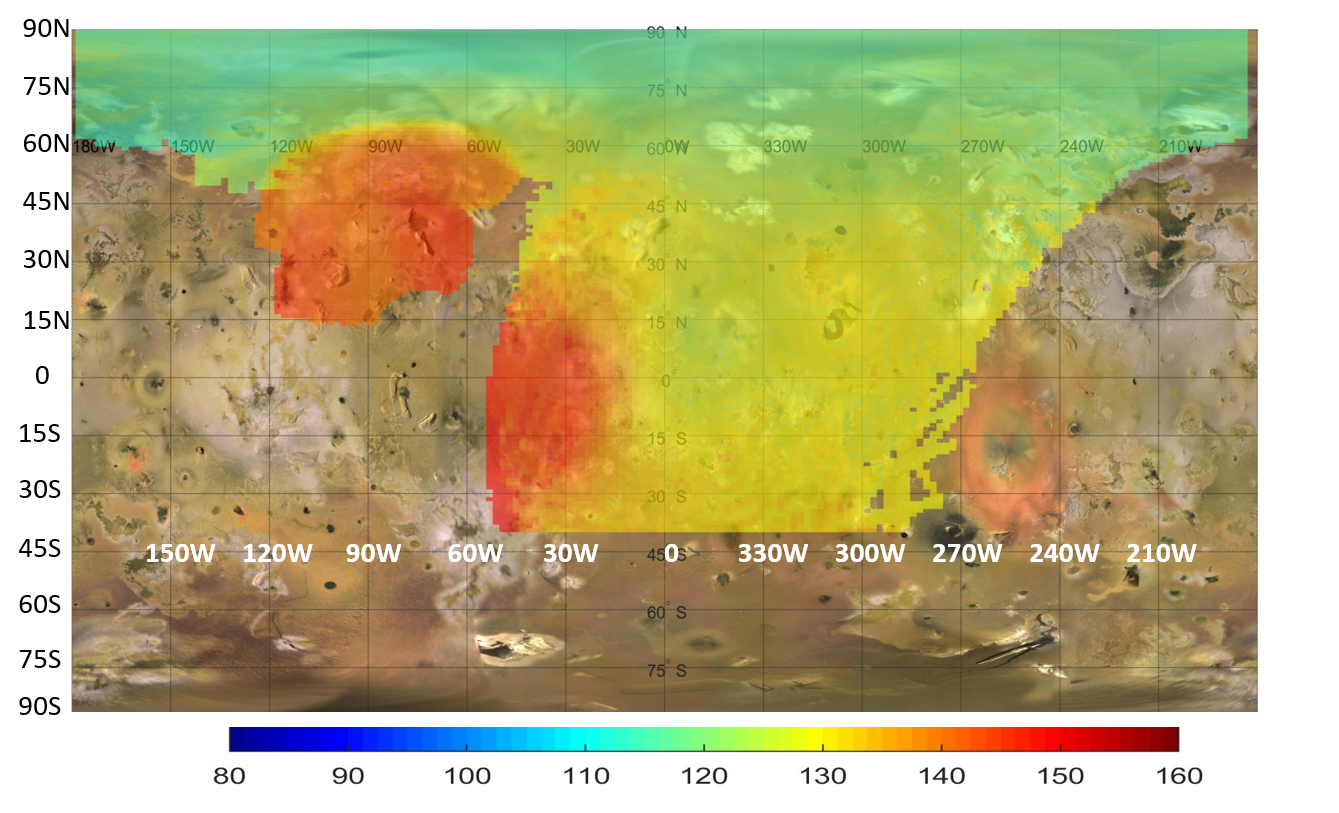
Juno’s Microwave Radiometer was designed by Bolton to peer beneath Jupiter’s cloud tops to investigate the dynamics and composition of the gas giant’s deep atmosphere. The MWR’s six microwave antennas serve as a single instrument, simultaneously detecting microwaves at a wide range of wavelengths, from about half an inch to 20 inches (1.3 to 51 centimeters). During the mission’s extended phase, the MWR instrument has provided the opportunity to observe three of the planet’s Galilean moons: Ganymede, Europa, and Io.
“The technique is novel in that each wavelength explores different depths, providing a new way to characterize the deep atmosphere of giant planets and the subsurface crusts of icy and rocky moons,” said Bolton. “At Ganymede and Europa, we explored tens of miles below the surface, assuming their ice shells were mostly pure water, but the ability to probe into the volcanic rock at Io was an unexpected discovery.”
During flybys on Dec. 30, 2023, and Feb. 3, 2024, the solar-powered Juno spacecraft came within about 930 miles (1,500 kilometers) of the moon’s surface.
“The instrument measured Io’s thermal emission at depths ranging from a few inches down to tens of feet. Everywhere we looked, we found the temperature rising by more than 40 degrees Fahrenheit just several feet into the surface — a gradient far steeper than solar heating alone can explain,” said Shannon Brown, the paper’s lead author at NASA’s Jet Propulsion Laboratory in Southern California.
The data suggests two possible explanations. First, heat could be rising steadily through a conductive crust. While this background heat flow — measured at 1 to 3 watts per square meter — is relatively gentle on a local scale (roughly equivalent to a small nightlight glowing under every square yard), across the entire moon it represents a release of energy up to 30 times Earth’s average. Alternatively, the signal could be coming from cooling lava flows, capped by roughly 30 to 35 feet (9 to 11 meters) of solidified crust, that cover about 10% of the moon’s surface at any given time.
“Io provides a unique window into learning how tidal heating works throughout the cosmos, a fundamental process that provides energy and heat to worlds that are far from their parent star,” said Bolton. “This process can not only create the most volcanic body in the solar system, in the case of Io, but also fuels the subsurface oceans on the moons of giant planets, such as Europa and Ganymede. Up until this point we could only observe the heat escaping at the surface or through eruptions. Now we can characterize how the heat is moving from the interior toward the surface.”
This graphic illustrates the areas of Io sampled by the Microwave Radiometer instrument aboard NASA’s Juno spacecraft during two close flybys of the Jovian moon.NASA/JPL-Caltech/SwRI/USGS Great plains of Io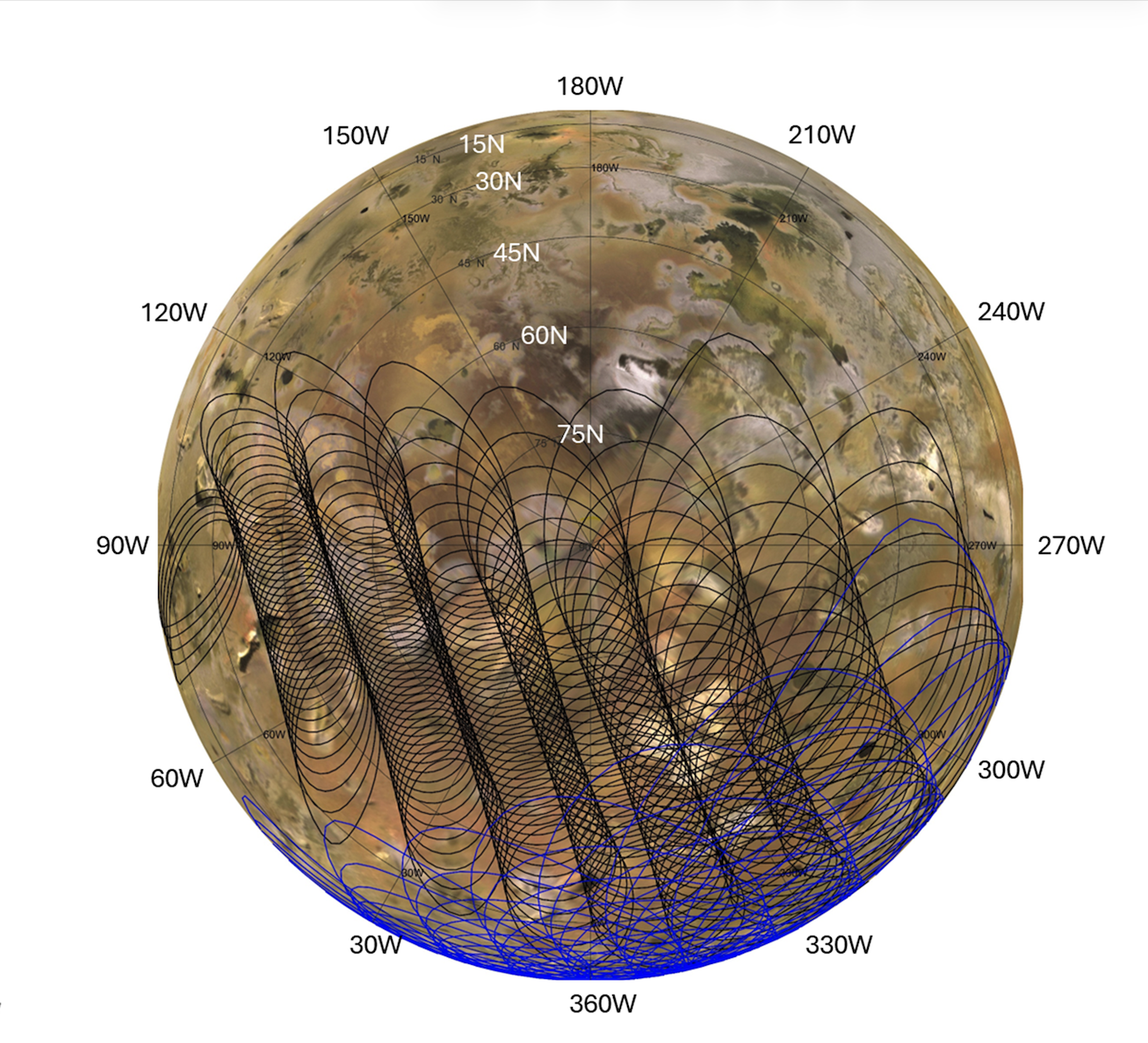
Another big insight gained from the two flybys is just how smooth Io is. Prior to the recent findings, the moon was known for its tall mountains, but the MWR indicates that apart from this visible topography, the surface features expansive smooth patches that stretch for 60 miles (100 kilometers) or more. Because Juno flew by overlapping regions of Io at different angles, the team was able to map how the surface reflects microwaves, much like an airline passenger might see the ocean flash with sunlight only at specific angles.
“Away from its mountains, the surface is more like the Great Plains of North America, and even though Io is a rocky body, the surface material has a very low density — more like pumice or a fluffy volcanic ash than solid rock,” said Brown.
More about JunoA division of Caltech in Pasadena, California, JPL manages the Juno mission for the principal investigator, Scott Bolton, of the Southwest Research Institute. Juno is part of NASA’s New Frontiers Program, which is managed at the agency’s Marshall Space Flight Center in Huntsville, Alabama, for the NASA’s Science Mission Directorate in Washington. Lockheed Martin Space in Denver built and operates the spacecraft. More information about Juno is at:
https://science.nasa.gov/mission/juno
News Media Contacts
DC Agle
Jet Propulsion Laboratory
818-393-9011
agle@jpl.nasa.gov
Karen Fox / Molly Wasser
NASA Headquarters, Washington
202-358-1600
karen.c.fox@nasa.gov / molly.l.wasser@nasa.gov
Deb Schmid
Southwest Research Institute, San Antonio
210-522-2254
dschmid@swri.org
2026-050
Share Details Last Updated Jul 22, 2026 Related Terms Explore More 2 min read Mapping Io’s Hidden Heat With NASA’s JunoDescription This graphic illustrates the areas of Jupiter’s moon Io sampled by the Microwave Radiometer…
Article 13 hours ago 2 min read NASA’s Juno Peers Beneath Io’s SurfaceDescription This map represents data captured by the Microwave Radiometer (MWR) aboard NASA’s Juno spacecraft,…
Article 13 hours ago 5 min read US-India Satellite Delivers Data, Reveals ‘Hummingbird’ in Antarctica Article 1 day ago Keep Exploring Discover Related TopicsJupiter: Exploration
JunoNASA’s Juno spacecraft has explored Jupiter, its moons, and rings since 2016, gathering breakthrough science and breathtaking imagery.
Jupiter Moons
Io
NASA’s Juno Takes Temperature of Jupiter’s Fiery Moon Io
5 min read
Preparations for Next Moonwalk Simulations Underway (and Underwater) TThe north polar region of Jupiter’s volcanic moon Io was captured by NASA’s Juno during the spacecraft’s 57th close pass of the gas giant on Dec. 30, 2023. Data from that flyby and one on Feb. 3, 2024, is helping scientists understand Io’s interior.Image data: NASA/JPL-Caltech/SwRI/MSSS Image processing by Gerald EichstädtLee esta historia en español aquí.
NASA’s Juno mission has provided the first measurements of the temperature below the surface of Jupiter’s moon Io, revealing significant heating within the shallow subsurface of the most volcanically active world in the solar system. Collected during two close flybys, the data also shows that most of Io’s surface is remarkably smooth and composed of material of very low density.
Published Wednesday in the Journal of Geophysical Research: Planets, these findings break new observational ground for both fiery and icy worlds beyond our planet.
Io’s extreme volcanism is powered by tidal heating. The moon is constantly stretched and squeezed by Jupiter’s immense gravity as it travels its slightly elliptical orbit, generating internal heat output many times greater than Earth’s. Until now, virtually everything known about that heat came from infrared observations, which sense only the temperature of the top surface. The latest findings are derived from data collected by the spacecraft’s Microwave Radiometer (MWR) instrument.
“The Juno Microwave Radiometer directly observed Io’s heat output by looking below the surface,” said Scott Bolton, study coauthor and Juno’s principal investigator at Southwest Research Institute in San Antonio. “The surprising discovery that we could see below a rocky moon’s surface has important implications for studying Earth’s volcanoes. Juno has taught us that if we look with an MWR-type instrument near a volcano on Earth, we might see a similar signature in the subsurface temperature gradient, providing new information on how terrestrial volcanoes work.”
This map represents data captured by the Microwave Radiometer instrument aboard NASA’s Juno, indicating heat rising from just beneath the surface of Jupiter’s moon Io. The colors illustrate a distinct temperature gradient across the moon, with the most extreme, localized heat output in red. NASA/JPL-Caltech/SwRI/USGS Fire, iceJuno’s Microwave Radiometer was designed by Bolton to peer beneath Jupiter’s cloud tops to investigate the dynamics and composition of the gas giant’s deep atmosphere. The MWR’s six microwave antennas serve as a single instrument, simultaneously detecting microwaves at a wide range of wavelengths, from about half an inch to 20 inches (1.3 to 51 centimeters). During the mission’s extended phase, the MWR instrument has provided the opportunity to observe three of the planet’s Galilean moons: Ganymede, Europa, and Io.
“The technique is novel in that each wavelength explores different depths, providing a new way to characterize the deep atmosphere of giant planets and the subsurface crusts of icy and rocky moons,” said Bolton. “At Ganymede and Europa, we explored tens of miles below the surface, assuming their ice shells were mostly pure water, but the ability to probe into the volcanic rock at Io was an unexpected discovery.”
During flybys on Dec. 30, 2023, and Feb. 3, 2024, the solar-powered Juno spacecraft came within about 930 miles (1,500 kilometers) of the moon’s surface.
“The instrument measured Io’s thermal emission at depths ranging from a few inches down to tens of feet. Everywhere we looked, we found the temperature rising by more than 40 degrees Fahrenheit just several feet into the surface — a gradient far steeper than solar heating alone can explain,” said Shannon Brown, the paper’s lead author at NASA’s Jet Propulsion Laboratory in Southern California.
The data suggests two possible explanations. First, heat could be rising steadily through a conductive crust. While this background heat flow — measured at 1 to 3 watts per square meter — is relatively gentle on a local scale (roughly equivalent to a small nightlight glowing under every square yard), across the entire moon it represents a release of energy up to 30 times Earth’s average. Alternatively, the signal could be coming from cooling lava flows, capped by roughly 30 to 35 feet (9 to 11 meters) of solidified crust, that cover about 10% of the moon’s surface at any given time.
“Io provides a unique window into learning how tidal heating works throughout the cosmos, a fundamental process that provides energy and heat to worlds that are far from their parent star,” said Bolton. “This process can not only create the most volcanic body in the solar system, in the case of Io, but also fuels the subsurface oceans on the moons of giant planets, such as Europa and Ganymede. Up until this point we could only observe the heat escaping at the surface or through eruptions. Now we can characterize how the heat is moving from the interior toward the surface.”
This graphic illustrates the areas of Io sampled by the Microwave Radiometer instrument aboard NASA’s Juno spacecraft during two close flybys of the Jovian moon.NASA/JPL-Caltech/SwRI/USGS Great plains of IoAnother big insight gained from the two flybys is just how smooth Io is. Prior to the recent findings, the moon was known for its tall mountains, but the MWR indicates that apart from this visible topography, the surface features expansive smooth patches that stretch for 60 miles (100 kilometers) or more. Because Juno flew by overlapping regions of Io at different angles, the team was able to map how the surface reflects microwaves, much like an airline passenger might see the ocean flash with sunlight only at specific angles.
“Away from its mountains, the surface is more like the Great Plains of North America, and even though Io is a rocky body, the surface material has a very low density — more like pumice or a fluffy volcanic ash than solid rock,” said Brown.
More about JunoA division of Caltech in Pasadena, California, JPL manages the Juno mission for the principal investigator, Scott Bolton, of the Southwest Research Institute. Juno is part of NASA’s New Frontiers Program, which is managed at the agency’s Marshall Space Flight Center in Huntsville, Alabama, for the NASA’s Science Mission Directorate in Washington. Lockheed Martin Space in Denver built and operates the spacecraft. More information about Juno is at:
https://science.nasa.gov/mission/juno
News Media Contacts
DC Agle
Jet Propulsion Laboratory
818-393-9011
agle@jpl.nasa.gov
Karen Fox / Molly Wasser
NASA Headquarters, Washington
202-358-1600
karen.c.fox@nasa.gov / molly.l.wasser@nasa.gov
Deb Schmid
Southwest Research Institute, San Antonio
210-522-2254
dschmid@swri.org
2026-050
Share Details Last Updated Jul 22, 2026 Related Terms Explore More 2 min read Mapping Io’s Hidden Heat With NASA’s JunoDescription This graphic illustrates the areas of Jupiter’s moon Io sampled by the Microwave Radiometer…
Article 5 hours ago 2 min read NASA’s Juno Peers Beneath Io’s SurfaceDescription This map represents data captured by the Microwave Radiometer (MWR) aboard NASA’s Juno spacecraft,…
Article 5 hours ago 5 min read US-India Satellite Delivers Data, Reveals ‘Hummingbird’ in Antarctica Article 1 day ago Keep Exploring Discover Related TopicsJupiter: Exploration
JunoNASA’s Juno spacecraft has explored Jupiter, its moons, and rings since 2016, gathering breakthrough science and breathtaking imagery.
Jupiter Moons
Io