
Feed aggregator
Blue Origin Issues Official Statement on New Glenn Explosion
Jeff Bezos' Blue Origin is assessing damage to its launch pad after a rocket exploded during a test firing, creating a giant orange fireball seen and felt for miles around.
NASA Space Roboticist Challenge
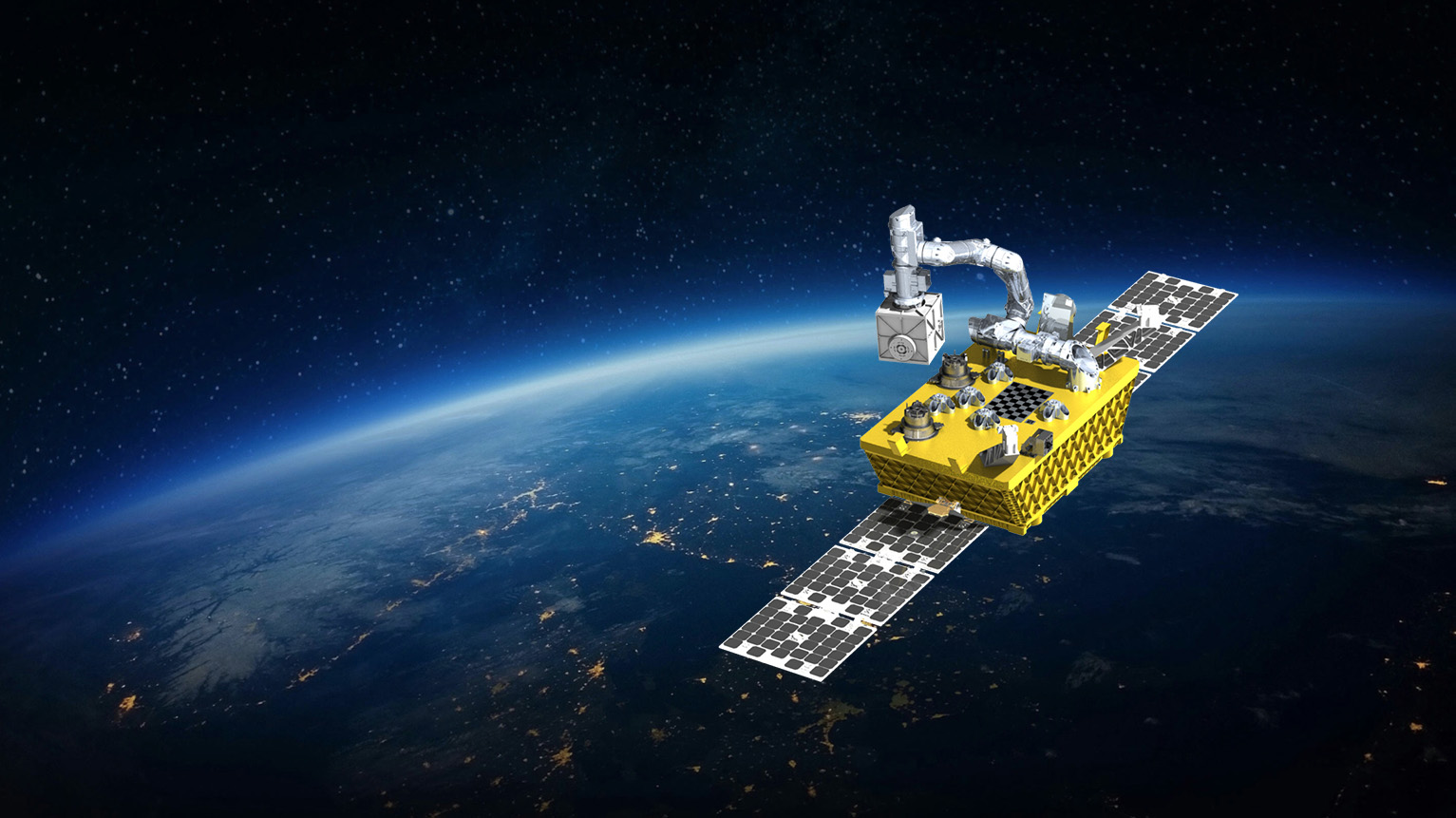
The Fly Foundational Robots (FFR) mission will launch a robotic arm, with seven degrees of freedom, to low Earth orbit. NASA is opening access to the robotic arm to a select group of U.S. researchers — principal investigators, post-doctoral researchers, professors, and highly qualified graduate students — who have a compelling experiment and the capability to execute it.
All participants must submit eligibility documentation at registration. Once your eligibility is reviewed and confirmed, you will receive access to the Phase 1 submission portal.
- Phase 0 — Eligibility Registration
Begin by completing your eligibility registration. Submission documentation is required at this stage as part of federal competition requirements. Registration closes at 12:59 p.m. ET (11:59 p.m. CT) on Sept. 23.
- Phase 1 — White Paper Submission
Submit a white paper proposing a short, focused experiment using the FFR robotic arm. Up to 15 teams advance to Phase 2. Submission closes at 12:59 p.m. ET (11:59 p.m. CT) on Oct. 2. - Phase 2 — Simulation & Validation
Invited participants conduct simulation and validation testing, including visits to Goddard Space Flight Center in Greenbelt, Maryland.
Prize: Teams that pass validation will receive an offer of on-orbit experiment time on the FFR Mission
Challenge Registration Open Date: May 20, 2026
Challenge Registration Close Date: September 23, 2026
For more information, visit: https://spaceroboticistchallenge.com/
NASA Space Roboticist Challenge
The Fly Foundational Robots (FFR) mission will launch a robotic arm, with seven degrees of freedom, to low Earth orbit. NASA is opening access to the robotic arm to a select group of U.S. researchers — principal investigators, post-doctoral researchers, professors, and highly qualified graduate students — who have a compelling experiment and the capability to execute it.
All participants must submit eligibility documentation at registration. Once your eligibility is reviewed and confirmed, you will receive access to the Phase 1 submission portal.
- Phase 0 — Eligibility Registration
Begin by completing your eligibility registration. Submission documentation is required at this stage as part of federal competition requirements. Registration closes at 12:59 p.m. ET (11:59 p.m. CT) on Sept. 23.
- Phase 1 — White Paper Submission
Submit a white paper proposing a short, focused experiment using the FFR robotic arm. Up to 15 teams advance to Phase 2. Submission closes at 12:59 p.m. ET (11:59 p.m. CT) on Oct. 2. - Phase 2 — Simulation & Validation
Invited participants conduct simulation and validation testing, including visits to Goddard Space Flight Center in Greenbelt, Maryland.
Prize: Teams that pass validation will receive an offer of on-orbit experiment time on the FFR Mission
Challenge Registration Open Date: May 20, 2026
Challenge Registration Close Date: September 23, 2026
For more information, visit: https://spaceroboticistchallenge.com/
<p><a href="https://apod.nasa.gov/apod
Astronomers Uncover Statistical Evidence for Recoiling Supermassive Black Holes
Galactic collisions are events of breathtaking proportions. The Supermassive Black Holes (SMBHs) at their centers plunge into a chaotic orbital dance that eventually coalesce into a single remnant. On their way to that point, they could eventually get “kicked” out of the center of their galaxy - and finding these “recoiling” black holes has been a challenge of cosmology for decades. A new paper, available on arXiv by an international team, used a novel idea to track down these fast-moving behemoths.
The Next-Generation Very Large Array Prototype (ngVLA) Gathers its First Light
The prototype ngVLA antenna tested its systems by observing and tracking the Crab Nebula, also known as Taurus A (3C144), the remnant of an exploded star.
In a first, scientists transplanted both a pig liver and kidneys into a person who was brain-dead
The transplanted pig organs functioned for 36 hours before showing signs of rejection
Microsoft’s upgraded Majorana quantum computing chip fizzles with physicists
Microsoft’s announcement of a new quantum computing breakthrough with its Majorana 2 chip continues a trend of bold claims followed by scant evidence
Flash-Melted Glass from Chang'e-5 Reveals a High Levels of Iron on the Moon
It might not seem like it, but the Moon is constantly being both sandblasted and baked. Its lack of a thick atmosphere allows micrometeorites to impact the surface at speed, and the solar wind isn’t held back either, baking the regolith with a constant flow of high-energy particles. These processes drive what is called “space weathering”, and it can drastically alter the physical and chemical properties of the lunar dirt over the course of billions of years. And we’re finally getting a better sense of what that means in practice thanks to two new papers from researchers at the Chinese Academy of Sciences and Peking University, which used advanced electron tomography and spectroscopic techniques to analyze samples returned from the Chang’e-5 mission to the near side of the Moon.
Sturgeon fish sex sounds like ‘thunder’
These sounds could be used to track the health of populations of the endangered Atlantic sturgeon
Why you need to future-proof your brain in middle age and how to start
Why you need to future-proof your brain in middle age and how to start
How the electromagnetic spectrum opened our eyes to the universe
How the electromagnetic spectrum opened our eyes to the universe
How Early Earth's Unlikely Chemical Hero Appeared
Though it's a toxic chemical, hydrogen cyanide (HCN) is also important for the development of life. It's a precursor to things like amino acids and nucleic acids and plays a central role in theories of the origin of life on Earth. Recently, difficult questions have been asked about how it could have formed on the early Earth. But the authors of new research in PNAS seemed to have figured it out.
Trump’s new AI executive order drastically shifts the administration’s stance on the tech
This order asks artificial intelligence companies to give the U.S. government up to 30 days to assess frontier models before they are released
Mars Hid its Warm, Wet Crystals Underground
The search for any sign of life on Mars continues. In the latest update, a new data release from Curiosity’s Chemistry and Mineralogy (CheMin) - essentially the rover’s portable X-ray diffraction lab - and published in a paper in Science, analyzes 20 different rock samples from various elevations of Mount Sharp, the mountain in the center of Gale Crater that Curiosity has been slowly climbing. In the paper, the researchers describe how the size of the crystals in those samples could help scientists determine where to look for evidence that life might have evolved on the Red Planet.
The best new popular science books of June 2026
The best new popular science books of June 2026
Trump administration takes aim at crucial ocean monitoring network
The Ocean Observatories Initiative has been collecting data on physical, chemical, geological and biological conditions in the Atlantic and Pacific Oceans for the past decade