
Feed aggregator
Ancient geology could insulate Iran’s nuclear centrifuges under Pickaxe Mountain from bombing
Iran’s Pickaxe Mountain, or Kuh-e Kolang Gaz La in Persian, is part of a volcanic arc that formed tens of millions of years ago and is made of a tough-to-penetrate rock
Transplanted testicular tissue grew sperm in an infertile patient
The history of testicular transplants is long and often sordid, but this successful procedure offers hope for survivors of cancer and other diseases that affect fertility
Look for NASA+ Now Streaming on Amazon Fire TV
Continuing agency efforts to bring space closer to home, NASA+ is heading to more streaming platforms. On Thursday, NASA announced its programming is on Fire TV Channels. Fire TV customers can easily access this content by asking Alexa+ on compatible devices.
Future programming on Fire TV may include science mission launches, a test flight for rendezvous and docking with human landing systems, robotic lunar deliveries, the first crewed mission to the Moon under Artemis, and more. As always, NASA+ also remains available for free, with no ads, through the NASA app and on the agency’s website.
“The National Aeronautics and Space Act of 1958 calls on us to share our story of space exploration with the broadest possible audience, and our streaming partners help us accomplish that,” said Rebecca Sirmons, general manager of NASA+ at the agency’s Headquarters in Washington. “Artemis II captured the hearts and minds of viewers globally, inspiring the Artemis generation. As we work toward building humanity’s first Moon Base, we will continue to provide transparent, engaging content coverage every step of the way.”
Earlier this year during its Ignition event, NASA shared plans for a bold path forward for the agency, including increasing its cadence of Artemis missions to the lunar surface, and building the first Moon Base, among other agency priorities. This distribution partnership is another step in executing NASA’s promise to the public for a greater look into the agency, making mission and educational content available on multiple devices for viewers on their preferred channels.
For more about NASA’s missions, visit:
-end-
Cheryl Warner
Headquarters, Washington
202-358-1600
cheryl.m.warner@nasa.gov
Look for NASA+ Now Streaming on Amazon Fire TV
Continuing agency efforts to bring space closer to home, NASA+ is heading to more streaming platforms. On Thursday, NASA announced its programming is on Fire TV Channels. Fire TV customers can easily access this content by asking Alexa+ on compatible devices.
Future programming on Fire TV may include science mission launches, a test flight for rendezvous and docking with human landing systems, robotic lunar deliveries, the first crewed mission to the Moon under Artemis, and more. As always, NASA+ also remains available for free, with no ads, through the NASA app and on the agency’s website.
“The National Aeronautics and Space Act of 1958 calls on us to share our story of space exploration with the broadest possible audience, and our streaming partners help us accomplish that,” said Rebecca Sirmons, general manager of NASA+ at the agency’s Headquarters in Washington. “Artemis II captured the hearts and minds of viewers globally, inspiring the Artemis generation. As we work toward building humanity’s first Moon Base, we will continue to provide transparent, engaging content coverage every step of the way.”
Earlier this year during its Ignition event, NASA shared plans for a bold path forward for the agency, including increasing its cadence of Artemis missions to the lunar surface, and building the first Moon Base, among other agency priorities. This distribution partnership is another step in executing NASA’s promise to the public for a greater look into the agency, making mission and educational content available on multiple devices for viewers on their preferred channels.
For more about NASA’s missions, visit:
-end-
Cheryl Warner
Headquarters, Washington
202-358-1600
cheryl.m.warner@nasa.gov
Why environmental groups are suing over SpaceX’s land swap deal
If approved, this deal would give SpaceX hundreds of acres that are currently part of the Lower Rio Grande Valley National Wildlife Refuge in exchange for private land
Why don’t insects live in the ocean?
Nobody knows why insects aren't found living in the ocean. Scientists just eliminated one theory
Humans may have spoken 10 times as many languages 2,000 years ago
During a lost ‘golden age’ of language, humans may have spoken tens of thousands of different tongues, a new study suggests
Why Tom Hiddleston finds Pompeii so haunting—and so human
Actor Tom Hiddleston reflects on the first time he visited Pompeii as a teenager and explains why the ancient city’s preserved tragedy continues to shape his understanding of history and humanity
China’s Kimi K3 and the rise of open-weight AI models
Moonshot AI’s Kimi K3 shows how opening a model to outsiders can turn other companies’ computing power into a competitive advantage
Crews Move Artemis IV Liquid Hydrogen Tank
Crews Move Artemis IV Liquid Hydrogen Tank
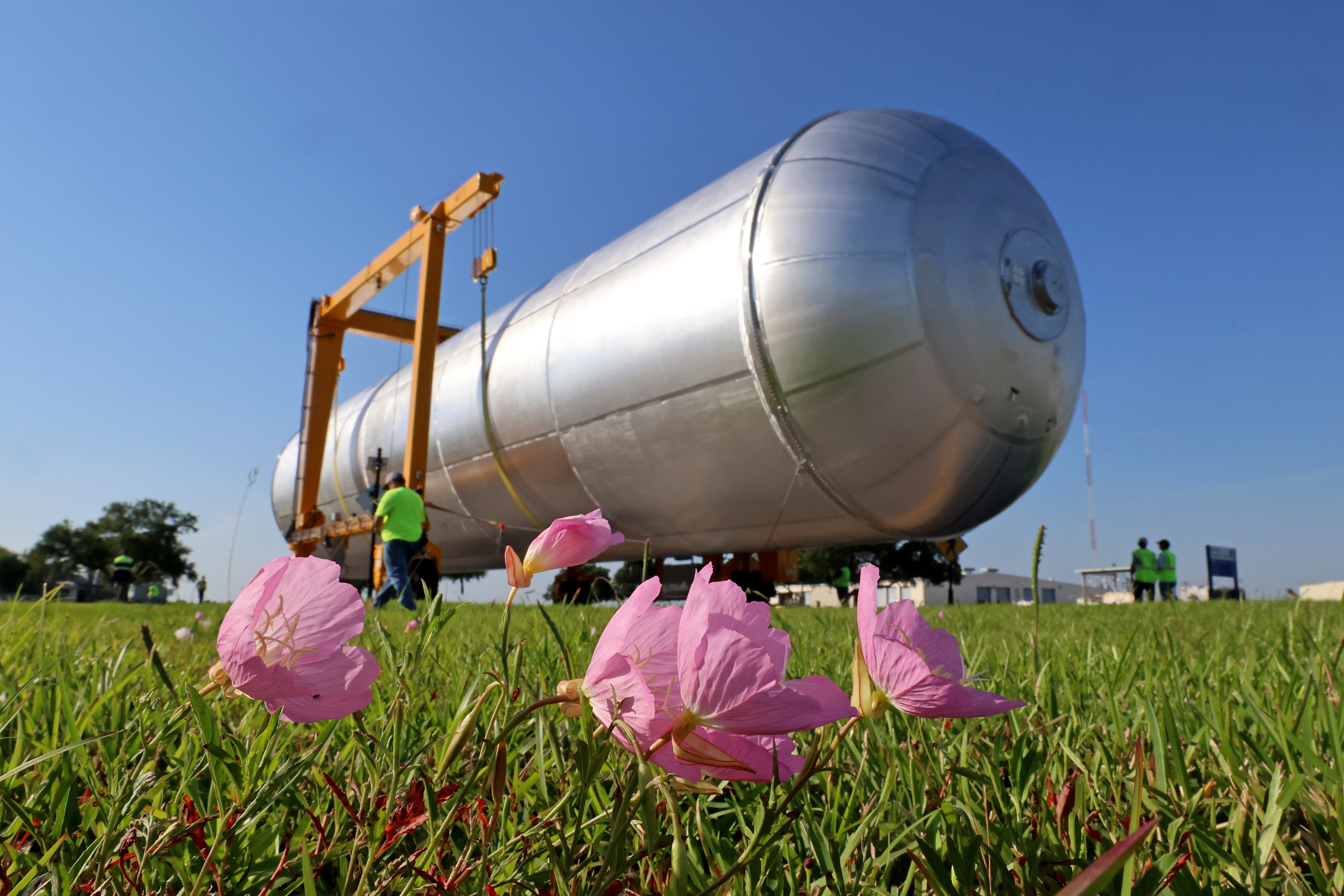
Crews at NASA’s Michoud Assembly Facility in New Orleans transport the 130-foot-tall Artemis IV liquid hydrogen tank out of a production cell inside the main factory building into a detached test building on a separate portion of the 829-acre site on May 15, 2026. The liquid hydrogen tank will form part of the core stage for the SLS (Space Launch System) rocket, providing thousands of gallons of super-cold propellant to one of four RS-25 engines.
Image credit: NASA/Michael DeMocker
NASA’s MAVEN Illuminates New Understanding of Auroras at Mars
NASA MAVEN (Mars Atmosphere and Volatile Evolution) mission scientists have uncovered a key puzzle piece in understanding certain types of auroras on Mars, finding that they form in a similar way to Earth-based auroras.
Results published Thursday in Nature Communications show the same mechanism that circulates and catapults charged particles into Earth’s atmosphere is happening at Mars on much smaller scales because of differences in the two planets’ magnetic fields.
The MAVEN spacecraft, in orbit around Mars, experienced a loss of signal with ground stations on Earth on Dec. 6, 2025. On June 3, NASA declared the mission had concluded after finding the spacecraft to be unrecoverable. However, data from the mission is still being used to inform NASA science and future missions to Mars.
When the Sun’s magnetic field lines get close to Earth’s magnetosphere, the large magnetic bubble protecting the planet, they can reconnect and inject energy and mass throughout Earth’s magnetosphere and magnetotail, ultimately firing electrons back into the atmosphere to generate Earth’s auroras. This process, called the Dungey cycle, drives electrical currents, accelerates charged particles that create auroras, and controls the circulation of plasma in Earth’s magnetosphere and ionosphere.
This new study shows that a miniature version of the Dungey cycle is happening over Mars’ strong crustal magnetic fields, which gives scientists a better look into the physics of Martian auroras.
“We knew that magnetic reconnection was happening at Mars but did not expect it to be like the Dungey cycle,” said Shaosui Xu, lead author of the study and associate research physicist at the Space Sciences Laboratory at the University of California, Berkeley.
Mars does not have a global magnetic field like Earth. Earth’s magnetic field is created by our planet’s churning core, while Mars has numerous miniature magnetospheres that arise from intensely magnetized crust scattered around the planet. These regions were formed around 4 billion years ago when lava cooled in the presence of Mars’ ancient global magnetic field, which has since disappeared due to intense solar wind stripping the planet’s atmosphere.
The MAVEN mission has observed highly localized auroras over these crustal fields, similar to Earth’s auroras at the poles, but it wasn’t until now that scientists could fully understand the physics of how they form. The study used several instruments aboard the MAVEN spacecraft to build up a picture of the Dungey-like behavior: the Magnetometer and Solar Wind Electron Analyzer instruments, which were used to determine the magnetic configuration and derive electrical currents, and the STATIC (Suprathermal and Thermal Ion Composition) instrument, which was used to measure plasma flows in the ionosphere.
“We really pushed the limit of STATIC to get the data we needed,” said Xu. “It was the final piece to the puzzle in understanding these localized auroras.”
The realization that a Dungey-like cycle was happening within these crustal magnetic fields answered the question of how the electrons were being energized to create the auroras. It also shows that a Dungey-like mechanism can happen on both large and small scales, giving more insight into where in the solar system this process could be taking place.
“This is a remarkable result that changes how we think of Martian auroras and is another important step toward understanding why Mars and Earth have evolved so differently despite being governed by the same underlying physics.” said Shannon Curry, MAVEN’s principal investigator and a research scientist at the Laboratory for Atmospheric and Space Physics at the University of Colorado Boulder. “I am incredibly proud of our team’s work on this discovery and excited to uncover new insights into the Red Planet and its evolution.”
By finding out more about this process, scientists also are gaining a better understanding of how the solar environment interacts with the Red Planet as a whole, which is essential for future robotic and crewed missions.
“I remember in graduate school discussing with my advisor how the cycling of crustal magnetic fields could work at Mars,” said Xu. “It’s incredible to be part of the team that found the answer to that question.”
The MAVEN mission is part of NASA’s Mars Exploration Program portfolio. The mission’s principal investigator is based at the Laboratory for Atmospheric and Space Physics at the University of Colorado Boulder, which also is responsible for managing science operations and public outreach and communications. NASA’s Goddard Space Flight Center in Greenbelt, Maryland, manages the MAVEN mission. Lockheed Martin Space built the spacecraft and is responsible for mission operations. NASA’s Jet Propulsion Laboratory in Southern California provides navigation and Deep Space Network support.
For more information on NASA’s MAVEN mission, visit:
https://science.nasa.gov/mission/maven/
Karen Fox / Alana Johnson
Headquarters, Washington
240-285-5155 / 202-672-4780
karen.c.fox@nasa.gov / alana.r.johnson@nasa.gov
Lonnie Shekhtman
NASA’s Goddard Space Flight Center, Greenbelt, Md.
lonnie.shekhtman@nasa.gov
2026 Fields Medals go to four young mathematicians
The 2026 Fields Medals recognize breakthroughs in the math of messy fluids, tangled knots, spinning pencils, and more
NASA Astronaut Chris Williams Closes Out Space Station Mission
After eight months aboard the International Space Station for his first mission, NASA astronaut Chris Williams is preparing to return to Earth. During his assignment, Williams contributed to research for new cancer treatments, advanced the production of materials to improve computers and electronics, ventured into the vacuum of space to complete two spacewalks, and much more. Williams’ work aboard the space station helped to improve life on Earth and prepare for future missions to the Moon and Mars.
Here are some of the research highlights from his mission:
Cancer-fighting constructs NASA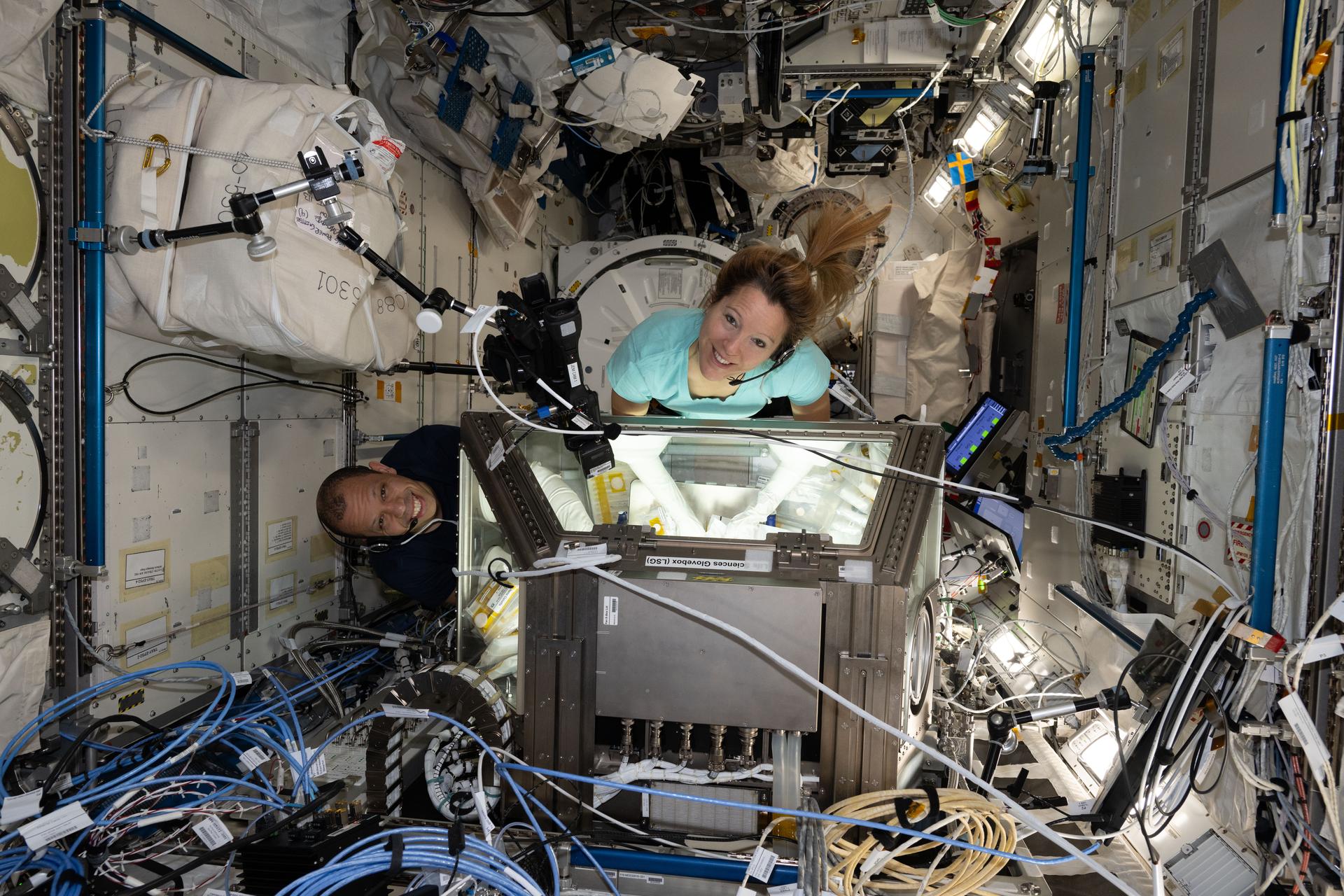
NASA astronaut Chris Williams and ESA (European Space Agency) astronaut Sophie Adenot work to process DNA-inspired materials that could advance new cancer treatments for people on Earth. In space, these rod-shaped materials form more evenly and consistently, which may improve their performance and readiness for treatments on Earth. While there have been major advancements in cancer therapies, many treatments can affect the whole body and cause side effects without fully treating solid tumors. This research aims to enable targeted cancer therapies that reach deep into tumors, stay in the body longer, and release medicine in a more controlled way.
Learn more about DNA Nano Therapeutics-3.
Superior semiconductors NASA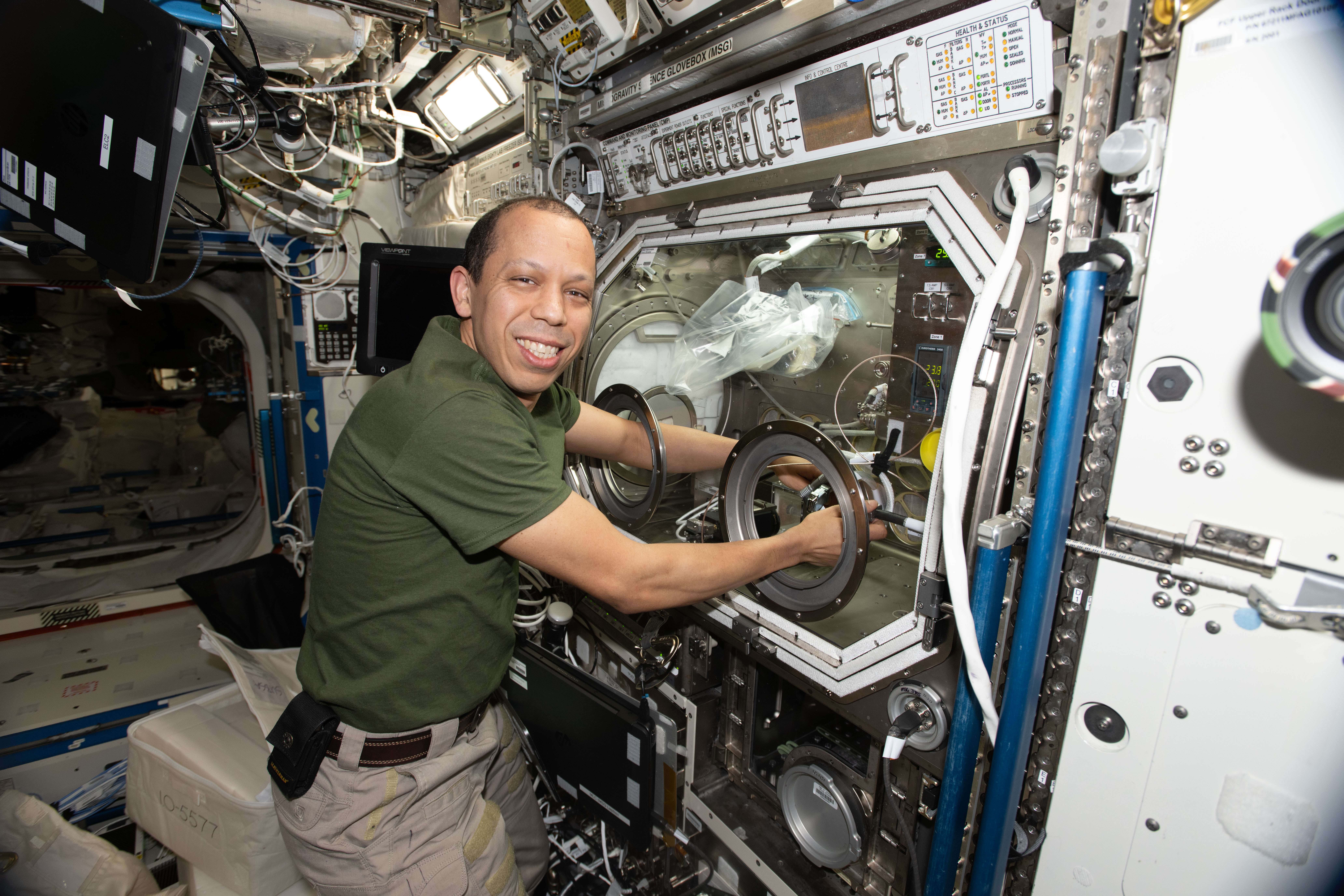
NASA astronaut Chris Williams conducts research to grow semiconductor crystals in space. In microgravity, researchers can grow more crystals of the desired size than can be produced on Earth. Previous research shows that space-grown crystals can offer increased performance to help advance technologies like high-performance computers, artificial intelligence, and medical devices. This research lays the groundwork for commercial semiconductor manufacturing in space and advances the semiconductor industry.
Learn more about In-Space Production of Semimetal-Semiconductor Composite Bulk Crystals in Microgravity (SUBSA-InSPA-SSCug).
Eyeing Earth Roscosmos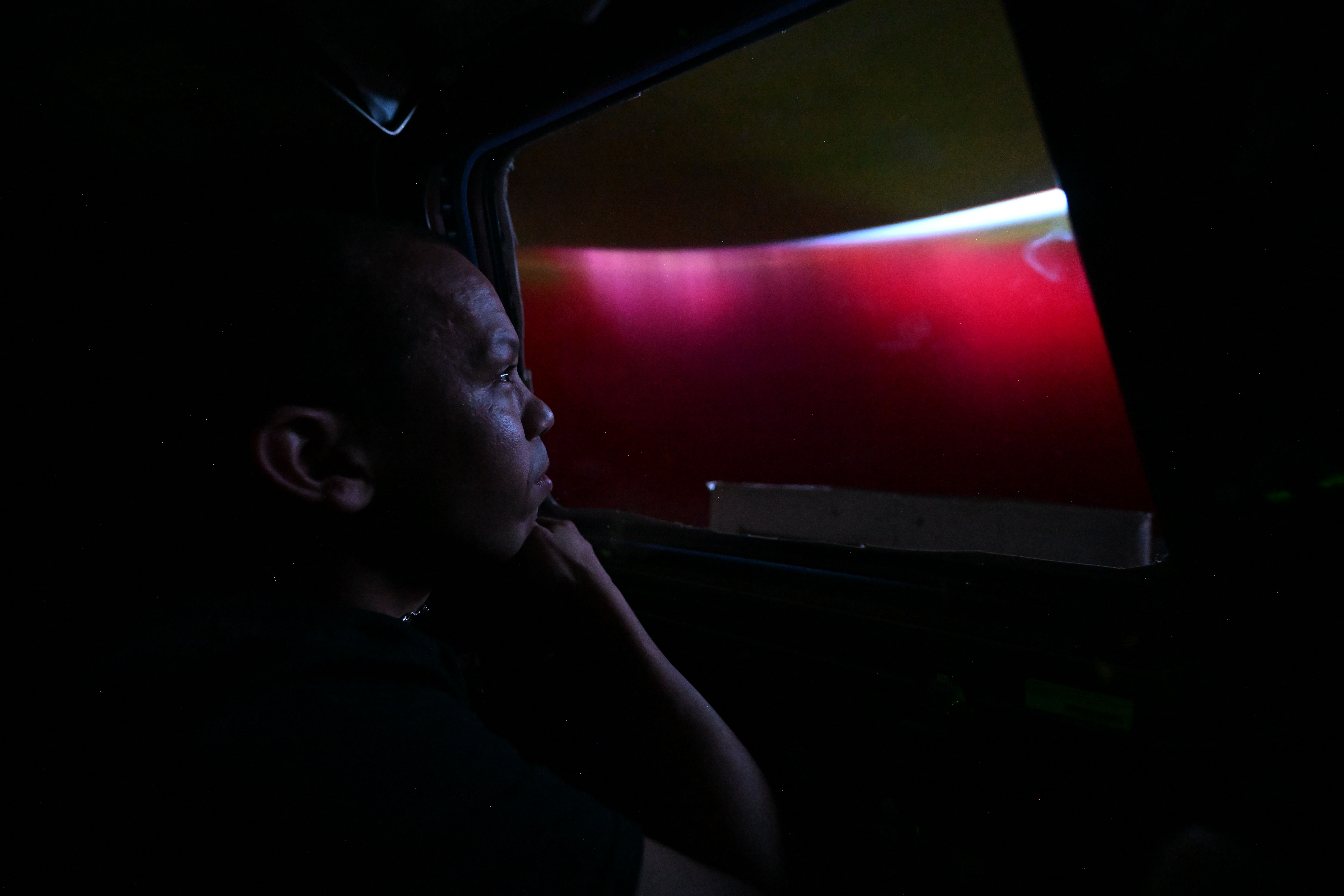
NASA astronaut Chris Williams looks out of a cupola window at a red aurora glowing above the Earth. Since the 1960s, astronauts have photographed Earth from space to help scientists monitor the planet’s changing landscapes, natural disasters, and other features over time. Along the way, astronauts also have captured images of celestial objects such as comets, auroras, and the Milky Way.
Sub-zero medical samples NASA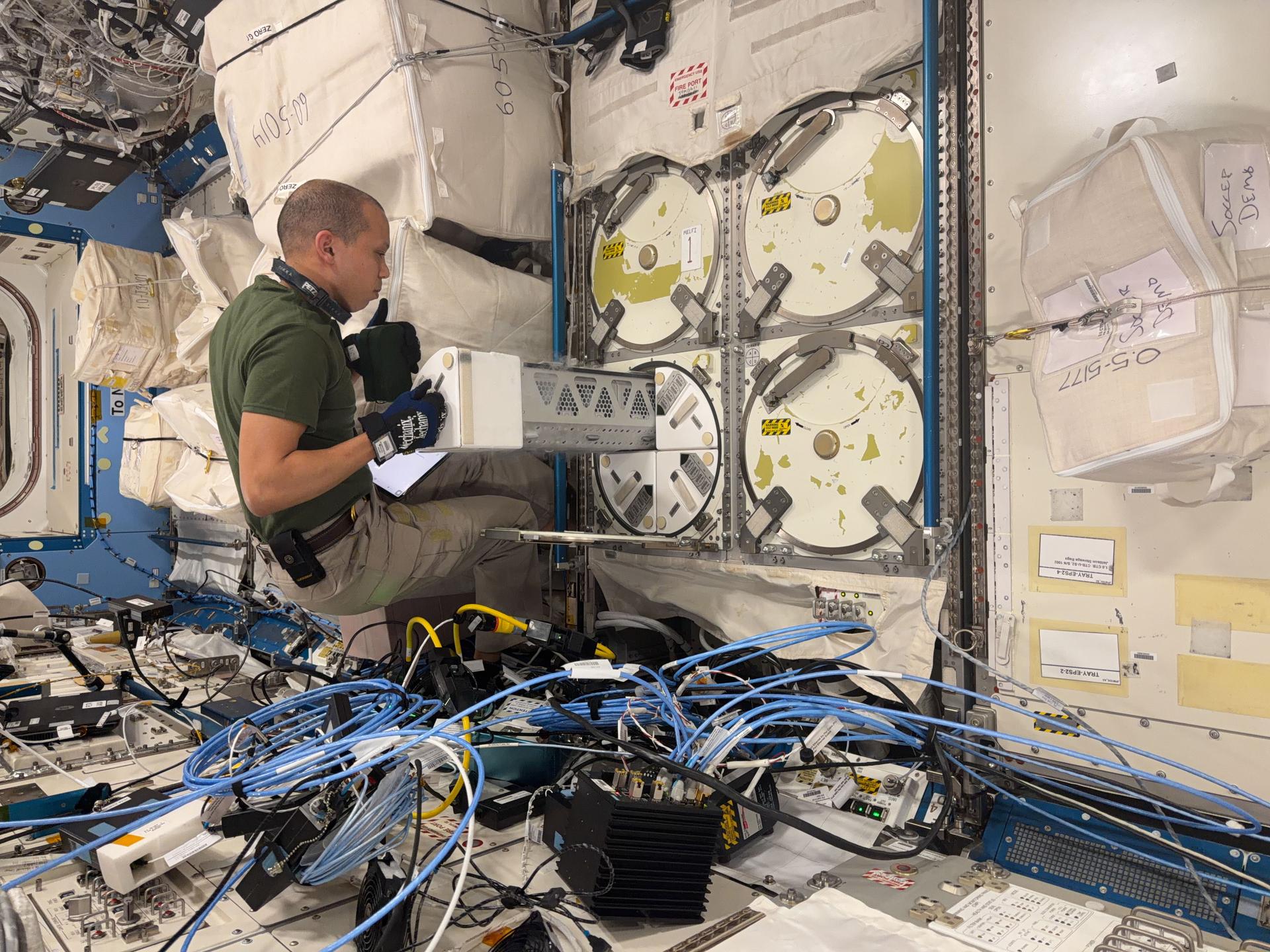
NASA astronaut Chris Williams works with a special freezer aboard the International Space Station that keeps research samples at ultra-cold temperatures until they can return to Earth. Throughout each mission, astronauts collect biological samples like blood and urine to help scientists understand how long-duration spaceflight affects the human body. Observing crew members during their space missions and studying these frozen samples back on Earth helps NASA protect astronaut health during future missions to the Moon, Mars, and beyond.
Learn more about the Minus Eighty-Degree Laboratory Freezer for the International Space Station (MELFI) and Human Research.
Capturing cargo NASA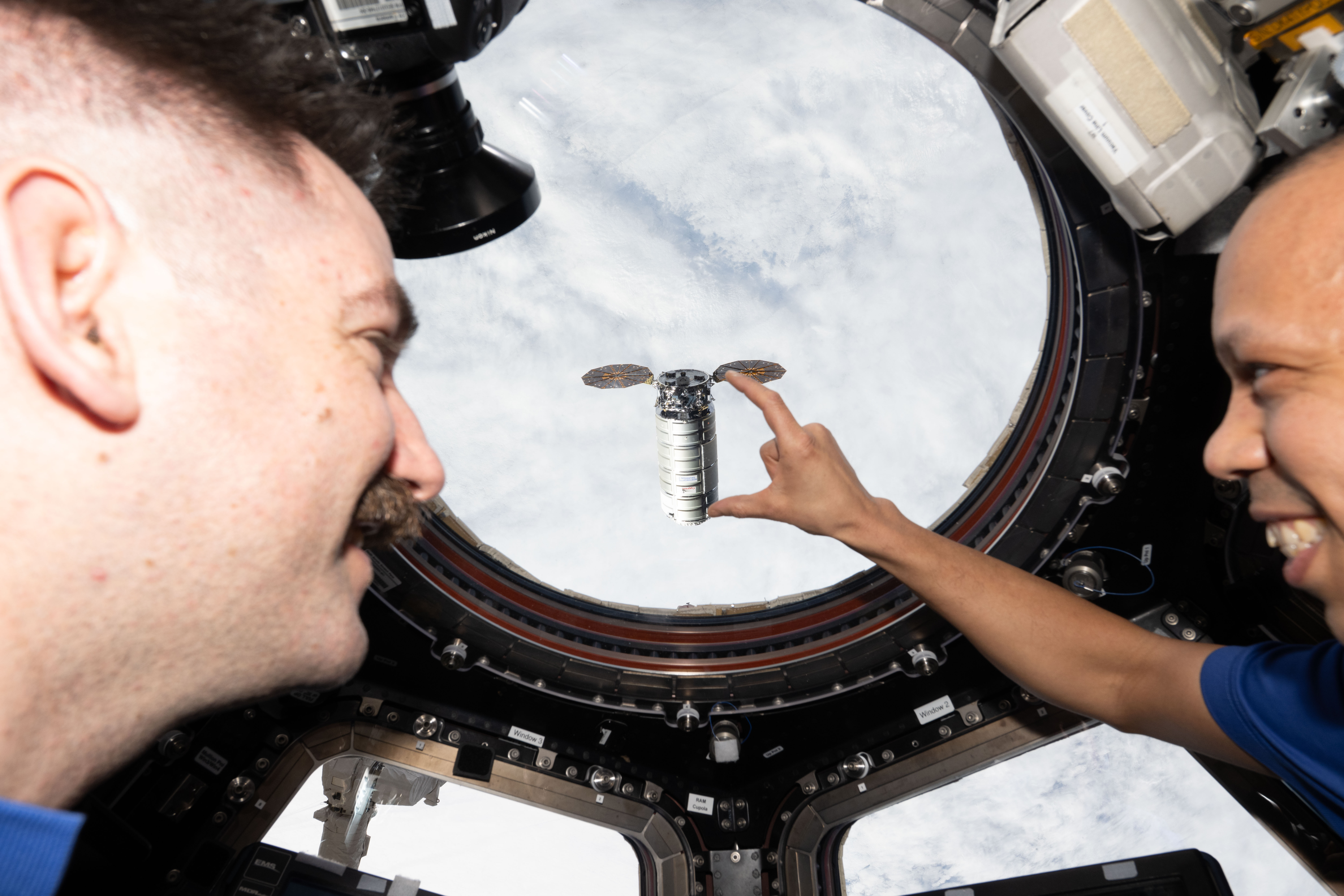
NASA astronauts Jack Hathaway and Chris Williams watch from the cupola windows as Northrop Grumman’s Cygnus XL cargo spacecraft approaches the International Space Station. The two played key roles in the capture of the spacecraft, which delivered approximately 11,000 pounds of supplies, including fresh food, life support equipment, and scientific research as part of NASA’s Northrop Grumman Commercial Resupply Services 24 mission. Cargo missions help keep the space station operating and provide astronauts with the supplies they need to live, work, and conduct research in orbit.
Blocking biofilms NASA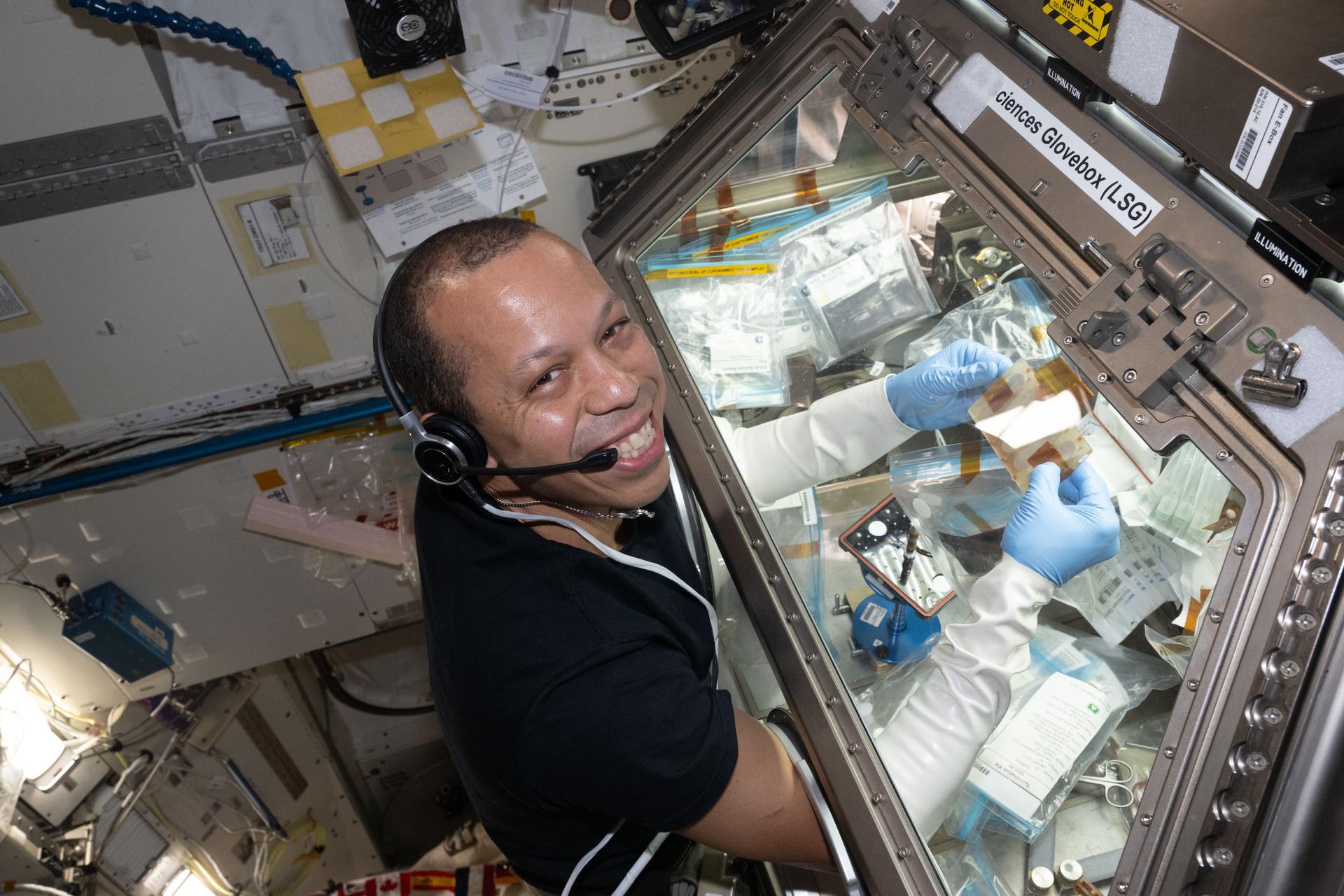
NASA astronaut Chris Williams works on an investigation that tests the use of ultraviolet light to help prevent the formation of microbial colonies, called biofilms. Biofilms can clog and contaminate water systems, damage equipment, and pose health risks to astronauts. This research aims to keep surfaces cleaner and safeguard systems during long-duration space missions. Using UV light for sanitation also could reduce the need for chemical disinfectants in space, decreasing the risk of chemical exposure and eliminating difficulties in transporting or storing supplies.
Learn more about Germicidal Ultraviolet Light Biofilm Inhibition (GULBI).
Strengthening solar power NASA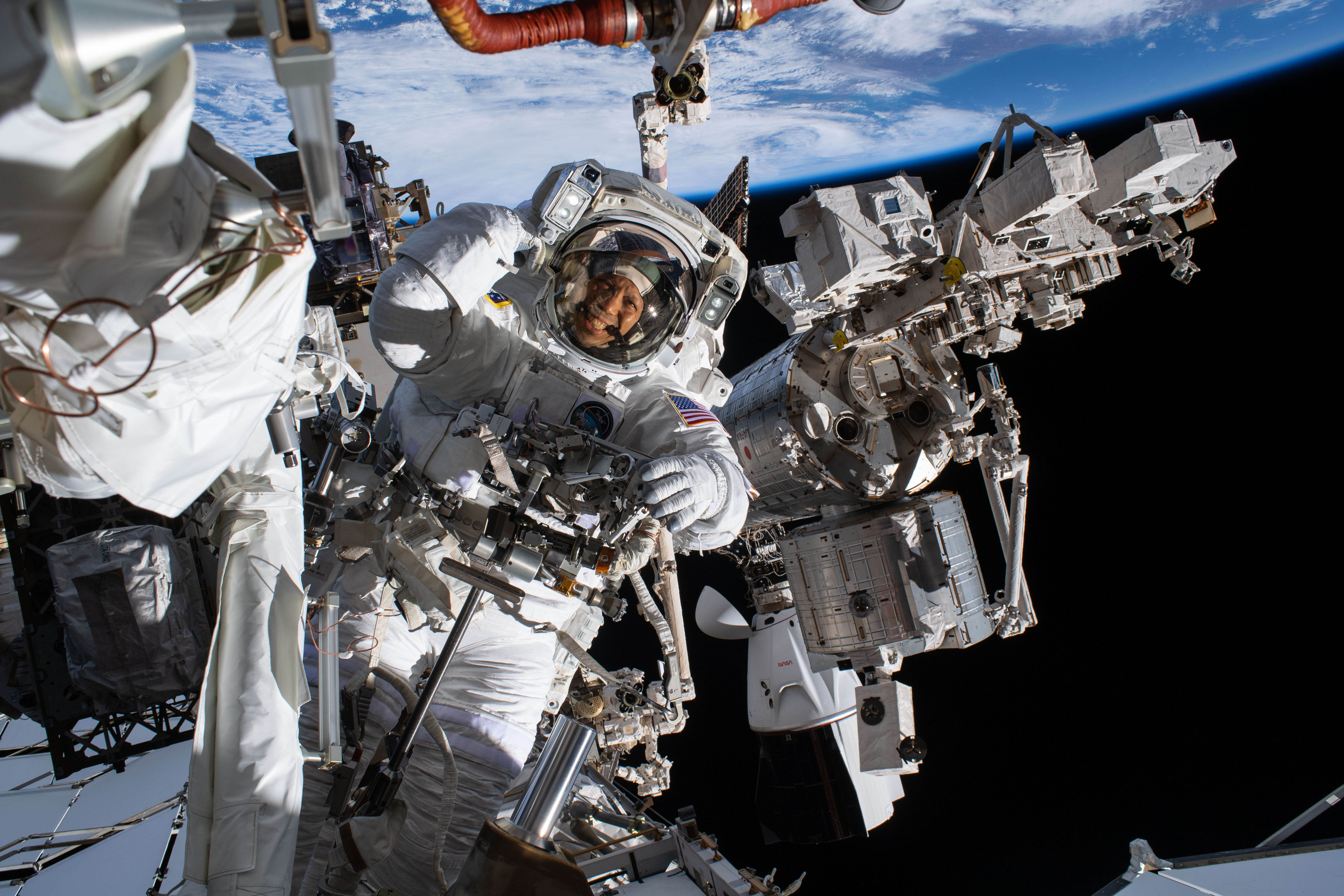
NASA astronaut Chris Williams ventured outside the International Space Station for two spacewalks during his mission. In June, he helped make repairs to Canadarm2, a robotic arm that captures cargo spacecraft and deploys external research. In March, Williams prepared the orbiting laboratory for new solar arrays to be added to the station in a future spacewalk. Once installed, the final set of International Space Station Roll Out Solar Arrays (IROSA) will complete the full suite of additional solar power, increasing the station’s power generation by about 30% and enhancing support for scientific research and daily operations. The same solar array technology also powered NASA’s Double Asteroid Redirection Test and could support future missions to the Moon and Mars.
Learn more about the space station’s IROSAs.
Microgravity medicine NASA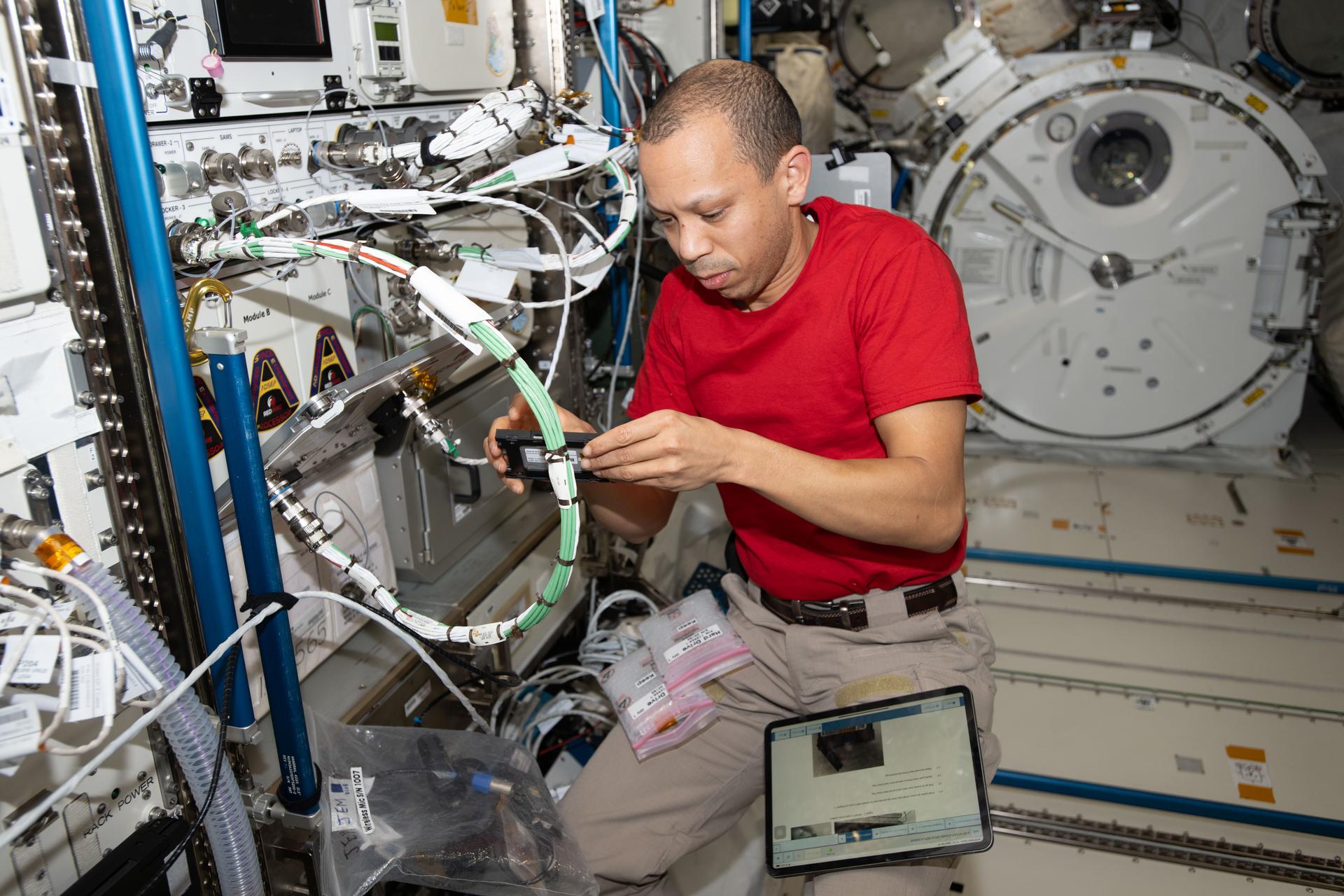
NASA astronaut Chris Williams works with hardware to support the development of new cancer and disease treatments by studying the growth of protein crystals for pharmaceuticals. In space, protein crystals form higher-quality structures than they do on Earth, allowing researchers to better understand how to target and treat disease. Here, Williams works with a project that aims to develop a new formula for a cancer treatment that could be taken orally. Growing protein crystals in space paves the way for more commercial companies to create new therapies that could improve patient outcomes on Earth.
Learn more about the Pharmaceutical In-space Laboratory (ADSEP-PIL-10).
Robotic refinement NASA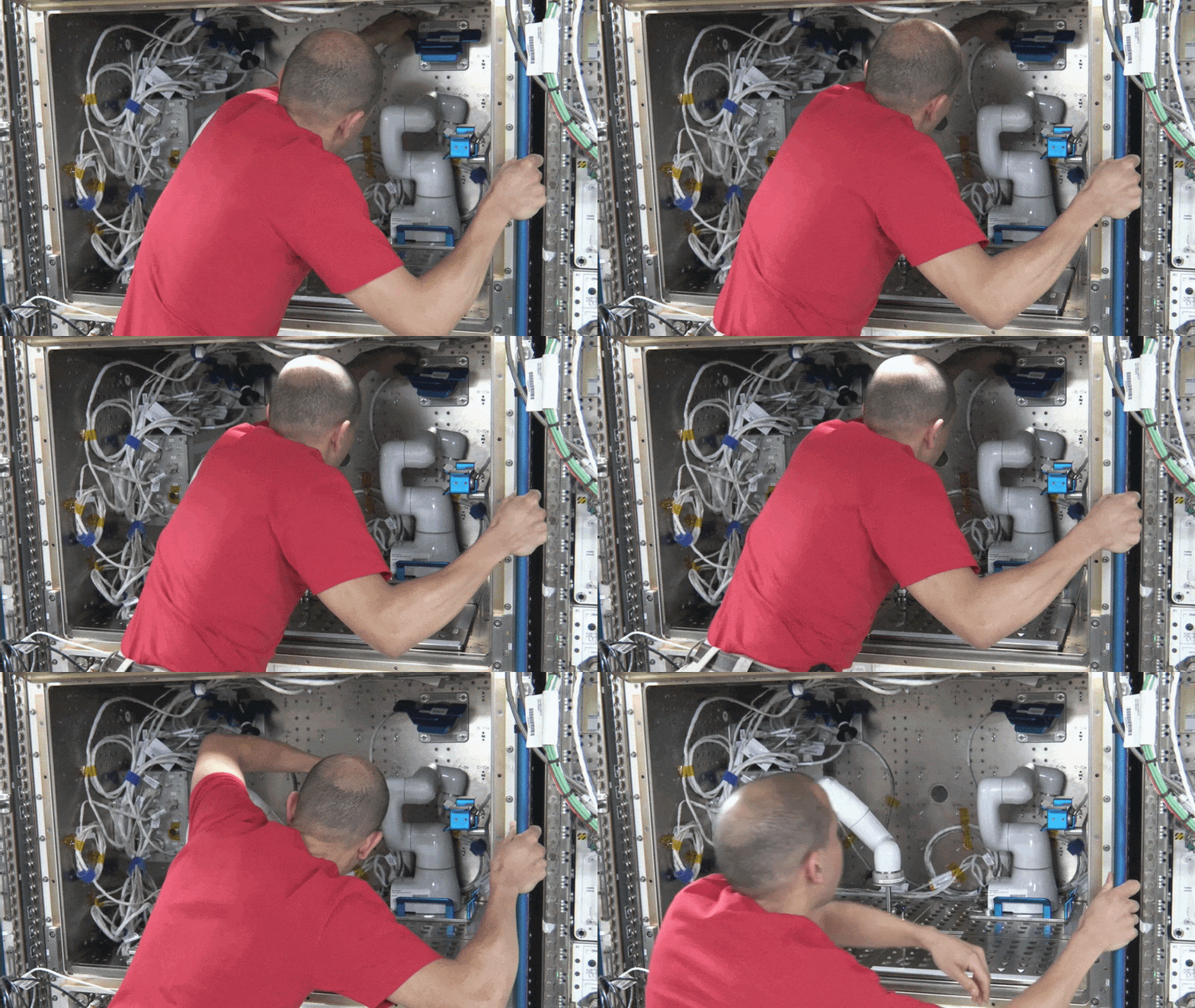
NASA astronaut Chris Williams works with equipment that tests the performance of small robotic arms in space. Some experiments and operations require very precise movements, where tiny errors can significantly impact results. Understanding how microgravity affects delicate robotic operations helps researchers improve designs for future automated systems that can perform operations while astronauts focus on the most critical tasks.
Learn more about the Test facility for lab-aUtomation System in Kibo (TUSK).
Share Details Last Updated Jul 23, 2026 Related Terms Keep Exploring Discover More Topics From NASAInternational Space Station
Humans In Space
Space Station Research Results
Station Benefits for Humanity
Do animals act weirdly during a solar eclipse? Or do we?
There are many observations of animals behaving oddly during eclipses, but the reason may have nothing to do with the sun and moon