
Feed aggregator
Artemis Mission Patches
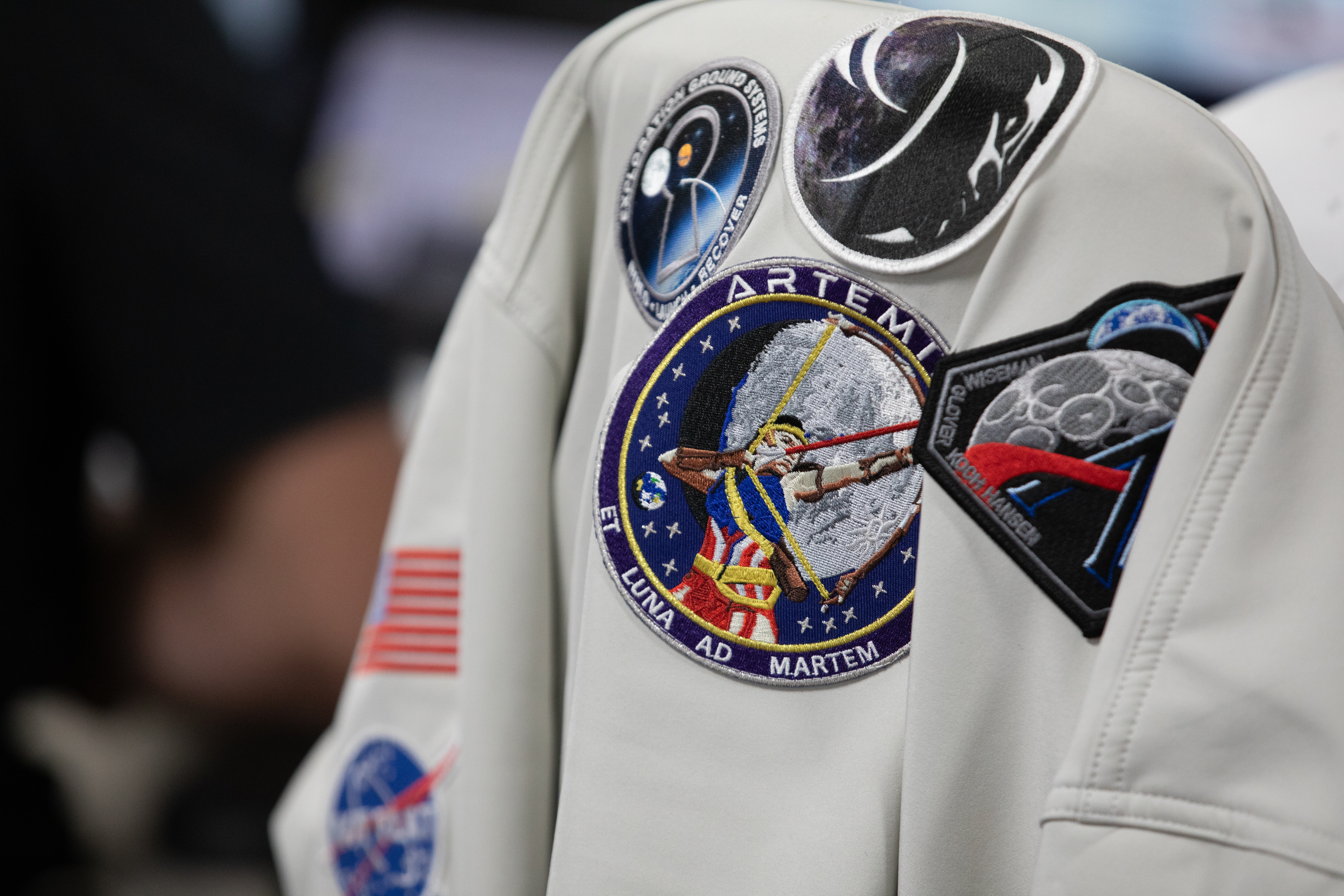
A jacket decorated with Artemis I and II mission patches, along with other NASA patches hangs on the back of a chair on Thursday, Aug. 6, 2026, inside the Rocco A. Petrone Launch Control Center at NASA’s Kennedy Space Center in Florida during a terminal countdown simulation for the Artemis III mission.
NASA’s Exploration Ground Systems team conducted the terminal count simulation, which runs through the final five hours of launch countdown, including terminal count – the remaining 10 minutes of the countdown. Artemis III will carry out a series of objectives in low Earth orbit designed to demonstrate critical systems needed for future lunar landings, beginning with Artemis IV.
Stay up to date with NASA’s Artemis program.
Image credit: NASA/Clayton Rougelot
NASA Selects University Teams to Help Advance Aviation Research
4 min read
Preparations for Next Moonwalk Simulations Underway (and Underwater)
NASA has selected four university teams to help the agency transform the future of aviation through projects ranging from high-supersonic propulsion systems to low-noise routes for small aircraft flying through cities.
The agency made awards through its University Leadership Initiative, which offers student teams the opportunity to contribute to real-world flight research that advances NASA’s goals in aeronautics.
This year’s awardees are pursuing projects that align with NASA strategic objectives, including innovation in commercial high-speed aircraft, the development of new tools that can lead to transformational aviation breakthroughs, safer and more efficient air traffic management, and the integration of new air transportation options into the national airspace.
“With these four new awards, the University Innovation project is leaning in on NASA’s aeronautics mission priorities,” said Andrew Provenza, project manager, NASA’s Glenn Research Center in Cleveland. “These teams will research new propulsion concepts for supersonic flight, novel engineering methods that can revolutionize aerospace system design and certification, and learning-enabled avionics for new advanced and urban air mobility flight vehicle platforms, which could enhance air traffic control modernization.”
The awards represent the ninth round of NASA University Leadership Initiative funding.
Totaling about $30 million, NASA’s awards will provide multiyear support for awardee universities to build their teams and conduct research. The initiative provides hands-on experiences for students, developing the U.S. aeronautics research workforce while also producing findings that will help drive aviation forward.
University Leadership Initiative awards go to teams comprised of graduate and undergraduate students and led by faculty members. Recipients form academic partnerships with other universities and community colleges, as well as industry. Experts from NASA, the Federal Aviation Administration, and other organizations provide support and guidance.
The awardees are:
University of Minnesota Adaptive Supersonic Combined Cycle Engine for Next-generation TransportationLed by Terrence Meyer, the project will work over four years to develop a fuel-flexible propulsion system that uses a traditional jet turbofan during takeoff and subsonic flight, but would transition to a new type of ramjet engine for supersonic flight. In ramjet mode, the system would cruise at Mach 4, or more than 3,000 mph. The project aims to enable efficient, faster-than-sound flight, including flight at high-supersonic speeds.
Stanford University Safety Across Lifecycle of Learning-Enabled Avionics Systems: Safety Data FlywheelLed by Somil Bansal, this four-year project aims to develop an avionics system to control an aircraft’s communications, navigation, and other electronics that incorporates machine learning. The system would take an approach that ensures safety is continuously reinforced throughout its operations. This research could help create a framework for the aviation sector to safely integrate artificial intelligence-enabled avionics into the national airspace.
Stanford University Noise-Optimal Trajectory Planning for Urban Air Mobility Operations, Including Ambient NoiseLed by Juan Alonso, the center created through this award will work over four years to develop a high-fidelity simulation framework focused on developing low-noise flight paths in urban environments for future small aircraft. Developers are envisioning urban air mobility aircraft as ways to move people and cargo over populated areas. This center would integrate realistic models of how sound travels in cities to enable vehicle flight paths that would reduce community noise exposure from new air traffic.
Virginia Tech Certification Driven Aircraft Design Under UncertaintyLed by Darshan Sarojini, this three-year project proposes to transform next-generation aircraft design while integrating powerful new computer modeling tools: model-based systems engineering, multidisciplinary design, analysis and optimization, and high-dimensional uncertainty quantification. The goal is safe, faster, and more efficient modeling that results in fewer costly redesigns later in the aircraft development cycle.
For more than 10 years, NASA’s University Leadership Initiative has fostered bold ideas, collaborative research, and team-led solutions. The initiative is part of NASA’s Research and Technology Mission Directorate.
Facebook logo @NASA@NASAaero@NASAes @NASA@NASAaero@NASA_es Instagram logo @NASA@NASAaero@NASA_es Linkedin logo @NASA Explore More 3 min read NASA Student Aviation Challenge Focuses on Nation’s Infrastructure Article 2 days ago 6 min read NASA Glenn’s Legacy Forged Through Decades of Flight Research Article 2 days ago 3 min read NASA Competition Invites Students to Help Imagine a Future Enabled by Lunar Technologies Article 6 days ago Keep Exploring Discover More Topics From NASAMissions
Aeronautics STEM
Aeronautics Innovation Challenges
Explore NASA’s History
Share Details Last Updated Aug 20, 2026 EditorLillian GipsonContactLynne Sahaylynne.sahay@nasa.gov Related TermsThe View from Above: The Gemini Visual Acuity Experiments
NASA astronaut L. Gordon Cooper, Jr. took 29 color photographs of the Earth with a 70mm camera as he orbited our planet during the Mercury-Atlas 9 mission in May 1963. Cooper’s view from the window of his Faith 7 spacecraft was spectacular, and he reported that he could see vehicles motoring on dirt roads, smoke-belching trains, and the tops of houses.
Researchers and members of the public had their doubts. Could Cooper actually see objects on the Earth’s surface in such fine detail while orbiting 100 miles above the planet? Some vision experts assumed that astronauts with 20/20 vision could not clearly see objects with sides less than 150 feet long at orbital altitudes. Although Cooper reportedly had exceptional 20/12 vision, certainly he could not see a white automobile kicking up a dust cloud near the U.S.-Mexico border as he claimed. Cooper, however, was not alone in his assertions. Other Mercury astronauts also reported seeing objects on the Earth in striking detail.
During his 22-orbit Mercury-Atlas 9 spaceflight in May 1963, L. Gordon Cooper Jr. took photos from the Faith 7 spacecraft including this one showing lakes in Western Tibet.NASA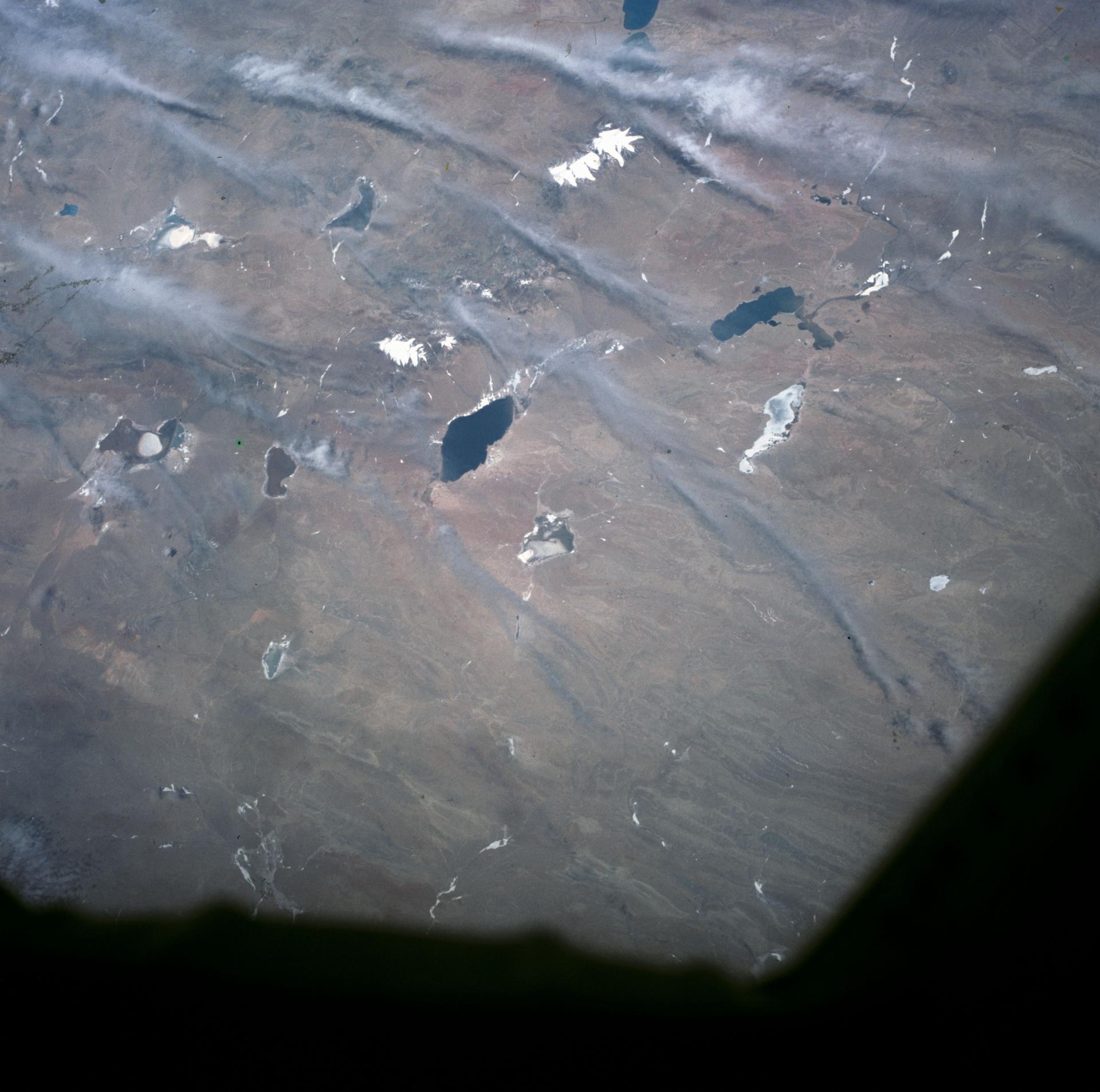
These claims caused mental health professionals to question the sanity of NASA’s first astronauts. A story in Air Force and Space Digest noted that some psychiatrists speculated that “weightlessness was causing the astronauts to hallucinate and that the space program was in for serious trouble.” While mental health experts considered the effects of space flight on the brain, visual acuity experts mulled over the Mercury astronauts’ assertions and developed an experiment to determine what they could see on Earth from space.
Putting Astronaut Vision to the TestNASA and its partners developed two visual acuity experiments and conducted them during the crewed Gemini V and Gemini VII missions. The first experiment involved looking through an optical device reminiscent of binoculars. Test subjects looked through the eyepieces to see an assortment of rectangles in various positions and levels of contrast. They were then asked to identify the directional orientation of the rectangles.
Another part of the experiment involved creating two enormous terrestrial eye charts composed of gigantic white rectangles. The rectangles, created by the Dow Chemical Corporation, ranged in size from roughly 150 to 600 feet long. The experiment team placed one set of rectangles on dark tilled soil in Laredo, Texas and another near Carnarvon, Australia, and asked Gemini V and VII astronauts to identify their directional orientation from orbit. This visual acuity tool was nicknamed the “Eye-Q” chart.
In-Flight Vision Testing InstrumentDrawing illustrating a Gemini astronaut using the In-Flight Vision Tester.NASA Gemini V Visual Acuity ExperimentThis illustration shows the intended orientation of the Gemini spacecraft as it orbited over the “Eye-Q” ground observation sites.NASACloudy conditions, sunlight scattered by the window of the Gemini spacecraft, and unfavorable orbital orientations during overflight all impacted the astronauts’ views of the ground-based experiments. Nevertheless, during some orbital revolutions, astronauts on both missions were able to see portions of the ground site near Laredo.
Aerial view of the visual acuity experiment’s ground site in Laredo, Texas.NASA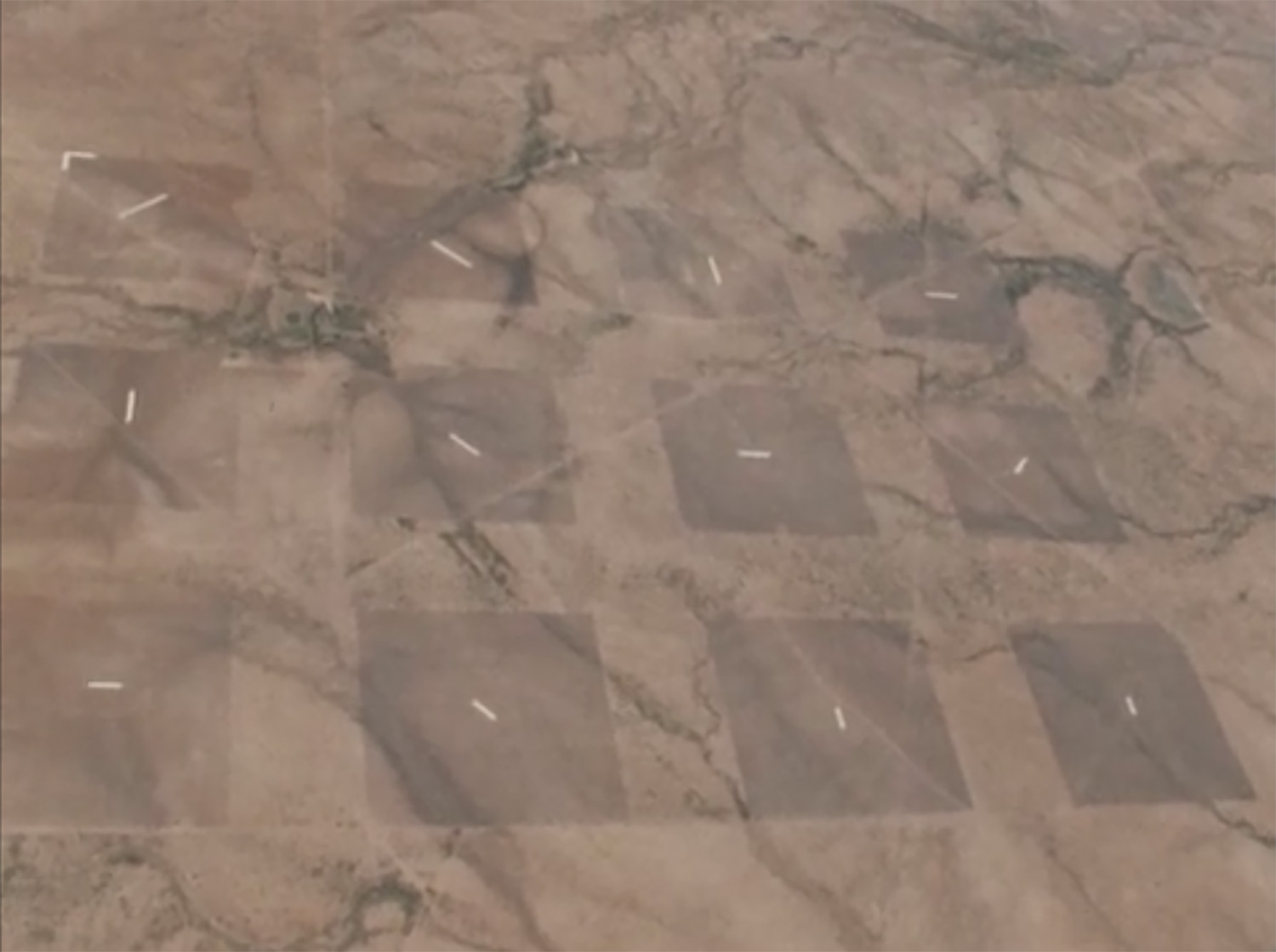
Their reports on the Laredo “Eye-Q” site, combined with the results of the binocular-like vision tester experiments conducted before, during, and after the flight, revealed that astronauts could in fact see roads and ships with following wakes from orbit. The experiments also determined that an astronaut’s vision did not deteriorate during a two-week spaceflight.1
Astronaut Frank Borman, Gemini VII command pilot, participates in a vision experiment using the in-flight visual acuity device during the two-week mission in December 1965.NASA Implications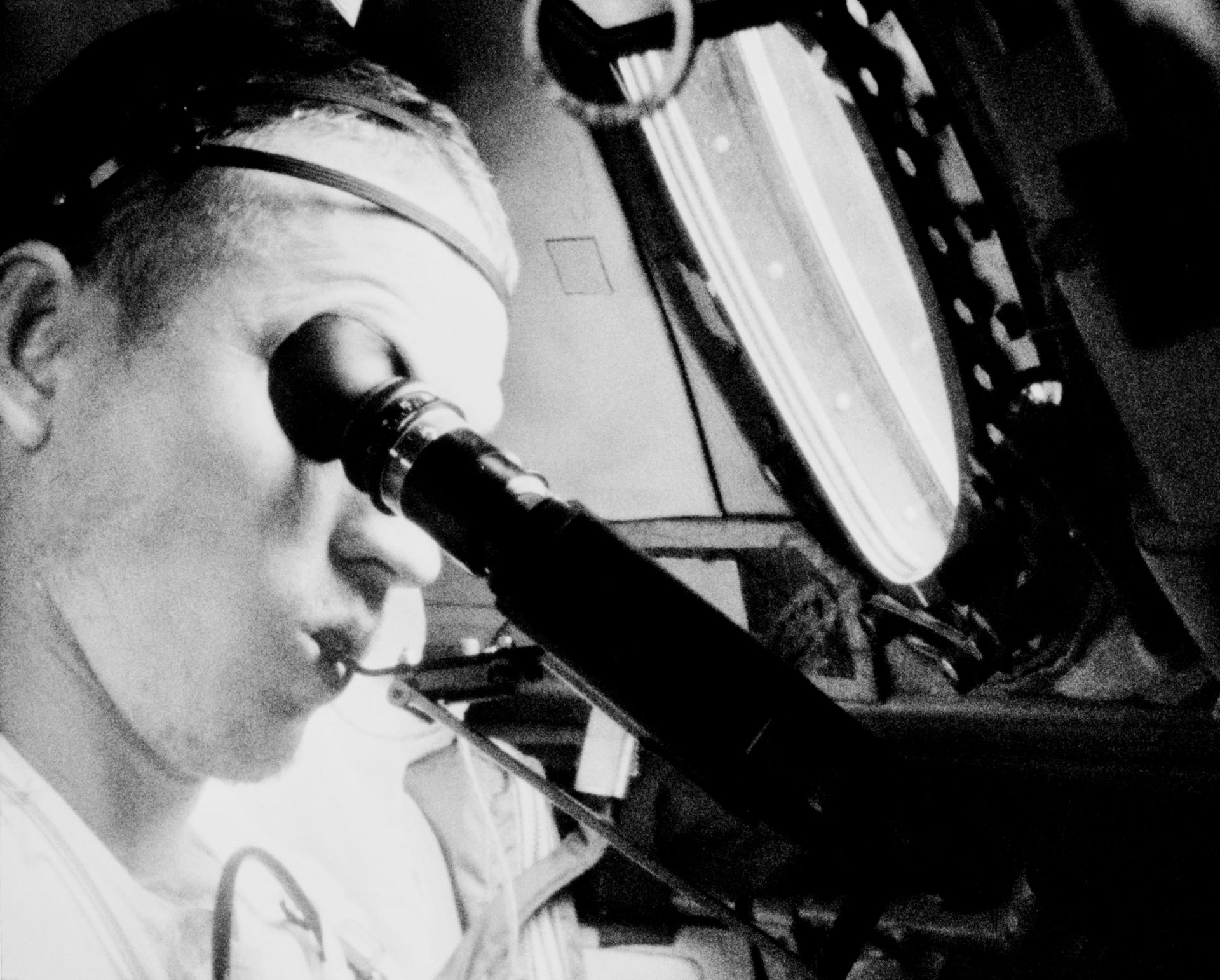
Determining what features on Earth astronauts could accurately see from orbit was about much more than sanity checking astronaut reports. Understanding what human eyes could see from space, as well as seeing the photographs taken on NASA’s early crewed missions had huge implications for geologists, geographers, oceanographers, and others studying our planet.
The scientific community’s interest in the recollections and photographs of the Earth’s surface as seen by the Mercury and Gemini astronauts motivated NASA and its partners to advocate for new Earth-observing instruments. NASA, the U.S. Geological Survey, the Office of Naval Research, and the U.S. Department of Agriculture noted that surface images of the Earth captured from above could be used to inventory crops, map geological features, monitor natural disasters, and better understand the ocean’s processes.
This photograph of the San Francisco Bay area of California was taken as part of the Skylab Earth Resources Experiment Package in January 1974.NASA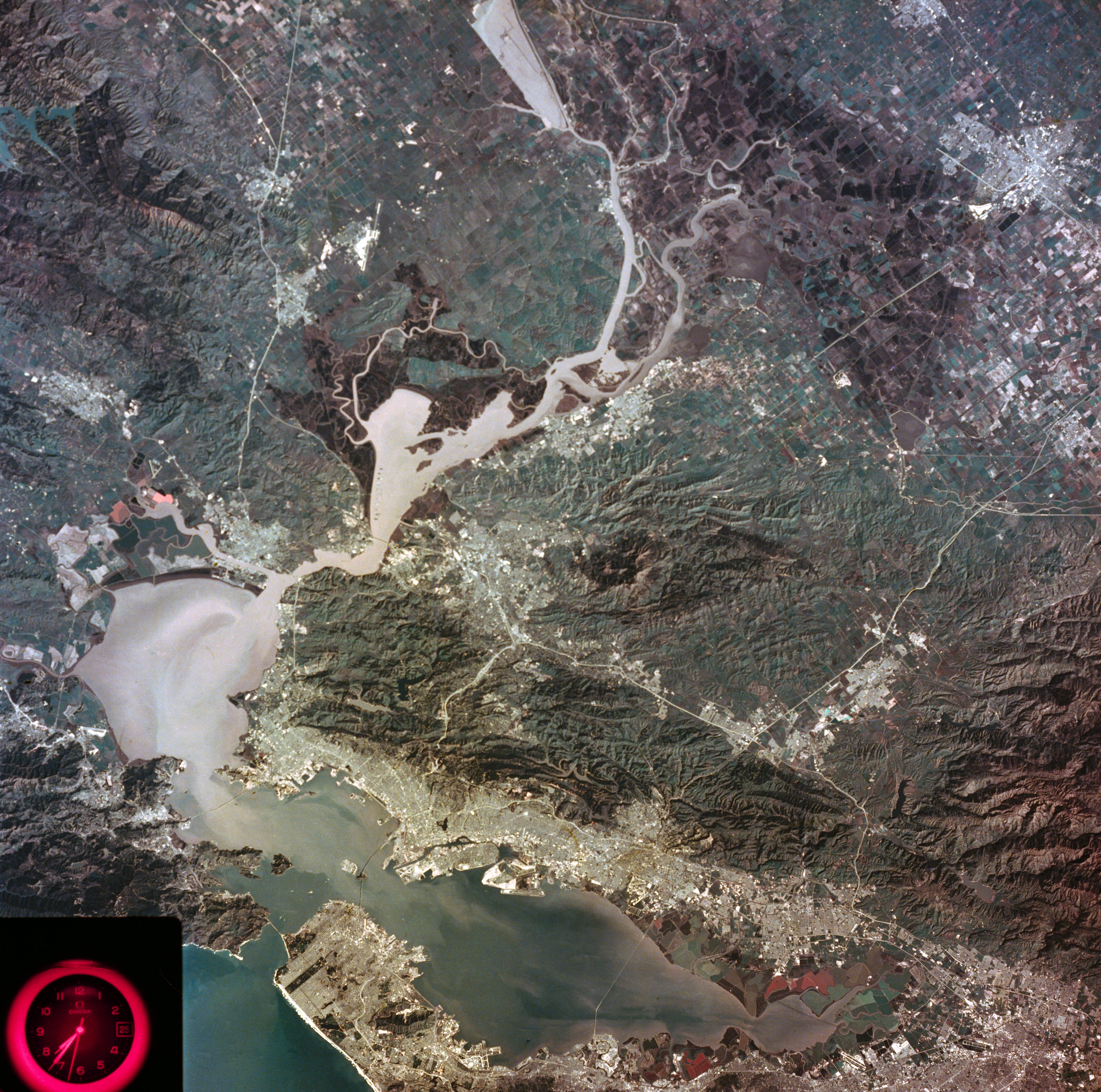
The promise of these real-world applications motivated the creation of the Earth Resources Technology Satellite (ERTS), later renamed Landsat 1. Launched by NASA in 1972, the data from Landsat 1’s camera and multi-spectral scanner were used along with data from the agency’s Earth Resources Aircraft Program to monitor the oceans, agricultural fields, natural disaster sites, and more.
In the six decades since America’s first pioneering human spaceflights, NASA has continued to observe the Earth from orbit, aircraft, and even ground level in a continuing quest to help solve problems here on Earth.
Note
[1] In subsequent years, scientists have documented that roughly 70% of astronauts experience Spaceflight Associated Neuro-ocular Syndrome (SANS) during longer spaceflights.
Share Details Last Updated Aug 19, 2026 Related Terms Explore More 3 min read How Early Astronaut Photographs Inspired the Landsat ProgramIn the 1960s, NASA was pioneering a new era of human spaceflight—and astronaut photography—that would…
Article 11 months ago 2 min read Observing Storms from Skylab Article 1 year ago 4 min read Playing the Moon GameApollo astronauts previewed their roles as lunar field geologists in Alaska’s Valley of Ten Thousand…
Article 2 months ago Keep Exploring Discover More Topics From NASANASA History
Human Research Program
Earth Observations
Project Gemini
NASA Data Feeds River Forecasts as Snow Drought Effects Linger
- Earth
- Explore
- Science at Work
- Multimedia
- Data
- For Researchers
- About Us
As the effects of the 2026 snow drought in the western United States carry into summer, NASA Earth data is feeding machine-learning forecasts that inform decisions about water, power, and public safety in Washington state.
Tacoma Power, a Washington public utility, is using a U.S. technology company’s river-flow forecasts during a year of water extremes on the Cowlitz River. The utility’s largest hydroelectric project uses water stored behind Mayfield and Mossyrock dams to generate enough electricity to serve more than 151,000 homes each year.
Upstream Tech’s HydroForecast combines weather forecasts and river measurements with NASA-produced satellite data on snow cover and vegetation conditions to predict river flow from hours to days ahead. Updated every two hours, the forecasts are used by reservoir managers, hydropower producers, water utilities, and government agencies to prepare for storms, plan reservoir water releases, and navigate dry periods.
“Part of NASA’s mission is to make the view from space useful on the ground,” said Erin Urquhart, manager for NASA’s Water Resources program at the agency’s headquarters in Washington, D.C. “When an American company incorporates NASA’s freely available data into forecasts that help water managers prepare for floods, generate power, and steward water supplies, that’s NASA delivering practical value to the nation.”
Year of water extremesDuring the winter of 2025-26, unusual warmth meant a larger share of precipitation fell as rain instead of snow across much of the West, while below-normal precipitation deepened deficits in some areas. January, February, and March each had the lowest Western snow cover for that month in the NASA MODIS (Moderate Resolution Imaging Spectroradiometer) satellite record since 2001.
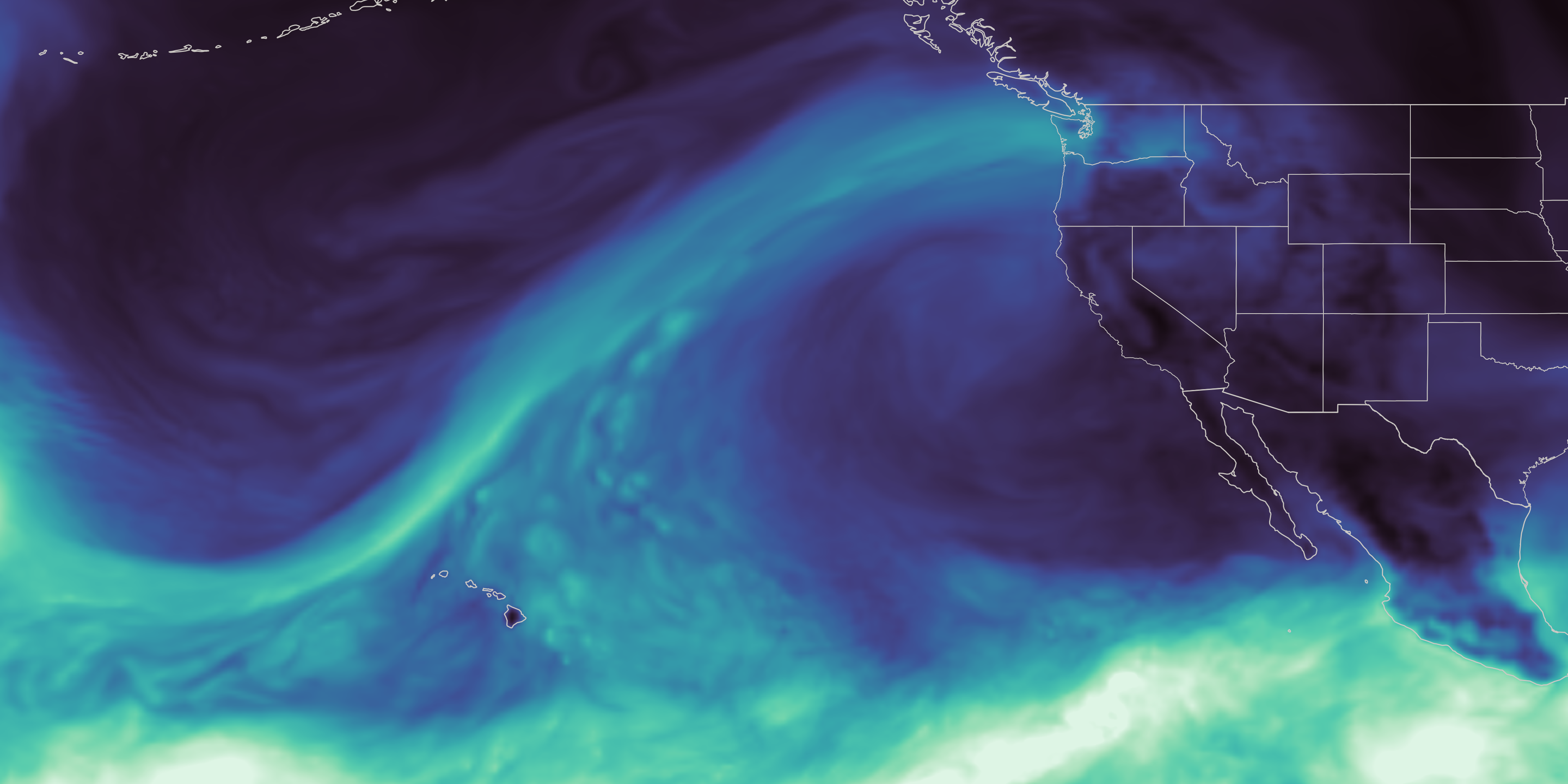
On the Cowlitz, those conditions produced a season of extremes. In December 2025, a powerful atmospheric river brought a long, narrow band of Pacific moisture into the region, causing one of the largest one-day inflow surges ever recorded at Tacoma Power’s hydroelectric project. Across the season, that rain-heavy pattern sent water downstream quickly instead of building mountain snowpack that would melt and release water steadily into summer. Snowpack remained at just 20% to 50% of normal levels.
As winter became spring, the rain tapered off, and on April 8, Washington state placed every watershed, including the Cowlitz, under a drought emergency. From April through June, peak daily inflow into the project was among the lowest on record, leaving Tacoma Power with less incoming water to replenish its reservoirs ahead of summer demand, said Saul Villarreal, Tacoma Power’s senior hydro operations manager.
Tacoma Power’s Mayfield Dam and powerhouse sit on the Cowlitz River in southwest Washington, where forecasts using NASA data support reservoir operations and hydropower generation.Tacoma Power, used with permission Turning satellite data into river forecasts
NASA turns observations collected by the VIIRS (Visible Infrared Imaging Radiometer Suite) instrument on the Suomi-NPP (Suomi National Polar-orbiting Partnership) satellite into data products that provide information about snow cover and vegetation greenness across entire watersheds, including where ground monitors are sparse.
To train HydroForecast, Upstream Tech collects and archives years of those NASA products alongside weather forecast data and actual river-flow measurements. Using records from hundreds of watersheds, the models learn common patterns in how water moves through the landscape and apply them in new locations.
Tests across multiple basins found that including snow and vegetation observations increased forecast skill, said Dr. Laura Read, director of technical and federal partnerships for HydroForecast at Upstream Tech. “NASA’s data gives us the reliability, global coverage, and consistency we need,” said Read. “Our short-term models run every two hours, so those inputs have to show up when we need them. Though we have stopgaps in place, any interruption to our operational pipeline is a huge deal.”
Tacoma Power uses HydroForecast alongside stream gauges, snow stations, and operator judgment. During the December storm, the NASA-informed, short-term forecast helped the utility anticipate how much water would reach the project and prepare for dynamic river conditions, while meeting operating requirements and keeping public safety at the forefront, Villarreal said.
To view this video please enable JavaScript, and consider upgrading to a web browser that supports HTML5 video
NASA’s GEOS (Goddard Earth Observing System) maps an atmospheric river, a ribbon of water vapor, before Washington’s January-April 2026 snow cover is compared with a historical median.NASA’s Scientific Visualization StudioAs spring approached, the operational challenge reversed. Tacoma Power used HydroForecast’s seasonal model to track the growing risk of weak runoff and began keeping its reservoirs higher than usual to preserve water for summer. That left less space to contain another large storm, so operators continued checking the short-term forecast “to play defense,” and remained ready to adjust operations if another atmospheric river developed.
“The earlier we understand how conditions might change, the more effective planning we can do to manage our reservoir and balance the many demands of our system throughout the season,” said Villarreal.
Tacoma Power entered summer 2026 with reservoir levels near average despite the dry spring. The stored water supports reliable hydropower, required river flows to support fish and aquatic habitat, and public recreation. It also gives the utility more flexibility to meet electricity demand during heat waves or unexpected outages and, when possible, support the wider regional power system.
From forecasts to drought assessmentsTacoma Public Utilities’ Cowlitz Hydro Project is just one example of NASA science supporting water decisions across the West.
NASA also has partnered with the U.S. Department of Agriculture’s Natural Resources Conservation Service to bring satellite-based snow and groundwater information into machine-learning water-supply forecasts.
The National Oceanic and Atmospheric Administration’s Colorado Basin River Forecast Center uses MODIS and VIIRS data to adjust snowmelt rates in its model. The Bureau of Reclamation uses NASA and NASA-derived snow data, alongside other sources, for reservoir operations in California’s San Joaquin Basin.
NASA data and research have long informed the U.S. Drought Monitor, the weekly assessment used by farmers, water managers, and public agencies. NASA became a formal partner in 2026, expanding its role from providing information to helping produce the assessment. The agency took its first turn authoring the Drought Monitor during the week of Aug. 17.
Discover more about NASA’s drought work About the AuthorEmily DeMarcoWriter/Editor (IV), Earth Science DivisionEmily is a science writer and editor with NASA’s Earth Science Division, with more than 10 years of experience in science journalism and communication. A former deputy news editor at the magazine Science News, she holds a master’s in environmental science and management from UC Santa Barbara’s Bren School, where she specialized in water resources management and science communication.
Share Details Last Updated Aug 20, 2026 Related Terms Explore More 4 min read An Uncommon Drifter in the Denmark StraitIn summer 2026, a large iceberg drifted more than 1,000 kilometers south from the northeastern…
Article 11 hours ago 5 min read Human-Related Microbes May Survive Moon’s South Pole, NASA Finds Article 21 hours ago 3 min read Elephant Butte Reservoir Runs LowDrought in the Rio Grande basin contributed to New Mexico’s largest reservoir dwindling to its…
Article 1 day ago Keep Exploring Discover More Topics From NASA Earth ActionAccelerating the use of Earth observation data for decision-making.
FreshwaterWater drives life, economies, and security — and NASA tracks its constant motion as it shifts between sea, land, and…
Earth Science at WorkNASA Earth Science helps Americans respond to challenges and societal needs — such as wildland fires, hurricanes, and water supplies…
Water ResourcesSupporting sustainable and adaptable water resources management.
APOD: 2026 August 20 – The Elephant’s Trunk in Cepheus
APOD
Astronomy Picture of the Day
Discover the cosmos! Each day a different image or photograph of our fascinating universe is featured, along with a brief explanation written by a professional astronomer.
The Elephant’s Trunk in Cepheus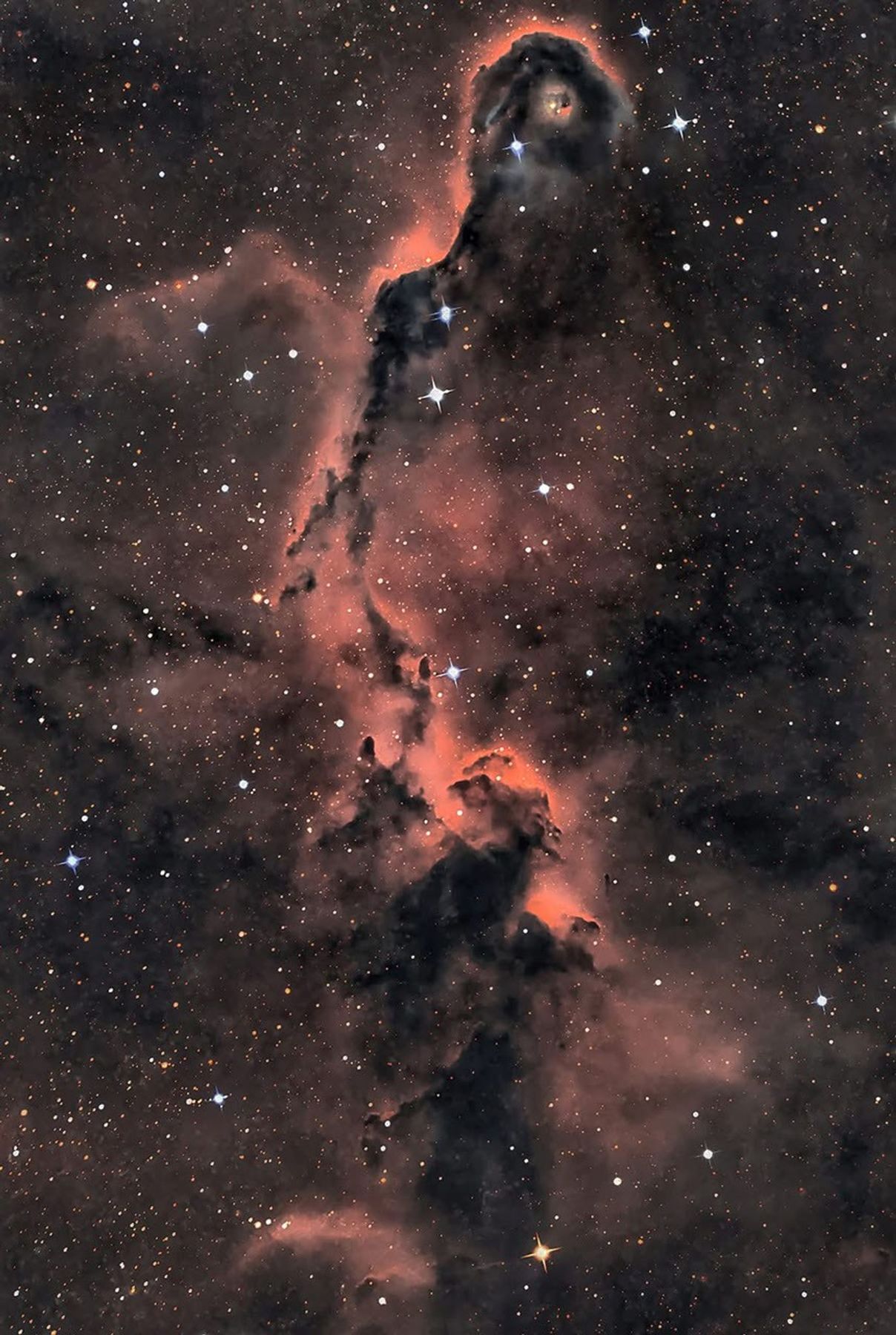
Explanation: Like an illustration in a galactic Just So Story, the Elephant’s Trunk Nebula winds through the emission region and young star cluster complex IC 1396, in the high and far off constellation of Cepheus. Also known as vdB 142, this cosmic elephant’s trunk is over 20 light-years long. The detailed telescopic view features the bright swept-back ridges and pockets of cool interstellar dust and gas that abound in the region. But the dark, tendril-shaped clouds contain the raw material for star formation and hide protostars within. Nearly 3,000 light-years distant, the relatively faint IC 1396 complex covers a large region on the sky, spanning over 5 degrees. Top to bottom this proboscidean-like rendition reaches across an almost 1 degree wide field of view, though. That’s a little less than the angular size of 2 full moons.
Tomorrow’s picture: pixels in space
NASA Science Activation & Michigan Tech. U. Random APOD Generator Yesterday’s Image APOD: 2026 August 19 – The Case of the Mysterious Maybe Meteor Tomorrow’s Image
APOD: 2026 August 20 – The Elephant’s Trunk in Cepheus
APOD
Astronomy Picture of the Day
Discover the cosmos! Each day a different image or photograph of our fascinating universe is featured, along with a brief explanation written by a professional astronomer.
The Elephant’s Trunk in CepheusExplanation: Like an illustration in a galactic Just So Story, the Elephant’s Trunk Nebula winds through the emission region and young star cluster complex IC 1396, in the high and far off constellation of Cepheus. Also known as vdB 142, this cosmic elephant’s trunk is over 20 light-years long. The detailed telescopic view features the bright swept-back ridges and pockets of cool interstellar dust and gas that abound in the region. But the dark, tendril-shaped clouds contain the raw material for star formation and hide protostars within. Nearly 3,000 light-years distant, the relatively faint IC 1396 complex covers a large region on the sky, spanning over 5 degrees. Top to bottom this proboscidean-like rendition reaches across an almost 1 degree wide field of view, though. That’s a little less than the angular size of 2 full moons.
Tomorrow’s picture: pixels in space
Date August 20, 2026 Credit and Copyright: Eddie Sgarbossa Authors & editors: Jerry Bonnell, Cecilia Chirenti, Robert Nemiroff, Keighley Rockcliffe A service of: ASD at NASA / GSFC,NASA Science Activation & Michigan Tech. U.
Random APOD Generator
Yesterday’s Image APOD: 2026 August 19 – The Case of the Mysterious Maybe Meteor
Tomorrow’s Image
NASA calls off rescue mission for its falling Swift space telescope
The space agency’s Neil Gehrels Swift Observatory, which studied cataclysmic cosmic explosions, is expected to burn up in Earth’s atmosphere later this year
Scientists just found the fastest known star in the Milky Way. It zooms around our black hole at 15,500 miles per second
Astronomers have found the fastest known star in the Milky Way, a faint object racing around Sagittarius A*, the supermassive black hole at the heart of our galaxy. Dubbed S301, the star reaches about 15,500 miles (25,000 kilometers) per second at its fastest — more than 8% the speed of light.
"What is special about this star is that it's orbiting Sagittarius A* on a very tight orbit, taking just 8.7 years to complete it, and is approaching the black hole at a mere 12 times the distance of Earth to the sun. That is unprecedented," study author Felix Mang, a Ph.D. student at the Max Planck Institute for Extraterrestrial Physics in Germany, said in a statement.
The discovery gives astronomers a new way to probe the roughly 4.3-million-solar-mass black hole. General relativity predicts that a rotating black hole drags spacetime along with it, an effect known as frame dragging, or Lense-Thirring precession. That distortion should gradually alter S301's orbit — because the star ventures so close to Sagittarius A*, those changes may become measurable within about a decade.
This visible light wide-field view shows the rich star clouds in the constellation of Sagittarius (the Archer) in the direction of the center of our Milky Way galaxy. The entire image is filled with vast numbers of stars — but far more remain hidden behind clouds of dust and are only revealed in infrared images. This view was created from photographs in red and blue light and form part of the Digitized Sky Survey 2. (Image credit: ESO and Digitized Sky Survey 2. Acknowledgment: Davide De Martin and S. Guisard)For the first time, we would actually be able to measure very directly the spin of a massive black hole, which would be a key test of Einstein's theory," said study co-author Stefan Gillessen, also of the Max Planck Institute.
This sequence of images, taken with the GRAVITY instrument at ESO’s Very Large Telescope Interferometer (VLTI), show several stars orbiting Sagittarius A*, the supermassive black hole at the centre of our galaxy. One of these stars, known as S301, was recently found to pass much closer to the black hole than any other known star. (Image credit: ESO/GRAVITY collaboration)Researchers spotted S301 in 2023 using the GRAVITY instrument on the European Southern Observatory's Very Large Telescope Interferometer in Chile, then traced it back through observations from 2021 and 2017. Its highly elongated orbit suggests S301 may once have belonged to a binary system that wandered too close to Sagittarius A*. The black hole could have captured S301 while flinging its companion outward at tremendous speed.
Astronomers plan to keep tracking S301 with GRAVITY+ and, eventually, ESO's Extremely Large Telescope. With its next close pass expected in 2031, observations spanning two full orbits could reveal Sagittarius A*'s spin for the first time.
The team's research was published on August 19 in the journal Nature.
Webb Captures the Treasure Chest at the Heart of the Carina Nebula
This NASA/ESA/CSA James Webb Space Telescope Picture of the Month takes us to a fantastical realm within our home galaxy, where piercing starlight and billowing winds sculpt dust clouds into inventive shapes. This scene is from the Carina Nebula, which lies just 7500 light-years away in the constellation Carina (the Keel).
Moderna and Merck announce ‘landmark’ trial showing mRNA therapy significantly cuts odds of recurrent skin cancer
The combined drug works by nudging the body’s own immune system to make proteins that attack and destroy melanoma cells
Private mission to save NASA's Swift space telescope fails
NASA is calling off the effort to save its Neil Gehrels Swift Observatory after a private rescue spacecraft couldn't overcome its own problems in orbit.
LINK, the specialized probe from Katalyst Space that NASA contracted for the Swift Boost mission, was delivered to space on an air-launched Northrop Grumman Pegasus XL rocket on July 3. The vehicle was designed to rendezvous with the Swift Observatory in order to grapple and raise it to a more stable orbit, but LINK ran into trouble when it began to spin uncontrollably about three weeks after launch.
Today (Aug. 19), NASA announced an official end to LINK's efforts to boost Swift's orbit, citing ongoing attitude control issues with the private spacecraft, but the agency hasn't canceled the mission outright. LINK will still attempt a rendezvous with Swift in order to practice proximity operations and demonstrate its capabilities other than spacecraft capture, which could aid future missions down the road.
From its inception, the Swift Boost mission was always viewed as a long shot. Increased solar activity had already begun decaying the observatory's orbit faster than anticipated when NASA awarded the $30 million Swift Boost contract to Katalyst in 2025, giving the Arizona-based company less than a year to complete LINK's design, manufacture and testing before time to save Swift would run out.
"NASA should be willing to move quickly and take smart risks when the potential return is worth it, and that is exactly what we did with this mission," NASA Administrator Jared Isaacman said in a statement today. "This is not the outcome we were working toward, but it does not change why this mission was worth attempting. The team moved with extraordinary speed to give Swift a chance to carry out more science while advancing capabilities America will need for satellite servicing in the future."
Swift is a one-of-its kind orbital observatory designed to study high-energy phenomena across the universe. It can detect sudden events like gamma-ray bursts and quickly direct its instruments to study them in X-ray, ultraviolet and visible light. The spacecraft is also routinely redirected for rapid response research to study things like newly discovered supernovae, black-hole ejections, fast radio bursts and other short-lived astronomical events.
With LINK now incapable of boosting Swift's orbit, NASA estimates the observatory will dip catastrophically low into Earth's atmosphere before the end of the year. After Swift dies, the agency says it will "continue to prioritize finding new options to react rapidly to cosmic events, using current missions to help fill the gap in the meantime."
Katalyst is working closely with NASA as the Swift Boost mission enters its next phase. Together, the company and space agency are evaluating logistics for LINK's rendezvous and maneuvering demonstration within Swift's vicinity, which will provide data for potential future servicing missions to other satellites, NASA's statement says.
Pluto Planetary Science is the Gift that Keeps on Giving
Something's wetting the surface of dwarf planet Pluto along the northern edge of Sputnik Planitia, and planetary scientists have found a good explanation for it. A recent study of new Horizons images taken during the 2015 flyby revealed evidence that liquid nitrogen is rising up through cracks in Sputnik Planitia. That's the giant heart-shaped glacial basin we see in all the Pluto images taken by the spacecraft.
Scientists create 'laundry gun' for astronauts to clean their clothes by shooting out plasma
If you have ever shared a room with multiple people for days on end, you may know how clothes and living conditions can rapidly turn rather smelly. Imagine that happening in a confined spacecraft.
Even worse, since water on a space mission is in short supply, space travelers can't easily do their laundry. This is more than a body odor problem — unclean clothes and linens are ripe feeding grounds for infectious bacteria. Astronauts might wear the same clothes for days or even weeks, seal away used clothes in airtight bags, then return them to Earth for cleaning or cast them away to burn up in Earth's atmosphere.
This is fine for short trips near Earth, but what about a months-long odyssey to Mars? Engineers have devised a new way for astronauts to dry-clean their dirty laundry. They've crafted a prototype "laundry gun" that sterilizes fabric by shooting violet-colored plasma into it.
"This will reduce the microbial load and keep clothes and other soft surfaces clean, at least microbially, for astronaut health," says Gabe Xu, a professor at the University of Alabama in Huntsville and one of the laundry gun's creators, in a statement. "It could also be used to sterilize space suits and tools before they leave the habitat and step foot on Mars."
A plasma is an energized soup of charged particles, ions and electrons. While many plasmas like that in the sun are very hot, the laundry gun's plasma is "cold," closer to room temperature.
Its electrons are key to killing bacteria. As the laundry gun shoots plasma into fabric, the electrons collide with gas molecules in the surrounding air, such as oxygen (O2) and water vapor (H2O). These collisions create other molecules like ozone (O3), which chemists call "oxidizing species". These oxidizing species can chemically react with the membrane that surrounds a bacterium, damaging and destroying it.
In collaboration with NASA's Marshall Space Flight Center, Xu and colleagues have created a prototype plasma gun, about the size of a pen, which can sanitize about a square centimeter at a time. In their tests, the prototype reduced spore colonies on a scrap of fabric by more than 75%.
Earthly disinfectants like peroxide and bleach also attack bacteria by oxidizing them in this way. The laundry gun's creators could allow astronauts to travel without such cleaning chemicals. Instead, the apparatus creates its cleaning plasma from the spacecraft’s own air and water vapor. In space travel, where every gram of mass matters, this is a major advantage.
The plasma gun at work. (Image credit: Gabe Xu | UAH)"The use of plasma treatment could significantly reduce the mass of goods needed for a human mission, especially one to Mars where resupply is difficult," Xu wrote in the statement.
That said, the "laundry gun" is not a perfect replacement for the standard washing machine — not yet, at any rate. "This won't remove coffee or grass stains (though we haven't tried that)," Xu wrote in the statement.
Moreover, a pen-sized laundry gun is too small to be practical. Xu and colleagues are planning to build larger, but still handheld, devices. They'll also need to deal with their plasma gun's ozone, which can be harmful in large quantities — they're working on a filtration system to remove this.
Space laundry is a rather active area of research today — astronauts on the International Space Station (ISS) recently tested a space detergent, and the Chinese space program has developed a washing machine suitable for low-water use.