
Feed aggregator
The Solar Gravitational Lens Could Map White Dwarfs and Black Holes
It feels like every few months we get to report on another academic paper coming out singing the praises of the Solar Gravitational SGL (SGL). Partly, this is due to Dr. Slava Turyshev’s astounding productivity in terms of pumping out academic articles, but partly because such a ground-breaking mission has lots of positive aspects, but also challenges that need to be addressed. A new paper, available in pre-print on arXiv from Dr. Turyshev, stresses an often overlooked feature of the SGL - how useful it can be at imaging things other than far away exoplanets.
Unapproved gene therapy for boosting longevity is set to go on sale
Unapproved gene therapy for boosting longevity is set to go on sale
Rising Waters Swamp Lake Naivasha
- Earth
- Earth Observatory
- Image of the Day
- EO Explorer
- Topics
- More Content
- About
Happy Asteroid Day! Prize-Winning Plan Focuses on Space Infrastructure
A proposal to create a new network for monitoring cosmic threats to off-world infrastructure has won this year's Schweickart Prize, which recognizes bright ideas for planetary defense.
Rising Waters Swamp Lake Naivasha
- Earth
- Earth Observatory
- Image of the Day
- EO Explorer
- Topics
- More Content
- About
NASA Awards Solutions for Federal Enterprise Procurement Contracts
NASA will begin processing the awards of multiple contracts for the Solutions for Enterprise‑wide Procurement (SEWP) VI Government-wide Acquisition Contract. The contract provides streamlined access to commercial products and services, including hardware, software, cloud services, cybersecurity tools, engineering and consulting services, and data intensive mission support capabilities.
This competitive acquisition was conducted within three categories: Category A, IT Solutions; Category B, Enterprise-wide IT Service Solutions; and Category C, IT Mission-Based Services.
A full list of SEWP VI awardees and additional program details are available at:
All awards are indefinite‑delivery/indefinite‑quantity contracts with the ability to issue firm‑fixed‑price, labor‑hour, time‑and‑materials, and other pricing arrangement task orders. The effective ordering period is 10 years, beginning Nov. 1, through Oct. 31, 2036, and each contract has a maximum value of $20 billion.
For information about NASA and agency programs, visit:
-end-
Jennifer Dooren / Jessica Taveau
Headquarters, Washington
202-358-1600
jennifer.m.dooren@nasa.gov / jessica.c.taveau@nasa.gov
NASA Sounding Rocket to Launch Student Experiments
3 min read
Preparations for Next Moonwalk Simulations Underway (and Underwater)NASA’s Wallops Flight Facility in Virginia is scheduled to launch a sounding rocket carrying student-developed experiments for the agency’s RockSatX and RockOn programs Wednesday, June 24, between 5:30 and 9:30 a.m. EDT, with a backup day on Thursday, June 25.
Students watch as their experiments launch aboard a sounding rocket for the RockSat-X program from NASA’s Wallops Flight Facility Aug. 11, 2022, at 6:09 p.m. EDT. The Terrier-Improved Malemute rocket carried the experiments to an altitude of 99 miles before descending via a parachute and landing in the Atlantic Ocean.NASA Wallops/Terry Zaperach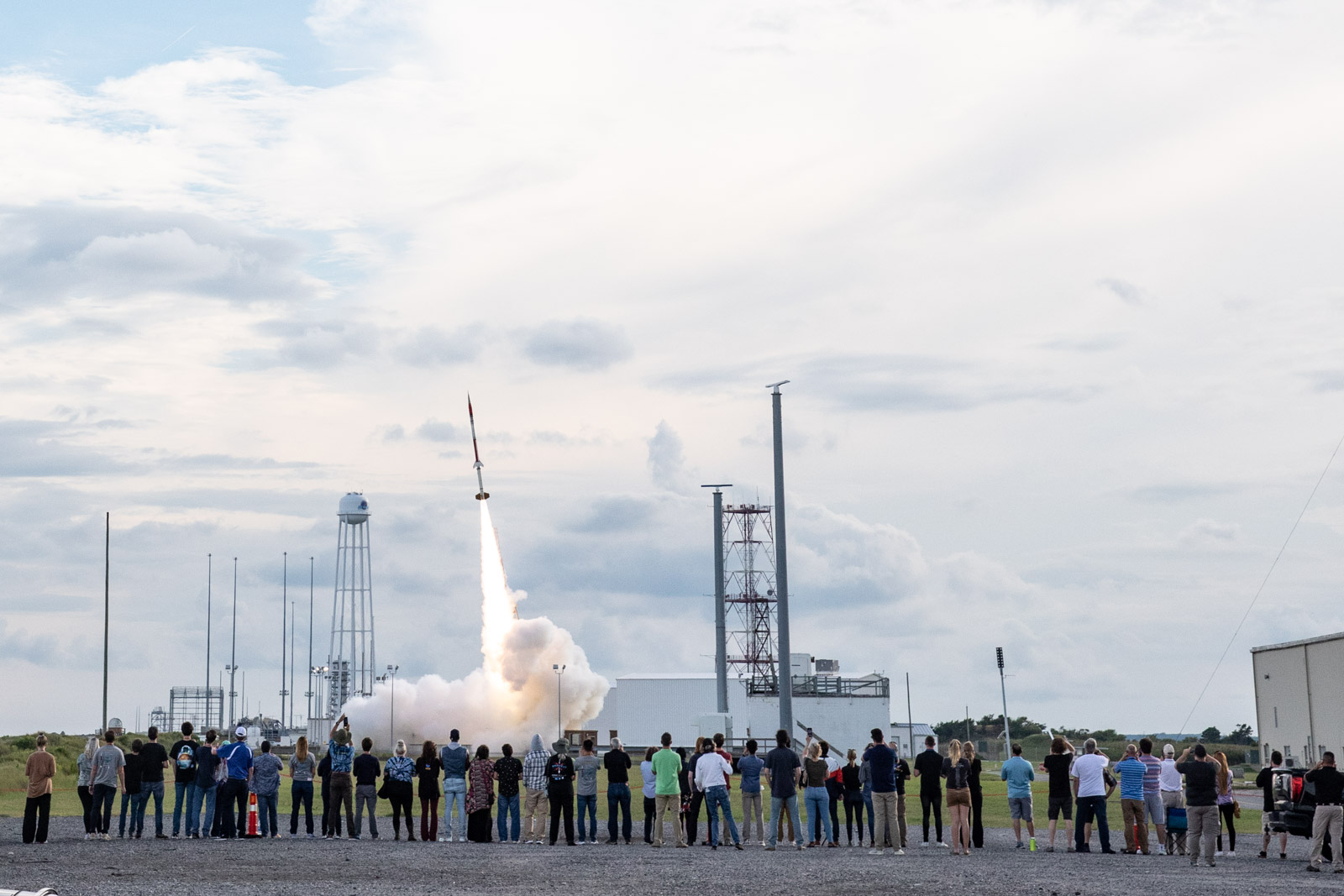
The RockSat and RockOn programs provide technical training and hands-on experiences that prepare and equip students to enter the United States aerospace industry. For the first time, NASA will combine both the RockSat and RockOn missions into one rocket, which will carry experiments developed by nearly 250 participants from 38 university and community college teams.
“The challenge was finding ways to fit as many experiments onto one sounding rocket as we could,” said Victoria Stoffel, workforce development lead at NASA Wallops. “The Sounding Rocket Program Office team found creative ways to fit nearly 50 experiments into one rocket. We are grateful to the Wallops teams for making this happen for the students to get the most from this experience.”
The RockOn teams work together to build their experiment onsite, getting hands-on experience putting together a circuit board from scratch and launching it into space. The more advanced RockSat program teams design and build their experiments, going through design reviews modeled on larger NASA missions. Each team can experience what it’s like working on a real NASA mission, from development to launch.
The RockSat student experiments range from taking measurements of weather and radiation in Earth’s upper atmosphere to testing technologies, such as heat shields, space-debris tracking, and robotic servicing, that could help future NASA missions.
The Terrier-Improved Malemute suborbital sounding rocket, which will carry the experiments, is expected to reach an altitude of about 100 miles before descending by parachute into the Atlantic Ocean to be recovered. The launch may be visible in the Chesapeake Bay region.
A launch visibility map for a Terrier-Improved Malemute sounding rocket launching from NASA’s Wallops Flight Facility in Virginia.NASA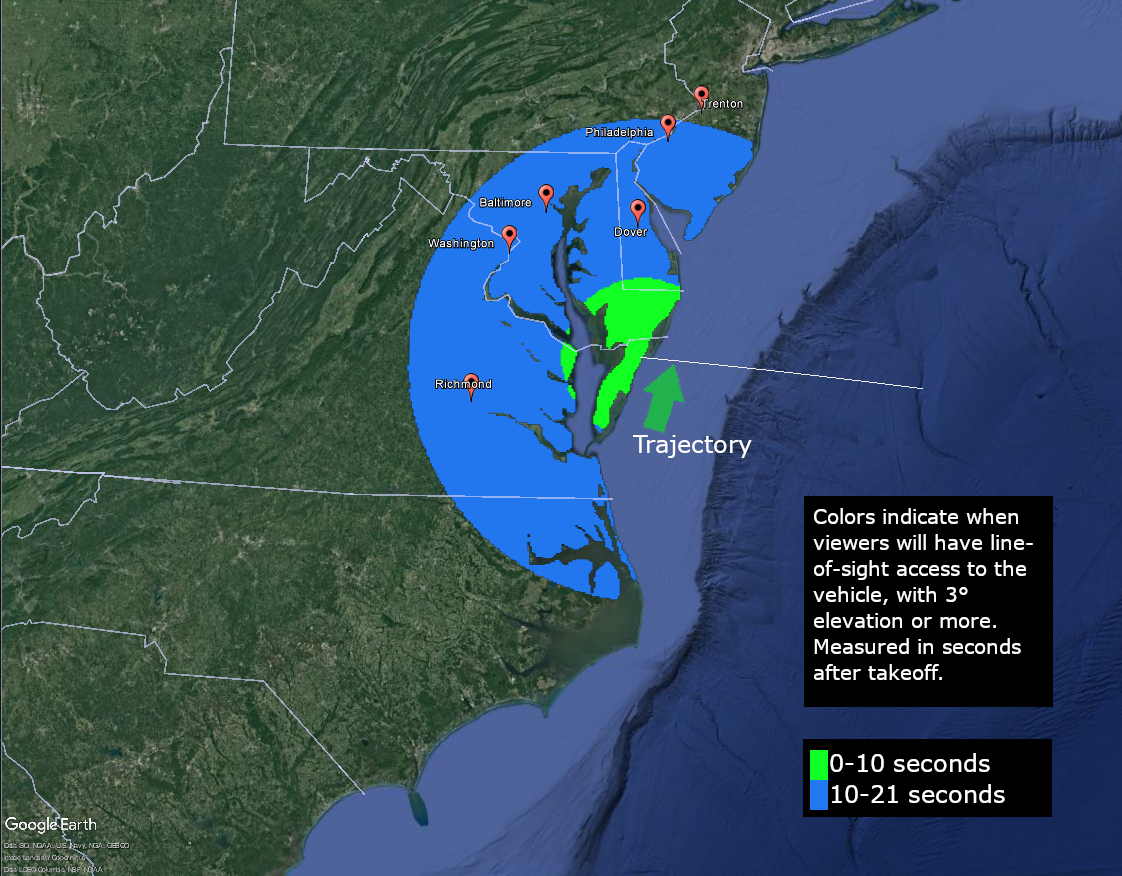
The Wallops Visitor Center’s launch viewing area will open June 24 at 4:30 a.m. for viewing. A livestream will begin approximately 10 minutes before launch on the Wallops YouTube channel. Launch updates also are available via the facility’s Facebook page.
For more information about NASA’s Sounding Rocket Program, visit:
https://www.nasa.gov/soundingrockets
By Jamie Adkins
NASA’s Wallops Flight Facility, Virginia
- Capital Tech University, Maryland
- Clemson University, South Carolina
- College of the Canyons, California
- Colorado Space Grant Consortium
- University of Colorado Boulder
- Escuela de Troquelería y Herramentaje, Puerto Rico
- New Jersey Institute of Technology
- Northwest Nazarene University, Idaho
- Rockets of the Rockies, Colorado
- Red Rocks Community College
- Arapahoe Community College
- Temple University, Pennsylvania
- Tidewater Community College, Virginia
- University of Alabama Huntsville
- University of Delaware
- University of Hartford, Connecticut
- University of Hawaii Community Colleges
- University of Kentucky
- University of Nebraska Lincoln
- University of Puerto Rico
- University of Virginia
- Virginia Tech
- West Virginia Space Flight Design Challenge
- Blue Ridge Community College
- West Virginia Wesleyan College
- West Virginia University
- West Virginia State University
- Marshall University
- University of Delaware
- Wilmington University, Delaware
- Chief Dull Knife College, Montana
- Grambling State University, Louisiana
- College of the Canyons, California
- Eastern Shore Community College, Virginia
- Salisbury University, Maryland
- Capitol Technology University, Maryland
- College of the Desert, California
- Flathead Valley Community College, Montana
- Delgado Community College, Louisiana
- Des Moines Area Community College, Iowa
- Langston University, Oklahoma
- University of Kentucky
- Saginaw Valley State University, Michigan
- Morgan State University, Maryland
- Pennsylvania State Harrisburg
- Middlesex College, New Jersey
- University of Colorado
- Wor-Wic Community College, Maryland
- Tidewater Community College, Virginia
- Montana Technological University
- University of Hartford, Connecticut
- University of Maryland Eastern Shore
A Quasar at Cosmic Dawn Flickers into View
Astronomers have detected a flickering quasar called J0439+1634 as it appeared only 850 million years after the Big Bang. That discovery raises fresh questions about black hole formation and activity in the early Universe. The flickering light of this distant cosmic lighthouse showed that black hole at the heart of the quasr has a flat, pancake-shaped accretion disk. That shape is more familiar in modern-day quasars, which leads astronomers to wonder how these objects formed so quickly in the infant cosmos?
Double Whammy: Binary Supernova in Gemini
New analysis reveals a tight relationship between two supernova remnants in the outer Milky Way.
The post Double Whammy: Binary Supernova in Gemini appeared first on Sky & Telescope.
Why the paint is peeling off the Lincoln Memorial Reflecting Pool—experts explain
Poor preparation and a failure to properly apply the coating may be just a few of the reasons why the Reflecting Pool’s new paint job appears to be peeling off
NASA Invites Media to Botswana Artemis Accords Signing Ceremony
The Republic of Botswana will sign the Artemis Accords during a ceremony at 9:30 a.m. EDT Thursday, June 25, at NASA Headquarters in Washington.
NASA Deputy Administrator Matt Anderson will host Botswana’s Minister of Communications and Innovation David Tshere and U.S. Department of State Senior Advisor for Space Gregory Autry for the event.
This event is in person only. Media interested in attending must RSVP no later than 5 p.m. on Wednesday, June 24, to: hq-media@mail.nasa.gov. NASA’s media accreditation policy is online.
In 2020, during the first Trump Administration, the United States, led by NASA and the State Department, joined with seven other founding nations to establish the Artemis Accords, responding to the growing interest in lunar activities by both governments and private companies.
The accords introduced the first set of practical principles aimed at enhancing the safety, transparency, and coordination of civil space exploration on the Moon, Mars, and beyond. Botswana will be the 68th country to sign the Artemis Accords.
Learn more about the Artemis Accords at:
https://www.nasa.gov/artemis-accords
-end-
Camille Gallo / Jennifer Dooren
Headquarters, Washington
202-358-1600
camille.m.gallo@nasa.gov / jennifer.m.dooren@nasa.gov
Another Early Universe Surprise from the JWST: A Mature Galaxy Cluster
The JWST found a galaxy cluster from 10 billion years ago that's far more developed than it should be, according to cosmological models. The cluster is also the most distant strong gravitational lens that we know of. Detailed observations across the spectrum show that the cluster is still undergoing mergers.
Woman with Alzheimer's starts conversing again after taking psilocybin
Woman with Alzheimer's starts conversing again after taking psilocybin
NASA’s Experimental Fabrication Branch Fuels Aircraft Innovation
At NASA, innovation begins well before an aircraft takes flight. The Experimental Fabrication Branch at NASA’s Armstrong Flight Research Center in Edwards, California, transforms engineering concepts into mission‑ready hardware for research aircraft and technology development. This capability helps the agency deliver advancements that benefit the public by improving aviation safety, efficiency, and sustainability.
The branch serves as a full‑service manufacturing, modification, and repair center for NASA Armstrong’s fleet of research and science aircraft. The team specializes in precision machining, sheet‑metal forming, aircraft tubing, welding, additive manufacturing, composite fabrication, and structural repairs and modifications. Their broad expertise allows them to build custom hardware for both aerospace and ground‑based applications.
Ron Harris, an engineering technician, works in the Experimental Fabrication Branch at NASA’s Armstrong Flight Research Center in Edwards, California, on Thursday, March 14, 2023. The branch transforms engineering concepts into hardware for research aircraft and technology development, supporting advances in aviation safety, efficiency, and sustainability. NASA/Steve Freeman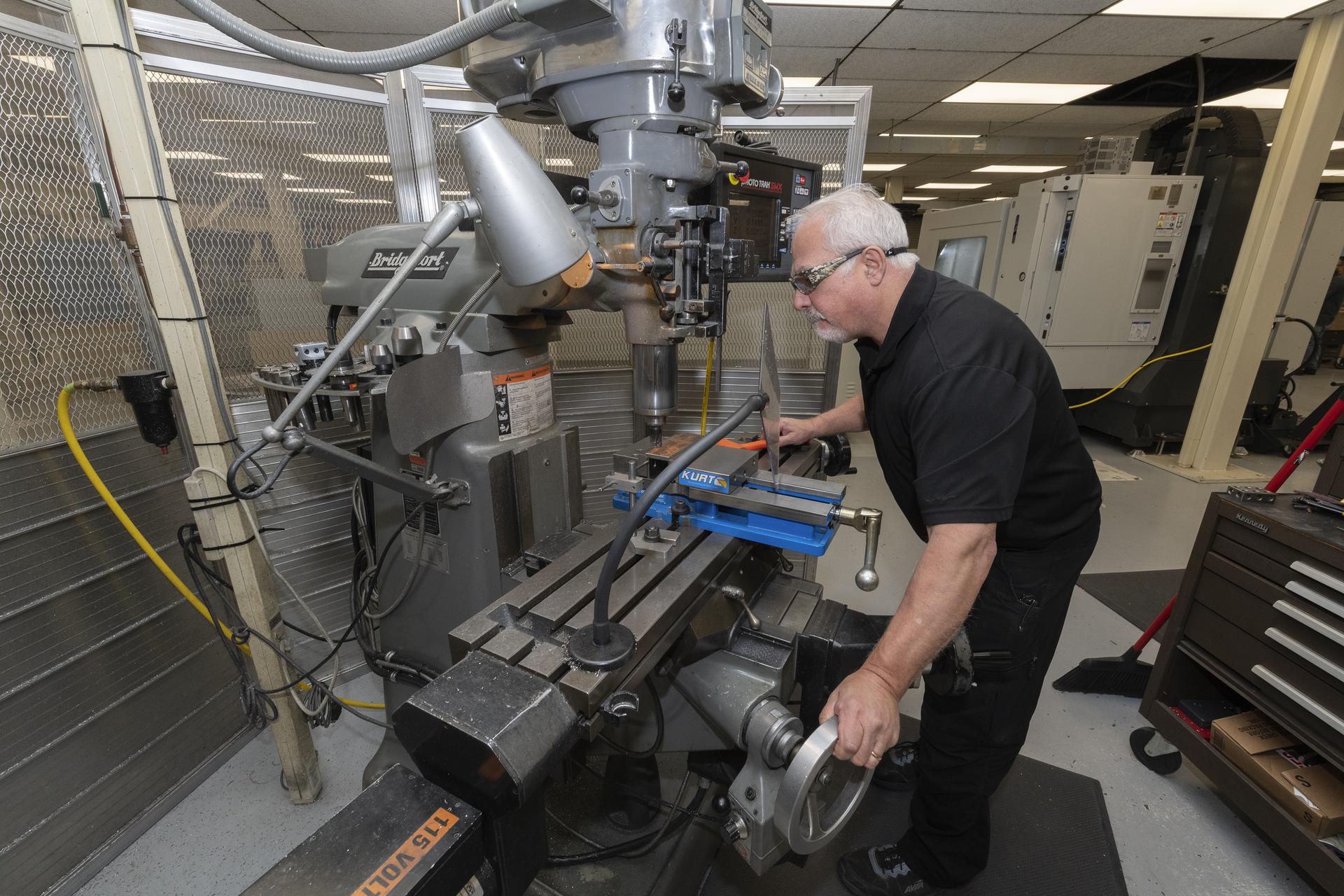
Engineering technicians in the branch bring decades of experience as master fabricators. They design and build unique components, rapid prototypes, and flight‑critical structures that meet NASA’s rigorous safety and performance standards. Whether shaping composite structures by hand or producing precision‑milled parts, the team builds every component with mission success in mind.
Experimental Fabrication supports a wide range of NASA research efforts. When teams at NASA Armstrong designed the AIRVUE (Airborne Instrumentation for Real‑world Video of Urban Environments) sensor pod to support autonomous‑flight research, the fabrication team converted digital designs into a fully functional structure. They ensured the pod met strict safety requirements before deploying it for test flights.
An engineering technician works in the Experimental Fabrication Branch at NASA’s Armstrong Flight Research Center in Edwards, California, on Thursday, March 14, 2023. The branch transforms engineering concepts into hardware for research aircraft and technology development, supporting advances in aviation safety, efficiency, and sustainability.NASA/Steve Freeman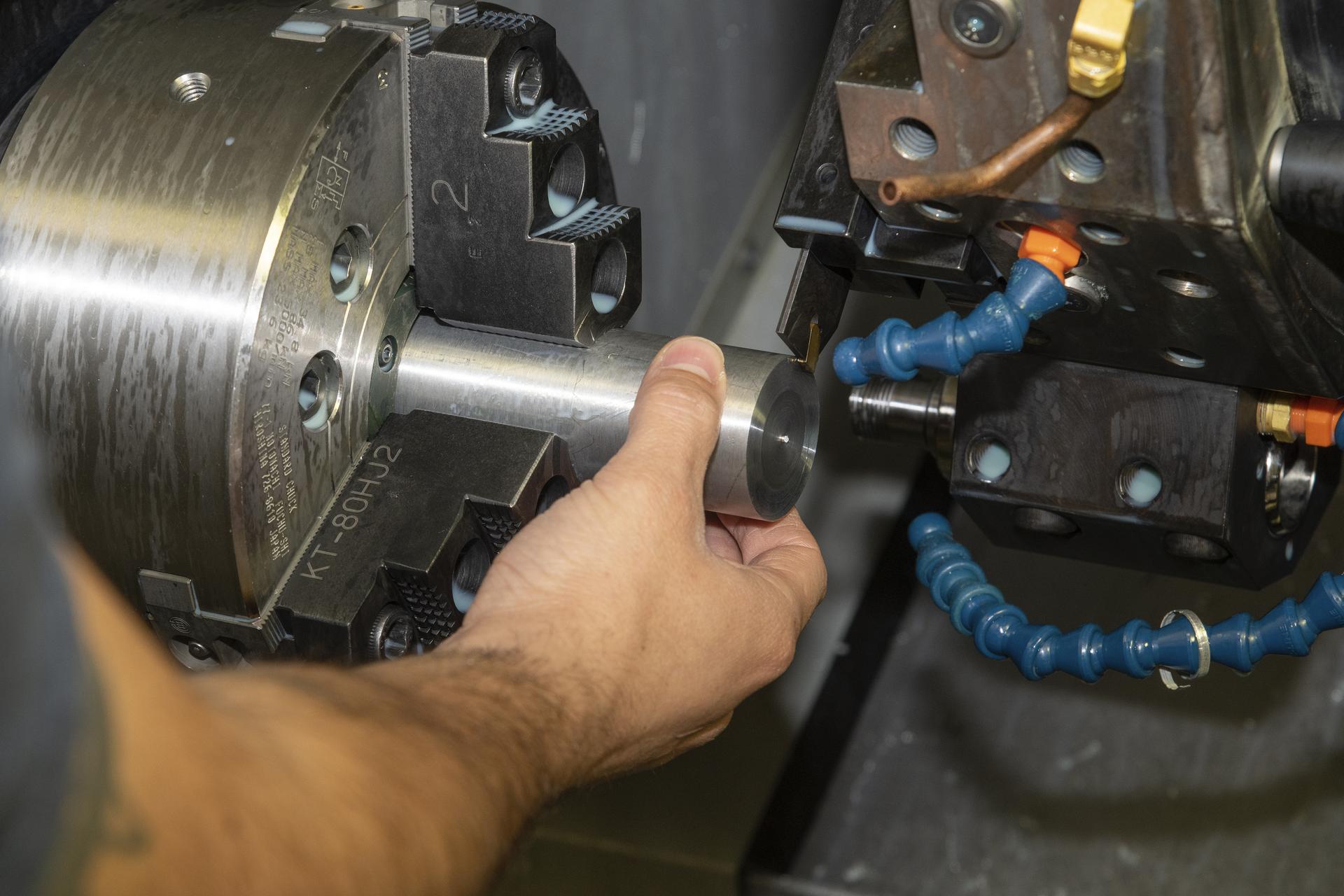
Beyond mission support, the Experimental Fabrication Branch contributes to NASA’s STEM engagement efforts. During local robotics competitions, technicians use mobile fabrication equipment to repair student‑built robots and demonstrate machining and welding techniques. These demonstrations introduce students to NASA’s technical career paths and show how advanced manufacturing supports aerospace research.
The branch uses modern computer-aided design and computer-aided manufacturing tools, including Pro E/Creo, MasterCam, and SolidWorks, to convert digital models into hardware. This early integration of engineering and fabrication helps shorten development timelines and reduce design‑to‑hardware mismatches. Unlike environments where work transitions between multiple contractors, NASA Armstrong includes the fabrication team from early design through final assembly and aircraft installation. This continuous involvement strengthens coordination with engineering teams and flight operations.
Alexis Moreno, an engineering technician, works with a fabrication machine in the Experimental Fabrication Branch at NASA’s Armstrong Flight Research Center in Edwards, California, on Monday, Nov. 6, 2023. The branch transforms engineering concepts into hardware for research aircraft and technology development, supporting advances in aviation safety, efficiency, and sustainability. NASA/Genaro Vavuris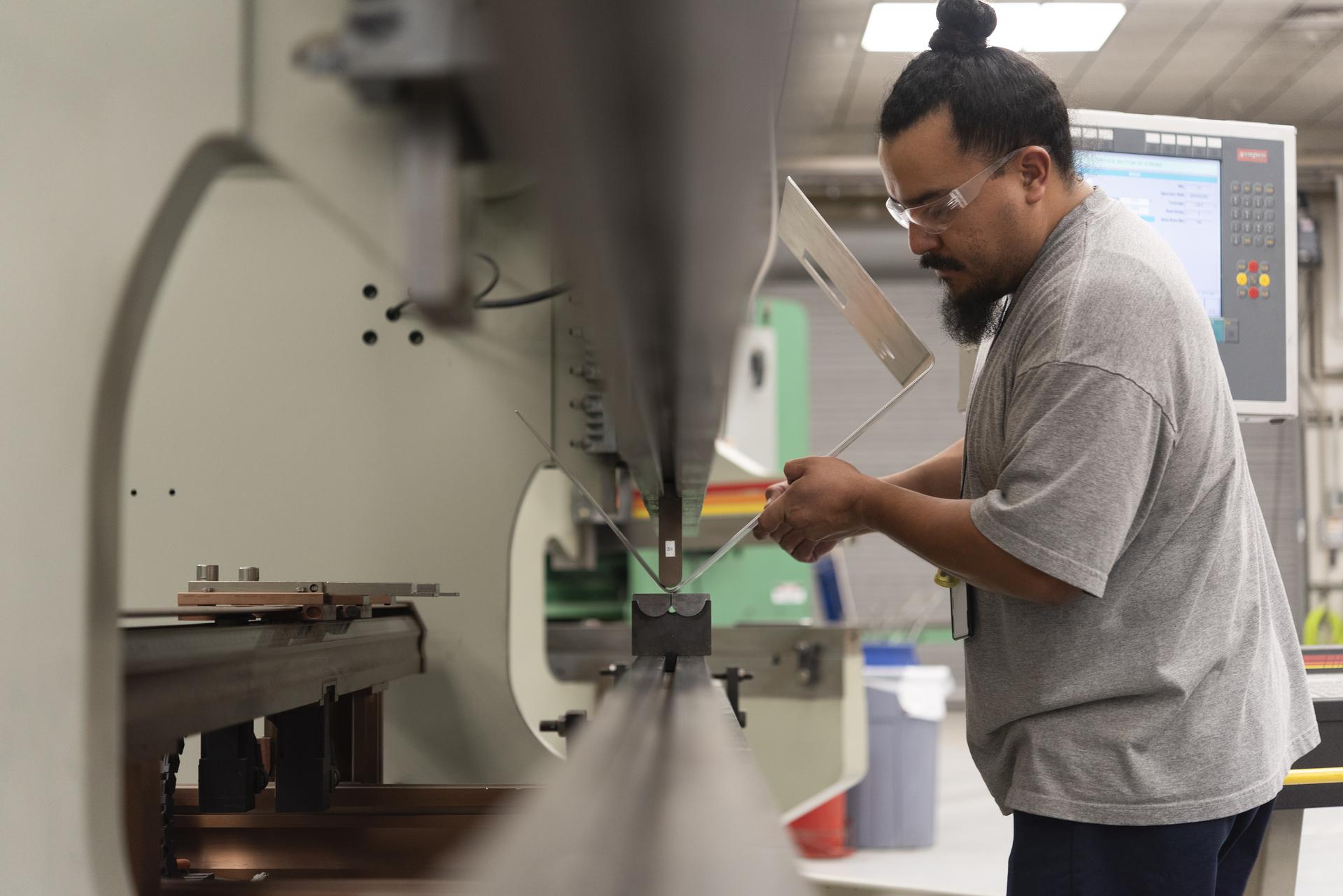
Recent projects, such as advanced wing‑model fabrication and custom lightweight aircraft floorboards, highlight the branch’s essential role in NASA Armstrong’s mission. Whether supporting experimental aircraft, enabling new technology demonstrations, or guiding students through hands‑on fabrication, the Experimental Fabrication Branch helps advance NASA’s mission for the benefit of all.
Share Details Last Updated Jun 22, 2026 EditorDede DiniusContactSarah Mannsarah.mann@nasa.govLocationArmstrong Flight Research Center Related Terms Explore More 5 min read NASA, USGS Scientists Go Rock Hounding in California’s High Desert Article 2 weeks ago 4 min read NASA’s X-59 Aircraft Flies Supersonic for First Time Article 2 weeks ago 6 min read NASA’s X-59 Prepares for First Supersonic Flight Article 4 weeks ago Keep Exploring Discover More Topics From NASAArmstrong Flight Research Center
Aircraft Flown at Armstrong
Armstrong Flight Operations
Armstrong Mission Operations
NASA's Chandra Finds Possible Supernova Remnant
NASA’s Chandra Finds Possible Supernova Remnant
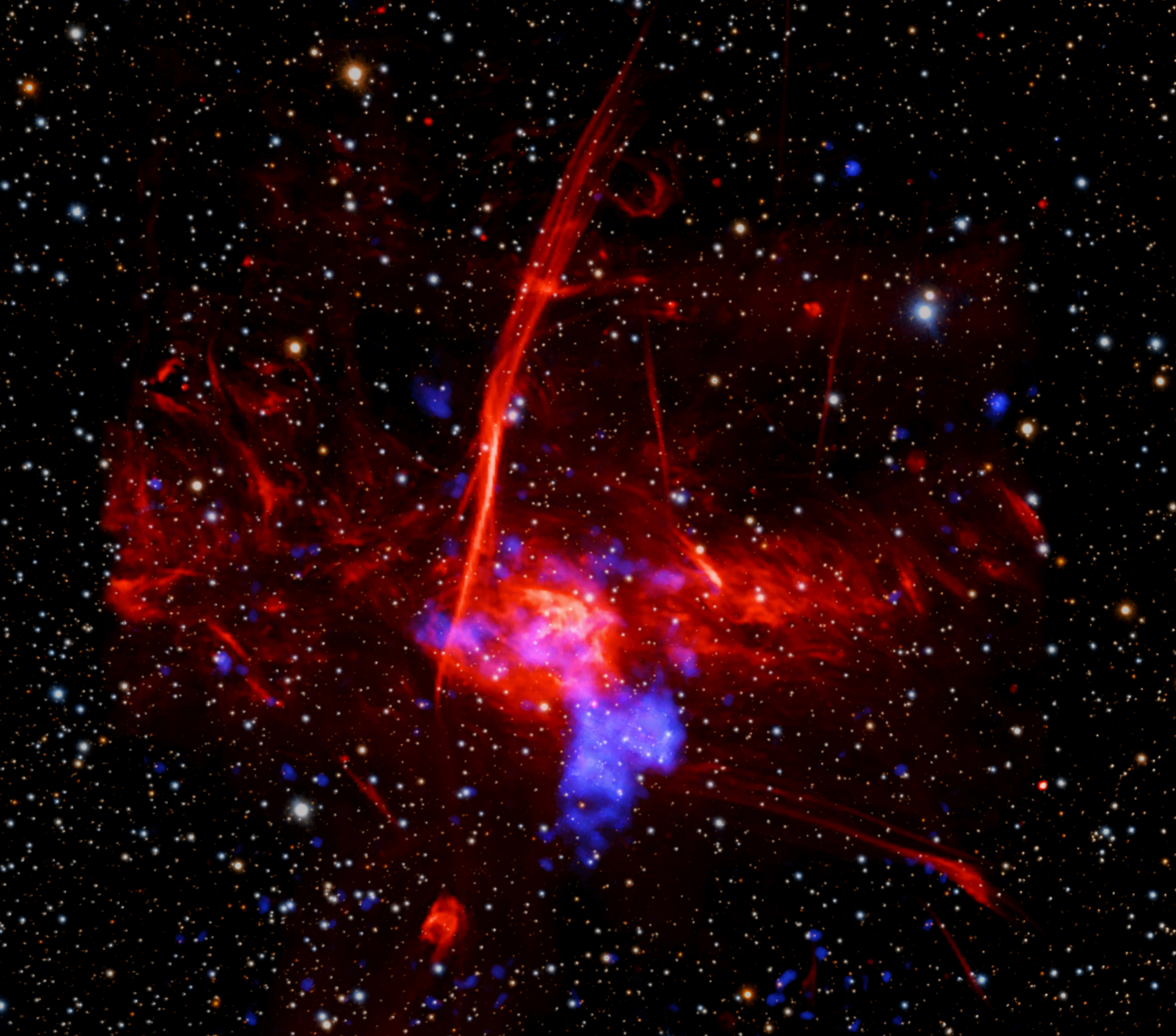
Using data from NASA’s Chandra X-ray Observatory, astronomers may have found a supernova remnant – seen in this June 11, 2026, image – in an intriguing neighborhood in the middle of the Milky Way galaxy. Supernova remnants are the expanding remains of exploded stars and provide elements like iron, oxygen, and silicon that are critical for the formation of planets and for life as we know it to form and flourish.
This new supernova remnant, if confirmed, would be one of the closest ever discovered to the supermassive black hole at the central region of our home galaxy, an exotic region crammed with massive stars, long threads of magnetic fields and dense clouds of gas orbiting rapidly around the Galactic Center.
Read more about this discovery.
Image credit: -ray: NASA/CXC/UCLA/Z. Zhu et al.; ESA/XMM-Newton; Optical: PanSTARRS; Radio: MeerKAT; Infrared (JWST): NASA/ESA/CSA/STScI; Image Processing: NASA/CXC/SAO/L. Frattare and P. Edmonds
NASA to Cover US Spacewalk 95, Host Preview News Conference
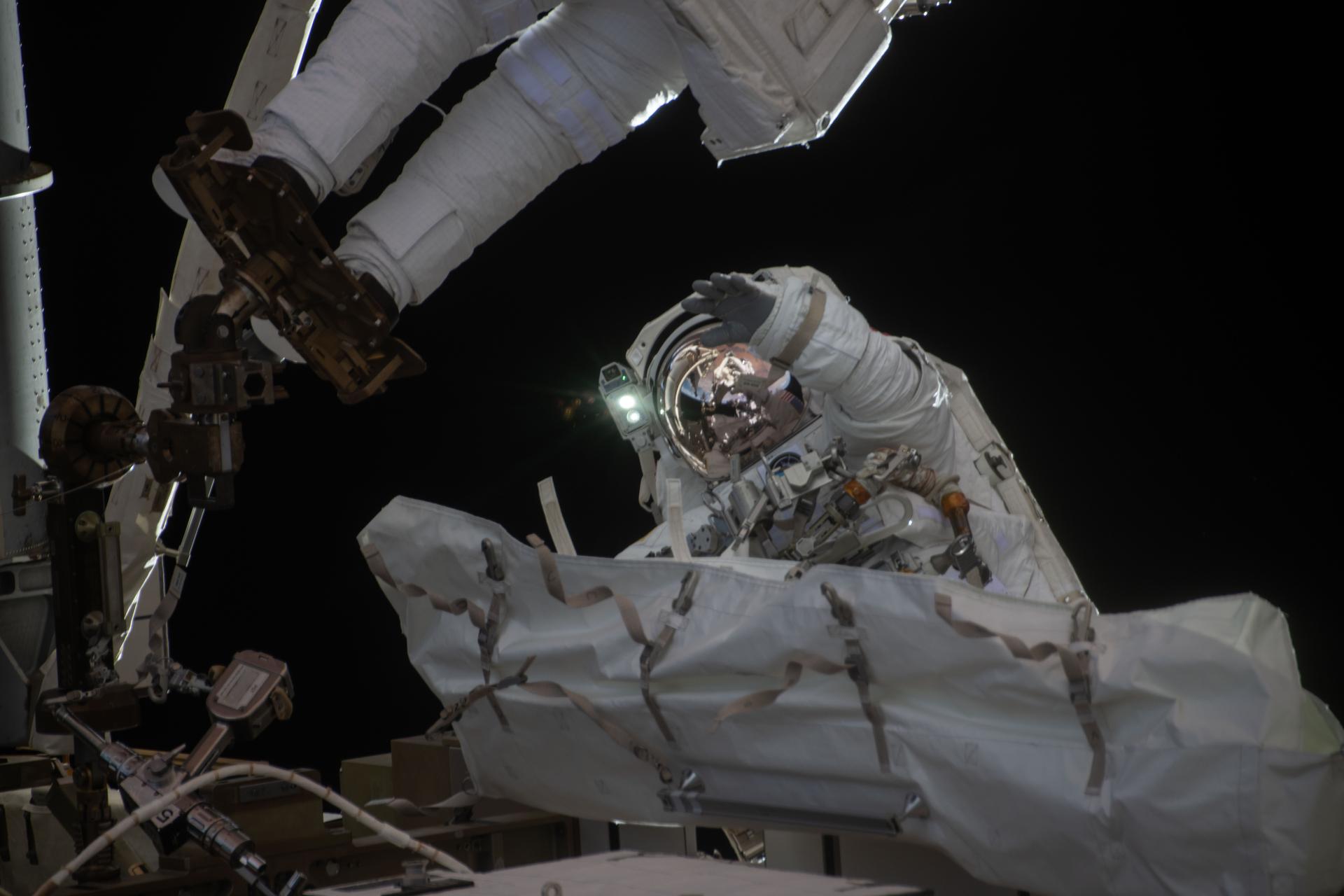
NASA astronauts will venture outside the International Space Station on Tuesday, June 30, to replace a wrist joint on the orbital complex’s Canadarm2 robotic arm. The spacewalk is scheduled to begin at approximately 8:35 a.m. EDT.
Experts from NASA and CSA (Canadian Space Agency) will preview the upcoming spacewalk during a news conference at 2 p.m. on Thursday, June 25, on the agency’s YouTube channel. The briefing will take place at NASA’s Johnson Space Center in Houston. Learn how to watch NASA content through a variety of platforms, including social media.
Participants include:
- Bill Spetch, operations and integration manager, International Space Station Program, NASA Johnson
- Fiona Antkowiak, spacewalk flight director, NASA Johnson
- Jason Dyer, deputy liaison manager, CSA
United States-based media interested in attending in person must contact the Johnson newsroom no later than 5 p.m. Wednesday, June 24, at: jsccommu@mail.nasa.gov. Media joining by phone should request dial‑in details by the same deadline. To ask a question, media must dial in no later than 15 minutes before the start of the news conference.
Tuesday, June 30
NASA astronauts Chris Williams and Jessica Meir will exit the station’s Quest airlock to replace a wrist joint that malfunctioned during normal Canadarm2 operations on May 27 after the arm drew elevated motor current and did not move as expected.
Watch NASA’s live U.S. spacewalk 95 coverage beginning at 7 a.m. EDT on NASA+, Amazon Prime, Netflix, and the agency’s YouTube channel. The spacewalk is expected to last roughly six-and-a-half hours.
NASA worked alongside CSA to understand the issue and determined a spacewalk was required to replace the joint using a spare already aboard the space station. Repairs to robotics, like Canadarm2, are normal and expected after more than 25 years of continuous operations, as the system was designed with replaceable components and planned maintenance in mind.
This spacewalk will be the second for Williams and the fifth for Meir. Williams will serve as spacewalk crew member 1 and will wear a suit with red stripes. Meir will serve as crew member 2 and will wear an unmarked suit. It will be the 280th spacewalk in support of space station assembly, maintenance, and upgrades.
To learn more about International Space Station research, operations, and its crews, visit:
-end-
Jimi Russell
Headquarters, Washington
202-358-1100
james.j.russell@nasa.gov
Sandra Jones
Johnson Space Center, Houston
281-483-5111
sandra.p.jones@nasa.gov