
Feed aggregator
Pluto losing its planet status may be the best thing that ever happened to solar system diversity
Unpopular opinion time, but someone has to say it: I think Pluto being reclassified as a dwarf planet was a great thing for our understanding of the solar system and for the former planet itself. Let me try to convince you, too.
First, a little background. The Pluto planet controversy began exactly 20 years ago on Aug. 24, 2006, when the International Astronomical Union (IAU) reclassified the solar system's (former) ninth planet as a dwarf planet.
The reason for the change was the result of the discovery of worlds similar to Pluto in the Kuiper Belt, the ring of icy bodies and debris extending out beyond the orbit of Neptune. It suddenly became necessary to determine if these bodies are planets or whether the definition of what a planet is needs to be reshaped. The IAU decided on the latter. Pluto took the hit.
The 2006 definition developed for the IAU by the Uruguayan astronomers Julio Ángel Fernández and Gonzalo Tancredi says a planet is "a celestial body in the solar system that is in orbit around the sun, has sufficient mass to assume hydrostatic equilibrium [it is round or nearly round], and it has 'cleared the neighborhood' around its orbit."
That meant a new definition had to be introduced for large round bodies orbiting the sun, one that meets these first two criteria, but fails to meet the the third. Thus, dwarf planets were defined by the IAU as: "an object in orbit around the sun that is large enough to pull itself into a nearly round shape but has not been able to clear its orbit of debris."
Pluto fell out of the planet category and into the dwarf planet category because, as it orbits the sun out beyond Neptune, other bodies cross its orbital path. Thus, Pluto hasn't cleared its neighborhood. Not a planet then, sorry.
But don't feel too bad. It is a good thing, honestly.
The redefinition of Pluto has had a strange effect on the general public and even some scientists, who seem to "feel sorry" for the former planet, almost as if it has somehow been demoted. There are several Change.Org petitions and petitions on other sites that demand to restore Pluto's planethood. One of these, established in 2024, has over 1,000 signatures.
Some petitions to make Pluto a planet again fundamentally misunderstand why Pluto isn't a planet anymore. Take this one on slightly tongue-in-cheek petition on iPetitions, which states: "Pluto should not have its planet rights taken away form {sic] it just because it is small, so is Daniel, but that doesn't make him not a human anymore! This is a very urgent matter! This is an EMERGENCY!!"
I don't know who Daniel is, but I do know that Pluto being reclassified as a dwarf planet really exemplified how diverse the solar system actually is.
When we think of the solar system, we think of the planets orbiting the sun, and the moons orbiting their planets. Maybe we picture the occasional visit by an asteroid or comet. The reclassification of Pluto ensures that the general public can't really ignore the fact that there are many solar system bodies with sizes between planets and asteroids that are no less important than the planets themselves.
Many of these dwarf planets exist far from the sun, and don't visit the inner solar system — meaning they don't get blasted by high levels of solar radiation. Likewise, they generally haven't been affected by geological processes, meaning that the material they are composed of is unspoiled. Thus, dwarf planets could act as time capsules that allow us to study the matter that existed in the solar system when planets like Earth started to form.
We shouldn't ignore dwarf planets when we talk about the solar system, and as the king of the dwarfs, Pluto ensures we can't. Its change in status made the study of Kuiper Belt objects seem equally as important as the study of moons and planets.
There is also a really simple and logistical reason not to make Pluto a planet again. Though the IAU currently recognizes only five dwarf planets — Ceres, Pluto, Haumea, Makemake and Eris — astronomers think there are as many as 100 of them still waiting to be discovered.
If we let Pluto back into the planet party, then all these other dwarf planets should be allowed back in too, right? Keeping Pluto a dwarf planet better defines what a planet is and prevents an awkward situation in the future in which schoolchildren (and the rest of us) would have to remember upwards of 100 planets.
If you are going to feel sorry for any dwarf planet, maybe it should be Ceres. The closest dwarf planet to Earth, it was discovered in 1801, 129 years before Pluto, and was therefore the first dwarf planet to be discovered (though it was not defined as such initially).
Pluto has really stolen Ceres' thunder as the solar system's most prominent dwarf planet.
Spare a thought for Eris as well. Also located beyond the orbit of Neptune, this dwarf planet is 1,445 miles (2,326 kilometers) wide, making it just a hair smaller than the largest solar system dwarf planet, Pluto, which is 1,477 miles (2,377 km) across. But Eris is actually more massive than Pluto, making it the most massive dwarf planet in the solar system, and Eris never even got the chance to be called a planet.
Where is the petition for Ceres or Eris, eh? Nowhere, that's where.
But seriously, there is something crucial to remember in all this: The redefinition of Pluto as a dwarf planet took away none of the former planet's wonder or beauty.
Is the bright heart-shaped plain of Sputnik Planitia, composed of squishy nitrogen ice, any less spectacular because it belongs to a dwarf planet? Are the towering 11,000-foot-high (3,350 m) ice mountains of Pluto any less majestic because they rise from the surface of a dwarf planet, not a planet?
What about the blue haze that envelops the dwarf planet? Or Pluto's regions of shifting ice that show the former planet to be far more active than we once thought? Are they less scientifically fascinating?
Were the observations made by NASA's New Horizons spacecraft less monumental for humanity, or less of an impressive scientific achievement, because this was only a nine-year trip to a dwarf world?
Of course, the answer to all of the above questions is definitely no.
Pluto may not be the ninth planet, but it still sits at the forefront of dwarf planets in our minds and helped to define a whole population of solar system bodies.
Let's give Pluto its due.
NASA Sets Coverage for Roman Space Telescope Launch from Florida
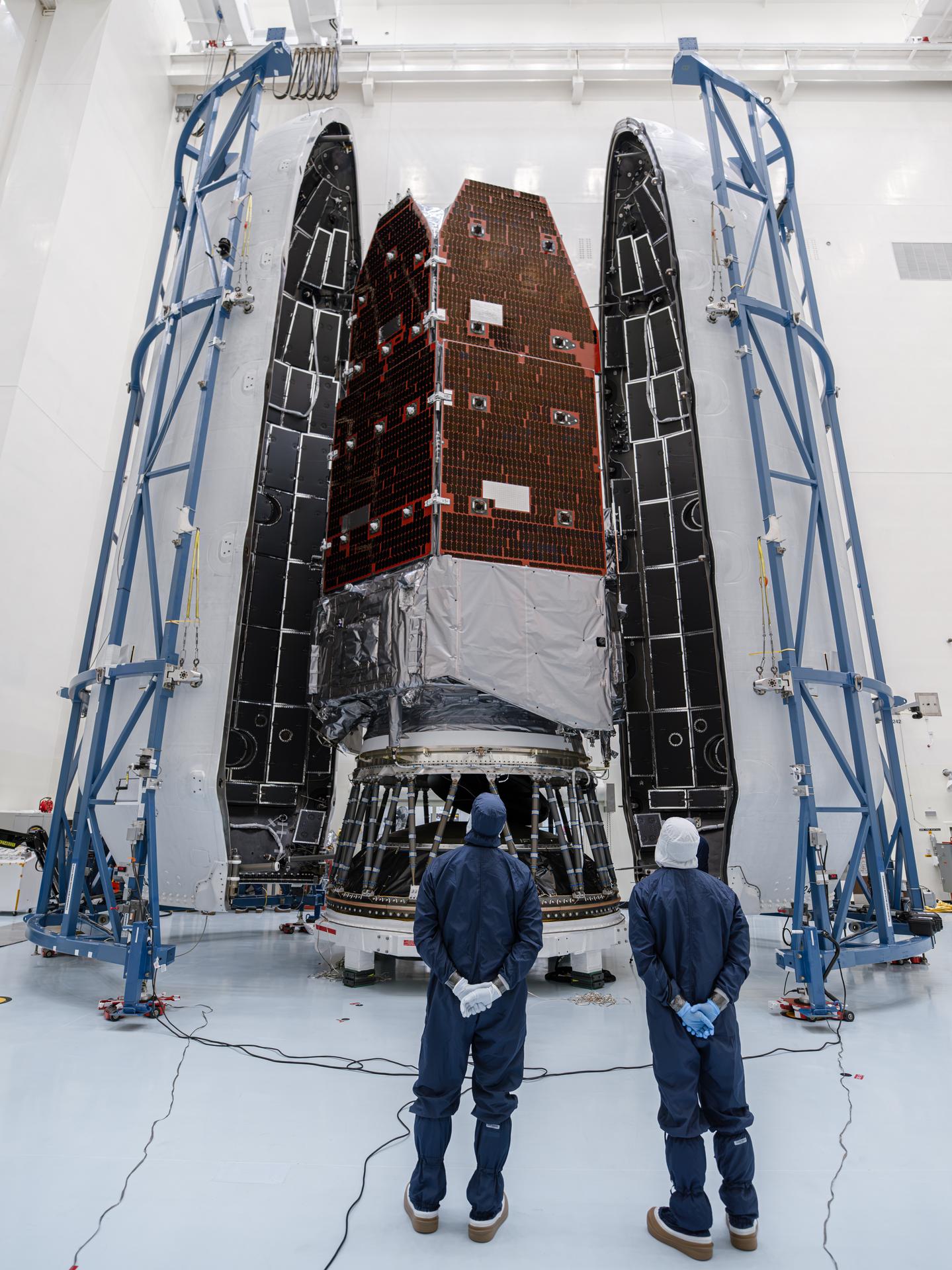
Coverage plans are ready for NASA’s Nancy Grace Roman Space Telescope prelaunch and launch activities. Roman is NASA’s next-generation observatory designed to explore some of the universe’s biggest mysteries, including dark energy.
NASA and SpaceX are targeting Roman’s liftoff for no earlier than 7:26 a.m. EDT Sunday, Aug. 30, aboard a SpaceX Falcon Heavy rocket from Launch Complex 39A at the agency’s Kennedy Space Center in Florida. Launch coverage begins at 6:20 a.m.
Live coverage of these events will stream through a variety of platforms. Learn where to watch online:
Named for NASA’s first chief astronomer, the Nancy Grace Roman Space Telescope will pair sharp infrared vision with a field of view at least 100 times larger than the agency’s Hubble Space Telescope. Its crisp, sweeping surveys will help scientists investigate dark energy and dark matter, discover and characterize exoplanets, map billions of galaxies, study black holes, and explore objects from our own solar system to the edge of the observable universe.
After launch and separation from the rocket, Roman will travel to the second Sun-Earth Lagrange point, or L2, about one million miles from Earth. The mission has a five-year primary lifetime with a goal of operating for 10 years, and Roman’s science data will be publicly available after processing.
NASA’s mission coverage is as follows (all times are Eastern and subject to change based on real-time operations):
Saturday, Aug. 29
9 a.m.: NASA’s Roman Space Telescope Mission Science Briefing: The briefing will take place in the NASA Kennedy Press Site auditorium with the following participants:
- Shawn Domagal-Goldman, director, Astrophysics Division, NASA Headquarters
- Julie McEnery, Roman telescope senior project scientist, NASA Goddard Space Flight Center
- Vanessa Bailey, Roman Coronagraph Instrument scientist, NASA Jet Propulsion Laboratory
- Kristen McQuinn, Roman Science Operations Center lead, Space Telescope Science Institute
- Lee Armus, Roman Science Support Center lead, Caltech/IPAC
Media may ask questions in person or by phone. Limited auditorium space will be available for in-person participation. For the dial-in number and passcode, media should contact the NASA Kennedy newsroom no later than one hour before the briefing at: ksc-newsroom@mail.nasa.gov.
10:30 a.m.: NASA’s Roman Space Telescope Prelaunch News Conference: The news conference will take place in the NASA Kennedy Press Site auditorium with the following participants:
- Nicky Fox, associate administrator, Science Mission Directorate, NASA Headquarters
- Lucas Paganini, Roman telescope program executive, NASA Headquarters
- Jackie Townsend, Roman telescope project manager, NASA Goddard
- Denton Gibson, launch director, NASA’s Launch Services Program, NASA Kennedy
- Julianna Scheiman, director, NASA Science and Dragon Programs, SpaceX
- Justin McReynolds, launch weather officer, 45th Weather Squadron, U.S. Space Force
Media may ask questions in person or by phone. Limited auditorium space will be available for in-person participation. For the dial-in number and passcode, media should contact the NASA Kennedy newsroom no later than one hour before the briefing at: ksc-newsroom@mail.nasa.gov.
11:45 a.m.: NASA Administrator Jared Isaacman is expected to fly past the Nancy Grace Roman Space Telescope and Falcon Heavy rocket on the launchpad in his jet. The flyby will be shown live on the same stream as the prelaunch news conference, with a view of the launch pad during the transition. The flyby is subject to weather and operational considerations.
12 p.m.: In-person interviews will take place in the NASA Kennedy Press News Center:
- Nicky Fox, associate administrator, Science Mission Directorate, NASA Headquarters
- Lucas Paganini, Roman telescope program executive, NASA Headquarters
- Dalia Kirschbaum, acting director, Sciences and Exploration Directorate, NASA Goddard
- Josh Schlieder, Roman telescope project scientist, NASA Goddard
- Jason Hylan, Roman telescope flight segment and observatory manager, NASA Goddard
- Bertrand Mennesson, Roman Coronagraph Instrument project scientist, NASA JPL
- Jeff Hanke, president, Space Systems, Space and Mission Systems, L3Harris Technologies
- Wendy Minotti, program manager, Exquisite Imaging, Space and Mission Systems, L3Harris Technologies
- Bonnie Patterson, vice president and general manager, Civil Space, Space and Mission Systems, BAE Systems
- Sarah Lipscy, director, Strategic Operations, Space and Mission Systems, BAE Systems
Previously credentialed media interested in scheduling an interview should contact the NASA Kennedy newsroom at: ksc-newsroom@mail.nasa.gov.
Sunday, Aug. 30
6:20 a.m.: Launch coverage begins.
7:26 a.m.: Launch
9:30 a.m.: Postlaunch news conference with the following participants:
- NASA Administrator Jared Isaacman
- Nicky Fox, associate administrator, Science Mission Directorate, NASA Headquarters
- Jackie Townsend, Roman telescope project manager, NASA Goddard
- Julie McEnery, Roman telescope senior project scientist, NASA Goddard
- Denton Gibson, launch director, NASA’s Launch Services Program, NASA Kennedy
Media may ask questions in person or by phone. Limited auditorium space will be available for in-person participation. For the dial-in number and passcode, media should contact the NASA Kennedy newsroom no later than one hour before the news conference at: ksc-newsroom@mail.nasa.gov.
Audio-only coverage
Audio-only coverage of the launch will be carried on the NASA “V” circuits, accessible by dialing 321-867-1220 or 321-867-1240. On launch day, mission audio countdown activities without NASA broadcast commentary will be carried on 321-867-7135.
Launch audio also will be available on Launch Information Service and Amateur Television System’s VHF radio frequency 146.940 MHz and KSC Amateur Radio Club’s UHF radio frequency 444.925 MHz, FM mode, heard within Brevard County on the Space Coast.
NASA website launch coverage
Launch day coverage will be available on the NASA website, including the livestream and blog updates as countdown milestones occur. On-demand streaming video and launch photos will be available shortly after liftoff. Follow mission updates on the Roman launch blog.
Attend launch virtually
Members of the public may register to attend the Roman launch virtually. NASA’s Virtual Guest Program includes curated launch resources, notifications about related opportunities or schedule changes, and a stamp for the NASA virtual guest passport following launch.
Watch, engage on social media
Let people know you’re watching the mission on X, Facebook, and Instagram by following and tagging these accounts:
- X: @NASARoman, @NASAUniverse, @NASAKennedy
- Facebook: @NASARoman, @NASAGoddard, @NASAKennedy
- Instagram: @NASAGoddard, @NASAUniverse, @NASAKennedy
The Roman telescope is managed at NASA Goddard with participation by the agency’s Jet Propulsion Laboratory in Southern California; Caltech/IPAC in Pasadena, California; the Space Telescope Science Institute in Baltimore; and a team of scientists from various research institutions. The primary industrial partners are BAE Systems Inc., L3Harris Technologies, and Teledyne Scientific & Imaging. Contributions to Roman also are made by ESA (European Space Agency), JAXA (Japan Aerospace Exploration Agency), the French space agency CNES (Centre National d’Études Spatiales), and the Max Planck Institute for Astronomy in Germany. NASA’s Launch Services Program, based at Kennedy, manages the launch service for the Roman mission.
For more information about NASA’s Roman telescope, visit:
-end-
Alise Fisher
NASA Headquarters, Washington
202-385-1287
alise.m.fisher@nasa.gov
Leejay Lockhart
Kennedy Space Center, Fla.
321-747-8310
leejay.lockhart@nasa.gov
Claire Andreoli
Goddard Space Flight Center, Greenbelt, Md.
301-286-1940
claire.andreoli@nasa.gov
NASA Sets Coverage for Roman Space Telescope Launch from Florida
Coverage plans are ready for NASA’s Nancy Grace Roman Space Telescope prelaunch and launch activities. Roman is NASA’s next-generation observatory designed to explore some of the universe’s biggest mysteries, including dark energy.
NASA and SpaceX are targeting Roman’s liftoff for no earlier than 7:26 a.m. EDT Sunday, Aug. 30, aboard a SpaceX Falcon Heavy rocket from Launch Complex 39A at the agency’s Kennedy Space Center in Florida. Launch coverage begins at 6:20 a.m.
Live coverage of these events will stream through a variety of platforms. Learn where to watch online:
Named for NASA’s first chief astronomer, the Nancy Grace Roman Space Telescope will pair sharp infrared vision with a field of view at least 100 times larger than the agency’s Hubble Space Telescope. Its crisp, sweeping surveys will help scientists investigate dark energy and dark matter, discover and characterize exoplanets, map billions of galaxies, study black holes, and explore objects from our own solar system to the edge of the observable universe.
After launch and separation from the rocket, Roman will travel to the second Sun-Earth Lagrange point, or L2, about one million miles from Earth. The mission has a five-year primary lifetime with a goal of operating for 10 years, and Roman’s science data will be publicly available after processing.
NASA’s mission coverage is as follows (all times are Eastern and subject to change based on real-time operations):
Saturday, Aug. 29
9 a.m.: NASA’s Roman Space Telescope Mission Science Briefing: The briefing will take place in the NASA Kennedy Press Site auditorium with the following participants:
- Shawn Domagal-Goldman, director, Astrophysics Division, NASA Headquarters
- Julie McEnery, Roman telescope senior project scientist, NASA Goddard Space Flight Center
- Vanessa Bailey, Roman Coronagraph Instrument scientist, NASA Jet Propulsion Laboratory
- Kristen McQuinn, Roman Science Operations Center lead, Space Telescope Science Institute
- Lee Armus, Roman Science Support Center lead, Caltech/IPAC
Media may ask questions in person or by phone. Limited auditorium space will be available for in-person participation. For the dial-in number and passcode, media should contact the NASA Kennedy newsroom no later than one hour before the briefing at: ksc-newsroom@mail.nasa.gov.
10:30 a.m.: NASA’s Roman Space Telescope Prelaunch News Conference: The news conference will take place in the NASA Kennedy Press Site auditorium with the following participants:
- Nicky Fox, associate administrator, Science Mission Directorate, NASA Headquarters
- Lucas Paganini, Roman telescope program executive, NASA Headquarters
- Jackie Townsend, Roman telescope project manager, NASA Goddard
- Denton Gibson, launch director, NASA’s Launch Services Program, NASA Kennedy
- Julianna Scheiman, director, NASA Science and Dragon Programs, SpaceX
- Justin McReynolds, launch weather officer, 45th Weather Squadron, U.S. Space Force
Media may ask questions in person or by phone. Limited auditorium space will be available for in-person participation. For the dial-in number and passcode, media should contact the NASA Kennedy newsroom no later than one hour before the briefing at: ksc-newsroom@mail.nasa.gov.
11:45 a.m.: NASA Administrator Jared Isaacman is expected to fly past the Nancy Grace Roman Space Telescope and Falcon Heavy rocket on the launchpad in his jet. The flyby will be shown live on the same stream as the prelaunch news conference, with a view of the launch pad during the transition. The flyby is subject to weather and operational considerations.
12 p.m.: In-person interviews will take place in the NASA Kennedy Press News Center:
- Nicky Fox, associate administrator, Science Mission Directorate, NASA Headquarters
- Lucas Paganini, Roman telescope program executive, NASA Headquarters
- Dalia Kirschbaum, acting director, Sciences and Exploration Directorate, NASA Goddard
- Josh Schlieder, Roman telescope project scientist, NASA Goddard
- Jason Hylan, Roman telescope flight segment and observatory manager, NASA Goddard
- Bertrand Mennesson, Roman Coronagraph Instrument project scientist, NASA JPL
- Jeff Hanke, president, Space Systems, Space and Mission Systems, L3Harris Technologies
- Wendy Minotti, program manager, Exquisite Imaging, Space and Mission Systems, L3Harris Technologies
- Bonnie Patterson, vice president and general manager, Civil Space, Space and Mission Systems, BAE Systems
- Sarah Lipscy, director, Strategic Operations, Space and Mission Systems, BAE Systems
Previously credentialed media interested in scheduling an interview should contact the NASA Kennedy newsroom at: ksc-newsroom@mail.nasa.gov.
Sunday, Aug. 30
6:20 a.m.: Launch coverage begins.
7:26 a.m.: Launch
9:30 a.m.: Postlaunch news conference with the following participants:
- NASA Administrator Jared Isaacman
- Nicky Fox, associate administrator, Science Mission Directorate, NASA Headquarters
- Jackie Townsend, Roman telescope project manager, NASA Goddard
- Julie McEnery, Roman telescope senior project scientist, NASA Goddard
- Denton Gibson, launch director, NASA’s Launch Services Program, NASA Kennedy
Media may ask questions in person or by phone. Limited auditorium space will be available for in-person participation. For the dial-in number and passcode, media should contact the NASA Kennedy newsroom no later than one hour before the news conference at: ksc-newsroom@mail.nasa.gov.
Audio-only coverage
Audio-only coverage of the launch will be carried on the NASA “V” circuits, accessible by dialing 321-867-1220 or 321-867-1240. On launch day, mission audio countdown activities without NASA broadcast commentary will be carried on 321-867-7135.
Launch audio also will be available on Launch Information Service and Amateur Television System’s VHF radio frequency 146.940 MHz and KSC Amateur Radio Club’s UHF radio frequency 444.925 MHz, FM mode, heard within Brevard County on the Space Coast.
NASA website launch coverage
Launch day coverage will be available on the NASA website, including the livestream and blog updates as countdown milestones occur. On-demand streaming video and launch photos will be available shortly after liftoff. Follow mission updates on the Roman launch blog.
Attend launch virtually
Members of the public may register to attend the Roman launch virtually. NASA’s Virtual Guest Program includes curated launch resources, notifications about related opportunities or schedule changes, and a stamp for the NASA virtual guest passport following launch.
Watch, engage on social media
Let people know you’re watching the mission on X, Facebook, and Instagram by following and tagging these accounts:
- X: @NASARoman, @NASAUniverse, @NASAKennedy
- Facebook: @NASARoman, @NASAGoddard, @NASAKennedy
- Instagram: @NASAGoddard, @NASAUniverse, @NASAKennedy
The Roman telescope is managed at NASA Goddard with participation by the agency’s Jet Propulsion Laboratory in Southern California; Caltech/IPAC in Pasadena, California; the Space Telescope Science Institute in Baltimore; and a team of scientists from various research institutions. The primary industrial partners are BAE Systems Inc., L3Harris Technologies, and Teledyne Scientific & Imaging. Contributions to Roman also are made by ESA (European Space Agency), JAXA (Japan Aerospace Exploration Agency), the French space agency CNES (Centre National d’Études Spatiales), and the Max Planck Institute for Astronomy in Germany. NASA’s Launch Services Program, based at Kennedy, manages the launch service for the Roman mission.
For more information about NASA’s Roman telescope, visit:
-end-
Alise Fisher
NASA Headquarters, Washington
202-385-1287
alise.m.fisher@nasa.gov
Leejay Lockhart
Kennedy Space Center, Fla.
321-747-8310
leejay.lockhart@nasa.gov
Claire Andreoli
Goddard Space Flight Center, Greenbelt, Md.
301-286-1940
claire.andreoli@nasa.gov
'Ghosts of Mars' at 25: Are we any closer to living on the Red Planet? We asked the experts
In August 2001, filmmaker John Carpenter said "Boo!" and unleashed "Ghosts of Mars" on the world. While not one of Carpenter's most revered works, it's still a neat sci-fi horror movie in which Mars has been terraformed – 84% terraformed to be exact – and inhabited by humans. Plus, it has Jason Statham and Ice Cube in it, so it's automatically 99% better than all other movies ever made.
Now, the action takes place at Shining Canyon, a remote mining outpost on Mars that has a gritty wild west/Mad Max-ness vibe; it's cold, harsh, and so so so so soooooo dusty – not exactly a dream home location.
Then there's the whole "scary horde possessed by ancient extraterrestrial evil spirits trying to kill you" thing. But let's remove the spooky elements and put them aside for one second, and really consider the possibility of actually living on Mars. It's been 25 years since the movie was released, so how much closer are we to calling the Red Planet our new home?
(Image credit: Screen Gems)Chief Scientist at the Planetary Society, Dr. Bruce Betts, isn't optimistic. "I don't think we're in a position to do global terraforming due to the technology and lack of resources. The papers indicate now you have only a tiny fraction of carbon dioxide, and then there's just the political and economic reality of it. Any method I've ever heard of is really outrageously expensive over time, and you would have to have multi-year, multi-generational support for programs at a high level. You'd have the whole world having opinions on whether you could or should do it. Then there's also the planetary protection agreements that many countries have agreed to. But the lack of carbon dioxide is the showstopper, really." Even in the movie, they're still 10 years away from having air like we do on Earth.
Dr. Mark Gallaway, an astronomer, science pundit, and founder of Starlight Planetarium, also mentions the cost and carbon dioxide issues as major obstacles, as well as two other challenges that may make attempts to live on Mars near impossible. "There have been enclosed habitats we've built on Earth. A number of times external teams have had to go in and break groups up, because there have been fistfights [...] so that's going to be a long-term problem." And that’s probably going to be an extra big problem when people are cooped up at a remote mining outpost.
(Image credit: Screen Gems)"The other big problem is we have no idea how human physiology works at 0.38G. The only way we could do 0.38 of a G is to have some kind of spin habitat and have people live there. So, without actually knowing what that surface gravity is going to do to us, it's a bit tricky. We might find that they're on Mars for a year, and when they come back, they can't function anymore."
Recent studies about the state of Mars haven't been too promising either. Betts views Bruce Jakosky and Christopher Edwards' 2018 research paper, where it explicitly states "terraforming Mars is not possible using present-day technology," as the biggest reality check.
"The Jakosky and Edwards paper about CO₂ makes me very negative," Betts says. "There have been thoughts of using exotic technologies, such as nanorods and aerogel, but even with the aerogel, I believe they're talking about using it to create localized domes, and you'd create the interior of that and try to terraform it. It's certainly more plausible than doing the whole planet, but still seems like [there are a lot of implications]. [...] People are coming up with new, nifty technologies, but I just don't see how they can be implemented, even if they did work."
(Image credit: Screen Gems)Science fiction tends to depict Mars as a possibility for human occupation, but Gallaway points out another big blow for any terraforming ambitions: "We've made recent discoveries that the soil on Mars is actually quite toxic to life. So the scene in 'The Martian' where Mark Watney grows potatoes? That's just not possible. It means if you're going to colonize Mars, you're going to have to bring all your topsoil, which is a big problem."
In addition to all of this, there are the ethical dilemmas that need to be addressed. Astronomer, teacher, and author Dr. Jeffrey Bennett wrote "Life in the Universe" along with Seth Shostak, Nicholas Schneider, and Meredith MacGregor.
In the book, there's a section that discusses introducing greenhouse gas to the Martian atmosphere in order for humans to walk around without a spacesuit. However, this leads to serious questions about the effects of colonization and whether humans have the right to fundamentally change another planet's atmosphere and potentially wreck it for other possible lifeforms already living there. Remember, "it's their planet… we are the aliens."
(Image credit: Screen Gems)For Bennett, he questions whether terraforming Mars is even an option if humans can't get their own house in order: "Given that we can't even seem to keep Earth's climate functioning the way we'd like it to – for example, global warming is making the climate worse for humans and other life – I find it difficult to believe that our present level of knowledge would allow us to turn an inhospitable place like Mars into a livable world. Perhaps this may become possible in the future, but certainly not before we first learn how to take care of our home planet's climate."
Clearly, living on Mars isn't possible at the moment, but "Ghosts of Mars" takes place in the future, so we still have time because who knows what scientific advancements await us? Alas, experts tend to agree that it's unlikely to happen by 2176 at this current rate, though developments could happen: "I think that people will continue researching on the small scale of things you could do, but I don't think we're going to be any closer to terraforming Mars in reality by 2176 than we are now," Betts says. So, I guess you could say we "don’t stand a ghost of a chance."
(Image credit: Screen Gems)Gallaway suggests an interesting alternative to terraforming Mars, or any other planet: "From a personal point of view, I actually think we should be looking at space habitats rather than planet-based habitats. Get to what we call an M-type asteroid: [...] Get the platinum group metals out, sell those, then spin the asteroid up, and you can live on it – inside at 1G. I'm a big fan of the late Iain M. Banks and his science fiction, where virtually everybody is living in inhabitable orbital structures, because it's easier to make the environment than it is to change it."
Hmm… Gallaway may have just pitched the perfect sequel. Yeah, "Ghosts of the Asteroid" sounds decent, doesn't it? Just as long as Statham somehow returns and punches everything in sight.
Watch "Ghosts of Mars" on Prime Video or Apple TV.
‘Extreme’ wildfire sweeps Nevada as U.S. tallies almost 51,000 wildfires so far this year
A wildfire outside Reno began on August 22 and has already burned more than 15,000 acres of land
'Project Hail Mary' and 'The Martian' author Andy Weir is headed back to outer space, but not how you'd expect
Amiable sci-fi author Andy Weir, the New York Times bestselling author of "The Martian," "Artemis," and "Project Hail Mary", is embarking on an entirely new imaginative odyssey later this year.
It's not exactly another sci-fi book, though; It's an audiobook, and Weir is foregoing sole authorship of the project and instead co-shepherding this captivating space opera drama for the folks at Audible.
Arriving on Nov. 5, 2026, "Exoplanet" is an ambitious celestial thriller written by comic book veteran and acclaimed author Benjamin Percy ("Red Moon"), executive produced by Weir, and showcasing a stellar vocal cast that includes Anthony Mackie, the Oscar-winning Ariana DeBose, and John Leguizamo.
"When the starship Wild Blue Yonder is torn apart by a quantum anomaly, each surviving crew member crash-lands in a different era on the same deadly exoplanet — hunted, alone and running out of time," states the official synopsis.
"Chief Engineer Jeff Shaw (Anthony Mackie), aided by his virtual assistant, must battle an unforgiving present, driven by one thing: getting home to his daughter. First Officer Becca Bang (Ariana DeBose) fights to survive a hostile alien past. Science Officer Logan Bowers (John Leguizamo) wakes in a machine-ruled future that shouldn’t exist.
"But the anomaly wasn’t random. A relentless alien intelligence is feeding on human technology, and it's been waiting for them across every timeline. Separated by centuries, the crew must find a way to communicate across time itself before this world consumes them all. Blending heart-stopping action with the mind-bending science that Andy Weir is known for, 'Exoplanet' explores what it means to fight for humanity’s future when your own existence hangs in the balance."
"Exoplanet" brings together a strong creative crew and highlights sound design by Lucasfilm's Skywalker Sound, along with an original soundtrack by composer Rob Cairns ("Love, Death & Robots," "Secret Level").
Additional vocal performers include Cherry Jones ("Succession," "The Handmaid’s Tale"), Sufe Bradshaw ("Veep," "Vice"), Charlie Plummer ("The Long Walk," "Lean on Pete"), Ray Porter (Audible's "Project Hail Mary," "The Bobiverse") and Aida Osman ("Rap Sh!t").
Andy Weir attends "Project Hail Mary" New York premiere at Lincoln Center on March 18, 2026 in New York City (Image credit: Getty Images (Dimitrios Kambouris))"I'm obsessed with problems, the kind where one person and a lot of math are all that stand between survival and disaster," Weir explained in an Audible statement.
"Benjamin Percy's writing in 'Exoplanet' takes that and adds a twist that genuinely kept me up at night: What if the people trying to save each other were separated not by distance, but by centuries? You can’t see that story. You have to hear it. The crackle across a 500-year gap, the desperation in a voice that doesn't know if anyone’s still listening?"
We'll be listening, Andy! We'll definitely be listening!
Audible’s sci-fi audio drama, "Exoplanet," lands on Nov. 5., 2026.
Mission Fails to Rescue Swift Observatory (Updated)
A daring mission tried but failed to save a key astrophysics observatory in low Earth orbit.
The post Mission Fails to Rescue Swift Observatory (Updated) appeared first on Sky & Telescope.
Goodbye, Falcon 9: SpaceX planning to retire workhorse launcher when Starship is up and running
The rumors are true. SpaceX plans to retire its workhorse Falcon 9 rocket once the company's giant next-generation Starship begins regular operational flights.
SpaceX launched the Falcon 9 for the first time in 2010, and the rocket soon chiselled itself a place in spaceflight history. The Falcon 9 has lifted off nearly 700 times to date, and it's the first orbital rocket ever to land and refly its first-stage booster. Russia's Soyuz rocket, which has been in operation since 1957, is the only launch vehicle with more missions under its belt, but the Falcon 9 is on track to pass it next year.
However, "winding down Falcon" — both Falcon 9 and Falcon Heavy, a triple-booster variant that has flown 12 times to date — is inevitable, SpaceX founder and CEO Elon Musk said in an Aug. 22 post on X. "Once Starship is flying reliably several times per week, it makes sense to shift … production resources to Starship to get launch rate to several times per day," he wrote.
The impact of Falcon 9's absence from the launch market can't yet be known, but industry reports suggest that SpaceX may discontinue all but a few Falcon 9 missions beginning in 2028. The ones that remain will likely include crew and resupply missions for NASA to the International Space Station (ISS), which is expected to continue flying until at least 2030, meaning that commercial operators will have to start looking to Starship to deliver their satellites to space.
When exactly SpaceX will begin to wind down Falcon 9 will depend on the continuing development of Starship. Unlike its predecessor, Starship is built for full reusability, with the rocket's Super Heavy booster and Ship upper stage both designed to return to Earth for recovery and reflight. (Falcon 9 and Falcon Heavy upper stages are expendable.)
And Starship is bigger than Falcon 9, too. The current Version 3 (V3) Starship stands 408 feet (124.4 meters) tall, towering over the 230-foot tall (70 m) Falcon 9, and is capable of launching substantially heavier payloads to space. Starship is expected to be able to deliver more than 100 tons to low Earth orbit (LEO). By comparison, Falcon 9 and Falcon Heavy can carry about 25 tons and 63 tons to LEO, respectively.
The majority of Falcon 9 missions over the past few years have been dedicated to SpaceX's Starlink satellite internet network, with more than 300 launches since 2023 adding to the growing constellation of over 11,000 spacecraft. The more powerful next generation of Starlink satellites, however, are bigger, and designed to fit in Starship's payload bay, not atop the Falcon 9. And once Starship is launching reliably (and even before then), SpaceX plans to begin upgrading its Starlink network with the newer satellite version.
A Falcon 9 rocketl launches the Crew-7 mission for NASA on Aug. 26, 2023 (Image credit: Space.com/ Josh Dinner)That will likely kick off an exponential upward trend for Starship launches. This happened with the Falcon 9, after all. SpaceX launched the rocket just 11 times in 2019, the year the company began assembling its Starlink constellation. In 2025, Falcon 9 flew a whopping 165 missions, and 122 of them were Starlink flights.
NASA has also contracted SpaceX to design a version of Starship for use as a lunar landing vehicle for the space agency's Artemis missions. A Starship V3 is in line to launch on the Artemis III mission next year, which will practice docking operability in LEO with NASA's Orion spacecraft. Starship has also been slated to deliver astronauts to the surface of the moon on Artemis IV in 2028. That's also when SpaceX has told NASA that it plans to end commercial Falcon 9 launches, according to Ars Technica.
One thing Starship has not yet been contracted or designed for is docking with the ISS. NASA is positioned to continue purchasing flights of SpaceX's cargo and Crew Dragon spacecraft to deliver astronauts and supplies to the space station through 2030, and would be hard pressed to shift those tasks to Starship. Cost and contract logistics aside, the mere size of Starship poses significant engineering risks outside the station's safety margins.
Regardless of the timeline for the ISS, SpaceX's planned sundowning of Falcon 9 also hinges on Starship's success. The launch vehicle has flown 13 suborbital test flights to date. Another is poised to lift off within the next month, and may be the rocket's first attempt at fully reaching orbit. But that's just one of many milestones that Starship must hit before it can begin "flying reliably several times per week," as Musk stipulated in his post.
That kind of turnaround time has already been achieved by Falcon 9, but building up Starship's infrastructure is a much bigger enterprise than the dozen or so successful test flights the vehicle has under its belt. And how quickly SpaceX can scale Starship to match Falcon 9's reliability will ultimately determine how soon the legacy rocket is largely phased out of commission.
Perseverance Captures Another Phobos Transit
NASA/JPL-Caltech/ASU/MSSS/SSI Photojournal Navigation Downloads Perseverance Captures Another Phobos Transit
PNG (296.77 KB)
PIA26811 Animation (.mp4)
MP4 (160.24 KB)
Description
NASA’s Perseverance Mars rover used its Mastcam-Z camera to capture the silhouette of Phobos, one of the two Martian moons, as it crossed in front of the Sun on Aug. 12, 2026, the 1,948th Martian day, or sol, of the mission.
The animation has been tinted to simulate what a human would see if they were watching the transit from the Martian surface through protective solar eclipse glasses.
Perseverance has captured several Phobos transits since its landing at Jezero Crater in February 2021. By comparing the various recordings, scientists can refine their understanding of the potato-shaped moon’’ orbit, learning how it is changing. Eons from now, Phobos’ orbit is expected to eventually send the moon toward the Red Planet’s surface.
Arizona State University leads the operations of the Mastcam-Z instrument, working in collaboration with Malin Space Science Systems in San Diego, on the design, fabrication, testing, and operation of the cameras, and in collaboration with the Niels Bohr Institute of the University of Copenhagen on the design, fabrication, and testing of the calibration targets.
NASA’s Jet Propulsion Laboratory, which is managed for the agency by Caltech in Pasadena, California, built and manages operations of the Perseverance rover.
For more about Perseverance: science.nasa.gov/mission/mars-2020-perseverance
Keep Exploring Discover More Topics From Photojournal
Photojournal
Search Photojournal
Photojournal’s Latest Content
Feedback
Perseverance Captures Another Phobos Transit
NASA/JPL-Caltech/ASU/MSSS/SSI Photojournal Navigation Downloads Perseverance Captures Another Phobos Transit
PNG (296.77 KB)
PIA26811 Animation (.mp4)
MP4 (160.24 KB)
Description
NASA’s Perseverance Mars rover used its Mastcam-Z camera to capture the silhouette of Phobos, one of the two Martian moons, as it crossed in front of the Sun on Aug. 12, 2026, the 1,948th Martian day, or sol, of the mission.
The animation has been tinted to simulate what a human would see if they were watching the transit from the Martian surface through protective solar eclipse glasses.
Perseverance has captured several Phobos transits since its landing at Jezero Crater in February 2021. By comparing the various recordings, scientists can refine their understanding of the potato-shaped moon’’ orbit, learning how it is changing. Eons from now, Phobos’ orbit is expected to eventually send the moon toward the Red Planet’s surface.
Arizona State University leads the operations of the Mastcam-Z instrument, working in collaboration with Malin Space Science Systems in San Diego, on the design, fabrication, testing, and operation of the cameras, and in collaboration with the Niels Bohr Institute of the University of Copenhagen on the design, fabrication, and testing of the calibration targets.
NASA’s Jet Propulsion Laboratory, which is managed for the agency by Caltech in Pasadena, California, built and manages operations of the Perseverance rover.
For more about Perseverance: science.nasa.gov/mission/mars-2020-perseverance
Keep Exploring Discover More Topics From Photojournal
Photojournal
Search Photojournal
Photojournal’s Latest Content
Feedback
Starstruck: NASA Research Shows How Sun’s Ancient History Shaped Earth
At the center of our solar system, the Sun influences every planet that orbits it. In two recent NASA-funded studies, scientists uncovered how ancient events in the Sun’s history may have helped create Earth’s unique climate and driven previously unexplained climatic shifts.
In new research, scientists at NASA’s SHIELD (Solar Wind with Hydrogen Ion charge Exchange and Large-Scale Dynamics) center — one of NASA’s DRIVE (Diversify, Realize, Integrate, Venture, Educate) Science Centers — trace the trajectory of the heliosphere, the massive bubble created by our Sun that envelops our solar system, as it moved through our galaxy and influenced Earth’s climate along the way. In another paper, a NASA scientist and coauthors investigate how the younger, dimmer Sun managed to heat Earth by seeding the production of potent greenhouse gases.
A Sun on the moveOver the last tens of millions of years, Earth’s climate has undergone significant shifts, including notable ice ages in which the global average temperature temporarily dropped by several degrees. During these periods, more frequent climate swings led Earth to warm and cool. To explain these periods of warming and cooling, scientists looked to factors internal to Earth, including orbital changes, greenhouse gases, and ice. But new research suggests changes to the Sun’s environment may be key to understanding Earth’s temperature swings.
Just as our planet is encased by an atmosphere, so our entire solar system is encased inside a kind of “atmosphere” created by the Sun. This protective bubble, known as the heliosphere, is formed by a continuous solar wind of charged particles streaming out from the Sun in all directions.
To view this video please enable JavaScript, and consider upgrading to a web browser that
supports HTML5 video
Our heliosphere orbits around the center of our galaxy, the Milky Way. Throughout the Sun’s 4.6-billion-year existence, our heliosphere has traversed various regions within our galaxy. In a paper published on Aug. 21 in Annual Review of Astronomy and Astrophysics, researchers at NASA’s SHIELD used computer modeling to reverse-engineer the path of the heliosphere through our galaxy, revealing that the environments it passed through may have triggered changes on Earth.
Merav Opher, SHIELD’s principal investigator at Boston University, and her team ran simulations that showed the Sun has encountered frigid expanses of gas and dust at least three different times in the past few million years. In these instances, massive interstellar “cold clouds” pushed against the heliosphere to such an extent that it shrank to smaller than Earth’s orbit, stranding our planet outside the Sun’s protective shield.
These exposures — approximately 2 to 3 million years, 6 to 7 million years, and 13 to 14 million years ago — would have exposed Earth’s atmosphere to totally different surroundings. The simulation results match geologic evidence: Elements prevalent in interstellar dust appear in deep-sea sediment core samples, Antarctic snow, and lunar samples during these timelines.
To view this video please enable JavaScript, and consider upgrading to a web browser that
supports HTML5 video
These heliosphere collapse events may also explain ancient climatic patterns on Earth. In the simulations, when Earth’s atmosphere was exposed to a cold, dense galactic hydrogen cloud, it increased water vapor content and shifted upper-atmospheric dynamics, ultimately altering the conditions at the surface. In summary, our heliosphere’s trips through colder regions in our galaxy may be a key factor in driving some of Earth’s ancient changes in climate, including possible ice ages.
Next frontier in studying heliophysicsThe SHIELD center is one of several that NASA funds to unlock the next generation of heliospheric research. As a DRIVE Science Center, SHIELD builds a team of researchers with differing expertise, approaches, and opinions to develop a model, or “digital twin,” of the heliosphere that helps reveal how the heliosphere interacts with its surroundings, including dense interstellar clouds. Understanding our unique, habitable solar system will help unravel the mysteries of life’s evolution on Earth and potentially uncover other habitable star systems.
Young SunIn another paper, Vladimir Airapetian, a scientist at NASA’s Goddard Space Flight Center in Greenbelt, Maryland, focuses on a long-standing mystery of how the ancient Sun warmed early Earth enough to sustain life. Three billion years ago, the young Sun was 70% as bright as it is today. Under these dimmer conditions, Earth should have been frozen solid. Yet geological evidence shows stable liquid water already existed long before that. This puzzle — a balmy Earth under a cooler, dimmer Sun — is known as the Faint Young Sun paradox.
One clue to resolving the paradox comes from young Sun-like stars elsewhere in the galaxy. These “toddler” stars are prone to throwing fits. Specifically, data from NASA’s retired Kepler space telescope shows that young Sun-like stars regularly erupt with massive superflares, flinging high-energy particles in all directions on a daily basis. If our young Sun was like these other stars, Airapetian proposes, the barrage of high-energy solar particles could have triggered chemical reactions that were key to warming early Earth.
Airapetian’s team simulated early Earth’s atmosphere in a sealed chamber, mixing molecular nitrogen, ammonia, carbon dioxide, and carbon monoxide. They then fired protons into the mixture, simulating the onslaught of particles from superflares. This proton bombardment triggered several changes including the production of nitrous oxide, a greenhouse gas 300 times more potent than carbon dioxide. The research was published in Astrophysical Journal Letters.
This nitrous oxide could help Earth hold onto heat. But not all the nitrous oxide would last. The young Sun’s intense ultraviolet radiation would break some of it down, splitting the molecule back into nitrogen and oxygen. But even if only 10% of the nitrous observed in the experiment survived, Airapetian’s team’s computer simulations confirmed, it would still warm Earth’s equatorial regions to about 41 degrees Fahrenheit (5 degrees Celsius), above water’s freezing point. This smaller amount of nitrous could even accelerate prebiotic synthesis: just-above-freezing temperatures have been found to be more efficient for building complex chains of amino acids than warmer temperatures.
Unearthing secrets of our star-planet systemTogether, these two studies show that the Sun can lead to surprising implications for Earth. While our planet stands alone in many ways, it was formed and has always existed as part of a star-planet system. Understanding that unique relationship promises new insights about both Earth and the star that sustains it.
By Desiree Apodaca and Miles Hatfield
NASA’s Goddard Space Flight Center, Greenbelt, Md.
The drying of the massive lake exposed playas that became the setting for feats of…
Article
15 hours ago
3 min read NASA Shares Views of August Solar Eclipse from Ground, Air, Space
Article
3 days ago
6 min read Europe’s Scorching Summer
A series of heat waves in 2026 is breaking records and taking a toll in…
Article
4 days ago
Keep Exploring Discover More Topics From NASA
Galaxies
Earth
The Sun
Solar System
Starstruck: NASA Research Shows How Sun’s Ancient History Shaped Earth
At the center of our solar system, the Sun influences every planet that orbits it. In two recent NASA-funded studies, scientists uncovered how ancient events in the Sun’s history may have helped create Earth’s unique climate and driven previously unexplained climatic shifts.
In new research, scientists at NASA’s SHIELD (Solar Wind with Hydrogen Ion charge Exchange and Large-Scale Dynamics) center — one of NASA’s DRIVE (Diversify, Realize, Integrate, Venture, Educate) Science Centers — trace the trajectory of the heliosphere, the massive bubble created by our Sun that envelops our solar system, as it moved through our galaxy and influenced Earth’s climate along the way. In another paper, a NASA scientist and coauthors investigate how the younger, dimmer Sun managed to heat Earth by seeding the production of potent greenhouse gases.
A Sun on the moveOver the last tens of millions of years, Earth’s climate has undergone significant shifts, including notable ice ages in which the global average temperature temporarily dropped by several degrees. During these periods, more frequent climate swings led Earth to warm and cool. To explain these periods of warming and cooling, scientists looked to factors internal to Earth, including orbital changes, greenhouse gases, and ice. But new research suggests changes to the Sun’s environment may be key to understanding Earth’s temperature swings.
Just as our planet is encased by an atmosphere, so our entire solar system is encased inside a kind of “atmosphere” created by the Sun. This protective bubble, known as the heliosphere, is formed by a continuous solar wind of charged particles streaming out from the Sun in all directions.
To view this video please enable JavaScript, and consider upgrading to a web browser that
supports HTML5 video
Our heliosphere orbits around the center of our galaxy, the Milky Way. Throughout the Sun’s 4.6-billion-year existence, our heliosphere has traversed various regions within our galaxy. In a paper published on Aug. 21 in Annual Review of Astronomy and Astrophysics, researchers at NASA’s SHIELD used computer modeling to reverse-engineer the path of the heliosphere through our galaxy, revealing that the environments it passed through may have triggered changes on Earth.
Merav Opher, SHIELD’s principal investigator at Boston University, and her team ran simulations that showed the Sun has encountered frigid expanses of gas and dust at least three different times in the past few million years. In these instances, massive interstellar “cold clouds” pushed against the heliosphere to such an extent that it shrank to smaller than Earth’s orbit, stranding our planet outside the Sun’s protective shield.
These exposures — approximately 2 to 3 million years, 6 to 7 million years, and 13 to 14 million years ago — would have exposed Earth’s atmosphere to totally different surroundings. The simulation results match geologic evidence: Elements prevalent in interstellar dust appear in deep-sea sediment core samples, Antarctic snow, and lunar samples during these timelines.
To view this video please enable JavaScript, and consider upgrading to a web browser that
supports HTML5 video
These heliosphere collapse events may also explain ancient climatic patterns on Earth. In the simulations, when Earth’s atmosphere was exposed to a cold, dense galactic hydrogen cloud, it increased water vapor content and shifted upper-atmospheric dynamics, ultimately altering the conditions at the surface. In summary, our heliosphere’s trips through colder regions in our galaxy may be a key factor in driving some of Earth’s ancient changes in climate, including possible ice ages.
Next frontier in studying heliophysicsThe SHIELD center is one of several that NASA funds to unlock the next generation of heliospheric research. As a DRIVE Science Center, SHIELD builds a team of researchers with differing expertise, approaches, and opinions to develop a model, or “digital twin,” of the heliosphere that helps reveal how the heliosphere interacts with its surroundings, including dense interstellar clouds. Understanding our unique, habitable solar system will help unravel the mysteries of life’s evolution on Earth and potentially uncover other habitable star systems.
Young SunIn another paper, Vladimir Airapetian, a scientist at NASA’s Goddard Space Flight Center in Greenbelt, Maryland, focuses on a long-standing mystery of how the ancient Sun warmed early Earth enough to sustain life. Three billion years ago, the young Sun was 70% as bright as it is today. Under these dimmer conditions, Earth should have been frozen solid. Yet geological evidence shows stable liquid water already existed long before that. This puzzle — a balmy Earth under a cooler, dimmer Sun — is known as the Faint Young Sun paradox.
One clue to resolving the paradox comes from young Sun-like stars elsewhere in the galaxy. These “toddler” stars are prone to throwing fits. Specifically, data from NASA’s retired Kepler space telescope shows that young Sun-like stars regularly erupt with massive superflares, flinging high-energy particles in all directions on a daily basis. If our young Sun was like these other stars, Airapetian proposes, the barrage of high-energy solar particles could have triggered chemical reactions that were key to warming early Earth.
Airapetian’s team simulated early Earth’s atmosphere in a sealed chamber, mixing molecular nitrogen, ammonia, carbon dioxide, and carbon monoxide. They then fired protons into the mixture, simulating the onslaught of particles from superflares. This proton bombardment triggered several changes including the production of nitrous oxide, a greenhouse gas 300 times more potent than carbon dioxide. The research was published in Astrophysical Journal Letters.
This nitrous oxide could help Earth hold onto heat. But not all the nitrous oxide would last. The young Sun’s intense ultraviolet radiation would break some of it down, splitting the molecule back into nitrogen and oxygen. But even if only 10% of the nitrous observed in the experiment survived, Airapetian’s team’s computer simulations confirmed, it would still warm Earth’s equatorial regions to about 41 degrees Fahrenheit (5 degrees Celsius), above water’s freezing point. This smaller amount of nitrous could even accelerate prebiotic synthesis: just-above-freezing temperatures have been found to be more efficient for building complex chains of amino acids than warmer temperatures.
Unearthing secrets of our star-planet systemTogether, these two studies show that the Sun can lead to surprising implications for Earth. While our planet stands alone in many ways, it was formed and has always existed as part of a star-planet system. Understanding that unique relationship promises new insights about both Earth and the star that sustains it.
By Desiree Apodaca and Miles Hatfield
NASA’s Goddard Space Flight Center, Greenbelt, Md.
The drying of the massive lake exposed playas that became the setting for feats of…
Article
15 hours ago
3 min read NASA Shares Views of August Solar Eclipse from Ground, Air, Space
Article
3 days ago
6 min read Europe’s Scorching Summer
A series of heat waves in 2026 is breaking records and taking a toll in…
Article
4 days ago
Keep Exploring Discover More Topics From NASA
Galaxies
Earth
The Sun
Solar System
NASA Astronaut Reid Wiseman at Freedom 250 Grand Prix
NASA Astronaut Reid Wiseman at Freedom 250 Grand Prix
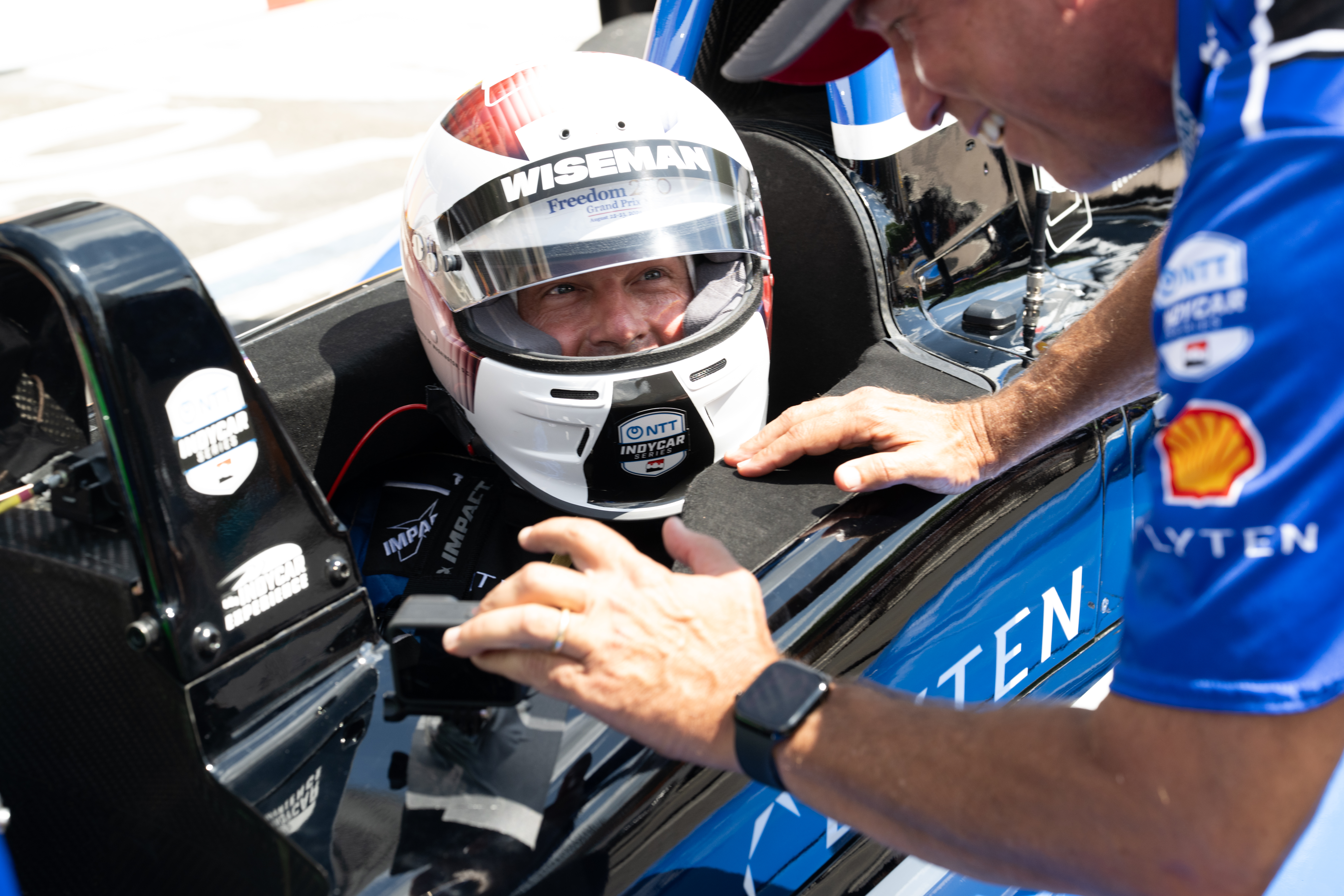
NASA astronaut and Artemis II commander Reid Wiseman is seen in the two-seat IndyCar as he prepares for driver Conor Daly to take him on a lap ahead of the start of the Freedom 250 Grand Prix, Sunday, Aug. 23, 2026, in Washington, D.C.
Image credit: NASA/Joel Kowsky
NASA Astronaut Reid Wiseman at Freedom 250 Grand Prix
NASA astronaut and Artemis II commander Reid Wiseman is seen in the two-seat IndyCar as he prepares for driver Conor Daly to take him on a lap ahead of the start of the Freedom 250 Grand Prix, Sunday, Aug. 23, 2026, in Washington, D.C.
Image credit: NASA/Joel Kowsky
MAIA Air Sensor at Work in Addis Ababa
NASA/JPL-Caltech Photojournal Navigation Downloads MAIA Air Sensor at Work in Addis Ababa
JPEG (1,018.53 KB)
Description
This roof-mounted air sensor in Addis Ababa, the capital of Ethiopia, is one of 10 used by NASA’s Multi-Angle Imager for Aerosols (MAIA) to study the city’s air quality. MAIA’s air sensors provide a detailed look at particulate matter that is 2.5 micrometers or less in diameter, also known as PM2.5, one of the world’s deadliest forms of air pollution.
Black carbon, or soot, is an important component of particulate pollution in Addis Ababa and is produced by diesel vehicles, fires, and other combustion sources. Detailed measurements from the MAIA air sensors reveal how pollution changes by time of day and season, including spikes produced by rush-hour traffic and holiday celebrations. The findings are relevant to cities around the world, including in the United States.
The 2025 State of Global Air Report, cited in the paper, estimates that these particles, some of which are tiny enough to enter the human bloodstream, are linked to around 4.9 million excess deaths per year globally. Of the many kinds of PM2.5, black carbon in particular has been linked to impacts on low birth weight, brain development, respiratory conditions, and premature mortality.
Keep Exploring Discover More Topics From Photojournal
Photojournal
Search Photojournal
Photojournal’s Latest Content
Feedback
MAIA Air Sensor at Work in Addis Ababa
NASA/JPL-Caltech Photojournal Navigation Downloads MAIA Air Sensor at Work in Addis Ababa
JPEG (1,018.53 KB)
Description
This roof-mounted air sensor in Addis Ababa, the capital of Ethiopia, is one of 10 used by NASA’s Multi-Angle Imager for Aerosols (MAIA) to study the city’s air quality. MAIA’s air sensors provide a detailed look at particulate matter that is 2.5 micrometers or less in diameter, also known as PM2.5, one of the world’s deadliest forms of air pollution.
Black carbon, or soot, is an important component of particulate pollution in Addis Ababa and is produced by diesel vehicles, fires, and other combustion sources. Detailed measurements from the MAIA air sensors reveal how pollution changes by time of day and season, including spikes produced by rush-hour traffic and holiday celebrations. The findings are relevant to cities around the world, including in the United States.
The 2025 State of Global Air Report, cited in the paper, estimates that these particles, some of which are tiny enough to enter the human bloodstream, are linked to around 4.9 million excess deaths per year globally. Of the many kinds of PM2.5, black carbon in particular has been linked to impacts on low birth weight, brain development, respiratory conditions, and premature mortality.
Keep Exploring Discover More Topics From Photojournal
Photojournal
Search Photojournal
Photojournal’s Latest Content
Feedback
Mapping Air Pollution With MAIA Sensors in Addis Ababa
NASA/JPL-Caltech Photojournal Navigation Downloads Mapping Air Pollution With MAIA Sensors in Addis Ababa
PNG (456.55 KB)
Description
This map of Addis Ababa, the capital of Ethiopia, shows the locations of 10 air sensors that NASA’s Multi-Angle Imager for Aerosols (MAIA) mission is using to provide one of the most detailed looks ever at the city’s air pollution. Over the course of three years, these sensors measured particulate matter that is 2.5 micrometers or less in diameter, also known as PM2.5. Black carbon, or soot, is an important component of particulate pollution in Addis Ababa, which studies have linked to impacts on low birth weight, brain development, respiratory conditions, and premature mortality.
The color bar at right indicates air quality variations from 20 to 40 micrograms per cubic meter across the monitoring stations, with the darkest red being the poorest air quality.
In Ethiopia, black carbon is commonly produced by diesel vehicles, fires, and other combustion sources. Detailed measurements from the MAIA sensors reveal how Addis Ababa’s air pollution changes by time of day and season, including spikes produced by rush-hour traffic and holiday celebrations. The findings are relevant to cities around the world, including in the United States.
MAIA’s air pollution research is focused on a dozen regions around the globe, including three in the U.S. centered on Los Angeles, Atlanta, and Boston. The mission consists of a ground-based sensor network already in operation as well as a space observatory, which uses a camera built at NASA’s Jet Propulsion Laboratory, that will be launched by the Italian Space Agency (ASI) on an ASI satellite no earlier than late 2027. The camera is specially designed to help identify different types of PM2.5 aerosols based on how they reflect light, making it possible to map particle concentrations over each region that the mission studies.
Keep Exploring Discover More Topics From Photojournal
Photojournal
Search Photojournal
Photojournal’s Latest Content
Feedback
Mapping Air Pollution With MAIA Sensors in Addis Ababa
NASA/JPL-Caltech Photojournal Navigation Downloads Mapping Air Pollution With MAIA Sensors in Addis Ababa
PNG (456.55 KB)
Description
This map of Addis Ababa, the capital of Ethiopia, shows the locations of 10 air sensors that NASA’s Multi-Angle Imager for Aerosols (MAIA) mission is using to provide one of the most detailed looks ever at the city’s air pollution. Over the course of three years, these sensors measured particulate matter that is 2.5 micrometers or less in diameter, also known as PM2.5. Black carbon, or soot, is an important component of particulate pollution in Addis Ababa, which studies have linked to impacts on low birth weight, brain development, respiratory conditions, and premature mortality.
The color bar at right indicates air quality variations from 20 to 40 micrograms per cubic meter across the monitoring stations, with the darkest red being the poorest air quality.
In Ethiopia, black carbon is commonly produced by diesel vehicles, fires, and other combustion sources. Detailed measurements from the MAIA sensors reveal how Addis Ababa’s air pollution changes by time of day and season, including spikes produced by rush-hour traffic and holiday celebrations. The findings are relevant to cities around the world, including in the United States.
MAIA’s air pollution research is focused on a dozen regions around the globe, including three in the U.S. centered on Los Angeles, Atlanta, and Boston. The mission consists of a ground-based sensor network already in operation as well as a space observatory, which uses a camera built at NASA’s Jet Propulsion Laboratory, that will be launched by the Italian Space Agency (ASI) on an ASI satellite no earlier than late 2027. The camera is specially designed to help identify different types of PM2.5 aerosols based on how they reflect light, making it possible to map particle concentrations over each region that the mission studies.
Keep Exploring Discover More Topics From Photojournal
Photojournal
Search Photojournal
Photojournal’s Latest Content
Feedback