
Feed aggregator
9 Things to Know About NASA’s Nancy Grace Roman Space Telescope
NASA’s Nancy Grace Roman Space Telescope is set to launch at 7:26 a.m. EDT on Sunday, Aug. 30. While you wait to watch the launch, brush up on some key facts about this wide-view mission.
Teams inside the Payload Hazardous Servicing Facility at NASA’s Kennedy Space Center in Florida encapsulate the agency’s Nancy Grace Roman Space Telescope within the payload fairing on Friday, Aug. 21, 2026, ahead of mating to a SpaceX Falcon Heavy rocket. Encapsulation shields the spacecraft during rollout, ascent, and the early phases of flight. Roman will investigate dark energy and dark matter, conduct a statistical census of planetary systems, and enable a broad range of additional astrophysics research. Liftoff from Launch Complex 39A at Kennedy is targeted for no earlier than Sunday, Aug. 30, 2026. NASA/Sydney Rohde (Rocz)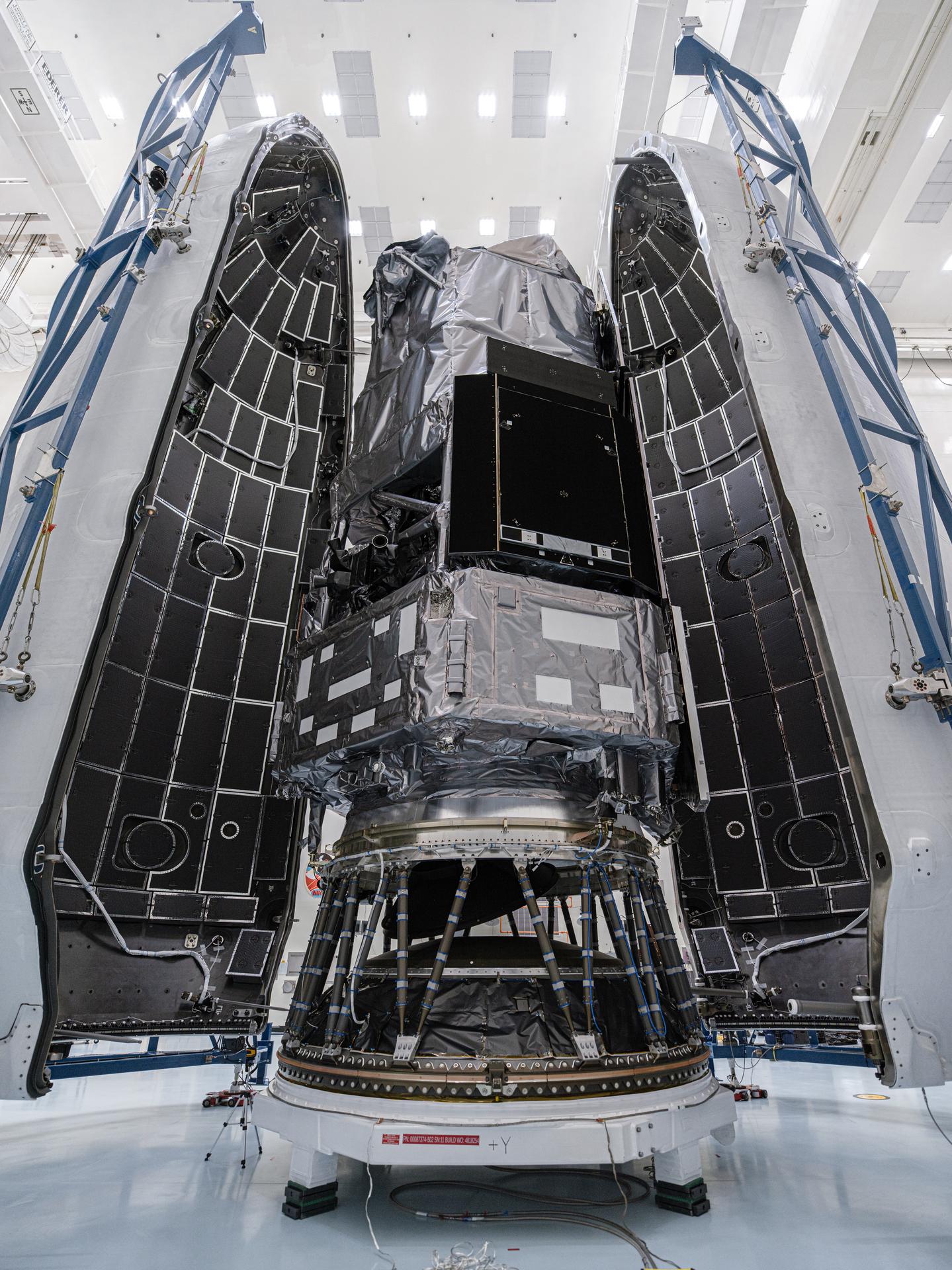
-
01
The mission is named after NASA’s first chief astronomer, Dr. Nancy Grace Roman.
Roman is named after Dr. Nancy Grace Roman (1925–2018), NASA’s first chief of astronomy. She championed space-based observatories that could study the universe above Earth’s hazy atmosphere while making their data broadly available to the scientific community.
While she’s known as the “mother” of the Hubble Space Telescope, Roman played an even broader role as the driving force behind NASA’s entire Great Observatories program, which included Hubble along with the Chandra X-ray Observatory and the retired Compton Gamma Ray Observatory and Spitzer Space Telescope.
Her vision and leadership helped establish NASA as a world-class scientific institution and laid the foundation for generations of space telescopes that continue to expand humanity’s understanding of the cosmos. -
02
Roman will transform our view of the cosmos by showing us the bigger picture.
Roman will pair a large field of view with crisp infrared vision to scan vast, deep swaths of sky. This flagship mission is designed to help astronomers explore dark matter, dark energy, and planets outside our solar system, called exoplanets.
Since each of Roman’s surveys will sample such a large volume of the cosmos, the mission will also offer practically limitless opportunities for astronomers to conduct a broad range of additional science. From objects in our outer solar system and exploding stars to growing black holes and galaxies by the billions, very little will be beyond Roman’s reach. Roman’s data will be made public as soon as it’s processed, allowing many teams to analyze it simultaneously. -
03
The observatory will journey a million miles to join Webb at Lagrange point 2.
Roman will orbit 1 million miles away at the second Sun-Earth Lagrange point (L2), the same location as NASA’s James Webb Space Telescope. At L2, gravity from the Sun and Earth works together with an object’s motion around the Sun to hold it roughly in place. This balance will give Roman a relatively steady orbit without using much fuel.
Like Webb, Roman will trace out a large orbit around the actual L2 point — much larger than the Moon’s orbit around Earth — and the two will easily be kept far apart. -
04
The spacecraft carries the names of more than a million people.
This summer, everyone was invited to submit their name to be added to a memory card attached to a plaque on the Roman spacecraft. More than 1.3 million people did so and will have their names carried all the way to L2.
-
05
Roman will scan the skies for at least five years.
Roman will have a primary mission lifetime of five years and is designed to support an additional five-year extended mission. Fuel is expected to be the mission’s life-limiting resource, and while NASA does not currently have an ability to service observatories at L2, Roman is designed to be refuelable.
-
06
Two instruments will enable myriad discoveries.
The observatory’s Wide Field Instrument is a 300-megapixel infrared camera that will give Roman the same sharpness (angular resolution) as Hubble but with a field of view at least 100 times larger. Using this instrument, each Roman image will capture a patch of the sky about 1.5 times bigger than the apparent size of a full Moon.
Roman’s Coronagraph Instrument is designed to demonstrate the most advanced technologies ever flown in space for directly imaging planets around other stars. It will block the glare from stars and make it possible for scientists to see the faint reflected light from planets in orbit around them, revealing giant worlds that are older, colder, and in closer orbits than the hot, young super-Jupiters direct imaging has mainly revealed so far. -
07
Roman joins an international cohort of teamworking telescopes.
Roman will work in tandem with many other NASA-led and international missions to provide the most complete view of our universe yet. Roman’s large panoramas will uncover interesting targets that Hubble could follow up on using infrared, visible, and ultraviolet light to offer a more comprehensive view. NASA’s James Webb Space Telescope can then use its larger mirror and more powerful vision to deliver even more detailed, ultra-sharp observations. And Roman can view regions around objects Hubble or Webb observe to offer context.
Euclid, an ESA (European Space Agency) mission with key contributions from NASA, will observe a larger area of the sky than Roman, though with less detail. Since their survey areas will overlap, scientists can use Roman’s higher-quality data to apply corrections to Euclid’s, then extend these refinements over Euclid’s much larger area.
Scientists can also pair Roman’s infrared data with visible-light observations from the ground-based Vera C. Rubin Observatory, a National Science Foundation–Department of Energy collaboration. That will allow astronomers to inch closer to achieving Roman-like quality over Rubin’s much greater sky coverage.
By showcasing technology to directly photograph Jupiter-like exoplanets, Roman will also provide a crucial stepping stone for NASA’s Habitable Worlds Observatory concept, a flagship space telescope that would be designed to photograph Earth-like planets in other solar systems for the first time ever. -
08
Watch the Roman launch live from anywhere.
NASA will stream this event live through a variety of platforms. Learn where to watch online: nasa.gov/live. The launch broadcast will continue until approximately one hour past launch to follow the first several critical milestones post-launch.
-
09
NASA expects to share Roman’s first images by early 2027.
The Roman team will complete a carefully orchestrated series of deployments, calibrations, and tests in the three months following launch before the observatory reaches its final orbit. Science operations begin once this commissioning period is completed, starting with the release of Roman’s first science images.
To learn more about the Roman mission, visit:
Media contact:
Claire Andreoli
NASA’s Goddard Space Flight Center, Greenbelt, Md.
claire.andreoli@nasa.gov
301-286-1940
At the heart of our own galaxy, there is a dense thicket of stars with…
Article
7 months ago
7 min read Core Survey by NASA’s Roman Mission Will Unveil Universe’s Dark Side
The broadest planned survey by NASA’s upcoming Nancy Grace Roman Space Telescope will reveal hundreds…
Article
7 months ago
6 min read NASA Roman Core Survey Will Trace Cosmic Expansion Over Time
NASA’s Nancy Grace Roman Space Telescope will be a discovery machine, thanks to its wide…
Article
1 year ago
What Nepal's floods reveal about “cascading hazards”
The Nepal disaster appears to be a “cascading event,” where one hazard seems to have triggered another, experts say
Hubble Solves a Mystery About the Milky Way's Early Years
New data from NASA’s Hubble Space Telescope shows definitive evidence of a dwarf galaxy merging with the young Milky Way galaxy in the earliest phases of its evolution. This finding extends our knowledge of our galaxy’s history 1.8 billion years farther back in time than before.
Starship is coming home! SpaceX loads floating spacecraft onto huge ship in the Indian Ocean (photos)
More than a month after its epic spaceflight, Starship is finally headed home.
SpaceX announced today (Aug. 27) that it has loaded Starship's 171-foot-tall (52 meters) upper stage — known as Starship, or simply Ship — onto a huge "semi-submersible" ship in the Indian Ocean, off the coast of Christmas Island.
Ship had been in the water since July 24, when it splashed down to bring an end to the Starship program's 13th test flight. The vehicle will now head back to SpaceX's Starbase site in South Texas, a journey expected to take several months, according to the company.
The semi-submersible's deck rises with Ship on board. (Image credit: SpaceX)Starship Flight 13 lifted off from Starbase, sending Ship on an hour-long suborbital jaunt that went quite well. The vehicle deployed its payloads — 20 of SpaceX's big, next-gen Starlink "Version 3" satellites — into space as planned and also managed to relight one of its six Raptor engines in the final frontier as well.
Ship then splashed down softly in the Indian Ocean off the coast of Western Australia — so softly, in fact, that it survived the ordeal intact. This was unprecedented; on every previous Starship flight, the upper stage had either broken apart during reentry to Earth's atmosphere or exploded shortly after splashdown, when it toppled sideways into the waves. (Starship's first-stage booster, known as Super Heavy, attempted a soft splashdown in the Gulf of Mexico during Flight 13 but suffered engine problems and hit the water hard.)
SpaceX determined to take advantage of this unexpected development. Getting an up-close look at Ship, the company said, would shed light on how its heat shield held up during the flight — key information that could advance the development of Starship, which is designed to be fully and rapidly reusable.
SpaceX engineers inspect Flight 13's Ship as it floats off the coast of Christmas Island. (Image credit: SpaceX)So the company began towing the Flight 13 Ship to shore — an endeavor that initially seemed doomed to failure.
"Unfortunately, ship recovery is not looking good right now," SpaceX founder and CEO Elon Musk said in an Aug. 7 post on X, the social media platform he bought in 2022. He was responding to a SpaceX post that same day, which cited "challenging conditions and increasingly rough seas."
Ship is now on its its way back to Texas. (Image credit: SpaceX)SpaceX persevered, however, and managed to tow Ship to Christmas Island, an Australian territory that lies about 1,200 miles (1,900 kilometers) northwest of the city of Broome. Once there, company engineers inspected the vehicle for several days as it bobbed in the waves, gathering valuable data, according to SpaceX.
"They collected heatshield samples and gained vital insight into how the vehicle handled reentry with improvements now planned on future vehicles," SpaceX said today in an X post that shared several photos of the operation.
Further analysis doubtless awaits, after the semi-submersible hauler vessel — so called because its deck goes underwater beneath heavy floating payloads, then rises up with them on board — arrives in Texas.
"Congratulations to the entire SpaceX Recovery team for battling through challenging conditions to give our engineers access to a wealth of data to continue rapidly developing Starship," SpaceX wrote in another X post today.
Is the keto diet better than the Mediterranean? New clinical trial reveals health benefits
In a clinical trial, people with obesity saw clear health benefits on the keto diet that they didn’t see on two other popular eating regimens
Planets Hurry To Form Before the Protoplanetary Disk Dissipates
Planets form in protoplanetary disks, reservoirs of gas and dust around young stars. But young stars are a little hyperactive, and they emit powerful winds that can dissipate the gas. So planets, especially gas giants, are in a race against time to form. They only have a few million years before the gas is gone.
NASA’s Roman Space Telescope will rewrite how we study the universe
Astronomers are lining up to leverage NASA’s soon-to-launch Nancy Grace Roman Space Telescope, which boasts capabilities unlike any previous off-world observatory
NASA Astronaut Jonny Kim Departs Agency to Continue Military Service
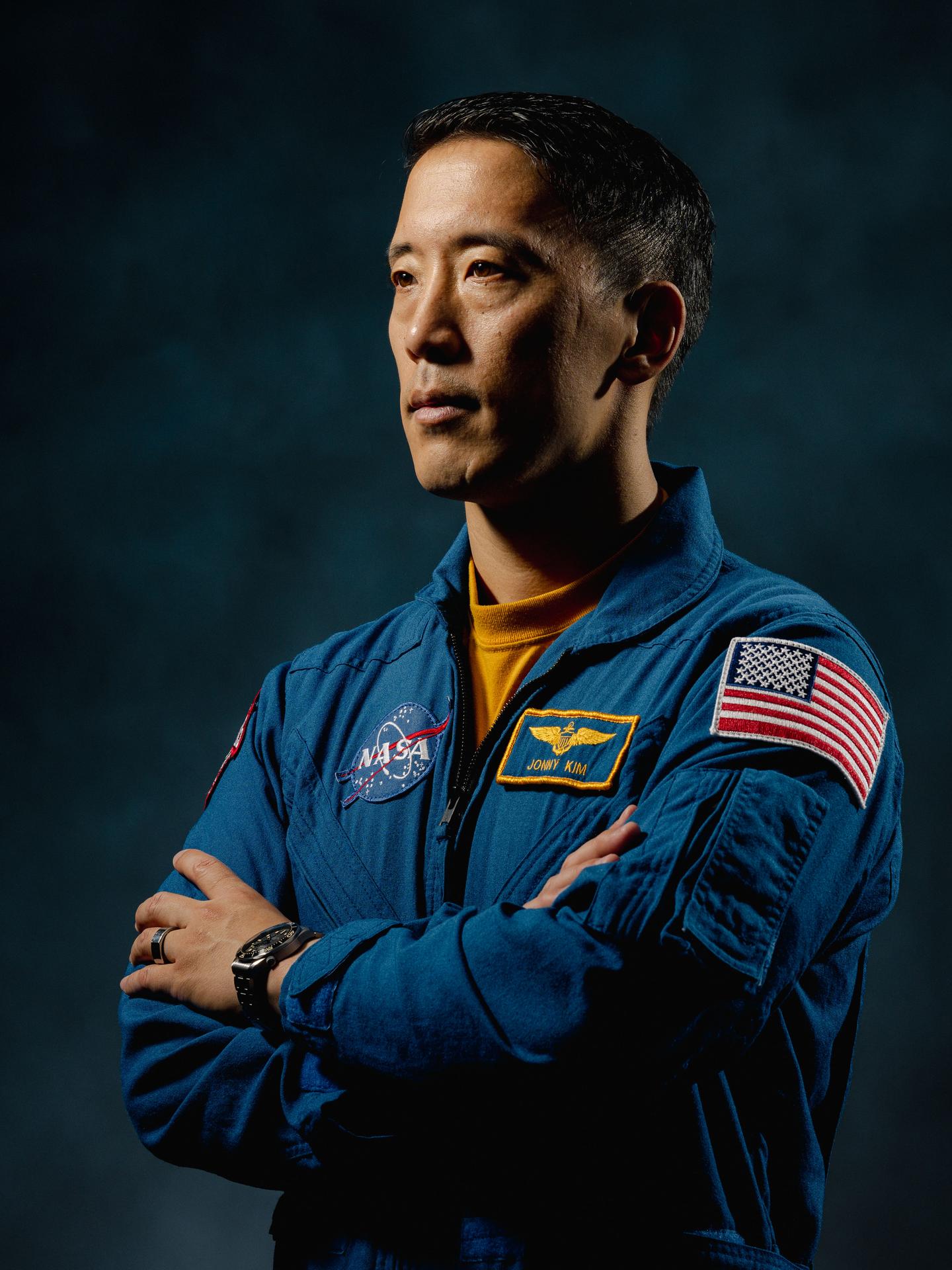
After nearly a decade of service to NASA, including an eight-month science expedition aboard the International Space Station, astronaut Jonny Kim’s last day at the agency is Thursday. He will continue serving as lieutenant commander in the U.S. Navy.
Kim launched to the space station in April 2025 aboard the Soyuz MS‑27 spacecraft to conduct scientific research as a flight engineer during Expeditions 72/73. During the mission, he orbited Earth 3,920 times, traveled nearly 104 million miles, and contributed to a broad range of scientific investigations spanning technology development, Earth science, biology, and human research critical for future exploration.
“Jonny Kim represents the very best of NASA, a person who continually pushed the boundaries of exploration while inspiring countless others,” said NASA Administrator Jared Isaacman. “His contributions aboard the International Space Station advanced critical science that will shape NASA’s future missions for decades to come. We are grateful for his dedication to our nation and to the pursuit of knowledge, and we wish him success as he continues his service in the U.S. Navy.”
Serving as the U.S. Operating Segment lead for the second half of Expedition 73, Kim oversaw operations across the station’s international modules. During the expedition, the station achieved a historic milestone when every available docking port was occupied for the first time in 25 years. He also commanded the Canadarm2 robotic arm during the first capture of Northrop Grumman’s new Cygnus XL spacecraft, securing 11,000 pounds of supplies for the station. Kim and his Roscosmos crewmates landed safely in Kazakhstan in December 2025.
“Jonny has been an integral part of the agency, and his immeasurable impact will be felt for generations to come,” said Vanessa Wyche, director of NASA’s Johnson Space Center in Houston. “From advancing groundbreaking science to inspiring the next generation, Jonny has been an incredible source of inspiration to our nation. His exceptional talent, determination, and grit will leave a lasting legacy at NASA.”
Kim was selected as a NASA astronaut in 2017 and completed two years of astronaut candidate training, which included instruction in space station systems, Russian language, robotics, T‑38 flight operations, geology, survival training, and spacewalk preparation.
He later supported station operations as a capsule communicator, or capcom, in NASA’s Mission Control Center at Johnson. Kim also contributed to Artemis program development through his work in the astronaut exploration branch, leading the astronaut crew operations branch, and serving as increment lead for Expedition 65. His experiences as a Navy SEAL, physician, and naval aviator provided unique perspectives in mission operations and crew support.
“Jonny approached every assignment with humility, precision, and steadfast commitment to the mission,” said Scott Tingle, chief of the Astronaut Office at NASA Johnson. “His combination of medical training, operational experience, and engineering insight strengthened our team and contributed to advancements in exploration and space station operations.”
Born in Los Angeles, Kim enlisted in the U.S. Navy after graduating high school in 2002. He trained as a hospital corpsman and completed Basic Underwater Demolition/SEAL training before joining SEAL Team Three. Over the course of more than 100 combat operations, he served as a medic, sniper, navigator, and point man, earning the Silver Star, Bronze Star with Combat “V,” and numerous additional commendations.
He earned a bachelor’s degree in mathematics from the University of San Diego and a doctor of medicine from Harvard Medical School. He completed his internship at Massachusetts General Hospital and Brigham and Women’s Hospital in Boston. Kim became a dual-designated naval aviator and flight surgeon, completing flight training at Naval Air Stations Corpus Christi in Texas and Whiting Field in Florida, and aerospace medical training at the Naval Aerospace Medical Institute at Naval Air Station Pensacola.
Kim is returning to active duty to finish out the remainder of his military career within naval aviation training.
“Contributing to space exploration and serving NASA has been the honor of a lifetime,” said Kim. “Throughout my career, I’ve learned that beyond the missions, the training, and the hardware, success always comes down to the people. They are our greatest asset, and leading with love and empathy is how we achieve the impossible. I look forward to carrying my commitment to service, my enduring love for space and technology, and the hard-earned lessons of this past decade into my next chapter to make a meaningful impact on humanity’s future.”
To learn more about NASA’s astronauts and human space exploration, visit:
https://www.nasa.gov/astronauts
-end-
Jimi Russell
Headquarters, Washington
202-358-1100
james.j.russell@nasa.gov
Anna Schneider
Johnson Space Center, Houston
281-483-5111
anna.c.schneider@nasa.gov
NASA Astronaut Jonny Kim Departs Agency to Continue Military Service
After nearly a decade of service to NASA, including an eight-month science expedition aboard the International Space Station, astronaut Jonny Kim’s last day at the agency is Thursday. He will continue serving as lieutenant commander in the U.S. Navy.
Kim launched to the space station in April 2025 aboard the Soyuz MS‑27 spacecraft to conduct scientific research as a flight engineer during Expeditions 72/73. During the mission, he orbited Earth 3,920 times, traveled nearly 104 million miles, and contributed to a broad range of scientific investigations spanning technology development, Earth science, biology, and human research critical for future exploration.
“Jonny Kim represents the very best of NASA, a person who continually pushed the boundaries of exploration while inspiring countless others,” said NASA Administrator Jared Isaacman. “His contributions aboard the International Space Station advanced critical science that will shape NASA’s future missions for decades to come. We are grateful for his dedication to our nation and to the pursuit of knowledge, and we wish him success as he continues his service in the U.S. Navy.”
Serving as the U.S. Operating Segment lead for the second half of Expedition 73, Kim oversaw operations across the station’s international modules. During the expedition, the station achieved a historic milestone when every available docking port was occupied for the first time in 25 years. He also commanded the Canadarm2 robotic arm during the first capture of Northrop Grumman’s new Cygnus XL spacecraft, securing 11,000 pounds of supplies for the station. Kim and his Roscosmos crewmates landed safely in Kazakhstan in December 2025.
“Jonny has been an integral part of the agency, and his immeasurable impact will be felt for generations to come,” said Vanessa Wyche, director of NASA’s Johnson Space Center in Houston. “From advancing groundbreaking science to inspiring the next generation, Jonny has been an incredible source of inspiration to our nation. His exceptional talent, determination, and grit will leave a lasting legacy at NASA.”
Kim was selected as a NASA astronaut in 2017 and completed two years of astronaut candidate training, which included instruction in space station systems, Russian language, robotics, T‑38 flight operations, geology, survival training, and spacewalk preparation.
He later supported station operations as a capsule communicator, or capcom, in NASA’s Mission Control Center at Johnson. Kim also contributed to Artemis program development through his work in the astronaut exploration branch, leading the astronaut crew operations branch, and serving as increment lead for Expedition 65. His experiences as a Navy SEAL, physician, and naval aviator provided unique perspectives in mission operations and crew support.
“Jonny approached every assignment with humility, precision, and steadfast commitment to the mission,” said Scott Tingle, chief of the Astronaut Office at NASA Johnson. “His combination of medical training, operational experience, and engineering insight strengthened our team and contributed to advancements in exploration and space station operations.”
Born in Los Angeles, Kim enlisted in the U.S. Navy after graduating high school in 2002. He trained as a hospital corpsman and completed Basic Underwater Demolition/SEAL training before joining SEAL Team Three. Over the course of more than 100 combat operations, he served as a medic, sniper, navigator, and point man, earning the Silver Star, Bronze Star with Combat “V,” and numerous additional commendations.
He earned a bachelor’s degree in mathematics from the University of San Diego and a doctor of medicine from Harvard Medical School. He completed his internship at Massachusetts General Hospital and Brigham and Women’s Hospital in Boston. Kim became a dual-designated naval aviator and flight surgeon, completing flight training at Naval Air Stations Corpus Christi in Texas and Whiting Field in Florida, and aerospace medical training at the Naval Aerospace Medical Institute at Naval Air Station Pensacola.
Kim is returning to active duty to finish out the remainder of his military career within naval aviation training.
“Contributing to space exploration and serving NASA has been the honor of a lifetime,” said Kim. “Throughout my career, I’ve learned that beyond the missions, the training, and the hardware, success always comes down to the people. They are our greatest asset, and leading with love and empathy is how we achieve the impossible. I look forward to carrying my commitment to service, my enduring love for space and technology, and the hard-earned lessons of this past decade into my next chapter to make a meaningful impact on humanity’s future.”
To learn more about NASA’s astronauts and human space exploration, visit:
https://www.nasa.gov/astronauts
-end-
Jimi Russell
Headquarters, Washington
202-358-1100
james.j.russell@nasa.gov
Anna Schneider
Johnson Space Center, Houston
281-483-5111
anna.c.schneider@nasa.gov
Trump tried to scrap NASA's Roman Space Telescope last year. Now it's ready to launch
The hours are counting down to the launch of NASA's newest flagship orbital observatory. The spacecraft recently got its last glimpse of terrestrial light before being encapsulated in its rocket's protective payload fairing last week and is imminently bound for liftoff.
The Nancy Grace Roman Space Telescope is NASA's next-generation research satellite, and it's currently slated to launch on Sunday (Aug. 30). Roman will lift off atop a SpaceX Falcon Heavy rocket at 7:27 a.m. EDT (1127 GMT) from NASA's Kennedy Space Center in Florida. The scope will then head to sun-Earth Lagrange Point 2 (L2), an orbital sweet spot about 930,000 miles (1.5 million km) away that will park the spacecraft on the side of Earth opposite the sun.
Roman's upcoming launch will cap nearly two decades and $4 billion of development and usher in a new wave of astronomical research into dark matter and dark energy, exoplanet discoveries and the ability to capture visible-to-near-infrared images of the universe that are 50 times wider than the field of view on the James Webb Space Telescope (JWST). But last year, as Roman's assembly and testing neared completion, President Trump's leaked budget proposal for fiscal year 2026 (FY26) stoked fears that the entire mission could be canceled.
In April 2025, reporting about initial "passback" budget documents outlined a proposal for the largest cut in NASA's history — a 24% overall reduction in funding, with a 50% loss to science programs. The document detailed continued support for missions like Hubble and JWST but allocated "no funding … for other telescopes." The news shocked scientists and engineers across NASA missions, who were suddenly dealt a dose of uncertainty as their job security teetered in political limbo.
For Roman's team, the prospect of abandoning the telescope just before the finish line hit hard. Lisa, an engineer who worked on Roman's team at NASA's Goddard Space Flight Center in Maryland and wished to be identified by an alias, was left confounded at the time. "We're 95% there. If it gets canceled, it would be really ridiculous, and I don't know how I would handle it," she told Space.com in an interview. "This is basically my life's work."
Others working on Roman took the news in stride. Jamie Dunn has worked at Goddard since 1991. He served as Roman's project manager from 2018 until he was appointed director of the center this past June. During a question-and-answer session with a committee of the National Academies of Sciences, Engineering, and Medicine on Aug. 10 — part of a congressionally mandated assessment prompted in part by reporting from Space.com about accelerated facility closures and consolidations at Goddard last year — Dunn described a calmer reaction to Roman's potential cancellation.
"Out of the eight years I [worked on Roman]," he told the committee, "we were zeroed out in the president's budget … in at least half of them. Not to be casual about it, but that happens."
When the president's official "skinny budget" proposal was published a few weeks after the April leak last year, Roman's prospects shifted from dire to just worrisome. Instead of cancelling the mission outright, the administration's budget request allocated just $156.6 million to Roman's continued development in FY26 — less than half of what the project received in FY25.
Scientists working on the Roman Space Telescope. (Image credit: NASA/Sophia Roberts)Goddard personnel began working around the clock at a time when government agencies, including NASA, were initiating reductions in force and encouraging civil servants to accept a "deferred resignation" option. Of three skilled technicians working in one department of Roman's team, two left, according to Lisa, which put further strain on the telescope's ongoing qualification testing at the time.
"We're pushing forward to get as far as we can while we have our current funding, and we'll see what happens," Lisa told Space.com last summer. "That amount of funding obviously will make it impossible, in my opinion, to keep schedule, because we can't keep running two shifts with half the people."
On the management side, Dunn tried to keep his team from getting distracted by politics. "Sometimes you've just got to keep coloring," he told the National Academies committee. "We kept working, and I [told the Roman team that] the best thing we can do is deliver on our commitments. And if delivering on our commitments isn't good enough, then what else can we do?"
Lisa said that Roman's mission leadership mitigated the team's panic. "[They] actually did a really good job of telling us, 'We're just going to proceed as we were before … Just focus on the work,' and, 'The best way to make sure we don't get cut is to continue delivering and continue to stay on schedule,'" she said.
Many of the engineers and technicians working on Roman "just put on blinders, put our heads down and kept working," Lisa said. "People were giving up their weekends, and at the same time, there was this compartmentalized knowledge that it could all get cut."
Rather than merely stay on schedule, though, the Roman mission team was pushed to accelerate it. Congress ultimately rejected the steep cuts to NASA in the president's budget request and restored the agency's funding to the previous year's levels. Not wanting to go through a repeat of uncertainty for FY27, Roman mission management began eyeing faster routes to the launch pad.
"They just kept pulling it earlier and earlier, because I think they were pushing to get it off the ground and in space before it could get cut," Lisa said. Eventually, Roman's target launch date moved up to September, and then to the end of August "so that it could happen within this fiscal year."
"In order to stay on schedule at the time, the Roman teams were running two shifts every day and working every Saturday, sometimes on Sundays," Lisa said. The strain took a toll on morale, but their hard work paid off. NASA announced the Roman Space Telescope's completion in April, eight months ahead of schedule, and under budget.
"Lo and behold, it turns out delivering on your commitments means something," Dunn said.
Now, all eyes are turning to watch Roman leave Earth. Having passed all its political hurdles leading up to launch day, Roman has one more major milestone: Launching to space to begin its mission.
Rocket rides to orbit aren't known for being particularly smooth, and after so much time spent worrying about budgets and schedules, Lisa said the part that makes her and her colleagues most nervous now is that it's out of their hands. "The launch vehicle … that's what we kind of don't have control over," Lisa said. "I'm really nervous, because it's just so many people's effort and years of work and sacrifice."
It'll take the telescope 30 days to reach its L2 destination, and there are a few benchmarks it has to meet along the way. Roman will have to perform a few trajectory adjustments, including the mid-course "correction 1" maneuver about 24 hours after launch, which Lisa described as one of Roman's most consequential in reaching its designated orbit.
After nearly two decades of development — and a final year spent wondering whether the telescope would make it to the launch pad at all — the team's focus has finally shifted to Roman's actual in-space operation as it awaits delivery to its new home in the final frontier.
Why glacial collapse likely caused the Nepal disaster—and why climate change will make these events more likely
The disaster has claimed hundreds of lives, and at least 1,400 people are missing
Next Up! A Deep Partial Lunar Eclipse on Aug. 27–28
A near-total lunar eclipse wraps up August's trifecta of two major eclipses and the Perseids.
The post Next Up! A Deep Partial Lunar Eclipse on Aug. 27–28 appeared first on Sky & Telescope.
On this day in space! Aug. 27, 1962: NASA launches Mariner 2 to Venus for ambitious flyby
On Aug. 27, 1962, NASA launched Mariner 2, the world's first spacecraft to successfully visit another planet.
Mariner 2 flew by Venus after a 3.5-month voyage through space.
The mission launched just one month after the Mariner 1 mission failed during launch. After departing from Cape Canaveral, Florida, Mariner 2 almost met the same fate when an electrical problem with the Atlas-Agena rocket caused it to start rolling, which made it unable to respond to any guidance commands from mission control.
By some miracle, the problem fixed itself, and Mariner 2 was on its way to Venus!
Why it matteredMariner 2 lifts off from Cape Canaveral, Florida atop an Atlas Agena B rocket on Aug. 27, 1962 in this NASA video still. (Image credit: NASA)Mariner 2 was a watershed mission for NASA at a time when, in the early 1960s, the U.S. was trailing behind in the Space Race with the Soviet Union — which had already launched the first satellite (Sputnik 1 in 1957), the first living creature (Laika the dog on Sputnik 2 that same year), the first human in space (Yuri Gagarin in 1961) and sent a probe to the moon (Luna 1 in 1959).
NASA's big Venus first mission, Mariner 1, failed out of the gate as mentioned above during an attempted launch on July 22, 1962, but those fortunes changed with Mariner 2.
It was an electrical short that caused Mariner 2's rocket to roll during ascent, but the booster managed to correct itself after about a minute, NASA has said.
The trip to Venus was a bit rocky, too, with Mariner 2 suffering a solar panel power drop out two times, as well as glitchy attitude control gyroscopes. Mariner 2 also got surprisingly hot as it approached its Venus flyby, prompting worries it might be cooked before it even reached the planet.
Despite all that, Mariner 2 achieved the first U.S. "first" in space, with a successful Venus flyby on Dec. 14, 1962. The probe flew within 21,564 miles (34,675 kilometers) of the hellish planet, taking the first close measurements of Venus at the time.
Mariner 2 mission scientists hold a printout of Venus data collected by the spacecraft. (Image credit: NASA/JPL-Caltech)Mariner 2 carried no cameras (surprisingly), but its observations were the first detailed measurements of the Venus atmosphere and Venus' temperature, proving to scientists that the planet experienced a runaway greenhouse effect in the past. The probe's radio signals were also used to calculate Venus' mass in extreme detail, NASA has said.
"There will be other missions to Venus, but there will never be another first mission to Venus," said Jack James, NASA's Mariner 2 project manager at the Jet Propulsion Laboratory in Pasadena, California, before his death in 2001.
Want more space history? Check out our full On This Day In Space Story archive and watch our On This Day In Space videos on YouTube.
Glowing galaxy with anomalous extra arms | Space photo of the day for Aug. 27, 2026
A trio of NASA space telescopes teamed up to capture a gorgeous new look at the glowing spiral galaxy NGC 4258 and its two anomalous extra arms.
What is it?This image shows NGC 4258, also known as Messier 106, a spiral galaxy located some 24 million light-years away in the constellation Canes Venatici, the "Hunting Dogs." It is a fairly bright galaxy and can be viewed in the spring sky in the Northern Hemisphere with most telescopes.
Messier 106 is noteworthy for having two "anomalous" extra arms, the long curved regions of bright gases, dust and young stars that are characteristic of all spiral galaxies. But while most spiral galaxies have only a pair of arms, Messier 106 has two pairs. According to NASA, the extra set is composed of hot gases that are churned away from the galactic center by the supermassive black hole at the heart of NGC 4258.
Why is it incredible?This image shows off the incredible teamwork that NASA's flagship orbital observatories can pull off. It combines X-ray observations from NASA's Chandra X-ray observatory (seen here in royal blue), optical light gathered by the Hubble Space Telescope (red, yellow and pale blue), and infrared light seen by the James Webb Space Telescope (bright orange).
By combining multiple types of light into one image, NASA is able to reveal the complete picture of what this energetic galaxy is made of.
The image also shows the incredible power of the black holes found at the centers of galaxies. "M106 helps show how supermassive black holes can create structural features that mimic star-bearing spiral arms, influencing a galaxy's evolution," NASA wrote in a statement accompanying the image.
This image was part of a NASA release of 16 new "galactic gems" captured by Chandra and other observatories.
'Strange New Worlds' latest episode wastes a lot of time pretending to kill off major 'Star Trek' characters
Every so often, "Star Trek" likes to put its brave interstellar adventurers through hell. You know the drill — a bunch of one-off crew members will probably be blown up and/or sucked into space, while set dressers get to have fun making starship bridges look like they've been through the wars. We all know that seeking out new life and new civilisations is the prime directive on that final frontier, but sometimes we just want to see how Starfleet officers respond when the chips are down.
The latest episode of "Strange New Worlds" season 4, "Off-Hour", is one of "Trek"'s semi-regular life-or-death outings. The Enterprise finds itself trapped in a bizarre slipstream wormhole that threatens to destroy the ship if Pike and co can't find a solution before the "24"-style ticking clock (sorry, "Shipboard Chronometer") counts down to zero. It also leaves the fates of several key characters (one in particular) hanging in the balance… or at least it would, if the show wasn't a prequel, with most of its lead characters guaranteed to reappear in subsequent "Trek" canon.
Minor spoilers ahead for "Off-Hour". If you haven't seen the latest episode of "Star Trek: Strange New Worlds" yet, report to transporter room 3 and get out of here at once.
The likes of "The Wrath of Khan", "Voyager "'s two-parter "Year of Hell", and "Strange New Worlds"' very own "Memento Mori" have all gone to extreme lengths to mess up the normally pristine interiors of Starfleet vessels. "The Search for Spock" went even further, leaving the Enterprise in such a bad state that Admiral James T Kirk had no choice but to deploy its in-built self-destruct system.
Unfolding in real-time, "Off-Hour" is built from similar blueprints, as the aforementioned anomaly turns the Enterprise into a nightmarish environment where pretty much anything can kill you. Pike getting an electric shock while turning on the shields is just the tip of the iceberg, as Una "Number One" Chin-Riley snaps her leg in a pocket of extreme gravity, Christine Chapel loses a finger to extreme cold, and an unfortunate group of redshirts finds themselves trapped on the wrong side of a barrier with some lethal neutrino radiation.
(Image credit: Paramount)But it's Dr Joseph M'Benga who has the worst day at the office, and by a distance. His quick and noble actions pushing Christine out of the way of an out-of-control medical table leave him pinned against a wall with a fatal trans-lumbar severance — the only thing keeping him alive is the table itself, his internal organs doomed as soon as it's pulled out of the way. Like the clichéd movie cop starting his last day on the beat, he picked the wrong day to tell Christine he's thinking of quitting the Enterprise — especially as his likely replacement, Boyce, is already on board.
There is no way M'Benga should survive this — Boyce even orders Chapel to make the patient comfortable when the inevitable happens — and in most other TV shows you'd think that actor Babs Olusanmokun was about to receive his final paycheck.
But "Star Trek" fans know that M'Benga (then played by Booker Bradshaw) filled in for Dr McCoy in two episodes of the Original Series, meaning that his deathbed chats with Chapel aren't quite as deep and meaningful as they'd be in "ER" or even this episode's biggest influence, "24".
(Image credit: Paramount)For the same reason, you never fear for Scotty when he beams into a Jefferies Tube, unsure whether there'll be oxygen or heat waiting for him. Or wonder if Spock will survive the radiation burns he endures in a high-risk spacewalk on the Enterprise's hull. In fact, the only lead character who could be in any danger at all is La'an. As one of the few regulars whose post-"Strange New Worlds" fate remains unknown, canon offers little protection when she steps out of the airlock to rescue Spock.
"Star Trek" isn't "Game of Thrones", and shouldn't ever get into the habit of killing off characters for fun. Spock's (albeit temporary) demise in "The Wrath of Khan" still resonates because it was so emotional, dramatic, and unprecedented, as does the death of Kirk's son, David, in "The Search for Spock". William Shatner's performances in the aftermath of both are among the best of his career.
"Strange New Worlds" itself hasn't been afraid to wield the grim reaper's bat'leth when necessary, though it's always been with characters — such as original chief engineer Hemmer — who have no existing legacy in the franchise.
(Image credit: Paramount)The question facing any prequel, however, is whether you can play around with life-and-death stakes as you would in a story whose conclusion is open-ended. Surely an "anyone could die at any time" plot is redundant when canon has the same protective properties as the Super Stars that make Mario invincible.
The exception that proves the rule is "Andor"'s majestic second season — Mon Mothma's had-to-happen escape from the Galactic Senate turned out to be one of the most unbearably tense TV moments of last year. But that show mostly reserved its highest stakes for characters who didn't have an appointment with the Original Trilogy.
Indeed, when you pretend that a beloved character might die even though they can't, you risk cheapening the drama the same way "The Rise of Skywalker" did when it led us to believe Chewbacca had been blown up, before revealing he was on a different ship all along. You're telling life-or-death stories, without ever having to deal with the messy death part — something that, as we all know from "The Wrath of Khan", even the legendary James T Kirk was never much good at.
(Image credit: Paramount)As a result, you spend the whole of "Off-Hour" waiting for the inevitable "magical" intervention to save the day. It's certainly not a massive surprise when Chapel works out that using previously theoretical strong-force neutrinos might repair M'Benga's broken body — and a not-at-all unexpected twist when Scotty reveals they could also fix the ship's faltering engines. "Almost sounds too good to be true, I know,” Scotty admits.
Future events will always weigh heavy on any prequel, but surely stories have a responsibility to better acknowledge that viewers know what's coming. Is "Off-Hour" a brilliant example of "Star Trek" at its most tense or a cheap play on our emotions? It's probably a bit of both.
New episodes of "Star Trek: Strange New Worlds" debut on Paramount+ on Thursdays.
Watch Star Trek: Strange New Worlds on Paramount+:
Essential (ads): $8.99/mo or $89.99/yr
Premium (no ads): $13.99/mo or $139.99/yr
Powerful Ariane 6 rocket launches European weather satellite to orbit (video)
Europe's most powerful rocket flew again today (Aug. 27).
An Ariane 6 launched the MTG-I2 weather satellite from Europe's Spaceport in Kourou, French Guiana today (Aug. 27) at 4:10 p.m. EDT (2010 GMT; 5:10 p.m. local time in Kourou), right at the beginning of a 2.5-hour window.
Everything went according to plan today: The Ariane 6 released MTG-I2 into geostationary transfer orbit (GTO) 36 minutes after liftoff.
An Ariane 6 rocket launches the MTG-I2 weather satellite from Kourou, French Guiana on Aug. 27, 2026. (Image credit: Arianespace)The 8,400-pound (3,800 kilograms) MTG-I2 is the second imaging satellite in the Meteosat Third Generation network (hence the name). It will complete the three-spacecraft constellation in geostationary orbit, which lies 22,236 miles (35,786 kilometers) above Earth.
Its companions, MTG-I1 and MTS-S1, launched in December 2022 and July 2025, respectively. MTG-I1 is an imaging craft and MTS-S1 is a "sounder," using an infrared instrument to probe different layers of Earth's atmosphere.
The MTG satellites are operated by the European Organisation for the Exploitation of Meteorological Satellites (EUMETSAT), an international group based in Germany. And they're very capable, according to Arianespace.
"The MTG system is part of a new generation of geostationary satellites providing imagery for the early detection of fast-developing severe storms, weather forecasting and climate monitoring," the company wrote in the MTG-I2 press kit, which you can find here.
Arianespace went on to describe MTG as "the most complex and innovative meteorological geostationary system ever built," citing its potential to improve the prediction and early detection of severe weather events.
"The data gathered will have a wide range of uses, from enabling aircraft to avoid storms and for earlier alerts of flooding, through to more precise monitoring of fires and fog," the company wrote.
Today's launch was the ninth to date for the Ariane 6, which can deliver up to 12.7 tons (11.5 metric tons) to GTO in its burliest configuration. For comparison, SpaceX's workhorse Falcon 9 rocket has a GTO payload capacity of 9.15 tons (8.3 metric tons).
The Ariane 6 debuted in July 2024. Before today, the rocket last flew this past June, when it successfully sent 36 of Amazon's broadband satellites to low Earth orbit.
Editor's note: This story was updated at 4:20 p.m. ET on Aug. 27 with news of successful liftoff, then again at 4:50 p.m. ET with news of satellite deployment.
New NASA photos reveal 16 galaxies from across the cosmos in dazzling detail
Spirals, ellipticals, irregulars, oh my!
An impressive partial lunar eclipse will turn the moon an eerie red for millions of people tonight
August's 96% partial lunar eclipse has been and gone, putting on a mesmerizing show for stargazers across the night side of Earth as out planet's shadow slipped silently across the face of the moon, forcing it to adopt a striking crimson hue at the point of maximum eclipse.
Check out our partial lunar eclipse photo roundup for striking views of the event captured from around the world.
Tonight (Aug. 27-28), the full Sturgeon Moon will slip into Earth's shadow, creating a stunning "almost blood moon" as up to 96.2% of the lunar surface disappears into the darkest part of our planet's shadow, the umbra.
At maximum eclipse, much of the moon may take on an eerie reddish hue as sunlight filtered through Earth's atmosphere is refracted into the shadow and onto the lunar surface. Only a thin sliver of moon will escape Earth's umbra, appearing as a bright arc against an otherwise dim, rusty-red lunar disk.
Lunar eclipses are entirely safe to watch with the naked eye. Unlike a solar eclipse, you don't need filters or certified glasses. Just find the moon at the right time, then simply sit back, relax and enjoy the show. If you can't watch the eclipse in person, you can watch all the action unfold here on Space.com with these free livestreams, weather permitting. You can also follow along with the latest updates with our lunar eclipse live blog.
Who can see it?The partial lunar eclipse favors observers across North and South America. About 12% of the world's population — 987 million people — will be able to see all phases of the eclipse, according to Time and Date, weather permitting.
Skywatchers across parts of Europe and Africa will also see the lunar eclipse. However, for many observers, including those in the UK, the moon will set shortly after maximum eclipse, cutting off the later stages of the partial phase.
When to look A map of the lunar eclipse on Aug. 27-28, 2026. Click the arrows in the bottom-left corner to expand to full screen. (Image credit: F. Espenak, NASA's GSFC)The eclipse reaches its maximum at 12:12 a.m. EDT (0412 GMT) on Aug. 28, when 96.2% of the lunar surface will be covered by Earth's dark umbral shadow.
But if you have the time, it's worth settling in to watch as much of the eclipse as possible, particularly from the start of the partial phase at around 10:33 p.m. EDT on Aug. 27 (0233 GMT on Aug. 28).
The penumbral phase begins earlier, at 9:23 p.m. EDT on Aug. 27 (0123 GMT on Aug. 28), but the initial dimming will be extremely subtle because Earth's outer penumbral shadow is so faint.
I'd recommend starting your observations when the partial phase starts. From then on, you'll see Earth's shadow take progressively larger "bites" out of the moon. It can almost feel like watching the moon's monthly phases sped up into just a few hours as its appearance changes before your eyes.
Editor's Note: If you capture a photo of the August lunar eclipse and want to share it with Space.com's readers, then please send your photo(s), comments, name and location to spacephotos@space.com.
Expedition Sound podcast series
Expedition Sound is a podcast series by the European Space Agency (ESA) in which you’re invited to explore the Universe through your ears. Guided by sonifications – the translation of data into sound – host Zsófi Szalavári travels from our Sun out into the depths of space to uncover what the space telescopes of ESA’s science missions teach us about the Universe.