

Feed aggregator
Our fertility window could be extended by making ovaries softer
Our fertility window could be extended by making ovaries softer
Occam’s razor has lost its edge. Can we sharpen our search for truth?
Occam’s razor has lost its edge. Can we sharpen our search for truth?
RFK, Jr. is turning his attention to the U.S. Preventive Services Taskforce
The U.S. Preventive Services Task Force is an independent group that offers guidance on what health screenings and medications health insurance should cover
Why ‘Neil the seal’ is unleashing chaos in Tasmania
This one-ton elephant seal has gone viral for smashing into cars and infrastructure, but biologists have a more poignant explanation for his behavior
Einstein’s greatest theory triumphs again in landmark frame-dragging measurement
A best-yet measurement of one of general relativity’s most mind-boggling effects is “another feather in Einstein’s cap”
Detecting hidden nuclear weapons in space may be possible using cosmic rays
For almost 60 years, a global ban on nuclear weapons in space has held up. But the growing number of satellites and increasing geopolitical tension has scientists worried the moratorium could fail
Did a Passing Star Shower Us with Comets?
We might be living through a comet shower created by a star that millions of years ago jostled the Oort Cloud surrounding the solar system.
The post Did a Passing Star Shower Us with Comets? appeared first on Sky & Telescope.
Hubble Captures Star-Studded Cluster
Hubble Captures Star-Studded Cluster
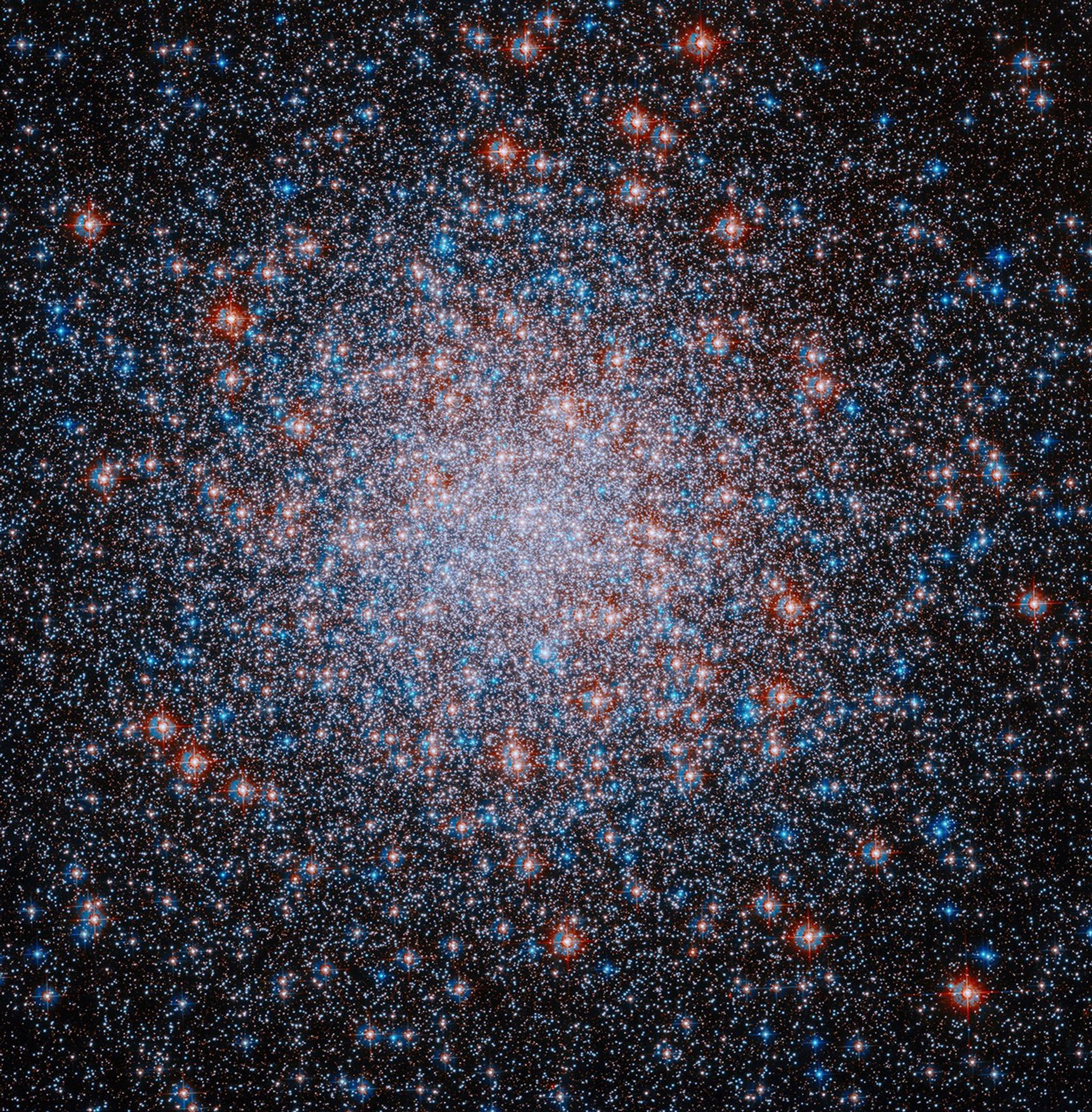
This image from NASA’s Hubble Space Telescope showcases Messier 3 (M3), one of the Milky Way galaxy’s most massive globular clusters, or spherical collections of gravitationally bound stars. Globular clusters are made up of ancient stars that formed at roughly the same time from the same cloud of gas, giving those stars similar ages. Around 150 known globular clusters are sprinkled around the outer regions of the Milky Way.
Image credit: NASA, ESA, and A. Sarajedini (Florida Atlantic University); Processing: Gladys Kober (NASA/Catholic University of America)
Hubble Captures Star-Studded Cluster
This image from NASA’s Hubble Space Telescope showcases Messier 3 (M3), one of the Milky Way galaxy’s most massive globular clusters, or spherical collections of gravitationally bound stars. Globular clusters are made up of ancient stars that formed at roughly the same time from the same cloud of gas, giving those stars similar ages. Around 150 known globular clusters are sprinkled around the outer regions of the Milky Way.
Image credit: NASA, ESA, and A. Sarajedini (Florida Atlantic University); Processing: Gladys Kober (NASA/Catholic University of America)
Why Schrödinger's 1944 classic What Is Life? still feels prescient
Why Schrödinger's 1944 classic What Is Life? still feels prescient
Deep space software upgrade for Hera’s asteroid visit
Operating across 140 million km of space, the control team for ESA’s Hera mission have succeeded in upgrading the software running the spacecraft, leaving it ready to explore the distant Dimorphos and Didymos asteroids this autumn.
Lambs born via IVF using highly immature eggs in major breakthrough
Lambs born via IVF using highly immature eggs in major breakthrough
Why more extreme rain could mean more shark bites
As rainfall intensifies with climate change, waste flushed out to sea could attract more sharks, putting beachgoers at risk