

Feed aggregator
An Alternative to Black Holes: Gravastars with Big Bangs Inside
Stellar mass black holes may not be black holes at all. Instead, they could be a type of extremely compact star called a gravastar, which mimics a black hole. This is according to theoretical phsyicists who have discovered a solution to Einstein's Theory of General Relativity that doesn't automatically result in a black hole when a star collapses at the end of its life.
Extreme heat is setting in for July 4. Here’s what to know
A prolonged, intense heat wave will make temperatures feel as hot as 115 degrees Fahrenheit in the eastern U.S. this week
How to spot an AI-generated face, according to science
Training people to pay attention to the right visual cues nearly doubled how accurately they could spot AI-generated faces
US government wants to have a useful quantum computer by 2028
US government wants to have a useful quantum computer by 2028
Childbirth for many primate species is even harder than for humans
Childbirth for many primate species is even harder than for humans
Humans sleep the least of all apes – is it the secret to our success?
Humans sleep the least of all apes – is it the secret to our success?
Mars May Have Vast Magma Systems Beneath Its Surface
Researchers from the University of Oxford have uncovered evidence that Mars once hosted widespread, Earth-like magmatic systems deep beneath its surface – despite the planet lacking the plate tectonics long thought necessary for this kind of geological complexity. The findings, published June 26th in Nature Astronomy, reveal fascinating new possibilities for how rocky planets become habitable.
NASA Astronaut Chris Williams Preps for Spacewalk
NASA Astronaut Chris Williams Preps for Spacewalk
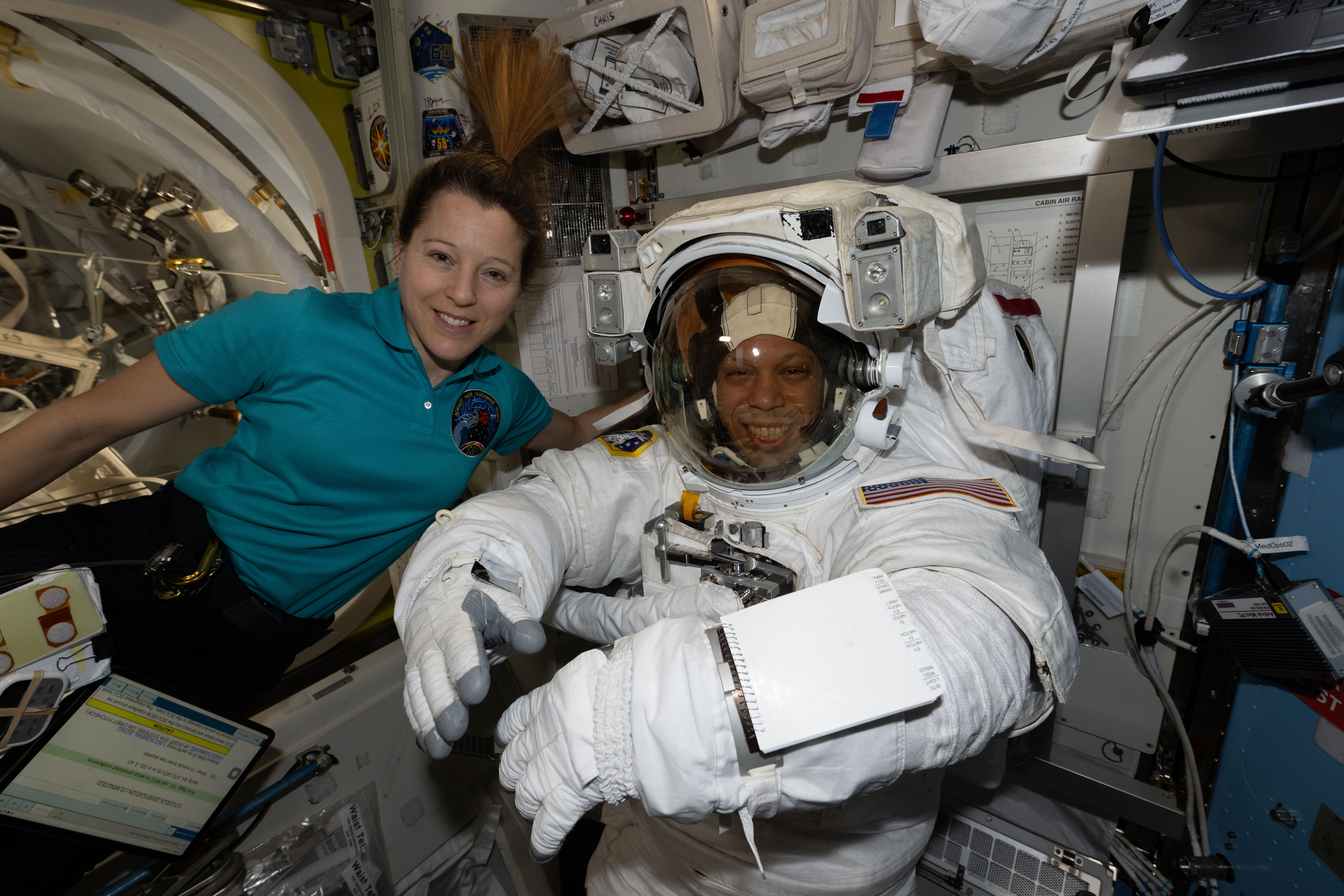
Flight engineer Sophie Adenot of ESA (European Space Agency) helps flight engineer Chris Williams of NASA as he tries on his spacesuit on June 23, 2026, testing its comfort and mobility as well as its communications and life support systems inside the International Space Station’s Quest airlock.
Williams will go on a spacewalk on June 30 with fellow NASA astronaut Jessica Meir. They will replace a malfunctioning wrist joint on the Canadarm2 robotic arm.
Image credit: NASA/Jessica Meir
NASA Astronaut Chris Williams Preps for Spacewalk
Flight engineer Sophie Adenot of ESA (European Space Agency) helps flight engineer Chris Williams of NASA as he tries on his spacesuit on June 23, 2026, testing its comfort and mobility as well as its communications and life support systems inside the International Space Station’s Quest airlock.
Williams will go on a spacewalk on June 30 with fellow NASA astronaut Jessica Meir. They will replace a malfunctioning wrist joint on the Canadarm2 robotic arm.
Image credit: NASA/Jessica Meir
Mapping Earth’s Observations, featuring Betsy Ford
NASA’s Earth-observing satellites track an enormous range of phenomena: how aerosols move through the atmosphere, how moisture descends through soil, how land-cover shifts over decades. It’s some of the most consequential data NASA produces, informing science, policy, agriculture, and climate research around the world.
As NASA’s Earth Science Division (ESD) manages this vast portfolio, they operate within an environment marked by significant complexity. This system-of-systems is continually evolving as mission requirements develop, new capabilities come online while others are retired, and international partnerships shift over time. All of this happens against a backdrop of deep uncertainty in technology readiness, launch opportunities, and resource availability.
Decision analyst Betsy FordCredit: NASA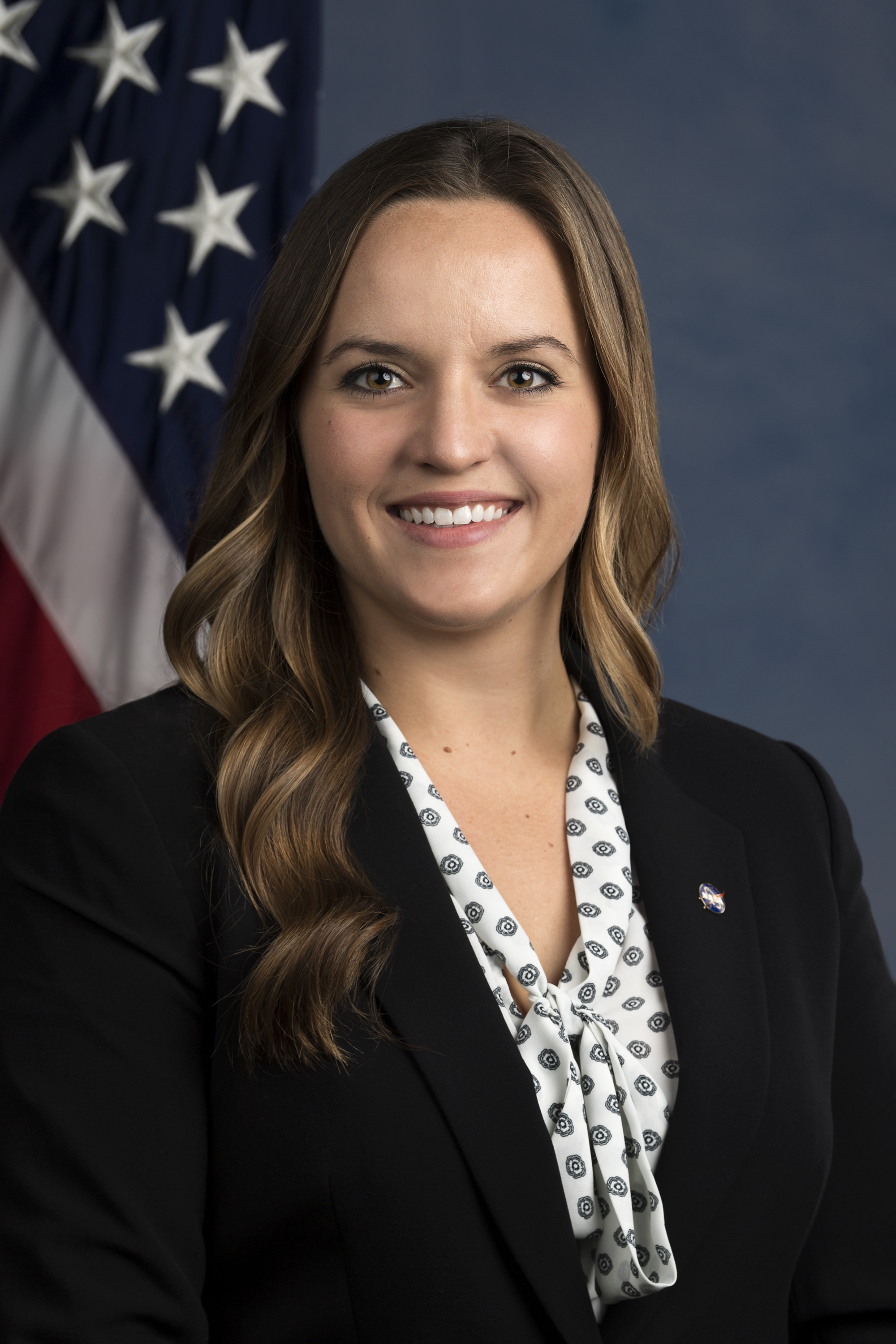
“It reaches more people than most realize. The farmers who are growing your food use the data from these satellites.”
“ESD leadership is constantly navigating this complicated landscape,” says Betsy Ford, a decision analyst and Deputy Team Lead for the NASA Earth Science Strategic Integration Environment (NESSIE) team within the Systems Analysis and Concepts Directorate (SACD) at NASA’s Langley Research Center. “Our work focuses on integrating information across the broad system-of-systems so that these decision-makers can visualize the current state, how things could evolve, and how all of it lines up against NASA’s long-term scientific priorities.”
A Detour Through Detroit
Ford’s path to this work runs through two vastly different worlds, and it all started before she could even drive.
Both of her parents spent their careers at NASA Langley and recently retired from it. Growing up, Ford attended the center’s daycare and its summer picnics. “It always felt like a college campus and a big family,” she says. “I really loved that.”
Betsy Ford (in blue gown) and family celebrate her kindergarten graduation at NASA Langley.Credit: Betsy Ford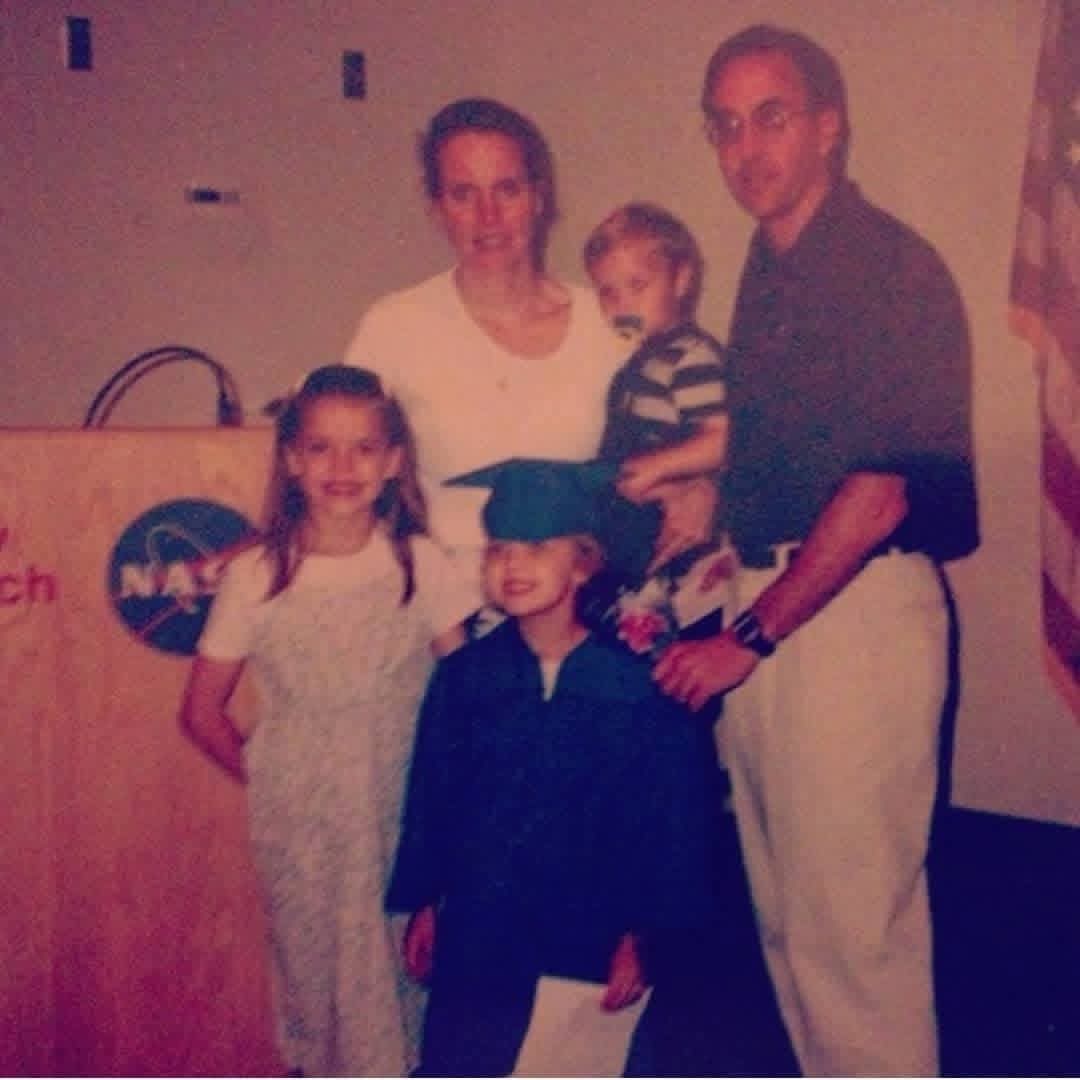
Still, when she graduated from Virginia Tech with a mechanical engineering degree, she chose to branch out first. She joined General Motors’ engineering rotation program in Michigan, spending time as a mass integration engineer for Corvette before moving to work as a vehicle occupant safety engineer performing crash testing. She was also finishing a master’s in engineering management at the University of Nebraska, where she was introduced to risk analysis and strategic decision making.
When a position opened in the Space Mission Analysis Branch (part of SACD), she applied, hoping her experience in systems engineering and master’s might offset the gap between the hardware testing of running vehicles into walls and the analytical work NASA needed. “Leadership saw potential in my background and gave me a chance to apply it in a new context,” she says.
Betsy Ford (second from right) and family gather at NASA Langley’s front gate.Credit: Betsy Ford Finding the Story in the Data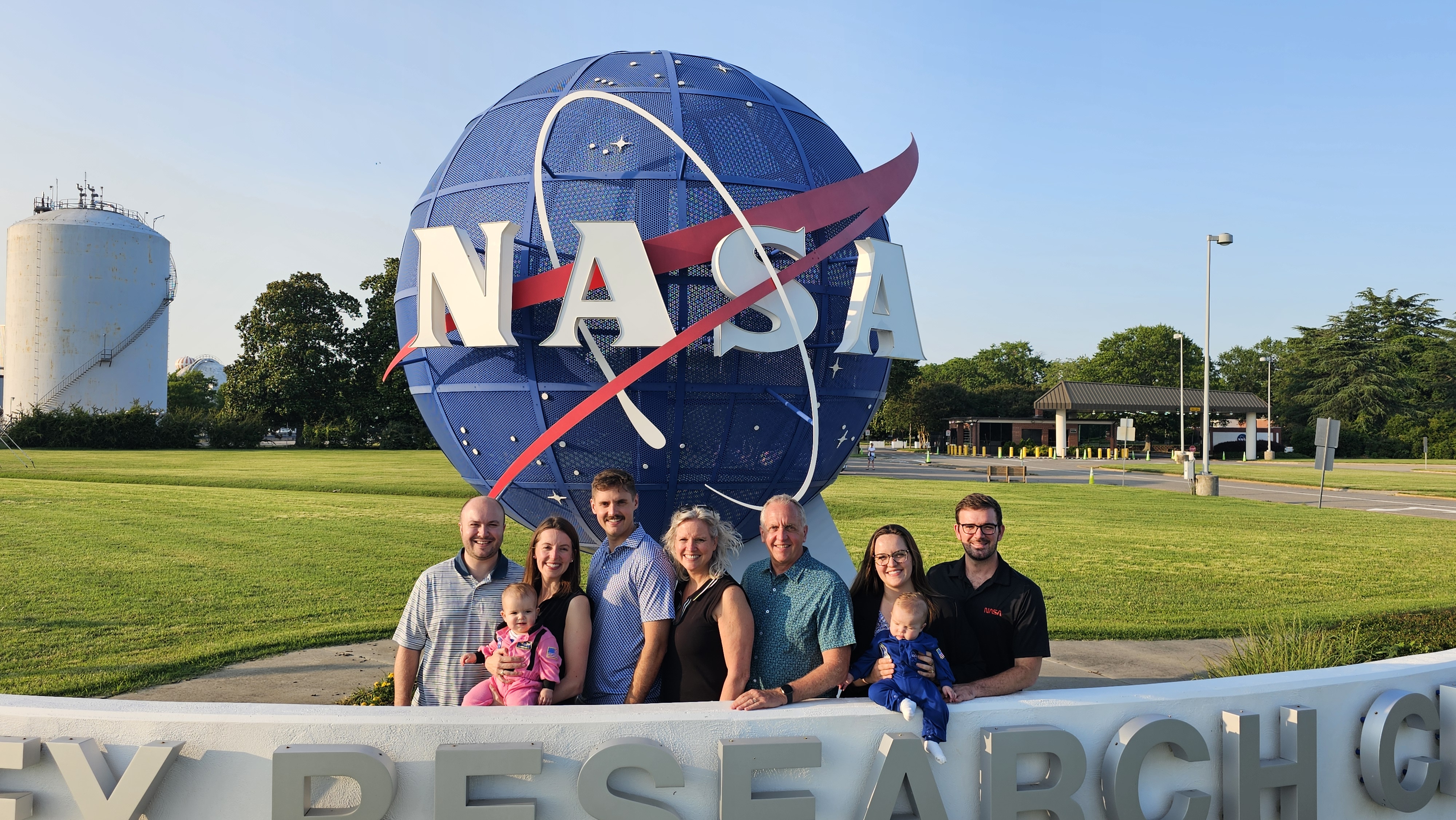
At its core, NESSIE addresses an information architecture problem. Hundreds of Earth-observing satellite missions, both NASA’s and its partners’, each observing specific phenomena, from cloud cover to land use. That data has always existed. The challenge was making sense of it all in one place.
NESSIE’s main web application page presents a heat map showing which missions are addressing 34 science observables alongside a mission timeline. Additional views drill down further, such as which specific instruments on which spacecraft cover a given measurement, and how international partner collaborations have evolved over the years.
This graphic shows the fleet of NASA Earth Science missions, which provide hundreds of measurements and data products to understand the Earth system.Credit: NASA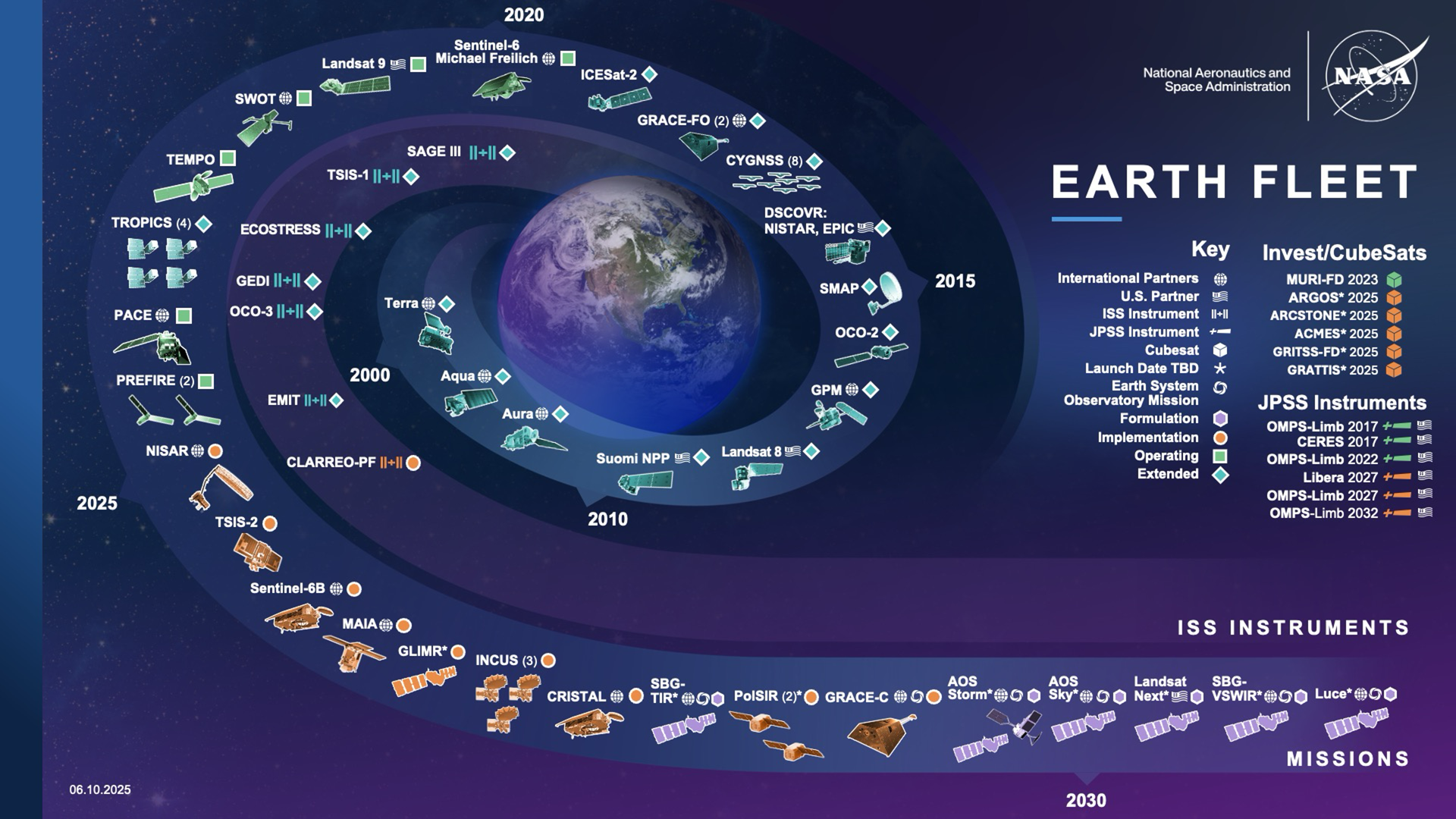
“We focus on continuous improvement,” Ford explains. “Each iteration aims to give our stakeholders a clearer, more useful product than they had the day before.” While supporting NASA headquarters in its strategic planning, the team is working toward making NESSIE available to the National Academies to help inform the next decadal survey, a document that will define national science priorities and guide government investments into the next decade. It’s a milestone that Ford describes as a significant step toward “using NESSIE to more fully support the scientific community through clearer data-driven planning of future missions.”
Ground TruthFord had always cared about Earth science in the abstract. It took a visit to her family’s farm in Nebraska to make it concrete.
She was explaining her work with satellites, observables, and web applications, when her relatives pulled out their phones and showed her satellite data they use every day to monitor soil moisture across their fields. Then they showed her the tool it had once replaced: a metal rod they used to shove into the ground by hand to measure moisture levels.
“That’s just one example of how impactful this work can be,” she says. “It reaches more people than most realize. The farmers who are growing your food use the data from these satellites.”
When Ford wonders why the work matters, that moment is a powerful reminder for her. The satellites are the visible part of the story. The decisions about which ones to build, launch, and sustain, and the tools that make those decisions smarter, are what her work is about.
Growing the TeamFord recently stepped into the deputy lead role on the NESSIE team, staffed primarily by early-career engineers. She credits mentors in her NASA tenure, particularly team lead Marie Ivanco, who modeled a method to looking at complex problems that shaped how Ford works now.
“If you’re faced with a challenge, Marie asks, ‘What is your process?” Ford says. “She championed really decomposing a problem and approaching it systematically. That wasn’t natural to me at that point, but I really admired it.”
Now Ford’s doing the same for others. “Finding that balance of providing the opportunities to grow along with some structure and guidance, that’s the job.”
She also believes that NASA offers anyone entering engineering the freedom to define problems and solutions rather than to just execute known processes, and to exercise research instincts in ways that more prescriptive industry environments rarely allow. “It prompts a lot more creativity,” she says. “Getting to flex those research muscles is an opportunity I didn’t really have at other jobs.”
On Ford’s Sci-Fi ShelfStar Wars — the film franchise
Ford grew up in a Star Wars household: her father was a devoted fan, and she still remembers her first PG-13 movie in theaters, one of the newer films in the series. These days her husband keeps the tradition going, and with a 15-month-old son, Saturday morning Star Wars cartoons may already be on the calendar.
“He’s very excited to get him started.”
Mapping Earth’s Observations, featuring Betsy Ford
NASA’s Earth-observing satellites track an enormous range of phenomena: how aerosols move through the atmosphere, how moisture descends through soil, how land-cover shifts over decades. It’s some of the most consequential data NASA produces, informing science, policy, agriculture, and climate research around the world.
As NASA’s Earth Science Division (ESD) manages this vast portfolio, they operate within an environment marked by significant complexity. This system-of-systems is continually evolving as mission requirements develop, new capabilities come online while others are retired, and international partnerships shift over time. All of this happens against a backdrop of deep uncertainty in technology readiness, launch opportunities, and resource availability.
Decision analyst Betsy FordCredit: NASA“It reaches more people than most realize. The farmers who are growing your food use the data from these satellites.”
“ESD leadership is constantly navigating this complicated landscape,” says Betsy Ford, a decision analyst and Deputy Team Lead for the NASA Earth Science Strategic Integration Environment (NESSIE) team within the Systems Analysis and Concepts Directorate (SACD) at NASA’s Langley Research Center. “Our work focuses on integrating information across the broad system-of-systems so that these decision-makers can visualize the current state, how things could evolve, and how all of it lines up against NASA’s long-term scientific priorities.”
A Detour Through DetroitFord’s path to this work runs through two vastly different worlds, and it all started before she could even drive.
Both of her parents spent their careers at NASA Langley and recently retired from it. Growing up, Ford attended the center’s daycare and its summer picnics. “It always felt like a college campus and a big family,” she says. “I really loved that.”
Betsy Ford (in blue gown) and family celebrate her kindergarten graduation at NASA Langley.Credit: Betsy FordStill, when she graduated from Virginia Tech with a mechanical engineering degree, she chose to branch out first. She joined General Motors’ engineering rotation program in Michigan, spending time as a mass integration engineer for Corvette before moving to work as a vehicle occupant safety engineer performing crash testing. She was also finishing a master’s in engineering management at the University of Nebraska, where she was introduced to risk analysis and strategic decision making.
When a position opened in the Space Mission Analysis Branch (part of SACD), she applied, hoping her experience in systems engineering and master’s might offset the gap between the hardware testing of running vehicles into walls and the analytical work NASA needed. “Leadership saw potential in my background and gave me a chance to apply it in a new context,” she says.
Betsy Ford (second from right) and family gather at NASA Langley’s front gate.Credit: Betsy Ford Finding the Story in the DataAt its core, NESSIE addresses an information architecture problem. Hundreds of Earth-observing satellite missions, both NASA’s and its partners,’ each observing specific phenomena, from cloud cover to land use. That data has always existed. The challenge was making sense of it all in one place.
NESSIE’s main web application page presents a heat map showing which missions are addressing 34 science observables alongside a mission timeline. Additional views drill down further, such as which specific instruments on which spacecraft cover a given measurement, and how international partner collaborations have evolved over the years.
This graphic shows the fleet of NASA Earth Science missions, which provide hundreds of measurements and data products to understand the Earth system.Credit: NASA“We focus on continuous improvement,” Ford explains. “Each iteration aims to give our stakeholders a clearer, more useful product than they had the day before.” While supporting NASA headquarters in its strategic planning, the team is working toward making NESSIE available to the National Academies to help inform the next decadal survey, a document that will define national science priorities and guide government investments into the next decade. It’s a milestone that Ford describes as a significant step toward “using NESSIE to more fully support the scientific community through clearer data-driven planning of future missions.”
Ground TruthFord had always cared about Earth science in the abstract. It took a visit to her family’s farm in Nebraska to make it concrete.
She was explaining her work with satellites, observables, and web applications, when her relatives pulled out their phones and showed her satellite data they use every day to monitor soil moisture across their fields. Then they showed her the tool it had once replaced: a metal rod they used to shove into the ground by hand to measure moisture levels.
“That’s just one example of how impactful this work can be,” she says. “It reaches more people than most realize. The farmers who are growing your food use the data from these satellites.”
When Ford wonders why the work matters, that moment is a powerful reminder for her. The satellites are the visible part of the story. The decisions about which ones to build, launch, and sustain, and the tools that make those decisions smarter, are what her work is about.
Growing the TeamFord recently stepped into the deputy lead role on the NESSIE team, staffed primarily by early-career engineers. She credits mentors in her NASA tenure, particularly team lead Marie Ivanco, who modeled a method to looking at complex problems that shaped how Ford works now.
“If you’re faced with a challenge, Marie asks, ‘What is your process?” Ford says. “She championed really decomposing a problem and approaching it systematically. That wasn’t natural to me at that point, but I really admired it.”
Now Ford’s doing the same for others. “Finding that balance of providing the opportunities to grow along with some structure and guidance, that’s the job.”
She also believes that NASA offers anyone entering engineering the freedom to define problems and solutions rather than to just execute known processes, and to exercise research instincts in ways that more prescriptive industry environments rarely allow. “It prompts a lot more creativity,” she says. “Getting to flex those research muscles is an opportunity I didn’t really have at other jobs.”
On Ford’s Sci-Fi ShelfStar Wars — the film franchise
Ford grew up in a Star Wars household: her father was a devoted fan, and she still remembers her first PG-13 movie in theaters, one of the newer films in the series. These days her husband keeps the tradition going, and with a 15-month-old son, Saturday morning Star Wars cartoons may already be on the calendar.
“He’s very excited to get him started.”
NASA prepares to launch an unprecedented mission to save a dying space telescope
Inside the quest to rescue NASA’s aging Swift observatory
Gene-editing startups are using CRISPR to treat diseases
A handful of start-up firms are testing therapies that target specific epigenetic markers to treat everything from high cholesterol to a rare muscular disorder
NextSTEP-3 A: Lunar Enabling Technology
1 min read
Preparations for Next Moonwalk Simulations Underway (and Underwater)Solicitation Number: 80GRC026R0008
May 19, 2026 – Synopsis issued
June 29, 2026 – Draft BAA and Appendix A Issued | News Release
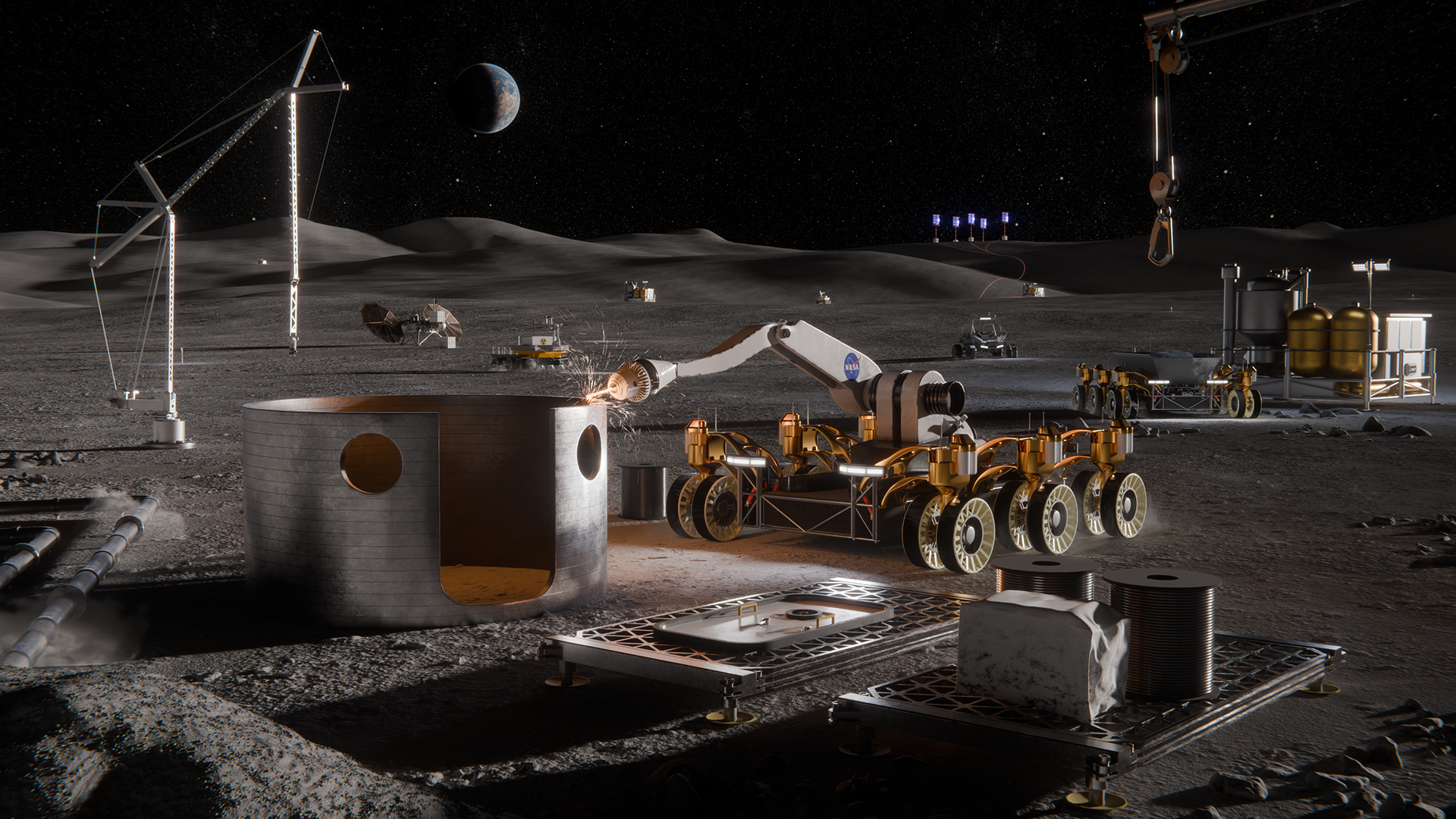
NASA issued a draft Broad Agency Announcement under NextSTEP‑3, Appendix A, on June 29, 2026, to advance concepts that accelerate the technological readiness of critical systems for lunar surface and cislunar architecture.
This solicitation seeks to close key technology gaps and mature capabilities in vertical solar arrays, ISRU oxygen production systems, Stirling radioisotope generators, in‑space manufacturing, and advanced nanomaterials production.
It focuses on identifying technology areas that require further risk reduction and ground‑based testing to mature competing solutions to Technology Readiness Level (TRL) 5–6. Funded efforts will advance the technology objectives of NASA’s Moon Base by demonstrating critical systems and accelerating the development of transformative capabilities needed for near‑term mission success.
For more information, read the Lunar Enabling Infrastructure Accelerator (LEIA) Broad Agency Announcement (BAA) NextSTEP-3 Appendix A – Draft Solicitation on SAM.gov.
Facebook logo @NASATechnology @NASA_Technology Share Details Last Updated Jun 29, 2026 EditorLoura Hall Related Terms Explore More 6 min read NextSTEP-2 H: Human Landing System Article 7 years ago 2 min read NextSTEP-2 C: Power and Propulsion Element Studies Article 9 years ago 2 min read NextSTEP-2 A: Habitation Systems Article 9 years agoNextSTEP-3 A: Lunar Enabling Technology
1 min read
Preparations for Next Moonwalk Simulations Underway (and Underwater) Artistic concept of lunar surface technologies and infrastructure capabilities, including in-situ resource utilization oxygen production systems, surface power systems, in‑space manufacturing tools, and advanced nanomaterials production.NASANASA issued a draft Broad Agency Announcement under NextSTEP‑3, Appendix A, on June 29, 2026, to advance concepts that accelerate the technological readiness of critical systems for lunar surface and cislunar architecture.
This solicitation seeks to close key technology gaps and mature capabilities in vertical solar arrays, ISRU oxygen production systems, Stirling radioisotope generators, in‑space manufacturing, and advanced nanomaterials production.
It focuses on identifying technology areas that require further risk reduction and ground‑based testing to mature competing solutions to Technology Readiness Level (TRL) 5–6. Funded efforts will advance the technology objectives of NASA’s Moon Base by demonstrating critical systems and accelerating the development of transformative capabilities needed for near‑term mission success.
For more information, read the Lunar Enabling Infrastructure Accelerator (LEIA) Broad Agency Announcement (BAA) NextSTEP-3 Appendix A – Draft Solicitation on SAM.gov.
Facebook logo @NASATechnology @NASA_Technology Share Details Last Updated Jun 29, 2026 EditorLoura Hall Related Terms Explore More 6 min read NextSTEP-2 H: Human Landing System Article 7 years ago 2 min read NextSTEP-2 C: Power and Propulsion Element Studies Article 9 years ago 2 min read NextSTEP-2 A: Habitation Systems Article 9 years ago