
_0.thumbnail.jpg "Image (3).jpg")
Feed aggregator
Trump moves to end protections for 44 million acres of U.S. forests
The 2001 Roadless Area Conservation Rule protects the nation’s forests from logging and other industry activities
NASA’s LRO Images Falcon 9 Crater on Moon, Learns New Details
3 min read
NASA’s LRO Images Falcon 9 Crater on Moon, Learns New Details This is an animated before-and-after view of the crater formed after a Falcon 9 upper stage struck the Moon’s surface on Aug. 5, 2026. These images were taken between Aug. 11 and 12 by the Narrow-Angle Camera on NASA’s Lunar Reconnaissance Orbiter. These images are enlarged three times from the original, with north facing up, and they cover an area about a quarter of a mile wide.NASA Goddard/Intuitive Machines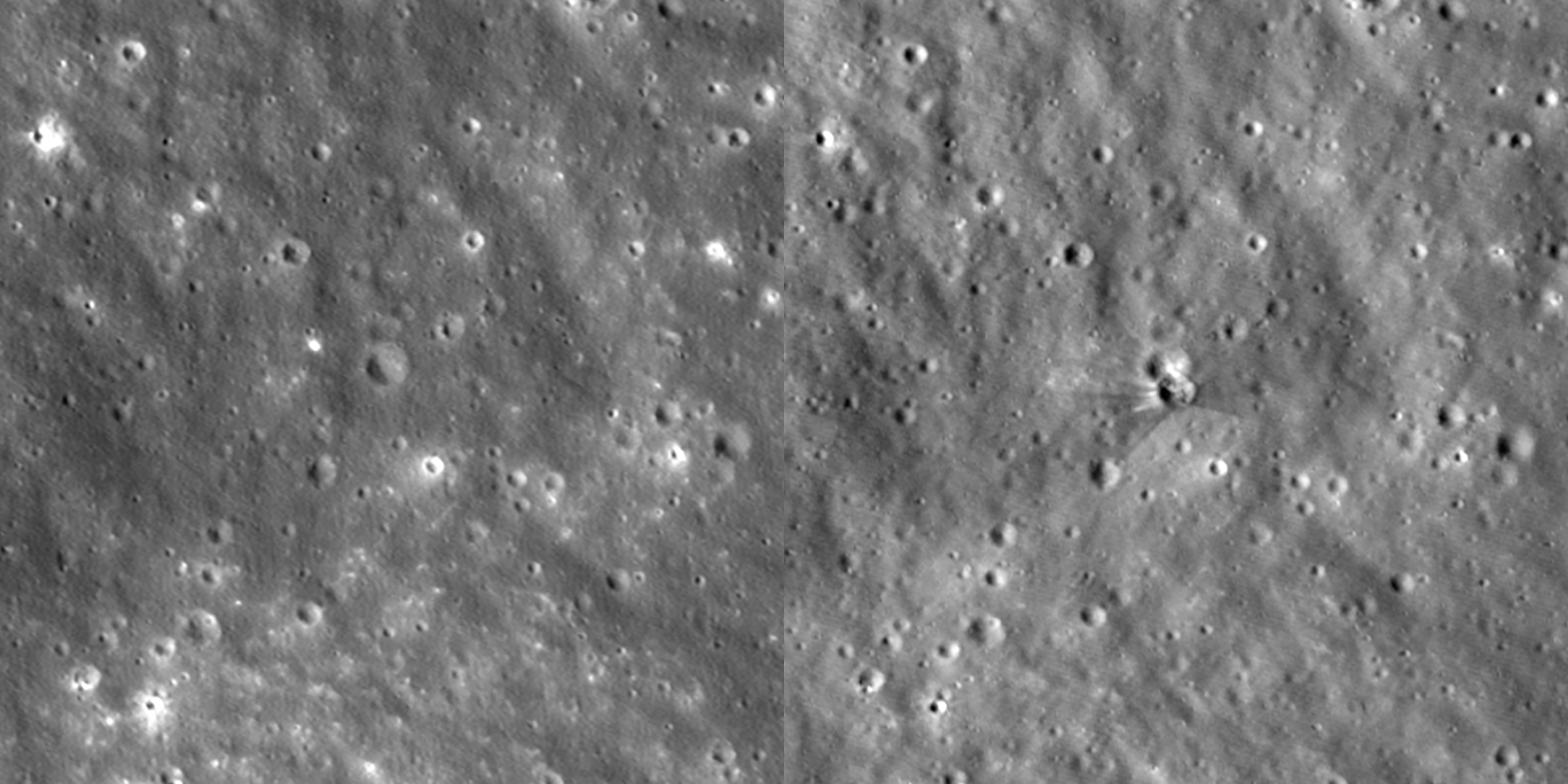
Between Aug. 11 and 12, NASA’s Lunar Reconnaissance Orbiter (LRO) captured a series of images of a new crater on the Moon. The crater formed on Aug. 5, when a SpaceX Falcon 9 upper stage impacted the surface following its January 2025 launch of the Firefly Blue Ghost 1 mission.
To capture imagery of the impact, engineers tilted the spacecraft so its cameras would point toward the crater each time LRO passed about 60 miles above the Moon, traveling 1 mile per second. The orbiter circles the Moon from pole to pole every two hours, while the Moon slowly rotates underneath it. To photograph a specific spot, the spacecraft must wait until that location turns into view, which took six days in this case.
Getting the pointing right was only half the challenge; timing had to be accurate as well. If the camera snapped even 10 seconds too early or too late, the target would drift off-center by 10 miles.
An artist concept video showing NASA’s Lunar Reconnaissance Orbiter circling the Moon.NASA’s Goddard Space Flight Center Conceptual Image LabBecause of the variety of viewing angles, scientists could see the crater under multiple lighting conditions that revealed unique features. In images where the crater rim stood out, scientists measured its 60‑foot width. Scientists also determined the crater is less than 10 feet deep based on the length of its shadow.
To capture these details, LRO used its Narrow-Angle Camera, which can spot features as small as 3 feet wide.
Collected between Aug. 11 and 12 by NASA’s Lunar Reconnaissance Orbiter, six days after a Falcon 9 upper-stage booster impacted the Moon, these images were taken from different viewing angles, bringing out different features. The darker area that fans around the crater in the upper-left image is rougher than the surroundings, as this surface material has been altered over a long time by solar wind, galactic cosmic rays, and micrometeorite impacts. The brighter rays and splotch above the crater in the lower-right image is fresher material that was excavated from deeper below the surface. The pictures are arranged in the order they were taken, starting at the top left and moving toward the bottom right, with the lighting angle from the Sun gradually changing from one image to the next. Each image is enlarged two times and shows an area of the Moon about 1,000 feet wide.NASA Goddard/Intuitive Machines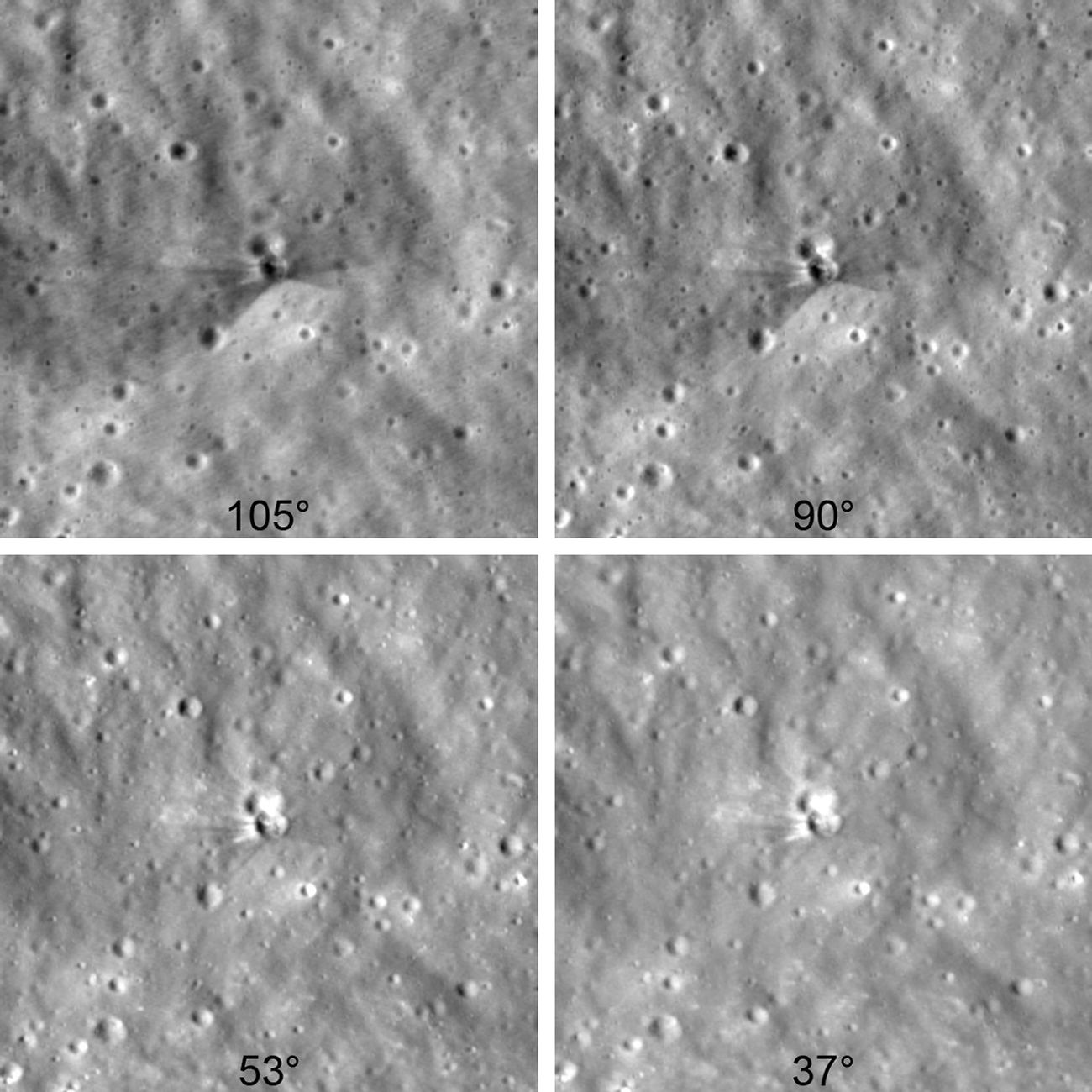
The images above show bright and dark rays stretching out from the crater. The darker streaks are made of surface dust and rocks altered over a long time by solar wind, galactic cosmic rays, and micrometeorite impacts. This weathered material was excavated by the collision from 1.5 feet into the lunar surface. The brighter streaks near the crater rim are made of fresh material excavated from deeper underground.
This image from NASA’s Lunar Reconnaissance Orbiter shows two oval regions where the Falcon 9 upper stage was likely to impact the Moon, based on calculations by engineers with NASA’s Center for Near Earth Object Studies. Both ellipses are 2.1 miles long and 0.4 miles wide. Both predictions use the same booster-trajectory calculations, but only the blue ellipse takes into account the lunar terrain. The red and blue dots show predicted impact locations, whereas the cyan dot shows the actual impact site.NASA/JPL-Caltech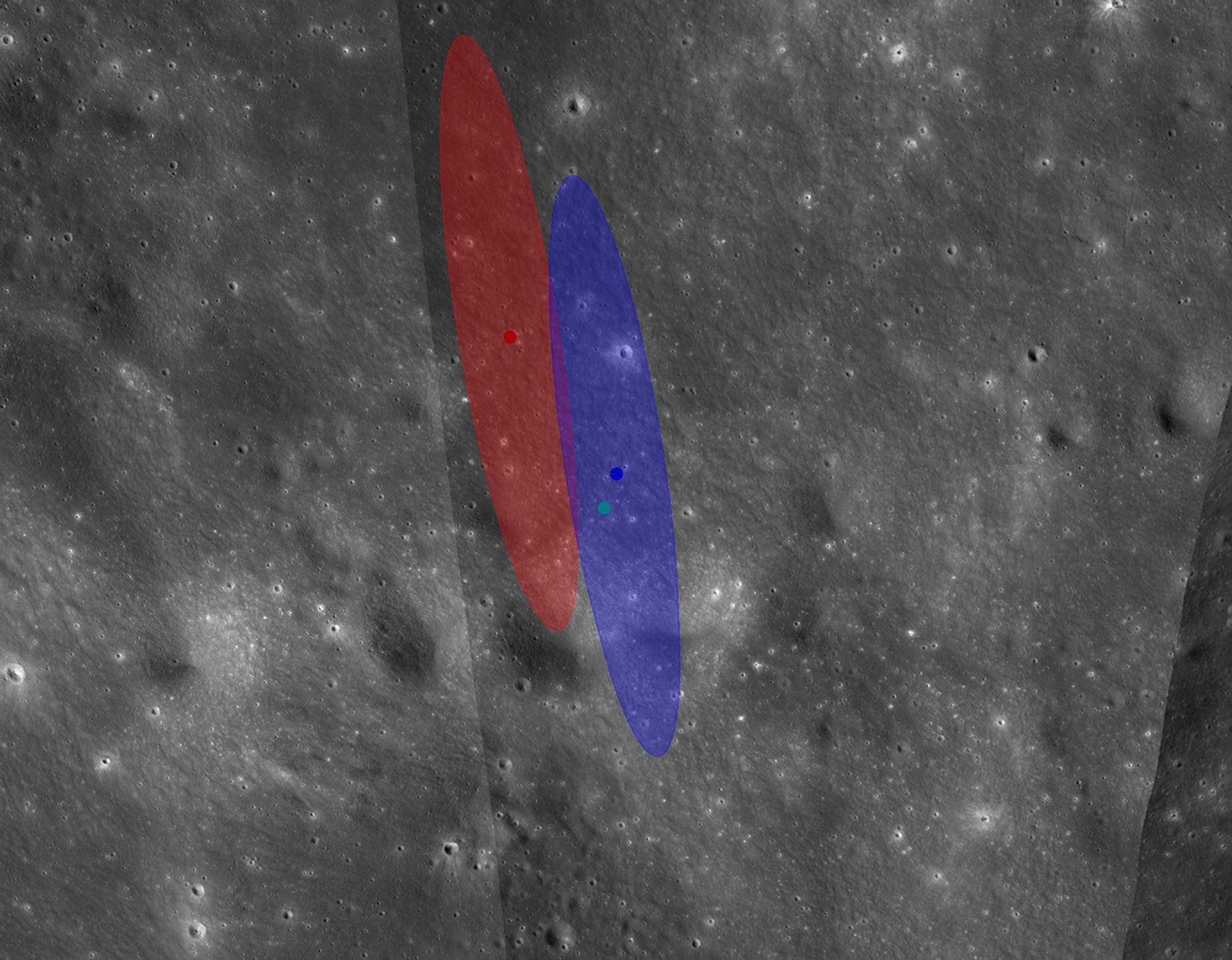
Finding the impact site took global coordination among experts and hobbyists. Independent astronomers first identified the rocket’s trajectory using publicly available data. NASA’s Center for Near Earth Object Studies, which tracks natural objects that could pose hazards to Earth for the agency’s Planetary Defense program, used this opportunity to test and validate tools and techniques for predicting impacts.
Based at NASA’s Jet Propulsion Laboratory in Southern California, the center incrementally refined the trajectory until identifying the location of impact, which it provided to the Republic of Korea for their Korea Pathfinder Lunar Orbiter (Danuri) team. The team used the high-resolution LUTI camera on Danuri a few hours later to image the crater, finding the prediction was accurate to about 0.6 miles.
After capturing images of the crater, the Danuri mission sent coordinates to NASA’s LRO team to help refine their follow-up imaging sequence. Comparing their new crater images with the pre-impact images, the LRO team updated the crater center coordinates: 19.4759°N, 266.7138°E, 511 meters elevation.
About the AuthorNASA Science Editorial Team Share Details Last Updated Aug 19, 2026 Related Terms Explore More 5 min read Human-Related Microbes May Survive Moon’s South Pole, NASA Finds Article 49 minutes ago 3 min read Elephant Butte Reservoir Runs LowDrought in the Rio Grande basin contributed to New Mexico’s largest reservoir dwindling to its…
Article 15 hours ago 3 min read Next Generation of Planetary Scientists Learn Public Engagement SkillsFORCE is a world-class laboratory that uses high-pressure experimental equipment to recreate the extreme conditions…
Article 2 days ago Keep Exploring Discover More Topics From NASAMissions
Humans in Space
Climate Change
Solar System
NASA’s LRO Images Falcon 9 Crater on Moon, Learns New Details
3 min read
NASA’s LRO Images Falcon 9 Crater on Moon, Learns New Details This is an animated before-and-after view of the crater formed after a Falcon 9 upper stage struck the Moon’s surface on Aug. 5, 2026. These images were taken between Aug. 11 and 12 by the Narrow-Angle Camera on NASA’s Lunar Reconnaissance Orbiter. These images are enlarged three times from the original, with north facing up, and they cover an area about a quarter of a mile wide.NASA Goddard/Intuitive MachinesBetween Aug. 11 and 12, NASA’s Lunar Reconnaissance Orbiter (LRO) captured a series of images of a new crater on the Moon. The crater formed on Aug. 5, when a SpaceX Falcon 9 upper stage impacted the surface following its January 2025 launch of the Firefly Blue Ghost 1 mission.
To capture imagery of the impact, engineers tilted the spacecraft so its cameras would point toward the crater each time LRO passed about 60 miles above the Moon, traveling 1 mile per second. The orbiter circles the Moon from pole to pole every two hours, while the Moon slowly rotates underneath it. To photograph a specific spot, the spacecraft must wait until that location turns into view, which took six days in this case.
Getting the pointing right was only half the challenge; timing had to be accurate as well. If the camera snapped even 10 seconds too early or too late, the target would drift off-center by 10 miles.
An artist concept video showing NASA’s Lunar Reconnaissance Orbiter circling the Moon.NASA’s Goddard Space Flight Center Conceptual Image LabBecause of the variety of viewing angles, scientists could see the crater under multiple lighting conditions that revealed unique features. In images where the crater rim stood out, scientists measured its 60‑foot width. Scientists also determined the crater is less than 10 feet deep based on the length of its shadow.
To capture these details, LRO used its Narrow-Angle Camera, which can spot features as small as 3 feet wide.
Collected between Aug. 11 and 12 by NASA’s Lunar Reconnaissance Orbiter, six days after a Falcon 9 upper-stage booster impacted the Moon, these images were taken from different viewing angles, bringing out different features. The darker area that fans around the crater in the upper-left image is rougher than the surroundings, as this surface material has been altered over a long time by solar wind, galactic cosmic rays, and micrometeorite impacts. The brighter rays and splotch above the crater in the lower-right image is fresher material that was excavated from deeper below the surface. The pictures are arranged in the order they were taken, starting at the top left and moving toward the bottom right, with the lighting angle from the Sun gradually changing from one image to the next. Each image is enlarged two times and shows an area of the Moon about 1,000 feet wide.NASA Goddard/Intuitive MachinesThe images above show bright and dark rays stretching out from the crater. The darker streaks are made of surface dust and rocks altered over a long time by solar wind, galactic cosmic rays, and micrometeorite impacts. This weathered material was excavated by the collision from 1.5 feet into the lunar surface. The brighter streaks near the crater rim are made of fresh material excavated from deeper underground.
This image from NASA’s Lunar Reconnaissance Orbiter shows two oval regions where the Falcon 9 upper stage was likely to impact the Moon, based on calculations by engineers with NASA’s Center for Near Earth Object Studies. Both ellipses are 2.1 miles long and 0.4 miles wide. Both predictions use the same booster-trajectory calculations, but only the blue ellipse takes into account the lunar terrain. The red and blue dots show predicted impact locations, whereas the cyan dot shows the actual impact site.NASA/JPL-CaltechFinding the impact site took global coordination among experts and hobbyists. Independent astronomers first identified the rocket’s trajectory using publicly available data. NASA’s Center for Near Earth Object Studies, which tracks natural objects that could pose hazards to Earth for the agency’s Planetary Defense program, used this opportunity to test and validate tools and techniques for predicting impacts.
Based at NASA’s Jet Propulsion Laboratory in Southern California, the center incrementally refined the trajectory until identifying the location of impact, which it provided to the Republic of Korea for their Korea Pathfinder Lunar Orbiter (Danuri) team. The team used the high-resolution LUTI camera on Danuri a few hours later to image the crater, finding the prediction was accurate to about 0.6 miles.
After capturing images of the crater, the Danuri mission sent coordinates to NASA’s LRO team to help refine their follow-up imaging sequence. Comparing their new crater images with the pre-impact images, the LRO team updated the crater center coordinates: 19.4759°N, 266.7138°E, 511 meters elevation.
About the AuthorNASA Science Editorial Team Share Details Last Updated Aug 19, 2026 Related Terms Explore More 5 min read Human-Related Microbes May Survive Moon’s South Pole, NASA Finds Article 49 minutes ago 3 min read Elephant Butte Reservoir Runs LowDrought in the Rio Grande basin contributed to New Mexico’s largest reservoir dwindling to its…
Article 15 hours ago 3 min read Next Generation of Planetary Scientists Learn Public Engagement SkillsFORCE is a world-class laboratory that uses high-pressure experimental equipment to recreate the extreme conditions…
Article 2 days ago Keep Exploring Discover More Topics From NASAMissions
Humans in Space
Climate Change
Solar System
NASA Student Aviation Challenge Focuses on Nation’s Infrastructure
3 min read
Preparations for Next Moonwalk Simulations Underway (and Underwater) Credit: National Institute of Aerospace
NASA’s next Gateways to Blue Skies competition invites collegiate teams to imagine innovative new ways aircraft could inspect land-based infrastructure, such as bridges and tunnels, to improve safety, reliability, and costs by 2035 or sooner.
Infrastructure is the foundation of the nation’s strong economy, global competitiveness, and daily quality of life. When that infrastructure is damaged or in disrepair, it restricts the movement of people, goods, and critical resources like water and energy. Inspections are important throughout the lifetime of infrastructure projects, but they often come with challenges.
Structures such as tunnels, bridges, highways, railways, and electric grids can be massive in size and difficult to reach. They can require disruptive shutdowns to access, or force workers to navigate extreme heights, confined spaces, and hazardous environments. As infrastructure ages and expands, there are opportunities to use innovative airborne platforms to improve current inspection practices.
“The demands for creative solutions like airborne platforms to improve the infrastructure sector are increasing exponentially,” said Steven Holz, Gateways to Blue Skies competition lead, NASA’s Langley Research Center in Hampton, Virginia. “The time is ripe for innovative students to transform how we work with our critical infrastructure, and this competition gives talented students the opportunity to do so.”
Sponsored by NASA’s University Innovation Project, the 2027 Gateways to Blue Skies competition encourages multidisciplinary teams of college students to conceptualize innovations in the world of aviation. Each year, the competition selects a new theme based on a complex challenge facing the Nation. It aims to engage as many students as possible from all backgrounds, majors, and collegiate levels.
The competition is open to teams of two to six students and divided into two phases. In Phase 1, teams will submit a proposal and an accompanying two-minute video, which will be judged by NASA and industry experts. Up to eight finalist teams will each receive a $9,000 prize and advance to Phase 2, where they will present their updated work to a panel of NASA and industry experts at a forum in May 2027. Winners will be offered the opportunity to intern with NASA Aeronautics in the academic year following the forum.
Teams interested in participating in the competition can review guidelines and eligibility requirements posted on the competition website. Teams are encouraged to submit a non-binding Notice of Intent by Monday, Oct. 12, via the website to stay apprised of competition news. Proposal and video submissions are due Feb. 22, 2027. The Gateway to Blue Skies Competition is run by the Aeronautics Division in NASA’s Research and Technology Mission Directorate. NASA’s Center of Excellence for Collaborative Innovation, part of the Prizes, Challenges, and Crowdsourcing Program within the Research and Technology Mission Directorate, manages the challenge contract. The National Institute of Aerospace administers the challenge on behalf of NASA.
Keep Exploring Discover More Topics From NASAAeronautics
University Innovation Project
NASA Prizes, Challenges, and Crowdsourcing
CoECI
NASA Student Aviation Challenge Focuses on Nation’s Infrastructure
3 min read
Preparations for Next Moonwalk Simulations Underway (and Underwater) Credit: National Institute of AerospaceNASA’s next Gateways to Blue Skies competition invites collegiate teams to imagine innovative new ways aircraft could inspect land-based infrastructure, such as bridges and tunnels, to improve safety, reliability, and costs by 2035 or sooner.
Infrastructure is the foundation of the nation’s strong economy, global competitiveness, and daily quality of life. When that infrastructure is damaged or in disrepair, it restricts the movement of people, goods, and critical resources like water and energy. Inspections are important throughout the lifetime of infrastructure projects, but they often come with challenges.
Structures such as tunnels, bridges, highways, railways, and electric grids can be massive in size and difficult to reach. They can require disruptive shutdowns to access, or force workers to navigate extreme heights, confined spaces, and hazardous environments. As infrastructure ages and expands, there are opportunities to use innovative airborne platforms to improve current inspection practices.
“The demands for creative solutions like airborne platforms to improve the infrastructure sector are increasing exponentially,” said Steven Holz, Gateways to Blue Skies competition lead, NASA’s Langley Research Center in Hampton, Virginia. “The time is ripe for innovative students to transform how we work with our critical infrastructure, and this competition gives talented students the opportunity to do so.”
Sponsored by NASA’s University Innovation Project, the 2027 Gateways to Blue Skies competition encourages multidisciplinary teams of college students to conceptualize innovations in the world of aviation. Each year, the competition selects a new theme based on a complex challenge facing the Nation. It aims to engage as many students as possible from all backgrounds, majors, and collegiate levels.
The competition is open to teams of two to six students and divided into two phases. In Phase 1, teams will submit a proposal and an accompanying two-minute video, which will be judged by NASA and industry experts. Up to eight finalist teams will each receive a $9,000 prize and advance to Phase 2, where they will present their updated work to a panel of NASA and industry experts at a forum in May 2027. Winners will be offered the opportunity to intern with NASA Aeronautics in the academic year following the forum.
Teams interested in participating in the competition can review guidelines and eligibility requirements posted on the competition website. Teams are encouraged to submit a non-binding Notice of Intent by Monday, Oct. 12, via the website to stay apprised of competition news. Proposal and video submissions are due Feb. 22, 2027. The Gateway to Blue Skies Competition is run by the Aeronautics Division in NASA’s Research and Technology Mission Directorate. NASA’s Center of Excellence for Collaborative Innovation, part of the Prizes, Challenges, and Crowdsourcing Program within the Research and Technology Mission Directorate, manages the challenge contract. The National Institute of Aerospace administers the challenge on behalf of NASA.
Keep Exploring Discover More Topics From NASAAeronautics
University Innovation Project
NASA Prizes, Challenges, and Crowdsourcing
CoECI
Why parabolas are crucial to cryptography
Cryptographers use points along a curve to build tough codes
Astronomers Finally See the Twisted Magnetic Fields That Drive Protostar Jets
For decades, scientists have theorized that young protostar jets are shaped and driven by complex, twisted magnetic fields. But they couldn't detect them. Now, thanks to ALMA, they've found them around a young binary protostar.
Starship lives! SpaceX craft arrives at Christmas Island after 24-day ocean ordeal
The seas have been kind, or at least kinder than expected, to SpaceX's Starship spacecraft, as it's been tugged through the Indian Ocean to friendlier tides.
Ship 40, the upper stage that flew on Starship's Flight 13 test launch, performed the vehicle's first successful intact ocean splashdown at the end of its mission on July 24, after lifting off from SpaceX's Starbase facility in South Texas. The spacecraft landed in the Indian Ocean as planned and has since become the focus of the SpaceX Recovery team, tasked with hauling it to port.
Over the past 24 days, that team faced "challenging conditions and increasingly rough seas," SpaceX said in an Aug. 7 post on X, and at one point was not expected to be successful in its efforts to haul Ship 40 safely to shore. Despite the odds, however, they have now reached calmer waters. The massive, 171-foot-tall (52 meters) spacecraft now floats just offshore of Christmas Island, awaiting inspection. "A team of SpaceX engineers is on their way to conduct additional analysis on the vehicle in calmer waters before attempting to return it to Starbase," the company said in an Aug. 18 update.
SpaceX Ship 40 from Starship's 13th test flight to calm waters off the shore of Christmas Island. (Image credit: SpaceX)SpaceXSpaceXChristmas Island is an Australian territory about 1,200 miles (1,900 kilometers) northwest of Broome. Most of the island is a national park, and it's famous for its 40 million or so red land crabs, which migrate en masse to the sea to spawn in one of the world's great wildlife spectacles.
Flight 13 was the second launch for the Version 3 (V3) design of SpaceX's towering Starship rocket. V3's debut on Flight 12 in May didn't quite go as planned — engine issues after stage separation caused the vehicle's Super Heavy booster to crash into the Gulf of Mexico instead of splashing down softly as intended. Ship 39 executed its landing burn above the Indian Ocean just like Ship 40 did, but Ship 39 exploded after toppling into the water — the expected outcome for Ship during Starship test flights. Ship 40 was the first one to survive the splashdown intact.
The fact that Ship 40 didn't explode has given SpaceX the unexpected opportunity to study the spacecraft up close. The company's iterative design process has led to the introduction of incremental improvements for each progressive Starship launch. Ship 40 is the first upper stage that has flown in space and returned in one piece, and it therefore provides a previously unstudied article for evaluation as SpaceX works to perfect the spacecraft's aerodynamics, hydraulics, heat tile efficiency and overall design.
After approx. 24 days at sea, the SpaceX Recovery team successfully guided Starship to a location just off the coast of Christmas Island. A team of SpaceX engineers is on their way to conduct additional analysis on the vehicle in calmer waters before attempting to return it to… pic.twitter.com/h6YYWb0LT5August 18, 2026
Starship is SpaceX's super heavy-lift launch vehicle designed to be the world's most powerful rocket, and the first capable of full reusability. Starship's expected readiness for operational missions has been a shifting goalpost since its first test launch in April 2023, and there are still some big milestones that SpaceX needs to reach in order to avoid rippling delays through other parts of the space industry.
NASA has contracted SpaceX to build a version of Starship to land astronauts on the moon as a part of the Artemis IV mission in 2028, and to fly a compatible V3 Starship to practice rendezvous and docking maneuvers with the Orion spacecraft in Earth orbit on Artemis III next year. Starship still has several boxes to check on NASA's qualifications list before it will be certified to fly astronauts, and a significant one of the those, reaching orbit, may be just on the horizon.
SpaceX is already preparing Ship 41 and its Super Heavy booster for Flight 14. During that flight, the company plans to not only deliver the upper stage to orbit but also to return Ship to Starbase for recovery using the "Mechazilla" launch tower's chopstick arms — a major step toward Starship's full reuse capability. SpaceX hopes to launch Flight 14 before the end of August, CEO Elon Musk said during the company's first earnings call earlier this month.
SpaceX launches its 100th mission of the year, sends Starlink satellites to orbit (video)
SpaceX has hit the century mark for the third year in a row.
A Falcon 9 rocket lifted off from California's Vandenberg Space Force Base on Wednesday (Aug. 19) at 12:01 a.m. EDT (0401 GMT; 9:01 p.m. on Aug. 18 local time).
It was the 97th Falcon 9 launch of the year and the 100th mission of 2026 overall for SpaceX.
The Falcon 9's first stage rests on the deck of a drone ship after its successful landing on Aug. 19, 2026. (Image credit: SpaceX)The mission is carrying 24 of SpaceX's Starlink internet satellites to low Earth orbit. If all goes according to plan, the Falcon 9's upper stage will deploy them there 61.5 minutes after liftoff.
The rocket's first stage, meanwhile, came back to Earth about 8.5 minutes into flight as planned, landing in the Pacific Ocean on the drone ship "Of Course I Still Love You." It was the 12th mission for this particular booster, which is designated B1097.
B1097 is no stranger to milestone flights. During a Starlink launch this past April, for example, the booster performed the 600th landing of an orbital rocket in SpaceX's illustrious history.
Previous Booster B1097 launchesSentinel-6B | Twilight | NROL-172 | Transporter-17 | 7 Starlink missions
The vast majority of SpaceX's launches this year — at the moment, 74 of them — have been devoted to building out the Starlink megaconstellation, which currently consists of nearly 11,000 operational satellites.
One of SpaceX's three non-Falcon 9 launches of 2026 was performed by its Falcon Heavy rocket. The other two were suborbital test flights of Starship, the giant, fully reusable vehicle that SpaceX is developing to help humanity settle the moon and Mars, among other tasks.
SpaceX first topped 100 launches in 2024, when it conducted a total of 138 missions (132 by Falcon 9, two by Falcon Heavy and four by Starship). In 2025, the company flew a total of 170 times (165 by Falcon 9 and five by Starship).
Such numbers will jump dramatically in the coming years, if all goes to plan. SpaceX founder and CEO Elon Musk has said the company wants to launch Starship multiple times per day, boosting annual tallies to 1,000 or so. Falcon 9 and Falcon Heavy aren't part of this longer-term picture; SpaceX wants to phase them out and have Starship shoulder the load.
Editor's note: This story was updated at 12:20 a.m. ET on Aug. 19 with news of successful launch and rocket landing.
JWST Peeks at Callisto’s Ancient Scars
Of Jupiter’s four Galilean moons, Callisto is the one that gets the least attention. Io is constantly being resurfaced by volcanoes. Europa has a giant liquid water ocean. And Ganymede has its own magnetic field that interacts with its parent planet in weird ways. Callisto, by comparison, seems sedate, with its ancient, crater-saturated surface seemingly frozen in time. But new data from the James Webb Space Telescope (JWST) shows that even this most benign of the Big Four moons is more active than previously realized.
NASA's B777 Gets New Coat of Paint
NASA’s B777 Gets New Coat of Paint
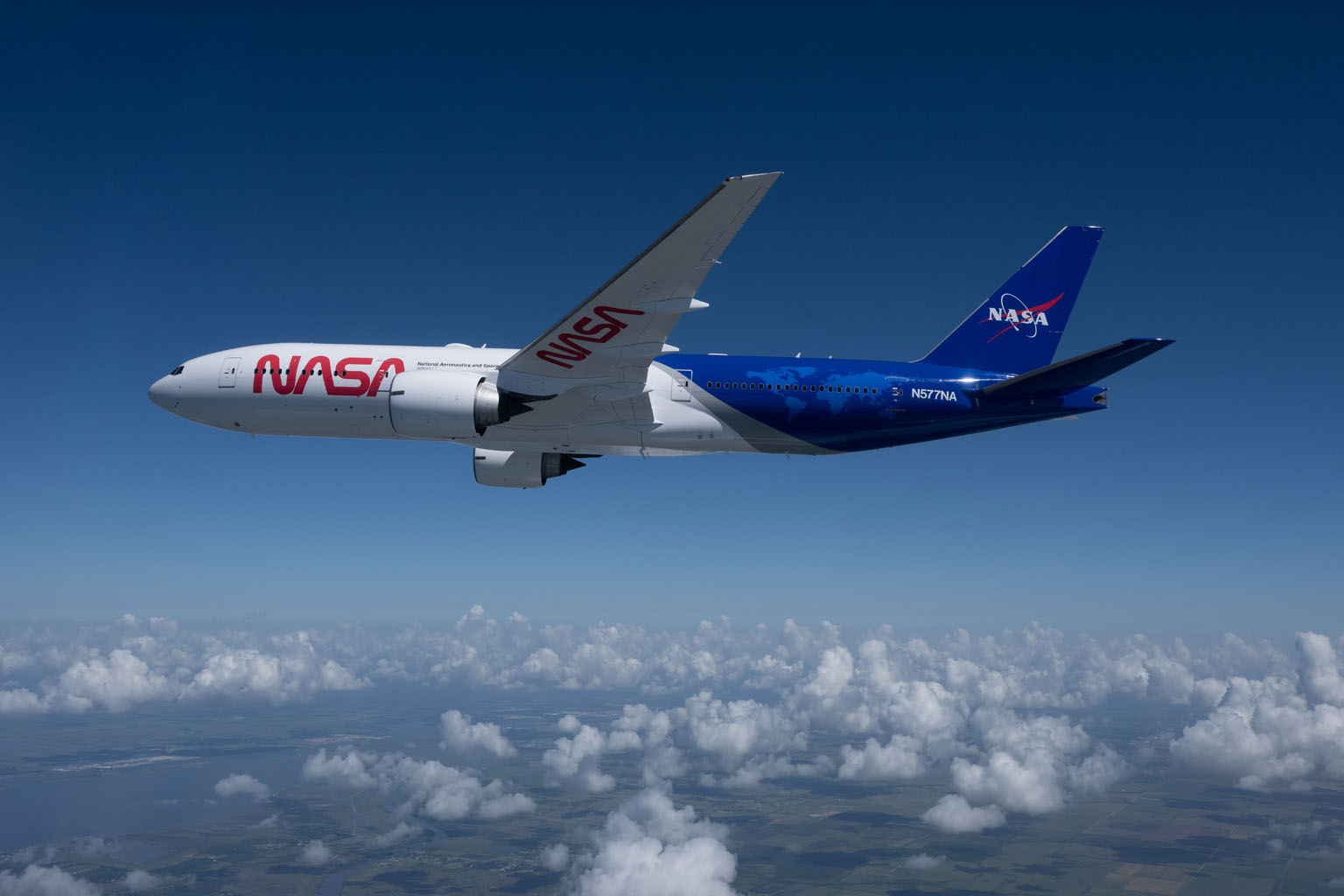
NASA’s Boeing 777 shows off a new paint job in this Aug. 11, 2026, photo. The B777 was acquired to replace and extend the capabilities of the NASA DC-8, which was retired in 2024.
The B777, set to begin operations from NASA’s Langley Research Center in Hampton, Virginia in 2027, will be a unique flying laboratory with global reach enabling data collection for NASA projects to include sensor development, satellite sensor calibration, data product validation, and field studies to better understand Earth system processes to improve models and decision-making.
Image credit: NASA/James Blair
NASA’s B777 Gets New Coat of Paint
NASA’s Boeing 777 shows off a new paint job in this Aug. 11, 2026, photo. The B777 was acquired to replace and extend the capabilities of the NASA DC-8, which was retired in 2024.
The B777, set to begin operations from NASA’s Langley Research Center in Hampton, Virginia in 2027, will be a unique flying laboratory with global reach enabling data collection for NASA projects to include sensor development, satellite sensor calibration, data product validation, and field studies to better understand Earth system processes to improve models and decision-making.
Image credit: NASA/James Blair
What makes a narwhal’s tusk so special? Scientists are close to unraveling the mystery
The unicorn of the sea’s spiral tooth has long been a scientific enigma
Hydrogen-powered 'rocket car' tops 400 mph in record-breaking test (video)
Is it a rocket car? Tearing across the Utah desert at over 400 mph (644 kph), a hydrogen-powered car has set a new land speed record.
Wing Commander Andy Green, a retired British Royal Air Force fighter pilot, just set a new world land speed record at the Bonneville Salt Flats in the JCB Hydromax vehicle. On two different runs on Aug. 11, the car went 400.623 mph (644.740 kph) and then 412.135 mph (663.267 kph), which averages out to 406.320 mph (653.909 kph).
That's the fastest that any car with a hydrogen internal combustion engine has traveled. "It was an amazing experience," Green told Space.com on Aug. 12 about his record-breaking drives.
"Anything above about 350 miles an hour [563 kph], we'd have gone away really pleased," he added. "It is performing better. It was more reliable than we expected, and it has blown away the hydrogen record. It's in every way a real thrill for all of us yesterday to see that happen."
Green is no stranger to breaking records. In 1997, he drove a jet-powered car 763.035 mph (1,227.985 kph, or Mach 1.02), setting a new land speed record while also becoming the first person to break the sound barrier on land.
About 20 years ago, Green also set the land speed record for a diesel-powered vehicle, going over 350 mph (563 kph). Until now, the fastest hydrogen-powered vehicle didn't come close to that, topping out at 303 mph (488 kph). But this new record shows the promising capability of hydrogen-powered engines on land.
The hydrogen engine doesn't produce carbon dioxide like a traditional gasoline or diesel engine does. And while it's not the most traditional car engine on Earth, hydrogen has powered some rocket engines for decades. For example, NASA's Space Launch System (SLS) launcher, which has two successful Artemis moon mission liftoffs under its belt, burns liquid hydrogen and liquid oxygen. (The SLS core stage employs RS-25 engines, which also powered NASA's now-retired space shuttle.)
The JCB Hydromax isn't exactly a rocket on wheels, but it does demonstrate an incredible technological feat. And the "rocket car" probably has more in common with an actual rocket than we might think. For example, while it's not as fast as a rocket, pushing a vehicle to its limits requires many of the same preparations.
"There is a countdown and a checklist," Green told Space.com. "And several times we've had to stop the countdown, reheat something, adjust something, restart the countdown and launch it off the start line."
However, despite its speed, hydrogen-powered engine and countdown clock, this "rocket car" isn't going to space anytime soon.
"These are built for the construction industry," Green said about the engines. "They normally kick out 74 horsepower," he added, so they put "two of them in a race car to show how tough, how adaptable [and] how capable they are."
A Quantum Trick for Spotting Gravitational Waves
Gravitational wave astronomy has seen plenty of improvements since the original signal was captured in 2015. Despite that, it remains an engineering challenge to actually create the detectors needed for the precise measurements that gravitational waves require. A new NASA Innovative Advanced Concepts (NIAC) grant is funding a concept from a team led by Paul Stankus at Brookhaven National Laboratory that could potentially solve some of those engineering problems - by using quantum mechanics.
Extreme weather is making Americans feel powerless
The same people affected by extreme weather are also likely to worry that they will face a future disaster, according to a new poll
NASA Glenn’s Legacy Forged Through Decades of Flight Research
Many of NASA’s most important aerospace breakthroughs that began in the laboratory were ultimately proven in the sky. For decades, experts at NASA’s Glenn Research Center in Cleveland conducted flight tests — piloting aircraft into targeted environments such as icing clouds and carefully defined atmospheric routes. This approach allowed them to collect measurements directly in flight, providing critical data that linked laboratory theories to practical performance.
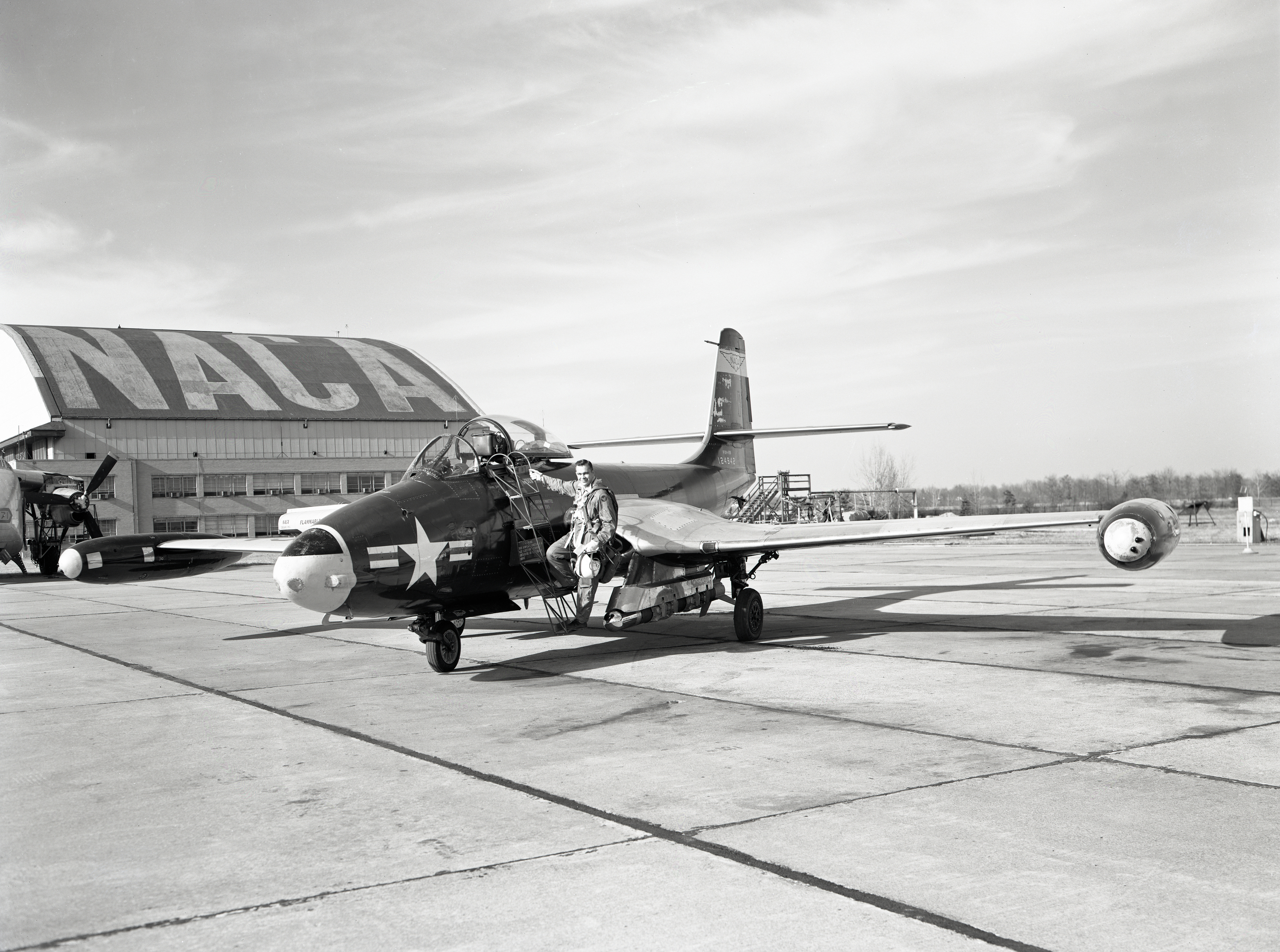
The center’s flight research dates to the 1940s, when NASA Glenn was known as the Aircraft Engine Research Laboratory for the National Advisory Committee for Aeronautics, NASA’s predecessor agency. During World War II, engineers and pilots worked to improve aircraft performance and increase high-altitude reliability. In the mid-to-late-1940s, flight research helped make early jet and ramjet engines practical. Later, Glenn’s flight programs helped improve the efficiency and environmental performance of aircraft engines — primarily conventional jet engines.
Behind those early flight programs was a pioneering group of pilots who helped establish NASA Glenn’s reputation for airborne research. The center’s first generation of pilots, including Howard Lilly, Joseph Walker, William Swann, and William “Ed” Gough, helped lay the groundwork for more than two dozen other Glenn pilots, including future astronauts Neil A. Armstrong and Fred Haise.
Together with Glenn’s researchers, engineers, and support staff, these pilots established airborne research capabilities that NASA continues to rely on today. Their work demonstrated how flight testing could bridge the gap between laboratory research and real-world performance.
“These missions transformed aircraft into flying laboratories,” said Mark Russell, a NASA safety officer and pilot who served as the former acting chief of Aircraft Operations at Glenn. “They bridged the gap between ground testing and full-scale flight, proving the measurements needed to connect theory with performance. The testing also helped validate technologies and procedures later used aboard spacecraft and orbital missions.”
Research workhorsesFrom the start, NASA put its aircraft to work on a wide range of research challenges.
For decades, NASA Glenn aircraft have been used to study in-flight icing hazards, collecting data that has helped make commercial aviation safer. For nearly 40 years, NASA Glenn’s De Havilland DHC-6 Twin Otter served as the center’s workhorse for icing research, gathering data that helped shape modern aviation safety standards.
Pilot Richard Ranaudo, left, and engineer Thomas Ratvasky with the De Havilland Twin Otter at NASA’s Glenn (then Lewis) Research Center in Cleveland on Feb. 23, 1993. The aircraft helped advance global aviation safety by defining the precise atmospheric physics of supercooled clouds and validating critical modern technologies used to predict, detect, and prevent in-flight icing hazards.Credit: NASA/Tom Jares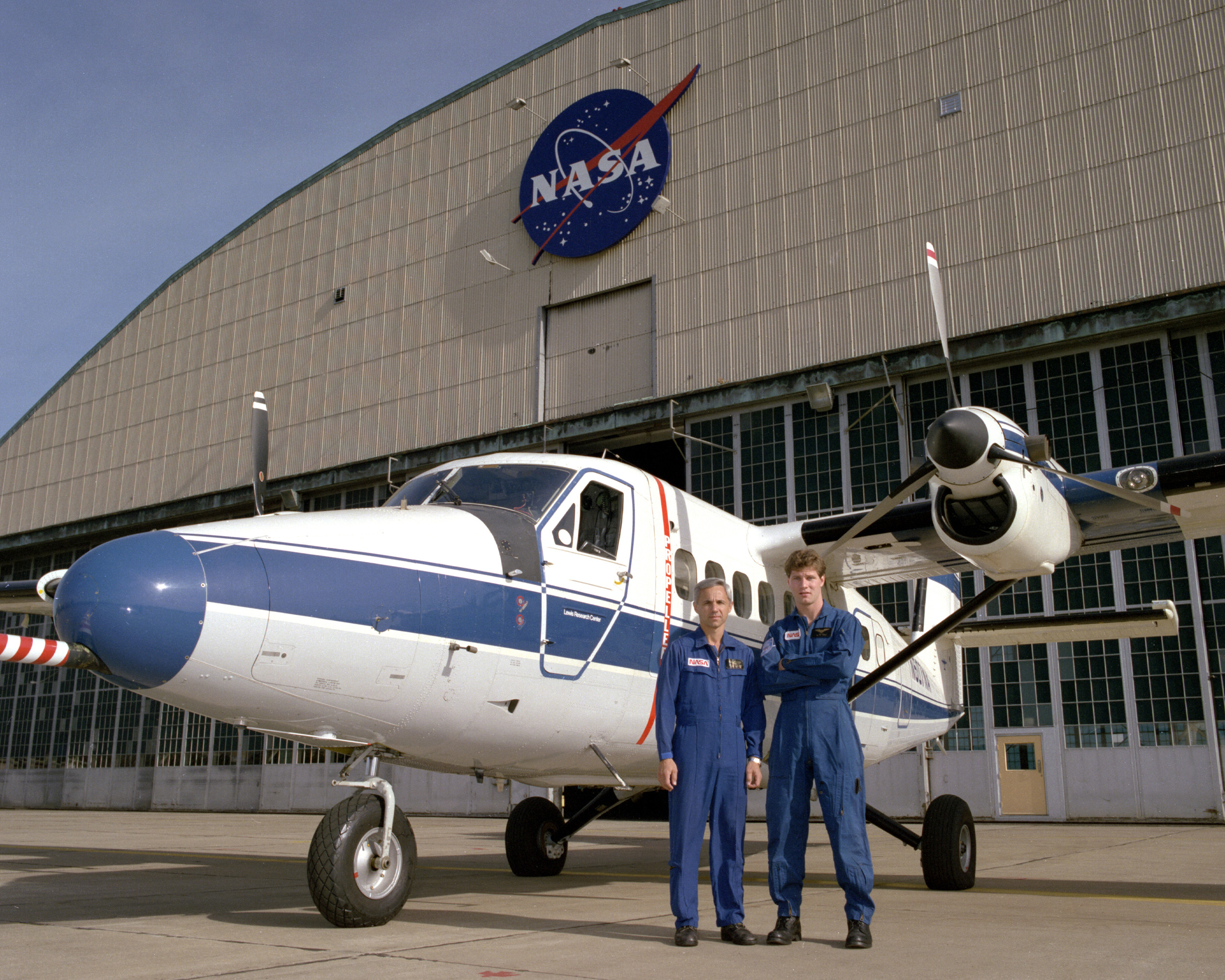
Beyond improving aviation safety, Glenn’s flight research also explored new propulsion technologies that could transform the future of flight. Today, researchers are exploring hydrogen as an aviation fuel. But NASA Glenn helped show its potential viability decades ago using its Martin B-57B Canberra aircraft. After developing a hydrogen fuel system for the B-57B, a team tested it safely from February to April 1957. The flights showed the system’s reliable operation and advanced efficiency, marking a major milestone in aviation technology.
Flight testing also supported technologies destined for use beyond Earth, helping researchers evaluate hardware under conditions that closely resembled space. Beginning in 1963, the center began a program to test and measure how well solar cells worked under conditions similar to those in space. Using specially modified airplanes, including Learjets, NASA conducted flights to help recreate some of the sunlight and atmospheric conditions that solar cells would experience outside Earth’s atmosphere. The program lasted decades, supporting space technology calibration through numerous high-altitude flights and adapting to newer aircraft over time.
Researchers later applied these airborne capabilities to environmental science, extending their value beyond aviation and space technology. Using the Twin Otter and S-3B Viking over the Great Lakes, researchers tracked harmful algal blooms on Lake Erie by measuring changes in water color and composition. The data improved satellite systems used to monitor water quality and ecosystem health.
Glenn’s research aircraft also played an important role in preparing technologies and experiments for spaceflight through microgravity testing. NASA Glenn advanced microgravity research through in-flight testing using specially modified aircraft, such as its DC-9, to create short periods of weightlessness during parabolic maneuvers. These flights allowed researchers to study how fluids, combustion, materials, and experimental equipment behaved in near-zero gravity before experiments were conducted in space.
NASA’s Glenn (then Lewis) Research Center in Cleveland conducted microgravity research using the DC-9 airplane. Pictured, back to front, John Yaniec, Mike Mahn, Michael Capelety, and Susan Motil conduct microgravity research during a flight on July 10, 1996. Credit: NASA/Quentin Schwinn Recent breakthroughs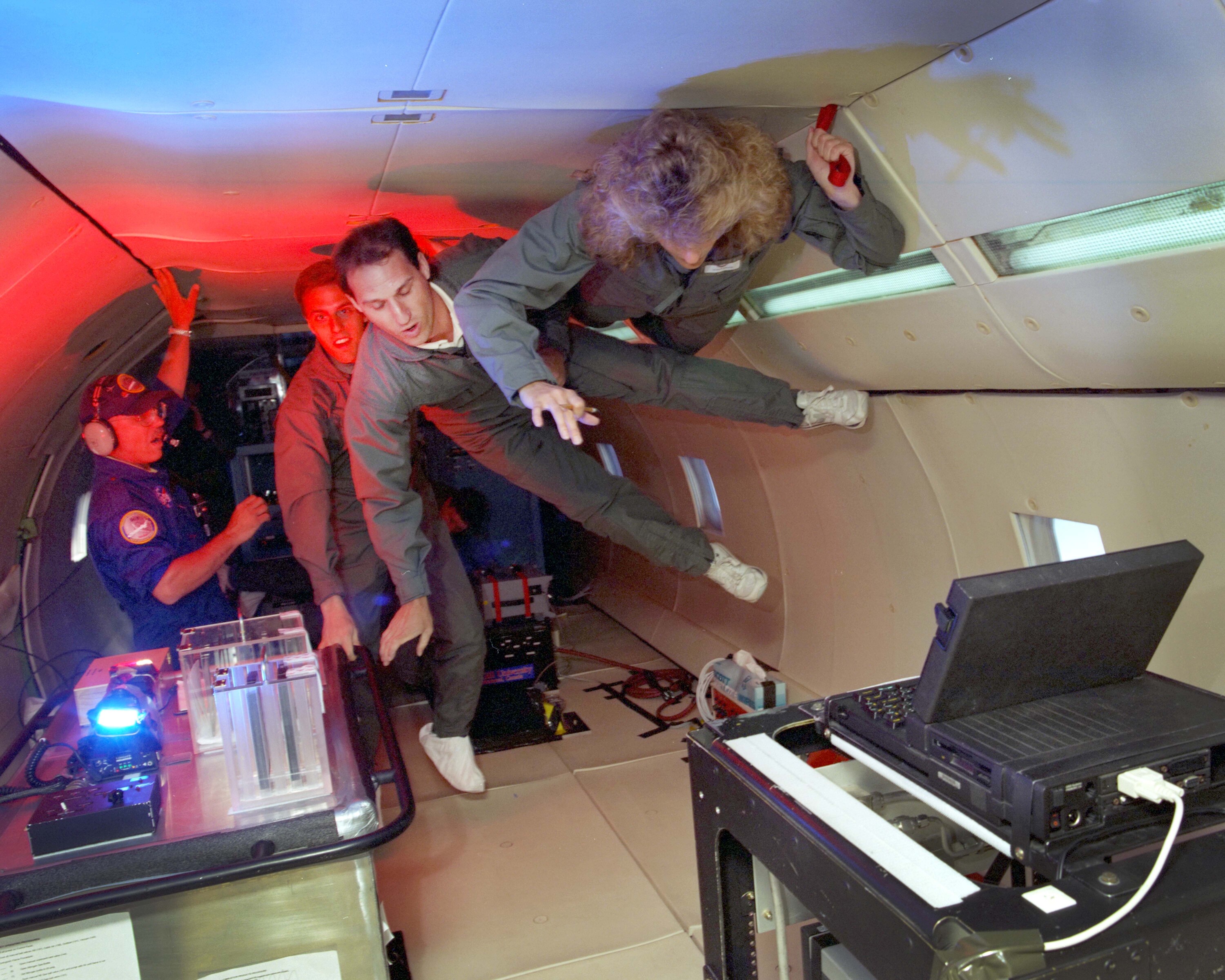
Other significant accomplishments enabled by Glenn’s flight research include supporting the development and testing of sustainable aviation technologies, including research related to more fuel-efficient engines and sustainable aviation fuels, and advancing in-flight instrumentation and measurement techniques used across aeronautics research.
In 2024, Glenn’s Flight Operations participated in an optical communications study using the center’s Pilatus PC-12 NG aircraft. This mission successfully demonstrated the ability to transmit large volumes of data through a laser communication system across NASA’s legacy infrastructure. The work contributed to NASA’s broader effort to advance optical communications for future missions. NASA further tested optical communications on the Artemis II mission and effectively transmitted substantial amounts of data from the Orion capsule to multiple ground stations over the course of the 10-day journey.
A team at NASA’s Glenn Research Center in Cleveland streamed 4K video footage from a Pilatus airplane to the International Space Station and back for the first time using optical, or laser, communications. Pictured on June 13, 2024, left to right, James Demers, Adam Wroblewski, Shaun McKeehan, and Kurt Blakenship.Credit: NASA/Sara Lowthian-Hanna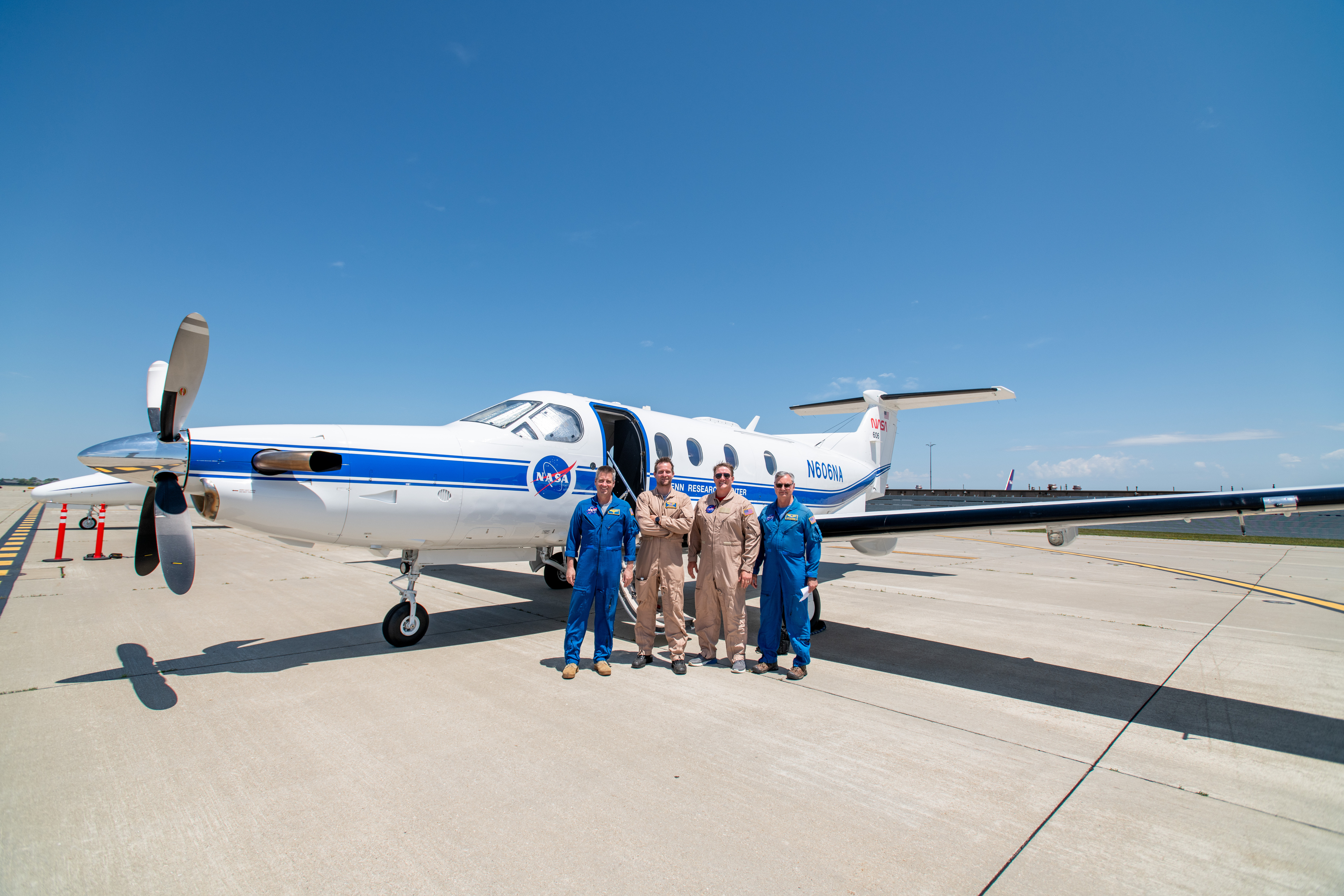
As NASA’s flight research enterprise evolved, the agency also restructured how it manages its research aircraft. In October 2025, NASA streamlined its aircraft flight operations, relocating its aircraft from Glenn to NASA’s Armstrong Flight Research Center in Edwards, California. NASA Glenn continues its important icing and propulsion research and communications technology development in collaboration with Armstrong.
From its historical roots in wartime engine development to modern work on aircraft safety, Glenn’s airborne research has consistently moved innovative ideas from the laboratory to real-world application. For more than eight decades, NASA Glenn has transformed ideas first proven in the laboratory into innovations validated in the sky — a legacy that continues to shape the future of aviation and space exploration.
March 17, 1943Researchers at the National Advisory Committee for Aeronautics’ Aircraft Engine Research Laboratory (AERL), the historical name for NASA’s Glenn Research Center in Cleveland, prepare to embark on the first AERL flight test using the Martin B-26C airplane at the center on March 17, 1943. Credit: NASA April 21, 1946These aircraft were used in the 1940s for research at the National Advisory Committee for Aeronautics’ Aircraft Engine Research Laboratory in Cleveland (the predecessor to NASA’s Glenn Research Center). This photo was taken on April 21, 1946.Credit: NASA April 13, 1976Pilots and staff recognize the 100th research flight of the F-106B Delta Dart aircraft at NASA’s Glenn (then Lewis) Research Center in Cleveland on April 13, 1976. From left to right, John Burke, Casey Blaze, Thomas Mayher, Bernard Smith, William Bohrer, William Wildenhein, James Potantus, Maurice Collier, James Cery, Joseph Sikosky, Jack Salzman, Earl Boyer, Frank Hvizdos, Anthony Mastronuzzi, Carl Hembly, Gary Thomas, Carl McLucas, and Russell Hart. Previously used by the U.S. Air Force, the plane was converted to test supersonic nozzle and inlet variations. Credit: NASA July 14, 1997NASA Glenn (then Lewis) Research Center’s aircraft fleet consisted of a, clockwise from bottom, T-34 Mentor, De Havilland Twin Otter, McDonnell Douglas DC-9, North American OV-10A, and Learjet, pictured here on July 14, 1997.Credit: NASA/Christopher Lynch June 13, 2018Mark Russell, a NASA safety officer and pilot who served as the former acting chief of Aircraft Operations at NASA’s Glenn Research Center in Cleveland, climbs into a T-34 Mentor aircraft on June 13, 2018. Credit: NASA/Bridget CaswellNASA Glenn’s Legacy Forged Through Decades of Flight Research
Many of NASA’s most important aerospace breakthroughs that began in the laboratory were ultimately proven in the sky. For decades, experts at NASA’s Glenn Research Center in Cleveland conducted flight tests — piloting aircraft into targeted environments such as icing clouds and carefully defined atmospheric routes. This approach allowed them to collect measurements directly in flight, providing critical data that linked laboratory theories to practical performance.
The center’s flight research dates to the 1940s, when NASA Glenn was known as the Aircraft Engine Research Laboratory for the National Advisory Committee for Aeronautics, NASA’s predecessor agency. During World War II, engineers and pilots worked to improve aircraft performance and increase high-altitude reliability. In the mid-to-late-1940s, flight research helped make early jet and ramjet engines practical. Later, Glenn’s flight programs helped improve the efficiency and environmental performance of aircraft engines — primarily conventional jet engines.
Behind those early flight programs was a pioneering group of pilots who helped establish NASA Glenn’s reputation for airborne research. The center’s first generation of pilots, including Howard Lilly, Joseph Walker, William Swann, and William “Ed” Gough, helped lay the groundwork for more than two dozen other Glenn pilots, including future astronauts Neil A. Armstrong and Fred Haise.
Together with Glenn’s researchers, engineers, and support staff, these pilots established airborne research capabilities that NASA continues to rely on today. Their work demonstrated how flight testing could bridge the gap between laboratory research and real-world performance.
“These missions transformed aircraft into flying laboratories,” said Mark Russell, a NASA safety officer and pilot who served as the former acting chief of Aircraft Operations at Glenn. “They bridged the gap between ground testing and full-scale flight, proving the measurements needed to connect theory with performance. The testing also helped validate technologies and procedures later used aboard spacecraft and orbital missions.”
Research workhorsesFrom the start, NASA put its aircraft to work on a wide range of research challenges.
For decades, NASA Glenn aircraft have been used to study in-flight icing hazards, collecting data that has helped make commercial aviation safer. For nearly 40 years, NASA Glenn’s De Havilland DHC-6 Twin Otter served as the center’s workhorse for icing research, gathering data that helped shape modern aviation safety standards.
Pilot Richard Ranaudo, left, and engineer Thomas Ratvasky with the De Havilland Twin Otter at NASA’s Glenn (then Lewis) Research Center in Cleveland on Feb. 23, 1993. The aircraft helped advance global aviation safety by defining the precise atmospheric physics of supercooled clouds and validating critical modern technologies used to predict, detect, and prevent in-flight icing hazards.Credit: NASA/Tom JaresBeyond improving aviation safety, Glenn’s flight research also explored new propulsion technologies that could transform the future of flight. Today, researchers are exploring hydrogen as an aviation fuel. But NASA Glenn helped show its potential viability decades ago using its Martin B-57B Canberra aircraft. After developing a hydrogen fuel system for the B-57B, a team tested it safely from February to April 1957. The flights showed the system’s reliable operation and advanced efficiency, marking a major milestone in aviation technology.
Flight testing also supported technologies destined for use beyond Earth, helping researchers evaluate hardware under conditions that closely resembled space. Beginning in 1963, the center began a program to test and measure how well solar cells worked under conditions similar to those in space. Using specially modified airplanes, including Learjets, NASA conducted flights to help recreate some of the sunlight and atmospheric conditions that solar cells would experience outside Earth’s atmosphere. The program lasted decades, supporting space technology calibration through numerous high-altitude flights and adapting to newer aircraft over time.
Researchers later applied these airborne capabilities to environmental science, extending their value beyond aviation and space technology. Using the Twin Otter and S-3B Viking over the Great Lakes, researchers tracked harmful algal blooms on Lake Erie by measuring changes in water color and composition. The data improved satellite systems used to monitor water quality and ecosystem health.
Glenn’s research aircraft also played an important role in preparing technologies and experiments for spaceflight through microgravity testing. NASA Glenn advanced microgravity research through in-flight testing using specially modified aircraft, such as its DC-9, to create short periods of weightlessness during parabolic maneuvers. These flights allowed researchers to study how fluids, combustion, materials, and experimental equipment behaved in near-zero gravity before experiments were conducted in space.
NASA’s Glenn (then Lewis) Research Center in Cleveland conducted microgravity research using the DC-9 airplane. Pictured, back to front, John Yaniec, Mike Mahn, Michael Capelety, and Susan Motil conduct microgravity research during a flight on July 10, 1996. Credit: NASA/Quentin Schwinn Recent breakthroughsOther significant accomplishments enabled by Glenn’s flight research include supporting the development and testing of sustainable aviation technologies, including research related to more fuel-efficient engines and sustainable aviation fuels, and advancing in-flight instrumentation and measurement techniques used across aeronautics research.
In 2024, Glenn’s Flight Operations participated in an optical communications study using the center’s Pilatus PC-12 NG aircraft. This mission successfully demonstrated the ability to transmit large volumes of data through a laser communication system across NASA’s legacy infrastructure. The work contributed to NASA’s broader effort to advance optical communications for future missions. NASA further tested optical communications on the Artemis II mission and effectively transmitted substantial amounts of data from the Orion capsule to multiple ground stations over the course of the 10-day journey.
A team at NASA’s Glenn Research Center in Cleveland streamed 4K video footage from a Pilatus airplane to the International Space Station and back for the first time using optical, or laser, communications. Pictured on June 13, 2024, left to right, James Demers, Adam Wroblewski, Shaun McKeehan, and Kurt Blakenship.Credit: NASA/Sara Lowthian-HannaAs NASA’s flight research enterprise evolved, the agency also restructured how it manages its research aircraft. In October 2025, NASA streamlined its aircraft flight operations, relocating its aircraft from Glenn to NASA’s Armstrong Flight Research Center in Edwards, California. NASA Glenn continues its important icing and propulsion research and communications technology development in collaboration with Armstrong.
From its historical roots in wartime engine development to modern work on aircraft safety, Glenn’s airborne research has consistently moved innovative ideas from the laboratory to real-world application. For more than eight decades, NASA Glenn has transformed ideas first proven in the laboratory into innovations validated in the sky — a legacy that continues to shape the future of aviation and space exploration.
March 17, 1943Researchers at the National Advisory Committee for Aeronautics’ Aircraft Engine Research Laboratory (AERL), the historical name for NASA’s Glenn Research Center in Cleveland, prepare to embark on the first AERL flight test using the Martin B-26C airplane at the center on March 17, 1943. Credit: NASA April 21, 1946These aircraft were used in the 1940s for research at the National Advisory Committee for Aeronautics’ Aircraft Engine Research Laboratory in Cleveland (the predecessor to NASA’s Glenn Research Center). This photo was taken on April 21, 1946.Credit: NASA April 13, 1976Pilots and staff recognize the 100th research flight of the F-106B Delta Dart aircraft at NASA’s Glenn (then Lewis) Research Center in Cleveland on April 13, 1976. From left to right, John Burke, Casey Blaze, Thomas Mayher, Bernard Smith, William Bohrer, William Wildenhein, James Potantus, Maurice Collier, James Cery, Joseph Sikosky, Jack Salzman, Earl Boyer, Frank Hvizdos, Anthony Mastronuzzi, Carl Hembly, Gary Thomas, Carl McLucas, and Russell Hart. Previously used by the U.S. Air Force, the plane was converted to test supersonic nozzle and inlet variations. Credit: NASA July 14, 1997NASA Glenn (then Lewis) Research Center’s aircraft fleet consisted of a, clockwise from bottom, T-34 Mentor, De Havilland Twin Otter, McDonnell Douglas DC-9, North American OV-10A, and Learjet, pictured here on July 14, 1997.Credit: NASA/Christopher Lynch June 13, 2018Mark Russell, a NASA safety officer and pilot who served as the former acting chief of Aircraft Operations at NASA’s Glenn Research Center in Cleveland, climbs into a T-34 Mentor aircraft on June 13, 2018. Credit: NASA/Bridget CaswellOn this day in space! Aug. 18, 1868: Total solar eclipse leads to discovery of helium
On Aug. 18, 1868, a French astronomer named Pierre Jules César Janssen discovered helium while observing a total solar eclipse in India.
During the eclipse, Janssen was using a spectroscope to look at the spectrum of light emitted by the sun. This tool allows scientists to determine what elements they're looking at. While observing solar prominences during the eclipse, Janssen noticed a bright yellow line that didn't correspond to any elements that was not yet discovered on Earth.
In the months that followed, English astronomer Norman Lockyer independently observed the same spectral line and concluded that it came from a previously unknown element, which was named helium after Helios, the Greek god of the sun.
Thirteen years later, the Italian physicist Luigi Palmieri found the first evidence of helium on Earth, in the lava of Mount Vesuvius.
Totality during the total solar eclipse on April 8, 2024 (composite image). (Image credit: Space.com / Josh Dinner)Why it matteredThe detection of helium during the 1868 eclipse was the first time spectroscopy revealed an element in an astronomical object that had not yet been discovered on Earth, and highlights why spectroscopy is one of astronomy’s most powerful tools.
Like every other element on the periodic table, helium has innumerable applications, including some that are especially important to space and spaceflight. Scientists eventually learned that helium is the second-most abundant element in the universe (after hydrogen). And the fusion of hydrogen into helium is the process that powers stars like our sun. Helium gas is commonly used to pressurize and purge rocket propellant systems, and liquid helium is often used to cool sensitive scientific instruments on spacecraft.
The periodic table of the elements. (Image credit: Humdan/Shutterstock)