

Feed aggregator
See the Perseid Meteors on a New Moon Year
You couldn’t ask for a better year for one of the top annual meteor showers. If skies are clear be sure to watch for one of the top skywatching draws of 2026: the August Perseid meteor shower. While the Perseids are a draw on any year, 2026 is special, and has a few things going for it in terms of the Moon phase, peak timing and prospects.
August 2026 Satellite Puzzler
- Earth
- Earth Observatory
- Image of the Day
- EO Explorer
- Topics
- More Content
- About
August 2026 Satellite Puzzler
- Earth
- Earth Observatory
- Image of the Day
- EO Explorer
- Topics
- More Content
- About
Newly discovered carnivorous plant is as deceptive as it is deadly
Charles Darwin predicted in 1875 that some members of the Saxifraga genus could be carnivorous—now scientists have finally proven him right
NASA Provides Updates on Moon Base Cargo Landers, Tech Demonstrations
6 min read
Preparations for Next Moonwalk Simulations Underway (and Underwater) Artist’s rendering of the Moon’s South Pole region. Glowing points of light scattered across the lunar surface represent surface assets supporting sustained human and robotic operations near the South Pole.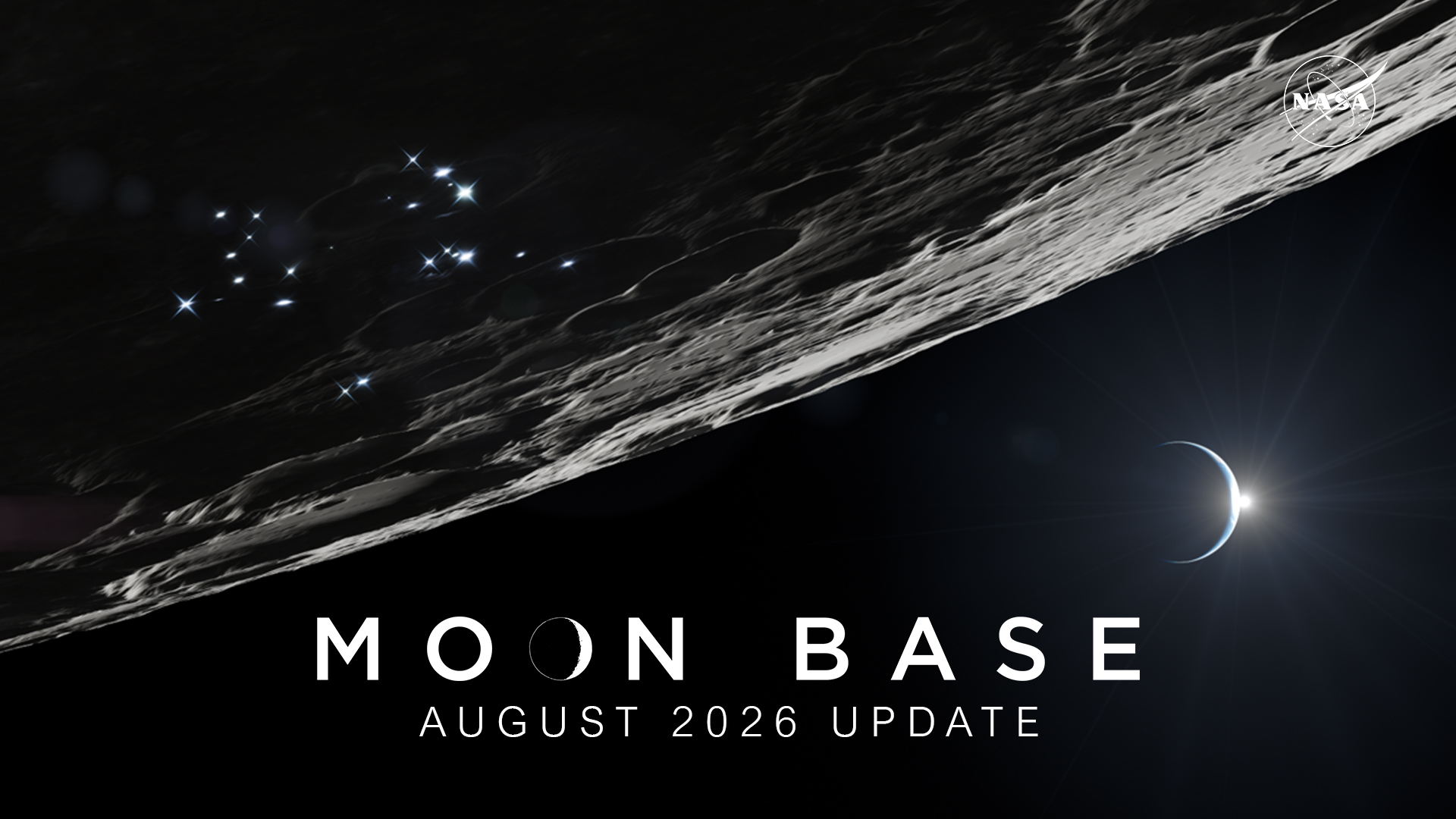
NASA is making progress in building the Moon Base, which will become a resilient outpost near the Moon’s South Pole for science, technology, and eventual human operations. To advance lunar surface infrastructure development, commercial partners such as Blue Origin, Firefly Aerospace, Intuitive Machines, and Voyager Lunar Systems are working toward delivering landers by 2028. These landers will deliver the foundational architecture for a sustained presence on the Moon. Their progress represents major advances in commercial lunar delivery and lays the groundwork for the systems and surface capabilities the Moon Base will rely on.
Phase I of the Moon Base architecture plan, taking place now through 2029, includes more than twenty robotic landings, with each mission designed to incrementally advance system capabilities and validate operational components for those that follow. Before astronauts arrive, robotic missions will deploy critical scientific instruments that characterize the lunar environment, test new technologies, and begin assembling the infrastructure needed for human habitation.
These early robotic missions also will create opportunities to gather insights and improve the overall reliability of the Moon Base architecture. Recurring deliveries under NASA’s CLPS (Commercial Lunar Payload Services) initiative will play a vital role in building a dependable lunar supply chain, advancing the agency’s efforts toward a permanent human and robotic presence on the Moon.
On Tuesday, NASA released a Moon Base video update offering a closer look at the progress these four companies are making to advance their flights and hardware to further the agency’s Moon Base objectives.
Blue Origin’s Blue Moon MK1 lander is progressing through integrated testing to prepare for its upcoming lunar delivery. This first mission, named Endurance, represents a new class of commercial landers designed to deliver large-scale payloads to the lunar surface. The lander successfully completed an extensive environmental test campaign, including a thermal‑vacuum assessment at NASA’s Johnson Space Center in Houston, verifying its capability to perform under lunar‑like conditions.
Teams are advancing through a series of integration milestones that will lead MK1 into its next test campaign. The structure, propulsion elements, and avionics systems are fully assembled, and upcoming assessments will verify the wiring harnesses connections that enable payload integration. The lander completed communications checkouts with NASA’s Tracking and Data Relay Satellite System and the Deep Space Network. Up next, cryogenic propellants will be loaded as one of the final tests prior to integration for launch. Endurance will demonstrate precision landing capabilities, characterize the lunar environment, and tests autonomous systems for future Moon Base missions.
Firefly AerospaceFirefly’s Blue Ghost Mission 2 builds on its first successful lunar landing with a larger, dual‑spacecraft configuration built specifically for operations on the Moon’s far side. Blue Ghost is stacked on top of Elytra, Firefly’s orbital spacecraft, forming a 22‑foot‑tall system nearly three times the height of the spacecraft flown for Blue Ghost Mission 1 in 2025. With the ability to deploy payloads in orbit and on the lunar surface, Elytra brings added versatility to Moon Base logistics and science.
Planned to be the first American landing on the Moon’s far side, Blue Ghost Mission 2 will explore a uniquely quiet region, allowing study of lunar far side geology and the cosmic Dark Ages, a time when newly-formed stars were just becoming visible. Carrying three NASA payloads, the mission aims to advance scientific research and test technologies for future habitation and infrastructure development.
The autonomous landing sequence demonstrated during its first mission exhibits Firefly’s performance in lunar flight and will play a role in supporting mission operations. Reusing subsystems from the previous mission allows Firefly to accelerate development and reduce risk, supporting Moon Base objectives for scalable and repeatable commercial lander capabilities.
Intuitive MachinesIntuitive Machines’ IM‑3 mission highlights how commercial landers are essential infrastructure to establish the Moon Base. This mission represents Intuitive Machines’ third Nova-C lunar landing on the Moon, and introduces Altus-1, the company’s first lunar data‑relay satellite, which will fly alongside the lander.
Named Trinity, Intuitive Machines’ Nova‑C lander assembly and integration are progressing to help meet the long-term need for regular cargo and science deliveries. The top deck is aligned, and internal wiring is undergoing extensive testing before closeout panels are added. Recently, Intuitive Machines along with the X-Ray Cryogenic Facility crew at NASA’s Marshall Space Center in Huntsville, Alabama successfully completed long-range thermal vacuum testing to confirm that Intuitive Machines’ sensors operate accurately under both ends of the thermal range they may encounter during lunar descent. In the coming weeks, teams will complete the final stages of development, including engine integration and hot fire tests.
By deploying Altus-1 in lunar orbit with its three payloads and delivering five NASA payloads along with six commercial and one civil payload to the surface on IM-3, Intuitive Machines aims to advance Moon Base science objectives in Reiner Gamma’s geomagnetic environment, a magnetic anomaly on the lunar surface. The IM-3 mission will be the first to explore the surface of a lunar swirl, enabling robotics and deployed instruments to deepen the scientific investigation of this mysterious region.
Voyager TechnologiesVoyager Technologies’ Griffin‑1 lander is undergoing testing in the Environmental Test Laboratory at NASA’s Jet Propulsion Laboratory in Southern California, a critical step toward being ready for its mission to the Moon. Testing at NASA JPL verifies commercial lunar landers meet the precision and durability needed to support Moon Base operations.
Griffin-1, built as an infrastructure‑class lander, plans to launch in late 2026 and will transport the largest commercial payload ever delivered to the lunar surface. Five NASA payloads will be mounted on the Astrolab FLIP (FLEX Lunar Innovation Platform) rover that together will enable the mission objective of advancing surface mobility capabilities, technology demonstrations, and long‑duration lunar operations.
Griffin‑1 recently completed mass properties testing, providing fundamental data for guidance, navigation, control, and flight dynamics. Over the next several weeks, additional environmental tests replicating anticipated conditions, from launch through lunar landing, will further reduce mission risk and strengthen readiness for operations in the lunar environment.
Once environmental testing concludes, Griffin‑1 will return to Voyager’s Lunar System Pittsburgh facility for final assembly. The spacecraft will proceed through final launch-readiness operations before being shipped to Cape Canaveral.
Northrop GrummanNASA is working with Northrop Grumman to develop three technology demonstration payloads slated for delivery to the lunar surface. These demonstrations build on power and avionics hardware developed for the Gateway program’s HALO (Habitation And Logistics Outpost) module, now being repurposed following NASA’s shift from an orbital-focused lunar strategy to one centered on surface operations. The initial demonstrations will test survive-the-night systems capable of enduring the Moon’s extreme conditions, including multi-day shadow periods. They also will test shared surface power infrastructure designed to support critical payloads or other Moon Base assets, along with essential avionics and power capabilities.
NASA is advancing development of the Moon Base by pursuing long-term lunar exploration and infrastructure initiatives designed to enable a sustained human presence on the Moon, supported by scientific deliveries and commercial lunar landers.
Facebook logo @NASA@NASASocial@NASAMoonBase @NASA@NASAMoonBase Instagram logo @NASA@NASAMoonBase Linkedin logo @NASA Share Details Last Updated Aug 04, 2026 Related Terms Keep Exploring Discover Related TopicsMissions
Humans in Space
Climate Change
Solar System
NASA Provides Updates on Moon Base Cargo Landers, Tech Demonstrations
6 min read
Preparations for Next Moonwalk Simulations Underway (and Underwater) Artist’s rendering of the Moon’s South Pole region. Glowing points of light scattered across the lunar surface represent surface assets supporting sustained human and robotic operations near the South Pole.NASA is making progress in building the Moon Base, which will become a resilient outpost near the Moon’s South Pole for science, technology, and eventual human operations. To advance lunar surface infrastructure development, commercial partners such as Blue Origin, Firefly Aerospace, Intuitive Machines, and Voyager Lunar Systems are working toward delivering landers by 2028. These landers will deliver the foundational architecture for a sustained presence on the Moon. Their progress represents major advances in commercial lunar delivery and lays the groundwork for the systems and surface capabilities the Moon Base will rely on.
Phase I of the Moon Base architecture plan, taking place now through 2029, includes more than twenty robotic landings, with each mission designed to incrementally advance system capabilities and validate operational components for those that follow. Before astronauts arrive, robotic missions will deploy critical scientific instruments that characterize the lunar environment, test new technologies, and begin assembling the infrastructure needed for human habitation.
These early robotic missions also will create opportunities to gather insights and improve the overall reliability of the Moon Base architecture. Recurring deliveries under NASA’s CLPS (Commercial Lunar Payload Services) initiative will play a vital role in building a dependable lunar supply chain, advancing the agency’s efforts toward a permanent human and robotic presence on the Moon.
On Tuesday, NASA released a Moon Base video update offering a closer look at the progress these four companies are making to advance their flights and hardware to further the agency’s Moon Base objectives.
Blue Origin’s Blue Moon MK1 lander is progressing through integrated testing to prepare for its upcoming lunar delivery. This first mission, named Endurance, represents a new class of commercial landers designed to deliver large-scale payloads to the lunar surface. The lander successfully completed an extensive environmental test campaign, including a thermal‑vacuum assessment at NASA’s Johnson Space Center in Houston, verifying its capability to perform under lunar‑like conditions.
Teams are advancing through a series of integration milestones that will lead MK1 into its next test campaign. The structure, propulsion elements, and avionics systems are fully assembled, and upcoming assessments will verify the wiring harnesses connections that enable payload integration. The lander completed communications checkouts with NASA’s Tracking and Data Relay Satellite System and the Deep Space Network. Up next, cryogenic propellants will be loaded as one of the final tests prior to integration for launch. Endurance will demonstrate precision landing capabilities, characterize the lunar environment, and tests autonomous systems for future Moon Base missions.
Firefly AerospaceFirefly’s Blue Ghost Mission 2 builds on its first successful lunar landing with a larger, dual‑spacecraft configuration built specifically for operations on the Moon’s far side. Blue Ghost is stacked on top of Elytra, Firefly’s orbital spacecraft, forming a 22‑foot‑tall system nearly three times the height of the spacecraft flown for Blue Ghost Mission 1 in 2025. With the ability to deploy payloads in orbit and on the lunar surface, Elytra brings added versatility to Moon Base logistics and science.
Planned to be the first American landing on the Moon’s far side, Blue Ghost Mission 2 will explore a uniquely quiet region, allowing study of lunar far side geology and the cosmic Dark Ages, a time when newly-formed stars were just becoming visible. Carrying three NASA payloads, the mission aims to advance scientific research and test technologies for future habitation and infrastructure development.
The autonomous landing sequence demonstrated during its first mission exhibits Firefly’s performance in lunar flight and will play a role in supporting mission operations. Reusing subsystems from the previous mission allows Firefly to accelerate development and reduce risk, supporting Moon Base objectives for scalable and repeatable commercial lander capabilities.
Intuitive MachinesIntuitive Machines’ IM‑3 mission highlights how commercial landers are essential infrastructure to establish the Moon Base. This mission represents Intuitive Machines’ third Nova-C lunar landing on the Moon, and introduces Altus-1, the company’s first lunar data‑relay satellite, which will fly alongside the lander.
Named Trinity, Intuitive Machines’ Nova‑C lander assembly and integration are progressing to help meet the long-term need for regular cargo and science deliveries. The top deck is aligned, and internal wiring is undergoing extensive testing before closeout panels are added. Recently, Intuitive Machines along with the X-Ray Cryogenic Facility crew at NASA’s Marshall Space Center in Huntsville, Alabama successfully completed long-range thermal vacuum testing to confirm that Intuitive Machines’ sensors operate accurately under both ends of the thermal range they may encounter during lunar descent. In the coming weeks, teams will complete the final stages of development, including engine integration and hot fire tests.
By deploying Altus-1 in lunar orbit with its three payloads and delivering five NASA payloads along with six commercial and one civil payload to the surface on IM-3, Intuitive Machines aims to advance Moon Base science objectives in Reiner Gamma’s geomagnetic environment, a magnetic anomaly on the lunar surface. The IM-3 mission will be the first to explore the surface of a lunar swirl, enabling robotics and deployed instruments to deepen the scientific investigation of this mysterious region.
Voyager TechnologiesVoyager Technologies’ Griffin‑1 lander is undergoing testing in the Environmental Test Laboratory at NASA’s Jet Propulsion Laboratory in Southern California, a critical step toward being ready for its mission to the Moon. Testing at NASA JPL verifies commercial lunar landers meet the precision and durability needed to support Moon Base operations.
Griffin-1, built as an infrastructure‑class lander, plans to launch in late 2026 and will transport the largest commercial payload ever delivered to the lunar surface. Five NASA payloads will be mounted on the Astrolab FLIP (FLEX Lunar Innovation Platform) rover that together will enable the mission objective of advancing surface mobility capabilities, technology demonstrations, and long‑duration lunar operations.
Griffin‑1 recently completed mass properties testing, providing fundamental data for guidance, navigation, control, and flight dynamics. Over the next several weeks, additional environmental tests replicating anticipated conditions, from launch through lunar landing, will further reduce mission risk and strengthen readiness for operations in the lunar environment.
Once environmental testing concludes, Griffin‑1 will return to Voyager’s Lunar System Pittsburgh facility for final assembly. The spacecraft will proceed through final launch-readiness operations before being shipped to Cape Canaveral.
Northrop GrummanNASA is working with Northrop Grumman to develop three technology demonstration payloads slated for delivery to the lunar surface. These demonstrations build on power and avionics hardware developed for the Gateway program’s HALO (Habitation And Logistics Outpost) module, now being repurposed following NASA’s shift from an orbital-focused lunar strategy to one centered on surface operations. The initial demonstrations will test survive-the-night systems capable of enduring the Moon’s extreme conditions, including multi-day shadow periods. They also will test shared surface power infrastructure designed to support critical payloads or other Moon Base assets, along with essential avionics and power capabilities.
NASA is advancing development of the Moon Base by pursuing long-term lunar exploration and infrastructure initiatives designed to enable a sustained human presence on the Moon, supported by scientific deliveries and commercial lunar landers.
Facebook logo @NASA@NASASocial@NASAMoonBase @NASA@NASAMoonBase Instagram logo @NASA@NASAMoonBase Linkedin logo @NASA Share Details Last Updated Aug 04, 2026 Related Terms Keep Exploring Discover Related TopicsMissions
Humans in Space
Climate Change
Solar System
Roman Space Telescope Plaque Install
Roman Space Telescope Plaque Install
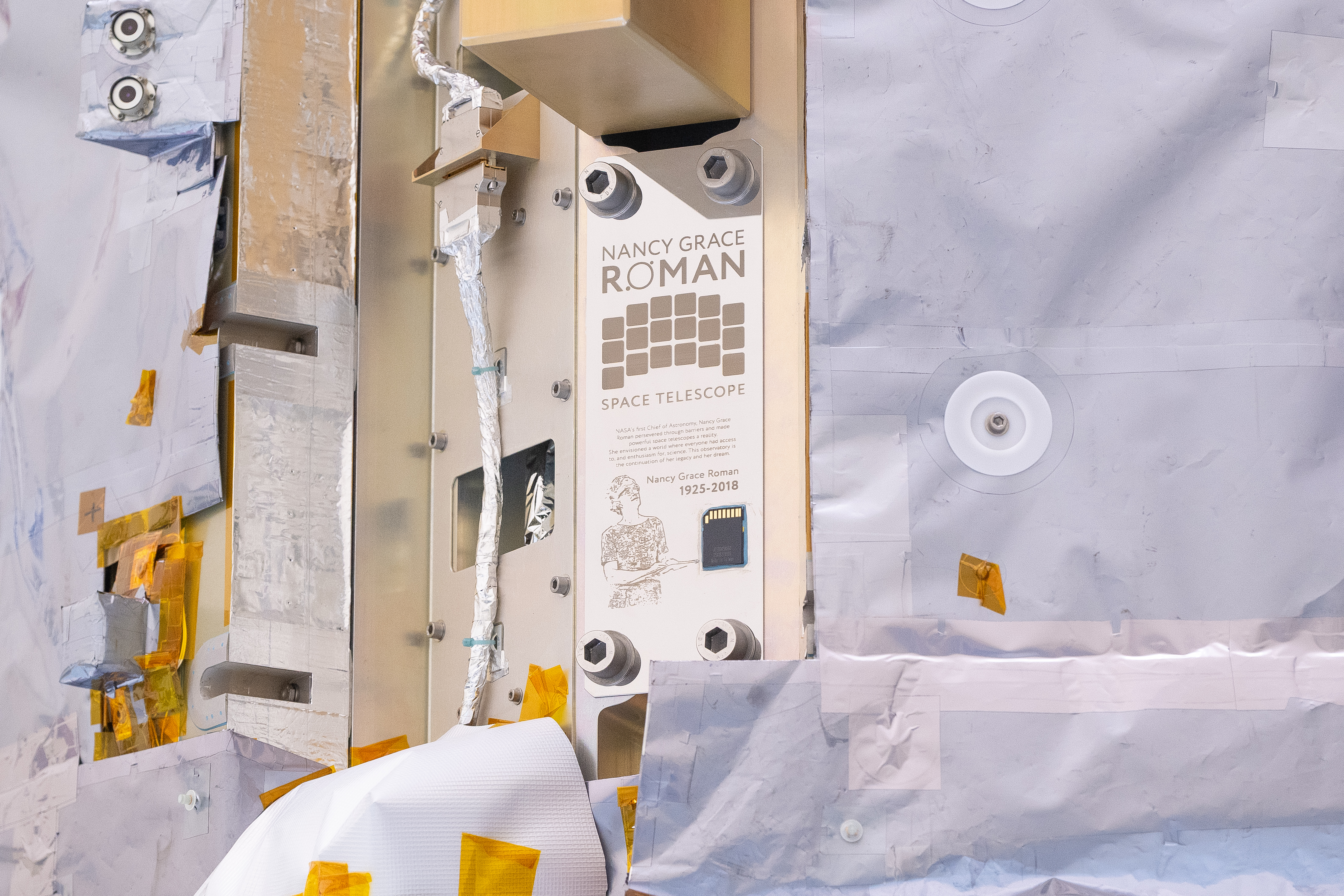
Technicians installed a commemorative plaque, seen in this July 28, 2026, photo, on NASA’s Nancy Grace Roman Space Telescope. The plaque honors the legacy of Dr. Nancy Grace Roman, NASA’s first chief astronomer and one of the architects of the agency’s modern science program. It also features a memory card containing a total of 1,350,144 names submitted by people from across the globe, including astronauts from NASA’s Artemis II and Artemis III missions.
This observatory, scheduled to launch Aug. 30, 2026, will be able to block starlight to directly see exoplanets and planet-forming disks, complete a statistical census of planetary systems in our galaxy, and settle essential questions in the areas of dark energy, exoplanets, and infrared astrophysics.
Image credit: NASA/Jolearra Tshiteya
Roman Space Telescope Plaque Install
Technicians installed a commemorative plaque, seen in this July 28, 2026, photo, on NASA’s Nancy Grace Roman Space Telescope. The plaque honors the legacy of Dr. Nancy Grace Roman, NASA’s first chief astronomer and one of the architects of the agency’s modern science program. It also features a memory card containing a total of 1,350,144 names submitted by people from across the globe, including astronauts from NASA’s Artemis II and Artemis III missions.
This observatory, scheduled to launch Aug. 30, 2026, will be able to block starlight to directly see exoplanets and planet-forming disks, complete a statistical census of planetary systems in our galaxy, and settle essential questions in the areas of dark energy, exoplanets, and infrared astrophysics.
Image credit: NASA/Jolearra Tshiteya
Project backed by Leonardo DiCaprio and Jeff Bezos aims to save 100 critically endangered species
This billionaire-backed fund is dedicating $200 million to preserve animals and even plants that are facing extinction around the world
A SpaceX rocket is about to hit the moon—these videos show what could happen
Astronomers’ simulations predict what this lunar impact—and its aftermath—will look like
A New Way to Map the Universe's Missing Matter
Brief but powerful flashes of radio waves are aiding astronomers' quest to find and map cosmic gas.
The post A New Way to Map the Universe's Missing Matter appeared first on Sky & Telescope.
An Ichthyosaur’s terrible, horrible, no good, very bad day 160 million years ago
A rare fossil find shows a tooth embedded an ichthyosaur’s vertebra, where it was likely left when a giant pliosaurid chomped down on this dolphin-resembling reptile
ESA and Pokémon team up to celebrate World Space Week
The European Space Agency (ESA) and The Pokémon Company International (TPCi) are teaming up to celebrate World Space Week from 4–10 October 2026. This unique, limited-time collaboration brings together two worlds united by curiosity, exploration and imagination.
APOD: 2026 August 4 – Curious Cometary Knots in the Helix Nebula
APOD
Astronomy Picture of the Day
Discover the cosmos! Each day a different image or photograph of our fascinating universe is featured, along with a brief explanation written by a professional astronomer.
Curious Cometary Knots in the Helix Nebula
What causes unusual knots of gas and dust in planetary nebulas? Seen also in the Ring Nebula, the Dumbbell Nebula and NGC 2392, the knots’ existence was not initially predicted, and their origins are still not well understood. Pictured here is a fascinating image of part of the Helix Nebula by the James Webb Space Telescope showing tremendous detail in infrared light. The cometary knots have masses similar to the Earth but have sizes typically several times the orbit of Pluto. One hypothesis for the fragmentation and evolution of the knots includes existing gas being driven out by a less dense but highly energetic stellar wind of the central evolving star. The Helix Nebula is one of the closest examples of a planetary nebula created at the end of the life of a Sun-like star. Given a technical designation of NGC 7293, the Helix Nebula lies about 650 light-years away towards the constellation of Water Carrier (Aquarius).
Date August 4, 2026 Credit Image: NASA, ESA, CSA, STScI; Image Processing: Alyssa Pagan (STScI) Authors & editors: Robert Nemiroff, Jerry Bonnell, Cecilia Chirenti, Keighley Rockcliffe A service of: ASD at NASA / GSFC,
NASA Science Activation & Michigan Tech. U.
Random APOD Generator
Yesterday’s Image APOD: 2026 August 3 – Vaporizing Meteor Photobombs the Lacerta Nebula
Tomorrow’s Image
Smoke Streams Across Eastern Washington
- Earth
- Earth Observatory
- Image of the Day
- EO Explorer
- Topics
- More Content
- About
Interstellar Travel II: the Birth of Fusion Drives
During the Space Age and Cold War, fusion-powered spacecraft systems were investigated as a possible means of reaching another star system within a human lifetime. Many of the proposed ideas are still on the table today, waiting for future advancements to make them realizable.
The U.S. military needs tungsten, but pristine NASA site may stand in the way
A unique landform is vital for calibrating NASA’s satellites, but it’s likely sitting atop a vast deposit of this heavy metal, which is crucial for making munitions
Louisiana Students Loft Payloads from NASA Balloon Facility in Texas
4 min read
Preparations for Next Moonwalk Simulations Underway (and Underwater)Every spring in Palestine, Texas, the wide-open fields around NASA’s Columbia Scientific Balloon Facility fill with students and faculty from across Louisiana. They arrive carrying sensors, laptops, and carefully engineered payloads they have spent months preparing. The goal is to send their experiments to the edge of space and return with meaningful data, while reflecting NASA’s long-standing commitment to develop future scientists and engineers.
Students in the LaACES program—which provides a robust undergraduate introduction to scientific ballooning—wear hard hats and safety vests while observing the preparation of a large balloonNASA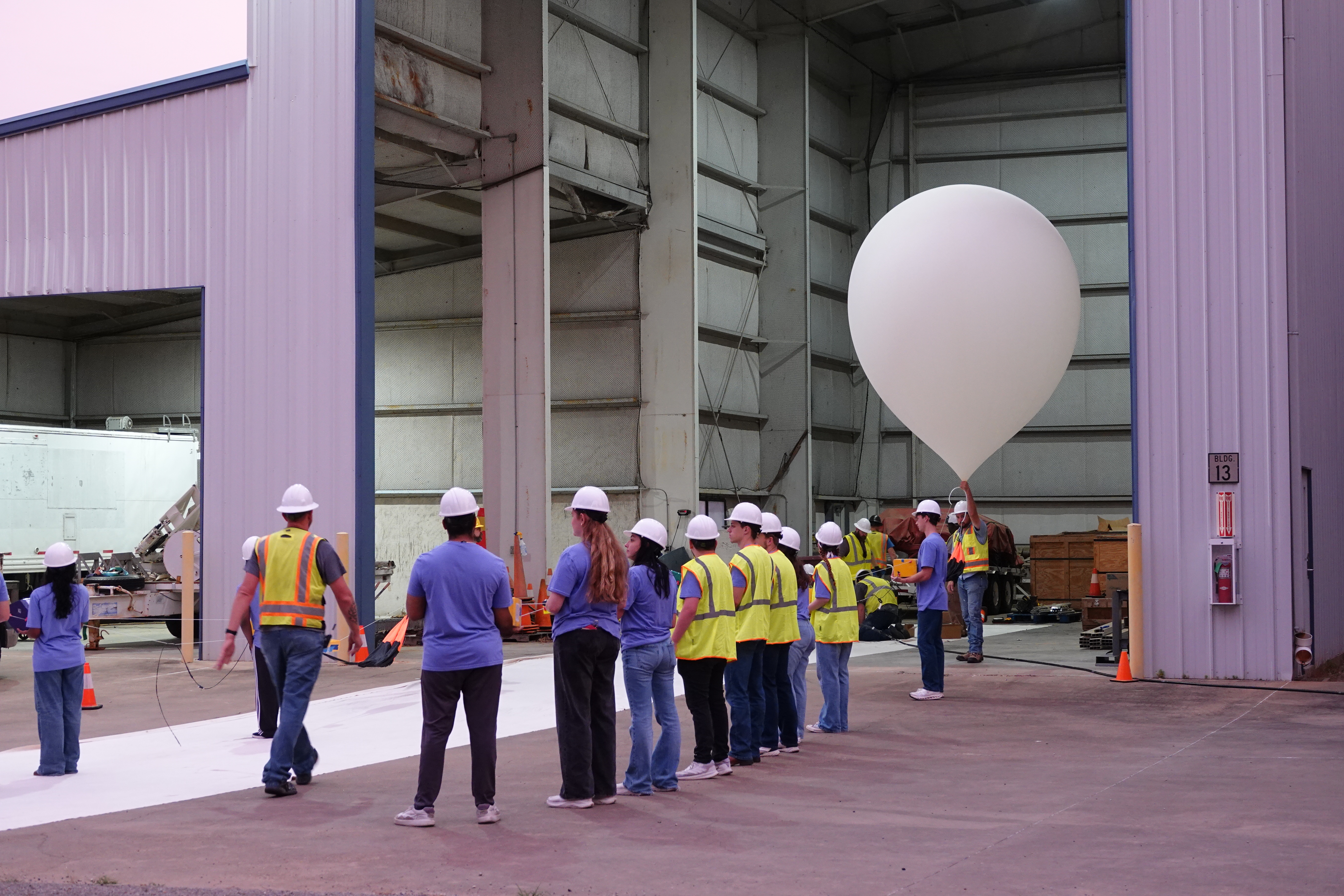
NASA’s student programs have long served as an entry point for hands-on exploration, connecting students to the agency’s missions and giving them direct exposure to real aerospace environments. Among these initiatives, the Louisiana Aerospace Catalyst Experiences for Students, also known as LaACES, provides a robust undergraduate introduction to scientific ballooning.
Just after dawn on May 19, student-crafted instruments lifted off smoothly from the flight line, notching the 74th and 75th launches in a long-running collaboration between the facility and Louisiana Space Grant Consortium. The 2026 LaACES campaign consisted of 11 payloads that were designed and built by nine Louisiana university teams — Louisiana State University, Northwestern State, Southeastern Louisiana State, McNeese State, Loyola University, and Southern University, as well as and one high school team, St. Joseph’s Academy, during the weeklong event.
The teams’ scientific objectives included a wide of research, such as atmospheric science, cosmic ray detection, thermal management, ultraviolet characterization, stratospheric wind analysis, and solar cell performance.
Before arriving in Texas, students advanced their mission concepts through a structured sequence of design reviews modeled after NASA’s engineering lifecycle. From preliminary design to flight readiness, each team defended technical decisions, refined their payloads, and demonstrated their readiness for launch.
Once cleared for flight by program directors Doug Granger and Aaron Ryan, who oversee the LaACES initiative, the students shifted their work to Palestine, Texas, where the Columbia Scientific Balloon Facility supported the 2026 LaACES campaign. Facility personnel provided daily weather briefings, performed helium fills for both latex balloons, and offered launch-line guidance to ensure safe and successful operations. “We enjoy being able to support the students’ launches here and hope to help them cultivate a love for ballooning,” said Hugo Franco, operations manager at the balloon facility.
The two flight trains of associated student payloads, LACES-74 and LACES-75, on May 19 marked the start of the program’s first launch window. The balloons, capable of supporting 7- to 9-pound payloads, ascended to near-space altitudes and were monitored using various communication and tracking systems. Both missions completed their flights successfully and were recovered roughly 60 miles north of the launch site near Ben Wheeler, Texas.
“My most memorable experience during the course of this year was seeing the plots for the first time post flight,” said Savannah Matlock, a Louisiana State University student. “When we saw the data behave in the way we’d expected it to, and saw the science we were able to demonstrate, it makes it all worth it. It’s a great feeling to see all of your hard work pay off.”
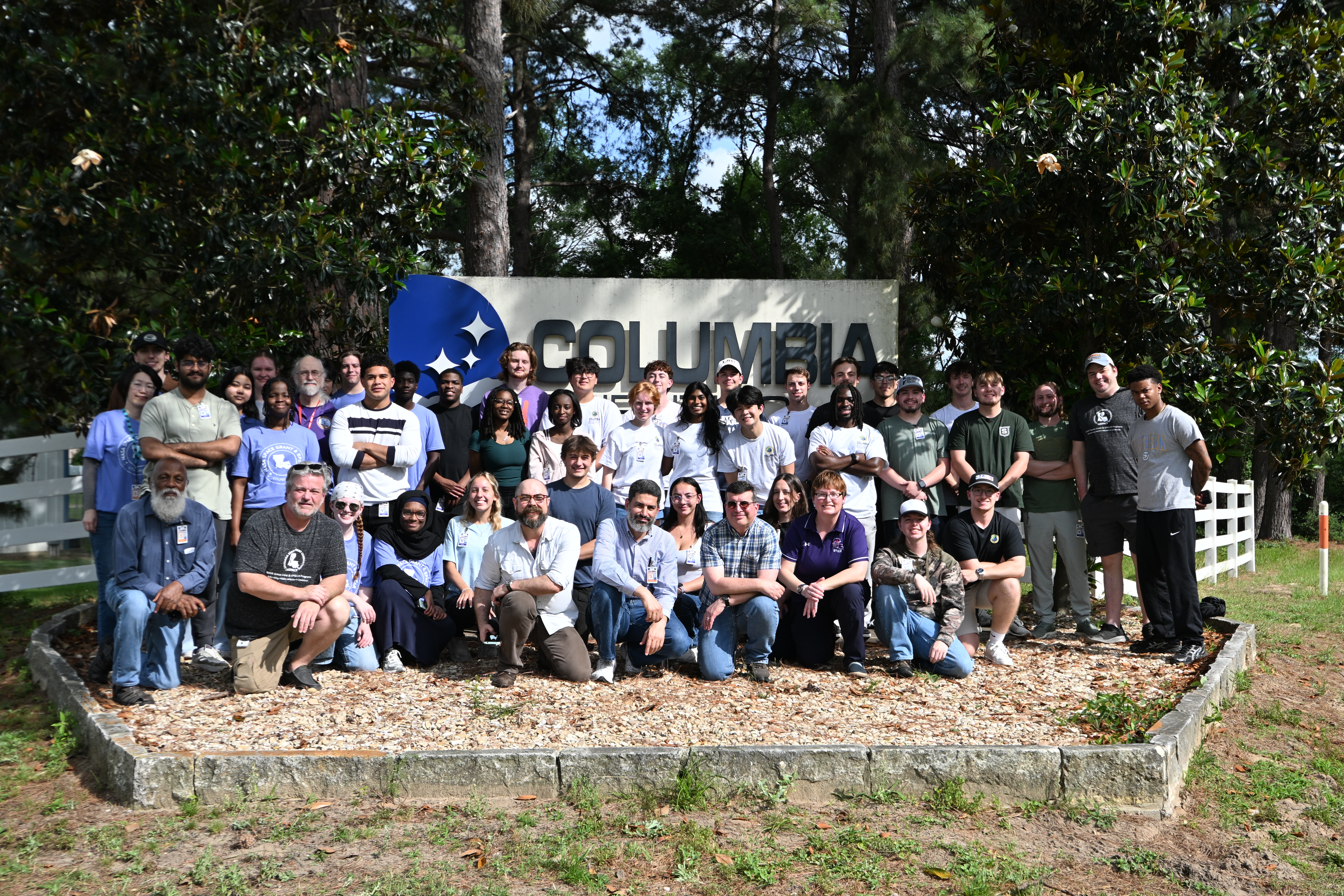
Following recovery, student teams analyzed their sensor data and environmental measurements and then presented their findings to balloon facility engineers and technicians along with faculty mentors and peers.
Programs like LaACES mirror the operational environment of NASA’s broader Scientific Balloon Program. NASA scientific balloons are more than just “weather balloons”: The reality is far more sophisticated. NASA Columbia Science Balloon Facility supports the launch, tracking, and recovery of large scientific balloons capable of carrying advanced research instruments to the edge of space. These flights support investigations in astrophysics, atmospheric science, planetary research, technology demonstrations, and more.
By placing students in this ecosystem, LaACES acts as a bridge between academic learning and national research operations. Students witness firsthand how scientific experiments are prepared, integrated, launched, tracked, and recovered — experiences that can reshape career paths and open doors to future opportunities within NASA, academia, and aerospace industries.
Funded by NASA’s National Space Grant College and Fellowship program, LaACES is a statewide program of the Louisiana Space Grant Consortium. Since its inception, LaACES has supported more than 500 students across 13 higher‑education institutions, launching over 60 balloon flights and roughly 135 unique payloads. As NASA continues to advance scientific discovery, programs like LaACES help ensure a strong pipeline of future innovators. For these Louisiana students, watching their payload rise into the sky is more than a technical milestone — it is a defining moment, a spark that turns curiosity into possibility.
Share Details Last Updated Aug 03, 2026 Related Terms Explore More 3 min read NASA Delivers Navigation System for Commercial Lunar Relay Article 21 hours ago 3 min read Students Take on Airborne Field Research with NASAThe gusty wind didn’t make it easy to hold tight to a balloon so large.…
Article 5 days ago 7 min read NASA Webb Explores Family Tree of Newly Discovered Distant ObjectsSince their discovery by NASA’s James Webb Space Telescope in 2022, little red dots (LRDs)…
Article 6 days ago