
Feed aggregator
A New Way to Map the Universe's Missing Matter
Brief but powerful flashes of radio waves are aiding astronomers' quest to find and map cosmic gas.
The post A New Way to Map the Universe's Missing Matter appeared first on Sky & Telescope.
An Ichthyosaur’s terrible, horrible, no good, very bad day 160 million years ago
A rare fossil find shows a tooth embedded an ichthyosaur’s vertebra, where it was likely left when a giant pliosaurid chomped down on this dolphin-resembling reptile
ESA and Pokémon team up to celebrate World Space Week
The European Space Agency (ESA) and The Pokémon Company International (TPCi) are teaming up to celebrate World Space Week from 4–10 October 2026. This unique, limited-time collaboration brings together two worlds united by curiosity, exploration and imagination.
APOD: 2026 August 4 – Curious Cometary Knots in the Helix Nebula
APOD
Astronomy Picture of the Day
Discover the cosmos! Each day a different image or photograph of our fascinating universe is featured, along with a brief explanation written by a professional astronomer.
Curious Cometary Knots in the Helix Nebula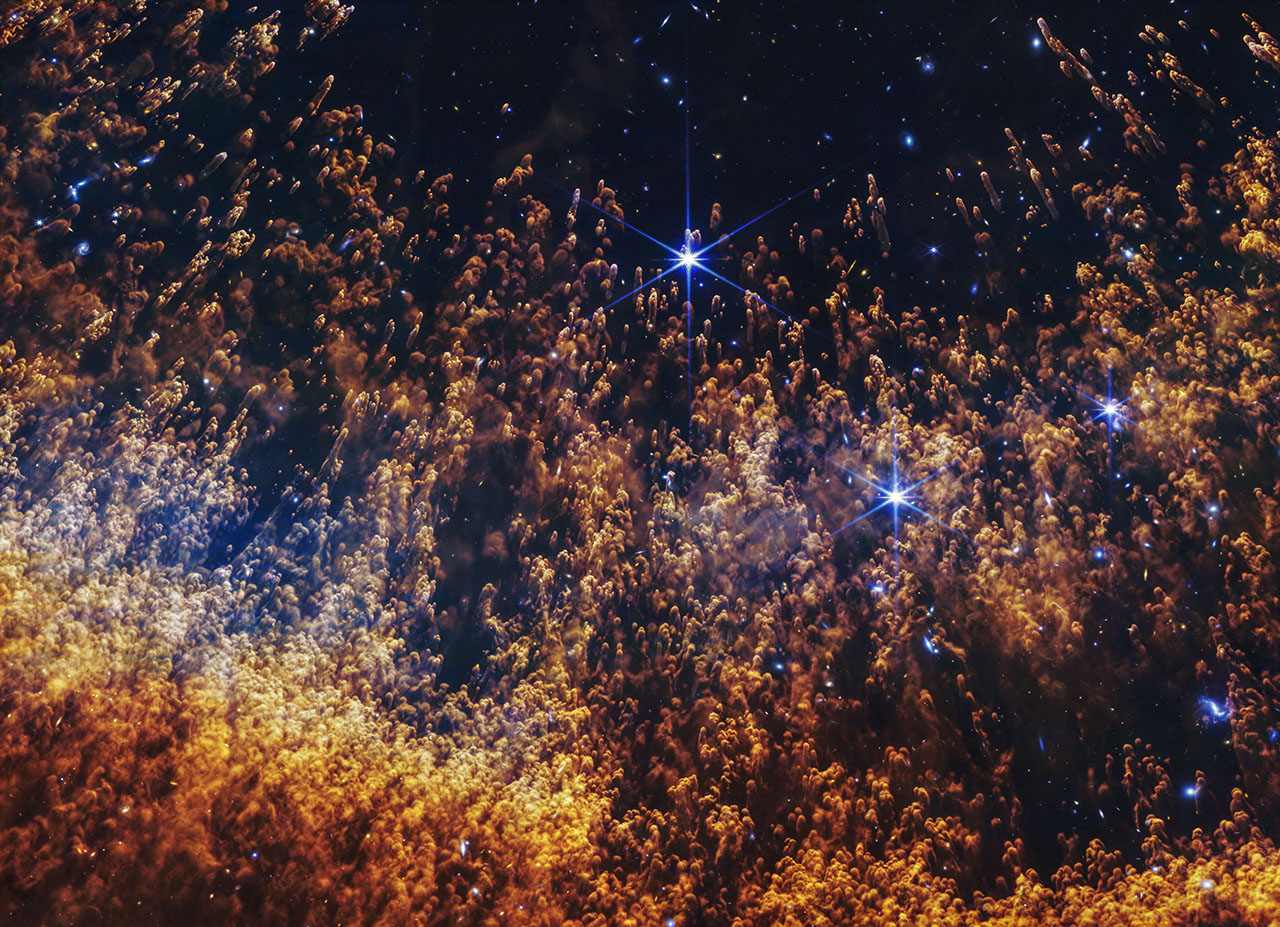
What causes unusual knots of gas and dust in planetary nebulas? Seen also in the Ring Nebula, the Dumbbell Nebula and NGC 2392, the knots’ existence was not initially predicted, and their origins are still not well understood. Pictured here is a fascinating image of part of the Helix Nebula by the James Webb Space Telescope showing tremendous detail in infrared light. The cometary knots have masses similar to the Earth but have sizes typically several times the orbit of Pluto. One hypothesis for the fragmentation and evolution of the knots includes existing gas being driven out by a less dense but highly energetic stellar wind of the central evolving star. The Helix Nebula is one of the closest examples of a planetary nebula created at the end of the life of a Sun-like star. Given a technical designation of NGC 7293, the Helix Nebula lies about 650 light-years away towards the constellation of Water Carrier (Aquarius).
Date August 4, 2026 Credit Image: NASA, ESA, CSA, STScI; Image Processing: Alyssa Pagan (STScI) Authors & editors: Robert Nemiroff, Jerry Bonnell, Cecilia Chirenti, Keighley Rockcliffe A service of: ASD at NASA / GSFC,
NASA Science Activation & Michigan Tech. U.
Random APOD Generator
Yesterday’s Image APOD: 2026 August 3 – Vaporizing Meteor Photobombs the Lacerta Nebula
Tomorrow’s Image
Smoke Streams Across Eastern Washington
- Earth
- Earth Observatory
- Image of the Day
- EO Explorer
- Topics
- More Content
- About
Interstellar Travel II: the Birth of Fusion Drives
During the Space Age and Cold War, fusion-powered spacecraft systems were investigated as a possible means of reaching another star system within a human lifetime. Many of the proposed ideas are still on the table today, waiting for future advancements to make them realizable.
The U.S. military needs tungsten, but pristine NASA site may stand in the way
A unique landform is vital for calibrating NASA’s satellites, but it’s likely sitting atop a vast deposit of this heavy metal, which is crucial for making munitions
Louisiana Students Loft Payloads from NASA Balloon Facility in Texas
4 min read
Preparations for Next Moonwalk Simulations Underway (and Underwater)Every spring in Palestine, Texas, the wide-open fields around NASA’s Columbia Scientific Balloon Facility fill with students and faculty from across Louisiana. They arrive carrying sensors, laptops, and carefully engineered payloads they have spent months preparing. The goal is to send their experiments to the edge of space and return with meaningful data, while reflecting NASA’s long-standing commitment to develop future scientists and engineers.
Students in the LaACES program—which provides a robust undergraduate introduction to scientific ballooning—wear hard hats and safety vests while observing the preparation of a large balloonNASA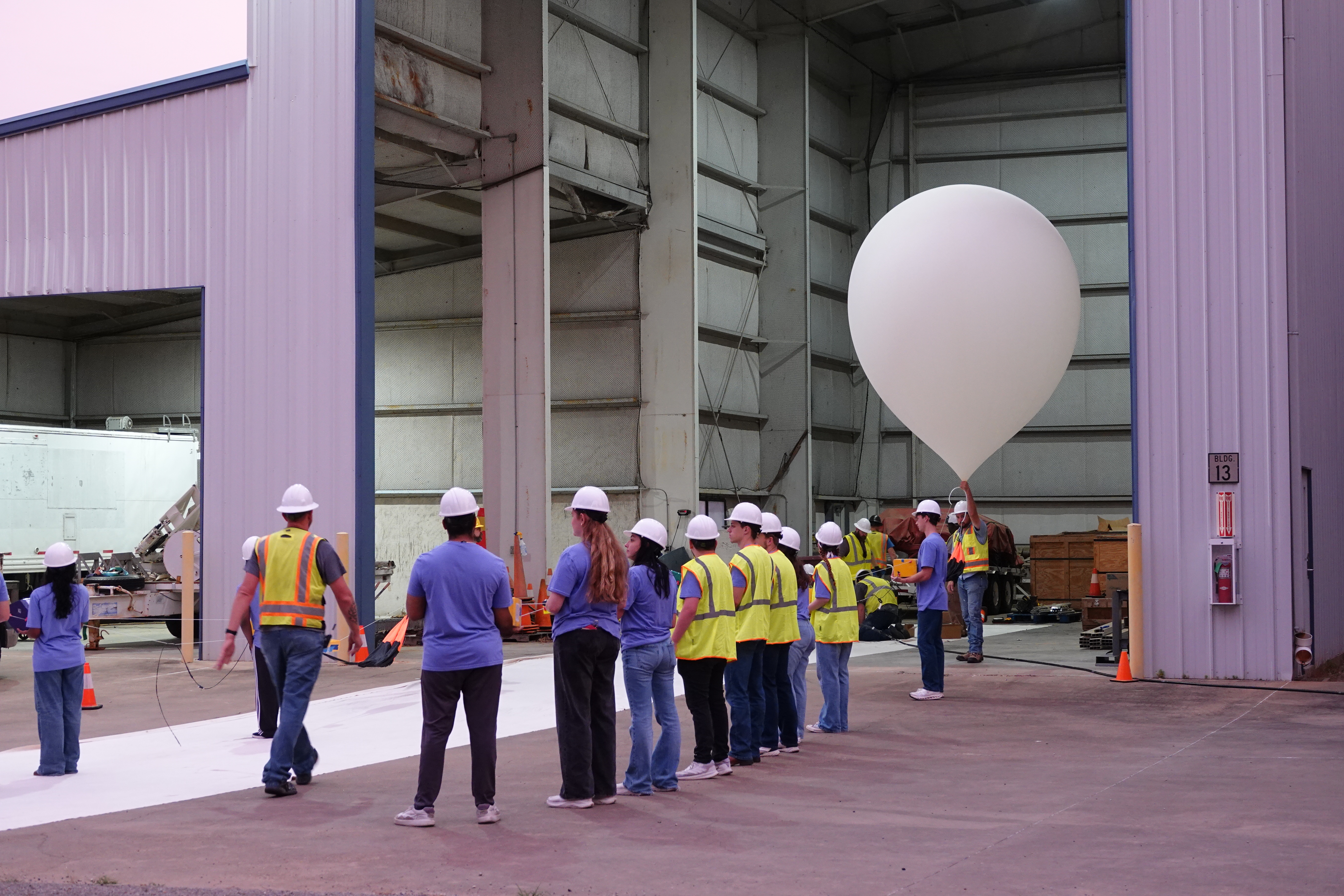
NASA’s student programs have long served as an entry point for hands-on exploration, connecting students to the agency’s missions and giving them direct exposure to real aerospace environments. Among these initiatives, the Louisiana Aerospace Catalyst Experiences for Students, also known as LaACES, provides a robust undergraduate introduction to scientific ballooning.
Just after dawn on May 19, student-crafted instruments lifted off smoothly from the flight line, notching the 74th and 75th launches in a long-running collaboration between the facility and Louisiana Space Grant Consortium. The 2026 LaACES campaign consisted of 11 payloads that were designed and built by nine Louisiana university teams — Louisiana State University, Northwestern State, Southeastern Louisiana State, McNeese State, Loyola University, and Southern University, as well as and one high school team, St. Joseph’s Academy, during the weeklong event.
The teams’ scientific objectives included a wide of research, such as atmospheric science, cosmic ray detection, thermal management, ultraviolet characterization, stratospheric wind analysis, and solar cell performance.
Before arriving in Texas, students advanced their mission concepts through a structured sequence of design reviews modeled after NASA’s engineering lifecycle. From preliminary design to flight readiness, each team defended technical decisions, refined their payloads, and demonstrated their readiness for launch.
Once cleared for flight by program directors Doug Granger and Aaron Ryan, who oversee the LaACES initiative, the students shifted their work to Palestine, Texas, where the Columbia Scientific Balloon Facility supported the 2026 LaACES campaign. Facility personnel provided daily weather briefings, performed helium fills for both latex balloons, and offered launch-line guidance to ensure safe and successful operations. “We enjoy being able to support the students’ launches here and hope to help them cultivate a love for ballooning,” said Hugo Franco, operations manager at the balloon facility.
The two flight trains of associated student payloads, LACES-74 and LACES-75, on May 19 marked the start of the program’s first launch window. The balloons, capable of supporting 7- to 9-pound payloads, ascended to near-space altitudes and were monitored using various communication and tracking systems. Both missions completed their flights successfully and were recovered roughly 60 miles north of the launch site near Ben Wheeler, Texas.
“My most memorable experience during the course of this year was seeing the plots for the first time post flight,” said Savannah Matlock, a Louisiana State University student. “When we saw the data behave in the way we’d expected it to, and saw the science we were able to demonstrate, it makes it all worth it. It’s a great feeling to see all of your hard work pay off.”
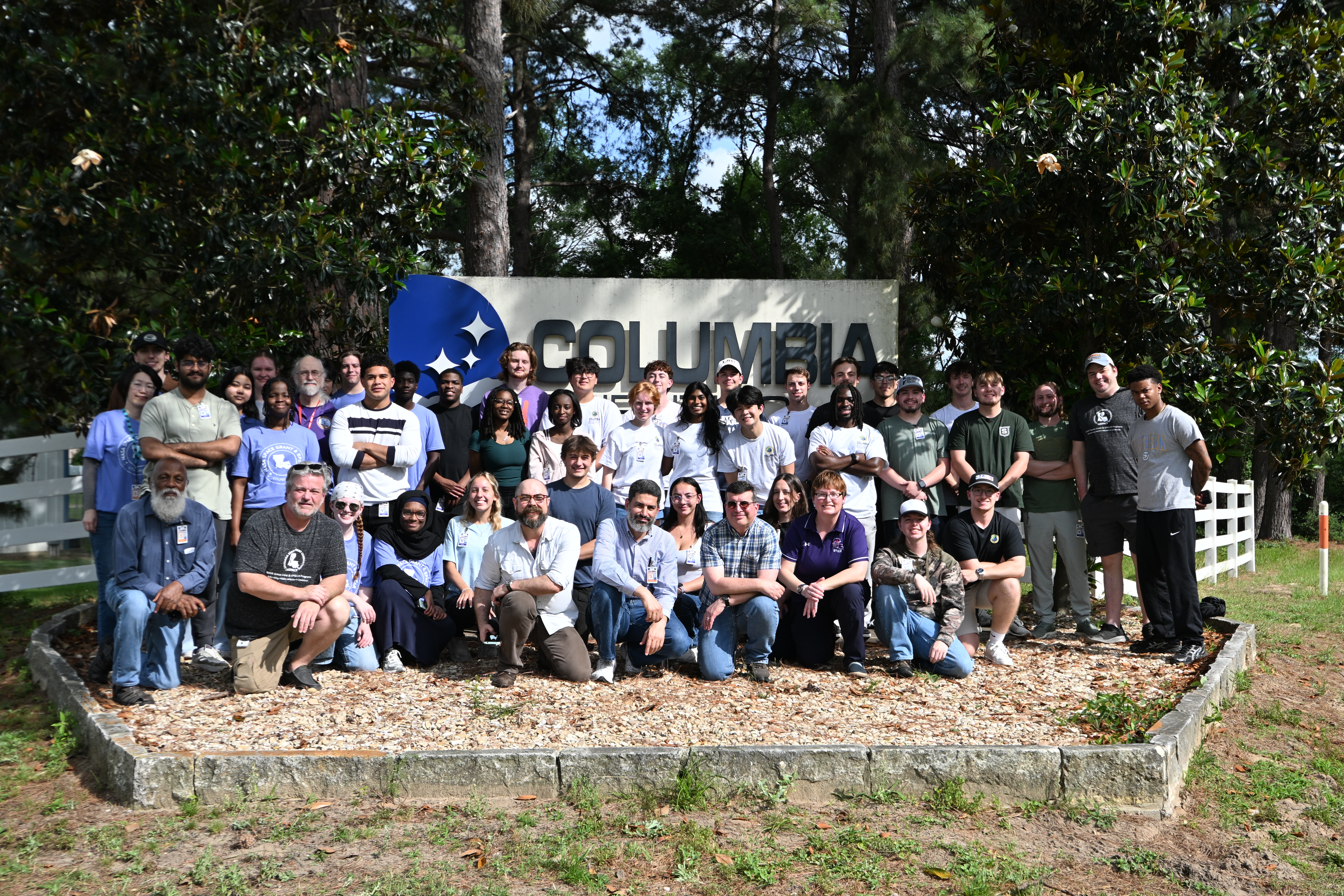
Following recovery, student teams analyzed their sensor data and environmental measurements and then presented their findings to balloon facility engineers and technicians along with faculty mentors and peers.
Programs like LaACES mirror the operational environment of NASA’s broader Scientific Balloon Program. NASA scientific balloons are more than just “weather balloons”: The reality is far more sophisticated. NASA Columbia Science Balloon Facility supports the launch, tracking, and recovery of large scientific balloons capable of carrying advanced research instruments to the edge of space. These flights support investigations in astrophysics, atmospheric science, planetary research, technology demonstrations, and more.
By placing students in this ecosystem, LaACES acts as a bridge between academic learning and national research operations. Students witness firsthand how scientific experiments are prepared, integrated, launched, tracked, and recovered — experiences that can reshape career paths and open doors to future opportunities within NASA, academia, and aerospace industries.
Funded by NASA’s National Space Grant College and Fellowship program, LaACES is a statewide program of the Louisiana Space Grant Consortium. Since its inception, LaACES has supported more than 500 students across 13 higher‑education institutions, launching over 60 balloon flights and roughly 135 unique payloads. As NASA continues to advance scientific discovery, programs like LaACES help ensure a strong pipeline of future innovators. For these Louisiana students, watching their payload rise into the sky is more than a technical milestone — it is a defining moment, a spark that turns curiosity into possibility.
Share Details Last Updated Aug 03, 2026 Related Terms Explore More 3 min read NASA Delivers Navigation System for Commercial Lunar Relay Article 21 hours ago 3 min read Students Take on Airborne Field Research with NASAThe gusty wind didn’t make it easy to hold tight to a balloon so large.…
Article 5 days ago 7 min read NASA Webb Explores Family Tree of Newly Discovered Distant ObjectsSince their discovery by NASA’s James Webb Space Telescope in 2022, little red dots (LRDs)…
Article 6 days agoLouisiana Students Loft Payloads from NASA Balloon Facility in Texas
4 min read
Preparations for Next Moonwalk Simulations Underway (and Underwater)Every spring in Palestine, Texas, the wide-open fields around NASA’s Columbia Scientific Balloon Facility fill with students and faculty from across Louisiana. They arrive carrying sensors, laptops, and carefully engineered payloads they have spent months preparing. The goal is to send their experiments to the edge of space and return with meaningful data, while reflecting NASA’s long-standing commitment to develop future scientists and engineers.
Students in the LaACES program—which provides a robust undergraduate introduction to scientific ballooning—wear hard hats and safety vests while observing the preparation of a large balloonNASANASA’s student programs have long served as an entry point for hands-on exploration, connecting students to the agency’s missions and giving them direct exposure to real aerospace environments. Among these initiatives, the Louisiana Aerospace Catalyst Experiences for Students, also known as LaACES, provides a robust undergraduate introduction to scientific ballooning.
Just after dawn on May 19, student-crafted instruments lifted off smoothly from the flight line, notching the 74th and 75th launches in a long-running collaboration between the facility and Louisiana Space Grant Consortium. The 2026 LaACES campaign consisted of 11 payloads that were designed and built by nine Louisiana university teams — Louisiana State University, Northwestern State, Southeastern Louisiana State, McNeese State, Loyola University, and Southern University, as well as and one high school team, St. Joseph’s Academy, during the weeklong event.
The teams’ scientific objectives included a wide of research, such as atmospheric science, cosmic ray detection, thermal management, ultraviolet characterization, stratospheric wind analysis, and solar cell performance.
Before arriving in Texas, students advanced their mission concepts through a structured sequence of design reviews modeled after NASA’s engineering lifecycle. From preliminary design to flight readiness, each team defended technical decisions, refined their payloads, and demonstrated their readiness for launch.
Once cleared for flight by program directors Doug Granger and Aaron Ryan, who oversee the LaACES initiative, the students shifted their work to Palestine, Texas, where the Columbia Scientific Balloon Facility supported the 2026 LaACES campaign. Facility personnel provided daily weather briefings, performed helium fills for both latex balloons, and offered launch-line guidance to ensure safe and successful operations. “We enjoy being able to support the students’ launches here and hope to help them cultivate a love for ballooning,” said Hugo Franco, operations manager at the balloon facility.
The two flight trains of associated student payloads, LACES-74 and LACES-75, on May 19 marked the start of the program’s first launch window. The balloons, capable of supporting 7- to 9-pound payloads, ascended to near-space altitudes and were monitored using various communication and tracking systems. Both missions completed their flights successfully and were recovered roughly 60 miles north of the launch site near Ben Wheeler, Texas.
“My most memorable experience during the course of this year was seeing the plots for the first time post flight,” said Savannah Matlock, a Louisiana State University student. “When we saw the data behave in the way we’d expected it to, and saw the science we were able to demonstrate, it makes it all worth it. It’s a great feeling to see all of your hard work pay off.”
Following recovery, student teams analyzed their sensor data and environmental measurements and then presented their findings to balloon facility engineers and technicians along with faculty mentors and peers.
Programs like LaACES mirror the operational environment of NASA’s broader Scientific Balloon Program. NASA scientific balloons are more than just “weather balloons”: The reality is far more sophisticated. NASA Columbia Science Balloon Facility supports the launch, tracking, and recovery of large scientific balloons capable of carrying advanced research instruments to the edge of space. These flights support investigations in astrophysics, atmospheric science, planetary research, technology demonstrations, and more.
By placing students in this ecosystem, LaACES acts as a bridge between academic learning and national research operations. Students witness firsthand how scientific experiments are prepared, integrated, launched, tracked, and recovered — experiences that can reshape career paths and open doors to future opportunities within NASA, academia, and aerospace industries.
Funded by NASA’s National Space Grant College and Fellowship program, LaACES is a statewide program of the Louisiana Space Grant Consortium. Since its inception, LaACES has supported more than 500 students across 13 higher‑education institutions, launching over 60 balloon flights and roughly 135 unique payloads. As NASA continues to advance scientific discovery, programs like LaACES help ensure a strong pipeline of future innovators. For these Louisiana students, watching their payload rise into the sky is more than a technical milestone — it is a defining moment, a spark that turns curiosity into possibility.
Share Details Last Updated Aug 03, 2026 Related Terms Explore More 4 min read NASA’s PUNCH Sharpens Solar Storm Forecasting in First TestUsing continuous imagery from NASA’s PUNCH (Polarimeter to Unify the Corona and Heliosphere) mission, scientists…
Article 2 hours ago 4 min read NASA Delivers Navigation System for Commercial Lunar Relay Article 1 day ago 3 min read Students Take on Airborne Field Research with NASAThe gusty wind didn’t make it easy to hold tight to a balloon so large.…
Article 5 days agoIt’s 90 degrees in the Arctic right now
The Arctic is heating faster than the rest of the planet. New data illustrate how dire that is
Washington’s wildfires are a warning for the entire U.S.
Dry conditions and climate change are putting forests across the country at risk for disaster
A Partial Eclipse for Parts of North America
The August 12th total solar eclipse in Europe gives North Americans a partial view.
The post A Partial Eclipse for Parts of North America appeared first on Sky & Telescope.
Guinea-Bissau Tidal Waters
Guinea-Bissau Tidal Waters
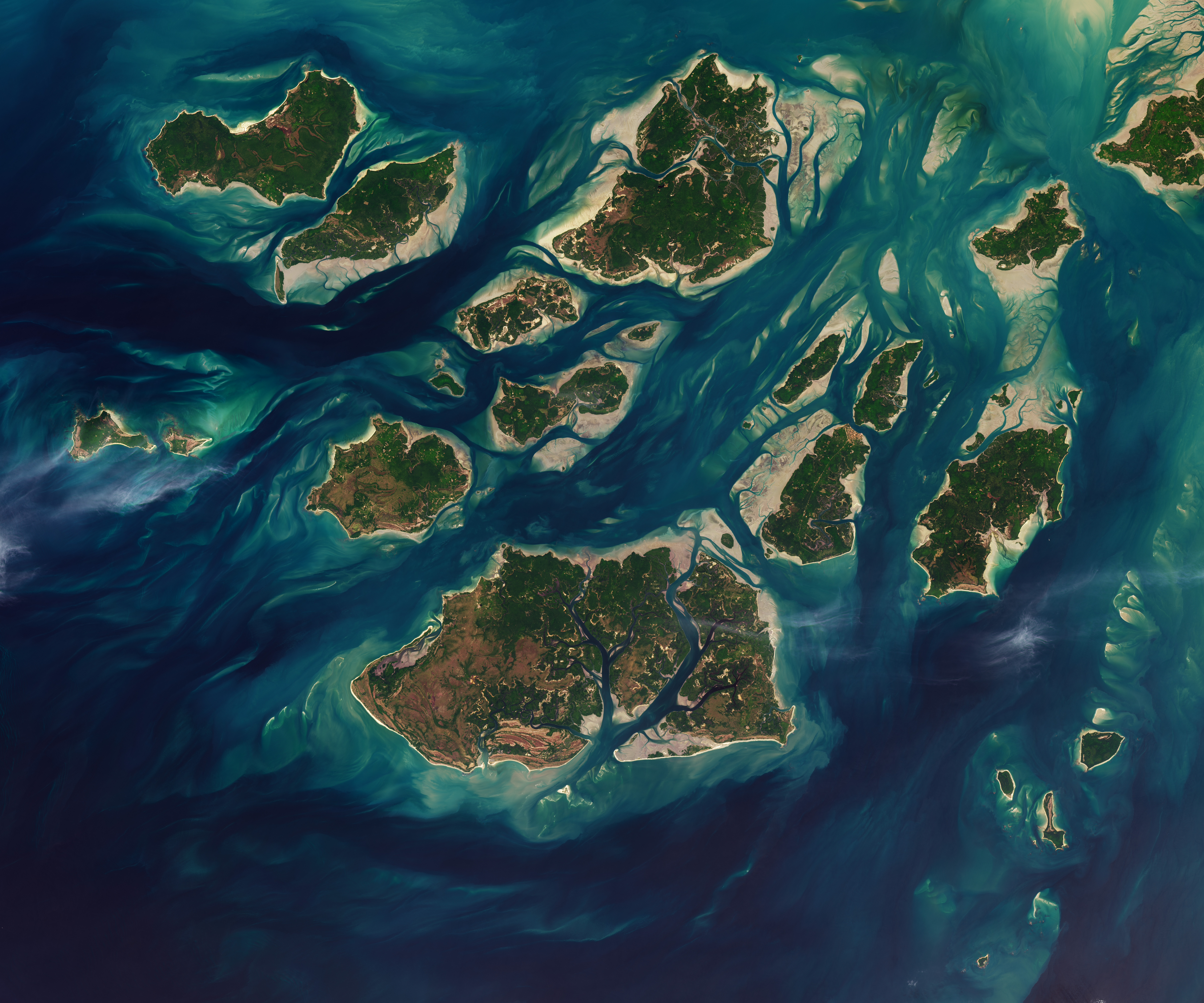
Twice each day, tides ebb and flow through a maze of sandy channels, mudflats, and mangrove forests that flank the 88 islands and islets of Guinea-Bissau’s Bijagós Archipelago (Arquipélago dos Bijagós in Portuguese). Seen from above in this image from Nov. 28, 2025, the process leads to stark changes to the landscape: around low tide, intertidal mudflats and sandflats emerge from the sea, causing islands to grow significantly before shrinking again hours later.
Learn more about the region and its wildlife.
Text credit: Adam Voiland
Image credit: NASA/Lauren Dauphin, USGS
Guinea-Bissau Tidal Waters
Twice each day, tides ebb and flow through a maze of sandy channels, mudflats, and mangrove forests that flank the 88 islands and islets of Guinea-Bissau’s Bijagós Archipelago (Arquipélago dos Bijagós in Portuguese). Seen from above in this image from Nov. 28, 2025, the process leads to stark changes to the landscape: around low tide, intertidal mudflats and sandflats emerge from the sea, causing islands to grow significantly before shrinking again hours later.
Learn more about the region and its wildlife.
Text credit: Adam Voiland
Image credit: NASA/Lauren Dauphin, USGS
Cyclospora outbreak tied to two deaths as parasite-borne illness continues to rage
These deaths were reported by Michigan, which has seen more than 11,000 cases of cyclosporiasis emerge since late June
A Bare Summer for Barnes Ice Cap
- Earth
- Earth Observatory
- Image of the Day
- EO Explorer
- Topics
- More Content
- About
Zodiacal Dust in Exoplanetary Systems Could Hinder Our Search For Life On Other Worlds
Most exoplanetary systems have a plane of dust similar to the zodiacal dust of our solar system. This dust absorbs some of the very light we use to find biosignatures in exoplanet atmospheres, and could make our search for life more challenging.
Senate funding resolution seeks to put OMB rule changes to research grants on hold
These proposed changes have seen significant bipartisan pushback and have been criticized by scientists across disciplines