
We are all in the gutter, but some of us are looking at the stars.

— Oscar Wilde

Feed aggregator

<p><a href="https://apod.nasa.gov/apod

APOD - Fri, 06/19/2026 - 12:00am

In an interplanetary first, on July 19, 2013


Categories: Astronomy, NASA

<p><a href="https://apod.nasa.gov/apod

APOD - Fri, 06/19/2026 - 12:00am


Categories: Astronomy, NASA

Curiosity Blog, Sols 4920-4926: Surveying the Bands

NASA News - Thu, 06/18/2026 - 8:50pm
Curiosity Navigation

3 min read

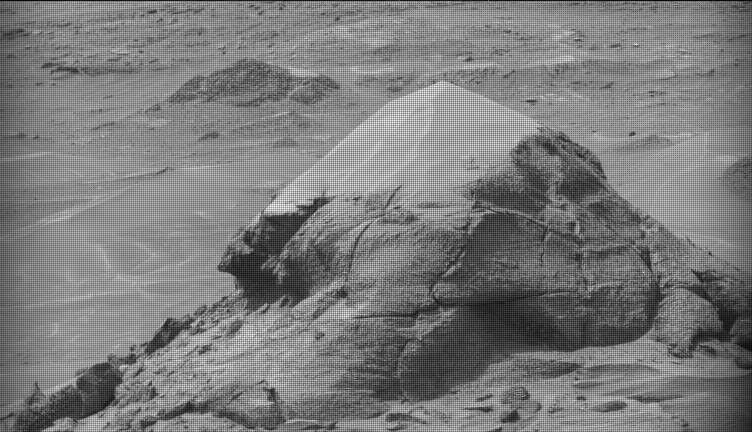
Curiosity Blog, Sols 4920-4926: Surveying the Bands NASA’s Mars rover Curiosity acquired this image of small butte, “Miraflores,” using its Mast Camera (Mastcam) on June 11, 2026 — Sol 4922, or Martian day 4,922 of the Mars Science Laboratory mission — at 09:12:13 UTC. NASA/JPL-Caltech/MSSS
Written by William Farrand, Senior Research Scientist, Space Science Institute

Earth planning date: Friday, June 12, 2026

Rather than going from stage to stage at a music festival to hear different bands playing different varieties of music, Curiosity has been ascending up Mount Sharp through physical bands of exposed rocks with textural and tonal differences.

Planning for sols 4920 and 4921 were done with the rover in the middle of a unit with a rougher texture and dark-toned bedrock. With the rougher-textured bedrock, brushing wasn’t possible, but APXS chemistry and MAHLI micro-imaging were planned on “as is” bedrock targets “Salto La Cascada” and “Puerto de Rosas.” ChemCam was targeted to perform LIBS spectroscopy on a bedrock target “Kishuara” and a small, layered float rock “La Rosita.” ChemCam’s Remote Micro-Imager (RMI) collected views of the “Mishe Mokwa” butte and another looking at dunes with tonal differences. Mastcam mosaics were collected on the “Valle Grande” channel, “Kimsa Chata” butte, nearby troughs, and the aircraft carrier shaped rock “El Matir.”

Another drive brought Curiosity closer to the upper border of the dark-toned band. Again, brushing of the rocks was not possible, but APXS and MAHLI were collected on dark-toned bedrock targets “Santa Gracia” and “Laguna San Rafael” with ChemCam LIBS also targeting the bedrock. Mastcam mosaics were collected of a layered rock and nearby troughs and a mosaic of the nearby smaller butte, “Miraflores” which displays an interesting layered structure with ragged dark-toned rocks on one side and a stack of dust piled on top (see accompanying image). Other activities included a long-distance RMI mosaic of a bright unit on “Mishe Mokwa”, and Navcam dust-devil surveys in both sols.

Communicating between Earth and Mars has come to seem routine, but at times can still be a challenging endeavor and this was demonstrated to the team on Friday when we did not get a timely downlink of data for the drive planned for Sol 4923. Without these images another drive, in situ examinations, or targeted remote sensing could not be planned. However, there are always interesting things to be done on Mars and the three-sol plan (4924 to 4926) included a 360-degree Mastcam mosaic, the automatic AEGIS targeting of LIBS measurements on each sol, a Navcam dust-devil survey, APXS atmospheric measurements, as well as several other environmental activities.

On Monday, the delayed downlink will be used to plan the first investigation of the next band of surface materials, this one being smooth-textured and light-toned, as well as another drive to continue the surveying of the bands.

NASA’s Curiosity rover at the base of Mount Sharp NASA/JPL-Caltech/MSSS

Share

Details

Last Updated

Jun 18, 2026

Related Terms Explore More

3 min read Curiosity Blog: Sols 4913-4919: Planetary Explorers, Freewheeling to the Yardang Unit!

Article


1 week ago

5 min read Curiosity Blog, Sols 4908-4912: Goodbye Campo Marte, It’s Been Fun!

Article


2 weeks ago

3 min read Curiosity Blog, Sols 4900-4907: Pasadena, We Have a Drill Sample!

Article


3 weeks ago

Keep Exploring Discover More Topics From NASA

Mars

Mars is the fourth planet from the Sun, and the seventh largest. It’s the only planet we know of inhabited…


All Mars Resources

Explore this collection of Mars images, videos, resources, PDFs, and toolkits. Discover valuable content designed to inform, educate, and inspire,…


Rover Basics

Each robotic explorer sent to the Red Planet has its own unique capabilities driven by science. Many attributes of a…


Mars Exploration: Science Goals

The key to understanding the past, present or future potential for life on Mars can be found in NASA’s four…

Categories: NASA

Remarkable fossils rewrite the story of how animals conquered the land

New Scientist Space - Cosmology - Thu, 06/18/2026 - 3:00pm
Palaeontologists have found new evidence that the early ancestors of amphibians, reptiles and mammals did not have a larval stage with external gills like modern frogs or salamanders
Categories: Astronomy

Remarkable fossils rewrite the story of how animals conquered the land

New Scientist Space - Space Headlines - Thu, 06/18/2026 - 3:00pm
Palaeontologists have found new evidence that the early ancestors of amphibians, reptiles and mammals did not have a larval stage with external gills like modern frogs or salamanders
Categories: Astronomy

Almost the whole of Japan moved eastward after 2011 earthquake

New Scientist Space - Cosmology - Thu, 06/18/2026 - 3:00pm
An extremely unusual tectonic movement took place 15 minutes after the Tohoku earthquake in 2011, causing almost the whole of Japan to move 5 millimetres to the east
Categories: Astronomy

Almost the whole of Japan moved eastward after 2011 earthquake

New Scientist Space - Space Headlines - Thu, 06/18/2026 - 3:00pm
An extremely unusual tectonic movement took place 15 minutes after the Tohoku earthquake in 2011, causing almost the whole of Japan to move 5 millimetres to the east
Categories: Astronomy

Waves reflecting off Earth's core shifted Japan after 2011 earthquake

New Scientist Space - Cosmology - Thu, 06/18/2026 - 3:00pm
An extremely unusual tectonic movement took place 15 minutes after the Tohoku earthquake in 2011, causing almost the whole of Japan to move 5 millimetres to the east
Categories: Astronomy

Waves reflecting off Earth's core shifted Japan after 2011 earthquake

New Scientist Space - Space Headlines - Thu, 06/18/2026 - 3:00pm
An extremely unusual tectonic movement took place 15 minutes after the Tohoku earthquake in 2011, causing almost the whole of Japan to move 5 millimetres to the east
Categories: Astronomy

Carl Sagan's The Demon-Haunted World is still supremely relevant today

New Scientist Space - Space Headlines - Thu, 06/18/2026 - 9:00am
Beautifully written, this guide to distinguishing between truth, misinformation and lies, first published in 1995, remains an essential read for anyone who considers themselves a critical thinker, says Leah Crane
Categories: Astronomy

Carl Sagan's The Demon-Haunted World is still supremely relevant today

New Scientist Space - Cosmology - Thu, 06/18/2026 - 9:00am
Beautifully written, this guide to distinguishing between truth, misinformation and lies, first published in 1995, remains an essential read for anyone who considers themselves a critical thinker, says Leah Crane
Categories: Astronomy

Complex life on Earth may last 500 million years longer than expected

New Scientist Space - Space Headlines - Thu, 06/18/2026 - 8:00am
As the sun expands over the coming billions of years, Earth will become inhospitable to any life more complex than a microbe – but that might take longer than we thought
Categories: Astronomy

Complex life on Earth may last 500 million years longer than expected

New Scientist Space - Cosmology - Thu, 06/18/2026 - 8:00am
As the sun expands over the coming billions of years, Earth will become inhospitable to any life more complex than a microbe – but that might take longer than we thought
Categories: Astronomy

Ancient monument marked summer solstice centuries before Stonehenge

New Scientist Space - Cosmology - Wed, 06/17/2026 - 8:01pm
Archaeologists have discovered traces of a wooden structure built 5000 years ago, 5 kilometres from Stonehenge, which appears to have been an even older monument for marking the summer solstice
Categories: Astronomy

Ancient monument marked summer solstice centuries before Stonehenge

New Scientist Space - Space Headlines - Wed, 06/17/2026 - 8:01pm
Archaeologists have discovered traces of a wooden structure built 5000 years ago, 5 kilometres from Stonehenge, which appears to have been an even older monument for marking the summer solstice
Categories: Astronomy

Ancient monument may have been an early Stonehenge prototype

New Scientist Space - Space Headlines - Wed, 06/17/2026 - 8:01pm
Archaeologists have discovered traces of a wooden structure built 5000 years ago, 5 kilometres from Stonehenge, which appears to have been an even older monument for marking the summer solstice
Categories: Astronomy

Cervical cancer deaths have plummeted thanks to HPV vaccine

New Scientist Space - Cosmology - Wed, 06/17/2026 - 7:30pm
We already know the vaccine against human papillomavirus, or HPV, greatly reduces infections and cases of cervical cancer, and now we have the first evidence it prevents deaths too
Categories: Astronomy

Cervical cancer deaths have plummeted thanks to HPV vaccine

New Scientist Space - Space Headlines - Wed, 06/17/2026 - 7:30pm
We already know the vaccine against human papillomavirus, or HPV, greatly reduces infections and cases of cervical cancer, and now we have the first evidence it prevents deaths too
Categories: Astronomy

No young women have died of cervical cancer in England for years

New Scientist Space - Space Headlines - Wed, 06/17/2026 - 7:30pm
We already know the vaccine against human papillomavirus, or HPV, greatly reduces infections and cases of cervical cancer, and now we have the first evidence it prevents deaths too
Categories: Astronomy