
Feed aggregator
Heat Dome Broils the Western U.S.
- Earth
- Earth Observatory
- Image of the Day
- EO Explorer
- Topics
- More Content
- About
Heat Dome Broils the Western U.S.
- Earth
- Earth Observatory
- Image of the Day
- EO Explorer
- Topics
- More Content
- About
A Relativistic Jet Could be an Indication of the 'Missing-Link' for Black Holes
Astronomers using the U.S. National Science Foundation Very Large Array (NSF VLA) have detected an extraordinary burst of radio light from a rare cosmic event in which an intermediate-mass black hole tears apart a star, revealing what appears to be the off-axis afterglow of a powerful jet.
The Oldest Stars in the Galaxy Just Weighed In on One of Cosmology's Biggest Arguments
Astronomers have measured the ages of over a hundred and fifty thousand ancient stars scattered across our Galaxy, and found the oldest of them is just the age it should be if the standard picture of the universe is correct. That simple agreement quietly undermines one of the leading attempts to explain a stubborn mystery, and hints that the real answer to the Hubble tension may lie somewhere else entirely.
NASA Invites Media to Serbia Artemis Accords Signing Ceremony
The Republic of Serbia will sign the Artemis Accords at 5 p.m. EDT Thursday, July 16, during a ceremony at NASA Headquarters in Washington.
NASA Deputy Administrator Matt Anderson will host Serbia’s Minister of Foreign Affairs Marko Đurić and U.S. State Department Assistant Secretary for Oceans and International Environmental and Scientific Affairs Wesley Brooks for the ceremony.
This event is in person only. Media interested in attending must RSVP no later than 3 p.m. on July 16, to: hq-media@mail.nasa.gov. NASA’s media accreditation policy is online.
In 2020, during the first Trump Administration, the United States, led by NASA and the State Department, joined with seven other founding nations to establish the Artemis Accords, responding to the growing interest in lunar activities by both governments and private companies.
The accords introduced the first set of practical principles aimed at enhancing the safety, transparency, and coordination of civil space exploration on the Moon, Mars, and beyond. Serbia will be the 69th country to sign the Artemis Accords.
https://www.nasa.gov/artemis-accords
-end-
Camille Gallo / Elizabeth Shaw
Headquarters, Washington
202-358-1600
camille.m.gallo@nasa.gov / elizabeth.a.shaw@nasa.gov
Experimental immune therapy shows promise against deadly childhood brain cancer
Several children who had aggressive recurrent brain tumors remained disease-free years after this treatment, according to an early-stage trial
"Rogue" Neptunes Are Detached But Not Alone
"Rogue" Neptune-size worlds might not roam the galaxy totally on their own, just very far away from their parent stars.
The post "Rogue" Neptunes Are Detached But Not Alone appeared first on Sky & Telescope.
NASA’s Hubble reveals a black hole hiding inside a massive star cluster in the Milky Way
Scientists have long suspected that this star cluster was a hotspot for a certain kind of black hole. But for decades, they had been unable to spot any
Artificial Intelligence is Easily Fooled in the Search for Life
AI is a powerful tool in scientific research. It can be used to find patterns in vast quantities of data. But it also generates false positives, as most of us know. This is an "Achilles Heel" according to researchers who tested a neural network's ability to detect life.
NASA Astronaut Anil Menon, Crewmates Arrive at Space Station
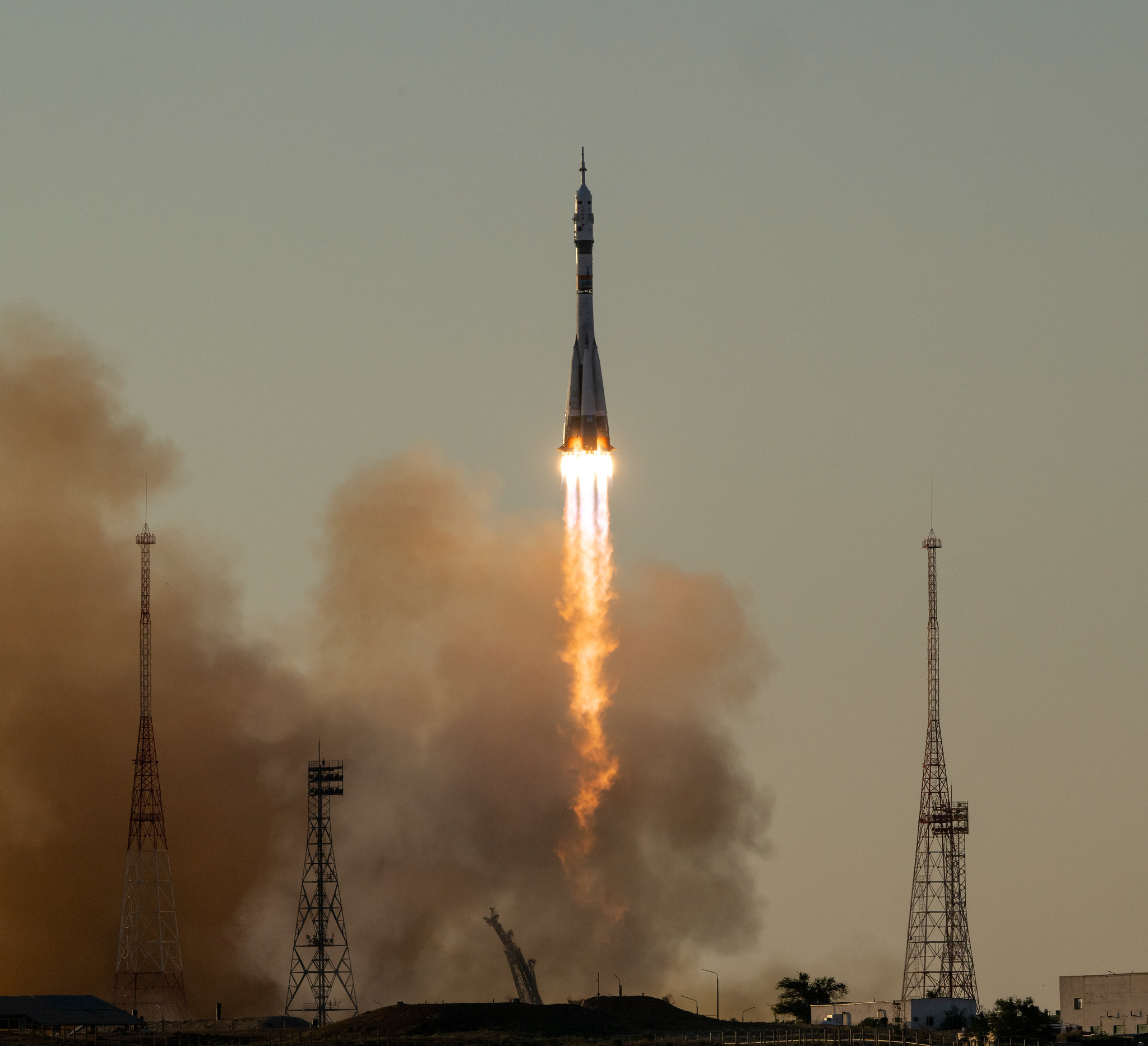
NASA astronaut Anil Menon, along with Roscosmos cosmonauts Pyotr Dubrov and Anna Kikina, arrived safely at the International Space Station Tuesday, bringing the orbiting laboratory’s crew to 10 for about the next two weeks.
The trio launched aboard the Soyuz MS-29 spacecraft at 10:47 a.m. EDT (7:47 p.m. local time) from the Baikonur Cosmodrome in Kazakhstan. After a three-hour, two-orbit journey, the spacecraft docked at 1:52 p.m. with the station’s Prichal module.
Following hatch opening, expected about 4 p.m., the new arrivals will be welcomed by the space station Expedition 74 crew: NASA astronauts Jessica Meir, Jack Hathaway, and Chris Williams; ESA (European Space Agency) astronaut Sophie Adenot; and Roscosmos cosmonauts Sergey Kud-Sverchkov, Sergei Mikaev, and Andrey Fedyaev.
NASA’s live coverage of hatch opening begins at 3:30 p.m. on NASA+, Amazon Prime, and YouTube. Learn how to watch NASA content through a variety of online platforms, including social media.
During his stay aboard the station, Menon will conduct scientific research and technology demonstrations aimed at advancing human space exploration and benefiting life on Earth. He will continue research to refine in-space production of semiconductor crystals to enable the large-scale manufacturing of components needed for high-performance computers, artificial intelligence, and improved medical devices. Menon also will perform ultrasound using augmented reality and artificial intelligence methods that could eliminate the need for medical support from Earth on future space missions. He will be a test subject helping researchers understand how blood flow is affected in space to protect future astronauts. He also will test bioprinting vascular constructs in microgravity to improve understanding of the aging process to advance therapeutic developments.
Expedition 75 is scheduled to begin on Sunday, July 26, following the departure of Williams, Kud-Sverchkov, and Mikaev, as they conclude an eight-month science mission aboard the orbital outpost.
Watch the change of command ceremony at 9:40 a.m. on Saturday, July 25, as station command transfers from Kud-Sverchkov to Meir, live on NASA+.
Learn more about International Space Station, crews, research, and operations at:
-end-
Joshua Finch / Jimi Russell
Headquarters, Washington
202-358-1100
joshua.a.finch@nasa.gov / james.j.russell@nasa.gov
Sandra Jones
Johnson Space Center, Houston
281-483-5111
sandra.p.jones@nasa.gov
Hubble Sees Crimson Cloud and Stars
Hubble Sees Crimson Cloud and Stars
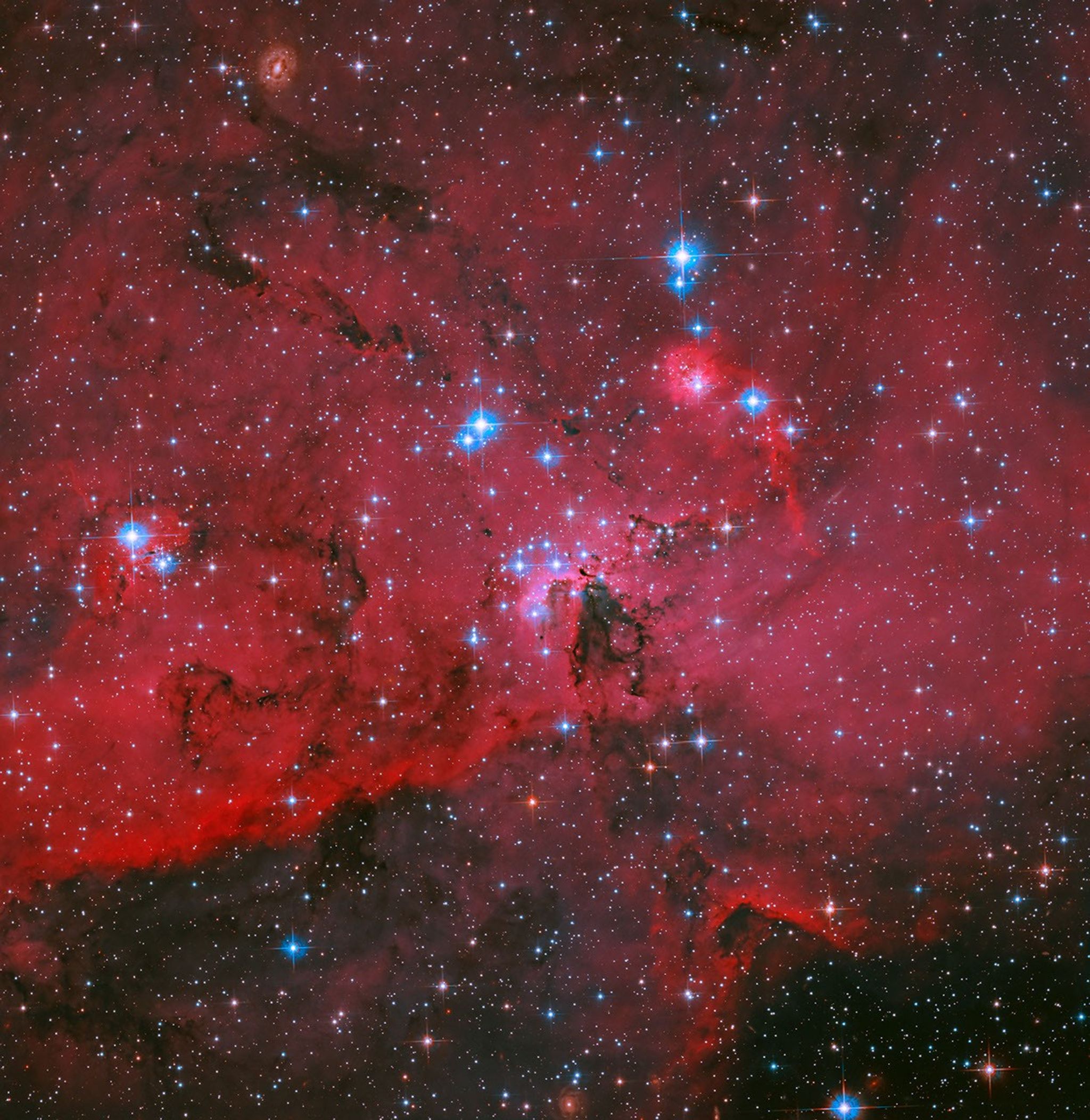
Blue and white stars shine brilliantly against a crimson background of glowing gas in this July 3, 2026, image of stellar nursery LH 95 from NASA’s Hubble Space Telescope. LH 95 is a region in the Large Magellanic Cloud, a dwarf galaxy that orbits the Milky Way. Low-mass infant stars live alongside massive blue giant stars in what is known as a stellar association, one of many in the Large Magellanic Cloud.
Image credit: NASA, ESA, and N. Da Rio (The University of Virginia), G. De Marchi (European Space Agency – ESTEC), and D. Gouliermis (Universitat Heidelberg); Processing: Gladys Kober (NASA/Catholic University of America)
Prepare for dangerous air pollution in the Northeast, thanks to Minnesota wildfires
Smoke from northern Minnesota and western Ontario wildfires is pouring over the Great Lakes, mid-Atlantic and Northeast, bringing record levels of hazardous air pollution to major cities
T. rex fossil named ‘Gus’ becomes the most expensive dinosaur sold at auction
This massive dinosaur skeleton sold for more than $50.1 million on Tuesday
NASA Jets Turn Red, White, and Blue
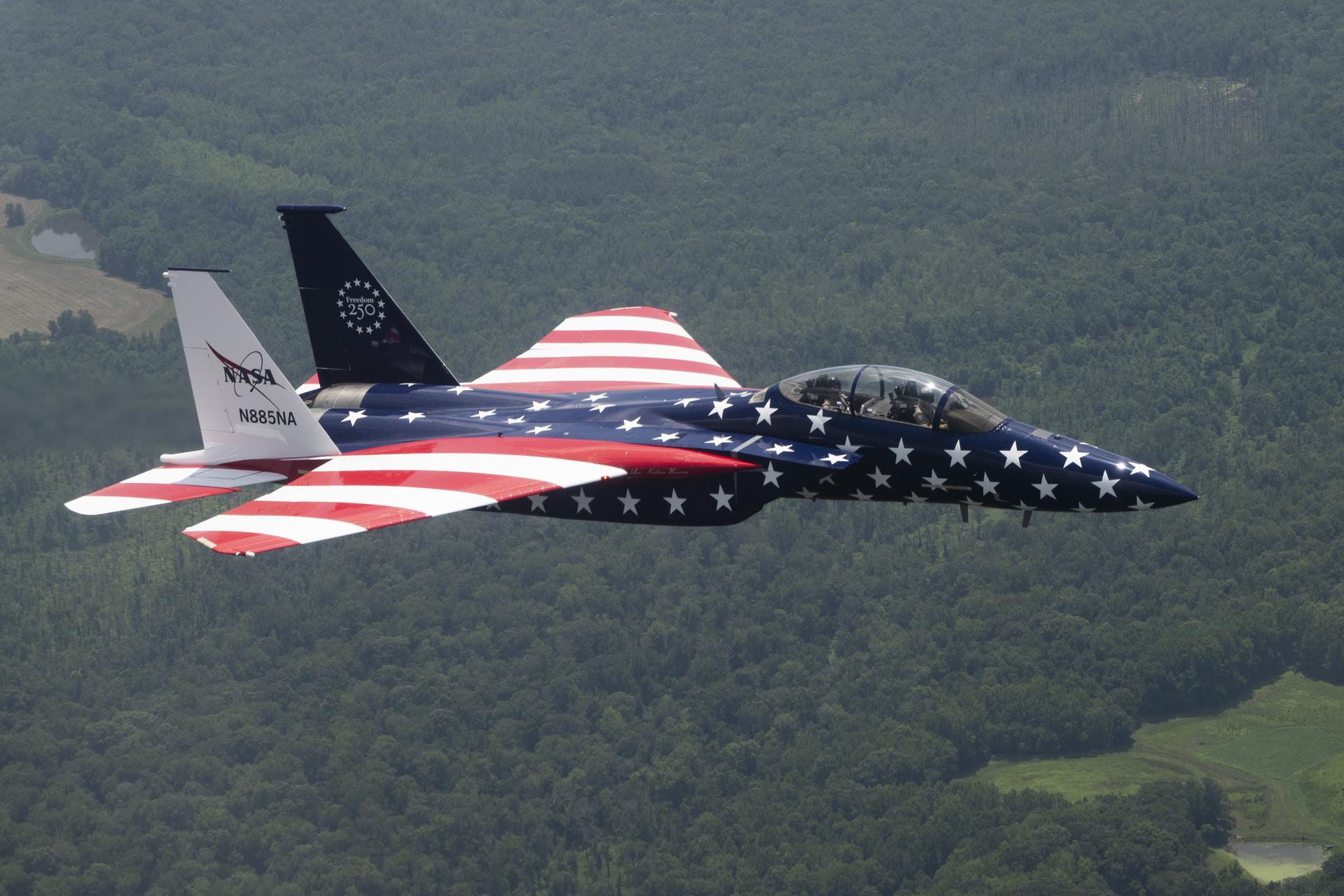
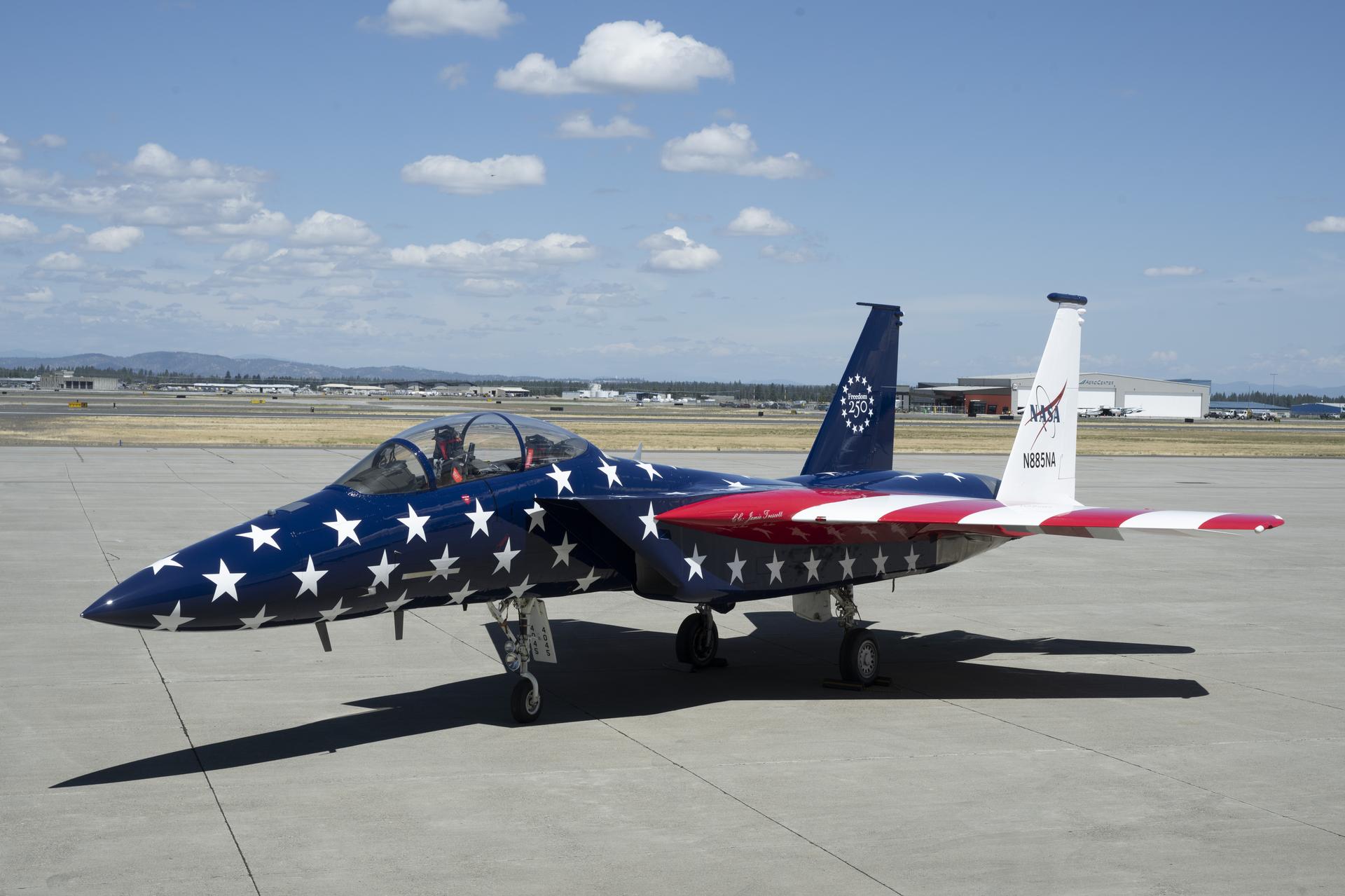
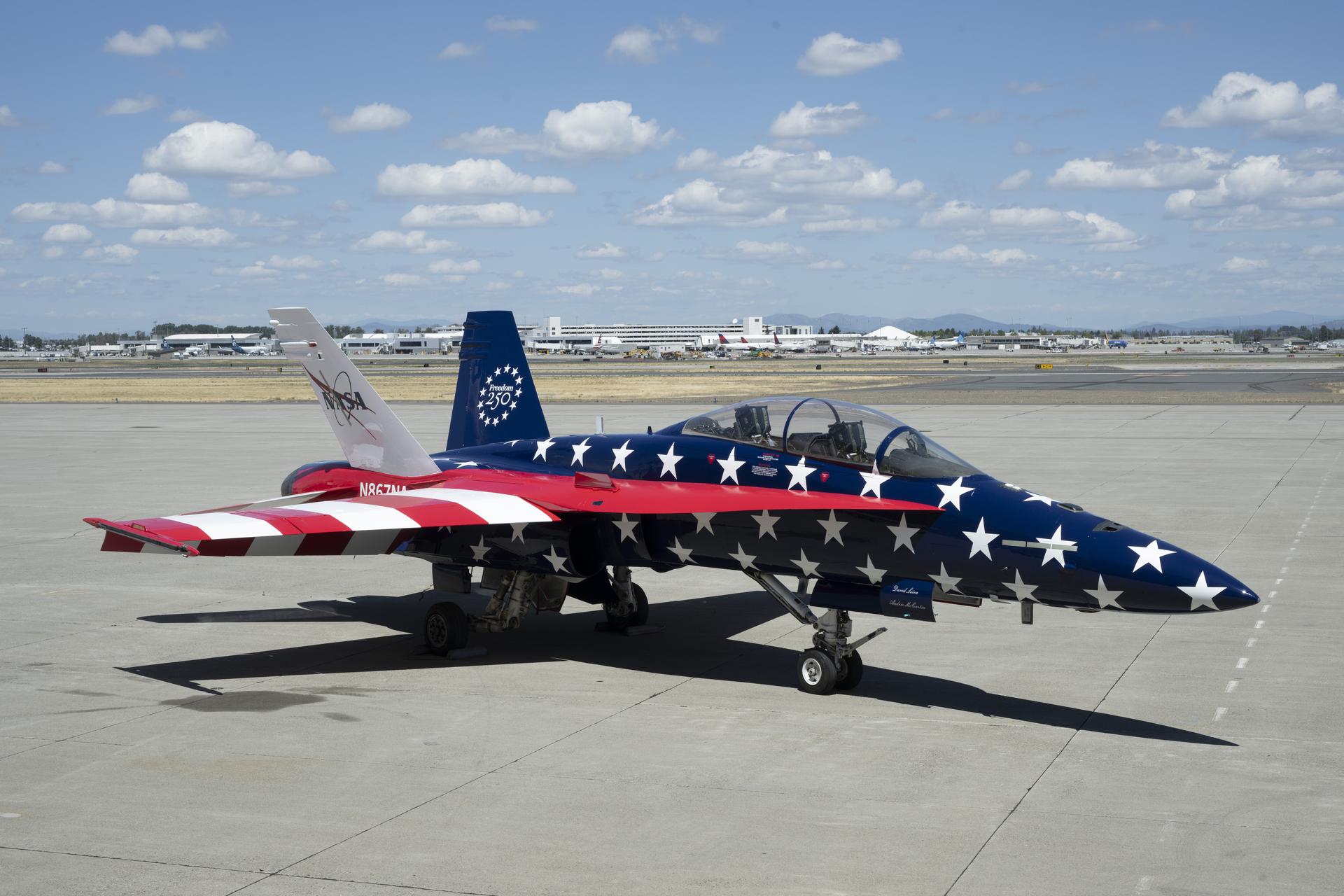
In honor of America’s 250th birthday, two of NASA’s most iconic aircraft got a fresh coat of red, white, and blue paint ahead of a flyover in Washington on July 4, 2026, with other NASA aircraft.
An F-15 and an F/A-18 from NASA’s Armstrong Flight Research Center in Edwards, California, recently were repainted in patriotic colors as a tribute to the past and a salute to the future.
The red, white, and blue commemorative paint and Freedom 250 logo will remain on these aircraft for at least the next year, so be sure to catch these at local air shows and events.
Follow along on social media and at https://www.nasa.gov/freedom250/ to learn more about where to spot the aircraft (dependent upon availability and flying schedules):
- July 23-24: EAA AirVenture, Oshkosh, Wisconsin
- Oct. 3-4: Pacific Airshow, Huntington Beach, California
- And more…
Check out more images here: https://www.nasa.gov/gallery/freedom-250/
NASA’s F-15, right, and F/A-18 aircraft are shown at International Aerospace Coatings Inc.’s facility in Spokane, Washington, on Thursday, July 2, 2026, with new red, white, and blue paint to celebrate America’s 250th birthday. The aircraft, from NASA’s Armstrong Flight Research Center in Edwards, California, participated in the Freedom 250 flyover in Washington on Saturday, July 4, 2026, with other NASA and military aircraft. NASA/Jim RossNASA/Jim Ross NASA’s F-15 aircraft is shown at International Aerospace Coatings Inc.’s facility in Spokane, Washington, on Thursday, July 2, 2026, with new red, white, and blue paint to celebrate America’s 250th birthday. The aircraft, from NASA’s Armstrong Flight Research Center in Edwards, California, participated in the Freedom 250 flyover in Washington on Saturday, July 4, 2026, with other NASA and military aircraft. NASA/Jim Ross NASA/Jim Ross NASA’s F-18 aircraft is shown at International Aerospace Coatings Inc.’s facility in Spokane, Washington, on Thursday, July 2, 2026, with new red, white, and blue paint to celebrate America’s 250th birthday. The aircraft, from NASA’s Armstrong Flight Research Center in Edwards, California, participated in the Freedom 250 flyover in Washington on Saturday, July 4, 2026, with other NASA and military aircraft. NASA/Jim RossNASA/Jim Ross Share Details Last Updated Jul 14, 2026 EditorDede DiniusContactTeresa Whitingteresa.whiting@nasa.gov Related Terms Explore More 3 min read NASA Study Points to Smoother Air Taxi Rides Article 1 day ago 3 min read A Day of Flight Testing at NASA Armstrong Article 2 weeks ago 6 min read NASA’s Newest Wind Tunnel Builds on Legacy of Innovation Article 2 weeks ago Keep Exploring Discover More Topics From NASA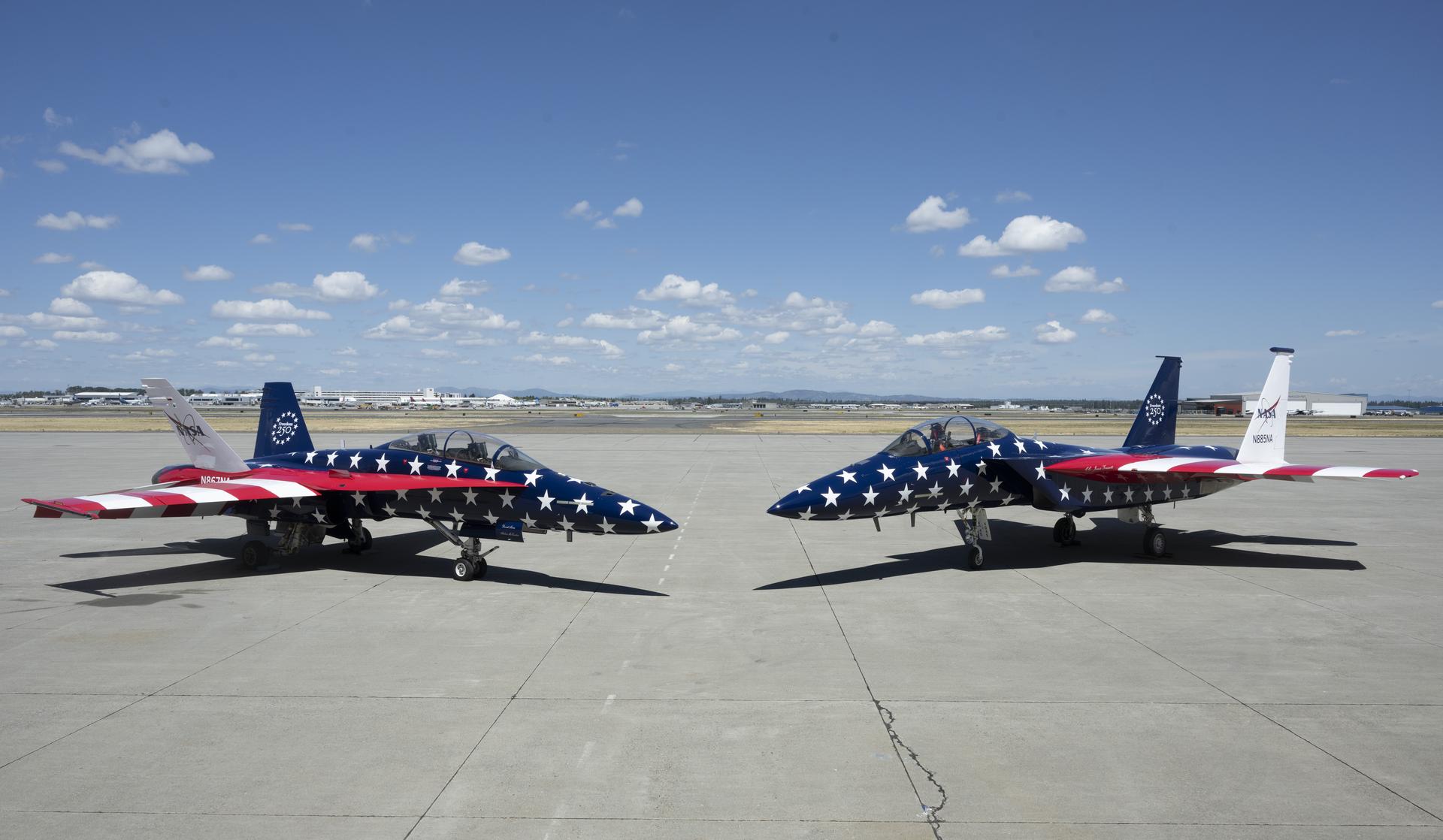
Armstrong Flight Research Center
Aeronautics
NASA Aircraft
Flight Research Innovation
To Measure a Black Hole’s Ultimate Spin, We Have to Go to Space
Despite their depiction as massive monsters that simply suck in everything, including light, astronomers know black holes actually spin. And they spin really, really quickly at that. Determining just how quickly is key to understanding how they impact their immediate vicinity, but also the galaxies that surround them. A new paper by Tegan Thomas of the University of Virginia and her colleagues, available in pre-print on arXiv, has some good news and bad news on that front. The bad news is we currently can’t determine how fast black holes are actually spinning. The good news is that, hopefully in the next few years, we will have a new tool that will allow us to.
Astronomers Find New Features Hiding in the Orion Nebula
A team of researchers used the world's largest single-dish telescope and an interferometer to uncover previously hidden structures within the Orion Nebula. The project produced the sharpest maps ever made of neutral hydrogen in Orion, the closest region of massive star formation. The findings expose the complex relationship of star-forming regions with their environment and suggest that the Orion Nebula has been shaped by multiple episodes of stellar feedback rather than a single expanding bubble.
Astronomers are Hunting Down the Elusive Population III Stars
It’s hard hunting down the oldest stars in the universe. These behemoths, known as Population (or Pop) III stars, are a missing link in cosmology between the primordial soup that was the early universe and the complex, “metal”-rich cosmos we’re familiar with today. But we’re slowly getting a better idea of where to look for them, and a new paper available in pre-print on arXiv from Alessandra Venditti of the University of Texas at Austin and her co-authors, highlights some of the recent advances and potential new surveying techniques that could eventually help us definitively find these massive, bright, early sparks in the universe.