

Feed aggregator
APOD: 2026 August 1 – Buck Moon and Belt of Venus
APOD
Astronomy Picture of the Day
Discover the cosmos! Each day a different image or photograph of our fascinating universe is featured, along with a brief explanation written by a professional astronomer.
Buck Moon and Belt of Venus
Explanation: The Buck Moon is a traditional name for the full moon of July. In this colorful Adriatic sea and skyscape captured on July 28 from Krk Island along the coast of Croatia, a full Buck Moon is just rising over distant mountains. Since a full moon rises as the Sun sets, Earth’s shadow also rises in the twilight scene, a diffuse gray band extending above the mountainous southeastern horizon. Above Earth’s shadow band is the pinkish antitwilight arch. That subtly tinted band of backscattered sunlight is more widely known as the Belt of Venus. As it shares the eastern horizon with the atmospheric shadow of Earth and Belt of Venus, this full Buck Moon seems to set the stage for the New Moon to come. The New Moon of August 12 will cast its own shadow on planet Earth in a much anticipated total solar eclipse.
Tomorrow’s picture: fire and rainbow
NASA Science Activation & Michigan Tech. U. Random APOD Generator Yesterday’s Image APOD: 2026 July 31 – NGC 4372 and the Dark Doodad Tomorrow’s Image APOD: 2026 August 2 – A Fire Rainbow over West Virginia
APOD: 2026 August 1 – Buck Moon and Belt of Venus
APOD
Astronomy Picture of the Day
Discover the cosmos! Each day a different image or photograph of our fascinating universe is featured, along with a brief explanation written by a professional astronomer.
Buck Moon and Belt of Venus
Explanation: The Buck Moon is a traditional name for the full moon of July. In this colorful Adriatic sea and skyscape captured on July 28 from Krk Island along the coast of Croatia, a full Buck Moon is just rising over distant mountains. Since a full moon rises as the Sun sets, Earth’s shadow also rises in the twilight scene, a diffuse gray band extending above the mountainous southeastern horizon. Above Earth’s shadow band is the pinkish antitwilight arch. That subtly tinted band of backscattered sunlight is more widely known as the Belt of Venus. As it shares the eastern horizon with the atmospheric shadow of Earth and Belt of Venus, this full Buck Moon seems to set the stage for the New Moon to come. The New Moon of August 12 will cast its own shadow on planet Earth in a much anticipated total solar eclipse.
Tomorrow’s picture: fire and rainbow
NASA Science Activation & Michigan Tech. U. Random APOD Generator Yesterday’s Image APOD: 2026 July 31 – NGC 4372 and the Dark Doodad Tomorrow’s Image APOD: 2026 August 2 – A Fire Rainbow over West Virginia
Charon’s Mountains Reveal Moon Once Spun 10x Faster
Pluto’s moon, Charon, is one of the most unexplored (and arguably underappreciated) planetary objects in the entire solar system. This is primarily because it’s only been visited once by NASA’s New Horizons spacecraft during its famous Pluto flyby in July 2015. Despite this quick encounter, New Horizons beamed back troves of data regarding Charon that scientists continue to pour over with the goal of gaining insight into Charon’s formation and evolution. This is because Charon is the largest moon compared to its parent body in the solar system, noted by it being half of Pluto’s diameter and one-eighth of Pluto’s mass.
Interstellar Travel: The Space Age and Nuclear Rockets
Given the state of our technology, it would take a spacecraft a ridiculously long time to reach even the nearest star in our galaxy. However, scientists continue to ponder ways in which we could achieve the dream of interstellar spaceflight. Here are a few of their best ideas.
What’s Up: August 2026 Skywatching Tips from NASA
A solar eclipse, the Perseids, bright Venus after sunset, and a deep partial lunar eclipse highlight August’s skywatching.
Skywatching Highlights- Aug. 5: Last Quarter Moon
- Aug. 12: Total solar eclipse across northern Russia, Greenland, Iceland, northern Spain, and part of Portugal; partial eclipse in parts of the U.S.; New Moon
- Aug. 12-13: Perseid meteor shower peak under dark skies
- Aug. 14-16: Venus reaches greatest eastern elongation and shines low in the west after sunset
- Aug. 27-28: Partial lunar eclipse visible from much of North and South America and parts of Europe and Africa
A solar eclipse, one of the year’s best meteor showers, Venus at its brightest in the evening sky, and a lunar eclipse to close out the month.
That’s “What’s Up” for August.
On Aug. 12, a total solar eclipse crosses northern Russia, Greenland, Iceland, and northern Spain, with a small corner of Portugal inside the path of totality.
In parts of the United States, from Alaska to North Carolina, the eclipse is partial. The Moon will take only a small bite out of the Sun, and the amount of coverage will vary with location.
A map showing viewing areas of the August 2026 total solar eclipse.NASA/JPL-Caltech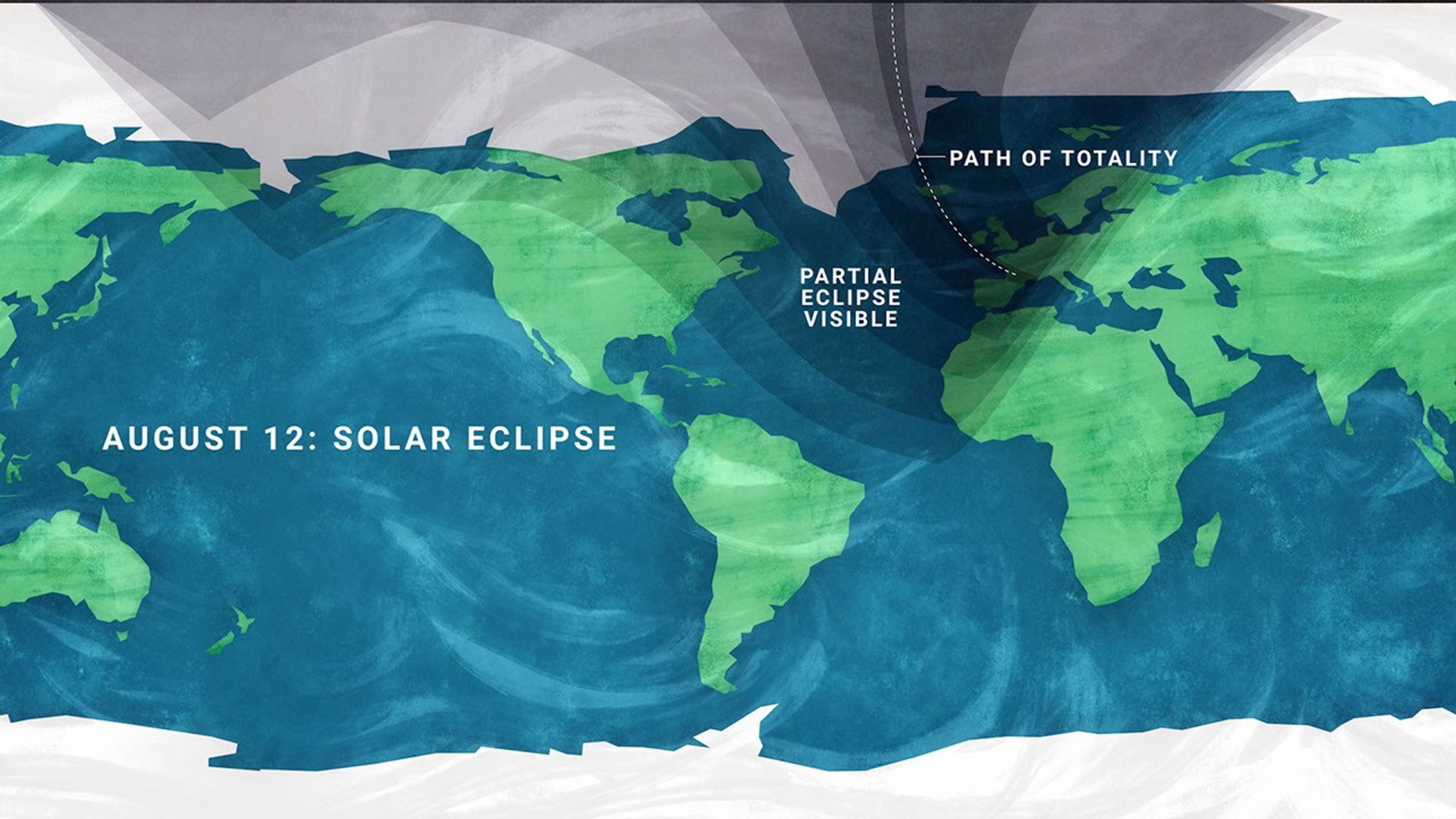
Remember to watch safely. Use certified eclipse glasses or a safe solar viewer any time any part of the Sun is visible. Regular sunglasses are not safe. And never use binoculars, a telescope, or a camera without a solar filter made for the front of the optics.
Later that same night, the Perseid meteor shower will light up the sky, peaking the evening of Aug. 12 into the early morning hours of the 13th. And with a New Moon arriving on the 12th, the skies will be ideally dark.
The Perseids happen every year when Earth passes through a debris stream left behind by Comet Swift-Tuttle. As those tiny bits of comet dust hit our atmosphere at high speed, they burn up as bright streaks of light.
To view this meteor shower, look toward the northeast once it’s fully dark and watch for the constellation Perseus to clear the horizon. This is where the meteors originate, but let your eyes wander, because they can flash across any part of the sky.
For the best view, stay out late as the stars climb higher, find a dark open spot, and give your eyes 30 minutes to adjust.
This illustration shows where in the night sky to look for the Perseid meteor shower.NASA/JPL-Caltech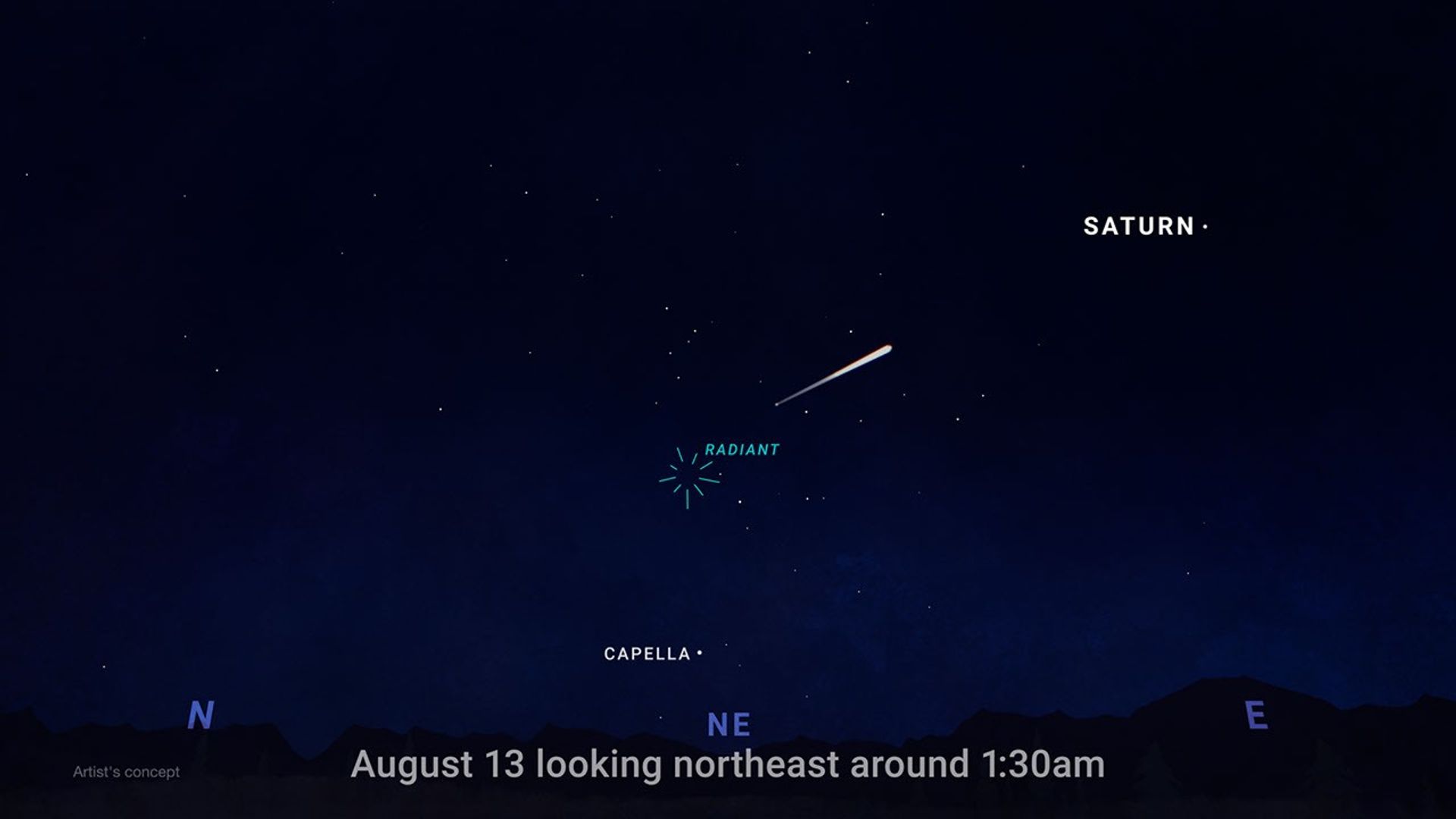
Aug. 14-16, Venus reaches its greatest eastern elongation, which is its widest apparent separation from the Sun during this evening appearance.
Look low in the western sky shortly after sunset for the bright object that will outshine every star around it. Through a telescope after sunset, Venus will look close to half lit, like a tiny lunar phase.
This illustration shows where to observe Venus after sunset in August.NASA/JPL-Caltech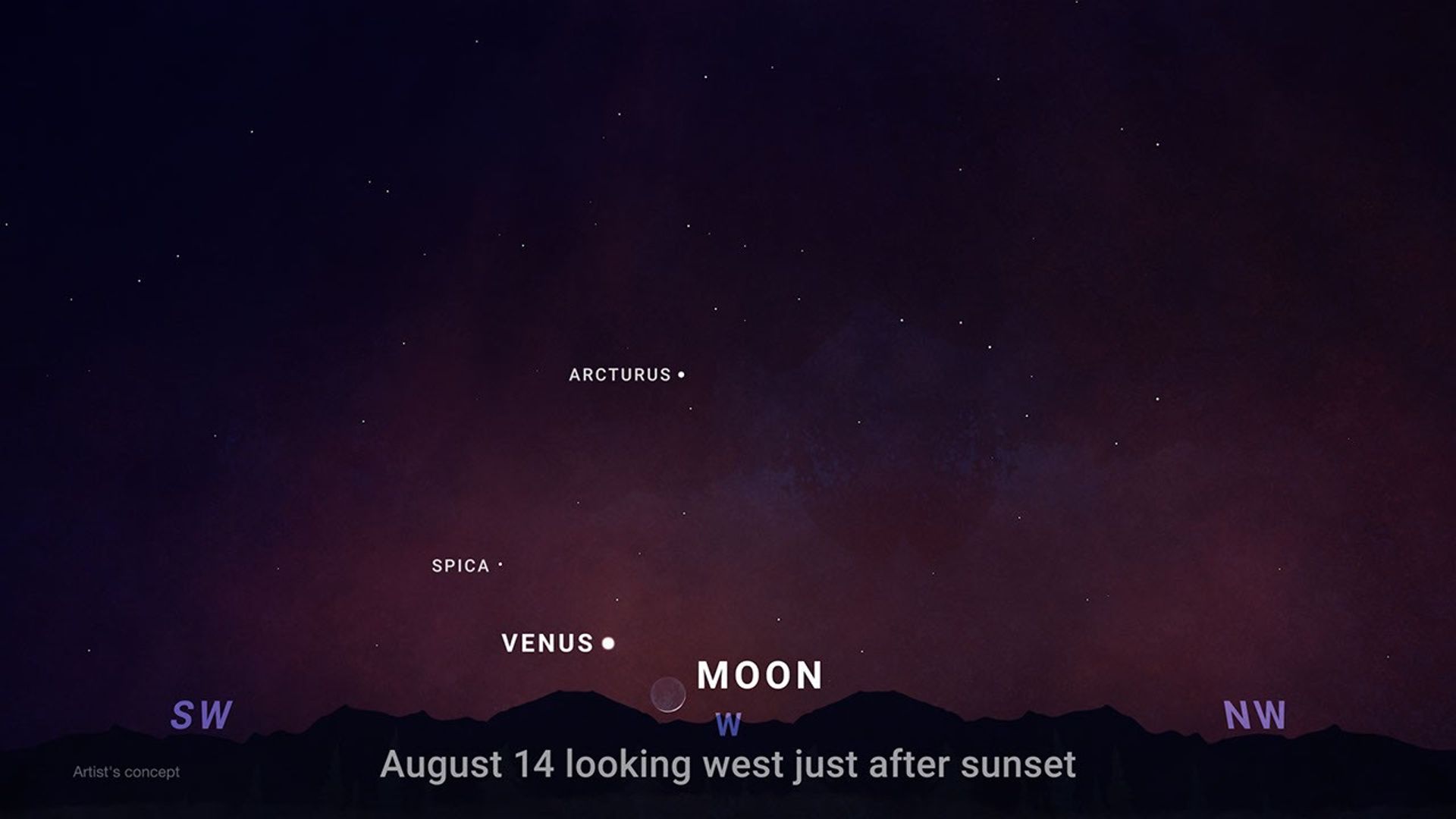
On the night of Aug. 27, continuing into Aug. 28 for some time zones, the Full Moon slips through Earth’s shadow, resulting in a partial lunar eclipse. It will be visible from much of North and South America and parts of Europe and Africa.
Viewing areas for the August 2026 lunar eclipse.NASA/JPL-Caltech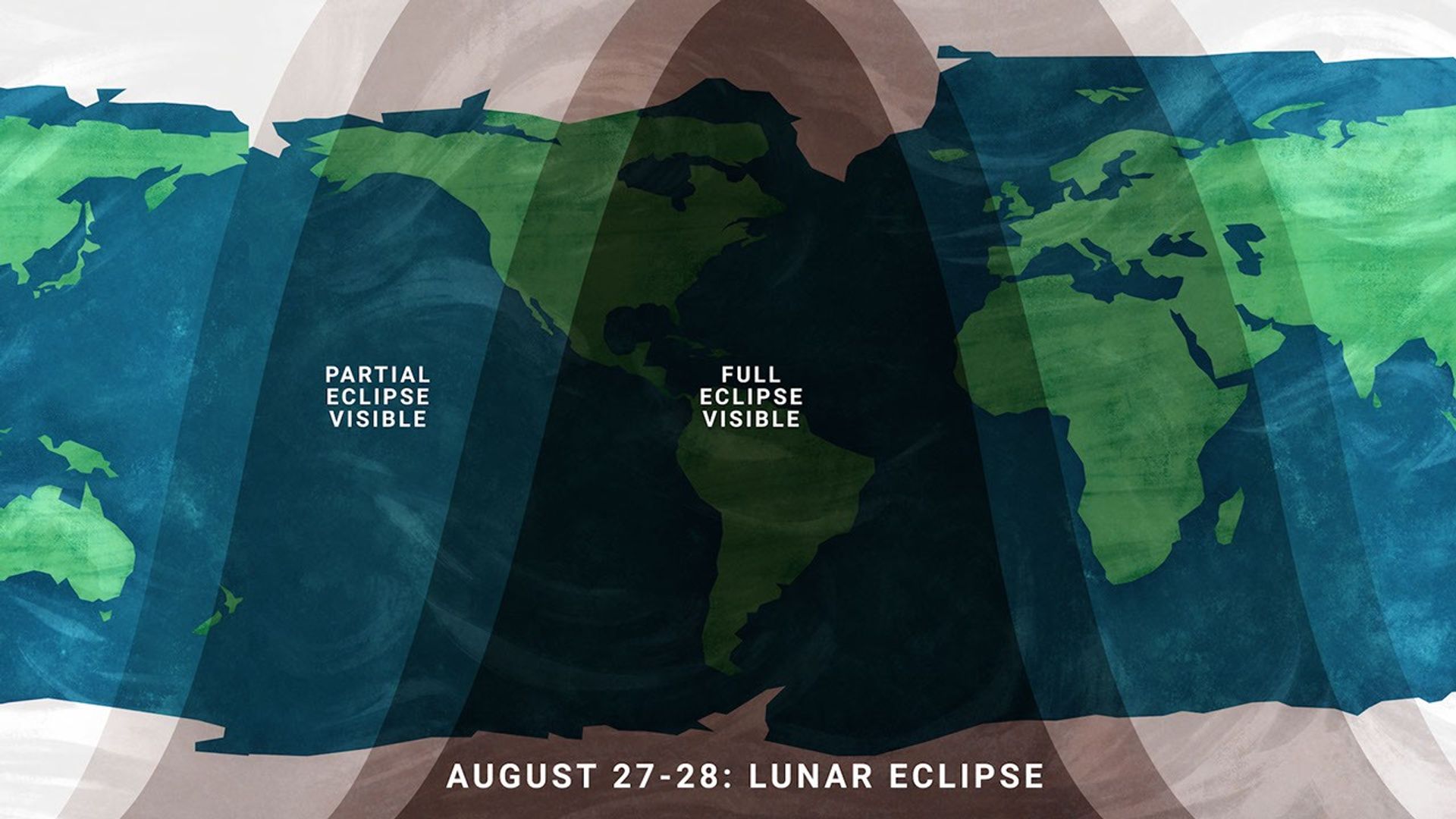
At maximum eclipse, about 93% of the Moon’s diameter will be inside Earth’s dark central shadow, called the umbra. The Moon will not be completely covered, but it can look dramatically darkened, with a rusty, coppery tint along the covered edge.
Unlike a solar eclipse, a lunar eclipse is safe to watch with just your eyes. Binoculars or a small telescope can give you a closer view of Earth’s curved shadow moving across the Moon.
Here are the phases of the Moon for August.
NASA/JPL-Caltech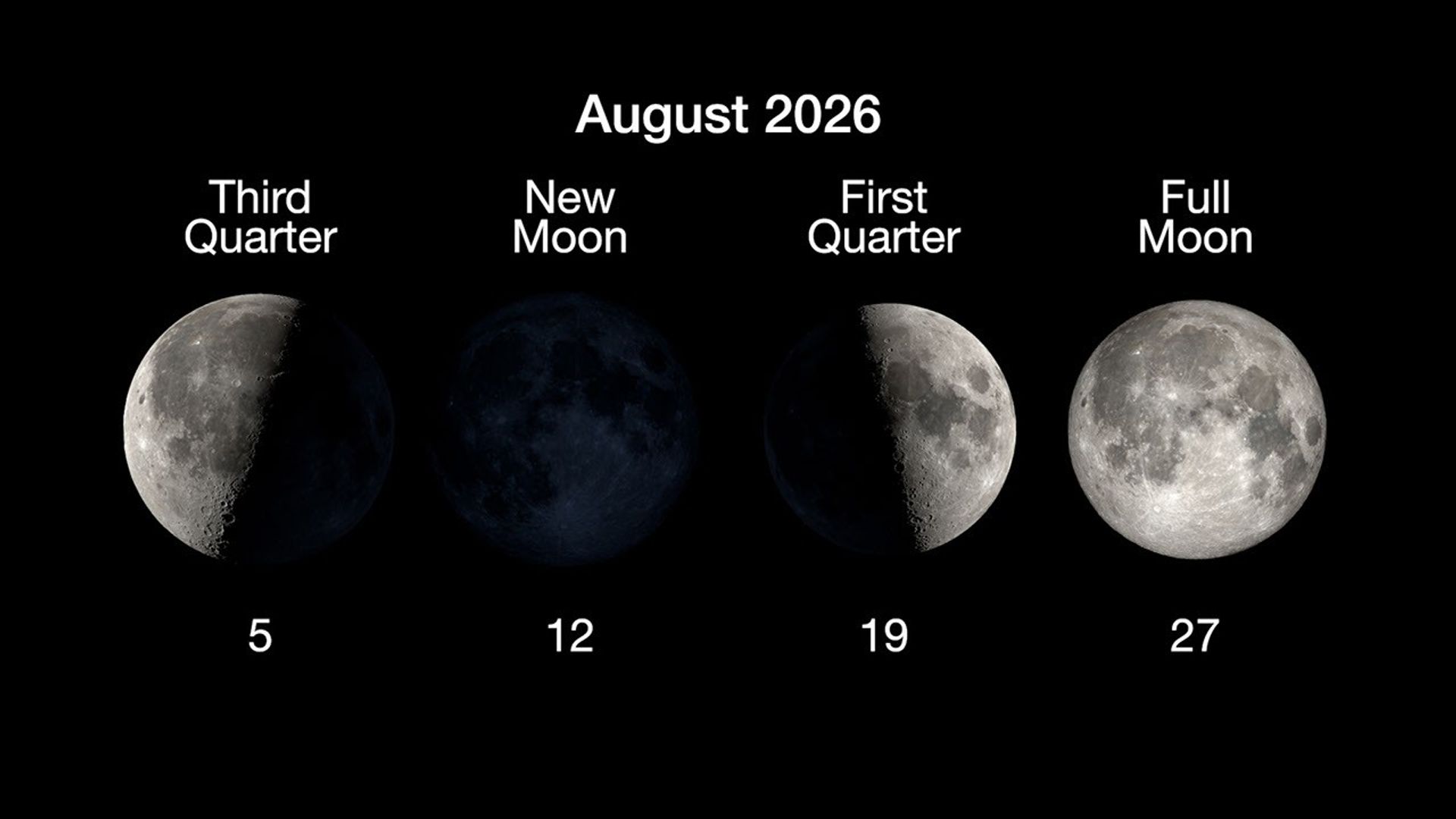
You can stay up to date on all of NASA’s missions exploring the solar system and beyond at science.nasa.gov. I’m Raquel Villanueva from NASA’s Jet Propulsion Laboratory, and that’s What’s Up for this month.
Find skywatching events and clubs with NASA’s Night Sky Network More skywatching resources from NASA Share Details Last Updated Aug 03, 2026 Related Terms Keep Exploring Discover More Topics From NASAWhat’s Up
Skywatching
Galaxies
Stars
What’s Up: August 2026 Skywatching Tips from NASA
A solar eclipse, the Perseids, bright Venus after sunset, and a deep partial lunar eclipse highlight August’s skywatching.
Skywatching Highlights- Aug. 5: Last Quarter Moon
- Aug. 12: Total solar eclipse across northern Russia, Greenland, Iceland, northern Spain, and part of Portugal; partial eclipse in parts of the U.S.; New Moon
- Aug. 12-13: Perseid meteor shower peak under dark skies
- Aug. 14-16: Venus reaches greatest eastern elongation and shines low in the west after sunset
- Aug. 27-28: Partial lunar eclipse visible from much of North and South America and parts of Europe and Africa
A solar eclipse, one of the year’s best meteor showers, Venus at its brightest in the evening sky, and a lunar eclipse to close out the month.
That’s “What’s Up” for August.
On Aug. 12, a total solar eclipse crosses northern Russia, Greenland, Iceland, and northern Spain, with a small corner of Portugal inside the path of totality.
In parts of the United States, from Alaska to North Carolina, the eclipse is partial. The Moon will take only a small bite out of the Sun, and the amount of coverage will vary with location.
A map showing viewing areas of the August 2026 total solar eclipse.NASA/JPL-CaltechRemember to watch safely. Use certified eclipse glasses or a safe solar viewer any time any part of the Sun is visible. Regular sunglasses are not safe. And never use binoculars, a telescope, or a camera without a solar filter made for the front of the optics.
Later that same night, the Perseid meteor shower will light up the sky, peaking the evening of Aug. 12 into the early morning hours of the 13th. And with a New Moon arriving on the 12th, the skies will be ideally dark.
The Perseids happen every year when Earth passes through a debris stream left behind by Comet Swift-Tuttle. As those tiny bits of comet dust hit our atmosphere at high speed, they burn up as bright streaks of light.
To view this meteor shower, look toward the northeast once it’s fully dark and watch for the constellation Perseus to clear the horizon. This is where the meteors originate, but let your eyes wander, because they can flash across any part of the sky.
For the best view, stay out late as the stars climb higher, find a dark open spot, and give your eyes 30 minutes to adjust.
This illustration shows where in the night sky to look for the Perseid meteor shower.NASA/JPL-CaltechAug. 14-16, Venus reaches its greatest eastern elongation, which is its widest apparent separation from the Sun during this evening appearance.
Look low in the western sky shortly after sunset for the bright object that will outshine every star around it. Through a telescope after sunset, Venus will look close to half lit, like a tiny lunar phase.
This illustration shows where to observe Venus after sunset in August.NASA/JPL-CaltechOn the night of Aug. 27, continuing into Aug. 28 for some time zones, the Full Moon slips through Earth’s shadow, resulting in a partial lunar eclipse. It will be visible from much of North and South America and parts of Europe and Africa.
Viewing areas for the August 2026 lunar eclipse.NASA/JPL-CaltechAt maximum eclipse, about 93% of the Moon’s diameter will be inside Earth’s dark central shadow, called the umbra. The Moon will not be completely covered, but it can look dramatically darkened, with a rusty, coppery tint along the covered edge.
Unlike a solar eclipse, a lunar eclipse is safe to watch with just your eyes. Binoculars or a small telescope can give you a closer view of Earth’s curved shadow moving across the Moon.
Here are the phases of the Moon for August.
NASA/JPL-CaltechYou can stay up to date on all of NASA’s missions exploring the solar system and beyond at science.nasa.gov. I’m Raquel Villanueva from NASA’s Jet Propulsion Laboratory, and that’s What’s Up for this month.
Find skywatching events and clubs with NASA’s Night Sky Network More skywatching resources from NASA Share Details Last Updated Aug 03, 2026 Related Terms Keep Exploring Discover More Topics From NASAWhat’s Up
Skywatching
Galaxies
Stars
NASA to Host Florida Event Celebrating American Air, Space Leadership
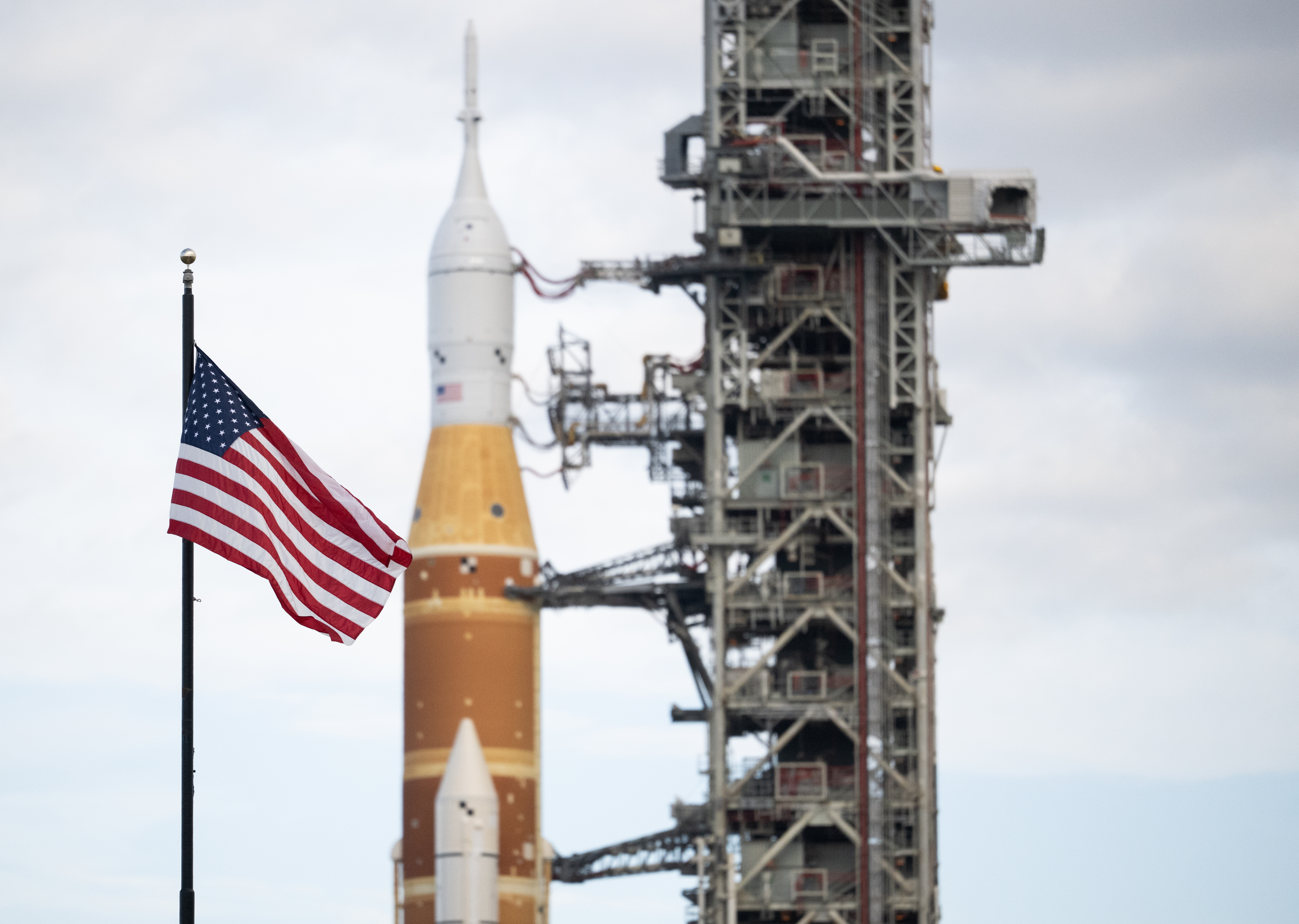
NASA will hold a news conference at 2:30 p.m. EDT, Friday, Aug. 14, live from the agency’s Kennedy Space Center in Florida, and media and digital creators are invited to attend in person.
The announcement, held in the XLV Hangar at the Shuttle Landing Facility, will preview a new event at NASA Kennedy later this year tied to America’s 250th anniversary, showcasing American leadership in aviation, space exploration, and emerging technologies while bringing together the public, industry leaders, innovators, and the next generation of explorers.
Participants include:
- NASA Administrator Jared Isaacman
- NASA leadership
- Members of Congress
The agency will stream this news conference live through a variety of platforms:
This event is open to U.S. media and digital creators. The request to attend must be received no later than 12 p.m. on Thursday, Aug. 6, to the Kennedy newsroom at: https://media.ksc.nasa.gov. NASA’s media accreditation policy is available online.
For more information about NASA’s missions, visit:
-end-
George Alderman / Cheryl Warner
Headquarters, Washington
202-358-1600
george.a.alderman@nasa.gov / cheryl.m.warner@nasa.gov
Danielle Sempsrott
Kennedy Space Center, Fla.
321-298-8990
danielle.c.sempsrott@nasa.gov
NASA to Host Florida Event Celebrating American Air, Space Leadership
NASA will hold a news conference at 2:30 p.m. EDT, Friday, Aug. 14, live from the agency’s Kennedy Space Center in Florida, and media and digital creators are invited to attend in person.
The announcement, held in the XLV Hangar at the Shuttle Landing Facility, will preview a new event at NASA Kennedy later this year tied to America’s 250th anniversary, showcasing American leadership in aviation, space exploration, and emerging technologies while bringing together the public, industry leaders, innovators, and the next generation of explorers.
Participants include:
- NASA Administrator Jared Isaacman
- NASA leadership
- Members of Congress
The agency will stream this news conference live through a variety of platforms:
This event is open to U.S. media and digital creators. The request to attend must be received no later than 12 p.m. on Thursday, Aug. 6, to the Kennedy newsroom at: https://media.ksc.nasa.gov. NASA’s media accreditation policy is available online.
For more information about NASA’s missions, visit:
-end-
George Alderman / Cheryl Warner
Headquarters, Washington
202-358-1600
george.a.alderman@nasa.gov / cheryl.m.warner@nasa.gov
Danielle Sempsrott
Kennedy Space Center, Fla.
321-298-8990
danielle.c.sempsrott@nasa.gov
NASA's Newest Wind Tunnel Opens at NASA Langley
NASA’s Newest Wind Tunnel Opens at NASA Langley
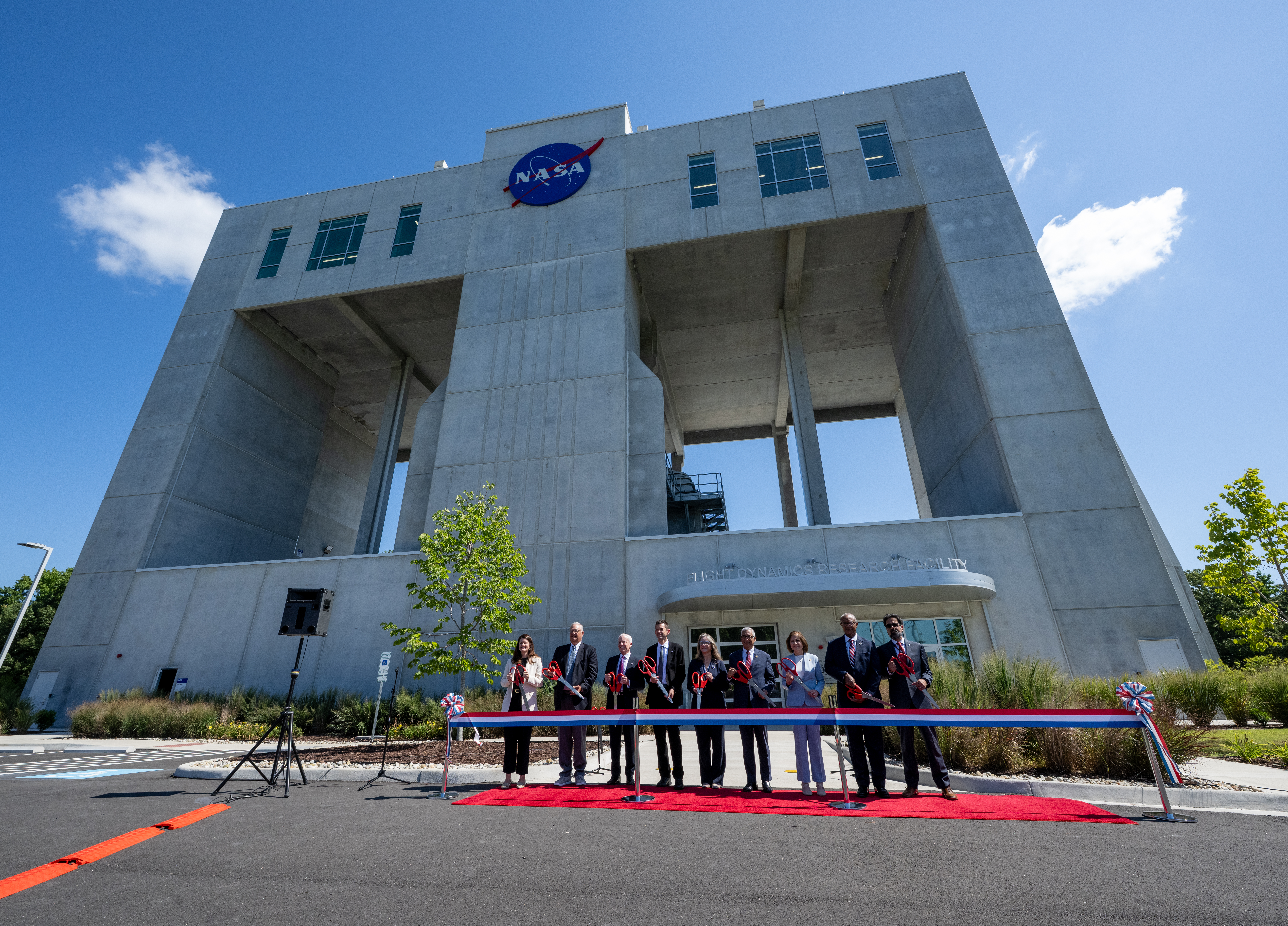
On Friday, July 31, 2026, NASA leadership and Virginia government officials opened NASA’s first major new wind tunnel in more than 40 years, the Flight Dynamics Research Facility at NASA’s Langley Research Center in Hampton, Virginia.
The state-of-the-art facility will support research and technology development that will advance the agency’s aeronautics, exploration, and science goals, including establishing a sustained human presence on the lunar surface through the Artemis program and the development of a Moon Base.
See more photos from the ribbon-cutting ceremony.
Image credit: NASA/Keegan Barber
NASA’s Newest Wind Tunnel Opens at NASA Langley
On Friday, July 31, 2026, NASA leadership and Virginia government officials opened NASA’s first major new wind tunnel in more than 40 years, the Flight Dynamics Research Facility at NASA’s Langley Research Center in Hampton, Virginia.
The state-of-the-art facility will support research and technology development that will advance the agency’s aeronautics, exploration, and science goals, including establishing a sustained human presence on the lunar surface through the Artemis program and the development of a Moon Base.
See more photos from the ribbon-cutting ceremony.
Image credit: NASA/Keegan Barber
TB 26-04 Webbings for Use in Elevated Oxygen Environments
Flammability test results for commercial-off-the-shelf webbings that meet NASA flammability requirements are reported for use in elevated oxygen environments anticipated for future lunar and Martian missions. Testing demonstrated that a webbing composed of 60% Kevlar®/40% polybenzimidazole (PBI) from Sturges Manufacturing Company, Inc., specifically the natural version, passed flammability testing per NASA-STD-6001B Test 1 using a surface ignition in J-configuration at 37% oxygen and 8.2 psia. Offgassing data are also provided for the natural webbing, which is gold colored. These findings support their potential use as suitable webbings
for softgoods applications, although final performance and wear characteristics must be validated in full configuration.
Background
An elevated oxygen environment is planned for future crewed missions to the Moon and Mars to reduce the prebreathe time before extravehicular activities. In this study, materials are being evaluated for use at 37% oxygen and 8.2 psia. An enriched oxygen environment increases the flammability risk and the need for improved fire-resistant materials. The NASA Engineering and Safety Center (NESC) developed a strategy to ensure textile materials that meet NASA flammability requirements in this environment are available to the aerospace community as the building blocks to softgoods flight hardware. The strategy is being implemented by the Mars Campaign Office and Johnson Space Center with support from the NESC. The first phase is testing commercial-off-the-shelf (COTS) textiles with high potential to meet flammability requirements.
Problem/Issue Description
Narrow woven fabrics, commonly referred to as webbing or woven tape, are used in multiple softgood applications, including crew mobility aids, restraint nets, and storage bag handles. The standard meta-aramid or nylon webbings do not meet the flammability requirements in elevated oxygen.
Test Methods/Data Collection
NASA-STD-6001B Test 1 was performed on the webbing candidates at White Sands Test Facility (WSTF) to determine the maximum oxygen concentration (MOC) at a pressure of 8.2 psia. The test was performed in an unshielded J configuration, where the cut edge of the webbing was not exposed to the flame and the igniter impinged on the front surface of the material, which included the lateral free edge of the webbing. Flammability performance after wear and tear was not assessed. The MOC test refers to the maximum oxygen concentration at which a minimum of five samples tested pass the NASA-STD-6001B criteria at a fixed pressure. One-inch-width natural and black webbings, composed of 60% Kevlar and 40% PBI produced by Sturges Manufacturing (see Figure 1), were tested. The available webbing widths range from ¼ to 8 inches.
Analysis and Results
Table 1 summarizes the webbing properties and test results. The webbings had MOCs of 37% and 35% oxygen for the natural and black webbing, respectively, at 8.2 psia. In addition, offgas testing was performed on natural webbing per NASA-STD-6001B Test Detailed test results can be found in MAPTIS links listed in the reference section.
These results should be used to select materials for incorporation into a final softgood product. The final flammability result will depend on the other components of the end item and must be tested in configuration to ensure the final product meets requirements. Individual textile results do not guarantee the performance of the finished assembly. Variations on this webbing (i.e., including but not limited to dimensions, weave type and yarn size, density, treatments, color, fiber blend, edge finish technique, the addition of features like hook and loop fasteners, and wear and tear) may affect flammability characteristics and should be evaluated before use.
References
- Black color webbing: Flammability Report WSTF 26-49145,
https://maptis.ndc.nasa.gov/matsel/app/material/73441?sender=global-search - Natural color webbing: Flammability and Offgassing Report WSTF 26-49149,
https://maptis.ndc.nasa.gov/matsel/app/material/73442?sender=global-search - HEO-DM-1006 Updated Exploration Atmospheres
- Manufacturer website: https://www.sturgesmfgco.com/
- Manufacturer contact: Mike Allen (mallen@sturgesmfgco.com 315-880-0937)
- NASA-STD-6001B Flammability, Offgassing, and Compatibility Requirements
and Test Procedures
TB 26-04 Webbings for Use in Elevated Oxygen Environments
Flammability test results for commercial-off-the-shelf webbings that meet NASA flammability requirements are reported for use in elevated oxygen environments anticipated for future lunar and Martian missions. Testing demonstrated that a webbing composed of 60% Kevlar®/40% polybenzimidazole (PBI) from Sturges Manufacturing Company, Inc., specifically the natural version, passed flammability testing per NASA-STD-6001B Test 1 using a surface ignition in J-configuration at 37% oxygen and 8.2 psia. Offgassing data are also provided for the natural webbing, which is gold colored. These findings support their potential use as suitable webbings
for softgoods applications, although final performance and wear characteristics must be validated in full configuration.
Background
An elevated oxygen environment is planned for future crewed missions to the Moon and Mars to reduce the prebreathe time before extravehicular activities. In this study, materials are being evaluated for use at 37% oxygen and 8.2 psia. An enriched oxygen environment increases the flammability risk and the need for improved fire-resistant materials. The NASA Engineering and Safety Center (NESC) developed a strategy to ensure textile materials that meet NASA flammability requirements in this environment are available to the aerospace community as the building blocks to softgoods flight hardware. The strategy is being implemented by the Mars Campaign Office and Johnson Space Center with support from the NESC. The first phase is testing commercial-off-the-shelf (COTS) textiles with high potential to meet flammability requirements.
Problem/Issue Description
Narrow woven fabrics, commonly referred to as webbing or woven tape, are used in multiple softgood applications, including crew mobility aids, restraint nets, and storage bag handles. The standard meta-aramid or nylon webbings do not meet the flammability requirements in elevated oxygen.
Test Methods/Data Collection
NASA-STD-6001B Test 1 was performed on the webbing candidates at White Sands Test Facility (WSTF) to determine the maximum oxygen concentration (MOC) at a pressure of 8.2 psia. The test was performed in an unshielded J configuration, where the cut edge of the webbing was not exposed to the flame and the igniter impinged on the front surface of the material, which included the lateral free edge of the webbing. Flammability performance after wear and tear was not assessed. The MOC test refers to the maximum oxygen concentration at which a minimum of five samples tested pass the NASA-STD-6001B criteria at a fixed pressure. One-inch-width natural and black webbings, composed of 60% Kevlar and 40% PBI produced by Sturges Manufacturing (see Figure 1), were tested. The available webbing widths range from ¼ to 8 inches.
Analysis and Results
Table 1 summarizes the webbing properties and test results. The webbings had MOCs of 37% and 35% oxygen for the natural and black webbing, respectively, at 8.2 psia. In addition, offgas testing was performed on natural webbing per NASA-STD-6001B Test Detailed test results can be found in MAPTIS links listed in the reference section.
These results should be used to select materials for incorporation into a final softgood product. The final flammability result will depend on the other components of the end item and must be tested in configuration to ensure the final product meets requirements. Individual textile results do not guarantee the performance of the finished assembly. Variations on this webbing (i.e., including but not limited to dimensions, weave type and yarn size, density, treatments, color, fiber blend, edge finish technique, the addition of features like hook and loop fasteners, and wear and tear) may affect flammability characteristics and should be evaluated before use.
References
- Black color webbing: Flammability Report WSTF 26-49145,
https://maptis.ndc.nasa.gov/matsel/app/material/73441?sender=global-search - Natural color webbing: Flammability and Offgassing Report WSTF 26-49149,
https://maptis.ndc.nasa.gov/matsel/app/material/73442?sender=global-search - HEO-DM-1006 Updated Exploration Atmospheres
- Manufacturer website: https://www.sturgesmfgco.com/
- Manufacturer contact: Mike Allen (mallen@sturgesmfgco.com 315-880-0937)
- NASA-STD-6001B Flammability, Offgassing, and Compatibility Requirements
and Test Procedures
NASA, SpaceX Advance Wind Tunnel Tests for Starship Rocket
NASA and its industry partners are preparing for next year’s Artemis III demonstration mission by completing new wind tunnel tests on SpaceX’s Super Heavy Version 3 rocket booster. The tests, conducted at NASA’s Ames Research Center in California’s Silicon Valley, focused on better understanding the extreme aerodynamic forces the rocket can experience during re-entry. The recent test series builds on previous testing completed at NASA Ames in 2024.
NASA is working with SpaceX to develop the company’s Starship Human Landing System (HLS) to safely carry astronauts from lunar orbit to the Moon’s surface and back. The upgraded Super Heavy rocket booster is part of SpaceX’s Starship launch system. Version 3 of Starship and Super Heavy is expected to be the basis for the Starship HLS for Artemis III in 2027 and a later crewed lunar landing in 2028.
Engineers at NASA Ames conduct transonic and supersonic wind testing on a 1.2% scale model of the Super Heavy Version 3 rocket that will launch the Starship human landing system.NASA Engineers at NASA Ames conduct transonic and supersonic wind testing on a 1.2% scale model of the Super Heavy Version 3 rocket that will launch the Starship human landing system.NASA Engineers at NASA Ames conduct transonic and supersonic wind testing on a 1.2% scale model of the Super Heavy Version 3 rocket that will launch the Starship human landing system.NASA Engineers at NASA Ames conduct transonic and supersonic wind testing on a 1.2% scale model of the Super Heavy Version 3 rocket that will launch the Starship human landing system.NASAAlthough Starship HLS is a lunar lander designed and built by SpaceX, NASA collaborates with commercial companies to provide access to specialized testing facilities, like the wind tunnels at NASA Ames, and technical expertise, such as the team that set up the wind tunnel testing and helped analyze the results.
“NASA has a lot of experience with unsteady aerodynamics,” said Manish Mehta, discipline lead engineer for the HLS Plume and Aero Environments team, NASA’s Marshall Space Flight Center in Huntsville, Alabama. “We used the agency’s broad experience base of conducting wind tunnel tests for the space shuttle, the SLS (Space Launch System) rocket, and Orion spacecraft to efficiently set up and analyze the wind tunnel testing for the Super Heavy Version 3. In fact, similar testing at the Ames Unitary Plan Wind Tunnel resulted in adding strakes to SLS for Artemis II, so what we learned for Artemis II is helping us get to Artemis III and beyond.”
TestingSpaceX’s Starship consists of a 33-engine first-stage Super Heavy rocket, or booster, and the second-stage Starship. Version 3 of Super Heavy incorporates many new and upgraded systems, including:
- New propulsion systems and new Raptor 3 rocket engines
- No engine section skirt, individual engine shrouds, or integrated large-scale base heat shield
- Three gridfins on the Super Heavy booster instead of four, with each fin now 50% larger
- An integrated hot stage replacing the previous single-use protective interstage
With significant changes to Super Heavy, NASA and SpaceX engineers wanted more information about the steady and unsteady aerodynamic forces the rocket will experience during atmospheric re-entry as it returns to the launch site for refurbishment and re-use.
“When a rocket, or an airplane, flies through air at high speed, it’s subjected to steady aerodynamic forces and moments, and unsteady aerodynamic forces and moments,” explained Jayanta Panda, unsteady aerodynamics subject matter expert at NASA Ames and part of the Human Landing System Plume and Aero Environments team. “An example of a steady aerodynamic force would be when air smoothly flows over the surface of the rocket as it ascends. An unsteady aerodynamic force would be air ‘buffeting,’ or hitting, certain areas the rocket at less predictable times and potentially causing vibrations.”
Wind tunnelsNASA and SpaceX used a 1.2% scale model of the Super Heavy Version 3 in the transonic wind tunnel and the supersonic wind tunnel at NASA Ames for testing. The transonic tunnel blasts scale models of rockets or aircraft with air at speeds ranging from Mach 0.2 to Mach 1.4 (Mach 1 is the speed of sound, or about 761 miles per hour). The smaller supersonic tunnel fires winds at higher speeds, from Mach 1.55 to Mach 2.5. The wind tunnel tests on Super Heavy Version 3, conducted in late 2025, used both tunnels to measure steady and unsteady air flows on the surfaces of Super Heavy.
“Resulting wind tunnel data on steady forces and moments helps predict how the rocket will react to forces in the atmosphere during re-entry so the flight software can effectively guide the rocket during flight,” Mehta said. “The unsteady pressure data helps engineers understand the environment around the rocket as it re-enters Earth’s atmosphere. Engineers use that information as one input into software that analyzes loads on the rocket.”
Through the Artemis program, NASA is returning humans to the Moon for scientific discovery, economic opportunity, to establish an enduring human presence on the lunar surface, and build the foundation for the first crewed missions to Mars – for the benefit of all.
To learn more about Artemis, visit:
Share Details Last Updated Jul 31, 2026 EditorLee MohonContactCorinne Beckingercorinne.m.beckinger@nasa.govGianine Figliozzigianine.figliozzi@nasa.govLocationMarshall Space Flight Center Related Terms Explore More 7 min read How NASA’s Artemis III Lander Test Will Pave Way for Moon Landings Article 3 weeks ago 3 min read NASA Announces Winners for 2026 Human Lander Challenge Article 1 month ago 4 min read NASA Outlines Preliminary Artemis III Mission Plans Article 3 months ago Keep Exploring Discover More Topics From NASAArtemis
Artemis III
Human Landing System
Space Launch System (SLS)
NASA, SpaceX Advance Wind Tunnel Tests for Starship Rocket
NASA and its industry partners are preparing for next year’s Artemis III demonstration mission by completing new wind tunnel tests on SpaceX’s Super Heavy Version 3 rocket booster. The tests, conducted at NASA’s Ames Research Center in California’s Silicon Valley, focused on better understanding the extreme aerodynamic forces the rocket can experience during re-entry. The recent test series builds on previous testing completed at NASA Ames in 2024.
NASA is working with SpaceX to develop the company’s Starship Human Landing System (HLS) to safely carry astronauts from lunar orbit to the Moon’s surface and back. The upgraded Super Heavy rocket booster is part of SpaceX’s Starship launch system. Version 3 of Starship and Super Heavy is expected to be the basis for the Starship HLS for Artemis III in 2027 and a later crewed lunar landing in 2028.
Engineers at NASA Ames conduct transonic and supersonic wind testing on a 1.2% scale model of the Super Heavy Version 3 rocket that will launch the Starship human landing system.NASA Engineers at NASA Ames conduct transonic and supersonic wind testing on a 1.2% scale model of the Super Heavy Version 3 rocket that will launch the Starship human landing system.NASA Engineers at NASA Ames conduct transonic and supersonic wind testing on a 1.2% scale model of the Super Heavy Version 3 rocket that will launch the Starship human landing system.NASA Engineers at NASA Ames conduct transonic and supersonic wind testing on a 1.2% scale model of the Super Heavy Version 3 rocket that will launch the Starship human landing system.NASAAlthough Starship HLS is a lunar lander designed and built by SpaceX, NASA collaborates with commercial companies to provide access to specialized testing facilities, like the wind tunnels at NASA Ames, and technical expertise, such as the team that set up the wind tunnel testing and helped analyze the results.
“NASA has a lot of experience with unsteady aerodynamics,” said Manish Mehta, discipline lead engineer for the HLS Plume and Aero Environments team, NASA’s Marshall Space Flight Center in Huntsville, Alabama. “We used the agency’s broad experience base of conducting wind tunnel tests for the space shuttle, the SLS (Space Launch System) rocket, and Orion spacecraft to efficiently set up and analyze the wind tunnel testing for the Super Heavy Version 3. In fact, similar testing at the Ames Unitary Plan Wind Tunnel resulted in adding strakes to SLS for Artemis II, so what we learned for Artemis II is helping us get to Artemis III and beyond.”
TestingSpaceX’s Starship consists of a 33-engine first-stage Super Heavy rocket, or booster, and the second-stage Starship. Version 3 of Super Heavy incorporates many new and upgraded systems, including:
- New propulsion systems and new Raptor 3 rocket engines
- No engine section skirt, individual engine shrouds, or integrated large-scale base heat shield
- Three gridfins on the Super Heavy booster instead of four, with each fin now 50% larger
- An integrated hot stage replacing the previous single-use protective interstage
With significant changes to Super Heavy, NASA and SpaceX engineers wanted more information about the steady and unsteady aerodynamic forces the rocket will experience during atmospheric re-entry as it returns to the launch site for refurbishment and re-use.
“When a rocket, or an airplane, flies through air at high speed, it’s subjected to steady aerodynamic forces and moments, and unsteady aerodynamic forces and moments,” explained Jayanta Panda, unsteady aerodynamics subject matter expert at NASA Ames and part of the Human Landing System Plume and Aero Environments team. “An example of a steady aerodynamic force would be when air smoothly flows over the surface of the rocket as it ascends. An unsteady aerodynamic force would be air ‘buffeting,’ or hitting, certain areas the rocket at less predictable times and potentially causing vibrations.”
Wind tunnelsNASA and SpaceX used a 1.2% scale model of the Super Heavy Version 3 in the transonic wind tunnel and the supersonic wind tunnel at NASA Ames for testing. The transonic tunnel blasts scale models of rockets or aircraft with air at speeds ranging from Mach 0.2 to Mach 1.4 (Mach 1 is the speed of sound, or about 761 miles per hour). The smaller supersonic tunnel fires winds at higher speeds, from Mach 1.55 to Mach 2.5. The wind tunnel tests on Super Heavy Version 3, conducted in late 2025, used both tunnels to measure steady and unsteady air flows on the surfaces of Super Heavy.
“Resulting wind tunnel data on steady forces and moments helps predict how the rocket will react to forces in the atmosphere during re-entry so the flight software can effectively guide the rocket during flight,” Mehta said. “The unsteady pressure data helps engineers understand the environment around the rocket as it re-enters Earth’s atmosphere. Engineers use that information as one input into software that analyzes loads on the rocket.”
Through the Artemis program, NASA is returning humans to the Moon for scientific discovery, economic opportunity, to establish an enduring human presence on the lunar surface, and build the foundation for the first crewed missions to Mars – for the benefit of all.
To learn more about Artemis, visit:
Share Details Last Updated Jul 31, 2026 EditorLee MohonContactCorinne Beckingercorinne.m.beckinger@nasa.govGianine Figliozzigianine.figliozzi@nasa.govLocationMarshall Space Flight Center Related Terms Explore More 7 min read How NASA’s Artemis III Lander Test Will Pave Way for Moon Landings Article 3 weeks ago 3 min read NASA Announces Winners for 2026 Human Lander Challenge Article 1 month ago 4 min read NASA Outlines Preliminary Artemis III Mission Plans Article 3 months ago Keep Exploring Discover More Topics From NASAArtemis
Artemis III
Human Landing System
Space Launch System (SLS)
Astronomers Spot Weird, Three-Lobed Asteroid with a Moon
Asteroid 44 Nysa has the weirdest shape yet seen for an asteroid, and that’s saying something.
The post Astronomers Spot Weird, Three-Lobed Asteroid with a Moon appeared first on Sky & Telescope.
Astronomers Measure the Long Reach of a Quasar
There are a number of things in the Universe that could wipe out life as we know it, but — for now, and for Earth — a blast from our galaxy's supermassive black hole isn't one of them. That's not to say that Sagittarius A* doesn't pose a danger. If it wakes up someday and blasts out a strong wind, that definitely could affect Earth. It could well have powered a quasar in the past, and could do so again.
NASA Opens New Flight Dynamics Research Facility in Virginia
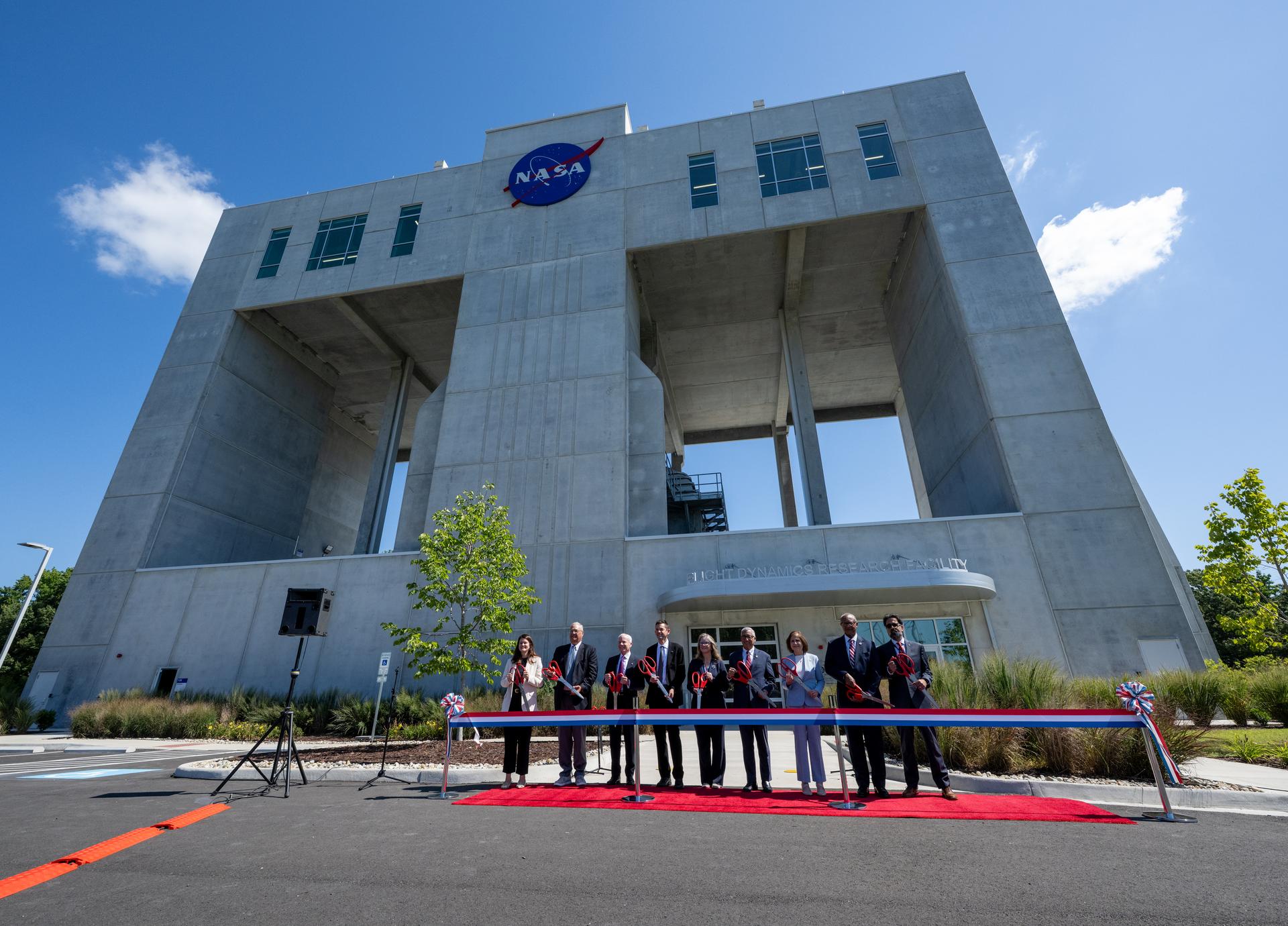
NASA opened its newest wind tunnel, the Flight Dynamics Research Facility, Friday, providing a critical resource for the agency and its partners to test the safety and performance of future generations of aircraft, rockets, and space exploration vehicles.
Located at NASA’s Langley Research Center in Hampton, Virginia, the Flight Dynamics Research Facility will support advances in aircraft safety, X‑plane development, drone research, and spacecraft technology. The facility will enable both free‑flight and mounted testing of a wide range of scale-model vehicles designed to travel through an atmosphere, from airplanes to space capsules returning to Earth.
“The Flight Dynamics Research Facility is NASA’s first major new wind tunnel in more than 40 years and gives us a powerful new platform to test the ideas and technologies that will shape the future of aviation and exploration,” said NASA Administrator Jared Isaacman. “America has led in air and space because we were willing to take on hard problems, challenge assumptions, and build what didn’t exist before. This facility gives the talented team at Langley, and our partners across government, industry, and universities, the tools to keep pushing the boundaries of what’s possible and ensure America remains the world leader in air and space.”
A ribbon-cutting ceremony at NASA Langley marked the start of a new chapter in flight research. Agency leaders, partners, and Virginia officials emphasized how the Flight Dynamics Research Facility’s state-of-the-art capabilities will shape the future of flight and exploration.
“The opening of the Flight Dynamics Research Facility represents a significant advancement for NASA and for the nation,” said Dr. Trina Dyal, NASA Langley center director. “By bringing modernized testing capabilities under one roof, we are enabling transformative research that will ensure the United States remains at the forefront of aeronautics and exploration.”
Built through a partnership with the U.S. General Services Administration (GSA), the facility replaces aging infrastructure with an energy-efficient facility that reduces maintenance costs and provides the flexibility needed for future research. The Flight Dynamics Research Facility is part of a broader, long-term collaboration between the agencies, representing the fourth new building GSA has delivered to NASA under Langley’s 20-year campus revitalization plan.
“GSA is proud to partner with NASA in delivering the Flight Dynamics Research Facility, a state-of-the-art asset that will power the next generation of American dominance in aeronautics and space exploration,” said Edward C. Forst, GSA administrator. “This facility reflects what we do best: provide the advanced, expertly designed installations that federal agencies need to carry out their missions. With these new capabilities, NASA will be better equipped to test bold ideas, validate new designs, and advance technologies that will serve the nation for decades to come.”
The Flight Dynamics Research Facility combines and improves upon the capabilities of two historic NASA Langley wind tunnels – the 20-Foot Vertical Spin Tunnel and the 12-Foot Low-Speed Tunnel. The 25,000-square-foot building features a vertical wind tunnel with improved airflow, modern digital systems, and flexible testing capabilities that will allow researchers to study how aircraft, spacecraft, parachutes, and other vehicles behave during flight.
The facility’s 20-foot diameter test chamber is much larger than those of its NASA Langley predecessors, allowing for more air to pass around test models and improving data accuracy. Its increased size also allows for the use of larger, more detailed models during testing.
The Flight Dynamics Research Facility’s top airspeed of 117 miles per hour is twice as fast as the old facilities, enabling free-flight tests of heavier scale models. This will allow simulations of full-scale vehicles flying at higher altitudes – a critical capability for operations such as studying the stability of aircraft or reentry capsules coming back from space.
The facility’s wind power comes from four 750-horsepower motors, each with an integrated, 14-foot diameter, eight-bladed fan. The fan blades are made of lightweight carbon fiber, enabling rapid, precise airspeed adjustments during free‑flight tests.
The Flight Dynamics Research Facility illustrates the powerful synergy between NASA’s aeronautics and space exploration efforts, with each driving innovation in the other. The facility will drive experimental research across a wide range of flight systems, advancing the development of autonomous flight vehicles, drones, commercial and military aircraft, and X‑planes.
As NASA prepares for a sustained human presence on the lunar surface through the Artemis program and the development of a Moon Base, the facility will play a key role in testing vehicle designs for entry, descent, and landing that will help reduce mission risk and support the safe return of crews to Earth. NASA also will be able to use the wind tunnel to help design aircraft for Mars and other destinations in our solar system where atmospheric flight is possible.
With the Flight Dynamics Research Facility now open, NASA is entering a new era in flight research – one that will shape the aircraft and spacecraft of tomorrow, strengthen industry partnerships, and extend the agency’s legacy of pioneering aerospace leadership.
The facility is managed under the Aerosciences Evaluation and Test Capabilities portfolio in the Aeronautics Division of NASA’s Research and Technology Mission Directorate.
Learn more about the Flight Dynamics Research Facility at:
-end-
Camille Gallo / Rob Margetta
Headquarters, Washington
202-358-1600
camille.m.gallo@nasa.gov / robert.j.margetta@nasa.gov
Kimiko Booker / Brittny McGraw
NASA Langley, Hampton, Virginia
757-506-5939 / 757-769-3763
kimiko.s.booker@nasa.gov / brittny.v.mcgraw@nasa.gov
NASA Opens New Flight Dynamics Research Facility in Virginia
NASA opened its newest wind tunnel, the Flight Dynamics Research Facility, Friday, providing a critical resource for the agency and its partners to test the safety and performance of future generations of aircraft, rockets, and space exploration vehicles.
Located at NASA’s Langley Research Center in Hampton, Virginia, the Flight Dynamics Research Facility will support advances in aircraft safety, X‑plane development, drone research, and spacecraft technology. The facility will enable both free‑flight and mounted testing of a wide range of scale-model vehicles designed to travel through an atmosphere, from airplanes to space capsules returning to Earth.
“The Flight Dynamics Research Facility is NASA’s first major new wind tunnel in more than 40 years and gives us a powerful new platform to test the ideas and technologies that will shape the future of aviation and exploration,” said NASA Administrator Jared Isaacman. “America has led in air and space because we were willing to take on hard problems, challenge assumptions, and build what didn’t exist before. This facility gives the talented team at Langley, and our partners across government, industry, and universities, the tools to keep pushing the boundaries of what’s possible and ensure America remains the world leader in air and space.”
A ribbon-cutting ceremony at NASA Langley marked the start of a new chapter in flight research. Agency leaders, partners, and Virginia officials emphasized how the Flight Dynamics Research Facility’s state-of-the-art capabilities will shape the future of flight and exploration.
“The opening of the Flight Dynamics Research Facility represents a significant advancement for NASA and for the nation,” said Dr. Trina Dyal, NASA Langley center director. “By bringing modernized testing capabilities under one roof, we are enabling transformative research that will ensure the United States remains at the forefront of aeronautics and exploration.”
Built through a partnership with the U.S. General Services Administration (GSA), the facility replaces aging infrastructure with an energy-efficient facility that reduces maintenance costs and provides the flexibility needed for future research. The Flight Dynamics Research Facility is part of a broader, long-term collaboration between the agencies, representing the fourth new building GSA has delivered to NASA under Langley’s 20-year campus revitalization plan.
“GSA is proud to partner with NASA in delivering the Flight Dynamics Research Facility, a state-of-the-art asset that will power the next generation of American dominance in aeronautics and space exploration,” said Edward C. Forst, GSA administrator. “This facility reflects what we do best: provide the advanced, expertly designed installations that federal agencies need to carry out their missions. With these new capabilities, NASA will be better equipped to test bold ideas, validate new designs, and advance technologies that will serve the nation for decades to come.”
The Flight Dynamics Research Facility combines and improves upon the capabilities of two historic NASA Langley wind tunnels – the 20-Foot Vertical Spin Tunnel and the 12-Foot Low-Speed Tunnel. The 25,000-square-foot building features a vertical wind tunnel with improved airflow, modern digital systems, and flexible testing capabilities that will allow researchers to study how aircraft, spacecraft, parachutes, and other vehicles behave during flight.
The facility’s 20-foot diameter test chamber is much larger than those of its NASA Langley predecessors, allowing for more air to pass around test models and improving data accuracy. Its increased size also allows for the use of larger, more detailed models during testing.
The Flight Dynamics Research Facility’s top airspeed of 117 miles per hour is twice as fast as the old facilities, enabling free-flight tests of heavier scale models. This will allow simulations of full-scale vehicles flying at higher altitudes – a critical capability for operations such as studying the stability of aircraft or reentry capsules coming back from space.
The facility’s wind power comes from four 750-horsepower motors, each with an integrated, 14-foot diameter, eight-bladed fan. The fan blades are made of lightweight carbon fiber, enabling rapid, precise airspeed adjustments during free‑flight tests.
The Flight Dynamics Research Facility illustrates the powerful synergy between NASA’s aeronautics and space exploration efforts, with each driving innovation in the other. The facility will drive experimental research across a wide range of flight systems, advancing the development of autonomous flight vehicles, drones, commercial and military aircraft, and X‑planes.
As NASA prepares for a sustained human presence on the lunar surface through the Artemis program and the development of a Moon Base, the facility will play a key role in testing vehicle designs for entry, descent, and landing that will help reduce mission risk and support the safe return of crews to Earth. NASA also will be able to use the wind tunnel to help design aircraft for Mars and other destinations in our solar system where atmospheric flight is possible.
With the Flight Dynamics Research Facility now open, NASA is entering a new era in flight research – one that will shape the aircraft and spacecraft of tomorrow, strengthen industry partnerships, and extend the agency’s legacy of pioneering aerospace leadership.
The facility is managed under the Aerosciences Evaluation and Test Capabilities portfolio in the Aeronautics Division of NASA’s Research and Technology Mission Directorate.
Learn more about the Flight Dynamics Research Facility at:
-end-
Camille Gallo / Rob Margetta
Headquarters, Washington
202-358-1600
camille.m.gallo@nasa.gov / robert.j.margetta@nasa.gov
Kimiko Booker / Brittny McGraw
NASA Langley, Hampton, Virginia
757-506-5939 / 757-769-3763
kimiko.s.booker@nasa.gov / brittny.v.mcgraw@nasa.gov