

Feed aggregator
Radio Observations Reveal the Secret of Early Galaxy Growth
Astronomers have discovered a huge reservoir of cold molecular gas, the direct fuel for star formation, in REBELS-25, a massive, star-forming galaxy.The team, led from Leiden University, focused on REBELS-25, seen when the universe was only about 700 million years old, around 5% of its current age. Astronomers use “redshift” to describe this distance, which measures how much the universe’s expansion has stretched a galaxy’s light to redder wavelengths.
How underappreciated mathematician Emmy Noether helped prove physics' most fundamental theories
Noether's work helped prove the conservation of energy in physics, a key foundation for Einstein's theory of relativity
You should turn off fans when it's too hot – but how hot is too hot?
You should turn off fans when it's too hot – but how hot is too hot?
Ariane 6 Sets New Record for Europe with More Powerful Boosters
On 17 June at 09:21 local time (13:21 BST, 14:21 CEST) Ariane 6 flight VA269 soared to orbit from Europe’s Spaceport in French Guiana. 36 satellites for Amazon’s Leo constellation were placed into their orbit just over an hour after liftoff – the eighth successful mission insertion in a row for Europe’s newest rocket.
This is the First Pair of Sibling Supernova Remnants
Astrophysicists have found what is likely the very first pair of sibling supernova remnants. One is the well-known Jellyfish Nebula, and the other was long thought to be hidden in the bright glare from the Jellyfish. The pair are connected by a bright filament of gas.
Elite Maya people had teeth placed in a cave far from their tombs
Elite Maya people had teeth placed in a cave far from their tombs
Parenting may permanently improve brain health for mums and dads
Parenting may permanently improve brain health for mums and dads
SpaceX's secretive plans to deliver cargo to Earth from space
SpaceX's secretive plans to deliver cargo to Earth from space
2026 ALA Hyperwall Schedule
2 min read
2026 ALA Hyperwall ScheduleAmerican Library Association (ALA) Annual Conference, June 25-29, 2026
Join NASA in the Exhibit Hall (Booth #2243) for Hyperwall Storytelling by NASA experts. Full Hyperwall Agenda below.
FRIDAY, JUNE 26
- 5:45 PM ——Roman Space Telescope Quiz! —— Peter Sooy
- 6:00 PM ——NASA’s Next Flagship is Launching Soon! Share in the Excitement with Roman Community Events —— Martha Irene Saladino
- 6:15 PM ——Open Science Resources for Libraries ——Amanda Adams
- 6:30 PM ——Launching NASA Earth Science Exhibits in Libraries Across America ——Eleanor Stokes
- 6:45 PM ——NASA Citizen Science Projects——Sarah Kirn
SATURDAY, JUNE 27
- 10:00 AM——Heliophysics Jeopardy!——Erin Mahoney
- 10:15 AM——NASA’s Next Flagship is Launching Soon! Share in the Excitement with Roman Community Events——Martha Irene Saladino
- 10:30 AM——Nancy Grace Roman: The Person——Courtney Lee
- 10:45 AM——Cosmic Canvas: Exploring the Process of Science Through Art and Astronomy——Tim Rhue
- 12:30 PM——Roman Space Telescope Quiz! —— Peter Sooy
- 1:00 PM——“Our Friend Orion” Children’s Book Reading——Lane Polak
- 2:30 PM——Heliophysics Jeopardy!——Erin Mahoney
- 3:00 PM——”The Adventure of Echo the Bat” Book Reading——Ginger Butcher
- 3:30 PM——Bring a NASA Solar System Ambassador to YOUR Library!——Danielle Diamond
- 3:45 PM——Journey Through the Heliosphere: The Sun-Earth System in Color——Christine Milotte
SUNDAY, JUNE 28
- 10:00 AM——Webb Space Telescope Quiz!——Peter Sooy
- 10:15 AM——Journey Through the Heliosphere: The Sun-Earth System in Color——Christine Milottet
- 10:30 AM——Science Explorer (SciX) Demo——Daniel Chivvis
- 10:45 AM——NASA Data and Open Science Quiz!——Adam Farragut
- 12:30 PM——Heliophysics Jeopardy!——Erin Mahoney
- 1:00 PM——“There and Back with EGS” Children’s Book Reading——Lane Polak
- 2:30 PM——Real NASA Research Projects Open to Everyone——Sarah Kirn
- 3:00 PM——Cosmic Canvas: Exploring the Process of Science Through Art and Astronomy——Tim Rhue
- 3:30 PM——NASA’s Next Flagship is Launching Soon! Share in the Excitement with Roman Community Events—— Martha Irene Saladino
- 3:45 PM——Journey Through the Heliosphere: The Sun-Earth System in Color——Milotte
MONDAY, JUNE 29
- 9:45 AM——Webb Space Telescope Quiz!——Peter Sooy
- 10:00 AM——“Hooray for SLS” Children’s——Lane Polak
- 10:30 AM——Bring a NASA Solar System Ambassador to YOUR Library!——Mark Benson
2026 ALA Hyperwall Schedule
2 min read
2026 ALA Hyperwall ScheduleAmerican Library Association (ALA) Annual Conference, June 25-29, 2026
Join NASA in the Exhibit Hall (Booth #2243) for Hyperwall Storytelling by NASA experts. Full Hyperwall Agenda below.
FRIDAY, JUNE 26
- 5:45 PM ——Roman Space Telescope Quiz! —— Peter Sooy
- 6:00 PM ——NASA’s Next Flagship is Launching Soon! Share in the Excitement with Roman Community Events —— Martha Irene Saladino
- 6:15 PM ——Open Science Resources for Libraries ——Amanda Adams
- 6:30 PM ——Launching NASA Earth Science Exhibits in Libraries Across America ——Eleanor Stokes
- 6:45 PM ——NASA Citizen Science Projects——Sarah Kirn
SATURDAY, JUNE 27
- 10:00 AM——Heliophysics Jeopardy!——Erin Mahoney
- 10:15 AM——NASA’s Next Flagship is Launching Soon! Share in the Excitement with Roman Community Events——Martha Irene Saladino
- 10:30 AM——Nancy Grace Roman: The Person——Courtney Lee
- 10:45 AM——Cosmic Canvas: Exploring the Process of Science Through Art and Astronomy——Tim Rhue
- 12:30 PM——Roman Space Telescope Quiz! —— Peter Sooy
- 1:00 PM——“Our Friend Orion” Children’s Book Reading——Lane Polak
- 2:30 PM——Heliophysics Jeopardy!——Erin Mahoney
- 3:00 PM——”The Adventure of Echo the Bat” Book Reading——Ginger Butcher
- 3:30 PM——Bring a NASA Solar System Ambassador to YOUR Library!——Danielle Diamond
- 3:45 PM——Journey Through the Heliosphere: The Sun-Earth System in Color——Christine Milotte
SUNDAY, JUNE 28
- 10:00 AM——Webb Space Telescope Quiz!——Peter Sooy
- 10:15 AM——Journey Through the Heliosphere: The Sun-Earth System in Color——Christine Milottet
- 10:30 AM——Science Explorer (SciX) Demo——Daniel Chivvis
- 10:45 AM——NASA Data and Open Science Quiz!——Adam Farragut
- 12:30 PM——Heliophysics Jeopardy!——Erin Mahoney
- 1:00 PM——“There and Back with EGS” Children’s Book Reading——Lane Polak
- 2:30 PM——Real NASA Research Projects Open to Everyone——Sarah Kirn
- 3:00 PM——Cosmic Canvas: Exploring the Process of Science Through Art and Astronomy——Tim Rhue
- 3:30 PM——NASA’s Next Flagship is Launching Soon! Share in the Excitement with Roman Community Events—— Martha Irene Saladino
- 3:45 PM——Journey Through the Heliosphere: The Sun-Earth System in Color——Milotte
MONDAY, JUNE 29
- 9:45 AM——Webb Space Telescope Quiz!——Peter Sooy
- 10:00 AM——“Hooray for SLS” Children’s——Lane Polak
- 10:30 AM——Bring a NASA Solar System Ambassador to YOUR Library!——Mark Benson
This is How NASA Flight Tests New Technology
Flight tests are a big part of how NASA turns breakthrough ideas into reality. From flying humans faster than the speed of sound to proving designs that helped shape the space shuttle, flight testing transforms bold concepts into safer, more efficient technologies that benefit the public.
“Flight tests are a way to safely and effectively prove new technology, which helps certification authorities certify equipment,” said Wayne Ringelberg, chief pilot at NASA’s Armstrong Flight Research Center in Edwards, California. “It helps industry iterate and make systems better, and it promotes research in areas where new ideas can be developed.”
For nearly 80 years, teams at NASA Armstrong have used flight testing in the Southern California desert to push the limits of aerodynamics and advance aviation. Thanks to that work, NASA-developed innovations are aboard every U.S. commercial aircraft and inside every control tower today.
“The space side of NASA uses flight test, too. Every mission, like Artemis II, is never routine,” Ringelberg said. “Everything we’re doing when flying a test mission is something new or different.”
NASA test pilots Jim Less, left, and Nils Larson walk away from a hangar at NASA’s Armstrong Flight Research Center in Edwards, California, on Thursday, Feb. 4, 2026. The pilots support the agency’s Crossflow Attenuated Natural Laminar Flow (CATNLF) project, which aims to lower fuel costs for future commercial aircraft by testing a scale-model wing designed to improve laminar flow.NASA/Christopher LC Clark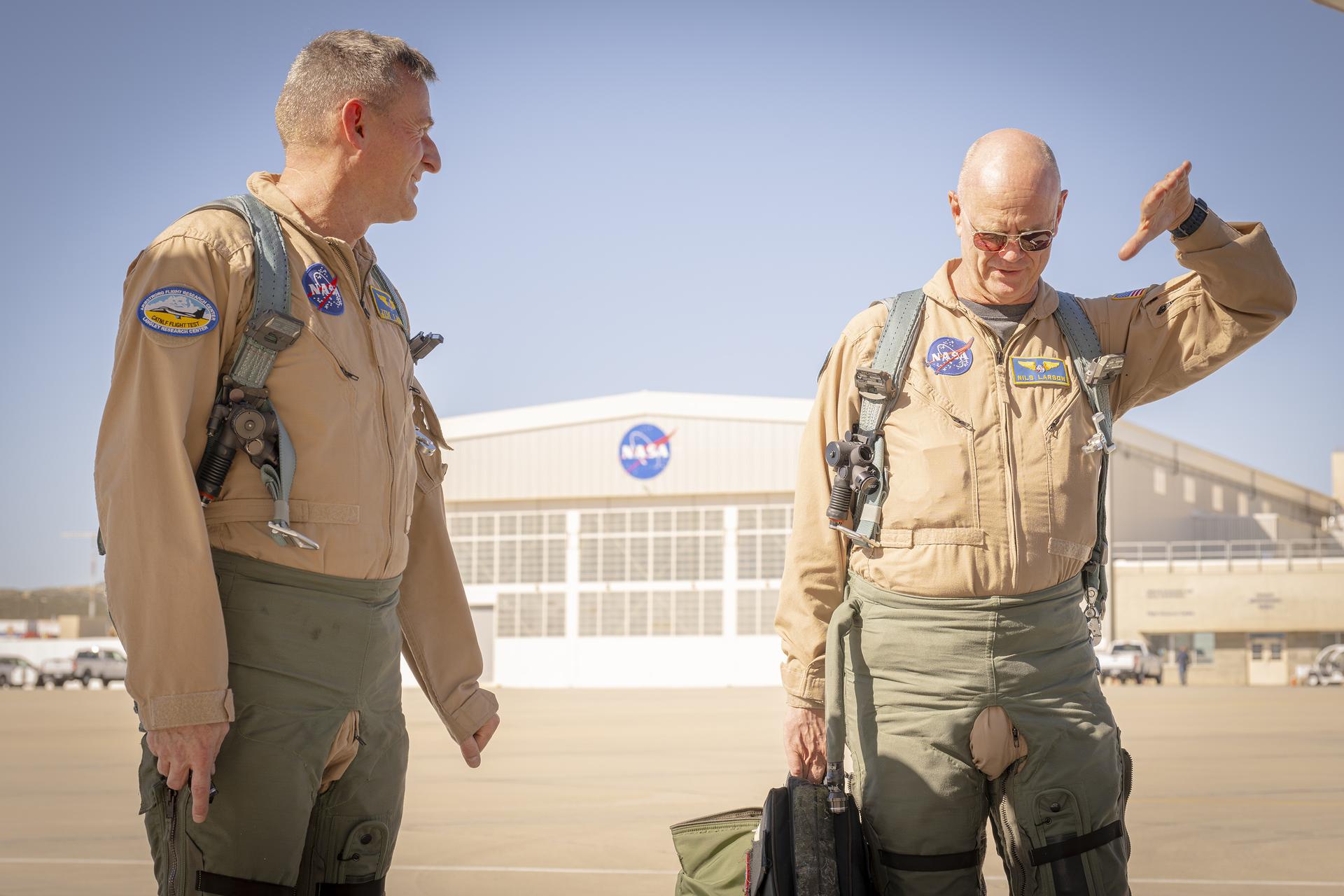
Every NASA test flight — whether it’s studying new software, hardware, or the revolutionary technology of an experimental X-plane — relies on engineers, researchers, pilots, maintenance crew, control room operators, and many others working together.
“Experienced operators and engineers evaluate how things work in flight,” Ringelberg said. “Most new technologies are designed to work in a lab or can be tested in a wind tunnel or other facility, but you never really know how they’ll perform until you fly them.”
Preflight tests often include computer analysis, simulation, wind tunnel testing, and ground tests focused on an aircraft’s ability to withstand the forces of flight and the environments through which it may fly. After hardware or software is deemed safe to fly, researchers turn the mission over to the flight test team.
To support testing, NASA Armstrong maintains an aircraft fleet modified to create space for new hardware or instruments, as well as the ability to integrate new software. These aircraft are flying laboratories, and pilots are trained to accomplish experimental missions.
An F-15 research aircraft sits on the ramp at NASA’s Armstrong Flight Research Center in Edwards, California, on Tuesday, March 17, 2026. NASA pilots Jim Less, front seat, and Carrie Worth prepare for the flight. The agency’s Crossflow Attenuated Natural Laminar Flow (CATNLF) test article is attached to the bottom of the F-15. The project aims to lower fuel costs for future commercial aircraft by testing a scale-model wing designed to improve laminar flow.NASA/Carla Escamilla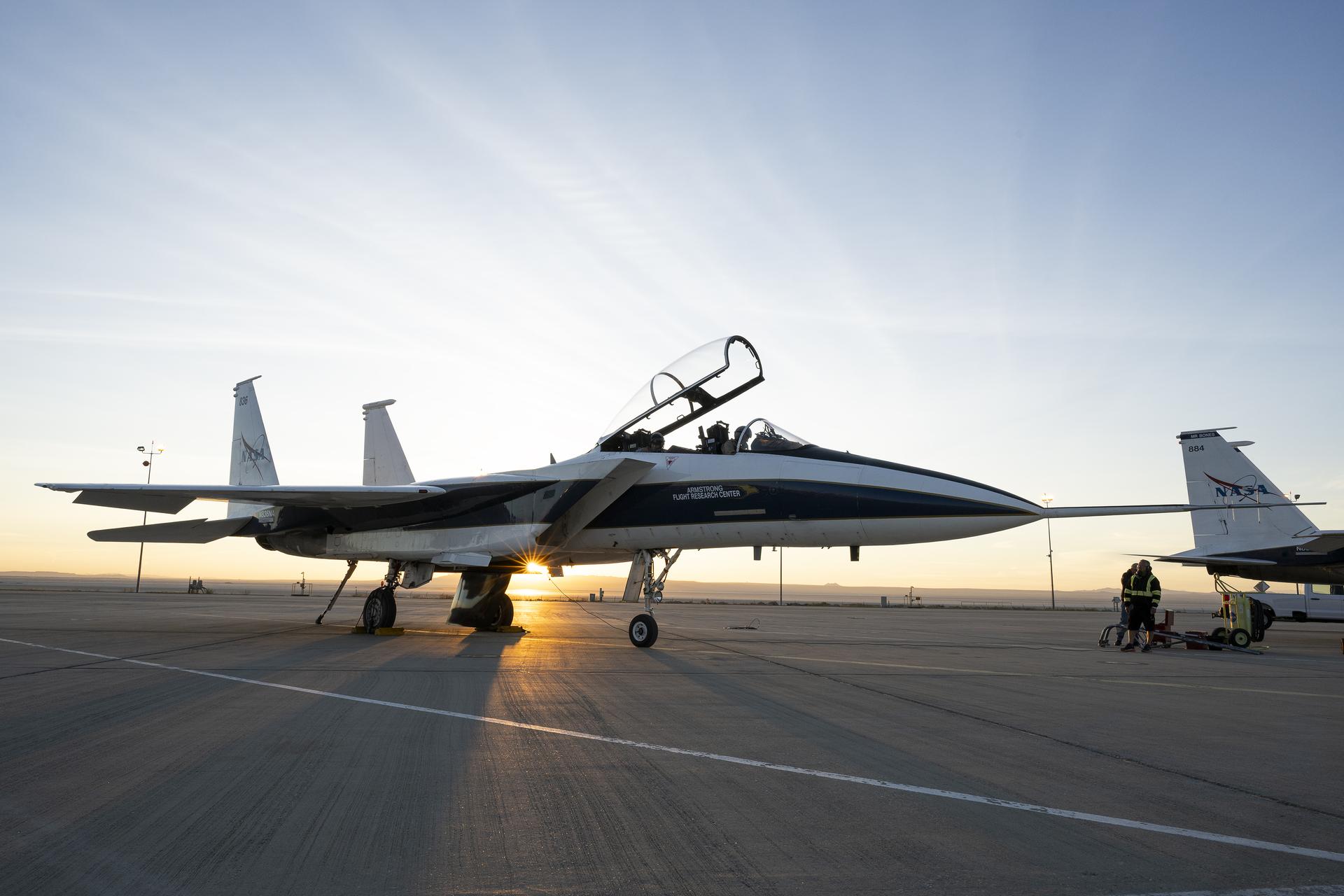
For example, flight testing recently helped NASA gather critical data on laminar flow, or the smooth flow of air, over a wing. The work could lower fuel costs for future airliners. Computer modeling, wind tunnel tests, and other methods helped advance the research, but to find out even more about how the wing concept could reduce drag for future airliners, NASA used a scale model in actual flight.
NASA researchers strapped the Crossflow Attenuated Natural Laminar Flow (CATNLF) model wing to the belly of one of NASA Armstrong’s F-15s. The arrangement allowed them to collect all the information they would need without doing the extensive, costly modifications required to install a full-scale wing on an aircraft.
After a flight series is complete, engineers and researchers analyze the data. Did the instrument work as designed? Did the experimental aircraft perform safely at a high altitude? Did the software operate as planned? Each test raises its own set of questions to evaluate.
NASA continues working with academia, the Department of War, and industry partners to advance U.S. aviation through flight test and bring new benefits to the flying public.
Share Details Last Updated Jun 22, 2026 EditorDede DiniusContactTeresa Whitingteresa.whiting@nasa.gov Related Terms Explore More 9 min read ARMD Research Solicitations (Updated June 23) Article 11 hours ago 3 min read NASA’s Experimental Fabrication Branch Fuels Aircraft Innovation Article 1 day ago 5 min read NASA, USGS Scientists Go Rock Hounding in California’s High Desert Article 2 weeks ago Keep Exploring Discover More Topics From NASAMissions
Humans in Space
Climate Change
Solar System
This is How NASA Flight Tests New Technology
Flight tests are a big part of how NASA turns breakthrough ideas into reality. From flying humans faster than the speed of sound to proving designs that helped shape the space shuttle, flight testing transforms bold concepts into safer, more efficient technologies that benefit the public.
“Flight tests are a way to safely and effectively prove new technology, which helps certification authorities certify equipment,” said Wayne Ringelberg, chief pilot at NASA’s Armstrong Flight Research Center in Edwards, California. “It helps industry iterate and make systems better, and it promotes research in areas where new ideas can be developed.”
For nearly 80 years, teams at NASA Armstrong have used flight testing in the Southern California desert to push the limits of aerodynamics and advance aviation. Thanks to that work, NASA-developed innovations are aboard every U.S. commercial aircraft and inside every control tower today.
“The space side of NASA uses flight test, too. Every mission, like Artemis II, is never routine,” Ringelberg said. “Everything we’re doing when flying a test mission is something new or different.”
NASA test pilots Jim Less, left, and Nils Larson walk away from a hangar at NASA’s Armstrong Flight Research Center in Edwards, California, on Thursday, Feb. 4, 2026. The pilots support the agency’s Crossflow Attenuated Natural Laminar Flow (CATNLF) project, which aims to lower fuel costs for future commercial aircraft by testing a scale-model wing designed to improve laminar flow.NASA/Christopher LC ClarkEvery NASA test flight — whether it’s studying new software, hardware, or the revolutionary technology of an experimental X-plane — relies on engineers, researchers, pilots, maintenance crew, control room operators, and many others working together.
“Experienced operators and engineers evaluate how things work in flight,” Ringelberg said. “Most new technologies are designed to work in a lab or can be tested in a wind tunnel or other facility, but you never really know how they’ll perform until you fly them.”
Preflight tests often include computer analysis, simulation, wind tunnel testing, and ground tests focused on an aircraft’s ability to withstand the forces of flight and the environments through which it may fly. After hardware or software is deemed safe to fly, researchers turn the mission over to the flight test team.
To support testing, NASA Armstrong maintains an aircraft fleet modified to create space for new hardware or instruments, as well as the ability to integrate new software. These aircraft are flying laboratories, and pilots are trained to accomplish experimental missions.
An F-15 research aircraft sits on the ramp at NASA’s Armstrong Flight Research Center in Edwards, California, on Tuesday, March 17, 2026. NASA pilots Jim Less, front seat, and Carrie Worth prepare for the flight. The agency’s Crossflow Attenuated Natural Laminar Flow (CATNLF) test article is attached to the bottom of the F-15. The project aims to lower fuel costs for future commercial aircraft by testing a scale-model wing designed to improve laminar flow.NASA/Carla EscamillaFor example, flight testing recently helped NASA gather critical data on laminar flow, or the smooth flow of air, over a wing. The work could lower fuel costs for future airliners. Computer modeling, wind tunnel tests, and other methods helped advance the research, but to find out even more about how the wing concept could reduce drag for future airliners, NASA used a scale model in actual flight.
NASA researchers strapped the Crossflow Attenuated Natural Laminar Flow (CATNLF) model wing to the belly of one of NASA Armstrong’s F-15s. The arrangement allowed them to collect all the information they would need without doing the extensive, costly modifications required to install a full-scale wing on an aircraft.
After a flight series is complete, engineers and researchers analyze the data. Did the instrument work as designed? Did the experimental aircraft perform safely at a high altitude? Did the software operate as planned? Each test raises its own set of questions to evaluate.
NASA continues working with academia, the Department of War, and industry partners to advance U.S. aviation through flight test and bring new benefits to the flying public.
Share Details Last Updated Jun 22, 2026 EditorDede DiniusContactTeresa Whitingteresa.whiting@nasa.gov Related Terms Explore More 9 min read ARMD Research Solicitations (Updated June 23) Article 5 hours ago 3 min read NASA’s Experimental Fabrication Branch Fuels Aircraft Innovation Article 1 day ago 5 min read NASA, USGS Scientists Go Rock Hounding in California’s High Desert Article 2 weeks ago Keep Exploring Discover More Topics From NASAMissions
Humans in Space
Climate Change
Solar System
Hanging in the Balance
Hanging in the Balance
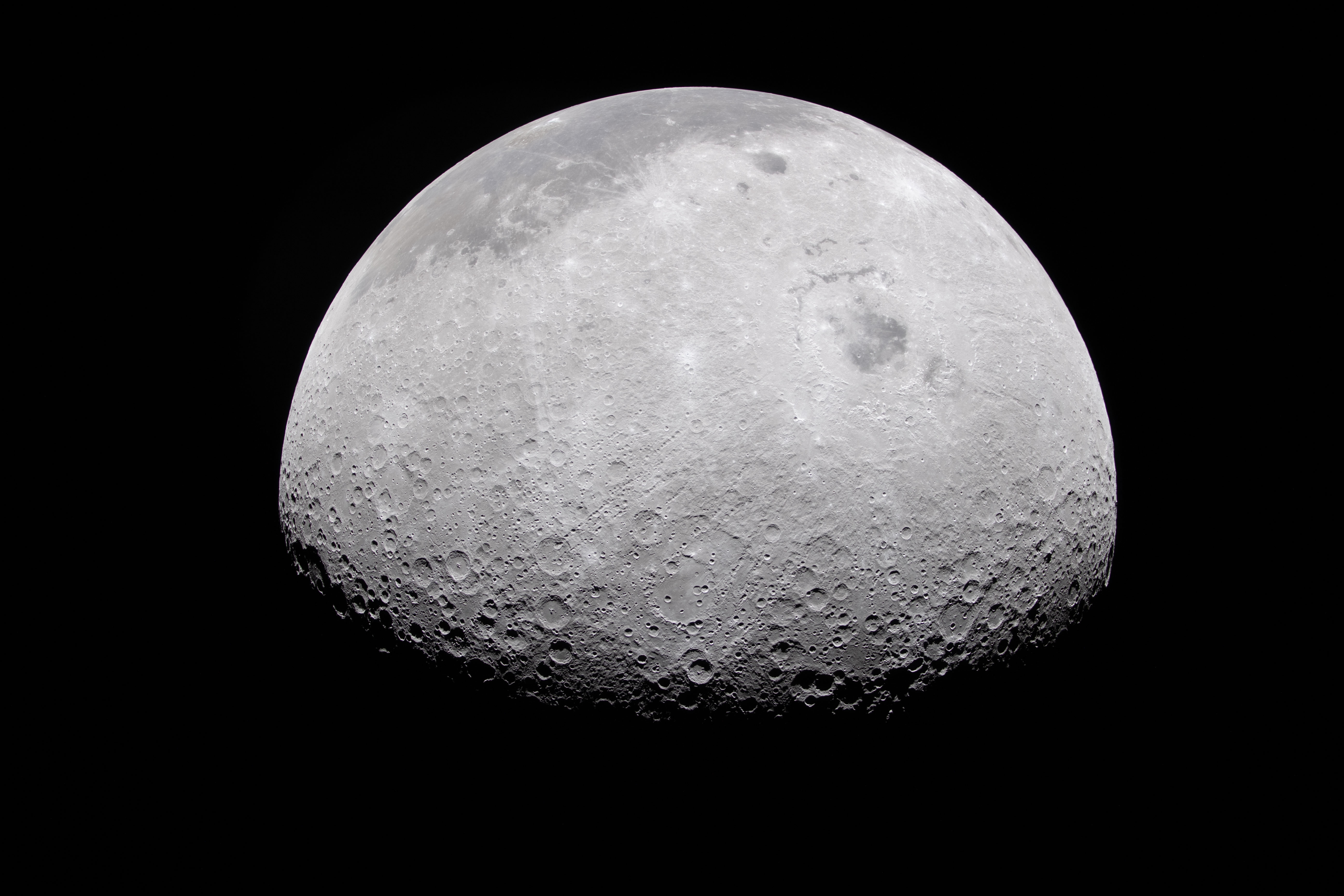
The Moon appears half-illuminated in this photo captured by the Artemis II crew on flight day 6. The terminator – the difference between light and darkness – provides a stark contrast and even greater perspective of the Moon’s rocky, uneven, and otherworldly surface features. The near side, which is what we can see from Earth, appears in the dark gray regions at the top of this image.
Revisit imagery from the Artemis II mission.
Image credit: NASA
Hanging in the Balance
The Moon appears half-illuminated in this photo captured by the Artemis II crew on flight day 6. The terminator – the difference between light and darkness – provides a stark contrast and even greater perspective of the Moon’s rocky, uneven, and otherworldly surface features. The near side, which is what we can see from Earth, appears in the dark gray regions at the top of this image.
Revisit imagery from the Artemis II mission.
Image credit: NASA
ARMD Research Solicitations (Updated June 23)
9 min read
Preparations for Next Moonwalk Simulations Underway (and Underwater) NASA / Lillian Gipson/Getty Images
THIS PAGE WAS UPDATED ON JUNE 23, 2026
This Aeronautics Research Mission Directorate (ARMD) solicitations page compiles the opportunities to collaborate with NASA’s aeronautical innovators and/or contribute to their research to enable new and improved air transportation systems.
Most opportunities to participate in research are officially announced through the Web-based NASA Solicitation and Proposal Integrated Review and Evaluation System, better known as NSPIRES. You are encouraged to visit the NSPIRES web site, create an account, and sign up for automated email announcements.
Other types of collaborative opportunities, such as those involving Requests for Information or academic research contests, also are included on this page.
This ARMD Solicitations page has four major sections:
- Quick list of open solicitations with key dates listed.
- Current open solicitations with more details and helpful links.
- Closed solicitations in case it is helpful to see other examples of the kind of research opportunities NASA Aeronautics makes available.
- Summary of NASA’s Research Opportunities in Aeronautics (ROA) NASA Research Announcement (NRA) selection process.
August 3, 2026
Deadline for proposals on Open Fan Flight Demonstrations NRA
As part of NASA’s Advanced Air Vehicles Program, the Subsonic Vehicle Technologies and Tools project endeavors to advance knowledge, technologies, and concepts that enable accelerated introduction of radical aircraft and engine technologies across a range of vehicle classes.
This is achieved through partnerships with industry to ensure that these technologies are applicable to planned products to increase the chances of inclusion in future aircraft systems.
This research announcement solicits proposals for providing an open fan flight demonstration plan with optional accompanying risk reduction activities. The flight demonstration plan will inform the project of the scope of a possible future flight demonstration and provide insight into the roadmap, risk reduction areas, and areas of potential investment.
See the full research announcement text on SAM.gov.
Proposals Due: August 3, 2026, by 5:00 PM EDT
The Project F.I.R.E. team receives their “Future Game-Changer” award during the 2024 Gateways to Blue Skies forum held at NASA’s Ames Research Center in California. Gateways to Blue Skies is one of several Aeronautics Innovation Challenges open to the academic community.NASA / Brandon Torres Aeronautics Innovation Challenges – OPEN
NASA’s nationwide team of aeronautical innovators are committed to giving students of all ages opportunities to solve some of the biggest technical challenges facing the aviation community today. Through NASA-sponsored challenges and competitions, students representing multiple disciplines will put their skills to work by designing and building solutions to real-world problems.
See the Complete List of Challenges Currently Closed Solicitations NASA’s X-59 quiet supersonic research aircraft lifts off for its first flight Tuesday, Oct. 28, 2025, from U.S. Air Force Plant 42 in Palmdale, California. The aircraft’s first flight marks the start of flight testing for NASA’s Quesst mission, the result of years of design, integration, and ground testing and begins a new chapter in NASA’s aeronautics research legacy.NASA/Lori Losey NASA ARMD Aeronautics Flight Accelerator – CLOSED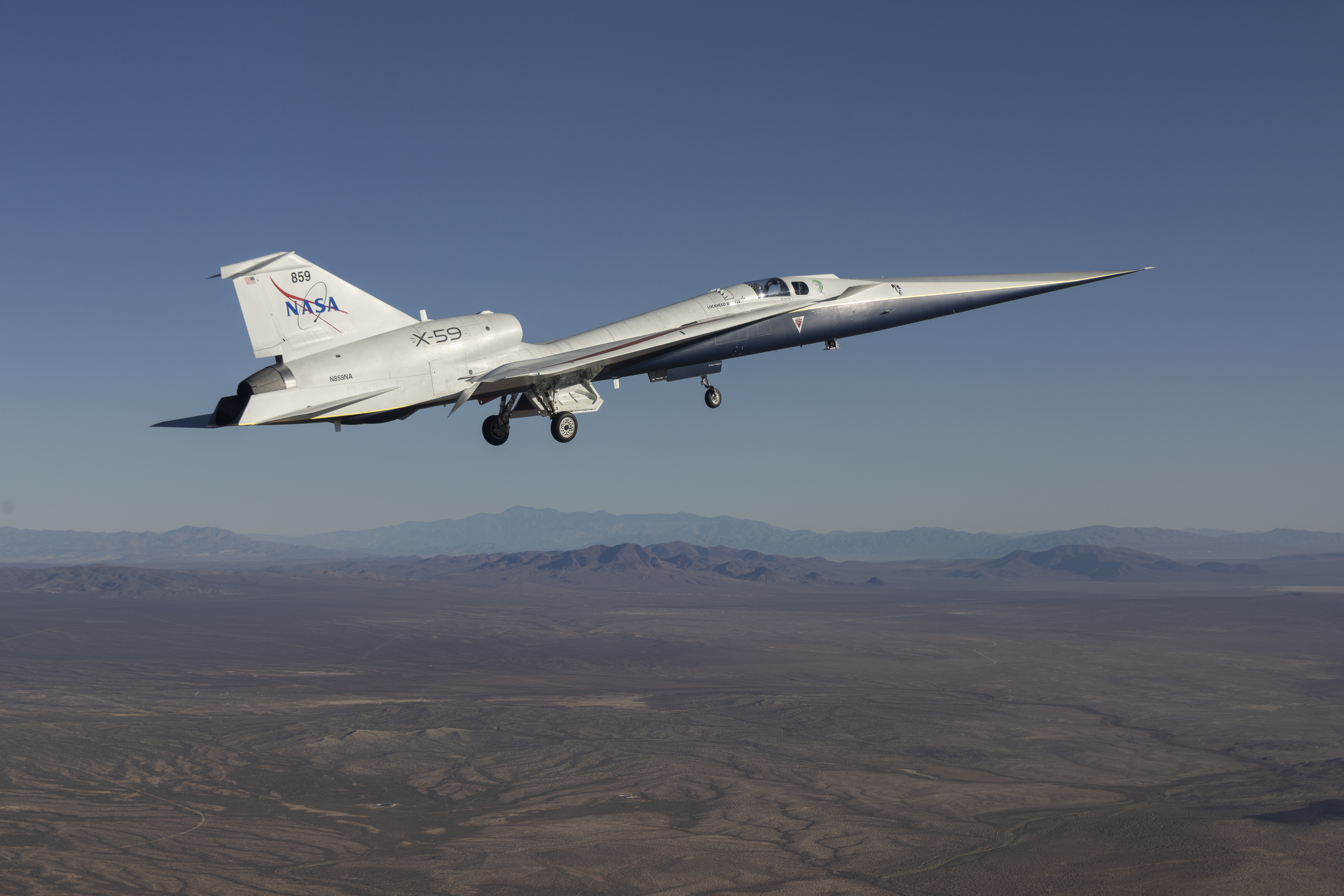
NASA’s Aeronautics Research Mission Directorate is seeking information from U.S. industry, academia, and government organizations regarding potential partnerships for research, development, and flight testing under the Aeronautics Flight Accelerator initiative. NASA is requesting input on technologies, concepts, and flight test campaigns suitable for cost shared maturation leading to flight within the next three years. Areas of interest span subsonic (including vertical lift), supersonic, and hypersonic flight technologies.
THIS IS NOT A REQUEST FOR PROPOSAL. NO PROPOSALS SHOULD BE SUBMITTED.
RFI Release Date: April 7, 2026
Responses Were Due: May 7, 2026, 1:00PM Pacific Daylight Time (PDT)
For more detailed information, see the RFI listing on SAM.gov.
High school students visit the Glenn Research Center Manufacturing Facility and learn about careers in the STEM manufacturing field.NASA/Marvin Smith FY26 NASA Aerospace Skilled Technical Workforce Hubs (NAS_Hub) – CLOSED
This opportunity seeks proposals to establish state or regionally focused Skilled Technical Workforce Hubs (NAS_Hubs) that will serve as strategic centers for developing and sustaining a skilled technical workforce aligned with aerospace industry and NASA mission needs. The NAS_Hub Notice of Funding Opportunity has been released and may be found in NASA’s Solicitation and Proposal Integrated Review and Evaluation System (NSPIRES) on the NAS_Hub landing page.
Key Dates
- Pre-Proposal Webinar: February 18, 2026, 2:00 to 3:00 p.m. ET
- Office Hours Session: March 3, 2026, 2:00 to 3:00 p.m. ET
- Proposal Deadline: March 23, 2026, at 11:59 p.m. ET
- Anticipated Award Notification: June 2026
About the Opportunity
The rapid expansion of the space economy and renewed national priorities in human space exploration have created an urgent demand for a robust skilled technical workforce—individuals in critical science- and engineering-based roles who do not require a bachelor’s degree. To address nationwide shortages and ensure U.S. competitiveness in aerospace and defense, NASA’s Office of STEM Engagement is launching the NASA Aerospace Skilled Technical Workforce Hubs (NAS_Hub) initiative.
Through this notice NASA seeks lead organizations to establish hubs that:
- Collaborate with aerospace employers to align education and training with industry-defined workforce needs.
- Partner with community colleges and high school Career and Technical Education programs to deliver hands-on, industry-aligned learning experiences.
- Coordinate with state or regional workforce development system.
- Build clear and sustainable employment pathways into high-demand aerospace technical careers.
NAS_Hubs will serve as focal points for aligning education, workforce, industry, and government partners to accelerate workforce readiness over a three-year period of performance.
Eligibility
Eligible applicants include:
- State, county, city, township, special district, and tribal governments
- Public and private institutions of higher education
- Nonprofit organizations
- For-profit organizations and small businesses
Proposals must include partnerships with, at a minimum:
- Three aerospace industry collaborators supporting NASA’s work
- Community college career and technical education program
- High school career and technical education program
- State or regional workforce development system
- NASA Center or other NASA facility
Award Information
- Maximum Annual Award: $500,000
- Maximum Total Award: $1,500,000 over three years
- Cost Sharing: Not required
How to Apply
Proposals must be submitted electronically via NSPIRES. Registration in NSPIRES and an active SAM.gov registration are required.
Pre-Proposal Webinar and Technical Assistance
NASA will host an interactive pre-proposal webinar for the NAS_Hub opportunity on Feb. 18, 2026, from 2:00 to 3:00 p.m. ET. This session will provide an in-depth overview of this funding opportunity, including program goals, eligibility requirements, proposal preparation guidance, and submission tips. Proposers will also have the opportunity to receive technical assistance and clarification from NASA staff. Prior to attending a webinar, proposers are strongly encouraged to review the full NAS_Hub notice and to check the NAS_Hub landing page in NSPIRES regularly for updates and additional guidance.
Please note that registration is required for the webinar. Connection details will be provided upon completion of registration. Webinar dates, times, registration links, and connection information will be posted on the NAS_Hub landing page in NSPIRES, which also will feature recordings and presentation materials from the webinar after the event for those unable to attend.
Office Hours Session
March 3, 2026, 2:00 to 3:00 p.m. ET
Last opportunity for questions prior to the proposal deadline. Join the office hours session here.
Contact Information
For technical assistance with NSPIRES
NSPIRES Help Desk available Monday–Friday, 8:00 AM–6:00 PM ET
(202) 479-9376
nspires-help@nasaprs.com
Program Contact
Maria Arredondo
Next Gen STEM Program Manager
NASA Office of STEM Engagement
Mary W. Jackson NASA Headquarters
Email: NAS_Hub@nasaprs.com
Advanced Capabilities for Emergency Response Operations RFI – CLOSEDView the full ACERO RFI announcement here.
NASA’s Advanced Capabilities for Emergency Response Operations (ACERO) project used this request for information to identify technologies that addressed current challenges facing the wildland firefighting community. NASA was seeking information on data collection, airborne connectivity and communications solutions, unmanned aircraft systems traffic management, aircraft operations and autonomy, and more. This would support development of a partnership strategy for future collaborative demonstrations.
Interested parties were requested to respond to this notice with an information package submitted via https://nari.arc.nasa.gov/acero-rfi no later than 4 pm ET, October 15, 2023. Submissions were accepted only from U.S. companies.
Advanced Air Mobility Mission RFI – CLOSEDView the full AAM RFI announcement here.
This request for information is being used to gather market research for NASA to make informed decisions regarding potential partnership strategies and future research to enable Advanced Air Mobility (AAM). NASA is seeking information from public, private, and academic organizations to determine technical needs and community interests that may lead to future solicitations regarding AAM research and development.
This particular RFI is just one avenue of multiple planned opportunities for formal feedback on or participation in NASA’s AAM Mission-related efforts to develop these requirements and help enable AAM.
The respond by date for this RFI closed on Feb. 1, 2025, at 6 p.m. EST.
ROA-2025 NRA Amendment 1 – CLOSEDAdvanced Air Vehicles Program Fellowship Opportunities
(View the full ROA-2025 NRA Amendment 1 text here.)
This announcement solicits proposals from accredited U.S. institutions for research training grants to begin the academic year. This Notice of Funding Opportunity is designed to support independently conceived research projects by highly qualified graduate students in disciplines needed to help advance NASA’s mission, thus affording these students the opportunity to directly contribute to advancements in STEM-related areas of study. These opportunities are focused on innovation and the generation of measurable research results that contribute to NASA’s current and future science and technology goals.
Research proposals are sought to address the key challenges summarized in the Elements section at the end of the Amendment 1 document, and which reference NASA’s Hypersonic Technology project.
Reflecting the Fiscal Year 2026 budget changes, the Transformational Tools & Technologies project opportunities originally described in this announcement were cancelled. Proposals citing this project will not be evaluated.
Notices of Intent are not required.
A budget breakdown for each proposal is required, detailing the allocation of the award funds by year. The budget document may adhere to any format or template provided by the applicant’s institution. Two pre-proposal teleconferences for potential proposers will be held and meeting links will be posted on NSPIRES.
Proposals were due by 5 p.m. EDT on June 11, 2025.
NASA Research Opportunities in AeronauticsCompetition for NRA awards is open to both academia and industry.
The current open solicitations for ARMD Research Opportunities are ROA-2024 and ROA-2025.
Here is some general information to know about the NRA process.
- NRA solicitations are released by NASA Headquarters through the Web-based NASA Solicitation and Proposal Integrated Review and Evaluation System (NSPIRES).
- All NRA technical work is defined and managed by project teams within these four programs: Advanced Air Vehicles Program, Airspace Operations and Safety Program, Integrated Aviation Systems Program, and Transformative Aeronautics Concepts Program.
- NRA awards originate from NASA’s Langley Research Center in Virginia, Ames Research Center in California, Glenn Research Center in Cleveland, and Armstrong Flight Research Center in California.
- Competition for NRA awards is full and open.
- Participation is open to all categories of organizations, including educational institutions, industry, and nonprofits.
- Any updates or amendments to an NRA is posted on the appropriate NSPIRES web pages as noted in the Amendments detailed below.
- ARMD sends notifications of NRA updates through the NSPIRES email system. In order to receive these email notifications, you must be a Registered User of NSPIRES. However, note that NASA is not responsible for inadvertently failing to provide notification of a future NRA. Parties are responsible for regularly checking the NSPIRES website for updated NRAs.
Missions
Artemis
Aeronautics STEM
Explore NASA’s History
Share Details Last Updated Jun 23, 2026 EditorJim BankeContactJim Bankejim.banke@nasa.gov Related Terms