
Feed aggregator
Technology is changing our perspective on nature – at every scale
Nebraska’s Wide, Rolling Domain
- Earth
- Earth Observatory
- Image of the Day
- EO Explorer
- Topics
- More Content
- About
Nebraska’s Wide, Rolling Domain
- Earth
- Earth Observatory
- Image of the Day
- EO Explorer
- Topics
- More Content
- About
Explore JPL to Take Place Oct. 10, 11
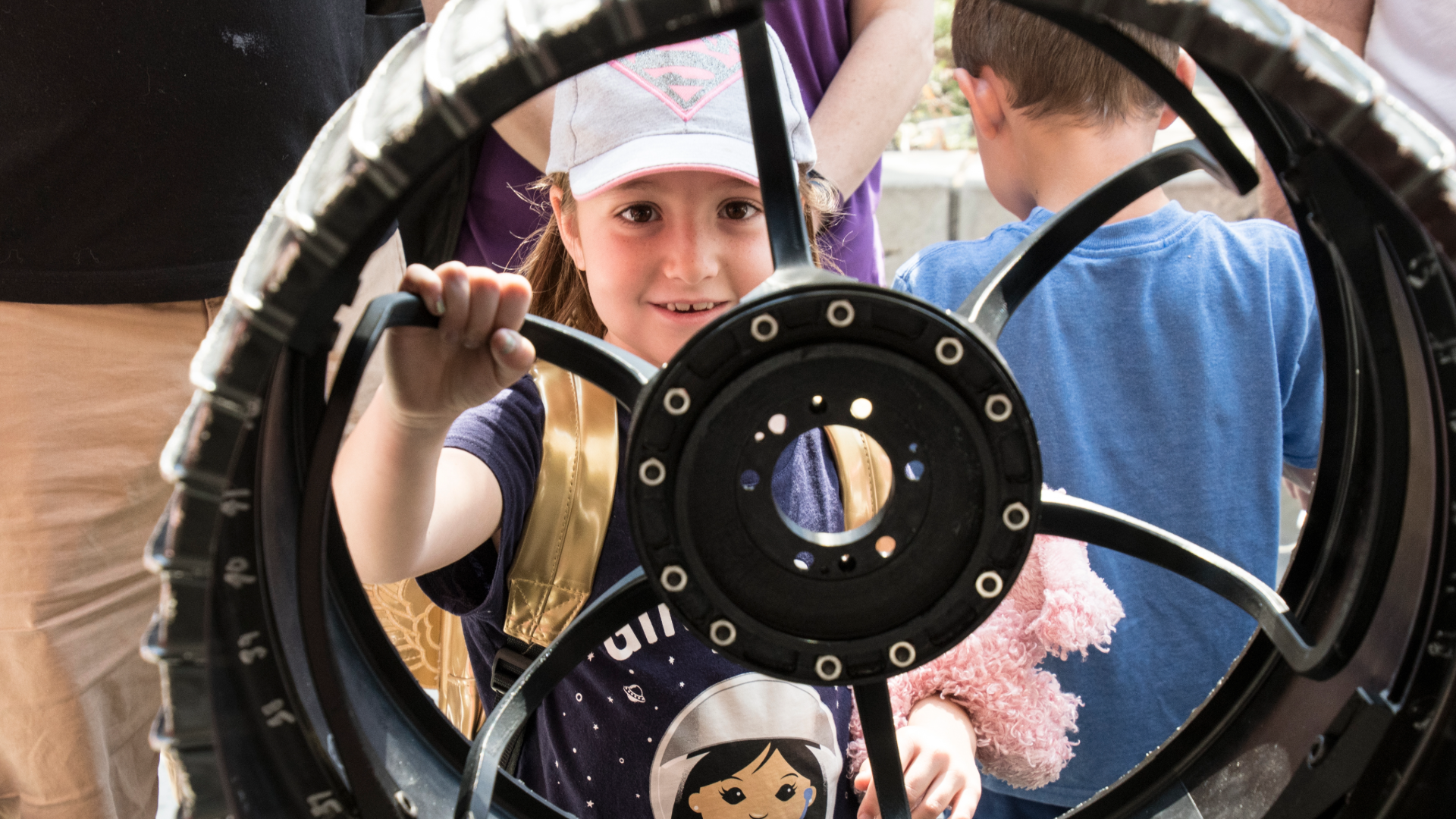
Celebrating its 90th anniversary this year, NASA’s Jet Propulsion Laboratory invites the public to its campus at the base of the San Gabriel Mountains in Southern California for an open-house event, Explore JPL. On Oct. 10 and 11, from 9:30 a.m. to 4 p.m. PDT, visitors will get the chance to visit JPL’s most iconic facilities and explore four thematic areas: Missions That Changed the World, Moon to Mars, In Flight, and Makerspace.
Tickets are free but very limited and have gone quickly for past Explore JPL events. They will be available on the Explore JPL webpage at 9 a.m. PDT Saturday, Aug. 29, and will be distributed on a first-come, first-served basis, with a maximum of five tickets per requestor. Orders for more than five tickets may be subject to cancellation. Tickets will be provided for specific time slots and must be reserved for specific names. Attendees will not be admitted to JPL before the designated time printed on their ticket.
A division of Caltech in Pasadena, California, JPL traces its origins to rocket-propulsion development in 1936. By 1958, the lab had built and helped launch America’s first satellite, Explorer 1. That same year, Congress established NASA, and JPL became a part of the agency. Since then, JPL has managed such historic missions as Voyager, Galileo, Cassini, the Mars Exploration Rover program, the Perseverance Mars rover, Europa Clipper, and many more.
Among other highlights, Explore JPL guests will get to:
- Visit JPL’s legendary Space Flight Operations Facility, a National Historic Landmark where engineers send commands and receive data from spacecraft billions of miles away.
- Discover the Spacecraft Assembly Facility and JPL Machine Shop, where precision spacecraft components are crafted.
- See the latest cutting-edge innovations in robotics research, from autonomous lunar rovers to search-and-rescue robots.
- Get up close with full-scale models of the Perseverance Mars rover, Voyager, and Galileo.
- Step inside the Microdevices Laboratory to see how miniature technologies developed there are shaping the future of space exploration and Earth science.
To attend Explore JPL, visitors must have their tickets in hand and anyone age 18 or over must show government-issued identification. Tickets are not transferable and cannot be sold. Children under age 2 do not require a ticket, but experiences at the event are not intended for very young guests.
Visitors may not bring these items to JPL: weapons or explosives of any kind, incendiary devices, glass containers, alcohol, cannabis or illegal drugs, pets (except certified service animals), banners or signs, flags, boom boxes, air horns, musical instruments, and professional camera equipment with detachable telephoto lenses. Use of laser pointers or whistles is not allowed. No bags, backpacks, or hard-sided coolers are permitted, either, except small purses and diaper bags. Drones are not allowed to fly over JPL under any circumstances. Skates, skateboards, scooters, Segways, and bicycles are not permitted inside the event, as the venues are crowded with pedestrians.
Vehicles entering JPL property are subject to inspection. Parking is free.
Follow JPL on Facebook, X, and Instagram.
To get a virtual tour of JPL, visit:
https://www. jpl.nasa.gov/virtual-tour/
Media Contact
JPL-media@jpl.nasa.gov
Jet Propulsion Laboratory
VoyagerVoyager 1 and its twin Voyager 2 are the only spacecraft ever to operate outside the heliosphere, the protective bubble…
Mars 2020: Perseverance RoverNASA’s Mars Perseverance rover seeks signs of ancient life and collects samples of rock and regolith for possible Earth return.
Europa Clipper
Explore JPL to Take Place Oct. 10, 11
Celebrating its 90th anniversary this year, NASA’s Jet Propulsion Laboratory invites the public to its campus at the base of the San Gabriel Mountains in Southern California for an open-house event, Explore JPL. On Oct. 10 and 11, from 9:30 a.m. to 4 p.m. PDT, visitors will get the chance to visit JPL’s most iconic facilities and explore four thematic areas: Missions That Changed the World, Moon to Mars, In Flight, and Makerspace.
Tickets are free but very limited and have gone quickly for past Explore JPL events. They will be available on the Explore JPL webpage at 9 a.m. PDT Sunday, Aug. 29, and will be distributed on a first-come, first-served basis, with a maximum of five tickets per requestor. Orders for more than five tickets may be subject to cancellation. Tickets will be provided for specific time slots and must be reserved for specific names. Attendees will not be admitted to JPL before the designated time printed on their ticket.
A division of Caltech in Pasadena, California, JPL traces its origins to rocket-propulsion development in 1936. By 1958, the lab had built and helped launch America’s first satellite, Explorer 1. That same year, Congress established NASA, and JPL became a part of the agency. Since then, JPL has managed such historic missions as Voyager, Galileo, Cassini, the Mars Exploration Rover program, the Perseverance Mars rover, Europa Clipper, and many more.
Among other highlights, Explore JPL guests will get to:
- Visit JPL’s legendary Space Flight Operations Facility, a National Historic Landmark where engineers send commands and receive data from spacecraft billions of miles away.
- Discover the Spacecraft Assembly Facility and JPL Machine Shop, where precision spacecraft components are crafted.
- See the latest cutting-edge innovations in robotics research, from autonomous lunar rovers to search-and-rescue robots.
- Get up close with full-scale models of the Mars Perseverance rover, Voyager, and Galileo.
- Step inside the Microdevices Laboratory to see how miniature technologies developed there are shaping the future of space exploration and Earth science.
To attend Explore JPL, visitors must have their tickets in hand and anyone age 18 or over must show government-issued identification. Tickets are not transferable and cannot be sold. Children under age 2 do not require a ticket, but experiences at the event are not intended for very young guests.
Visitors may not bring these items to JPL: weapons or explosives of any kind, incendiary devices, glass containers, alcohol, cannabis or illegal drugs, pets (except certified service animals), banners or signs, flags, boom boxes, air horns, musical instruments, and professional camera equipment with detachable telephoto lenses. Use of laser pointers or whistles is not allowed. No bags, backpacks, or hard-sided coolers are permitted, either, except small purses and diaper bags. Drones are not allowed to fly over JPL under any circumstances. Skates, skateboards, scooters, Segways, and bicycles are not permitted inside the event, as the venues are crowded with pedestrians.
Vehicles entering JPL property are subject to inspection. Parking is free.
Follow JPL on Facebook, X, and Instagram.
To get a virtual tour of JPL, visit:
https://www. jpl.nasa.gov/virtual-tour/
Media Contact
JPL-media@jpl.nasa.gov
Jet Propulsion Laboratory
VoyagerVoyager 1 and its twin Voyager 2 are the only spacecraft ever to operate outside the heliosphere, the protective bubble…
Mars 2020: Perseverance RoverNASA’s Mars Perseverance rover seeks signs of ancient life and collects samples of rock and regolith for possible Earth return.
Europa Clipper
The Best Place to Look for Alien Megastructures Might Be Moon Dust
Our search for technosignatures - clear signs of advanced civilizations beyond Earth - takes many forms. Many are driven by the famous Drake equation, which attempts to estimate how many technological civilizations there are in the Milky Way. However, there’s a big fat question mark at the end of that equation in the form of a variable intended to account for the “longevity” of a civilization. And to be clear, that doesn’t mean how long the civilization itself survives. It simply means how long it actively creates a signature that is detectable by our current technology. A new paper, available in pre-print on arXiv from Oxford astrophysicist Brian C. Lacki, argues that, since the chances of us overlapping in time with any such civilization are miniscule, we’re much more likely to find the ruins of a “dead” civilization - and, surprisingly, the best place to do so might be in our own solar system.
What Would Happen if the Sun Stopped? Part 1: The Infernal Reservoir
If the Sun's fusion shut off right now, you would not notice for a very long time. The first stop is understanding the Sun itself: a vast pile of gravitating matter where fusion is so absurdly inefficient that, pound for pound, a compost heap beats it.
LISA Could Double as an Asteroid Scale
One of the hardest things to calculate for an asteroid is its mass - but it is such a critical feature. It determines how much of an impact it would have if it hits something, or how many resources are potentially available on it. But to accurately measure it we typically use optical sensing and a guesstimate of its density based on its spectral profile. A new paper suggests a completely novel way to use the Laser Interferometer Space Antenna (LISA) flagship mission to potentially provide highly accurate mass calculations for nearby asteroids without any change in hardware.
Glaciers are secretly teeming with life
What does it take for an insect or worm to live full-time on a glacier?
NASA’s Chandra Finds Unexpected Fireworks in Aftermath of Stellar Explosions
To view this video please enable JavaScript, and consider upgrading to a web browser that
supports HTML5 video
The aftermath of a supernova, a stellar explosion, is usually a slowly fading cloud of hot gas. So when astronomers pointed NASA’s Chandra X-ray Observatory at the nearby galaxy Messier 83 (M83), they did not expect to find a population of supernova remnants, or the debris from these explosions, showing dramatic changes in their brightness. The new results were presented at the American Astronomical Society meeting in Pasadena, California, and published in The Astrophysical Journal.
The galaxy M83, located about 15 million light-years from Earth, is forming stars at a high rate. Researchers analyzed 14 years of Chandra data of the galaxy, spanning 2000 to 2014.
Using this extensive set of data, the researchers caught surprising variations in the X-ray brightness of sources previously identified as supernova remnants. The researchers expected supernova remnants older than a century or so to fade gradually in X-rays, but not change dramatically in brightness.
The team found that roughly half of the 22 X-ray sources associated with supernova remnants in their sample showed changes in X-ray brightness over the 14-year span of observations — a result that was completely unexpected.
“We knew that individual X-ray sources could vary dramatically,” said Andrea Prestwich, of the Catholic University of America who led the study. “But finding that so many supernova remnants were behaving this way was a real surprise. Something unusual is going on in these objects. Pinpointing the cause remains a challenge, as M83’s distance limits the detail we can observe.”
One of the 22 variable supernova remnants has a straightforward explanation: SN 1957D, the debris from a supernova first observed nearly 70 years ago, is ramming into material surrounding the explosion site, producing the observed X-ray flares. But this cannot explain the rest of the sample. There is no evidence to suggest that all 22 remnants were formed within the last century. Something else must be driving the variability.
The most likely explanation is that the team has uncovered a population of stellar survivors stars that lived through their partner’s destruction in a supernova explosion. In this scenario, each variable X-ray source began as a pair of massive stars orbiting each other. The more massive star collapsed and exploded as a supernova, leaving behind a black hole or ultra-dense neutron star. Its companion survived.
Galaxy M83 in X-ray and Optical Light. X-ray: NASA/CXC/SAO; Optical: NASA/ESA/AURA/STScI, Hubble Heritage Team, W. Blair (STScI/Johns Hopkins University) and R. O’Connell (University of Virginia); Image Processing: NASA/CXC/SAO/A. Jubett, L. Frattare and P. Edmonds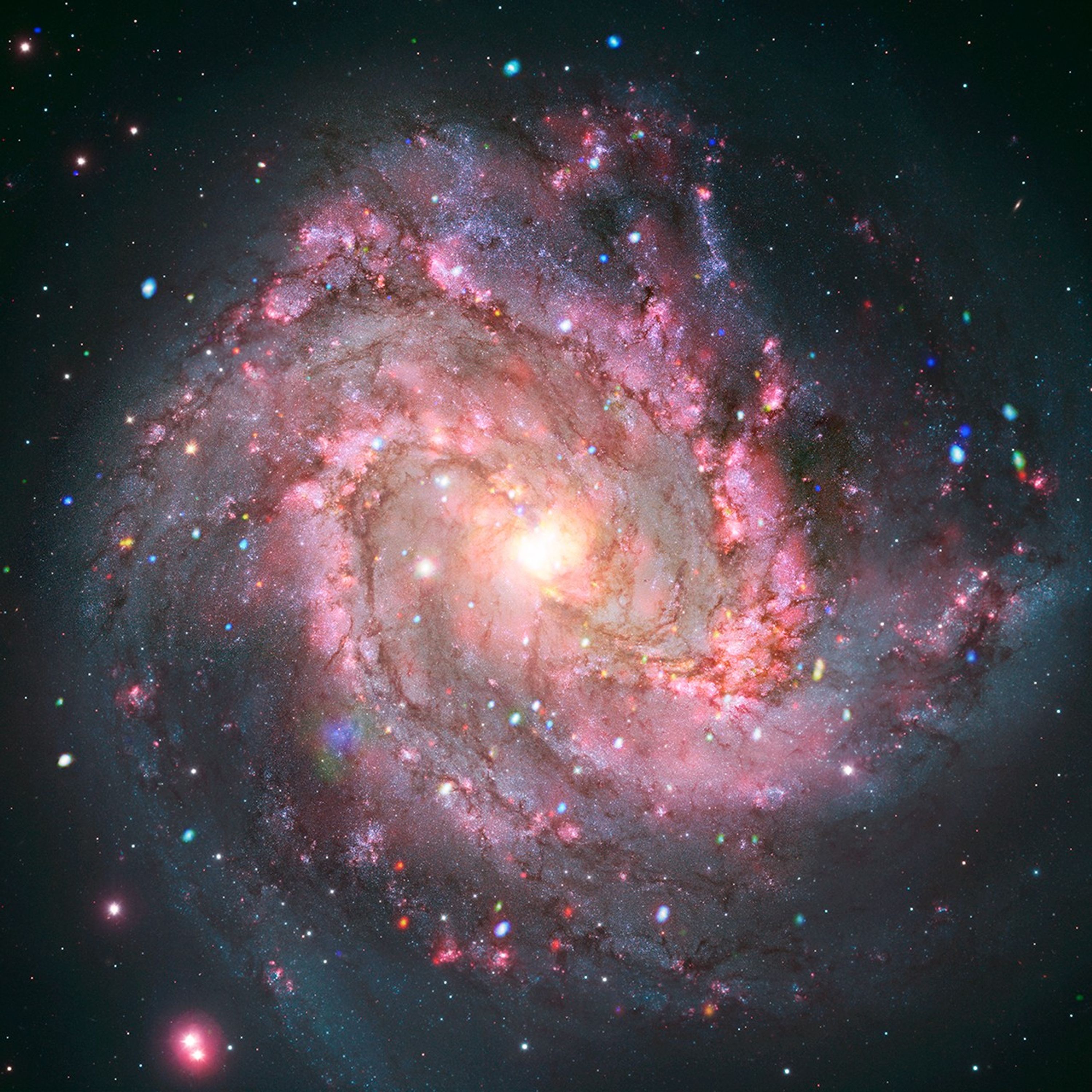
“It may be that this galaxy contains a collection of supernova remnants where one massive star survives the supernova and becomes locked into an orbit with a black hole or neutron star,” said co-author Michael McCollough of the Center for Astrophysics | Harvard & Smithsonian (CfA). “The neutron star or black hole can then start pulling material from the massive star’s surface.”
That infalling material is superheated by the intense gravitational pull, producing the X-rays Chandra detects. These types of systems, known as high-mass X-ray binaries (HMXBs), are among the most variable X-ray sources in the universe. Researchers say they may be the cause of the variations seen in M83’s supernova remnants.
Astronomers have known about HMXBs for decades, but the difference with this group in M83 is their connection to supernova remnants. Previously, only a handful of supernova remnants associated with HMXBs had been identified across observations of all galaxies. It is unprecedented to find more than 20 strong candidates in just one galaxy.
The authors found that the variable supernova remnants are in regions with higher concentrations of massive stars than in other parts of the galaxy, increasing the chances of a link between the remnants and HMXBs.
There is another possible explanation: Instead of pulling in material from a companion star, the black hole or neutron star may be recapturing some of the material blasted outward by the original explosion.
“This could be an example of cosmic recycling, where debris from the explosion falls back onto the very object the supernova created,” said co-author Roy Kilgard of Wesleyan University. “And it’s quite possible that both explanations are at play — different sources in our sample may have different origins.”
These results are not unique to M83. A follow-up study of the nearby star-forming galaxy M51 by Zoe Hoiland of Vassar College and Kilgard has uncovered a similar population of variable X-ray sources associated with supernova remnants, suggesting that such systems may be a feature of galaxies undergoing vigorous star formation.
This is a composite image of the galaxy M51 combining data from NASA’s Chandra X-ray Observatory (purple) with optical data (red, green and blue) taken with ground-based telescopes by a team of astrophotographers. A surprisingly high number of X-ray sources associated with supernova remnants in M51 show large changes in brightness, similar to the behavior seen in M83. Chandra X-ray Data: NASA/CXC/SAO; Astrobin/Optical Groundbased: C.Björk, T.Bähnck, S.Donoso, J.Gentillon, A. and D.Grelin, S.Guberski, R. Hall, T.Heuberger, J.Jacks, P.Kent, Br.Meyers, W.Ostling, N.Puig, T.Schaeffer, F.Schöfbänker, M.Vasilev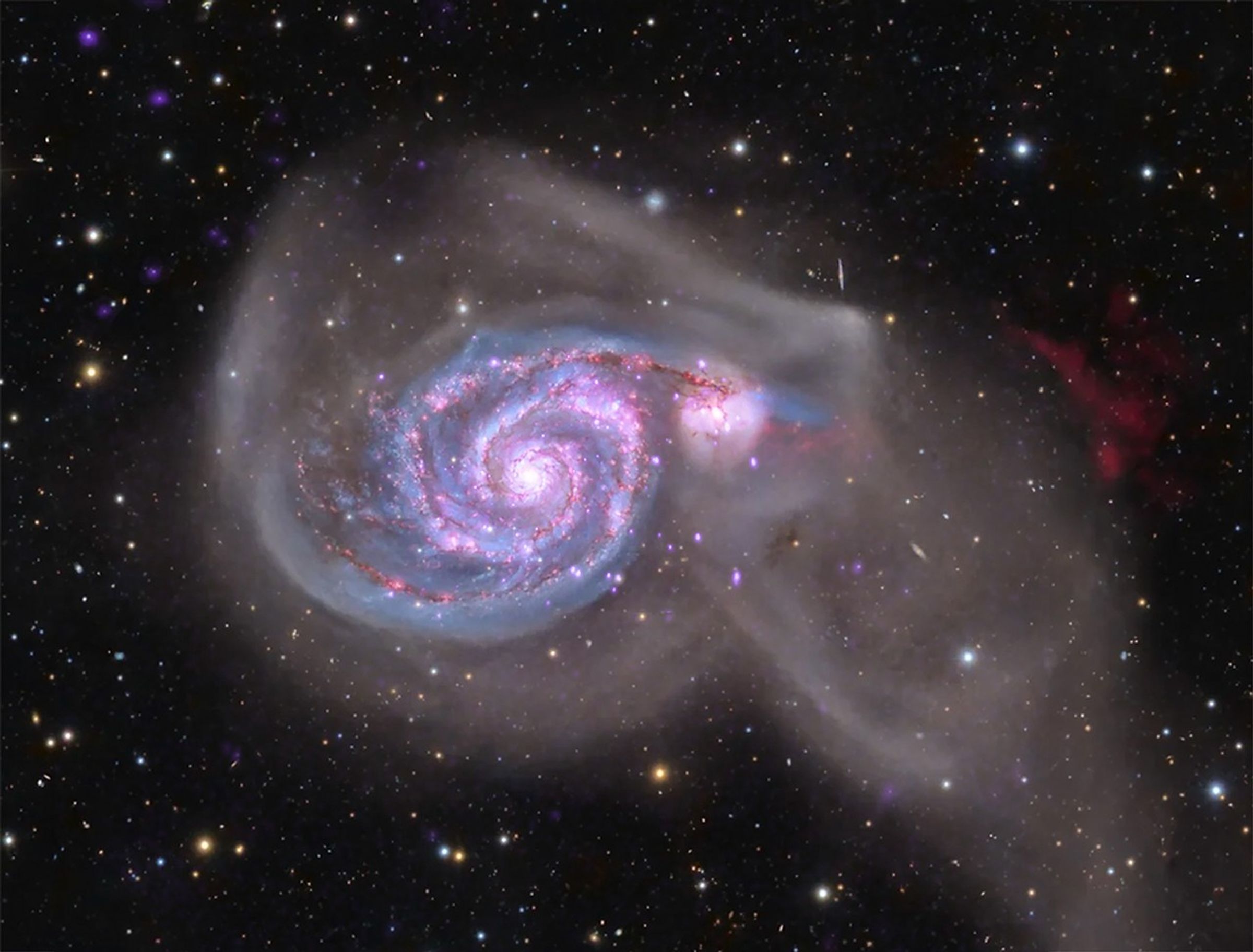
The Chandra data for M83 began with single observations in 2000 and 2001, followed by 10 observations from 2010 to 2011 and another observation in 2014.
NASA’s Marshall Space Flight Center in Huntsville, Alabama, manages the Chandra program. The Smithsonian Astrophysical Observatory’s Chandra X-ray Center controls science operations from Cambridge, Massachusetts, and flight operations from Burlington, Massachusetts.
Visual DescriptionThis release features a composite image of the nearby galaxy Messier 83, and short timelapse videos of two curious supernova remnants hidden inside.
In the composite image, Messier 83, or M83, is shown to have a spiral structure, viewed straight on. At the center is a brilliant white and yellow pool of light. From that light, spiral arms of hot pink cloud corkscrew out in wide, sweeping arches. The galaxy is covered in a faint grey haze, and flecked with red, green, blue, white, and yellow dots.
In an annotated version of the composite image, two tiny dots to our lower right of center are highlighted by white circles. These are two of the supernova remnants being considered by researchers. Each is examined further in a separate timelapse video.
Over a 14-year period from 2000 to 2014, astronomers pointed NASA’s X-ray observatory at the M83 galaxy. They discovered that about half of the X-ray sources believed to be supernova remnants, the aftermath of stellar explosions, were exhibiting dramatic changes in brightness. This result was entirely unexpected.
Those changes in brightness are highlighted in the timelapse videos. In each video, a series of static images flashes by, focused on one of the two X-ray sources once believed to be supernova remnants. In the videos, the X-ray sources appear as bright blue blobs with glowing cores. But in each image, taken months or years apart, the shapes change, as does the intensity of the blue color, and the brightness of the core. By presenting the substantively different images of the same objects one after another in quick succession, short timelapse videos are created.
The most likely explanation for the changes in brightness is that the team has uncovered a population of stellar survivors, stars that lived through an orbiting partner’s destruction in a supernova explosion. Material is being pulled from the surviving star onto the black hole or neutron star that formed in the supernova, a process known to cause rapid changes in X-ray brightness.
Read more from NASA’s Chandra X-ray Observatory
To learn more about NASA’s Chandra mission, visit:
https://science.nasa.gov/chandra
News Media ContactMegan Watzke
Chandra X-ray Center
Cambridge, Mass.
617-496-7998
mwatzke@cfa.harvard.edu
Joel Wallace
Marshall Space Flight Center, Huntsville, Alabama
256-544-0034
joel.w.wallace@nasa.gov
Share
Details Last Updated Jun 16, 2026 Editor Lee Mohon Contact Joel Wallace Location Marshall Space Flight Center Related Terms Explore More 5 min read NASA’s Chandra Discovers Possible Supernova Remnant in Galactic CenterArticle
5 days ago
1 min read Pretty in Pink
Saturn and its rings are prominently shown in this color image, along with three of…
Article
22 years ago
4 min read NASA Connects Little Red Dots with Chandra, Webb
Article
2 months ago
Keep Exploring Discover More Topics From NASA Chandra X-ray Observatory
The Chandra X-ray Observatory is the world’s most powerful X-ray telescope.
James Webb Space Telescope
Webb is the premier observatory of the next decade, serving thousands of astronomers worldwide. It studies every phase in the…
Hubble Space Telescope
Since its 1990 launch, the Hubble Space Telescope has changed our fundamental understanding of the universe.
Universe
NASA’s Chandra Finds Unexpected Fireworks in Aftermath of Stellar Explosions
To view this video please enable JavaScript, and consider upgrading to a web browser that
supports HTML5 video
The aftermath of a supernova, a stellar explosion, is usually a slowly fading cloud of hot gas. So when astronomers pointed NASA’s Chandra X-ray Observatory at the nearby galaxy Messier 83 (M83), they did not expect to find a population of supernova remnants, or the debris from these explosions, showing dramatic changes in their brightness. The new results were presented at the American Astronomical Society meeting in Pasadena, California, and published in The Astrophysical Journal.
The galaxy M83, located about 15 million light-years from Earth, is forming stars at a high rate. Researchers analyzed 14 years of Chandra data of the galaxy, spanning 2000 to 2014.
Using this extensive set of data, the researchers caught surprising variations in the X-ray brightness of sources previously identified as supernova remnants. The researchers expected supernova remnants older than a century or so to fade gradually in X-rays, but not change dramatically in brightness.
The team found that roughly half of the 22 X-ray sources associated with supernova remnants in their sample showed changes in X-ray brightness over the 14-year span of observations — a result that was completely unexpected.
“We knew that individual X-ray sources could vary dramatically,” said Andrea Prestwich, of the Catholic University of America who led the study. “But finding that so many supernova remnants were behaving this way was a real surprise. Something unusual is going on in these objects. Pinpointing the cause remains a challenge, as M83’s distance limits the detail we can observe.”
One of the 22 variable supernova remnants has a straightforward explanation: SN 1957D, the debris from a supernova first observed nearly 70 years ago, is ramming into material surrounding the explosion site, producing the observed X-ray flares. But this cannot explain the rest of the sample. There is no evidence to suggest that all 22 remnants were formed within the last century. Something else must be driving the variability.
The most likely explanation is that the team has uncovered a population of stellar survivors stars that lived through their partner’s destruction in a supernova explosion. In this scenario, each variable X-ray source began as a pair of massive stars orbiting each other. The more massive star collapsed and exploded as a supernova, leaving behind a black hole or ultra-dense neutron star. Its companion survived.
Galaxy M83 in X-ray and Optical Light. X-ray: NASA/CXC/SAO; Optical: NASA/ESA/AURA/STScI, Hubble Heritage Team, W. Blair (STScI/Johns Hopkins University) and R. O’Connell (University of Virginia); Image Processing: NASA/CXC/SAO/A. Jubett, L. Frattare and P. Edmonds“It may be that this galaxy contains a collection of supernova remnants where one massive star survives the supernova and becomes locked into an orbit with a black hole or neutron star,” said co-author Michael McCollough of the Center for Astrophysics | Harvard & Smithsonian (CfA). “The neutron star or black hole can then start pulling material from the massive star’s surface.”
That infalling material is superheated by the intense gravitational pull, producing the X-rays Chandra detects. These types of systems, known as high-mass X-ray binaries (HMXBs), are among the most variable X-ray sources in the universe. Researchers say they may be the cause of the variations seen in M83’s supernova remnants.
Astronomers have known about HMXBs for decades, but the difference with this group in M83 is their connection to supernova remnants. Previously, only a handful of supernova remnants associated with HMXBs had been identified across observations of all galaxies. It is unprecedented to find more than 20 strong candidates in just one galaxy.
The authors found that the variable supernova remnants are in regions with higher concentrations of massive stars than in other parts of the galaxy, increasing the chances of a link between the remnants and HMXBs.
There is another possible explanation: Instead of pulling in material from a companion star, the black hole or neutron star may be recapturing some of the material blasted outward by the original explosion.
“This could be an example of cosmic recycling, where debris from the explosion falls back onto the very object the supernova created,” said co-author Roy Kilgard of Wesleyan University. “And it’s quite possible that both explanations are at play — different sources in our sample may have different origins.”
These results are not unique to M83. A follow-up study of the nearby star-forming galaxy M51 by Zoe Hoiland of Vassar College and Kilgard has uncovered a similar population of variable X-ray sources associated with supernova remnants, suggesting that such systems may be a feature of galaxies undergoing vigorous star formation.
This is a composite image of the galaxy M51 combining data from NASA’s Chandra X-ray Observatory (purple) with optical data (red, green and blue) taken with ground-based telescopes by a team of astrophotographers. A surprisingly high number of X-ray sources associated with supernova remnants in M51 show large changes in brightness, similar to the behavior seen in M83. Chandra X-ray Data: NASA/CXC/SAO; Astrobin/Optical Groundbased: C.Björk, T.Bähnck, S.Donoso, J.Gentillon, A. and D.Grelin, S.Guberski, R. Hall, T.Heuberger, J.Jacks, P.Kent, Br.Meyers, W.Ostling, N.Puig, T.Schaeffer, F.Schöfbänker, M.VasilevThe Chandra data for M83 began with single observations in 2000 and 2001, followed by 10 observations from 2010 to 2011 and another observation in 2014.
NASA’s Marshall Space Flight Center in Huntsville, Alabama, manages the Chandra program. The Smithsonian Astrophysical Observatory’s Chandra X-ray Center controls science operations from Cambridge, Massachusetts, and flight operations from Burlington, Massachusetts.
Visual DescriptionThis release features a composite image of the nearby galaxy Messier 83, and short timelapse videos of two curious supernova remnants hidden inside.
In the composite image, Messier 83, or M83, is shown to have a spiral structure, viewed straight on. At the center is a brilliant white and yellow pool of light. From that light, spiral arms of hot pink cloud corkscrew out in wide, sweeping arches. The galaxy is covered in a faint grey haze, and flecked with red, green, blue, white, and yellow dots.
In an annotated version of the composite image, two tiny dots to our lower right of center are highlighted by white circles. These are two of the supernova remnants being considered by researchers. Each is examined further in a separate timelapse video.
Over a 14-year period from 2000 to 2014, astronomers pointed NASA’s X-ray observatory at the M83 galaxy. They discovered that about half of the X-ray sources believed to be supernova remnants, the aftermath of stellar explosions, were exhibiting dramatic changes in brightness. This result was entirely unexpected.
Those changes in brightness are highlighted in the timelapse videos. In each video, a series of static images flashes by, focused on one of the two X-ray sources once believed to be supernova remnants. In the videos, the X-ray sources appear as bright blue blobs with glowing cores. But in each image, taken months or years apart, the shapes change, as does the intensity of the blue color, and the brightness of the core. By presenting the substantively different images of the same objects one after another in quick succession, short timelapse videos are created.
The most likely explanation for the changes in brightness is that the team has uncovered a population of stellar survivors, stars that lived through an orbiting partner’s destruction in a supernova explosion. Material is being pulled from the surviving star onto the black hole or neutron star that formed in the supernova, a process known to cause rapid changes in X-ray brightness.
Read more from NASA’s Chandra X-ray Observatory
To learn more about NASA’s Chandra mission, visit:
https://science.nasa.gov/chandra
News Media ContactMegan Watzke
Chandra X-ray Center
Cambridge, Mass.
617-496-7998
mwatzke@cfa.harvard.edu
Joel Wallace
Marshall Space Flight Center, Huntsville, Alabama
256-544-0034
joel.w.wallace@nasa.gov
Share
Details Last Updated Jun 15, 2026 Editor Lee Mohon Contact Joel Wallace Location Marshall Space Flight Center Related Terms Explore More 5 min read NASA’s Chandra Discovers Possible Supernova Remnant in Galactic CenterArticle
4 days ago
1 min read Pretty in Pink
Saturn and its rings are prominently shown in this color image, along with three of…
Article
22 years ago
4 min read NASA Connects Little Red Dots with Chandra, Webb
Article
2 months ago
Keep Exploring Discover More Topics From NASA Chandra X-ray Observatory
The Chandra X-ray Observatory is the world’s most powerful X-ray telescope.
James Webb Space Telescope
Webb is the premier observatory of the next decade, serving thousands of astronomers worldwide. It studies every phase in the…
Hubble Space Telescope
Since its 1990 launch, the Hubble Space Telescope has changed our fundamental understanding of the universe.
Universe
Russia seeks mathematician’s extradition
Mikhail Verbitsky was detained at an Armenian airport last Thursday on charges of inciting terrorism
NASA Astronauts to Answer Questions from New Jersey Students
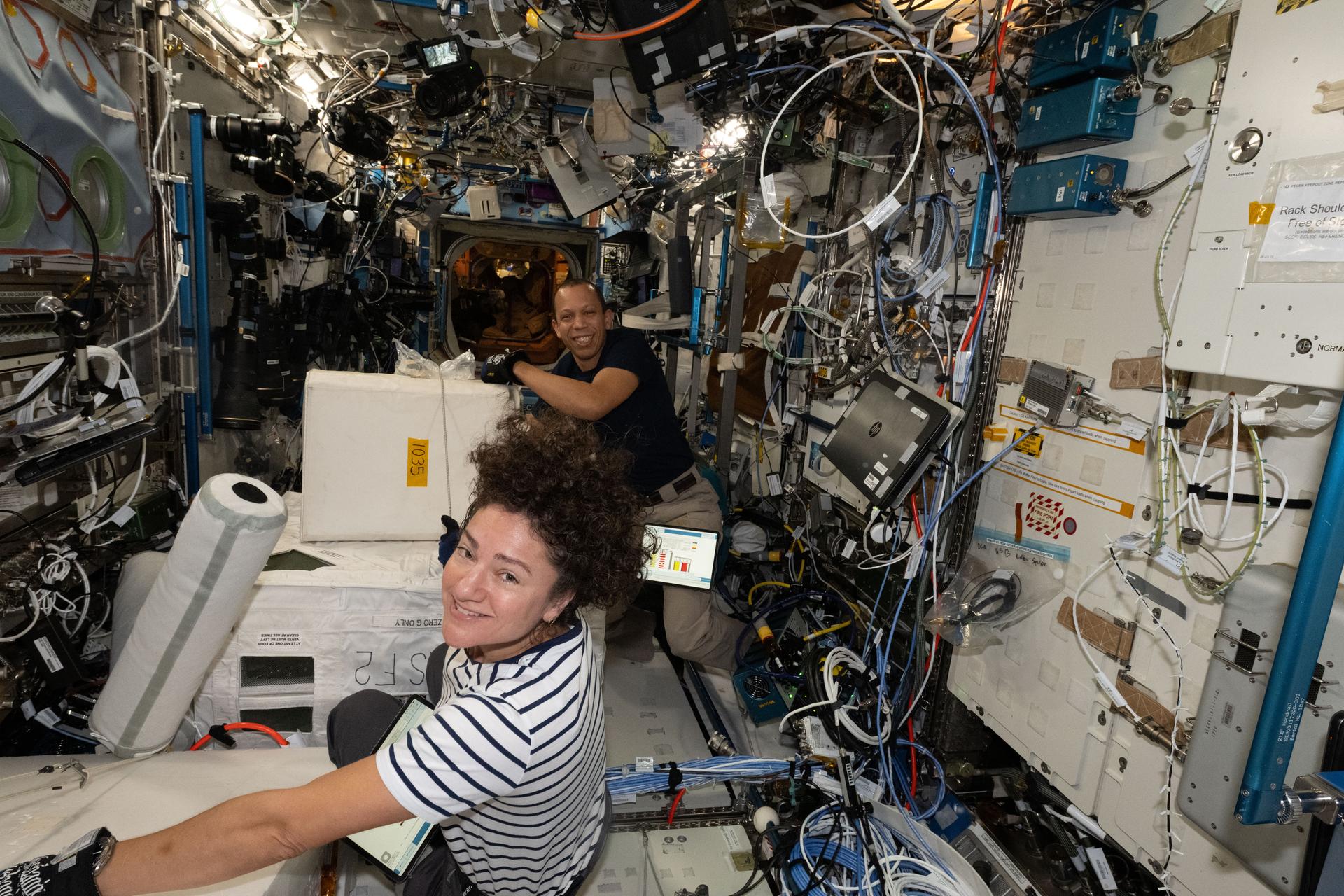
Students in New Jersey will hear from NASA astronauts Chris Williams and Jessica Meir as they answer prerecorded STEM questions while aboard the International Space Station.
The Earth-to-space call will begin at 12:05 p.m. EDT, Thursday, June 18, and will stream live on the agency’s Learn With NASA YouTube channel.
This event is hosted by Newton Public Schools in Newton, New Jersey, for students in grades K-12 and members of the community. This unique opportunity aims to deepen understanding of space exploration and enhance awareness of STEM careers.
Media interested in covering the event must RSVP no later than 5 p.m. EDT, Wednesday, June 17, to Dr. Joseph Piccirillo at: 973-383-7392, x4229 or jpiccirillo@newtonnj.org.
For more than 25 years, astronauts have continuously lived and worked aboard the space station, testing technologies, performing science, and developing skills needed to explore farther from Earth. Astronauts communicate with NASA’s Mission Control Center in Houston 24 hours a day through SCaN’s (Space Communications and Navigation) Near Space Network.
Research and technology investigations taking place aboard the space station benefit people on Earth and lay the groundwork for other agency deep space missions. As part of NASA’s Artemis program, the agency will send astronauts to the Moon to prepare for future human exploration of Mars, inspiring the world through discovery in a new Golden Age of innovation and exploration.
For more information on NASA in-flight calls, visit:
Share Details Last Updated Jun 15, 2026 Related TermsNASA Astronauts to Answer Questions from New Jersey Students
Students in New Jersey will hear from NASA astronauts Chris Williams and Jessica Meir as they answer prerecorded STEM questions while aboard the International Space Station.
The Earth-to-space call will begin at 12:05 p.m. EDT, Thursday, June 18, and will stream live on the agency’s Learn With NASA YouTube channel.
This event is hosted by Newton Public Schools in Newton, New Jersey, for students in grades K-12 and members of the community. This unique opportunity aims to deepen understanding of space exploration and enhance awareness of STEM careers.
Media interested in covering the event must RSVP no later than 5 p.m. EDT, Wednesday, June 17, to Dr. Joseph Piccirillo at: 973-383-7392, x4229 or jpiccirillo@newtonnj.org.
For more than 25 years, astronauts have continuously lived and worked aboard the space station, testing technologies, performing science, and developing skills needed to explore farther from Earth. Astronauts communicate with NASA’s Mission Control Center in Houston 24 hours a day through SCaN’s (Space Communications and Navigation) Near Space Network.
Research and technology investigations taking place aboard the space station benefit people on Earth and lay the groundwork for other agency deep space missions. As part of NASA’s Artemis program, the agency will send astronauts to the Moon to prepare for future human exploration of Mars, inspiring the world through discovery in a new Golden Age of innovation and exploration.
For more information on NASA in-flight calls, visit:
Share Details Last Updated Jun 15, 2026 Related TermsNASA’s SpaceX CRS-34 Dragon Returns Packed with Space Station Science
Scientists await a big splash in the Pacific Ocean as one of the most research-packed Dragon spacecraft to date returns, completing the 34th SpaceX commercial resupply mission to the International Space Station for NASA. Biological and materials samples, along with tested hardware, are heading back to research teams on Earth for further analysis, advancing NASA’s work to prepare humans for exploration beyond low Earth orbit and to deliver benefits back home.
Tiny cells, huge health insights NASA astronaut Jessica Meir prepares samples in the Life Sciences Glovebox to study how weightlessness affects crew blood clotting and immune function for the Megakaryocyte Flying-One investigation.NASA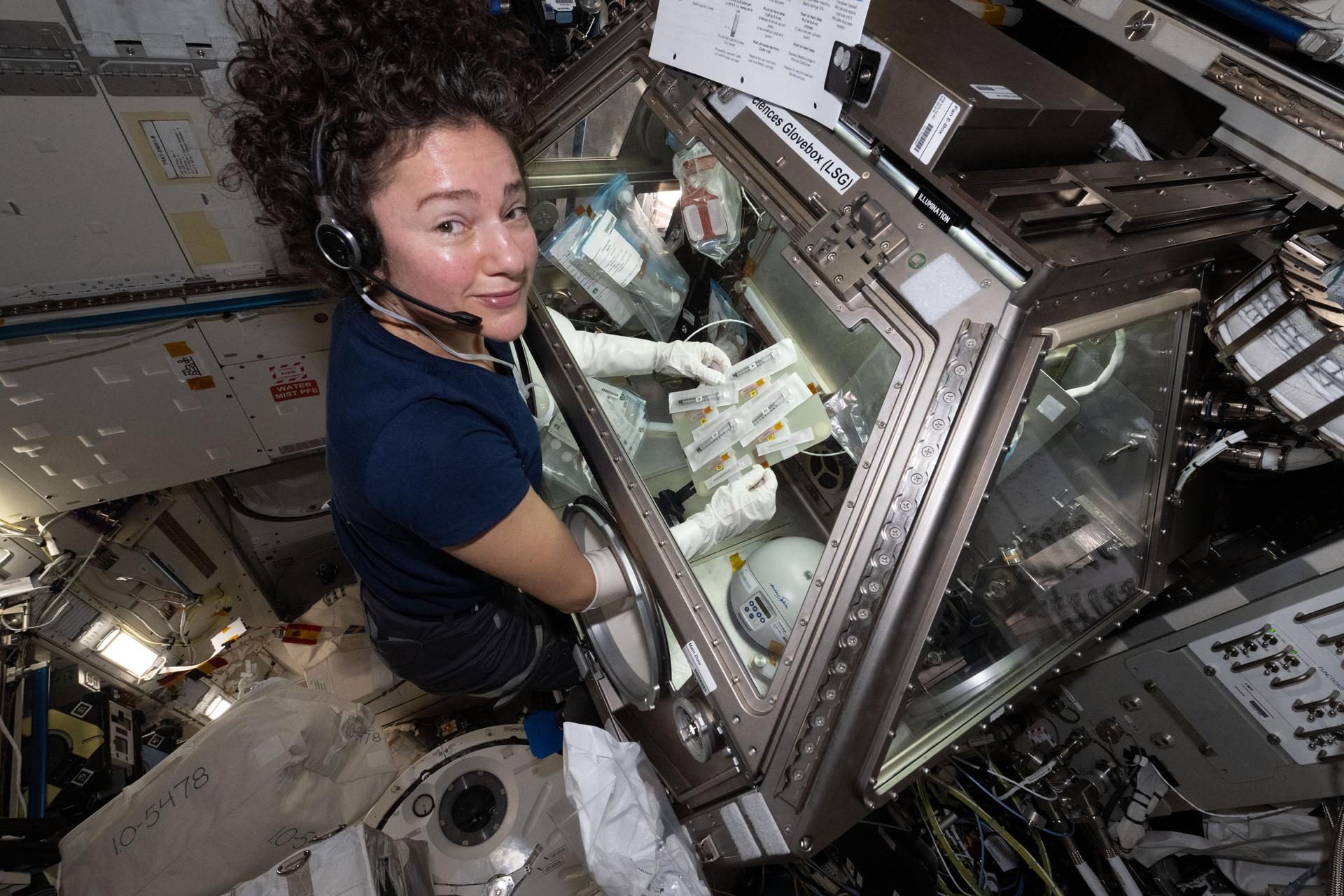
Some samples returning are for NASA’s Hematopoietic Stem Cell Expansion in Space: Pathfinder Investigation (InSPA-StemCellEX-H2), which seeks to use the microgravity environment to scale up the production of stems cells. On Earth, lab-produced blood stem cells lose their ability to form different cell types, like red and white blood cells that are critical to treating patients with certain blood diseases and cancers. In microgravity, researchers believe this ability will be better preserved while also growing these stem cells in greater numbers. The returning samples will undergo further analysis to determine if space-based efforts produce larger quantities of enhanced stem cells suitable for clinical use.
The team behind NASA’s Streptococcus pneumoniae (Spn) Infection of Cardiac Tissue (MVP Cell-09) experiment is awaiting the return of stem cell-derived heart tissues that were intentionally infected with a pneumonia-causing bacterium as part of ongoing microgravity research. Pneumonia increases the risk of heart disease, which is not fully understood. Because bacteria tend to become more active and virulent in microgravity, this experiment could amplify their effects, making it possible to detect cellular responses that cannot be observed on Earth.
NASA’s Megakaryocyte Flying-One (MeF1) samples are returning to Earth to help understand how large cells found in bone marrow, known as megakaryocytes, and the platelets they produce adapt to spaceflight. Megakaryocytes and platelets play important roles in the formation of blood clots and immune responses. The returning samples, including those taken from astronauts, could show us how the human immune system reacts aboard the space station and help prepare for future exploration missions.
Driving design enhancements NASA astronaut Mike Fincke and JAXA (Japan Aerospace Exploration Agency) astronaut Kimiya Yui work on hardware for the Zero Boil-Off Tank investigation.NASA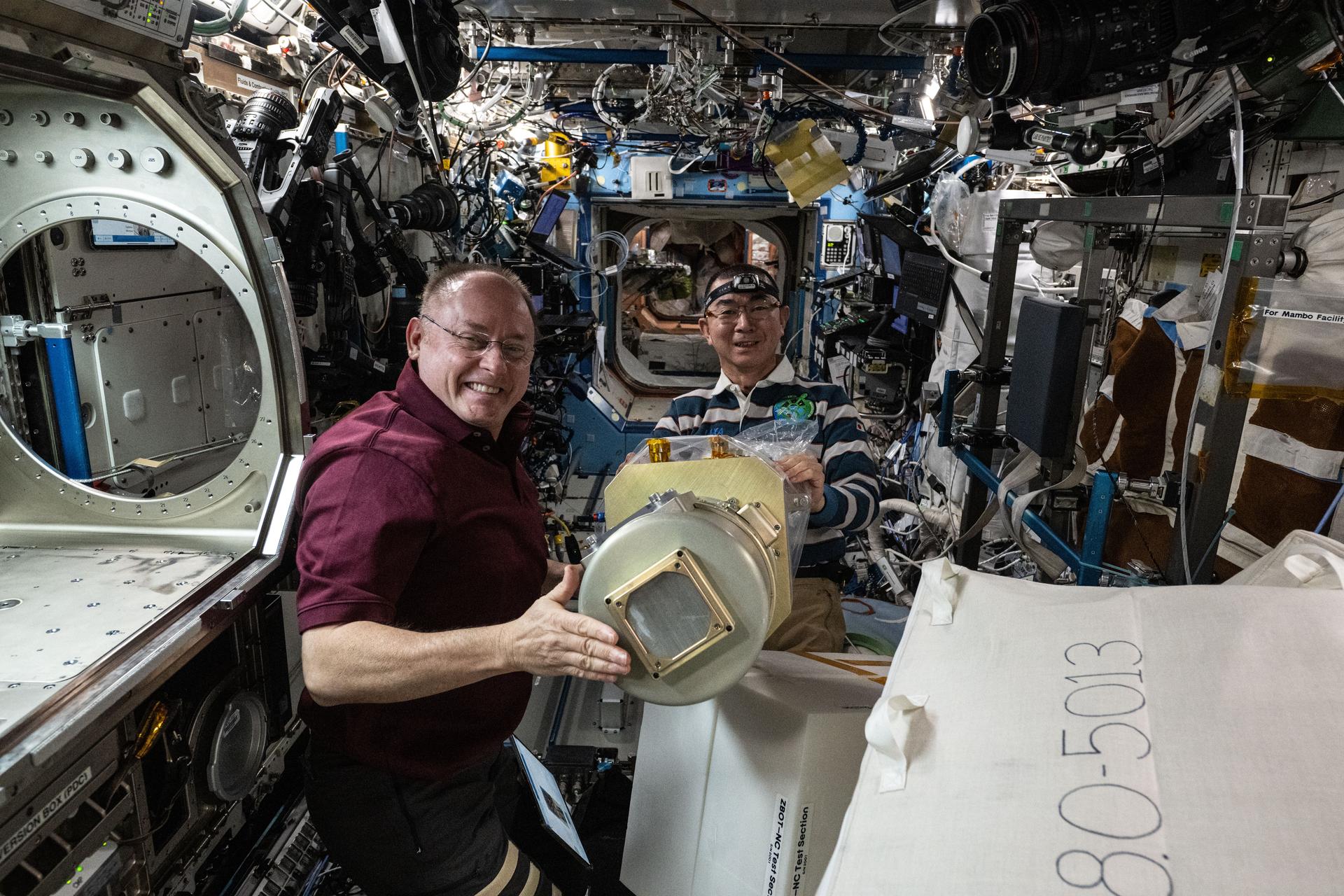
Many spacecraft use cryogenic fuels for propulsion, but temperature swings in space can cause these extremely cold fuels to slowly evaporate and escape their tank, reducing fuel efficiency and complicating mission planning. NASA’s Zero Boil-Off Tank Noncondensables (ZBOT-NC) investigation aboard station studies how gases that do not condense into liquids at cold temperatures affect pressure control and fluid behaviors in propellant tanks. Hardware returning aboard Dragon, including drives containing fluid-physics data, could help validate models and contribute to the design of more efficient cryogenic fuel storage systems for long-duration missions.
Semiconductor research samples as part of NASA’s In-Space Production of Semimetal-Semiconductor Composite Bulk Crystals in Microgravity (SUBSA-InSPA-SSCug) investigation are returning to Earth for further analysis. This study manufactured semimetal-semiconductor composite alloy crystals in space, which have applications in many electronics, including sensors and lasers. Researchers believe microgravity could enable the production of significantly greater and higher-quality crystals, supporting the development of next-generation semiconductor technologies.
Innovative medical research mix Stem cells grown along a DNA-inspired nanomaterial on space station as part of DNA Nano Therapeutics-Mission 2, a percussor to DNA Nano Therapeutics-3.University of Connecticut
NASA’s DNA Nano Therapeutics-3 research team will receive tiny, space-assembled DNA-inspired materials that are combined with medicines to create active cancer treatments. Producing these treatments in microgravity can improve how well they perform in the body. This research could improve patient outcomes by helping therapies reach tumors more effectively, stay in the body longer, and improve medicine release.
Tissue models of the brain, heart, liver, and kidney that were tested with novel RNA-based medicines as part of NASA’s InSPA-Sachi Nanoligomer investigation are also returning. Microgravity can accelerate aging and disease processes, giving researchers a unique environment to better observe how well these new drugs work on different organs ahead of clinical trials.
The left image shows various wood-derived products of different shapes, and the right image shows a sample of this same material in a laboratory setting on Earth. These products may have applications in the medical field by providing scaffolding for patients with fragile bones.GreenBone Ortho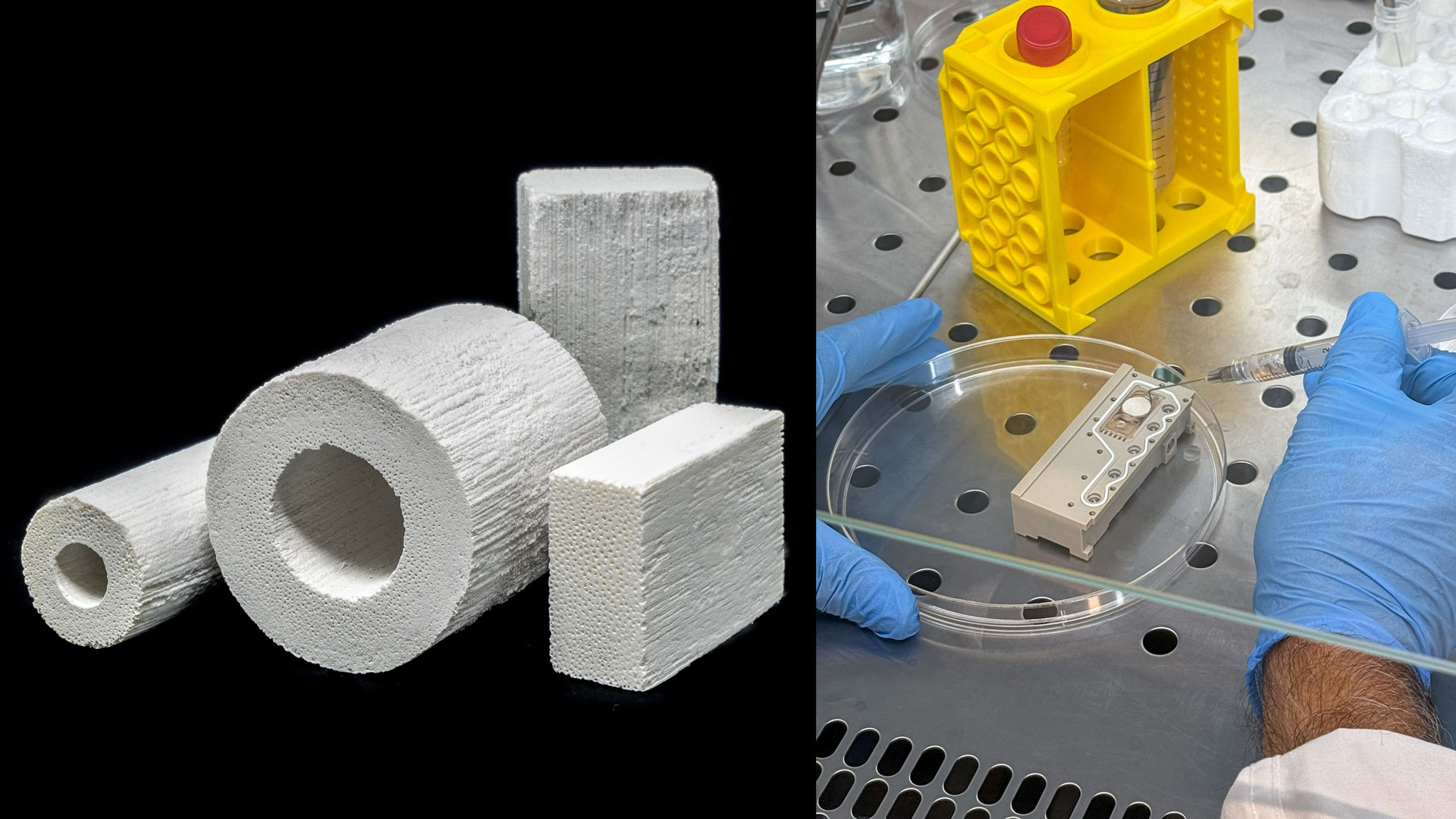
Samples from ESA’s (European Space Agency) Green Bone investigation are returning to Earth to help understand how bone cells grow and develop on a new scaffold made from wood. Designed to mimic real bone, this scaffold was tested in microgravity to understand its ability to heal defects and fractures. Because living in microgravity simulates conditions like osteoporosis, a skeletal disorder which affects millions of people worldwide, the results could help treat patients with these fragile bone conditions.
NASA’s 3D Bone Marrow Analog research team will analyze the returning 3D-printed tissues that mimic parts of the bone marrow. Spaceflight can cause aging-like changes, including bone and muscle loss. To investigate potential countermeasures, these tissue models were exposed to small vibrations aboard the space station to simulate exercise. After the samples return to Earth, researchers will measure bone-like mineral formations and observe cellular and genetic changes. Findings from this investigation could help develop new strategies to maintain astronaut bone and muscle health during future long-duration missions.
In the United States, more than 900,000 knee cartilage injuries occur annually, with many requiring surgery. NASA’s InSPA-Auxilium Bioprinter-Cell Printing is investigating how to treat these injuries and is returning 3D-printed cartilage tissue samples from space station. This investigation uses the orbiting laboratory’s unique microgravity environment to bioprint cartilage tissues with more evenly distributed cells compared to those printed on Earth. The results could help produce higher-quality cartilage prints to treat joint injuries.
Keep Exploring Discover More Topics From NASALatest News from Space Station Research
International Space Station
Humans In Space
Space Station Research Results
Frontiers Forum Speaker Series
2 min read
Preparations for Next Moonwalk Simulations Underway (and Underwater) Aya Collins, director of the engagement division of NASA’s Office of Communications, moderates a discussion with, from left to right, NASA astronauts Zena Cardman, Mike Fincke, and JAXA (Japan Aerospace Exploration Agency) astronaut Kimiya Yui, Monday, June 1, 2026 at the Mary W. Jackson NASA Headquarters building in Washington. Fincke, Cardman, and Yui served as part of Expeditions 73 and 74 onboard the International Space Station.NASA/Aubrey Gemignani Voices Shaping the Future of Space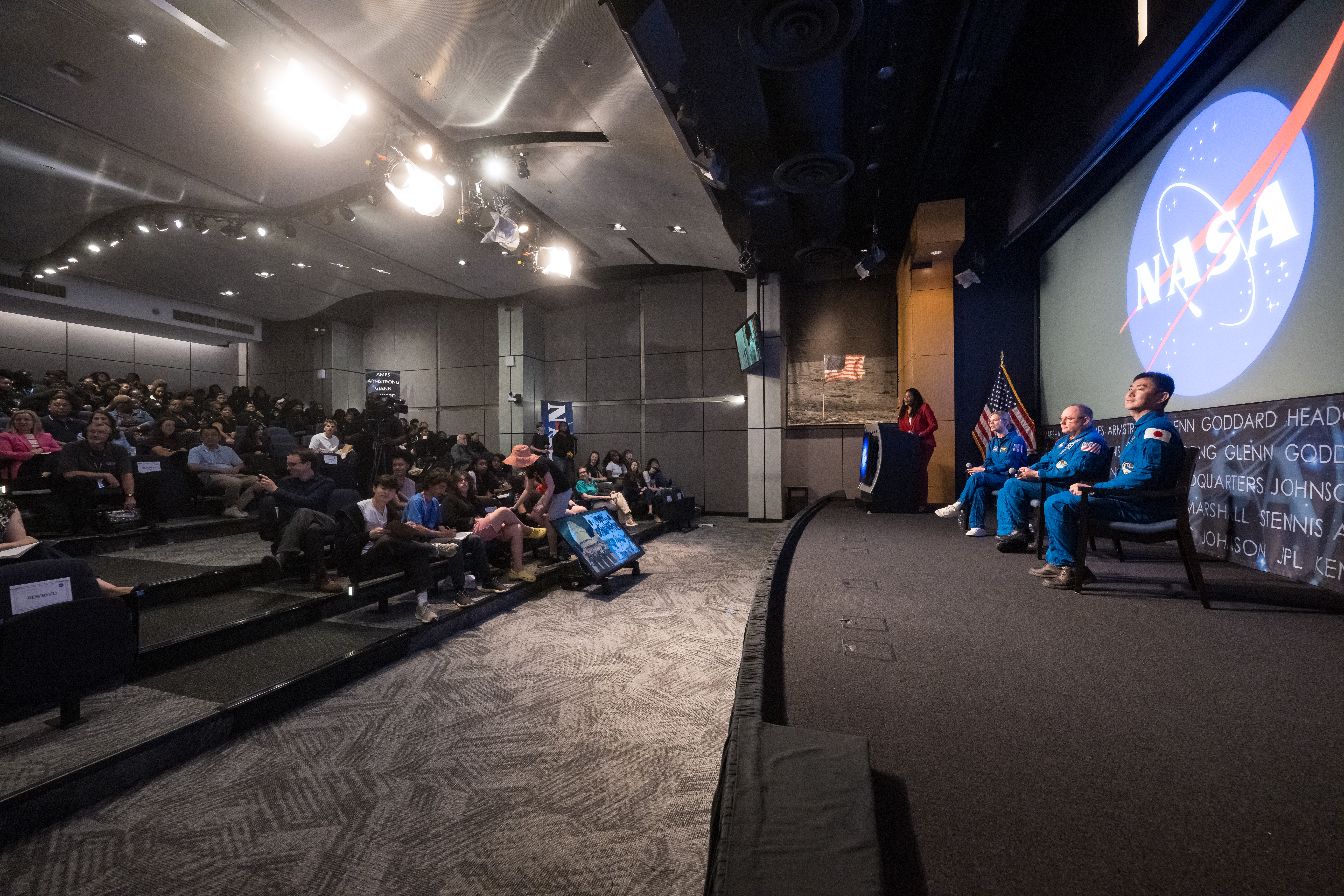
Members of the public are invited to join some of NASA’s brightest minds as they discuss agency missions and current topics in aerospace technology, science, and innovation. Each event will feature NASA experts, and the series will cover a range of topics including our search for life within the universe, the Moon Base, airplanes of the future, and the impact of artificial intelligence on education and the technological workforce.
There is no cost to attend, and preregistration is not required. Seating is limited and available on a first -come, first-served basis.
For all series events, the location is the Webb Auditorium within NASA Headquarters located at 300 Hidden Figures Way SW, Washington, D.C.
Event Schedule & Speakers (all times Eastern) Thursday, June 18 | 11-11:30 a.m.- AVATAR – (A Virtual Astronaut Tissue Analog Response) Flies Around the Moon
- Featured Speaker: Dr. Lisa Carnell, director, Biological and Physical Sciences Division
- Eclipse Science – How NASA Uses Total Solar Eclipses for Science
- Featured Speakers: Nicki Rayl, deputy division director, Heliophysics Division, and Dr. Kelly Korreck, program scientist, Heliophysics Division
- NASA’s Bold Horizon: Internships, NASA Force, and Your Role in History
- Featured Speakers: Kelly Elliott, chief human capital officer, and Daniel Costello, director, Human Capital Office, NASA’s Johnson Space Center
- Speaker Spotlight with Dr. Lori Glaze, acting associate administrator, Exploration Systems Development Mission Directorate
- Speaker Spotlight with Elaine Ho, associate administrator, NASA Office of STEM Engagement
- Future of Flight and the Airplanes of Tomorrow
- Other Worlds: The Search for Life in the Universe
- Featured Speakers: Dr. Joshua Pepper, program scientist, Astrophysics Division, and Dr. Hannah Jang-Condell, program scientist, Exoplanet Mass Measurement
- Moving Faster Toward the Future of Astrophysics
- Featured Speaker: Dr. Jessica Gaskin, research astrophysicist, NASA’s Marshall Space Flight Center
- Space Weather: Overview of astronaut safety and Earth-based end user implications
To ask questions about the Frontiers Forum Speaker Series, email: hq-ocommevents@mail.nasa.gov.
Visit NASA Headquarters