
Feed aggregator
Hubble Details Early Galaxy Transforming Neighborhood
- Hubble Home
- Overview
- Impact & Benefits
- Science
- Observatory
- Team
- Multimedia
- News
- More
Image: NASA, ESA, CSA, STScI, Ilias Goovaerts (STScI), Marc Rafelski (STScI, JHU), Anton Koekemoer (STScI); Image Processing: Alyssa Pagan (STScI)
Astronomers using NASA’s Hubble Space Telescope have found something they never expected — ultraviolet light from a galaxy that existed just 1.4 billion years after the big bang. That galaxy contains tightly clustered young stars that produce ionizing light capable of transforming the opaque, neutral gas within and immediately around the galaxy, clearing our view. This suggests that similar galaxies in the early universe were responsible for clearing the neutral fog of hydrogen gas that once filled the cosmos.
A paper describing this discovery was published June 23 in the Astrophysical Journal.
The galaxy, cataloged MXDFz4.4, existed at the end of the Era of Reionization, a transformative period in our universe. During roughly the first billion years of the cosmos, the gas between stars and galaxies was opaque to energetic ultraviolet light. As time wore on, gas everywhere became transparent or ionized. The changeover was not like an on/off switch, but likely took hundreds of millions of years. Researchers are still collecting evidence to fully understand how this happened, which is why MXDFz4.4 sets a critical precedent.
“Observing a galaxy like this was thought to be impossible,” said lead author Ilias Goovaerts, a postdoctoral fellow at the Space Telescope Science Institute (STScI) in Baltimore. “Researchers expected the ‘fog’ or neutral hydrogen that filled the early universe would be too thick and obscure our view of its ionizing light. Hubble not only spotted that light, but it also helped reveal incredible details about the galaxy’s characteristics.”
Detailed visible-light images from Hubble reveal that several bursts of younger stars cleared the space in and around galaxy MXDFz4.4. Astronomers have long sought evidence to explain this transition — and Hubble has provided the first example in this time period. Image: NASA, ESA, CSA, STScI, Ilias Goovaerts (STScI), Marc Rafelski (STScI, JHU), Anton Koekemoer (STScI); Image Processing: Alyssa Pagan (STScI) Great light ‘escape’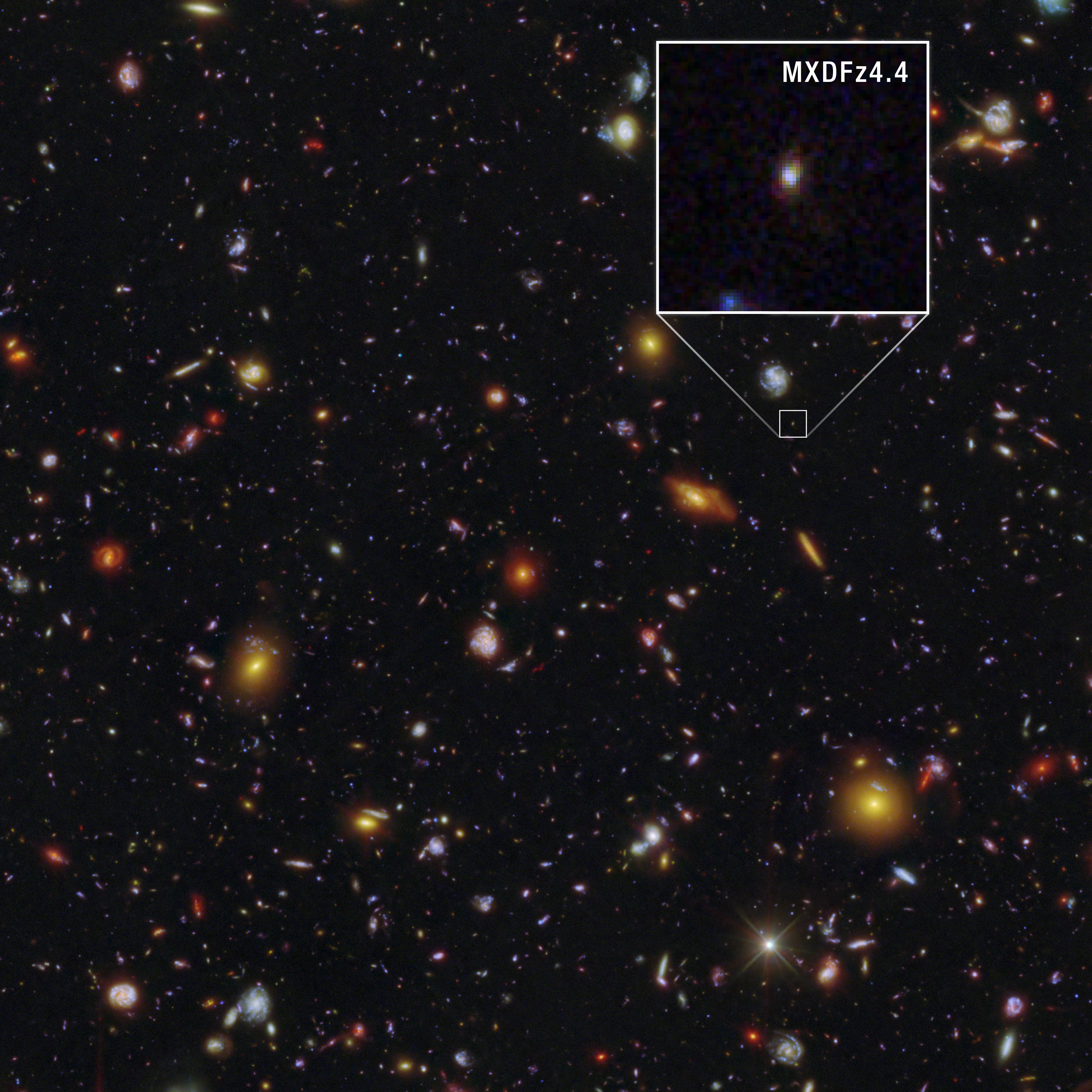
Young, massive stars emit ultraviolet light capable of ionizing hydrogen atoms. As this light traveled for over 12 billion years to reach Hubble, space expanded, and the light stretched or redshifted into visible light. Hubble’s wavelength coverage, combined with the sensitivity and resolution of its space-based vantage point, makes it the only telescope capable of capturing this ultraviolet light from the early universe.
“Astronomers have found many galaxies that existed at this point in the history of the universe, but we haven’t detected ionizing photons from any of them, making MXDFz4.4 one of a kind,” said Marc Rafelski, a co-author and Hubble deputy mission head at STScI.
Hubble’s long exposures, pulled from several existing surveys, revealed that the galaxy’s young, massive stars are the source of the ultraviolet light, which cleared the surrounding space. These stars formed in bursts within the last few million years of MXDFz4.4’s existence and are crammed together.
Amplifying this crowding effect, MXDFz4.4 is about 100 times smaller by area than our Milky Way galaxy, but is forming stars 10 times faster.
“A lot of young, hot, massive stars in a small space do a better job of blasting through opaque gas,” Goovaerts said. The researchers estimate that 50 to 100% of the young stars’ energetic ionizing light is escaping the surrounding gas.
Massive stars’ lifetimes also play a role, since they live for only a few million years. Many explode as supernovae, releasing gigantic amounts of energy and blowing colossal holes that allow even more light to escape.
This illustration portrays galaxy MXDFz4.4 when it existed 1.4 billion years after the big bang. At this time, the universe was still a mix of opaque and transparent gas as the Era of Reionization was gradually ending. Illustration: NASA, ESA, Leah Hustak (STScI) Partnering with other observatories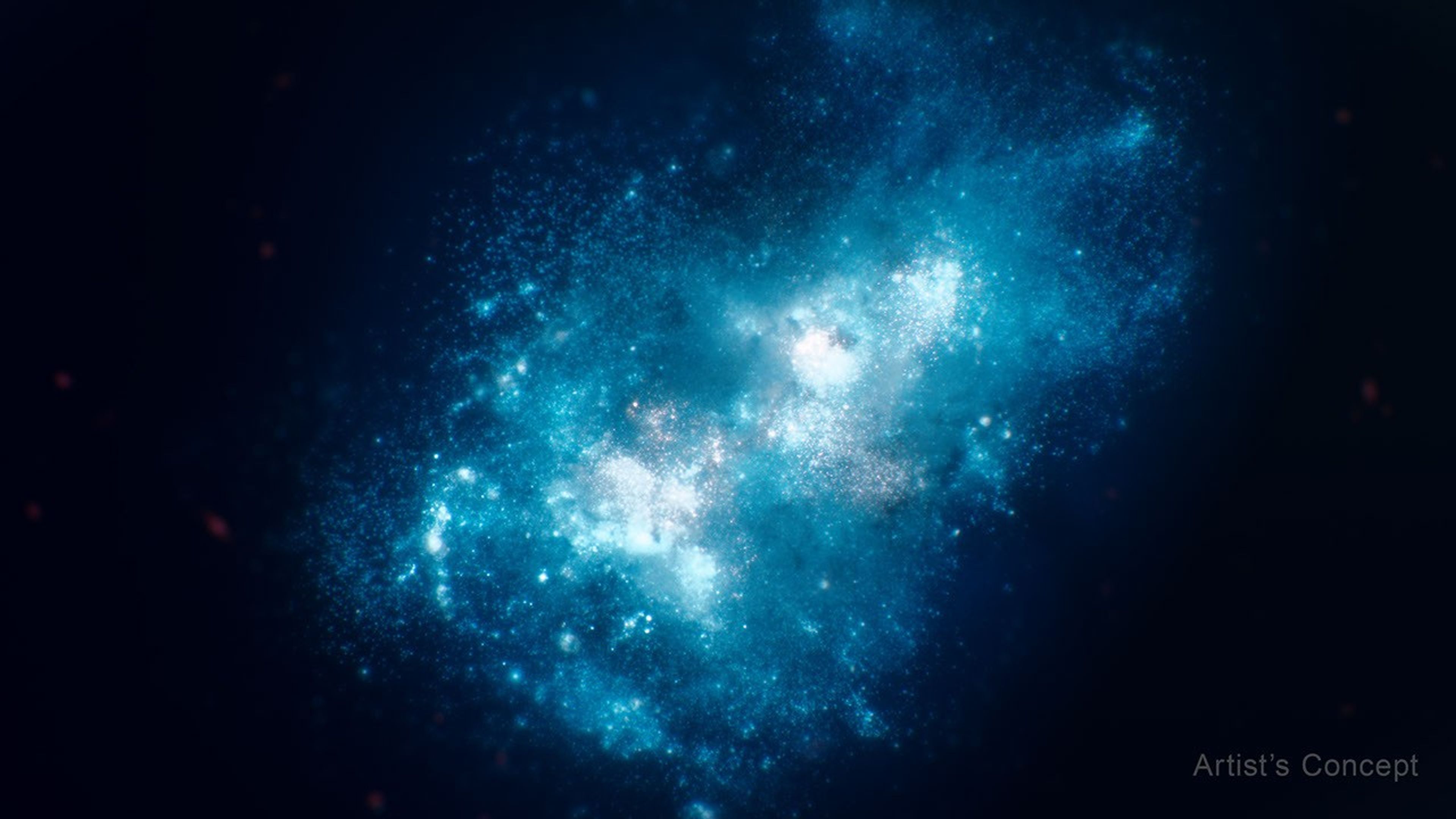
Hubble could not do this alone. These conclusions are supported by survey data taken by NASA’s James Webb Space Telescope in near-infrared light and the MUSE eXtremely Deep Field or MXDF, the galaxy’s namesake, captured by the European Southern Observatory’s Very Large Telescope (VLT) in visible light.
The team used Webb’s data to determine the galaxy’s mass, analyze its older stars, and measure the galaxy’s star formation history. The galaxy’s older stars are less massive and cooler, and therefore not responsible for changing the gas around them.
Comparing Hubble and Webb data also showed that recent star formation happened in bursts. “Without Webb to clarify what we saw in Hubble’s images, we couldn’t make these conclusions,” Rafelski said.
Data from the VLT pinpointed when MXDFz4.4 existed: 1.4 billion years after the big bang. Before this discovery, researchers had only identified a galaxy emitting ionized light from a time when the universe was 1.6 billion years old. Only a few additional examples have been identified, and those existed when the universe was about 2 billion years old. MXDFz4.4 brings researchers closer to drawing firm conclusions about how the Era of Reionization unfolded.
Credit: NASA’s Goddard Space Flight Center; Lead Producer: Paul Morris Expanding what we knowStudying the Era of Reionization is a decades-old endeavor. Researchers use statistics about star populations in nearby galaxies, which we can observe in great detail, to make well-informed assumptions about what might be happening in galaxies in the early universe, in part because their star populations are too distant to resolve in any detail.
In 2023, researchers using Webb showed that galaxies’ stars emitted enough light to heat and ionize the gas around them 900 million years after the big bang. This was a breakthrough, but astronomers need galaxies like MXDFz4.4 to fully explain how the process happened, since it shows how the high-energy light from young stars managed to escape the gas and dust within the galaxy itself.
It’s possible other galaxies like MXDFz4.4 are waiting to be discovered.
“Hubble’s observations of MXDFz4.4 let us test our hypotheses much closer to the Era of Reionization than ever before,” Rafelski said. “Finding more galaxies, especially at slightly later cosmic times where larger samples are within reach, would let us refine these measurements and figure out what cleared our view as that era was ending.”
The Hubble Space Telescope has been operating for over three decades and continues to make ground-breaking discoveries that shape our fundamental understanding of the universe. Hubble is a project of international cooperation between NASA and ESA (European Space Agency). NASA’s Goddard Space Flight Center in Greenbelt, Maryland, manages the telescope and mission operations. Lockheed Martin Space, based in Denver, also supports mission operations at Goddard. The Space Telescope Science Institute in Baltimore, which is operated by the Association of Universities for Research in Astronomy, conducts Hubble science operations for NASA.
Facebook logo @NASAHubble @NASAHubble Instagram logo @NASAHubble Related Images & Videos Galaxy MXDFz4.4 (Hubble and Webb Image)Detailed visible-light images from Hubble reveal that several bursts of younger stars cleared the space in and around galaxy MXDFz4.4. Astronomers have long sought evidence to explain this transition — and Hubble has provided the first example in this time period.
Galaxy MXDFz4.4 (Artist’s Concept)
This illustration portrays galaxy MXDFz4.4 when it existed 1.4 billion years after the big bang. At this time, the universe was still a mix of opaque and transparent gas as the Era of Reionization was gradually ending.
Galaxy MXDFz4.4 (Hubble and Webb Compass Image)
This shows the galaxy MXDFz4.4, enlarged at right, in the Hubble Ultra Deep Field (HUDF), captured by both the Hubble Space Telescope’s Advanced Camera for Surveys (ACS) and the James Webb Space Telescope’s NIRCam (Near-Infrared Camera).
Claire Andreoli
NASA’s Goddard Space Flight Center
Greenbelt, Maryland
claire.andreoli@nasa.gov
Claire Blome, Christine Pulliam
Space Telescope Science Institute
Baltimore, Maryland
Keep Exploring Discover More Topics From Hubble Hubble Space Telescope
Since its 1990 launch, the Hubble Space Telescope has changed our fundamental understanding of the universe.
Hubble Science Highlights
Hubble Images
Hubble News
NASA’s Webb Pinpoints Millions of Stars Within Cigar Galaxy
- Webb
- News
- Overview
- Science
- Observatory
- Multimedia
- Team
- More
Image: NASA, ESA, CSA, Adam Smercina (STScI, Tufts), Thomas Williams (University of Manchester); Image Processing: Alyssa Pagan (STScI)
Located 12 million light-years away and undergoing rapid star formation, edge-on spiral galaxy Messier 82 (M82) is a scientifically unique sight to behold, and now NASA’s James Webb Space Telescope has revealed previously unseen details.
M82’s intense star formation, thought to be the result of a galaxy merger, will be a short-lived event in astronomical terms, estimated to last a few hundred million years in its entirety. This temporary phase of extreme star formation relative to the galaxy’s mass, as well as its location in the local universe, are among the factors that make M82, also known as the Cigar galaxy, a one-of-a-kind environment to study.
Image: M82 Cigar Galaxy (Webb + Hubble) Scientists used NASA’s James Webb Space Telescope to image edge-on starburst galaxy Messier 82 and trace its evolutionary history. This Webb and Hubble composite image includes 16.5 million stars (blue-white), dust grains (red-orange), and ionized hydrogen gas (yellow). Image: NASA, ESA, CSA, Adam Smercina (STScI, Tufts), Thomas Williams (University of Manchester); Image Processing: Alyssa Pagan (STScI)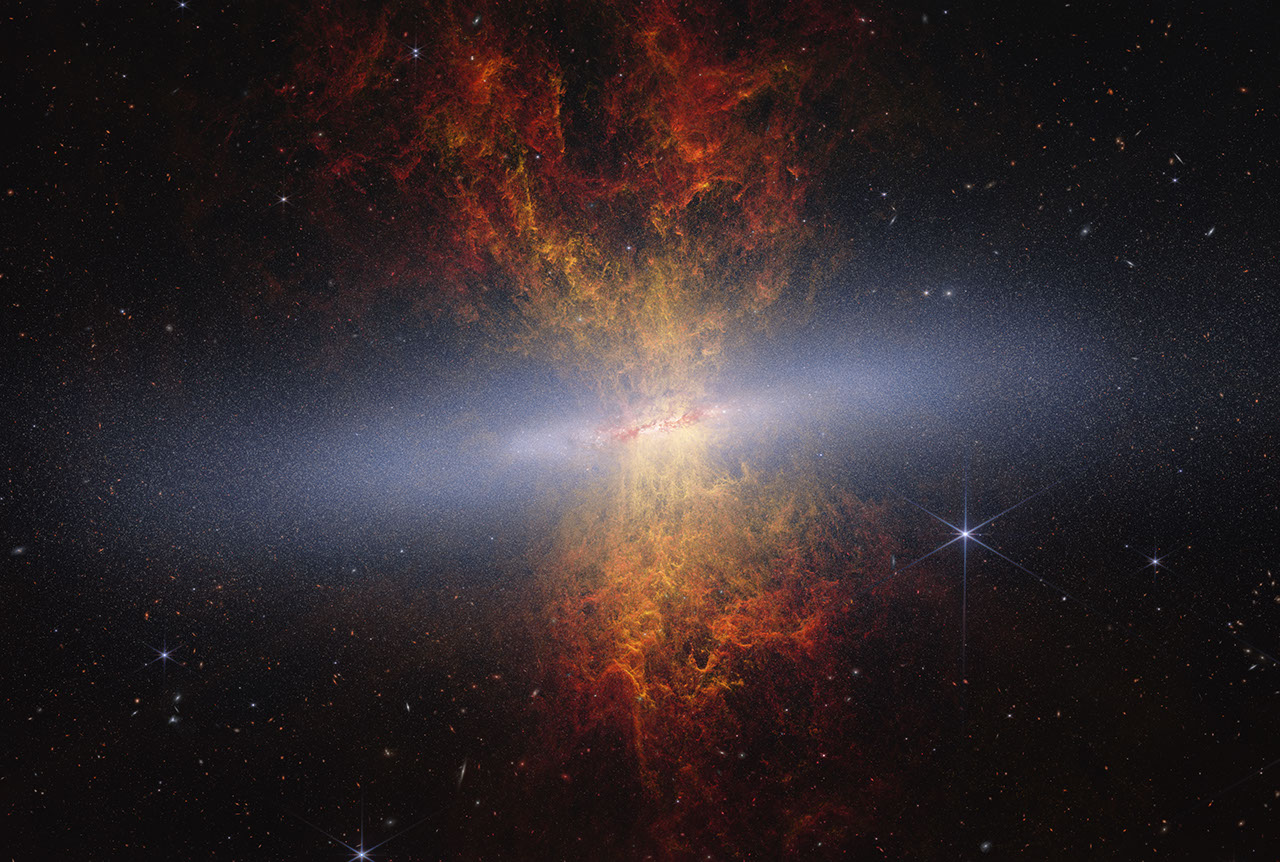
A team of astronomers recently completed an imaging survey with the Webb telescope. This program entailed a total of 65 hours of observation time with Webb’s NIRCam (Near-Infrared Camera) instrument and revealed never-seen-before details of the starburst galaxy, including its distended disk structure and millions of individual stars. Webb’s high-resolution imaging, specifically of the main plane of the galactic disk, has unlocked vital information for astronomers as they seek to uncover M82’s formation history. Additionally, the Webb data will help scientists understand the current processes occurring within the starburst galaxy.
“M82 is a mess, but it’s a beautiful mess. We don’t fully understand what’s going on, especially concerning its evolutionary history. What could have triggered such an elevated rate of star formation? How long has this galaxy been driving plumes of material away from its center?” said principal investigator Adam Smercina, a NASA Hubble Fellow at the Space Telescope Science Institute in Baltimore, and incoming Assistant Professor at Tufts University in Massachusetts. “M82 is an ideal galaxy evolution laboratory because it has properties that allow us to probe important physical processes, such as how stars form in such environments and how that activity drives outflows. M82 provides a simultaneous window onto many astrophysical questions, in a way that no other galaxy in the local universe can.”
Image: M82 Cigar Galaxy (NIRCam Image) NASA’s James Webb Space Telescope observed edge-on starburst galaxy Messier 82, peering through dust to reveal 16.5 million stars and the galaxy’s distended disk structure. Scientists seek to learn the galaxy’s evolutionary history with the Webb data. Image: NASA, ESA, CSA, Adam Smercina (STScI, Tufts), Thomas Williams (University of Manchester); Image Processing: Alyssa Pagan (STScI)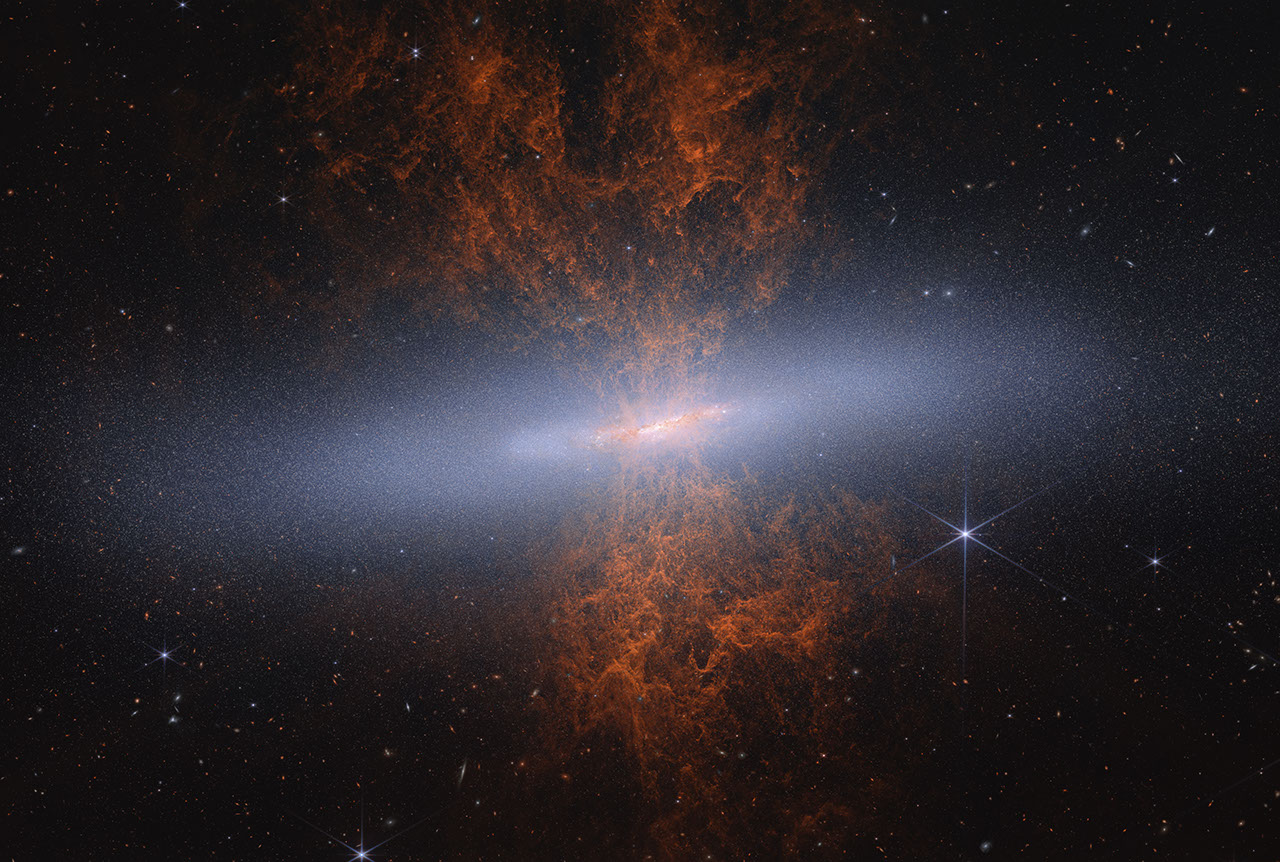
Prior to Webb, many observatories looked at the starburst galaxy, including NASA’s Hubble and retired Spitzer space telescopes. However, the sheer volume of dust within that galaxy limited the amount of information astronomers could acquire on M82 at high resolution. While Webb has previously looked at this galaxy, the duration of the new imaging survey, combined with the telescope’s infrared sensitivity, enabled it to pierce through the thick dust.
Image: M82 Cigar Galaxy (Hubble/Webb Side-by-Side) Side-by-side comparison of a portion of starburst galaxy Messier 82 (M82) as seen by NASA’s Hubble (left) and James Webb (right) space telescopes. Hubble detailed M82’s gas and dust structure, while Webb pierced through the dust and resolved millions of stars in infrared light. Image: NASA, ESA, CSA, Adam Smercina (STScI, Tufts), Thomas Williams (University of Manchester); Image Processing: Alyssa Pagan (STScI)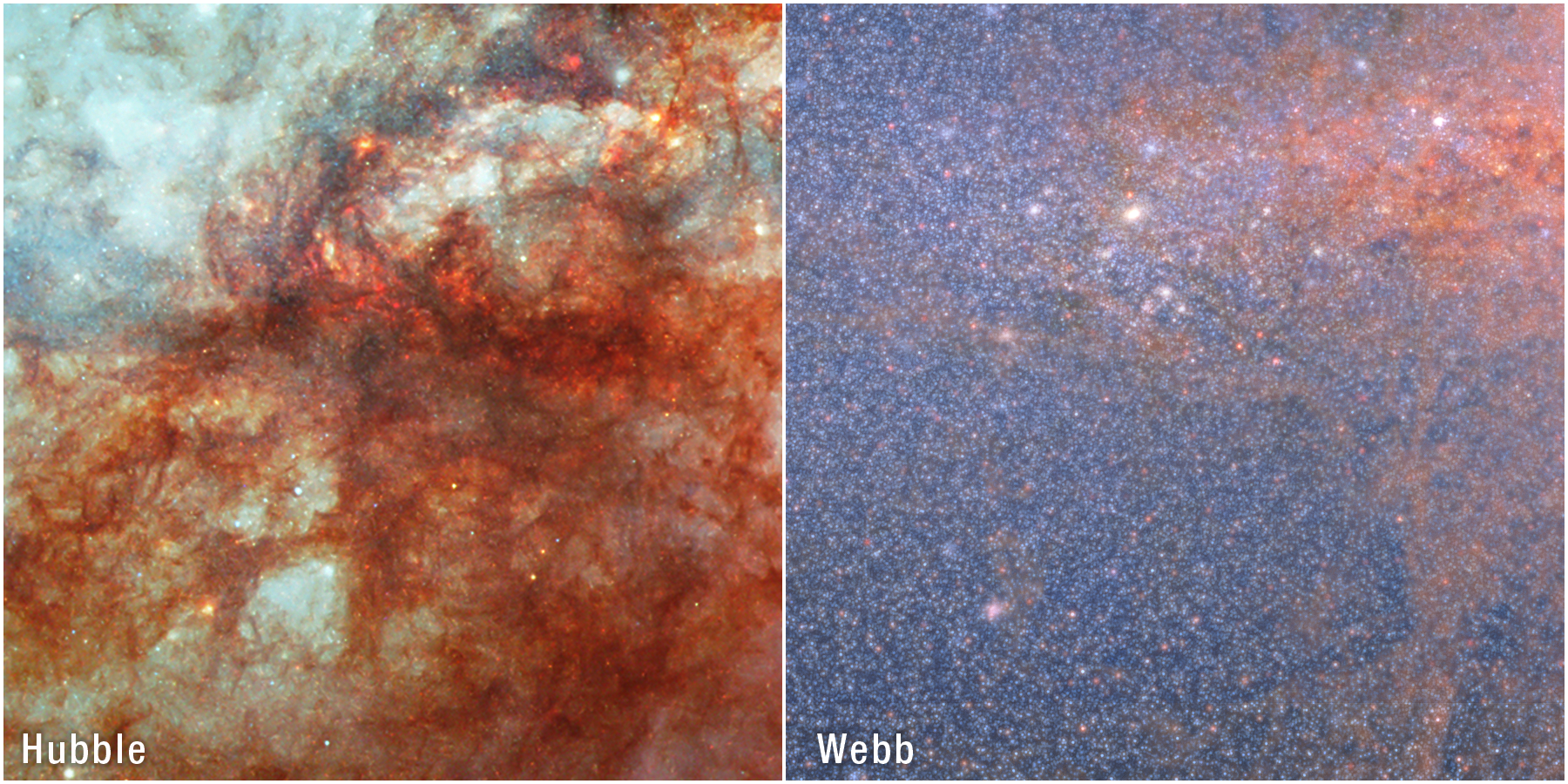
The telescope’s near-infrared-light view is a snapshot of a scene that has been evolving over a couple hundred million years. Webb’s image contains approximately 16.5 million individual stars dispersed throughout the galaxy. The light from these stellar sources is depicted as luminous blue granules. This is only a small portion of the total amount of stars astronomers think reside in a galaxy like M82, with the majority too faint to be seen.
“The sheer number of stars that we were able to resolve with Webb is incredible,” said team member Benjamin Williams of the University of Washington. “It’s a whole different world from what we’ve been able to see with other telescopes. All of these stars collectively provide a detailed fossil record of the formation and evolution of M82.”
Moving inward, the increase in brightness and the asymmetrical shape of the galactic disk hints at the spiral galaxy’s unique underlying structure. The differing radii between the two sides suggests that M82 has a distorted shape, which can happen during intense galaxy mergers.
“At first glance, the disk of the galaxy may seem less spectacular because Webb sees through the dust,” said team member Eric Bell of the University of Michigan. “But M82 is a delightfully complex system. Webb’s observations will help us address some ongoing mysteries, such as how star formation has moved within M82 over the last few billion years.”
Video: M82 Cigar Galaxy (Webb + Hubble Fade)To view this video please enable JavaScript, and consider upgrading to a web browser that
supports HTML5 video
Because of the extreme star formation within the galaxy, which is 10 times faster than the Milky Way galaxy’s star formation rate, stellar birth will eventually be disrupted. M82’s stellar frenzy is causing bipolar plumes of material to be ejected above and below the disk. Though it looks like a tumultuous region, the hourglass-shaped outflows appear to have a layered structure. The yellow tendrils of material closest to the galaxy’s disk represent ionized gas, whereas the orange material farther away depicts small dust grains. These grains are called polycyclic aromatic hydrocarbons and are helpful in tracing material in the space between the galaxy’s stars, also known as the interstellar medium.
The information collected as part of this Webb study is just one dataset scientists will analyze as they seek to piece together this starburst galaxy’s formation history.
“Galaxies are such intricate ecosystems that if you truly want to understand them, you have to pull datasets from different missions together,” said team member Kristen McQuinn of the Space Telescope Science Institute. “One mission cannot fully answer all of the questions we have about M82. Combining the data collected by different telescopes, like Webb and Hubble, is powerful. When you marry the datasets, you expand what you can probe, and the questions that you can pose are even more complex.”
The James Webb Space Telescope is the world’s premier space science observatory. Webb is solving mysteries in our solar system, looking beyond to distant worlds around other stars, and probing the mysterious structures and origins of our universe and our place in it. Webb is an international program led by NASA with its partners, ESA (European Space Agency) and CSA (Canadian Space Agency).
To learn more about Webb, visit:
Downloads & Related InformationThe following sections contain links to download this article’s images and videos in all available resolutions followed by related information links, media contacts, and if available, research paper and Spanish translation links.
Related Images & Videos M82 Cigar Galaxy (Webb + Hubble)Scientists used NASA’s James Webb Space Telescope to image edge-on starburst galaxy Messier 82 and trace its evolutionary history. This Webb and Hubble composite image includes 16.5 million stars (blue-white), dust grains (red-orange), and ionized hydrogen gas (yellow).
M82 Cigar Galaxy (NIRCam Image)
NASA’s James Webb Space Telescope observed edge-on starburst galaxy Messier 82, peering through dust to reveal 16.5 million stars and the galaxy’s distended disk structure. Scientists seek to learn the galaxy’s evolutionary history with the Webb data.
M82 Cigar Galaxy (Hubble/Webb Side-by-Side)
Side-by-side comparison of a portion of starburst galaxy Messier 82 (M82) as seen by NASA’s Hubble (left) and James Webb (right) space telescopes. Hubble detailed M82’s gas and dust structure, while Webb pierced through the dust and resolved millions of stars in infrared light.
M82 Cigar Galaxy (Compass Image)
Annotated image of the starburst galaxy Messier 82 captured by Webb’s NIRCam (Near-Infrared Camera) instrument, with compass arrows, a scale bar, and color key for reference.
M82 Cigar Galaxy (Webb + Hubble Fade)
NASA’s James Webb Space Telescope’s near-infrared observation of M82 is the most recent addition to overall data on this starburst galaxy. The Hubble Space Telescope is one observatory that has previously looked at M82, detailing the gas and dust structure seen in visible light.
Related Links
Read more: Messier 82
Video: XRISM Clocks Hot Wind of Galaxy M82
Explore more: ViewSpace | The Infrared View of M81 and M82
Explore more: ViewSpace | Interacting Galaxies: The Antennae
More Webb: News | Images | Science | Home Page
Contact Media
Laura Betz
NASA’s Goddard Space Flight Center
Greenbelt, Maryland
laura.e.betz@nasa.gov
Abigail Major
Space Telescope Science Institute
Baltimore, Maryland
Christine Pulliam
Space Telescope Science Institute
Baltimore, Maryland
Related Terms Keep Exploring Related Topics James Webb Space Telescope
Webb is the premier observatory of the next decade, serving thousands of astronomers worldwide. It studies every phase in the…
Galaxies
Galaxies Stories
Universe
NASA’s Webb Pinpoints Millions of Stars Within Cigar Galaxy
- Webb
- News
- Overview
- Science
- Observatory
- Multimedia
- Team
- More
Image: NASA, ESA, CSA, Adam Smercina (STScI, Tufts), Thomas Williams (University of Manchester); Image Processing: Alyssa Pagan (STScI)
Located 12 million light-years away and undergoing rapid star formation, edge-on spiral galaxy Messier 82 (M82) is a scientifically unique sight to behold, and now NASA’s James Webb Space Telescope has revealed previously unseen details.
M82’s intense star formation, thought to be the result of a galaxy merger, will be a short-lived event in astronomical terms, estimated to last a few hundred million years in its entirety. This temporary phase of extreme star formation relative to the galaxy’s mass, as well as its location in the local universe, are among the factors that make M82, also known as the Cigar galaxy, a one-of-a-kind environment to study.
Image: M82 Cigar Galaxy (Webb + Hubble) Scientists used NASA’s James Webb Space Telescope to image edge-on starburst galaxy Messier 82 and trace its evolutionary history. This Webb and Hubble composite image includes 16.5 million stars (blue-white), dust grains (red-orange), and ionized hydrogen gas (yellow). Image: NASA, ESA, CSA, Adam Smercina (STScI, Tufts), Thomas Williams (University of Manchester); Image Processing: Alyssa Pagan (STScI)A team of astronomers recently completed an imaging survey with the Webb telescope. This program entailed a total of 65 hours of observation time with Webb’s NIRCam (Near-Infrared Camera) instrument and revealed never-seen-before details of the starburst galaxy, including its distended disk structure and millions of individual stars. Webb’s high-resolution imaging, specifically of the main plane of the galactic disk, has unlocked vital information for astronomers as they seek to uncover M82’s formation history. Additionally, the Webb data will help scientists understand the current processes occurring within the starburst galaxy.
“M82 is a mess, but it’s a beautiful mess. We don’t fully understand what’s going on, especially concerning its evolutionary history. What could have triggered such an elevated rate of star formation? How long has this galaxy been driving plumes of material away from its center?” said principal investigator Adam Smercina, a NASA Hubble Fellow at the Space Telescope Science Institute in Baltimore, and incoming Assistant Professor at Tufts University in Massachusetts. “M82 is an ideal galaxy evolution laboratory because it has properties that allow us to probe important physical processes, such as how stars form in such environments and how that activity drives outflows. M82 provides a simultaneous window onto many astrophysical questions, in a way that no other galaxy in the local universe can.”
Image: M82 Cigar Galaxy (NIRCam Image) NASA’s James Webb Space Telescope observed edge-on starburst galaxy Messier 82, peering through dust to reveal 16.5 million stars and the galaxy’s distended disk structure. Scientists seek to learn the galaxy’s evolutionary history with the Webb data. Image: NASA, ESA, CSA, Adam Smercina (STScI, Tufts), Thomas Williams (University of Manchester); Image Processing: Alyssa Pagan (STScI)Prior to Webb, many observatories looked at the starburst galaxy, including NASA’s Hubble and retired Spitzer space telescopes. However, the sheer volume of dust within that galaxy limited the amount of information astronomers could acquire on M82 at high resolution. While Webb has previously looked at this galaxy, the duration of the new imaging survey, combined with the telescope’s infrared sensitivity, enabled it to pierce through the thick dust.
Image: M82 Cigar Galaxy (Hubble/Webb Side-by-Side) Side-by-side comparison of a portion of starburst galaxy Messier 82 (M82) as seen by NASA’s Hubble (left) and James Webb (right) space telescopes. Hubble detailed M82’s gas and dust structure, while Webb pierced through the dust and resolved millions of stars in infrared light. Image: NASA, ESA, CSA, Adam Smercina (STScI, Tufts), Thomas Williams (University of Manchester); Image Processing: Alyssa Pagan (STScI)The telescope’s near-infrared-light view is a snapshot of a scene that has been evolving over a couple hundred million years. Webb’s image contains approximately 16.5 million individual stars dispersed throughout the galaxy. The light from these stellar sources is depicted as luminous blue granules. This is only a small portion of the total amount of stars astronomers think reside in a galaxy like M82, with the majority too faint to be seen.
“The sheer number of stars that we were able to resolve with Webb is incredible,” said team member Benjamin Williams of the University of Washington. “It’s a whole different world from what we’ve been able to see with other telescopes. All of these stars collectively provide a detailed fossil record of the formation and evolution of M82.”
Moving inward, the increase in brightness and the asymmetrical shape of the galactic disk hints at the spiral galaxy’s unique underlying structure. The differing radii between the two sides suggests that M82 has a distorted shape, which can happen during intense galaxy mergers.
“At first glance, the disk of the galaxy may seem less spectacular because Webb sees through the dust,” said team member Eric Bell of the University of Michigan. “But M82 is a delightfully complex system. Webb’s observations will help us address some ongoing mysteries, such as how star formation has moved within M82 over the last few billion years.”
Video: M82 Cigar Galaxy (Webb + Hubble Fade)To view this video please enable JavaScript, and consider upgrading to a web browser that
supports HTML5 video
Because of the extreme star formation within the galaxy, which is 10 times faster than the Milky Way galaxy’s star formation rate, stellar birth will eventually be disrupted. M82’s stellar frenzy is causing bipolar plumes of material to be ejected above and below the disk. Though it looks like a tumultuous region, the hourglass-shaped outflows appear to have a layered structure. The yellow tendrils of material closest to the galaxy’s disk represent ionized gas, whereas the orange material farther away depicts small dust grains. These grains are called polycyclic aromatic hydrocarbons and are helpful in tracing material in the space between the galaxy’s stars, also known as the interstellar medium.
The information collected as part of this Webb study is just one dataset scientists will analyze as they seek to piece together this starburst galaxy’s formation history.
“Galaxies are such intricate ecosystems that if you truly want to understand them, you have to pull datasets from different missions together,” said team member Kristen McQuinn of the Space Telescope Science Institute. “One mission cannot fully answer all of the questions we have about M82. Combining the data collected by different telescopes, like Webb and Hubble, is powerful. When you marry the datasets, you expand what you can probe, and the questions that you can pose are even more complex.”
The James Webb Space Telescope is the world’s premier space science observatory. Webb is solving mysteries in our solar system, looking beyond to distant worlds around other stars, and probing the mysterious structures and origins of our universe and our place in it. Webb is an international program led by NASA with its partners, ESA (European Space Agency) and CSA (Canadian Space Agency).
To learn more about Webb, visit:
Downloads & Related InformationThe following sections contain links to download this article’s images and videos in all available resolutions followed by related information links, media contacts, and if available, research paper and Spanish translation links.
Related Images & Videos M82 Cigar Galaxy (Webb + Hubble)Scientists used NASA’s James Webb Space Telescope to image edge-on starburst galaxy Messier 82 and trace its evolutionary history. This Webb and Hubble composite image includes 16.5 million stars (blue-white), dust grains (red-orange), and ionized hydrogen gas (yellow).
M82 Cigar Galaxy (NIRCam Image)
NASA’s James Webb Space Telescope observed edge-on starburst galaxy Messier 82, peering through dust to reveal 16.5 million stars and the galaxy’s distended disk structure. Scientists seek to learn the galaxy’s evolutionary history with the Webb data.
M82 Cigar Galaxy (Hubble/Webb Side-by-Side)
Side-by-side comparison of a portion of starburst galaxy Messier 82 (M82) as seen by NASA’s Hubble (left) and James Webb (right) space telescopes. Hubble detailed M82’s gas and dust structure, while Webb pierced through the dust and resolved millions of stars in infrared light.
M82 Cigar Galaxy (Compass Image)
Annotated image of the starburst galaxy Messier 82 captured by Webb’s NIRCam (Near-Infrared Camera) instrument, with compass arrows, a scale bar, and color key for reference.
M82 Cigar Galaxy (Webb + Hubble Fade)
NASA’s James Webb Space Telescope’s near-infrared observation of M82 is the most recent addition to overall data on this starburst galaxy. The Hubble Space Telescope is one observatory that has previously looked at M82, detailing the gas and dust structure seen in visible light.
Related Links
Read more: Messier 82
Video: XRISM Clocks Hot Wind of Galaxy M82
Explore more: ViewSpace | The Infrared View of M81 and M82
Explore more: ViewSpace | Interacting Galaxies: The Antennae
More Webb: News | Images | Science | Home Page
Contact Media
Laura Betz
NASA’s Goddard Space Flight Center
Greenbelt, Maryland
laura.e.betz@nasa.gov
Abigail Major
Space Telescope Science Institute
Baltimore, Maryland
Christine Pulliam
Space Telescope Science Institute
Baltimore, Maryland
Related Terms Keep Exploring Related Topics James Webb Space Telescope
Webb is the premier observatory of the next decade, serving thousands of astronomers worldwide. It studies every phase in the…
Galaxies
Galaxies Stories
Universe
The first ticking ‘nuclear clocks’ are here
These radical new devices keep time using fluctuations in the energy states of an atom’s nucleus, rather than those of its electrons, which atomic clocks currently use to define the length of a second
The Solar Gravitational Lens Could Map White Dwarfs and Black Holes
It feels like every few months we get to report on another academic paper coming out singing the praises of the Solar Gravitational SGL (SGL). Partly, this is due to Dr. Slava Turyshev’s astounding productivity in terms of pumping out academic articles, but partly because such a ground-breaking mission has lots of positive aspects, but also challenges that need to be addressed. A new paper, available in pre-print on arXiv from Dr. Turyshev, stresses an often overlooked feature of the SGL - how useful it can be at imaging things other than far away exoplanets.
Unapproved gene therapy for boosting longevity is set to go on sale
Unapproved gene therapy for boosting longevity is set to go on sale
Rising Waters Swamp Lake Naivasha
- Earth
- Earth Observatory
- Image of the Day
- EO Explorer
- Topics
- More Content
- About
Happy Asteroid Day! Prize-Winning Plan Focuses on Space Infrastructure
A proposal to create a new network for monitoring cosmic threats to off-world infrastructure has won this year's Schweickart Prize, which recognizes bright ideas for planetary defense.
Rising Waters Swamp Lake Naivasha
- Earth
- Earth Observatory
- Image of the Day
- EO Explorer
- Topics
- More Content
- About
NASA Awards Solutions for Federal Enterprise Procurement Contracts
NASA will begin processing the awards of multiple contracts for the Solutions for Enterprise‑wide Procurement (SEWP) VI Government-wide Acquisition Contract. The contract provides streamlined access to commercial products and services, including hardware, software, cloud services, cybersecurity tools, engineering and consulting services, and data intensive mission support capabilities.
This competitive acquisition was conducted within three categories: Category A, IT Solutions; Category B, Enterprise-wide IT Service Solutions; and Category C, IT Mission-Based Services.
A full list of SEWP VI awardees and additional program details are available at:
All awards are indefinite‑delivery/indefinite‑quantity contracts with the ability to issue firm‑fixed‑price, labor‑hour, time‑and‑materials, and other pricing arrangement task orders. The effective ordering period is 10 years, beginning Nov. 1, through Oct. 31, 2036, and each contract has a maximum value of $20 billion.
For information about NASA and agency programs, visit:
-end-
Jennifer Dooren / Jessica Taveau
Headquarters, Washington
202-358-1600
jennifer.m.dooren@nasa.gov / jessica.c.taveau@nasa.gov
NASA Sounding Rocket to Launch Student Experiments
3 min read
Preparations for Next Moonwalk Simulations Underway (and Underwater)NASA’s Wallops Flight Facility in Virginia is scheduled to launch a sounding rocket carrying student-developed experiments for the agency’s RockSatX and RockOn programs Wednesday, June 24, between 5:30 and 9:30 a.m. EDT, with a backup day on Thursday, June 25.
Students watch as their experiments launch aboard a sounding rocket for the RockSat-X program from NASA’s Wallops Flight Facility Aug. 11, 2022, at 6:09 p.m. EDT. The Terrier-Improved Malemute rocket carried the experiments to an altitude of 99 miles before descending via a parachute and landing in the Atlantic Ocean.NASA Wallops/Terry Zaperach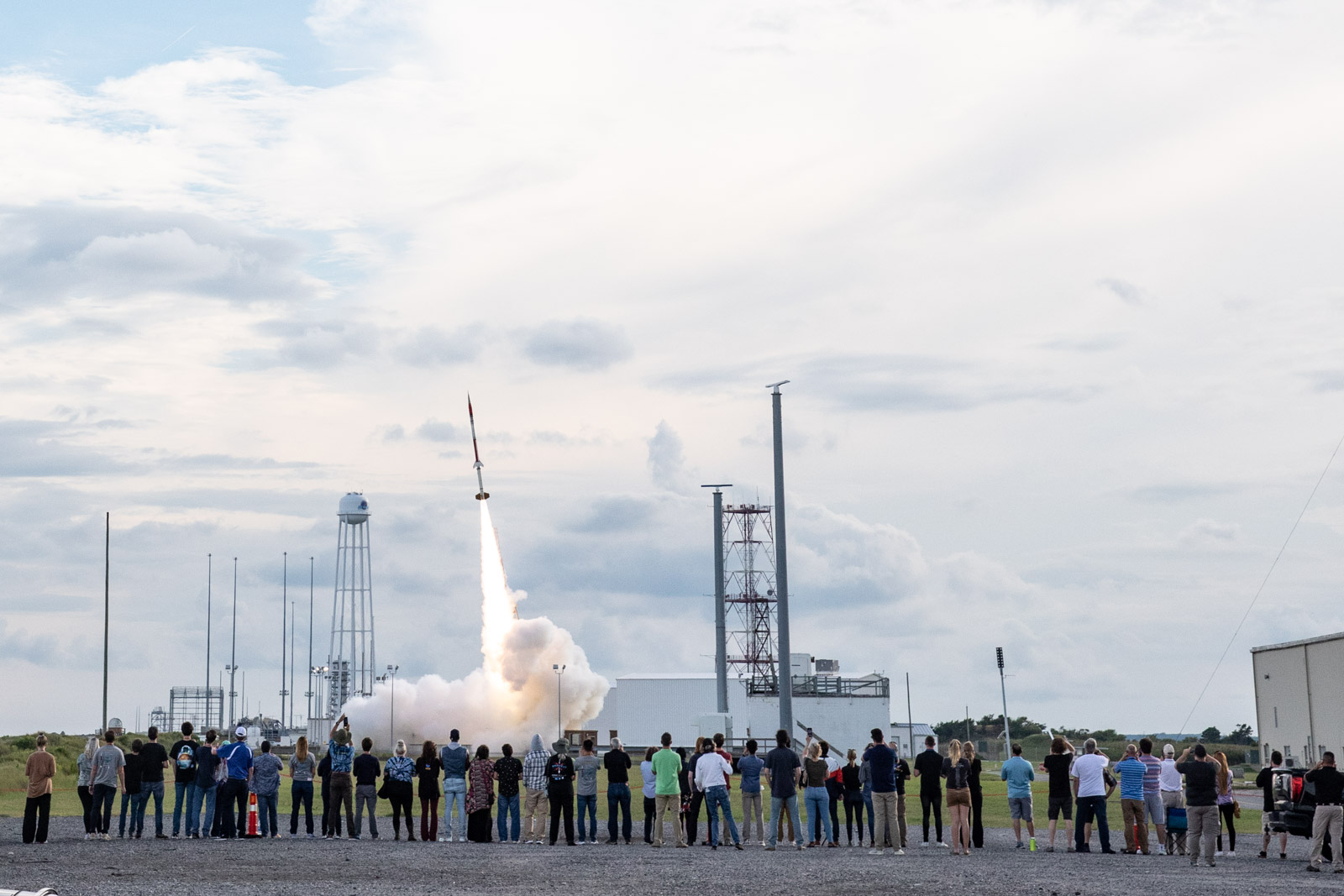
The RockSat and RockOn programs provide technical training and hands-on experiences that prepare and equip students to enter the United States aerospace industry. For the first time, NASA will combine both the RockSat and RockOn missions into one rocket, which will carry experiments developed by nearly 250 participants from 38 university and community college teams.
“The challenge was finding ways to fit as many experiments onto one sounding rocket as we could,” said Victoria Stoffel, workforce development lead at NASA Wallops. “The Sounding Rocket Program Office team found creative ways to fit nearly 50 experiments into one rocket. We are grateful to the Wallops teams for making this happen for the students to get the most from this experience.”
The RockOn teams work together to build their experiment onsite, getting hands-on experience putting together a circuit board from scratch and launching it into space. The more advanced RockSat program teams design and build their experiments, going through design reviews modeled on larger NASA missions. Each team can experience what it’s like working on a real NASA mission, from development to launch.
The RockSat student experiments range from taking measurements of weather and radiation in Earth’s upper atmosphere to testing technologies, such as heat shields, space-debris tracking, and robotic servicing, that could help future NASA missions.
The Terrier-Improved Malemute suborbital sounding rocket, which will carry the experiments, is expected to reach an altitude of about 100 miles before descending by parachute into the Atlantic Ocean to be recovered. The launch may be visible in the Chesapeake Bay region.
A launch visibility map for a Terrier-Improved Malemute sounding rocket launching from NASA’s Wallops Flight Facility in Virginia.NASA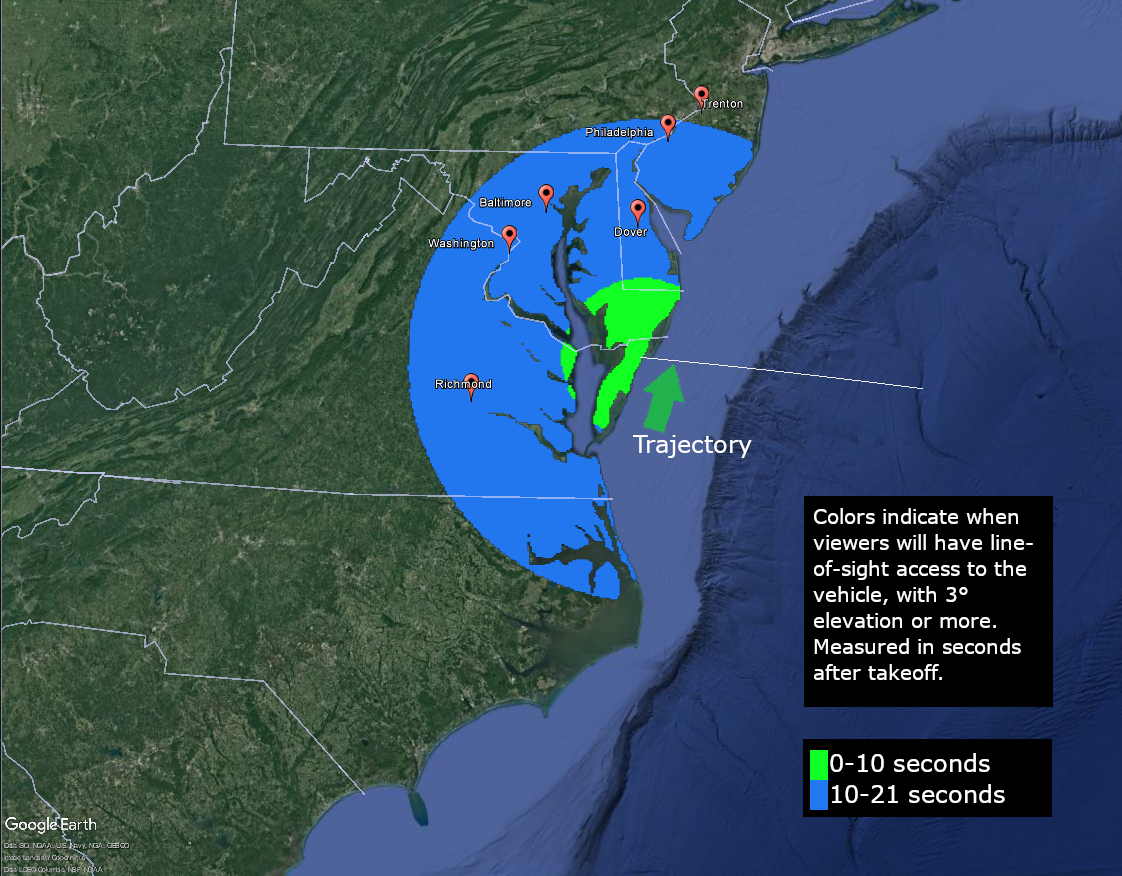
The Wallops Visitor Center’s launch viewing area will open June 24 at 4:30 a.m. for viewing. A livestream will begin approximately 10 minutes before launch on the Wallops YouTube channel. Launch updates also are available via the facility’s Facebook page.
For more information about NASA’s Sounding Rocket Program, visit:
https://www.nasa.gov/soundingrockets
By Jamie Adkins
NASA’s Wallops Flight Facility, Virginia
- Capital Tech University, Maryland
- Clemson University, South Carolina
- College of the Canyons, California
- Colorado Space Grant Consortium
- University of Colorado Boulder
- Escuela de Troquelería y Herramentaje, Puerto Rico
- New Jersey Institute of Technology
- Northwest Nazarene University, Idaho
- Rockets of the Rockies, Colorado
- Red Rocks Community College
- Arapahoe Community College
- Temple University, Pennsylvania
- Tidewater Community College, Virginia
- University of Alabama Huntsville
- University of Delaware
- University of Hartford, Connecticut
- University of Hawaii Community Colleges
- University of Kentucky
- University of Nebraska Lincoln
- University of Puerto Rico
- University of Virginia
- Virginia Tech
- West Virginia Space Flight Design Challenge
- Blue Ridge Community College
- West Virginia Wesleyan College
- West Virginia University
- West Virginia State University
- Marshall University
- University of Delaware
- Wilmington University, Delaware
- Chief Dull Knife College, Montana
- Grambling State University, Louisiana
- College of the Canyons, California
- Eastern Shore Community College, Virginia
- Salisbury University, Maryland
- Capitol Technology University, Maryland
- College of the Desert, California
- Flathead Valley Community College, Montana
- Delgado Community College, Louisiana
- Des Moines Area Community College, Iowa
- Langston University, Oklahoma
- University of Kentucky
- Saginaw Valley State University, Michigan
- Morgan State University, Maryland
- Pennsylvania State Harrisburg
- Middlesex College, New Jersey
- University of Colorado
- Wor-Wic Community College, Maryland
- Tidewater Community College, Virginia
- Montana Technological University
- University of Hartford, Connecticut
- University of Maryland Eastern Shore
A Quasar at Cosmic Dawn Flickers into View
Astronomers have detected a flickering quasar called J0439+1634 as it appeared only 850 million years after the Big Bang. That discovery raises fresh questions about black hole formation and activity in the early Universe. The flickering light of this distant cosmic lighthouse showed that black hole at the heart of the quasr has a flat, pancake-shaped accretion disk. That shape is more familiar in modern-day quasars, which leads astronomers to wonder how these objects formed so quickly in the infant cosmos?
Double Whammy: Binary Supernova in Gemini
New analysis reveals a tight relationship between two supernova remnants in the outer Milky Way.
The post Double Whammy: Binary Supernova in Gemini appeared first on Sky & Telescope.
Why the paint is peeling off the Lincoln Memorial Reflecting Pool—experts explain
Poor preparation and a failure to properly apply the coating may be just a few of the reasons why the Reflecting Pool’s new paint job appears to be peeling off
NASA Invites Media to Botswana Artemis Accords Signing Ceremony

The Republic of Botswana will sign the Artemis Accords during a ceremony at 9:30 a.m. EDT Thursday, June 25, at NASA Headquarters in Washington.
NASA Deputy Administrator Matt Anderson will host Botswana’s Minister of Communications and Innovation David Tshere and U.S. Department of State Senior Advisor for Space Gregory Autry for the event.
This event is in person only. Media interested in attending must RSVP no later than 5 p.m. on Wednesday, June 24, to: hq-media@mail.nasa.gov. NASA’s media accreditation policy is online.
In 2020, during the first Trump Administration, the United States, led by NASA and the State Department, joined with seven other founding nations to establish the Artemis Accords, responding to the growing interest in lunar activities by both governments and private companies.
The accords introduced the first set of practical principles aimed at enhancing the safety, transparency, and coordination of civil space exploration on the Moon, Mars, and beyond. Botswana will be the 68th country to sign the Artemis Accords.
Learn more about the Artemis Accords at:
https://www.nasa.gov/artemis-accords
-end-
Camille Gallo / Jennifer Dooren
Headquarters, Washington
202-358-1600
camille.m.gallo@nasa.gov / jennifer.m.dooren@nasa.gov
Another Early Universe Surprise from the JWST: A Mature Galaxy Cluster
The JWST found a galaxy cluster from 10 billion years ago that's far more developed than it should be, according to cosmological models. The cluster is also the most distant strong gravitational lens that we know of. Detailed observations across the spectrum show that the cluster is still undergoing mergers.
Woman with Alzheimer's starts conversing again after taking psilocybin
Woman with Alzheimer's starts conversing again after taking psilocybin
NASA’s Experimental Fabrication Branch Fuels Aircraft Innovation
At NASA, innovation begins well before an aircraft takes flight. The Experimental Fabrication Branch at NASA’s Armstrong Flight Research Center in Edwards, California, transforms engineering concepts into mission‑ready hardware for research aircraft and technology development. This capability helps the agency deliver advancements that benefit the public by improving aviation safety, efficiency, and sustainability.
The branch serves as a full‑service manufacturing, modification, and repair center for NASA Armstrong’s fleet of research and science aircraft. The team specializes in precision machining, sheet‑metal forming, aircraft tubing, welding, additive manufacturing, composite fabrication, and structural repairs and modifications. Their broad expertise allows them to build custom hardware for both aerospace and ground‑based applications.
Ron Harris, an engineering technician, works in the Experimental Fabrication Branch at NASA’s Armstrong Flight Research Center in Edwards, California, on Thursday, March 14, 2023. The branch transforms engineering concepts into hardware for research aircraft and technology development, supporting advances in aviation safety, efficiency, and sustainability. NASA/Steve Freeman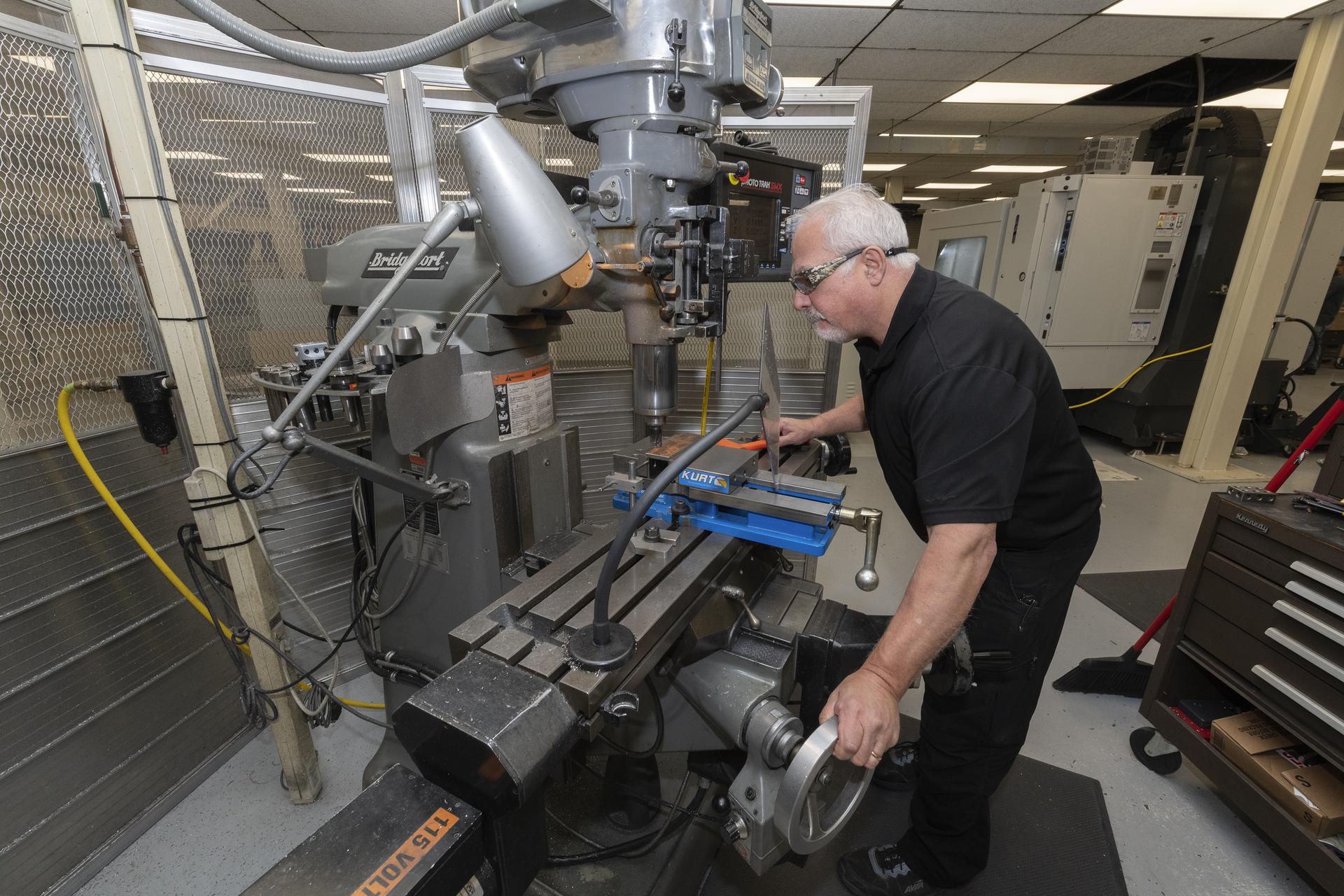
Engineering technicians in the branch bring decades of experience as master fabricators. They design and build unique components, rapid prototypes, and flight‑critical structures that meet NASA’s rigorous safety and performance standards. Whether shaping composite structures by hand or producing precision‑milled parts, the team builds every component with mission success in mind.
Experimental Fabrication supports a wide range of NASA research efforts. When teams at NASA Armstrong designed the AIRVUE (Airborne Instrumentation for Real‑world Video of Urban Environments) sensor pod to support autonomous‑flight research, the fabrication team converted digital designs into a fully functional structure. They ensured the pod met strict safety requirements before deploying it for test flights.
An engineering technician works in the Experimental Fabrication Branch at NASA’s Armstrong Flight Research Center in Edwards, California, on Thursday, March 14, 2023. The branch transforms engineering concepts into hardware for research aircraft and technology development, supporting advances in aviation safety, efficiency, and sustainability.NASA/Steve Freeman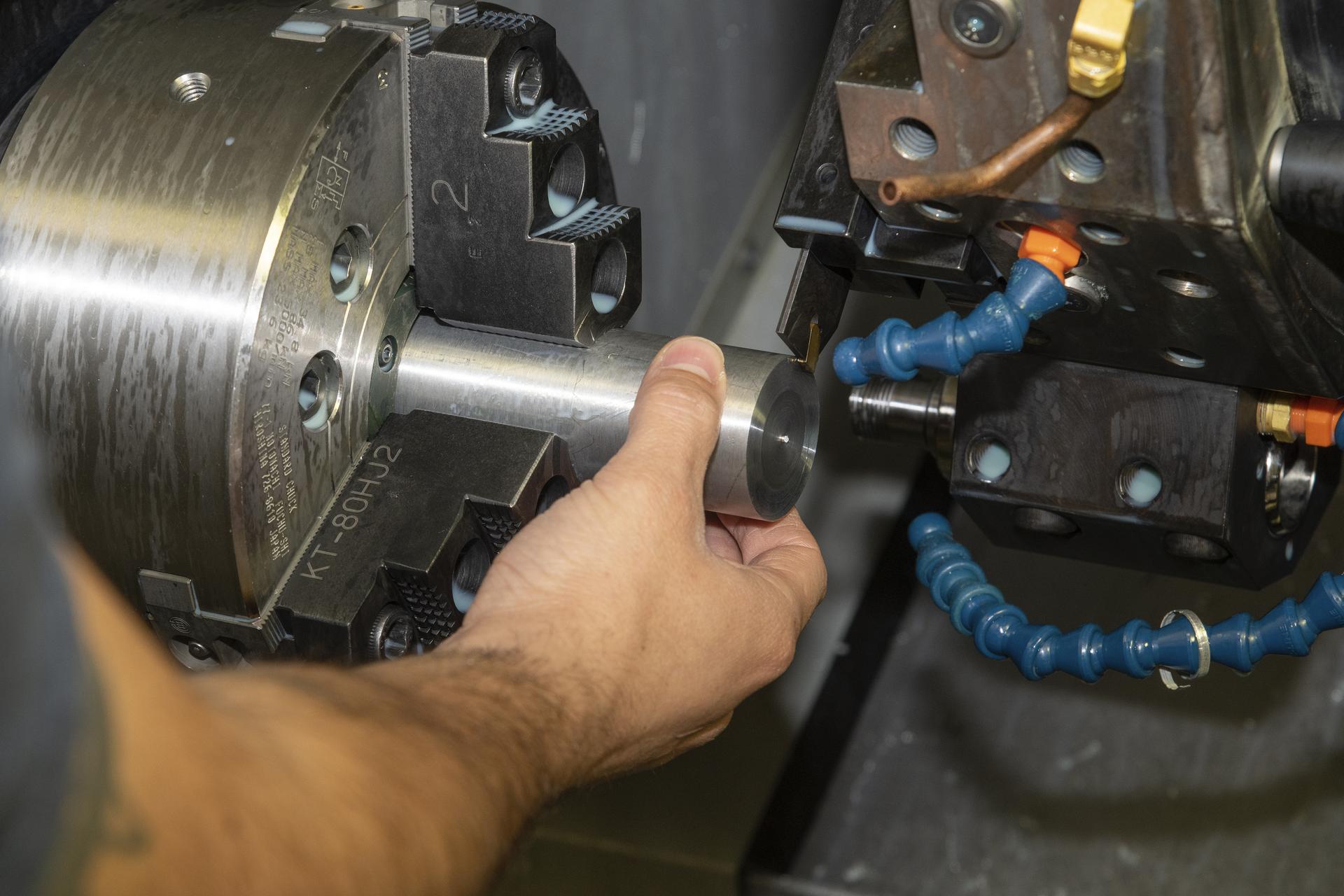
Beyond mission support, the Experimental Fabrication Branch contributes to NASA’s STEM engagement efforts. During local robotics competitions, technicians use mobile fabrication equipment to repair student‑built robots and demonstrate machining and welding techniques. These demonstrations introduce students to NASA’s technical career paths and show how advanced manufacturing supports aerospace research.
The branch uses modern computer-aided design and computer-aided manufacturing tools, including Pro E/Creo, MasterCam, and SolidWorks, to convert digital models into hardware. This early integration of engineering and fabrication helps shorten development timelines and reduce design‑to‑hardware mismatches. Unlike environments where work transitions between multiple contractors, NASA Armstrong includes the fabrication team from early design through final assembly and aircraft installation. This continuous involvement strengthens coordination with engineering teams and flight operations.
Alexis Moreno, an engineering technician, works with a fabrication machine in the Experimental Fabrication Branch at NASA’s Armstrong Flight Research Center in Edwards, California, on Monday, Nov. 6, 2023. The branch transforms engineering concepts into hardware for research aircraft and technology development, supporting advances in aviation safety, efficiency, and sustainability. NASA/Genaro Vavuris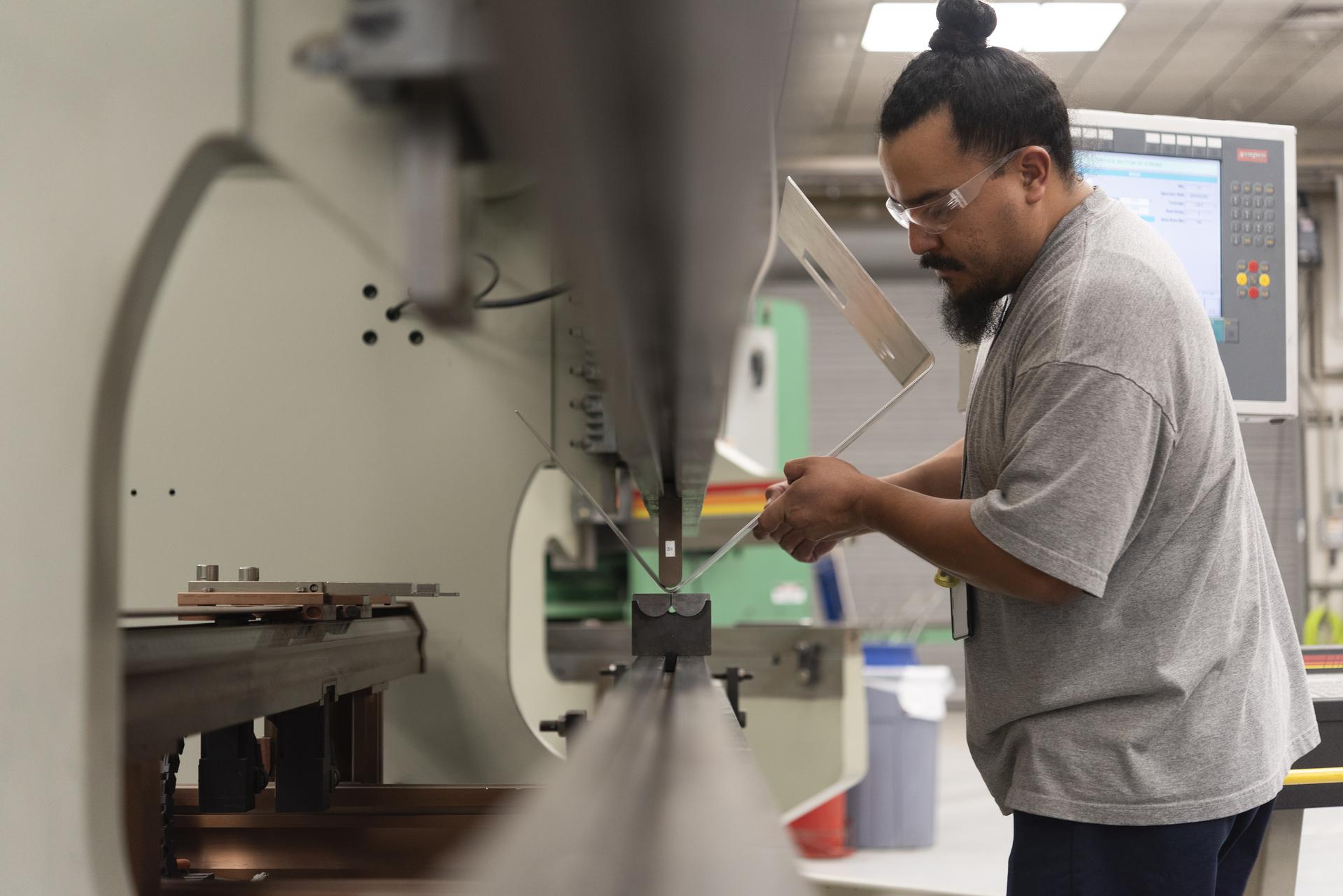
Recent projects, such as advanced wing‑model fabrication and custom lightweight aircraft floorboards, highlight the branch’s essential role in NASA Armstrong’s mission. Whether supporting experimental aircraft, enabling new technology demonstrations, or guiding students through hands‑on fabrication, the Experimental Fabrication Branch helps advance NASA’s mission for the benefit of all.
Share Details Last Updated Jun 22, 2026 EditorDede DiniusContactSarah Mannsarah.mann@nasa.govLocationArmstrong Flight Research Center Related Terms Explore More 5 min read NASA, USGS Scientists Go Rock Hounding in California’s High Desert Article 2 weeks ago 4 min read NASA’s X-59 Aircraft Flies Supersonic for First Time Article 2 weeks ago 6 min read NASA’s X-59 Prepares for First Supersonic Flight Article 4 weeks ago Keep Exploring Discover More Topics From NASAArmstrong Flight Research Center
Aircraft Flown at Armstrong
Armstrong Flight Operations
Armstrong Mission Operations