

Feed aggregator
Future Martian Colonists Will Need a New Relativistic Clock
We think of atomic clocks as the definitive timekeepers. They are famous for being accurate down to the picosecond. Unfortunately, they are still subject to general relativity, so if you put them on a different planet, they will track time slightly faster or slower than on Earth, depending on the planet’s gravity. In Mars’ case, an atomic clock on its surface is sitting in a slightly shallower gravity well, meaning that time moves slightly faster there. Therefore, as we begin to expand our technological footprint on the Red Planet, we will need a way to standardize how time is measured there. Dr. Slava Turyshev, a researcher at NASA’s Jet Propulsion Laboratory, proposes just such a framework in a new paper available in pre-print on arXiv.
Could the keto diet help treat anorexia, schizophrenia and depression?
Early research suggests that some mental health conditions could stem from metabolic disorders. If so, the findings could change how we treat mental illness
Department of Health and Human Services Digital Stockpile & Manufacturing Response Network Challenge

NASA’s Center of Excellence for Collaborative Innovation (CoECI) assists in the use of crowdsourcing across the federal government. CoECI’s NASA Tournament Lab offers the contract capability to run external crowdsourced challenges on behalf of NASA and other agencies.
Sponsored by the Administration for Strategic Preparedness and Response (ASPR), a division of the U.S. Department of Health and Human Services (HHS), this prize competition seeks forward-thinking solutions to strengthen the nation’s ability to rapidly produce and distribute critical medical supplies during public health emergencies and supply chain disruptions. Through three challenge phases, participants will develop an innovative conceptual systems design using technologies and frameworks that advance the future of resilient medical manufacturing, logistics, and digital coordination capabilities.
Phase 1: Participants will submit:
- 8-page submission paper
- 3-minute Pitch video
- Blueprint supporting the key capabilities and structure of the solution
Submissions will be evaluated per challenge Judging Criteria. Following the Judge evaluation period, up to 8 Finalists will receive a $5,000 prize each and be invited to the hybrid (in-person and virtual) Pitch Event at ASPR headquarters in Washington, DC. Up to 3 Winners from the Pitch Event will receive a $150,000 prize each and be invited to the innovation development phase.
Phase 2: Two developmental milestones will monitor solution development and will include $75,000 additional prizes for each milestone complete (up to $150,000 in total milestone prize payments).
Phase 3: At the end of the development milestone period, up to 3 teams may be invited to the final Live Validation Event to test their solution under applicable real-world simulations and compete for a total prize purse up to $1,100,000.
Total Prizes: Up to $2.04 Million
Challenge Launch: June 15, 2026
Phase 1 Submissions Due: August 28, 2026
For more information, visit: https://www.expeditionhacks.com/challenges/digital-stockpile-challenge
Department of Health and Human Services Digital Stockpile & Manufacturing Response Network Challenge
NASA’s Center of Excellence for Collaborative Innovation (CoECI) assists in the use of crowdsourcing across the federal government. CoECI’s NASA Tournament Lab offers the contract capability to run external crowdsourced challenges on behalf of NASA and other agencies.
Sponsored by the Administration for Strategic Preparedness and Response (ASPR), a division of the U.S. Department of Health and Human Services (HHS), this prize competition seeks forward-thinking solutions to strengthen the nation’s ability to rapidly produce and distribute critical medical supplies during public health emergencies and supply chain disruptions. Through three challenge phases, participants will develop an innovative conceptual systems design using technologies and frameworks that advance the future of resilient medical manufacturing, logistics, and digital coordination capabilities.
Phase 1: Participants will submit:
- 8-page submission paper
- 3-minute Pitch video
- Blueprint supporting the key capabilities and structure of the solution
Submissions will be evaluated per challenge Judging Criteria. Following the Judge evaluation period, up to 8 Finalists will receive a $5,000 prize each and be invited to the hybrid (in-person and virtual) Pitch Event at ASPR headquarters in Washington, DC. Up to 3 Winners from the Pitch Event will receive a $150,000 prize each and be invited to the innovation development phase.
Phase 2: Two developmental milestones will monitor solution development and will include $75,000 additional prizes for each milestone complete (up to $150,000 in total milestone prize payments).
Phase 3: At the end of the development milestone period, up to 3 teams may be invited to the final Live Validation Event to test their solution under applicable real-world simulations and compete for a total prize purse up to $1,100,000.
Total Prizes: Up to $2.04 Million
Challenge Launch: June 15, 2026
Phase 1 Submissions Due: August 28, 2026
For more information, visit: https://www.expeditionhacks.com/challenges/digital-stockpile-challenge
U.S. limits on Anthropic Fable AI could hurt cybersecurity
Fable 5 was built to help with advanced cybersecurity work. Its sudden shutdown highlights a dilemma at the heart of AI security: the same tools can aid both defenders and attackers
Metrics
Click here to view the FY26 Services Catalog
The catalogs provide service description, chargeback rate, unit of measure, and service level indicators for each NSSC service.
Service Level Agreement (SLA)Click here to view the Service Level Agreement
The SLA provides information about roles, responsibilities, rates, and service level indicators for all NASA Centers. The SLA is negotiated on an annual basis in line with the fiscal year. A single SLA is shared by all NASA Centers and signed by the Associate Administrator, Chief Financial Officer, Chief Information Officer, and the Office of Inspector General. The SLA provides for the delivery of specific services from the NSSC to NASA Centers and Headquarters Operations in the areas of:
- Financial Management
- Procurement
- Human Resources
- Information Technology
- Agency Business Services
*** On-Line Course Management and Training Purchases have been realigned to the OLC &Training Purchases section of the bill in accordance with the realignment of training funds. Center Special Projects have been consolidated into one Special Projects bill with the funding Center identified for each project.***
FY 2026 – Utilization Reports
October 2025
November 2025
December 2025
January 2026
February 2026
March 2026
April 2026
FY 2025 – Utilization Reports
September 2025
August 2025
July 2025
June 2025
May 2025
April 2025
March 2025
February 2025
January 2025
December 2024
November 2024
October 2024
FY 2024 – Utilization Reports
September 2024
August 2024
July 2024
June 2024
May 2024
April 2024
March 2024
February 2024
January 2024
December 2023
November 2023
October 2023
Metrics
Click here to view the FY26 Services Catalog
The catalogs provide service description, chargeback rate, unit of measure, and service level indicators for each NSSC service.
Service Level Agreement (SLA)Click here to view the Service Level Agreement
The SLA provides information about roles, responsibilities, rates, and service level indicators for all NASA Centers. The SLA is negotiated on an annual basis in line with the fiscal year. A single SLA is shared by all NASA Centers and signed by the Associate Administrator, Chief Financial Officer, Chief Information Officer, and the Office of Inspector General. The SLA provides for the delivery of specific services from the NSSC to NASA Centers and Headquarters Operations in the areas of:
- Financial Management
- Procurement
- Human Resources
- Information Technology
- Agency Business Services
*** On-Line Course Management and Training Purchases have been realigned to the OLC &Training Purchases section of the bill in accordance with the realignment of training funds. Center Special Projects have been consolidated into one Special Projects bill with the funding Center identified for each project.***
FY 2026 – Utilization Reports
October 2025
November 2025
December 2025
January 2026
February 2026
March 2026
April 2026
FY 2025 – Utilization Reports
September 2025
August 2025
July 2025
June 2025
May 2025
April 2025
March 2025
February 2025
January 2025
December 2024
November 2024
October 2024
FY 2024 – Utilization Reports
September 2024
August 2024
July 2024
June 2024
May 2024
April 2024
March 2024
February 2024
January 2024
December 2023
November 2023
October 2023
Aurora Australis
Aurora Australis
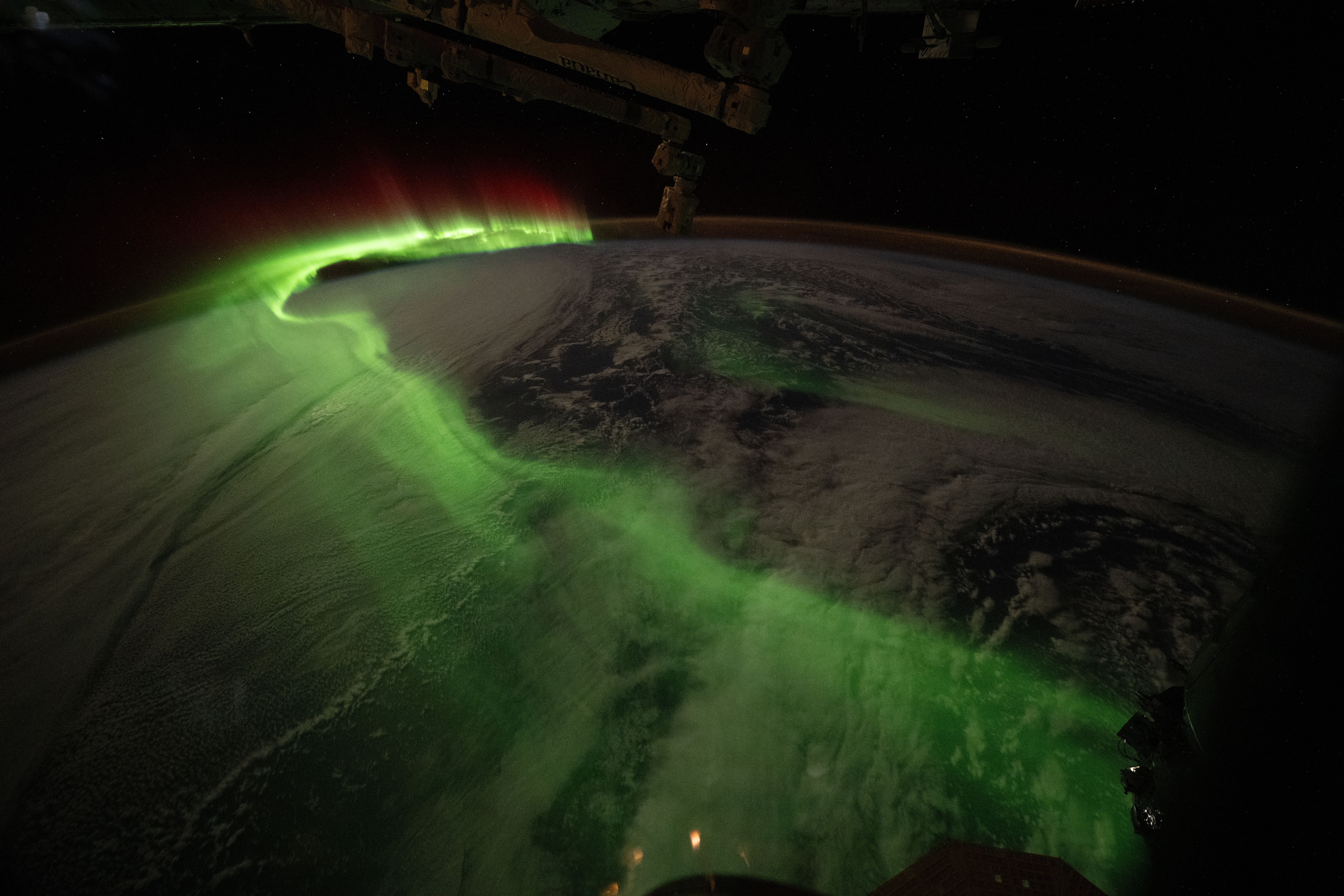
The aurora australis arcs over Earth during an active solar event in this photograph taken on June 5, 2026, from the International Space Station as it orbited 271 miles above the Indian Ocean southwest of Perth, Australia.
Auroras are colorful, dynamic, and often visually delicate displays of an intricate dance of particles and magnetism between the Sun and Earth called space weather.
Image credit: NASA/Jessica Meir
Aurora Australis
The aurora australis arcs over Earth during an active solar event in this photograph taken on June 5, 2026, from the International Space Station as it orbited 271 miles above the Indian Ocean southwest of Perth, Australia.
Auroras are colorful, dynamic, and often visually delicate displays of an intricate dance of particles and magnetism between the Sun and Earth called space weather.
Image credit: NASA/Jessica Meir
A quantum state that lasts forever may finally be within our grasp
A quantum state that lasts forever may finally be within our grasp
Are Alien Probes Hiding in Our Backyard? A New Study Says We’ve Barely Looked
Even at this early stage in our space faring age, humanity has already begun sending probes that will eventually reach other solar systems, even if that was not their original intention. Five robotic explorers - Pioneer 10 and 11, Voyager 1 and 2, and New Horizons - are all on escape velocities out of the solar system, and might someday enter another one. They will no longer be operational at that point, but they serve as a proof of concept that spacefaring civilizations do indeed build interstellar probes. Which raises the obvious question - has anyone else sent their own robotic explorers to ours? In a recent paper, published in the Proceedings of the IAU Centenary Symposium, astronomer T. Joseph W. Lazio, points out a painful truth - we still have no idea, and our technology will need to get much better if we plan to find out.
Walking shark found in Papua New Guinea is new to science
Walking shark found in Papua New Guinea is new to science
Autism may have two distinct subtypes that vary by brain activity
Autism may have two distinct subtypes that vary by brain activity
Here’s how big the Ebola outbreak in the Democratic Republic of the Congo might be
Scientists have modeled the potential size of this current outbreak, which some experts think could become one of the worst Ebola epidemics on record
"Little Red Dot" Is a Cocooned Black Hole
A deep spectrum of a mysterious "little red dot" reveals a supermassive black hole cocooned in gas so dense it's opaque — but glowing in the infrared.
The post "Little Red Dot" Is a Cocooned Black Hole appeared first on Sky & Telescope.