
Feed aggregator
NASA Finds New Way Earth May Have Received Elements Needed for Life
Illustration: ESO
NASA-supported scientists have provided new information about how the early Earth may have acquired some elements necessary for the planet to become habitable. They also suggest a new role for Jupiter in the distribution of these elements throughout the young solar system. The study, published today in Science Advances, examines this history by looking at the ratio of phosphorus to nitrogen in iron meteorites and in younger objects known as chondrites.
The study suggests that Earth acquired its inventory of the life-essential elements phosphorous and nitrogen primarily from the inner solar system, without requiring a significant contribution from outer solar system chondritesDebjeet Pathak
Rice University
Planetary system formationOur solar system formed from gas and dust that swirled around the proto-Sun more than 4.5 billion years ago. This gas contained the raw materials needed to form planets, moons, and ultimately life as we know it. Two elements of particular importance for life are nitrogen and phosphorus.
All life on Earth needs the same elements: carbon, hydrogen, nitrogen, oxygen, phosphorus, and sulfur (CHNOPS). These elements came from space, born inside stars and spread in clouds of gas and dust. Gravity then caused this material to gather together, forming new stars and smaller objects like planets. NASA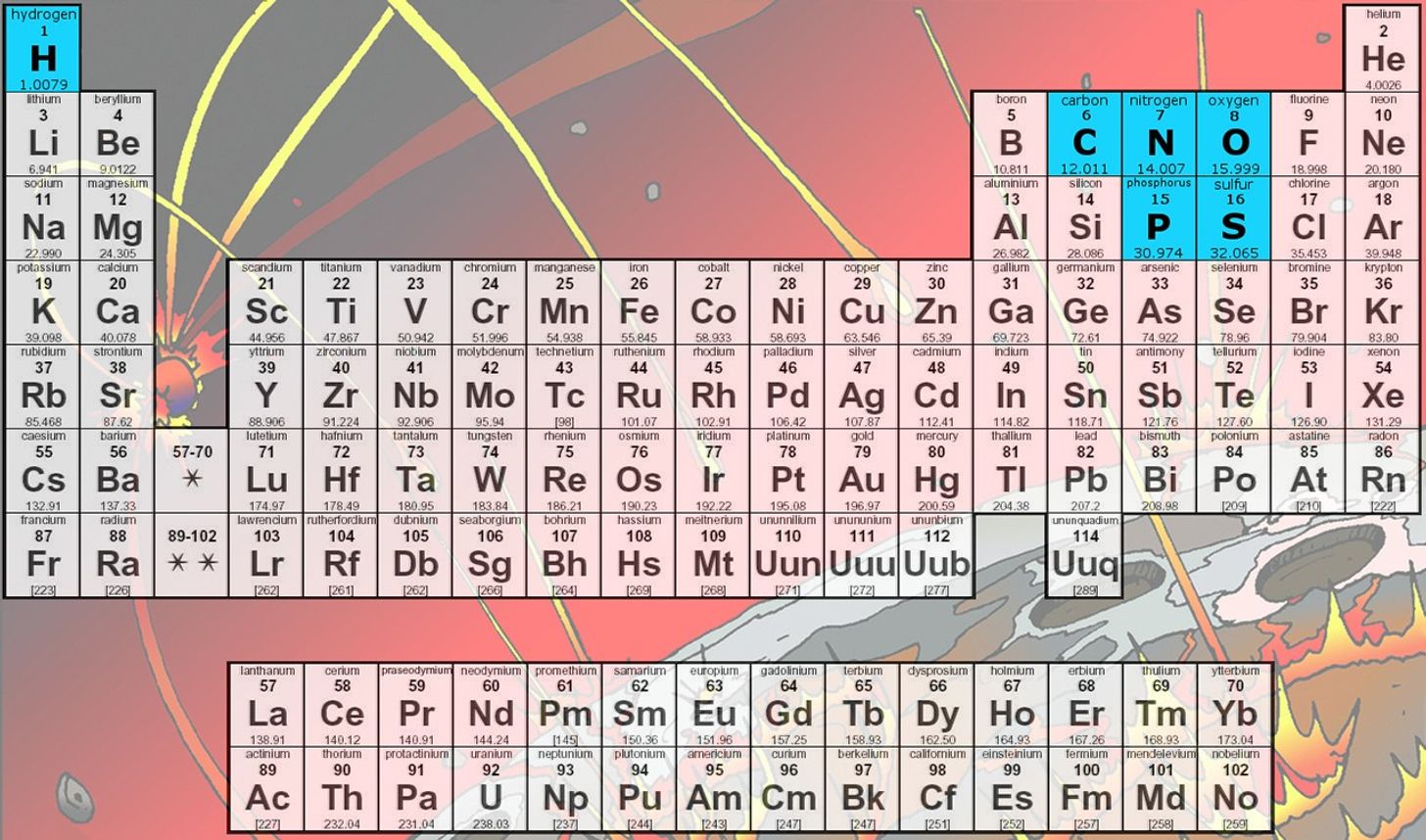
In the earliest stages of the solar system, gas and dust coalesced into bodies known as planetesimals. As these objects orbited the young Sun in this chaotic environment, planetesimals collided, leaving shattered remnants throughout the system. Eventually, many of these pieces were incorporated into planets and moons. Other pieces survive today as asteroids, still orbiting the Sun, and – if they have impacted the Earth and been recovered – as meteorites. These meteorites provide a window into the early solar system at a time before the Earth existed. Chondrites and iron meteorites are two different classes of these meteorites.
As their name suggests, iron meteorites are dense, metallic objects and are primarily made of iron-nickel alloy. Chondrites, on the other hand, are stony objects and they are responsible for most of the meteorites that have been found on Earth.
Each type of meteorite originates from planetesimals that formed at different times in our system. The oldest generation of planetesimals are the source of iron meteorites. Chondrites came from a second generation of planetesimals that formed 2-3 million years later.
Habitable planet buildingUnderstanding how the Earth was made and the timing of its formation is important for astrobiologists who study how and when our planet became habitable for life as we know it. The young Earth needed to have a supply of life’s ingredients, including nitrogen and phosphorus, for the first living cells to form.
There is debate between scientists over where Earth’s stock of life-essential elements came from. Some evidence points to chondrites in the outer solar system traveling inward to arrive at Earth late in our planet’s formation process. However, the new study tells a different story.
Using laboratory experiments and geochemical models, the team reconstructed a map of phosphorus-nitrogen (P/N) ratios across the early solar system and found differences between the first (iron meteorites) and second (chondrites) generations of planetesimals.
An illustration of our solar system. The asteroid belt is located between Mars and Jupiter, separating our system into what we refer to as the inner and outer regions. NASA/JPL-Caltech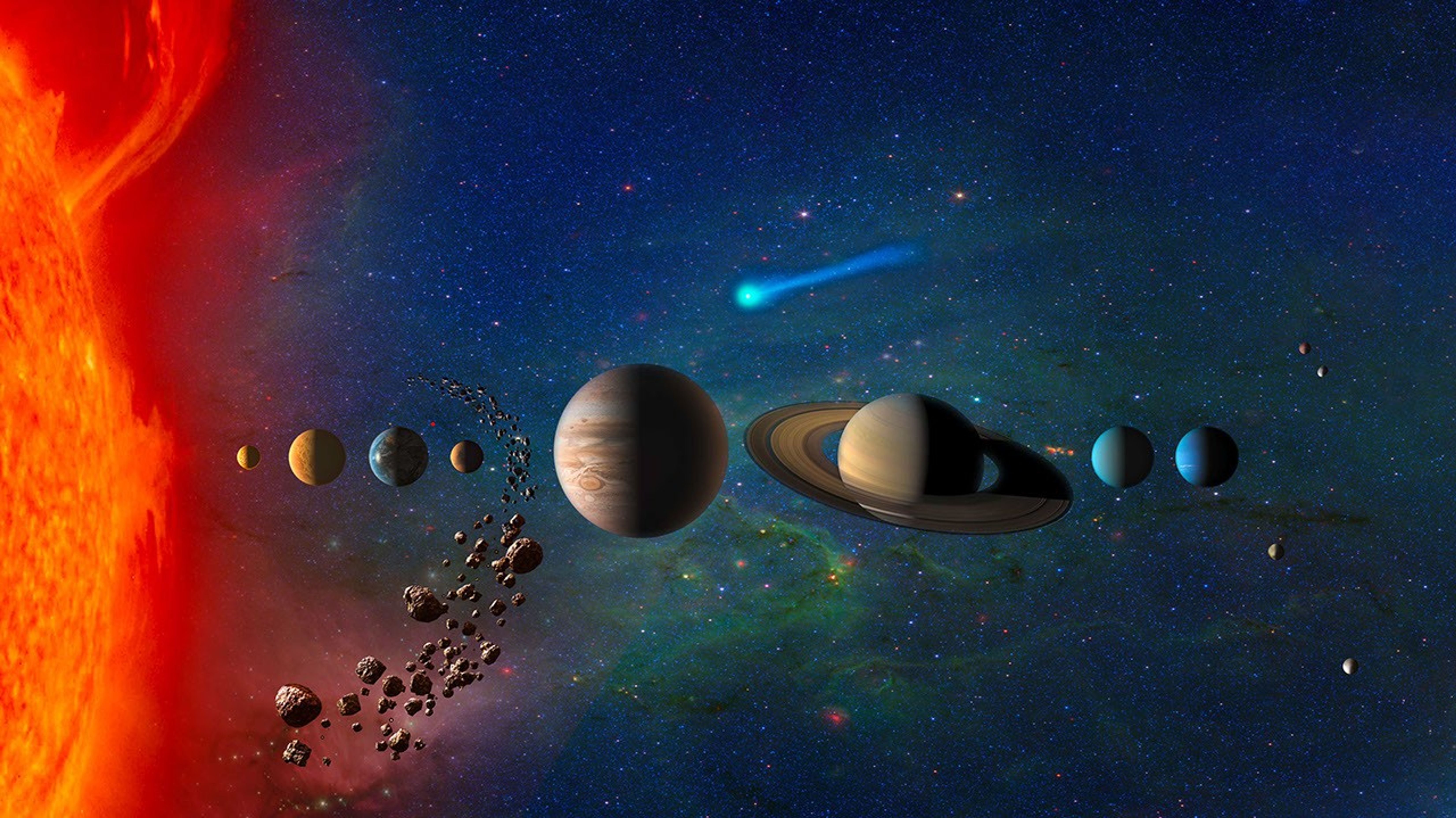
The experiments and subsequent geochemical modeling showed that the first generation had a higher ratio of P/N in the outer solar system, with that ratio decreasing toward the inner solar system. This trend was reversed in the second generation of planetesimals, with higher P/N ratios in the inner solar system.
The thought is that during the formation of the first generation of planetesimals, there was an outward flow of material that raised the P/N ratio in the outer solar system. Then came Jupiter.
For our own solar system, Jupiter’s presence and growth history, indeed, seem to have played a critical role in determining the distribution of the basic chemical ingredients necessary for habitable worlds.Rajdeep Dasgupta
Rice University
As Jupiter formed and grew to a tremendous size (and gravitational influence), the planet restricted the movement of phosphorus and nitrogen from the inner to outer solar system. This meant that when the second generation of planetesimals appeared, those in the inner solar system were left with a higher P/N ratio than their cousins further out.
“For our own solar system, Jupiter’s presence and growth history, indeed, seem to have played a critical role in determining the distribution of the basic chemical ingredients necessary for habitable worlds,” said Rajdeep Dasgupta of Rice University in Houston and senior author on the study. “It remains an open question whether a life-essential element budget similar to Earth’s can be established without a Jupiter-like planet in the population.”
Geochemical accretion modeling further shows that Earth’s present-day P/N signature is best reproduced by the inner solar system planetesimals, either those related to iron meteorites or those related to chondrites.
“The study suggests that Earth acquired its inventory of the life-essential elements phosphorous and nitrogen primarily from the inner solar system, without requiring a significant contribution from outer solar system chondrites,” said study lead author Debjeet Pathak, graduate student at Rice University.
For more information on astrobiology at NASA, visit:
https://science.nasa.gov/astrobiology
Karen Fox / Molly Wasser
Headquarters, Washington
202-358-1600
karen.c.fox@nasa.gov / molly.l.wasser@nasa.gov
Share
Details Last Updated Jun 03, 2026 Related Terms Explore More 5 min read NASA Uses Mineralogical Marker to Understand Ancient Martian ClimateScientists analyzed 20 Martian samples collected by NASA’s Curiosity Rover and found that differences in…
Article
6 days ago
5 min read NASA Research Shows Early Life Relied on Rare Metal
Article
4 weeks ago
8 min read Optical Vortex Phase Masks for the Detection of Habitable Worlds
A team of NASA researchers is developing new types of optical masks that could help…
Article
2 months ago
Keep Exploring Discover More Astrobiology Topics From NASA
Astrobiology Program Overview
Astrobiology Multimedia
Astrobiology Publications
Funded Astrobiology Research at NASA
NASA Finds New Way Earth May Have Received Elements Needed for Life
Illustration: ESO
NASA-supported scientists have provided new information about how the early Earth may have acquired some elements necessary for the planet to become habitable. They also suggest a new role for Jupiter in the distribution of these elements throughout the young solar system. The study, published today in Science Advances, examines this history by looking at the ratio of phosphorus to nitrogen in iron meteorites and in younger objects known as chondrites.
The study suggests that Earth acquired its inventory of the life-essential elements phosphorous and nitrogen primarily from the inner solar system, without requiring a significant contribution from outer solar system chondritesDebjeet Pathak
Rice University
Planetary system formationOur solar system formed from gas and dust that swirled around the proto-Sun more than 4.5 billion years ago. This gas contained the raw materials needed to form planets, moons, and ultimately life as we know it. Two elements of particular importance for life are nitrogen and phosphorus.
All life on Earth needs the same elements: carbon, hydrogen, nitrogen, oxygen, phosphorus, and sulfur (CHNOPS). These elements came from space, born inside stars and spread in clouds of gas and dust. Gravity then caused this material to gather together, forming new stars and smaller objects like planets. NASAIn the earliest stages of the solar system, gas and dust coalesced into bodies known as planetesimals. As these objects orbited the young Sun in this chaotic environment, planetesimals collided, leaving shattered remnants throughout the system. Eventually, many of these pieces were incorporated into planets and moons. Other pieces survive today as asteroids, still orbiting the Sun, and – if they have impacted the Earth and been recovered – as meteorites. These meteorites provide a window into the early solar system at a time before the Earth existed. Chondrites and iron meteorites are two different classes of these meteorites.
As their name suggests, iron meteorites are dense, metallic objects and are primarily made of iron-nickel alloy. Chondrites, on the other hand, are stony objects and they are responsible for most of the meteorites that have been found on Earth.
Each type of meteorite originates from planetesimals that formed at different times in our system. The oldest generation of planetesimals are the source of iron meteorites. Chondrites came from a second generation of planetesimals that formed 2-3 million years later.
Habitable planet buildingUnderstanding how the Earth was made and the timing of its formation is important for astrobiologists who study how and when our planet became habitable for life as we know it. The young Earth needed to have a supply of life’s ingredients, including nitrogen and phosphorus, for the first living cells to form.
There is debate between scientists over where Earth’s stock of life-essential elements came from. Some evidence points to chondrites in the outer solar system traveling inward to arrive at Earth late in our planet’s formation process. However, the new study tells a different story.
Using laboratory experiments and geochemical models, the team reconstructed a map of phosphorus-nitrogen (P/N) ratios across the early solar system and found differences between the first (iron meteorites) and second (chondrites) generations of planetesimals.
An illustration of our solar system. The asteroid belt is located between Mars and Jupiter, separating our system into what we refer to as the inner and outer regions. NASA/JPL-CaltechThe experiments and subsequent geochemical modeling showed that the first generation had a higher ratio of P/N in the outer solar system, with that ratio decreasing toward the inner solar system. This trend was reversed in the second generation of planetesimals, with higher P/N ratios in the inner solar system.
The thought is that during the formation of the first generation of planetesimals, there was an outward flow of material that raised the P/N ratio in the outer solar system. Then came Jupiter.
For our own solar system, Jupiter’s presence and growth history, indeed, seem to have played a critical role in determining the distribution of the basic chemical ingredients necessary for habitable worlds.Rajdeep Dasgupta
Rice University
As Jupiter formed and grew to a tremendous size (and gravitational influence), the planet restricted the movement of phosphorus and nitrogen from the inner to outer solar system. This meant that when the second generation of planetesimals appeared, those in the inner solar system were left with a higher P/N ratio than their cousins further out.
“For our own solar system, Jupiter’s presence and growth history, indeed, seem to have played a critical role in determining the distribution of the basic chemical ingredients necessary for habitable worlds,” said Rajdeep Dasgupta of Rice University in Houston and senior author on the study. “It remains an open question whether a life-essential element budget similar to Earth’s can be established without a Jupiter-like planet in the population.”
Geochemical accretion modeling further shows that Earth’s present-day P/N signature is best reproduced by the inner solar system planetesimals, either those related to iron meteorites or those related to chondrites.
“The study suggests that Earth acquired its inventory of the life-essential elements phosphorous and nitrogen primarily from the inner solar system, without requiring a significant contribution from outer solar system chondrites,” said study lead author Debjeet Pathak, graduate student at Rice University.
For more information on astrobiology at NASA, visit:
https://science.nasa.gov/astrobiology
Karen Fox / Molly Wasser
Headquarters, Washington
202-358-1600
karen.c.fox@nasa.gov / molly.l.wasser@nasa.gov
Share
Details Last Updated Jun 03, 2026 Related Terms Explore More 5 min read NASA Uses Mineralogical Marker to Understand Ancient Martian ClimateScientists analyzed 20 Martian samples collected by NASA’s Curiosity Rover and found that differences in…
Article
6 days ago
5 min read NASA Research Shows Early Life Relied on Rare Metal
Article
4 weeks ago
8 min read Optical Vortex Phase Masks for the Detection of Habitable Worlds
A team of NASA researchers is developing new types of optical masks that could help…
Article
2 months ago
Keep Exploring Discover More Astrobiology Topics From NASA
Astrobiology Program Overview
Astrobiology Multimedia
Astrobiology Publications
Funded Astrobiology Research at NASA
Everyone is Lying to You for Money is a must-watch exposé of crypto
Everyone is Lying to You for Money is a must-watch exposé of crypto
The looming El Niño could be bad – but much worse is to come
The looming El Niño could be bad – but much worse is to come
Explore the mind-bending and paradoxical art of M C. Escher
Explore the mind-bending and paradoxical art of M C. Escher
Escher: The paradoxical artist beloved by mathematicians
Escher: The paradoxical artist beloved by mathematicians
Superintelligent machines may well need us after all
Superintelligent machines may well need us after all
An encyclopedia formed from AI hallucinations – what could go wrong?
Alice Roberts: 'We are fundamentally, at the end of the day, animals'
Alice Roberts: 'We are fundamentally, at the end of the day, animals'
An encyclopedia formed from AI hallucinations – what could go wrong?
New Scientist recommends a deep dive into our organs by Giulia Enders
New Scientist recommends a deep dive into our organs by Giulia Enders
A New Map of Stars Shows That the Small Magellanic Cloud is Expanding
A multi-year survey of millions of stars in the Small Magellanic Cloud shows that the dwarf galaxy is expanding rather than rotating. This is due to the influence of its larger neighbour, the Large Magellanic Cloud.
International Sea Level Satellite Observes El Niño Precursor
NASA/JPL-Caltech Photojournal Navigation Downloads International Sea Level Satellite Observes El Niño Precursor
MP4 (1.10 MB)
Description
Sea level height data from the international Sentinel-6 Michael Freilich satellite collected from March to May 2026 show higher, warmer water moving from the western Pacific Ocean to just off the coast of Colombia, Ecuador, and Peru. This phenomenon is known as a warm Kelvin wave, signified in this animation of the data by yellow, orange, red, and white. The emergence of Kelvin waves in the early part the year is a signal that an El Niño event is likely to follow.
In early 2026, measurements from Sentinel-6 Michael Freilich showed a small Kelvin wave forming around Micronesia in late January and dissipating by mid-February. The wave shown in the animation emerged in early March, then moved east over time. By mid-May, the seas around Peru were more than 5.9 inches (15 centimeters) higher than long-term averages. Because water expands as it warms, a rise in elevation of an area of the ocean indicates increasing temperature.
The additional heat at the sea surface can change the circulation patterns of energy, water, and air in the atmosphere, which can affect weather. El Niños can cause heavy precipitation in some regions and deficits in others, influencing daily life and commerce around the world.
Sentinel-6 Michael Freilich, named after former NASA Earth Science Division Director Michael Freilich, is one of two satellites that compose the Copernicus Sentinel-6/Jason-CS (Continuity of Service) mission.
Sentinel-6/Jason-CS was jointly developed by ESA, the European Organisation for the Exploitation of Meteorological Satellites (EUMETSAT), NASA, and NOAA, with funding support from the European Commission and technical support on performance from the French space agency CNES (Centre National d’Études Spatiales). Spacecraft monitoring and control, as well as the processing of all the altimeter science data, is carried out by EUMETSAT on behalf of the European Union’s Copernicus programme, with the support of all partner agencies.
A division of Caltech in Pasadena, NASA’s Jet Propulsion Laboratory contributed three science instruments for each Sentinel-6 satellite: the Advanced Microwave Radiometer, the Global Navigation Satellite System – Radio Occultation, and the Laser Retroreflector Array. NASA also contributed launch services, ground systems supporting operation of the NASA science instruments, the science data processors for two of these instruments, and support for the U.S. members of the international Ocean Surface Topography Science Team.
To learn more about Sentinel-6 Michael Freilich, visit:
https://www.nasa.gov/sentinel-6
Keep Exploring Discover More Topics From Photojournal
Photojournal
Search Photojournal
Photojournal’s Latest Content
Feedback