
Feed aggregator
Scientists discover why gold doesn’t ‘rust’
Gold doesn’t tarnish like similar metals do. A new paper says that the key is the intricate “herringbone” pattern of its atoms.
Hubble Sights Galaxy in Transition
Psyche Spacecraft Completes Mars Flyby
Hubble Sights Galaxy in Transition
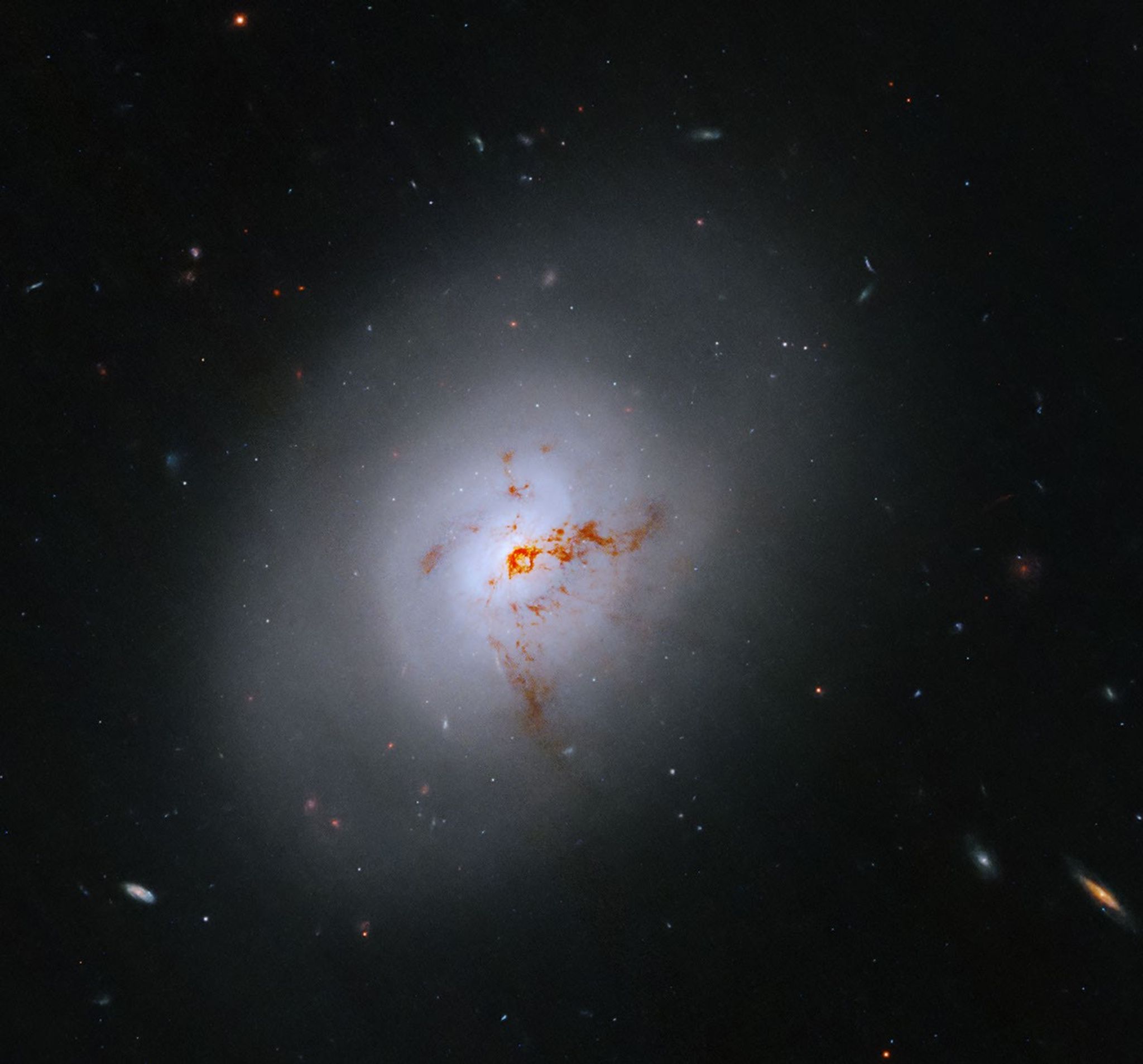
This NASA Hubble Space Telescope image reveals an enigmatic galaxy with a bright center and a face that hints at spiral structure, yet it holds no obvious spiral arms. Reddish-brown clumps and filaments of dust partially obscure the galaxy’s full face, while red, blue, and orange light from distant galaxies shines through its diffuse outer regions and dots the inky-black background.
NGC 1266 is a lenticular galaxy located some 100 million light-years away in the constellation Eridanus (the Celestial River). Astronomers classify lenticulars as transitional galaxies that represent an evolutionary bridge between spirals and ellipticals. Lenticulars are “lens-shaped” and have a bright central bulge and flattened disk like spirals, but they have no spiral arms and little to no star formation like ellipticals.
Read more about NGC 1266, its interesting features, and why astronomers study galaxies like it.
Image credit: NASA, ESA, K. Alatalo (STScI); Image Processing: G. Kober (NASA/Catholic University of America)
Hubble Sights Galaxy in Transition
This NASA Hubble Space Telescope image reveals an enigmatic galaxy with a bright center and a face that hints at spiral structure, yet it holds no obvious spiral arms. Reddish-brown clumps and filaments of dust partially obscure the galaxy’s full face, while red, blue, and orange light from distant galaxies shines through its diffuse outer regions and dots the inky-black background.
NGC 1266 is a lenticular galaxy located some 100 million light-years away in the constellation Eridanus (the Celestial River). Astronomers classify lenticulars as transitional galaxies that represent an evolutionary bridge between spirals and ellipticals. Lenticulars are “lens-shaped” and have a bright central bulge and flattened disk like spirals, but they have no spiral arms and little to no star formation like ellipticals.
Read more about NGC 1266, its interesting features, and why astronomers study galaxies like it.
Image credit: NASA, ESA, K. Alatalo (STScI); Image Processing: G. Kober (NASA/Catholic University of America)
NOAA predicts quieter Atlantic hurricane season for 2026—but the Pacific is another story
This year’s expected El Niño could hamper hurricanes in the Atlantic but boost them in the central and eastern Pacific
Mathematicians stunned by AI's biggest breakthrough in mathematics yet
Mathematicians stunned by AI's biggest breakthrough in mathematics yet
The Magnetar at the Heart of a Superluminous Supernova
Superluminous supernovae are the royalty in the supernova world. They're up to 100 times brighter than a standard supernova, and astrophysicists want to know why. New research shows that magnetars are responsible.
Trial of next-gen weight-loss drug retatrutide brings it one step closer to FDA approval
While drugs such as Wegovy target a single gut hormone, retatrutide is among a new class of GLP-1 drugs that aims at three hormone receptors
Epic dreaming is leaving people exhausted and distressed
Epic dreaming is leaving people exhausted and distressed
AI just solved an 80-year-old ‘Erdős problem,’ and mathematicians are amazed
A chatbot’s result for the 80-year-old “unit distance” conjecture is the first AI proof that would likely be published in math’s top journal if humans had done it alone
Can math predict the end of humanity? Inside the ‘doomsday argument’
This eerily simple math says our days are numbered—and nobody can agree why it’s wrong
Is Dust the Best Thing in the Universe? Part 2: The Astronomer's Headache
Dust scatters light, absorbs light, re-emits light, and ruins everything. It's why our maps of the Milky Way were wrong before 1930, and it's why one of the biggest cosmological announcements of the 2010s quietly evaporated.
NASA Welcomes 16th Deputy Administrator Matt Anderson

Matt Anderson was sworn in Thursday as NASA’s 16th deputy administrator by NASA Administrator Jared Isaacman. The oath was taken during a ceremony held at the Eisenhower Executive Office Building in Washington.
As NASA deputy administrator, Anderson will help lead the agency’s efforts to execute the President’s national space policy, strengthen America’s leadership in space, and advance NASA’s missions in exploration, science, and aeronautics.
“Matt Anderson brings exactly the kind of operational leadership, technical expertise, and mission focus NASA needs right now,” said NASA Administrator Jared Isaacman. “His decades of experience across the Air Force, Space Command, and the aerospace industry give him a valuable perspective as we work to strengthen America’s leadership in space and enter the next era of exploration. I’m excited to have him helping lead NASA as we take on the near-impossible and push the boundaries of what we can achieve.”
“I’m deeply honored to serve as the deputy administrator and support the men and women across NASA who carry out some of the most ambitious and important work in the world,” said NASA Deputy Administrator Matt Anderson. “NASA has been entrusted with a mission of enormous strategic, scientific, and economic significance, and delivering on that mission will require disciplined execution, technical excellence, and a strong culture of accountability. I’m grateful to President Trump for the trust and confidence he has placed in me with this nomination, and I look forward to serving alongside Administrator Isaacman and the extraordinary NASA workforce as we strengthen America’s leadership in space and build toward the next golden era of space exploration.”
“NASA succeeds when we pair clear mission goals with empowered teams and disciplined execution,” said NASA Associate Administrator Amit Kshatriya. “Matt Anderson has spent his career leading in complex operational environments where the stakes are high and mission success depends on trust in the people doing the work. I look forward to working with him as we continue building the capabilities, partnerships, and workforce needed for the challenging missions ahead of us.”
Anderson was nominated by President Donald J. Trump on Jan. 13, and confirmed by the U.S. Senate on May 18.
Read Anderson’s official biography on the agency’s website:
https://www.nasa.gov/people/matt-anderson
-end-
Bethany Stevens / George Alderman
Headquarters, Washington
202-358-1600
bethany.c.stevens@nasa.gov / george.a.alderman@nasa.gov
NASA Welcomes 16th Deputy Administrator Matt Anderson
Matt Anderson was sworn in Thursday as NASA’s 16th deputy administrator by NASA Administrator Jared Isaacman. The oath was taken during a ceremony held at the Eisenhower Executive Office Building in Washington.
As NASA deputy administrator, Anderson will help lead the agency’s efforts to execute the President’s national space policy, strengthen America’s leadership in space, and advance NASA’s missions in exploration, science, and aeronautics.
“Matt Anderson brings exactly the kind of operational leadership, technical expertise, and mission focus NASA needs right now,” said NASA Administrator Jared Isaacman. “His decades of experience across the Air Force, Space Command, and the aerospace industry give him a valuable perspective as we work to strengthen America’s leadership in space and enter the next era of exploration. I’m excited to have him helping lead NASA as we take on the near-impossible and push the boundaries of what we can achieve.”
“I’m deeply honored to serve as the deputy administrator and support the men and women across NASA who carry out some of the most ambitious and important work in the world,” said NASA Deputy Administrator Matt Anderson. “NASA has been entrusted with a mission of enormous strategic, scientific, and economic significance, and delivering on that mission will require disciplined execution, technical excellence, and a strong culture of accountability. I’m grateful to President Trump for the trust and confidence he has placed in me with this nomination, and I look forward to serving alongside Administrator Isaacman and the extraordinary NASA workforce as we strengthen America’s leadership in space and build toward the next golden era of space exploration.”
“NASA succeeds when we pair clear mission goals with empowered teams and disciplined execution,” said NASA Associate Administrator Amit Kshatriya. “Matt Anderson has spent his career leading in complex operational environments where the stakes are high and mission success depends on trust in the people doing the work. I look forward to working with him as we continue building the capabilities, partnerships, and workforce needed for the challenging missions ahead of us.”
Anderson was nominated by President Donald J. Trump on Jan. 13, and confirmed by the U.S. Senate on May 18.
Read Anderson’s official biography on the agency’s website:
https://www.nasa.gov/people/matt-anderson
-end-
Bethany Stevens / George Alderman
Headquarters, Washington
202-358-1600
bethany.c.stevens@nasa.gov / george.a.alderman@nasa.gov
Watch SpaceX launch Starship V3—the tallest and most powerful rocket yet
Friday’s flight could be the most pivotal test of the Starship megarocket
NASA Highlights 2025 International Space Station Science Results
To dive deeper into the International Space Station research achievements from the past year, browse the 2025 Annual Highlights of Results, which NASA released in May 2026.
In 2025, researchers using the orbital laboratory conducted more than 750 investigations that advanced understanding of life in space, drove innovations to benefit people on Earth, and supported NASA’s exploration of the Moon and Mars.
Results include a study that could protect astronaut performance on future long-duration missions and a biomaterials investigation aimed at advancing tissue engineering and regenerative medicine.
Miniaturizing surgery The Robotic Surgery Tech Demo device is shown simulating a surgical task with rubber bands on Earth.Virtual Incision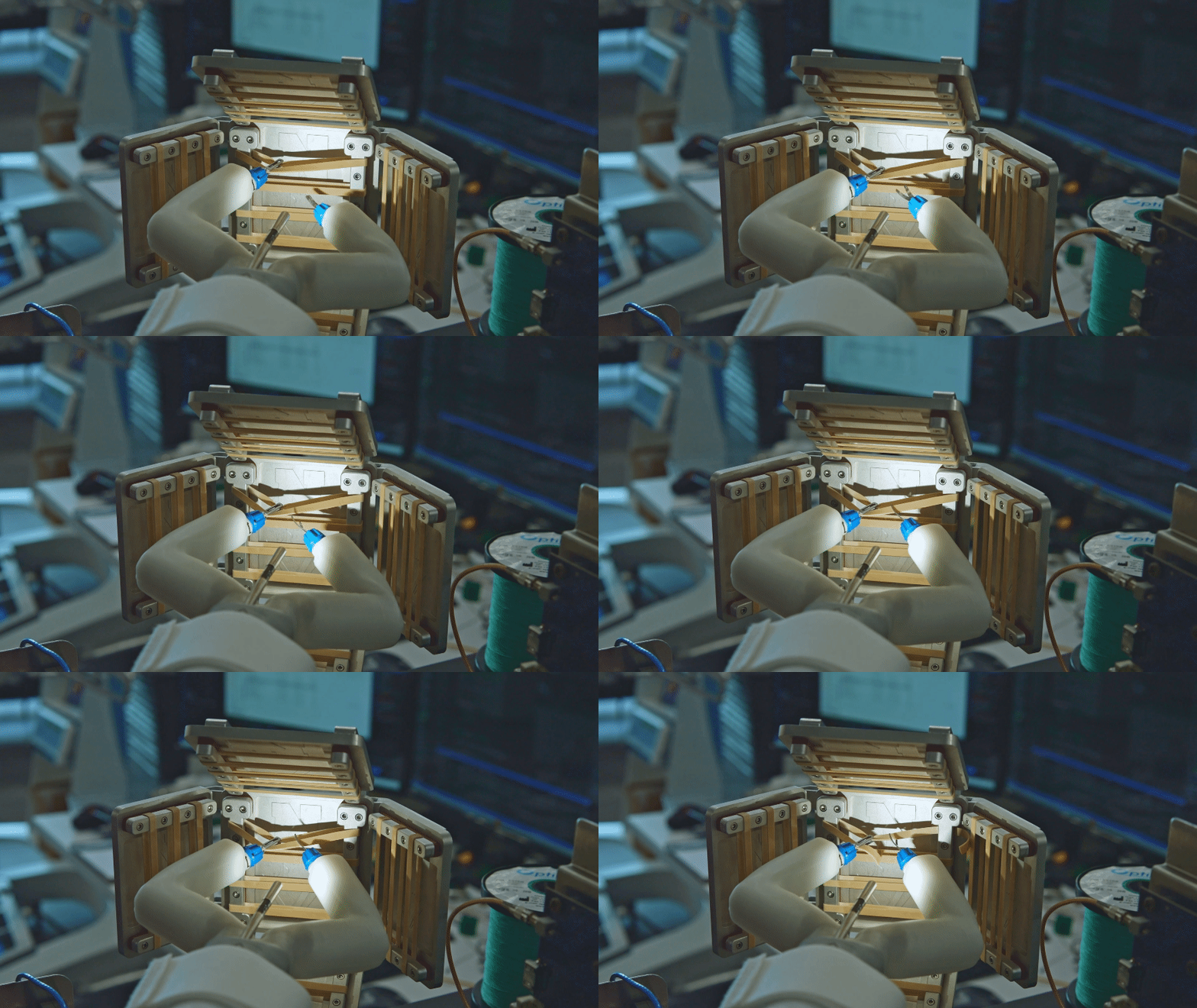
NASA evaluated whether a miniature robotic system could perform surgical tasks in microgravity. Researchers used rubber bands to simulate surgical tasks aboard the space station, allowing them to observe communication delays from Earth and test robotic precision in space during remote operations. Results showed that while timing delays increased the duration of procedures, they had minimal impact on robotic accuracy.
This research demonstrates that precise surgical procedures could one day be performed in space, including at a future lunar base or on Mars. Robotic surgery also offers a compact, reliable option for performing medical procedures in remote places on Earth.
Learn more about the Robotic Surgery Tech Demo
Levitating bone growth Images show calcium phosphate crystals grown in space (left) and on Earth (right). Synthetic bone graft materials developed aboard the International Space Station showed strong support for bone growth and healthy tissue formation.Komlev, Biomedical Technology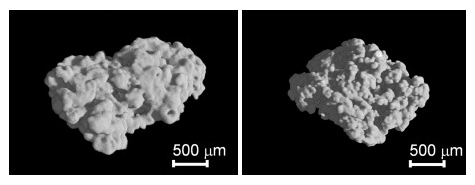
The Roscosmos investigation Magnetic 3D Bioprinter used magnetic levitation to form complex tissue structures in microgravity with high precision and minimal materials. Researchers used this technique to position calcium crystals into structures that can serve as synthetic bone grafts to promote new bone growth. Samples formed in microgravity showed superior structural organization and a high capacity for bone tissue regeneration. Astronauts experience bone loss in space and may face a higher risk of bone fractures during long-duration exploration missions.
This research could one day allow astronauts to fabricate medical treatments on demand to address skeletal injuries far from Earth.
Melanin infused materials The International Space Station’s robotic manipulator, Dextre, hovers above Materials International Space Station Experiment-13 sample hardware during operations outside the space station.NASA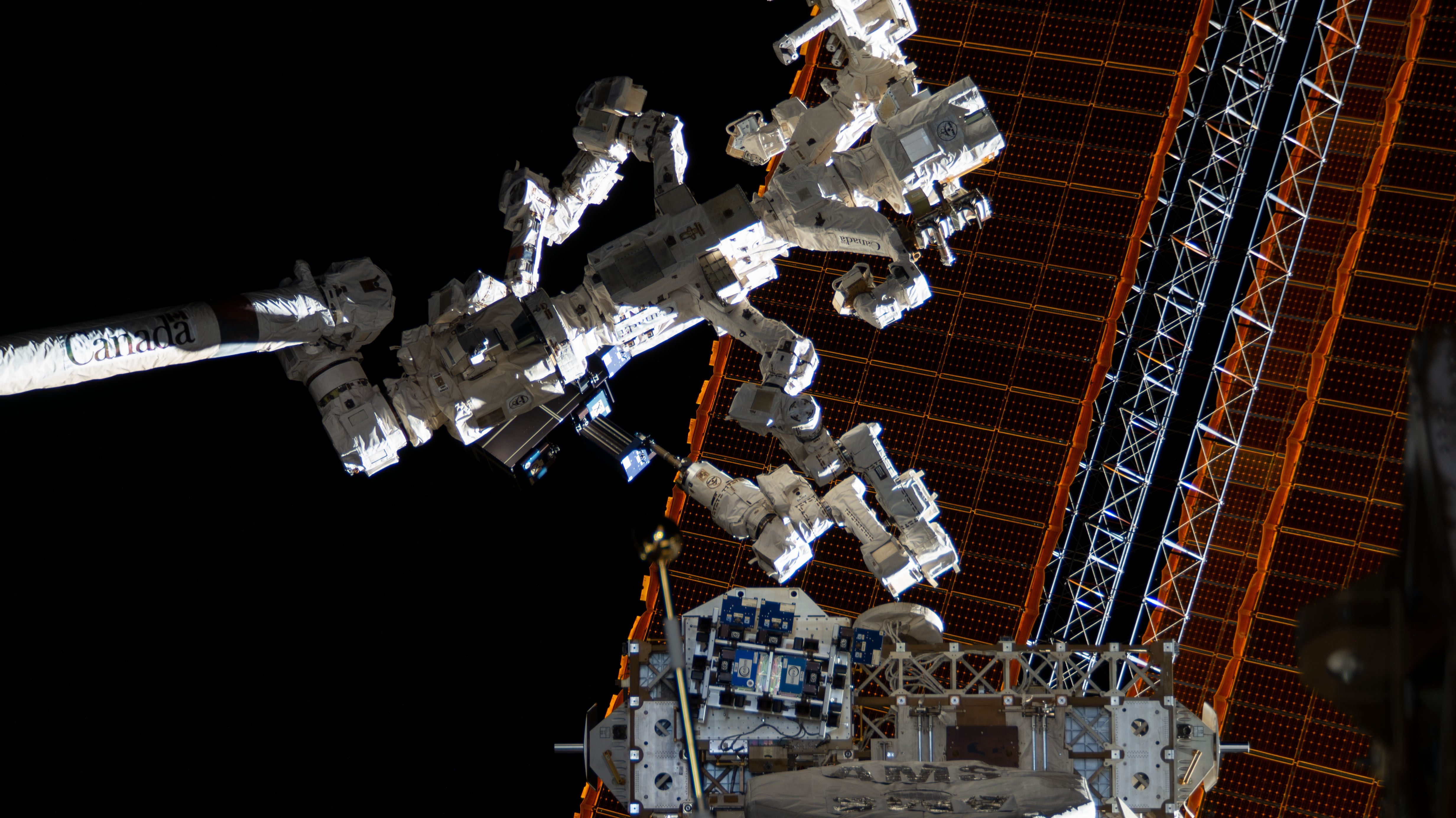
NASA examined how prolonged exposure to the vacuum of space affects the performance and durability of materials used in space exploration. Researchers exposed polymers, thermal protection systems, spacesuit components, and radiation-shielding materials to the space environment for six months. The research also tested several biomaterials infused with different types of melanin, a naturally occurring pigment that protects against ultraviolet radiation. The materials infused with fungal melanin showed the greatest resistance to radiation damage.
Biologically derived materials offer a lightweight, sustainable option for radiation shielding during future missions beyond Earth, with potential applications on Earth in medical protection, UV defense, and radiation-resistant structures.
Learn more about the Materials International Space Station Experiment-13-NASA (MISSE-13-NASA) investigation.
Power that endures The All Solid-state Lithium Ion Battery investigation is shown near the top center, mounted on the exterior of the International Space Station on the Japanese Experiment Module exposed facility.NASA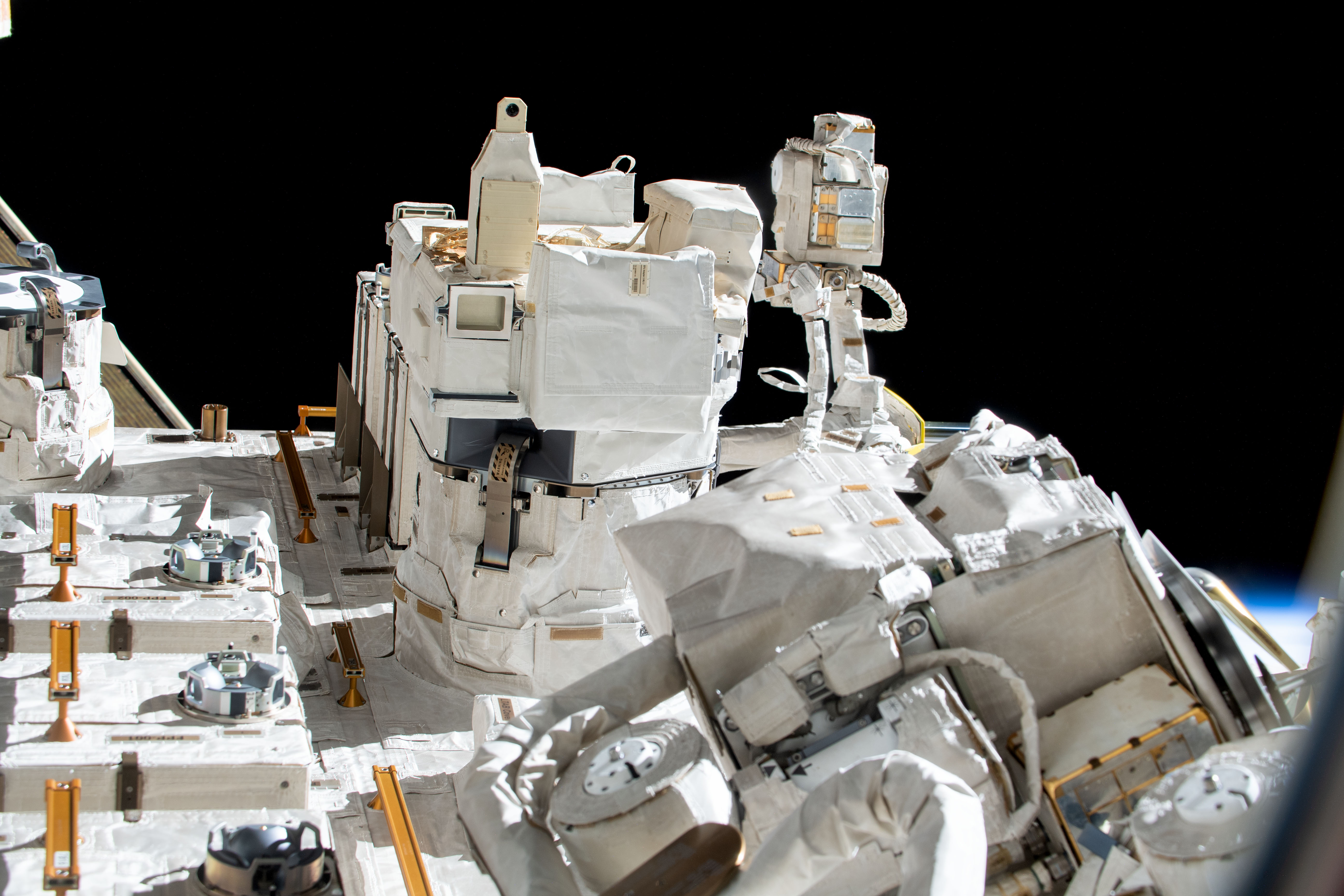
A JAXA (Japan Aerospace Exploration Agency) investigation studied the stable operation of all solid-state lithium ion batteries in space, including under extreme temperature swings and vacuum. Compared to conventional lithium ion batteries, these batteries are believed to operate across a wider temperature range, offer greater chemical stability, and provide increased ignition resistance.
Researchers assembled a battery pack from multiple all solid-state lithium ion batteries in space and exposed it to space for 434 days to track performance, degradation, and radiation response. The battery pack showed stable electrical behavior, no signs of degradation, and only a 2% loss in capacity. These results demonstrate that these batteries could provide safer, more reliable power systems for missions to the Moon and Mars, as well as for use in extreme environments on Earth.
Learn more about the Space Demonstration for All Solid-state Lithium Ion Battery investigation.
Runway return Test subject Lance Dean performs a manual control task in the Neurosciences Laboratory’s Motion Simulator at NASA’s Johnson Space Center in Houston.NASA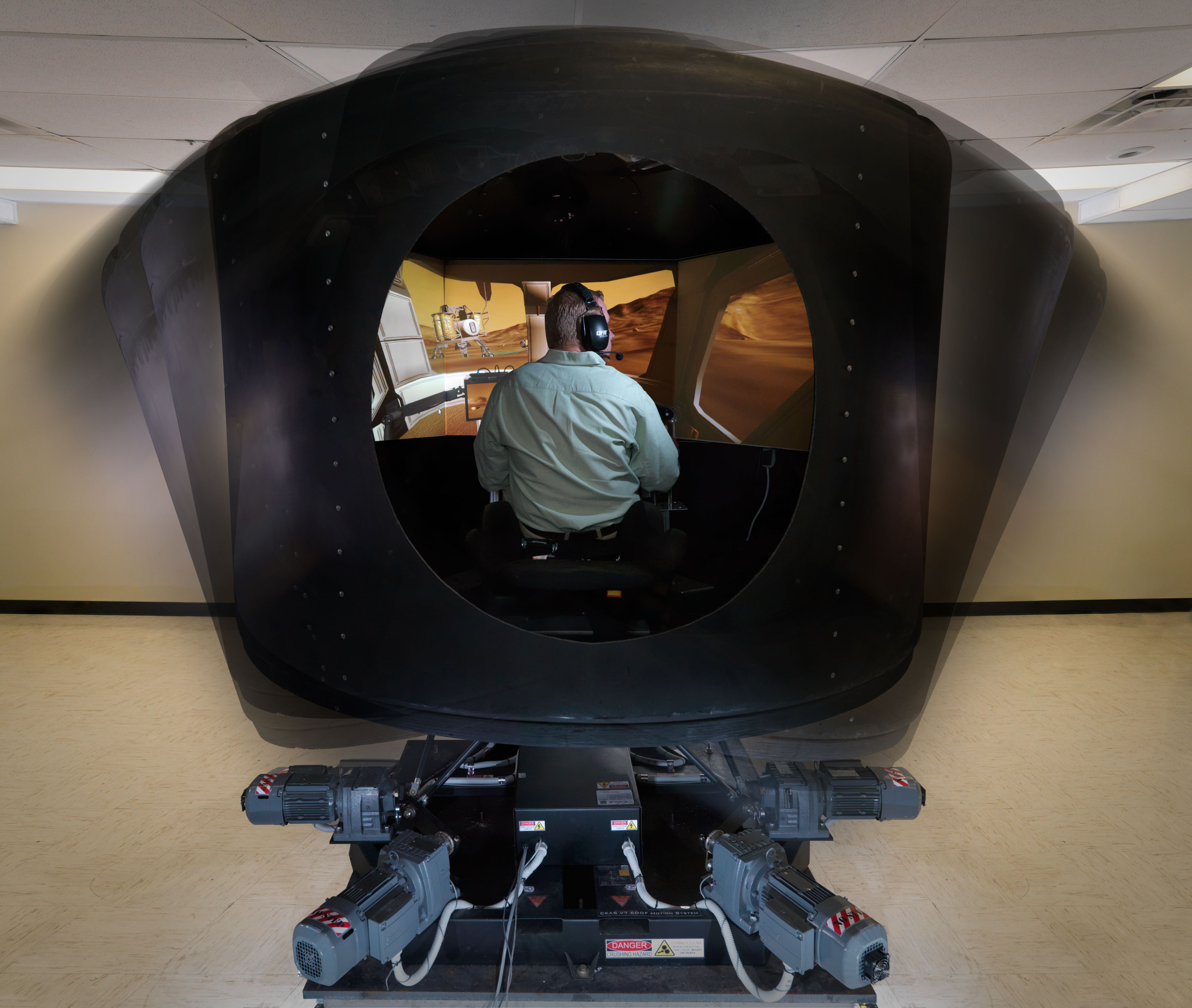
NASA continues to study how long-duration spaceflight affects astronauts’ ability to pilot and perform complex tasks after landing. Five experienced astronauts completed simulated aircraft landings before and after their space station missions. The astronauts’ results showed degraded performance after returning to Earth, including higher touchdown speeds and navigational errors. However, most pilots returned to baseline during a second attempt on the same day.
These findings suggest that long-term exposure to microgravity can temporarily diminish critical piloting skills, highlighting the need for countermeasures that help astronauts maintain their abilities after space travel.
Learn more about NASA’s Manual Control investigation.
Tracking electrical phenomena from space Blue lightning flashes illuminate cloud tops near the Pacific coast of central Mexico in June 2025 in an image taken from the International Space Station.NASA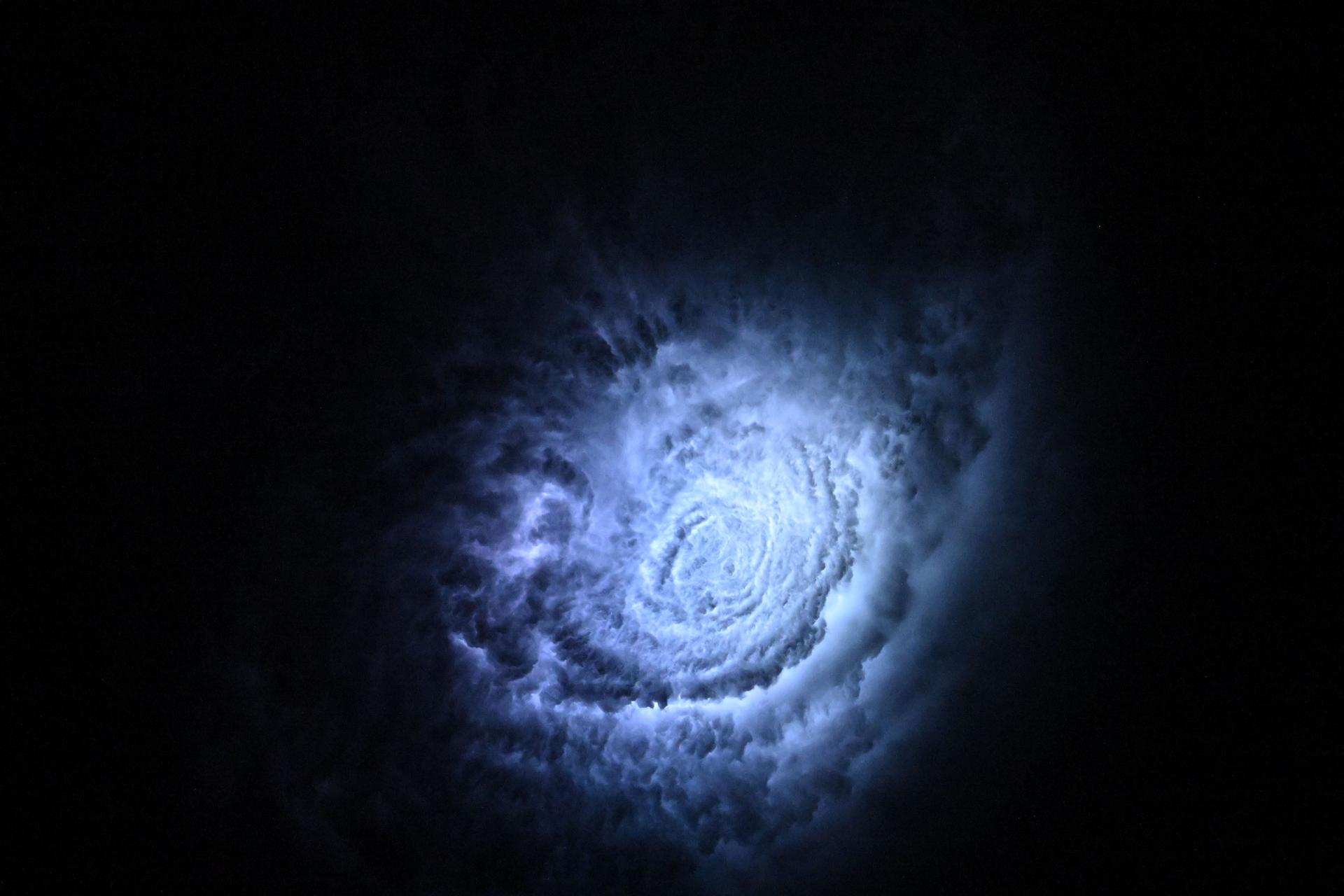
The European Space Agency is studying electrical phenomena that occur above severe thunderstorms, including colorful sprays of energy and light known as sprites, blue jets, and elves. Researchers combined the observations with radio measurements from ground-based receivers to confirm powerful bursts of electricity above thunderstorms can generate enough energy to trigger elves. The team also found a correlation between the brightness of blue flashes and electrical current, improving our ability to model energy transfer between the upper atmosphere and the edge of space.
Tracking this activity could enhance severe weather prediction and deepen understanding of the upper atmosphere, a region critical for satellite operations and communication systems.
Learn more about the Atmosphere-Space Interactions Monitor investigation.
Throughout more than two decades of operations, researchers from more than 110 nations have carried out 4,000-plus experiments, producing over 5,000 scientific publications. Space station research has been cited more than 100,000 times in scientific journals.
Keep Exploring Discover More Topics From NASASpace Station Research Results
International Space Station
Latest News from Space Station Research
Space Station Research and Technology Resources
NASA Highlights 2025 International Space Station Science Results
To dive deeper into the International Space Station research achievements from the past year, browse the 2025 Annual Highlights of Results, which NASA released in May 2026.
In 2025, researchers using the orbital laboratory conducted more than 750 investigations that advanced understanding of life in space, drove innovations to benefit people on Earth, and supported NASA’s exploration of the Moon and Mars.
Results include a study that could protect astronaut performance on future long-duration missions and a biomaterials investigation aimed at advancing tissue engineering and regenerative medicine.
Miniaturizing surgery The Robotic Surgery Tech Demo device is shown simulating a surgical task with rubber bands on Earth.Virtual IncisionNASA evaluated whether a miniature robotic system could perform surgical tasks in microgravity. Researchers used rubber bands to simulate surgical tasks aboard the space station, allowing them to observe communication delays from Earth and test robotic precision in space during remote operations. Results showed that while timing delays increased the duration of procedures, they had minimal impact on robotic accuracy.
This research demonstrates that precise surgical procedures could one day be performed in space, including at a future lunar base or on Mars. Robotic surgery also offers a compact, reliable option for performing medical procedures in remote places on Earth.
Learn more about the Robotic Surgery Tech Demo
Levitating bone growth Images show calcium phosphate crystals grown in space (left) and on Earth (right). Synthetic bone graft materials developed aboard the International Space Station showed strong support for bone growth and healthy tissue formation.Komlev, Biomedical TechnologyThe Roscosmos investigation Magnetic 3D Bioprinter used magnetic levitation to form complex tissue structures in microgravity with high precision and minimal materials. Researchers used this technique to position calcium crystals into structures that can serve as synthetic bone grafts to promote new bone growth. Samples formed in microgravity showed superior structural organization and a high capacity for bone tissue regeneration. Astronauts experience bone loss in space and may face a higher risk of bone fractures during long-duration exploration missions.
This research could one day allow astronauts to fabricate medical treatments on demand to address skeletal injuries far from Earth.
Melanin infused materials The International Space Station’s robotic manipulator, Dextre, hovers above Materials International Space Station Experiment-13 sample hardware during operations outside the space station.NASANASA examined how prolonged exposure to the vacuum of space affects the performance and durability of materials used in space exploration. Researchers exposed polymers, thermal protection systems, spacesuit components, and radiation-shielding materials to the space environment for six months. The research also tested several biomaterials infused with different types of melanin, a naturally occurring pigment that protects against ultraviolet radiation. The materials infused with fungal melanin showed the greatest resistance to radiation damage.
Biologically derived materials offer a lightweight, sustainable option for radiation shielding during future missions beyond Earth, with potential applications on Earth in medical protection, UV defense, and radiation-resistant structures.
Learn more about the Materials International Space Station Experiment-13-NASA (MISSE-13-NASA) investigation.
Power that endures The All Solid-state Lithium Ion Battery investigation is shown near the top center, mounted on the exterior of the International Space Station on the Japanese Experiment Module exposed facility.NASAA JAXA (Japan Aerospace Exploration Agency) investigation studied the stable operation of all solid-state lithium ion batteries in space, including under extreme temperature swings and vacuum. Compared to conventional lithium ion batteries, these batteries are believed to operate across a wider temperature range, offer greater chemical stability, and provide increased ignition resistance.
Researchers assembled a battery pack from multiple all solid-state lithium ion batteries in space and exposed it to space for 434 days to track performance, degradation, and radiation response. The battery pack showed stable electrical behavior, no signs of degradation, and only a 2% loss in capacity. These results demonstrate that these batteries could provide safer, more reliable power systems for missions to the Moon and Mars, as well as for use in extreme environments on Earth.
Learn more about the Space Demonstration for All Solid-state Lithium Ion Battery investigation.
Runway return Test subject Lance Dean performs a manual control task in the Neurosciences Laboratory’s Motion Simulator at NASA’s Johnson Space Center in Houston.NASANASA continues to study how long-duration spaceflight affects astronauts’ ability to pilot and perform complex tasks after landing. Five experienced astronauts completed simulated aircraft landings before and after their space station missions. The astronauts’ results showed degraded performance after returning to Earth, including higher touchdown speeds and navigational errors. However, most pilots returned to baseline during a second attempt on the same day.
These findings suggest that long-term exposure to microgravity can temporarily diminish critical piloting skills, highlighting the need for countermeasures that help astronauts maintain their abilities after space travel.
Learn more about NASA’s Manual Control investigation.
Tracking electrical phenomena from space Blue lightning flashes illuminate cloud tops near the Pacific coast of central Mexico in June 2025 in an image taken from the International Space Station.NASAThe European Space Agency is studying electrical phenomena that occur above severe thunderstorms, including colorful sprays of energy and light known as sprites, blue jets, and elves. Researchers combined the observations with radio measurements from ground-based receivers to confirm powerful bursts of electricity above thunderstorms can generate enough energy to trigger elves. The team also found a correlation between the brightness of blue flashes and electrical current, improving our ability to model energy transfer between the upper atmosphere and the edge of space.
Tracking this activity could enhance severe weather prediction and deepen understanding of the upper atmosphere, a region critical for satellite operations and communication systems.
Learn more about the Atmosphere-Space Interactions Monitor investigation.
Throughout more than two decades of operations, researchers from more than 110 nations have carried out 4,000-plus experiments, producing over 5,000 scientific publications. Space station research has been cited more than 100,000 times in scientific journals.
Keep Exploring Discover More Topics From NASASpace Station Research Results
International Space Station
Latest News from Space Station Research
Space Station Research and Technology Resources