

Feed aggregator
Chennai City Lights

Chennai, on India’s southern coast along the Bay of Bengal and with a metropolitan population of about 8.7 million, shines with white LED streetlights in this photograph taken at approximately 9:13 p.m. local time on May 2, 2026, from the International Space Station.
Earth observations from the space station let us see how our planet changes over time. In combination with NASA-developed technologies, these observations provide the foundation needed to explore and sustain human life on the Moon, Mars, and beyond.
Image credit: NASA/Chris Williams
NASA's Psyche Sends Back Amazing Images of Mars
NASA’s Psyche asteroid mission made a course adjustment via a flyby past Mars en route to its final destination. Here's what it saw.
The post NASA's Psyche Sends Back Amazing Images of Mars appeared first on Sky & Telescope.
The Risk of Stellar Flybys and GJ 710
In a stellar flyby, a star approaches our Solar System close enough to create gravitational mayhem. The last one was 70,000 years ago. There are more in the future, and it's possible that they could disrupt comets from the Oort Cloud and send them into the inner Solar System, with the risk of catastrophic impact.
Space storms could switch train signals and cause serious accidents
Space storms could switch train signals and cause serious accidents
A toothless, beaked, bipedal crocodile cousin roamed Earth 200 million years ago
Like modern crocodiles, this bizarre ancient reptile was likely a carnivore, but otherwise it bears little resemblance to them
New Instrument Used Antarctic Ice Sheet to Probe Extreme Universe
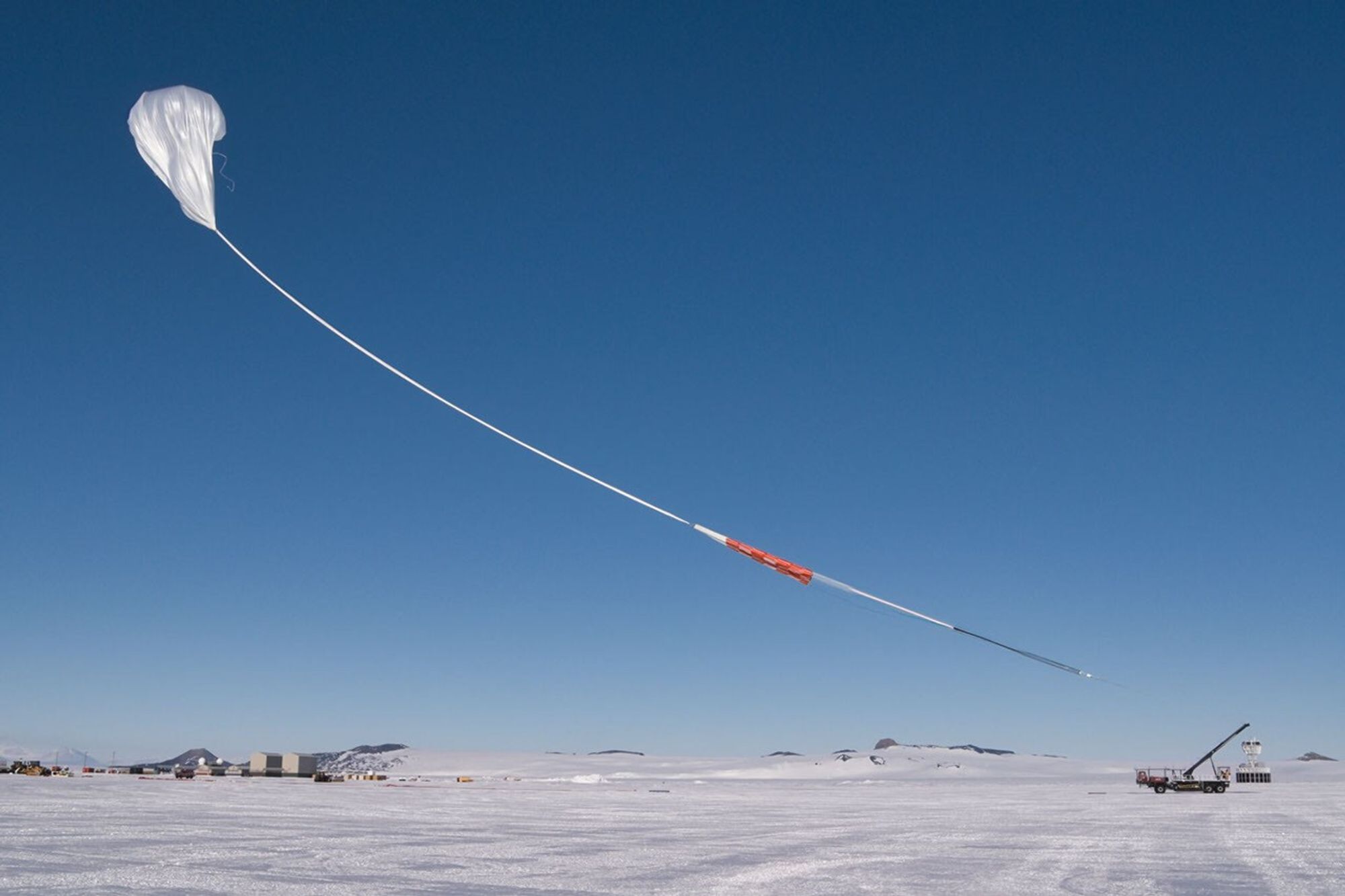
The Payload for Ultrahigh Energy Observations (PUEO) is a NASA Astrophysics Pioneers Program mission designed to detect the most energetic particles in the universe. The PUEO mission flew high above Antarctica on a Long Duration Balloon (LDB) and used the Antarctic ice sheet as an enormous detection volume to look for radio signals generated by the interactions of extremely energetic astrophysical neutrinos as they passed through the ice. In addition to searching for the highest energy neutrinos, PUEO could also detect radio signals from high energy cosmic rays showering in Earth’s atmosphere (a.k.a. air showers), either as the signals entered directly into the instrument or reflected off the ice below. The sensitivity achieved with the PUEO instrument was a result of technology advancements and careful optimization of the experimental design to enable accommodation within the balloon platform’s launch volume.
The ultra-high energy neutrinos that PUEO was searching for carry information from the most extreme places in the universe, including supermassive black holes that accrete matter at the centers of galaxies, neutron star mergers, and other powerful cosmic accelerators. Because these particles travel large distances along straight lines without being absorbed, they provide a unique view of the distant, most energetic universe. Not only will data collected by PUEO reveal the origin and composition of the highest-energy cosmic rays, it will also test fundamental physics at energies far beyond those achievable in human-made particle accelerators on Earth.
The PUEO mission built on heritage from the NASA-sponsored Antarctic Impulsive Transient Antenna (ANITA) mission, which had four successful flights from 2006-2016. Like ANITA, PUEO consisted of an array of radio-frequency antennas, an onboard data acquisition system that is triggered by neutrino-like signals and processes and saves the data, and a navigation and command and control system. From its 120,000-foot altitude, PUEO monitored an extremely large volume of Antarctic ice, looking for signals from very rare, high-energy neutrino interactions.
The first of NASA’s Astrophysics Pioneers missions to launch, PUEO took off Dec. 20, 2025, from NASA’s Long Duration Balloon Facility near McMurdo Station, Antarctica, and flew for 23 days before landing approximately 120 miles (200 km) from the South Pole. The full payload has been recovered, including the data drives. The PUEO team is currently analyzing the data collected—an undertaking that may take up to a year due to the complex nature of the task.
The PUEO mission’s on-ice integration team is seen here in front of the fully constructed instrument. Credit: Cosmin Deaconu
The significant improvement in sensitivity achieved with the PUEO instrument compared to that of ANITA was due to a variety of technology advancements and careful optimization of the experimental design to enable accommodation within the balloon platform’s constrained launch volume.
Lowering detection threshold with interferometric triggeringAt the heart of PUEO’s technology advancement was a new type of trigger called an interferometric phased array trigger. The PUEO trigger coherently summed signals from multiple antennas in real time, enabling the instrument to detect weaker signals than previously possible. By lowering the trigger threshold, PUEO could dig further into the noise, and find weaker neutrino and cosmic-ray signals than previous experiments.
More channels in a physically constrained spaceThe PUEO antenna collecting area for frequencies above 300 MHz was doubled compared to ANITA, improving the sensitivity to radio emission from particle interactions. To ensure the PUEO payload remained within the allowable launch volume, the team increased the low-frequency cutoff of the PUEO antennas, which enabled them to be even smaller than those used on ANITA.
Low-frequency instrument for air shower characterizationTo improve sensitivity to extensive air showers produced by cosmic rays and potentially neutrinos, PUEO incorporated a new low-frequency instrument that deployed once the payload reached float altitude (it would have been much too large to fit in the allowable launch volume in its flight configuration). This new low-frequency instrument incorporated antennas that are sensitive down to 50 MHz, and extended PUEOs sensitivity to air showers.
This photo shows the inside of PUEO’s Main Instrument Enclosure, where many of PUEO’s electronics are housed. Credit: Eric Oberla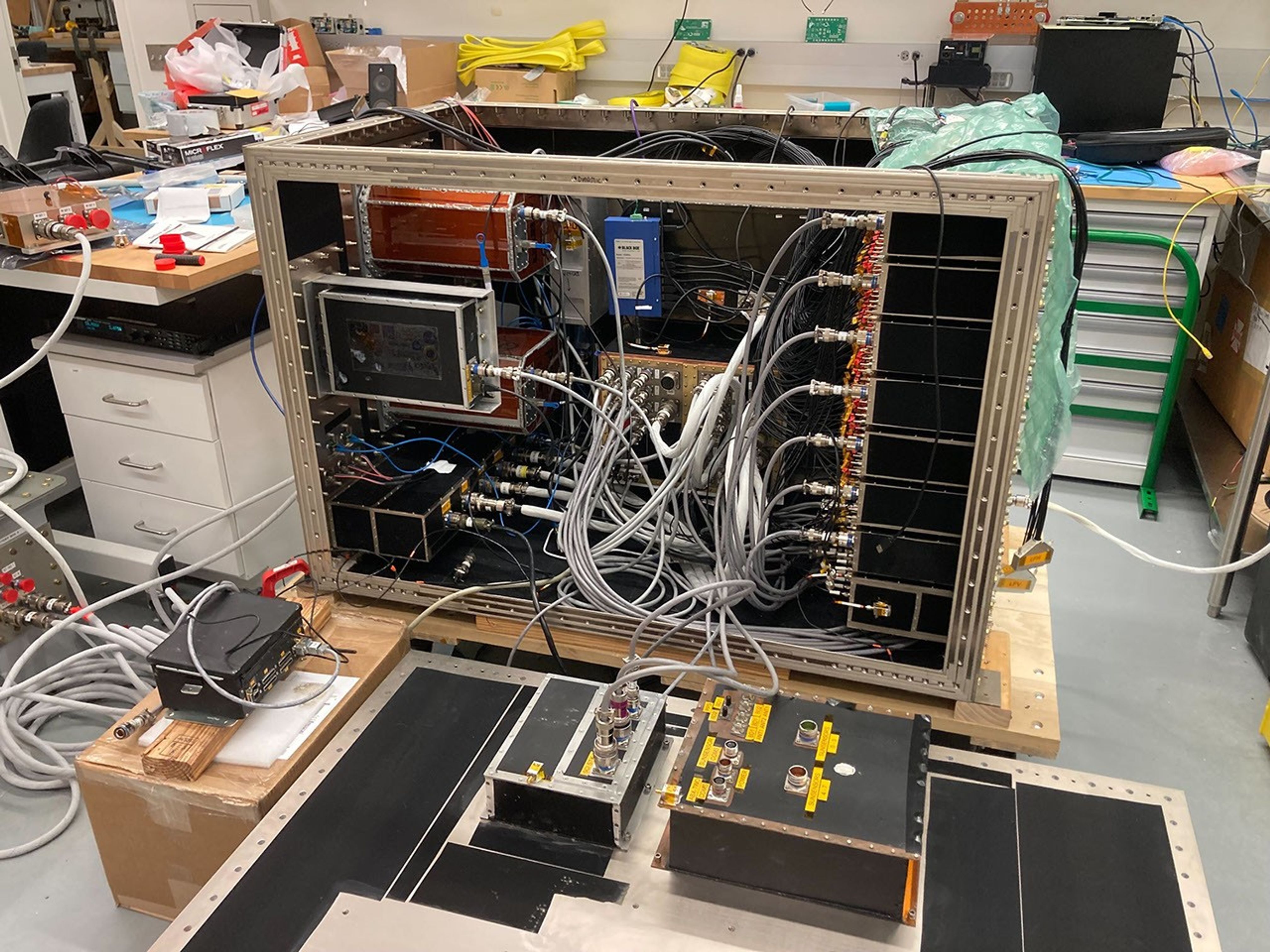
Many of the technology advancements that were developed for PUEO may also be applicable for mission concepts under development that would use the lunar regolith as a detector for ultra-high energy cosmic rays, and other potential future radio missions on the moon.
Project Lead: Dr. Abigail Vieregg, David N. Schramm Director of the Kavli Institute for Cosmological Physics and professor of Physics, Astronomy & Astrophysics, and the Enrico Fermi Institute, University of Chicago, assisted by graduate student, Rachel Scrandis
Sponsoring Organization(s): NASA Astrophysics Division Pioneers Program
New Instrument Used Antarctic Ice Sheet to Probe Extreme Universe
The Payload for Ultrahigh Energy Observations (PUEO) is a NASA Astrophysics Pioneers Program mission designed to detect the most energetic particles in the universe. The PUEO mission flew high above Antarctica on a Long Duration Balloon (LDB) and used the Antarctic ice sheet as an enormous detection volume to look for radio signals generated by the interactions of extremely energetic astrophysical neutrinos as they passed through the ice. In addition to searching for the highest energy neutrinos, PUEO could also detect radio signals from high energy cosmic rays showering in Earth’s atmosphere (a.k.a. air showers), either as the signals entered directly into the instrument or reflected off the ice below. The sensitivity achieved with the PUEO instrument was a result of technology advancements and careful optimization of the experimental design to enable accommodation within the balloon platform’s launch volume.
The ultra-high energy neutrinos that PUEO was searching for carry information from the most extreme places in the universe, including supermassive black holes that accrete matter at the centers of galaxies, neutron star mergers, and other powerful cosmic accelerators. Because these particles travel large distances along straight lines without being absorbed, they provide a unique view of the distant, most energetic universe. Not only will data collected by PUEO reveal the origin and composition of the highest-energy cosmic rays, it will also test fundamental physics at energies far beyond those achievable in human-made particle accelerators on Earth.
The PUEO mission built on heritage from the NASA-sponsored Antarctic Impulsive Transient Antenna (ANITA) mission, which had four successful flights from 2006-2016. Like ANITA, PUEO consisted of an array of radio-frequency antennas, an onboard data acquisition system that is triggered by neutrino-like signals and processes and saves the data, and a navigation and command and control system. From its 120,000-foot altitude, PUEO monitored an extremely large volume of Antarctic ice, looking for signals from very rare, high-energy neutrino interactions.
The first of NASA’s Astrophysics Pioneers missions to launch, PUEO took off Dec. 20, 2025, from NASA’s Long Duration Balloon Facility near McMurdo Station, Antarctica, and flew for 23 days before landing approximately 120 miles (200 km) from the South Pole. The full payload has been recovered, including the data drives. The PUEO team is currently analyzing the data collected—an undertaking that may take up to a year due to the complex nature of the task.
The PUEO mission’s on-ice integration team is seen here in front of the fully constructed instrument. Credit: Cosmin DeaconuThe significant improvement in sensitivity achieved with the PUEO instrument compared to that of ANITA was due to a variety of technology advancements and careful optimization of the experimental design to enable accommodation within the balloon platform’s constrained launch volume.
Lowering detection threshold with interferometric triggeringAt the heart of PUEO’s technology advancement was a new type of trigger called an interferometric phased array trigger. The PUEO trigger coherently summed signals from multiple antennas in real time, enabling the instrument to detect weaker signals than previously possible. By lowering the trigger threshold, PUEO could dig further into the noise, and find weaker neutrino and cosmic-ray signals than previous experiments.
More channels in a physically constrained spaceThe PUEO antenna collecting area for frequencies above 300 MHz was doubled compared to ANITA, improving the sensitivity to radio emission from particle interactions. To ensure the PUEO payload remained within the allowable launch volume, the team increased the low-frequency cutoff of the PUEO antennas, which enabled them to be even smaller than those used on ANITA.
Low-frequency instrument for air shower characterizationTo improve sensitivity to extensive air showers produced by cosmic rays and potentially neutrinos, PUEO incorporated a new low-frequency instrument that deployed once the payload reached float altitude (it would have been much too large to fit in the allowable launch volume in its flight configuration). This new low-frequency instrument incorporated antennas that are sensitive down to 50 MHz, and extended PUEOs sensitivity to air showers.
This photo shows the inside of PUEO’s Main Instrument Enclosure, where many of PUEO’s electronics are housed. Credit: Eric OberlaMany of the technology advancements that were developed for PUEO may also be applicable for mission concepts under development that would use the lunar regolith as a detector for ultra-high energy cosmic rays, and other potential future radio missions on the moon.
Project Lead: Dr. Abigail Vieregg, David N. Schramm Director of the Kavli Institute for Cosmological Physics and professor of Physics, Astronomy & Astrophysics, and the Enrico Fermi Institute, University of Chicago, assisted by graduate student, Rachel Scrandis
Sponsoring Organization(s): NASA Astrophysics Division Pioneers Program
Earliest use of anaesthetics uncovered in Chinese doctor’s tomb
Earliest use of anaesthetics uncovered in Chinese doctor’s tomb
Will lab-grown sperm let infertile men have children of their own?
Will lab-grown sperm let infertile men have children of their own?
Attack on Iran’s oil released as much pollution as a volcano
Attack on Iran’s oil released as much pollution as a volcano
A Full Moon Checkup
- Earth
- Earth Observatory
- Image of the Day
- EO Explorer
- Topics
- More Content
- About
A Full Moon Checkup
- Earth
- Earth Observatory
- Image of the Day
- EO Explorer
- Topics
- More Content
- About
Jaclyn Kagey Shapes Humanity’s Return to the Moon
For Jaclyn Kagey, preparing astronauts to put boots on the Moon is part of her daily work.
As the Artemis extravehicular activity lead in NASA’s Flight Operations Directorate, Kagey plays a central role in preparing astronauts to safely explore the lunar surface.
Official portrait of Jaclyn Kagey. NASA/Robert Markowitz My mission is to shape the historic endeavor by working closely with scientists and industry partners to define lunar surface activities. We are setting the standard for humanity’s return to the Moon.
Jaclyn Kagey
Artemis Extravehicular Activity Lead
During Artemis missions, astronauts will explore the Moon’s South Pole, a region never visited by humans, paving the way for future deep space exploration.
Kagey helps define how astronauts will work on the Moon, from planning detailed spacewalk timelines to guiding real-time operations. Crews will conduct these activities after stepping outside NASA’s human landing system, a commercial lander designed to safely transport astronauts from lunar orbit to the surface and back.
Jaclyn Kagey conducts lunar surface operations training in the Rock Yard at Johnson Space Center, where teams test tools and procedures for future Artemis missions. NASA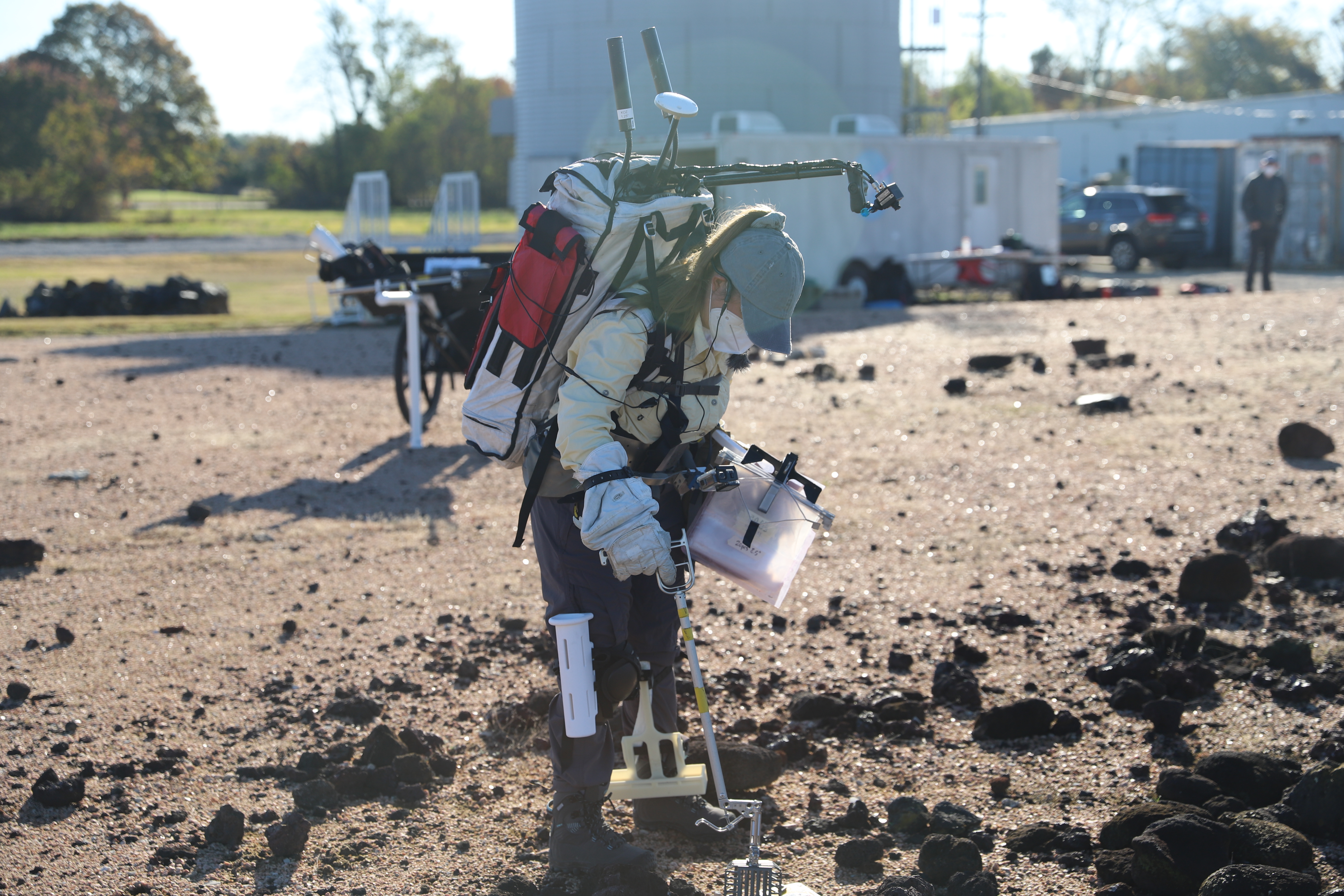
Kagey’s NASA career spans more than 25 years and includes work across some of the agency’s most complex programs.
While studying at Embry-Riddle Aeronautical University, she watched space shuttle launches that solidified her goal of working at NASA. “From a young age, my aspirations were singularly focused on contributing to the nation’s aircraft and spaceflight endeavors,” she said.
That goal became reality through United Space Alliance, where she and her husband began their careers as contractors.
Jaclyn Kagey works in the Mission Control Center during a spacewalk simulation at NASA’s Johnson Space Center in Houston.NASA/Robert Markowitz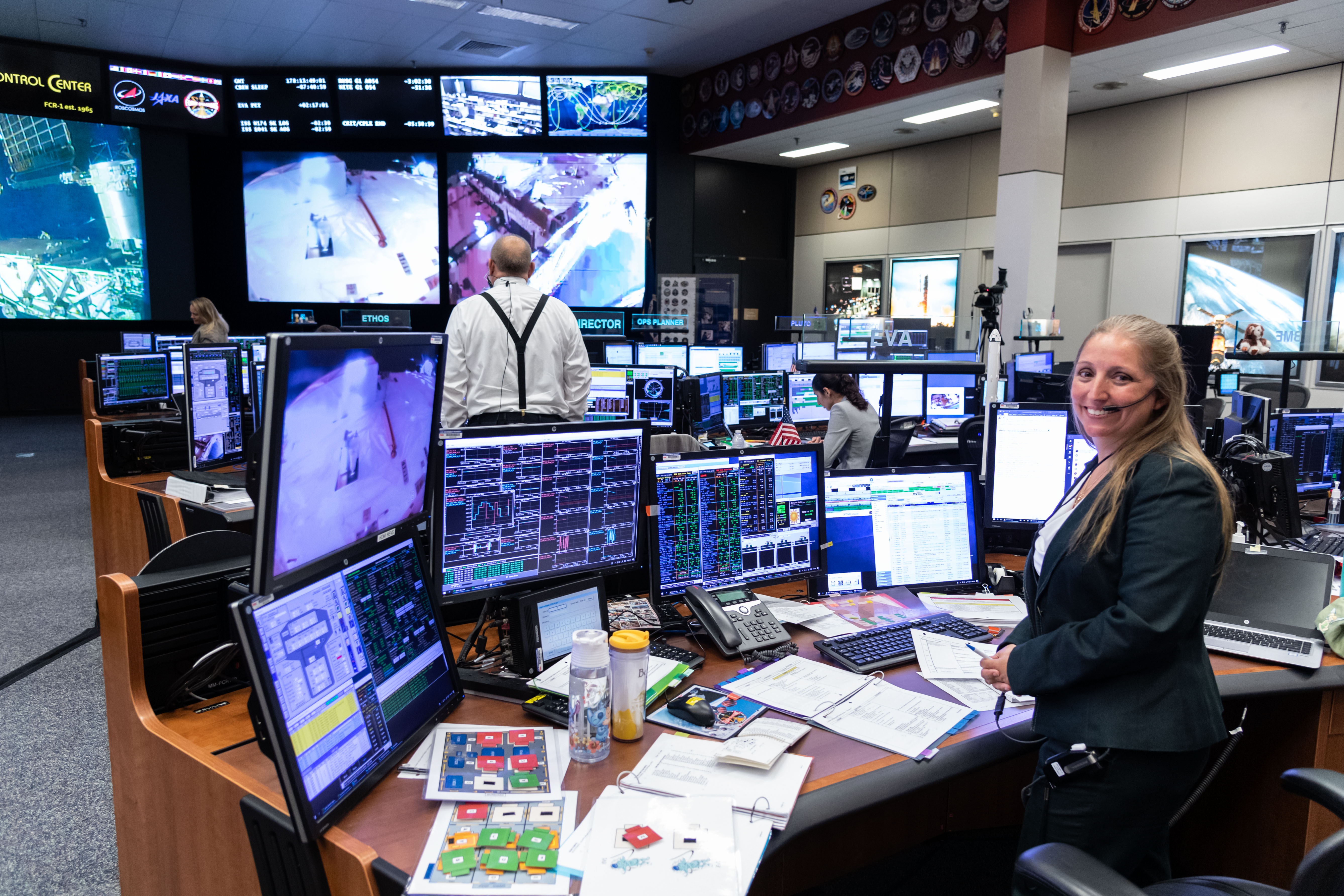
One of her career-defining moments came during a high-pressure operation aboard the International Space Station.
“I’ve planned and executed seven spacewalks, but one that stands out was U.S. EVA 21,” she said. “We had a critical ammonia leak on the station, and from the time the issue was identified, we had just 36 hours to plan, prepare the spacesuits, and execute the repair.”
The team successfully completed the spacewalk and restored the system. “The agility, dedication, and teamwork shown during that operation were remarkable,” Kagey said. “It demonstrated what this team can accomplish under pressure.”
Jaclyn Kagey trains in NASA’s Neutral Buoyancy Laboratory, where astronauts and flight controllers rehearse spacewalk procedures in a simulated microgravity environment.NASA There are times when the mission requires everything you have. There are also times when you have to step back. Learning when to do each is critical.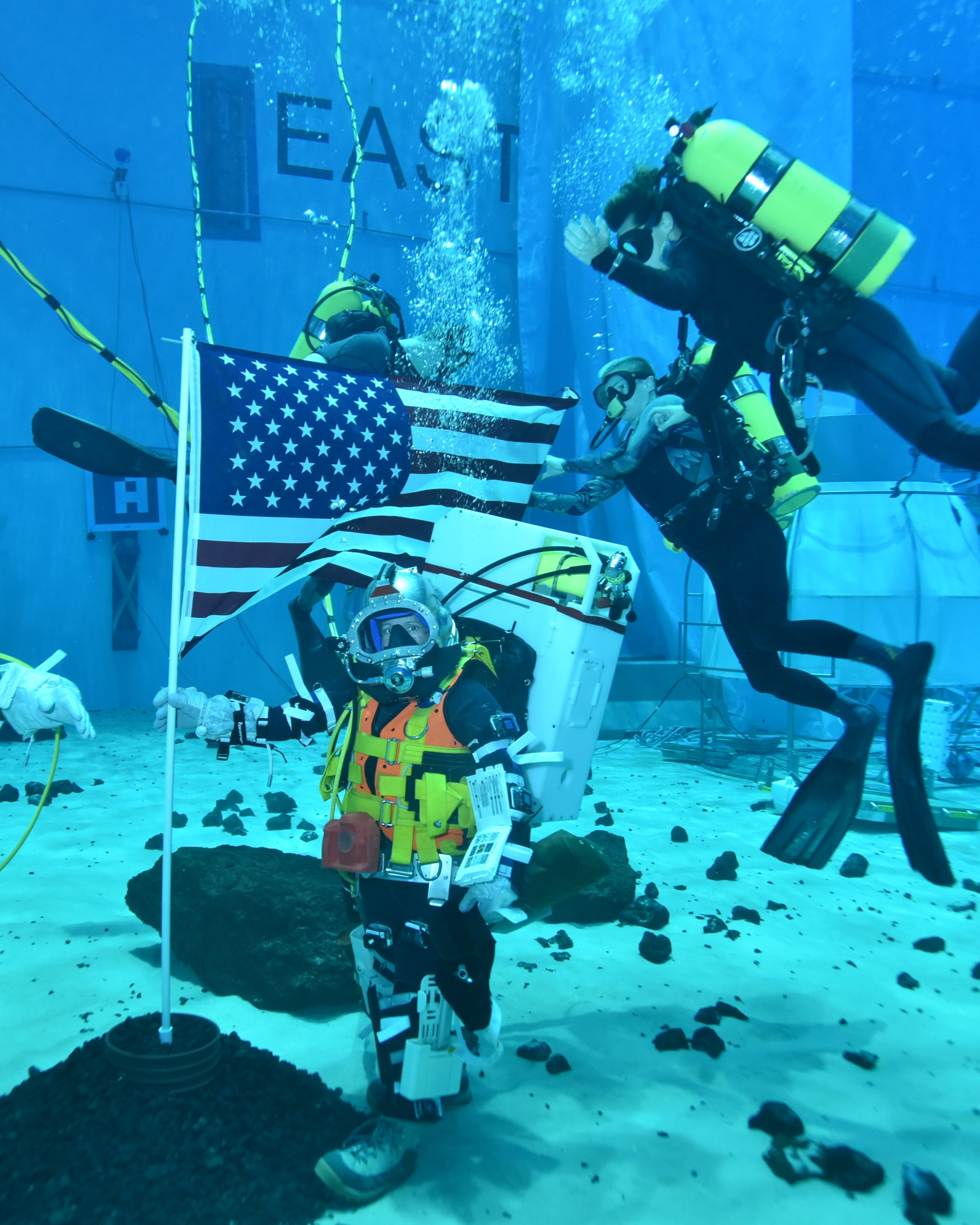
Jaclyn Kagey
Artemis Extravehicular Activity Lead
Throughout her career, Kagey has learned that adaptability is an essential skill.
“Things rarely go exactly as planned, and my job is to respond in a way that keeps the crew safe and the mission moving forward,” she said.
Jaclyn Kagey suited up in Axiom Space’s Extravehicular Mobility Unit (AxEMU) spacesuit during a test on the Active Response Gravity Offload System (ARGOS) at Johnson’s Space Vehicle Mockup Facility. Axiom Space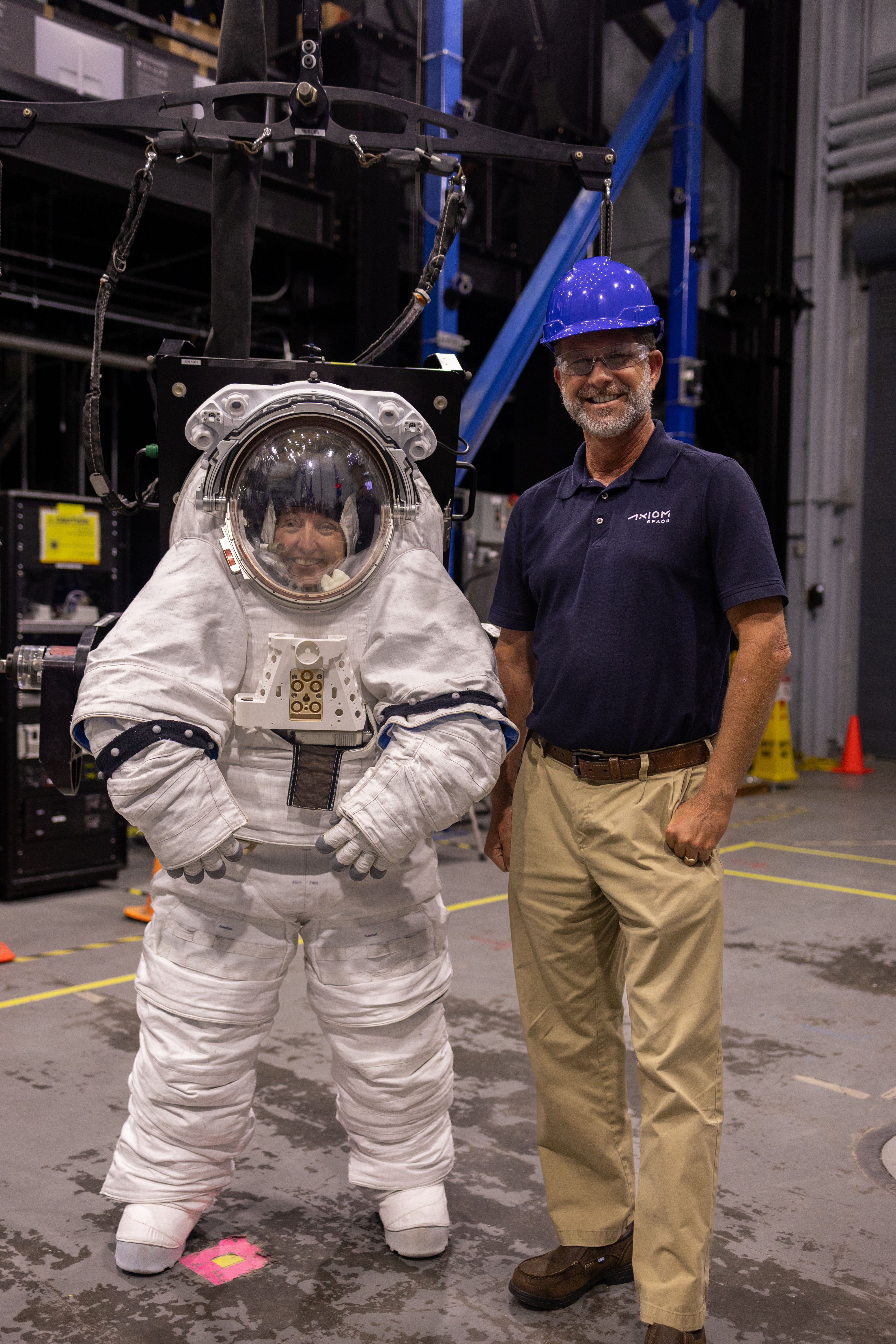
Kagey’s influence also extends to the future of spacesuit development. Standing on the shorter end of the height spectrum, she once could not complete a full test in the legacy Extravehicular Mobility Unit despite passing the fit check. Although Kagey could don the suit, its proportions were too large for her and made it difficult to move as needed for the test. That experience drove her to advocate for designs that better support a wider range of body types.
That effort came full circle when she recently completed her first test in Axiom Space’s lunar spacesuit, called the Axiom Extravehicular Mobility Unit (AxEMU), on the Active Response Gravity Offload System (ARGOS) at Johnson Space Center in Houston.
“It’s exciting to literally fit into the future of spacewalks!” Kagey said.
About the AuthorSumer Loggins Share Details Last Updated May 25, 2026 Related Terms Explore More 2 min read NASA Seeks Interest for Artemis Mission CubeSats Article 5 days ago 3 min read Lunar Robots: NASA Spotlights Moon Base at 2026 FIRST Robotics Competition Article 6 days ago 4 min read I Am Artemis: Tim Goddard Article 6 days ago Keep Exploring Discover More Topics From NASAMissions
Humans in Space
Climate Change
Solar System
Jaclyn Kagey Shapes Humanity’s Return to the Moon
For Jaclyn Kagey, preparing astronauts to put boots on the Moon is part of her daily work.
As the Artemis extravehicular activity lead in NASA’s Flight Operations Directorate, Kagey plays a central role in preparing astronauts to safely explore the lunar surface.
Official portrait of Jaclyn Kagey. NASA/Robert Markowitz My mission is to shape the historic endeavor by working closely with scientists and industry partners to define lunar surface activities. We are setting the standard for humanity’s return to the Moon.Jaclyn Kagey
Artemis Extravehicular Activity Lead
During Artemis missions, astronauts will explore the Moon’s South Pole, a region never visited by humans, paving the way for future deep space exploration.
Kagey helps define how astronauts will work on the Moon, from planning detailed spacewalk timelines to guiding real-time operations. Crews will conduct these activities after stepping outside NASA’s human landing system, a commercial lander designed to safely transport astronauts from lunar orbit to the surface and back.
Jaclyn Kagey conducts lunar surface operations training in the Rock Yard at Johnson Space Center, where teams test tools and procedures for future Artemis missions. NASAKagey’s NASA career spans more than 25 years and includes work across some of the agency’s most complex programs.
While studying at Embry-Riddle Aeronautical University, she watched space shuttle launches that solidified her goal of working at NASA. “From a young age, my aspirations were singularly focused on contributing to the nation’s aircraft and spaceflight endeavors,” she said.
That goal became reality through United Space Alliance, where she and her husband began their careers as contractors.
Jaclyn Kagey works in the Mission Control Center during a spacewalk simulation at NASA’s Johnson Space Center in Houston.NASA/Robert MarkowitzOne of her career-defining moments came during a high-pressure operation aboard the International Space Station.
“I’ve planned and executed seven spacewalks, but one that stands out was U.S. EVA 21,” she said. “We had a critical ammonia leak on the station, and from the time the issue was identified, we had just 36 hours to plan, prepare the spacesuits, and execute the repair.”
The team successfully completed the spacewalk and restored the system. “The agility, dedication, and teamwork shown during that operation were remarkable,” Kagey said. “It demonstrated what this team can accomplish under pressure.”
Jaclyn Kagey trains in NASA’s Neutral Buoyancy Laboratory, where astronauts and flight controllers rehearse spacewalk procedures in a simulated microgravity environment.NASA There are times when the mission requires everything you have. There are also times when you have to step back. Learning when to do each is critical.Jaclyn Kagey
Artemis Extravehicular Activity Lead
Throughout her career, Kagey has learned that adaptability is an essential skill.
“Things rarely go exactly as planned, and my job is to respond in a way that keeps the crew safe and the mission moving forward,” she said.
Jaclyn Kagey suited up in Axiom Space’s Extravehicular Mobility Unit (AxEMU) spacesuit during a test on the Active Response Gravity Offload System (ARGOS) at Johnson’s Space Vehicle Mockup Facility. Axiom SpaceKagey’s influence also extends to the future of spacesuit development. Standing on the shorter end of the height spectrum, she once could not complete a full test in the legacy Extravehicular Mobility Unit despite passing the fit check. Although Kagey could don the suit, its proportions were too large for her and made it difficult to move as needed for the test. That experience drove her to advocate for designs that better support a wider range of body types.
That effort came full circle when she recently completed her first test in Axiom Space’s lunar spacesuit, called the Axiom Extravehicular Mobility Unit (AxEMU), on the Active Response Gravity Offload System (ARGOS) at Johnson Space Center in Houston.
“It’s exciting to literally fit into the future of spacewalks!” Kagey said.
About the AuthorSumer Loggins Share Details Last Updated May 25, 2026 Related Terms Explore More 2 min read NASA Seeks Interest for Artemis Mission CubeSats Article 5 days ago 3 min read Lunar Robots: NASA Spotlights Moon Base at 2026 FIRST Robotics Competition Article 5 days ago 4 min read I Am Artemis: Tim Goddard Article 6 days ago Keep Exploring Discover More Topics From NASAMissions
Humans in Space
Climate Change
Solar System
How Mars Can Help Us Understand 'Marginal' Exoplanets
We've discovered large numbers of small rocky exoplanets, but they're at such great distances that habitability is extremely difficult to determine. New research suggests than since Mars is on the edge of being habitable, studying it in detail can shed light on rocky exoplanets. If we can understand things like tectonic activity and atmospheric escape on Mars, we can understand how they may play out on rocky exoplanets.
Ultrahigh-energy Cosmic Rays May Be Ultraheavy in Origin
New research led by Penn State scientists suggests that some of the highest-energy cosmic rays may consist of atomic nuclei heavier than iron and could help narrow down the cosmic sources capable of accelerating these particles.