

Feed aggregator
CAR T-cell therapy bolstered by stiffening up cancer cells first
CAR T-cell therapy bolstered by stiffening up cancer cells first
Why Black women are at greater risk for fibroids and endometrial cancer
A new book argues that disparities in fibroids, cancer and diagnosis reveal a lifelong gynecologic health crisis for Black women
To celebrate Endangered Species Day, meet the scaly-foot snail, the most metal animal in the world
This snail became the first animal living on deep-sea hydrothermal vents to be added to the IUCN Red List of Threatened Species—it also turns poisonous sulfur into armor
Where do you think your ‘self’ is? Your answer is revealing
Where do you think your ‘self’ is? Your answer is revealing
This Week's Sky at a Glance, May 15 – 24
The Moon, Venus, and Jupiter — the three brightest celestial objects after the Sun — will form up beautifully in twilight this Monday, Tuesday, and Wednesday.
The post This Week's Sky at a Glance, May 15 – 24 appeared first on Sky & Telescope.
Earth from Space: Quito’s volcanic landscape
Dark Matter May Have Left Its Fingerprint in a Gravitational Wave.
Dark matter makes up roughly 85 percent of all the matter in the universe. We have never directly detected a single particle of it. But a new method developed by physicists at MIT and across Europe may have just opened a door we didn't know existed. When two black holes collide and merge, they send ripples through the fabric of spacetime, these are known as gravitational waves and if those black holes happened to spiral through a dense cloud of dark matter on their way in, those waves carry an imprint of it. For the first time, scientists have a technique to read that imprint and one signal in the existing data is already raising eyebrows.
Artemis III: The Mission That Has to Work Before Humans Can Return to the Moon.
Artemis II has barely left the headlines. On April 1st 2026, four astronauts climbed aboard NASA's Orion spacecraft, rode the most powerful rocket ever to carry humans beyond low Earth orbit, and swung around the far side of the Moon. The world watched. Now, before the dust has settled, NASA has outlined its plans for what comes next. Artemis III won't be landing on the Moon. But what it will do is arguably just as important and if history is any guide, it's exactly the kind of mission that makes the difference between a Moon landing and a disaster.
It's Raining Stardust. It Has Been for Thousands of Years.
Right now, as you read this, Earth is drifting through a cloud of debris from an ancient stellar explosion. Stardust, real stardust, is raining down on us so thinly scattered that we have only just found the proof. Locked inside Antarctic ice cores up to 80,000 years old, an international team led by the Helmholtz-Zentrum Dresden-Rossendorf has discovered traces of iron-60, a radioactive isotope that can only be created in the heart of an exploding star.
How Did This Peculiar Planet Pair Form?
A planetary odd couple — a mini-Neptune and a hot Jupiter — probably formed much farther away from their star before migrating closer in.
The post How Did This Peculiar Planet Pair Form? appeared first on Sky & Telescope.
Picturing Earth in a New Light
- Earth
- Earth Observatory
- Image of the Day
- EO Explorer
- Topics
- More Content
- About
Picturing Earth in a New Light
- Earth
- Earth Observatory
- Image of the Day
- EO Explorer
- Topics
- More Content
- About
U.S. Supreme Court allows mifepristone by mail—for now
The nation’s top court extended a stay on a lower court order banning telemedicine access to mifepristone, a drug used in medication abortions—but the order sets up a longer legal fight
We've Been Listening for Ten Years. Here's What We Heard
For ten years, astronomers at UCLA have been pointing one of the world's most powerful radio telescopes at the stars and listening. Not for pulsars or gas clouds, or the hiss of the cosmic microwave background, but for something far more extraordinary. A signal from another civilisation. The result of a decade's work, 70,000 stars, and 100 million candidate signals is now in and every single one of them was us! But far from being a disappointment, the findings are among the most rigorous and revealing in the history of the search for extraterrestrial intelligence.
NASA Draws on Industry for Mars Telecommunications Network
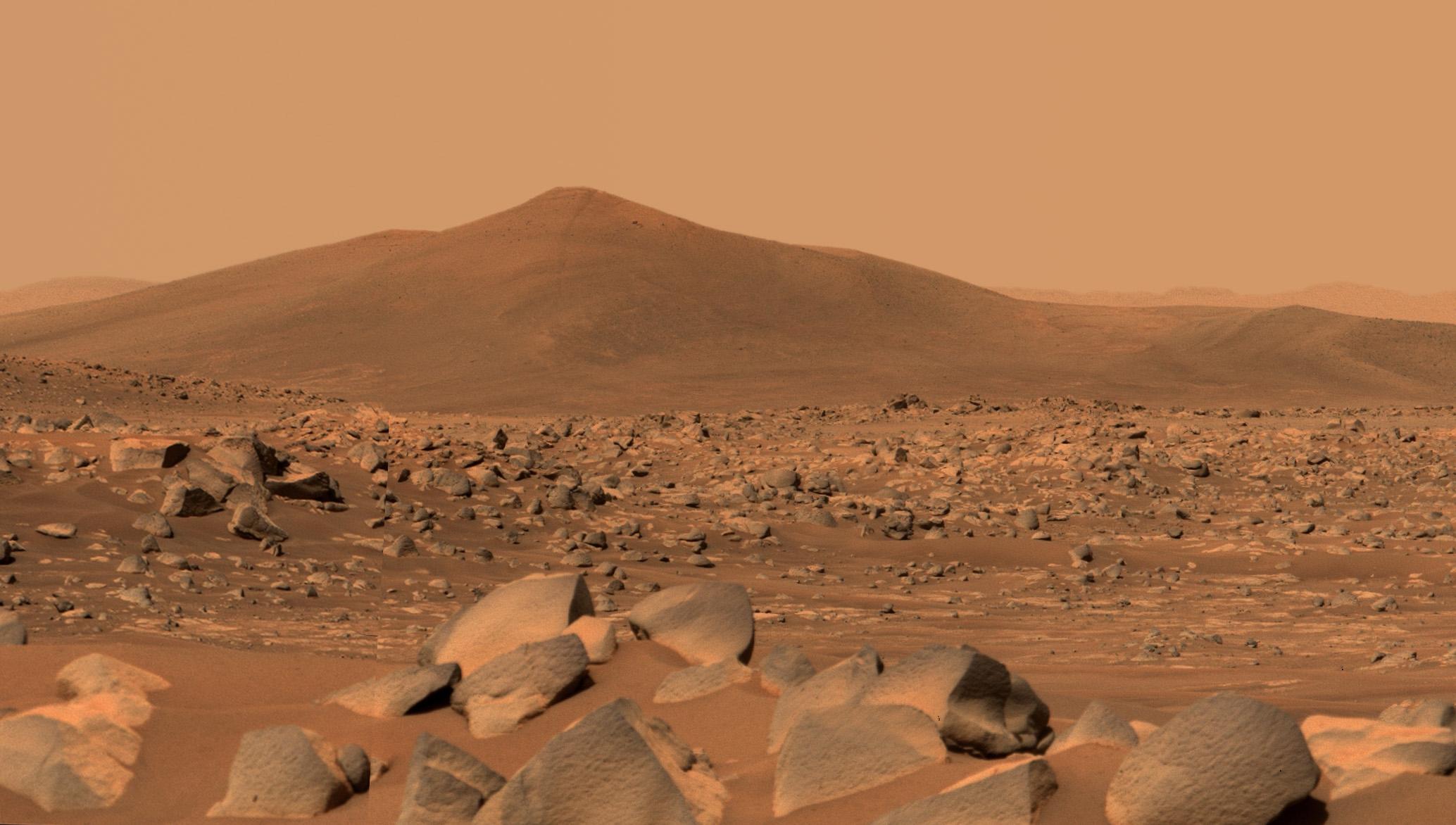
On Thursday, NASA issued a Request for Proposal (RFP), seeking industry collaboration for the Mars Telecommunications Network.
Reliable, high bandwidth communications is necessary to relay science data, high-definition imagery, and critical information during Mars missions. The network will use high-performance Mars telecommunications orbiters at the Red Planet to support future surface, orbital, and human exploration.
This RFP builds on a draft released April 2, as well as insights gathered during the accompanying industry day at NASA’s Goddard Space Flight Center in Greenbelt, Maryland, where commercial partners provided feedback on agency objectives for the Mars Telecommunications Network.
The request seeks responses that address both current and future operational missions. It also seeks a science payload accommodation that will be selected by NASA’s Science Mission Directorate. Industry is asked to respond within 30 calendar days of the posting, and the network should be ready to operate at Mars no later than 2030.
The Mars Telecommunications Network is part of NASA’s evolving space architecture, extending continuous network services beyond Earth to the Moon and Mars. The Mars Telecommunications Network is part of NASA’s SCaN (Space Communications and Navigation) Program’s Moon to Mars strategy, and is enabled by the direction and funding provided by Congress in the Working Families Tax Cut Act.
To learn more about NASA’s deep space exploration, visit:
Share Details Last Updated May 18, 2026 LocationNASA Headquarters Related TermsNASA Draws on Industry for Mars Telecommunications Network
On Thursday, NASA issued a Request for Proposal (RFP), seeking industry collaboration for the Mars Telecommunications Network.
Reliable, high bandwidth communications is necessary to relay science data, high-definition imagery, and critical information during Mars missions. The network will use high-performance Mars telecommunications orbiters at the Red Planet to support future surface, orbital, and human exploration.
This RFP builds on a draft released April 2, as well as insights gathered during the accompanying industry day at NASA’s Goddard Space Flight Center in Greenbelt, Maryland, where commercial partners provided feedback on agency objectives for the Mars Telecommunications Network.
The request seeks responses that address both current and future operational missions. It also seeks a science payload accommodation that will be selected by NASA’s Science Mission Directorate. Industry is asked to respond within 30 calendar days of the posting, and the network should be ready to operate at Mars no later than 2030.
The Mars Telecommunications Network is part of NASA’s evolving space architecture, extending continuous network services beyond Earth to the Moon and Mars. The Mars Telecommunications Network is part of NASA’s SCaN (Space Communications and Navigation) Program’s Moon to Mars strategy, and is enabled by the direction and funding provided by Congress in the Working Families Tax Cut Act.
To learn more about NASA’s deep space exploration, visit:
Share Details Last Updated May 18, 2026 LocationNASA Headquarters Related TermsThere’s an 82 percent chance El Niño will ‘emerge soon,’ NWS says
The El Niño climate event is due to return this year, with U.S. forecasters predicting an 82 percent chance of it coming in May through July and a 96 percent chance for it doing so in December through February 2027
‘Golden rule’ in abstract art just discovered by mathematicians
A mathematical ratio could explain why AI-generated art doesn’t evoke awe from viewers