

Feed aggregator
Is Dust the Best Thing in the Universe? Part 4: We Owe Dust Our Lives
No dust, no way to cool a collapsing gas cloud. No way to cool it, no stars. No dust, no first rung on the ladder from grain to pebble to planet. The substance I spent two articles complaining about turns out to be the substance that makes me possible.
SpaceX launches Starship V3—the world’s most powerful and tallest rocket ever
Friday’s test flight marks a major milestone for SpaceX as the company gears up to go public and to participate in NASA’s Artemis III mission in 2027
Call for Creatives: NASA Seeks Help Illuminating Mission Storytelling

As NASA pushes the boundaries of exploration and innovation for the benefit of humanity, the agency is looking for partners to share mission stories covering Artemis Moon missions, nuclear propulsion, aeronautics, and more.
NASA published an Announcement for Proposals on May 21 asking filmmakers, documentarians, songwriters, storytellers, poets, and others to submit proposals to partner with the agency by Tuesday, June 30.
In this initial round, NASA is seeking up to 10 partners for unfunded Space Act Agreements to share the stories behind, and insights into, multiple NASA missions, including, but not limited to, the following:
- Artemis program, including the recently added Artemis III mission in 2027, and Artemis IV lunar landing in 2028, as well as plans for the agency to develop a Moon Base. Learn more about Artemis on the agency’s website.
- NASA’s advancement of nuclear propulsion, including the Space Reactor-1 Freedom mission to Mars in 2028 carrying the Skyfall payload.
- NASA’s cutting-edge aviation work through flight tests and other efforts.
While this opportunity is focused on U.S. creators, the agency will consider proposals with a minority of international participants. Proposals should detail which area of focus is desired, funding and distribution arrangements, and any specifics needs from NASA to move forward (access to facilities, personnel, etc.).
Full requirements and other details are available online:
https://go.nasa.gov/CreatorProposals
-end-
Camille Gallo / Cheryl Warner
Headquarters, Washington
202-358-1600
camille.m.gallo@nasa.gov / cheryl.m.warner@nasa.gov
Call for Creatives: NASA Seeks Help Illuminating Mission Storytelling
As NASA pushes the boundaries of exploration and innovation for the benefit of humanity, the agency is looking for partners to share mission stories covering Artemis Moon missions, nuclear propulsion, aeronautics, and more.
NASA published an Announcement for Proposals on May 21 asking filmmakers, documentarians, songwriters, storytellers, poets, and others to submit proposals to partner with the agency by Tuesday, June 30.
In this initial round, NASA is seeking up to 10 partners for unfunded Space Act Agreements to share the stories behind, and insights into, multiple NASA missions, including, but not limited to, the following:
- Artemis program, including the recently added Artemis III mission in 2027, and Artemis IV lunar landing in 2028, as well as plans for the agency to develop a Moon Base. Learn more about Artemis on the agency’s website.
- NASA’s advancement of nuclear propulsion, including the Space Reactor-1 Freedom mission to Mars in 2028 carrying the Skyfall payload.
- NASA’s cutting-edge aviation work through flight tests and other efforts.
While this opportunity is focused on U.S. creators, the agency will consider proposals with a minority of international participants. Proposals should detail which area of focus is desired, funding and distribution arrangements, and any specifics needs from NASA to move forward (access to facilities, personnel, etc.).
Full requirements and other details are available online:
https://go.nasa.gov/CreatorProposals
-end-
Camille Gallo / Cheryl Warner
Headquarters, Washington
202-358-1600
camille.m.gallo@nasa.gov / cheryl.m.warner@nasa.gov
NASA’S Juno Makes Closest Ever Approach To Jupiter’s Moon Of Thebe
NASA’S Juno spacecraft images Jupiter’s tiny moon of Thebe in a recent close approach.
NASA Sets Coverage for Roscosmos Spacewalk Outside Space Station
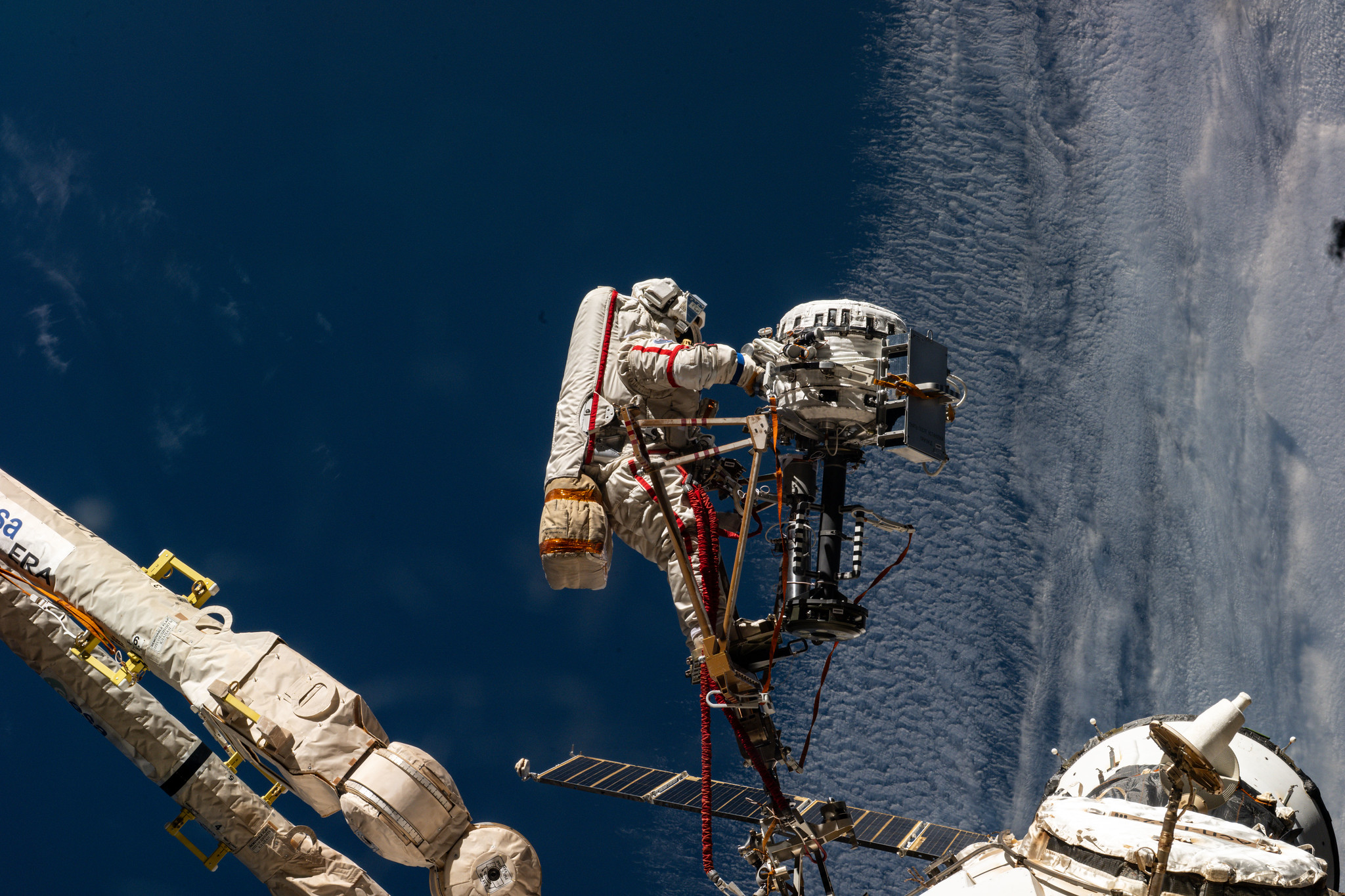
NASA will provide live coverage on Wednesday, May 27, as two Roscosmos cosmonauts conduct a spacewalk outside the International Space Station. The spacewalk is scheduled to begin at approximately 10:15 a.m. EDT and last roughly five hours.
Watch NASA’s live coverage beginning at 9:45 a.m. on NASA+, Amazon Prime, and the agency’s YouTube channel. Learn how to watch NASA content through a variety of online platforms, including social media.
International Space Station Expedition 74 commander Sergey Kud-Sverchkov and flight engineer Sergei Mikaev will install a solar radiation experiment on the Zvezda service module and remove other science hardware from the Poisk and Nauka modules of the orbiting complex’s Roscosmos segment. If time allows, the duo also will photograph one of the Progress 94 cargo spacecraft’s Kurs rendezvous antennas, which failed to deploy in March following its launch to the space station.
This Roscosmos spacewalk will be the second for Kud-Sverchkov and the first for Mikaev. Kud-Sverchkov will wear a spacesuit with red stripes, and Mikaev will wear a spacesuit with blue stripes. It will be the 279th spacewalk in support of space station assembly, maintenance, and upgrades.
To learn more about International Space Station research, operations, and its crews, visit:
-end-
Josh Finch / Jimi Russell
Headquarters, Washington
202-358-1100
joshua.a.finch@nasa.gov / james.j.russell@nasa.gov
Sandra Jones
Johnson Space Center, Houston
281-483-5111
sandra.p.jones@nasa.gov
NASA Sets Coverage for Roscosmos Spacewalk Outside Space Station
NASA will provide live coverage on Wednesday, May 27, as two Roscosmos cosmonauts conduct a spacewalk outside the International Space Station. The spacewalk is scheduled to begin at approximately 10:15 a.m. EDT and last roughly five hours.
Watch NASA’s live coverage beginning at 9:45 a.m. on NASA+, Amazon Prime, and the agency’s YouTube channel. Learn how to watch NASA content through a variety of online platforms, including social media.
International Space Station Expedition 74 commander Sergey Kud-Sverchkov and flight engineer Sergei Mikaev will install a solar radiation experiment on the Zvezda service module and remove other science hardware from the Poisk and Nauka modules of the orbiting complex’s Roscosmos segment. If time allows, the duo also will photograph one of the Progress 94 cargo spacecraft’s Kurs rendezvous antennas, which failed to deploy in March following its launch to the space station.
This Roscosmos spacewalk will be the second for Kud-Sverchkov and the first for Mikaev. Kud-Sverchkov will wear a spacesuit with red stripes, and Mikaev will wear a spacesuit with blue stripes. It will be the 279th spacewalk in support of space station assembly, maintenance, and upgrades.
To learn more about International Space Station research, operations, and its crews, visit:
-end-
Josh Finch / Jimi Russell
Headquarters, Washington
202-358-1100
joshua.a.finch@nasa.gov / james.j.russell@nasa.gov
Sandra Jones
Johnson Space Center, Houston
281-483-5111
sandra.p.jones@nasa.gov
A Beautiful Death: How a Dying Star Created the Crystal Ball Nebula
Planetary nebula are created when a dying star sheds it outer layers. The gas is lit up by the star and all the gorgeous, changing detail is exposed. NGC 1514, the Crystal Ball Nebula, is about 1500 light years away and contains a binary pair in its center. The orbits and winds from the stars create the Crystal Ball's beautiful form.
Webb Studies Star Clusters
Webb Studies Star Clusters
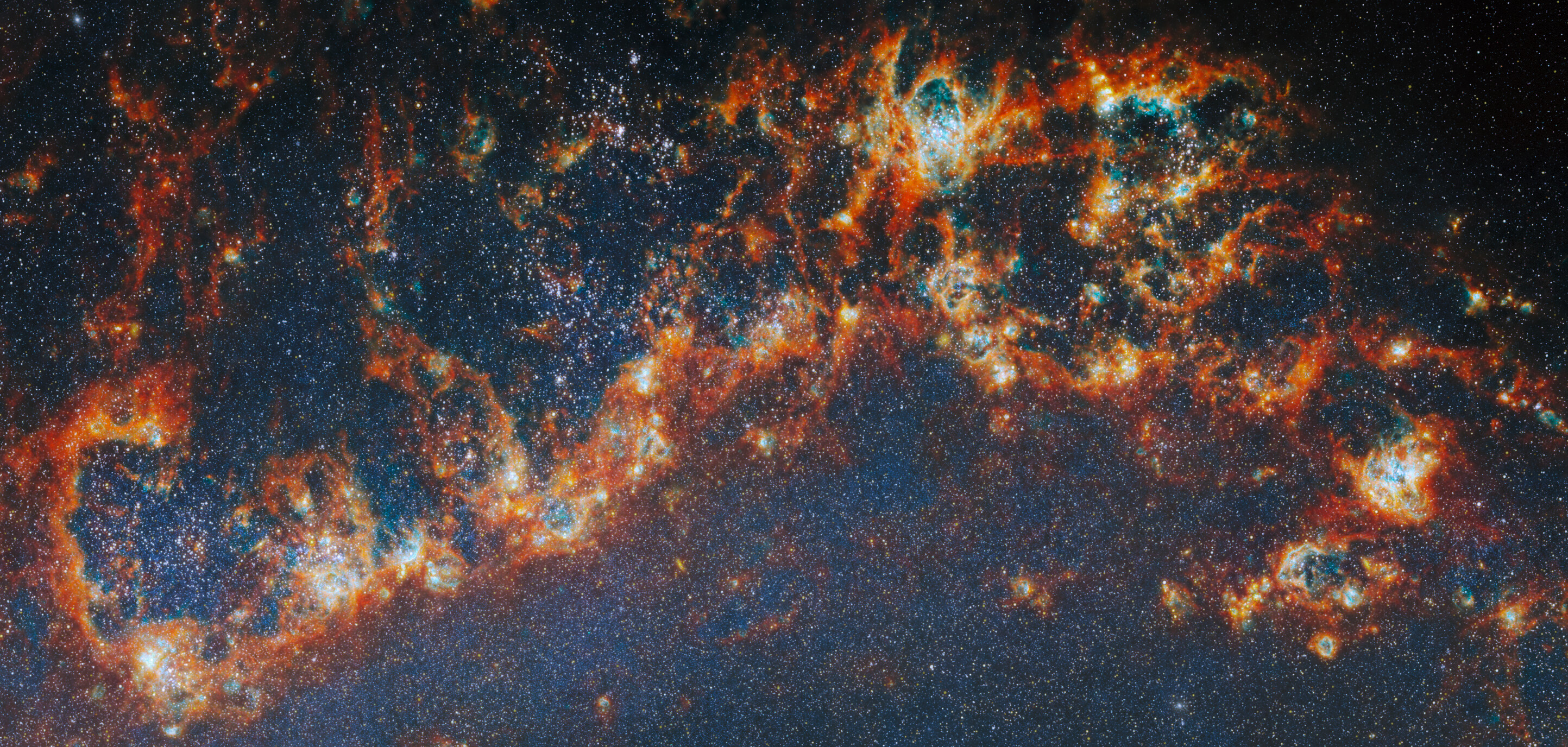
This near-infrared image released on May 6, 2026, shows a section of one of the spiral arms of Messier 51 (M51). M51 is one of four nearby galaxies observed by NASA’s James Webb Space Telescope in a study of nearly 9,000 star clusters.
Data from the study shows that more massive star clusters emerge more quickly from the clouds they are born in. Learning about star formation helps us understand galactic evolution, the dynamics within a galaxy, as well as how and where planets form.
Image credit: ESA/Webb, NASA & CSA, A. Pedrini, A. Adamo (Stockholm University) and the FEAST JWST team
Webb Studies Star Clusters
This near-infrared image released on May 6, 2026, shows a section of one of the spiral arms of Messier 51 (M51). M51 is one of four nearby galaxies observed by NASA’s James Webb Space Telescope in a study of nearly 9,000 star clusters.
Data from the study shows that more massive star clusters emerge more quickly from the clouds they are born in. Learning about star formation helps us understand galactic evolution, the dynamics within a galaxy, as well as how and where planets form.
Image credit: ESA/Webb, NASA & CSA, A. Pedrini, A. Adamo (Stockholm University) and the FEAST JWST team
Mercury may have gained all of its unexpected water in a single day
Mercury may have gained all of its unexpected water in a single day
Experimental mRNA vaccine may protect against multiple Ebola viruses
Experimental mRNA vaccine may protect against multiple Ebola viruses
Far side moon photos reveal hidden lunar minerals in brilliant color
An astrophotographer teamed up with Artemis II commander Reid Wiseman to create these stunning new images of the lunar surface
Why lawyers keep citing fake cases invented by AI
The trend of attorneys getting caught citing AI-hallucinated cases points to a broader problem: instead of checking AI’s work, people keep trusting it
ESA’s Prodex programme brings scientific research to space
The launch of the 4DSpace-Daedalus mission in Norway is the latest success supported by Prodex, a European Space Agency (ESA) programme which enables highly skilled research institutes to partake in European space science activities and missions.
Keeping NASA Flying: Ground Crews Ensure Aircraft Readiness
4 min read
Preparations for Next Moonwalk Simulations Underway (and Underwater) NASA crew chief Walt Kondracki checks an F-15 aircraft Tuesday, March 17, 2026, at NASA’s Armstrong Flight Research Center in Edwards, California. Ground crews, made of various roles, maintain the aircraft to be ready for each mission.NASA/Carla Escamilla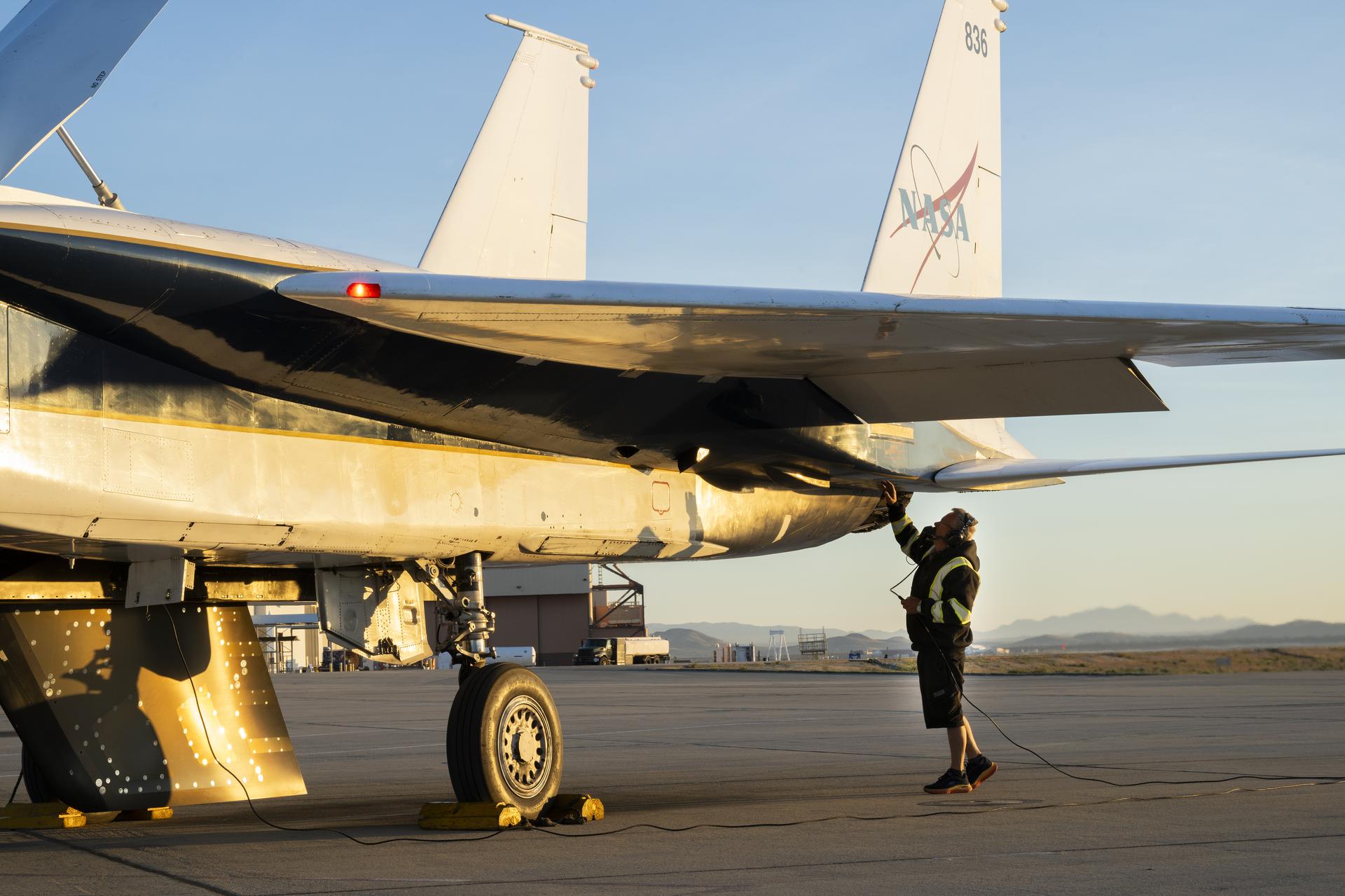
From high‑speed research flights to high‑altitude science campaigns, NASA depends on aircraft that perform at their best and the ground crews who keep them mission ready.
At NASA’s Armstrong Flight Research Center in Edwards, California, specially trained maintenance crews are essential to keeping the agency’s aircraft flying safely and reliably.
This year, NASA added two F-15s and a Pilatus PC-12 to its fleet at Armstrong. These aircraft – alongside platforms such as the high-altitude ER-2s and NASA’s newest X-plane, the X-59 – reflect a wide range of capabilities. The maintenance staff is responsible for keeping each one mission ready.
NASA pilot Nils Larson, left, walks next to crew chief Walt Kondracki, right, by an F-15 aircraft Tuesday, Jan. 13, 2026, at NASA’s Armstrong Flight Research Center in Edwards, California. In the background, NASA mechanic Tim Logan secures the cockpit inside of the F-15, and flight test engineer A.J. Jaffe stands to the right.NASA/Christopher LC Clark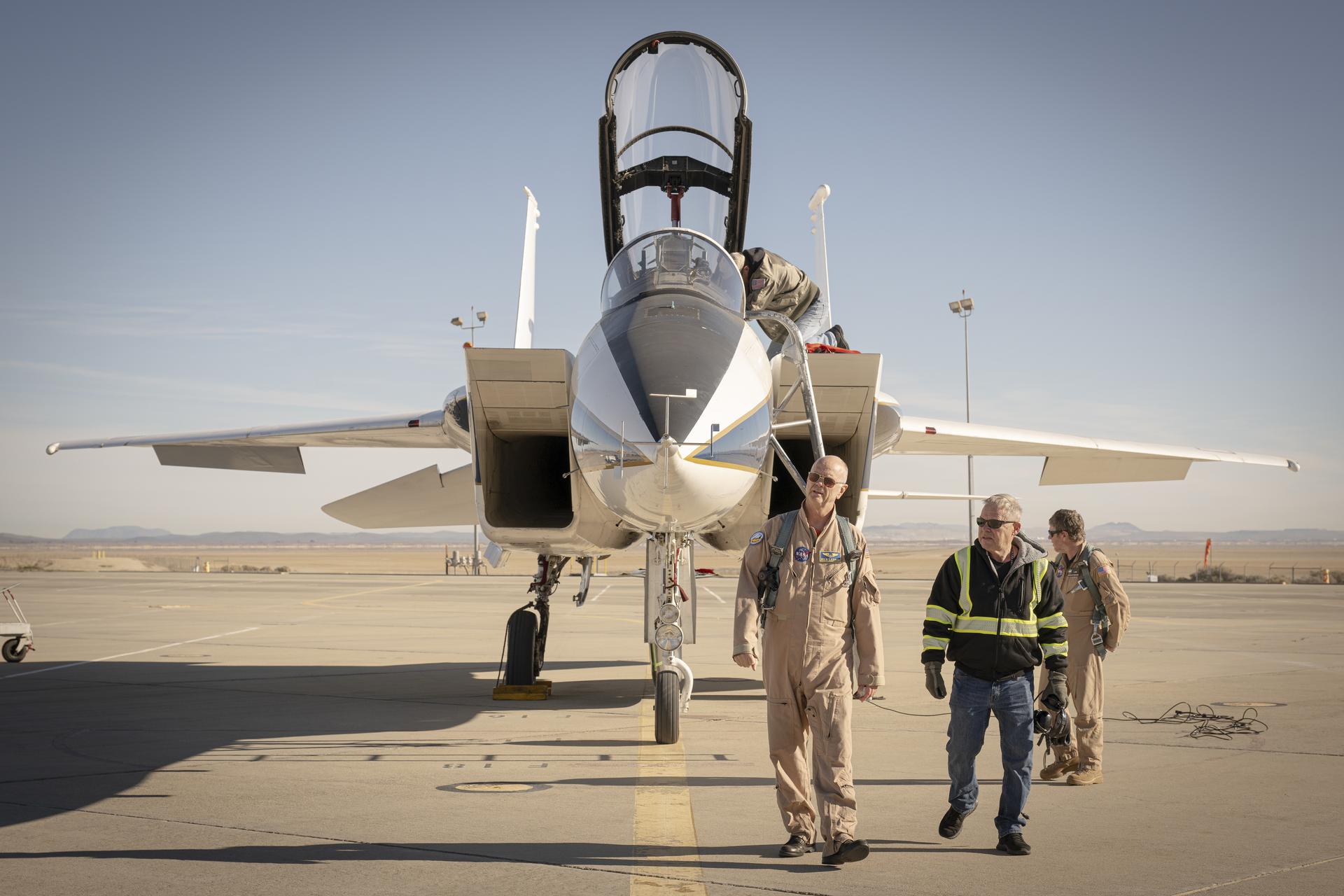
“That’s the beauty of our Armstrong maintenance teams. They adapt to any type of change,” said Jose “Manny” Rodriguez, NASA Armstrong Gulfstream G-IV crew chief. “One day you could have an instrument being loaded, and the next day it may be aircraft reconfiguration, all while other aircraft systems may need fixing. They adapt and they overcome any situation.”
Each aircraft supports a specific mission, whether it’s conducting science research, serving as a support or chase aircraft, or assisting NASA rocket launches. The aircraft fly at different speeds, carry specialized hardware, and require maintenance crews to stay agile with fast-paced changes.
To ensure NASA can make aeronautics and science advancements safely, the crews work continuously, checking on the ejection seats, filling the tanks with fuel, and changing out brakes, wheels, wiring, and hardware constantly, all of which can degrade with each flight.
From left, NASA avionics technician Jesse Orellana; quality assurance employee Jose Prieto; mechanic Francisco Rodriguez; and mechanic Vincent Moreno work on an ER-2 aircraft Monday, Jan. 26, 2026, at NASA’s Armstrong Flight Research Center in Edwards, California.NASA/Christopher LC Clark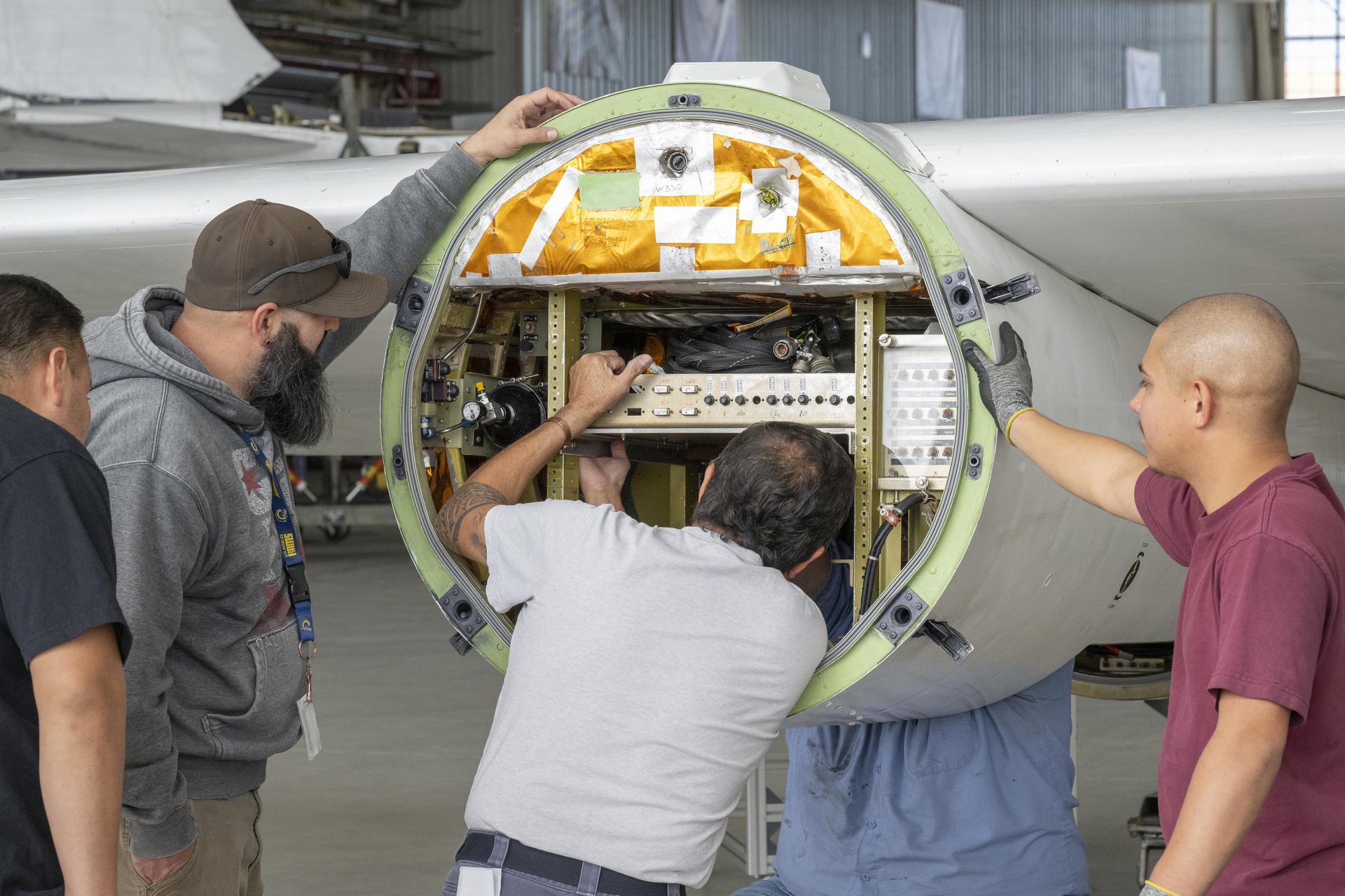
On any given day, an aircraft may be flight-ready for a mission, undergoing scheduled maintenance or modifications, or down for longer-term care.
There are typically multiple NASA Armstrong aircraft in the air in one day. Currently, the center’s C-20A is flying in Peru and Panama, the X-59 is often flying twice per day with a chase plane, and the center’s ER-2 is flying in Colorado, supporting the Geological Earth Mapping Experiment (GEMx). All this work is happening at the same time, and Armstrong’s skilled maintenance staff is prepping and fixing aircraft as needed along the way.
The team includes mechanics with both military and civilian backgrounds, and the job involves a lot of on-the-job training.
Maintenance crews are composed of:
- a crew chief – the person in charge of the airplane
- an avionics technician, who specializes in navigation, communication, and flight control systems
- quality assurance personnel, who oversee the work being done
- additional mechanics assigned to each airplane
After the maintenance crew ensures the aircraft is in the best condition possible, the team tows it out to the flightline, and it becomes ready for operations. The NASA pilot assigned to the mission will walk around the aircraft with the assigned crew chief for a final safety check before flight.
“There is a crew chief assigned to every aircraft,” Rodriguez said. “The crew chief is responsible for the integrity of that aircraft, and at the end of the day, his signature and the pilot’s together are what constitutes that the aircraft is safe for flight.”
Maintenance crews track each flight to help ensure it completes the mission without returning early. If an aircraft does return to base early, the maintenance team stands ready. When it lands, the crew is right there again, helping the research team complete the mission and fixing whatever is needed to stay nimble and ready for the next flight.
“It’s difficult at times to work with different airplanes from both the civilian and military sides, but it’s very rewarding to see that we have the capability and the expertise to keep these aircraft flying,” Rodriguez said.
Share Details Last Updated May 22, 2026 Related Terms Explore More 4 min read NASA Announces Winners in University Aeronautics Competition Article 6 days ago 3 min read Meet the Fleet: NASA Armstrong Continues Legacy of Flight Research Article 3 weeks ago 6 min read Cornell Students Aid NASA with Drone Safety in Sky Article 3 weeks ago Keep Exploring Discover More Topics From NASAMissions
Humans in Space
Climate Change
Solar System
Keeping NASA Flying: Ground Crews Ensure Aircraft Readiness
4 min read
Preparations for Next Moonwalk Simulations Underway (and Underwater) NASA crew chief Walt Kondracki checks an F-15 aircraft Tuesday, March 17, 2026, at NASA’s Armstrong Flight Research Center in Edwards, California. Ground crews, made of various roles, maintain the aircraft to be ready for each mission.NASA/Carla EscamillaFrom high‑speed research flights to high‑altitude science campaigns, NASA depends on aircraft that perform at their best and the ground crews who keep them mission ready.
At NASA’s Armstrong Flight Research Center in Edwards, California, specially trained maintenance crews are essential to keeping the agency’s aircraft flying safely and reliably.
This year, NASA added two F-15s and a Pilatus PC-12 to its fleet at Armstrong. These aircraft – alongside platforms such as the high-altitude ER-2s and NASA’s newest X-plane, the X-59 – reflect a wide range of capabilities. The maintenance staff is responsible for keeping each one mission ready.
NASA pilot Nils Larson, left, walks next to crew chief Walt Kondracki, right, by an F-15 aircraft Tuesday, Jan. 13, 2026, at NASA’s Armstrong Flight Research Center in Edwards, California. In the background, NASA mechanic Tim Logan secures the cockpit inside of the F-15, and flight test engineer A.J. Jaffe stands to the right.NASA/Christopher LC Clark“That’s the beauty of our Armstrong maintenance teams. They adapt to any type of change,” said Jose “Manny” Rodriguez, NASA Armstrong Gulfstream G-IV crew chief. “One day you could have an instrument being loaded, and the next day it may be aircraft reconfiguration, all while other aircraft systems may need fixing. They adapt and they overcome any situation.”
Each aircraft supports a specific mission, whether it’s conducting science research, serving as a support or chase aircraft, or assisting NASA rocket launches. The aircraft fly at different speeds, carry specialized hardware, and require maintenance crews to stay agile with fast-paced changes.
To ensure NASA can make aeronautics and science advancements safely, the crews work continuously, checking on the ejection seats, filling the tanks with fuel, and changing out brakes, wheels, wiring, and hardware constantly, all of which can degrade with each flight.
From left, NASA avionics technician Jesse Orellana; quality assurance employee Jose Prieto; mechanic Francisco Rodriguez; and mechanic Vincent Moreno work on an ER-2 aircraft Monday, Jan. 26, 2026, at NASA’s Armstrong Flight Research Center in Edwards, California.NASA/Christopher LC ClarkOn any given day, an aircraft may be flight-ready for a mission, undergoing scheduled maintenance or modifications, or down for longer-term care.
There are typically multiple NASA Armstrong aircraft in the air in one day. Currently, the center’s C-20A is flying in Peru and Panama, the X-59 is often flying twice per day with a chase plane, and the center’s ER-2 is flying in Colorado, supporting the Geological Earth Mapping Experiment (GEMx). All this work is happening at the same time, and Armstrong’s skilled maintenance staff is prepping and fixing aircraft as needed along the way.
The team includes mechanics with both military and civilian backgrounds, and the job involves a lot of on-the-job training.
Maintenance crews are composed of:
- a crew chief – the person in charge of the airplane
- an avionics technician, who specializes in navigation, communication, and flight control systems
- quality assurance personnel, who oversee the work being done
- additional mechanics assigned to each airplane
After the maintenance crew ensures the aircraft is in the best condition possible, the team tows it out to the flightline, and it becomes ready for operations. The NASA pilot assigned to the mission will walk around the aircraft with the assigned crew chief for a final safety check before flight.
“There is a crew chief assigned to every aircraft,” Rodriguez said. “The crew chief is responsible for the integrity of that aircraft, and at the end of the day, his signature and the pilot’s together are what constitutes that the aircraft is safe for flight.”
Maintenance crews track each flight to help ensure it completes the mission without returning early. If an aircraft does return to base early, the maintenance team stands ready. When it lands, the crew is right there again, helping the research team complete the mission and fixing whatever is needed to stay nimble and ready for the next flight.
“It’s difficult at times to work with different airplanes from both the civilian and military sides, but it’s very rewarding to see that we have the capability and the expertise to keep these aircraft flying,” Rodriguez said.
Share Details Last Updated May 22, 2026 Related Terms Explore More 4 min read NASA Announces Winners in University Aeronautics Competition Article 5 days ago 3 min read Meet the Fleet: NASA Armstrong Continues Legacy of Flight Research Article 3 weeks ago 6 min read Cornell Students Aid NASA with Drone Safety in Sky Article 3 weeks ago Keep Exploring Discover More Topics From NASAMissions
Humans in Space
Climate Change
Solar System