

Feed aggregator
NASA Equips Astronauts, Industry with Robotic Intelligence
2 min read
Preparations for Next Moonwalk Simulations Underway (and Underwater) In the Integrated Mobile Evaluation Testbed for Robotics Operations facility at Johnson Space Center, PickNik robotic control software proved its prowess in tasks like passing cargo transfer bags through a hatch and placing them in storage bins, in anticipation of work NASA would like robots to carry out during the later Artemis missions.Credit: NASA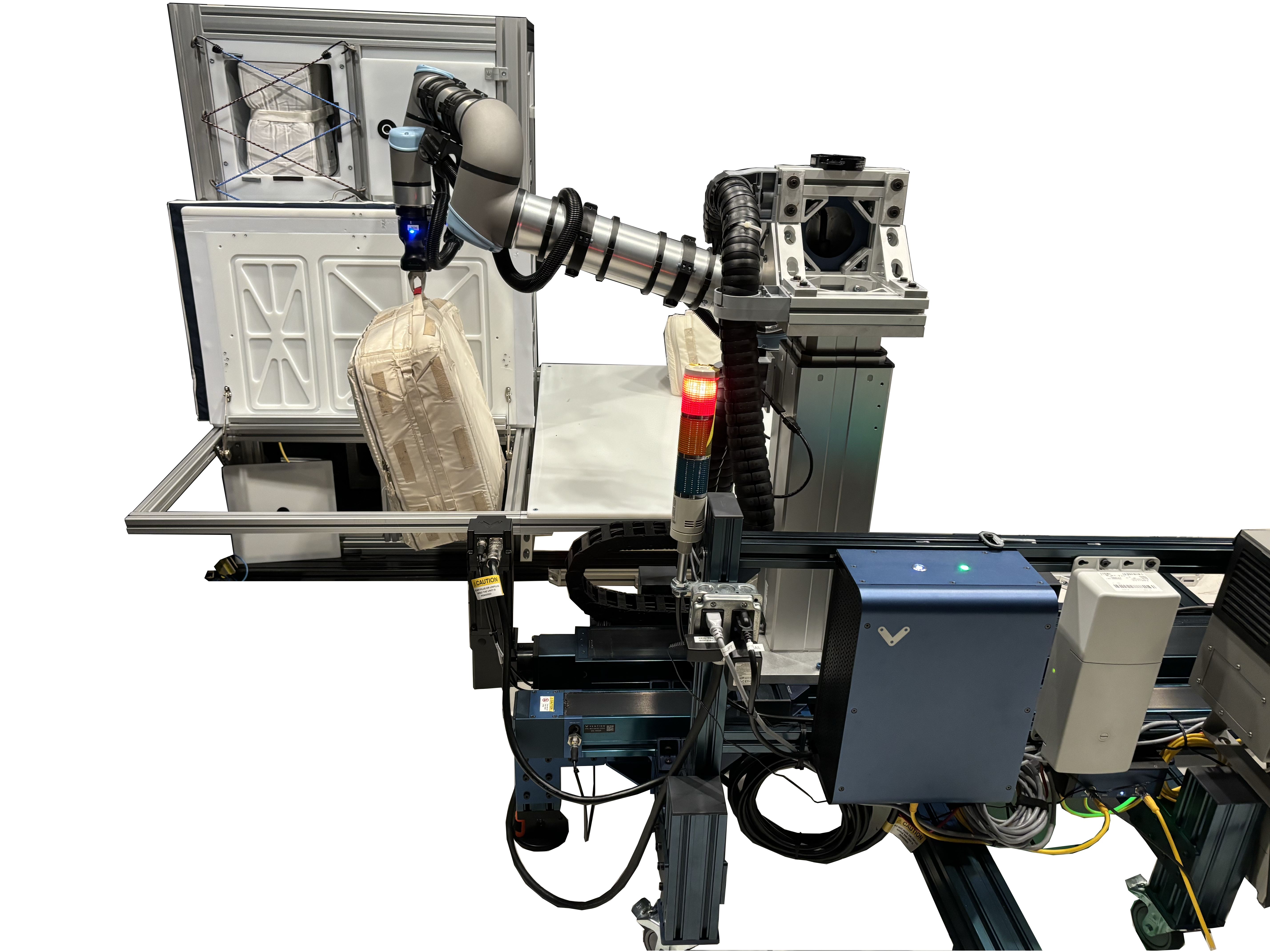
As NASA plans long-term missions on the Moon, the agency could use robots to perform routine tasks, allowing crew members to dedicate more time to science and exploration. However, robotic motion control requires complex technology and advances in features like robotic decision-making and object recognition.
These are the challenges a Boulder, Colorado-based robotics company is teaming up with NASA to overcome.
PickNik Inc. recently worked with Shaun Azimi, who leads the Dexterous Robotics team at NASA’s Johnson Space Center in Houston, and other agency roboticists. The team tested software that enabled a robotic arm to recognize a spacecraft hatch, then turn the latch, grasp the handle, and open the door. The arm then was able to transfer cargo bags between the hatch and a bin.
The work was carried out in NASA Johnson’s new Integrated Mobile Evaluation Testbed for Robotics Operations with funding from NASA’s Small Business Innovation Research program.
PickNik designed and refined the robotic software, called MoveIt Pro, with support from early government investments. Commercially released in 2023, MoveIt Pro has found a significant customer base.
Automotive company BMW is using the software on its robotic assembly lines. A company called Lightspeed is using MoveIt Pro to program huge robotic arms that build modular “panels” for constructing affordable housing. Another company, known as Hivebotics, used MoveIt Pro to automate its flagship product, a cleaning robot.
Ezra Brooks, principal software engineer at PickNik, said the 35-person company might not have a product without NASA’s early support. Robotic software requires years of research and development to refine algorithms and create a commercial product. NASA enabled much of that foundational work.
NASA’s technological advancements unlock key capabilities for missions at the Moon and beyond while benefiting commercial industries on Earth. For 50 years, NASA has documented the everyday benefits of space technology through the agency’s Spinoff publication. To learn more about the project, visit: https://go.nasa.gov/49CNSi7
Read More Share Details Last Updated Jun 10, 2026 Related Terms Explore More 3 min read NASA-Supported Space Tech Advances Earthly Construction Article 4 weeks ago 4 min read Hello Universe: NASA’s Next-Gen Space Processor Undergoes Testing Article 4 weeks ago 3 min read NASA Heat Shield Technology Enables Space Industry Growth Article 4 months ago Keep Exploring Discover Related TopicsTechnology Transfer & Spinoffs
Artemis
Robotics
Johnson Space Center
NASA Equips Astronauts, Industry with Robotic Intelligence
2 min read
Preparations for Next Moonwalk Simulations Underway (and Underwater) In the Integrated Mobile Evaluation Testbed for Robotics Operations facility at Johnson Space Center, PickNik robotic control software proved its prowess in tasks like passing cargo transfer bags through a hatch and placing them in storage bins, in anticipation of work NASA would like robots to carry out during the later Artemis missions.Credit: NASAAs NASA plans long-term missions on the Moon, the agency could use robots to perform routine tasks, allowing crew members to dedicate more time to science and exploration. However, robotic motion control requires complex technology and advances in features like robotic decision-making and object recognition.
These are the challenges a Boulder, Colorado-based robotics company is teaming up with NASA to overcome.
PickNik Inc. recently worked with Shaun Azimi, who leads the Dexterous Robotics team at NASA’s Johnson Space Center in Houston, and other agency roboticists. The team tested software that enabled a robotic arm to recognize a spacecraft hatch, then turn the latch, grasp the handle, and open the door. The arm then was able to transfer cargo bags between the hatch and a bin.
The work was carried out in NASA Johnson’s new Integrated Mobile Evaluation Testbed for Robotics Operations with funding from NASA’s Small Business Innovation Research program.
PickNik designed and refined the robotic software, called MoveIt Pro, with support from early government investments. Commercially released in 2023, MoveIt Pro has found a significant customer base.
Automotive company BMW is using the software on its robotic assembly lines. A company called Lightspeed is using MoveIt Pro to program huge robotic arms that build modular “panels” for constructing affordable housing. Another company, known as Hivebotics, used MoveIt Pro to automate its flagship product, a cleaning robot.
Ezra Brooks, principal software engineer at PickNik, said the 35-person company might not have a product without NASA’s early support. Robotic software requires years of research and development to refine algorithms and create a commercial product. NASA enabled much of that foundational work.
NASA’s technological advancements unlock key capabilities for missions at the Moon and beyond while benefiting commercial industries on Earth. For 50 years, NASA has documented the everyday benefits of space technology through the agency’s Spinoff publication. To learn more about the project, visit: https://go.nasa.gov/49CNSi7
Read More Share Details Last Updated Jun 10, 2026 Related Terms Explore More 3 min read NASA-Supported Space Tech Advances Earthly Construction Article 4 weeks ago 4 min read Hello Universe: NASA’s Next-Gen Space Processor Undergoes Testing Article 1 month ago 3 min read NASA Heat Shield Technology Enables Space Industry Growth Article 4 months ago Keep Exploring Discover Related TopicsTechnology Transfer & Spinoffs
Artemis
Robotics
Johnson Space Center
AI scores a ‘C–’ on its hardest math test yet
The second batch of “First Proof” problems is meant to evaluate AI’s usefulness for research-level math. The best model got six or seven of the 10 questions basically right
Wolves seen hunting European bison in rare camera-trap recording
Wolves seen hunting European bison in rare camera-trap recording
ESA adopts galactic archaeology mission Arrakihs
The European Space Agency’s (ESA) Science Programme Committee has adopted the Arrakihs mission. Planned for launch by the end of 2030, Arrakihs will capture the faint light from nearby galaxy haloes. By seeing the unseen, Arrakihs will dig up cosmic history and reveal how galaxies like our own form and evolve.
How to build kids’ ‘cognitive endurance’ in an age of distraction
The ability to run “mental marathons” is a skill children can learn through simple, but dedicated, practice
Train Ride to NASA Kennedy for Artemis III Booster Segments
Train Ride to NASA Kennedy for Artemis III Booster Segments

The final booster motor segments for NASA’s SLS (Space Launch System) rocket that will help propel Artemis III astronauts on their journey to space shipped from Northrop Grumman’s Railyard Shipping Facility in Corinne, Utah on June 2. The eight booster motor segments are on their way to NASA’s Kennedy Space Center in Florida where they will form the SLS rocket’s twin, five-segment solid rocket boosters, which produce more than 75% of the total thrust at liftoff.
Follow the Artemis blog for updates on Artemis III and future missions.
Image credit: NASA/Brandon Hancock
Train Ride to NASA Kennedy for Artemis III Booster Segments
The final booster motor segments for NASA’s SLS (Space Launch System) rocket that will help propel Artemis III astronauts on their journey to space shipped from Northrop Grumman’s Railyard Shipping Facility in Corinne, Utah on June 2. The eight booster motor segments are on their way to NASA’s Kennedy Space Center in Florida where they will form the SLS rocket’s twin, five-segment solid rocket boosters, which produce more than 75% of the total thrust at liftoff.
Follow the Artemis blog for updates on Artemis III and future missions.
Image credit: NASA/Brandon Hancock
Millions of fossil whale bones found in deep-ocean ‘necropolis’
Millions of fossil whale bones found in deep-ocean ‘necropolis’
Hundreds of new moons are revealing our solar system's violent history
Hundreds of new moons are revealing our solar system's violent history
How to tell if your dog is left-pawed or right-pawed, according to science
A step-by-step guide to the “Doginburgh Inventory,” a new pawedness test developed by dog behavior researchers
Largest whale ‘graveyard’ discovered, with skeletons spanning 5 million years
The fossilized remains of more than 450 whales have amassed along a 750-mile-long stretch of the Indian Ocean floor
A nuclear war between India and Pakistan could destroy the ozone layer
A nuclear war between India and Pakistan could destroy the ozone layer
NASA’s Proposed EVE Mission Aims to Solve the Radius Valley Mystery
A debate has been raging amongst planetary scientists for over a decade - why are there so few exoplanets with a radius of about 1.8 times that of the Earth? Exoplanets are currently largely grouped into two distinct groups - “super Earth” are below that size and have rocky interiors, whereas “Sub-Neptunes” are above that size limit and appear “puffier.” But we don’t really understand what about the path of planetary evolution forces this bifurcation. A new mission proposal, called the Early eVolution Explorer (EVE) wants to find out, and a draft of its concept can be found in pre-print form on arXiv.
How FIFA is engineering natural grass for the 2026 World Cup
FIFA is building temporary natural-grass fields meant to play consistently across 16 stadiums in three countries