

Feed aggregator
Melting of Greenland ice sheet could release large stores of methane
Rebooting stem cells builds aged muscles and assists injury recovery
Rebooting stem cells builds aged muscles and assists injury recovery
Ice Moves Out of Aniak
- Earth
- Earth Observatory
- Image of the Day
- EO Explorer
- Topics
- More Content
- About
Ice Moves Out of Aniak
- Earth
- Earth Observatory
- Image of the Day
- EO Explorer
- Topics
- More Content
- About
2026 FIFA World Cup players and fans at risk of extreme heat, climate scientists warn
Heat conditions could exceed dangerous levels at a quarter of the planned 2026 World Cup soccer matches, including the final in New Jersey on July 19
A Brief-ish History of SETI. Part IV: Arecibo and the WOW! Signal
During the 1970s, pioneering experiments were conducted that are known today as Messaging Extraterrestrial Intelligence (METI). At the same time, NASA launched four spacecraft bound for interstellar space, each carrying "messages in a bottle" intended for extraterrestrial beings.
Forget Searching for Individual Biosignatures. Instead, Find Their Patterns
The search for life elsewhere focuses on biosignatures. These are chemicals in atmospheres that can only be attributed to life. But despite the prowess of the JWST, finding slam-dunk proof of life on other worlds is a confounding exercise. New research suggests that rather than focus on individual chemicals, we should look for statistical patterns.
Almost half of the objects in Earth’s orbit are junk—and that’s only the stuff we know about
Debris is a growing threat to orbital infrastructure, and it’s only going to get worse as the number of launches increases
NASA-Supported Space Tech Advances Earthly Construction
3 min read
Preparations for Next Moonwalk Simulations Underway (and Underwater) Branch’s work outfitting a prototype of a lunar surface habitat they developed, pictured here, under a cooperative agreement with Marshall Space Flight Center, helped the company evolve its printing processes.Credit: Branch Technology Inc.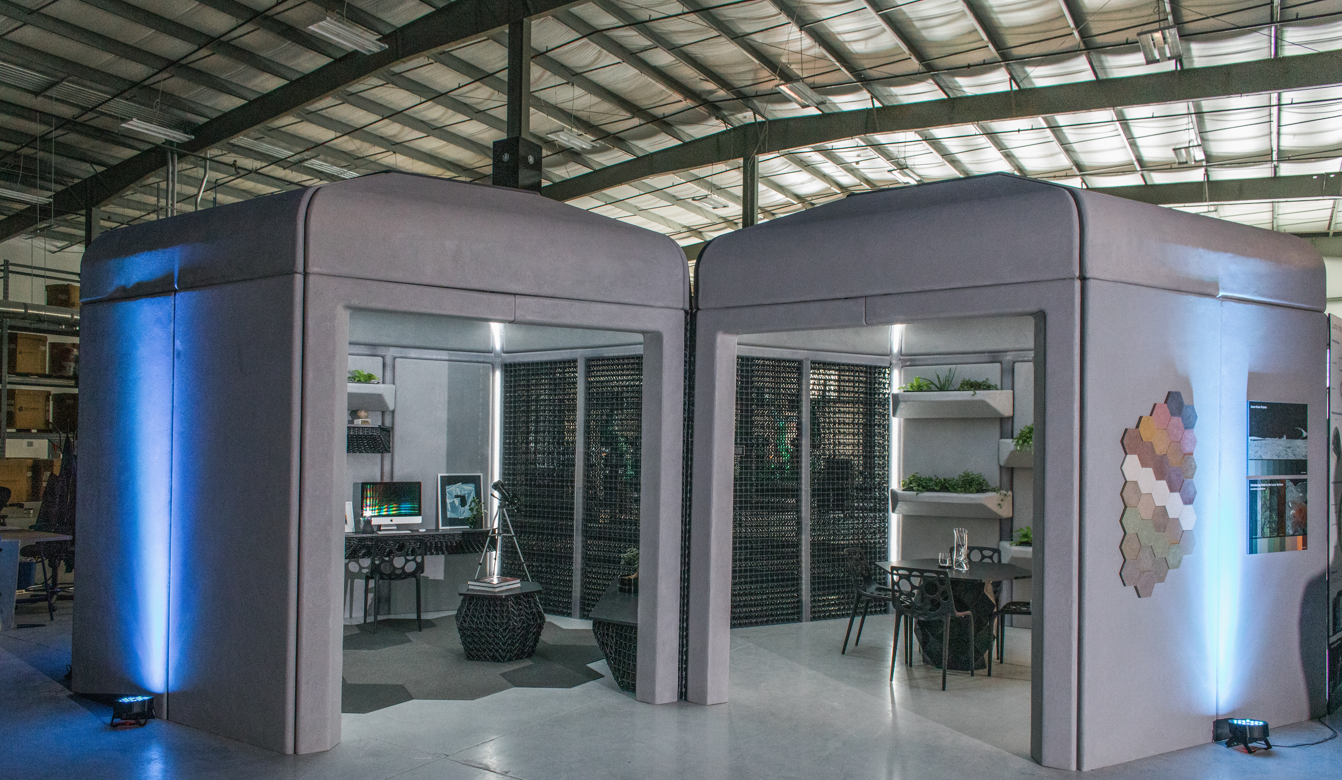
An innovative 3D printing process that advanced NASA’s approach to outfitting a lunar habitat is making buildings on Earth beautiful, efficient, and strong.
Instead of building structures layer by layer, Branch Technology Inc. of Chattanooga, Tennessee, has developed a process the company calls Freeform 3D Printing, which creates shapes with lightweight lattice structures that can be filled or covered. The company uses the technique to manufacture visually interesting, modular building elements, such as wall panels and cladding.
“Our process eliminates a ton of material from something that otherwise might be printed solid all the way through,” said David Goodloe, who leads Branch Technology’s Advanced Concepts team, which manages the company’s NASA collaborations.
In 2017, the company won Phase II of NASA’s 3D-Printed Habitat Challenge, a public competition to build a habitat for deep space exploration.
Tracie Prater, a technical manager in the Habitat Systems Development Branch at NASA’s Marshall Spaceflight Center in Huntsville, Alabama, served as a subject matter expert for the challenge and worked with Branch Technology on a cooperative agreement.
“With the 3D-Printed Habitat Challenge, teams were focused on how to build a large habitat structure on a planetary surface,” said Prater. “But once that structure is pressurized and ready for crew occupancy, how do you populate it with systems and supplies? That’s what Branch was looking at through the cooperative agreement — what their on-demand fabrication process enables in terms of novel designs for interior items.”
NASA’s parameters for the habitat challenge led Branch to develop its nozzles to extrude unique lattice structures as well as more traditional layers. The company uses this dual capability frequently in its wall panels where traditionally printed sections offer solid substrates for attaching fasteners.
The polymers Branch extrudes were informed by its materials science research for the 3D-Printed Habitat Challenge, which asked that print material be made of something like the dust and rocks found on the Martian surface and mission recyclables. Branch came up with a basalt fiber-reinforced plastic and from that work went on to develop an optimal loading recipe for its terrestrial “inks.”
These innovations exemplify the purpose of NASA’s Technology Transfer program within the Space Technology Mission Directorate, which uses space-based solutions to improve life on Earth. For 50 years, NASA has documented the everyday benefits of space technology through the agency’s Spinoff publication.
Read More Share Details Last Updated May 13, 2026 Related Terms Explore More 4 min read Hello Universe: NASA’s Next-Gen Space Processor Undergoes Testing Article 6 days ago 3 min read NASA Heat Shield Technology Enables Space Industry Growth Article 4 months ago 3 min read NASA, Industry Weave Data Fabric with Artificial IntelligenceAir taxis and drones navigate different flight zones with NASA-inspired system
Article 6 months ago Keep Exploring Discover Related TopicsMissions
Humans in Space
3D-Printed Habitat Challenge
Technology Transfer & Spinoffs
NASA-Supported Space Tech Advances Earthly Construction
3 min read
Preparations for Next Moonwalk Simulations Underway (and Underwater) Branch’s work outfitting a prototype of a lunar surface habitat they developed, pictured here, under a cooperative agreement with Marshall Space Flight Center, helped the company evolve its printing processes.Credit: Branch Technology Inc.An innovative 3D printing process that advanced NASA’s approach to outfitting a lunar habitat is making buildings on Earth beautiful, efficient, and strong.
Instead of building structures layer by layer, Branch Technology Inc. of Chattanooga, Tennessee, has developed a process the company calls Freeform 3D Printing, which creates shapes with lightweight lattice structures that can be filled or covered. The company uses the technique to manufacture visually interesting, modular building elements, such as wall panels and cladding.
“Our process eliminates a ton of material from something that otherwise might be printed solid all the way through,” said David Goodloe, who leads Branch Technology’s Advanced Concepts team, which manages the company’s NASA collaborations.
In 2017, the company won Phase II of NASA’s 3D-Printed Habitat Challenge, a public competition to build a habitat for deep space exploration.
Tracie Prater, a technical manager in the Habitat Systems Development Branch at NASA’s Marshall Spaceflight Center in Huntsville, Alabama, served as a subject matter expert for the challenge and worked with Branch Technology on a cooperative agreement.
“With the 3D-Printed Habitat Challenge, teams were focused on how to build a large habitat structure on a planetary surface,” said Prater. “But once that structure is pressurized and ready for crew occupancy, how do you populate it with systems and supplies? That’s what Branch was looking at through the cooperative agreement — what their on-demand fabrication process enables in terms of novel designs for interior items.”
NASA’s parameters for the habitat challenge led Branch to develop its nozzles to extrude unique lattice structures as well as more traditional layers. The company uses this dual capability frequently in its wall panels where traditionally printed sections offer solid substrates for attaching fasteners.
The polymers Branch extrudes were informed by its materials science research for the 3D-Printed Habitat Challenge, which asked that print material be made of something like the dust and rocks found on the Martian surface and mission recyclables. Branch came up with a basalt fiber-reinforced plastic and from that work went on to develop an optimal loading recipe for its terrestrial “inks.”
These innovations exemplify the purpose of NASA’s Technology Transfer program within the Space Technology Mission Directorate, which uses space-based solutions to improve life on Earth. For 50 years, NASA has documented the everyday benefits of space technology through the agency’s Spinoff publication.
Read More Share Details Last Updated May 13, 2026 Related Terms Explore More 4 min read Hello Universe: NASA’s Next-Gen Space Processor Undergoes Testing Article 5 days ago 3 min read NASA Heat Shield Technology Enables Space Industry Growth Article 4 months ago 3 min read NASA, Industry Weave Data Fabric with Artificial IntelligenceAir taxis and drones navigate different flight zones with NASA-inspired system
Article 6 months ago Keep Exploring Discover Related TopicsMissions
Humans in Space
3D-Printed Habitat Challenge
Technology Transfer & Spinoffs
Can hantavirus spread through the air? What we do and don’t know
The Andes type of the hantavirus is spread by “close contact,” but it’s unclear how much of that transmission occurs by inhaling airborne droplets or other means
Rise Goes to Washington
Rise Goes to Washington
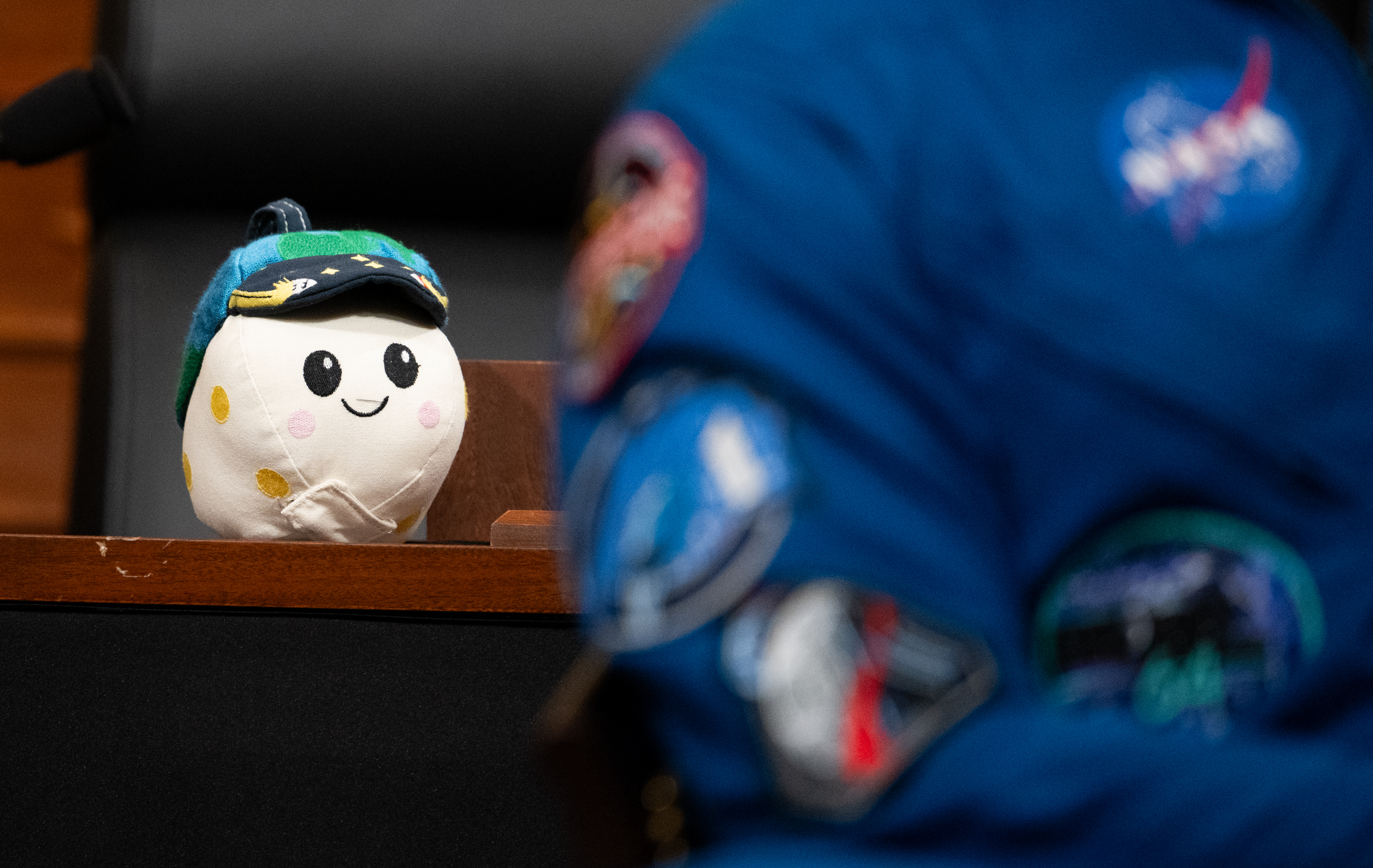
“Rise,” the Artemis II zero gravity indicator, is seen sitting on the dais as NASA astronauts Reid Wiseman, Victor Glover, and Christina Koch, and CSA (Canadian Space Agency) astronaut Jeremy Hansen speak with congressional staff, Tuesday, May 12, 2026, in Washington.
NASA’s Artemis II mission took Wiseman, Glover, Koch, and Hansen on a nearly 10-day journey around the Moon and back to Earth in April 2026.
See more photos from the crew’s visit to the U.S. Capitol.
Image credit: NASA/Joel Kowsky
Rise Goes to Washington
“Rise,” the Artemis II zero gravity indicator, is seen sitting on the dais as NASA astronauts Reid Wiseman, Victor Glover, and Christina Koch, and CSA (Canadian Space Agency) astronaut Jeremy Hansen speak with congressional staff, Tuesday, May 12, 2026, in Washington.
NASA’s Artemis II mission took Wiseman, Glover, Koch, and Hansen on a nearly 10-day journey around the Moon and back to Earth in April 2026.
See more photos from the crew’s visit to the U.S. Capitol.
Image credit: NASA/Joel Kowsky
Neanderthals treated a dental cavity by drilling into the tooth
Neanderthals treated a dental cavity by drilling into the tooth
Americans are increasingly open to using psychedelics for medical reasons
A survey found that more than 60 percent of respondents “strongly support” making psychedelics easier to study, reflecting a growing consensus that some could have therapeutic use