

Feed aggregator
Read an extract from The Selfish Gene by Richard Dawkins
Read an extract from The Selfish Gene by Richard Dawkins
Earth from Space: Batagaika Crater
Glaciers in the 'roof of the world' have suddenly started melting
Glaciers in the 'roof of the world' have suddenly started melting
Painting the Growing Season in the Maize Triangle
- Earth
- Earth Observatory
- Image of the Day
- EO Explorer
- Topics
- More Content
- About
Painting the Growing Season in the Maize Triangle
- Earth
- Earth Observatory
- Image of the Day
- EO Explorer
- Topics
- More Content
- About
NASA’s X-59 Prepares for First Supersonic Flight
6 min read
Preparations for Next Moonwalk Simulations Underway (and Underwater) NASA’s X-59 quiet supersonic research aircraft flies over Rogers Dry Lake near NASA’s Armstrong Flight Research Center in Edwards, California, on Tuesday, May 12, 2026. NASA continues expanding the aircraft’s flight envelope through a series of lower-altitude and slower-speed flights ahead of upcoming flight tests at speeds faster than the speed of sound.NASA/Jim Ross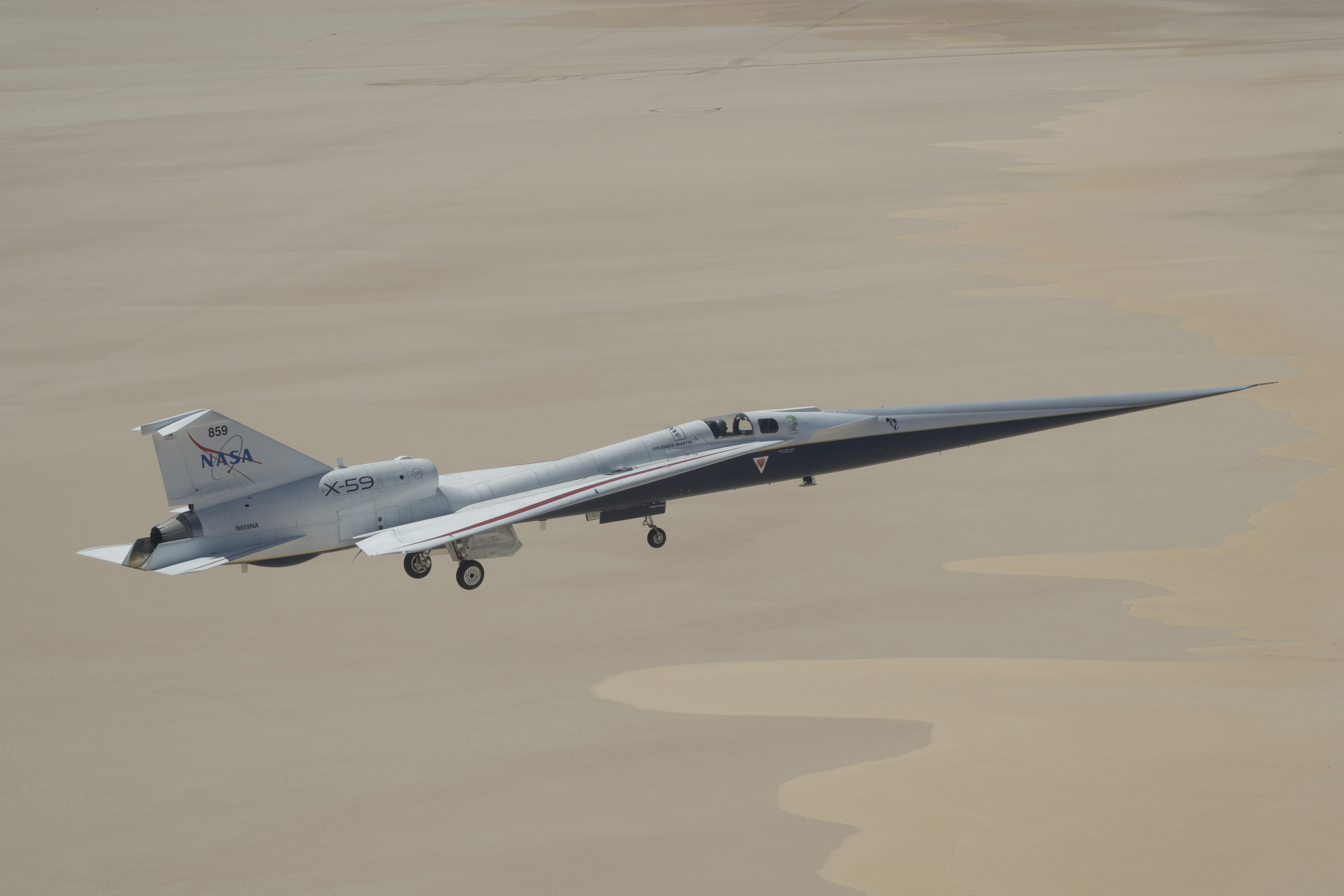
NASA’s X-59 quiet supersonic research aircraft is preparing for some of its most significant flights yet. The X-plane is about to begin a new block of test flights that will include its first time flying faster than the speed of sound and other mission-critical objectives.
“What comes next is the first time this one-of-a-kind aircraft will fly supersonic,” said Cathy Bahm, project manager for NASA’s Low Boom Flight Demonstrator. “We are starting toward the mission conditions test point that X-59 was designed for.”
After months of flights, the X-59 team reviewed their progress in late May and now look toward the aircraft’s next series of flight tests, including higher altitudes and faster speeds. This will give engineers a look at how the X-59 handles under required operational conditions for NASA’s Quesst mission to eventually gather data on quiet supersonic flight.
The team expects the X-59 to fly supersonic – over 630 mph – for the first time at approximately 43,000 feet altitude during a series of test flights in early June, a major milestone for the aircraft. After that, it will conduct a “mission conditions” flight, where it will hit Mach 1.4 (925 mph) at approximately 55,000 feet. That speed and altitude are important because they’re NASA’s performance targets for the X-59 to eventually fly over U.S. communities to demonstrate quiet supersonic flight and collect feedback data about the aircraft’s quiet sonic “thump” from the public.
While the X-59 is designed to fly at supersonic speeds without producing a loud sonic boom, these early flights are not yet intended to demonstrate its quiet supersonic capabilities. The X-59 will be accompanied by a traditional supersonic chase plane, so any quiet thump it produces in the current phase of testing will be obscured by louder, traditional sonic booms from the chase. In supersonic flights this summer, the chase aircraft will also be outfitted with a specialized shock-sensing probe to take initial measurements of the X-59’s shock waves.
Completed flightsThe X-59’s first block of flights successfully met several test goals, generating data for its team to analyze. After making its first flight in October 2025, it entered a scheduled period of maintenance before returning to the skies in March 2026. It has since completed 14 additional flights, marking milestones including:
- Its first gear swing, or the retraction of its landing gear to show off its sleek design for the first time.
- Reaching altitudes up to 43,000 feet and near supersonic speeds at Mach 0.95, approximately 627 mph.
- Marking its first dual-flight day and then making those increasingly routine as the X-59 team increased flight cadence.
- After a period of moving higher and faster, transitioning into lower and slower test flight conditions so engineers could gather information on the X-59’s behavior across a range of flight conditions.
Data collected during the X-59’s first block of test flights helped teams better assess critical systems, including fuel, hydraulics, environmental controls, and the eXternal Vision System, which is the aircraft’s unique series of cameras that feed into a monitor that allows the pilot to see forward instead of using a traditional windshield. Teams monitored how the aircraft behaved during takeoff, landing, and throughout flight. Strain gauges installed throughout the X-59 collected detailed information on the forces it experienced, and how its structure responded to them.
NASA’s X-59 quiet supersonic research aircraft flies above mountains near NASA’s Armstrong Flight Research Center in Edwards, California, on Tuesday, May 12, 2026. NASA continues expanding the aircraft’s flight envelope to evaluate how it performs across a range of flight conditions ahead of upcoming flight tests at speeds faster than the speed of sound in support of the agency’s Quesst mission.NASA/Jim Ross Next steps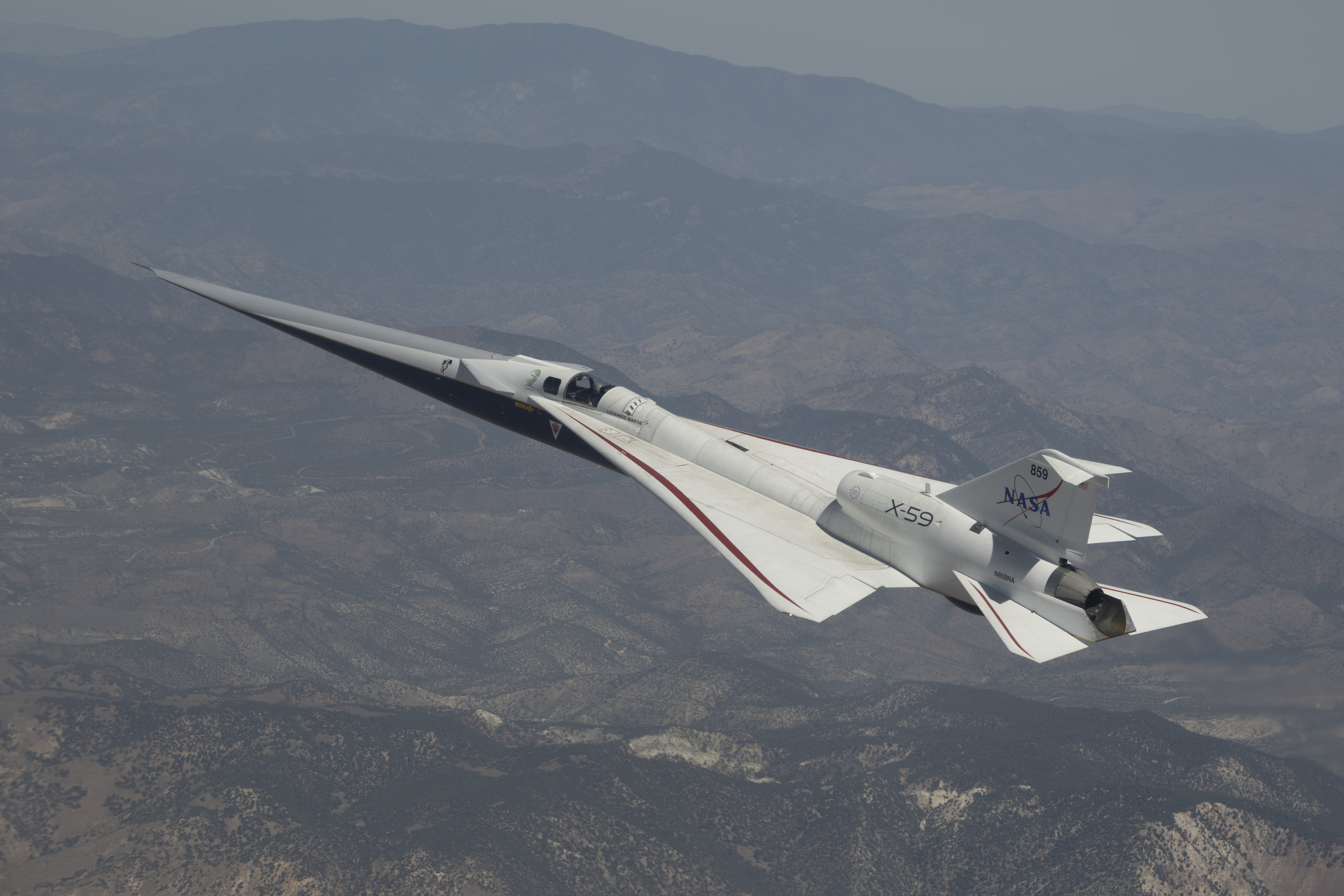
During the X-59’s upcoming flights, pilots will run through test points while engineers watch the aircraft’s performance — but now in supersonic flight conditions.
“Flying at supersonic speeds is a major milestone for the X-59 team,” Bahm said. “Every step of envelope expansion brings us closer to demonstrating the quiet supersonic capability that is at the heart of the Quesst mission. Completing the first mission-conditions flight is especially meaningful – it’s the moment where we begin validating the aircraft in the environment it was designed for.”
In addition to reaching mission condition during this block of flight tests, the X-59 will also achieve its maximum speed of Mach 1.6 (1,218 mph) and altitude of 60,000 feet.
But just because the aircraft can go that fast doesn’t mean it always will fly supersonic. Testing will continue, including a mix of subsonic and lower-altitude flights so the team can continue monitoring it in varied conditions.
“These flights not only deepen our confidence in the X-59’s performance – they mark our progression toward the future phases of the mission that will ultimately help shape the future of supersonic travel,” Bahm said.
All flights so far and in the upcoming test block are part of Phase 1 of the X-59’s Quesst mission, focused on proving the performance and airworthiness of the aircraft. Some of those flights will include early deployment of equipment, including a probe mounted to one of NASA’s F-15 research aircraft that can measure the X-59’s unique shock wave signature.
Data gathered during those early probing flights will allow engineers to prepare for a new stage of work set to begin later this year: Quesst Phase 2, when teams will begin to measure the aircraft’s supersonic flight signature to verify that it’s producing a quiet supersonic thump, as designed.
“Aviation pioneer Otto Lilienthal said, ‘To design a flying machine is nothing. To build one is something. But to fly is everything.’ The 15 X-59 flights we’ve accomplished since March have been everything to this team and the mission,” Bahm said. “Every flight has pushed the boundaries of what’s possible, steadily expanding the envelope and strengthening our confidence in the aircraft.”
But, she said, rather than focusing on past progress, the team is already looking ahead.
“As we look ahead to the upcoming flights, we’re poised to open the envelope even further – moving boldly toward the mission test point this aircraft was built to achieve,” Bahm said. “Flying supersonic and reaching these milestones isn’t just progress; it’s the realization of years of perseverance, innovation, and teamwork. Each step brings us closer to Phase 2, and to the future of commercial supersonic flight.”
Share Details Last Updated May 28, 2026 EditorDede DiniusContactNicolas Cholulanicolas.h.cholula@nasa.govLocationArmstrong Flight Research Center Related Terms Explore More 5 min read NASA Uses Mineralogical Marker to Understand Ancient Martian ClimateScientists analyzed 20 Martian samples collected by NASA’s Curiosity Rover and found that differences in…
Article 4 days ago 5 min read NASA Develops Sensor to Improve Firefighter Safety Article 5 days ago 4 min read Keeping NASA Flying: Ground Crews Ensure Aircraft Readiness Article 1 week ago Keep Exploring Discover More Topics From NASAArmstrong Flight Research Center
Ames Research Center
Glenn Research Center
Langley Research Center
NASA’s X-59 Prepares for First Supersonic Flight
6 min read
Preparations for Next Moonwalk Simulations Underway (and Underwater) NASA’s X-59 quiet supersonic research aircraft flies over Rogers Dry Lake near NASA’s Armstrong Flight Research Center in Edwards, California, on Tuesday, May 12, 2026. NASA continues expanding the aircraft’s flight envelope through a series of lower-altitude and slower-speed flights ahead of upcoming flight tests at speeds faster than the speed of sound.NASA/Jim RossNASA’s X-59 quiet supersonic research aircraft is preparing for some of its most significant flights yet. The X-plane is about to begin a new block of test flights that will include its first time flying faster than the speed of sound and other mission-critical objectives.
“What comes next is the first time this one-of-a-kind aircraft will fly supersonic,” said Cathy Bahm, project manager for NASA’s Low Boom Flight Demonstrator. “We are starting toward the mission conditions test point that X-59 was designed for.”
After months of flights, the X-59 team reviewed their progress in late May and now look toward the aircraft’s next series of flight tests, including higher altitudes and faster speeds. This will give engineers a look at how the X-59 handles under required operational conditions for NASA’s Quesst mission to eventually gather data on quiet supersonic flight.
The team expects the X-59 to fly supersonic – over 630 mph – for the first time at approximately 43,000 feet altitude during a series of test flights in early June, a major milestone for the aircraft. After that, it will conduct a “mission conditions” flight, where it will hit Mach 1.4 (925 mph) at approximately 55,000 feet. That speed and altitude are important because they’re NASA’s performance targets for the X-59 to eventually fly over U.S. communities to demonstrate quiet supersonic flight and collect feedback data about the aircraft’s quiet sonic “thump” from the public.
While the X-59 is designed to fly at supersonic speeds without producing a loud sonic boom, these early flights are not yet intended to demonstrate its quiet supersonic capabilities. The X-59 will be accompanied by a traditional supersonic chase plane, so any quiet thump it produces in the current phase of testing will be obscured by louder, traditional sonic booms from the chase. In supersonic flights this summer, the chase aircraft will also be outfitted with a specialized shock-sensing probe to take initial measurements of the X-59’s shock waves.
Completed flightsThe X-59’s first block of flights successfully met several test goals, generating data for its team to analyze. After making its first flight in October 2025, it entered a scheduled period of maintenance before returning to the skies in March 2026. It has since completed 14 additional flights, marking milestones including:
- Its first gear swing, or the retraction of its landing gear to show off its sleek design for the first time.
- Reaching altitudes up to 43,000 feet and near supersonic speeds at Mach 0.95, approximately 627 mph.
- Marking its first dual-flight day and then making those increasingly routine as the X-59 team increased flight cadence.
- After a period of moving higher and faster, transitioning into lower and slower test flight conditions so engineers could gather information on the X-59’s behavior across a range of flight conditions.
Data collected during the X-59’s first block of test flights helped teams better assess critical systems, including fuel, hydraulics, environmental controls, and the eXternal Vision System, which is the aircraft’s unique series of cameras that feed into a monitor that allows the pilot to see forward instead of using a traditional windshield. Teams monitored how the aircraft behaved during takeoff, landing, and throughout flight. Strain gauges installed throughout the X-59 collected detailed information on the forces it experienced, and how its structure responded to them.
NASA’s X-59 quiet supersonic research aircraft flies above mountains near NASA’s Armstrong Flight Research Center in Edwards, California, on Tuesday, May 12, 2026. NASA continues expanding the aircraft’s flight envelope to evaluate how it performs across a range of flight conditions ahead of upcoming flight tests at speeds faster than the speed of sound in support of the agency’s Quesst mission.NASA/Jim Ross Next stepsDuring the X-59’s upcoming flights, pilots will run through test points while engineers watch the aircraft’s performance — but now in supersonic flight conditions.
“Flying at supersonic speeds is a major milestone for the X-59 team,” Bahm said. “Every step of envelope expansion brings us closer to demonstrating the quiet supersonic capability that is at the heart of the Quesst mission. Completing the first mission-conditions flight is especially meaningful – it’s the moment where we begin validating the aircraft in the environment it was designed for.”
In addition to reaching mission condition during this block of flight tests, the X-59 will also achieve its maximum speed of Mach 1.6 (1,218 mph) and altitude of 60,000 feet.
But just because the aircraft can go that fast doesn’t mean it always will fly supersonic. Testing will continue, including a mix of subsonic and lower-altitude flights so the team can continue monitoring it in varied conditions.
“These flights not only deepen our confidence in the X-59’s performance – they mark our progression toward the future phases of the mission that will ultimately help shape the future of supersonic travel,” Bahm said.
All flights so far and in the upcoming test block are part of Phase 1 of the X-59’s Quesst mission, focused on proving the performance and airworthiness of the aircraft. Some of those flights will include early deployment of equipment, including a probe mounted to one of NASA’s F-15 research aircraft that can measure the X-59’s unique shock wave signature.
Data gathered during those early probing flights will allow engineers to prepare for a new stage of work set to begin later this year: Quesst Phase 2, when teams will begin to measure the aircraft’s supersonic flight signature to verify that it’s producing a quiet supersonic thump, as designed.
“Aviation pioneer Otto Lilienthal said, ‘To design a flying machine is nothing. To build one is something. But to fly is everything.’ The 15 X-59 flights we’ve accomplished since March have been everything to this team and the mission,” Bahm said. “Every flight has pushed the boundaries of what’s possible, steadily expanding the envelope and strengthening our confidence in the aircraft.”
But, she said, rather than focusing on past progress, the team is already looking ahead.
“As we look ahead to the upcoming flights, we’re poised to open the envelope even further – moving boldly toward the mission test point this aircraft was built to achieve,” Bahm said. “Flying supersonic and reaching these milestones isn’t just progress; it’s the realization of years of perseverance, innovation, and teamwork. Each step brings us closer to Phase 2, and to the future of commercial supersonic flight.”
Share Details Last Updated May 28, 2026 EditorDede DiniusContactNicolas Cholulanicolas.h.cholula@nasa.govLocationArmstrong Flight Research Center Related Terms Explore More 5 min read NASA Uses Mineralogical Marker to Understand Ancient Martian ClimateScientists analyzed 20 Martian samples collected by NASA’s Curiosity Rover and found that differences in…
Article 2 days ago 5 min read NASA Develops Sensor to Improve Firefighter Safety Article 3 days ago 4 min read Keeping NASA Flying: Ground Crews Ensure Aircraft Readiness Article 1 week ago Keep Exploring Discover More Topics From NASAArmstrong Flight Research Center
Ames Research Center
Glenn Research Center
Langley Research Center
JWST Studies a Dark and Airless Super-Earth
There's a planet out there called LHS 3844 b, orbiting a star about 48 light-years away. The Transiting Exoplanet Survey Satellite (TESS) found it in 2018 when the planet transited across the face of its star. The James Webb Space Telescope zxeroed in on the planet and found it to be a barren, rocky place with no atmosphere.
I Am Artemis: Daniel Stubbs
Listen to this audio excerpt from Daniel Stubbs, NASA aerospace engineer:
0:00 / 0:00
Your browser does not support the audio element.If you’ve driven through a cloud of dust and dirt that temporarily obscured your view, you’ve gotten a partial picture of a potential problem that NASA’s human landing systems for Artemis will face when they land on the Moon. Daniel Stubbs, an aerospace engineer with the Plume and Aero Environments team in the Spacecraft and Vehicle Systems office at NASA’s Marshall Space Flight Center in Huntsville, Alabama, studies and models the interaction between plumes of rocket exhaust and the regolith on the surface of the Moon, paving the way for crew safety and Artemis mission success.
Stubbs, a native of Trussville, Alabama, who earned a bachelor’s, master’s, and doctoral degree in aerospace engineering from Auburn University in Alabama, decided early in his college career he wanted to work for NASA, but he didn’t see a clear path at the time to reach his goal. In graduate school, he had the opportunity to work on plume-surface interaction modeling as part of a NASA Early Stage Innovations grant. Now, Stubbs is continuing some of the work he first started as a graduate student.
NASA’s Daniel Stubbs, seen here at the Lunar Regolith Terrain field at Marshall Space Flight Center, used his experience as a graduate student at in aerospace engineering at Auburn University modeling lunar regolith plumes into a position with NASA Marshall’s Plume and Aero Environments team working to characterize interactions between clouds of lunar regolith and commercial human landing systems. NASA/Charles Beason
NASA’s Apollo missions uncovered the risks lunar regolith presents to astronauts, spacecraft, spacesuits, and other assets on the Moon’s surface. Lunar regolith consists of meteoroids and micrometeoroids that, over millennia, have been ground up into razor-sharp, abrasive particles. Future lunar explorers and their landers, rovers, and vehicles will face similar challenges. Landers in development are larger, heavier, and incorporate more rocket engines than the Lunar Module that landed astronauts on the Moon during the Apollo missions of the 1960s and 1970s. And, unlike Apollo Lunar Modules that left descent stages on the Moon, the new lunar landers will take off directly from the surface using the same engines, thrusters, and other systems that they used for the initial landing. Accurate prediction of the plume-surface interaction between the systems and the lunar regolith during landing will help ensure the lander hardware can survive that environment, and that it is ready to take off to meet Orion and astronauts in lunar orbit to return safely home to Earth.
As the engines’ exhaust plumes interact with the Moon’s surface, they could erode the surface, potentially forming a crater and a large cloud of lunar regolith.”Daniel StuBBs
NASA aerospace engineer
“The dust and regolith plume can make it difficult for instruments on the landers to see the surface of the Moon,” Stubbs said. “If these instruments don’t report correct readings to the guidance computers, it could affect a lunar landing. Also, when a lander takes off from the surface to return astronauts to Orion, the lunar regolith blown away from the landing site by the rocket plumes could damage scientific instruments or other assets that have been deployed on the surface of the Moon.”
NASA’s Human Landing System program is spearheading a major ground-based study of rocket engine exhaust plumes and lunar dust and regolith. Testing in the 60-foot space simulator chamber at NASA’s Langley Research Center in Hampton, Virginia, will represent the conditions the lunar landers may experience, and create, when landing on the Moon.
The research will help engineers understand the aerodynamic forces landers will experience during descent and ascent from the surface, heating at a lander’s base, the potential for a large lunar lander to tip over as a result of crater formation or surface instability.
When the dust settles and NASA has landed American astronauts on the Moon in 2028, Daniel Stubbs will be able to reflect on his work modeling plumes of lunar dust and regolith that rocket engines will stir up.
Through the Artemis program, NASA will send astronauts to explore the Moon for scientific discovery, economic benefits, and to build the foundation for the first crewed missions to Mars – for the benefit of all.
For more on NASA’s human landing systems, visit:
https://www.nasa.gov/humans-in-space/human-landing-system/
About the AuthorBeverly PerryCommunications Strategist Share Details Last Updated May 29, 2026 EditorLee MohonContactCorinne M. Beckingercorinne.m.beckinger@nasa.govLocationMarshall Space Flight Center Related Terms Explore More 7 min read NASA’s 2026 Lunabotics: Winning Student Teams Engineering Lunar Future Article 3 days ago 3 min read Jaclyn Kagey Shapes Humanity’s Return to the Moon Article 4 days ago 2 min read NASA Seeks Interest for Artemis Mission CubeSats Article 1 week ago Keep Exploring Discover More Topics From NASAMissions
Humans in Space
Climate Change
Solar System
I Am Artemis: Daniel Stubbs
Listen to this audio excerpt from Daniel Stubbs, NASA aerospace engineer:
0:00 / 0:00
Your browser does not support the audio element.If you’ve driven through a cloud of dust and dirt that temporarily obscured your view, you’ve gotten a partial picture of a potential problem that NASA’s human landing systems for Artemis will face when they land on the Moon. Daniel Stubbs, an aerospace engineer with the Plume and Aero Environments team in the Spacecraft and Vehicle Systems office at NASA’s Marshall Space Flight Center in Huntsville, Alabama, studies and models the interaction between plumes of rocket exhaust and the regolith on the surface of the Moon, paving the way for crew safety and Artemis mission success.
Stubbs, a native of Trussville, Alabama, who earned a bachelor’s, master’s, and doctoral degree in aerospace engineering from Auburn University in Alabama, decided early in his college career he wanted to work for NASA, but he didn’t see a clear path at the time to reach his goal. In graduate school, he had the opportunity to work on plume-surface interaction modeling as part of a NASA Early Stage Innovations grant. Now, Stubbs is continuing some of the work he first started as a graduate student.
NASA’s Daniel Stubbs, seen here at the Lunar Regolith Terrain field at Marshall Space Flight Center, used his experience as a graduate student at in aerospace engineering at Auburn University modeling lunar regolith plumes into a position with NASA Marshall’s Plume and Aero Environments team working to characterize interactions between clouds of lunar regolith and commercial human landing systems. NASA/Charles BeasonNASA’s Apollo missions uncovered the risks lunar regolith presents to astronauts, spacecraft, spacesuits, and other assets on the Moon’s surface. Lunar regolith consists of meteoroids and micrometeoroids that, over millennia, have been ground up into razor-sharp, abrasive particles. Future lunar explorers and their landers, rovers, and vehicles will face similar challenges. Landers in development are larger, heavier, and incorporate more rocket engines than the Lunar Module that landed astronauts on the Moon during the Apollo missions of the 1960s and 1970s. And, unlike Apollo Lunar Modules that left descent stages on the Moon, the new lunar landers will take off directly from the surface using the same engines, thrusters, and other systems that they used for the initial landing. Accurate prediction of the plume-surface interaction between the systems and the lunar regolith during landing will help ensure the lander hardware can survive that environment, and that it is ready to take off to meet Orion and astronauts in lunar orbit to return safely home to Earth.
As the engines’ exhaust plumes interact with the Moon’s surface, they could erode the surface, potentially forming a crater and a large cloud of lunar regolith.”Daniel StuBBs
NASA aerospace engineer
“The dust and regolith plume can make it difficult for instruments on the landers to see the surface of the Moon,” Stubbs said. “If these instruments don’t report correct readings to the guidance computers, it could affect a lunar landing. Also, when a lander takes off from the surface to return astronauts to Orion, the lunar regolith blown away from the landing site by the rocket plumes could damage scientific instruments or other assets that have been deployed on the surface of the Moon.”
NASA’s Human Landing System program is spearheading a major ground-based study of rocket engine exhaust plumes and lunar dust and regolith. Testing in the 60-foot space simulator chamber at NASA’s Langley Research Center in Hampton, Virginia, will represent the conditions the lunar landers may experience, and create, when landing on the Moon.
The research will help engineers understand the aerodynamic forces landers will experience during descent and ascent from the surface, heating at a lander’s base, the potential for a large lunar lander to tip over as a result of crater formation or surface instability.
When the dust settles and NASA has landed American astronauts on the Moon in 2028, Daniel Stubbs will be able to reflect on his work modeling plumes of lunar dust and regolith that rocket engines will stir up.
Through the Artemis program, NASA will send astronauts to explore the Moon for scientific discovery, economic benefits, and to build the foundation for the first crewed missions to Mars – for the benefit of all.
For more on NASA’s human landing systems, visit:
https://www.nasa.gov/humans-in-space/human-landing-system/
About the AuthorBeverly PerryCommunications Strategist Share Details Last Updated May 29, 2026 EditorLee MohonContactCorinne M. Beckingercorinne.m.beckinger@nasa.govLocationMarshall Space Flight Center Related Terms Explore More 7 min read NASA’s 2026 Lunabotics: Winning Student Teams Engineering Lunar Future Article 3 days ago 3 min read Jaclyn Kagey Shapes Humanity’s Return to the Moon Article 4 days ago 2 min read NASA Seeks Interest for Artemis Mission CubeSats Article 1 week ago Keep Exploring Discover More Topics From NASAMissions
Humans in Space
Climate Change
Solar System
Earthly Hors d'oeuvres For Hungry Red Dwarfs
We know that stars can engulf planets because stars that swell up to become red giants overwhelm any close-in planets. The Sun will do this to Venus, Mercury, and possibly Earth in a few billion years. But research shows that it can happen when low-mass stars first enter the main sequence. Lithium gives it away.
New Landsat Science Team Holds First In-Person Meeting
- Landsat Home
- Missions
- News
- Data
- Benefits
- Outreach
- Multimedia
- About
- Search
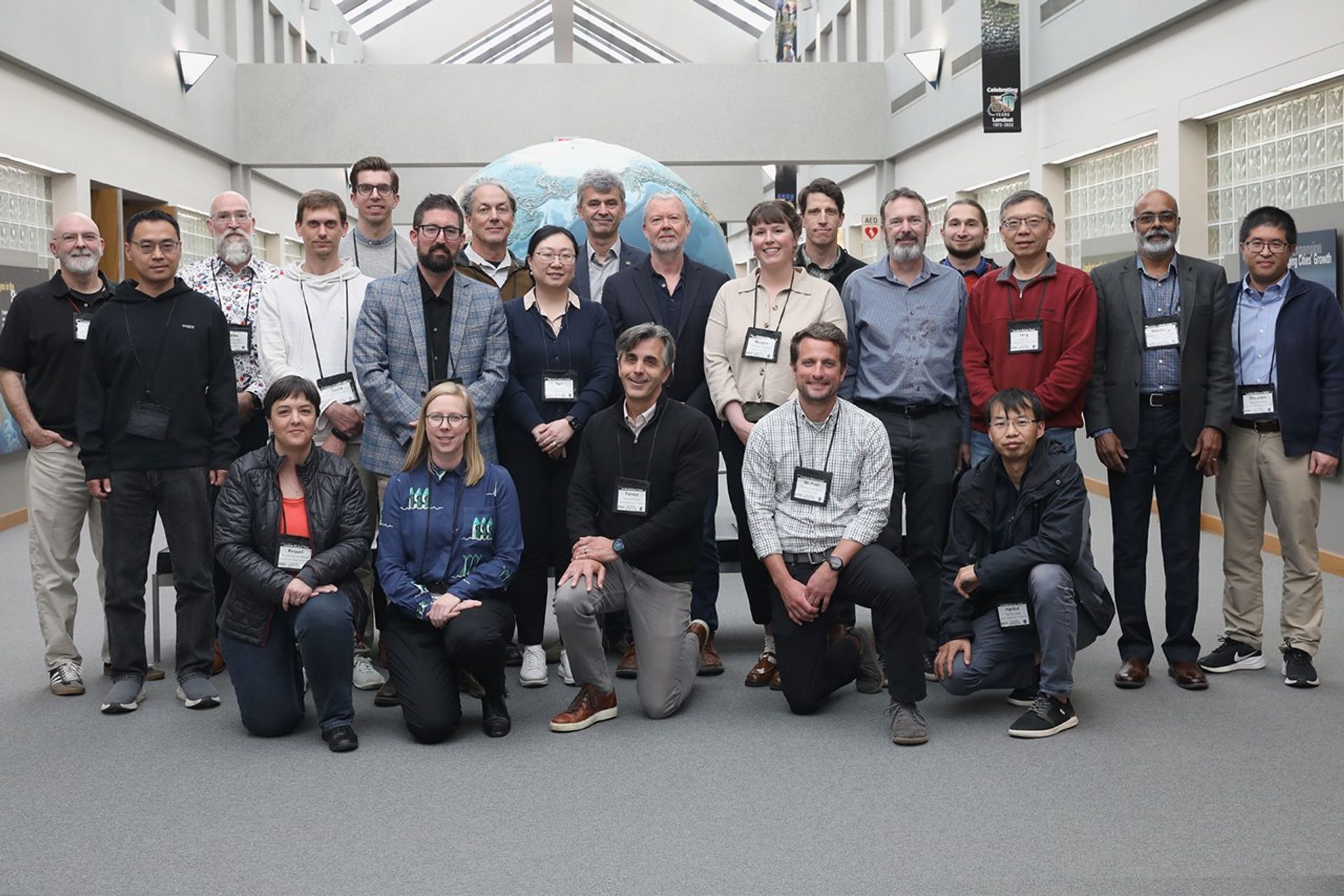
Front Row: Raquel De Los Reyes, Courtney Bright, Forrest Melton, Michael Campbell , Hankui Zhang
Standing: Greg Vaughan, Lin Yan, Mike Wulder, David Frantz, Kyle Knipper, Nimrod Carmon, Dean Hively, Yun Yang, Peter Strobl, David Roy, Morgan Crowley, Ned Bair, Phillip Dennison, Ryan O’Shea, Feng Gao, Medhavy Thankappan, Zhuosen Wang. Not pictured: Martha Anderson, Kimberlee Baldry, Eric Vermote. USGS
From May 5 to 7, the 2026–2030 Landsat Science Team met for their first in-person meeting at the Earth Resources Observation and Science (EROS) Center in Sioux Falls, SD. The three-day event, co-moderated by Landsat 8, 9, and 10 Project Scientist Chris Neigh, allowed leaders from USGS and NASA to begin work on a vision for the upcoming five-year period.
Attendees shared their current work and a vision for the future of the Landsat program. Participants received comprehensive status updates on the upcoming Landsat 10 project, the ongoing interagency and international collaboration on the Harmonized Landsat and Sentinel-2 (HLS) data products, and detailed plans for Collection 3 (C3).
Throughout the event, team members representing funded, international, and federal programs showcased the far-reaching impact of Landsat data across various Earth science disciplines, spanning snow cover mapping, atmospheric correction, water quality monitoring, evapotranspiration, agricultural applications, volcanic monitoring, and more.
The meeting culminated in focused breakout sessions, where experts drafted vital recommendations across four key technical areas to guide future mission data processing:
Surface ReflectanceThe surface reflectance working group identified several priorities, including topography and adjacency corrections, Bidirectional Reflectance Distribution Function (BRDF) correction, and enhanced cloud masking with consistent approaches for HLS data products. Key recommendations included incorporating CMIX2 cloud masking results into future collections and mapping out C3 toolkit dependencies for user-applied corrections.
Temperature and EmissivityDiscussions on land surface temperature and emissivity centered heavily on maintaining archive consistency. The team recommended either maintaining native resolution or standardizing to 60 meters, with additional testing specifically for volcano studies. They endorsed using ASTER GED/CAMEL emissivity datasets and preparing for Landsat 10’s five thermal bands through ECOSTRESS comparison. They also called for better quantification of how atmospheric inputs impact harmonization efforts through collaboration between NASA’s Jet Propulsion Laboratory (JPL), RIT, and EROS.
Aquatic ReflectanceAquatic reflectance experts raised critical concerns regarding Landsat 10’s planned 18-day repeat cycle, noting that it severely limits the monitoring of highly dynamic processes such as harmful algal blooms. The group called for increased investment in validation infrastructure for inland waters coordinated with international CEOS efforts. They also strongly advised against pixelwise algorithm switching to prevent data discontinuities and emphasized the need for strict compliance with CEOS Aquatic Reflectance V2.0 standards.
Projections, Tiling, and the PixelFinally, the group reviewing projection and tiling endorsed the USGS pixel grid nesting plan (which spans 10, 15, 20, 30, 60, and 120 meters). However, they recommended further trade analysis to optimize pixel replication errors, manage storage costs, and ensure proper coordination with Sentinel-2 Next Generation. The working group strongly recommended that if these complex grid issues remain unresolved, the program should maintain the Collection 2 approach (UTM and polar stereographic) while continuing to refine Analysis Ready Data (ARD) products for CONUS, Hawaii, and Alaska.
The recommendations generated during these breakout sessions created a roadmap for the new Landsat Science Team, ensuring that the global scientific community continues to receive high-quality, actionable Earth observation data through the end of the decade.
Explore More
New Landsat Science Team Holds First In-Person Meeting
3 min read
From May 5 to 7, the Landsat Science Team meeting convened at the Earth Resources Observation and Science (EROS) Center…
May 28, 2026 ArticleA Shift in What’s Shaping U.S. Landscapes
5 min read
Wild disturbances are on the rise, while land disturbed by human activity has been decreasing.
May 28, 2026 ArticleReleased: NASA Goddard Issues Draft Request for Proposal for the Landsat 10 Spacecraft
2 min read
The Landsat 10 Spacecraft Draft Request for Proposal (DRFP) is available for review via SAM.gov.
May 27, 2026 Article1
2
3
…
311
Next
New Landsat Science Team Holds First In-Person Meeting
- Landsat Home
- Missions
- News
- Data
- Benefits
- Outreach
- Multimedia
- About
- Search
Front Row: Raquel De Los Reyes, Courtney Bright, Forrest Melton, Michael Campbell , Hankui Zhang
Standing: Greg Vaughan, Lin Yan, Mike Wulder, David Frantz, Kyle Knipper, Nimrod Carmon, Dean Hively, Yun Yang, Peter Strobl, David Roy, Morgan Crowley, Ned Bair, Phillip Dennison, Ryan O’Shea, Feng Gao, Medhavy Thankappan, Zhuosen Wang. Not pictured: Martha Anderson, Kimberlee Baldry, Eric Vermote. USGS
From May 5 to 7, the 2026–2030 Landsat Science Team met for their first in-person meeting at the Earth Resources Observation and Science (EROS) Center in Sioux Falls, SD. The three-day event, co-moderated by Landsat 8, 9, and 10 Project Scientist Chris Neigh, allowed leaders from USGS and NASA to begin work on a vision for the upcoming five-year period.
Attendees shared their current work and a vision for the future of the Landsat program. Participants received comprehensive status updates on the upcoming Landsat 10 project, the ongoing interagency and international collaboration on the Harmonized Landsat and Sentinel-2 (HLS) data products, and detailed plans for Collection 3 (C3).
Throughout the event, team members representing funded, international, and federal programs showcased the far-reaching impact of Landsat data across various Earth science disciplines, spanning snow cover mapping, atmospheric correction, water quality monitoring, evapotranspiration, agricultural applications, volcanic monitoring, and more.
The meeting culminated in focused breakout sessions, where experts drafted vital recommendations across four key technical areas to guide future mission data processing:
Surface ReflectanceThe surface reflectance working group identified several priorities, including topography and adjacency corrections, Bidirectional Reflectance Distribution Function (BRDF) correction, and enhanced cloud masking with consistent approaches for HLS data products. Key recommendations included incorporating CMIX2 cloud masking results into future collections and mapping out C3 toolkit dependencies for user-applied corrections.
Temperature and EmissivityDiscussions on land surface temperature and emissivity centered heavily on maintaining archive consistency. The team recommended either maintaining native resolution or standardizing to 60 meters, with additional testing specifically for volcano studies. They endorsed using ASTER GED/CAMEL emissivity datasets and preparing for Landsat 10’s five thermal bands through ECOSTRESS comparison. They also called for better quantification of how atmospheric inputs impact harmonization efforts through collaboration between NASA’s Jet Propulsion Laboratory (JPL), RIT, and EROS.
Aquatic ReflectanceAquatic reflectance experts raised critical concerns regarding Landsat 10’s planned 18-day repeat cycle, noting that it severely limits the monitoring of highly dynamic processes such as harmful algal blooms. The group called for increased investment in validation infrastructure for inland waters coordinated with international CEOS efforts. They also strongly advised against pixelwise algorithm switching to prevent data discontinuities and emphasized the need for strict compliance with CEOS Aquatic Reflectance V2.0 standards.
Projections, Tiling, and the PixelFinally, the group reviewing projection and tiling endorsed the USGS pixel grid nesting plan (which spans 10, 15, 20, 30, 60, and 120 meters). However, they recommended further trade analysis to optimize pixel replication errors, manage storage costs, and ensure proper coordination with Sentinel-2 Next Generation. The working group strongly recommended that if these complex grid issues remain unresolved, the program should maintain the Collection 2 approach (UTM and polar stereographic) while continuing to refine Analysis Ready Data (ARD) products for CONUS, Hawaii, and Alaska.
The recommendations generated during these breakout sessions created a roadmap for the new Landsat Science Team, ensuring that the global scientific community continues to receive high-quality, actionable Earth observation data through the end of the decade.
Explore More
New Landsat Science Team Holds First In-Person Meeting
3 min read
From May 5 to 7, the Landsat Science Team meeting convened at the Earth Resources Observation and Science (EROS) Center…
May 28, 2026 ArticleA Shift in What’s Shaping U.S. Landscapes
5 min read
Wild disturbances are on the rise, while land disturbed by human activity has been decreasing.
May 28, 2026 ArticleReleased: NASA Goddard Issues Draft Request for Proposal for the Landsat 10 Spacecraft
2 min read
The Landsat 10 Spacecraft Draft Request for Proposal (DRFP) is available for review via SAM.gov.
May 27, 2026 Article1
2
3
…
311
Next
Curiosity Blog, Sols 4900-4907: Pasadena, We Have a Drill Sample!
- Curiosity Home
- Science
- News and Features
- Multimedia
- Mars Missions
- Mars Home
3 min read
Curiosity Blog, Sols 4900-4907: Pasadena, We Have a Drill Sample! NASA’s Mars rover Curiosity acquired this image, the first color look of the “Campo Marte” drill hole, on May 16, 2026. The rover captured the image using its right Mast Camera (Mastcam) — one of a pair of cameras mounted on the head atop the rover’s mast — on Sol 4897, or Martian day 4,897 of the Mars Science Laboratory mission, at 18:05:49 UTC. NASA/JPL-Caltech/MSSS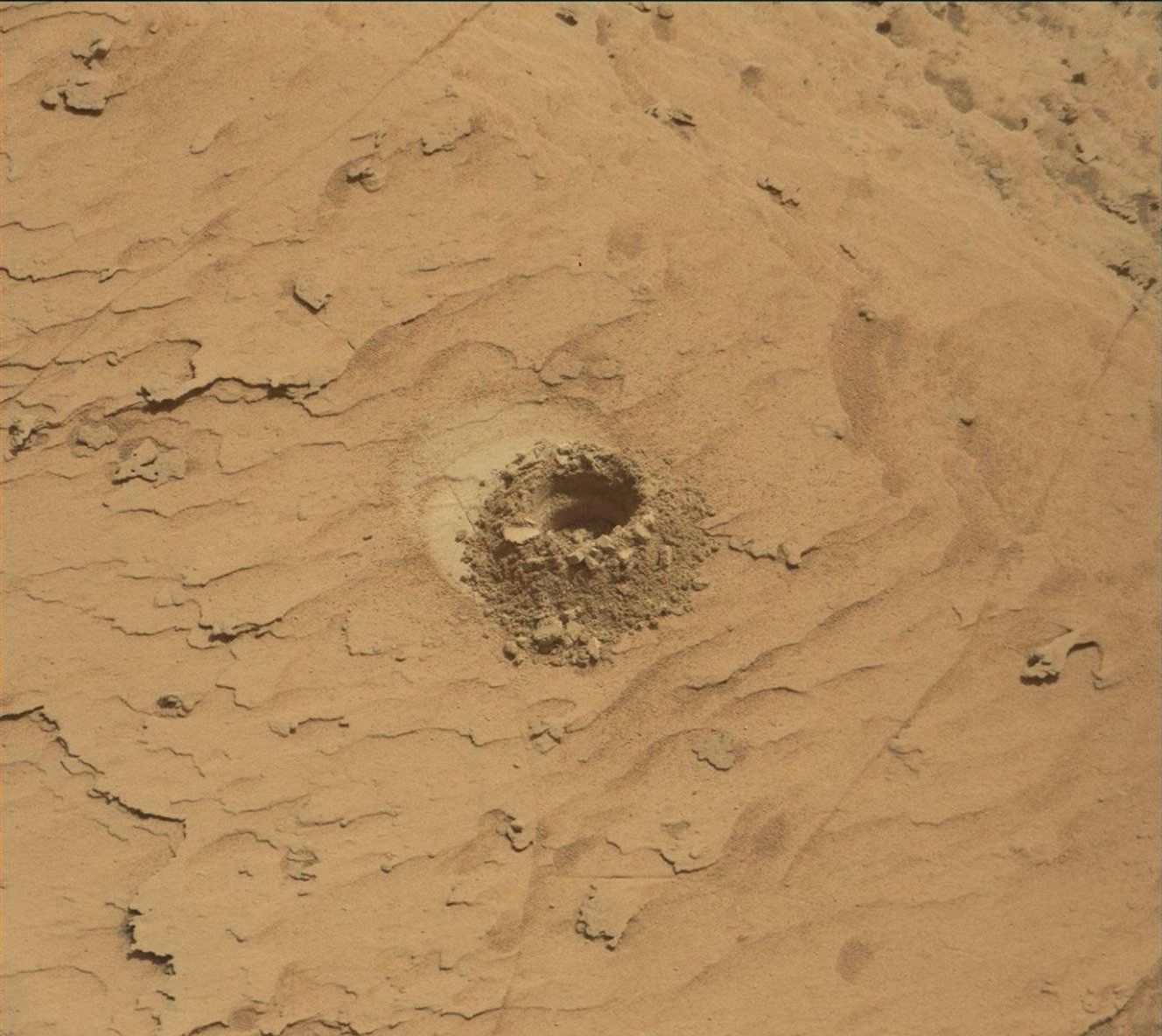
Written by Abigail Fraeman, Deputy Project Scientist at Jet Propulsion Laboratory, California Institute of Technology
Earth planning date: Friday, May 22, 2026
I spent this past weekend eagerly awaiting the downlink from Mars that would show us the results of Curiosity’s drill attempt at “Campo Marte.” A few weeks ago, when Curiosity drilled the “Atacama” block, it had been quite the surprise to see the post-drill images arrive on Earth that showed the rover picking up the entire Atacama block along with the drill. After freeing ourselves from this pesky passenger, the team carefully assessed all the telemetry and imaging data we had collected to understand why the entanglement happened and to mitigate the chance of it happening again. We concluded it would be ok to try another drill in this general area, and nearby Campo Marte looked like a great target because it had all the right geologic features and was significantly bigger than Atacama. What a delight it was to see images, like the Mastcam shown above, streaming down on Saturday that showed Curiosity had successfully retracted its drill from the rock and collected some sample to analyze this time around!
On Monday, the team looked at the pinches of drilled rock powder, or portions, that we had dropped as a test onto part of Curiosity, an element of our standard post-drilling activities. You can also take a look at what we saw — here’s a picture of the rover before we did anything, and here’s what we saw after we delivered the first portion, and then the second portion. Can you make out the little bit of powder that appears between the sample deliveries? This test is important to make sure we’ll provide good samples to the analytical instruments inside our chassis, CheMin and SAM. Beyond their science operations value, I also love seeing these images because they remind me how powerful our laboratory instruments are. With just a little pinch of powder, no more than tens of milligrams, these laboratories can reveal incredibly detailed information about the composition of Martian rocks and give us huge new insights into the planet’s past climate and habitability.
We concluded the portions from Campo Marte looked similar to the drilled samples we’ve previously analyzed, so we went ahead and delivered one portion to CheMin in Monday’s plan. We use the results from CheMin to tailor our analysis of the samples with SAM, so after we saw the first CheMin results in the middle of the week, we made decisions about how to run SAM and then planned to analyze four portions with that instrument in today’s plan. We think we’ll be nearly out of sample after that, but it’s hard to know for sure (we only drilled to a depth of 28 millimeters here, about 1.1 inches, rather than our usual 35 millimeters, or 1.38 inches). To learn more, in this upcoming weekend’s plan, we’ll also repeat the sample drop-off test we did right after drilling, which will show us how many portions were left. We do a ton of testing with Curiosity’s twin drill here on Earth, but it’s always insightful to see how our hardware performs on Mars under the unique geologic and environmental conditions of that entirely different world.
-
Want to read more posts from the Curiosity team?
-
Want to learn more about Curiosity’s science instruments?
Article
1 week ago
3 min read Curiosity Blog, Sols 4886-4892: Ingenuity and Perseverance, Curiosity Style
Article
2 weeks ago
3 min read Curiosity Blog, Sols 4879-4885: Struggle at Atacama
Article
3 weeks ago
Keep Exploring Discover More Topics From NASA Mars
Mars is the fourth planet from the Sun, and the seventh largest. It’s the only planet we know of inhabited…
All Mars Resources
Explore this collection of Mars images, videos, resources, PDFs, and toolkits. Discover valuable content designed to inform, educate, and inspire,…
Rover Basics
Each robotic explorer sent to the Red Planet has its own unique capabilities driven by science. Many attributes of a…
Mars Exploration: Science Goals
The key to understanding the past, present or future potential for life on Mars can be found in NASA’s four…
Curiosity Blog, Sols 4900-4907: Pasadena, We Have a Drill Sample!
- Curiosity Home
- Science
- News and Features
- Multimedia
- Mars Missions
- Mars Home
3 min read
Curiosity Blog, Sols 4900-4907: Pasadena, We Have a Drill Sample! NASA’s Mars rover Curiosity acquired this image, the first color look of the “Campo Marte” drill hole, on May 16, 2026. The rover captured the image using its right Mast Camera (Mastcam) — one of a pair of cameras mounted on the head atop the rover’s mast — on Sol 4897, or Martian day 4,897 of the Mars Science Laboratory mission, at 18:05:49 UTC. NASA/JPL-Caltech/MSSSWritten by Abigail Fraeman, Deputy Project Scientist at Jet Propulsion Laboratory, California Institute of Technology
Earth planning date: Friday, May 22, 2026
I spent this past weekend eagerly awaiting the downlink from Mars that would show us the results of Curiosity’s drill attempt at “Campo Marte.” A few weeks ago, when Curiosity drilled the “Atacama” block, it had been quite the surprise to see the post-drill images arrive on Earth that showed the rover picking up the entire Atacama block along with the drill. After freeing ourselves from this pesky passenger, the team carefully assessed all the telemetry and imaging data we had collected to understand why the entanglement happened and to mitigate the chance of it happening again. We concluded it would be ok to try another drill in this general area, and nearby Campo Marte looked like a great target because it had all the right geologic features and was significantly bigger than Atacama. What a delight it was to see images, like the Mastcam shown above, streaming down on Saturday that showed Curiosity had successfully retracted its drill from the rock and collected some sample to analyze this time around!
On Monday, the team looked at the pinches of drilled rock powder, or portions, that we had dropped as a test onto part of Curiosity, an element of our standard post-drilling activities. You can also take a look at what we saw — here’s a picture of the rover before we did anything, and here’s what we saw after we delivered the first portion, and then the second portion. Can you make out the little bit of powder that appears between the sample deliveries? This test is important to make sure we’ll provide good samples to the analytical instruments inside our chassis, CheMin and SAM. Beyond their science operations value, I also love seeing these images because they remind me how powerful our laboratory instruments are. With just a little pinch of powder, no more than tens of milligrams, these laboratories can reveal incredibly detailed information about the composition of Martian rocks and give us huge new insights into the planet’s past climate and habitability.
We concluded the portions from Campo Marte looked similar to the drilled samples we’ve previously analyzed, so we went ahead and delivered one portion to CheMin in Monday’s plan. We use the results from CheMin to tailor our analysis of the samples with SAM, so after we saw the first CheMin results in the middle of the week, we made decisions about how to run SAM and then planned to analyze four portions with that instrument in today’s plan. We think we’ll be nearly out of sample after that, but it’s hard to know for sure (we only drilled to a depth of 28 millimeters here, about 1.1 inches, rather than our usual 35 millimeters, or 1.38 inches). To learn more, in this upcoming weekend’s plan, we’ll also repeat the sample drop-off test we did right after drilling, which will show us how many portions were left. We do a ton of testing with Curiosity’s twin drill here on Earth, but it’s always insightful to see how our hardware performs on Mars under the unique geologic and environmental conditions of that entirely different world.
-
Want to read more posts from the Curiosity team?
-
Want to learn more about Curiosity’s science instruments?
Article
1 week ago
3 min read Curiosity Blog, Sols 4886-4892: Ingenuity and Perseverance, Curiosity Style
Article
2 weeks ago
3 min read Curiosity Blog, Sols 4879-4885: Struggle at Atacama
Article
3 weeks ago
Keep Exploring Discover More Topics From NASA Mars
Mars is the fourth planet from the Sun, and the seventh largest. It’s the only planet we know of inhabited…
All Mars Resources
Explore this collection of Mars images, videos, resources, PDFs, and toolkits. Discover valuable content designed to inform, educate, and inspire,…
Rover Basics
Each robotic explorer sent to the Red Planet has its own unique capabilities driven by science. Many attributes of a…
Mars Exploration: Science Goals
The key to understanding the past, present or future potential for life on Mars can be found in NASA’s four…
White House proposes new rules giving political appointees final approval on research grants
These proposed Office of Management and Budget regulations would render the federal research grant review process opaque
Close Encounter: Jupiter and Venus
The two brightest planets in our sky will be less than 2 degrees apart on June 9th at sunset.
The post Close Encounter: Jupiter and Venus appeared first on Sky & Telescope.