

Feed aggregator
NASA Drains 66-Million-Gallon Reservoir to Upgrade Critical Water System
A powerful but mostly unseen water system at work during rocket engine tests at NASA’s Stennis Space Center near Bay St. Louis, Mississippi, underwent an upgrade in May.
Crews brought the High Pressure Industrial Water Facility’s 66-million-gallon reservoir to its lowest level since construction in the 1960s by pumping out about 40 million gallons of water over three days.
This brought the reservoir, measuring 800 feet in diameter and about 25 feet deep, down to the level needed to replace a 3,000 gallon per minute pump that supplies water for fire suppression to the test complexes.
before after The High Pressure Industrial Water Facility’s 66-million-gallon reservoir is shown at NASA’s Stennis Space Center on May 7 as work gets underway to remove about 40 million gallons of water to complete upgrades.NASA/Danny Nowlin The reservoir is shown at NASA’s Stennis Space Center on May 11 at its lowest level since construction in the 1960s. Crews lowered the reservoir by pumping out about 40 million gallons over three days to complete upgrades. NASA/Danny Nowlin beforeafter The High Pressure Industrial Water Facility’s 66-million-gallon reservoir is shown at NASA’s Stennis Space Center on May 7 as work gets underway to remove about 40 million gallons of water to complete upgrades.NASA/Danny Nowlin The reservoir is shown at NASA’s Stennis Space Center on May 11 at its lowest level since construction in the 1960s. Crews lowered the reservoir by pumping out about 40 million gallons over three days to complete upgrades. NASA/Danny Nowlin before afterBefore and After
Lowering the ReservoirMay 7, 2026 – May 11, 2026
CurtainToggle2-Up Image Details BEFORE (SSC-20260507-s00393) The High Pressure Industrial Water Facility’s 66-million-gallon reservoir is shown at NASA’s Stennis Space Center on May 7 as work gets underway to remove about 40 million gallons of water to complete upgrades. AFTER (SSC-20260511-s00420) The reservoir is shown at NASA’s Stennis Space Center on May 11 at its lowest level since construction in the 1960s. Crews lowered the reservoir by pumping out about 40 million gallons over three days to complete upgrades.For a typical RS-25 engine test supporting NASA’s Artemis missions, about five million gallons of water flow from the reservoir to the Fred Haise Test Stand. The water cools the engine exhaust that reaches up to 6,000 degrees Fahrenheit, supplies water to the flame deflector and helps with sound suppression during a test.
A hot fire test produces critical data to ensure an engine is safe and reliable.
before after A view from the Thad Cochran Test Stand at NASA’s Stennis Space Center on May 7 shows the High Pressure Industrial Water Facility’s 66-milion-gallon reservoir as work gets underway to remove about 40 million gallons of water to complete upgrades.NASA/Danny Nowlin A view from the Thad Cochran Test Stand at NASA’s Stennis Space Center on May 11 shows the reservoir at its lowest level since construction in the 1960s. Crews lowered the reservoir by pumping out 40 million gallons over three days to complete upgrades.NASA/Danny Nowlin beforeafter A view from the Thad Cochran Test Stand at NASA’s Stennis Space Center on May 7 shows the High Pressure Industrial Water Facility’s 66-milion-gallon reservoir as work gets underway to remove about 40 million gallons of water to complete upgrades.NASA/Danny Nowlin A view from the Thad Cochran Test Stand at NASA’s Stennis Space Center on May 11 shows the reservoir at its lowest level since construction in the 1960s. Crews lowered the reservoir by pumping out 40 million gallons over three days to complete upgrades.NASA/Danny Nowlin before afterBefore and After
A View from the Thad Cochran Test StandMay 7, 2026 – May 11, 2026
CurtainToggle2-Up Image Details BEFORE (SSC-20260507-s00395) – A view from the Thad Cochran Test Stand at NASA’s Stennis Space Center on May 7 shows the High Pressure Industrial Water Facility’s 66-milion-gallon reservoir as work gets underway to remove about 40 million gallons of water to complete upgrades. AFTER (SSC-20260511-s00423) – A view from the Thad Cochran Test Stand at NASA’s Stennis Space Center on May 11 shows the reservoir at its lowest level since construction in the 1960s. Crews lowered the reservoir by pumping out 40 million gallons over three days to complete upgrades.The water used during a test is recycled for future use as it flows back into the on-site canal system, before returning to the reservoir.
“The old pump that supported fire suppression for testing reached its end of life, so this project promotes reliability with the upgrade,” said Justin Lucas, NASA project manager.
In addition to a new pump, the piping has improved to a 14-inch-to-12-inch configuration.
Picture trying to drink water from a big cup using a tiny coffee stirrer. This is similar to how the previous pump relied on piping that narrowed from 14 inches down to 10 inches before reaching the pump. The water moved but required more work from the system.
“With the upgraded configuration, less velocity inside the pipe with the same amount of flow equals a longer lasting pipe, pump, and hardware,” said Lucas.
A work crew lays suction piping on May 6 for the portable pumps that will help remove about 40 million gallons of water from the High Pressure Industrial Water Facility’s 66-million-gallon reservoir to complete upgrades at NASA’s Stennis Space Center. Floating buoys keep the suction piping suspended above the reservoir floor, preventing it from drawing in mud. This also protects the integrity of the reservoir bed by ensuring no underlying material is removed.NASA/Danny Nowlin A drone image shows water flowing to the Thad Cochran Test Stand at NASA’s Stennis Space Center on May 7. Crews lowered the High Pressure Industrial Water Facility’s 66 million gallon reservoir to its lowest level since the 1960s by pumping out about 40 million gallons over three days to complete upgrades.NASA/Jason Peterson A drone image shows the High Pressure Industrial Water Facility’s 66-million-gallon reservoir at NASA’s Stennis Space Center on May 7. Crews lowered the reservoir to its lowest level since the 1960s by pumping out about 40 million gallons over three days to complete upgrades.NASA/Jason Peterson A work crew uses a lift to remove the main isolation valve to complete upgrades at NASA’s Stennis Space Center’s High Pressure Industrial Water Facility on May 11. The isolation valve isolates the water supply during work to replace the 3,000 gallon per minute pump that supplies water for fire suppression to the test complexes.NASA/Danny Nowlin The High Pressure Industrial Water Facility’s 66-million-gallon reservoir is shown with about 40 million gallons of water removed at NASA’s Stennis Space Center on May 11. Crews lowered the reservoir to its lowest level since construction in the 1960s to complete upgrades.NASA/Danny Nowlin The High Pressure Industrial Water Facility’s 66-million-gallon reservoir is shown with about 40 million gallons of water removed at NASA’s Stennis Space Center on May 11. Crews lowered the reservoir to its lowest level since construction in the 1960s to complete upgrades.NASA/Danny NowlinThe water system upgrades have strengthened a vital system that supports NASA’s Artemis missions, along with commercial companies operating at NASA Stennis, home to America’s largest multiuser propulsion test site.
NASA Drains 66-Million-Gallon Reservoir to Upgrade Critical Water System
A powerful but mostly unseen water system at work during rocket engine tests at NASA’s Stennis Space Center near Bay St. Louis, Mississippi, underwent an upgrade in May.
Crews brought the High Pressure Industrial Water Facility’s 66-million-gallon reservoir to its lowest level since construction in the 1960s by pumping out about 40 million gallons of water over three days.
This brought the reservoir, measuring 800 feet in diameter and about 25 feet deep, down to the level needed to replace a 3,000 gallon per minute pump that supplies water for fire suppression to the test complexes.
before after The High Pressure Industrial Water Facility’s 66-million-gallon reservoir is shown at NASA’s Stennis Space Center on May 7 as work gets underway to remove about 40 million gallons of water to complete upgrades.NASA/Danny Nowlin The reservoir is shown at NASA’s Stennis Space Center on May 11 at its lowest level since construction in the 1960s. Crews lowered the reservoir by pumping out about 40 million gallons over three days to complete upgrades. NASA/Danny Nowlin beforeafter The High Pressure Industrial Water Facility’s 66-million-gallon reservoir is shown at NASA’s Stennis Space Center on May 7 as work gets underway to remove about 40 million gallons of water to complete upgrades.NASA/Danny Nowlin The reservoir is shown at NASA’s Stennis Space Center on May 11 at its lowest level since construction in the 1960s. Crews lowered the reservoir by pumping out about 40 million gallons over three days to complete upgrades. NASA/Danny Nowlin before afterBefore and After
Lowering the ReservoirMay 7, 2026 – May 11, 2026
CurtainToggle2-Up Image Details BEFORE (SSC-20260507-s00393) The High Pressure Industrial Water Facility’s 66-million-gallon reservoir is shown at NASA’s Stennis Space Center on May 7 as work gets underway to remove about 40 million gallons of water to complete upgrades. AFTER (SSC-20260511-s00420) The reservoir is shown at NASA’s Stennis Space Center on May 11 at its lowest level since construction in the 1960s. Crews lowered the reservoir by pumping out about 40 million gallons over three days to complete upgrades.For a typical RS-25 engine test supporting NASA’s Artemis missions, about five million gallons of water flow from the reservoir to the Fred Haise Test Stand. The water cools the engine exhaust that reaches up to 6,000 degrees Fahrenheit, supplies water to the flame deflector and helps with sound suppression during a test.
A hot fire test produces critical data to ensure an engine is safe and reliable.
before after A view from the Thad Cochran Test Stand at NASA’s Stennis Space Center on May 7 shows the High Pressure Industrial Water Facility’s 66-milion-gallon reservoir as work gets underway to remove about 40 million gallons of water to complete upgrades.NASA/Danny Nowlin A view from the Thad Cochran Test Stand at NASA’s Stennis Space Center on May 11 shows the reservoir at its lowest level since construction in the 1960s. Crews lowered the reservoir by pumping out 40 million gallons over three days to complete upgrades.NASA/Danny Nowlin beforeafter A view from the Thad Cochran Test Stand at NASA’s Stennis Space Center on May 7 shows the High Pressure Industrial Water Facility’s 66-milion-gallon reservoir as work gets underway to remove about 40 million gallons of water to complete upgrades.NASA/Danny Nowlin A view from the Thad Cochran Test Stand at NASA’s Stennis Space Center on May 11 shows the reservoir at its lowest level since construction in the 1960s. Crews lowered the reservoir by pumping out 40 million gallons over three days to complete upgrades.NASA/Danny Nowlin before afterBefore and After
A View from the Thad Cochran Test StandMay 7, 2026 – May 11, 2026
CurtainToggle2-Up Image Details BEFORE (SSC-20260507-s00395) – A view from the Thad Cochran Test Stand at NASA’s Stennis Space Center on May 7 shows the High Pressure Industrial Water Facility’s 66-milion-gallon reservoir as work gets underway to remove about 40 million gallons of water to complete upgrades. AFTER (SSC-20260511-s00423) – A view from the Thad Cochran Test Stand at NASA’s Stennis Space Center on May 11 shows the reservoir at its lowest level since construction in the 1960s. Crews lowered the reservoir by pumping out 40 million gallons over three days to complete upgrades.The water used during a test is recycled for future use as it flows back into the on-site canal system, before returning to the reservoir.
“The old pump that supported fire suppression for testing reached its end of life, so this project promotes reliability with the upgrade,” said Justin Lucas, NASA project manager.
In addition to a new pump, the piping has improved to a 14-inch-to-12-inch configuration.
Picture trying to drink water from a big cup using a tiny coffee stirrer. This is similar to how the previous pump relied on piping that narrowed from 14 inches down to 10 inches before reaching the pump. The water moved but required more work from the system.
“With the upgraded configuration, less velocity inside the pipe with the same amount of flow equals a longer lasting pipe, pump, and hardware,” said Lucas.
A work crew lays suction piping on May 6 for the portable pumps that will help remove about 40 million gallons of water from the High Pressure Industrial Water Facility’s 66-million-gallon reservoir to complete upgrades at NASA’s Stennis Space Center. Floating buoys keep the suction piping suspended above the reservoir floor, preventing it from drawing in mud. This also protects the integrity of the reservoir bed by ensuring no underlying material is removed.NASA/Danny Nowlin A drone image shows water flowing to the Thad Cochran Test Stand at NASA’s Stennis Space Center on May 7. Crews lowered the High Pressure Industrial Water Facility’s 66 million gallon reservoir to its lowest level since the 1960s by pumping out about 40 million gallons over three days to complete upgrades.NASA/Jason Peterson A drone image shows the High Pressure Industrial Water Facility’s 66-million-gallon reservoir at NASA’s Stennis Space Center on May 7. Crews lowered the reservoir to its lowest level since the 1960s by pumping out about 40 million gallons over three days to complete upgrades.NASA/Jason Peterson A work crew uses a lift to remove the main isolation valve to complete upgrades at NASA’s Stennis Space Center’s High Pressure Industrial Water Facility on May 11. The isolation valve isolates the water supply during work to replace the 3,000 gallon per minute pump that supplies water for fire suppression to the test complexes.NASA/Danny Nowlin The High Pressure Industrial Water Facility’s 66-million-gallon reservoir is shown with about 40 million gallons of water removed at NASA’s Stennis Space Center on May 11. Crews lowered the reservoir to its lowest level since construction in the 1960s to complete upgrades.NASA/Danny Nowlin The High Pressure Industrial Water Facility’s 66-million-gallon reservoir is shown with about 40 million gallons of water removed at NASA’s Stennis Space Center on May 11. Crews lowered the reservoir to its lowest level since construction in the 1960s to complete upgrades.NASA/Danny NowlinThe water system upgrades have strengthened a vital system that supports NASA’s Artemis missions, along with commercial companies operating at NASA Stennis, home to America’s largest multiuser propulsion test site.
Asteroid Dirt is "Fluffier" Than We Thought
The strength of gravity is different on every body in the solar system. Whether it's the crushing weight of Jupiter or the miniscule pull of a small asteroid, this fundamental force of physics still has a major impact on the material those bodies are made up of. A new paper from researchers at the University of Duisburg-Essen and the German Aerospace Center (DLR) showcases just how different it can be by letting planetary simulants freefall inside a giant drop tower and measuring how “fluffy” the space dirt got.
NASA Says Farewell to MAVEN Mars Mission, Hosts Media Call Today
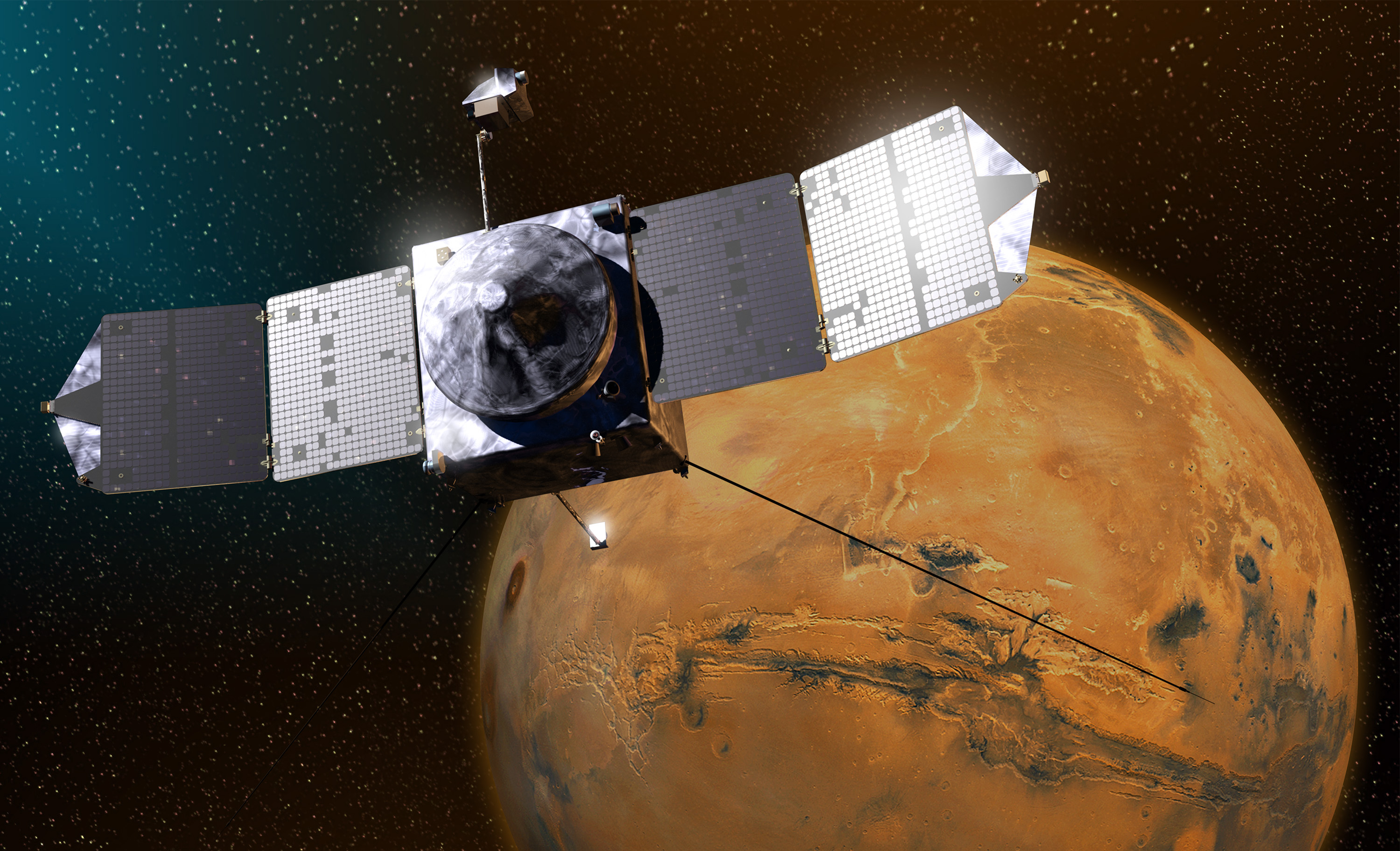
The first mission devoted to observing the Martian atmosphere and its evolution, NASA’s MAVEN (Mars Atmosphere and Volatile Evolution), has ended after more than 11 years in orbit at Mars and a decade beyond its primary, one-year mission. The spacecraft was heard last on Dec. 6, when it experienced an unexpected loss of signal after it passed behind the Red Planet.
NASA will host a media teleconference at 2 p.m. EDT today, Wednesday, June 3, to discuss MAVEN’s achievements.
The agency convened an anomaly review board in February to evaluate recovery efforts and assess the spacecraft’s probable current state. The review board has determined that the MAVEN spacecraft is not recoverable, and it is no longer capable of performing its science and data relay mission, which is consistent with the mission team’s findings.
Telemetry from MAVEN prior to the spacecraft’s passage behind Mars in December showed all subsystems working normally. After the spacecraft emerged, NASA’s Deep Space Network (DSN) did not observe a signal. A brief fragment of telemetry data from analysis of radio signals recorded by the DSN’s open-loop receivers indicated the spacecraft was in safe mode and rotating at an unusually high rate when it emerged from behind Mars, indicating a disruption in MAVEN’s orbit trajectory. The review board concluded that due to this rotation, the batteries on the spacecraft had drained, causing the communications system to lose power and rendering MAVEN in an unrecoverable state.
These preliminary findings do not address a potential root cause for the anomaly, which still is being investigated. The review board is expected to provide its final report later this year. NASA has begun the official process of decommissioning the MAVEN mission, following standard procedures to archive the full mission dataset for the science and exploration communities.
“The science MAVEN has given us is key to informing what kind of radiation protection and safety measures we must take before sending humans to Mars,” said Louise Prockter, director of the Planetary Science Division at NASA Headquarters in Washington. “The data collected from MAVEN will continue to provide valuable insight into Mars for decades to come.”
Launched in November 2013, the MAVEN mission explored the Red Planet’s upper atmosphere, ionosphere, and interactions with the Sun to explore the loss of the Martian atmosphere to space. Understanding atmospheric loss gives scientists insight into the history of the planet’s atmosphere and climate, liquid water, and planetary habitability.
“The MAVEN mission has truly advanced our understanding of the Martian atmosphere and evolution. This dataset has had a tremendous impact on the field,” said Shannon Curry, MAVEN’s principal investigator and a researcher at the Laboratory for Atmospheric and Space Physics at the University of Colorado Boulder. “Our science team is exceptionally proud of all of these amazing discoveries.”
Sun’s impact on Mars
One of MAVEN’s first major results was that the erosion of Mars’ atmosphere increases significantly during solar storms. The team studied how the solar wind, which is a stream of charged particles continually streaming from the Sun, and solar storms continually strip away Mars’ atmosphere, as well as how this process played a key role in altering the Martian climate from a potentially habitable world to today’s cold, arid planet. The MAVEN mission made unprecedented strides in advancing our understanding of how the Sun and space weather affect Mars, as it was the only spacecraft that could simultaneously take measurements of both the Sun and the Martian atmospheric response.
Martian light shows
The MAVEN mission discovered several types of auroras that light up when energetic particles plunge into the atmosphere, bombarding gases and making them glow. The MAVEN team showed that protons create new kinds of auroras at Mars. On Earth, proton auroras only occur in very small regions near the poles, whereas at Mars they can occur everywhere.
Mars’ atmosphere sputters into space
To better understand how Mars lost most of its atmosphere, MAVEN measured atmospheric sputtering for the first time at any planet. The team did this by observing argon, which is a noble gas, meaning it rarely reacts with other constituents in the Martian atmosphere. The only significant way it can be removed is by atmospheric sputtering, a process where ions crash into the Martian atmosphere at high enough speeds that they splash gas molecules out of the atmosphere, much like doing a cannonball into a pool. The team used 11 years of data to reveal the presence of sputtered argon at high altitudes in the exact locations that the energetic particles crashed into the atmosphere, showing sputtering in real time.
Understanding Mars’ dusty secrets
In 2018, a series of dust storms created a dust cloud so large that it enveloped the Red Planet. The MAVEN team studied how this “global” dust storm affected Mars’ upper atmosphere to understand how these events affected the escape of water to space. It confirmed that heating from dust storms can loft water molecules far higher into the atmosphere than usual, leading to a sudden surge in water lost to space.
Chasing comets
In addition to Martian science, MAVEN contributed to NASA’s effort to observe comet 3I/ATLAS at Mars. Over the course of 10 days last year, the MAVEN team designed a new observing campaign to capture 3I/ATLAS by taking multiple images of the comet in several wavelengths, much like using various filters on a camera. Then it snapped high-resolution UV images to identify the hydrogen coming from the comet. By studying a combination of these images, scientists can identify a variety of molecules and better understand the comet’s composition and history.
During the mission’s lifetime, MAVEN’s science team produced more than 800 publications, and additional publications are planned.
In addition to science, the MAVEN spacecraft was an instrumental player in NASA’s Mars Relay Network, communicating data from Mars rovers to Earth. It also holds the solar system record for most data relayed from another planet in a single day.
Audio of today’s media teleconference will stream on the agency’s website at:
Participants in the teleconference include:
- Tiffany Morgan, director, Mars Exploration Program, Planetary Science Division, NASA Headquarters
- Mike Moreau, project manager, MAVEN, NASA’s Goddard Space Flight Center, Greenbelt, Maryland
- Greg Heckler, deputy program manager for Capability Development, SCaN (Space Communications and Navigation), NASA Headquarters
- Shannon Curry, MAVEN principal investigator, Laboratory for Atmospheric and Space Physics at the University of Colorado Boulder
To ask questions by phone, media must RSVP no later than 12 p.m. to: sarah.frazier@nasa.gov. NASA’s media accreditation policy is available online.
The MAVEN mission is part of NASA’s Mars Exploration Program portfolio. The mission’s principal investigator is based at the Laboratory for Atmospheric and Space Physics at the University of Colorado Boulder, which also is responsible for managing science operations and public outreach and communications. NASA’s Goddard Space Flight Center in Greenbelt, Maryland, manages the MAVEN mission. Lockheed Martin Space built the spacecraft and is responsible for mission operations. NASA’s Jet Propulsion Laboratory in Southern California provides navigation and Deep Space Network support.
For more information about NASA’s Mars Exploration Program, visit:
https://science.nasa.gov/planetary-science/programs/mars-exploration
-end-
Karen Fox / Alana Johnson
Headquarters, Washington
240-285-5155 / 202-672-4780
karen.c.fox@nasa.gov / alana.r.johnson@nasa.gov
Sarah Frazier
Goddard Space Flight Center, Greenbelt, Md.
202-853-7191
sarah.frazier@nasa.gov
NASA Says Farewell to MAVEN Mars Mission, Hosts Media Call Today
The first mission devoted to observing the Martian atmosphere and its evolution, NASA’s MAVEN (Mars Atmosphere and Volatile Evolution), has ended after more than 11 years in orbit at Mars and a decade beyond its primary, one-year mission. The spacecraft was heard last on Dec. 6, when it experienced an unexpected loss of signal after it passed behind the Red Planet.
NASA will host a media teleconference at 2 p.m. EDT today, Wednesday, June 3, to discuss MAVEN’s achievements.
The agency convened an anomaly review board in February to evaluate recovery efforts and assess the spacecraft’s probable current state. The review board has determined that the MAVEN spacecraft is not recoverable, and it is no longer capable of performing its science and data relay mission, which is consistent with the mission team’s findings.
Telemetry from MAVEN prior to the spacecraft’s passage behind Mars in December showed all subsystems working normally. After the spacecraft emerged, NASA’s Deep Space Network (DSN) did not observe a signal. A brief fragment of telemetry data from analysis of radio signals recorded by the DSN’s open-loop receivers indicated the spacecraft was in safe mode and rotating at an unusually high rate when it emerged from behind Mars, indicating a disruption in MAVEN’s orbit trajectory. The review board concluded that due to this rotation, the batteries on the spacecraft had drained, causing the communications system to lose power and rendering MAVEN in an unrecoverable state.
These preliminary findings do not address a potential root cause for the anomaly, which still is being investigated. The review board is expected to provide its final report later this year. NASA has begun the official process of decommissioning the MAVEN mission, following standard procedures to archive the full mission dataset for the science and exploration communities.
“The science MAVEN has given us is key to informing what kind of radiation protection and safety measures we must take before sending humans to Mars,” said Louise Prockter, director of the Planetary Science Division at NASA Headquarters in Washington. “The data collected from MAVEN will continue to provide valuable insight into Mars for decades to come.”
Launched in November 2013, the MAVEN mission explored the Red Planet’s upper atmosphere, ionosphere, and interactions with the Sun to explore the loss of the Martian atmosphere to space. Understanding atmospheric loss gives scientists insight into the history of the planet’s atmosphere and climate, liquid water, and planetary habitability.
“The MAVEN mission has truly advanced our understanding of the Martian atmosphere and evolution. This dataset has had a tremendous impact on the field,” said Shannon Curry, MAVEN’s principal investigator and a researcher at the Laboratory for Atmospheric and Space Physics at the University of Colorado Boulder. “Our science team is exceptionally proud of all of these amazing discoveries.”
Sun’s impact on Mars
One of MAVEN’s first major results was that the erosion of Mars’ atmosphere increases significantly during solar storms. The team studied how the solar wind, which is a stream of charged particles continually streaming from the Sun, and solar storms continually strip away Mars’ atmosphere, as well as how this process played a key role in altering the Martian climate from a potentially habitable world to today’s cold, arid planet. The MAVEN mission made unprecedented strides in advancing our understanding of how the Sun and space weather affect Mars, as it was the only spacecraft that could simultaneously take measurements of both the Sun and the Martian atmospheric response.
Martian light shows
The MAVEN mission discovered several types of auroras that light up when energetic particles plunge into the atmosphere, bombarding gases and making them glow. The MAVEN team showed that protons create new kinds of auroras at Mars. On Earth, proton auroras only occur in very small regions near the poles, whereas at Mars they can occur everywhere.
Mars’ atmosphere sputters into space
To better understand how Mars lost most of its atmosphere, MAVEN measured atmospheric sputtering for the first time at any planet. The team did this by observing argon, which is a noble gas, meaning it rarely reacts with other constituents in the Martian atmosphere. The only significant way it can be removed is by atmospheric sputtering, a process where ions crash into the Martian atmosphere at high enough speeds that they splash gas molecules out of the atmosphere, much like doing a cannonball into a pool. The team used 11 years of data to reveal the presence of sputtered argon at high altitudes in the exact locations that the energetic particles crashed into the atmosphere, showing sputtering in real time.
Understanding Mars’ dusty secrets
In 2018, a series of dust storms created a dust cloud so large that it enveloped the Red Planet. The MAVEN team studied how this “global” dust storm affected Mars’ upper atmosphere to understand how these events affected the escape of water to space. It confirmed that heating from dust storms can loft water molecules far higher into the atmosphere than usual, leading to a sudden surge in water lost to space.
Chasing comets
In addition to Martian science, MAVEN contributed to NASA’s effort to observe comet 3I/ATLAS at Mars. Over the course of 10 days last year, the MAVEN team designed a new observing campaign to capture 3I/ATLAS by taking multiple images of the comet in several wavelengths, much like using various filters on a camera. Then it snapped high-resolution UV images to identify the hydrogen coming from the comet. By studying a combination of these images, scientists can identify a variety of molecules and better understand the comet’s composition and history.
During the mission’s lifetime, MAVEN’s science team produced more than 800 publications, and additional publications are planned.
In addition to science, the MAVEN spacecraft was an instrumental player in NASA’s Mars Relay Network, communicating data from Mars rovers to Earth. It also holds the solar system record for most data relayed from another planet in a single day.
Audio of today’s media teleconference will stream on the agency’s website at:
Participants in the teleconference include:
- Tiffany Morgan, director, Mars Exploration Program, Planetary Science Division, NASA Headquarters
- Mike Moreau, project manager, MAVEN, NASA’s Goddard Space Flight Center, Greenbelt, Maryland
- Greg Heckler, deputy program manager for Capability Development, SCaN (Space Communications and Navigation), NASA Headquarters
- Shannon Curry, MAVEN principal investigator, Laboratory for Atmospheric and Space Physics at the University of Colorado Boulder
To ask questions by phone, media must RSVP no later than 12 p.m. to: sarah.frazier@nasa.gov. NASA’s media accreditation policy is available online.
The MAVEN mission is part of NASA’s Mars Exploration Program portfolio. The mission’s principal investigator is based at the Laboratory for Atmospheric and Space Physics at the University of Colorado Boulder, which also is responsible for managing science operations and public outreach and communications. NASA’s Goddard Space Flight Center in Greenbelt, Maryland, manages the MAVEN mission. Lockheed Martin Space built the spacecraft and is responsible for mission operations. NASA’s Jet Propulsion Laboratory in Southern California provides navigation and Deep Space Network support.
For more information about NASA’s Mars Exploration Program, visit:
https://science.nasa.gov/planetary-science/programs/mars-exploration
-end-
Karen Fox / Alana Johnson
Headquarters, Washington
240-285-5155 / 202-672-4780
karen.c.fox@nasa.gov / alana.r.johnson@nasa.gov
Sarah Frazier
Goddard Space Flight Center, Greenbelt, Md.
202-853-7191
sarah.frazier@nasa.gov
Keto diet shows real promise for anorexia recovery
Keto diet shows real promise for anorexia recovery
Edison may not have been the first to record the human voice, new evidence suggests
Could a predecessor to the phonograph have appeared a century earlier?
The reason why elevators feel slow—and the surprising math behind everyday life
From slow elevators to perfectly split pizza, math quietly explains the quirks of everyday life
Ötzi the murdered Iceman’s microbiome is still active
More than 5,300 years after Ötzi’s death, researchers identified yeasts in his gut microbiome that continue to be active—and they used it to make bread
Typhoon Jangmi
- Earth
- Earth Observatory
- Image of the Day
- EO Explorer
- Topics
- More Content
- About
Typhoon Jangmi
- Earth
- Earth Observatory
- Image of the Day
- EO Explorer
- Topics
- More Content
- About
#795: Expanse Science
This is the final episode of our series on sci-fi universes. And this week we will tackle “The Expanse”. Now we’ve got fusion drives, Proto-matter, g-forces! Listen up, belta lawda! Let's look at the science of our own possible (with a side of aliens) future.
Show Notes- Science and physics of The Expanse
- Fraser’s favorite sci-fi series
- Strong recommendation for the show and books
- Epstein Drive and fusion propulsion
- Artificial gravity through acceleration
- Metallic hydrogen and advanced spacecraft technology
- Newtonian space combat and high-G effects
- Ring gates and interstellar travel
- Realistic human adaptation to life in space
- Asteroids as weapons of mass destruction
- Earth, Mars, and Belter politics
- Belter culture and low-gravity living
- The protomolecule and precursor civilizations
- Themes of humanity’s future in space
- Future discussions: Battlestar Galactica and Dungeon Crawler Carl
- Upcoming episodes: Oceans and Organics on Mars, Big Rockets and the Moon Race, and summer reading recommendations.
Fraser Cain:
AstronomyCast Episode 795 The Science of the Expanse. Welcome to AstronomyCast, our weekly facts-based journey through the Cosmos, where we help you understand not only what we know, but how we know what we know. I'm Fraser Cain, I'm the publisher of Universe Today.
With me, as always, is Dr. Pamela Gay, a senior scientist for the Planetary Science Institute, and the director of Cosmoguest. Hey Pamela, how you doing?
Dr. Pamela Gay:
I am experiencing sunlight streaming radically into my studio in a way I don't get to see on Mondays because I've usually fled at this point of the day.
Fraser Cain:
Right. Yeah, we're usually done recording, but here we are later on in the afternoon and you're getting that afternoon sunlight coming through. It's true.
Feels good.
Dr. Pamela Gay:
Yeah.
Fraser Cain:
This is the final episode of our series on sci-fi universes, and this week we will tackle the Expanse. Now, we've got fusion drives, protomatter, and G-forces. Listen up, Beltalota.
All right, now last week I said that Stargate was objectively the best sci-fi series ever done. I was wrong. I was wrong.
I take it back. The Expanse. The Expanse is objectively, without question, the best sci-fi television series ever made.
So say we all.
Dr. Pamela Gay:
Okay. And where does Babylon 5 go?
Fraser Cain:
Oh, we're not going to do the Science of Babylon 5, are we?
Dr. Pamela Gay:
We are not. We absolutely are not. No.
Fraser Cain:
And we're not going to do Battlestar Galactica.
Dr. Pamela Gay:
And I did hear you say, so say we all is a fabulous phrase, by the way. That one just needs incorporated into life more often.
Fraser Cain:
Yeah, no, I won't do a Science of Battlestar Galactica, because then I'll just go off in rage. But I'm going to re-watch it. Once we finish Stargate.
Dr. Pamela Gay:
Just don't watch the last season.
Fraser Cain:
I won't watch the last season, yeah. It's too bad that they never were able to finish Battlestar Galactica.
Dr. Pamela Gay:
Right, exactly.
Fraser Cain:
It would have been much better if they'd had a final season to that show, but they never did. Anyway, we're not talking about Battlestar Galactica. We're talking about The Expanse.
So The Expanse is so good.
Dr. Pamela Gay:
It really is. Now, reading the books also, just those of you who are like, nah, get through the first third of the first book. And it's also the first third of the first TV season.
It starts slow because this is a space opera, people. And there are a lot of characters to introduce. There are a lot of concepts to introduce.
And oh my goodness, the journey you you will be taken on. Yes, you just have to, you know, a roller coaster, the part where you're going up and it's going chunk, chunk, chunk, chunk, chunk, chunk, chunk, and you're just like, why? Why did I wait in line five hours to go chomp, chomp, chomp, chomp, chomp?
Yeah, it's it's going to be worth it. It's going to be worth it.
Fraser Cain:
Yes.
Dr. Pamela Gay:
And this is not a 30 second ride. Yeah.
Fraser Cain:
And the TV show, like, what is it? Six seasons? It is just it is phenomenal.
Yeah. Such a good show. And what's nice is in the previous episodes, we've talked about the science of things, but a lot of it's just hand waving nonsense.
In this, we've only got a couple of hand wavy things and the rest is just real science taken to the extremes. And that part makes it just beautiful. So, um, so we, I guess let's start with as, as we have been, let's start with transportation.
Um, and let's start with, let's start with the terrible, so the terribly named Epstein Drive.
Dr. Pamela Gay:
Yeah.
Fraser Cain:
What an unfortunate name. Oh, if they only didn't know him.
Dr. Pamela Gay:
But the Rosanante.
Fraser Cain:
Yeah. Yeah. So let's talk about Epstein Drives.
What is it?
Dr. Pamela Gay:
I don't remember.
Fraser Cain:
Okay. It's a direct fusion drive.
Dr. Pamela Gay:
Thank you.
Fraser Cain:
Yeah. Yeah. So this is, this is a real kind of system.
And you know, we talk about this idea of like having fusion energy, fusion plants, and you've got either the, you know, the giant tokamak that's being built in, in Europe right now. And, you know, there's, uh, there are the laser ignition facilities that are happening in the U S but there is another style of fusion that if, if you're willing to sort of walk the fine line between a thermonuclear weapon, because like we know how to do nuclear fusion.
Dr. Pamela Gay:
We do.
Fraser Cain:
It's a, it's a fusion bomb.
Dr. Pamela Gay:
It just tends to be a bit faster than we can control.
Fraser Cain:
Yeah. You just don't get the energy out in a nice controlled way. So direct fusion is this sort of halfway point where you are sort of detonating small amounts of fusion and you're using that as a, um, as a propulsion system. And in fact, this is real.
So, uh, NASA has been funding through some of its NIAC grants, uh, direct fusion drives and people are proposing you could make it out to the outer solar system in, uh, a couple of years as opposed to decades.
Dr. Pamela Gay:
And NASA has a, a new, uh, raison d'etre, I'm just going to use that word a lot, apparently during this part of the season, um, uh, that is to get a, uh, working fusion generator and we'll see. Fission though.
Fraser Cain:
Fission.
Dr. Pamela Gay:
You're right.
Fraser Cain:
They're planning on building a fission. Yeah. Yeah.
Totally different than fusion.
Dr. Pamela Gay:
I need to have a bulletin board that is fission on one side, fusion on the other, and just Right. Cause I'm, I'm going to swap them. Dyslexia is particularly cruel.
Fraser Cain:
Right. Um, the cool thing about the drives in the Expanse is that they give you gravity, that they fire so hard that you could accelerate your spacecraft so that you were then experiencing 1G inside.
Dr. Pamela Gay:
And then you flip.
Fraser Cain:
Yeah. And then, and then they flip. So they, they go for half the journey at 1G of acceleration, and then they've reached a halfway point and then they flip around and then they go at 1G of deceleration.
And so you experience gravity on both, in both legs of the journey.
Dr. Pamela Gay:
And it also leads to interesting spacecraft designs cause there's some metric, uh, not all of them, but many of them.
Fraser Cain:
Some metric. What do you mean?
Dr. Pamela Gay:
Symmetric. They, they, they, when you flip them, they look, the, the, the way the spacecraft looks, you look at the silhouette, um, it's, it's, they have to be able to.
Fraser Cain:
Oh, I see. Symmetrical. Okay.
I got it. I got it. I understand what you're saying.
Dr. Pamela Gay:
Yeah.
Fraser Cain:
Sorry. Yeah. Yeah.
Yeah. Like the, it's, it's sort of interesting that the, like the spacecraft, the way they're designed, they're kind of like living in a skyscraper.
Dr. Pamela Gay:
Yeah. You need it so that, that when you rotate it, not all hell breaks loose. Cause if I, weight matters.
Fraser Cain:
Yeah. Yeah.
Dr. Pamela Gay:
Or mass.
Fraser Cain:
I don't know if they talk about what the fuel is, but I think it's, it's a metallic hydrogen, which is a real thing.
Dr. Pamela Gay:
That would make sense. Yeah.
Fraser Cain:
Yeah. And so in the interior of Jupiter is thought to be hydrogen that is pressed together under thousands of gigapascals of force. And it gets turned into this lattice where you're essentially compressing the hydrogen atoms as close as they'll possibly go.
And they turn into this metallic form that actually generates Jupiter's magnetic field. And this is supposedly been, been generated in the lab, although some people are, are skeptical that it's actually happened, but, and so one possibility is if you can take regular hydrogen, squeeze it into this metallic form, it might remain in that form. It may not require the ongoing pressure to keep it in that form.
And so now you've got this, this form of fuel that you then are feeding into a fusion reactor and you've just got enormous amounts of, of energy storage that can then be used in a way that provides you with a huge amount of thrust.
Dr. Pamela Gay:
And if you go to Epcot at Disney World and you ride the ride that theoretically takes you to Mars, that actually just rotates you super, super fast. And you watch the show that they have at the beginning, which stars the one badass woman from Firefly. I'm so bad with proper nouns.
They talk about the rocket you're about to take to go to Mars is powered by, by solid hydrogen, so metallic hydrogen. And if you yell at the TV that that's not a thing that they can do, everyone around you will stare at you. And if you proceed to yell out the number of space toilets, Annie Wilson, I'm looking at you, they will look at you even worse.
Fraser Cain:
Right. Yeah. So, and, and then what, one of the really cool implications for, for this, these high fusion drives is then the combat works in this very Newtonian way where, you know, they're calculating the, the motion of these spacecraft, they're moving, they can make various slight adjustments.
And so you're having to lead the target, you're trying to predict the target if you're going to be shooting it. We'll talk more about weapons in, in a bit, but, but that if you are inside the ship, you are then experiencing these high G maneuvers. The one G is, is purely for comfort.
These things can go much faster. They can do five Gs. They can put you into horrendous G forces while these things are in, in combat.
Dr. Pamela Gay:
And they have couches for it.
Fraser Cain:
Yeah. They have, they have a fluid that they pump into their veins, right?
Dr. Pamela Gay:
Yeah. So, so there's two different things that go on. They have the high G couches, which conform and support your body so that like you don't have every bone in your body break.
But then the other issue that you run into is high G situations. And someone just pointed out in the YouTube chat that the high Gs on the Mars ride at Epcot made them very not happy with the world. There's certain medications that don't mix well with high Gs, statins is one of them.
So if you think about it, if there are drugs that make it harder for you to tolerate high Gs, there's also going to be medications that make it easier for you to keep your blood even more hyper oxygenated because it's going to be harder for the blood to get to your brain that prevents strokes from occurring. All the things that are in extreme risk during high G events, um, these drugs are meant to assist with, although they still end up losing their pilots and seasons into the series due to a high G maneuver that they don't make it back from.
Fraser Cain:
Yeah. And I've mentioned many times that like one of my favorite sequences in a sci-fi television show is where they're in a ship, this sort of really nimble little ship, but there's a bunch of tools out left out and they're making these high G maneuvers shifting back and forth. And now the tools are flying around inside the spacecraft like bullets because everything else is strapped down.
Like what you're supposed to do is strap everything down inside your ship. But in this, they, they leave some stuff out. I forget that like they were, they were working on something when something got attacked and they didn't have time.
And now it's very dangerous. Yeah. It's all weapons inside their ship, which is just terrifying.
So, so they don't have faster than light drives, but they do have stargates, the ring gates.
Dr. Pamela Gay:
They, they have eventually, um, so, so one spoilers just, just to warn you all, it's been out long enough. If I feel okay, spoilering everything. So one of the core premises is, is they encounter a alien life form in the form of this weird, like fungal kind of stuff that, uh, can infest humans and change their actions.
And while trying to understand what's happening, what's going on, uh, there's a bit of seeing visions because of course there is, um, they end up finding in the outer solar system, um, a, a ring that once set up, when they pass into it, it affects how they're moving. And when they try and pass back out of it, once they get things working again, um, they can use it to jump to other solar systems. It, one of the things that gets encountered during that particular season, and it's even better in the books, is this idea that without gravity, wounds don't work right.
And that, that's a really weird sentence to be stating, but.
Fraser Cain:
Yeah. Yeah. That you, your blood won't clot in zero gravity or something like that.
Dr. Pamela Gay:
Not so much that it doesn't clot as it doesn't flow in a reasonable way. So we're used to this idea that when you cry in zero gravity, the tears just bubble up on top of your eyeballs. We got introduced to the idea of blobs of blood flying around in one of the Star Trek movies.
Um, but in Expanse, the idea that our body is designed to have blood drain away from wounds, um, in zero gravity, it just pools where it is and keeps expanding where it is. And you have to suck the blood out, yuck, and seal it up, right. Or spin up gravity.
So one of the ideas is you need gravity in order to heal. And that's a powerful idea.
Fraser Cain:
Yeah. Really cool. Uh, okay.
So we've talked about the, the transportation. Let's, let's talk about, um, sort of the, well, I guess we'll talk briefly about weapons, which we tend to sort of reach at this point.
Dr. Pamela Gay:
Flinging asteroids.
Fraser Cain:
Yes. Well, right. So, so you've got the, the drones, the missiles on the various ships, which are like little mini fusion drives that are, they're tracking their target.
You got point defense kinetic weapons that are able to try to blow those things out of the, out of the sky when they're, when the missiles are coming at you. But as you said, uh, at one point someone uses asteroids as a, uh, as a weapon of mass destruction.
Dr. Pamela Gay:
Yeah. So this, this is really kind of a remarkably rich set of ideas where they have prisons, especially for the violent that are deep, deep, deep underground and they get harmed in the process of asteroid striking. And of course they still figure out how to escape.
Um, but it just makes for a really amazing set of concepts. But since you know, where the earth is going to be, I feel safe in saying, uh, and days from now and years from now, if you start asteroids, which can be really dark on an intercept path with the planet earth, once they're set flying, they're just going to hit and it's the ultimate terrorist weapon.
Fraser Cain:
Well, it's, it is, but, but there are these essentially stealth weapons that they have a version of mutually assured destruction like we have with nuclear weapons on, on earth. They have these, these mass accelerators that are stealth, they're stealthed pointing at each other's planets.
Dr. Pamela Gay:
Yeah.
Fraser Cain:
And so if you detect the asteroids haven't been sent to your planet, you can fire your accelerators at your opponent and make sure that, that all life is wiped out on their planet as well. And so they've just taken the standard idea of, of nuclear weapons on ballistic trajectories and then just scale that up so that now you've got mutually assured destruction at a solar system level. And the idea is, is terrifying and, and used for great mayhem in the, in the books.
Dr. Pamela Gay:
And this is in the true sense of a space opera, something with so many different plots going on because you have the aliens, you have Mars wanting independence, you have the earth system trying to just keep everyone in line, behave children. You have the belters, you have the people in the outer solar system, and you have this idea of who does and doesn't get resources, who does and doesn't get jobs, and it gets into the economics, it gets into the science. And one of the things that does really well is it gets into how does the human body change if it's able to reproduce in space?
And there's an idea encountered where people want to travel to places with gravity to give birth. And that if you've spent too much of your life in space, you can take all the drugs in the world to try and survive. You can exercise all you want, and you're still going to get deathly sick if, if you're trying to be somewhere with gravity.
You're still going to struggle if you're a Martian going to the planet Earth.
Fraser Cain:
Yeah. Yeah. There's the, one of the main characters is a Martian Marine who has trained in heavier gravity for years of her life and still has a rough time going to Earth.
She's super tough in every other situation, but on Earth, she's definitely feeling the increased gravity. And then the belters, the people who live in the asteroid belts, who've been living in one-tenth gravity, they're almost a totally different species of human beings at this point.
Dr. Pamela Gay:
And they also do something that I really love, which is because the belters spend so much of their life in spacesuits, spend so much of their life where you can't see hand gestures and facial expressions the same way, they have large gesture sign language that gets incorporated into how they speak. And then there's other things that come into it that we've seen other places like Battlestar Galactica, which we're not going to discuss. There's an episode where Naomi has to jump from one spacecraft to another.
And she pre-breathes to hyperoxygenate her blood. She exhales so that she doesn't explode. That's always a problem.
She has the bursting of the blood vessels, the massive bruising. All of this is legit and it's just kudos to them. They did an amazing job.
Fraser Cain:
Yeah. Yeah. I mean, people always wonder what would happen if you went outside without your spacesuit.
Watch The Expanse. They cover it.
Dr. Pamela Gay:
Yeah. Naomi goes through some stuff.
Fraser Cain:
Yeah. Yeah. Yeah.
Totally. All right. So let's talk about the part that is like the most science fiction, which is the protomolecule and the weird biology of this.
Dr. Pamela Gay:
So protomolecule, they don't really talk about is this a virus? Is this a, what is it? Is it a parasite?
How does it communicate? So they are oblivious to all these details, which is part of what allows them to do awesome sauce with it. Yeah.
The idea is once you're exposed to this, it starts taking over your body, repurposing it. It changes your physical structure. You get really gross, really, really gross, kind of turn into a lump, begin to merge with everything around you.
So it's really gross. I'm just going to repeat that a few more times. Yeah, really gross.
But the protomolecule also allows communications between different life forms. And it's this idea that we had from the last episode with Stargate of the parasites can make you do stuff. And so the protomolecules are trying to essentially take over humanity.
They end up on Ganymede. One thing that you see across the Expanse universe is this idea that they have spun things up enough that the inside walls are like you're walking on the bottom of the surface of Ganymede. There have actually been some fast rotating asteroids recently announced from the Vera Rubin Observatory.
These things do exist. They are actually rotating without falling apart fast enough to have nearly lunar gravity, which is wild to think about. So they get that idea of how to get artificial gravity correct.
But like they lose Ganymede to the protomolecule because it takes over the life forms on board it. And they also end up having to give a couple of the characters extreme radiation poisoning. They talk about the consequences of that throughout the series.
It's a show where what you see in season one crops up years later.
Fraser Cain:
Yeah. Yeah. That essentially the protomolecule, and we don't want to spoil it too deeply, especially because they haven't finished the books yet.
Dr. Pamela Gay:
Yeah, they have.
Fraser Cain:
No, no, they haven't finished, sorry, they haven't finished turning the books into shows yet.
Dr. Pamela Gay:
Okay. So there's going to be years before they can do the last book.
Fraser Cain:
Yeah. There's apparently going to be like a movie to wrap it up or something like that. I don't know if they're going to do more seasons.
It's bananas to me that they didn't just keep going. How could they not just keep going?
Dr. Pamela Gay:
Well, there was a gap in time between those books of like 20 years. The human beings needed to age.
Fraser Cain:
I guess so, or they need new actors. But yeah, but the gist being that it's this, I mean, there's a lot of flavors and ideas that we've talked about quite a lot in the show about panspermia, directed panspermia, right? Like what if you wanted to clear out a solar system, get it prepared for you to move in and take over?
I've classically always said that the best thing to do is send the inhabitants a bad idea.
Dr. Pamela Gay:
Yeah.
Fraser Cain:
Right? You send a message like contact that says, build an enormous machine and people can't help themselves. They'll build the enormous machine.
It's true. And then the machine destroys your civilization. And then you didn't have to send a weapon, you have to send anything.
So the protomolecule is kind of like this idea that you're clearing the ground, you are resetting a site so that you can now build what you need in that solar system. And that there's this other sort of precursor race, similar to the ancient, similar to the precursors in Star Trek. Like this theme comes up quite a bit.
Dr. Pamela Gay:
They're finding relics on the solar systems they're able to get to, and the relics are weird and scary and- Yeah.
Fraser Cain:
And point to some precursor civilization that had plans for the galaxy.
Dr. Pamela Gay:
Yeah. Yeah.
Fraser Cain:
Yeah. Yeah. And is not your friend.
Like, you're always hoping, like, come on, there's gotta be a good reason. The protomolecule can't be all bad, right? No, it's all bad.
So it's a really interesting concept, which is, when you sort of deal with the more philosophical ideas of this show, what happens when you are a incredibly powerful race, you are transcending dimensions, you are spreading out across everywhere you can reach. How do you make this job as easy as possible for yourself? Both to get around, both to not have to have rivals to deal with.
It's a great concept. And just the levels that this goes as you climb up, because finding the ring gates gives humanity access to the galaxy, but also then puts you closer and closer into contact with the other things that are out there.
Dr. Pamela Gay:
Well, and it also just gets into all of the issues of humans being humans and doing stupid things. And what what do you do for love? What do you do for social justice?
What do you do for power and how the rich are able to live completely different lifestyles than the poor? So it has the science dimensions. It has the human dimensions.
It has characters that have so many layers to them that you think they're just like a big, dumb thug. And then you realize this is someone who's just trying to figure out how to human when they had no example as a child. Yeah.
Yeah. So, yeah.
Fraser Cain:
And, you know, man, I mean, it just it just goes on. There's the Mormons, I think, build interstellar spacecraft because they're planning on going to another star system, which gets stolen from them. Yeah, there's there's just so many bits and pieces, large and small in this in this show.
And and I loved every part of it.
Dr. Pamela Gay:
Read the books, too, people. Read the books.
Fraser Cain:
So I will admit I have not read the book. They're so good.
Dr. Pamela Gay:
I read the books first.
Fraser Cain:
Yeah, my wife has, but I haven't.
Dr. Pamela Gay:
And and like I was like, I can't watch this TV show because I love these books too much. And then I didn't I didn't have I didn't have a regret. So, yeah, well, the first few episodes of the first season.
But other than that, yeah, yeah, yeah. Get through this first few episodes and then.
Fraser Cain:
No, it was gripping from moment one. But OK, fine. Yeah.
Yeah. Cool. Well, I hope people enjoyed this this four part series.
And I did. We can. Yeah, me too.
Come on. We get to talk about science fiction here. So let us know if you want us to continue.
You know, there are a bunch of other shared universes that we could talk about. Dungeon Crawler, Carl, because there's a ton of science in that. But, you know, you've both got an interstellar civilization.
We could talk about Battlestar Galactica because there is a lot of stuff in Battlestar Galactica.
Dr. Pamela Gay:
So currently we are going to take the Monday of Memorial Day weekend off.
Fraser Cain:
Yeah.
Dr. Pamela Gay:
I currently have slated for June. Oceans and Organics on Mars. Big Rockets, Moon Race.
And then a recommended summer reading. We can turn all of those into TV shows. Sure.
If we need to. Just let us know what you want.
Fraser Cain:
Yeah. Let us know if that's what you want or is it like or some portion of the audience is going to be like, oh, I don't want to do this. So let us know.
Yeah, I mean, we could definitely talk about Babylon 5.
Dr. Pamela Gay:
Yeah. Dungeon Crawler, Carl has a new book coming out.
Fraser Cain:
I know. Two days.
Dr. Pamela Gay:
Three days.
Fraser Cain:
Yeah. Yeah. I'm going to be I'm going to be probably listening to it while I'm in Japan.
So.
Dr. Pamela Gay:
So many Kickstarters.
Fraser Cain:
Yeah.
Dr. Pamela Gay:
I have spent so much money on Kickstarter.
Fraser Cain:
All right. Thanks, Bubba.
Dr. Pamela Gay:
Thank you. And thank you to everyone out there. Some of you have figured out you can get me to say truly ridiculous things by having truly ridiculous usernames.
To those of you who make me laugh, I salute you. To those of you whose names I'm about to mispronounce, I'm just really sorry. This week, we would like to thank Alan Gross, Andrew Allen, Antosaur, Astro Sets, Bebop, Apocalypse, Bob Zatzky, Brian Bede, Burry Gowan, Claudia Mastroianni, Dale Alexander, David, David Rustiera, John Mundus, Elliot Walker, Fairchild, Just as it sounds, Frodo Tannenbaum, Gerhard Schweitzer, Greg Davis, Hannah Tankery, James Signorovich, John Baptiste Lamartine, Jim McGeehan, John Holstein, John Herman, Jonathan Poe, Justin S., Katie and Ulyssa, Kimberly Reek, Larry Zotz, Lou Zeeland, Mark Share, Masa Herleu, Matthias Hayden, Michael Wichman, Mike Huzzy, Nick Boyd, Patricia Hope, Paul Lowell, Rajiv Akari, Richard Drumm, Robert Cordova, Ryan Amari, Sam Brooks and his mom, Scott Bieber, Semyon Torfason, Steve Rutley, TC Starboy, Travis C.
Porco, Rutley, and wiped only three times because I like the itch. Thank you all so very much.
Fraser Cain:
Thanks, everyone. And we will see you when we're back. I think we're off one day, one week, right?
Dr. Pamela Gay:
Yeah, we're off one week for Memorial Day.
Fraser Cain:
Okay, we'll see you then.
Dr. Pamela Gay:
Okay. Bye, everyone.
Live ShowsÖtzi's frozen remains may harbour metabolically active microbes
Ötzi's frozen remains may harbour metabolically active microbes
U.S. science must innovate or die, National Academy of Sciences president says
The past year has been “filled with turmoil” for science, National Academy of Sciences president Marcia McNutt said during her State of the Science address
Blue Origin Issues Official Statement on New Glenn Explosion
Jeff Bezos' Blue Origin is assessing damage to its launch pad after a rocket exploded during a test firing, creating a giant orange fireball seen and felt for miles around.
NASA Space Roboticist Challenge
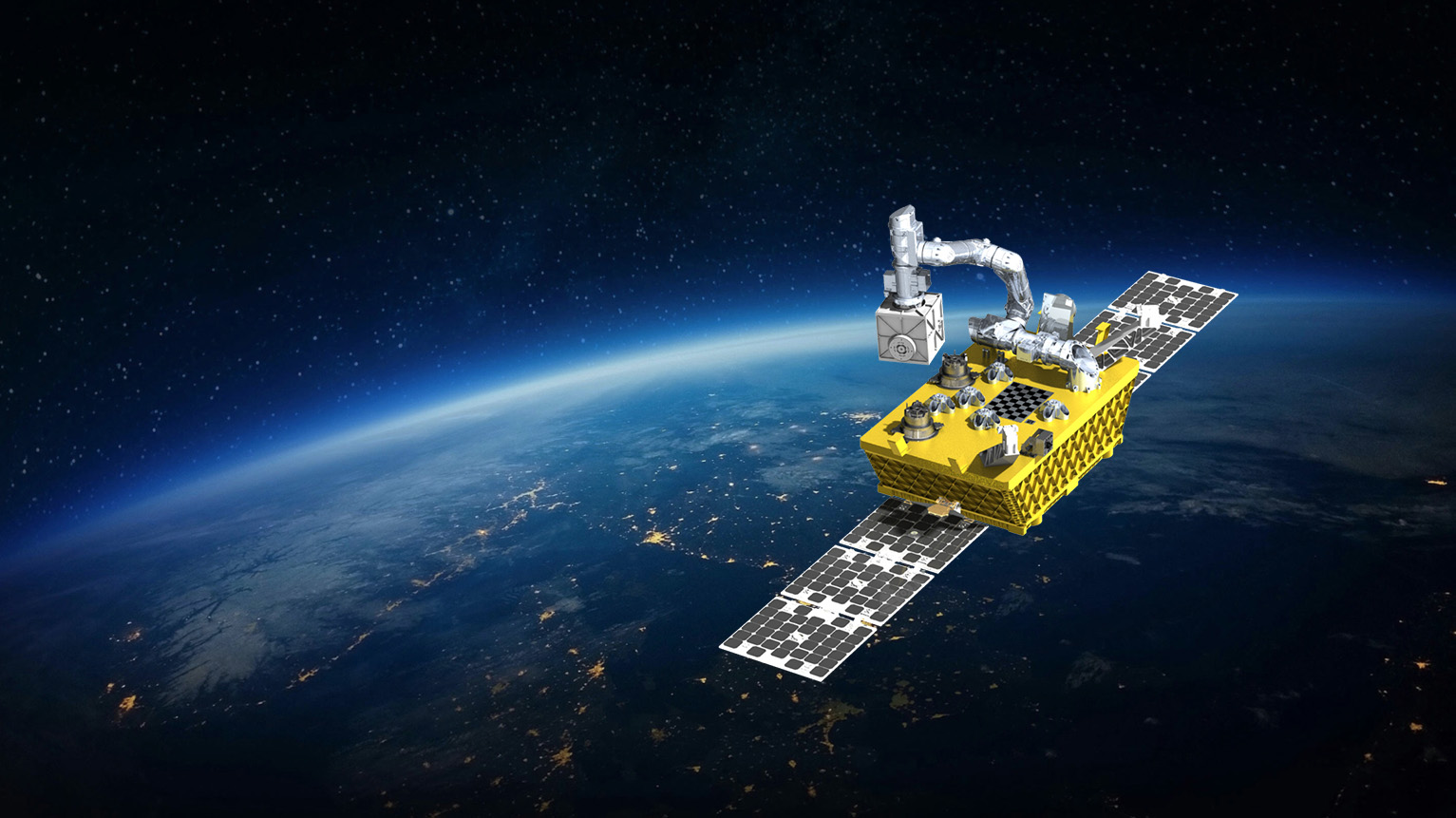
The Fly Foundational Robots (FFR) mission will launch a robotic arm, with seven degrees of freedom, to low Earth orbit. NASA is opening access to the robotic arm to a select group of U.S. researchers — principal investigators, post-doctoral researchers, professors, and highly qualified graduate students — who have a compelling experiment and the capability to execute it.
All participants must submit eligibility documentation at registration. Once your eligibility is reviewed and confirmed, you will receive access to the Phase 1 submission portal.
- Phase 0 — Eligibility Registration
Begin by completing your eligibility registration. Submission documentation is required at this stage as part of federal competition requirements. Registration closes at 12:59 p.m. ET (11:59 p.m. CT) on Sept. 23.
- Phase 1 — White Paper Submission
Submit a white paper proposing a short, focused experiment using the FFR robotic arm. Up to 15 teams advance to Phase 2. Submission closes at 12:59 p.m. ET (11:59 p.m. CT) on Oct. 2. - Phase 2 — Simulation & Validation
Invited participants conduct simulation and validation testing, including visits to Goddard Space Flight Center in Greenbelt, Maryland.
Prize: Teams that pass validation will receive an offer of on-orbit experiment time on the FFR Mission
Challenge Registration Open Date: May 20, 2026
Challenge Registration Close Date: September 23, 2026
For more information, visit: https://spaceroboticistchallenge.com/
NASA Space Roboticist Challenge
The Fly Foundational Robots (FFR) mission will launch a robotic arm, with seven degrees of freedom, to low Earth orbit. NASA is opening access to the robotic arm to a select group of U.S. researchers — principal investigators, post-doctoral researchers, professors, and highly qualified graduate students — who have a compelling experiment and the capability to execute it.
All participants must submit eligibility documentation at registration. Once your eligibility is reviewed and confirmed, you will receive access to the Phase 1 submission portal.
- Phase 0 — Eligibility Registration
Begin by completing your eligibility registration. Submission documentation is required at this stage as part of federal competition requirements. Registration closes at 12:59 p.m. ET (11:59 p.m. CT) on Sept. 23.
- Phase 1 — White Paper Submission
Submit a white paper proposing a short, focused experiment using the FFR robotic arm. Up to 15 teams advance to Phase 2. Submission closes at 12:59 p.m. ET (11:59 p.m. CT) on Oct. 2. - Phase 2 — Simulation & Validation
Invited participants conduct simulation and validation testing, including visits to Goddard Space Flight Center in Greenbelt, Maryland.
Prize: Teams that pass validation will receive an offer of on-orbit experiment time on the FFR Mission
Challenge Registration Open Date: May 20, 2026
Challenge Registration Close Date: September 23, 2026
For more information, visit: https://spaceroboticistchallenge.com/