

Feed aggregator
NASA’s Psyche mission is snapping photos of Mars on its way to an asteroid
The Psyche spacecraft is bound for a metal-rich asteroid that it will examine up close starting in 2029. But first, it needs to swing past the Red Planet
NASA, Industry Prepare Cryogenic Fuel Technology Demo
2 min read
Preparations for Next Moonwalk Simulations Underway (and Underwater)NASA is collaborating with Eta Space of Rockledge, Florida, on an in‑orbit technology demonstration to advance a key capability for future deep space missions. The Liquid Oxygen Flight Demonstration, or LOXSAT, will test cryogenic fluid management technologies necessary for creating in-space propellant depots, essentially gas stations in space, that could support long-term exploration.
The LOXSAT payload is displayed inside Rocket Lab’s Spacecraft Production Complex in Long Beach, California. Rocket Lab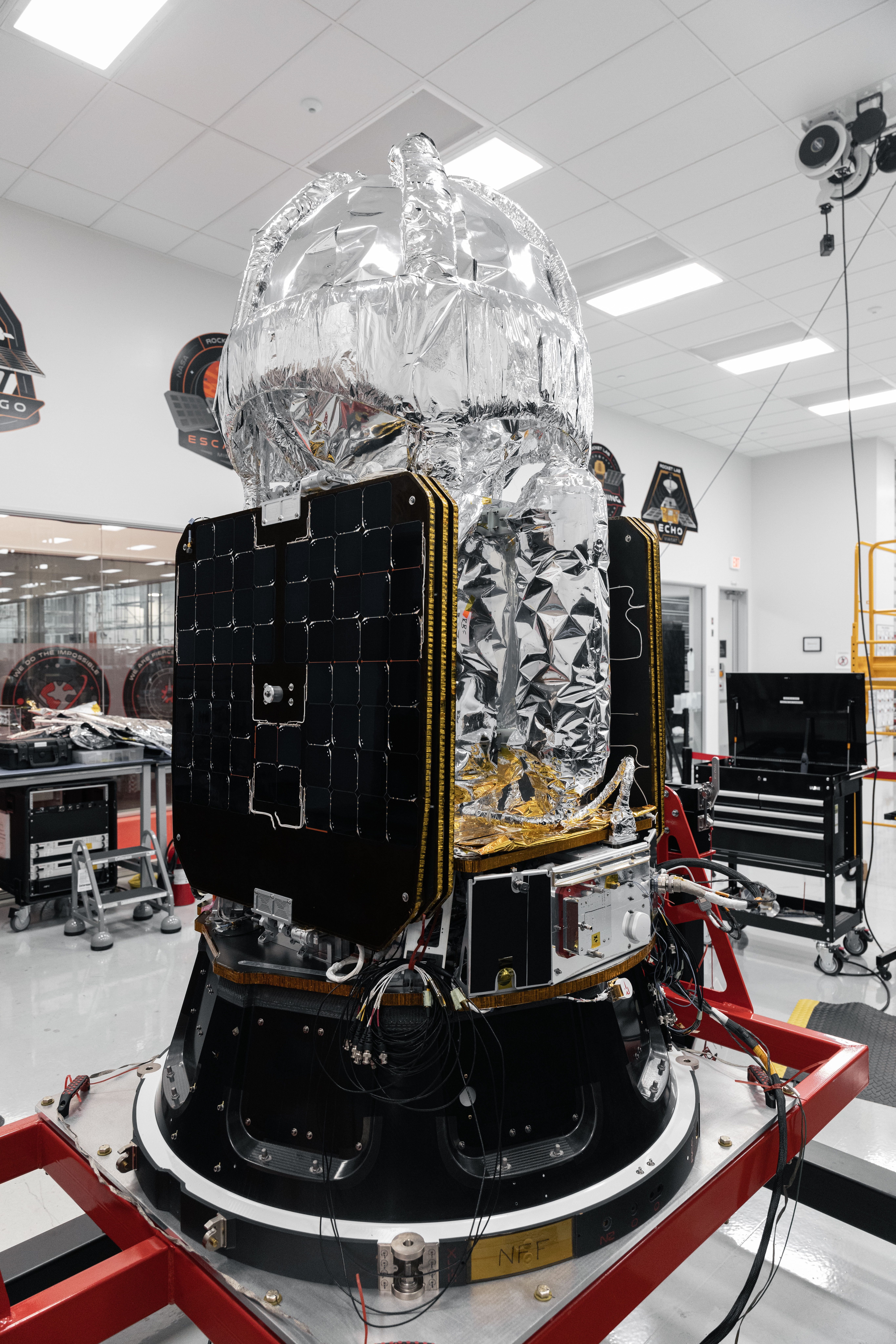
During a nine-month mission, LOXSAT will demonstrate 11 cryogenic fluid management technologies. Eta Space built LOXSAT as part of a NASA Tipping Point opportunity, and Rocket Lab is providing spacecraft and launch services to deliver it to low Earth orbit. The LOXSAT payload has been integrated with a Rocket Lab Photon satellite bus and will launch aboard the company’s Electron rocket from Launch Complex 1 on New Zealand’s Mahia Peninsula no earlier than July 17.
The technologies that LOXSAT will demonstrate were selected to address the core challenges of using cryogenic, or super-cold, propellants in microgravity, including reducing boiloff, transferring propellant, maintaining tank pressure, and gauging propellant levels. Data collected from these tests will support development of future in-space propellant depots that could refuel spacecraft as they journey to the Moon, Mars, or other deep space destinations.
Members of NASA’s Cryogenic Fluid Management project tour Rocket Lab’s Spacecraft Production Complex in Long Beach, California, on Thursday, Feb. 12, 2026 . The portfolio project team had the opportunity to view the LOXSAT payload and the setup for vibration testing. CreditRocket Lab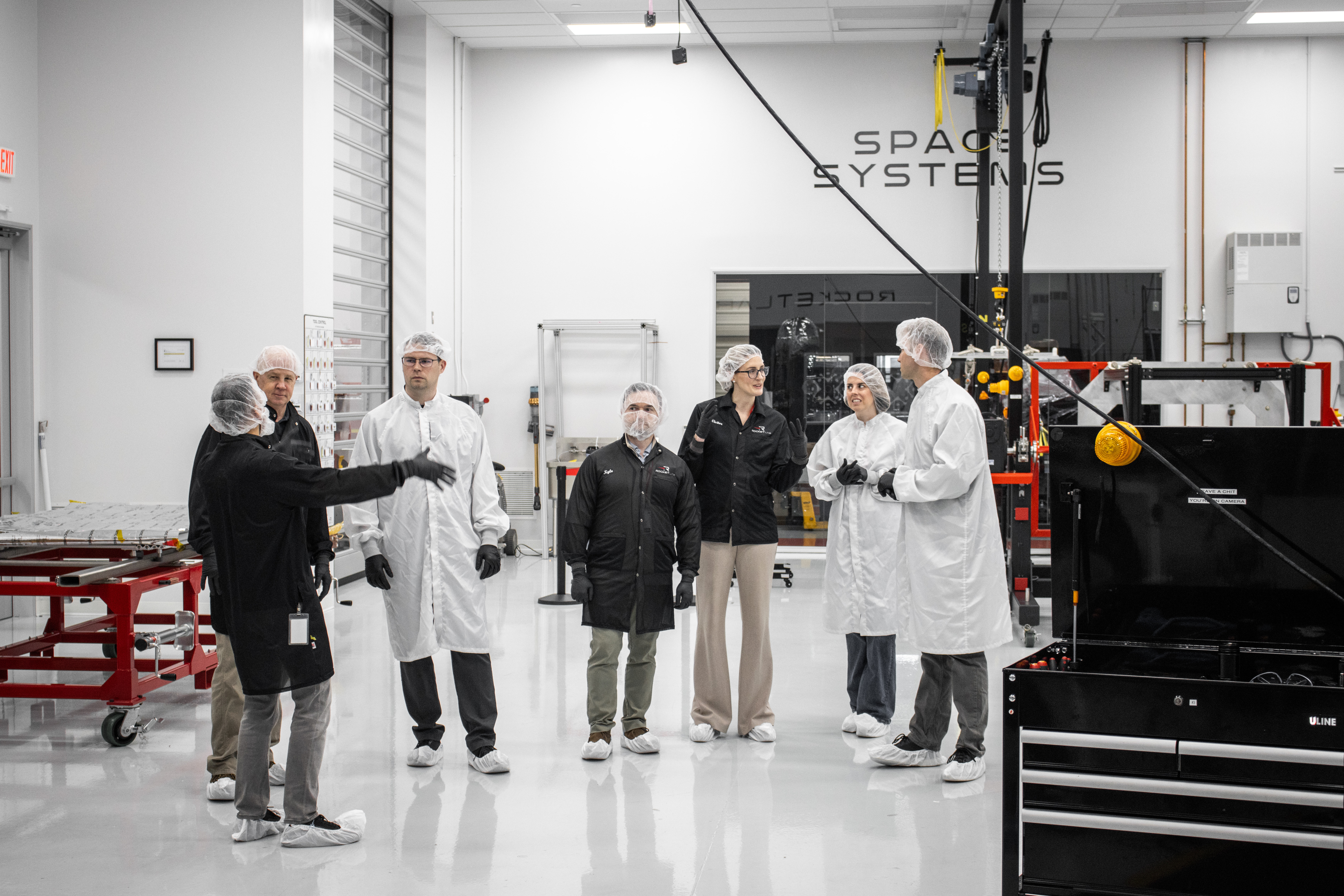
NASA’s LOXSAT team is composed of members of the Cryogenic Fluid Management Portfolio Project from NASA’s Marshall Space Flight Center in Huntsville, Alabama, Glenn Research Center in Cleveland, and Kennedy Space Center in Florida. The cryogenic portfolio’s work is part of NASA’s Space Technology Mission Directorate and includes more than 20 individual technology development activities.
To learn more, visit:
Share Details Last Updated May 15, 2026 EditorLee MohonContactJoel Wallacejoel.w.wallace@nasa.govLocationMarshall Space Flight Center Related Terms Explore More 3 min read Ice to Fuel: NASA Tests Technology for Refueling Landers Article 2 months ago 4 min read Stay Cool: NASA Tests Innovative Technique for Super Cold Fuel Storage Article 10 months ago 3 min read NASA Propellant Tech Could Fuel Long-Duration Missions Article 1 year ago Keep Exploring Discover Related TopicsMissions
Humans in Space
Climate Change
Solar System
NASA, Industry Prepare Cryogenic Fuel Technology Demo
2 min read
Preparations for Next Moonwalk Simulations Underway (and Underwater)NASA is collaborating with Eta Space of Rockledge, Florida, on an in‑orbit technology demonstration to advance a key capability for future deep space missions. The Liquid Oxygen Flight Demonstration, or LOXSAT, will test cryogenic fluid management technologies necessary for creating in-space propellant depots, essentially gas stations in space, that could support long-term exploration.
The LOXSAT payload is displayed inside Rocket Lab’s Spacecraft Production Complex in Long Beach, California. Rocket LabDuring a nine-month mission, LOXSAT will demonstrate 11 cryogenic fluid management technologies. Eta Space built LOXSAT as part of a NASA Tipping Point opportunity, and Rocket Lab is providing spacecraft and launch services to deliver it to low Earth orbit. The LOXSAT payload has been integrated with a Rocket Lab Photon satellite bus and will launch aboard the company’s Electron rocket from Launch Complex 1 on New Zealand’s Mahia Peninsula no earlier than July 17.
The technologies that LOXSAT will demonstrate were selected to address the core challenges of using cryogenic, or super-cold, propellants in microgravity, including reducing boiloff, transferring propellant, maintaining tank pressure, and gauging propellant levels. Data collected from these tests will support development of future in-space propellant depots that could refuel spacecraft as they journey to the Moon, Mars, or other deep space destinations.
Members of NASA’s Cryogenic Fluid Management project tour Rocket Lab’s Spacecraft Production Complex in Long Beach, California, on Thursday, Feb. 12, 2026 . The portfolio project team had the opportunity to view the LOXSAT payload and the setup for vibration testing. CreditRocket LabNASA’s LOXSAT team is composed of members of the Cryogenic Fluid Management Portfolio Project from NASA’s Marshall Space Flight Center in Huntsville, Alabama, Glenn Research Center in Cleveland, and Kennedy Space Center in Florida. The cryogenic portfolio’s work is part of NASA’s Space Technology Mission Directorate and includes more than 20 individual technology development activities.
To learn more, visit:
Share Details Last Updated May 15, 2026 EditorLee MohonContactJoel Wallacejoel.w.wallace@nasa.govLocationMarshall Space Flight Center Related Terms Explore More 3 min read Ice to Fuel: NASA Tests Technology for Refueling Landers Article 2 months ago 4 min read Stay Cool: NASA Tests Innovative Technique for Super Cold Fuel Storage Article 10 months ago 3 min read NASA Propellant Tech Could Fuel Long-Duration Missions Article 1 year ago Keep Exploring Discover Related TopicsMissions
Humans in Space
Climate Change
Solar System
Can helium-3 create a ‘gold rush’ on the moon?
The rare isotope helium-3 is one of Earth’s most precious commodities—so precious, in fact, that it might prove profitable to mine from the moon
Vocal fry is more common in men, actually, find scientists
Vocal fry is more common in men, actually, find scientists
Fresh Food Delivery for Space Station
Fresh Food Delivery for Space Station
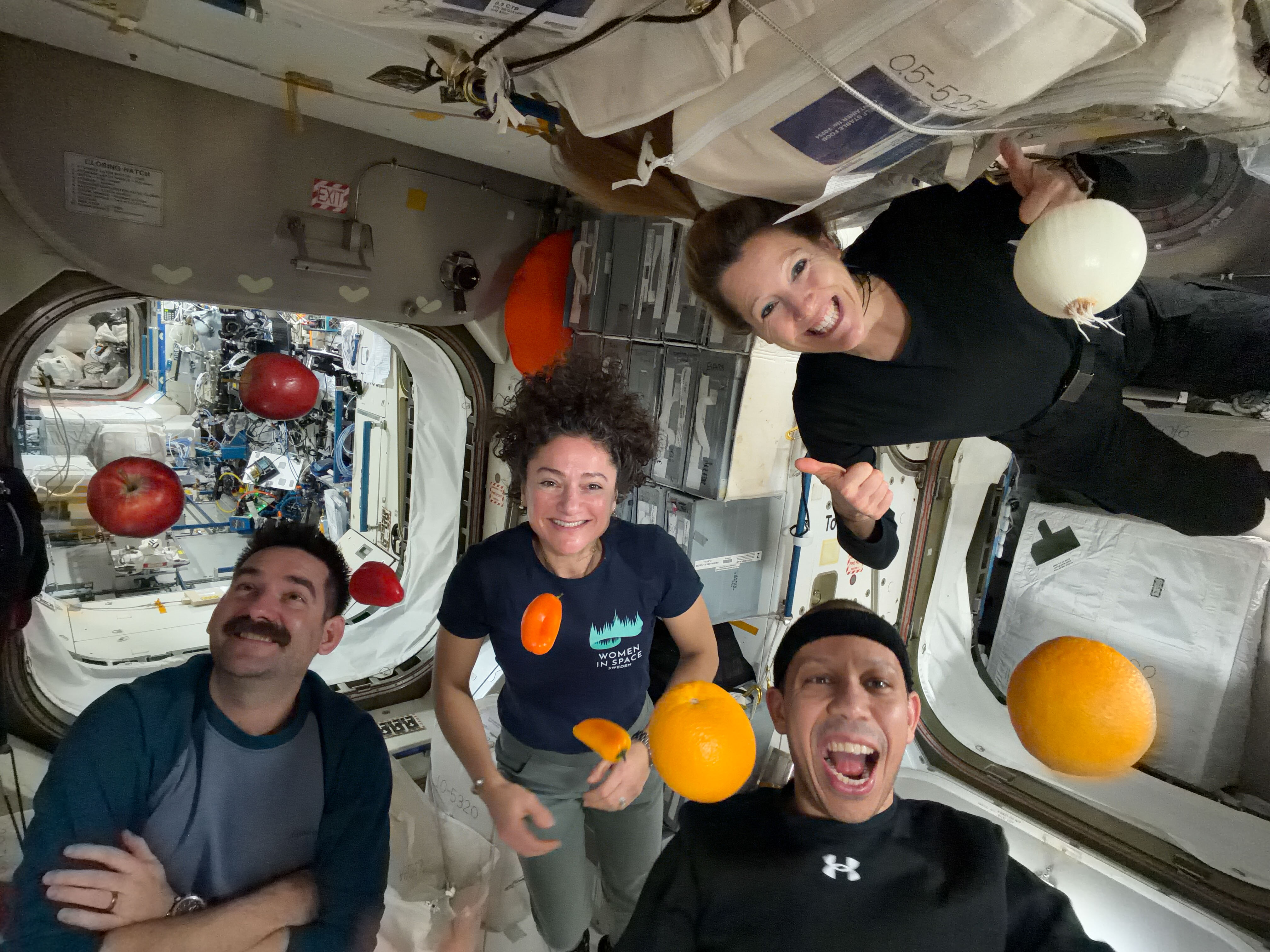
NASA astronauts Jack Hathaway (bottom left), Jessica Meir (middle left), and Chris Williams (bottom right), and ESA (European Space Agency) astronaut Sophie Adenot (top right) have some fun with food and microgravity in this April 19, 2026, photo.
Northrop Grumman’s Cygnus XL cargo spacecraft delivered a shipment of fresh food, including oranges, apples, onions, and peppers, to the International Space Station. Cygnus XL also brought over 2,300 pounds of new research hardware and science experiments that the space station crew will use to explore blood stem cells to treat cancers and blood disorders and study ways to protect astronaut gut health. Other gear delivered aboard Cygnus XL include an advanced exercise system from ESA, new eye-imaging hardware, oxygen and nitrogen tanks to recharge spacesuits, and more.
Image credit: NASA/Chris Williams
Fresh Food Delivery for Space Station
NASA astronauts Jack Hathaway (bottom left), Jessica Meir (middle left), and Chris Williams (bottom right), and ESA (European Space Agency) astronaut Sophie Adenot (top right) have some fun with food and microgravity in this April 19, 2026, photo.
Northrop Grumman’s Cygnus XL cargo spacecraft delivered a shipment of fresh food, including oranges, apples, onions, and peppers, to the International Space Station. Cygnus XL also brought over 2,300 pounds of new research hardware and science experiments that the space station crew will use to explore blood stem cells to treat cancers and blood disorders and study ways to protect astronaut gut health. Other gear delivered aboard Cygnus XL include an advanced exercise system from ESA, new eye-imaging hardware, oxygen and nitrogen tanks to recharge spacesuits, and more.
Image credit: NASA/Chris Williams
NASA's Perseverance Rover Is About To Finish A Marathon
Perseverance has travelled almost 26 miles, or 42 km. That's just shy of a marathon, which is 26.2 miles or 42.195 kilometers. Along the way, it's abraded and studied 62 rocks and collected 27 rock cores. And it's not done yet.
Will burying dead trees after a wildfire keep their carbon locked up?
Will burying dead trees after a wildfire keep their carbon locked up?
3 things you need to know about quantum computers, from an expert
3 things you need to know about quantum computers, from an expert
Webb Telescope Reveals Brown Dwarfs Masquerading as Early Galaxies
Two objects that appeared to be galaxies residing in a universe about 150 million years old turn out to be brown dwarfs in the Milky Way.
The post Webb Telescope Reveals Brown Dwarfs Masquerading as Early Galaxies appeared first on Sky & Telescope.
The war in Iran is supercharging an ecological crisis in the Persian Gulf
Despite decades of damage, the Persian Gulf’s ecological marvels remain—for now
The Universe's Biggest Black Holes Aren't Born, They're Built
When a massive star dies, it can leave behind a black hole. That much has been understood for decades. But the most monstrous black holes in the universe, the heavyweights detected by the faint ripples they send through the fabric of space and time aren't born that way at all. According to a new Cardiff University study, they're built through repeated, catastrophic collisions in the most densely packed star clusters in the cosmos.
Deep-Earth diamonds reveal trove of never-before-seen minerals
Flecks of minerals captured in diamonds show hidden connections between Earth’s surface and its deep interior
The Planet That Shouldn't Exist… But Does
Hot Jupiters are the bullies of the planetary world. These colossal gas giants orbit impossibly close to their stars and their gravity is so overwhelming that anything nearby gets scattered, swallowed, or flung into oblivion. Finding a smaller planet surviving inside a hot Jupiter's orbit should be virtually impossible. Yet 190 light years away, that's exactly what astronomers have found.
We've Been Wasting 99% of Our Supernova Data
Every time an astronomer points a telescope at a distant supernova, they're trying to measure how far away it is. But the light from these stellar explosions arrives tangled up with interference from dust, the age of the host galaxy and the chemical make up of the original star . Unpicking it all has always been a painstaking business. Now a team of researchers has used artificial intelligence to cut through the noise in a single step, potentially making cosmological measurements four times more precise. In a universe full of unanswered questions, that's a very significant leap forward.