
Feed aggregator
Unsettling dance piece explores how AI is warping human relationships
Unsettling dance piece explores how AI is warping human relationships
The secret to immortality might be a sea cucumber
The discarded fragments of this creature apparently refuse to die, leading researchers to claim immortality
A Natural Chemistry Laboratory in Protostar Shock Waves
Complex organic molecules (COMS) are at the heart of life. They're created where jets from protostars slam into the interstellar medium, environments that scientists call natural laboratories. In these intense environments, important carbon-bearing molecules are created. Recent research took a close look at one of these jets and found some COMS in them for the first time.
A New Model Helps Astronomers Study How Merging Black Holes Ring
A new statistical model reveals more details about the ringdown period of merging black holes.
NASA’s Jared Isaacman unveiled the first moon base rovers and landers
At an event at NASA Headquarters, space agency officials unveiled the first rovers and landers headed to the future site of its planned lunar south pole outpost
‘Universal’ aging clocks offer new clues to longevity
A new study could help identify promising treatments to extend the human lifespan, researchers say
La NASA anunciará la tripulación de Artemis III e informará sobre el progreso de la misión
La NASA informará sobre los avances de la misión Artemis III de la agencia y anunciará los astronautas asignados a este vuelo de prueba durante un evento en vivo a las 11 a.m. EDT (hora del este) del martes 9 de junio en el Centro Espacial Johnson de la agencia en Houston.
Siga la rueda de prensa en vivo a través de la aplicación NASA+ y el canal de YouTube de la agencia. Descubra cómo ver el contenido de la NASA en diversas plataformas en línea, incluidas las redes sociales (información ofrecida en inglés).
Tras el evento, la tripulación de Artemis III estará disponible para un número limitado de entrevistas presenciales y virtuales.
Las solicitudes de entrevista deben enviarse a la sala de prensa del centro Johnson antes de las 5 p.m. del 4 de junio. Los periodistas que no son ciudadanos estadounidenses interesados en asistir deben comunicarse, en inglés, con la sala de prensa de Johnson mediante correo electrónico (jsccommu@mail.nasa.gov) antes de las 5 p.m. del jueves 28 de mayo. Los periodistas estadounidenses deben comunicarse con la sala de prensa antes de las 5 p.m. del jueves 4 de junio. Los medios registrados recibirán la confirmación y detalles adicionales del evento por correo electrónico. La política de acreditación de medios de la NASA está disponible en línea.
Artemis III lanzará a cuatro astronautas desde el Centro Espacial Kennedy de la NASA en Florida en la nave espacial Orion, la cual viajará a bordo del cohete SLS (Sistema de Lanzamiento Espacial, por sus siglas en inglés). La misión pondrá a prueba las capacidades críticas de encuentro y acoplamiento entre Orion y los sistemas comerciales de aterrizaje humano necesarios para llevar a los astronautas a la superficie lunar. Basándose en el exitoso vuelo de prueba tripulado de Artemis II en abril, Artemis III allanará el camino para futuras misiones a la Luna.
Como parte de una edad de oro de innovación y exploración, la NASA enviará astronautas en misiones cada vez más complejas para explorar más de la Luna con fines de descubrimiento científico y beneficios económicos, y para continuar sentando las bases para las primeras misiones tripuladas a Marte.
Para más información sobre el programa Artemis, visite:
https://www.nasa.gov/artemis (inglés)
https://ciencia.nasa.gov/artemis (español)
-fin-
Rachel Kraft / María José Viñas
Sede central, Washington
+1 202-358-1600
rachel.h.kraft@nasa.gov / maria-jose.vinasgarcia@nasa.gov
Anna Schneider
Centro Espacial Johnson
+1 281-483-5111
anna.c.schneider@nasa.gov
La NASA anunciará la tripulación de Artemis III e informará sobre el progreso de la misión
La NASA informará sobre los avances de la misión Artemis III de la agencia y anunciará los astronautas asignados a este vuelo de prueba durante un evento en vivo a las 11 a.m. EDT (hora del este) del martes 9 de junio en el Centro Espacial Johnson de la agencia en Houston.
Siga la rueda de prensa en vivo a través de la aplicación NASA+ y el canal de YouTube de la agencia. Descubra cómo ver el contenido de la NASA en diversas plataformas en línea, incluidas las redes sociales (información ofrecida en inglés).
Tras el evento, la tripulación de Artemis III estará disponible para un número limitado de entrevistas presenciales y virtuales.
Las solicitudes de entrevista deben enviarse a la sala de prensa del centro Johnson antes de las 5 p.m. del 4 de junio. Los periodistas que no son ciudadanos estadounidenses interesados en asistir deben comunicarse, en inglés, con la sala de prensa de Johnson mediante correo electrónico (jsccommu@mail.nasa.gov) antes de las 5 p.m. del jueves 28 de mayo. Los periodistas estadounidenses deben comunicarse con la sala de prensa antes de las 5 p.m. del jueves 4 de junio. Los medios registrados recibirán la confirmación y detalles adicionales del evento por correo electrónico. La política de acreditación de medios de la NASA está disponible en línea.
Artemis III lanzará a cuatro astronautas desde el Centro Espacial Kennedy de la NASA en Florida en la nave espacial Orion, la cual viajará a bordo del cohete SLS (Sistema de Lanzamiento Espacial, por sus siglas en inglés). La misión pondrá a prueba las capacidades críticas de encuentro y acoplamiento entre Orion y los sistemas comerciales de aterrizaje humano necesarios para llevar a los astronautas a la superficie lunar. Basándose en el exitoso vuelo de prueba tripulado de Artemis II en abril, Artemis III allanará el camino para futuras misiones a la Luna.
Como parte de una edad de oro de innovación y exploración, la NASA enviará astronautas en misiones cada vez más complejas para explorar más de la Luna con fines de descubrimiento científico y beneficios económicos, y para continuar sentando las bases para las primeras misiones tripuladas a Marte.
Para más información sobre el programa Artemis, visite:
https://www.nasa.gov/artemis (inglés)
https://ciencia.nasa.gov/artemis (español)
-fin-
Rachel Kraft / María José Viñas
Sede central, Washington
+1 202-358-1600
rachel.h.kraft@nasa.gov / maria-jose.vinasgarcia@nasa.gov
Anna Schneider
Centro Espacial Johnson
+1 281-483-5111
anna.c.schneider@nasa.gov
Embryos made without sperm or eggs reveal why many pregnancies fail
Embryos made without sperm or eggs reveal why many pregnancies fail
Why the Second Full Moon of May is a ‘Blue Minimoon’
There’s nothing like a random celestial coincidence, turned good internet meme. In this case, the chance event is this weekend’s Full Moon, which also happens to be the second Full Moon of May, and is also the most distant and visually smallest Full Moon of the year.
Students Build Moon Robots for NASA’s 2026 Lunabotics Challenge
Students Build Moon Robots for NASA’s 2026 Lunabotics Challenge
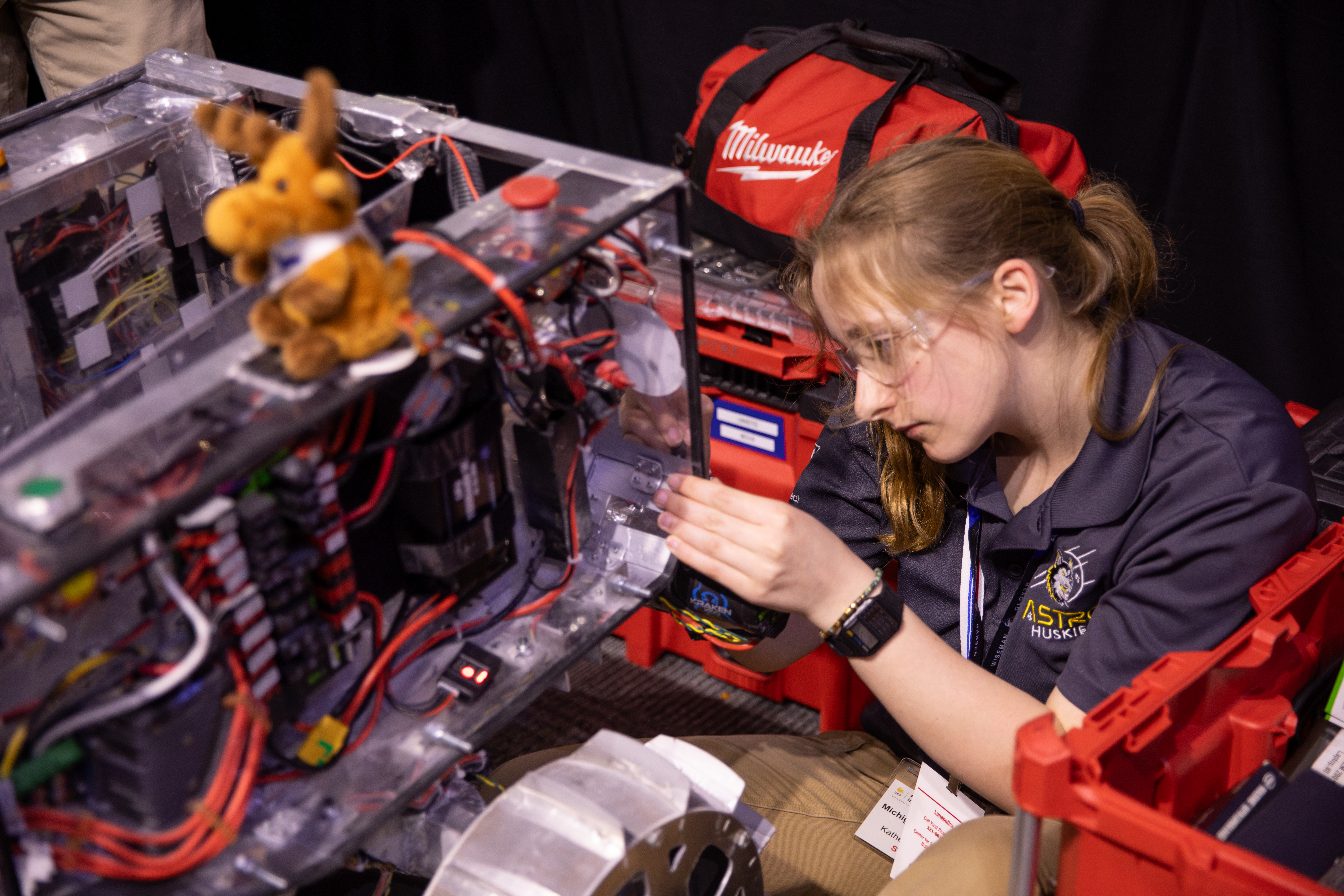
Katherine Rauscher of Michigan Technological University prepares her team’s prototype lunar robot for its turn during the finals for NASA’s 2026 Lunabotics Challenge competition on Tuesday, May 19, 2026, at the Kennedy Space Center Visitor Complex in Florida.
Forty-seven teams from around the U.S. designed and built remote-controlled robots capable of traversing challenging lunar terrain while constructing regolith-based berm under conditions similar to those the agency will face as it returns to the lunar surface through Artemis.
The Lunabotics Challenge invites students from higher education institutions to apply NASA’s Systems Engineering principles to design and build a prototype off-world construction robot. Participants will develop a robot capable of performing construction operations that support future space exploration objectives.
Image credit: NASA/Ben Smegelsky
Students Build Moon Robots for NASA’s 2026 Lunabotics Challenge
Katherine Rauscher of Michigan Technological University prepares her team’s prototype lunar robot for its turn during the finals for NASA’s 2026 Lunabotics Challenge competition on Tuesday, May 19, 2026, at the Kennedy Space Center Visitor Complex in Florida.
Forty-seven teams from around the U.S. designed and built remote-controlled robots capable of traversing challenging lunar terrain while constructing regolith-based berm under conditions similar to those the agency will face as it returns to the lunar surface through Artemis.
The Lunabotics Challenge invites students from higher education institutions to apply NASA’s Systems Engineering principles to design and build a prototype off-world construction robot. Participants will develop a robot capable of performing construction operations that support future space exploration objectives.
Image credit: NASA/Ben Smegelsky
NASA-European Sea Level Mission Homes in on El Niño
To view this video please enable JavaScript, and consider upgrading to a web browser that supports HTML5 video
The international Sentinel-6 Michael Freilich sea level satellite observed a swell of warm water, called a Kelvin wave, moving eastward in the equatorial Pacific Ocean, arriving off the South American coast in May. Warm Kelvin waves often precede El Niño events.NASA/JPL-CaltechSea level data from a satellite launched by NASA and European partners shows that a swell of warm water hundreds of miles wide has arrived in the Pacific Ocean off the coast of South America, a sign that El Niño will likely emerge later in the year. Because water expands as it warms, a rise in elevation of an area of the ocean indicates increasing ocean temperatures.
El Niños can cause heavy precipitation in some regions and deficits in others, influencing daily life and commerce around the world.
Launched in 2020 by NASA and led by ESA (European Space Agency) for the E.U. Copernicus Programme, the Sentinel-6 Michael Freilich satellite measures and maps water height for the entire ocean every 10 days, down to fractions of an inch. In the case of El Niño, the satellite tracks what are called warm Kelvin waves.
These waves typically form after brief periods when winds over the far western equatorial Pacific Ocean shift from prevailing easterlies — moving from east to west — to westerlies. That effect, combined with a general weakening of easterly winds along the equator, causes water in the tropics of the western Pacific to get warmer and sea levels to rise. The wave that forms then propagates east for several weeks, eventually reaching South America and causing water off the coast to heat up and rise. An El Niño develops as multiple Kelvin waves appear over the course of several months, and the warm water accumulates off the shores of Colombia, Ecuador, and Peru.
“While this year’s event started a bit later than the big El Niños of 2015 and 1997, it’s beginning to catch up,” said Josh Willis, a sea level researcher at NASA’s Jet Propulsion Laboratory in Southern California and project scientist for Sentinel-6 Michael Freilich. “We’ll see how big it gets.”
Measurements from Sentinel-6 Michael Freilich show a small Kelvin wave forming around Micronesia in late January and dissipating by mid-February. A new wave emerged in early March, then moved east over time. By mid-May, the seas around Peru were more than 5.9 inches (15 centimeters) higherthan long-term averages.
“NASA’s observation of El Niño uses sea level satellites like Sentinel-6 Michael Freilich to track massive Kelvin waves as they cross the Pacific, capture changes in Earth’s ocean thermodynamics, improve forecasts of weather extremes, and help communities prepare for potential coastal hazards,” said Nadya Vinogradova Shiffer, lead program scientist at NASA Headquarters in Washington. “Stay tuned as more ocean stories continue to unfold.”
Tracking El NiñoFishermen in the 1600s coined the name El Niño — Spanish for “the boy,” a reference to the birth of baby Jesus — because it tended to intensify around Christmastime. Warmer waters meant they would catch fewer fish.
Warmer sea surface temperatures in the central and eastern Pacific affect atmospheric circulation patterns worldwide by shifting the jet stream, which impacts storm tracks. This can lead to heavy rain and snow in some areas and unusual heat and dryness in others. How far away those impacts appear depends on the strength of the El Niño.
In more modest events, like the ones that began in 2018 and 2023, impacts such as drought and flooding were mostly seeb in and around the tropical Pacific. Large El Niños, like the one in 2015-2016, reach much farther, causing drought in Africa and flooding in California.
El Niños usually peak between November and January, so it will be several months before the largest impacts become clear.
“Every El Niño is different,” said JPL sea level researcher Severine Fournier, deputy project scientist for Sentinel-6 Michael Freilich. “But they almost always make for a hot year and big changes in rainfall in parts of the globe.”
Sentinel-6 Michael Freilich is the current official reference satellite for global sea level measurements. Launched in 2020, it is continuing a legacy started in 1992 by the TOPEX/Poseidon satellite. A series of successors have carried the baton since then, and the latest, Sentinel-6B, which launched November 2025, will take over for its predecessor by the end of 2026.
More about Sentinel-6 Michael FreilichSentinel-6 Michael Freilich, named after former NASA Earth Science Division Director Michael Freilich, is one of two satellites that compose the Copernicus Sentinel-6/Jason-CS (Continuity of Service) mission.
Sentinel-6/Jason-CS, a part of the European Union’s Earth observation programme called Copernicus, was jointly developed by ESA, the European Organisation for the Exploitation of Meteorological Satellites (EUMETSAT), NASA, and the National Oceanic and Atmospheric Administration (NOAA), with funding support from the European Commission and technical support on performance from the French space agency CNES (Centre National d’Études Spatiales). Spacecraft monitoring and control, as well as the processing of all the altimeter science data, is carried out by EUMETSAT on behalf of the European Union’s Copernicus Programme, with the support of all partner agencies.
A division of Caltech in Pasadena, JPL contributed three science instruments for each Sentinel-6 satellite: the Advanced Microwave Radiometer, the Global Navigation Satellite System – Radio Occultation, and the Laser Retroreflector Array. NASA also contributed launch services, ground systems supporting operation of the NASA science instruments, the science data processors for two of these instruments, and support for the U.S. members of the international Ocean Surface Topography Science Team.
To learn more about Sentinel-6 Michael Freilich, visit:
https://www.nasa.gov/sentinel-6
Media ContactsAndrew Wang / Andrew Good
Jet Propulsion Laboratory, Pasadena, Calif.
626-379-6874 / 818-393-2433
andrew.wang@jpl.nasa.gov / andrew.c.good@jpl.nasa.gov
2026-035
Explore More 5 min read NASA Develops Sensor to Improve Firefighter Safety Article 4 hours ago 2 min read Released: NASA Goddard Issues Draft Request for Proposal for the Landsat 10 SpacecraftThe Landsat 10 Spacecraft Draft Request for Proposal (DRFP) is available for review via SAM.gov.
Article 5 hours ago 1 min read Webinar 6/17: Discover, Access, and Task Commercial Data with NASA’s Satellite Data ExplorerLearn how to use the Satellite Data Explorer to search, access, and task commercial Earth…
Article 10 hours ago Keep Exploring Discover More Topics From NASA Mission: Sentinel-6 Michael FreilichWhen did Sentinel-6 Michael Freilich launch? November 21, 2020 Where is Sentinel-6 Michael Freilich? 830 miles (1,336 km) above Earth…
Water | Earth Observatory Topic
Climate ChangeNASA is a global leader in studying Earth’s changing climate.
Jet Propulsion Laboratory
NASA-European Sea Level Mission Homes in on El Niño
To view this video please enable JavaScript, and consider upgrading to a web browser that supports HTML5 video
The international Sentinel-6 Michael Freilich sea level satellite observed a swell of warm water, called a Kelvin wave, moving eastward in the equatorial Pacific Ocean, arriving off the South American coast in May. Warm Kelvin waves often precede El Niño events.NASA/JPL-CaltechSea level data from a satellite launched by NASA and European partners shows that a swell of warm water hundreds of miles wide has arrived in the Pacific Ocean off the coast of South America, a sign that El Niño will likely emerge later in the year. Because water expands as it warms, a rise in elevation of an area of the ocean indicates increasing ocean temperatures.
El Niños can cause heavy precipitation in some regions and deficits in others, influencing daily life and commerce around the world.
Launched in 2020 by NASA and led by ESA (European Space Agency) for the E.U. Copernicus Programme, the Sentinel-6 Michael Freilich satellite measures and maps water height for the entire ocean every 10 days, down to fractions of an inch. In the case of El Niño, the satellite tracks what are called warm Kelvin waves.
These waves typically form after brief periods when winds over the far western equatorial Pacific Ocean shift from prevailing easterlies — moving from east to west — to westerlies. That effect, combined with a general weakening of easterly winds along the equator, causes water in the tropics of the western Pacific to get warmer and sea levels to rise. The wave that forms then propagates east for several weeks, eventually reaching South America and causing water off the coast to heat up and rise. An El Niño develops as multiple Kelvin waves appear over the course of several months, and the warm water accumulates off the shores of Colombia, Ecuador, and Peru.
“While this year’s event started a bit later than the big El Niños of 2015 and 1997, it’s beginning to catch up,” said Josh Willis, a sea level researcher at NASA’s Jet Propulsion Laboratory in Southern California and project scientist for Sentinel-6 Michael Freilich. “We’ll see how big it gets.”
Measurements from Sentinel-6 Michael Freilich show a small Kelvin wave forming around Micronesia in late January and dissipating by mid-February. A new wave emerged in early March, then moved east over time. By mid-May, the seas around Peru were more than 5.9 inches (15 centimeters) higherthan long-term averages.
“NASA’s observation of El Niño uses sea level satellites like Sentinel-6 Michael Freilich to track massive Kelvin waves as they cross the Pacific, capture changes in Earth’s ocean thermodynamics, improve forecasts of weather extremes, and help communities prepare for potential coastal hazards,” said Nadya Vinogradova Shiffer, lead program scientist at NASA Headquarters in Washington. “Stay tuned as more ocean stories continue to unfold.”
Tracking El NiñoFishermen in the 1600s coined the name El Niño — Spanish for “the boy,” a reference to the birth of baby Jesus — because it tended to intensify around Christmastime. Warmer waters meant they would catch fewer fish.
Warmer sea surface temperatures in the central and eastern Pacific affect atmospheric circulation patterns worldwide by shifting the jet stream, which impacts storm tracks. This can lead to heavy rain and snow in some areas and unusual heat and dryness in others. How far away those impacts appear depends on the strength of the El Niño.
In more modest events, like the ones that began in 2018 and 2023, impacts such as drought and flooding were mostly seeb in and around the tropical Pacific. Large El Niños, like the one in 2015-2016, reach much farther, causing drought in Africa and flooding in California.
El Niños usually peak between November and January, so it will be several months before the largest impacts become clear.
“Every El Niño is different,” said JPL sea level researcher Severine Fournier, deputy project scientist for Sentinel-6 Michael Freilich. “But they almost always make for a hot year and big changes in rainfall in parts of the globe.”
Sentinel-6 Michael Freilich is the current official reference satellite for global sea level measurements. Launched in 2020, it is continuing a legacy started in 1992 by the TOPEX/Poseidon satellite. A series of successors have carried the baton since then, and the latest, Sentinel-6B, which launched November 2025, will take over for its predecessor by the end of 2026.
More about Sentinel-6 Michael FreilichSentinel-6 Michael Freilich, named after former NASA Earth Science Division Director Michael Freilich, is one of two satellites that compose the Copernicus Sentinel-6/Jason-CS (Continuity of Service) mission.
Sentinel-6/Jason-CS, a part of the European Union’s Earth observation programme called Copernicus, was jointly developed by ESA, the European Organisation for the Exploitation of Meteorological Satellites (EUMETSAT), NASA, and the National Oceanic and Atmospheric Administration (NOAA), with funding support from the European Commission and technical support on performance from the French space agency CNES (Centre National d’Études Spatiales). Spacecraft monitoring and control, as well as the processing of all the altimeter science data, is carried out by EUMETSAT on behalf of the European Union’s Copernicus Programme, with the support of all partner agencies.
A division of Caltech in Pasadena, JPL contributed three science instruments for each Sentinel-6 satellite: the Advanced Microwave Radiometer, the Global Navigation Satellite System – Radio Occultation, and the Laser Retroreflector Array. NASA also contributed launch services, ground systems supporting operation of the NASA science instruments, the science data processors for two of these instruments, and support for the U.S. members of the international Ocean Surface Topography Science Team.
To learn more about Sentinel-6 Michael Freilich, visit:
https://www.nasa.gov/sentinel-6
Media ContactsAndrew Wang / Andrew Good
Jet Propulsion Laboratory, Pasadena, Calif.
626-379-6874 / 818-393-2433
andrew.wang@jpl.nasa.gov / andrew.c.good@jpl.nasa.gov
2026-035
Explore More 5 min read A Shift in What’s Shaping U.S. LandscapesWild disturbances are on the rise, while land disturbed by human activity has been decreasing.
Article 19 minutes ago 5 min read NASA Develops Sensor to Improve Firefighter Safety Article 7 hours ago 2 min read Released: NASA Goddard Issues Draft Request for Proposal for the Landsat 10 SpacecraftThe Landsat 10 Spacecraft Draft Request for Proposal (DRFP) is available for review via SAM.gov.
Article 8 hours ago Keep Exploring Discover More Topics From NASA Mission: Sentinel-6 Michael FreilichWhen did Sentinel-6 Michael Freilich launch? November 21, 2020 Where is Sentinel-6 Michael Freilich? 830 miles (1,336 km) above Earth…
Water | Earth Observatory Topic
Climate ChangeNASA is a global leader in studying Earth’s changing climate.
Jet Propulsion Laboratory
Lost in the Star Clouds — A Milky Way Odyssey
I share my "discovery" of a new Milky Way star cloud that's been staring at me for ages.
The post Lost in the Star Clouds — A Milky Way Odyssey appeared first on Sky & Telescope.
Webinar 6/17: Discover, Access, and Task Commercial Data with NASA’s Satellite Data Explorer
- CSDA
- Commercial Data
- CSDA Vendors
- Program Activities
- Learning Resources
- FAQs
- News
1 min read
Webinar 6/17: Discover, Access, and Task Commercial Data with NASA’s Satellite Data Explorer This screen capture shows a multispectral image from Vantor in the CSDA program’s Satellite Data Explorer user interface. Credit: (C) Vantor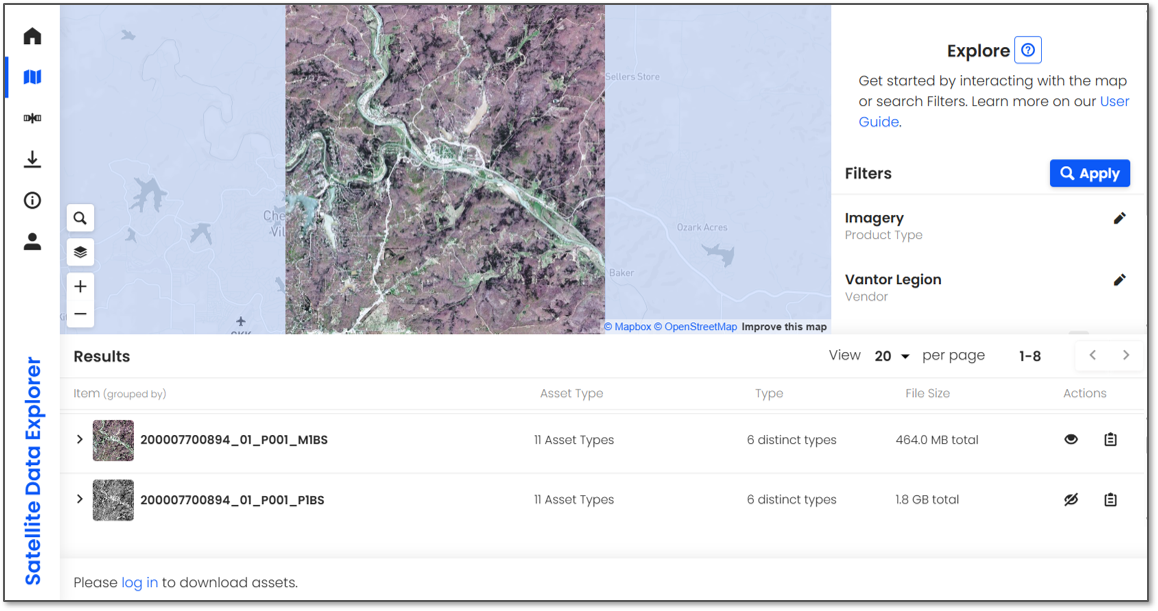
Join us for an NASA Commercial Satellite Data Acquisition (CSDA) program webinar on Wednesday, June 17, 2026, at 2:00 p.m. EDT (-04:00 UTC) to learn how to use the Satellite Data Explorer(SDX) to search, access, and task commercial Earth Observation data available through NASA’s CSDA program.
The SDX is a web-based data discovery, access, and data tasking platform developed under the CSDA program that enables approved users to discover, access, task, and download commercial Earth observation data available through the program.
During this webinar event, data users will learn how to use the SDX to streamline their data workflow. A live demonstration will focus on the key features and functionalities of the tool from searching and filtering capabilities (e.g., by area-of-interest, product type, vendor) to visualizing query results through interactive maps and quick-look browse imagery. Webinar participants will also learn how to use the new Data Acquisition Request System to submit and track commercial data tasking requests for future acquisitions.
Register for WebinarWebinar 6/17: Discover, Access, and Task Commercial Data with NASA’s Satellite Data Explorer
- CSDA
- Commercial Data
- CSDA Vendors
- Program Activities
- Learning Resources
- FAQs
- News
1 min read
Webinar 6/17: Discover, Access, and Task Commercial Data with NASA’s Satellite Data Explorer This screen capture shows a multispectral image from Vantor in the CSDA program’s Satellite Data Explorer user interface. Credit: (C) VantorJoin us for an NASA Commercial Satellite Data Acquisition (CSDA) program webinar on Wednesday, June 17, 2026, at 2:00 p.m. EDT (-04:00 UTC) to learn how to use the Satellite Data Explorer(SDX) to search, access, and task commercial Earth Observation data available through NASA’s CSDA program.
The SDX is a web-based data discovery, access, and data tasking platform developed under the CSDA program that enables approved users to discover, access, task, and download commercial Earth observation data available through the program.
During this webinar event, data users will learn how to use the SDX to streamline their data workflow. A live demonstration will focus on the key features and functionalities of the tool from searching and filtering capabilities (e.g., by area-of-interest, product type, vendor) to visualizing query results through interactive maps and quick-look browse imagery. Webinar participants will also learn how to use the new Data Acquisition Request System to submit and track commercial data tasking requests for future acquisitions.
Register for Webinar