
Feed aggregator
Alice Roberts: 'We are fundamentally, at the end of the day, animals'
An encyclopedia formed from AI hallucinations – what could go wrong?
New Scientist recommends a deep dive into our organs by Giulia Enders
New Scientist recommends a deep dive into our organs by Giulia Enders
A New Map of Stars Shows That the Small Magellanic Cloud is Expanding
A multi-year survey of millions of stars in the Small Magellanic Cloud shows that the dwarf galaxy is expanding rather than rotating. This is due to the influence of its larger neighbour, the Large Magellanic Cloud.
International Sea Level Satellite Observes El Niño Precursor
NASA/JPL-Caltech Photojournal Navigation Downloads International Sea Level Satellite Observes El Niño Precursor
MP4 (1.10 MB)
Description
Sea level height data from the international Sentinel-6 Michael Freilich satellite collected from March to May 2026 show higher, warmer water moving from the western Pacific Ocean to just off the coast of Colombia, Ecuador, and Peru. This phenomenon is known as a warm Kelvin wave, signified in this animation of the data by yellow, orange, red, and white. The emergence of Kelvin waves in the early part the year is a signal that an El Niño event is likely to follow.
In early 2026, measurements from Sentinel-6 Michael Freilich showed a small Kelvin wave forming around Micronesia in late January and dissipating by mid-February. The wave shown in the animation emerged in early March, then moved east over time. By mid-May, the seas around Peru were more than 5.9 inches (15 centimeters) higher than long-term averages. Because water expands as it warms, a rise in elevation of an area of the ocean indicates increasing temperature.
The additional heat at the sea surface can change the circulation patterns of energy, water, and air in the atmosphere, which can affect weather. El Niños can cause heavy precipitation in some regions and deficits in others, influencing daily life and commerce around the world.
Sentinel-6 Michael Freilich, named after former NASA Earth Science Division Director Michael Freilich, is one of two satellites that compose the Copernicus Sentinel-6/Jason-CS (Continuity of Service) mission.
Sentinel-6/Jason-CS was jointly developed by ESA, the European Organisation for the Exploitation of Meteorological Satellites (EUMETSAT), NASA, and NOAA, with funding support from the European Commission and technical support on performance from the French space agency CNES (Centre National d’Études Spatiales). Spacecraft monitoring and control, as well as the processing of all the altimeter science data, is carried out by EUMETSAT on behalf of the European Union’s Copernicus programme, with the support of all partner agencies.
A division of Caltech in Pasadena, NASA’s Jet Propulsion Laboratory contributed three science instruments for each Sentinel-6 satellite: the Advanced Microwave Radiometer, the Global Navigation Satellite System – Radio Occultation, and the Laser Retroreflector Array. NASA also contributed launch services, ground systems supporting operation of the NASA science instruments, the science data processors for two of these instruments, and support for the U.S. members of the international Ocean Surface Topography Science Team.
To learn more about Sentinel-6 Michael Freilich, visit:
https://www.nasa.gov/sentinel-6
Keep Exploring Discover More Topics From Photojournal
Photojournal
Search Photojournal
Photojournal’s Latest Content
Feedback
International Sea Level Satellite Observes El Niño Precursor
NASA/JPL-Caltech Photojournal Navigation Downloads International Sea Level Satellite Observes El Niño Precursor
MP4 (1.10 MB)
Description
Sea level height data from the international Sentinel-6 Michael Freilich satellite collected from March to May 2026 show higher, warmer water moving from the western Pacific Ocean to just off the coast of Colombia, Ecuador, and Peru. This phenomenon is known as a warm Kelvin wave, signified in this animation of the data by yellow, orange, red, and white. The emergence of Kelvin waves in the early part the year is a signal that an El Niño event is likely to follow.
In early 2026, measurements from Sentinel-6 Michael Freilich showed a small Kelvin wave forming around Micronesia in late January and dissipating by mid-February. The wave shown in the animation emerged in early March, then moved east over time. By mid-May, the seas around Peru were more than 5.9 inches (15 centimeters) higher than long-term averages. Because water expands as it warms, a rise in elevation of an area of the ocean indicates increasing temperature.
The additional heat at the sea surface can change the circulation patterns of energy, water, and air in the atmosphere, which can affect weather. El Niños can cause heavy precipitation in some regions and deficits in others, influencing daily life and commerce around the world.
Sentinel-6 Michael Freilich, named after former NASA Earth Science Division Director Michael Freilich, is one of two satellites that compose the Copernicus Sentinel-6/Jason-CS (Continuity of Service) mission.
Sentinel-6/Jason-CS was jointly developed by ESA, the European Organisation for the Exploitation of Meteorological Satellites (EUMETSAT), NASA, and NOAA, with funding support from the European Commission and technical support on performance from the French space agency CNES (Centre National d’Études Spatiales). Spacecraft monitoring and control, as well as the processing of all the altimeter science data, is carried out by EUMETSAT on behalf of the European Union’s Copernicus programme, with the support of all partner agencies.
A division of Caltech in Pasadena, NASA’s Jet Propulsion Laboratory contributed three science instruments for each Sentinel-6 satellite: the Advanced Microwave Radiometer, the Global Navigation Satellite System – Radio Occultation, and the Laser Retroreflector Array. NASA also contributed launch services, ground systems supporting operation of the NASA science instruments, the science data processors for two of these instruments, and support for the U.S. members of the international Ocean Surface Topography Science Team.
To learn more about Sentinel-6 Michael Freilich, visit:
https://www.nasa.gov/sentinel-6
Keep Exploring Discover More Topics From Photojournal
Photojournal
Search Photojournal
Photojournal’s Latest Content
Feedback
Scientists just built a powerful AI computer worm that learns as it spreads
This prototype could help the world prepare for AI malware threats, according to the researchers who made it
Venus, Jupiter Converge in Stunning June 9th Dusk Conjunction
A beautiful conjunction is coming, and all you need are your eyes to enjoy it.
The post Venus, Jupiter Converge in Stunning June 9th Dusk Conjunction appeared first on Sky & Telescope.
CERN’s new chief on the gamble that could fix our picture of reality
CERN’s new chief on the gamble that could fix our picture of reality
Earth has a mysterious triple symmetry that may influence its climate
Earth has a mysterious triple symmetry that may influence its climate
Journey to the Center of the Virgo Cluster
Journey to the Center of the Virgo Cluster
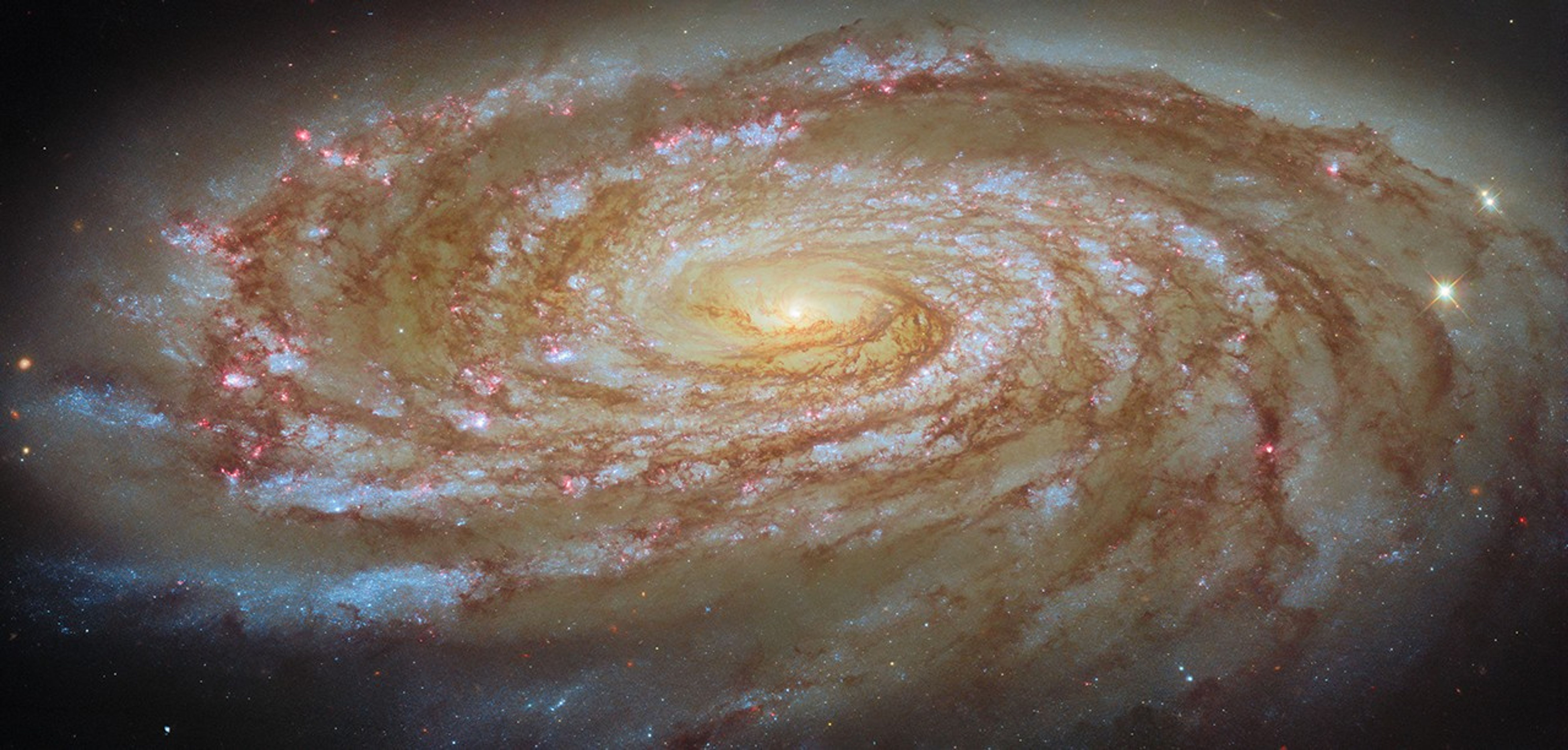
The focus of this NASA/ESA Hubble Space Telescope image released on May 29, 2026, is an active spiral galaxy on a journey lasting hundreds of millions of years. The galaxy Messier 88 (M88), also known as NGC 4501, is located about 63 million light-years away in the constellation Coma Berenices (Berenice’s Hair).
M88 is an active galaxy, which means that its center harbors a supermassive black hole that is snacking on gas and dust. Astronomers estimate the black hole is around 100 million times as massive as the Sun, and it appears to be powering outflows of gas from the galaxy’s center.
Image credit: ESA/Hubble & NASA, D. Thilker
Journey to the Center of the Virgo Cluster
The focus of this NASA/ESA Hubble Space Telescope image released on May 29, 2026, is an active spiral galaxy on a journey lasting hundreds of millions of years. The galaxy Messier 88 (M88), also known as NGC 4501, is located about 63 million light-years away in the constellation Coma Berenices (Berenice’s Hair).
M88 is an active galaxy, which means that its center harbors a supermassive black hole that is snacking on gas and dust. Astronomers estimate the black hole is around 100 million times as massive as the Sun, and it appears to be powering outflows of gas from the galaxy’s center.
Image credit: ESA/Hubble & NASA, D. Thilker
Here's Why So Many Massive Galaxies in the Early Universe Stop Forming Stars
The early Universe is full of massive galaxies that stopped forming stars very early. They're called massive quenchers (MQ) and they're challenging to explain. New research shows that another type of galaxy, dusty star-forming galaxies (DSFGs) can explain why. It's all about mergers, starbursts, and AGN feedback.
Landmark pancreatic cancer treatment paves way for targeting other tricky tumors
Unprecedented results against a stubbornly hard-to-treat cancer are boosting optimism that other challenging tumors will be next