
Feed aggregator
There’s an 82 percent chance El Niño will ‘emerge soon,’ NWS says
The El Niño climate event is due to return this year, with U.S. forecasters predicting an 82 percent chance of it coming in May through July and a 96 percent chance for it doing so in December through February 2027
‘Golden rule’ in abstract art just discovered by mathematicians
A mathematical ratio could explain why AI-generated art doesn’t evoke awe from viewers
A Cataclysmic Upswelling of Groundwater Carved This Channel on Mars
Shalbatana Vallis is a 1300 km water channel on Mars. It was carved out in one cataclysmic flooding event, possibly triggered by a massive impact. It's more evidence that liquid water once flowed on Mars.
Implantable ‘living materials’ that deliver drugs on demand could help fight infections
In a “breakthrough,” researchers demonstrate how engineered bacteria held in a jellylike container could help fight infection in mice
UC Student Gets a Closer Look at Lonely Gas Giant
University of Cincinnati astrophysicist Paul Smith is part of an international team studying TOI-2031Ab, a gas giant orbiting a star 901 light years from Earth. Smith and his colleagues used the James Webb Space Telescope to study its atmosphere.
Doubts grow over theory that bird-watchers’ trip to Argentine landfill sparked hantavirus outbreak
The hantavirus cruise outbreak may not have started in a garbage dump in Ushuaia, Argentina, after all
The Roman Space Telescope is Ahead of Schedule, and the Hubble is Giving it a Jump Start
One of the core community surveys of NASA’s Nancy Grace Roman Space Telescope, the Galactic Bulge Time-Domain Survey, is expected to locate over a thousand exoplanets that orbit far away from their stars, beyond the orbital distance of Earth from the Sun. Although Roman hasn’t launched yet, astronomers already are gathering useful supporting data by utilizing NASA's Hubble Space Telescope, which could assist astronomers in analyzing Roman data.
NASA’s Psyche mission is snapping photos of Mars on its way to an asteroid
The Psyche spacecraft is bound for a metal-rich asteroid that it will examine up close starting in 2029. But first, it needs to swing past the Red Planet
NASA, Industry Prepare Cryogenic Fuel Technology Demo
2 min read
Preparations for Next Moonwalk Simulations Underway (and Underwater)NASA is collaborating with Eta Space of Rockledge, Florida, on an in‑orbit technology demonstration to advance a key capability for future deep space missions. The Liquid Oxygen Flight Demonstration, or LOXSAT, will test cryogenic fluid management technologies necessary for creating in-space propellant depots, essentially gas stations in space, that could support long-term exploration.
The LOXSAT payload is displayed inside Rocket Lab’s Spacecraft Production Complex in Long Beach, California. Rocket Lab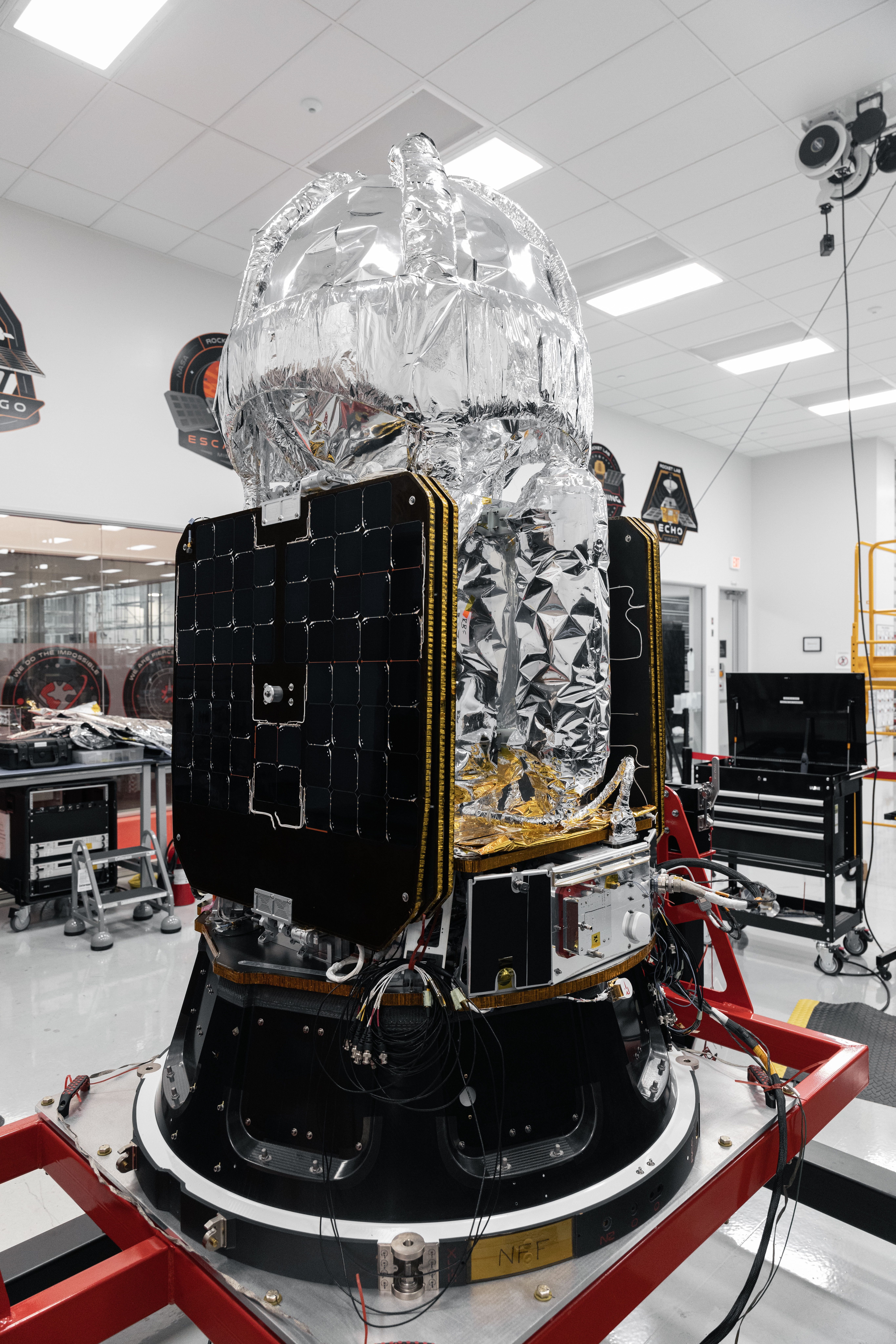
During a nine-month mission, LOXSAT will demonstrate 11 cryogenic fluid management technologies. Eta Space built LOXSAT as part of a NASA Tipping Point opportunity, and Rocket Lab is providing spacecraft and launch services to deliver it to low Earth orbit. The LOXSAT payload has been integrated with a Rocket Lab Photon satellite bus and will launch aboard the company’s Electron rocket from Launch Complex 1 on New Zealand’s Mahia Peninsula no earlier than July 17.
The technologies that LOXSAT will demonstrate were selected to address the core challenges of using cryogenic, or super-cold, propellants in microgravity, including reducing boiloff, transferring propellant, maintaining tank pressure, and gauging propellant levels. Data collected from these tests will support development of future in-space propellant depots that could refuel spacecraft as they journey to the Moon, Mars, or other deep space destinations.
Members of NASA’s Cryogenic Fluid Management project tour Rocket Lab’s Spacecraft Production Complex in Long Beach, California, on Thursday, Feb. 12, 2026 . The portfolio project team had the opportunity to view the LOXSAT payload and the setup for vibration testing. CreditRocket Lab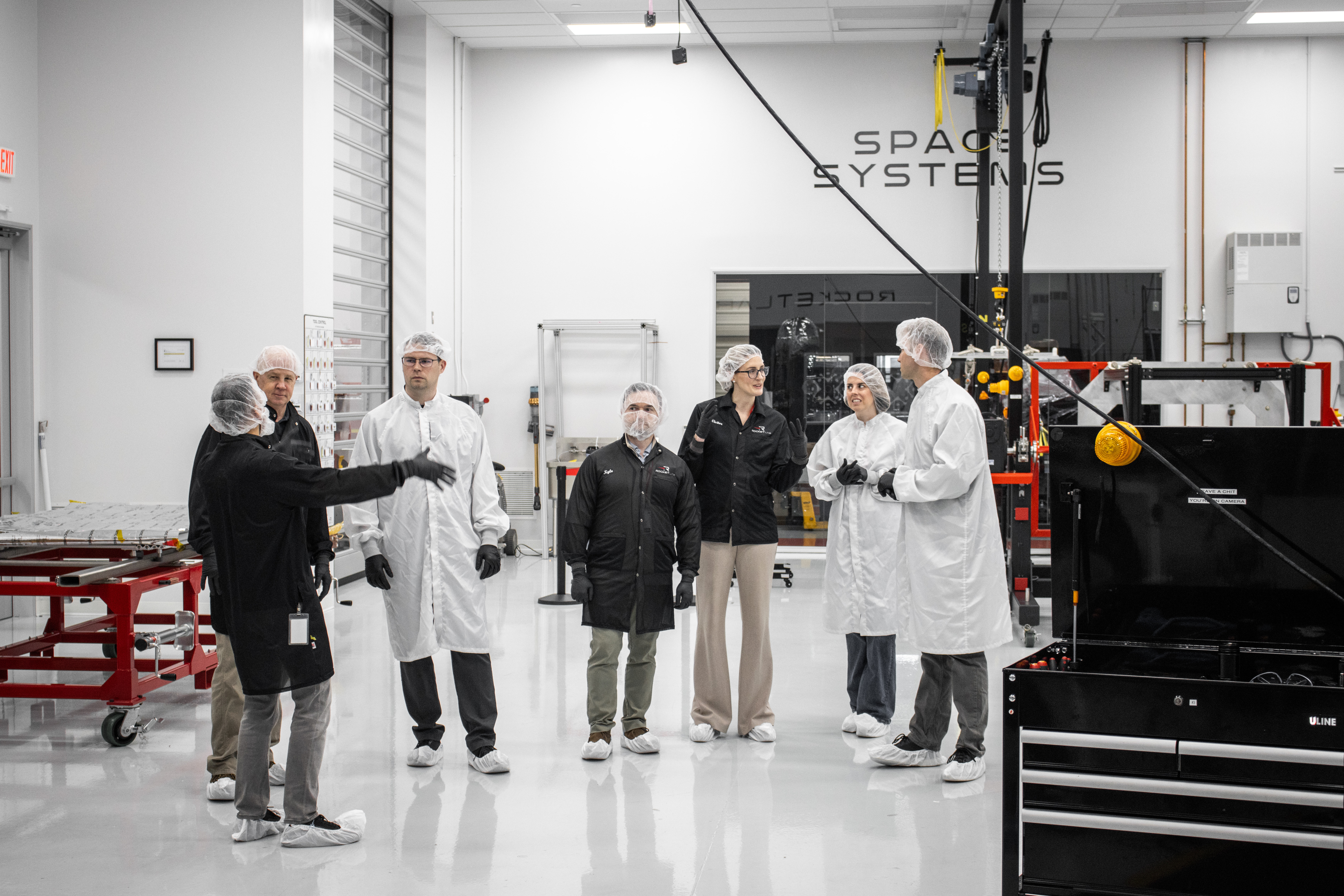
NASA’s LOXSAT team is composed of members of the Cryogenic Fluid Management Portfolio Project from NASA’s Marshall Space Flight Center in Huntsville, Alabama, Glenn Research Center in Cleveland, and Kennedy Space Center in Florida. The cryogenic portfolio’s work is part of NASA’s Space Technology Mission Directorate and includes more than 20 individual technology development activities.
To learn more, visit:
Share Details Last Updated May 15, 2026 EditorLee MohonContactJoel Wallacejoel.w.wallace@nasa.govLocationMarshall Space Flight Center Related Terms Explore More 3 min read Ice to Fuel: NASA Tests Technology for Refueling Landers Article 2 months ago 4 min read Stay Cool: NASA Tests Innovative Technique for Super Cold Fuel Storage Article 10 months ago 3 min read NASA Propellant Tech Could Fuel Long-Duration Missions Article 1 year ago Keep Exploring Discover Related TopicsMissions
Humans in Space
Climate Change
Solar System
NASA, Industry Prepare Cryogenic Fuel Technology Demo
2 min read
Preparations for Next Moonwalk Simulations Underway (and Underwater)NASA is collaborating with Eta Space of Rockledge, Florida, on an in‑orbit technology demonstration to advance a key capability for future deep space missions. The Liquid Oxygen Flight Demonstration, or LOXSAT, will test cryogenic fluid management technologies necessary for creating in-space propellant depots, essentially gas stations in space, that could support long-term exploration.
The LOXSAT payload is displayed inside Rocket Lab’s Spacecraft Production Complex in Long Beach, California. Rocket LabDuring a nine-month mission, LOXSAT will demonstrate 11 cryogenic fluid management technologies. Eta Space built LOXSAT as part of a NASA Tipping Point opportunity, and Rocket Lab is providing spacecraft and launch services to deliver it to low Earth orbit. The LOXSAT payload has been integrated with a Rocket Lab Photon satellite bus and will launch aboard the company’s Electron rocket from Launch Complex 1 on New Zealand’s Mahia Peninsula no earlier than July 17.
The technologies that LOXSAT will demonstrate were selected to address the core challenges of using cryogenic, or super-cold, propellants in microgravity, including reducing boiloff, transferring propellant, maintaining tank pressure, and gauging propellant levels. Data collected from these tests will support development of future in-space propellant depots that could refuel spacecraft as they journey to the Moon, Mars, or other deep space destinations.
Members of NASA’s Cryogenic Fluid Management project tour Rocket Lab’s Spacecraft Production Complex in Long Beach, California, on Thursday, Feb. 12, 2026 . The portfolio project team had the opportunity to view the LOXSAT payload and the setup for vibration testing. CreditRocket LabNASA’s LOXSAT team is composed of members of the Cryogenic Fluid Management Portfolio Project from NASA’s Marshall Space Flight Center in Huntsville, Alabama, Glenn Research Center in Cleveland, and Kennedy Space Center in Florida. The cryogenic portfolio’s work is part of NASA’s Space Technology Mission Directorate and includes more than 20 individual technology development activities.
To learn more, visit:
Share Details Last Updated May 15, 2026 EditorLee MohonContactJoel Wallacejoel.w.wallace@nasa.govLocationMarshall Space Flight Center Related Terms Explore More 3 min read Ice to Fuel: NASA Tests Technology for Refueling Landers Article 2 months ago 4 min read Stay Cool: NASA Tests Innovative Technique for Super Cold Fuel Storage Article 10 months ago 3 min read NASA Propellant Tech Could Fuel Long-Duration Missions Article 1 year ago Keep Exploring Discover Related TopicsMissions
Humans in Space
Climate Change
Solar System
Can helium-3 create a ‘gold rush’ on the moon?
The rare isotope helium-3 is one of Earth’s most precious commodities—so precious, in fact, that it might prove profitable to mine from the moon
Vocal fry is more common in men, actually, find scientists
Vocal fry is more common in men, actually, find scientists
Fresh Food Delivery for Space Station
Fresh Food Delivery for Space Station
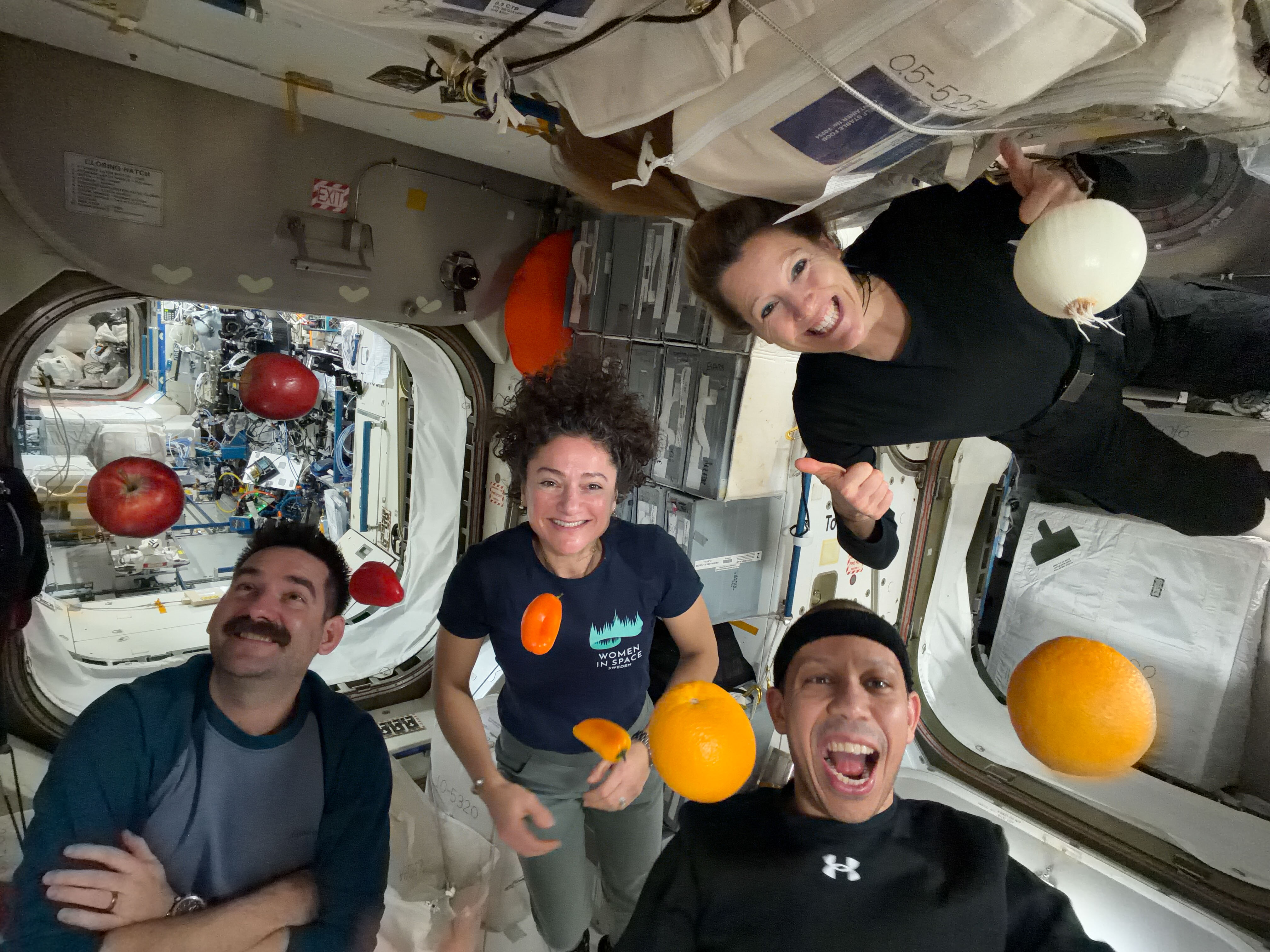
NASA astronauts Jack Hathaway (bottom left), Jessica Meir (middle left), and Chris Williams (bottom right), and ESA (European Space Agency) astronaut Sophie Adenot (top right) have some fun with food and microgravity in this April 19, 2026, photo.
Northrop Grumman’s Cygnus XL cargo spacecraft delivered a shipment of fresh food, including oranges, apples, onions, and peppers, to the International Space Station. Cygnus XL also brought over 2,300 pounds of new research hardware and science experiments that the space station crew will use to explore blood stem cells to treat cancers and blood disorders and study ways to protect astronaut gut health. Other gear delivered aboard Cygnus XL include an advanced exercise system from ESA, new eye-imaging hardware, oxygen and nitrogen tanks to recharge spacesuits, and more.
Image credit: NASA/Chris Williams
Fresh Food Delivery for Space Station
NASA astronauts Jack Hathaway (bottom left), Jessica Meir (middle left), and Chris Williams (bottom right), and ESA (European Space Agency) astronaut Sophie Adenot (top right) have some fun with food and microgravity in this April 19, 2026, photo.
Northrop Grumman’s Cygnus XL cargo spacecraft delivered a shipment of fresh food, including oranges, apples, onions, and peppers, to the International Space Station. Cygnus XL also brought over 2,300 pounds of new research hardware and science experiments that the space station crew will use to explore blood stem cells to treat cancers and blood disorders and study ways to protect astronaut gut health. Other gear delivered aboard Cygnus XL include an advanced exercise system from ESA, new eye-imaging hardware, oxygen and nitrogen tanks to recharge spacesuits, and more.
Image credit: NASA/Chris Williams
NASA's Perseverance Rover Is About To Finish A Marathon
Perseverance has travelled almost 26 miles, or 42 km. That's just shy of a marathon, which is 26.2 miles or 42.195 kilometers. Along the way, it's abraded and studied 62 rocks and collected 27 rock cores. And it's not done yet.