
Feed aggregator
NASA Welcomes 16th Deputy Administrator Matt Anderson

Matt Anderson was sworn in Thursday as NASA’s 16th deputy administrator by NASA Administrator Jared Isaacman. The oath was taken during a ceremony held at the Eisenhower Executive Office Building in Washington.
As NASA deputy administrator, Anderson will help lead the agency’s efforts to execute the President’s national space policy, strengthen America’s leadership in space, and advance NASA’s missions in exploration, science, and aeronautics.
“Matt Anderson brings exactly the kind of operational leadership, technical expertise, and mission focus NASA needs right now,” said NASA Administrator Jared Isaacman. “His decades of experience across the Air Force, Space Command, and the aerospace industry give him a valuable perspective as we work to strengthen America’s leadership in space and enter the next era of exploration. I’m excited to have him helping lead NASA as we take on the near-impossible and push the boundaries of what we can achieve.”
“I’m deeply honored to serve as the deputy administrator and support the men and women across NASA who carry out some of the most ambitious and important work in the world,” said NASA Deputy Administrator Matt Anderson. “NASA has been entrusted with a mission of enormous strategic, scientific, and economic significance, and delivering on that mission will require disciplined execution, technical excellence, and a strong culture of accountability. I’m grateful to President Trump for the trust and confidence he has placed in me with this nomination, and I look forward to serving alongside Administrator Isaacman and the extraordinary NASA workforce as we strengthen America’s leadership in space and build toward the next golden era of space exploration.”
“NASA succeeds when we pair clear mission goals with empowered teams and disciplined execution,” said NASA Associate Administrator Amit Kshatriya. “Matt Anderson has spent his career leading in complex operational environments where the stakes are high and mission success depends on trust in the people doing the work. I look forward to working with him as we continue building the capabilities, partnerships, and workforce needed for the challenging missions ahead of us.”
Anderson was nominated by President Donald J. Trump on Jan. 13, and confirmed by the U.S. Senate on May 18.
Read Anderson’s official biography on the agency’s website:
https://www.nasa.gov/people/matt-anderson
-end-
Bethany Stevens / George Alderman
Headquarters, Washington
202-358-1600
bethany.c.stevens@nasa.gov / george.a.alderman@nasa.gov
NASA Welcomes 16th Deputy Administrator Matt Anderson
Matt Anderson was sworn in Thursday as NASA’s 16th deputy administrator by NASA Administrator Jared Isaacman. The oath was taken during a ceremony held at the Eisenhower Executive Office Building in Washington.
As NASA deputy administrator, Anderson will help lead the agency’s efforts to execute the President’s national space policy, strengthen America’s leadership in space, and advance NASA’s missions in exploration, science, and aeronautics.
“Matt Anderson brings exactly the kind of operational leadership, technical expertise, and mission focus NASA needs right now,” said NASA Administrator Jared Isaacman. “His decades of experience across the Air Force, Space Command, and the aerospace industry give him a valuable perspective as we work to strengthen America’s leadership in space and enter the next era of exploration. I’m excited to have him helping lead NASA as we take on the near-impossible and push the boundaries of what we can achieve.”
“I’m deeply honored to serve as the deputy administrator and support the men and women across NASA who carry out some of the most ambitious and important work in the world,” said NASA Deputy Administrator Matt Anderson. “NASA has been entrusted with a mission of enormous strategic, scientific, and economic significance, and delivering on that mission will require disciplined execution, technical excellence, and a strong culture of accountability. I’m grateful to President Trump for the trust and confidence he has placed in me with this nomination, and I look forward to serving alongside Administrator Isaacman and the extraordinary NASA workforce as we strengthen America’s leadership in space and build toward the next golden era of space exploration.”
“NASA succeeds when we pair clear mission goals with empowered teams and disciplined execution,” said NASA Associate Administrator Amit Kshatriya. “Matt Anderson has spent his career leading in complex operational environments where the stakes are high and mission success depends on trust in the people doing the work. I look forward to working with him as we continue building the capabilities, partnerships, and workforce needed for the challenging missions ahead of us.”
Anderson was nominated by President Donald J. Trump on Jan. 13, and confirmed by the U.S. Senate on May 18.
Read Anderson’s official biography on the agency’s website:
https://www.nasa.gov/people/matt-anderson
-end-
Bethany Stevens / George Alderman
Headquarters, Washington
202-358-1600
bethany.c.stevens@nasa.gov / george.a.alderman@nasa.gov
Watch SpaceX launch Starship V3—the tallest and most powerful rocket yet
Friday’s flight could be the most pivotal test of the Starship megarocket
NASA Highlights 2025 International Space Station Science Results
To dive deeper into the International Space Station research achievements from the past year, browse the 2025 Annual Highlights of Results, which NASA released in May 2026.
In 2025, researchers using the orbital laboratory conducted more than 750 investigations that advanced understanding of life in space, drove innovations to benefit people on Earth, and supported NASA’s exploration of the Moon and Mars.
Results include a study that could protect astronaut performance on future long-duration missions and a biomaterials investigation aimed at advancing tissue engineering and regenerative medicine.
Miniaturizing surgery The Robotic Surgery Tech Demo device is shown simulating a surgical task with rubber bands on Earth.Virtual Incision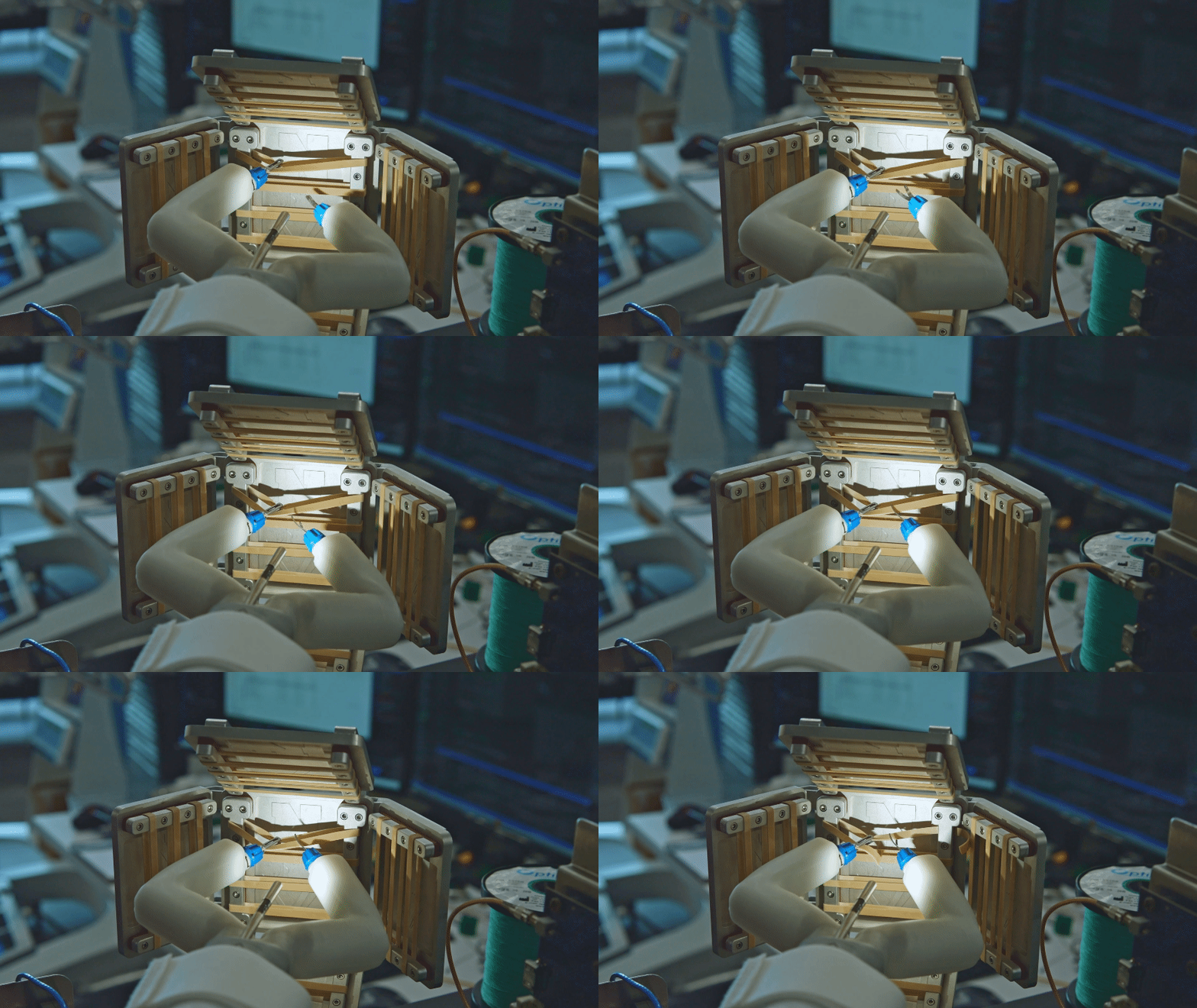
NASA evaluated whether a miniature robotic system could perform surgical tasks in microgravity. Researchers used rubber bands to simulate surgical tasks aboard the space station, allowing them to observe communication delays from Earth and test robotic precision in space during remote operations. Results showed that while timing delays increased the duration of procedures, they had minimal impact on robotic accuracy.
This research demonstrates that precise surgical procedures could one day be performed in space, including at a future lunar base or on Mars. Robotic surgery also offers a compact, reliable option for performing medical procedures in remote places on Earth.
Learn more about the Robotic Surgery Tech Demo
Levitating bone growth Images show calcium phosphate crystals grown in space (left) and on Earth (right). Synthetic bone graft materials developed aboard the International Space Station showed strong support for bone growth and healthy tissue formation.Komlev, Biomedical Technology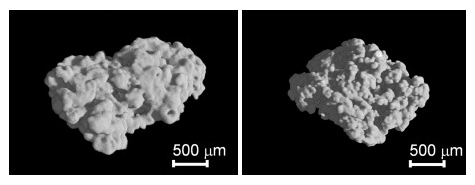
The Roscosmos investigation Magnetic 3D Bioprinter used magnetic levitation to form complex tissue structures in microgravity with high precision and minimal materials. Researchers used this technique to position calcium crystals into structures that can serve as synthetic bone grafts to promote new bone growth. Samples formed in microgravity showed superior structural organization and a high capacity for bone tissue regeneration. Astronauts experience bone loss in space and may face a higher risk of bone fractures during long-duration exploration missions.
This research could one day allow astronauts to fabricate medical treatments on demand to address skeletal injuries far from Earth.
Melanin infused materials The International Space Station’s robotic manipulator, Dextre, hovers above Materials International Space Station Experiment-13 sample hardware during operations outside the space station.NASA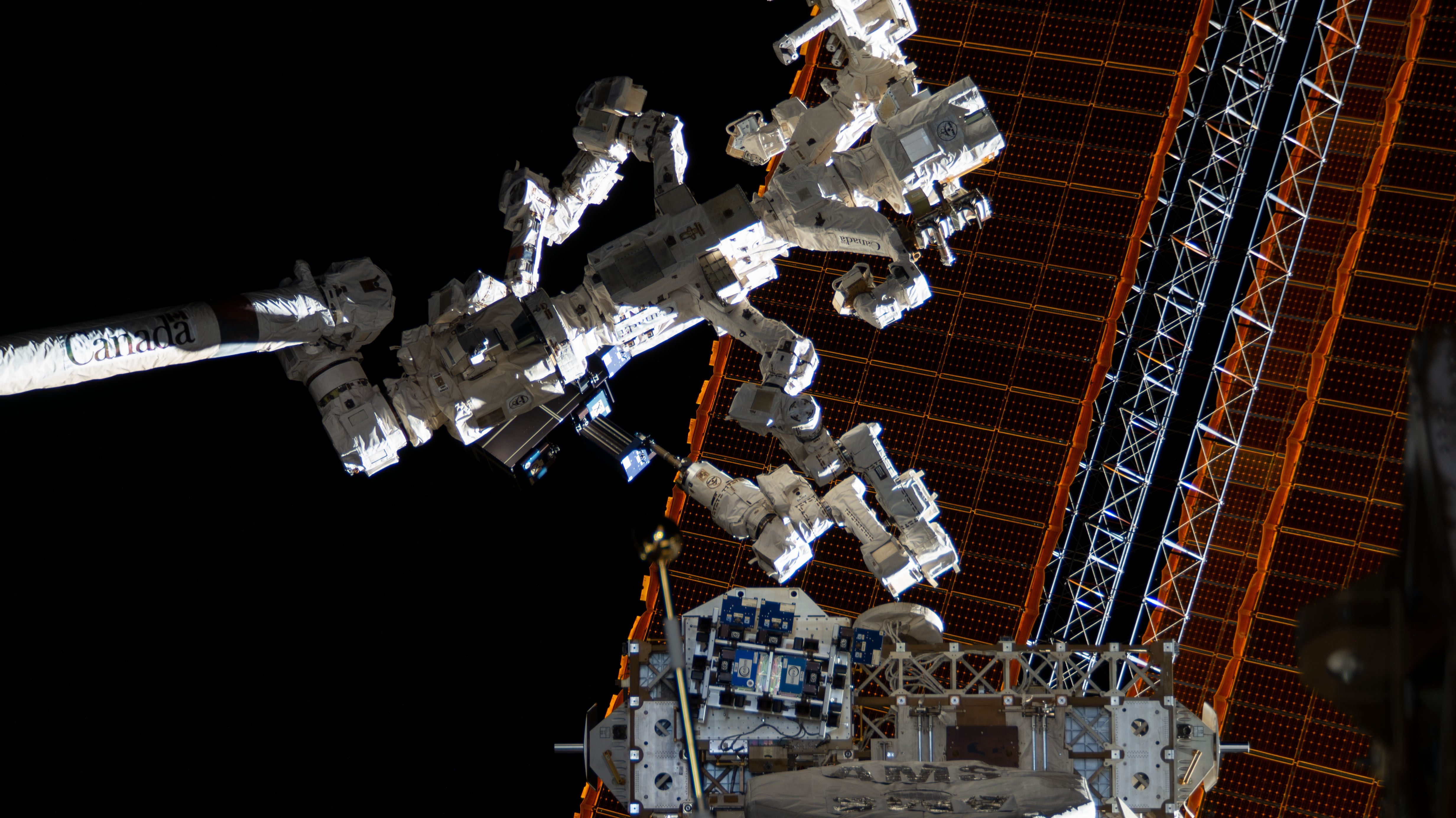
NASA examined how prolonged exposure to the vacuum of space affects the performance and durability of materials used in space exploration. Researchers exposed polymers, thermal protection systems, spacesuit components, and radiation-shielding materials to the space environment for six months. The research also tested several biomaterials infused with different types of melanin, a naturally occurring pigment that protects against ultraviolet radiation. The materials infused with fungal melanin showed the greatest resistance to radiation damage.
Biologically derived materials offer a lightweight, sustainable option for radiation shielding during future missions beyond Earth, with potential applications on Earth in medical protection, UV defense, and radiation-resistant structures.
Learn more about the Materials International Space Station Experiment-13-NASA (MISSE-13-NASA) investigation.
Power that endures The All Solid-state Lithium Ion Battery investigation is shown near the top center, mounted on the exterior of the International Space Station on the Japanese Experiment Module exposed facility.NASA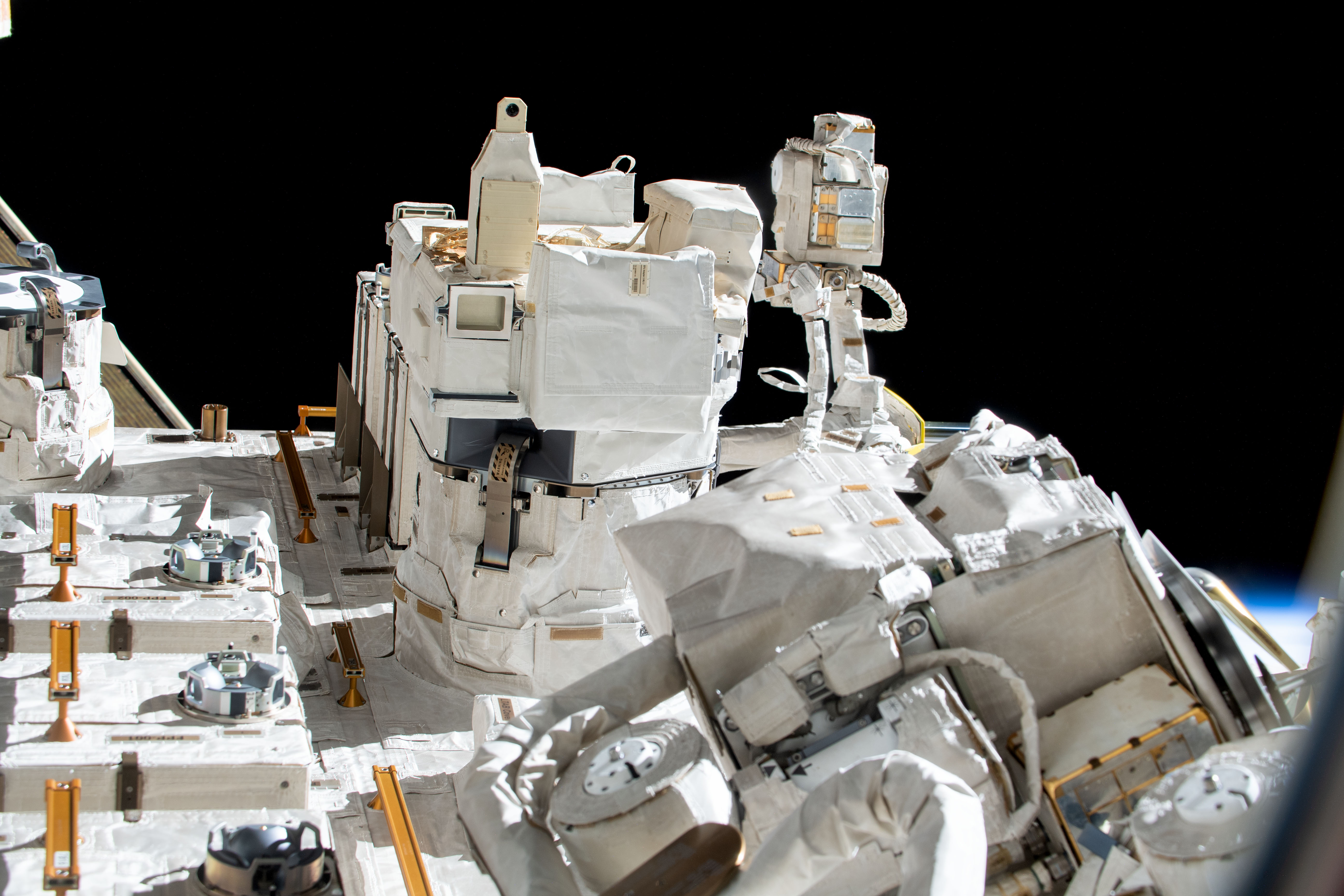
A JAXA (Japan Aerospace Exploration Agency) investigation studied the stable operation of all solid-state lithium ion batteries in space, including under extreme temperature swings and vacuum. Compared to conventional lithium ion batteries, these batteries are believed to operate across a wider temperature range, offer greater chemical stability, and provide increased ignition resistance.
Researchers assembled a battery pack from multiple all solid-state lithium ion batteries in space and exposed it to space for 434 days to track performance, degradation, and radiation response. The battery pack showed stable electrical behavior, no signs of degradation, and only a 2% loss in capacity. These results demonstrate that these batteries could provide safer, more reliable power systems for missions to the Moon and Mars, as well as for use in extreme environments on Earth.
Learn more about the Space Demonstration for All Solid-state Lithium Ion Battery investigation.
Runway return Test subject Lance Dean performs a manual control task in the Neurosciences Laboratory’s Motion Simulator at NASA’s Johnson Space Center in Houston.NASA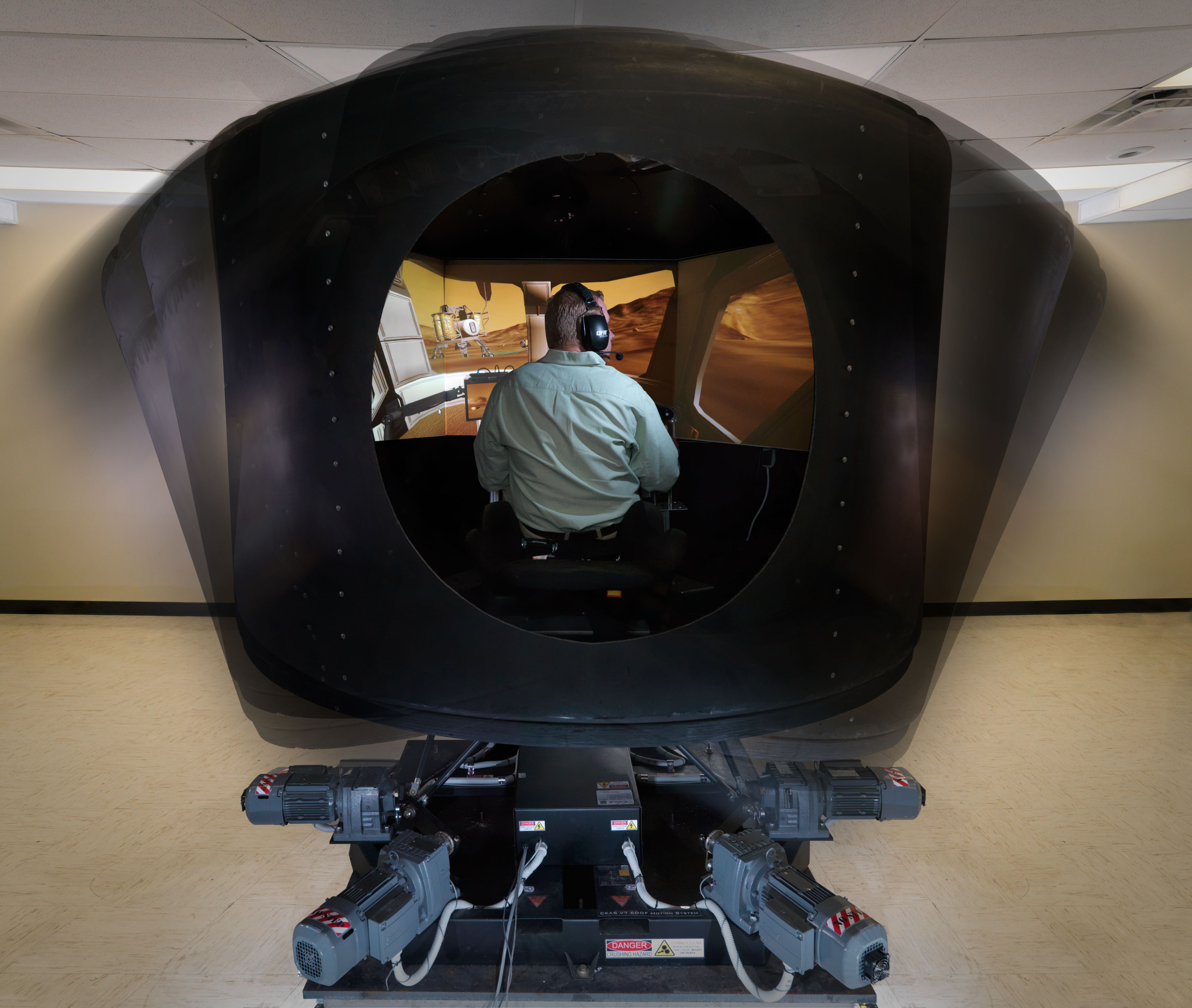
NASA continues to study how long-duration spaceflight affects astronauts’ ability to pilot and perform complex tasks after landing. Five experienced astronauts completed simulated aircraft landings before and after their space station missions. The astronauts’ results showed degraded performance after returning to Earth, including higher touchdown speeds and navigational errors. However, most pilots returned to baseline during a second attempt on the same day.
These findings suggest that long-term exposure to microgravity can temporarily diminish critical piloting skills, highlighting the need for countermeasures that help astronauts maintain their abilities after space travel.
Learn more about NASA’s Manual Control investigation.
Tracking electrical phenomena from space Blue lightning flashes illuminate cloud tops near the Pacific coast of central Mexico in June 2025 in an image taken from the International Space Station.NASA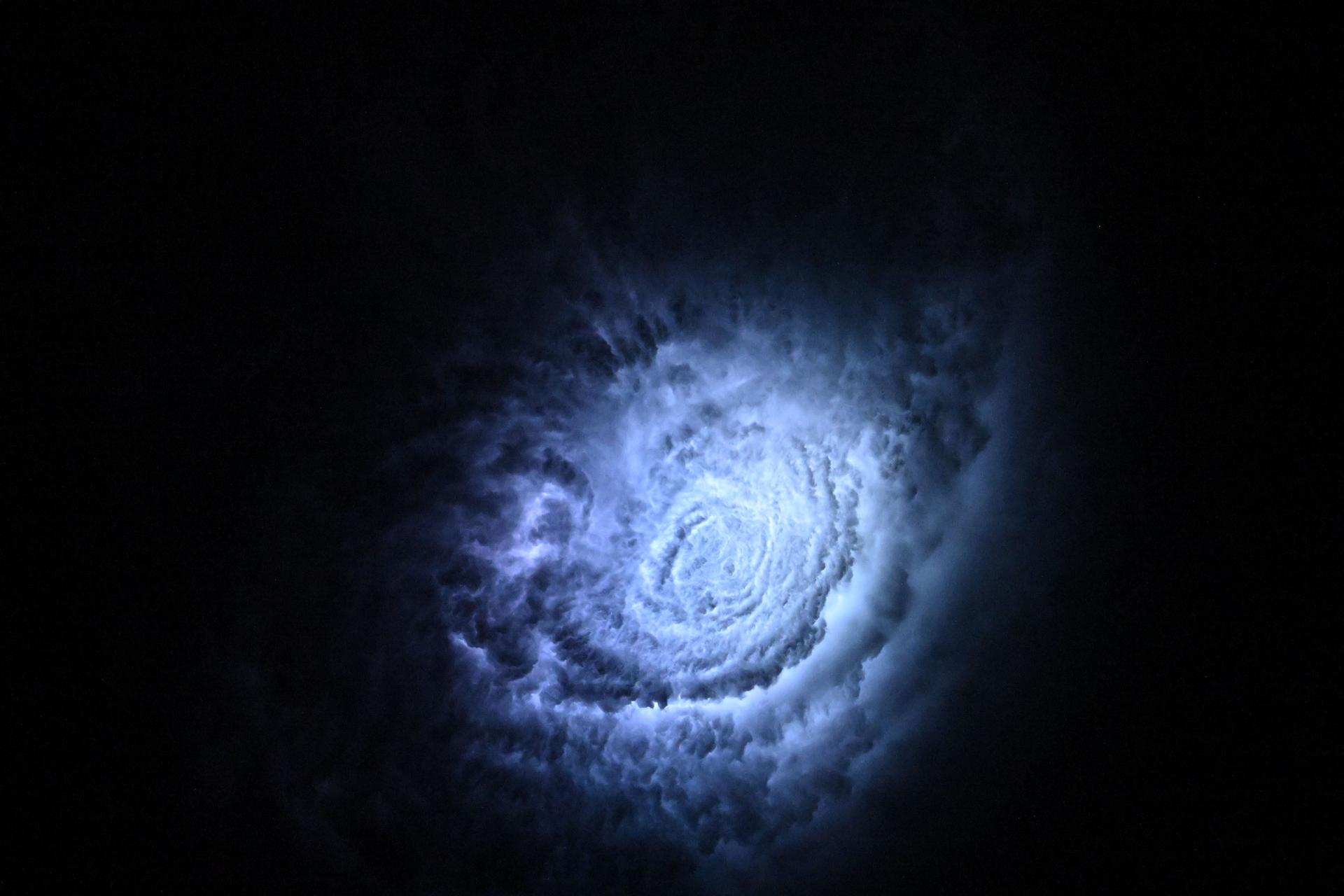
The European Space Agency is studying electrical phenomena that occur above severe thunderstorms, including colorful sprays of energy and light known as sprites, blue jets, and elves. Researchers combined the observations with radio measurements from ground-based receivers to confirm powerful bursts of electricity above thunderstorms can generate enough energy to trigger elves. The team also found a correlation between the brightness of blue flashes and electrical current, improving our ability to model energy transfer between the upper atmosphere and the edge of space.
Tracking this activity could enhance severe weather prediction and deepen understanding of the upper atmosphere, a region critical for satellite operations and communication systems.
Learn more about the Atmosphere-Space Interactions Monitor investigation.
Throughout more than two decades of operations, researchers from more than 110 nations have carried out 4,000-plus experiments, producing over 5,000 scientific publications. Space station research has been cited more than 100,000 times in scientific journals.
Keep Exploring Discover More Topics From NASASpace Station Research Results
International Space Station
Latest News from Space Station Research
Space Station Research and Technology Resources
NASA Highlights 2025 International Space Station Science Results
To dive deeper into the International Space Station research achievements from the past year, browse the 2025 Annual Highlights of Results, which NASA released in May 2026.
In 2025, researchers using the orbital laboratory conducted more than 750 investigations that advanced understanding of life in space, drove innovations to benefit people on Earth, and supported NASA’s exploration of the Moon and Mars.
Results include a study that could protect astronaut performance on future long-duration missions and a biomaterials investigation aimed at advancing tissue engineering and regenerative medicine.
Miniaturizing surgery The Robotic Surgery Tech Demo device is shown simulating a surgical task with rubber bands on Earth.Virtual IncisionNASA evaluated whether a miniature robotic system could perform surgical tasks in microgravity. Researchers used rubber bands to simulate surgical tasks aboard the space station, allowing them to observe communication delays from Earth and test robotic precision in space during remote operations. Results showed that while timing delays increased the duration of procedures, they had minimal impact on robotic accuracy.
This research demonstrates that precise surgical procedures could one day be performed in space, including at a future lunar base or on Mars. Robotic surgery also offers a compact, reliable option for performing medical procedures in remote places on Earth.
Learn more about the Robotic Surgery Tech Demo
Levitating bone growth Images show calcium phosphate crystals grown in space (left) and on Earth (right). Synthetic bone graft materials developed aboard the International Space Station showed strong support for bone growth and healthy tissue formation.Komlev, Biomedical TechnologyThe Roscosmos investigation Magnetic 3D Bioprinter used magnetic levitation to form complex tissue structures in microgravity with high precision and minimal materials. Researchers used this technique to position calcium crystals into structures that can serve as synthetic bone grafts to promote new bone growth. Samples formed in microgravity showed superior structural organization and a high capacity for bone tissue regeneration. Astronauts experience bone loss in space and may face a higher risk of bone fractures during long-duration exploration missions.
This research could one day allow astronauts to fabricate medical treatments on demand to address skeletal injuries far from Earth.
Melanin infused materials The International Space Station’s robotic manipulator, Dextre, hovers above Materials International Space Station Experiment-13 sample hardware during operations outside the space station.NASANASA examined how prolonged exposure to the vacuum of space affects the performance and durability of materials used in space exploration. Researchers exposed polymers, thermal protection systems, spacesuit components, and radiation-shielding materials to the space environment for six months. The research also tested several biomaterials infused with different types of melanin, a naturally occurring pigment that protects against ultraviolet radiation. The materials infused with fungal melanin showed the greatest resistance to radiation damage.
Biologically derived materials offer a lightweight, sustainable option for radiation shielding during future missions beyond Earth, with potential applications on Earth in medical protection, UV defense, and radiation-resistant structures.
Learn more about the Materials International Space Station Experiment-13-NASA (MISSE-13-NASA) investigation.
Power that endures The All Solid-state Lithium Ion Battery investigation is shown near the top center, mounted on the exterior of the International Space Station on the Japanese Experiment Module exposed facility.NASAA JAXA (Japan Aerospace Exploration Agency) investigation studied the stable operation of all solid-state lithium ion batteries in space, including under extreme temperature swings and vacuum. Compared to conventional lithium ion batteries, these batteries are believed to operate across a wider temperature range, offer greater chemical stability, and provide increased ignition resistance.
Researchers assembled a battery pack from multiple all solid-state lithium ion batteries in space and exposed it to space for 434 days to track performance, degradation, and radiation response. The battery pack showed stable electrical behavior, no signs of degradation, and only a 2% loss in capacity. These results demonstrate that these batteries could provide safer, more reliable power systems for missions to the Moon and Mars, as well as for use in extreme environments on Earth.
Learn more about the Space Demonstration for All Solid-state Lithium Ion Battery investigation.
Runway return Test subject Lance Dean performs a manual control task in the Neurosciences Laboratory’s Motion Simulator at NASA’s Johnson Space Center in Houston.NASANASA continues to study how long-duration spaceflight affects astronauts’ ability to pilot and perform complex tasks after landing. Five experienced astronauts completed simulated aircraft landings before and after their space station missions. The astronauts’ results showed degraded performance after returning to Earth, including higher touchdown speeds and navigational errors. However, most pilots returned to baseline during a second attempt on the same day.
These findings suggest that long-term exposure to microgravity can temporarily diminish critical piloting skills, highlighting the need for countermeasures that help astronauts maintain their abilities after space travel.
Learn more about NASA’s Manual Control investigation.
Tracking electrical phenomena from space Blue lightning flashes illuminate cloud tops near the Pacific coast of central Mexico in June 2025 in an image taken from the International Space Station.NASAThe European Space Agency is studying electrical phenomena that occur above severe thunderstorms, including colorful sprays of energy and light known as sprites, blue jets, and elves. Researchers combined the observations with radio measurements from ground-based receivers to confirm powerful bursts of electricity above thunderstorms can generate enough energy to trigger elves. The team also found a correlation between the brightness of blue flashes and electrical current, improving our ability to model energy transfer between the upper atmosphere and the edge of space.
Tracking this activity could enhance severe weather prediction and deepen understanding of the upper atmosphere, a region critical for satellite operations and communication systems.
Learn more about the Atmosphere-Space Interactions Monitor investigation.
Throughout more than two decades of operations, researchers from more than 110 nations have carried out 4,000-plus experiments, producing over 5,000 scientific publications. Space station research has been cited more than 100,000 times in scientific journals.
Keep Exploring Discover More Topics From NASASpace Station Research Results
International Space Station
Latest News from Space Station Research
Space Station Research and Technology Resources
Study Shows How Sunspot Activity Speeds Up Reentries
It’s getting crowded up there. Over the past few years, the advent of SpaceX’s Starlink and other players in the mega-satellite constellation game are adding an exponential load of satellites and orbital debris to the low Earth orbit environment. But all that goes up, must eventually come down. Now, a new study looks at solar activity over time as a predictor for how reentries trend.
Join ESA for a total solar eclipse on 12 August 2026
Follow the total solar eclipse with the European Space Agency (ESA), in person or online.
Insights into Earth’s molten outer core from space
The liquid iron in Earth’s outer core doesn’t always behave as expected. When it changed direction in an unexplained way, ESA satellites provided data on the direction of flow, helping scientists gain better insight into the dynamics at the centre of our planet.
SNAPPY CubeSat Takes Flight to Test Space-Based Neutrino Detectors
Neutrinos, the second most common fundamental particles in the universe, are notoriously difficult to detect. So far we’ve only been able to do so by building giant vats of water far underground with hundreds of photodetectors watching for brief flashes of light. But a new CubeSat mission hopes to change that dynamic and enable the neutrino detectors of the future a much less constrained and expensive existence - in space.
Women’s better memories may delay Alzheimer’s diagnosis by years
Women’s better memories may delay Alzheimer’s diagnosis by years
Daddy longlegs are actually bloodthirsty killers—of frogs
The wobbly, lanky arachnids known as harvestmen or daddy longlegs may be overlooked as predators of small vertebrates such as frogs, researchers say
Lunar Robots: NASA Spotlights Moon Base at 2026 FIRST Robotics Competition
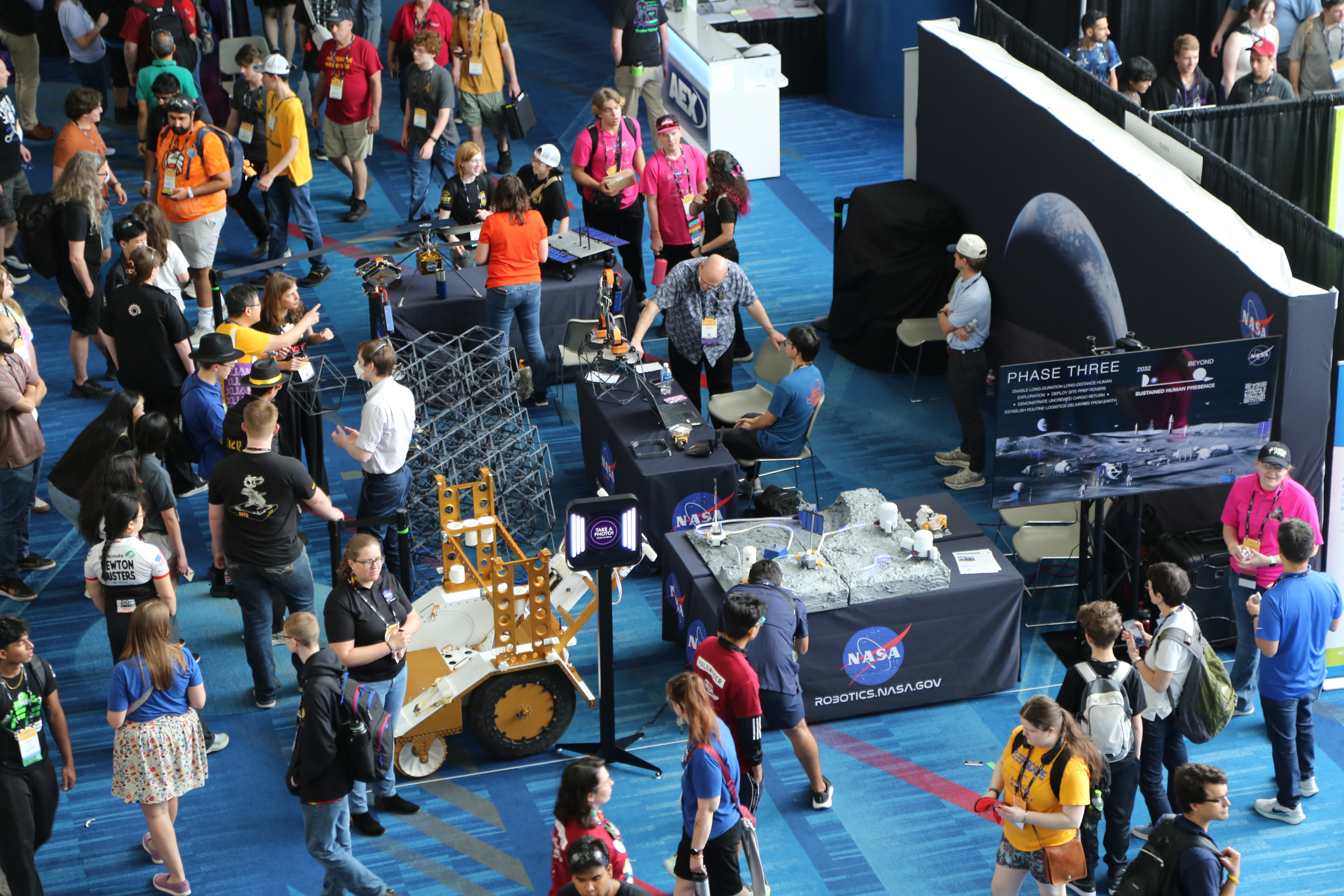
Robotics will play a critical role in NASA’s ambitious plan to establish a long-term presence on the Moon, presenting opportunities for the next generation of engineers, technologists, and innovators to contribute to a bold vision for the future.
That was the agency’s message to students, partners, and industry leaders at the 2026 FIRST Robotics World Championship in Houston, where more than 1,000 student teams convened for exciting competitions and hands-on experiences.
NASA connected directly with the future workforce at the event, engaging more than 51,000 students, parents, and mentors through interactive exhibits and discussions. The agency highlighted its plan to construct a permanent lunar outpost – Moon Base – that will serve as a hub for lunar exploration, scientific research, and technology demonstration, laying the foundation for future missions to Mars and beyond. Phase 1 of NASA’s Moon Base plan centers around a rapid series of robotic and early uncrewed missions to scout, experiment, and prepare for surface operations ahead of crewed Artemis missions. That includes an accelerated cadence of CLPS (Commercial Lunar Payload Services) flights, with up to 30 robotic lunar landings targeted for 2027, to expedite the delivery of science and technology payloads including rovers, hoppers, and drones.
NASA’s exhibit included a model of Moon Base, the agency’s plan for a permanent lunar outpost. NASA
A Moon Base model was a focal point of NASA’s exhibit. Other displays highlighted key innovations such as:
- Automated Reconfigurable Mission Adaptive Digital Assembly Systems: A modular construction system of small robots and smart algorithms that can autonomously assemble large-scale infrastructure in space, such as solar power, communications, and habitat systems. This system could reduce reliance on launching fully assembled hardware from Earth, supporting sustainable deep space exploration.
- Cooperative Autonomous Distributed Robotic Exploration: A trio of small lunar rovers designed to explore together autonomously, collecting data that would be impossible for a single robot to gather. Their success could pave the way for multirobot missions that can help inform future science objectives, navigate hazardous terrain, and support astronaut activities.
- Skyfall Mars Helicopters: Building on the success of the Ingenuity Mars Helicopter, which completed 72 historic flights at Mars’ Jezero Crater, the SkyFall helicopters would also serve as aerial scouts for scientists and mission planners, paving the way for human exploration of the Red Planet.
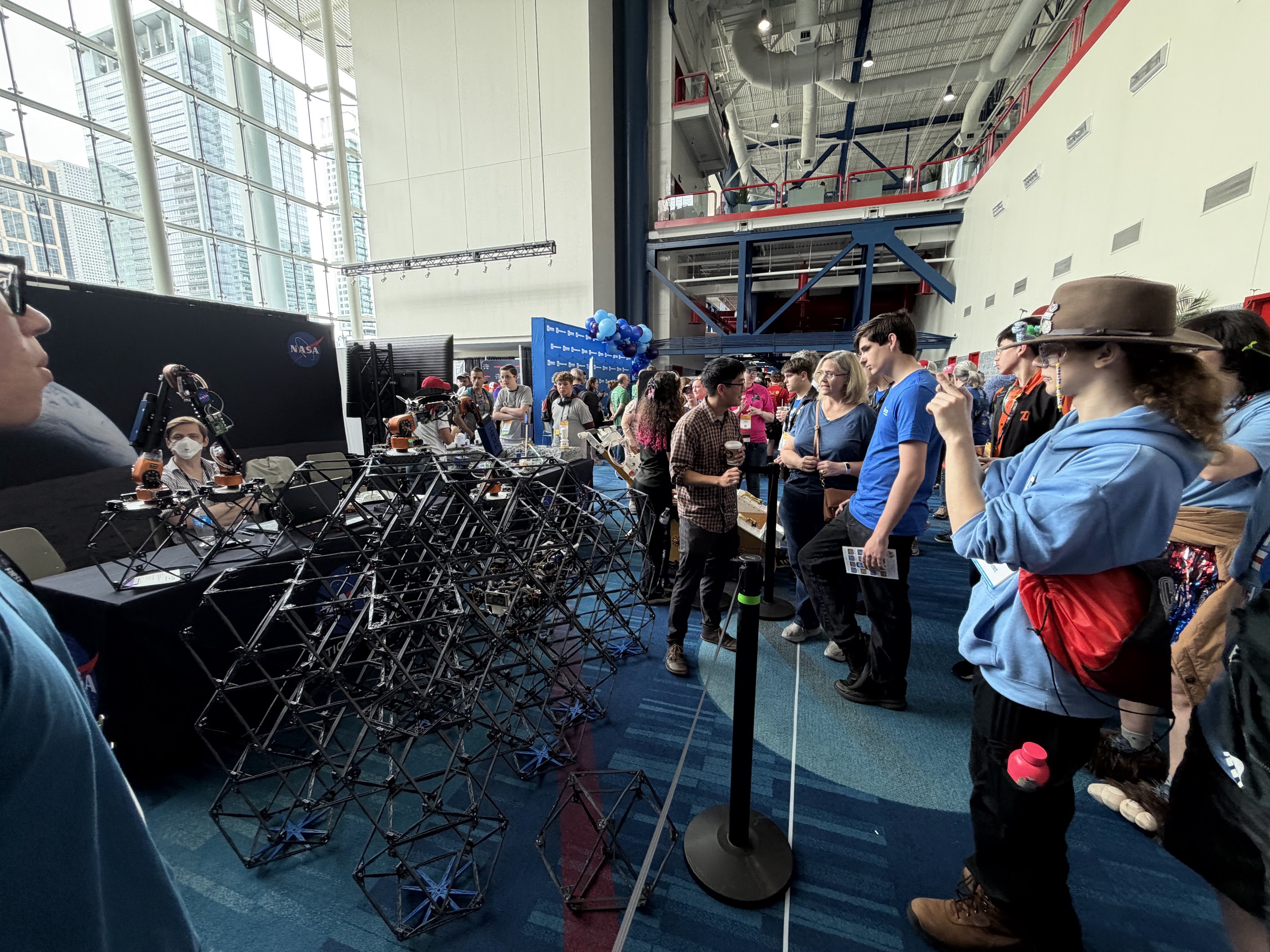
Multiple NASA centers participated in the event, including Johnson Space Center in Houston; Kennedy Space Center in Florida; Langley Research Center in Virginia; Ames Research Center in California; Michoud Assembly Facility in New Orleans; Armstrong Flight Research Center in Edwards, California; Glenn Research Center in Cleveland; Goddard Space Flight Center in Greenbelt, Maryland; White Sands Test Facility in Las Cruces, New Mexico; and Wallops Flight Facility in Wallops Island, Virginia. Each brought unique technologies and expertise to the exhibit floor.
Since 1996, NASA has supported and mentored FIRST Robotics teams across the country. This year, NASA sponsored more than 160 FIRST Robotics Teams – 50 of which also had a NASA mentor. NASA Johnson directly mentored six teams, with two of them making it all the way to the FIRST Championship. Additionally, NASA supported the FIRST Championship with a Mobile Machine Shop where teams could bring broken parts and have NASA machinists help them with repairs. The shop completed over 600 jobs for the teams during the event.
NASA’s presence at the championship not only provides a platform for sharing its ambitious plans but also inspires students to envision themselves as part of the NASA team, working to achieve the near-impossible.
Lunar Robots: NASA Spotlights Moon Base at 2026 FIRST Robotics Competition
Robotics will play a critical role in NASA’s ambitious plan to establish a long-term presence on the Moon, presenting opportunities for the next generation of engineers, technologists, and innovators to contribute to a bold vision for the future.
That was the agency’s message to students, partners, and industry leaders at the 2026 FIRST Robotics World Championship in Houston, where more than 1,000 student teams convened for exciting competitions and hands-on experiences.
NASA connected directly with the future workforce at the event, engaging more than 51,000 students, parents, and mentors through interactive exhibits and discussions. The agency highlighted its plan to construct a permanent lunar outpost – Moon Base – that will serve as a hub for lunar exploration, scientific research, and technology demonstration, laying the foundation for future missions to Mars and beyond. Phase 1 of NASA’s Moon Base plan centers around a rapid series of robotic and early uncrewed missions to scout, experiment, and prepare for surface operations ahead of crewed Artemis missions. That includes an accelerated cadence of CLPS (Commercial Lunar Payload Services) flights, with up to 30 robotic lunar landings targeted for 2027, to expedite the delivery of science and technology payloads including rovers, hoppers, and drones.
NASA’s exhibit included a model of Moon Base, the agency’s plan for a permanent lunar outpost. NASAA Moon Base model was a focal point of NASA’s exhibit. Other displays highlighted key innovations such as:
- Automated Reconfigurable Mission Adaptive Digital Assembly Systems: A modular construction system of small robots and smart algorithms that can autonomously assemble large-scale infrastructure in space, such as solar power, communications, and habitat systems. This system could reduce reliance on launching fully assembled hardware from Earth, supporting sustainable deep space exploration.
- Cooperative Autonomous Distributed Robotic Exploration: A trio of small lunar rovers designed to explore together autonomously, collecting data that would be impossible for a single robot to gather. Their success could pave the way for multirobot missions that can help inform future science objectives, navigate hazardous terrain, and support astronaut activities.
- Skyfall Mars Helicopters: Building on the success of the Ingenuity Mars Helicopter, which completed 72 historic flights at Mars’ Jezero Crater, the SkyFall helicopters would also serve as aerial scouts for scientists and mission planners, paving the way for human exploration of the Red Planet.
Multiple NASA centers participated in the event, including Johnson Space Center in Houston; Kennedy Space Center in Florida; Langley Research Center in Virginia; Ames Research Center in California; Michoud Assembly Facility in New Orleans; Armstrong Flight Research Center in Edwards, California; Glenn Research Center in Cleveland; Goddard Space Flight Center in Greenbelt, Maryland; White Sands Test Facility in Las Cruces, New Mexico; and Wallops Flight Facility in Wallops Island, Virginia. Each brought unique technologies and expertise to the exhibit floor.
Since 1996, NASA has supported and mentored FIRST Robotics teams across the country. This year, NASA sponsored more than 160 FIRST Robotics Teams – 50 of which also had a NASA mentor. NASA Johnson directly mentored six teams, with two of them making it all the way to the FIRST Championship. Additionally, NASA supported the FIRST Championship with a Mobile Machine Shop where teams could bring broken parts and have NASA machinists help them with repairs. The shop completed over 600 jobs for the teams during the event.
NASA’s presence at the championship not only provides a platform for sharing its ambitious plans but also inspires students to envision themselves as part of the NASA team, working to achieve the near-impossible.
New Eruption in the Bismarck Sea
- Earth
- Earth Observatory
- Image of the Day
- EO Explorer
- Topics
- More Content
- About
Start-up reveals ‘artificial egg’ to resurrect extinct birds, but scientists say the work misses the point
The science of de-extinction does not exist, but Colossal Biosciences’ “artificial egg” is an interesting technical feat
Future Mars Rovers Could Mimic a Swimming Motion to Traverse the Planet's Surface
Some animals can move efficiently beneath granular surfaces. These include the sandfish (Scincus scincus), a lizard native to the Sahara. It can burrow into the sand and then literally "swim" through the desert sand to hunt or escape predators. German researchers are working on a rover wheel design that mimics that swimming motion. In testing, the wheel system outperformed regular wheels.
Resolving the Kardashev's Conundrum Using a Bitcoin-Inspired Metric
A new study reevaluates the Kardashev Scale using a new framework that includes the Bitcoin network as a means of measuring the trajectory of human development.