
Feed aggregator
Meet Callisto, Jupiter's Ancient Moon
Meet Callisto, the heavily cratered moon that's the most distant of the Galilean satellites from Jupiter.
The post Meet Callisto, Jupiter's Ancient Moon appeared first on Sky & Telescope.
How Canadian rock duo Angine de Poitrine play with neurobiology and physics to make viral music
Angine de Poitrine don't abide by the usual rules of Western music, using their own custom-built guitar to strike notes that shouldn't exist
Where Not to Look in the Search for ET
When we scan the skies for signs of alien civilisations, where exactly should we be looking and perhaps more importantly, where should we not? A high school student from Ankara has just published a remarkably sophisticated answer to that question, building a filtering system that sifts nearly 1.75 million stars and identifies which ones are genuinely worth our attention. The result is a publicly available catalogue that could transform how the search for extraterrestrial intelligence allocates its most precious resource - time.
A Waymo nearly hit me, but I'm still optimistic about driverless cars
A Waymo nearly hit me, but I'm still optimistic about driverless cars
The World Cup could be a petri dish for disease. Wastewater could sound the alarm
As millions of soccer fans pack FIFA World Cup venues, public health scientists created a wastewater monitoring network to forecast potential disease threats—from measles to Ebola
Reading the Moon in X-rays
We've walked on the Moon, driven rovers across its surface, and analysed every gram of rock the Apollo astronauts brought home, yet we still don't have a complete picture of what the Moon is actually made of. Now a team of researchers in Japan think they've found the answer, a compact X-ray telescope, small enough to sit on a single satellite, that could map the entire lunar surface in just two years. It's an elegant solution to one of planetary science's most stubborn problems and the implications for understanding where the Moon came from could be revolutionary.
Astronomers Find a Four-Carbon Sugar in Deep Space
The space between stars may seem like a barren desert, but over the past few decades scientists have been finding all sorts of interesting chemicals in it. From the precursors to proteins to the building blocks of cell membranes, there has been discovery after discovery of new molecules in the giant gas clouds between the stars. Now, a new paper available in pre-print on arXiv details the discovery of the first ever four-carbon sugar in the Interstellar Medium (ISM), and it is another brick on the path to understanding how life on Earth first developed.
The surprising science behind the 2026 World Cup grass
How scientists are engineering the perfect World Cup pitch—one so flawless that players never notice it
Robots are about to overtake armed soldiers as the deciders of war
Robots are about to overtake armed soldiers as the deciders of war
Tyndall’s Trail of Bergs
- Earth
- Earth Observatory
- Image of the Day
- EO Explorer
- Topics
- More Content
- About
Tyndall’s Trail of Bergs
- Earth
- Earth Observatory
- Image of the Day
- EO Explorer
- Topics
- More Content
- About
Iron Age Britons may have removed the brains of the dead
Iron Age Britons may have removed the brains of the dead
Live: Earth From Space - ISS Live Stream | ISS LIVE FEED : ISS Tracker + Live Chat
How the new FDA-approved ingredient bemotrizinol enhances sunscreen protection
Dermatologists and skincare aficionados are excited for the U.S. to finally get a new, more protective sunscreen filter after more than 20 years of regulatory roadblocks. Here’s how bemotrizinol works
Flight Dynamics Research Facility Characteristics
1 min read
Preparations for Next Moonwalk Simulations Underway (and Underwater)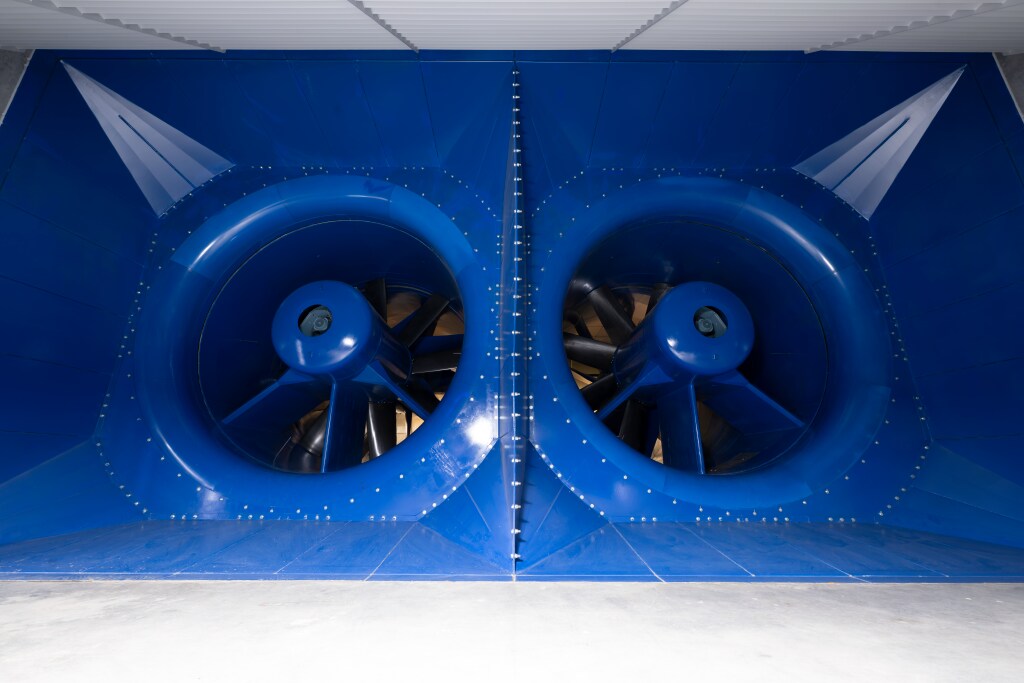
Home
Characteristics
The Flight Dynamics Research Facility (FDRF) is a large, subsonic wind tunnel with a vertical test section for conducting flight dynamics research for stability, controllability, free-fall and aircraft spin, and spin recovery testing of atmospheric vehicles.
Characteristics- Test Section Dimensions: 20 ft. diam. by 24 ft. high
- Speed: 0 – 172 ft/s (0 – 117 mph)
- Dynamic Pressure: (0 – 35 psf)
- Reynolds Number: 0 – 1.10×10^6 per ft.
- Pressure: Atmospheric
- Temperature: Actively cooled (79° F)
- Test Gas: Air
- Facility Height: 131 ft.
Flight Dynamics Flight Research
Aerosciences Evaluation and Test Capabilities
Facebook logo @NASA@NASAaero@NASAes @NASA@NASAaero@NASA_es Instagram logo @NASA@NASAaero@NASA_es Linkedin logo @NASA Explore More 4 min read Award-Winning NASA Camera Revolutionizes How We See the Invisible Article 4 months ago 4 min read NASA Software Raises Bar for Aircraft Icing Research Article 6 months ago 5 min read NASA Advances Pressure Sensitive Paint Research Capability Article 11 months ago Keep Exploring Discover More Topics From NASAMissions
Humans In Space
Solar System ExplorationEyes on the Solar System
Explore NASA’s History
Share Details Last Updated Jun 09, 2026 EditorLillian GipsonContactJim Bankejim.banke@nasa.gov Related TermsAlan Hale (1958-2026)
Astronomer and comet-hunter Alan Hale passed away on Saturday, June 6th, at 68 years old in his home in Cloudcroft, New Mexico.
The post Alan Hale (1958-2026) appeared first on Sky & Telescope.