

Feed aggregator
David Kipping Has a New Take on the Existence of Advanced Life in the Universe... and the Numbers are Not Encouraging!
DOI: 10.48550/arXiv.2606.04044
This is How Supermassive Black Holes Feed Themselves
Astronomers may have found the missing link in the SMBH feeding process. New observations with the JWST show that a galaxy's circumnuclear disk, which feeds gas into its black hole, is connected to a much larger network of filaments. Cool gas flows through these filaments into the SMBH's sphere of influence.
NASA, NOAA to Hold Joint Session at 23rd Symposium on Operational Environmental Satellite Systems
- CSDA
- Commercial Data
- CSDA Vendors
- Program Activities
- Learning Resources
- FAQs
- News
Submit your abstract for “Advancing Weather and Environmental Science Through NASA and NOAA Commercial Satellite Data Programs,” a joint session hosted by NASA’s Commercial Satellite Data Acquisition (CSDA) program, in partnership with the NOAA National Environmental Satellite, Data, and Information Service (NESDIS) Commercial Data Program (CDP).
The session is part of the 23rd Symposium on Operational Environmental Satellite Systems, which will take place at the 2027 American Meteorological Society (AMS) Annual Meeting January 10-14 in Denver, Colorado. It will examine the growing capabilities of commercial Earth observation providers that are creating new opportunities to advance weather research, operational forecasting, and environmental science applications.
NASA’s CSDA program and NESDIS’s CDP collaborate to expand federal access to commercial satellite data and accelerate its use in both research and operational applications.
The CSDA program supports the scientific community by evaluating and acquiring diverse commercial datasets, including optical, Synthetic Aperture Radar, Global Navigation Satellite System Radio Occultation and Reflectometry, methane, precipitation, and Digital Elevation/Terrain Models for modeling, hazard monitoring, climate studies, and applied research.
Similarly, the CDP operationalizes commercial space-based environmental data, with demonstrated impacts from assimilated observations in weather forecasting and space weather applications. It also conducts pilot projects and transitions the piloted data to operations.
Together, the CSDA and CDP strengthen the nation’s weather enterprise by enabling innovative research, closing observational gaps, and integrating commercial data into real-world forecasting and decision support applications.
To submit an abstract or for additional information about the abstract submission process, visit the symposium’s website.
NASA, NOAA to Hold Joint Session at 23rd Symposium on Operational Environmental Satellite Systems
- CSDA
- Commercial Data
- CSDA Vendors
- Program Activities
- Learning Resources
- FAQs
- News
Submit your abstract for “Advancing Weather and Environmental Science Through NASA and NOAA Commercial Satellite Data Programs,” a joint session hosted by NASA’s Commercial Satellite Data Acquisition (CSDA) program, in partnership with the NOAA National Environmental Satellite, Data, and Information Service (NESDIS) Commercial Data Program (CDP).
The session is part of the 23rd Symposium on Operational Environmental Satellite Systems, which will take place at the 2027 American Meteorological Society (AMS) Annual Meeting January 10-14 in Denver, Colorado. It will examine the growing capabilities of commercial Earth observation providers that are creating new opportunities to advance weather research, operational forecasting, and environmental science applications.
NASA’s CSDA program and NESDIS’s CDP collaborate to expand federal access to commercial satellite data and accelerate its use in both research and operational applications.
The CSDA program supports the scientific community by evaluating and acquiring diverse commercial datasets, including optical, Synthetic Aperture Radar, Global Navigation Satellite System Radio Occultation and Reflectometry, methane, precipitation, and Digital Elevation/Terrain Models for modeling, hazard monitoring, climate studies, and applied research.
Similarly, the CDP operationalizes commercial space-based environmental data, with demonstrated impacts from assimilated observations in weather forecasting and space weather applications. It also conducts pilot projects and transitions the piloted data to operations.
Together, the CSDA and CDP strengthen the nation’s weather enterprise by enabling innovative research, closing observational gaps, and integrating commercial data into real-world forecasting and decision support applications.
To submit an abstract or for additional information about the abstract submission process, visit the symposium’s website.
New Scientist recommends a brilliant take on the evolution of birds
Think you have a good sense of humour? So do most people…
New Scientist recommends a brilliant take on the evolution of birds
Think you have a good sense of humour? So do most people…
Report of gene-edited human embryos sparks worries about the technology’s future uses
Eight years after a Chinese scientist's report of gene-edited babies shocked the world, U.S. scientists reported editing embryos not meant for pregnancies using a more precise technique
ESA at ILA 2026 – Day 1 highlights
The European Space Agency (ESA) inaugurated its participation at ILA Berlin International Airshow 2026 with a day rich in high-level meetings, public events and strategic milestones, highlighting Europe's determination to strengthen its role in space. From in-space operations and services to Earth observation and planetary defence, 'Day 1 at ILA' showcased how ESA is working with its Member States, partners and industry to help shape Europe's future.
NASA Equips Astronauts, Industry with Robotic Intelligence
2 min read
Preparations for Next Moonwalk Simulations Underway (and Underwater) In the Integrated Mobile Evaluation Testbed for Robotics Operations facility at Johnson Space Center, PickNik robotic control software proved its prowess in tasks like passing cargo transfer bags through a hatch and placing them in storage bins, in anticipation of work NASA would like robots to carry out during the later Artemis missions.Credit: NASA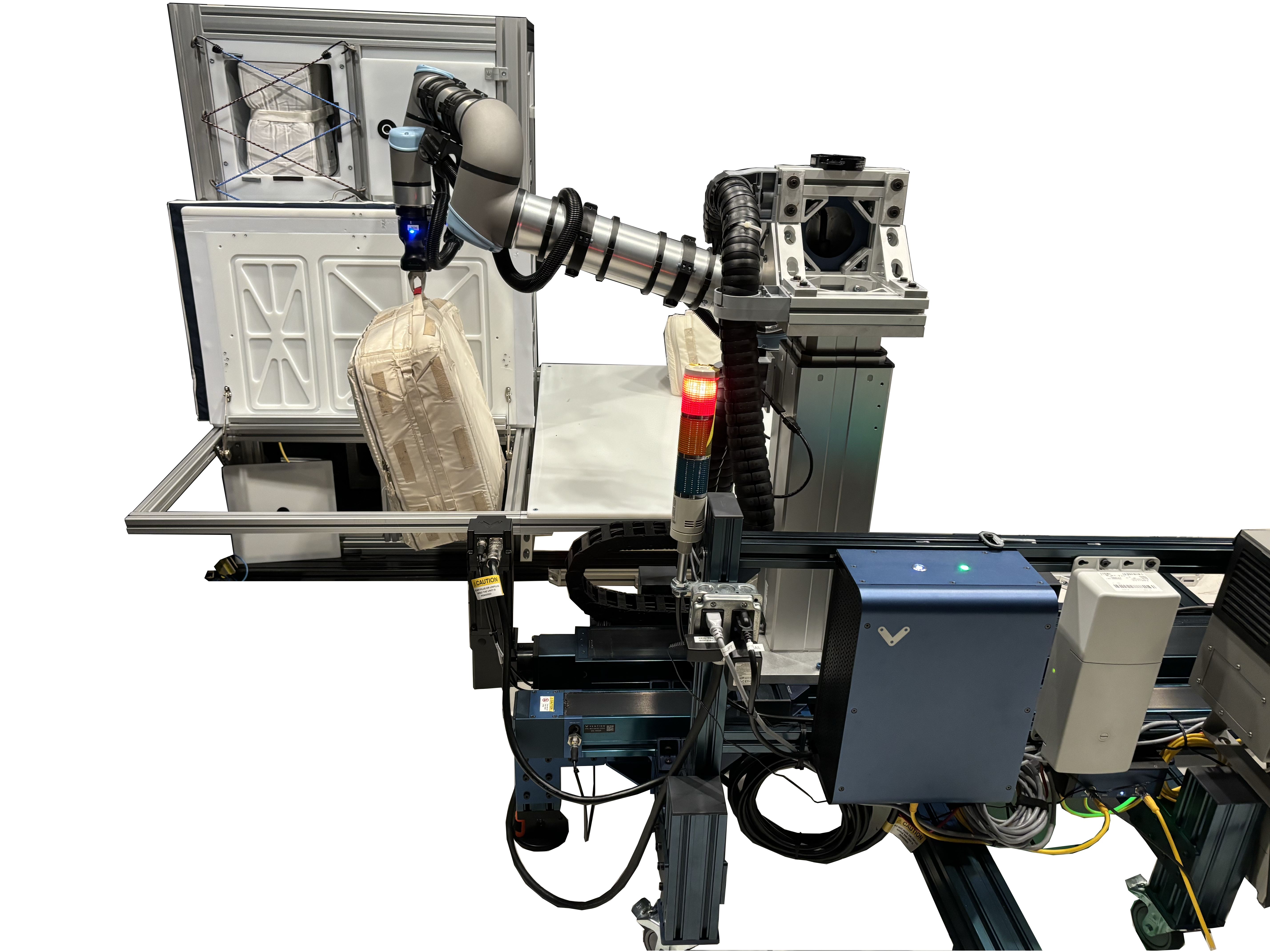
As NASA plans long-term missions on the Moon, the agency could use robots to perform routine tasks, allowing crew members to dedicate more time to science and exploration. However, robotic motion control requires complex technology and advances in features like robotic decision-making and object recognition.
These are the challenges a Boulder, Colorado-based robotics company is teaming up with NASA to overcome.
PickNik Inc. recently worked with Shaun Azimi, who leads the Dexterous Robotics team at NASA’s Johnson Space Center in Houston, and other agency roboticists. The team tested software that enabled a robotic arm to recognize a spacecraft hatch, then turn the latch, grasp the handle, and open the door. The arm then was able to transfer cargo bags between the hatch and a bin.
The work was carried out in NASA Johnson’s new Integrated Mobile Evaluation Testbed for Robotics Operations with funding from NASA’s Small Business Innovation Research program.
PickNik designed and refined the robotic software, called MoveIt Pro, with support from early government investments. Commercially released in 2023, MoveIt Pro has found a significant customer base.
Automotive company BMW is using the software on its robotic assembly lines. A company called Lightspeed is using MoveIt Pro to program huge robotic arms that build modular “panels” for constructing affordable housing. Another company, known as Hivebotics, used MoveIt Pro to automate its flagship product, a cleaning robot.
Ezra Brooks, principal software engineer at PickNik, said the 35-person company might not have a product without NASA’s early support. Robotic software requires years of research and development to refine algorithms and create a commercial product. NASA enabled much of that foundational work.
NASA’s technological advancements unlock key capabilities for missions at the Moon and beyond while benefiting commercial industries on Earth. For 50 years, NASA has documented the everyday benefits of space technology through the agency’s Spinoff publication. To learn more about the project, visit: https://go.nasa.gov/49CNSi7
Read More Share Details Last Updated Jun 10, 2026 Related Terms Explore More 3 min read NASA-Supported Space Tech Advances Earthly Construction Article 4 weeks ago 4 min read Hello Universe: NASA’s Next-Gen Space Processor Undergoes Testing Article 4 weeks ago 3 min read NASA Heat Shield Technology Enables Space Industry Growth Article 4 months ago Keep Exploring Discover Related TopicsTechnology Transfer & Spinoffs
Artemis
Robotics
Johnson Space Center
NASA Equips Astronauts, Industry with Robotic Intelligence
2 min read
Preparations for Next Moonwalk Simulations Underway (and Underwater) In the Integrated Mobile Evaluation Testbed for Robotics Operations facility at Johnson Space Center, PickNik robotic control software proved its prowess in tasks like passing cargo transfer bags through a hatch and placing them in storage bins, in anticipation of work NASA would like robots to carry out during the later Artemis missions.Credit: NASAAs NASA plans long-term missions on the Moon, the agency could use robots to perform routine tasks, allowing crew members to dedicate more time to science and exploration. However, robotic motion control requires complex technology and advances in features like robotic decision-making and object recognition.
These are the challenges a Boulder, Colorado-based robotics company is teaming up with NASA to overcome.
PickNik Inc. recently worked with Shaun Azimi, who leads the Dexterous Robotics team at NASA’s Johnson Space Center in Houston, and other agency roboticists. The team tested software that enabled a robotic arm to recognize a spacecraft hatch, then turn the latch, grasp the handle, and open the door. The arm then was able to transfer cargo bags between the hatch and a bin.
The work was carried out in NASA Johnson’s new Integrated Mobile Evaluation Testbed for Robotics Operations with funding from NASA’s Small Business Innovation Research program.
PickNik designed and refined the robotic software, called MoveIt Pro, with support from early government investments. Commercially released in 2023, MoveIt Pro has found a significant customer base.
Automotive company BMW is using the software on its robotic assembly lines. A company called Lightspeed is using MoveIt Pro to program huge robotic arms that build modular “panels” for constructing affordable housing. Another company, known as Hivebotics, used MoveIt Pro to automate its flagship product, a cleaning robot.
Ezra Brooks, principal software engineer at PickNik, said the 35-person company might not have a product without NASA’s early support. Robotic software requires years of research and development to refine algorithms and create a commercial product. NASA enabled much of that foundational work.
NASA’s technological advancements unlock key capabilities for missions at the Moon and beyond while benefiting commercial industries on Earth. For 50 years, NASA has documented the everyday benefits of space technology through the agency’s Spinoff publication. To learn more about the project, visit: https://go.nasa.gov/49CNSi7
Read More Share Details Last Updated Jun 10, 2026 Related Terms Explore More 3 min read NASA-Supported Space Tech Advances Earthly Construction Article 4 weeks ago 4 min read Hello Universe: NASA’s Next-Gen Space Processor Undergoes Testing Article 1 month ago 3 min read NASA Heat Shield Technology Enables Space Industry Growth Article 4 months ago Keep Exploring Discover Related TopicsTechnology Transfer & Spinoffs
Artemis
Robotics
Johnson Space Center
AI scores a ‘C–’ on its hardest math test yet
The second batch of “First Proof” problems is meant to evaluate AI’s usefulness for research-level math. The best model got six or seven of the 10 questions basically right
Wolves seen hunting European bison in rare camera-trap recording
Wolves seen hunting European bison in rare camera-trap recording
ESA adopts galactic archaeology mission Arrakihs
The European Space Agency’s (ESA) Science Programme Committee has adopted the Arrakihs mission. Planned for launch by the end of 2030, Arrakihs will capture the faint light from nearby galaxy haloes. By seeing the unseen, Arrakihs will dig up cosmic history and reveal how galaxies like our own form and evolve.
How to build kids’ ‘cognitive endurance’ in an age of distraction
The ability to run “mental marathons” is a skill children can learn through simple, but dedicated, practice
Train Ride to NASA Kennedy for Artemis III Booster Segments
Train Ride to NASA Kennedy for Artemis III Booster Segments

The final booster motor segments for NASA’s SLS (Space Launch System) rocket that will help propel Artemis III astronauts on their journey to space shipped from Northrop Grumman’s Railyard Shipping Facility in Corinne, Utah on June 2. The eight booster motor segments are on their way to NASA’s Kennedy Space Center in Florida where they will form the SLS rocket’s twin, five-segment solid rocket boosters, which produce more than 75% of the total thrust at liftoff.
Follow the Artemis blog for updates on Artemis III and future missions.
Image credit: NASA/Brandon Hancock
Train Ride to NASA Kennedy for Artemis III Booster Segments
The final booster motor segments for NASA’s SLS (Space Launch System) rocket that will help propel Artemis III astronauts on their journey to space shipped from Northrop Grumman’s Railyard Shipping Facility in Corinne, Utah on June 2. The eight booster motor segments are on their way to NASA’s Kennedy Space Center in Florida where they will form the SLS rocket’s twin, five-segment solid rocket boosters, which produce more than 75% of the total thrust at liftoff.
Follow the Artemis blog for updates on Artemis III and future missions.
Image credit: NASA/Brandon Hancock