
Feed aggregator
NASA’s AWE Completes Mission to Study Earth’s Effect on Space Weather
NASA
On May 21, ground controllers powered down NASA’s AWE (Atmospheric Waves Experiment) instrument, bringing the data collection phase of the mission to a successful and scheduled end, surpassing its planned two-year mission.
Installed on the exterior of the International Space Station since November 2023, AWE studied atmospheric gravity waves, which are giant ripples in the atmosphere caused by strong winds flowing over tall mountains or by violent weather events, such as tornadoes, thunderstorms, and hurricanes. The AWE instrument looked for these waves in colorful bands of light in Earth’s atmosphere, called airglow. Funded by NASA’s Heliophysics Division, AWE investigated how atmospheric gravity waves propagate upward to space and contribute to space weather — conditions in space that can disrupt satellites, as well as navigation and communications signals.
“The AWE mission has proven that our atmosphere is not a ceiling, but a living, breathing ocean in the sky,” said Joe Westlake, director of NASA’s Heliophysics Division at NASA Headquarters in Washington. “For the first time, we can see how a thunderstorm in the Midwest, a hurricane over Florida, or a wind gust over the Andes sends invisible ripples — atmospheric gravity waves — crashing into the edge of space like waves hitting a shoreline. By mapping these ripples from the International Space Station, we’ve discovered that Earth’s weather doesn’t just end at the clouds, instead it reaches out beyond our planet, shaping the space weather that impacts our orbital economy.”
This artist’s conception depicts the Atmospheric Waves Experiment (AWE) scanning the atmosphere from aboard the International Space Station, measuring variations in infrared airglow to track atmospheric gravity waves as they move up from the lower atmosphere into space. Utah State University Space Dynamics Laboratory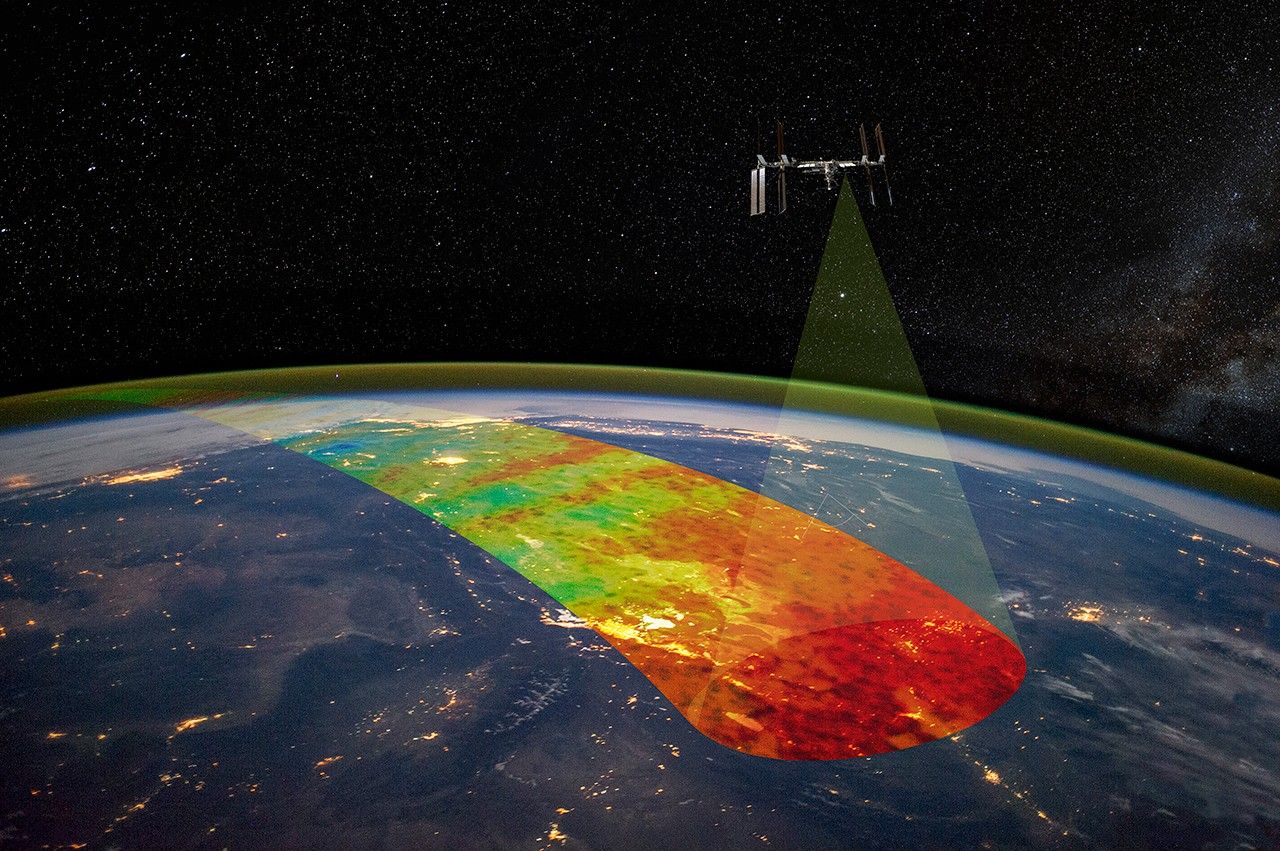
During AWE’s 30-month residency on the station, the instrument captured four infrared images every second, tallying more than 80 million nighttime images, which is when airglow can be seen. It observed atmospheric gravity waves from numerous extreme weather events, including a tornado outbreak across the central U.S. in May 2024 and Hurricane Helene impacting the gulf coast of Florida in September 2024.
“We’ve seen atmospheric wave signatures associated with major terrestrial events, which provided a clear example of how intense weather systems can generate measurable upper-atmospheric responses,” said AWE’s principal investigator, Ludger Scherliess of Utah State University in Logan.
These events revealed variations in the types of atmospheric gravity waves created by different kinds of storms. For example, when AWE viewed atmospheric gravity waves generated by a thunderstorm in north Texas on May 26, 2024, it saw they were smaller and more irregular, with a notable asymmetry from north to south, compared to waves created by storms in the same part of the country earlier that month.
This image from AWE shows concentric atmospheric gravity waves caused by a severe weather event that included a tornado near the U.S.-Mexico border on May 3, 2024. Captured during orbit 2529 of AWE’s stay on the International Space Station, the image shows waves spreading across Texas and Mexico in near-perfect circles, a sight rarely observed with such clarity prior to the AWE mission. NASA/Utah State University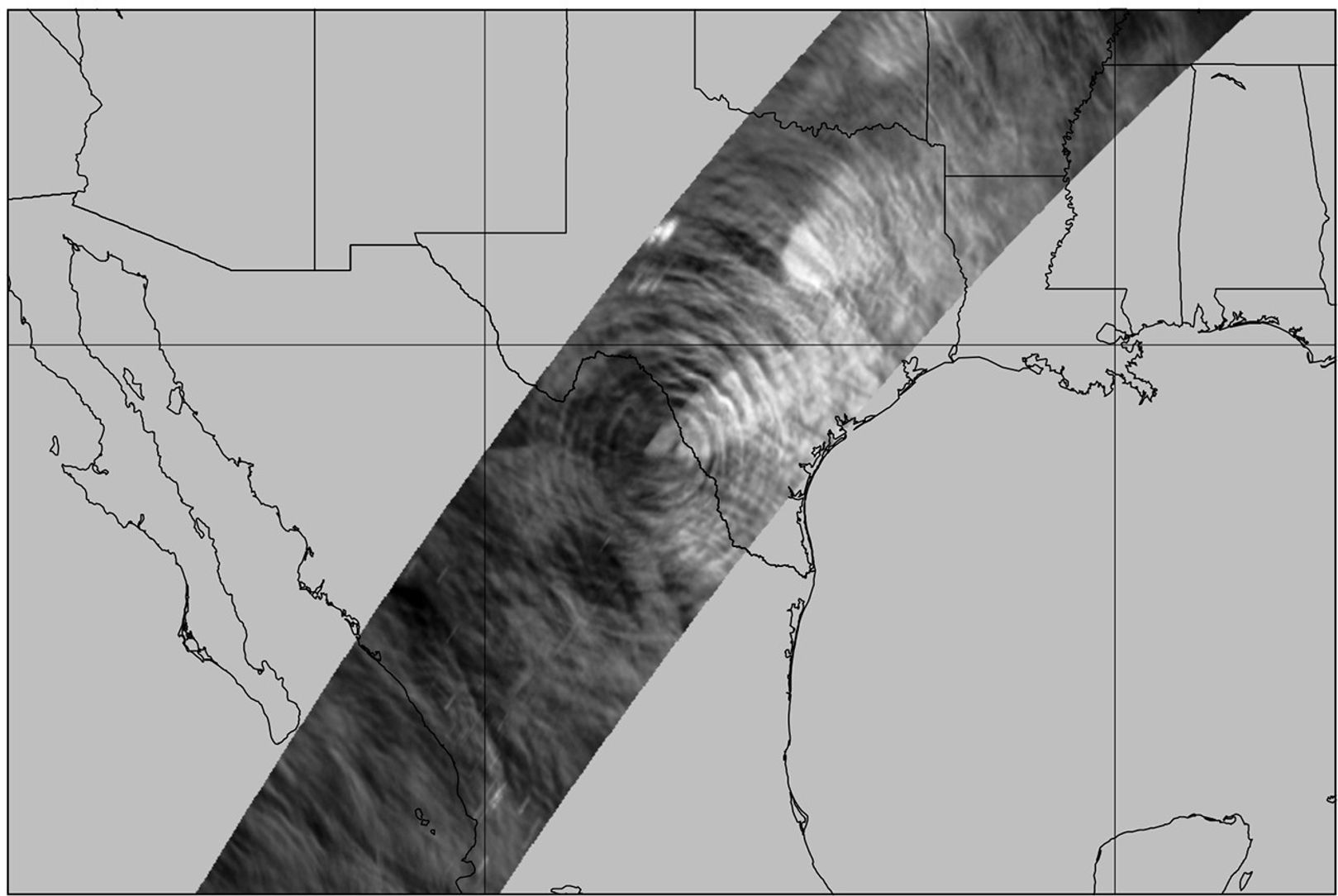
It is important to understand variations in the density of plasma, which is electrically charged gas, in Earth’s upper atmosphere instigated by atmospheric gravity waves, because these variations can disrupt radio signals traveling between satellites and the ground, and from satellite to satellite, degrading the accuracy and reliability of systems used for navigation, timing, and communications.
In a recent study, AWE measurements also revealed the gravity waves with the greatest influence on the upper atmosphere have small horizontal wavelengths, ranging from 30 to 300 kilometers, which AWE was specifically designed to measure.
With its data-collection phase complete, the AWE instrument was turned off to make way for another science experiment that will take its place on the outside of the space station. Called CLARREO Pathfinder (Calibration Absolute Radiance and Refractivity Observatory Pathfinder), the new instrument will take measurements of sunlight reflected by Earth and the Moon that are five to 10 times more accurate than those from existing sensors. The exchange of instruments is a key part of the space station’s mission and versatility as an orbiting laboratory for various types of research.
As the International Space Station traveled over the southeastern United States on Sept. 26, 2024, AWE observed atmospheric gravity waves generated by Hurricane Helene as the storm slammed into the gulf coast of Florida. The curved bands extending to the northwest of Florida, artificially colored red, yellow, and blue, show changes in brightness (or radiance) in a wavelength of infrared light produced by airglow in Earth’s mesosphere. The small black circles on the continent mark the locations of cities. Utah State UniversityIn the coming days, a robotic arm on the space station, called Canadarm2, will remove the AWE instrument from its location. Soon afterward, the AWE instrument will be loaded into part of a SpaceX Dragon cargo spacecraft that will deorbit and burn up as it re-enters the atmosphere. However, all of AWE’s observations will ultimately become available to the public and the scientific community for ongoing research and discovery.
“Data from AWE will continue to be made public for both professional researchers and citizen scientists,” Scherliess said.
Some of this data already is available, including interactive, online visualizations on Utah State University’s website, where AWE’s observations are “painted” in swaths onto a globe or on a map as the space station orbits the planet. Users can rotate the visualizations to view atmospheric gravity waves from different angles.
A still image from an interactive visualization shows AWE data collected over the Western Hemisphere. Utah State University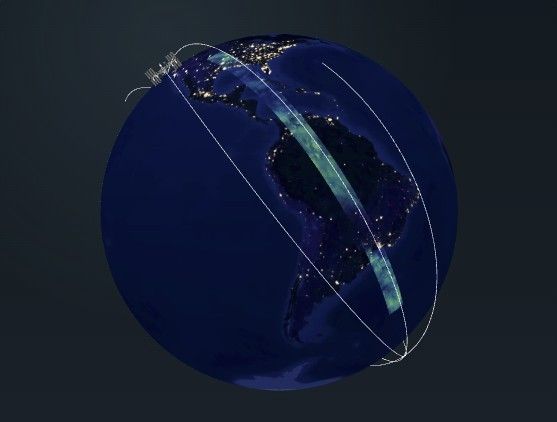
Launched on Nov. 9, 2023, AWE is managed by the Explorers Program Office at NASA’s Goddard Space Flight Center in Greenbelt, Maryland. Utah State University’s Space Dynamics Laboratory built the AWE instrument and provided the mission operations center.
Hear more about AWE by listening to episode 334 of NASA’s Houston We Have a Podcast, recorded on Jan. 26, 2024.
By Vanessa Thomas
NASA’s Goddard Space Flight Center, Greenbelt, Md.
An international team studying data from NASA’s Fermi Gamma-ray Space Telescope concludes the mission detected…
Article
1 day ago
5 min read NASA’s MAVEN Makes 1st Discovery of Atmospheric Effect at Mars
Article
3 days ago
4 min read Great Balls of Fire
An astronaut on the International Space Station was surprised to photograph a shower of light…
Article
4 days ago
Keep Exploring Discover More Topics From NASA
Missions
Humans in Space
Climate Change
Solar System
NASA Wins Four Telly Awards for Artemis Moon Coverage, More
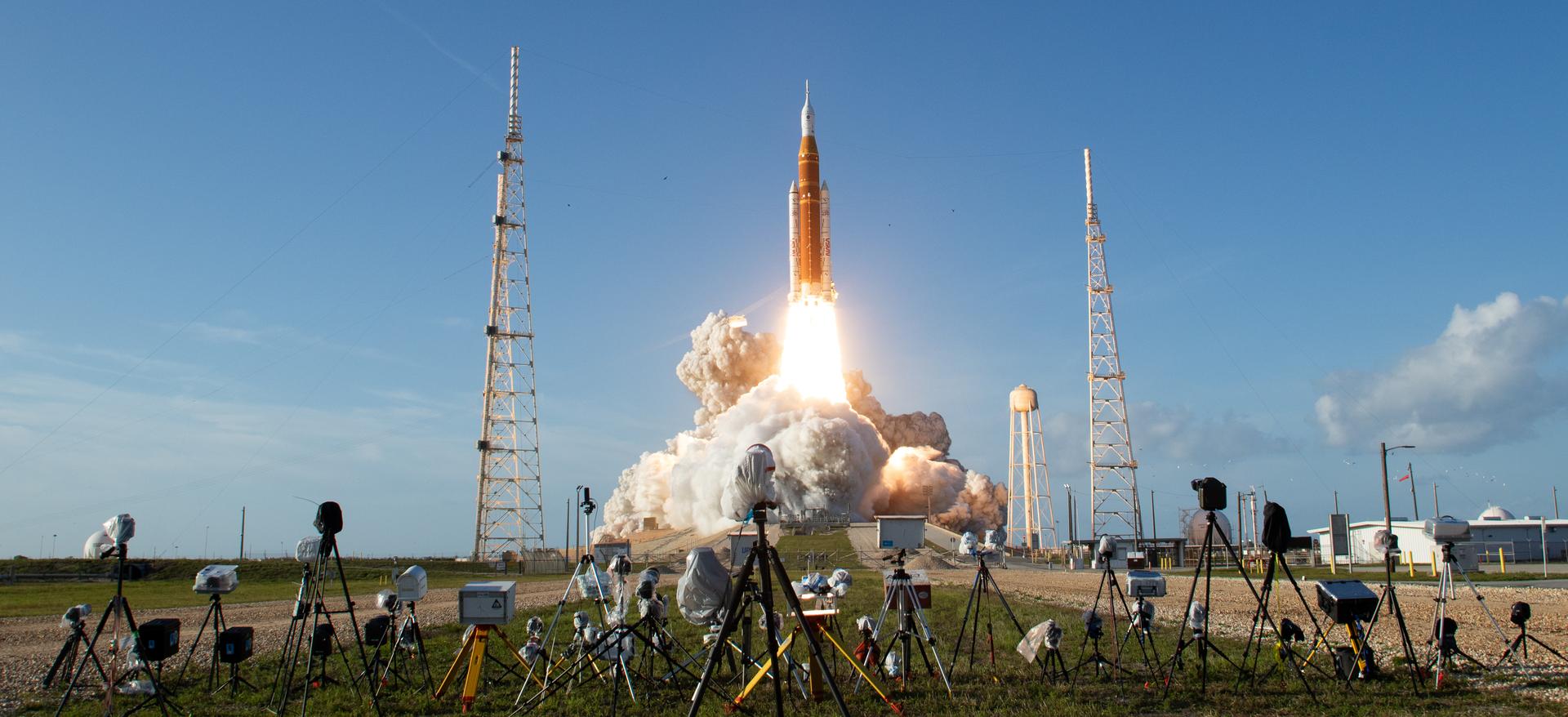
NASA’s historic Artemis II mission coverage, which connected global audiences to watch the first humans to travel around the Moon in more than half a century, is among the agency’s video productions recognized with four 2026 Telly Awards.
“President Trump’s leadership in establishing the Artemis program reignited America’s bold vision for space exploration and set our nation on a course back to the Moon. During America’s 250th birthday, Artemis II marked the beginning of that new era by sending astronauts around the Moon for the first crewed lunar mission since Apollo, inspiring millions across the country and around the world,” said Will Boyington, associate administrator, Office of Communications, NASA Headquarters in Washington. “These Telly Awards recognize the extraordinary NASA teams who brought that historic journey into homes everywhere through innovative storytelling, live coverage, and an unprecedented digital experience that showcased American leadership in space and renewed the spirit of exploration for a new generation.”
The agency’s continuous, 24/7 livestream of the Artemis II mission, which functioned as both a live event and as a science storytelling experience, combined visuals, real-time mission data, and expert analysis to make a complex spaceflight clear and accessible for an international audience. NASA’s video documentation of mission astronauts and support teams conducting geology training on Earth to prepare for future Artemis missions on the Moon also won a science and technology storytelling award.
In addition, NASA won a screenwriting award for a documentary on the agency’s Hubble Space Telescope, James Webb Space Telescope, and Nancy Grace Roman Space Telescope, narrated by actor John Rhys-Davies.
“By following NASA’s Artemis II coverage in real time on multiple platforms, millions of viewers around the world were able to experience the mission inside the Orion spacecraft and alongside the crew, from lunar flyby to splashdown,” said Brittany Brown, director, Office of Communications Digital and Technology Division, NASA Headquarters in Washington. “Our team’s coordination, from the Mission Control Center at NASA’s Johnson Space Center in Houston to the Moon, technical expertise, and around-the-clock dedication turned a single spaceflight mission into a shared, global experience of wonder and inspiration.”
Full list of NASA’s Telly Award wins:
- NASA’s Artemis II: Humanity’s Return to the Moon
Gold Winner, Science and Technology - NASA’s Artemis II: Humanity’s Return to the Moon
Silver Winner, Live Events and Experiences - Preparing for Artemis: NASA’s Geology Training for Lunar Exploration
Silver Winner, Science and Technology - The Fellowship of the Telescopes
Bronze Winner, Craft-Writing
Livestream coverage of the mission and milestones reached NASA’s largest streaming audience ever on its individual platforms, ultimately reaching nearly 290 million combined views across agency platforms. Commercial streaming partners expanded the mission’s reach to a global audience of hundreds of millions more potential viewers.
Watch all NASA content through a variety of online platforms:
https://www.nasa.gov/ways-to-watch
Share Details Last Updated May 21, 2026 EditorJessica TaveauLocationNASA Headquarters Related TermsNASA Wins Four Telly Awards for Artemis Moon Coverage, More
NASA’s historic Artemis II mission coverage, which connected global audiences to watch the first humans to travel around the Moon in more than half a century, is among the agency’s video productions recognized with four 2026 Telly Awards.
“President Trump’s leadership in establishing the Artemis program reignited America’s bold vision for space exploration and set our nation on a course back to the Moon. During America’s 250th birthday, Artemis II marked the beginning of that new era by sending astronauts around the Moon for the first crewed lunar mission since Apollo, inspiring millions across the country and around the world,” said Will Boyington, associate administrator, Office of Communications, NASA Headquarters in Washington. “These Telly Awards recognize the extraordinary NASA teams who brought that historic journey into homes everywhere through innovative storytelling, live coverage, and an unprecedented digital experience that showcased American leadership in space and renewed the spirit of exploration for a new generation.”
The agency’s continuous, 24/7 livestream of the Artemis II mission, which functioned as both a live event and as a science storytelling experience, combined visuals, real-time mission data, and expert analysis to make a complex spaceflight clear and accessible for an international audience. NASA’s video documentation of mission astronauts and support teams conducting geology training on Earth to prepare for future Artemis missions on the Moon also won a science and technology storytelling award.
In addition, NASA won a screenwriting award for a documentary on the agency’s Hubble Space Telescope, James Webb Space Telescope, and Nancy Grace Roman Space Telescope, narrated by actor John Rhys-Davies.
“By following NASA’s Artemis II coverage in real time on multiple platforms, millions of viewers around the world were able to experience the mission inside the Orion spacecraft and alongside the crew, from lunar flyby to splashdown,” said Brittany Brown, director, Office of Communications Digital and Technology Division, NASA Headquarters in Washington. “Our team’s coordination, from the Mission Control Center at NASA’s Johnson Space Center in Houston to the Moon, technical expertise, and around-the-clock dedication turned a single spaceflight mission into a shared, global experience of wonder and inspiration.”
Full list of NASA’s Telly Award wins:
- NASA’s Artemis II: Humanity’s Return to the Moon
Gold Winner, Science and Technology - NASA’s Artemis II: Humanity’s Return to the Moon
Silver Winner, Live Events and Experiences - Preparing for Artemis: NASA’s Geology Training for Lunar Exploration
Silver Winner, Science and Technology - The Fellowship of the Telescopes
Bronze Winner, Craft-Writing
Livestream coverage of the mission and milestones reached NASA’s largest streaming audience ever on its individual platforms, ultimately reaching nearly 290 million combined views across agency platforms. Commercial streaming partners expanded the mission’s reach to a global audience of hundreds of millions more potential viewers.
Watch all NASA content through a variety of online platforms:
https://www.nasa.gov/ways-to-watch
Share Details Last Updated May 22, 2026 EditorJessica TaveauLocationNASA Headquarters Related TermsJWST sees partly cloudy skies on a distant, giant exoplanet
An out-of-this-world weather report from NASA’s James Webb Space Telescope reveals how clouds move across a giant planet hundreds of light-years from Earth
A new study says you need 10 hours of exercise a week. Can that really be possible?
Experts question this study’s design and its recommendations—and point out that you probably get more exercise than you think
Scientists discover why gold doesn’t ‘rust’
Gold doesn’t tarnish like similar metals do. A new paper says that the key is the intricate “herringbone” pattern of its atoms.
Hubble Sights Galaxy in Transition
Psyche Spacecraft Completes Mars Flyby
Hubble Sights Galaxy in Transition
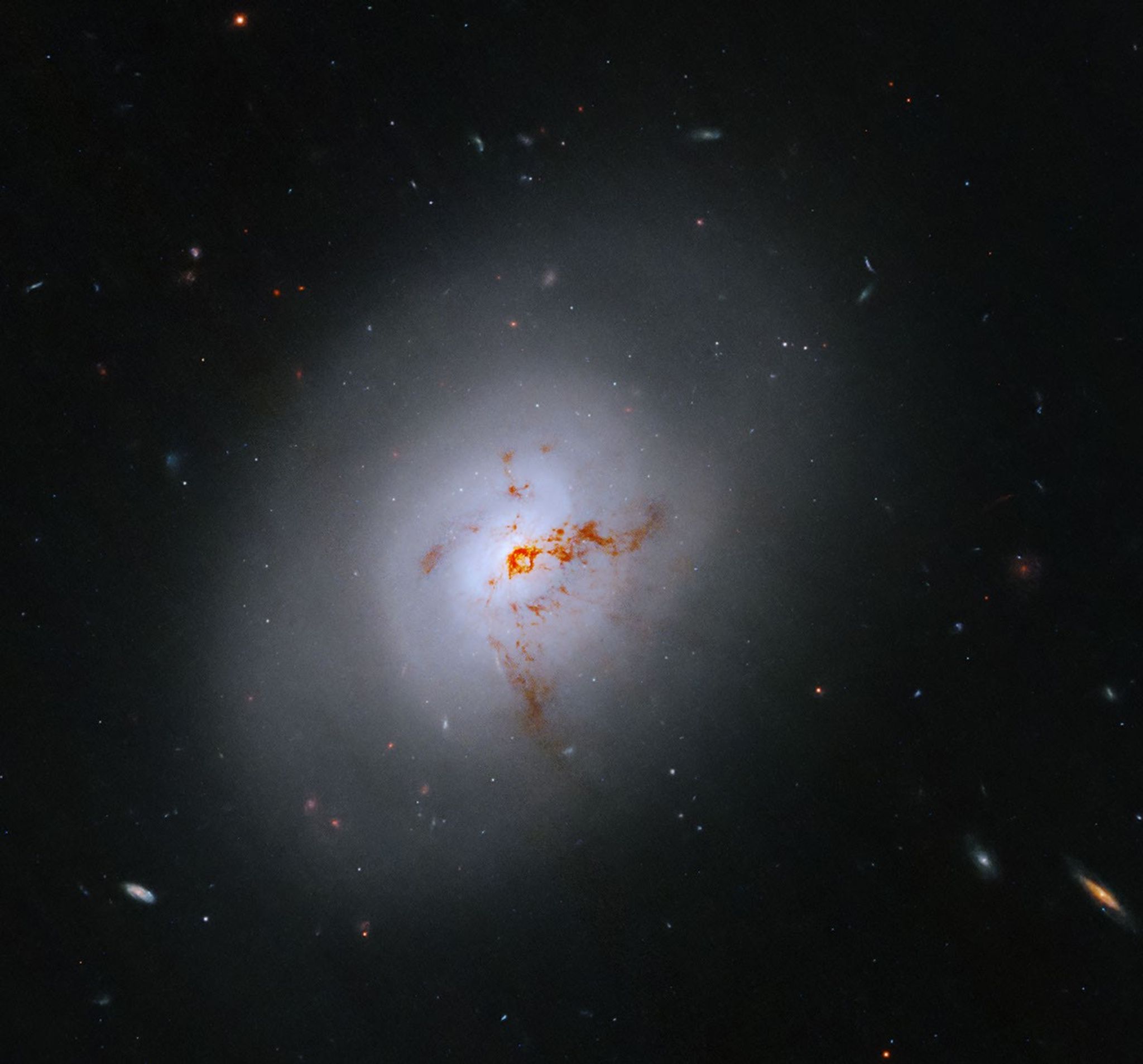
This NASA Hubble Space Telescope image reveals an enigmatic galaxy with a bright center and a face that hints at spiral structure, yet it holds no obvious spiral arms. Reddish-brown clumps and filaments of dust partially obscure the galaxy’s full face, while red, blue, and orange light from distant galaxies shines through its diffuse outer regions and dots the inky-black background.
NGC 1266 is a lenticular galaxy located some 100 million light-years away in the constellation Eridanus (the Celestial River). Astronomers classify lenticulars as transitional galaxies that represent an evolutionary bridge between spirals and ellipticals. Lenticulars are “lens-shaped” and have a bright central bulge and flattened disk like spirals, but they have no spiral arms and little to no star formation like ellipticals.
Read more about NGC 1266, its interesting features, and why astronomers study galaxies like it.
Image credit: NASA, ESA, K. Alatalo (STScI); Image Processing: G. Kober (NASA/Catholic University of America)
Hubble Sights Galaxy in Transition
This NASA Hubble Space Telescope image reveals an enigmatic galaxy with a bright center and a face that hints at spiral structure, yet it holds no obvious spiral arms. Reddish-brown clumps and filaments of dust partially obscure the galaxy’s full face, while red, blue, and orange light from distant galaxies shines through its diffuse outer regions and dots the inky-black background.
NGC 1266 is a lenticular galaxy located some 100 million light-years away in the constellation Eridanus (the Celestial River). Astronomers classify lenticulars as transitional galaxies that represent an evolutionary bridge between spirals and ellipticals. Lenticulars are “lens-shaped” and have a bright central bulge and flattened disk like spirals, but they have no spiral arms and little to no star formation like ellipticals.
Read more about NGC 1266, its interesting features, and why astronomers study galaxies like it.
Image credit: NASA, ESA, K. Alatalo (STScI); Image Processing: G. Kober (NASA/Catholic University of America)
NOAA predicts quieter Atlantic hurricane season for 2026—but the Pacific is another story
This year’s expected El Niño could hamper hurricanes in the Atlantic but boost them in the central and eastern Pacific
Mathematicians stunned by AI's biggest breakthrough in mathematics yet
Mathematicians stunned by AI's biggest breakthrough in mathematics yet
The Magnetar at the Heart of a Superluminous Supernova
Superluminous supernovae are the royalty in the supernova world. They're up to 100 times brighter than a standard supernova, and astrophysicists want to know why. New research shows that magnetars are responsible.
Trial of next-gen weight-loss drug retatrutide brings it one step closer to FDA approval
While drugs such as Wegovy target a single gut hormone, retatrutide is among a new class of GLP-1 drugs that aims at three hormone receptors
Epic dreaming is leaving people exhausted and distressed
Epic dreaming is leaving people exhausted and distressed
AI just solved an 80-year-old ‘Erdős problem,’ and mathematicians are amazed
A chatbot’s result for the 80-year-old “unit distance” conjecture is the first AI proof that would likely be published in math’s top journal if humans had done it alone
Can math predict the end of humanity? Inside the ‘doomsday argument’
This eerily simple math says our days are numbered—and nobody can agree why it’s wrong
Is Dust the Best Thing in the Universe? Part 2: The Astronomer's Headache
Dust scatters light, absorbs light, re-emits light, and ruins everything. It's why our maps of the Milky Way were wrong before 1930, and it's why one of the biggest cosmological announcements of the 2010s quietly evaporated.