
Feed aggregator
How a Giant Moon and a Steam Atmosphere Built the Recipe for Life
4.5 billion years ago was an interesting time for the Earth. The atmosphere was thick and what we would now think of as toxic. The Moon, which was freshly formed, looks much more massive than it does today and faintly glows with the residual heat from its own creation. And the floor was literally lava. Everywhere. If there were any children alive at the time, they would have no chance of winning that game. But for a long time, scientists had thought this molten phase of the Earth didn’t last long. But according to a new paper, available in preprint on arXiv by researchers at the Kapteyn Astronomical Institute, it might have lasted for upwards of half a billion years.
Webb sniffs methane from interstellar Comet 3I/ATLAS
Smile: cleanroom to space
Smile successfully launched from Europe’s Spaceport in French Guiana on 19 May 2026.
This timelapse captures the excitement and precision of launch operations as the spacecraft begins its journey to study the connection between the Sun and Earth.
Smile (the Solar wind Magnetosphere Ionosphere Link Explorer) is an international space science mission designed to investigate how the solar wind interacts with Earth's magnetosphere. By observing these dynamic processes from space, Smile will help scientists better understand space weather and its effects on our planet's magnetic environment.
Pretty in Pink
Pretty in Pink
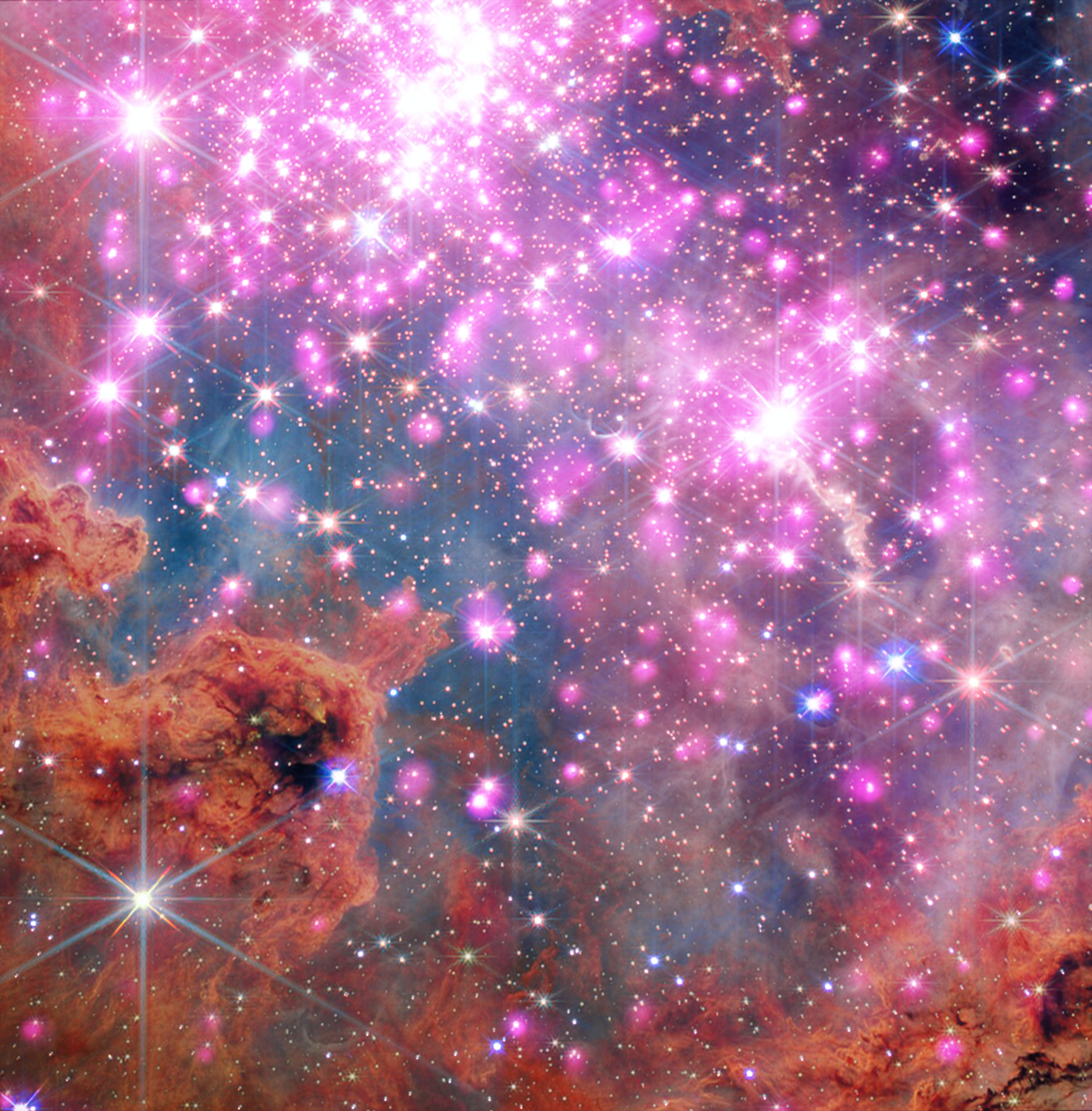
This image of Westerlund 2 released on March 19, 2026, features Chandra X-ray Observatory data (pink) and infrared data from NASA’S James Webb Space Telescope (red, orange, green, cyan, and blue). Scores of gleaming stars ringed in neon pink stretch across the frame, highlighting a cluster where stars are between one and three million years old. Brick-orange dust clouds along the bottom edge illustrate the raw materials of this active stellar nursery.
Westerlund 2 resides in a raucous stellar breeding ground known as Gum 29, located 20,000 light-years away from Earth in the constellation Carina.
See a different view of Westerlund 2.
Image credit: X-ray: NASA/CXC/SAO/Sejong Univ./Hur et al; JWST: ESA/Webb, NASA & CSA, V. Almendros-Abad, M. Guarcello, K. Monsch, and the EWOCS team. Image Processing: NASA/CXC/SAO/L. Frattare and K. Arcand
Pretty in Pink
This image of Westerlund 2 released on March 19, 2026, features Chandra X-ray Observatory data (pink) and infrared data from NASA’S James Webb Space Telescope (red, orange, green, cyan, and blue). Scores of gleaming stars ringed in neon pink stretch across the frame, highlighting a cluster where stars are between one and three million years old. Brick-orange dust clouds along the bottom edge illustrate the raw materials of this active stellar nursery.
Westerlund 2 resides in a raucous stellar breeding ground known as Gum 29, located 20,000 light-years away from Earth in the constellation Carina.
See a different view of Westerlund 2.
Image credit: X-ray: NASA/CXC/SAO/Sejong Univ./Hur et al; JWST: ESA/Webb, NASA & CSA, V. Almendros-Abad, M. Guarcello, K. Monsch, and the EWOCS team. Image Processing: NASA/CXC/SAO/L. Frattare and K. Arcand
A Faster Way To Forecast Alien Weather
The TRAPPIST-1 system, located about 41 light years from Earth, has been a focal point of much exoplanetary discussion - mainly because it has 7 confirmed planets orbiting a dim M-dwarf star. Two of those planets - TRAPPIST-1e and -1f - are thought to be in the star’s habitable zone. However, the habitable zone of M-dwarfs is so close to the star itself the planets are likely tidally locked to it, meaning they have a permanent day and night side, with a “twilight terminator” in between. Armed with that knowledge, scientists have been attempting to model the climate on these two exoplanets, and a new paper from Jacob Haqq-Misra of Blue Marble Space uses a new type of climate model to accurately do so with much less computational power.
Space Out This Summer with Variety of NASA STEM Activities
Summer is “Go” for launch, and NASA has a universe of ways to help you to jump in, explore, and create! Whether you prefer to spend this season fueling your creativity, going outdoors into nature, or daydreaming about your future, NASA offers ways to take your interests to the next level.
Here are some opportunities to level up your skills with NASA STEM this summer.
Rise to Stardance ChallengeFrom Monday, June 1, through Sept. 30, students ages 13 to 18 are invited to flex their creativity in the online Stardance Challenge, a partnership between NASA and the education non-profit Hack Club. Whether you’re into space, coding, hardware, or just love building cool things, this is your chance to work with real NASA mission data from programs like Artemis, the James Webb Space Telescope, and more.
Participants can create anything from code and apps to electronics, circuit boards, models, and simulations. Hack Club will offer peer and expert reviews, prizes, and plenty of opportunities to show off your work. Meanwhile, NASA will provide access to publicly available datasets, mission materials, multimedia, and virtual sessions with subject matter experts who can share insights on space science, engineering, and careers. Ready to start brainstorming? Visit the Hack Club: Stardance Challenge website to explore project options, check out prizes, and RSVP to get a reminder when the challenge opens
NASA Astronaut Megan McArthur is conducting a technology demonstration with Astrobee flying robots.Credit: NASA Go Behind Scenes of NASA Careers
Think NASA is only for astronauts, scientists, and tech experts? Think again. It takes a wide range of professionals and specialists to bring the nation’s aerospace goals to life. Summer is the perfect time to discover how your skills and interests could make a difference at NASA.
Connect directly with NASA experts through online events designed to spark your curiosity and help you explore real STEM career paths. These virtual sessions provide a behind‑the‑scenes look at NASA’s workforce, plus the chance to ask questions.
- Tuesday, June 2: NASA’s Career Technical Education Day at Goddard Space Flight Center dives into robotics, AI, autonomous systems, and the skilled technical careers that keep NASA missions running. Register by May 26.
- Thursday, June 11: Virtual Career Connection: Aviation Technology and Maintenance introduces you to aircraft mechanics and technicians who support NASA’s flight programs and explores pathways into aviation technology careers. Register by June 2.
Looking for more? Check out the Next Gen STEM for Careers web page for videos, articles, and more ways to learn about the variety of jobs at NASA.
Noctilucent clouds seen from Fairbanks, Alaska.Credit: Patrick Cobb – Photovoltaic designer, photographer Dive into NASA Research Through Citizen Science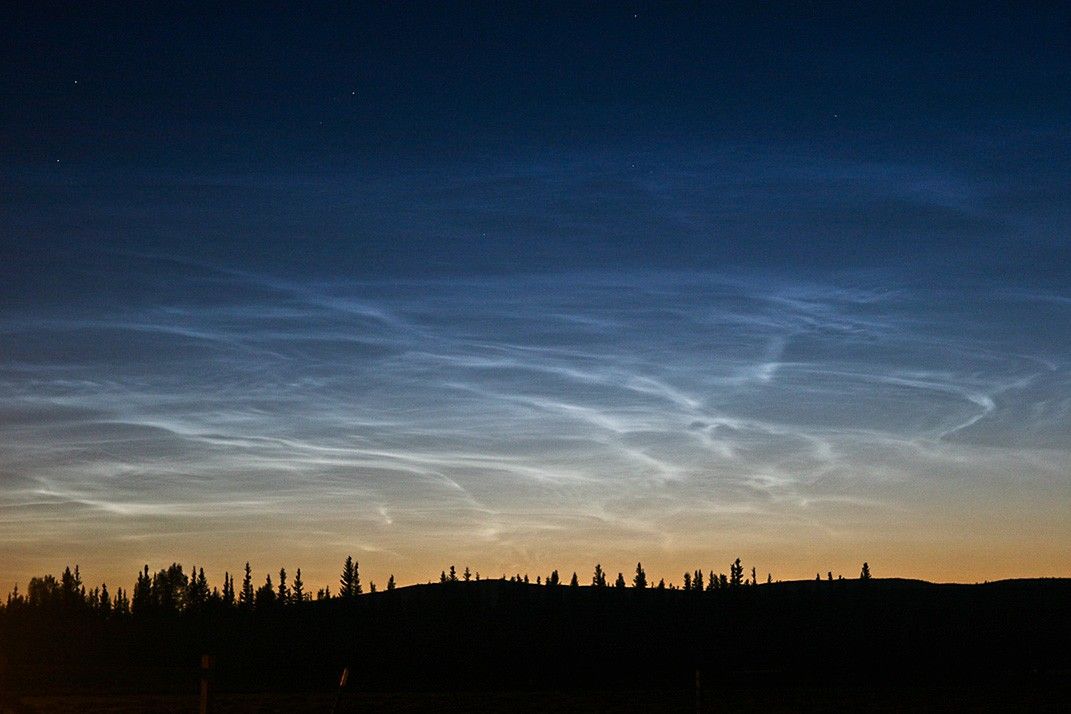
NASA invites people of all ages and backgrounds to do NASA science as a part of real science projects that rely on volunteers. Citizen Science is a great way to make new friends, meet some scientists, and help NASA solve mysteries of the universe this summer – using just a phone or computer. You can join from anywhere, participate on your own schedule, and dive right into real research using actual mission data. Here are two examples:
- Through Space Cloud Watch, you can help NASA study noctilucent clouds. Noctilucent means “night-shining,” and that’s exactly what they do! During summer twilight at high latitudes, these clouds catch sunlight and appear to glow even in a darkened sky. Take a photo and submit a report to help scientists track how these rare clouds are changing.
- Take your cloud‑watching to another planet with Cloudspotting on Mars, where you review real NASA images to identify clouds above the Red Planet and help scientists understand Martian weather.
Curious about what other projects you might enjoy? See all current Citizen Science opportunities available through NASA’s Science Mission Directorate.
No matter how you spend your summer – building projects like the Hack Club’s Stardance Challenge, jumping into real NASA research through citizen science, or exploring possible NASA career paths – there’s a launch pad waiting for you. And remember, NASA’s STEM Resources website is available year-round to serve as your one-stop hub for hands-on activities, videos, articles, and more to spark curiosity and fuel big ideas.
Keep Exploring Discover More Topics From NASAFor Students Grades 9-12
Mobile and Desktop Apps
Games and Interactives
NASA STEM Opportunities and Activities For Students
Space Out This Summer with Variety of NASA STEM Activities
Summer is “Go” for launch, and NASA has a universe of ways to help you to jump in, explore, and create! Whether you prefer to spend this season fueling your creativity, going outdoors into nature, or daydreaming about your future, NASA offers ways to take your interests to the next level.
Here are some opportunities to level up your skills with NASA STEM this summer.
Rise to Stardance ChallengeFrom Monday, June 1, through Sept. 30, students ages 13 to 18 are invited to flex their creativity in the online Stardance Challenge, a partnership between NASA and the education non-profit Hack Club. Whether you’re into space, coding, hardware, or just love building cool things, this is your chance to work with real NASA mission data from programs like Artemis, the James Webb Space Telescope, and more.
Participants can create anything from code and apps to electronics, circuit boards, models, and simulations. Hack Club will offer peer and expert reviews, prizes, and plenty of opportunities to show off your work. Meanwhile, NASA will provide access to publicly available datasets, mission materials, multimedia, and virtual sessions with subject matter experts who can share insights on space science, engineering, and careers. Ready to start brainstorming? Visit the Hack Club: Stardance Challenge website to explore project options, check out prizes, and RSVP to get a reminder when the challenge opens
NASA Astronaut Megan McArthur is conducting a technology demonstration with Astrobee flying robots.Credit: NASA Go Behind Scenes of NASA CareersThink NASA is only for astronauts, scientists, and tech experts? Think again. It takes a wide range of professionals and specialists to bring the nation’s aerospace goals to life. Summer is the perfect time to discover how your skills and interests could make a difference at NASA.
Connect directly with NASA experts through online events designed to spark your curiosity and help you explore real STEM career paths. These virtual sessions provide a behind‑the‑scenes look at NASA’s workforce, plus the chance to ask questions.
- Tuesday, June 2: NASA’s Career Technical Education Day at Goddard Space Flight Center dives into robotics, AI, autonomous systems, and the skilled technical careers that keep NASA missions running. Register by May 26.
- Thursday, June 11: Virtual Career Connection: Aviation Technology and Maintenance introduces you to aircraft mechanics and technicians who support NASA’s flight programs and explores pathways into aviation technology careers. Register by June 2.
Looking for more? Check out the Next Gen STEM for Careers web page for videos, articles, and more ways to learn about the variety of jobs at NASA.
Noctilucent clouds seen from Fairbanks, Alaska.Credit: Patrick Cobb – Photovoltaic designer, photographer Dive into NASA Research Through Citizen ScienceNASA invites people of all ages and backgrounds to do NASA science as a part of real science projects that rely on volunteers. Citizen Science is a great way to make new friends, meet some scientists, and help NASA solve mysteries of the universe this summer – using just a phone or computer. You can join from anywhere, participate on your own schedule, and dive right into real research using actual mission data. Here are two examples:
- Through Space Cloud Watch, you can help NASA study noctilucent clouds. Noctilucent means “night-shining,” and that’s exactly what they do! During summer twilight at high latitudes, these clouds catch sunlight and appear to glow even in a darkened sky. Take a photo and submit a report to help scientists track how these rare clouds are changing.
- Take your cloud‑watching to another planet with Cloudspotting on Mars, where you review real NASA images to identify clouds above the Red Planet and help scientists understand Martian weather.
Curious about what other projects you might enjoy? See all current Citizen Science opportunities available through NASA’s Science Mission Directorate.
No matter how you spend your summer – building projects like the Hack Club’s Stardance Challenge, jumping into real NASA research through citizen science, or exploring possible NASA career paths – there’s a launch pad waiting for you. And remember, NASA’s STEM Resources website is available year-round to serve as your one-stop hub for hands-on activities, videos, articles, and more to spark curiosity and fuel big ideas.
Keep Exploring Discover More Topics From NASAFor Students Grades 9-12
Mobile and Desktop Apps
Games and Interactives
NASA STEM Opportunities and Activities For Students
Huge study of Alzheimer’s genetics identifies new drug targets
Huge study of Alzheimer’s genetics identifies new drug targets
Hurricane season explained—and what to expect in 2026
Hurricane season is shaped by the ingredients needed to produce a tropical cyclone, and this year the Atlantic may be relatively quiet
Scientists are racing to stop a type of Ebola we have no vaccine for
A deadly Ebola outbreak is spreading fast—and U.S. cuts to foreign aid are making it worse
Geoengineering can thicken Arctic sea ice, but for how long?
Geoengineering can thicken Arctic sea ice, but for how long?
June Podcast: Dance of the Planets
This month’s episode highlights the close pairing of Venus and Jupiter under way in the western sky after sunset. You'll also learn why astronomers are fixated on a star in Corona Borealis — and how to find a huge but dim constellation that will likely be new to you. So grab curiosity and come along on this month’s Sky Tour.
The post June Podcast: Dance of the Planets appeared first on Sky & Telescope.
Longest-period young transiting exoplanets discovered
It’s 2234, you’re on your annual class field trip touring exoplanets, and your teacher informs everyone they can pick one more exoplanetary system to explore before heading back to Earth. You and your classmates are exhausted from the day’s activities and you’re hungry. However, you get really excited because you already know what everyone will want. You and your classmates all shout in unison, “The young and far away puffy ones!”
Roman Telescope's massive infrared mirror is ready to fly
It’s June 2027, and you’re fresh off defending your PhD studying the direct imaging of exoplanets while starting your postdoctoral journey at NASA Jet Propulsion Laboratory. The trauma of eating ramen and living off a sub-living wage for the last five years of your life is still fresh in your brain. But you’re excited to finally get your real career started with funding you received for viewing time on the much-anticipated Nancy Grace Roman Space Telescope (Roman for short). You begin to download the first set of data as your eyes tear up knowing your entire journey in research and academia is about to be worth it.
Gravity Waves From Super Typhoon Sinlaku
- Earth
- Earth Observatory
- Image of the Day
- EO Explorer
- Topics
- More Content
- About
Gravity Waves From Super Typhoon Sinlaku
- Earth
- Earth Observatory
- Image of the Day
- EO Explorer
- Topics
- More Content
- About