
Feed aggregator
NASA calls off rescue mission for its falling Swift space telescope
The space agency’s Neil Gehrels Swift Observatory, which studied cataclysmic cosmic explosions, is expected to burn up in Earth’s atmosphere later this year
Scientists just found the fastest known star in the Milky Way. It zooms around our black hole at 15,500 miles per second
Astronomers have found the fastest known star in the Milky Way, a faint object racing around Sagittarius A*, the supermassive black hole at the heart of our galaxy. Dubbed S301, the star reaches about 15,500 miles (25,000 kilometers) per second at its fastest — more than 8% the speed of light.
"What is special about this star is that it's orbiting Sagittarius A* on a very tight orbit, taking just 8.7 years to complete it, and is approaching the black hole at a mere 12 times the distance of Earth to the sun. That is unprecedented," study author Felix Mang, a Ph.D. student at the Max Planck Institute for Extraterrestrial Physics in Germany, said in a statement.
The discovery gives astronomers a new way to probe the roughly 4.3-million-solar-mass black hole. General relativity predicts that a rotating black hole drags spacetime along with it, an effect known as frame dragging, or Lense-Thirring precession. That distortion should gradually alter S301's orbit — because the star ventures so close to Sagittarius A*, those changes may become measurable within about a decade.
This visible light wide-field view shows the rich star clouds in the constellation of Sagittarius (the Archer) in the direction of the center of our Milky Way galaxy. The entire image is filled with vast numbers of stars — but far more remain hidden behind clouds of dust and are only revealed in infrared images. This view was created from photographs in red and blue light and form part of the Digitized Sky Survey 2. (Image credit: ESO and Digitized Sky Survey 2. Acknowledgment: Davide De Martin and S. Guisard)For the first time, we would actually be able to measure very directly the spin of a massive black hole, which would be a key test of Einstein's theory," said study co-author Stefan Gillessen, also of the Max Planck Institute.
This sequence of images, taken with the GRAVITY instrument at ESO’s Very Large Telescope Interferometer (VLTI), show several stars orbiting Sagittarius A*, the supermassive black hole at the centre of our galaxy. One of these stars, known as S301, was recently found to pass much closer to the black hole than any other known star. (Image credit: ESO/GRAVITY collaboration)Researchers spotted S301 in 2023 using the GRAVITY instrument on the European Southern Observatory's Very Large Telescope Interferometer in Chile, then traced it back through observations from 2021 and 2017. Its highly elongated orbit suggests S301 may once have belonged to a binary system that wandered too close to Sagittarius A*. The black hole could have captured S301 while flinging its companion outward at tremendous speed.
Astronomers plan to keep tracking S301 with GRAVITY+ and, eventually, ESO's Extremely Large Telescope. With its next close pass expected in 2031, observations spanning two full orbits could reveal Sagittarius A*'s spin for the first time.
The team's research was published on August 19 in the journal Nature.
Webb Captures the Treasure Chest at the Heart of the Carina Nebula
This NASA/ESA/CSA James Webb Space Telescope Picture of the Month takes us to a fantastical realm within our home galaxy, where piercing starlight and billowing winds sculpt dust clouds into inventive shapes. This scene is from the Carina Nebula, which lies just 7500 light-years away in the constellation Carina (the Keel).
Moderna and Merck announce ‘landmark’ trial showing mRNA therapy significantly cuts odds of recurrent skin cancer
The combined drug works by nudging the body’s own immune system to make proteins that attack and destroy melanoma cells
Private mission to save NASA's Swift space telescope fails
NASA is calling off the effort to save its Neil Gehrels Swift Observatory after a private rescue spacecraft couldn't overcome its own problems in orbit.
LINK, the specialized probe from Katalyst Space that NASA contracted for the Swift Boost mission, was delivered to space on an air-launched Northrop Grumman Pegasus XL rocket on July 3. The vehicle was designed to rendezvous with the Swift Observatory in order to grapple and raise it to a more stable orbit, but LINK ran into trouble when it began to spin uncontrollably about three weeks after launch.
Today (Aug. 19), NASA announced an official end to LINK's efforts to boost Swift's orbit, citing ongoing attitude control issues with the private spacecraft, but the agency hasn't canceled the mission outright. LINK will still attempt a rendezvous with Swift in order to practice proximity operations and demonstrate its capabilities other than spacecraft capture, which could aid future missions down the road.
From its inception, the Swift Boost mission was always viewed as a long shot. Increased solar activity had already begun decaying the observatory's orbit faster than anticipated when NASA awarded the $30 million Swift Boost contract to Katalyst in 2025, giving the Arizona-based company less than a year to complete LINK's design, manufacture and testing before time to save Swift would run out.
"NASA should be willing to move quickly and take smart risks when the potential return is worth it, and that is exactly what we did with this mission," NASA Administrator Jared Isaacman said in a statement today. "This is not the outcome we were working toward, but it does not change why this mission was worth attempting. The team moved with extraordinary speed to give Swift a chance to carry out more science while advancing capabilities America will need for satellite servicing in the future."
Swift is a one-of-its kind orbital observatory designed to study high-energy phenomena across the universe. It can detect sudden events like gamma-ray bursts and quickly direct its instruments to study them in X-ray, ultraviolet and visible light. The spacecraft is also routinely redirected for rapid response research to study things like newly discovered supernovae, black-hole ejections, fast radio bursts and other short-lived astronomical events.
With LINK now incapable of boosting Swift's orbit, NASA estimates the observatory will dip catastrophically low into Earth's atmosphere before the end of the year. After Swift dies, the agency says it will "continue to prioritize finding new options to react rapidly to cosmic events, using current missions to help fill the gap in the meantime."
Katalyst is working closely with NASA as the Swift Boost mission enters its next phase. Together, the company and space agency are evaluating logistics for LINK's rendezvous and maneuvering demonstration within Swift's vicinity, which will provide data for potential future servicing missions to other satellites, NASA's statement says.
Pluto Planetary Science is the Gift that Keeps on Giving
Something's wetting the surface of dwarf planet Pluto along the northern edge of Sputnik Planitia, and planetary scientists have found a good explanation for it. A recent study of new Horizons images taken during the 2015 flyby revealed evidence that liquid nitrogen is rising up through cracks in Sputnik Planitia. That's the giant heart-shaped glacial basin we see in all the Pluto images taken by the spacecraft.
Scientists create 'laundry gun' for astronauts to clean their clothes by shooting out plasma
If you have ever shared a room with multiple people for days on end, you may know how clothes and living conditions can rapidly turn rather smelly. Imagine that happening in a confined spacecraft.
Even worse, since water on a space mission is in short supply, space travelers can't easily do their laundry. This is more than a body odor problem — unclean clothes and linens are ripe feeding grounds for infectious bacteria. Astronauts might wear the same clothes for days or even weeks, seal away used clothes in airtight bags, then return them to Earth for cleaning or cast them away to burn up in Earth's atmosphere.
This is fine for short trips near Earth, but what about a months-long odyssey to Mars? Engineers have devised a new way for astronauts to dry-clean their dirty laundry. They've crafted a prototype "laundry gun" that sterilizes fabric by shooting violet-colored plasma into it.
"This will reduce the microbial load and keep clothes and other soft surfaces clean, at least microbially, for astronaut health," says Gabe Xu, a professor at the University of Alabama in Huntsville and one of the laundry gun's creators, in a statement. "It could also be used to sterilize space suits and tools before they leave the habitat and step foot on Mars."
A plasma is an energized soup of charged particles, ions and electrons. While many plasmas like that in the sun are very hot, the laundry gun's plasma is "cold," closer to room temperature.
Its electrons are key to killing bacteria. As the laundry gun shoots plasma into fabric, the electrons collide with gas molecules in the surrounding air, such as oxygen (O2) and water vapor (H2O). These collisions create other molecules like ozone (O3), which chemists call "oxidizing species". These oxidizing species can chemically react with the membrane that surrounds a bacterium, damaging and destroying it.
In collaboration with NASA's Marshall Space Flight Center, Xu and colleagues have created a prototype plasma gun, about the size of a pen, which can sanitize about a square centimeter at a time. In their tests, the prototype reduced spore colonies on a scrap of fabric by more than 75%.
Earthly disinfectants like peroxide and bleach also attack bacteria by oxidizing them in this way. The laundry gun's creators could allow astronauts to travel without such cleaning chemicals. Instead, the apparatus creates its cleaning plasma from the spacecraft’s own air and water vapor. In space travel, where every gram of mass matters, this is a major advantage.
The plasma gun at work. (Image credit: Gabe Xu | UAH)"The use of plasma treatment could significantly reduce the mass of goods needed for a human mission, especially one to Mars where resupply is difficult," Xu wrote in the statement.
That said, the "laundry gun" is not a perfect replacement for the standard washing machine — not yet, at any rate. "This won't remove coffee or grass stains (though we haven't tried that)," Xu wrote in the statement.
Moreover, a pen-sized laundry gun is too small to be practical. Xu and colleagues are planning to build larger, but still handheld, devices. They'll also need to deal with their plasma gun's ozone, which can be harmful in large quantities — they're working on a filtration system to remove this.
Space laundry is a rather active area of research today — astronauts on the International Space Station (ISS) recently tested a space detergent, and the Chinese space program has developed a washing machine suitable for low-water use.
NASA TechLeap Prize: Orbital Clarity Challenge
1 min read
Preparations for Next Moonwalk Simulations Underway (and Underwater)
The Orbital Clarity Challenge — the sixth in the NASA TechLeap Prize series — is a collaborative effort between NASA’s Heliophysics Division, Flight Opportunities program, and Center of Excellence for Collaborative Innovation. The Heliophysics Division studies space weather, including how it heats and expands Earth’s outer atmosphere during intense solar activity, creating orbital drag through atmospheric density changes. The challenge calls for low-cost methods of measuring thermospheric density, pressure, or drag in low Earth orbit. NASA is seeking approaches that are inexpensive and scalable enough to be produced in quantity and flown as hosted payloads across the commercial fleet. The challenge will unfold across three phases, advancing up to four winners’ concepts to a flight-ready solution within 12 months. At the conclusion of the challenge, NASA intends to offer each winning team a test flight at no cost.
Award: Up to four winners may receive up to $500,000 in prizes across three phases
Challenge Open Date: August 19, 2026
Phase 1 Registration Close Date: October 28, 2026
Phase 1 Submission Close: November 11, 2026
For more information, visit: https://occ.nasatechleap.org/
NASA TechLeap Prize: Orbital Clarity Challenge
1 min read
Preparations for Next Moonwalk Simulations Underway (and Underwater)The Orbital Clarity Challenge — the sixth in the NASA TechLeap Prize series — is a collaborative effort between NASA’s Heliophysics Division, Flight Opportunities program, and Center of Excellence for Collaborative Innovation. The Heliophysics Division studies space weather, including how it heats and expands Earth’s outer atmosphere during intense solar activity, creating orbital drag through atmospheric density changes. The challenge calls for low-cost methods of measuring thermospheric density, pressure, or drag in low Earth orbit. NASA is seeking approaches that are inexpensive and scalable enough to be produced in quantity and flown as hosted payloads across the commercial fleet. The challenge will unfold across three phases, advancing up to four winners’ concepts to a flight-ready solution within 12 months. At the conclusion of the challenge, NASA intends to offer each winning team a test flight at no cost.
Award: Up to four winners may receive up to $500,000 in prizes across three phases
Challenge Open Date: August 19, 2026
Phase 1 Registration Close Date: October 28, 2026
Phase 1 Submission Close: November 11, 2026
For more information, visit: https://occ.nasatechleap.org/
'The Mandalorian and Grogu' finally blasts onto Disney+ next month
Despite our love for little "Baby Yoda", "The Mandalorian and Grogu" wasn't the thrilling "Star Wars" feature film to drag fans back to theaters when it dropped back in May. It wasn't bad, but it felt more like a TV special than a cinematic event.
But now the $166 million space opera — recruited from the Disney+ series that ran for three seasons from 2019-2023 — is now about to enter Earth orbit and finally land in the streaming sphere when it hits Disney+ starting Sept. 2, 2026. Will this be the way?
Directed by Jon Favreau and starring Pedro Pascal as the laconic bounty hunter clad in his stylish Beskar armor and also featuring that pint-sized alien dynamo formally known as Baby Yoda, "The Mandalorian and Grogu" was the first big-screen "Star Wars" movie in seven years since 2019's "Star Wars: The Rise of Skywalker."
Could the underperforming spinoff film become a surprise hit with general streaming audiences since that's where the characters were born, or has the dynamic duo's time come and gone?
Will Mando and Grogu be welcomed home to Disney+ on September 2? (Image credit: Disney+)"The evil Empire has fallen, and Imperial warlords remain scattered throughout the galaxy," states the official synopsis. "As the fledgling New Republic works to protect everything the Rebellion fought for, they have enlisted the help of legendary Mandalorian bounty hunter Din Djarin and his young apprentice Grogu."
While some fans would have potentially welcomed a fourth season of "The Mandalorian" — which is where this cobbled-together feature was derived from — the majority of disgruntled "Star Wars" acolytes were still wincing from the series' lackluster third outing (yes, we're staring at you, Jack Black and Lizzo!).
As they say, time heals all wounds, and despite disappointing reviews and fan reactions, the movie did manage to scrape together $345 million worldwide. Now that it's coming back to its streaming home, perhaps all will be forgiven? We're certainly willing to give it another shot or a fair first screening. How about you?
Also starring Sigourney Weaver and Jeremy Allen White, "The Mandalorian and Grogu" steers its way back onto Disney+ beginning on Sept. 2, 2026.
The Fastest Star in the Milky Way Will Test Relativity
Astronomers have discovered another S star, the population of stars that orbits the Milky Way's SMBH. This one is the fastest of them all, and also comes closest to the SMBH. It will let astronomers test relativity, especially the Lense-Thirring effect.
NASA Updates Next Steps for Commercial Swift Boost Mission
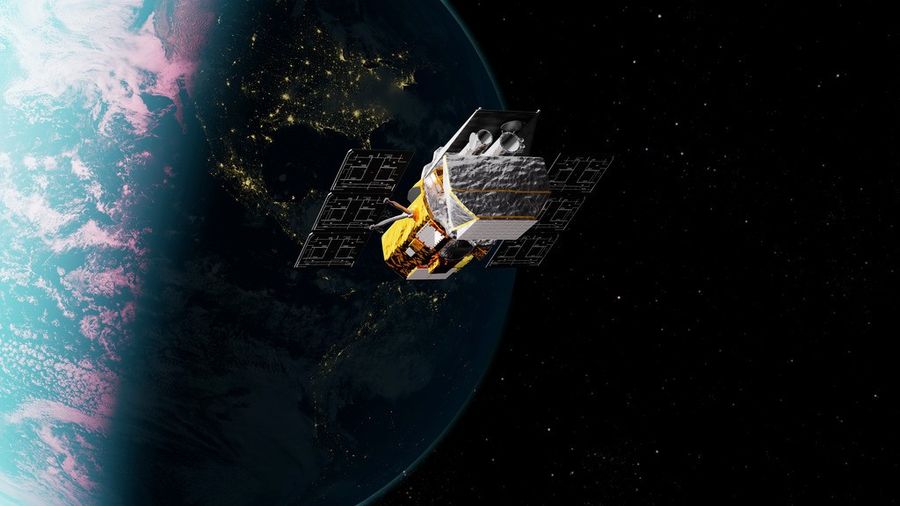
Due to an ongoing commercial spacecraft attitude control issue, NASA and Katalyst Space announced Wednesday the LINK spacecraft will not capture or boost an agency satellite to a higher altitude to extend its science mission as planned. However, LINK still will attempt to conduct rendezvous and proximity operations with NASA’s Neil Gehrels Swift Observatory to demonstrate key capabilities for the future of space exploration.
“NASA should be willing to move quickly and take smart risks when the potential return is worth it, and that is exactly what we did with this mission,” said NASA Administrator Jared Isaacman. “This is not the outcome we were working toward, but it does not change why this mission was worth attempting. The team moved with extraordinary speed to give Swift a chance to carry out more science while advancing capabilities America will need for satellite servicing in the future. We are going to learn everything we can from LINK’s rendezvous attempt and put those lessons to work on the missions that follow.”
NASA and Katalyst are working closely to assess next steps for rendezvous and gather as much data as possible to inform future satellite servicing operations.
“We knew this was a high-risk, high-reward mission – a first-of-its kind attempt, developed on an unprecedented timeline driven by the Sun’s activity,” said Shawn Domagal-Goldman, director, Astrophysics Division, NASA Headquarters in Washington. “We were all hoping for more science from Swift. But we knew the takeaways from this mission would be worthwhile either way, and we have gained so much through the series of accomplishments up to this point.”
Without intervention, NASA anticipates Swift is likely to re-enter Earth’s atmosphere later this year. As part of the agency’s previous planning for Swift’s end of life, NASA will continue to prioritize finding new options to react rapidly to cosmic events, using current missions to help fill the gap in the meantime.
“Building, testing, and operating this mission has already strengthened America’s space industry pipeline, advancing in-space servicing capabilities in completely new ways,” Domagal-Goldman said. “NASA is committed to supporting our commercial vendors as they take on difficult tasks with the agency, to push the boundaries of what’s possible. We’re so proud of this team for: getting to the launch pad in record time, in a record-setting year for NASA astrophysics launches; its innovative problem-solving up to this point; and the dedication to the exciting capabilities this mission will attempt to demonstrate next.”
Swift was launched in 2004 to study gamma-ray bursts, the most powerful explosions in the universe, and other cosmic objects and events. It was designed for a two-year prime mission. After 21 years of science operations, Swift’s low Earth orbit began to rapidly decay because of increased solar activity. NASA used this opportunity to advance U.S. spacecraft servicing technology, awarding a contract to Katalyst in September 2025 to mount a robotic servicing mission for Swift in less than a year.
The LINK spacecraft launched July 3 on a Northrop Grumman Pegasus XL rocket from Kwajalein Atoll in the South Pacific Ocean. Teams established communications with LINK and conducted in-orbit checkouts over the following weeks, before the spacecraft experienced attitude control issues.
Learn more from Katalyst, and monitor NASA’s Swift blog for continued updates throughout rendezvous:
https://science.nasa.gov/blogs/swift
-end-
Alise Fisher
Headquarters, Washington
202-358-2546
alise.m.fisher@nasa.gov
NASA Updates Next Steps for Commercial Swift Boost Mission
Due to an ongoing commercial spacecraft attitude control issue, NASA and Katalyst Space announced Wednesday the LINK spacecraft will not capture or boost an agency satellite to a higher altitude to extend its science mission as planned. However, LINK still will attempt to conduct rendezvous and proximity operations with NASA’s Neil Gehrels Swift Observatory to demonstrate key capabilities for the future of space exploration.
“NASA should be willing to move quickly and take smart risks when the potential return is worth it, and that is exactly what we did with this mission,” said NASA Administrator Jared Isaacman. “This is not the outcome we were working toward, but it does not change why this mission was worth attempting. The team moved with extraordinary speed to give Swift a chance to carry out more science while advancing capabilities America will need for satellite servicing in the future. We are going to learn everything we can from LINK’s rendezvous attempt and put those lessons to work on the missions that follow.”
NASA and Katalyst are working closely to assess next steps for rendezvous and gather as much data as possible to inform future satellite servicing operations.
“We knew this was a high-risk, high-reward mission – a first-of-its kind attempt, developed on an unprecedented timeline driven by the Sun’s activity,” said Shawn Domagal-Goldman, director, Astrophysics Division, NASA Headquarters in Washington. “We were all hoping for more science from Swift. But we knew the takeaways from this mission would be worthwhile either way, and we have gained so much through the series of accomplishments up to this point.”
Without intervention, NASA anticipates Swift is likely to re-enter Earth’s atmosphere later this year. As part of the agency’s previous planning for Swift’s end of life, NASA will continue to prioritize finding new options to react rapidly to cosmic events, using current missions to help fill the gap in the meantime.
“Building, testing, and operating this mission has already strengthened America’s space industry pipeline, advancing in-space servicing capabilities in completely new ways,” Domagal-Goldman said. “NASA is committed to supporting our commercial vendors as they take on difficult tasks with the agency, to push the boundaries of what’s possible. We’re so proud of this team for: getting to the launch pad in record time, in a record-setting year for NASA astrophysics launches; its innovative problem-solving up to this point; and the dedication to the exciting capabilities this mission will attempt to demonstrate next.”
Swift was launched in 2004 to study gamma-ray bursts, the most powerful explosions in the universe, and other cosmic objects and events. It was designed for a two-year prime mission. After 21 years of science operations, Swift’s low Earth orbit began to rapidly decay because of increased solar activity. NASA used this opportunity to advance U.S. spacecraft servicing technology, awarding a contract to Katalyst in September 2025 to mount a robotic servicing mission for Swift in less than a year.
The LINK spacecraft launched July 3 on a Northrop Grumman Pegasus XL rocket from Kwajalein Atoll in the South Pacific Ocean. Teams established communications with LINK and conducted in-orbit checkouts over the following weeks, before the spacecraft experienced attitude control issues.
Learn more from Katalyst, and monitor NASA’s Swift blog for continued updates throughout rendezvous:
https://science.nasa.gov/blogs/swift
-end-
Alise Fisher
Headquarters, Washington
202-358-2546
alise.m.fisher@nasa.gov
Human-Related Microbes May Survive Moon’s South Pole, NASA Finds
Lee esta historia en español aquí.
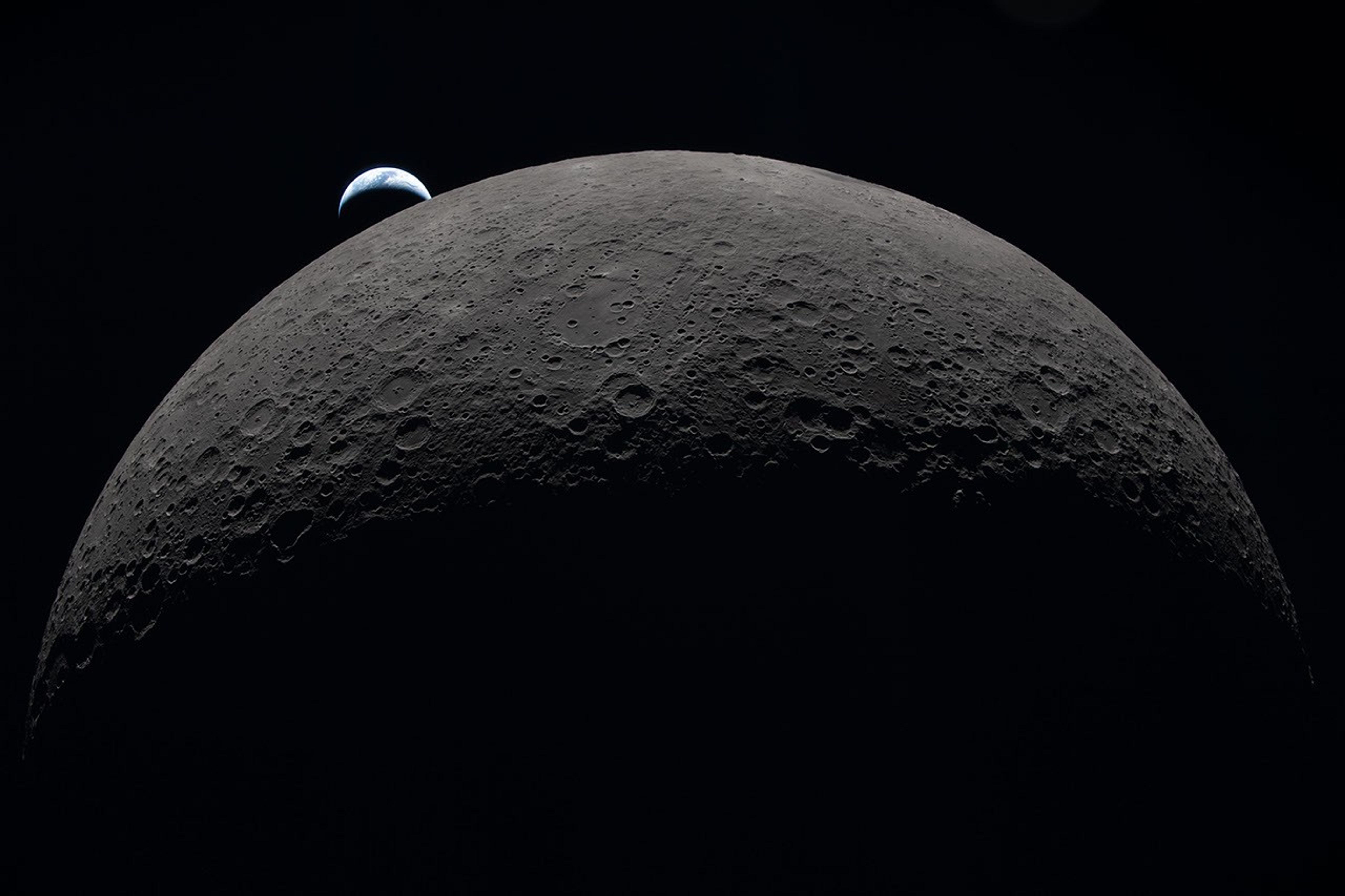
Some of Earth’s microbes likely to hitch a ride to space with human explorers could survive in the shaded nooks and crannies of the Moon’s South Pole region, NASA scientists say.
Published on Aug. 19, 2026, in Science Advances, these findings highlight a need to better understand microbial persistence in extreme lunar environments. As humans build a permanent presence on the Moon, it may become difficult to distinguish ancient lunar chemistry from contamination delivered by visiting astronauts. The concern extends beyond the Moon and on to Mars, scientists say.
“Humans are natural explorers, and with them come their voices, their memories … and their microbes,” said Prabal Saxena, a planetary scientist who led the study from NASA’s Goddard Space Flight Center in Greenbelt, Maryland. “For some scientists, myself included, that reality can be unsettling. But it also creates an opportunity to turn an imperfect situation into a useful experiment.”
Bringing microbes along is unavoidable: Humans have, on average, 1 million bacteria living on each patch of skin the size of a pencil eraser, for example. These bacteria vent from spacesuits and habitats. Though the paper’s authors worry about contamination interfering with the search for chemical clues to ancient geology or biology, they also argue that the Moon should be used as a natural lab. In shaded areas around the South Pole, scientists could carefully test the real-life limits of microbial survival in an environment that can’t easily be reproduced on Earth.
The Apollo program landed six pairs of astronauts on the Moon between 1969 and 1972. All six landing sites are near the lunar equator. In this visualization, the Apollo sites are contrasted with the South Pole, an area with enormous potential for future exploration. Time passes as we zoom toward Shackleton crater at the South Pole, revealing illumination conditions quite different from those near the equator. While many craters remain in permanent shadow, some nearby mountains and ridges are in persistent sunshine, making them attractive candidates for solar power and long-term habitation. NASA’s Scientific Visualization Studio/Ernie WrightBefore any surface science can happen, scientists need a baseline measurement of what contaminants humans bring, the authors say.
“We need to understand what was there before us, because when we go to Mars to search for signs of life beyond our planet, we will want to make sure it’s not stuff we brought,” said Andrew Needham, a NASA Goddard-based paper co-author who is an Artemis contamination‑control scientist for lunar samples.
Even with strict sterilization procedures, some organisms are stubbornly resilient. A good example is Aspergillus niger, which is a fungus that thrives in warm, damp places like household bathrooms and heating, ventilation, and air conditioning systems. Astronauts have sampled it inside the International Space Station, and experiments demonstrate that the fungus can survive outside the station as well. Aspergillus niger was one of five microbes, including bacteria and fungi, selected for this study because of its known toughness in spaceflight environments.
That microbes survived on the space station’s exterior surprised scientists. These species are typically not considered “extremophiles” that can withstand harsh conditions, such as the vacuum of space, according to Aaron Regberg, a geomicrobiologist at NASA’s Johnson Space Center in Houston.
“I would have expected these microbes to have dried out,” said Regberg, who studies space station bacteria and was a co-author on the paper.
NASA astronaut Kate Rubins on Oct. 14, 2016, collecting microbes in the Japanese Experiment Module aboard the International Space Station. JAXA/Takuya Onishi
He pointed out that NASA often bakes robotic spacecraft at temperatures above 400 degrees Fahrenheit to reduce the number of living organisms on them. But that’s not possible with astronauts, so contamination concerns take on new meaning in crewed exploration of the Moon’s south polar environment.
A clearer picture of where microbes might survive comes from understanding how sunlight behaves at the poles. Survival in this study means the microbe can stay alive for at least one Earth day, which does not mean that it can grow and reproduce.
Because the Moon has a very small tilt on its axis, the view from its poles is of a Sun that appears to hover just above the horizon, skimming the surface like a flashlight laying on a table. As a result, elevated parts of the surface, including crater ridges, mountains, and even small bumps, block light from reaching low-lying terrain. This produces pockets of shadowed areas that can remain cold and preserve water, as well as shield fragile molecules and possible microorganisms from lethal radiation.
With that scientific context in mind, the team set out to test which Earth microbes could survive extreme polar conditions. They focused on organisms commonly found in spaceflight environments and those common on human skin. Besides Aspergillus niger, these included Bacillus subtilis, Staphylococcus aureus, Deinococcus radiodurans, and several species of Fusarium. Based on an analysis of previous studies, the scientists noted the maximum amount of heat and ultraviolet (UV) radiation each organism can withstand.
Then, the organisms were tested in simulations of three regions near the lunar South Pole — Nobile Rim, Connecting Ridge, and De Gerlache Rim. Those simulations used detailed environmental maps built from elevation and temperature data collected by instruments aboard NASA’s Lunar Reconnaissance Orbiter, combined with models of how radiation strikes the surface.
The models showed maps of “survivable niches” that range in size from a miles-wide crater floor to an astronaut’s boot print. Aspergillus niger, which was most resistant to UV radiation, was able to survive even in areas with some sunlight exposure. UV radiation is so deadly to most microbes that it’s used for sterilization in hospitals.
“When we think of the Moon, we don’t typically think of biology,” said Heather Graham, a paper co-author at NASA Goddard who helps develop tools and techniques for detecting biology that may look nothing like Earth’s. “But the Moon is a place where a cell can survive, so our first exploration of these sites should pay extra attention to our microbial hitchhikers and work hard to characterize lunar chemistry before our visits change what we will find.”
The authors note that while some microbes can survive in a dormant state in regions around the South Pole, and thereby confuse some future scientific investigations, there is no evidence the Moon has key ingredients to sustain growth and replication. Such ingredients include liquid water, which typically requires an atmosphere and moderate temperatures.
For more information, visit:
https://science.nasa.gov/astrobiology
Learn More and Get Involved International Observe the Moon Night, Sept. 19, 2026Each year, observers around the world come together to celebrate Earth’s Moon through direct observations, hands-on activities, lunar-themed music, artwork, readings, and more.
The Moon
From lighting up our skies to preserving evidence of our solar system’s history, Earth’s closest neighbor plays a pivotal role in the study of our planet and beyond.
About the Author Lonnie Shekhtman Senior Science Writer
Shekhtman helps communicate NASA planetary science to the world through news and feature stories on NASA.gov, videos for NASA+ and YouTube, and by working with the media. She reports on lunar and Mars science and exploration; NASA’s search for life; missions to Venus, Titan, and Jupiter’s Trojan asteroids; and many other topics related to NASA’s exploration of our solar system and beyond.
Human-Related Microbes May Survive Moon’s South Pole, NASA Finds
Lee esta historia en español aquí.
Some of Earth’s microbes likely to hitch a ride to space with human explorers could survive in the shaded nooks and crannies of the Moon’s South Pole region, NASA scientists say.
Published on Aug. 19, 2026, in Science Advances, these findings highlight a need to better understand microbial persistence in extreme lunar environments. As humans build a permanent presence on the Moon, it may become difficult to distinguish ancient lunar chemistry from contamination delivered by visiting astronauts. The concern extends beyond the Moon and on to Mars, scientists say.
“Humans are natural explorers, and with them come their voices, their memories … and their microbes,” said Prabal Saxena, a planetary scientist who led the study from NASA’s Goddard Space Flight Center in Greenbelt, Maryland. “For some scientists, myself included, that reality can be unsettling. But it also creates an opportunity to turn an imperfect situation into a useful experiment.”
Bringing microbes along is unavoidable: Humans have, on average, 1 million bacteria living on each patch of skin the size of a pencil eraser, for example. These bacteria vent from spacesuits and habitats. Though the paper’s authors worry about contamination interfering with the search for chemical clues to ancient geology or biology, they also argue that the Moon should be used as a natural lab. In shaded areas around the South Pole, scientists could carefully test the real-life limits of microbial survival in an environment that can’t easily be reproduced on Earth.
The Apollo program landed six pairs of astronauts on the Moon between 1969 and 1972. All six landing sites are near the lunar equator. In this visualization, the Apollo sites are contrasted with the South Pole, an area with enormous potential for future exploration. Time passes as we zoom toward Shackleton crater at the South Pole, revealing illumination conditions quite different from those near the equator. While many craters remain in permanent shadow, some nearby mountains and ridges are in persistent sunshine, making them attractive candidates for solar power and long-term habitation.NASA’s Scientific Visualization Studio/Ernie WrightBefore any surface science can happen, scientists need a baseline measurement of what contaminants humans bring, the authors say.
“We need to understand what was there before us, because when we go to Mars to search for signs of life beyond our planet, we will want to make sure it’s not stuff we brought,” said Andrew Needham, a NASA Goddard-based paper co-author who is an Artemis contamination‑control scientist for lunar samples.
Even with strict sterilization procedures, some organisms are stubbornly resilient. A good example is Aspergillus niger, which is a fungus that thrives in warm, damp places like household bathrooms and heating, ventilation, and air conditioning systems. Astronauts have sampled it inside the International Space Station, and experiments demonstrate that the fungus can survive outside the station as well. Aspergillus niger was one of five microbes, including bacteria and fungi, selected for this study because of its known toughness in spaceflight environments.
That microbes survived on the space station’s exterior surprised scientists. These species are typically not considered “extremophiles” that can withstand harsh conditions, such as the vacuum of space, according to Aaron Regberg, a geomicrobiologist at NASA’s Johnson Space Center in Houston.
“I would have expected these microbes to have dried out,” said Regberg, who studies space station bacteria and was a co-author on the paper.
NASA astronaut Kate Rubins on Oct. 14, 2016, collecting microbes in the Japanese Experiment Module aboard the International Space Station.JAXA/Takuya OnishiHe pointed out that NASA often bakes robotic spacecraft at temperatures above 400 degrees Fahrenheit to reduce the number of living organisms on them. But that’s not possible with astronauts, so contamination concerns take on new meaning in crewed exploration of the Moon’s south polar environment.
A clearer picture of where microbes might survive comes from understanding how sunlight behaves at the poles. Survival in this study means the microbe can stay alive for at least one Earth day, which does not mean that it can grow and reproduce.
Because the Moon has a very small tilt on its axis, the view from its poles is of a Sun that appears to hover just above the horizon, skimming the surface like a flashlight laying on a table. As a result, elevated parts of the surface, including crater ridges, mountains, and even small bumps, block light from reaching low-lying terrain. This produces pockets of shadowed areas that can remain cold and preserve water, as well as shield fragile molecules and possible microorganisms from lethal radiation.
With that scientific context in mind, the team set out to test which Earth microbes could survive extreme polar conditions. They focused on organisms commonly found in spaceflight environments and those common on human skin. Besides Aspergillus niger, these included Bacillus subtilis, Staphylococcus aureus, Deinococcus radiodurans, and several species of Fusarium. Based on an analysis of previous studies, the scientists noted the maximum amount of heat and ultraviolet (UV) radiation each organism can withstand.
Then, the organisms were tested in simulations of three regions near the lunar South Pole — Nobile Rim, Connecting Ridge, and De Gerlache Rim. Those simulations used detailed environmental maps built from elevation and temperature data collected by instruments aboard NASA’s Lunar Reconnaissance Orbiter, combined with models of how radiation strikes the surface.
The models showed maps of “survivable niches” that range in size from a miles-wide crater floor to an astronaut’s boot print. Aspergillus niger, which was most resistant to UV radiation, was able to survive even in areas with some sunlight exposure. UV radiation is so deadly to most microbes that it’s used for sterilization in hospitals.
“When we think of the Moon, we don’t typically think of biology,” said Heather Graham, a paper co-author at NASA Goddard who helps develop tools and techniques for detecting biology that may look nothing like Earth’s. “But the Moon is a place where a cell can survive, so our first exploration of these sites should pay extra attention to our microbial hitchhikers and work hard to characterize lunar chemistry before our visits change what we will find.”
The authors note that while some microbes can survive in a dormant state in regions around the South Pole, and thereby confuse some future scientific investigations, there is no evidence the Moon has key ingredients to sustain growth and replication. Such ingredients include liquid water, which typically requires an atmosphere and moderate temperatures.
For more information, visit:
https://science.nasa.gov/astrobiology
Learn More and Get Involved International Observe the Moon Night, Sept. 19, 2026Each year, observers around the world come together to celebrate Earth’s Moon through direct observations, hands-on activities, lunar-themed music, artwork, readings, and more.
The MoonFrom lighting up our skies to preserving evidence of our solar system’s history, Earth’s closest neighbor plays a pivotal role in the study of our planet and beyond.
About the AuthorLonnie ShekhtmanSenior Science WriterShekhtman helps communicate NASA planetary science to the world through news and feature stories on NASA.gov, videos for NASA+ and YouTube, and by working with the media. She reports on lunar and Mars science and exploration; NASA’s search for life; missions to Venus, Titan, and Jupiter’s Trojan asteroids; and many other topics related to NASA’s exploration of our solar system and beyond.
Some microbes could survive on the moon—that’s a big problem for NASA
Five common microorganisms found on Earth could survive at the lunar south pole, a new study finds, presenting a contamination risk for future human missions
Dark matter could magnify the jets of a ravenously feeding supermassive black hole
Astronomers have discovered that a jet of plasma erupting from a distant supermassive black hole at near-light-speed is being gravitationally lensed by an unseen clump of dark matter. The discovery could tell us about the source of cosmic "ghost" particles called neutrinos.
The supermassive black hole in question is powering a type of quasar called a blazar. All quasars involve supermassive black holes surrounded by vast quantities of material upon which the black holes feed. Material that isn't consumed by these feasting cosmic titans is channeled to the poles of the black holes, from where it is blasted out as plasma jets. A blazar differs from quasars in general because the jets it blasts out are directed at Earth. Blazars, like the one central to this study, designated PKS 2233-148, have long been proposed to be the cosmic particle accelerators that blast out neutrinos.
Neutrinos get their ghostly nickname because they carry no charge and very little mass, meaning that 100 trillion of them can pass through your body every second without you noticing a thing. This makes them hard to both detect and trace back to a source. This gravitationally lensed blazar could assist in that hunt, finally proving blazars are filling the universe with cosmic ghosts.
"These large-scale jets are cosmic accelerators and might be generating neutrinos," Silke Britzen at the Max Planck Institute for Radio Astronomy in Germany told Phys.org. "We study them to search for any peculiarities which might help us to gain a better understanding of neutrino emission."
Blazar jet receives a cosmic course correctionAstronomers have long been interested in PKS 2233-148, identifying this blazar as one that could solidify the link between neutrinos and the jets of feeding supermassive black holes. That is because one of its polar jets is aligned along our line of sight from Earth.
Britzen and colleagues took a new look at observations of PKS 2233-148 made by the Very Long Baseline Array (VLBA) on Earth, the Fermi space telescope, which viewed the blazar in gamma rays, and the X-ray instrument aboard the Swift space observatory.
An illustration of the Swift spacecraft which observed PKS 2233-148 in X-rays. (Image credit: NASA)This revealed how the motion of the jet of PKS 2233-148 changed over time, uncovering hitherto hidden details, including the fact that this blazar jet had been suddenly shifted from its expected path.
"We are very happy to have discovered as-yet-undetected phenomena in the jet, as well as in the gamma-ray light curve," Britzen said.
What could have caused this cosmic course correction? A phenomenon first predicted by Albert Einstein back in 1915 and an unseen cluster of the universe's strangest stuff, dark matter.
What is gravitational lensing and how can dark matter cause it?The concept of gravitational lensing emerged from Einstein's theory of gravity, general relativity. General relativity states that objects with matter warp the very fabric of space, much like a bowling ball placed on a stretched rubber sheet. Gravity arises from that curvature.
And just as a cannonball would dent that hypothetical rubber sheet more than a bowling ball, an object with greater mass would cause a more extreme warp in space; its gravitational influence is greater.
Something cool happens when light passes this warped space; its usually straight path is curved. This means that when light from a background source passes a massive foreground object acting as a gravitational lens, it arrives at our telescopes at different times, meaning that the background source is magnified or, in extreme cases, can appear in multiple places in the same image.
In this case, it is the jet of PKS 2233-148 that is being lensed. But there is no object of great mass, like a galaxy or galaxy cluster, that can be seen in the right position to be doing the lensing. That leaves the possibility that the lensing body is something that can't be seen at all. Dark matter fits the bill.
An illustration shows the basic principles behind gravitational lensing (Image credit: NASA, ESA & L. Calçada)Dark matter is effectively invisible because it doesn't directly interact with electromagnetic radiation, or light. In other words, dark matter doesn't emit light, and light doesn't bounce off it. That means even a clump large enough to play the role of a gravitational lens would be undetectable. But that doesn't mean light can't respond to the curvature of space caused by dark matter, just as it does to curvature caused by any body composed of "ordinary" matter like a star or a galaxy.
Like any gravitational lensing set-up, the lensing of the jet of PKS 2233-148 caused by this clump of dark matter requires precise alignment, and that means it is only a temporary thing.
"Because these are short-term phenomena, they are hard to find," Britzen said. "This is the first time that we find a lensing phenomenon which might hint at dark matter substructure."
Britzen and colleagues now hope to find other similar lensing events to further solidify the connection between blazars and neutrino factories.
The team's research was published on July 31 in the journal Monthly Notices of the Royal Astronomical Society.
A SpaceX rocket slammed into the moon this month — and a NASA spacecraft has spotted its lunar grave (photos)
NASA's veteran moon-circling spacecraft, the Lunar Reconnaissance Orbiter (LRO), has imaged the impact site of that errant Falcon 9 upper stage.
The photos were taken on Aug. 11 and Aug. 12, just a few days after the SpaceX rocket body slammed into the moon near Einstein Crater at 5,400 mph (8,690 kph).
LRO's high-resolution camera system, known as LROC, got good views of the aftermath from a variety of angles, snapping away every 117 minutes, the time it takes the orbiter to circuit the moon.
This is an animated before-and-after view of the crater formed after a Falcon 9 upper stage struck the moon's surface on Aug. 5, 2026. The after images were taken on Aug. 11 and Aug. 12 by the Narrow-Angle Camera on NASA’s Lunar Reconnaissance Orbiter. These images are enlarged three times from the original, with north facing up, and they cover an area about a quarter of a mile wide. (Image credit: NASA Goddard/Intuitive Machines)Diameter and depthAccording to LROC Principal Investigator Mark Robinson, who's based at the Houston company Intuitive Machines, the newly formed impact crater is about 60 feet (18 meters) wide and appears to be less than 10 feet (3 m) deep.
"The distinctive V-shaped ejecta pattern on the south side of the crater is consistent with natural impactors hitting the moon at low angles relative to the surface," said Robinson.
The sixth (and final) image in LROC's sequence of the new crater, he added, was acquired with the largest slew angle (68 degrees), presenting a view similar to what an Artemis astronaut would see looking out his or her Orion spacecraft window toward the lunar horizon.
Telling tiltsTo capture imagery of the impact site, LRO operators tilted the spacecraft so its cameras would point toward the target region each time the spacecraft passed about 60 miles (97 km) above the moon. In doing so, researchers could see the crater under multiple lighting conditions that revealed impact features.
According to NASA, the LRO imagery shows bright and dark rays stretching out from the crater.
"The darker streaks are made of surface dust and rocks altered over a long time by solar wind, galactic cosmic rays, and micrometeorite impacts. This weathered material was excavated by the collision," with the brighter streaks near the crater rim formed by "fresh material excavated from deeper underground," NASA officials said in an Aug. 18 statement.
Image of the Falcon 9 impact site, taken by South Korea's Danuri lunar orbiter. (Image credit: KARI)Korea's lunar orbiterThe site of the Aug. 5 crash was imaged earlier by the Korea Pathfinder Lunar Orbiter, also known as Danuri. That mission team used Danuri's high-resolution Lunar Terrain Imager to spot the new crater. After capturing images of the impact zone, the Danuri mission sent updated crater coordinates to the LRO team to help refine their follow-up imaging sequence, NASA officials said.
Wandering through space for over a year and a half, the leftover Falcon 9 upper stage had sent two robotic landers — Firefly Aerospace's Blue Ghost and Resilience, built by the Japanese company ispace — toward the moon back on Jan. 15, 2025. Blue Ghost succeeded in its lunar touchdown, but Resilience crashed during its attempt.
Interstellar Travel IV: Solar, Magnetic, & Directed-Energy Sails
In our fourth installment in the Interstellar Travel series, we'll examine solar sails, magnetosails, and directed-energy propulsion (DEP), which are currently the most plausible methods for reaching another star system within a human lifetime.
The Milky Way’s fastest star could expose our black hole’s spin
The star S301 swoops so close to our galaxy’s supermassive black hole that it could, for the first time ever, reveal that dark behemoth’s rotation