
Feed aggregator
NASA Establishes State Hubs to Grow Technical Aerospace Workforce
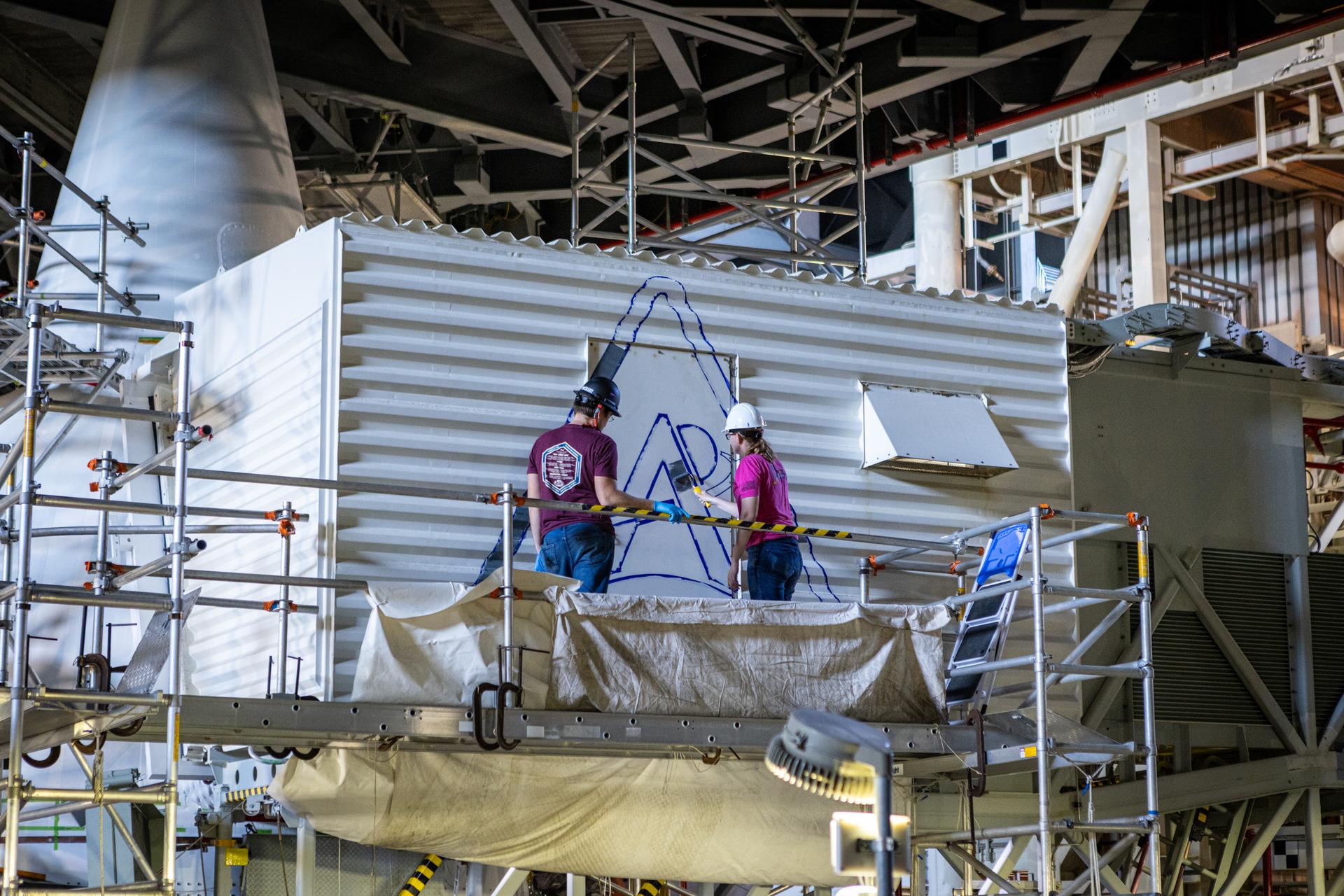
NASA has awarded approximately $10.5 million to seven institutions to help strengthen and streamline state-based pathways for students into skilled technical jobs in the aerospace industry.
The awards were made through the new NASA Aerospace Skilled Technical Workforce Hubs initiative, or NASA State Hubs. This investment in state ecosystems is designed to accelerate the development of technical roles to meet the talent demands of the space industry.
“The need for technical talent is already urgent and will only continue to grow as we return humanity to the Moon and set our sights on Mars and beyond,” said Elaine Ho, associate administrator for the Office of STEM Engagement at NASA Headquarters in Washington. “NASA is uniquely positioned to be the catalyst and convener that accelerates America’s aerospace workforce development and fosters the next generation of technicians.”
The newly awarded NASA State Hubs, represented across seven states, will function as strategic conveners that align industry employers, community colleges, high school career and technical education programs, and workforce systems to facilitate bringing students into high‑demand technical jobs, including welders, electricians, machinists, and other highly trained workers who use advanced STEM knowledge and technical skills in their occupations.
Over the next three years, the selected organizations will create programs that build critical skills identified by industry leaders, illuminate career pathways through education and apprenticeships, and build connections between employers and job seekers.
The awarded organizations are:
- Antelope Valley Community College District in Lancaster, California
- Georgia Tech Research Corporation
- Minnesota State Colleges and Universities
- Southern Utah University
- Space Florida
- State Board for Community Colleges and Occupation Education, Arapahoe Community College in Littleton, Colorado
- Texas Space Commission
NASA State Hubs cooperative agreements are funded by the Office of STEM Engagement through its Next Gen STEM Project. The Office of STEM Engagement advances NASA’s mission by boosting the nation’s research capacity, building technical expertise, and strengthening participation in aerospace fields. The Next Gen STEM project extends this impact by preparing high school and community college students for future aerospace careers through strategic partnerships and competitive awards that develop the vital skills needed to power our Golden Age of exploration and innovation.
For more information on NASA State Hubs, visit:
https://www.nasa.gov/learning-resources/nasa-state-hubs
-end-
Gerelle Dodson
Headquarters, Washington
202-358-1600
gerelle.q.dodson@nasa.gov
Racing to Build a Radio Telescope on the Moon
Remember the “Wow!” signal? That high energy radio signature happened in 1977, when the Earth was much “quieter” in the radio band. If it were to happen today, it probably wouldn’t even move the needle on the background noise of human radio chatter. Signals from satellites, radar, and other human technology have crowded out extraterrestrial radio signals, limiting our ability to monitor the heavens for signals like the still unexplained one received in 1977. What’s more, the ionosphere partially blocks lower frequency radio signals, making them even harder to see from the ground. So, for a long time, scientists and engineers have been proposing putting a radio telescope on one of the last spots in the solar system that is safe from our ever growing sphere of radio influence - the far side of the Moon. A new paper, available in pre-print on arXiv from lead author David DeBoer of the University of Oxford and his co-authors, lays out a plan to do just that - and stresses that we need to do it before even that last safe haven is gone for good.
Whoa! The JWST's Ancient Galaxies Are Much More Massive Than Thought
When the JWST peered into the ancient Universe, it found surprisingly massive galaxies. These galaxies were so massive they challenged our understanding of how quickly galaxies can assemble. But new research says that multitudes of low-mass stars are hiding in these galaxies, and they're actually even more massive than we thought. When will it end?
Next Up! A Deep Partial Lunar Eclipse on Aug. 27–28
A near-total lunar eclipse wraps up August's trifecta of two major eclipses and the Perseids.
The post Next Up! A Deep Partial Lunar Eclipse on Aug. 27–28 appeared first on Sky & Telescope.
‘Mini brains’ kept alive for years appear to age like real brains
Miniature models of the human brain can be kept alive for years, allowing scientists to study neural development and brain diseases
Trump to nominate White House aide Heidi Overton to head FDA
Overton is a medical doctor with ties to the “Make America Healthy Again” movement
How psilocybin alters consciousness to create a sense of ‘oneness’
Psychedelics can create a new “hidden order” in brain activity that could explain how these drugs alter our sense of self
Supercentenarians have a cellular superpower
Could this secret cellular weapon be the key to longevity?
Replay: MTG-I2 pre-launch media briefing
On Wednesday 19 August, media representatives were invited to a media briefing ahead of the launch of the next Meteosat Third Generation Imager satellite (MTG-I2). The satellite is set to be launched on an Ariane 6 from Europe’s Spaceport in French Guiana, on 27 August.
MTG-I2 is the third satellite for MTG, completing the MTG constellation. Together the satellites will produce images for weather forecasting in Europe in unprecedented detail. This mission provides new data products and capabilities for European weather services, especially suited to nowcasting of severe weather events.
The MTG-Imager satellites carry two instruments, a Lightning Imager and a Flexible Combined Imager. The Lightning Imager offers completely new capabilities for European meteorological satellites by continuously monitoring for lightning. The Flexible Combined Imager builds a picture of fast-evolving weather systems and can be used to issue timely weather warnings. It is able to scan the entire surface of Earth as viewed from its geostationary position (36 000 km above the equator) in just 10 minutes and can scan Europe and northern Africa every 2.5 minutes.
13 sci-fi books that inspired our favorite shows and movies
The world of science fiction started with the written word, long before it hit the silver screen. Stories of man-made life, Martians, and other marvelous subject matter were being read long before the first sci-fi movie was released in 1902: Georges Méliès' "A Trip to the Moon". Some of these stories became classic tales that have been repeatedly adapted for Hollywood and television, think Mary Shelley's "Frankenstein" and H.G. Wells' "War of the Worlds."
This isn't by any means an exhaustive list but these are the sci-fi books that inspired some of our favorite movies and shows. We have big names like Project Hail Mary and Dune, as well as more obscure titles like the haunting Under the Skin and Stalker. We have included links to the best streaming services to watch each adaptation on right now, but for those of you who are tired of endless subscriptions, we have provided the 4K and Blu-ray releases so you can physically own your favorite media again.
Jeff VanderMeer Annihilation 4K Steelbook AnnihilationSeven day free trial, then $7.99/month after trial.View Deal
Mary Shelley Frankenstein 4K UltraHD Frankenstein (Guillermo Del Toro)Plans start at $8.99/monthView Deal
Ted Chiang Stories of Your Life and Others 4K Steelbook ArrivalOwn it on 4K Blu Ray Steelbook
Plans start at $8.99/monthView Deal
Emily St. John Mandel Station Eleven 4K UltraHD Station ElevenPlans start at $10.99/month
Max, Disney Plus and Hulu bundle plans start at $19.99/monthView Deal
Andy Weir Project Hail Mary 4K UltraHD Project Hail MaryFree 30-day trial for new Prime members with plans starting at $8.99/month for Prime Video or $14.99/month for Amazon Prime. View Deal
Ernest Cline Ready Player One 4K UltraHD Ready Player OnePlans start at $10.99/month
Max, Disney Plus and Hulu bundle plans start at $19.99/monthView Deal
Frank Herbert Dune 4K UltraHD Dune 2-Film CollectionPlans start at $10.99/month
Max, Disney Plus and Hulu bundle plans start at $19.99/monthView Deal
H.G. Wells The War of the Worlds 4K UltraHD + Digital War of the WorldsPlans start at $8.99/monthView Deal
Michael Faber Under the Skin Blu-ray Under the SkinPlans start at $8.99/monthView Deal
Andy Weir The Martian 4K UltraHD + Digital The Martian - Extended EditionFree 30-day trial for new Prime members with plans starting at $8.99/month for Prime Video or $14.99/month for Amazon Prime. View Deal
Edward Ashton Mickey7 4K UltraHD + Digital Mickey 17Plans start at $10.99/month
Max, Disney Plus and Hulu bundle plans start at $19.99/monthView Deal
Margaret Atwood The Handmaid's Tale Blu-ray Handmaid's Tale, The: Season 1 (bd) [blu-Ray]Disney Plus and Hulu bundle plans start at $11.99/month — the same price as Hulu alone.
Hulu, Disney Plus and Max bundle plans start at $19.99/monthView Deal
Arkady and Boris Strugatsky Roadside Picnic Blu-ray StalkerPlans start at $10.99/month
Max, Disney Plus and Hulu bundle plans start at $19.99/monthView Deal
Books are often sidelined in today's visual-obsessed world, but I think they deliver a stronger experience that movies and shows just can't replicate. Now don't get me wrong, I love the movie adaptation of Annihilation, but I have a very special connection to the book. I read it multiple times before the movie release and it made me feel immersed in the inherent weirdness of the natural world and think about how alien our own planet is. The book always came to mind when taking a walk out in the forest and seeing the hypnotic curl of a fern or a bird alighting on a branch inches away from me.
My 5 favorite sights to see in the night sky with binoculars
Beyond simple naked-eye observing, a pair of the best binoculars are the most accessible way to experience the night sky. They are affordable (although pricier models are available), very easy to use compared to telescopes and they offer a wide range of celestial sights, from our solar system neighbors to distant deep-sky objects. They are great for both beginners, casual observers and even veteran stargazers who want to grab a quick look or spend time sweeping through the Milky Way.
So what are the best night-sky targets for binocular users? There are so many, but we’ve done our best to whittle them down to five of the best that provide a good sense of what can be seen through binoculars. We’ve also accounted for different apertures and magnifications to make sure there’s something for everyone, even kids
The moonBinoculars can get you great views of the moon. (Image credit: Getty Images)The moon is the ideal starting point for observing with binoculars. As a large target full of intricate features that appear differently depending upon the illumination, the moon rewards return visits, and you’ll never grow bored.
Even low-magnification, smaller-aperture binoculars will show some interesting details. Small 8x40 or 7x50 binoculars are sufficient; you certainly wouldn’t want to go as low as, say, 8x25 because the moon would appear small. While larger magnifications can improve the view, unless you have the binocular mounted on a tripod, the shake from jittery hands can look like moonquakes. If you don’t have a tripod, an alternate solution is to use image-stabilized (IS) binoculars, where the binoculars’ internal electronics are able to remove the jitter from the image, making the view more static.
The illumination on the moon changes across a 29.5-day cycle as the sun rises and sets over the lunar landscape, with phases cycling from new to first quarter, then to full and last quarter and finally back to new again. Often, the best time to observe a particular feature on the moon is when it is dawn or dusk at that location, and the sun angle is low, casting stark shadows. Otherwise, it is difficult to see the relief when the sun is overhead.
Jupiter’s moonsJupiter and (some) of its moons in orbit. Through binoculars views will be less detailed and smaller, but the moons are still visible. (Image credit: Getty Images)Earth’s moon isn’t the only moon in the solar system that can be seen through binoculars.
A simple pair of 8x40s or 10x50s will be sufficient to watch the four largest moons of Jupiter — Io, Europa, Ganymede and Callisto — circle around the Jovian giant. Unfortunately, these binoculars won’t be enough to show you the belts of Jupiter or its Great Red Spot, but its four large moons, known as the Galilean moons, because they were discovered by Galileo, will appear as pinpricks of light on either side of Jupiter.
It’s fun to follow in Galileo’s footsteps and watch the moons orbiting Jupiter, sometimes disappearing from view as they move behind the giant planet, or pass in front of it. Binoculars will not be powerful enough to show the moons transiting against the face of Jupiter, though — Jupiter is too bright, and the contrast is not great enough. The other 91 moons of Jupiter are far too small and faint to be seen in binoculars.
Mizar and AlcorThe Big Dipper constellation houses the stars Mizar and Alcor. (Image credit: Spike Silvernail/Getty Images)In the handle of the pan-shaped Big Dipper (part of Ursa Major) is the pair of stars called Mizar and Alcor. They make a lovely visual double, easily seen with the naked eye, and they really pop when viewed through 10x50 binoculars, with Mizar the brightest at magnitude 2 and Alcor a little fainter at magnitude 4.
Some double stars are just visual doubles, meaning they are many light-years apart and unrelated, but they just happen to be very close to each other on the night sky as seen from our line of sight. Not so with Mizar and Alcor, which are physically bound by gravity as they orbit each other. However, view Mizar and Alcor through binoculars, and you will get a glimpse of the true magnificence of this system. Large binoculars will show that Mizar is also a double star. Resolving Mizar as two stars is probably pushing it in 10x50s, but a pair of 20x80 binoculars will give you a better chance of splitting them, with image-stabilized binoculars, if you have them, giving you the edge.
There’s even more in the Mizar and Alcor system than what binoculars can show. Both stars in the Mizar system are also doubles, as is Alcor, making this a six-star system in total! Sadly, these extra companions are so close together that not even telescopes can split them. But there are plenty of other doubles for you to hunt down with binoculars. The trick is to find double stars that have a wide enough separation to be resolvable by 10x50 binoculars. Try also Epsilon Lyrae and Alpha Librae, also called Zubenelgenubi, meaning ‘southern claw’, as it was once associated with the constellation Scorpius the Scorpion, before being moved into Libra the Scales.
Auriga’s open clustersThe tadpole nebula, IC 410, in the constellation Auriga. Averted vision, powerful magnification and a tripod are a must to see this with binoculars. (Image credit: Getty Images)Auriga the Charioteer is a constellation famed for two things: its brilliant yellow star Capella (the sixth brightest in the entire night sky), and its array of magnificent open clusters, notably Messier 36, 37 and 38.
Open clusters are young clusters of stars that were born together and are now gradually dispersing, and Auriga’s open clusters are some of the best and brightest of their kind in the night sky.
A pair of 10x50 binoculars can have a field of view between 5 and 7 degrees, depending upon the model. For the larger field, it’s possible to squeeze all three of Auriga’s open clusters into the same view!
To find the clusters, first drop down from Capella to alight on the bright star Elnath, which is actually Beta Taurii in the constellation of Taurus the Bull. You can find Elnath easily with the unaided eye. Switching to binoculars, look about three-quarters of the way along the line between Capella and Elnath. You should see six fainter stars of magnitude 6 forming a curve. Follow that curve west, and you’ll come across two other magnitude 6 stars close to M38, which appear as a hazy patch whose diffuse light is made from a multitude of faint stars. This is the case for all three clusters. Most of M38’s stars are not resolvable in binoculars, but some certainly are in 10x50s, and switching to larger aperture binoculars or an image-stabilized model will help to reveal more.
Just 2.5 degrees to the south-east is the next cluster, M36, which overall is brighter than M38. Through 10x50s look for eight or ten stars; again, large binoculars will reveal more.
Finally, M37 is located a little further away. The constellation of Auriga has an obvious five-sided shape marked by its main stars and Elnath. Draw an imaginary line between Elnath and Auriga’s bright star at its lower left, magnitude 2.6 Theta Aurigae. Messier 37 is found about halfway along and just outside of this line. Another hazy patch, it is the densest of the three clusters, but most of its individual stars are fainter than in M36 and M38, so M37 will need larger binoculars, say 25x100, to get the best out of it.
After spending time looking at the three clusters, sweep your binoculars along the splendor of the winter Milky Way, in which Auriga sits. Through binoculars, the vast star fields of the Milky Way are spellbinding.
The Andromeda Galaxy M31This is a typical view of the Andromeda galaxy (M31) that you can easily achieve with binoculars, but dark skies and averted vision aid detail. (Image credit: Omid Qadrdan)The Andromeda Galaxy (Messier 31) is the closest large spiral galaxy to our Milky Way galaxy, located 2.5 million light-years away. That means it is large and relatively bright in our night sky, making it a great target for binocular users. If you are observing from a dark site away from city lights, you will probably be able to see it with the naked eye.
If you can’t or are having trouble knowing where to look:
- Use the stars of the nearby constellation Cassiopeia to find it. Cassiopeia has the shape of the letter ‘W’. Use the bottom star on the right of the W — the brightest star in Cassiopeia, Alpha Cassiopeiae or Schedar — to...
- Point down towards Andromeda and its bright star Beta Andromedae, or Mirach.
- Now using 10x50 binoculars, move north-west until Mirach is at the bottom-left of your field of view and the star Mu Andromedae is at the top-right.
- Then move your binoculars the same distance in the same direction again, and you should find the Andromeda Galaxy.
While you won’t be able to resolve its spiral arms, you will see a smudge of light that is its disk, and a brighter core. Also look out for its two companion galaxies, M32 beneath it and M110 to the top-right. Both appear as fuzzy stars and, depending on how dark your observing site is, you may need to use averted vision to see them (looking at them out of the corner of your eye). Larger binoculars, say 25x100, will show M31 and its companions much more easily, though you’ll need a tripod to take their weight.
Perseverance rover watches alien solar eclipse on Mars | Space photo of the day for Aug. 19, 2026
People around the world enjoyed stellar views with last week's total solar eclipse.
And the day after we looked up to see the moon obscuring out sun, NASA's Perseverance Mars rover looked up to see its own Martian solar eclipse.
What is it?Solar eclipses aren't unique to Earth. In theory, any planet with at least one orbiting moon would have times where that moon might eclipse some part of its sun to anyone looking up from the planet's surface.
On Aug. 13, 2026, one day after Earth's total solar eclipse in which our moon temporarily blocked out our sun for skywatchers in some locations, Mars saw its own solar eclipse.
Looking up with its left Mastcam-Z camera, Perseverance snapped this image of one of Mars' two moons, Phobos and Deimos, partially eclipsing the sun. This appears to be Phobos — the larger of the pair — eclipsing the sun.
Why is it incredible?So far, we humans have only directly had vantage points on Earth, in Earth orbit and on the moon. We have not yet landed humans on Mars, and it remains unclear how long it might be before that happens.
But robotic explorers like Perseverance allow us to travel where we can't go ourselves. Such travelers have taken us into interstellar space and all throughout our solar system. From Saturn's rings to Neptune's distant, icy neighborhood, robotic probes have allowed humanity's reach to stretch far through the cosmos.
And thanks to Perseverance and its two "eyes," the two Mastcam-Z cameras located high on its mast, we can travel right to the surface of Mars, look up and see an alien solar eclipse. What an amazing thing that is.
On this day in space! Aug. 19, 1997: 1st Filipino satellite launches into orbit
On Aug. 19, 1997, the Philippines' first satellite launched into space. Before then, the country's only communications satellite was one that had been purchased from Indonesia after it was already in orbit.
But 29 years ago today, the Mabuhay Philippines Satellite Corporation sent its own satellite into orbit using a Chinese Long March 3B rocket. The new satellite was named Agila-2 in honor of the great Philippine eagle. To this day, it provides the most powerful satellite coverage in Asia and the Pacific, though its ownership has change: In 2009, the Philippines sold it to the Asia Broadcast Satellite company.
Artist's illustration of the Filipino satellite Agila-2. (Image credit: Wikimedia Commons)Why it matteredInternational collaboration is a key enabler of progress in space. For example, astronauts from around the world work together to stay safe and push scientific progress forward on board the International Space Station (ISS). And more and more nations are getting involved in the final frontier these days. Over 70 different nations have signed the Artemis Accords, a U.S.-backed set of guiding principles for responsible space exploration.
The Agila-2 launch was a major breakthrough for Filipino progress in the space sector. It was followed up almost two decades later with the Diwata-1 microsatellite, which launched to the ISS on April 27, 2016. And the momentum kept growing from there, as the Philippine Space Agency was formalized in 2019. Since then, the Philippines has collaborated with NASA and JAXA (the Japan Aerospace Exploration Agency) to develop and launch two more satellites, Diwata-2 and Maya-1.
Career Spotlight: Mechanic (Ages 14-18)
Machines and engines are all around us. They power everything from cars and boats to airplanes and even rockets. Mechanics are experts who know how machinery works, especially engines, and how to fix them.
When you think of a mechanic, you might picture someone working on cars. But mechanics can be experts on all kinds of machinery.
What are some of the different types of work mechanics do at NASA?At NASA, mechanics perform a variety of functions. For example, aerospace mechanics maintain the airplanes studied at NASA’s Armstrong Flight Research Center in Edwards, California. These might include research planes studying the environment or experimental aircraft testing new wing designs.
At NASA’s Kennedy Space Center in Florida, mechanics keep machines like the crawler-transporters in top working condition. These massive machines carry rockets from the building where they are assembled to the launch pad.
Mechanics at the agency’s Michoud Assembly Facility in New Orleans ensure the fleet of barges used to carry powerful rocket sections are maintained and ready to use. These large ships have been used for decades to carry rocket parts to various NASA centers for testing and launches.
Mechanics from Aerojet Rocketdyne inspect the engine controller of an RS-25 rocket engine at NASA’s Stennis Space Center in Mississippi.NASA How can I become a mechanic?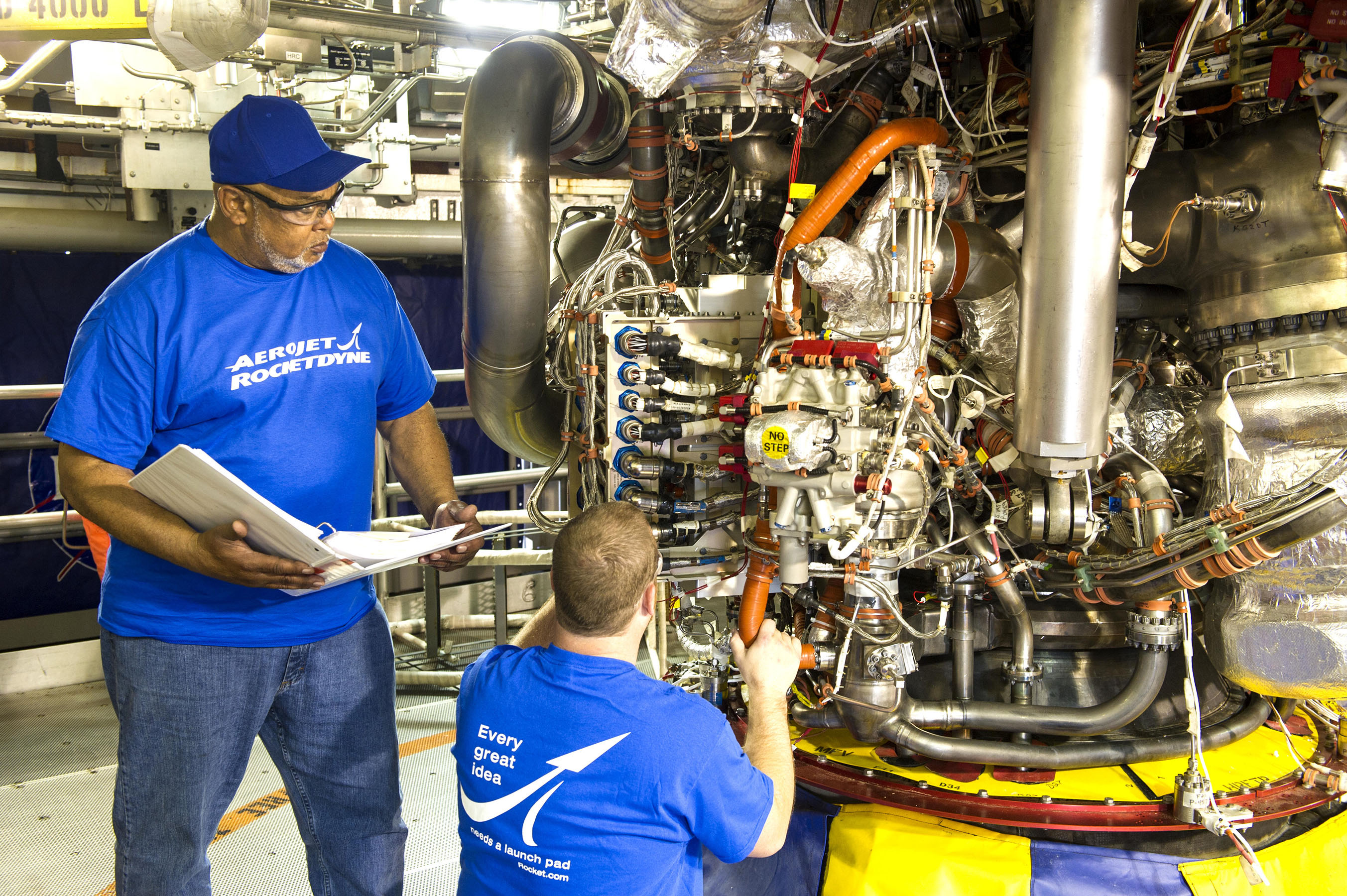
There are many options that provide the training needed to get started as a mechanic. Different types of mechanics require different types of training and certifications. Here are a few examples.
Automotive mechanic: Automotive mechanics are experts at the interconnected systems in cars and trucks. After getting a high school diploma or GED, seek out trade or technical schools that have mechanic training programs. These provide hands-on experience. Further training may be required to work on specific types of automobiles. Certifications can help you advance specific skills and demonstrate proficiency.
Heavy equipment mechanic: The path to a career as a heavy equipment mechanic often begins with a two-year degree. Look for a program at your local community college or technical school. Opportunities to begin working right after high school are also available. You may start by doing basic tasks or by being paired with a senior mechanic to build skills. Most heavy equipment mechanics go through three to four years of hands-on training before taking certification and licensing tests.
Aircraft mechanic: Maintaining and repairing aircraft requires a special skillset. Community colleges and technical schools offer programs approved by the Federal Aviation Administration. These programs can fast-track your route to a career. They provide hands-on experience and help you prepare for tests needed to receive your certifications.
For many mechanic roles, military service is also a way to get training and certifications.
How can I start preparing today to become a mechanic?In high school, take courses in math, science, and industrial technology. Check out any career and technical education programs your school might offer. Read repair manuals and look for online tutorials to figure out the basics of how machines work.
You can also gain useful experience through part-time work. Look for jobs or shadowing opportunities at your local repair shop.
Begin researching training programs, community colleges, and apprenticeship opportunities. Compare options to see which pathway seems right for you. This will help you understand program requirements and ensure you’re ready to take the next step.
Rebekah Tolatovicz, a mechanical technician lead, works inside the Artemis III Orion crew module NASA’s Kennedy Space Center in Florida.NASA What skills will I need to be a successful mechanic?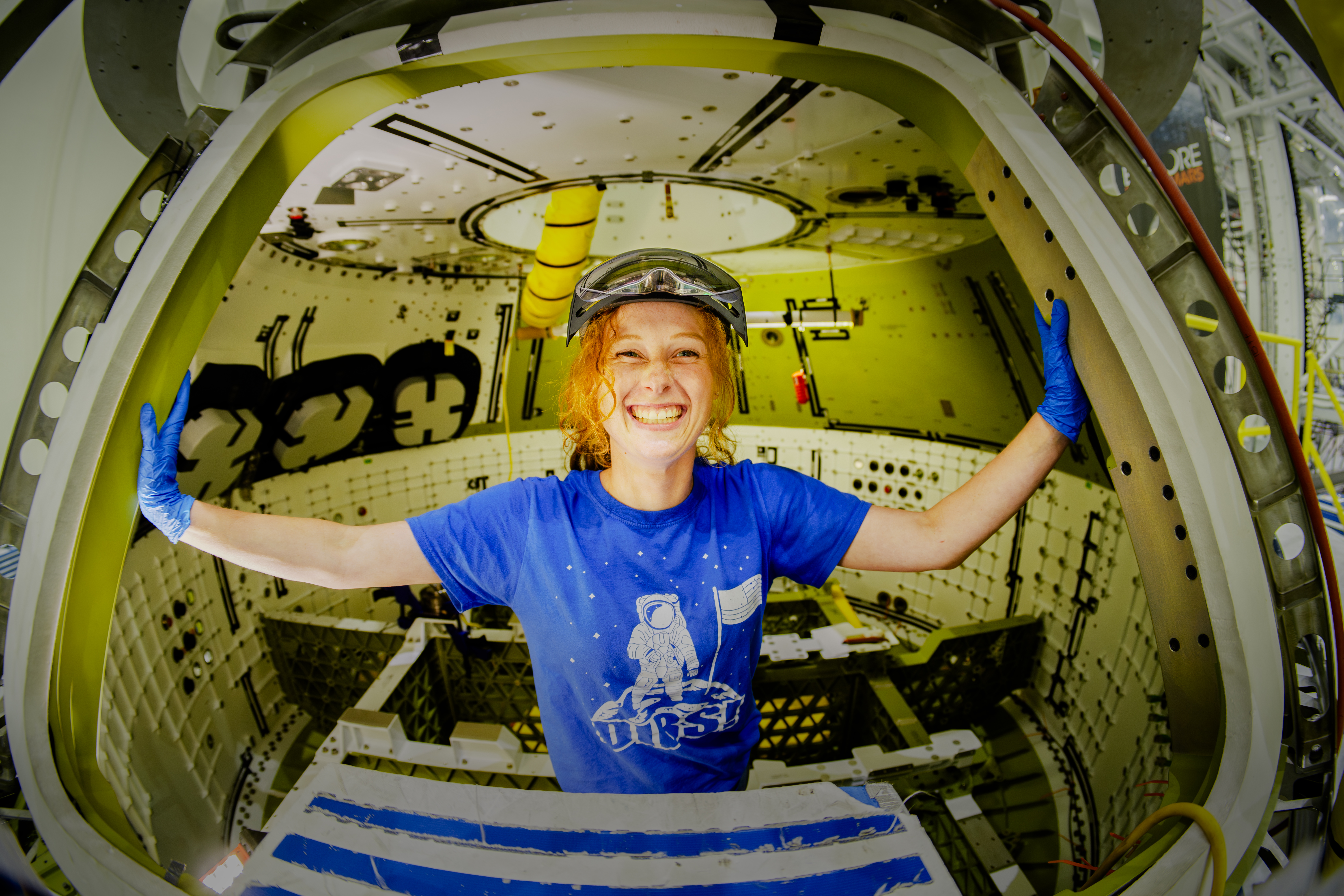
Mechanics must be good problem solvers. Troubleshooting repairs on complex machinery requires logical thinking and patience. Being detail-oriented is critical to make sure measurements are correct and safety specifications are met.
Keeping up with the latest technology is important, too. Mechanics use computer equipment and electronic sensors to run diagnostics. And machinery technology can evolve rapidly with new advancements like electric vehicles and drones. Take initiative and stay curious.
Wissam Habbal
Aircraft Mechanic, Armstrong Flight Research Center
Additional Resources- Occupational Outlook for Mechanical Engineering Technicians: Pay, Education, Job Outlook, and More (From the U.S. Bureau of Labor Statistics)
- Occupational Outlook for Aircraft Mechanics: Pay, Education, Job Outlook, and More (From the U.S. Bureau of Labor Statistics)
- NASA Careers
- Career Spotlight: Engineer
- Career Spotlight: Scientist
- Career Spotlight: Technologist
- Career Spotlight: Mathematician
- Career Spotlight: Welder
For Students Grades 9-12
NASA Internship Programs
Next Gen STEM for Careers
Careers
Career Spotlight: Mechanic (Ages 14-18)
Machines and engines are all around us. They power everything from cars and boats to airplanes and even rockets. Mechanics are experts who know how machinery works, especially engines, and how to fix them.
When you think of a mechanic, you might picture someone working on cars. But mechanics can be experts on all kinds of machinery.
What are some of the different types of work mechanics do at NASA?At NASA, mechanics perform a variety of functions. For example, aerospace mechanics maintain the airplanes studied at NASA’s Armstrong Flight Research Center in Edwards, California. These might include research planes studying the environment or experimental aircraft testing new wing designs.
At NASA’s Kennedy Space Center in Florida, mechanics keep machines like the crawler-transporters in top working condition. These massive machines carry rockets from the building where they are assembled to the launch pad.
Mechanics at the agency’s Michoud Assembly Facility in New Orleans ensure the fleet of barges used to carry powerful rocket sections are maintained and ready to use. These large ships have been used for decades to carry rocket parts to various NASA centers for testing and launches.
Mechanics from Aerojet Rocketdyne inspect the engine controller of an RS-25 rocket engine at NASA’s Stennis Space Center in Mississippi.NASA How can I become a mechanic?There are many options that provide the training needed to get started as a mechanic. Different types of mechanics require different types of training and certifications. Here are a few examples.
Automotive mechanic: Automotive mechanics are experts at the interconnected systems in cars and trucks. After getting a high school diploma or GED, seek out trade or technical schools that have mechanic training programs. These provide hands-on experience. Further training may be required to work on specific types of automobiles. Certifications can help you advance specific skills and demonstrate proficiency.
Heavy equipment mechanic: The path to a career as a heavy equipment mechanic often begins with a two-year degree. Look for a program at your local community college or technical school. Opportunities to begin working right after high school are also available. You may start by doing basic tasks or by being paired with a senior mechanic to build skills. Most heavy equipment mechanics go through three to four years of hands-on training before taking certification and licensing tests.
Aircraft mechanic: Maintaining and repairing aircraft requires a special skillset. Community colleges and technical schools offer programs approved by the Federal Aviation Administration. These programs can fast-track your route to a career. They provide hands-on experience and help you prepare for tests needed to receive your certifications.
For many mechanic roles, military service is also a way to get training and certifications.
How can I start preparing today to become a mechanic?In high school, take courses in math, science, and industrial technology. Check out any career and technical education programs your school might offer. Read repair manuals and look for online tutorials to figure out the basics of how machines work.
You can also gain useful experience through part-time work. Look for jobs or shadowing opportunities at your local repair shop.
Begin researching training programs, community colleges, and apprenticeship opportunities. Compare options to see which pathway seems right for you. This will help you understand program requirements and ensure you’re ready to take the next step.
Rebekah Tolatovicz, a mechanical technician lead, works inside the Artemis III Orion crew module NASA’s Kennedy Space Center in Florida.NASA What skills will I need to be a successful mechanic?Mechanics must be good problem solvers. Troubleshooting repairs on complex machinery requires logical thinking and patience. Being detail-oriented is critical to make sure measurements are correct and safety specifications are met.
Keeping up with the latest technology is important, too. Mechanics use computer equipment and electronic sensors to run diagnostics. And machinery technology can evolve rapidly with new advancements like electric vehicles and drones. Take initiative and stay curious.
Wissam Habbal
Aircraft Mechanic, Armstrong Flight Research Center
Additional Resources- Occupational Outlook for Mechanical Engineering Technicians: Pay, Education, Job Outlook, and More (From the U.S. Bureau of Labor Statistics)
- Occupational Outlook for Aircraft Mechanics: Pay, Education, Job Outlook, and More (From the U.S. Bureau of Labor Statistics)
- NASA Careers
- Career Spotlight: Engineer
- Career Spotlight: Scientist
- Career Spotlight: Technologist
- Career Spotlight: Mathematician
- Career Spotlight: Welder
For Students Grades 9-12
NASA Internship Programs
Next Gen STEM for Careers
Careers
I sailed to Greenland for a total solar eclipse — what I saw left me speechless
I woke up on the morning of Aug. 12 and looked out of the window to something I hadn't dared hope for: blue sky.
After days of scrutinizing weather models that seemed determined to test the nerves of everyone aboard the HX Expeditions ship MS Spitsbergen, somehow, against the odds, the clouds had cleared. Even then, I didn't trust it (especially after my 2024 eclipse experience). We had traveled thousands of miles, crossed the Greenland Sea and ventured deep into Scoresby Sund to put ourselves in the path of the moon's shadow. Now there was nothing to do but wait — and hope the sky stayed clear.
The wind howled across the deck, but nobody seemed to mind. If anything, it was helping us, keeping the clouds at bay. The atmosphere aboard felt like Christmas Eve with a ship full of overexcited children. Some guests had chased eclipses across the world; for others, this would be their first. Either way, Aug. 12 was the date we'd been waiting years for.
But by the time we reached Scoresby Sund, something had shifted.
I had traveled all this way to look up. Instead, I found myself looking around. I'd come here for 2 minutes and 14 seconds of darkness. Instead, Greenland had spent the previous days relentlessly demanding my full attention.
This trip was made possible by travel and accommodation provided by HX Expeditions.
After a couple of days at sea during the crossing from Svalbard to East Greenland, our first sight of land appeared almost like a mirage on the horizon. Soon, icebergs were drifting past the ship and the scale of the landscape became increasingly difficult to comprehend. We could sail for hours through Northeast Greenland National Park without seeing a single sign of human civilization beyond our own ship. At times, moving through those immense geological landscapes felt less like traveling across Earth and more like exploring some distant, icy-covered moon.
The East Coast of Greenland is one of the most remarkable environments I have ever experienced. (Image credit: Daisy Dobrijevic/Future)Yet, the more otherworldly Greenland appeared, the more it made me appreciate our own planet.
At times it felt as though I'd stepped into a geology textbook. Processes and structures I'd previously seen reduced to diagrams were suddenly towering above me. And amongst all the enormity were the tiniest signs of life: lichens and miniature Arctic plants hugging the ground beneath vast mountains and glaciers.
The scale and contrast were overwhelming at times, and no view stayed the same for long.
An iceberg viewed from one side could morph into a completely different form as the ship sailed past it. A break in the clouds could transform a gray mountainside in seconds. In Scoresby Sund, even the ice seemed to echo the landscape around it as jagged peaks, flat-topped slabs and sculpted ridges rose from the water like miniature versions of the colossal mountains behind them.
A landscape dominated by giants. (Image credit: Daisy Dobrijevic/Future)The Greenland scenery was a gift that kept on giving, and I found myself increasingly reluctant to go inside. I began meticulously scanning for wildlife, because I'd learned how quickly something extraordinary could appear.
On an impromptu evening walk in Longyearbyen before we set sail, beluga whales had suddenly surfaced in the bay. Later, in Greenland, while I was distracted by a spectacular circumzenithal arc and sundogs overhead, one of a handful of people still standing on deck spotted two tiny white shapes in the water. I thought they were birds bobbing along.
Then I lifted my camera and zoomed in.
Polar bears.
Two unexpected visitors. (Image credit: Daisy Dobrijevic/Future, captured with Sony A7RV and FE 400-800mm F6.3-8 G OSS lens)It became something of a lesson for the expedition: stay curious, keep your eyes open and remember to look both up and down.
That curiosity seemed to unite everyone aboard. Guests had traveled from around the world for this eclipse opportunity. There were seasoned eclipse chasers looking to experience totality somewhere extraordinary, first-timers who had no idea how they would react and people drawn as much by the adventure and wildlife, as the eclipse itself.
HX Expeditions' onboard science and education programme gave that shared enthusiasm somewhere to go. Our days were filled with nature landings, lectures, citizen-science projects and conversations with experts, helping us do more than simply travel through Greenland. The programme encouraged us to pay closer attention — not merely to see the landscape, but to understand and truly experience it.
Conversations jumped from eclipses to wildlife, travel, geology and perhaps, inevitably for a ship full of skywatchers, clouds. We took part in the GLOBE Observer cloud citizen science project and found ourselves happily studying them — while collectively hoping they would be nowhere near the sun on eclipse day.
The eclipse had brought us together, but the journey had quickly become about much more.
MS Spitsbergen poised and ready for the total solar eclipse on Aug. 12, 2026. (Image credit: Daisy Dobrijevic/Future)Then, on Aug. 12, our attention returned to the sky.
When the moon took its first tiny bite from the solar disk, excitement rippled across the deck. For the next hour, it steadily consumed more of the sun.
As totality approached, the quality of the light began to change.
It became strangely yellow and dull, yet at the same time the landscape seemed almost unnaturally sharp. It was eerie — familiar enough to still resemble daylight, but wrong enough that your brain knew something extraordinary was happening.
Poised and ready for the eclipse. I captured the image of totality with a Sony A7RV and FE 400-800mm F6.3-8 G OSS lens and a makeshift solar filter using Baader AstroSolar Safety Film. (Image credit: Daisy Dobrijevic/Future)What amazed me most was how long that daylight persisted.
Even when only the tiniest sliver of sun remained, Greenland was still illuminated. I knew scientifically how intensely bright the solar photosphere is, but knowing it and watching that minuscule fraction of sunlight continue to illuminate an entire landscape were two very different things.
Then the final fraction disappeared.
The world around me plunged into twilight.
And there it was.
Totality.
The total solar eclipse viewed from the deck of HX Expeditions' MS Spitsbergen. (Image credit: Daisy Dobrijevic/Future)I knew exactly what I was supposed to see. I've written about eclipses for years. I understand the science. I had seen thousands of photographs of the corona, prominences, Baily's beads and diamond rings.
None of it prepared me for the feeling of actually seeing one.
The first thing that struck me was how large the eclipsed sun appeared to the naked eye. Photographs had never prepared me for that sense of scale, nor how much detail I could see with my own eyes.
The giant pink prominence on the lower left limb was bright enough to see with the naked eye. (Image credit: Daisy Dobrijevic/Future, captured with Sony A7RV and FE 400-800mm F6.3-8 G OSS lens)The moon itself looked impossibly dark — a black void punched into the sky — surrounded by the pearly white corona. Long streamers stretched away from the sun and around the moon's edge I could see bright pink prominences.
I was so surprised to see this vivid pink color with my own eyes. For 2 minutes and 14 seconds, I saw the sun as I had never seen it before.
But even then, I couldn't just look up.
I looked around. Jupiter and Mercury shone clearly off to one side of the eclipsed sun, with Mercury far brighter and easier to spot than I had expected. Venus blazed on the other side.
Then I looked down. Below the eclipsed sun were icebergs. Beside us rose the immense walls of Scoresby Sund. Glaciers carved their path through the landscape.
Above it all hung that black disk and its enormous, delicate corona. My brain simply couldn't take it all in.
There was too much beauty. Too much scale. Too much happening at once.
People use words such as "mind-blowing" and "speechless" so often that they begin to lose their meaning.
But my mind was really blown. And I really was speechless. Perhaps the best way I can describe it is that my mind felt full, but quiet. Full because there was almost too much to comprehend, but quiet because for those fleeting moments, there was room for nothing else.
I was astonished by how much of the corona you could see with the naked eye. (Image credit: Daisy Dobrijevic/Future, captured with Sony A7RV and FE 400-800mm F6.3-8 G OSS lens)The intensity of the experience surprised guests who had originally joined the voyage for different reasons.
"My husband and I came to see the wildlife, and we were actually in awe of what we saw in relation to the solar eclipse," Kenya Haupt, from Colorado, told Space.com. "Truly an emotional experience"
The reasons for joining the expedition varied, but beneath the moon’s shadow, the experience became a collective one.
For Shubhada Maitra, from India, it was her first total solar eclipse.
"When I looked around me, I just had a feeling that we were one community, taking part in one of the most spectacular, perhaps once-in-a-lifetime celestial events," Maitra said. "Although we came from different countries, different nationalities, genders, all of that, that solar eclipse just bound us together."
"Without saying anything, we were just so connected in that experience."
Lisa Marie Morse, from Rhode Island, described the eclipse as both "joyous and melancholy."
"In that moment of darkness, I felt a powerful connection with all living things, to an infinite ancient rhythm locking us together for 134 seconds of shared awareness, then releasing us back into our daily slumber," Morse said. "It was magical."
Then, almost as quickly as totality had arrived, it was ending.
The first brilliant beads of sunlight appeared from behind the moon.
They were beautiful, but there was a sadness in seeing them too. The corona, prominences and extraordinary black void that had dominated the sky were about to disappear once more into the overwhelming glare of the sun.
Two minutes and 14 seconds had somehow felt both packed with experience and impossibly brief. I had just enough time to look with my naked eye, search for planets, check it out through binoculars and try to absorb the reactions around me.
Then it was gone.
For seasoned eclipse chaser Roy Tillcock from the Isle of Wight, the clear view had come as a genuine surprise.
"This was one of the most unexpected eclipses I've seen," he said. "I did not have high hopes of seeing it, and there it was. Brilliant."
And, as if to underline just how fortunate we had been, the clouds rolled in shortly after totality. A few minutes later, and this could have been a very different story.
Some skywatchers were emotional. Others were exhilarated. Many, like me, seemed to be struggling to find words big enough for what had happened.
Perhaps that is part of why eclipse chasing becomes so addictive. We can explain the science of totality in extraordinary detail. We can calculate the path of the moon's shadow years in advance, travel thousands of miles to stand beneath it and know exactly when and where darkness will fall.
But knowing what to expect is not the same as experiencing it.
The following morning, Greenland was still there, still demanding my undivided attention. Icebergs drifted past the ship. Mountains towered above the fjord. The sunlight shifted and the landscape transformed once again. I had traveled all this way to look up.
There was never a bad view as we journeyed through Scoresby Sund aboard MS Spitsbergen. (Image credit: Daisy Dobrijevic/Future)But somewhere along the journey, I had learned to truly look around. Here I was, standing on a planet of glaciers, oceans, wildlife and ancient rock, watching its moon pass perfectly across its star at a moment in Earth's history when their apparent size in our sky happened to match. How lucky are we to experience any of this? Luck, ultimately, is something no eclipse chaser can ignore.
We could calculate where the shadow would fall. We could sail into its path. We could scrutinize forecasts, prepare our equipment and position ourselves as carefully as possible.
But we couldn't command the clouds to cooperate.
Nature always has the final say. And on Aug. 12, 2026, in a remote fjord in East Greenland, nature said yes.
Greenland was full of surprises. (Image credit: Daisy Dobrijevic/Future, captured with Sony A7RV and FE 400-800mm F6.3-8 G OSS lens)Editor's note: This trip was made possible by travel and accommodation provided by HX Expeditions.
NASA images reveal 60-foot-wide crater on moon left by SpaceX rocket
The SpaceX rocket fragment hit the moon at several times the speed of sound on August 5
What Can We Actually Find on an Exoplanet? Part 3: Reading the Face of a Planet
A single pixel of light holds astonishing detail. How ocean glint, rotational mapping, and the vegetation red edge let us read a distant planet's oceans, continents, and even forests, all without ever resolving it as more than a point.
How generative AI is reshaping creativity, and what it means for artists
Moiya McTier explores what makes human creativity unique in the age of AI
Astronomers discover a giant, rocky 'mega-Earth' 23 times more massive than our planet
Astronomers have discovered an unusually massive, dense exoplanet that challenges conventional ideas about how rocky planets form.
Called GJ 523b, the exoplanet is about 2.5 times wider than Earth but packs roughly 23 times our planet's mass into that relatively compact size. Worlds this large and dense are sometimes referred to as "mega-Earths," an informal term for unusually massive, predominantly rocky planets. GJ 523b's high density suggests it contains relatively little atmosphere despite being large enough that astronomers would normally expect it to have accumulated a substantial gaseous envelope, according to a statement from the University of Wisconsin–Madison.
"This isn't what we expected at all," Max Kroft, lead author of the study, said in the statement. "Dense planets like this aren't uncommon, but they're usually small rocky planets similar to Earth or Mercury. This planet is two and a half times bigger than the Earth."
GJ 523b was initially identified as a candidate by NASA's Transiting Exoplanet Survey Satellite (TESS), which searches for periodic dips in starlight caused when planets cross, or transit, their host stars. Researchers followed up with observations from the ground-based WIYN 3.5-meter Telescope at Kitt Peak National Observatory in Arizona, using a spectrograph to measure the planet's gravitational tug on its star.
Combining those observations, the team calculated that GJ 523b has a mass about 23.5 times that of Earth, a radius 2.55 times larger and a density of about 126.82 grams per cubic inch. It circles its star every 17.75 days. The planetary system is also relatively young, at an estimated nearly 170 million years old, according to the study.
That combination of size, mass and youth poses a puzzle for planet formation models. Planets begin by building cores of rock and metal, which can then pull in hydrogen and helium from the disk of gas and dust surrounding a young star. In our own solar system, giant planets such as Jupiter and Saturn are thought to have begun rapidly accumulating their massive gaseous envelopes once their growing cores reached roughly 20 times Earth's mass.
GJ 523b is already about 23 times Earth's mass, putting it beyond that threshold. Yet instead of developing into a gas-rich world, its unusually high density suggests it has relatively little gas and remains predominantly rocky — raising the question of why it followed such a different path.
"The question is, why didn't this planet do that, if it's 20 times the size of Earth?" Kroft said in the statement.
One possibility is that GJ 523b initially formed with a thick atmosphere that was later stripped away. Another is that it formed through a collision between two planets, creating a larger rocky world while blasting much of their gaseous envelopes into space, according to the statement.
Astronomers have used the term "mega-Earth" for more than a decade to describe exceptionally massive rocky worlds, though it has never represented a formally established class of exoplanets. Finding more examples like GJ 523b could help reveal whether these unusual worlds are rare exceptions or part of a broader population.
"It's hard to infer things about planet formation in general from a sample size of one," Kroft said in the statement. "We're not going to get to 10,000 of these overdense planets, but if we can get to 20 or 30, maybe some trends might pop out."
The findings have been submitted to The Astronomical Journal and are currently available on the preprint server arXiv and have not yet been peer reviewed.