

Feed aggregator
NASA Transfers ‘Hundred Acre Wood’ to Patuxent Research Refuge
NASA ceremonially transferred ownership of about 105 acres of wooded land at its Goddard Space Flight Center’s Greenbelt, Maryland, campus Tuesday to the adjoining Patuxent Research Refuge, managed by the U.S. Fish and Wildlife Service.
The property, formerly known as NASA Goddard’s Area 400, is now part of the largest block of unfragmented forest between Washington and Baltimore. The nearly 13,000-acre woodland is the nation’s only refuge specifically established to support wildlife research. The refuge also supports recreational uses, such as walking, biking, horseback riding, fishing, and hunting.
At a ceremony on July 7, 2026, U.S. Fish and Wildlife Service Director Brian Nesvik (left) and Jamie Dunn, center director, NASA’s Goddard Space Flight Center, Greenbelt, Md., sign certificates that ceremonially transfer a 105-acre parcel of property known as “Area 400” from NASA Goddard to the Service.NASA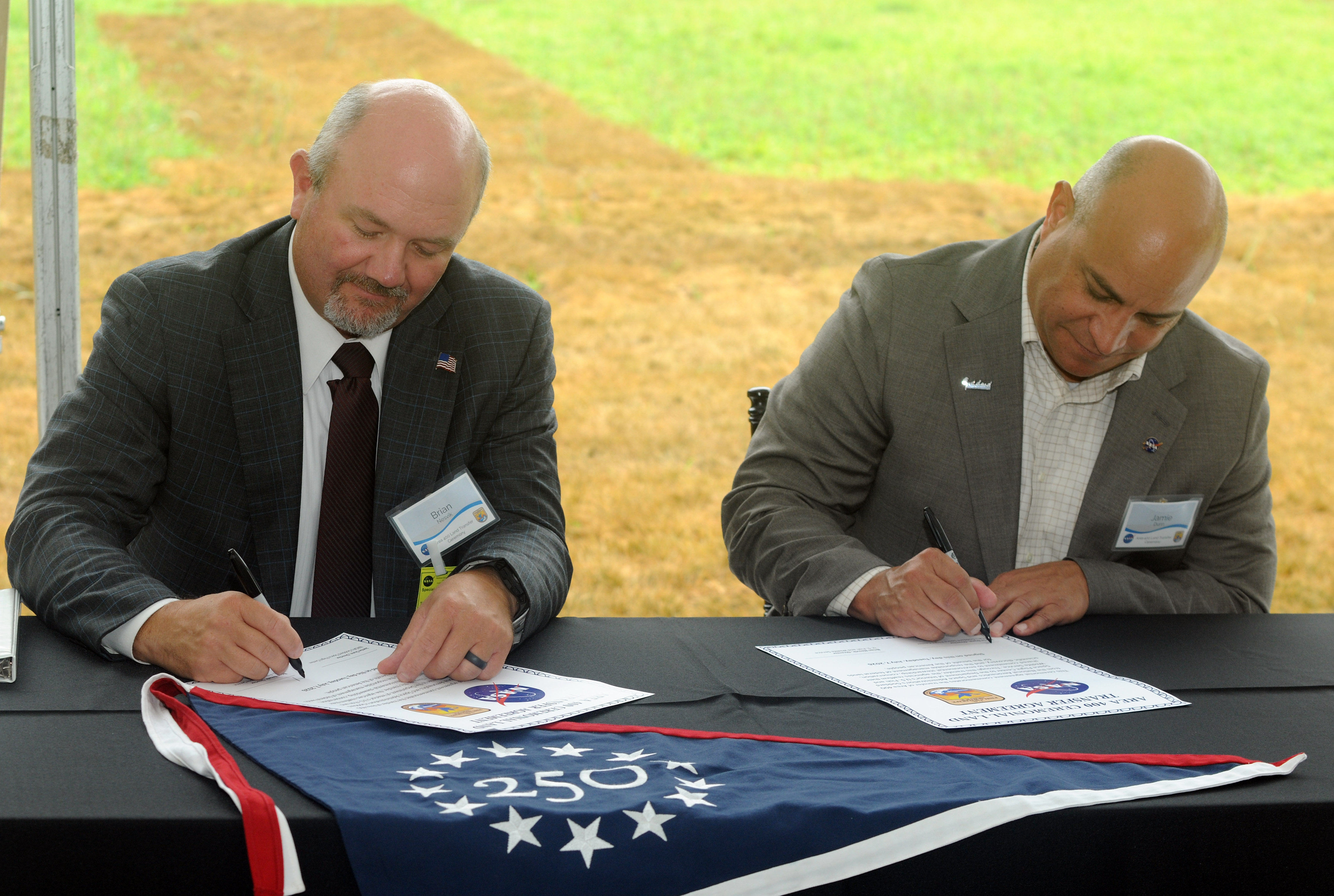
“For over six decades, NASA Goddard has helped shape humanity’s understanding of Earth,” said Jamie Dunn, center director, NASA Goddard. “We’re glad to present this land to our colleagues in the Fish and Wildlife Service, whose conservation and research helps do the real legwork in preserving our Blue Marble for future generations.”
NASA Goddard had used Area 400 for propellant research beginning in the 1960s. That work has largely since shifted to NASA facilities in other states or to commercial providers, and the property had long been a candidate for divestment. NASA and the Service began discussing a potential transfer in 2021.
Following remarks from attending dignitaries and the signing ceremony, assembled guests participated in a monarch butterfly release and milkweed seed dispersal.NASA
Prior to the transfer, Area 400 was still almost entirely wooded aside from a two-and-a-half-acre clearing with 11 small structures. The interagency transfer was effective on Feb. 23, and NASA recently completed its final closeout activities at the property, deconstructing the buildings, roadway, and utility service.
This aerial photograph shows Area 400’s appearance in 1984. The surrounding forest has remained largely unchanged since NASA Goddard occupied the property in the 1960s.NASA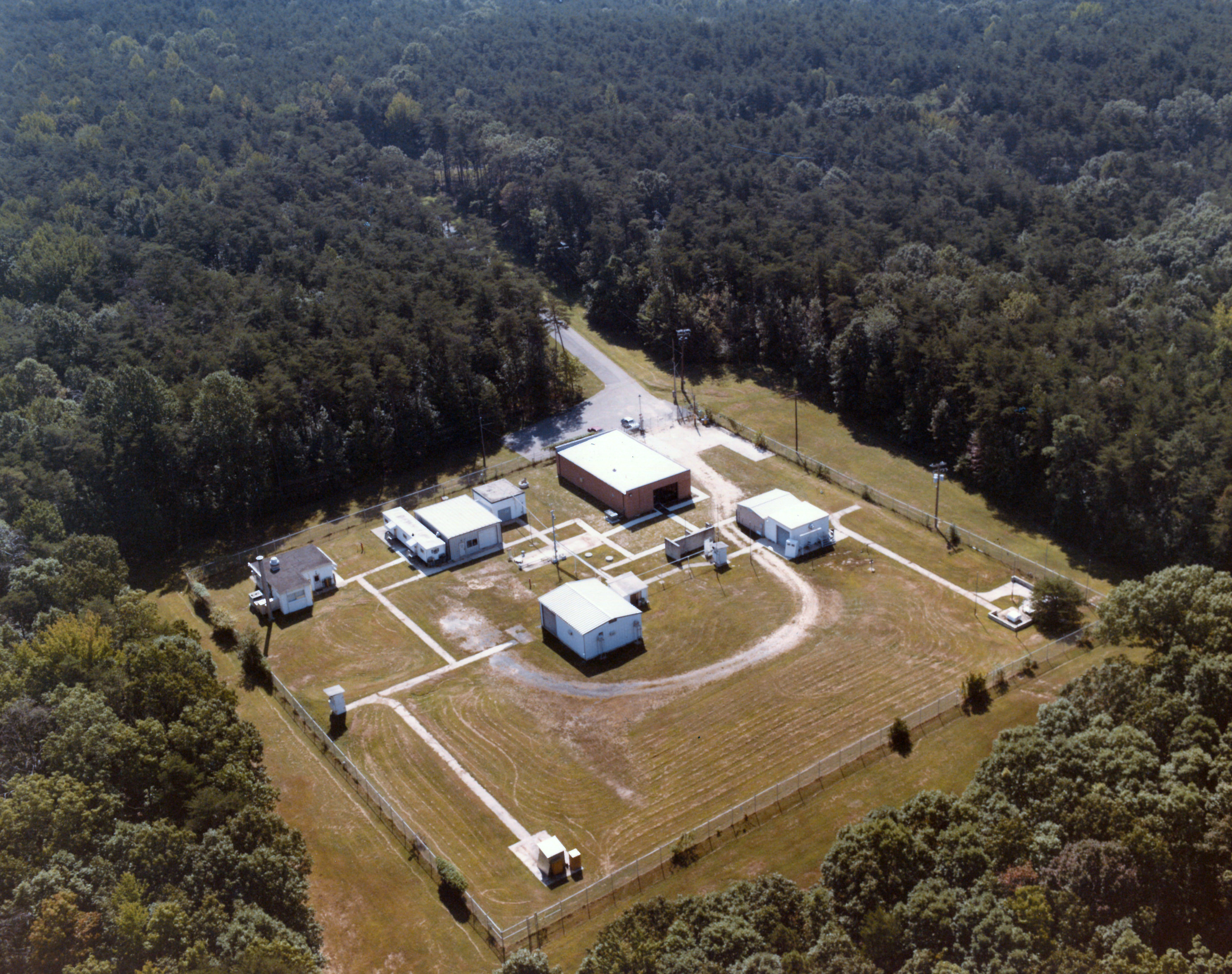
“Through working with partners on the best use of land, as exemplified with this land transfer, we can continue to conserve America’s natural beauty and expand outdoor recreation opportunities for future generations,” said U.S. Fish and Wildlife Service Director Brian Nesvik.
Media contacts:
Rob Garner
News Chief, Office of Communications
NASA’s Goddard Space Flight Center
Keith Shannon
Regional Communications Lead – U.S. Fish and Wildlife Service Northeast Region
U.S. Department of the Interior
How math helped the Allies win World War II
During World War II, statistics helped the Allies estimate the number of enemy tanks, which proved essential in the decisive move against Nazi Germany
NASA’s New Horizons Spacecraft Wakes from Hibernation in Good Health
3 min read
NASA’s New Horizons Spacecraft Wakes from Hibernation in Good HealthFollowing its longest hibernation period ever of nearly a year, NASA’s New Horizons spacecraft has emerged in good health and is ready to begin transmitting science data gathered in the distant Kuiper Belt far beyond Pluto.
From left, flight controllers Mark Lahr and Josh Albers, and Mission Operations Manager Alice Bowman, monitor telemetry streaming from NASA’s New Horizons spacecraft to the mission operations center at the Johns Hopkins Applied Physics Laboratory in Laurel, Maryland, on June 24, 2026. Now approximately 5.9 billion miles (9.5 billion kilometers) from Earth, New Horizons is ready to begin transmitting science data after being awakened from its longest ever, nearly yearlong hibernation period. NASA/Johns Hopkins APL/SwRI/Justin Gladden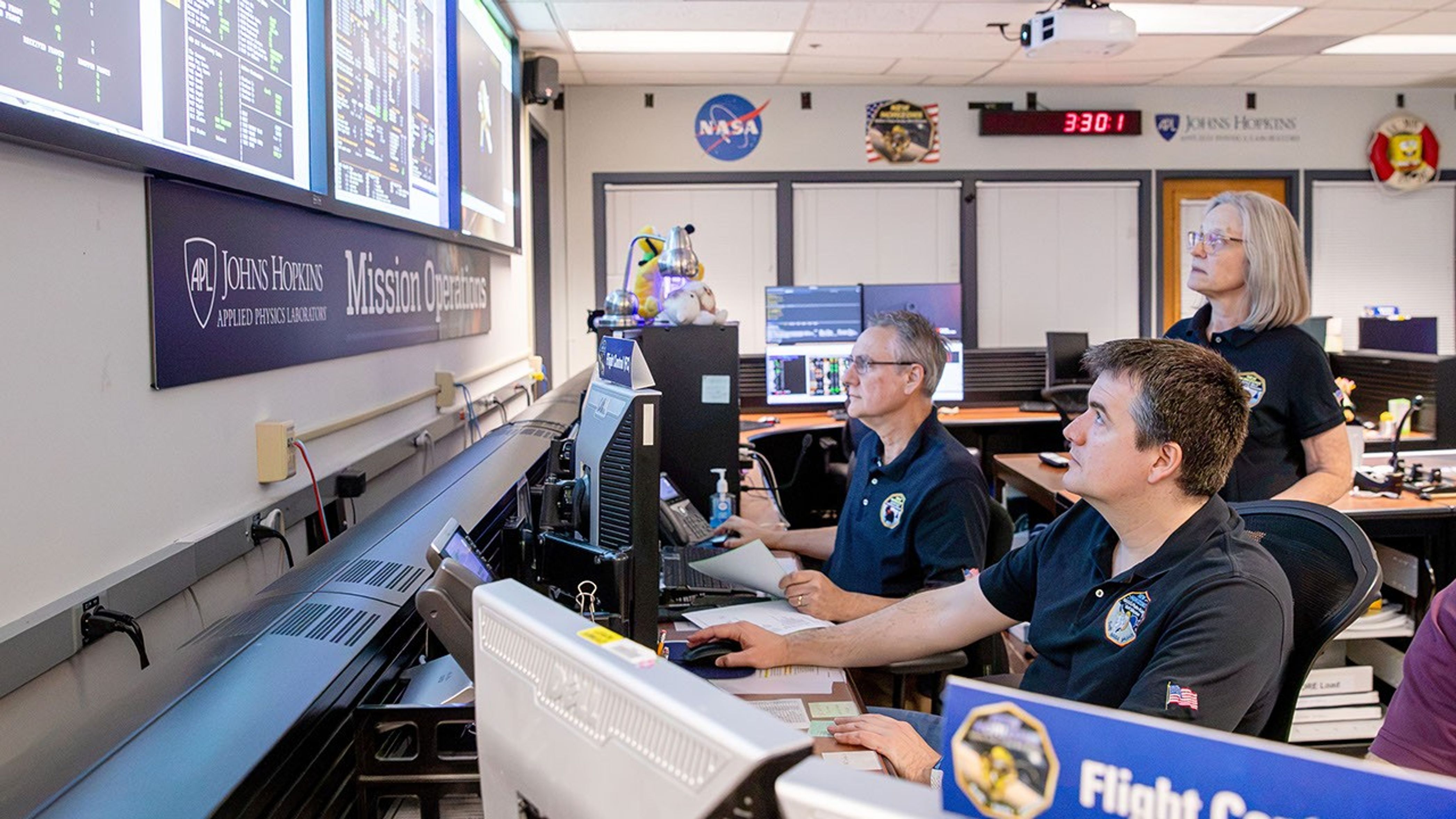
On June 23, flight controllers at the Johns Hopkins Applied Physics Laboratory (APL) in Laurel, Maryland, confirmed New Horizons, acting on stored commands uplinked to its main computer last July, had safely awakened from a 321‑day hibernation period that began Aug. 7. With the spacecraft now approximately 5.9 billion miles (9.5 billion kilometers) from Earth, the radio signals carrying that confirmation took about 8 hours and 52 minutes to reach the APL Mission Operations Center via NASA’s Deep Space Network station near Madrid, Spain.
The mission team typically places New Horizons in resource‑saving hibernation mode during long cruise periods. While the spacecraft is hibernating, operators do not send commands or retrieve data, but the spacecraft continues gathering and storing data around the clock from its heliospheric plasma sensors, Solar Wind at Pluto and the Pluto Energetic Particle Spectrometer Science Investigation, as well as its space dust detector, the Venetia Burney Student Dust Counter.
Alice Bowman, the New Horizons mission operations manager at APL, said the spacecraft reported back to Earth, via the Deep Space Network, with a weekly status beacon. “Every status report through this hibernation period was ‘green,’ meaning all was well aboard New Horizons each and every week,” she said.
As New Horizons resumes active operations, Bowman noted, the team will begin downlinking spacecraft health and safety data, followed by data from the three scientific instruments. In about three weeks, the spacecraft’s onboard Alice ultraviolet spectrograph will look at the hydrogen gas distribution in the outer heliosphere, while the Solar Wind at Pluto, the Pluto Energetic Particle Spectrometer Science Investigation, and the Venetia Burney Student Dust Counter instruments continue their measurements, and the ground team conducts a series of spacecraft and instrument checkouts.
The team also is completing upgrades to the ground‑system software that will make it easier to maintain operations of the spacecraft. Tests are already underway and are expected to continue through the year.
New Horizons is operating on updated autonomy logic designed for operations farther from the Sun and to accommodate the expected reduction in power and the naturally occurring increase in radio‑signal travel time.
The NASA spacecraft’s exploration of this distant region of the solar system marks the latest step in a journey that began in January 2006 with the fastest launch on record; a flyby of Jupiter in February 2007 that included stunning views of the gas giant and its moons; the first exploration through the Pluto system in July 2015; the first exploration of a Kuiper Belt object, Arrokoth, in January 2019, and unique studies of the Sun’s outer heliosphere and dozens of additional Kuiper Belt objects since then.
For more information on NASA’s New Horizons mission, visit:
https://science.nasa.gov/mission/new-horizons/
Keep Exploring Discover More Topics From NASA
New Horizons
Kuiper Belt
Asteroids, Comets & Meteors
Our Solar System
NASA’s New Horizons Spacecraft Wakes from Hibernation in Good Health
3 min read
NASA’s New Horizons Spacecraft Wakes from Hibernation in Good HealthFollowing its longest hibernation period ever of nearly a year, NASA’s New Horizons spacecraft has emerged in good health and is ready to begin transmitting science data gathered in the distant Kuiper Belt far beyond Pluto.
From left, flight controllers Mark Lahr and Josh Albers, and Mission Operations Manager Alice Bowman, monitor telemetry streaming from NASA’s New Horizons spacecraft to the mission operations center at the Johns Hopkins Applied Physics Laboratory in Laurel, Maryland, on June 24, 2026. Now approximately 5.9 billion miles (9.5 billion kilometers) from Earth, New Horizons is ready to begin transmitting science data after being awakened from its longest ever, nearly yearlong hibernation period. NASA/Johns Hopkins APL/SwRI/Justin GladdenOn June 23, flight controllers at the Johns Hopkins Applied Physics Laboratory (APL) in Laurel, Maryland, confirmed New Horizons, acting on stored commands uplinked to its main computer last July, had safely awakened from a 321‑day hibernation period that began Aug. 7. With the spacecraft now approximately 5.9 billion miles (9.5 billion kilometers) from Earth, the radio signals carrying that confirmation took about 8 hours and 52 minutes to reach the APL Mission Operations Center via NASA’s Deep Space Network station near Madrid, Spain.
The mission team typically places New Horizons in resource‑saving hibernation mode during long cruise periods. While the spacecraft is hibernating, operators do not send commands or retrieve data, but the spacecraft continues gathering and storing data around the clock from its heliospheric plasma sensors, Solar Wind at Pluto and the Pluto Energetic Particle Spectrometer Science Investigation, as well as its space dust detector, the Venetia Burney Student Dust Counter.
Alice Bowman, the New Horizons mission operations manager at APL, said the spacecraft reported back to Earth, via the Deep Space Network, with a weekly status beacon. “Every status report through this hibernation period was ‘green,’ meaning all was well aboard New Horizons each and every week,” she said.
As New Horizons resumes active operations, Bowman noted, the team will begin downlinking spacecraft health and safety data, followed by data from the three scientific instruments. In about three weeks, the spacecraft’s onboard Alice ultraviolet spectrograph will look at the hydrogen gas distribution in the outer heliosphere, while the Solar Wind at Pluto, the Pluto Energetic Particle Spectrometer Science Investigation, and the Venetia Burney Student Dust Counter instruments continue their measurements, and the ground team conducts a series of spacecraft and instrument checkouts.
The team also is completing upgrades to the ground‑system software that will make it easier to maintain operations of the spacecraft. Tests are already underway and are expected to continue through the year.
New Horizons is operating on updated autonomy logic designed for operations farther from the Sun and to accommodate the expected reduction in power and the naturally occurring increase in radio‑signal travel time.
The NASA spacecraft’s exploration of this distant region of the solar system marks the latest step in a journey that began in January 2006 with the fastest launch on record; a flyby of Jupiter in February 2007 that included stunning views of the gas giant and its moons; the first exploration through the Pluto system in July 2015; the first exploration of a Kuiper Belt object, Arrokoth, in January 2019, and unique studies of the Sun’s outer heliosphere and dozens of additional Kuiper Belt objects since then.
For more information on NASA’s New Horizons mission, visit:
https://science.nasa.gov/mission/new-horizons/
Keep Exploring Discover More Topics From NASA
New Horizons
Kuiper Belt
Asteroids, Comets & Meteors
Our Solar System
Galaxy Mergers Aren't Always Obvious
Mergers are a part of a galaxy's life in this Universe. Though clear signs of these mergers fade over hundreds of millions of years, evidence is still present, yet obscured, in the galaxies that experience them. The powerful JWST has made it possible to find this evidence, and it did so recently for Centaurus A.
Artemis II Crew and Apollo 14 Moon Tree
Artemis II Crew and Apollo 14 Moon Tree
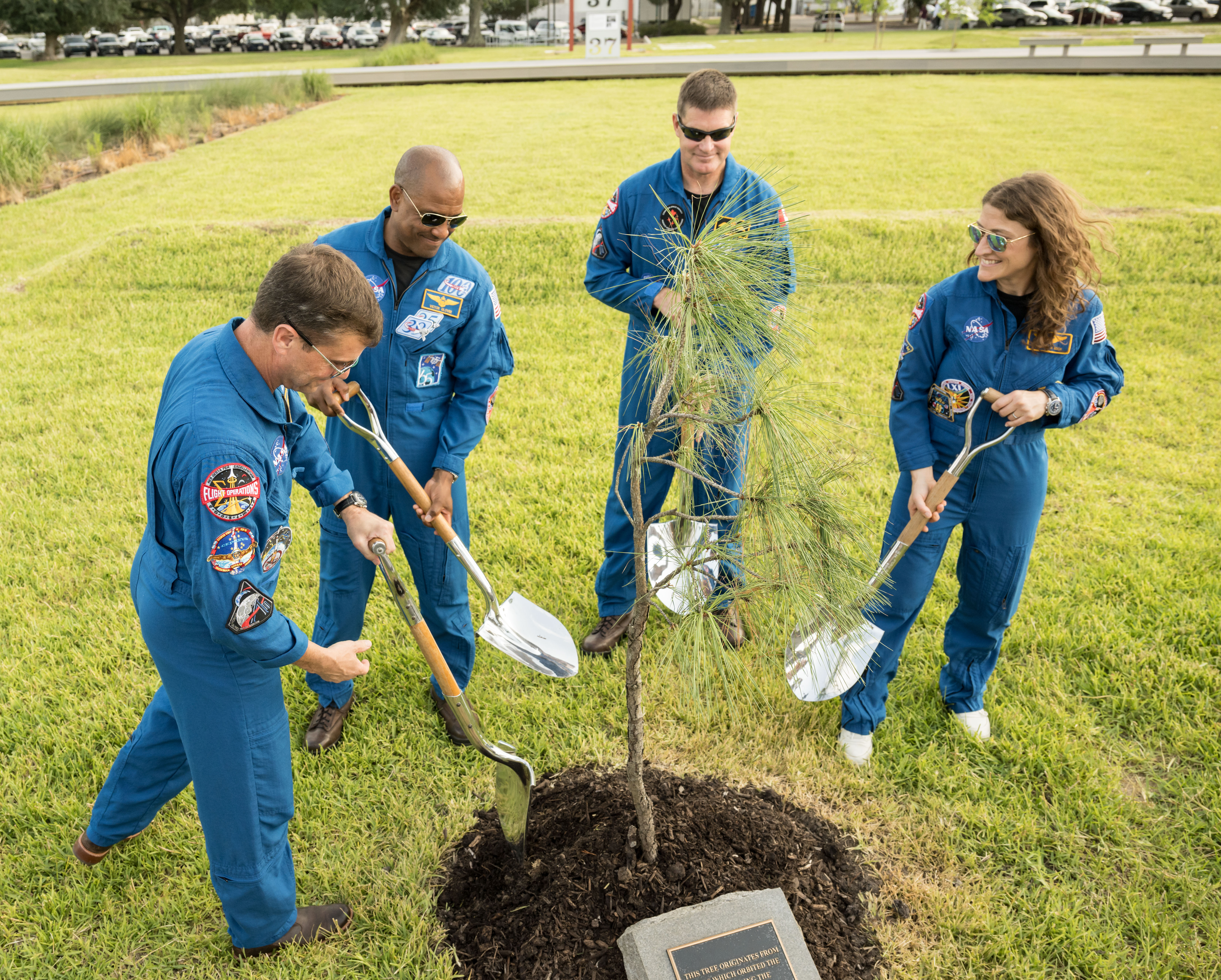
In this photograph, the Artemis II crew participates in the dedication of the Apollo 14 Moon tree at the Lunar Receiving Park at NASA’s Johnson Space Center on June 25, 2026. This tree is a second-generation Apollo Moon tree of the loblolly pine species. The original Apollo Moon trees were grown from seeds carried aboard Apollo 14 by NASA astronaut Stuart Roosa, a former U.S. Forest Service smoke jumper. Upon return to Earth, the seeds were germinated by the Forest Service, and the resulting seedlings were planted throughout the United States and around the world.
Image credit: NASA/James Blair
Artemis II Crew and Apollo 14 Moon Tree
In this photograph, the Artemis II crew participates in the dedication of the Apollo 14 Moon tree at the Lunar Receiving Park at NASA’s Johnson Space Center on June 25, 2026. This tree is a second-generation Apollo Moon tree of the loblolly pine species. The original Apollo Moon trees were grown from seeds carried aboard Apollo 14 by NASA astronaut Stuart Roosa, a former U.S. Forest Service smoke jumper. Upon return to Earth, the seeds were germinated by the Forest Service, and the resulting seedlings were planted throughout the United States and around the world.
Image credit: NASA/James Blair
Astronomers Using Chandra Data Produce the Most Detailed View of the M87 Jet in X-rays
Combining data from NASA's Chandra X-ray Observatory with advanced image-processing techniques to produce the sharpest X-ray view yet of the relativistic jet from M87's supermassive black hole.
The strange metals forcing us to rethink how electricity really works
The strange metals forcing us to rethink how electricity really works
July 2026 Satellite Puzzler
- Earth
- Earth Observatory
- Image of the Day
- EO Explorer
- Topics
- More Content
- About
July 2026 Satellite Puzzler
- Earth
- Earth Observatory
- Image of the Day
- EO Explorer
- Topics
- More Content
- About
Should you be taking creatine? Here's what the science says
The sport supplement is popular among health influencers and athletes, who say creatine can help build stronger muscles and sharper brains—but is it legit?
Hayabusa 2 Completes Flyby Past Asteroid Torifune
Japan’s Hayabusa 2 mission has revealed another "snowman" asteroid — a pair of asteroids attached with a narrow neck. The contact binary could help shed light on planet formation.
The post Hayabusa 2 Completes Flyby Past Asteroid Torifune appeared first on Sky & Telescope.