
Feed aggregator
Deep space software upgrade for Hera’s asteroid visit
Operating across 140 million km of space, the control team for ESA’s Hera mission have succeeded in upgrading the software running the spacecraft, leaving it ready to explore the distant Dimorphos and Didymos asteroids this autumn.
Lambs born via IVF using highly immature eggs in major breakthrough
Lambs born via IVF using highly immature eggs in major breakthrough
Why more extreme rain could mean more shark bites
As rainfall intensifies with climate change, waste flushed out to sea could attract more sharks, putting beachgoers at risk
The allergy culprit histamine also boosts our memory
The allergy culprit histamine also boosts our memory
New European exercise device begins testing with first rope-pulling workout in space
ESA astronaut Sophie Adenot has begun testing the European Enhanced Exploration Exercise Device (E4D) on the International Space Station. Installed inside ESA's Columbus laboratory, the new exercise system will spend the next two years helping researchers evaluate innovative ways to keep astronauts healthy during long-duration space missions.
How extreme heat affects the body – and the best ways to cope
How extreme heat affects the body – and the best ways to cope
Cottonwood Fire Chars Utah
- Earth
- Earth Observatory
- Image of the Day
- EO Explorer
- Topics
- More Content
- About
Cottonwood Fire Chars Utah
- Earth
- Earth Observatory
- Image of the Day
- EO Explorer
- Topics
- More Content
- About
International timekeepers to vote on changing the leap second to a leap hour
To align Coordinated Universal Time with Earth’s rotation, a second occasionally gets added to the year. That may change in 2027
Another Success for Hayabusa 2 as it Completes a Flyby of Asteroid Torifune
JAXA's Hayabusa 2 has completed its flyby of asteroid Torifune. The spacecraft came within about 800 meters of the asteroid's surface. Though the spacecraft is travelling very rapidly, making navigation challenging, it was still able to capture clear images of the asteroid's boulder-strewn surface. Based on ground-based observations, scientists suspected that Torifune was a contact binary asteroid, and these images confirm it.
Why are the steel beams inside a Manhattan skyscraper buckling? Experts explain
Steel support columns in the Midtown building, which is being converted from offices into apartments, may have been overloaded, experts say
The Euclid Space Telescope Has Found 31 New Ancient Quasars, Including the Most Ancient One Ever Found
Euclid is only 1.5 years into its Euclid Wide Survey and has found 31 new quasars from the Universe's first 800 million years. Though the Survey isn't specifically aimed at finding ancient quasars, it's proving to be remarkably effective at it. This large sample of quasars will help with the study of ancient galaxies and supermassive black holes.
Peter Shor’s algorithm could break the internet – but he's not worried
Peter Shor’s algorithm could break the internet – but he's not worried
Does time come from the entire universe running computations?
Does time come from the entire universe running computations?
NASA Transfers ‘Hundred Acre Wood’ to Patuxent Research Refuge
NASA ceremonially transferred ownership of about 105 acres of wooded land at its Goddard Space Flight Center’s Greenbelt, Maryland, campus Tuesday to the adjoining Patuxent Research Refuge, managed by the U.S. Fish and Wildlife Service.
The property, formerly known as NASA Goddard’s Area 400, is now part of the largest block of unfragmented forest between Washington and Baltimore. The nearly 13,000-acre woodland is the nation’s only refuge specifically established to support wildlife research. The refuge also supports recreational uses, such as walking, biking, horseback riding, fishing, and hunting.
At a ceremony on July 7, 2026, U.S. Fish and Wildlife Service Director Brian Nesvik (left) and Jamie Dunn, center director, NASA’s Goddard Space Flight Center, Greenbelt, Md., sign certificates that ceremonially transfer a 105-acre parcel of property known as “Area 400” from NASA Goddard to the Service.NASA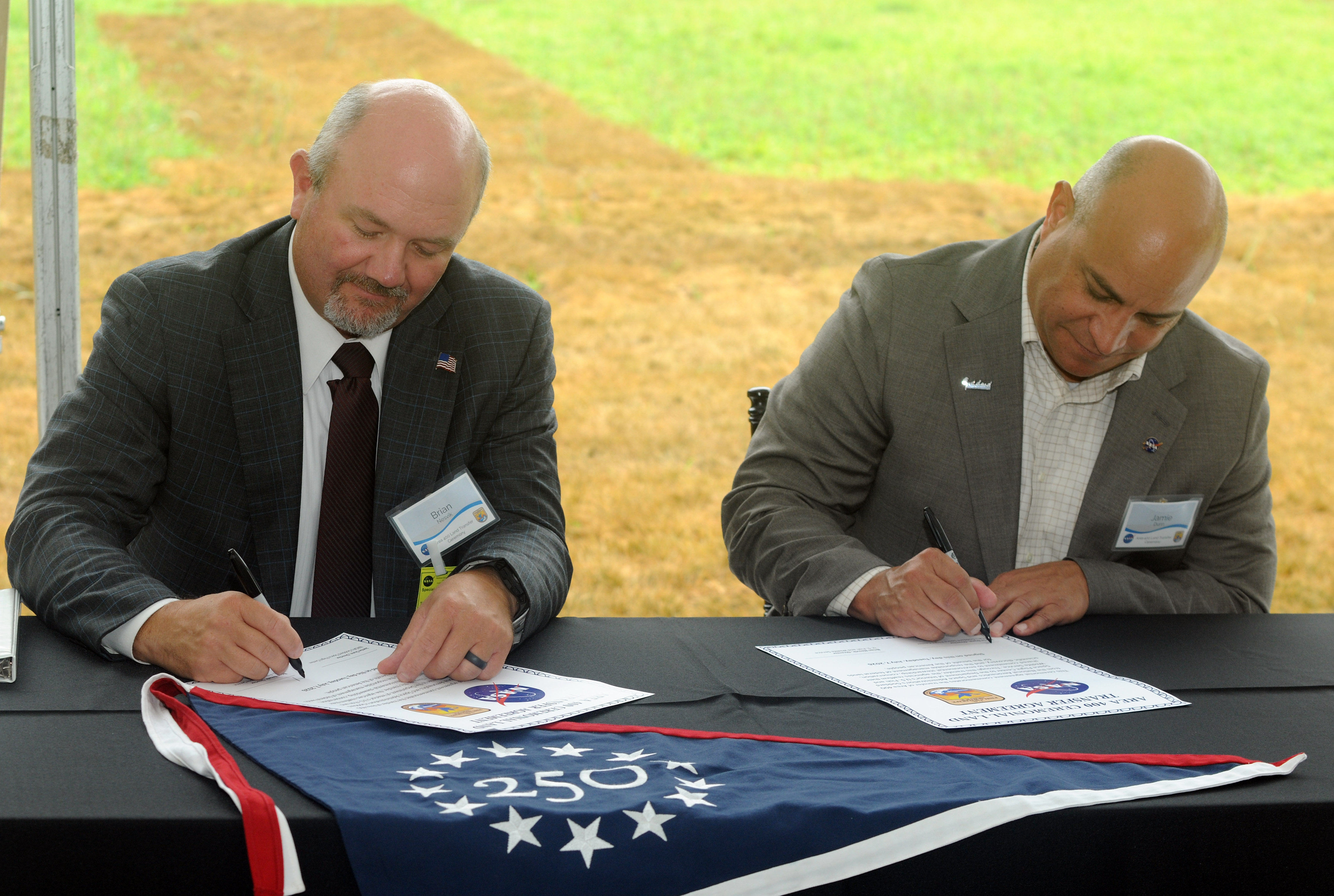
“For over six decades, NASA Goddard has helped shape humanity’s understanding of Earth,” said Jamie Dunn, center director, NASA Goddard. “We’re glad to present this land to our colleagues in the Fish and Wildlife Service, whose conservation and research helps do the real legwork in preserving our Blue Marble for future generations.”
NASA Goddard had used Area 400 for propellant research beginning in the 1960s. That work has largely since shifted to NASA facilities in other states or to commercial providers, and the property had long been a candidate for divestment. NASA and the Service began discussing a potential transfer in 2021.
Following remarks from attending dignitaries and the signing ceremony, assembled guests participated in a monarch butterfly release and milkweed seed dispersal.NASA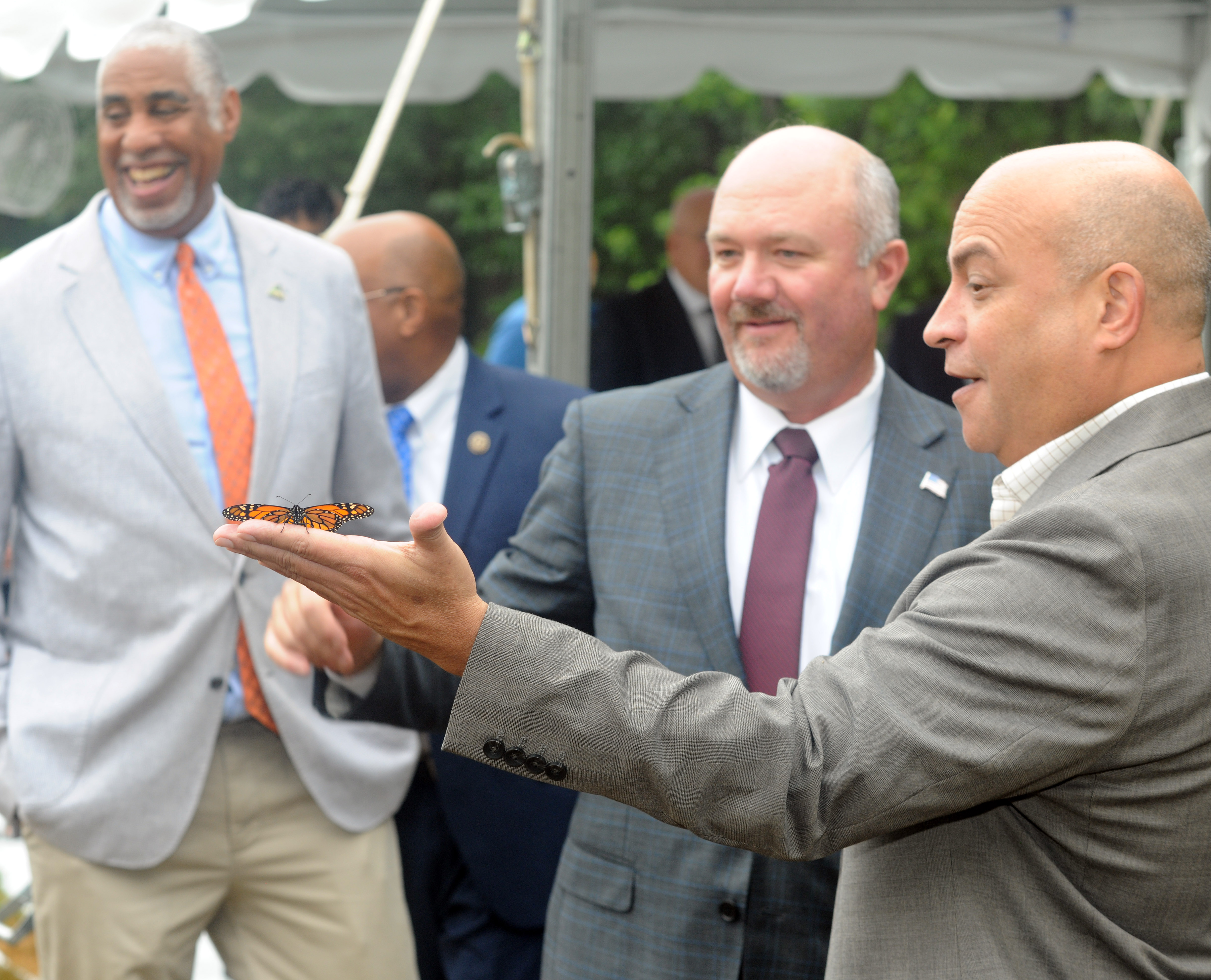
Prior to the transfer, Area 400 was still almost entirely wooded aside from a two-and-a-half-acre clearing with 11 small structures. The interagency transfer was effective on Feb. 23, and NASA recently completed its final closeout activities at the property, deconstructing the buildings, roadway, and utility service.
This aerial photograph shows Area 400’s appearance in 1984. The surrounding forest has remained largely unchanged since NASA Goddard occupied the property in the 1960s.NASA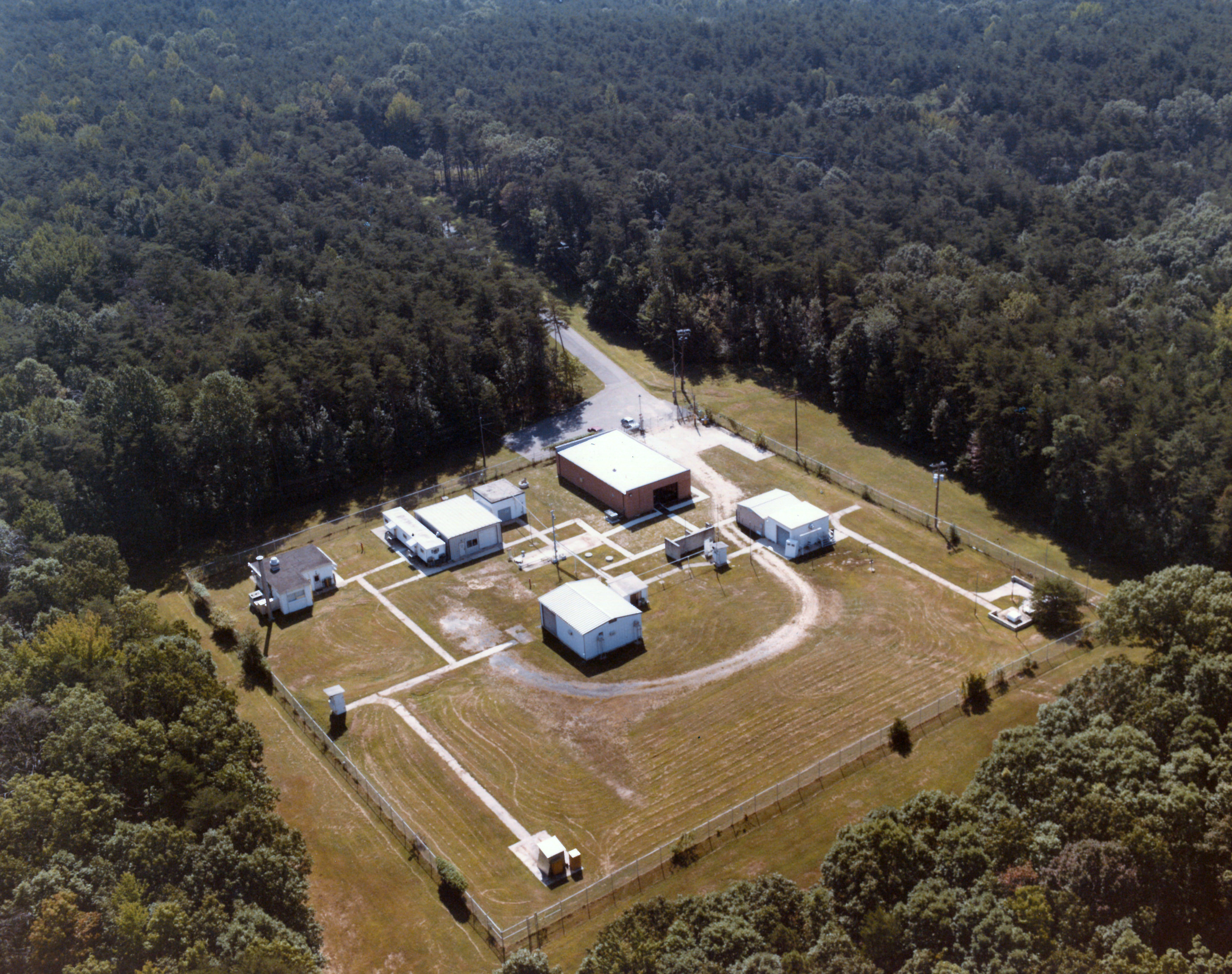
“Through working with partners on the best use of land, as exemplified with this land transfer, we can continue to conserve America’s natural beauty and expand outdoor recreation opportunities for future generations,” said U.S. Fish and Wildlife Service Director Brian Nesvik.
Media contacts:
Rob Garner
News Chief, Office of Communications
NASA’s Goddard Space Flight Center
Keith Shannon
Regional Communications Lead – U.S. Fish and Wildlife Service Northeast Region
U.S. Department of the Interior