
Feed aggregator
Students Take on Airborne Field Research with NASA
3 min read
Students Take on Airborne Field Research with NASAThe gusty wind didn’t make it easy to hold tight to a balloon so large. The balloon, a scientific instrument called an ozonesonde, was about to be released into the atmosphere above the Texas Gulf Coast by students from NASA’s SARP (Student Airborne Research Program), which concluded its summer session July 27. The balloon’s job was to measure ozone concentrations as it rose through the atmosphere.
The SARP students in the atmosphere group prepare a weather balloon by filling it up with helium. The weather balloon will measure ozone in the atmosphere as it rises. NASA/Sofie Bates
A dozen of the 48 undergraduate students participated in atmospheric field research. Guided by instrument scientists, university professors, and graduate students, the SARP students prepared the ozonesondes for takeoff. They chemically treated instrument cells attached to the sensor, wrangled the balloons during inflation, and finally, released them into the sky. As the balloons flew, the students monitored the data.
“This research program is a unique experience for students where they have the opportunity to see the different careers related to Earth system science,” said Yaitza Luna-Cruz, program manager for NASA’s Early Career Research Program at NASA Headquarters in Washington.
Each student was assigned to one of four disciplines: atmospheric science, oceans, terrestrial ecology, or hydrology. They gathered field data, designed individual research projects, and presented their findings at the end of the program. When possible, they cross-checked their measurements with NASA satellite missions.
SARP students and instrument scientists walk away from NASA’s Gulfstream G-V aircraft after their science flight. NASA/Erica McNamee
“This is such an awesome experience,” said Marin Stevens, a chemistry student from the University of Colorado at Colorado Springs, minutes after she released the ozonesonde into the atmosphere. “It’s way beyond what I would have expected.”
Airborne science was a highlight of the program. Five science aircraft supported the program this year, including NASA’s Gulfstream G-III, GV, and C-20A, Dynamic Aviation’s B200, and a P-III from the National Oceanic and Atmospheric Administration. Students worked alongside scientists operating various instruments, such as a laser designed to collect measurements on particulates in the atmosphere.
For many students, their time in Houston was their first foray into field research, and, like the students releasing the balloons, they were eager to continue to learn and experience hands-on science. After the first two weeks, the cohort split into two, with half of the students traveling to California and half to Virginia to continue their research.
SARP students celebrate finishing their first flight by making the NASA worm. NASA/Sofie Bates
“The coolest part of SARP is the passion everyone has,” said Joelle Hopkins, SARP project manager, NASA Headquarters. “It’s so enjoyable to work with scientists, faculty, and graduate mentors who are passionate about the science, sharing the science with the students, and building the next generation of scientists.”
The annual eight-week program enhances what students are learning in the classroom by giving them hands-on field experience. It is designed to be a steppingstone into a career in field research or other STEM fields. Students participate in all aspects of a scientific campaign, including data collection, data analysis, and research. They attend science lectures and workshops, join research flights, and accompany scientists into the field.
To learn more about NASA’s Airborne Science Program, visit:
https://airbornescience.nasa.gov/
By Erica McNamee
NASA’s Goddard Space Flight Center, Greenbelt, Md.
Share Details Last Updated Jul 31, 2026 Editor Jenny Marder Contact Erica McNamee erica.s.mcnamee@nasa.gov Location Goddard Space Flight Center Related Terms Explore More 5 min read Surf, Turf, Above Earth: Students Participate in NASA Field ResearchFlying over and tromping through watery landscapes along the East Coast, working alongside NASA scientists,…
Article
3 years ago
5 min read NASA Earth Scientists Take Flight, Set Sail to Verify PACE Satellite Data
From sea to sky to orbit, a range of vantage points allow NASA Earth scientists…
Article
2 years ago
6 min read New NASA Earth Missions Gear Up to Start Science Flights
The first of six new airborne campaigns will hit the skies this summer.
Article
2 weeks ago
New Images Confirm: Betelgeuse Has a Companion
New analysis of observations taken in 2024 confirm a stellar companion for Betelgeuse in the constellation Orion.
The post New Images Confirm: Betelgeuse Has a Companion appeared first on Sky & Telescope.
How flowers shaped the world as we know it
David Haskell brings readers through millions of years of botanical history for his latest book, How Flowers Made Our World
Primordial Black Holes Can Trigger Type Ia Supernovae, and Astronomers Should be Able to Find Them
Primordial black holes (PBH) remain hypothetical, but that isn't stopping astrophysicists from figuring out how they could interact with other stellar objects. New research shows how PBHs, formed in the early Universe from collapsing pockets of dense subatomic matter instead of from stars, can enter white dwarfs. In some cases, that could've triggered a Type Ia supernova with particular chemical fingerprints, which should be detectable.
Radio Array Detects Polarized Light From a GRB
On March 10, 2026, the Fermi telescope gamma-ray burst team reported the detection of a long-duration gamma ray burst that occurred when a star exploded inside a dense, highly magnetized cloud of hydrogen gas. That HII region is a bubble of ionized hydrogen created by winds from a massive young star. Astronomers immediately turned as many telescopes as possible to view the burst and its afterglow, including the NSF's Karl Jansky Very Large Array.
Chilean mummies reveal a lost lineage of smallpox
Centuries-old DNA that was found in these mummies belongs to an extinct viral lineage of smallpox that was brought across the Atlantic during European colonization of the Americas
Everyone alive may carry DNA from a ‘ghost lineage’ of human ancestors
Scientists analyzing modern genomes may have found a long-lost branch of the human family tree
3 charts show how extreme heat is costing us hours of lost sleep
The U.S. has been pummeled with heat waves this summer. Here’s how hot overnight temperatures can get in the way of a good night’s rest—in three charts
NASA Assigns Astronaut Deniz Burnham to First Space Station Mission
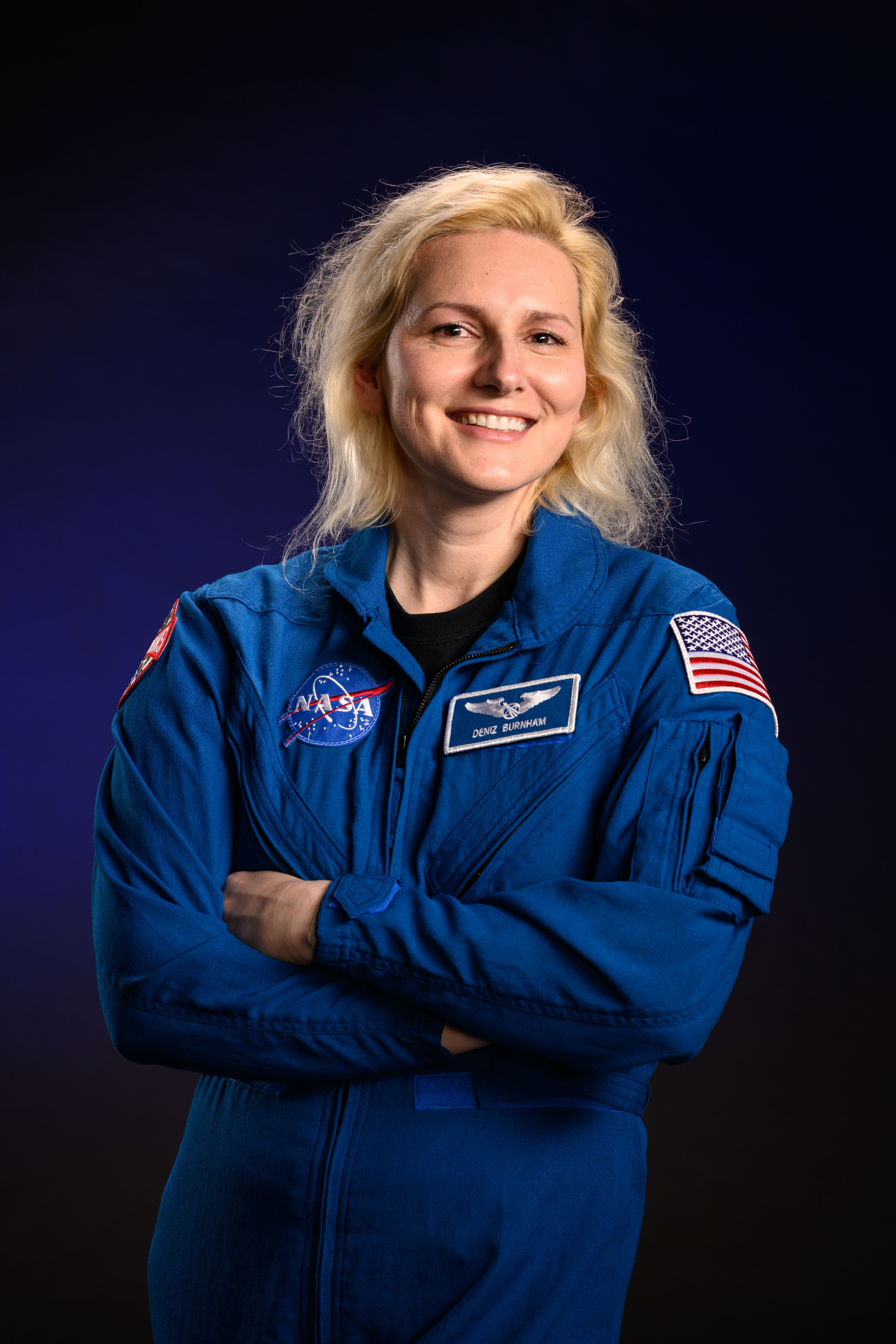
NASA astronaut Deniz Burnham will embark on her first mission to the International Space Station, serving as an Expedition 76 flight engineer.
Burnham will launch aboard the Roscosmos Soyuz MS-30 spacecraft with cosmonauts Dmitri Petelin and Konstantin Borisov. Launch is targeted for March 2027, from the Baikonur Cosmodrome in Kazakhstan, and the trio will spend about seven months aboard the orbiting laboratory.
During her expedition, Burnham will conduct scientific investigations and technology demonstrations to help prepare humans for future exploration missions to the Moon and Mars and to benefit people on Earth.
Selected as a NASA astronaut in 2021, Burnham graduated with the agency’s 23rd astronaut class in 2024. Born at Incirlik Air Base in Adana, Turkey, Burnham moved frequently while growing up in a military family. She was living in Wasilla, Alaska, at the time of her selection.
A former intern at NASA’s Ames Research Center in California’s Silicon Valley, Burnham earned a bachelor’s degree in chemical engineering from the University of California, San Diego, and a master’s degree in mechanical engineering from the University of Southern California in Los Angeles. An experienced leader in the energy industry, she spent more than a decade managing onsite drilling operations on oil rigs across North America. Burnham also served in the U.S. Navy Reserves as an engineering duty officer. She is a licensed private pilot with ratings for airplane single engine land and sea, instrument airplane, and rotorcraft-helicopter.
For more than 25 years, people have lived and worked continuously aboard the International Space Station, advancing scientific knowledge and making research breakthroughs not possible on Earth. The space station helps NASA understand and overcome the challenges of human spaceflight, expand commercial opportunities in low Earth orbit, and build on the foundation for long-duration missions to the Moon, as part of the Artemis program, and to Mars.
To learn more about International Space Station research, operations, and its crews, visit:
-end-
Joshua Finch
Headquarters, Washington
202-358-1100
joshua.a.finch@nasa.gov
Anna Schneider
Johnson Space Center, Houston
281-483-5111
anna.c.schneider@nasa.gov
NASA Assigns Astronaut Deniz Burnham to First Space Station Mission
NASA astronaut Deniz Burnham will embark on her first mission to the International Space Station, serving as an Expedition 76 flight engineer.
Burnham will launch aboard the Roscosmos Soyuz MS-30 spacecraft with cosmonauts Dmitri Petelin and Konstantin Borisov. Launch is targeted for March 2027, from the Baikonur Cosmodrome in Kazakhstan, and the trio will spend about seven months aboard the orbiting laboratory.
During her expedition, Burnham will conduct scientific investigations and technology demonstrations to help prepare humans for future exploration missions to the Moon and Mars and to benefit people on Earth.
Selected as a NASA astronaut in 2021, Burnham graduated with the agency’s 23rd astronaut class in 2024. Born at Incirlik Air Base in Adana, Turkey, Burnham moved frequently while growing up in a military family. She was living in Wasilla, Alaska, at the time of her selection.
A former intern at NASA’s Ames Research Center in California’s Silicon Valley, Burnham earned a bachelor’s degree in chemical engineering from the University of California, San Diego, and a master’s degree in mechanical engineering from the University of Southern California in Los Angeles. An experienced leader in the energy industry, she spent more than a decade managing onsite drilling operations on oil rigs across North America. Burnham also served in the U.S. Navy Reserves as an engineering duty officer. She is a licensed private pilot with ratings for airplane single engine land and sea, instrument airplane, and rotorcraft-helicopter.
For more than 25 years, people have lived and worked continuously aboard the International Space Station, advancing scientific knowledge and making research breakthroughs not possible on Earth. The space station helps NASA understand and overcome the challenges of human spaceflight, expand commercial opportunities in low Earth orbit, and build on the foundation for long-duration missions to the Moon, as part of the Artemis program, and to Mars.
To learn more about International Space Station research, operations, and its crews, visit:
-end-
Joshua Finch
Headquarters, Washington
202-358-1100
joshua.a.finch@nasa.gov
Anna Schneider
Johnson Space Center, Houston
281-483-5111
anna.c.schneider@nasa.gov
The ELT's Spectrograph Could Sniff Out Biosignatures on Other Worlds
Before any major telescope commissioning, there are dozens of papers that attempt to define what we can expect from it. We’re starting to see some come through for the Extremely Large Telescope (ELT), which hopefully will get a more imaginative name when the 39m behemoth is officially commissioned in Chile in the 2030s. A new paper from Evann Kurzawa-Ferrandez and his co-authors at NASA’s Jet Propulsion Laboratory, and available in pre-print on arXiv, showcases what kind of biologically relevant gases we can find on some of our nearest exoplanets.
Starburst Galaxy Centaurus A
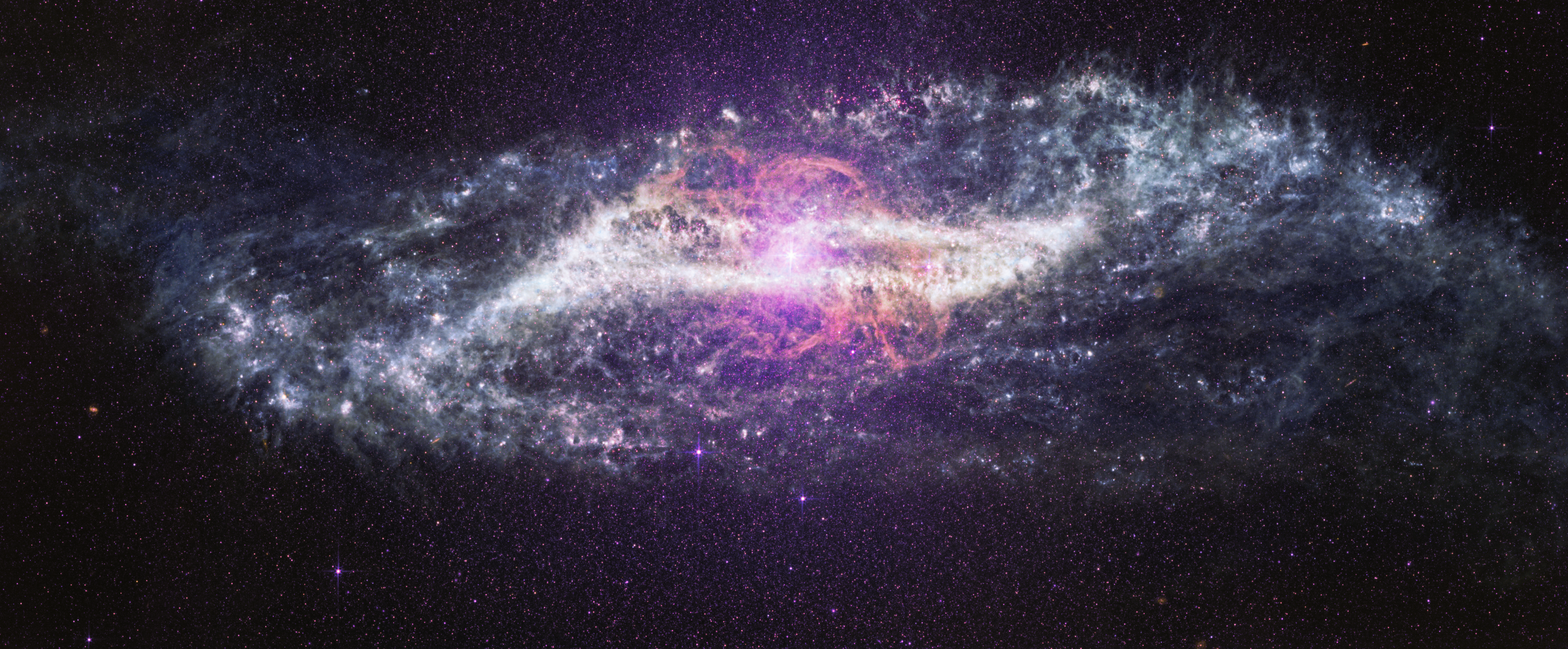
In this July 6, 2026, image, NASA’s James Webb Space Telescope’s Mid-Infrared Instrument (MIRI) reveals the nearby galaxy Centaurus A, exposing the dusty structures and hidden activity that shape this unusual system.
Centaurus A is 11 million light-years away from Earth, relatively close in cosmic terms. Yet, unlike most nearby galaxies, it is very active, making it a powerful laboratory for understanding how galaxies and black holes grow and evolve together.
Explore the galaxy through an interactive map.
Image credit: NASA, ESA, CSA, STScI; Image Processing: Alyssa Pagan (STScI), Joseph DePasquale (STScI), Macarena Garcia Marin (ESA Office at STScI)
Starburst Galaxy Centaurus A
In this July 6, 2026, image, NASA’s James Webb Space Telescope’s Mid-Infrared Instrument (MIRI) reveals the nearby galaxy Centaurus A, exposing the dusty structures and hidden activity that shape this unusual system.
Centaurus A is 11 million light-years away from Earth, relatively close in cosmic terms. Yet, unlike most nearby galaxies, it is very active, making it a powerful laboratory for understanding how galaxies and black holes grow and evolve together.
Explore the galaxy through an interactive map.
Image credit: NASA, ESA, CSA, STScI; Image Processing: Alyssa Pagan (STScI), Joseph DePasquale (STScI), Macarena Garcia Marin (ESA Office at STScI)
Starburst Galaxy Centaurus A
Spacecraft will swarm asteroid Apophis during fateful 2029 Earth flyby
Space agencies around the globe are coordinating missions to visit the asteroid Apophis during a close encounter with Earth in 2029
Wandering Supermassive Black Hole Found at the Edge of its Galaxy
Astronomers have long thought supermassive black holes can escape their home galaxies — now they've found one roaming its host's galactic outskirts.
The post Wandering Supermassive Black Hole Found at the Edge of its Galaxy appeared first on Sky & Telescope.
The Exciting Plan to Photograph an Alien Continent
NASA has selected a concept study, led by physicist Paul Stankus, exploring whether a pair of spacecraft flying in tight formation could one day produce an actual image of an Earth like exoplanet's surface, oceans, continents and all. It's an early stage idea, backed by NASA's Innovative Advanced Concepts program, but if it ever came together, it would represent an extraordinary leap beyond simply detecting a distant world to genuinely seeing its face.
A Thermal Camera Trick Could Let LIGO See Twice as Far
A team of researchers have found a surprisingly simple way to boost the sensitivity of gravitational wave detectors like LIGO. It’s surprisingly simple to, just point an ordinary thermal imaging camera at the mirrors themselves. The technique could improve LIGO's next upgrade by up to 31%, letting it detect neutron star collisions tens of millions of light years farther away, and is already being built into the design of its planned successor, Cosmic Explorer.
Mars' Double Storm Problem
A new study presented at the Royal Astronomical Society's National Astronomy Meeting suggests that solar storms may warm the Martian lower atmosphere, but only when they strike during a major Martian dust storm. The discovery was accidental, emerging from a search for a different effect entirely, and hints that the weather system on Mars may be more tangled and interconnected than scientists previously assumed.