
Feed aggregator
The Growing Crescent of Mars as NASA’s Psyche Mission Approaches
NASA/JPL-Caltech/ASU Photojournal Navigation Downloads The Growing Crescent of Mars as NASA’s Psyche Mission Approaches
PNG (3.48 MB)
Description
This composite of images taken by NASA’s Psyche mission shows the crescent of Mars grow as the spacecraft approached the planet for a gravity assist from May 2 to May 15, 2026. The series begins with the smallest crescent at the center of the of the image as Mars is farthest from the spacecraft, and progressively grows as the spacecraft gets closer. After these views were captured by the spacecraft’s multispectral imager instrument, Mars began to overfill the field of view as Psyche made close approach with the planet and captured a series of high-resolution images of the surface.
Because Psyche approached Mars from a high phase angle, the planet appeared as a thin crescent in the days running up to the close approach, lit by sunlight reflecting off its surface. Using these views of the approach, close approach, and departure from Mars, the Psyche team compiled a stunning time-lapse of its entire Mars encounter.
For more information about NASA’s Psyche mission, visit:
https://science.nasa.gov/mission/psyche/
Keep Exploring Discover More Topics From Photojournal
Photojournal
Search Photojournal
Photojournal’s Latest Content
Feedback
The Growing Crescent of Mars as NASA’s Psyche Mission Approaches
NASA/JPL-Caltech/ASU Photojournal Navigation Downloads The Growing Crescent of Mars as NASA’s Psyche Mission Approaches
PNG (3.48 MB)
Description
This composite of images taken by NASA’s Psyche mission shows the crescent of Mars grow as the spacecraft approached the planet for a gravity assist from May 2 to May 15, 2026. The series begins with the smallest crescent at the center of the of the image as Mars is farthest from the spacecraft, and progressively grows as the spacecraft gets closer. After these views were captured by the spacecraft’s multispectral imager instrument, Mars began to overfill the field of view as Psyche made close approach with the planet and captured a series of high-resolution images of the surface.
Because Psyche approached Mars from a high phase angle, the planet appeared as a thin crescent in the days running up to the close approach, lit by sunlight reflecting off its surface. Using these views of the approach, close approach, and departure from Mars, the Psyche team compiled a stunning time-lapse of its entire Mars encounter.
For more information about NASA’s Psyche mission, visit:
https://science.nasa.gov/mission/psyche/
Keep Exploring Discover More Topics From Photojournal
Photojournal
Search Photojournal
Photojournal’s Latest Content
Feedback
Establishing a VTE Risk Score for Astronauts Algorithm
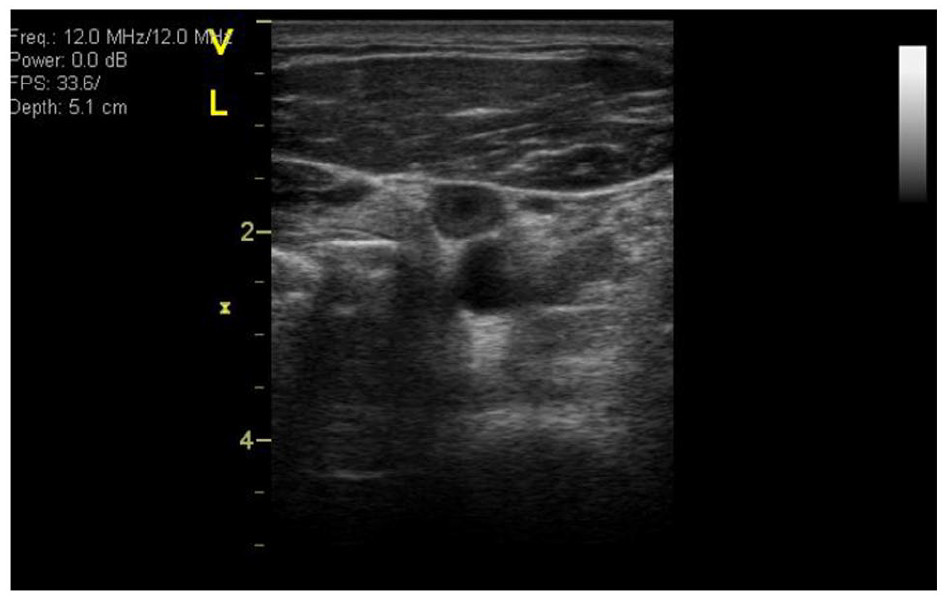
In April 2026, NASA’s Office of the Chief Health and Medical Officer (OCHMO) initiated a working group to review updated VTE case information, additional data gathered revealing altered blood flow status within a cohort of astronauts, and discuss progress of research and clinical activities intended to mitigate the risk of VTE during spaceflight with new evidence-based clinical practice recommendations.
RecommendationsThe following is a summary of the working group’s recommendations:
- The working group’s conclusions emphasized that stasis in the left internal jugular vein (IJV) is consistently viewed as a dominant risk factor for VTE in microgravity, though there is active debate regarding the relative contributions of slow qualitative flow, endothelial factors and/or retrograde flow.
- Limitations of current in-flight ultrasound capabilities to accurately measure stasis/slow flow was cited as a concern, especially if using only stasis as a factor for indicating the need for prophylaxis.
- Additional review of assessing stasis with ultrasound in-flight was recommended.
- After reviewing the risk factors, additional discussions following the working group led to the majority of the panel agreeing that stasis and retrograde flow warranted use of prophylaxis.
- The working group also recommended assessing all other risk factors other than stasis to also determine when prophylaxis is warranted.
- Based on a literature review and summary of the panel contributions, a VTE Risk Score for Astronauts Algorithm was developed, which includes providing anticoagulation prophylaxis for stasis alone, or a combination of other thrombosis risk factors that are weighted by terrestrial literature.
NASA initially formed a working group in October 2024 after diagnosing venous thromboembolisms (VTEs) in astronauts during ISS missions. Experts reviewed case data, updated Clinical Practice Guidelines, and examined possible causes.
Read more about the outcomes of the meeting here Approximate location of identified thrombi in crewmembers.Source: Modified from Cerebral Sinus Venous Thrombosis – University of Colorado Denver Share Details Last Updated Jul 19, 2026 Related Terms Keep Exploring Discover Related Topics OCHMO Mission-Enabling Assessments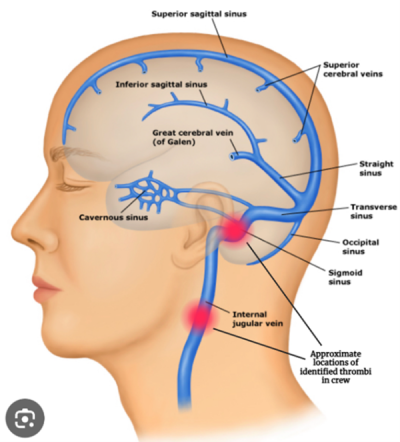
Mission-enabling assessment plays a crucial role in NASA’s long-term success by addressing essential questions requiring rapid response to support further…
Aerospace Medical Certification StandardThis NASA Technical Standard provides medical requirements and clinical procedures designed to ensure crew health and safety and occupational longevity…
Human Spaceflight StandardsThe Human Spaceflight & Aviation Standards Team continually works with programs to provide the best standards and implementation documentation to…
Human Spaceflight and Aviation StandardsThe Human Spaceflight and Aviation Standards Team continuously works with subject matter experts and with each space flight program to…
Establishing a VTE Risk Score for Astronauts Algorithm
In April 2026, NASA’s Office of the Chief Health and Medical Officer (OCHMO) initiated a working group to review updated VTE case information, additional data gathered revealing altered blood flow status within a cohort of astronauts, and discuss progress of research and clinical activities intended to mitigate the risk of VTE during spaceflight with new evidence-based clinical practice recommendations.
RecommendationsThe following is a summary of the working group’s recommendations:
- The working group’s conclusions emphasized that stasis in the left internal jugular vein (IJV) is consistently viewed as a dominant risk factor for VTE in microgravity, though there is active debate regarding the relative contributions of slow qualitative flow, endothelial factors and/or retrograde flow.
- Limitations of current in-flight ultrasound capabilities to accurately measure stasis/slow flow was cited as a concern, especially if using only stasis as a factor for indicating the need for prophylaxis.
- Additional review of assessing stasis with ultrasound in-flight was recommended.
- After reviewing the risk factors, additional discussions following the working group led to the majority of the panel agreeing that stasis and retrograde flow warranted use of prophylaxis.
- The working group also recommended assessing all other risk factors other than stasis to also determine when prophylaxis is warranted.
- Based on a literature review and summary of the panel contributions, a VTE Risk Score for Astronauts Algorithm was developed, which includes providing anticoagulation prophylaxis for stasis alone, or a combination of other thrombosis risk factors that are weighted by terrestrial literature.
NASA initially formed a working group in October 2024 after diagnosing venous thromboembolisms (VTEs) in astronauts during ISS missions. Experts reviewed case data, updated Clinical Practice Guidelines, and examined possible causes.
Read more about the outcomes of the meeting here Approximate location of identified thrombi in crewmembers.Source: Modified from Cerebral Sinus Venous Thrombosis – University of Colorado Denver Share Details Last Updated Jul 17, 2026 Related Terms Keep Exploring Discover Related Topics OCHMO Mission-Enabling AssessmentsMission-enabling assessment plays a crucial role in NASA’s long-term success by addressing essential questions requiring rapid response to support further…
Aerospace Medical Certification StandardThis NASA Technical Standard provides medical requirements and clinical procedures designed to ensure crew health and safety and occupational longevity…
Human Spaceflight StandardsThe Human Spaceflight & Aviation Standards Team continually works with programs to provide the best standards and implementation documentation to…
Human Spaceflight and Aviation StandardsThe Human Spaceflight and Aviation Standards Team continuously works with subject matter experts and with each space flight program to…
NASA Awards Facilities Support Services Contract for Ames Research Center
CONTRACT RELEASE
NASA has selected Chugach Intelligence Solutions LLC to provide comprehensive operations, maintenance, and repair services for NASA’s Ames Research Center in California’s Silicon Valley.
The Ames Facilities Support Services II contract ensures that the center’s historic and specialized facilities are properly maintained, fully operational, and capable of supporting the agency’s missions and tenant partners in the NASA Research Park.
The hybrid contract has a five-year period of performance, consisting of a 12-month base period and four 12-month option periods, with the possibility of a six-month extension. The performance period is expected to begin Thursday, Aug. 13. The contract includes cost-plus-award-fee core requirements, firm-fixed-price phase-in, and indefinite-delivery/indefinite-quantity task orders, providing flexibility to address both routine and emergent facility needs. The award has a maximum potential value of approximately $158 million, inclusive of all options and total indefinite-delivery/indefinite-quantity ceiling value.
For more information about NASA and its missions, visit:
-end-
Jeanne Neal
Ames Research Center, Silicon Valley, Calif.
650-604-4789
jeanne.c.neal@nasa.gov
NASA Awards Facilities Support Services Contract for Ames Research Center
CONTRACT RELEASE
NASA has selected Chugach Intelligence Solutions LLC to provide comprehensive operations, maintenance, and repair services for NASA’s Ames Research Center in California’s Silicon Valley.
The Ames Facilities Support Services II contract ensures that the center’s historic and specialized facilities are properly maintained, fully operational, and capable of supporting the agency’s missions and tenant partners in the NASA Research Park.
The hybrid contract has a five-year period of performance, consisting of a 12-month base period and four 12-month option periods, with the possibility of a six-month extension. The performance period is expected to begin Thursday, Aug. 13. The contract includes cost-plus-award-fee core requirements, firm-fixed-price phase-in, and indefinite-delivery/indefinite-quantity task orders, providing flexibility to address both routine and emergent facility needs. The award has a maximum potential value of approximately $158 million, inclusive of all options and total indefinite-delivery/indefinite-quantity ceiling value.
For more information about NASA and its missions, visit:
-end-
Jeanne Neal
Ames Research Center, Silicon Valley, Calif.
650-604-4789
jeanne.c.neal@nasa.gov
NASA's Chandra and IXPE Study Pulsar in Lighthouse Nebula
NASA’s Chandra and IXPE Study Pulsar in Lighthouse Nebula
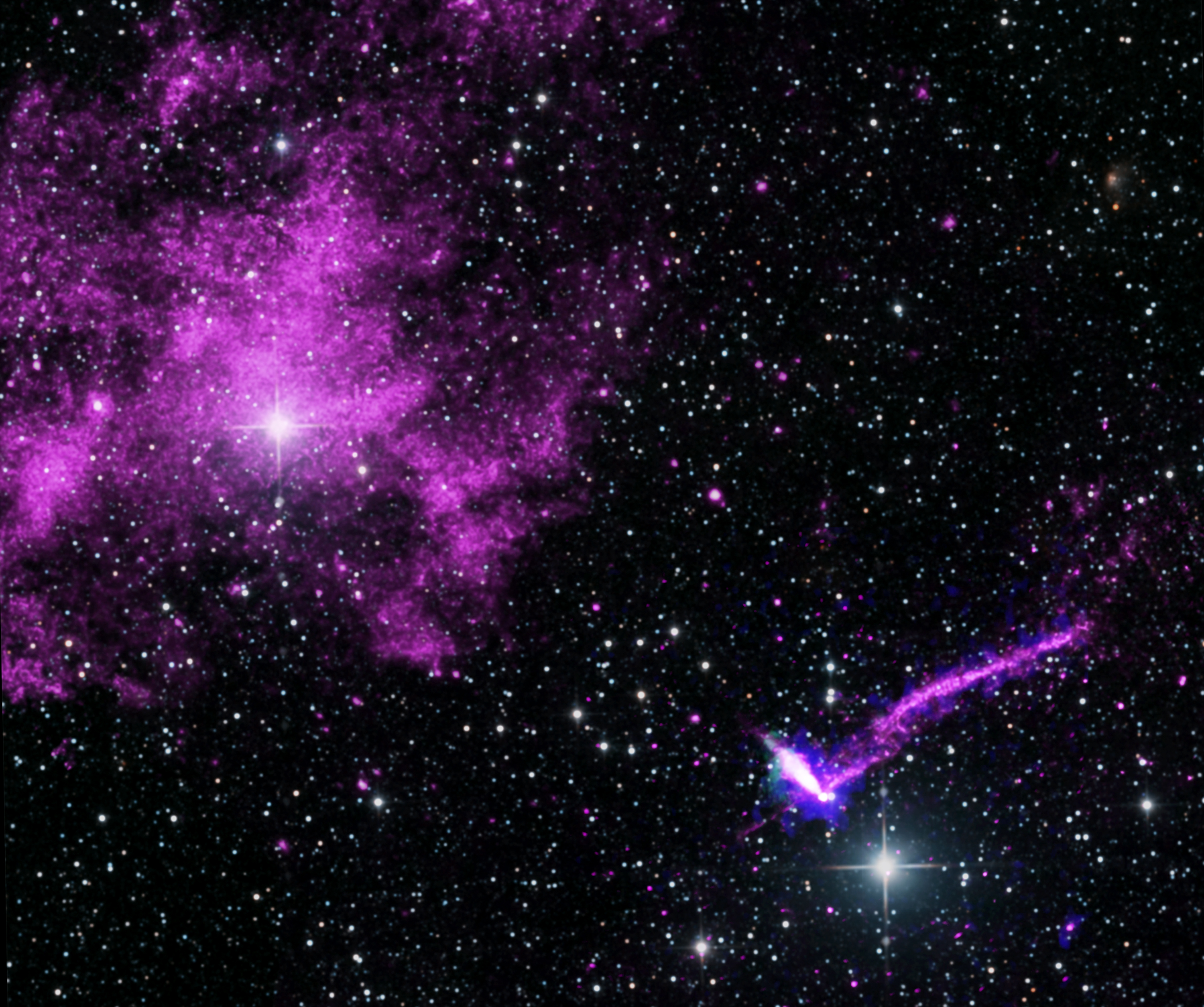
This composite image, released on July 9, 2026, shows the region around a pulsar – a neutron star with a strong magnetic field that spins incredibly fast – within the Lighthouse nebula. The image contains X-ray data from NASA’s Chandra X-ray Observatory in purple, X-rays from NASA’s IXPE (Imaging X-ray Polarimetry Explorer) in blue, and radio emission captured by the Australia Compact Telescope Array in green.
Scientists used IXPE – for the first time ever – to directly measure the magnetic fields of the pulsar. The results provide new insight into the structure of some of the most extreme objects in the cosmos, as NASA continues to explore the secrets of how the universe works. A paper describing the results published July 9 in the Astrophysical Journal.
Read more about this novel use of IXPE.
Image credit: X-ray: Chandra: NASA/CXC/Stanford Univ./J. Dinsmore et al.; IXPE: NASA/MSFC/J. Dinsmore et al., Radio: CSIRO/ATNF/ATCA; Optical: 2MASS/UMass/IPAC-Caltech/NASA/NSF; Image processing: NASA/CXC/SAO/L. Frattare
NASA’s Chandra and IXPE Study Pulsar in Lighthouse Nebula
This composite image, released on July 9, 2026, shows the region around a pulsar – a neutron star with a strong magnetic field that spins incredibly fast – within the Lighthouse nebula. The image contains X-ray data from NASA’s Chandra X-ray Observatory in purple, X-rays from NASA’s IXPE (Imaging X-ray Polarimetry Explorer) in blue, and radio emission captured by the Australia Compact Telescope Array in green.
Scientists used IXPE – for the first time ever – to directly measure the magnetic fields of the pulsar. The results provide new insight into the structure of some of the most extreme objects in the cosmos, as NASA continues to explore the secrets of how the universe works. A paper describing the results published July 9 in the Astrophysical Journal.
Read more about this novel use of IXPE.
Image credit: X-ray: Chandra: NASA/CXC/Stanford Univ./J. Dinsmore et al.; IXPE: NASA/MSFC/J. Dinsmore et al., Radio: CSIRO/ATNF/ATCA; Optical: 2MASS/UMass/IPAC-Caltech/NASA/NSF; Image processing: NASA/CXC/SAO/L. Frattare
What's It Like to Travel Near the Speed of Light? Part 4: The Hot View
An accelerating observer finds their empty vacuum glowing with real particles, a bizarre effect called Unruh radiation. It's a cousin to Hawking radiation, but with no black hole required, just a rocket and its throttle.
La NASA invita a los medios de comunicación al lanzamiento del telescopio espacial Roman
Read this release in English here.
Ya está abierto el plazo de acreditación de los medios de comunicación para el lanzamiento de la misión del telescopio espacial Nancy Grace Roman de la NASA.
El lanzamiento del telescopio Roman está programado para no antes de las 7:20 a.m. (hora del este) del domingo 30 de agosto, a bordo de un cohete Falcon Heavy de SpaceX, desde el Complejo de Lanzamiento 39A en el Centro Espacial Kennedy de la NASA en Florida. Este observatorio, que lleva el nombre de la primera astrónoma jefa de la NASA, ofrecerá una visión profunda y panorámica del cosmos, generando imágenes nunca antes vistas que revolucionarán nuestra comprensión del universo.
Los medios interesados en asistir al lanzamiento deben presentar su solicitud antes de los siguientes plazos:
- Los representantes de medios de comunicación internacionales sin ciudadanía estadounidense deben presentar su solicitud antes de las 11:59 p.m. del domingo 26 de julio.
- Los medios de comunicación de Estados Unidos y los ciudadanos estadounidenses que representen a organizaciones de medios internacionales deben presentar su solicitud antes de las 11:59 p.m. del jueves 30 de julio.•
Todas las solicitudes de acreditación deben ser enviadas en línea a través del sitio web:
La política de acreditación de medios de la NASA está disponible en línea. Para consultas sobre la acreditación o para solicitudes logísticas especiales, envíe un correo electrónico a: ksc-media-accreditat@mail.nasa.gov.
Para otras consultas, comuníquese con la sala de prensa del Centro Espacial Kennedy de la NASA al teléfono: 321-867-2468.
Para obtener más información sobre esta misión, visite el sitio:
https://www.ciencia.nasa.gov/roman
-fin-
Alise Fisher / María José Viñas
Sede central de la NASA, Washington
202-385-1287
alise.m.fisher@nasa.gov / maria-jose.vinasgarcia@nasa.gov
Leejay Lockhart
Centro Espacial Kennedy, Florida
321-747-8310
leejay.lockhart@nasa.gov
Claire Andreoli
Centro de Vuelo Espacial Goddard de la NASA, Greenbelt, Maryland
301-286-1940
claire.andreoli@nasa.gov
La NASA invita a los medios de comunicación al lanzamiento del telescopio espacial Roman
Read this release in English here.
Ya está abierto el plazo de acreditación de los medios de comunicación para el lanzamiento de la misión del telescopio espacial Nancy Grace Roman de la NASA.
El lanzamiento del telescopio Roman está programado para no antes de las 7:20 a.m. (hora del este) del domingo 30 de agosto, a bordo de un cohete Falcon Heavy de SpaceX, desde el Complejo de Lanzamiento 39A en el Centro Espacial Kennedy de la NASA en Florida. Este observatorio, que lleva el nombre de la primera astrónoma jefa de la NASA, ofrecerá una visión profunda y panorámica del cosmos, generando imágenes nunca antes vistas que revolucionarán nuestra comprensión del universo.
Los medios interesados en asistir al lanzamiento deben presentar su solicitud antes de los siguientes plazos:
- Los representantes de medios de comunicación internacionales sin ciudadanía estadounidense deben presentar su solicitud antes de las 11:59 p.m. del domingo 26 de julio.
- Los medios de comunicación de Estados Unidos y los ciudadanos estadounidenses que representen a organizaciones de medios internacionales deben presentar su solicitud antes de las 11:59 p.m. del jueves 30 de julio.•
Todas las solicitudes de acreditación deben ser enviadas en línea a través del sitio web:
La política de acreditación de medios de la NASA está disponible en línea. Para consultas sobre la acreditación o para solicitudes logísticas especiales, envíe un correo electrónico a: ksc-media-accreditat@mail.nasa.gov.
Para otras consultas, comuníquese con la sala de prensa del Centro Espacial Kennedy de la NASA al teléfono: 321-867-2468.
Para obtener más información sobre esta misión, visite el sitio:
https://www.ciencia.nasa.gov/roman
-fin-
Alise Fisher / María José Viñas
Sede central de la NASA, Washington
202-385-1287
alise.m.fisher@nasa.gov / maria-jose.vinasgarcia@nasa.gov
Leejay Lockhart
Centro Espacial Kennedy, Florida
321-747-8310
leejay.lockhart@nasa.gov
Claire Andreoli
Centro de Vuelo Espacial Goddard de la NASA, Greenbelt, Maryland
301-286-1940
claire.andreoli@nasa.gov
Why New York State imposed a data center moratorium
The nation’s first statewide moratorium on new hyperscale facilities gives officials up to one year to work out how to measure their environmental effects amid the AI building boom
NASA Invites Media to Roman Space Telescope, Crew-13 Launches

Media accreditation now is open for the launch of NASA’s Nancy Grace Roman Space Telescope and the agency’s SpaceX Crew-13 missions, both targeting launch in the coming months.
The Roman telescope is slated to launch no earlier than 7:20 a.m. EDT Sunday, Aug. 30, aboard a SpaceX Falcon Heavy rocket from Launch Complex 39A at NASA’s Kennedy Space Center in Florida. The observatory, named after NASA’s first chief astronomer, will have a deep, panoramic view of the cosmos, generating never-before-seen pictures that will revolutionize our understanding of the universe.
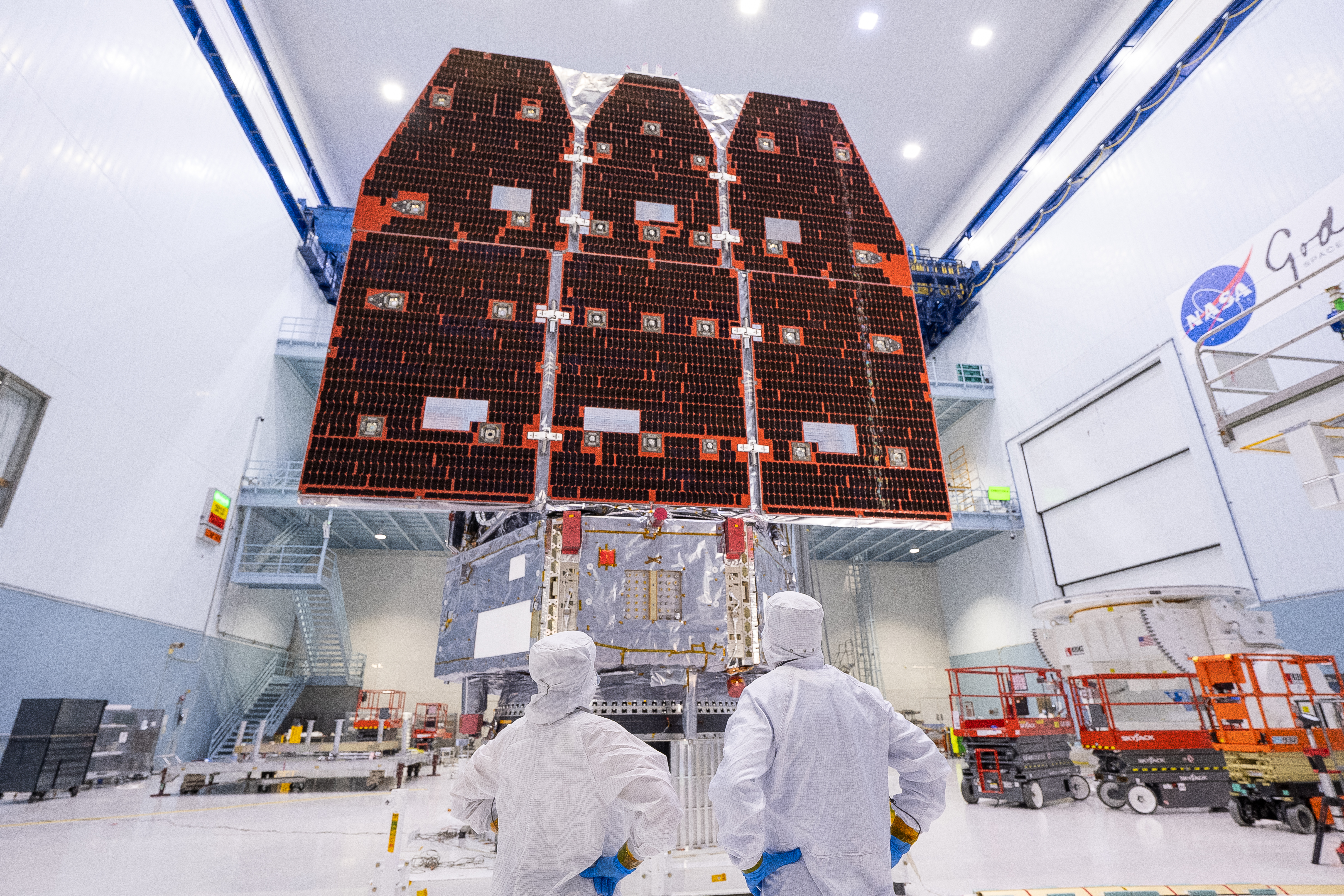
NASA’s Nancy Grace Roman Space Telescope is seen here in the clean room at the agency’s Goddard Space Flight Center in Greenbelt, Maryland, where the observatory was built and tested. Roman’s vast, deep surveys will explore dark matter, dark energy, exoplanets, and almost anything from our own solar system to galaxies at the edge of the observable universe.Credit: NASA/Jolearra TshiteyaCrew-13 is scheduled to launch no earlier than mid-September from Space Launch Complex 40 at Cape Canaveral Space Force Station. The mission will carry NASA astronauts Jessica Watkins and Luke Delaney, CSA (Canadian Space Agency) astronaut Joshua Kutryk, and Roscosmos cosmonaut Sergey Teteryatnikov to the International Space Station for a science and research expedition. This will be NASA’s 13th commercial crew rotation mission with SpaceX’s Falcon 9 rocket and Dragon spacecraft.
NASA’s SpaceX Crew-13 members are pictured in their pressure suits seated inside a mockup Dragon spacecraft during a preflight training session at the company’s headquarters in Hawthorne, California. From left to right, Roscosmos Sergey Teteryatnikov, NASA astronauts Luke Delaney and Jessica Watkins, and CSA (Canadian Space Agency) astronaut Joshua Kutryk. Credit: SpaceX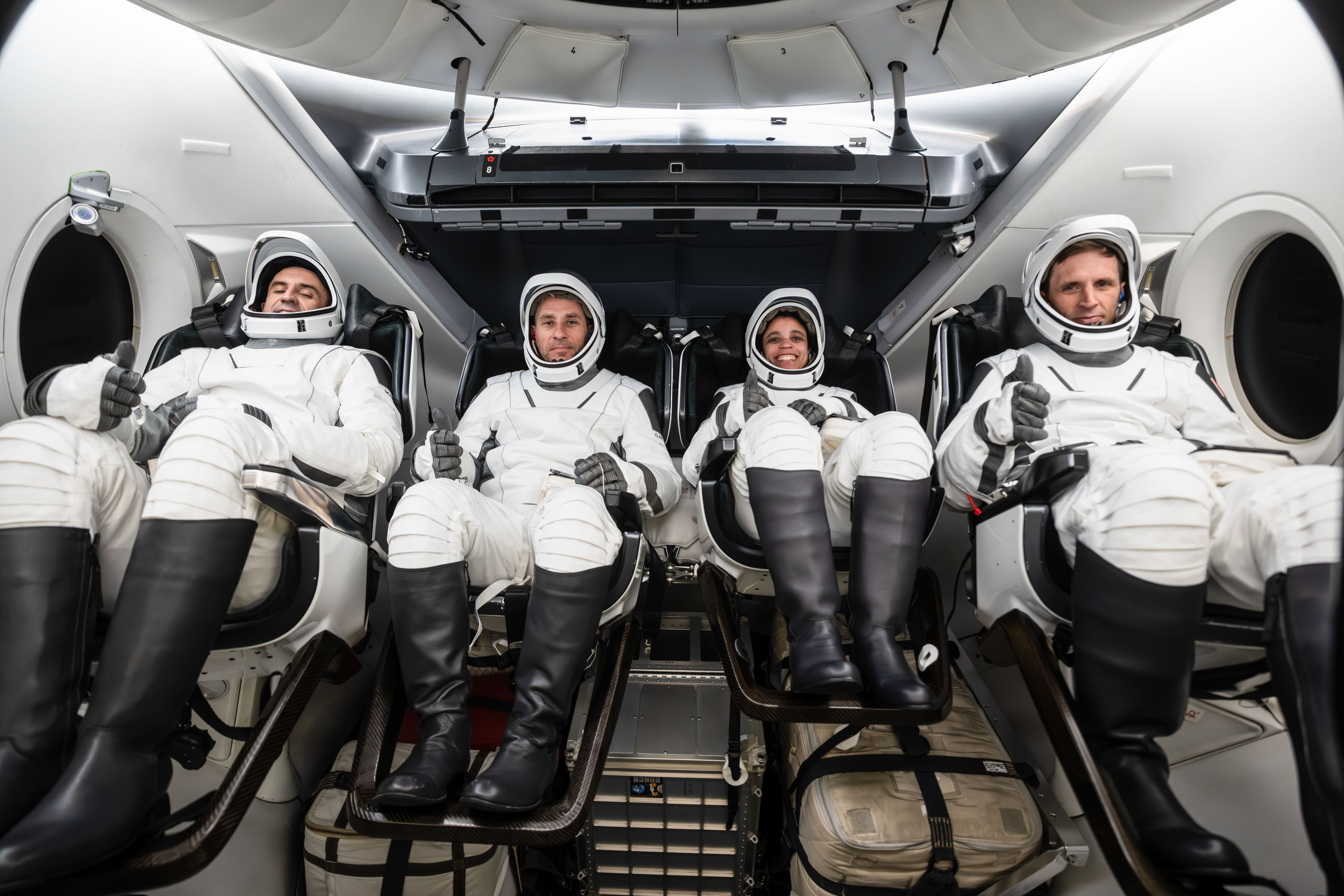
Media interested in attending either or both launches must apply by the following deadlines:
- International media without U.S. citizenship must apply by 11:59 p.m. on Sunday, July 26.
- U.S. media and U.S. citizens representing international media organizations must apply by 11:59 p.m. on Thursday, July 30.
All accreditation requests must be submitted online at:
NASA’s media accreditation policy is online. For questions about accreditation or special logistical requests, email: ksc-media-accreditat@mail.nasa.gov.
For other questions, please contact NASA Kennedy’s newsroom at: 321-867-2468.
For more information about these missions, visit:
-end-
Alise Fisher (Roman) / Joshua Finch (Crew-13)
Headquarters, Washington
202-385-1287 / 202-358-2546
alise.m.fisher@nasa.gov / joshua.a.finch@nasa.gov
Leejay Lockhart (Roman) / Steve Siceloff (Crew-13)
Kennedy Space Center, Fla.
321-747-8310 / 321-867-2468
leejay.lockhart@nasa.gov / steven.p.siceloff@nasa.gov
Claire Andreoli (Roman)
Goddard Space Flight Center, Greenbelt, Md.
301-286-1940
claire.andreoli@nasa.gov
NASA Invites Media to Roman Space Telescope, Crew-13 Launches
Media accreditation now is open for the launch of NASA’s Nancy Grace Roman Space Telescope and the agency’s SpaceX Crew-13 missions, both targeting launch in the coming months.
The Roman telescope is slated to launch no earlier than 7:20 a.m. EDT Sunday, Aug. 30, aboard a SpaceX Falcon Heavy rocket from Launch Complex 39A at NASA’s Kennedy Space Center in Florida. The observatory, named after NASA’s first chief astronomer, will have a deep, panoramic view of the cosmos, generating never-before-seen pictures that will revolutionize our understanding of the universe.
NASA’s Nancy Grace Roman Space Telescope is seen here in the clean room at the agency’s Goddard Space Flight Center in Greenbelt, Maryland, where the observatory was built and tested. Roman’s vast, deep surveys will explore dark matter, dark energy, exoplanets, and almost anything from our own solar system to galaxies at the edge of the observable universe.Credit: NASA/Jolearra TshiteyaCrew-13 is scheduled to launch no earlier than mid-September from Space Launch Complex 40 at Cape Canaveral Space Force Station. The mission will carry NASA astronauts Jessica Watkins and Luke Delaney, CSA (Canadian Space Agency) astronaut Joshua Kutryk, and Roscosmos cosmonaut Sergey Teteryatnikov to the International Space Station for a science and research expedition. This will be NASA’s 13th commercial crew rotation mission with SpaceX’s Falcon 9 rocket and Dragon spacecraft.
NASA’s SpaceX Crew-13 members are pictured in their pressure suits seated inside a mockup Dragon spacecraft during a preflight training session at the company’s headquarters in Hawthorne, California. From left to right, Roscosmos Sergey Teteryatnikov, NASA astronauts Luke Delaney and Jessica Watkins, and CSA (Canadian Space Agency) astronaut Joshua Kutryk. Credit: SpaceXMedia interested in attending either or both launches must apply by the following deadlines:
- International media without U.S. citizenship must apply by 11:59 p.m. on Sunday, July 26.
- U.S. media and U.S. citizens representing international media organizations must apply by 11:59 p.m. on Thursday, July 30.
All accreditation requests must be submitted online at:
NASA’s media accreditation policy is online. For questions about accreditation or special logistical requests, email: ksc-media-accreditat@mail.nasa.gov.
For other questions, please contact NASA Kennedy’s newsroom at: 321-867-2468.
For more information about these missions, visit:
-end-
Alise Fisher (Roman) / Joshua Finch (Crew-13)
Headquarters, Washington
202-385-1287 / 202-358-2546
alise.m.fisher@nasa.gov / joshua.a.finch@nasa.gov
Leejay Lockhart (Roman) / Steve Siceloff (Crew-13)
Kennedy Space Center, Fla.
321-747-8310 / 321-867-2468
leejay.lockhart@nasa.gov / steven.p.siceloff@nasa.gov
Claire Andreoli (Roman)
Goddard Space Flight Center, Greenbelt, Md.
301-286-1940
claire.andreoli@nasa.gov
NASA’s Psyche Mission Images Details of Martian Surface During Flyby
NASA/JPL-Caltech/ASU Photojournal Navigation Downloads NASA’s Psyche Mission Images Details of Martian Surface During Flyby
PNG (4.47 MB)
Description
Captured by the multispectral imager instrument on NASA’s Psyche mission, this is an enhanced-color mosaic created from four individual images acquired on May 15, 2026, during the spacecraft’s flyby of Mars.
Psyche was traveling from right to left (northeast to southwest on Mars) during the six minutes that it took to acquire the images for this mosaic, and the pixel scale resolution varies from 381 meters per pixel on the right to 440 meters per pixel on the left. The imager used its near-infrared, green, and blue filters, which helped to reveal highly contrasting craters, ridges, wind streaks, and volcanic plains materials on the surface.
The mosaic covers part of the Iapygia region of the rugged southern highlands of Mars, from approximately 62 degrees east to 78 degrees east longitude and 4 degrees north to 14 degrees south latitude. The largest crater, just below center, is called Fournier and is about 71 miles (114 kilometers) in diameter. The linear feature running from top to bottom of the mosaic just left of center is part of a long irregular cliff (or scarp) system called Oenotria Scopuli, which is part of the circular structure of the large Isidis impact basin to the northeast of this area.
For more information about NASA’s Psyche mission, visit:
https://science.nasa.gov/mission/psyche/
Keep Exploring Discover More Topics From Photojournal
Photojournal
Search Photojournal
Photojournal’s Latest Content
Feedback
NASA’s Psyche Mission Images Details of Martian Surface During Flyby
NASA/JPL-Caltech/ASU Photojournal Navigation Downloads NASA’s Psyche Mission Images Details of Martian Surface During Flyby
PNG (4.47 MB)
Description
Captured by the multispectral imager instrument on NASA’s Psyche mission, this is an enhanced-color mosaic created from four individual images acquired on May 15, 2026, during the spacecraft’s flyby of Mars.
Psyche was traveling from right to left (northeast to southwest on Mars) during the six minutes that it took to acquire the images for this mosaic, and the pixel scale resolution varies from 381 meters per pixel on the right to 440 meters per pixel on the left. The imager used its near-infrared, green, and blue filters, which helped to reveal highly contrasting craters, ridges, wind streaks, and volcanic plains materials on the surface.
The mosaic covers part of the Iapygia region of the rugged southern highlands of Mars, from approximately 62 degrees east to 78 degrees east longitude and 4 degrees north to 14 degrees south latitude. The largest crater, just below center, is called Fournier and is about 71 miles (114 kilometers) in diameter. The linear feature running from top to bottom of the mosaic just left of center is part of a long irregular cliff (or scarp) system called Oenotria Scopuli, which is part of the circular structure of the large Isidis impact basin to the northeast of this area.
For more information about NASA’s Psyche mission, visit:
https://science.nasa.gov/mission/psyche/
Keep Exploring Discover More Topics From Photojournal
Photojournal
Search Photojournal
Photojournal’s Latest Content
Feedback
The Roman Space Telescope Will Find Ancient Black Holes By Watching How They Eat Stars
When supermassive black holes (SMBH) in a certain mass range eat a star, they first tear it apart in a Tidal Disruption Event (TDE). By detecting TDE across cosmic time, astronomers can chart the growth of SMBH as the Universe aged. The Nancy Grace Roman Space Telescope will help, by finding about 100 TDEs every year.
U.S. cities have the worst air quality in the world right now—here’s how to stay safe
Wildfire smoke may be as much as 10 times more dangerous than other forms of air pollution, research suggests
Scientists are Teaching Shrimp to Eat in Microgravity for Future Moon Bases
As far as we know, food doesn’t exist naturally in space. We have to bring it with us if we want to explore the final frontier. One of the oldest and most common types of food on planet Earth is seafood, yet we know surprisingly little about how aquatic animals would react to the microgravity environment they would experience in space. A new paper by researchers at Japan’s Okayama University of Science, which was recently published in Microgravity Science and Technology, hopes to tackle that question. It used a novel way to simulate microgravity to watch how crustaceans would react to the space environment, and found that they could likely be good candidates as part of a future space food chain.