NASA - Breaking News

Ames Science Stars of the Month – August 2026
The NASA Ames Science Directorate recognizes the outstanding contributions of (pictured left to right) Danielle Lopez, Jennifer Claudio, and Duncan Mifsud. Their commitment to the NASA mission represents the entrepreneurial spirit, technical expertise, and collaborative disposition needed to explore this world and beyond.
Space Biosciences Star of the Month: Danielle LopezDanielle Lopez is the Deputy Project Manager for the Open Science Data Repository with Amentum in the Space Biosciences Division. She is recognized for her management efforts that have been critical to the success of Open Science at NASA including collaborations across directorates at Ames, across NASA centers, and with the public. Danielle has been a critical stabilizing force during challenging and tumultuous times, keeping multiple projects not only on track, but at the forefront of Open Science for the entire Agency.
Space Biosciences Star of the Month: Jennifer ClaudioJennifer Claudio is a research staff member with Blue Marble Space in the Space Biosciences Division. Jennifer has made outstanding contributions in supporting the 2026 GeneLab for High School (GL4HS) summer program. She is recognized for her efficiency and initiative executing the program. Notably, Jennifer swiftly and successfully overcame a security breach of the GL4HS learning platform, demonstrating her resourcefulness and commitment to the program.
Astrophysics Star of the Month: Duncan MifsudDuncan Mifsud is a postdoctoral research scientist for the Bay Area Environmental Research Institute (BAERI) in the Astrophysics Division. Duncan is recognized this month for his exceptional work on the infrared analysis of several laboratory samples produced from the ultraviolet irradiation of soluble organic molecules as well as extraterrestrial sample returned from asteroid Bennu by NASA’s OSIRIS-REx mission.
August 2026 Satellite Puzzler
- Earth
- Earth Observatory
- Image of the Day
- EO Explorer
- Topics
- More Content
- About
NASA Provides Updates on Moon Base Cargo Landers, Tech Demonstrations
6 min read
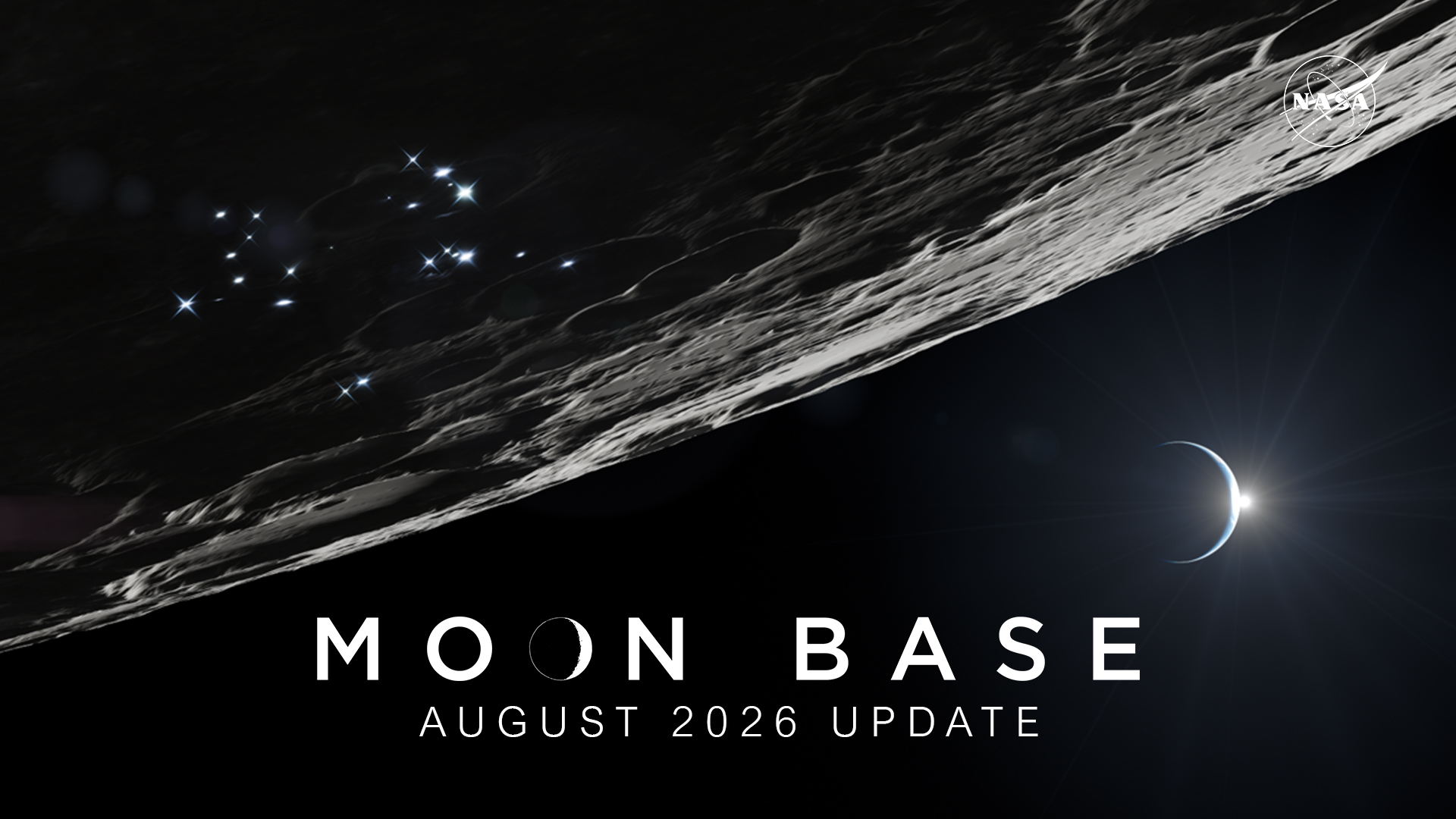
Preparations for Next Moonwalk Simulations Underway (and Underwater) Artist’s rendering of the Moon’s South Pole region. Glowing points of light scattered across the lunar surface represent surface assets supporting sustained human and robotic operations near the South Pole.NASA is making progress in building the Moon Base, which will become a resilient outpost near the Moon’s South Pole for science, technology, and eventual human operations. To advance lunar surface infrastructure development, commercial partners such as Blue Origin, Firefly Aerospace, Intuitive Machines, and Voyager Lunar Systems are working toward delivering landers by 2028. These landers will deliver the foundational architecture for a sustained presence on the Moon. Their progress represents major advances in commercial lunar delivery and lays the groundwork for the systems and surface capabilities the Moon Base will rely on.
Phase I of the Moon Base architecture plan, taking place now through 2029, includes more than twenty robotic landings, with each mission designed to incrementally advance system capabilities and validate operational components for those that follow. Before astronauts arrive, robotic missions will deploy critical scientific instruments that characterize the lunar environment, test new technologies, and begin assembling the infrastructure needed for human habitation.
These early robotic missions also will create opportunities to gather insights and improve the overall reliability of the Moon Base architecture. Recurring deliveries under NASA’s CLPS (Commercial Lunar Payload Services) initiative will play a vital role in building a dependable lunar supply chain, advancing the agency’s efforts toward a permanent human and robotic presence on the Moon.
On Tuesday, NASA released a Moon Base video update offering a closer look at the progress these four companies are making to advance their flights and hardware to further the agency’s Moon Base objectives.
Blue Origin’s Blue Moon MK1 lander is progressing through integrated testing to prepare for its upcoming lunar delivery. This first mission, named Endurance, represents a new class of commercial landers designed to deliver large-scale payloads to the lunar surface. The lander successfully completed an extensive environmental test campaign, including a thermal‑vacuum assessment at NASA’s Johnson Space Center in Houston, verifying its capability to perform under lunar‑like conditions.
Teams are advancing through a series of integration milestones that will lead MK1 into its next test campaign. The structure, propulsion elements, and avionics systems are fully assembled, and upcoming assessments will verify the wiring harnesses connections that enable payload integration. The lander completed communications checkouts with NASA’s Tracking and Data Relay Satellite System and the Deep Space Network. Up next, cryogenic propellants will be loaded as one of the final tests prior to integration for launch. Endurance will demonstrate precision landing capabilities, characterize the lunar environment, and tests autonomous systems for future Moon Base missions.
Firefly AerospaceFirefly’s Blue Ghost Mission 2 builds on its first successful lunar landing with a larger, dual‑spacecraft configuration built specifically for operations on the Moon’s far side. Blue Ghost is stacked on top of Elytra, Firefly’s orbital spacecraft, forming a 22‑foot‑tall system nearly three times the height of the spacecraft flown for Blue Ghost Mission 1 in 2025. With the ability to deploy payloads in orbit and on the lunar surface, Elytra brings added versatility to Moon Base logistics and science.
Planned to be the first American landing on the Moon’s far side, Blue Ghost Mission 2 will explore a uniquely quiet region, allowing study of lunar far side geology and the cosmic Dark Ages, a time when newly-formed stars were just becoming visible. Carrying three NASA payloads, the mission aims to advance scientific research and test technologies for future habitation and infrastructure development.
The autonomous landing sequence demonstrated during its first mission exhibits Firefly’s performance in lunar flight and will play a role in supporting mission operations. Reusing subsystems from the previous mission allows Firefly to accelerate development and reduce risk, supporting Moon Base objectives for scalable and repeatable commercial lander capabilities.
Intuitive MachinesIntuitive Machines’ IM‑3 mission highlights how commercial landers are essential infrastructure to establish the Moon Base. This mission represents Intuitive Machines’ third Nova-C lunar landing on the Moon, and introduces Altus-1, the company’s first lunar data‑relay satellite, which will fly alongside the lander.
Named Trinity, Intuitive Machines’ Nova‑C lander assembly and integration are progressing to help meet the long-term need for regular cargo and science deliveries. The top deck is aligned, and internal wiring is undergoing extensive testing before closeout panels are added. Recently, Intuitive Machines along with the X-Ray Cryogenic Facility crew at NASA’s Marshall Space Center in Huntsville, Alabama successfully completed long-range thermal vacuum testing to confirm that Intuitive Machines’ sensors operate accurately under both ends of the thermal range they may encounter during lunar descent. In the coming weeks, teams will complete the final stages of development, including engine integration and hot fire tests.
By deploying Altus-1 in lunar orbit with its three payloads and delivering five NASA payloads along with six commercial and one civil payload to the surface on IM-3, Intuitive Machines aims to advance Moon Base science objectives in Reiner Gamma’s geomagnetic environment, a magnetic anomaly on the lunar surface. The IM-3 mission will be the first to explore the surface of a lunar swirl, enabling robotics and deployed instruments to deepen the scientific investigation of this mysterious region.
Voyager TechnologiesVoyager Technologies’ Griffin‑1 lander is undergoing testing in the Environmental Test Laboratory at NASA’s Jet Propulsion Laboratory in Southern California, a critical step toward being ready for its mission to the Moon. Testing at NASA JPL verifies commercial lunar landers meet the precision and durability needed to support Moon Base operations.
Griffin-1, built as an infrastructure‑class lander, plans to launch in late 2026 and will transport the largest commercial payload ever delivered to the lunar surface. Five NASA payloads will be mounted on the Astrolab FLIP (FLEX Lunar Innovation Platform) rover that together will enable the mission objective of advancing surface mobility capabilities, technology demonstrations, and long‑duration lunar operations.
Griffin‑1 recently completed mass properties testing, providing fundamental data for guidance, navigation, control, and flight dynamics. Over the next several weeks, additional environmental tests replicating anticipated conditions, from launch through lunar landing, will further reduce mission risk and strengthen readiness for operations in the lunar environment.
Once environmental testing concludes, Griffin‑1 will return to Voyager’s Lunar System Pittsburgh facility for final assembly. The spacecraft will proceed through final launch-readiness operations before being shipped to Cape Canaveral.
Northrop GrummanNASA is working with Northrop Grumman to develop three technology demonstration payloads slated for delivery to the lunar surface. These demonstrations build on power and avionics hardware developed for the Gateway program’s HALO (Habitation And Logistics Outpost) module, now being repurposed following NASA’s shift from an orbital-focused lunar strategy to one centered on surface operations. The initial demonstrations will test survive-the-night systems capable of enduring the Moon’s extreme conditions, including multi-day shadow periods. They also will test shared surface power infrastructure designed to support critical payloads or other Moon Base assets, along with essential avionics and power capabilities.
NASA is advancing development of the Moon Base by pursuing long-term lunar exploration and infrastructure initiatives designed to enable a sustained human presence on the Moon, supported by scientific deliveries and commercial lunar landers.
Facebook logo @NASA@NASASocial@NASAMoonBase @NASA@NASAMoonBase Instagram logo @NASA@NASAMoonBase Linkedin logo @NASA Share Details Last Updated Aug 04, 2026 Related Terms Keep Exploring Discover Related TopicsMissions
Humans in Space
Climate Change
Solar System
Roman Space Telescope Plaque Install
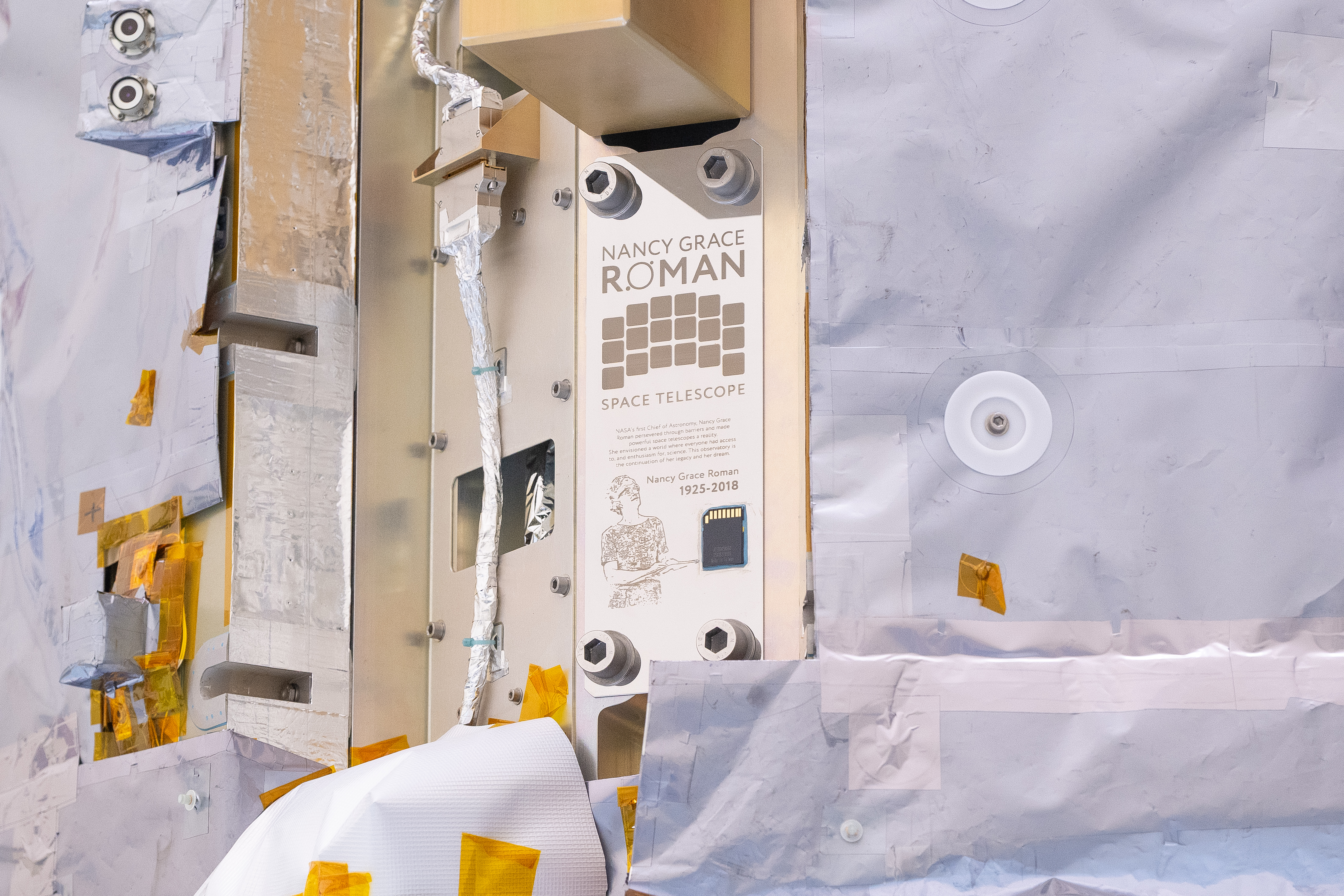
Technicians installed a commemorative plaque, seen in this July 28, 2026, photo, on NASA’s Nancy Grace Roman Space Telescope. The plaque honors the legacy of Dr. Nancy Grace Roman, NASA’s first chief astronomer and one of the architects of the agency’s modern science program. It also features a memory card containing a total of 1,350,144 names submitted by people from across the globe, including astronauts from NASA’s Artemis II and Artemis III missions.
This observatory, scheduled to launch Aug. 30, 2026, will be able to block starlight to directly see exoplanets and planet-forming disks, complete a statistical census of planetary systems in our galaxy, and settle essential questions in the areas of dark energy, exoplanets, and infrared astrophysics.
Image credit: NASA/Jolearra Tshiteya
APOD: 2026 August 4 – Curious Cometary Knots in the Helix Nebula
APOD
Astronomy Picture of the Day
Discover the cosmos! Each day a different image or photograph of our fascinating universe is featured, along with a brief explanation written by a professional astronomer.
Curious Cometary Knots in the Helix NebulaWhat causes unusual knots of gas and dust in planetary nebulas? Seen also in the Ring Nebula, the Dumbbell Nebula and NGC 2392, the knots’ existence was not initially predicted, and their origins are still not well understood. Pictured here is a fascinating image of part of the Helix Nebula by the James Webb Space Telescope showing tremendous detail in infrared light. The cometary knots have masses similar to the Earth but have sizes typically several times the orbit of Pluto. One hypothesis for the fragmentation and evolution of the knots includes existing gas being driven out by a less dense but highly energetic stellar wind of the central evolving star. The Helix Nebula is one of the closest examples of a planetary nebula created at the end of the life of a Sun-like star. Given a technical designation of NGC 7293, the Helix Nebula lies about 650 light-years away towards the constellation of Water Carrier (Aquarius).
Date August 4, 2026 Credit Image: NASA, ESA, CSA, STScI; Image Processing: Alyssa Pagan (STScI) Authors & editors: Robert Nemiroff, Jerry Bonnell, Cecilia Chirenti, Keighley Rockcliffe A service of: ASD at NASA / GSFC,NASA Science Activation & Michigan Tech. U.
Random APOD Generator
Yesterday’s Image APOD: 2026 August 3 – Vaporizing Meteor Photobombs the Lacerta Nebula
Tomorrow’s Image
Smoke Streams Across Eastern Washington
- Earth
- Earth Observatory
- Image of the Day
- EO Explorer
- Topics
- More Content
- About
Louisiana Students Loft Payloads from NASA Balloon Facility in Texas
4 min read
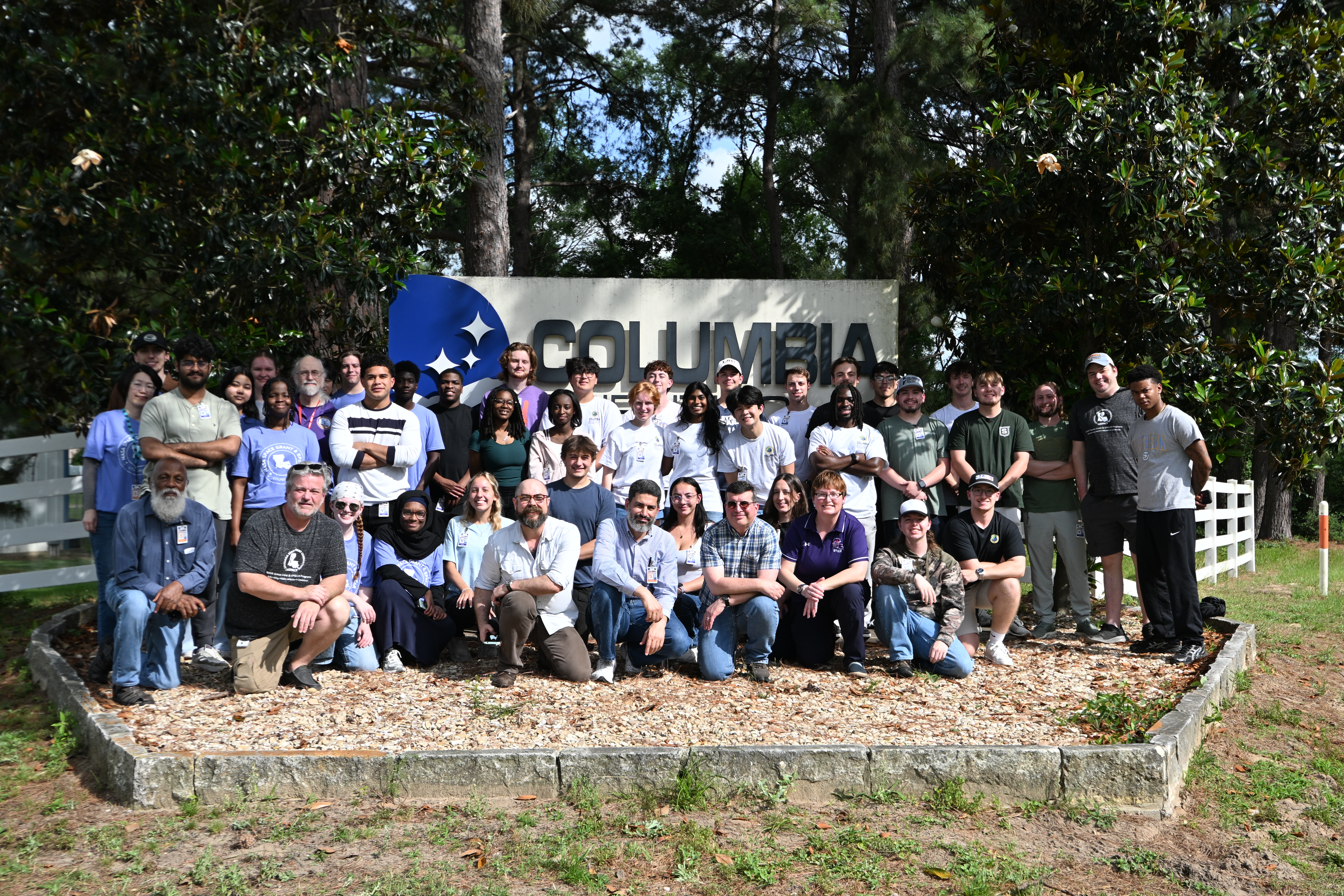
Preparations for Next Moonwalk Simulations Underway (and Underwater)Every spring in Palestine, Texas, the wide-open fields around NASA’s Columbia Scientific Balloon Facility fill with students and faculty from across Louisiana. They arrive carrying sensors, laptops, and carefully engineered payloads they have spent months preparing. The goal is to send their experiments to the edge of space and return with meaningful data, while reflecting NASA’s long-standing commitment to develop future scientists and engineers.
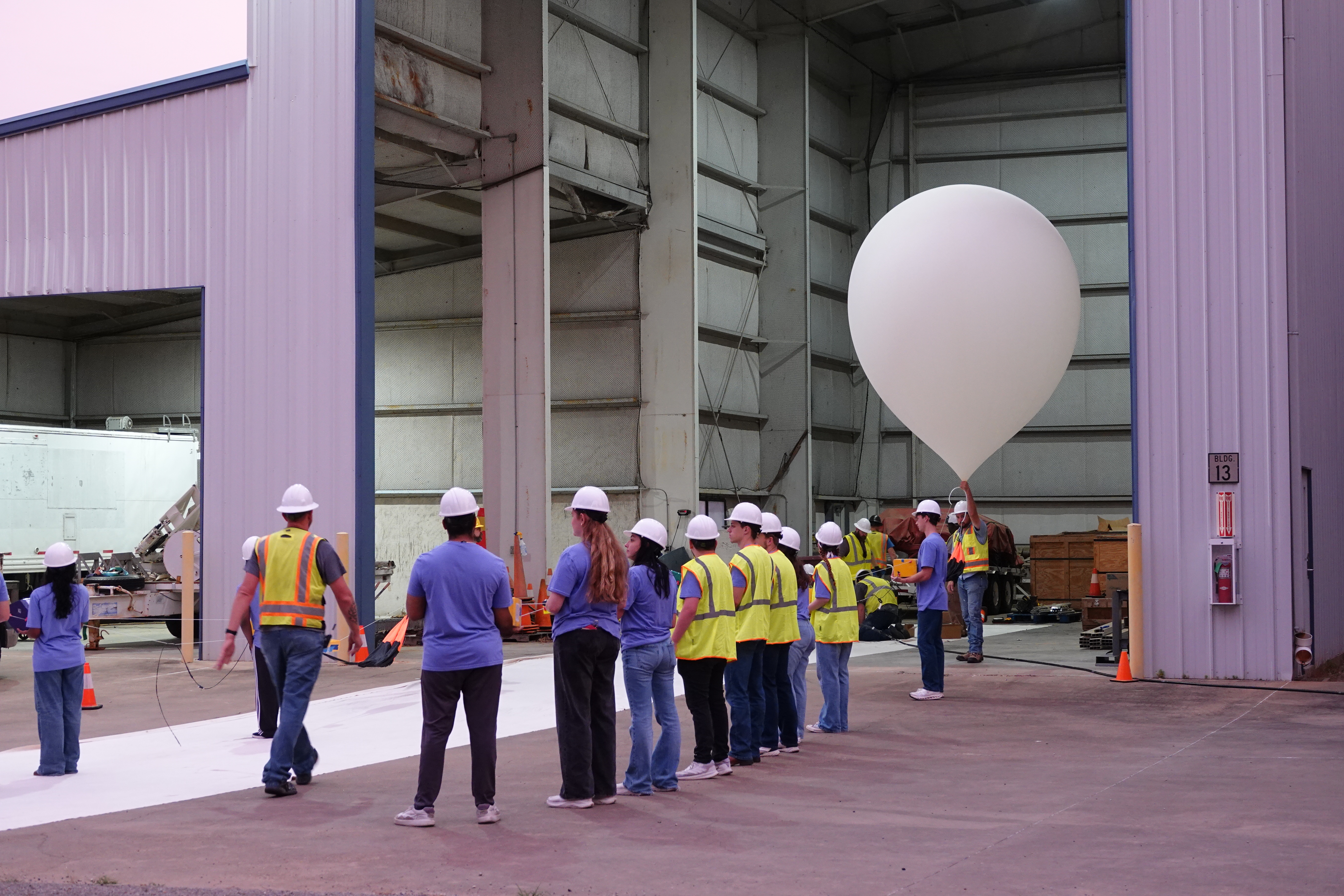
Students in the LaACES program—which provides a robust undergraduate introduction to scientific ballooning—wear hard hats and safety vests while observing the preparation of a large balloonNASANASA’s student programs have long served as an entry point for hands-on exploration, connecting students to the agency’s missions and giving them direct exposure to real aerospace environments. Among these initiatives, the Louisiana Aerospace Catalyst Experiences for Students, also known as LaACES, provides a robust undergraduate introduction to scientific ballooning.
Just after dawn on May 19, student-crafted instruments lifted off smoothly from the flight line, notching the 74th and 75th launches in a long-running collaboration between the facility and Louisiana Space Grant Consortium. The 2026 LaACES campaign consisted of 11 payloads that were designed and built by nine Louisiana university teams — Louisiana State University, Northwestern State, Southeastern Louisiana State, McNeese State, Loyola University, and Southern University, as well as and one high school team, St. Joseph’s Academy, during the weeklong event.
The teams’ scientific objectives included a wide of research, such as atmospheric science, cosmic ray detection, thermal management, ultraviolet characterization, stratospheric wind analysis, and solar cell performance.
Before arriving in Texas, students advanced their mission concepts through a structured sequence of design reviews modeled after NASA’s engineering lifecycle. From preliminary design to flight readiness, each team defended technical decisions, refined their payloads, and demonstrated their readiness for launch.
Once cleared for flight by program directors Doug Granger and Aaron Ryan, who oversee the LaACES initiative, the students shifted their work to Palestine, Texas, where the Columbia Scientific Balloon Facility supported the 2026 LaACES campaign. Facility personnel provided daily weather briefings, performed helium fills for both latex balloons, and offered launch-line guidance to ensure safe and successful operations. “We enjoy being able to support the students’ launches here and hope to help them cultivate a love for ballooning,” said Hugo Franco, operations manager at the balloon facility.
The two flight trains of associated student payloads, LACES-74 and LACES-75, on May 19 marked the start of the program’s first launch window. The balloons, capable of supporting 7- to 9-pound payloads, ascended to near-space altitudes and were monitored using various communication and tracking systems. Both missions completed their flights successfully and were recovered roughly 60 miles north of the launch site near Ben Wheeler, Texas.
“My most memorable experience during the course of this year was seeing the plots for the first time post flight,” said Savannah Matlock, a Louisiana State University student. “When we saw the data behave in the way we’d expected it to, and saw the science we were able to demonstrate, it makes it all worth it. It’s a great feeling to see all of your hard work pay off.”
Following recovery, student teams analyzed their sensor data and environmental measurements and then presented their findings to balloon facility engineers and technicians along with faculty mentors and peers.
Programs like LaACES mirror the operational environment of NASA’s broader Scientific Balloon Program. NASA scientific balloons are more than just “weather balloons”: The reality is far more sophisticated. NASA Columbia Science Balloon Facility supports the launch, tracking, and recovery of large scientific balloons capable of carrying advanced research instruments to the edge of space. These flights support investigations in astrophysics, atmospheric science, planetary research, technology demonstrations, and more.
By placing students in this ecosystem, LaACES acts as a bridge between academic learning and national research operations. Students witness firsthand how scientific experiments are prepared, integrated, launched, tracked, and recovered — experiences that can reshape career paths and open doors to future opportunities within NASA, academia, and aerospace industries.
Funded by NASA’s National Space Grant College and Fellowship program, LaACES is a statewide program of the Louisiana Space Grant Consortium. Since its inception, LaACES has supported more than 500 students across 13 higher‑education institutions, launching over 60 balloon flights and roughly 135 unique payloads. As NASA continues to advance scientific discovery, programs like LaACES help ensure a strong pipeline of future innovators. For these Louisiana students, watching their payload rise into the sky is more than a technical milestone — it is a defining moment, a spark that turns curiosity into possibility.
Share Details Last Updated Aug 03, 2026 Related Terms Explore More 4 min read NASA’s PUNCH Sharpens Solar Storm Forecasting in First TestUsing continuous imagery from NASA’s PUNCH (Polarimeter to Unify the Corona and Heliosphere) mission, scientists…
Article 2 hours ago 4 min read NASA Delivers Navigation System for Commercial Lunar Relay Article 1 day ago 3 min read Students Take on Airborne Field Research with NASAThe gusty wind didn’t make it easy to hold tight to a balloon so large.…
Article 5 days agoGuinea-Bissau Tidal Waters
Twice each day, tides ebb and flow through a maze of sandy channels, mudflats, and mangrove forests that flank the 88 islands and islets of Guinea-Bissau’s Bijagós Archipelago (Arquipélago dos Bijagós in Portuguese). Seen from above in this image from Nov. 28, 2025, the process leads to stark changes to the landscape: around low tide, intertidal mudflats and sandflats emerge from the sea, causing islands to grow significantly before shrinking again hours later.
Learn more about the region and its wildlife.
Text credit: Adam Voiland
Image credit: NASA/Lauren Dauphin, USGS
A Bare Summer for Barnes Ice Cap
- Earth
- Earth Observatory
- Image of the Day
- EO Explorer
- Topics
- More Content
- About
NASA Delivers Navigation System for Commercial Lunar Relay
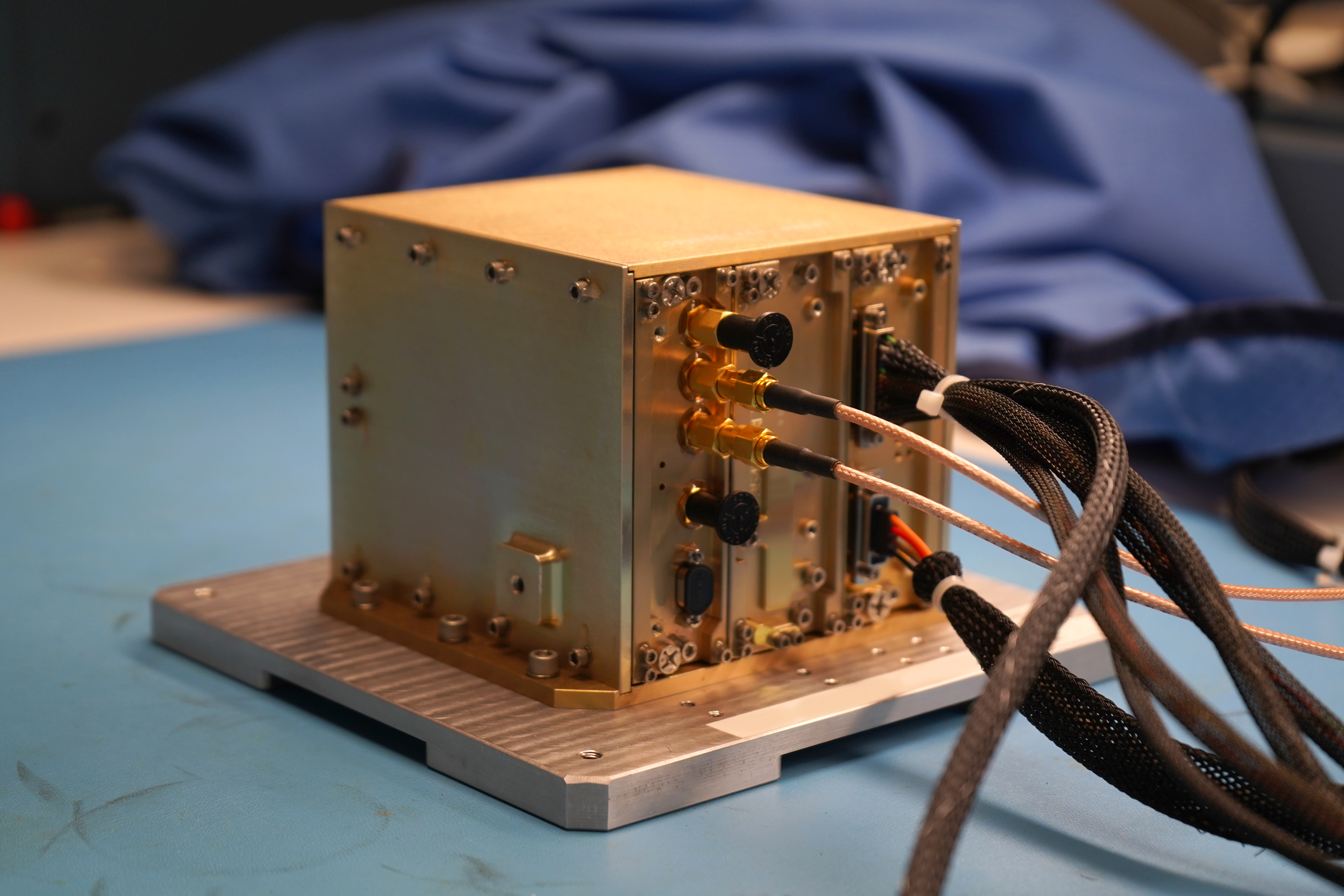
NASA delivered the NavCube3-mini payload on July 13 to Intuitive Machines for integration into Altus-1, the company’s first lunar relay satellite, marking an important milestone in the development of future lunar communications and navigation services. The lunar relays are designed to enable communications and navigation for astronauts and rovers operating at the agency’s future Moon Base.
About half the size of a shoebox and weighing just 3.5 pounds, NavCube3-mini is a compact but powerful navigation receiver designed to use signals from Earth-based GPS and Galileo Global Navigation Satellite Systems (GNSS) at lunar distances. Operating on less than 20 watts of power, roughly the same as a laptop computer, it can determine a spacecraft’s precise position far beyond Earth orbit. The compact payload builds on a series of navigation technology advancements developed at NASA’s Goddard Space Flight Center in Greenbelt, Maryland, each extending GPS navigation to new record-breaking distances from Earth.
NavCube3-mini in the Space Navigation Laboratory at NASA’s Goddard Space Flight Center in Greenbelt, Md., prior to delivery to Intuitive Machines for integration into the Altus-1 lunar relay satellite.NASA/Dave RyanThe payload will fly aboard Intuitive Machines’ Altus-1 lunar relay satellite, the first of a planned network of lunar relay satellites being developed under the company’s Near Space Network Services contract with NASA. The relays will provide communications and navigation support for missions operating at the Moon, including the challenging lunar South Pole region, where Artemis astronauts will land in 2028, and where direct communications with Earth can be difficult. By extending communications coverage and improving navigation services, the relay network will help realize NASA’s vision for a sustained human presence on the lunar surface.
Before being shipped to Intuitive Machines, NavCube3-mini underwent an extensive environmental and performance test campaign at NASA Goddard to verify it is ready for spaceflight. The environmental testing included vibration testing to simulate launch conditions, thermal vacuum testing in the extreme temperatures and vacuum of space, and electromagnetic compatibility testing to ensure the payload can operate reliably alongside other spacecraft systems without causing or experiencing electromagnetic interference. Performance testing was conducted before and after each environmental test using high-fidelity simulations of the GPS and Galileo signals the NavCube will encounter in lunar orbit, verifying functionality and performance throughout the testing campaign.
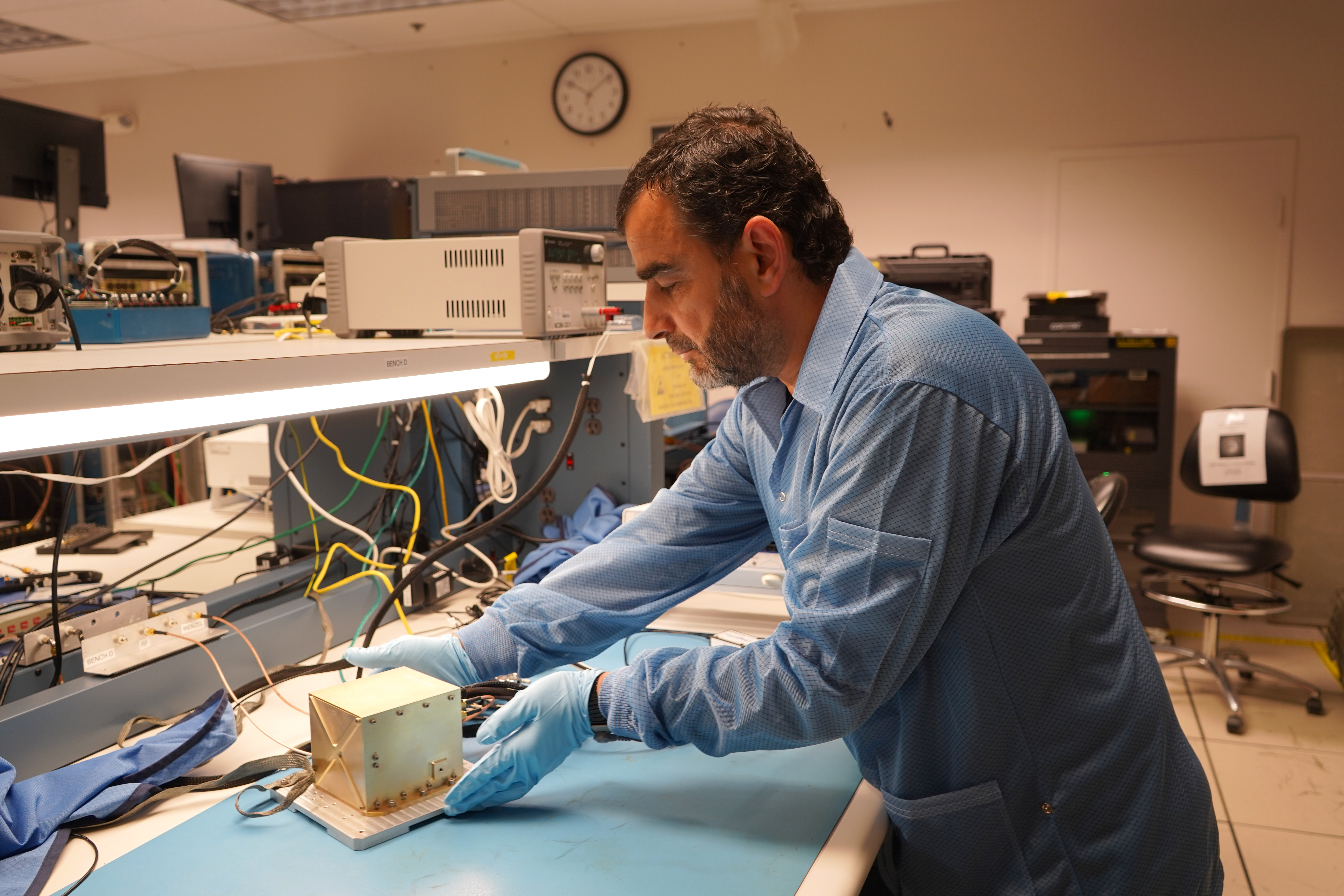
Munther Hassouneh, the NavCube3-mini project manager, in the Space Navigation Laboratory at NASA’s Goddard Space Flight Center in Greenbelt, Md.NASA/Dave RyanNavCube3-mini will serve as a key technology demonstration aboard Altus-1, validating the use of GNSS-based navigation in the lunar region and providing valuable performance data to support the development of future lunar navigation infrastructure. This technology is part of NASA’s broader strategy to develop communications and navigation services that work across both commercial providers and NASA’s networks. These capabilities are designed to support a growing lunar ecosystem that includes orbiters, landers, rovers, and, eventually, astronauts living and working on the Moon.
The delivery of NavCube3-mini marks another step toward building the communications and navigation infrastructure needed for long-term lunar exploration. Through partnerships with commercial providers like Intuitive Machines, NASA is building a more connected and capable lunar environment. As activity around the Moon continues to grow, these capabilities will enable lunar spacecraft and explorers to operate more safely, efficiently, and autonomously.
About the AuthorKatherine SchauerKatherine Schauer is a writer for the Space Communications and Navigation (SCaN) Program office and covers emerging technologies, commercialization efforts, exploration activities, and more.
Share Details Last Updated Aug 03, 2026 EditorKathryn HambletonContactKatherine Schauerkatherine.s.schauer@nasa.govLocationGoddard Space Flight Center Related TermsIke Theriot Helps Prepare Astronauts to Work on the Moon
From serving in the U.S. Army to helping prepare astronauts to explore the lunar surface, Ike Theriot built a path to NASA through discipline and determination.
Theriot serves as the Flight Operations Surface Testing lead in the Exploration Extravehicular Activity Operations Branch within the EVA, Robotics, and Crew Operations Division at NASA’s Johnson Space Center in Houston. He integrates flight operations testing needs across the Artemis program, ensuring teams have the data, procedures, and experience required to prepare astronauts to live and work on the Moon. He is currently transitioning from this role to focus on mission development, astronaut training, and mission execution for the next lunar landing.
Official portrait of Ike Theriot. NASA/Robert Markowitz I help ensure we have the testing needed to meet mission expectations, and the knowledge and experience to train the astronaut corps to meet that mission.Ike Theriot
Flight Operations Surface Testing Lead
Theriot helps develop and execute simulated moonwalks at Johnson and at field locations across the U.S. and internationally. He also helped lead development of the Lunar Grid Reference System, designed specifically for human operations on the Moon and now incorporated into flight control systems.
Theriot plans and executes testing in facilities such as NASA’s Neutral Buoyancy Laboratory and the Space Vehicle Mockup Facility. He often serves as a suited test subject and trains others to become test conductors and test leads, building the next generation of surface operations experts.
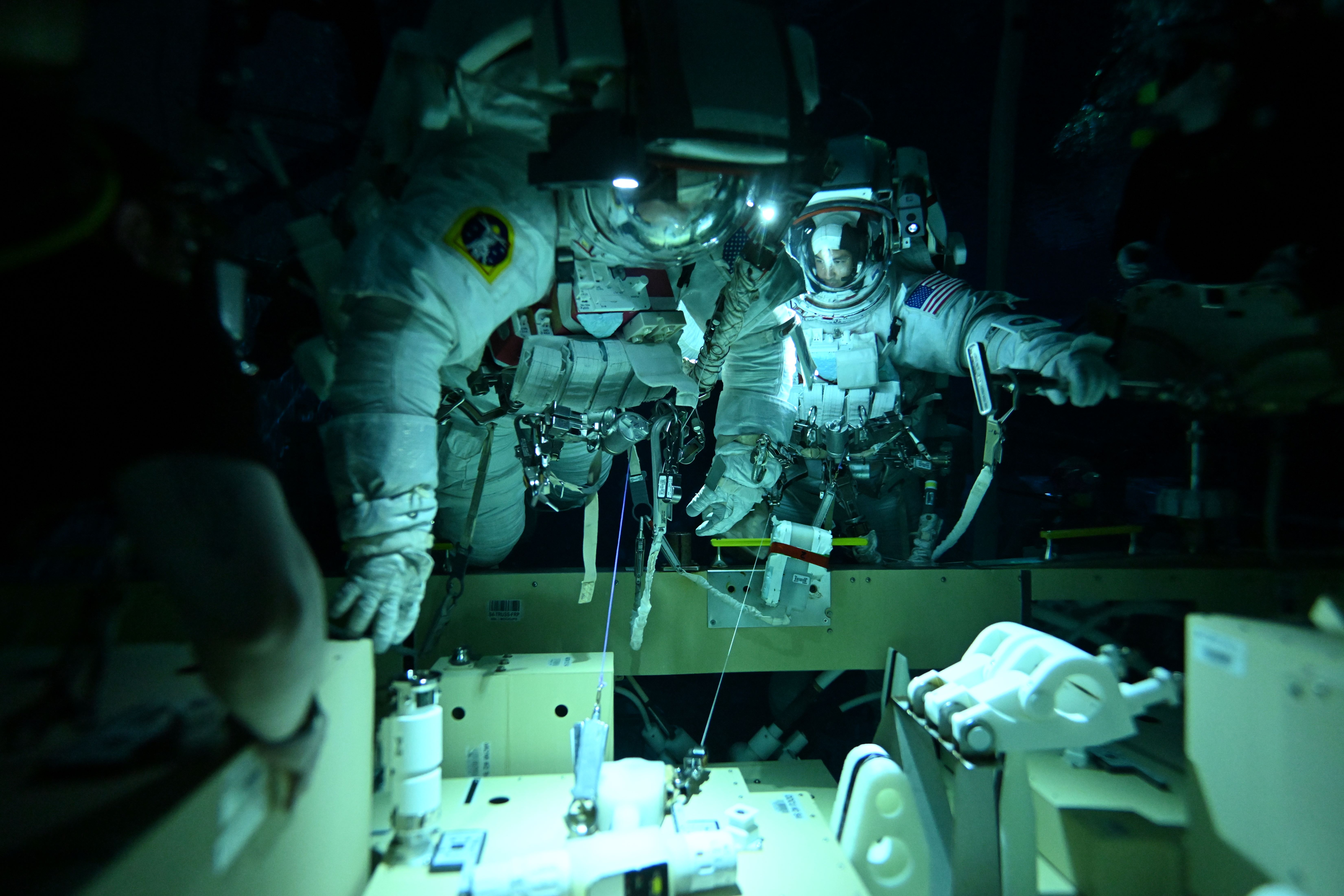
In the Neutral Buoyancy Laboratory, the agency’s 40-foot-deep pool used to simulate microgravity, Theriot has supported International Space Station spacewalk rehearsals and lunar surface testing, helping refine procedures that astronauts will use in orbit and on the Moon.
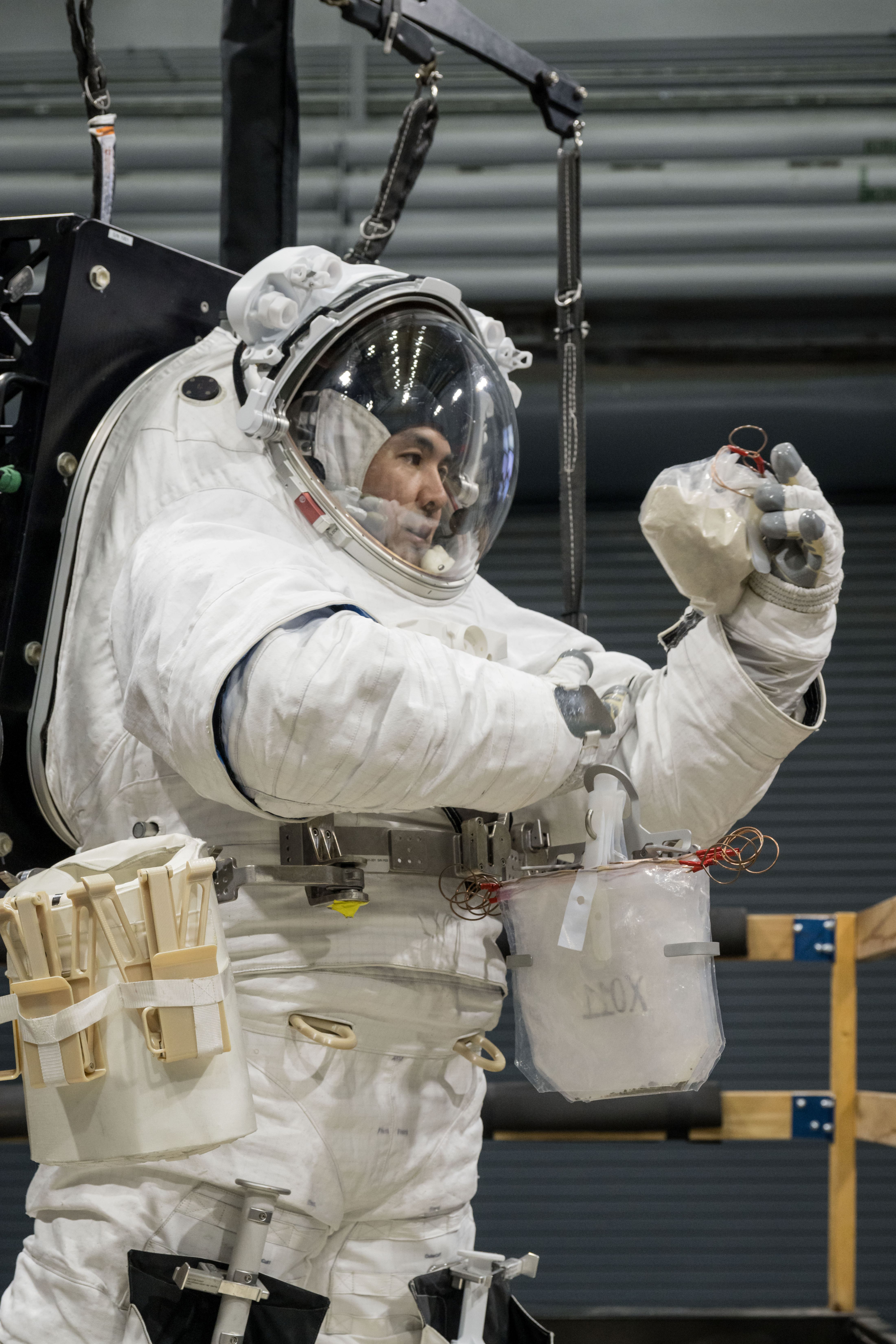
During a nighttime simulation run in NASA’s Neutral Buoyancy Laboratory at Johnson Space Center in Houston, Ike Theriot rehearses and refines procedures for an International Space Station spacewalk. Theriot is in the suit on the right. NASATheriot has supported testing of NASA’s government reference exploration spacesuit design and Axiom Space’s lunar spacesuit, the Axiom Extravehicular Mobility Unit, or AxEMU. In the Active Response Gravity Offload System, known as ARGOS, he practiced geologic sampling operations in the AxEMU, examining a collected sample before stowing it. The system offloads body weight to simulate lunar gravity, allowing teams to refine surface procedures and hardware performance before astronauts step onto the lunar terrain.
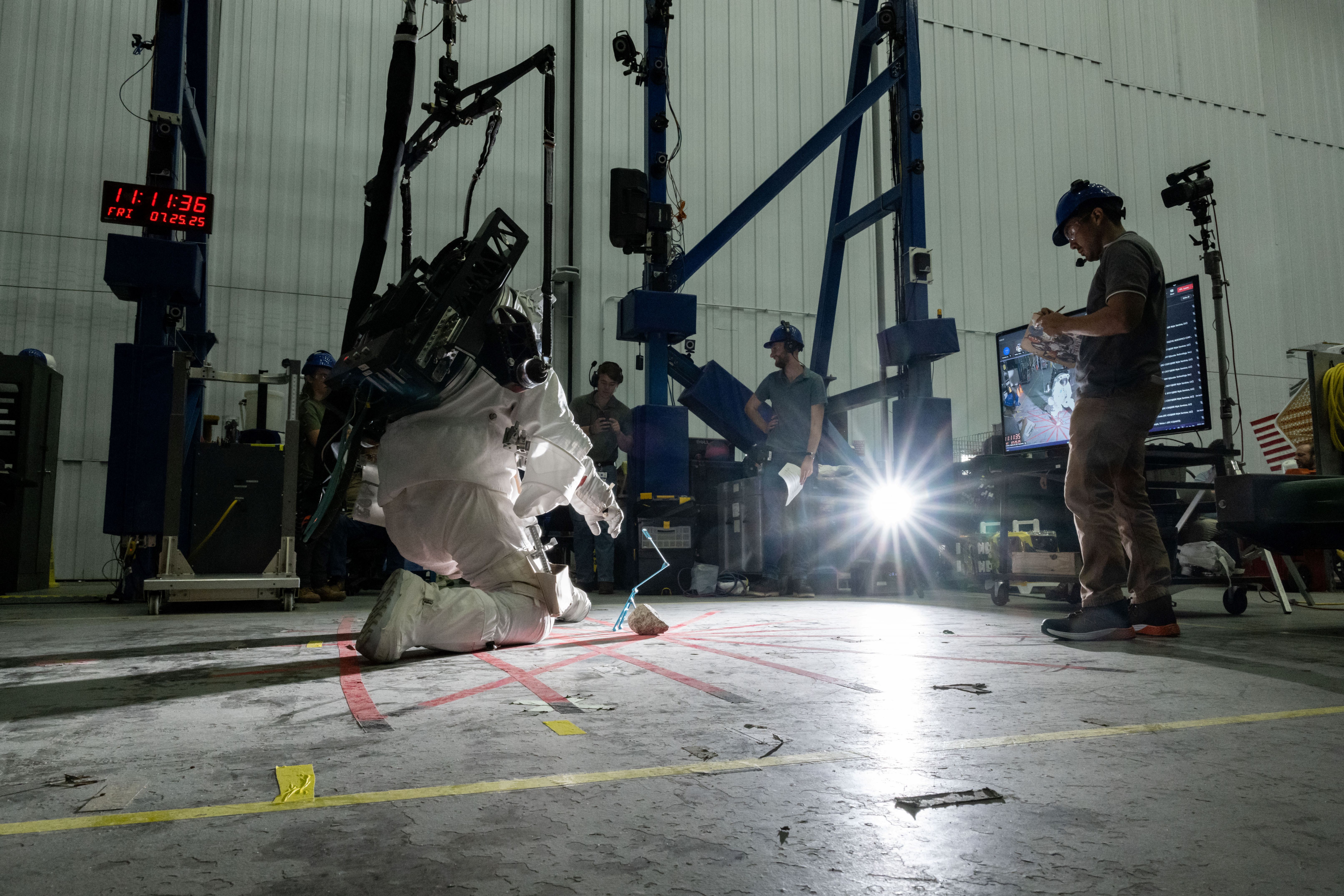
Ike Theriot conducts a geologic sampling test in the Axiom Extravehicular Mobility Unit (AxEMU) in the Active Response Gravity Offload System (ARGOS) at Johnson Space Center. NASAHe has also evaluated new lighting configurations during suited test runs supporting development of Artemis crew training curriculum, assessing how visibility affects safety and task execution in a simulated lunar environment.
Ike Theriot, right, evaluates new lighting configurations during a suited test run in the ARGOS.NASAIn addition, Theriot supports International Space Station spacewalks as a certified flight controller and was recently selected as a capsule communicator, or capcom. He has begun simulation training for that role, where he will serve as the voice between the Mission Control Center and astronauts in low Earth orbit.
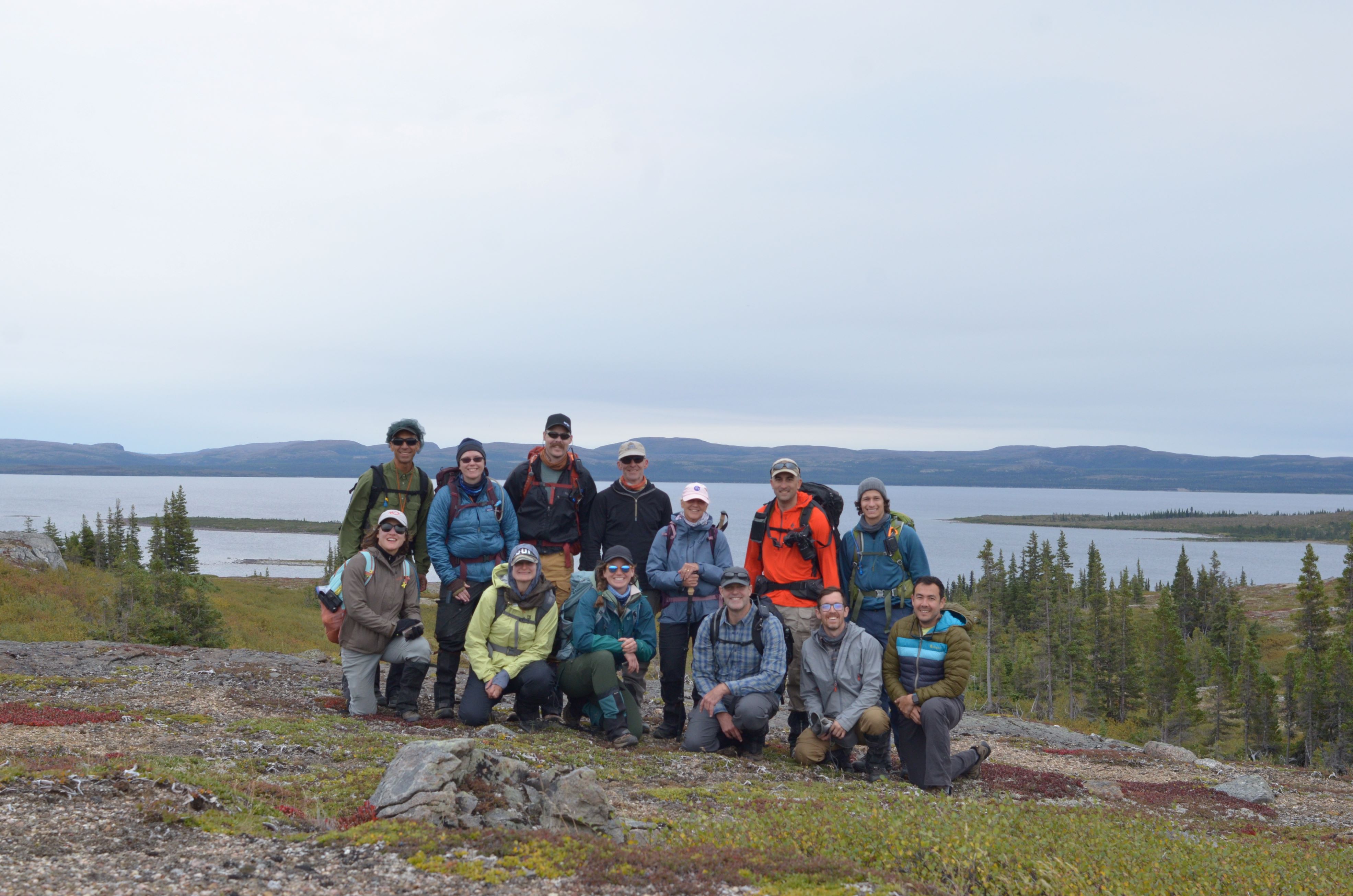
Theriot’s work extends far beyond NASA facilities, into remote environments that mirror the realities of lunar surface operations. During a field campaign at Kamestastin Crater in Labrador, Canada, Theriot trained alongside members of the Artemis II crew. Formed approximately 36 million years ago, the impact crater provides terrain similar to areas astronauts may encounter on the Moon and offers valuable geology training in a remote environment accessible only by boat.
Ike Theriot stands with Artemis II team members atop the central uplift of Kamestastin Crater in Labrador, Canada, during a field geology training exercise. The impact crater provides lunar-like terrain used to prepare astronauts for future Artemis surface missions. NASA The hardest parts of our job is creating the environment to allow technical work to flourish. That means getting people to agree on a course of action, communicating well, supporting your team, and making long-term investments in people.Ike Theriot
Flight Operations Surface Testing Lead
Theriot’s interest in space began while deployed overseas with the Army. In Iraq, he was tasked with setting up a satellite transceiver that failed on first power-up. After observing technicians perform field repairs, he began taking online engineering courses in his spare time, studying orbital mechanics, circuit design, cryptography, and space power systems. Later, while deployed to Afghanistan, he spent evenings stargazing and tracking the space station as it passed overhead.
After leaving the Army, Theriot earned a mechanical engineering degree from the University of Houston and secured an internship at Johnson in 2016, rotating between engineering and flight operations teams. He accepted a full-time position in 2019, just as NASA announced plans to return astronauts to the Moon under the Artemis program.
His most valued achievements involve setting others up for growth and success. Several years ago, Theriot created a Field Navigation Exercise at Challenger 7 Memorial Park in Houston to strengthen lunar surface navigation skills. As surface operations planning accelerated, he recognized many had limited field experience. He built the exercise and mentored others to lead it.
More recently, he served as test conductor for a major lunar spacesuit test series in the Neutral Buoyancy Laboratory, spending months refining procedures and coordinating teams. On one occasion, the 19th Field Navigation Exercise and a Neutral Buoyancy Laboratory test run occurred on the same day. Both were led by people he had trained. Theriot took the day off.
For him, that was success.
Over time, his perspective on leadership has evolved. Early in his career, he believed the hardest challenges were technical. Now, he believes the greater challenge is providing the leadership and guidance that enable technical work to succeed.
For the mission to the Moon and beyond, Theriot hopes the agency demonstrates something larger than exploration alone.
“Each day presents a new and interesting challenge, and I can feel myself growing to meet those challenges,” he said. “Through the Artemis missions, like the Apollo missions, I hope we can all show the world that impossible things can happen.”
About the AuthorSumer Loggins Share Details Last Updated Jul 29, 2026 Related Terms Explore More 4 min read NASA Brings Space Exploration to the FIFA World Cup Article 9 hours ago 7 min read NASA Johnson Interns Shaping the Future of Exploration Article 5 days ago 6 min read NASA Science Soars During August Total Solar EclipseEditor’s note: An update to this story was made on July 30, 2026, to share…
Article 1 week ago Keep Exploring Discover More Topics From NASAMissions
Humans in Space
Climate Change
Solar System
NASA Brings Space Exploration to the FIFA World Cup
From June 11 through July 19, NASA’s free interactive exhibit at FIFA Fan Festival™ brought space exploration to soccer fans in East Downtown Houston.
More than 500,000 visitors explored the exhibit during the tournament, learning how the agency’s missions, research, and technology benefit life on Earth.
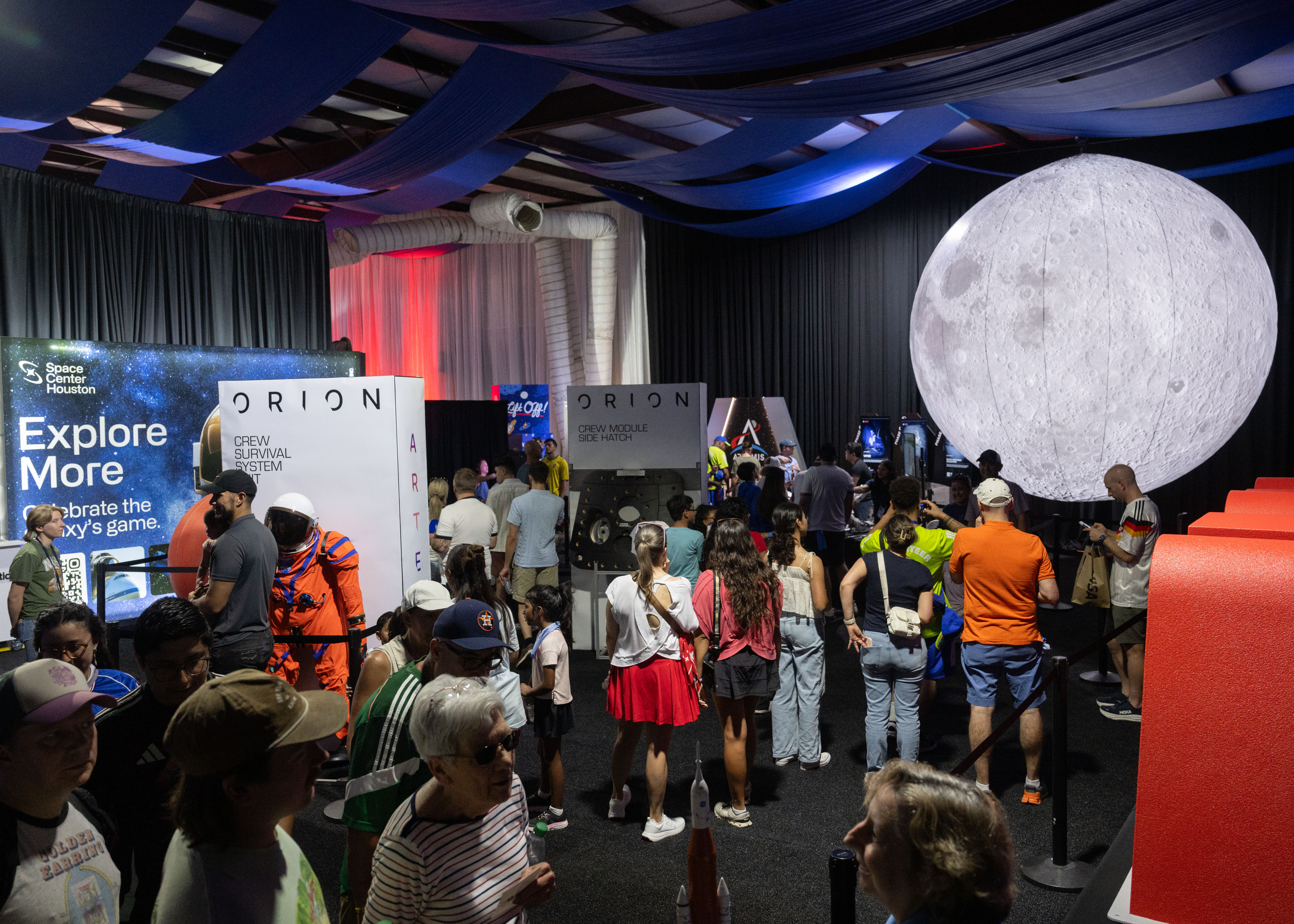
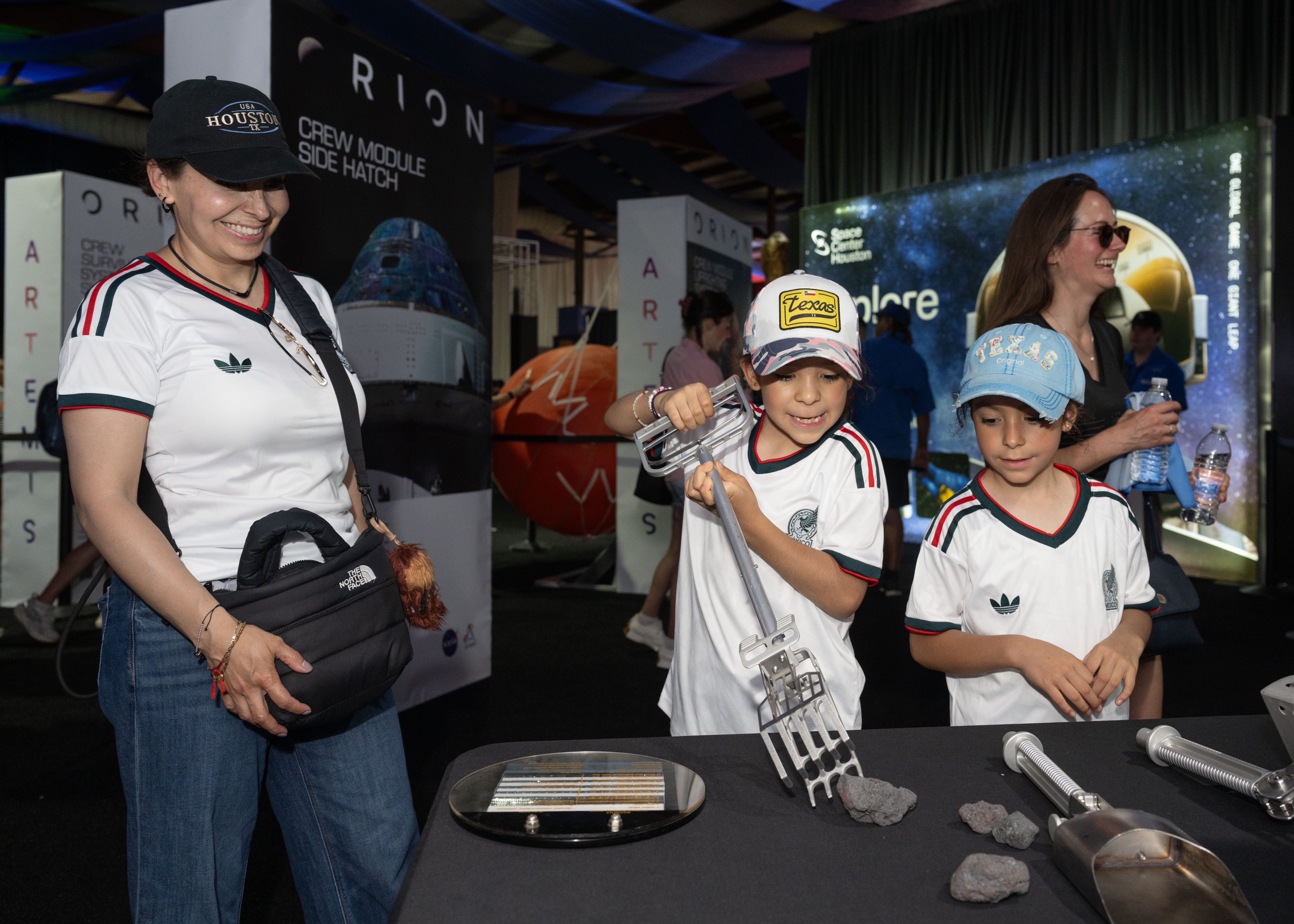
FIFA Fan Festival visitors explore NASA’s exhibit. NASA/Luna Posadas NavaThe exhibit introduced a global audience to the Artemis program, Moon Base, the International Space Station, and the future of human space exploration.
Attendees learn about NASA’s missions at the agency’s FIFA Fan Festival exhibit in East Downtown Houston. NASA/Luna Posadas NavaWorld Cup fans explored an Orion spacecraft exhibit, an International Space Station model, NASA’s Orion Crew Survival System suit, astromaterials, Hubble Space Telescope imagery, the Lunar and Mars Touch Table exhibit, a space-flown FIFA World Cup soccer ball, Space Center Houston activities, photo opportunities, and other hands-on experiences.
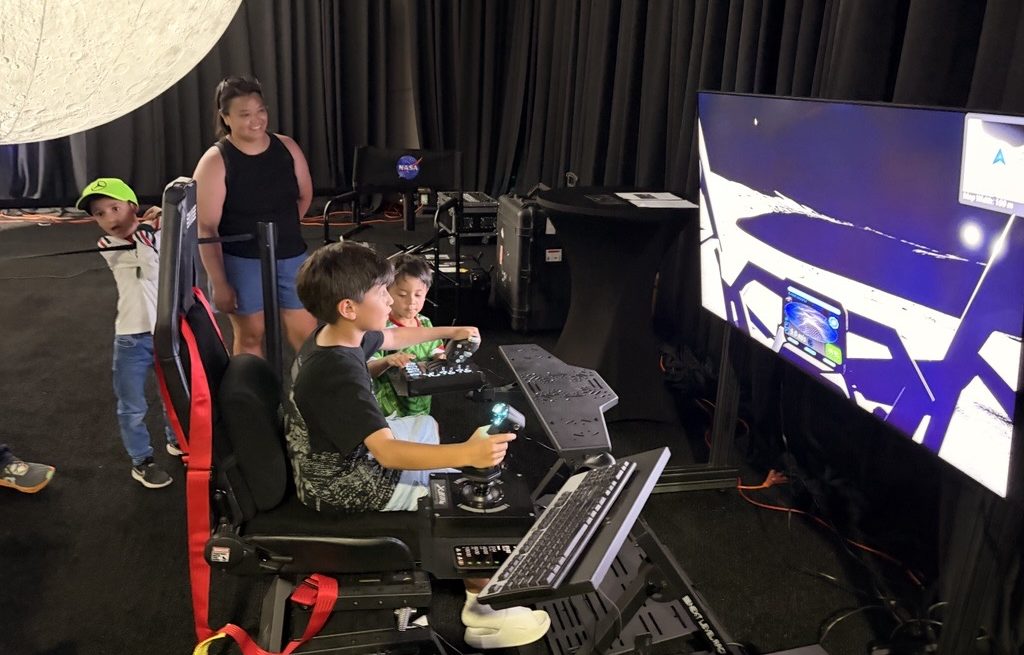
Visitors practice driving on the lunar surface in a lunar rover simulator at the agency’s exhibit during FIFA Fan Fest. NASAAttendees also climbed into a lunar rover simulator to drive across a virtual lunar surface, explored a Moon Base display demonstrating how astronauts could live and work on the Moon during future Artemis missions, and examined lunar tools designed to support Artemis exploration.
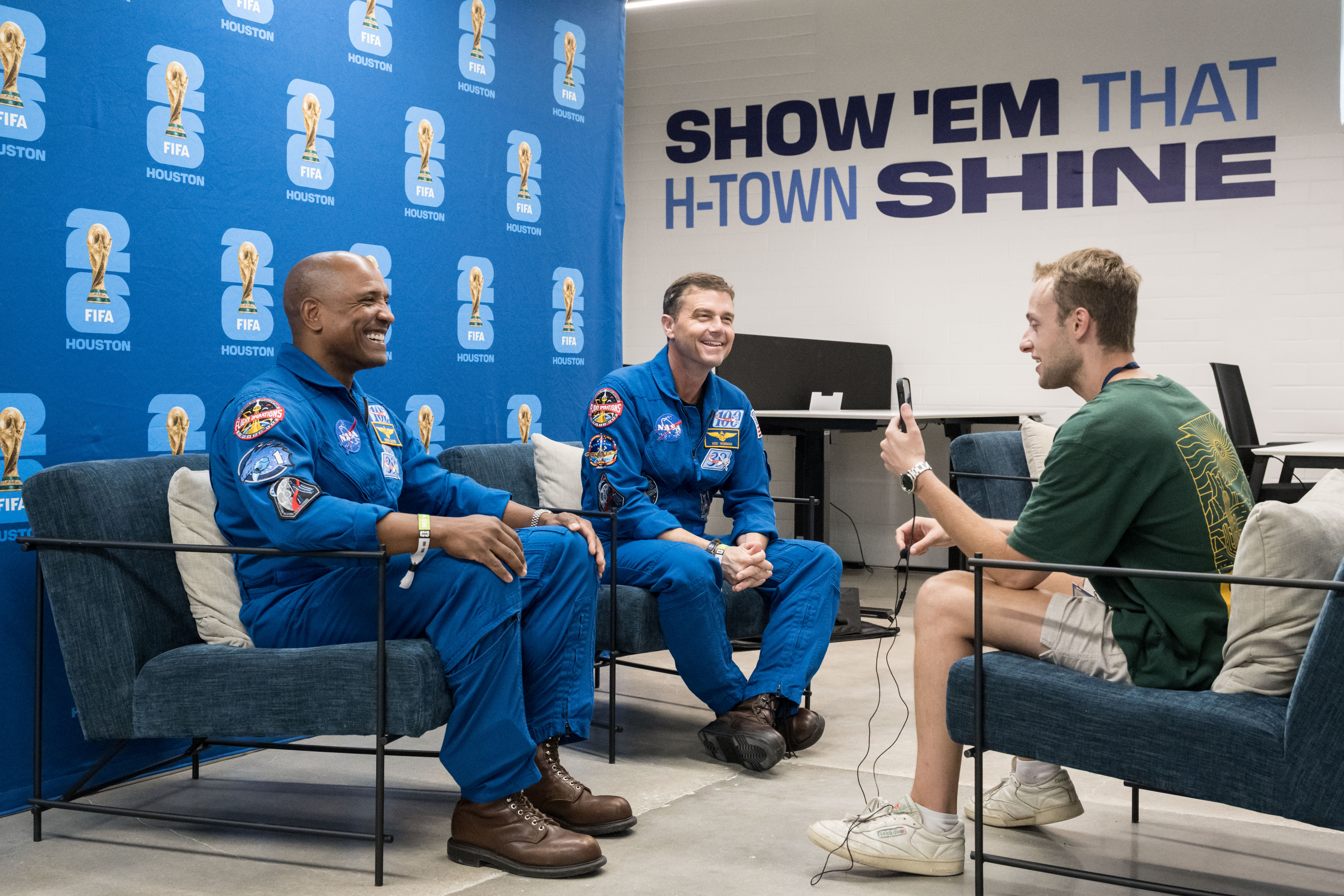
NASA’s Artemis II Commander Reid Wiseman and Pilot Victor Glover were honored guests at NRG Stadium in Houston before the match between the Netherlands and Sweden on June 20, 2026.Sebastian Widmann/Getty ImagesThe tournament welcomed special guests, as well. On June 20, Artemis II Commander Reid Wiseman and Pilot Victor Glover participated in World Cup activities as the stadium captains ahead of the Netherlands-Sweden match at NRG Stadium, where they received a standing ovation from more than 67,000 fans.
While the weather prevented them from appearing on the FIFA Fan Festival main stage, the pair shared their experiences through media interviews.
Artemis II crew members Victor Glover and Reid Wiseman participate in an interview at FIFA Fan Fest headquarters on June 20, 2026. NASA/Helen Arase VargasNASA also highlighted the connection between space exploration and soccer through a STEMonstration developed in collaboration with Adidas. Filmed aboard the space station, the demonstration shows how the same physics that govern motion in space also shape the game on Earth.
Expedition 74 crew members kicked off FIFA Fan Festival with a prerecorded welcome message that aired on opening day. Throughout the tournament, the crew recorded greetings that played during matches and at Fan Festival events across the United States and Mexico.
ESA (European Space Agency) astronaut Sophie Adenot joined the celebration by recording a “Viking Row” aboard the space station. ESA astronauts Andreas Mogensen and Marcus Wandt participated from the ground in a playful tribute connecting fans on Earth with life in orbit.
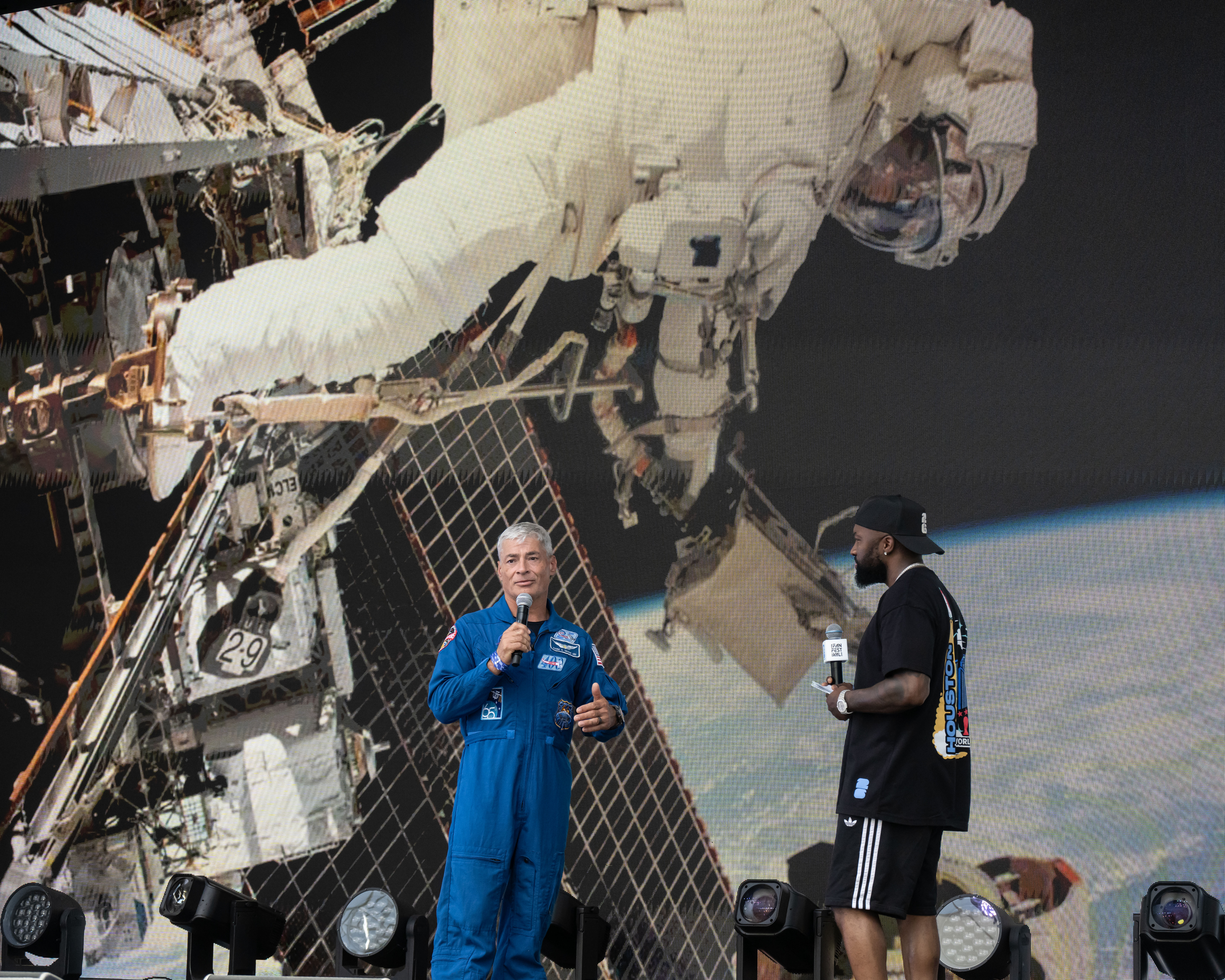
NASA astronaut Mark Vande Hei speaks to fans before kicking the ceremonial soccer ball at FIFA Fan Fest on July 19, 2026. NASA/Robert MarkowitzAfter nearly 40 days of showcasing NASA’s missions to soccer fans from around the world, FIFA Fan Fest concluded with a final message from the Expedition 74 crew during the official closing ceremony. On the ground, NASA astronaut Mark Vande Hei took the Fan Festival stage to share his journey to becoming an astronaut, his first view of Earth from space, and how the focus required for a spacewalk mirrors the concentration soccer players need on the field. He then kicked the ceremonial soccer ball, bringing NASA’s participation in the festival to a close.
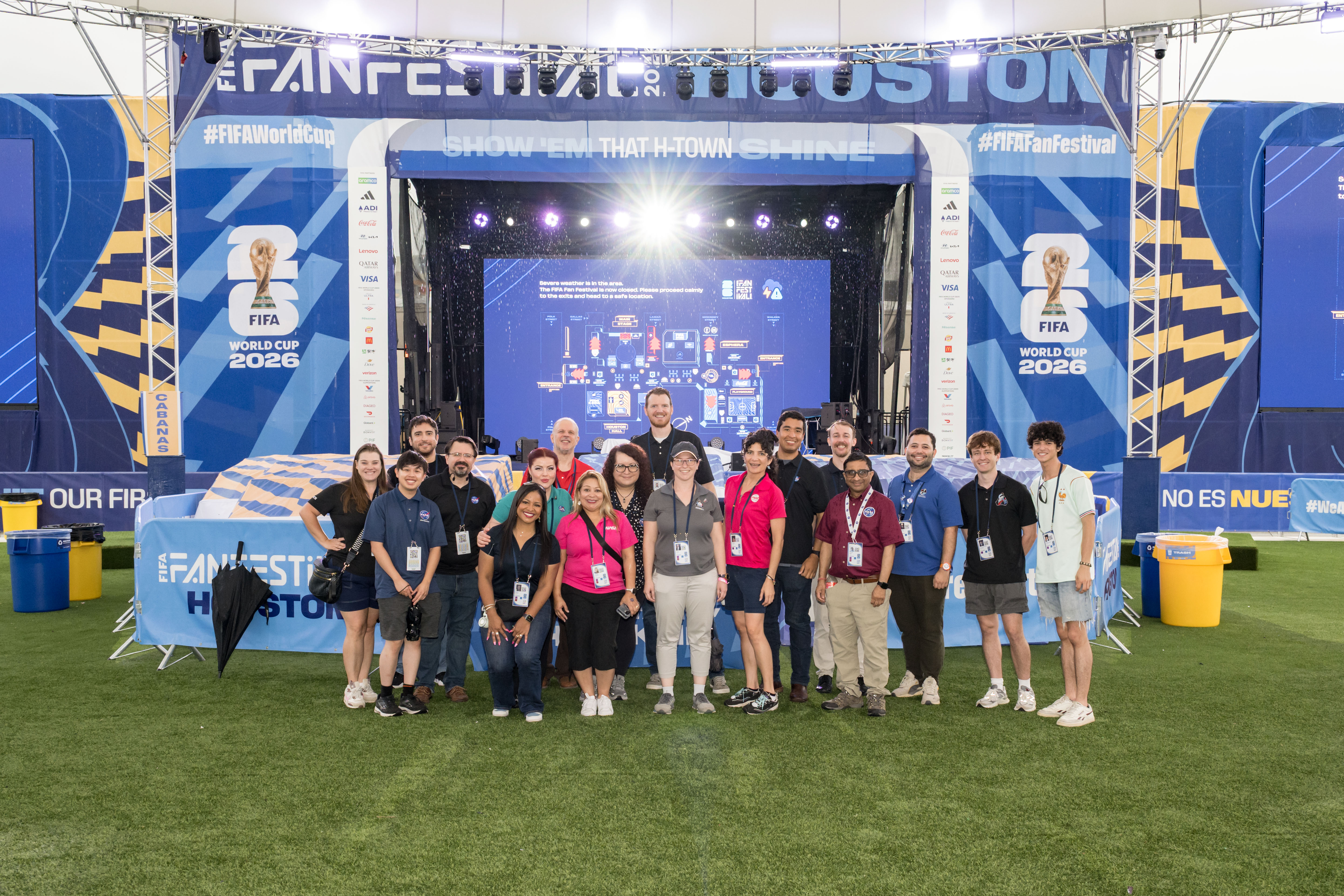
NASA’s Johnson Space Center volunteers pose for a group photo at FIFA Fan Fest. NASA/Helen Arase Vargas“We could not have done this without the incredible NASA team who volunteered,” said Jessica Cordero, Johnson community engagement lead. “They connected with fans and shared the excitement of Artemis III and NASA’s return to the Moon. They are truly the best volunteer crew on the planet!”
Explore NASA’s Exhibit NASA’s exhibit at FIFA Fan Festival.NASA/Luna Posadas Nava About the AuthorSumer Loggins Share Details Last Updated Aug 03, 2026 Related Terms Explore More 5 min read Ike Theriot Helps Prepare Astronauts to Work on the Moon Article 9 hours ago 7 min read NASA Johnson Interns Shaping the Future of Exploration Article 5 days ago 6 min read NASA Science Soars During August Total Solar EclipseEditor’s note: An update to this story was made on July 30, 2026, to share…
Article 1 week ago Keep Exploring Discover More Topics From NASAMissions
Humans in Space
Climate Change
Solar System
APOD: 2026 August 3 – Vaporizing Meteor Photobombs the Lacerta Nebula
APOD
Astronomy Picture of the Day
Discover the cosmos! Each day a different image or photograph of our fascinating universe is featured, along with a brief explanation written by a professional astronomer.
Vaporizing Meteor Photobombs the Lacerta Nebula
Explanation: What’s happening to this meteor? This bright meteor streak appeared and disappeared quickly during a long exposure of the Great Lacerta Nebula, seen faintly in red toward the center of the image. The meteoroid, likely a small pebble, creates its glow partly by heating and exciting surrounding air in Earth’s atmosphere, but itself vaporizes and leaves wind-blown gas and dust with colors that give clues to its composition. The featured image was captured last month from Death Valley Observatories in Nevada, USA. This month, though, is particularly good for seeing meteors. Presently there are three meteor showers ongoing, although they are currently competing for visibility with the glow of a bright gibbous Moon. The most active of these showers, the Perseids, will be busiest in about 10 days — after the Moon has dimmed considerably. This year, the Perseids peak nearly coincides with not only a new Moon, but, from some locations, one that totally eclipses the Sun.
Sky Surprise: What picture did APOD feature on your birthday? (>1995)
Tomorrow’s picture: open space…
NASA Science Activation & Michigan Tech. U. Random APOD Generator Yesterday’s Image APOD: 2026 August 2 – A Fire Rainbow over West Virginia Tomorrow’s Image
APOD: 2026 August 2 – A Fire Rainbow over West Virginia
APOD
Astronomy Picture of the Day
Discover the cosmos! Each day a different image or photograph of our fascinating universe is featured, along with a brief explanation written by a professional astronomer.
A Fire Rainbow over West Virginia
Explanation: What’s happening to this cloud? Ice crystals in a distant cirrus cloud are acting like little floating prisms. Known informally as a fire rainbow for its flame-like appearance, a circumhorizon arc appears parallel to the horizon. For a circumhorizontal arc to be visible, the Sun must be at least 58 degrees high in a sky where cirrus clouds present below — in this case cirrus fibratus. The numerous, flat, hexagonal ice-crystals that compose the cirrus cloud must be aligned horizontally to properly refract sunlight in a collectively similar manner. Therefore, circumhorizontal arcs are somewhat unusual to see. The featured fire rainbow was photographed in 2021 near North Fork Mountain in West Virginia, USA.
Tomorrow’s picture: meteoric photobomb
NASA Science Activation & Michigan Tech. U. Random APOD Generator Yesterday’s Image APOD: 2026 August 1 – Buck Moon and Belt of Venus Tomorrow’s Image APOD: 2026 August 3 – Vaporizing Meteor Photobombs the Lacerta Nebula
APOD: 2026 August 1 – Buck Moon and Belt of Venus
APOD
Astronomy Picture of the Day
Discover the cosmos! Each day a different image or photograph of our fascinating universe is featured, along with a brief explanation written by a professional astronomer.
Buck Moon and Belt of Venus
Explanation: The Buck Moon is a traditional name for the full moon of July. In this colorful Adriatic sea and skyscape captured on July 28 from Krk Island along the coast of Croatia, a full Buck Moon is just rising over distant mountains. Since a full moon rises as the Sun sets, Earth’s shadow also rises in the twilight scene, a diffuse gray band extending above the mountainous southeastern horizon. Above Earth’s shadow band is the pinkish antitwilight arch. That subtly tinted band of backscattered sunlight is more widely known as the Belt of Venus. As it shares the eastern horizon with the atmospheric shadow of Earth and Belt of Venus, this full Buck Moon seems to set the stage for the New Moon to come. The New Moon of August 12 will cast its own shadow on planet Earth in a much anticipated total solar eclipse.
Tomorrow’s picture: fire and rainbow
NASA Science Activation & Michigan Tech. U. Random APOD Generator Yesterday’s Image APOD: 2026 July 31 – NGC 4372 and the Dark Doodad Tomorrow’s Image APOD: 2026 August 2 – A Fire Rainbow over West Virginia
What’s Up: August 2026 Skywatching Tips from NASA
A solar eclipse, the Perseids, bright Venus after sunset, and a deep partial lunar eclipse highlight August’s skywatching.
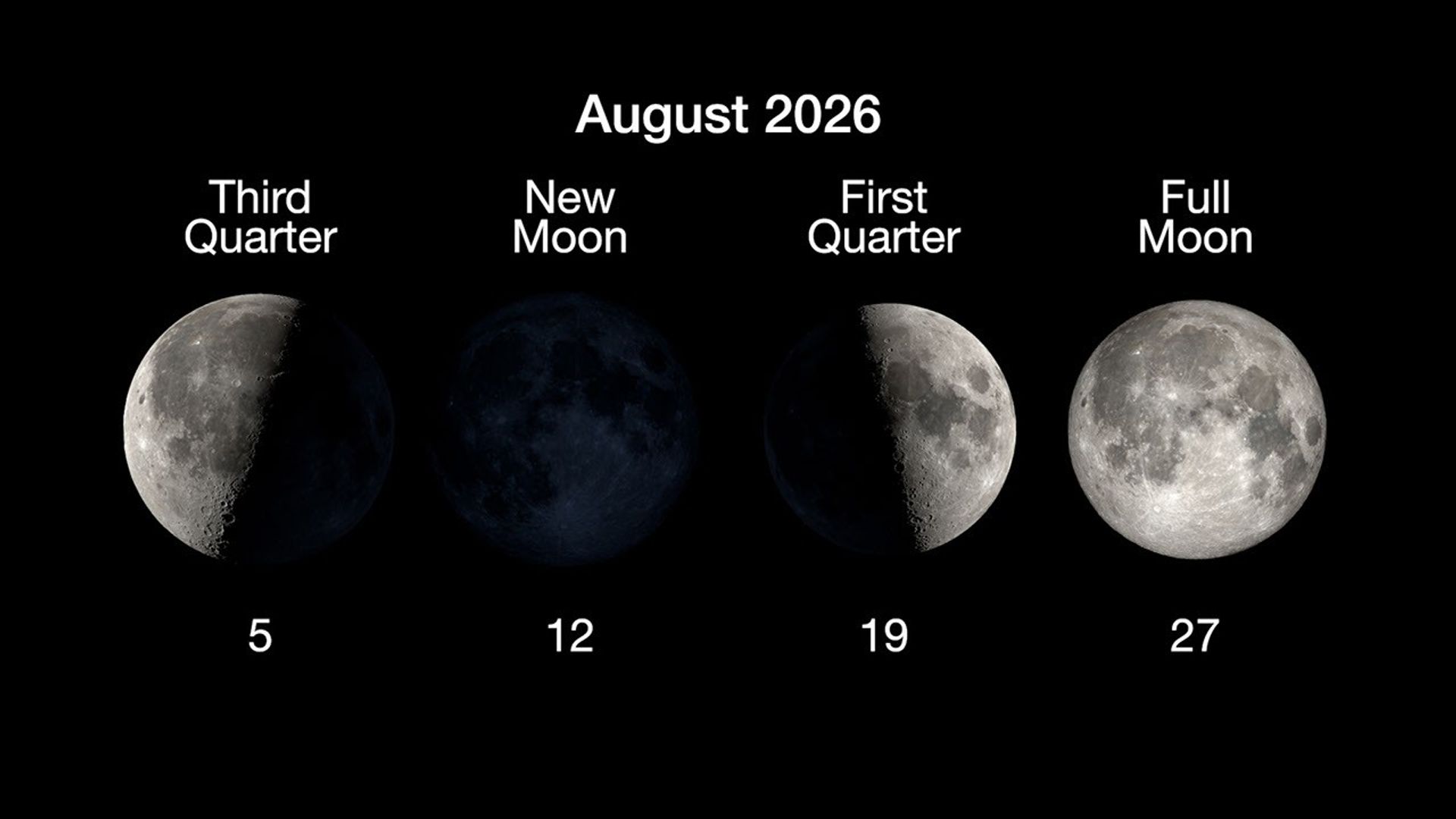
Skywatching Highlights- Aug. 5: Last Quarter Moon
- Aug. 12: Total solar eclipse across northern Russia, Greenland, Iceland, northern Spain, and part of Portugal; partial eclipse in parts of the U.S.; New Moon
- Aug. 12-13: Perseid meteor shower peak under dark skies
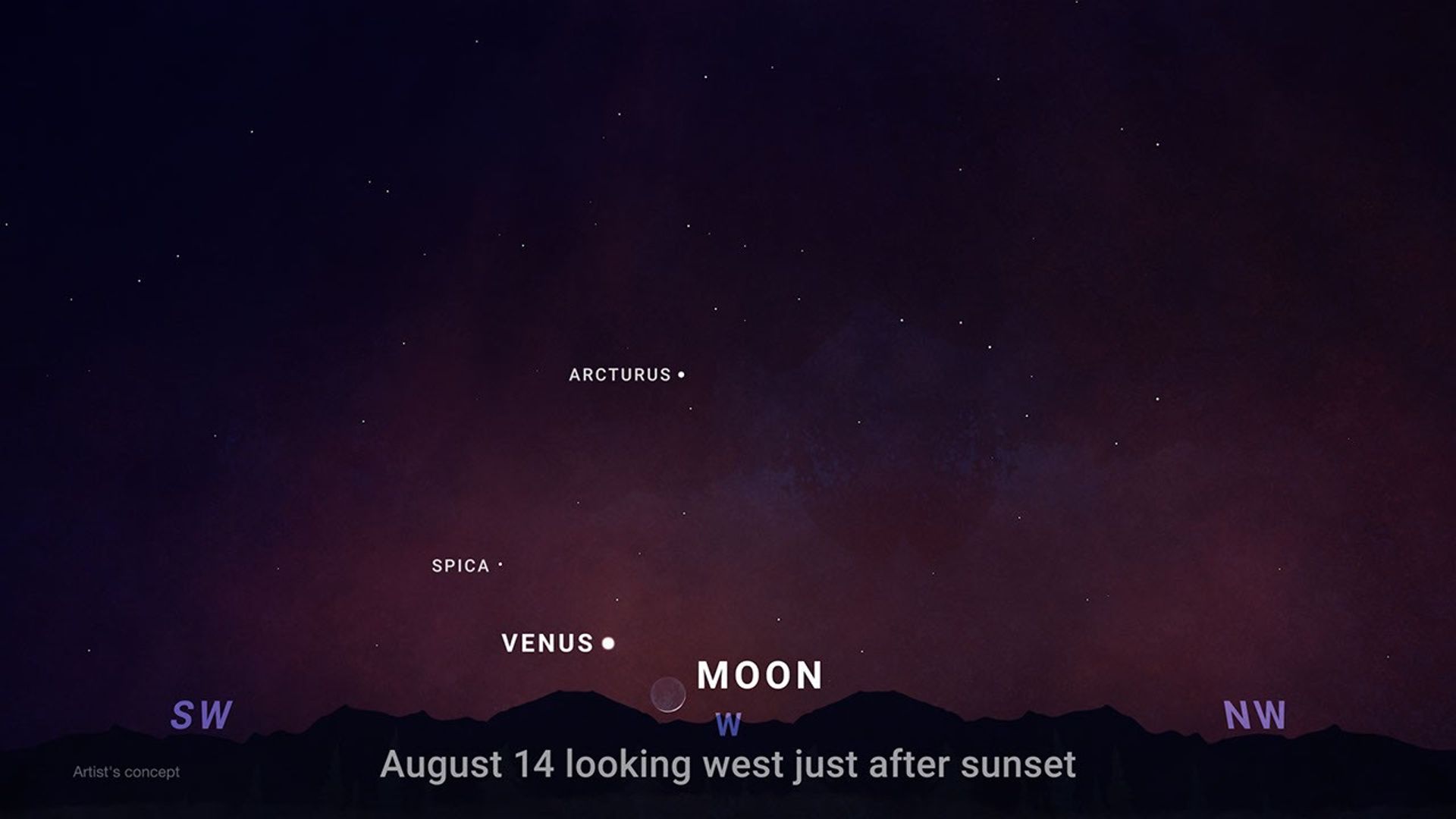
- Aug. 14-16: Venus reaches greatest eastern elongation and shines low in the west after sunset
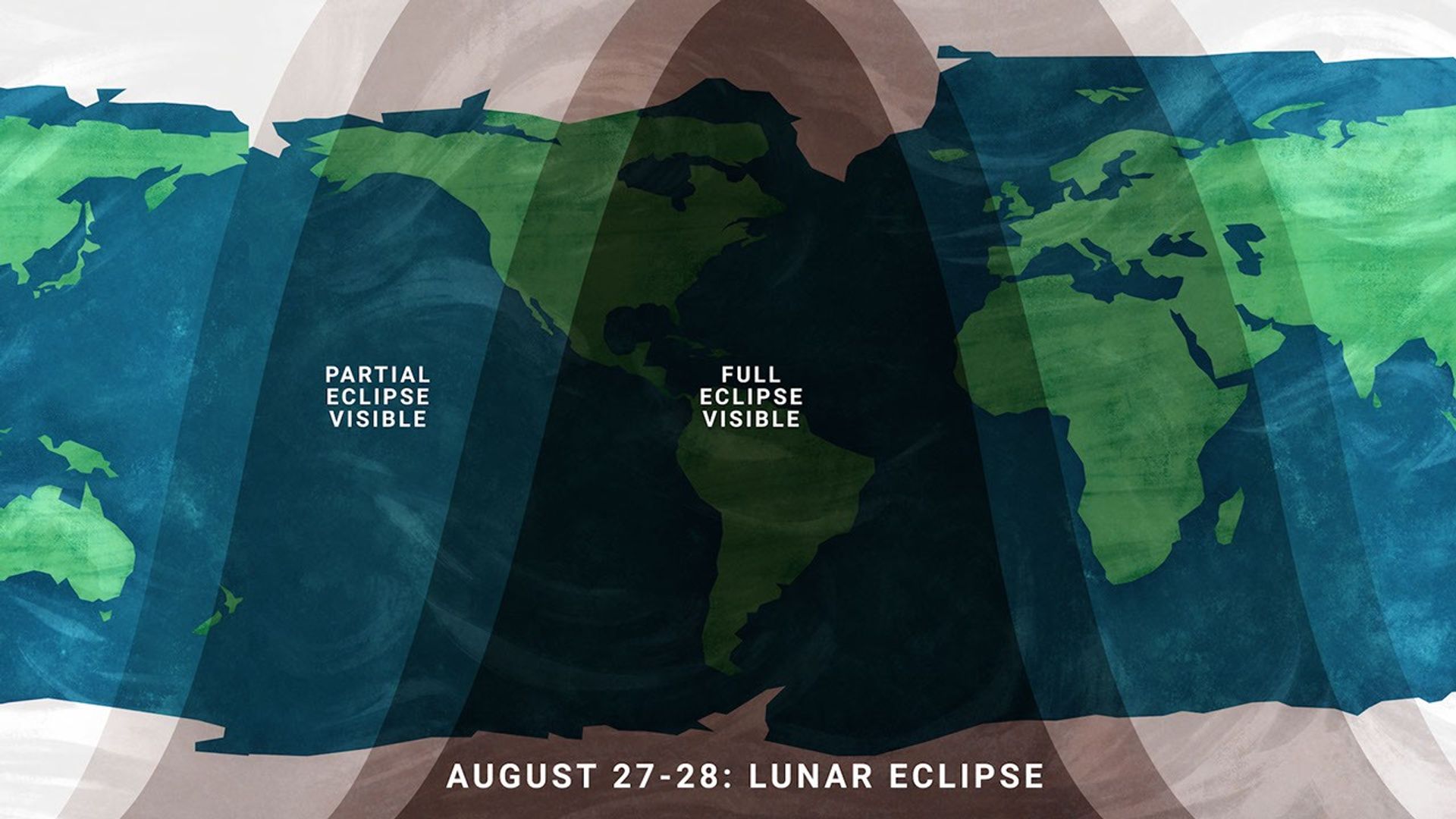
- Aug. 27-28: Partial lunar eclipse visible from much of North and South America and parts of Europe and Africa
A solar eclipse, one of the year’s best meteor showers, Venus at its brightest in the evening sky, and a lunar eclipse to close out the month.
That’s “What’s Up” for August.
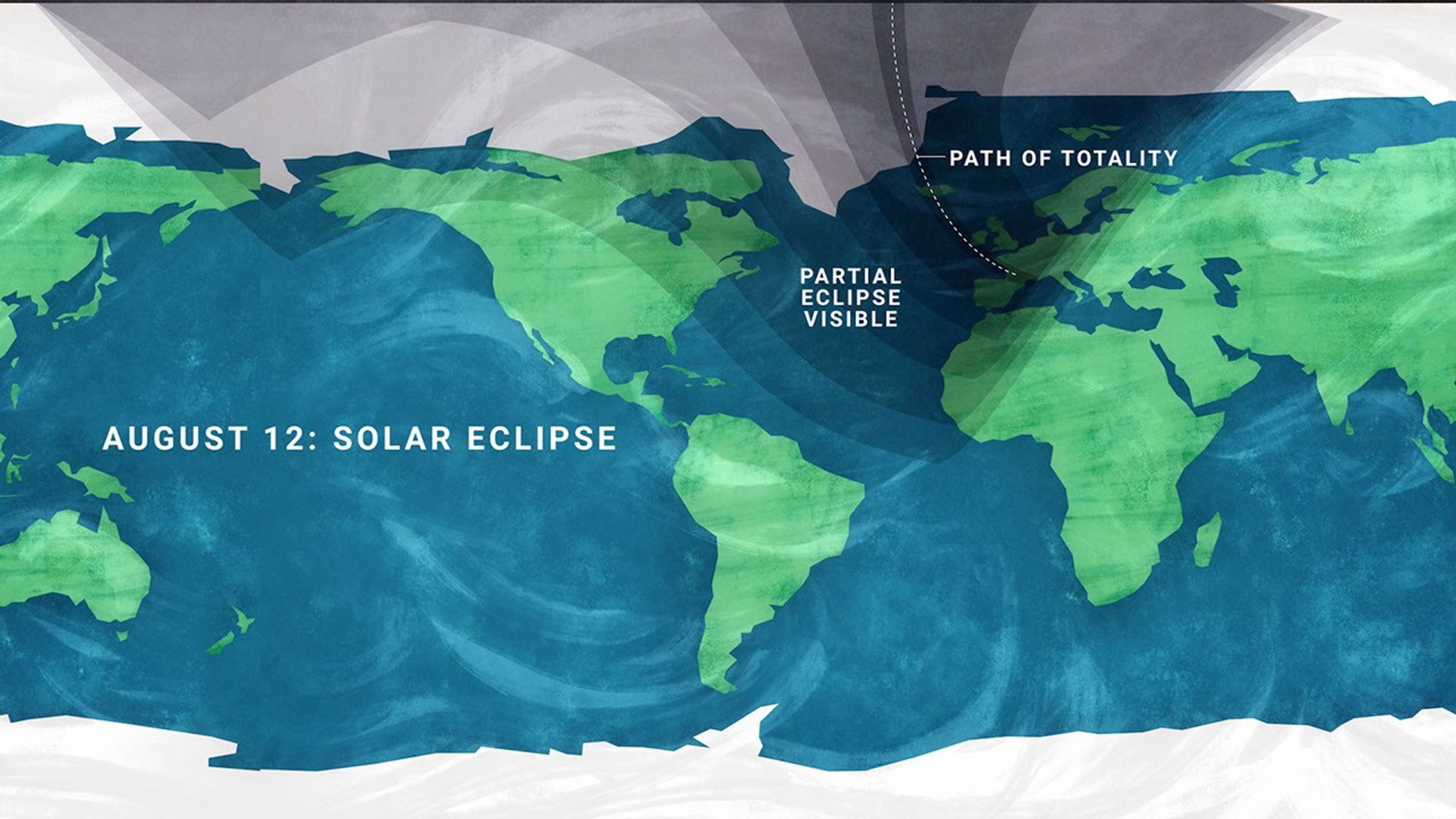
On Aug. 12, a total solar eclipse crosses northern Russia, Greenland, Iceland, and northern Spain, with a small corner of Portugal inside the path of totality.
In parts of the United States, from Alaska to North Carolina, the eclipse is partial. The Moon will take only a small bite out of the Sun, and the amount of coverage will vary with location.
A map showing viewing areas of the August 2026 total solar eclipse.NASA/JPL-CaltechRemember to watch safely. Use certified eclipse glasses or a safe solar viewer any time any part of the Sun is visible. Regular sunglasses are not safe. And never use binoculars, a telescope, or a camera without a solar filter made for the front of the optics.
Later that same night, the Perseid meteor shower will light up the sky, peaking the evening of Aug. 12 into the early morning hours of the 13th. And with a New Moon arriving on the 12th, the skies will be ideally dark.
The Perseids happen every year when Earth passes through a debris stream left behind by Comet Swift-Tuttle. As those tiny bits of comet dust hit our atmosphere at high speed, they burn up as bright streaks of light.
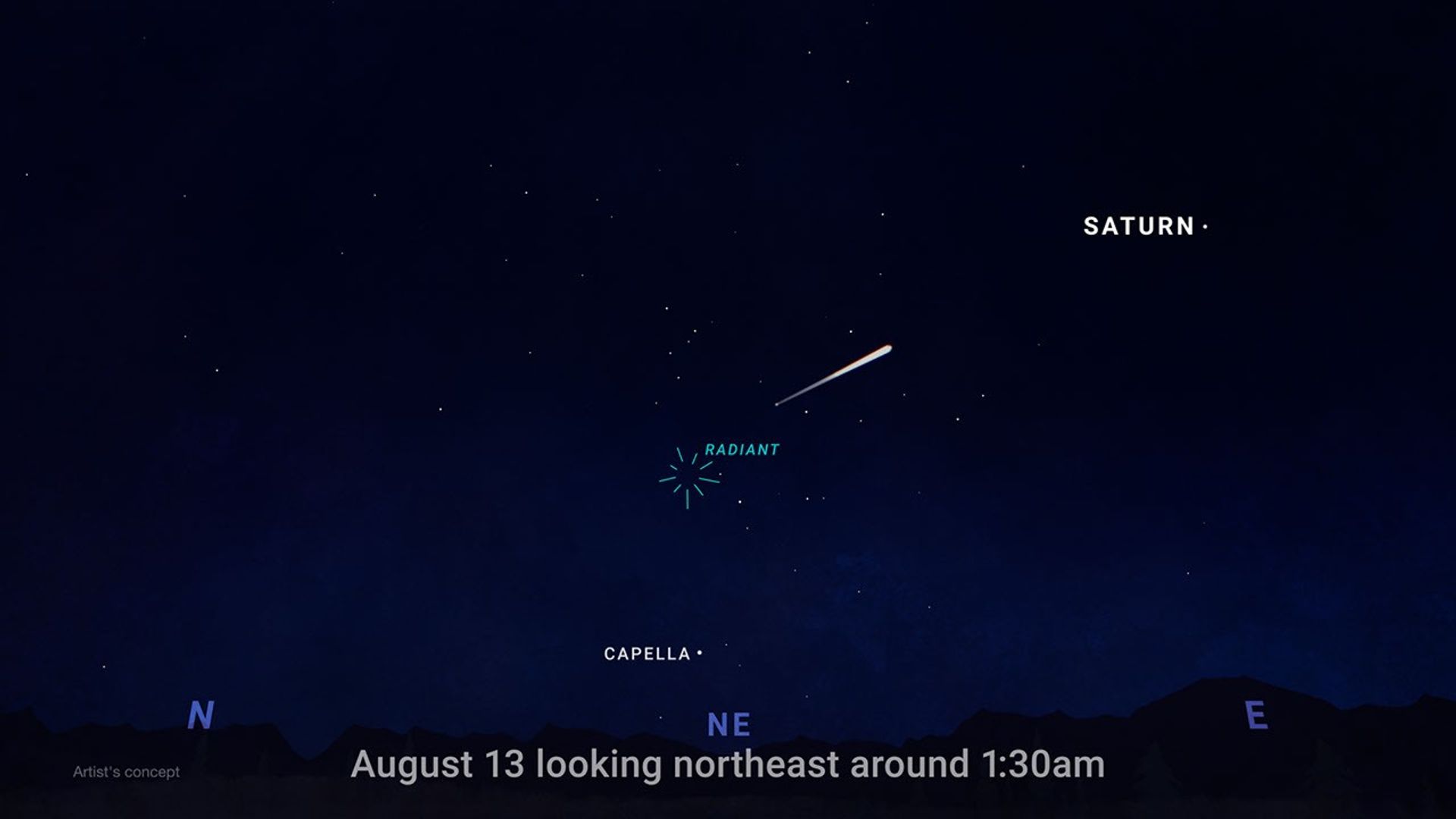
To view this meteor shower, look toward the northeast once it’s fully dark and watch for the constellation Perseus to clear the horizon. This is where the meteors originate, but let your eyes wander, because they can flash across any part of the sky.
For the best view, stay out late as the stars climb higher, find a dark open spot, and give your eyes 30 minutes to adjust.
This illustration shows where in the night sky to look for the Perseid meteor shower.NASA/JPL-CaltechAug. 14-16, Venus reaches its greatest eastern elongation, which is its widest apparent separation from the Sun during this evening appearance.
Look low in the western sky shortly after sunset for the bright object that will outshine every star around it. Through a telescope after sunset, Venus will look close to half lit, like a tiny lunar phase.
This illustration shows where to observe Venus after sunset in August.NASA/JPL-CaltechOn the night of Aug. 27, continuing into Aug. 28 for some time zones, the Full Moon slips through Earth’s shadow, resulting in a partial lunar eclipse. It will be visible from much of North and South America and parts of Europe and Africa.
Viewing areas for the August 2026 lunar eclipse.NASA/JPL-CaltechAt maximum eclipse, about 93% of the Moon’s diameter will be inside Earth’s dark central shadow, called the umbra. The Moon will not be completely covered, but it can look dramatically darkened, with a rusty, coppery tint along the covered edge.
Unlike a solar eclipse, a lunar eclipse is safe to watch with just your eyes. Binoculars or a small telescope can give you a closer view of Earth’s curved shadow moving across the Moon.
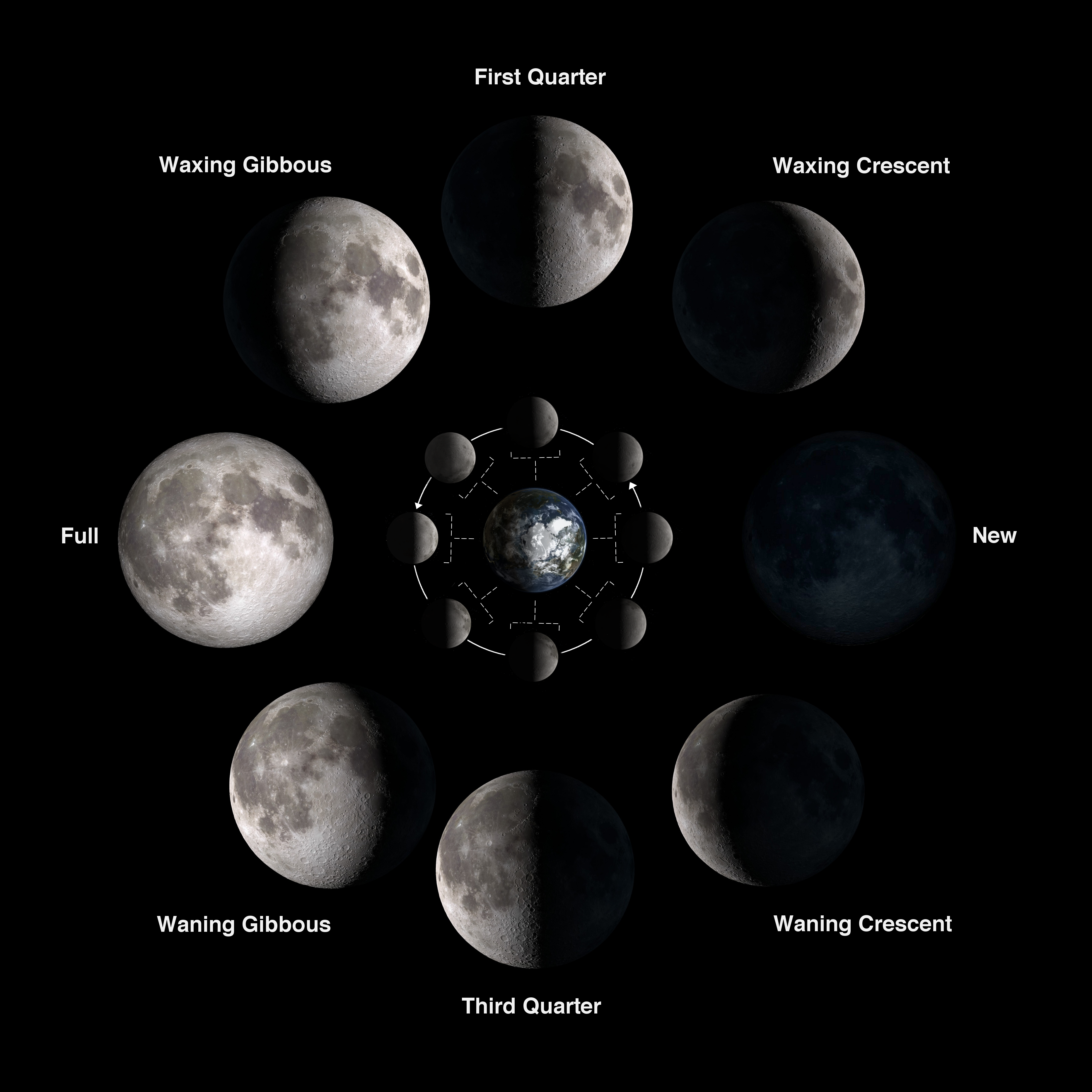
Here are the phases of the Moon for August.
NASA/JPL-CaltechYou can stay up to date on all of NASA’s missions exploring the solar system and beyond at science.nasa.gov. I’m Raquel Villanueva from NASA’s Jet Propulsion Laboratory, and that’s What’s Up for this month.
Find skywatching events and clubs with NASA’s Night Sky Network More skywatching resources from NASA Share Details Last Updated Aug 03, 2026 Related Terms Keep Exploring Discover More Topics From NASAWhat’s Up
Skywatching
Galaxies
Stars
NASA to Host Florida Event Celebrating American Air, Space Leadership
NASA will hold a news conference at 2:30 p.m. EDT, Friday, Aug. 14, live from the agency’s Kennedy Space Center in Florida, and media and digital creators are invited to attend in person.
The announcement, held in the XLV Hangar at the Shuttle Landing Facility, will preview a new event at NASA Kennedy later this year tied to America’s 250th anniversary, showcasing American leadership in aviation, space exploration, and emerging technologies while bringing together the public, industry leaders, innovators, and the next generation of explorers.
Participants include:
- NASA Administrator Jared Isaacman
- NASA leadership
- Members of Congress
The agency will stream this news conference live through a variety of platforms:
This event is open to U.S. media and digital creators. The request to attend must be received no later than 12 p.m. on Thursday, Aug. 6, to the Kennedy newsroom at: https://media.ksc.nasa.gov. NASA’s media accreditation policy is available online.
For more information about NASA’s missions, visit:
-end-
George Alderman / Cheryl Warner
Headquarters, Washington
202-358-1600
george.a.alderman@nasa.gov / cheryl.m.warner@nasa.gov
Danielle Sempsrott
Kennedy Space Center, Fla.
321-298-8990
danielle.c.sempsrott@nasa.gov
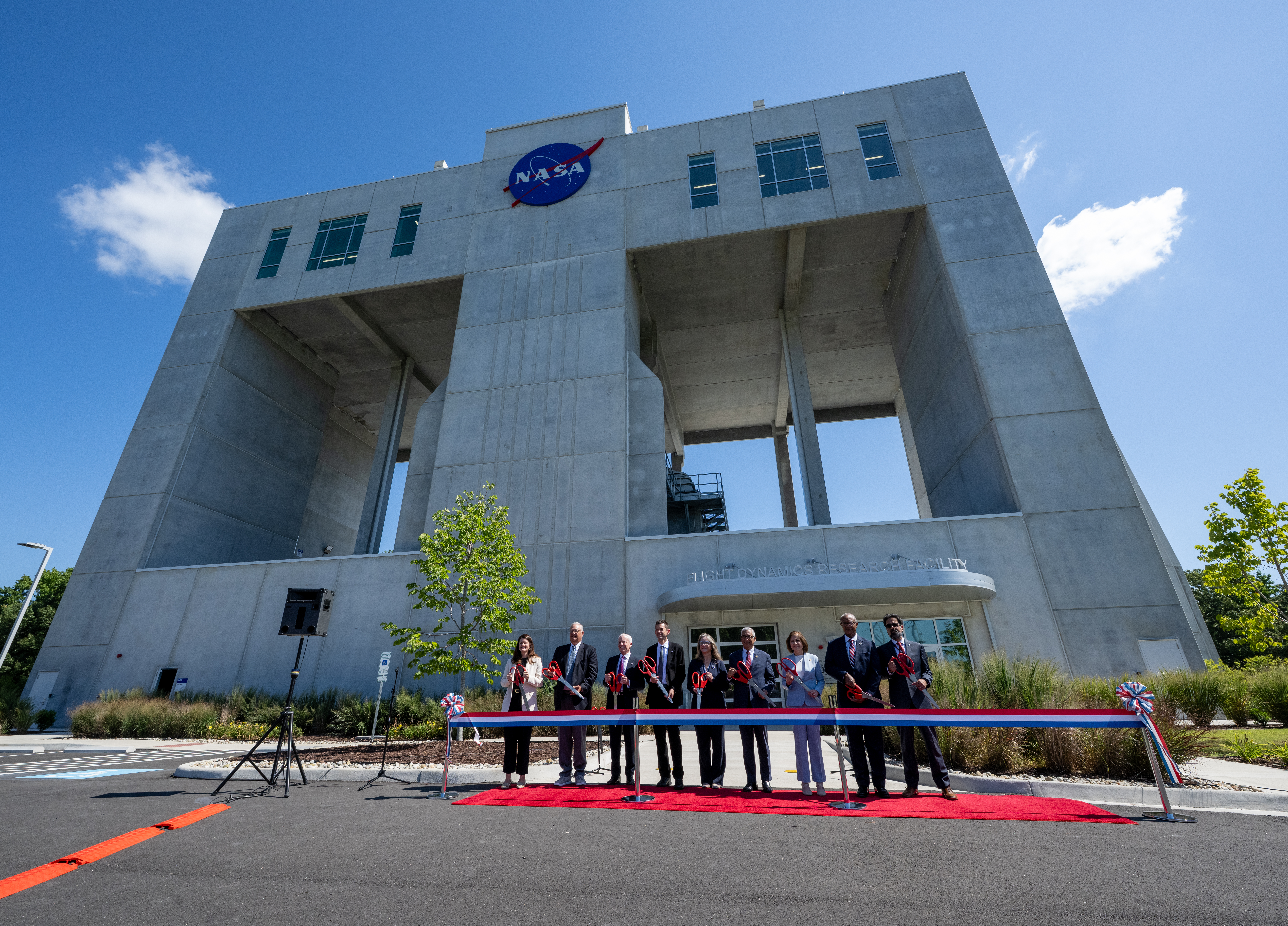
NASA’s Newest Wind Tunnel Opens at NASA Langley
On Friday, July 31, 2026, NASA leadership and Virginia government officials opened NASA’s first major new wind tunnel in more than 40 years, the Flight Dynamics Research Facility at NASA’s Langley Research Center in Hampton, Virginia.
The state-of-the-art facility will support research and technology development that will advance the agency’s aeronautics, exploration, and science goals, including establishing a sustained human presence on the lunar surface through the Artemis program and the development of a Moon Base.
See more photos from the ribbon-cutting ceremony.
Image credit: NASA/Keegan Barber
TB 26-04 Webbings for Use in Elevated Oxygen Environments
Flammability test results for commercial-off-the-shelf webbings that meet NASA flammability requirements are reported for use in elevated oxygen environments anticipated for future lunar and Martian missions. Testing demonstrated that a webbing composed of 60% Kevlar®/40% polybenzimidazole (PBI) from Sturges Manufacturing Company, Inc., specifically the natural version, passed flammability testing per NASA-STD-6001B Test 1 using a surface ignition in J-configuration at 37% oxygen and 8.2 psia. Offgassing data are also provided for the natural webbing, which is gold colored. These findings support their potential use as suitable webbings
for softgoods applications, although final performance and wear characteristics must be validated in full configuration.
Background
An elevated oxygen environment is planned for future crewed missions to the Moon and Mars to reduce the prebreathe time before extravehicular activities. In this study, materials are being evaluated for use at 37% oxygen and 8.2 psia. An enriched oxygen environment increases the flammability risk and the need for improved fire-resistant materials. The NASA Engineering and Safety Center (NESC) developed a strategy to ensure textile materials that meet NASA flammability requirements in this environment are available to the aerospace community as the building blocks to softgoods flight hardware. The strategy is being implemented by the Mars Campaign Office and Johnson Space Center with support from the NESC. The first phase is testing commercial-off-the-shelf (COTS) textiles with high potential to meet flammability requirements.
Problem/Issue Description
Narrow woven fabrics, commonly referred to as webbing or woven tape, are used in multiple softgood applications, including crew mobility aids, restraint nets, and storage bag handles. The standard meta-aramid or nylon webbings do not meet the flammability requirements in elevated oxygen.
Test Methods/Data Collection
NASA-STD-6001B Test 1 was performed on the webbing candidates at White Sands Test Facility (WSTF) to determine the maximum oxygen concentration (MOC) at a pressure of 8.2 psia. The test was performed in an unshielded J configuration, where the cut edge of the webbing was not exposed to the flame and the igniter impinged on the front surface of the material, which included the lateral free edge of the webbing. Flammability performance after wear and tear was not assessed. The MOC test refers to the maximum oxygen concentration at which a minimum of five samples tested pass the NASA-STD-6001B criteria at a fixed pressure. One-inch-width natural and black webbings, composed of 60% Kevlar and 40% PBI produced by Sturges Manufacturing (see Figure 1), were tested. The available webbing widths range from ¼ to 8 inches.
Analysis and Results
Table 1 summarizes the webbing properties and test results. The webbings had MOCs of 37% and 35% oxygen for the natural and black webbing, respectively, at 8.2 psia. In addition, offgas testing was performed on natural webbing per NASA-STD-6001B Test Detailed test results can be found in MAPTIS links listed in the reference section.
These results should be used to select materials for incorporation into a final softgood product. The final flammability result will depend on the other components of the end item and must be tested in configuration to ensure the final product meets requirements. Individual textile results do not guarantee the performance of the finished assembly. Variations on this webbing (i.e., including but not limited to dimensions, weave type and yarn size, density, treatments, color, fiber blend, edge finish technique, the addition of features like hook and loop fasteners, and wear and tear) may affect flammability characteristics and should be evaluated before use.
References
- Black color webbing: Flammability Report WSTF 26-49145,
https://maptis.ndc.nasa.gov/matsel/app/material/73441?sender=global-search - Natural color webbing: Flammability and Offgassing Report WSTF 26-49149,
https://maptis.ndc.nasa.gov/matsel/app/material/73442?sender=global-search - HEO-DM-1006 Updated Exploration Atmospheres
- Manufacturer website: https://www.sturgesmfgco.com/
- Manufacturer contact: Mike Allen (mallen@sturgesmfgco.com 315-880-0937)
- NASA-STD-6001B Flammability, Offgassing, and Compatibility Requirements
and Test Procedures
NASA, SpaceX Advance Wind Tunnel Tests for Starship Rocket
NASA and its industry partners are preparing for next year’s Artemis III demonstration mission by completing new wind tunnel tests on SpaceX’s Super Heavy Version 3 rocket booster. The tests, conducted at NASA’s Ames Research Center in California’s Silicon Valley, focused on better understanding the extreme aerodynamic forces the rocket can experience during re-entry. The recent test series builds on previous testing completed at NASA Ames in 2024.
NASA is working with SpaceX to develop the company’s Starship Human Landing System (HLS) to safely carry astronauts from lunar orbit to the Moon’s surface and back. The upgraded Super Heavy rocket booster is part of SpaceX’s Starship launch system. Version 3 of Starship and Super Heavy is expected to be the basis for the Starship HLS for Artemis III in 2027 and a later crewed lunar landing in 2028.
Engineers at NASA Ames conduct transonic and supersonic wind testing on a 1.2% scale model of the Super Heavy Version 3 rocket that will launch the Starship human landing system.NASA Engineers at NASA Ames conduct transonic and supersonic wind testing on a 1.2% scale model of the Super Heavy Version 3 rocket that will launch the Starship human landing system.NASA Engineers at NASA Ames conduct transonic and supersonic wind testing on a 1.2% scale model of the Super Heavy Version 3 rocket that will launch the Starship human landing system.NASA Engineers at NASA Ames conduct transonic and supersonic wind testing on a 1.2% scale model of the Super Heavy Version 3 rocket that will launch the Starship human landing system.NASAAlthough Starship HLS is a lunar lander designed and built by SpaceX, NASA collaborates with commercial companies to provide access to specialized testing facilities, like the wind tunnels at NASA Ames, and technical expertise, such as the team that set up the wind tunnel testing and helped analyze the results.
“NASA has a lot of experience with unsteady aerodynamics,” said Manish Mehta, discipline lead engineer for the HLS Plume and Aero Environments team, NASA’s Marshall Space Flight Center in Huntsville, Alabama. “We used the agency’s broad experience base of conducting wind tunnel tests for the space shuttle, the SLS (Space Launch System) rocket, and Orion spacecraft to efficiently set up and analyze the wind tunnel testing for the Super Heavy Version 3. In fact, similar testing at the Ames Unitary Plan Wind Tunnel resulted in adding strakes to SLS for Artemis II, so what we learned for Artemis II is helping us get to Artemis III and beyond.”
TestingSpaceX’s Starship consists of a 33-engine first-stage Super Heavy rocket, or booster, and the second-stage Starship. Version 3 of Super Heavy incorporates many new and upgraded systems, including:
- New propulsion systems and new Raptor 3 rocket engines
- No engine section skirt, individual engine shrouds, or integrated large-scale base heat shield
- Three gridfins on the Super Heavy booster instead of four, with each fin now 50% larger
- An integrated hot stage replacing the previous single-use protective interstage
With significant changes to Super Heavy, NASA and SpaceX engineers wanted more information about the steady and unsteady aerodynamic forces the rocket will experience during atmospheric re-entry as it returns to the launch site for refurbishment and re-use.
“When a rocket, or an airplane, flies through air at high speed, it’s subjected to steady aerodynamic forces and moments, and unsteady aerodynamic forces and moments,” explained Jayanta Panda, unsteady aerodynamics subject matter expert at NASA Ames and part of the Human Landing System Plume and Aero Environments team. “An example of a steady aerodynamic force would be when air smoothly flows over the surface of the rocket as it ascends. An unsteady aerodynamic force would be air ‘buffeting,’ or hitting, certain areas the rocket at less predictable times and potentially causing vibrations.”
Wind tunnelsNASA and SpaceX used a 1.2% scale model of the Super Heavy Version 3 in the transonic wind tunnel and the supersonic wind tunnel at NASA Ames for testing. The transonic tunnel blasts scale models of rockets or aircraft with air at speeds ranging from Mach 0.2 to Mach 1.4 (Mach 1 is the speed of sound, or about 761 miles per hour). The smaller supersonic tunnel fires winds at higher speeds, from Mach 1.55 to Mach 2.5. The wind tunnel tests on Super Heavy Version 3, conducted in late 2025, used both tunnels to measure steady and unsteady air flows on the surfaces of Super Heavy.
“Resulting wind tunnel data on steady forces and moments helps predict how the rocket will react to forces in the atmosphere during re-entry so the flight software can effectively guide the rocket during flight,” Mehta said. “The unsteady pressure data helps engineers understand the environment around the rocket as it re-enters Earth’s atmosphere. Engineers use that information as one input into software that analyzes loads on the rocket.”
Through the Artemis program, NASA is returning humans to the Moon for scientific discovery, economic opportunity, to establish an enduring human presence on the lunar surface, and build the foundation for the first crewed missions to Mars – for the benefit of all.
To learn more about Artemis, visit:
Share Details Last Updated Jul 31, 2026 EditorLee MohonContactCorinne Beckingercorinne.m.beckinger@nasa.govGianine Figliozzigianine.figliozzi@nasa.govLocationMarshall Space Flight Center Related Terms Explore More 7 min read How NASA’s Artemis III Lander Test Will Pave Way for Moon Landings Article 3 weeks ago 3 min read NASA Announces Winners for 2026 Human Lander Challenge Article 1 month ago 4 min read NASA Outlines Preliminary Artemis III Mission Plans Article 3 months ago Keep Exploring Discover More Topics From NASAArtemis
Artemis III
Human Landing System
Space Launch System (SLS)