NASA - Breaking News

LINK Spacecraft Set for Mission to Boost NASA’s Swift Observatory
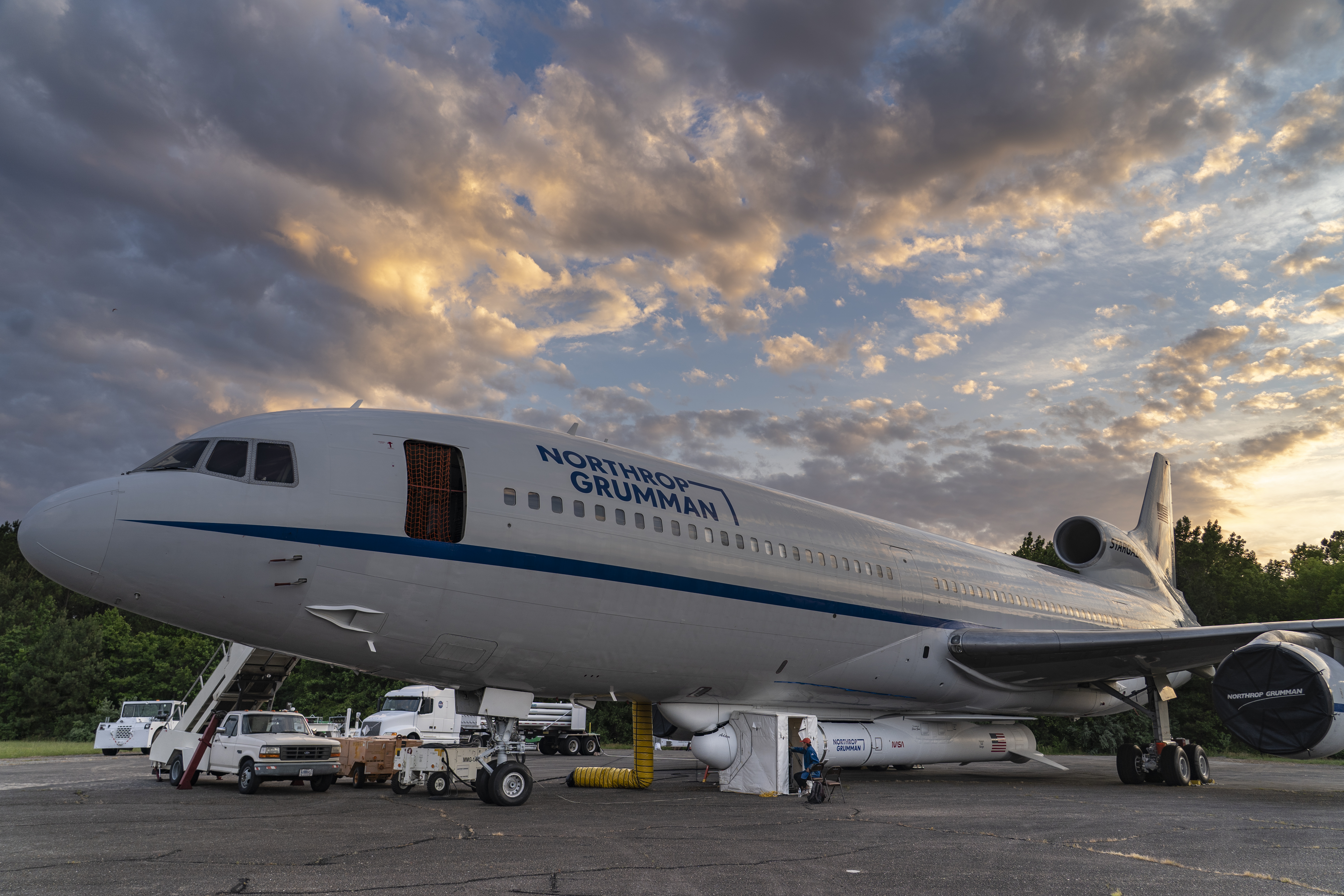
A first-of-its-kind mission to raise the orbit of NASA’s Neil Gehrels Swift Observatory is poised for launch no earlier than Thursday, July 2, 5:09 a.m. EDT (9:09 p.m. UTC+12), from Kwajalein Atoll, part of the Republic of the Marshall Islands in the South Pacific Ocean. A robotic servicing spacecraft called LINK, built by Katalyst Space, will blast into orbit on a Northrop Grumman Pegasus XL rocket attached to the belly of the company’s Stargazer aircraft, shown here in this photograph from the evening of Tuesday, June 16, 2026.
After launch, LINK will attempt to rendezvous with, grapple, and slowly raise Swift’s altitude over several months, preventing it from re-entering Earth’s atmosphere later this year. If this daring mission is successful, it will be the first time a commercial robotic mission has captured a NASA spacecraft that is both uncrewed and not originally designed to be serviced in space.
Follow the Swift blog to learn more about the mission.
Image credit: NASA/Ron Beard
NASA’s Webb Studies How Planet Survived Death of its Star
- Webb
- News
- Overview
- Science
- Observatory
- Multimedia
- Team
- More
Artwork: NASA, ESA, CSA, Ralf Crawford (STScI)
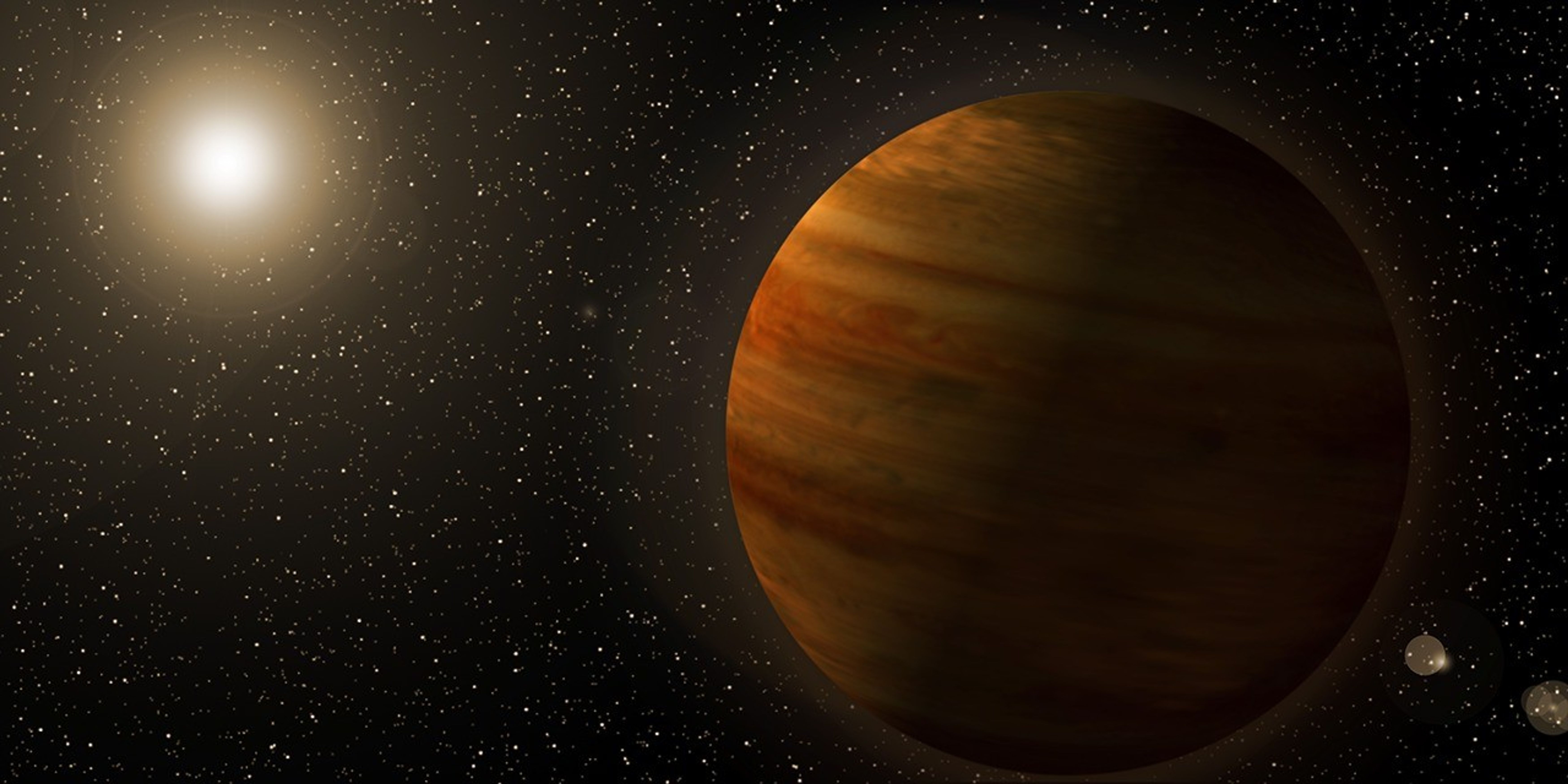
NASA’s James Webb Space Telescope is giving us new insight into the far-future of solar systems like our own, as the agency continues to reveal the secrets of the universe and our place in it. Billions of years ago, a Sun-like star nearing the end of its life swelled tremendously in size to become a red giant before ejecting its outer layers, leaving a hot, remnant core known as a white dwarf. As a red giant, the star should have engulfed and destroyed any nearby planets. Yet astronomers have found a Jupiter-sized exoplanet orbiting the white dwarf every 34 hours at a separation of less than 2 million miles (3 million kilometers).
To solve the mystery of how this exoplanet survived, an international team of astronomers used NASA’s James Webb Space Telescope to watch the Jupiter-sized exoplanet WD 1856 b transit its host star, measuring the planet’s temperature and detecting molecules in its atmosphere. They found the planet is significantly warmer than expected and determined how it most likely reached its very tight orbit around the white dwarf star. The results are a window into the future of planets like Jupiter after the death of the Sun, billions of years into the future.
The results published Wednesday in the journal Nature.
WD 1856 b was discovered in 2020 by scientists using NASA’s TESS (Transiting Exoplanet Survey Satellite) and the retired Spitzer Space Telescope. It orbits the white dwarf WD 1856+534, which is located about 80 light-years from Earth. “The planet is about the size of Jupiter, but the white dwarf it orbits is the size of Earth, so the planet is seven times larger than its star,” said lead author Ryan MacDonald of the University of St. Andrews in the United Kingdom.
WD 1856 b orbits extremely close to its host star, a distance 50 times closer than Earth orbits the Sun. If WD 1856 b had originally been orbiting at that distance, it would have been obliterated while the star was a red giant. How did it survive the death of its host star and end up in its current position?
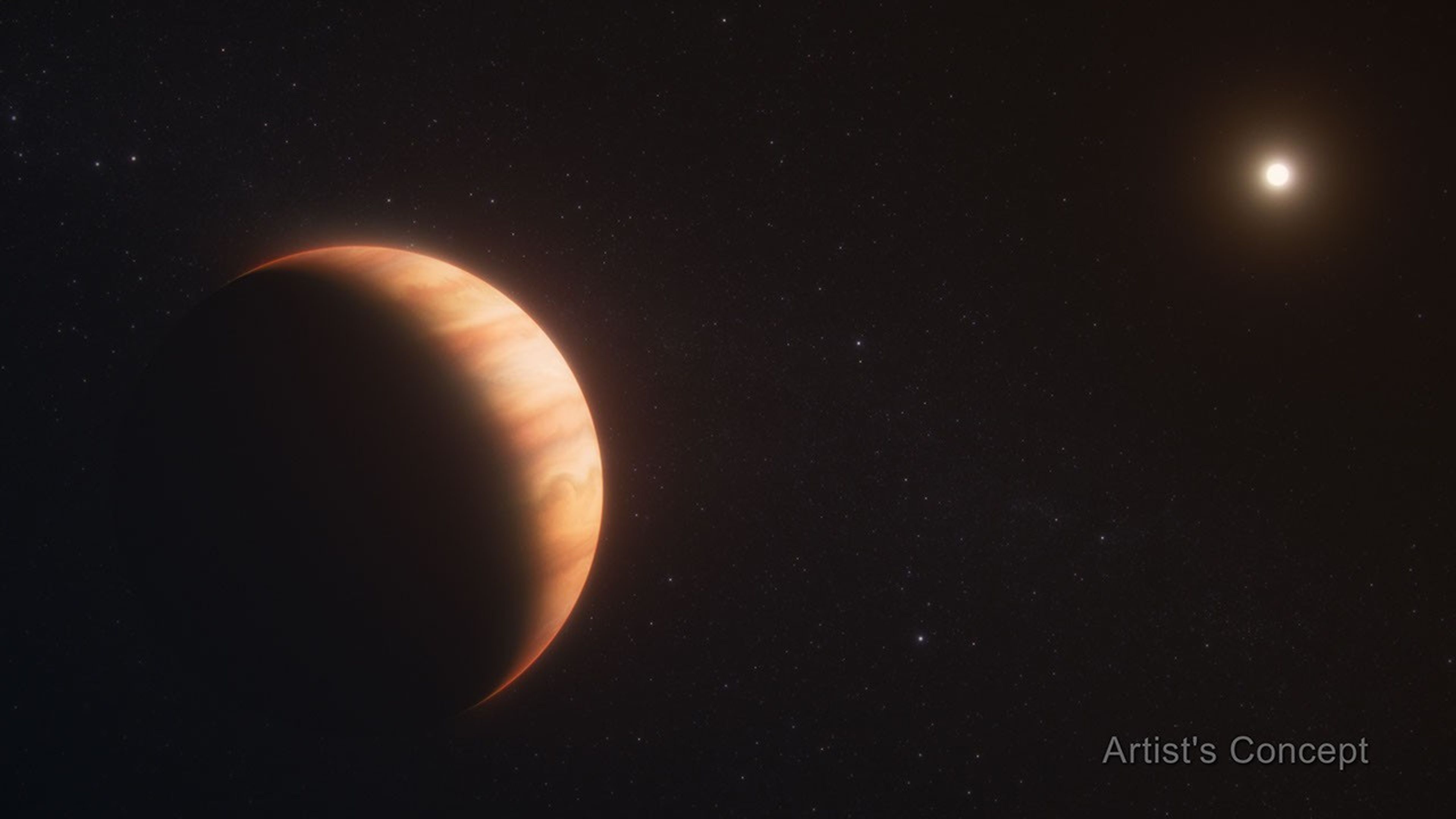
Image: Exoplanet WD 1856 b (Artist’s Concept) Exoplanet WD 1856 b, shown in this artist’s concept, is a gas giant that orbits its star at a distance 50 times closer than Earth orbits the Sun. Observations by NASA’s James Webb Space Telescope determined the planet’s temperature and detected molecules in its atmosphere. Artwork: NASA, ESA, CSA, Ralf Crawford (STScI) How big, how hotThe new study used Webb to watch the planet passing in front of its star. This transit yielded unique information about the planet’s mass, which is between four and eleven times the mass of Jupiter.
The team also was able to determine the planet’s temperature. During the transit, light from the star was partly blocked, but infrared light was reduced less than other wavelengths. The difference was infrared light emitted by the planet from its own heat. The data indicated that the planet has a temperature of about 260 degrees Fahrenheit (126 degrees Celsius) — significantly hotter than it would be if its only source of heat was the light from the white dwarf. This puzzling discovery turned out to be the key fact that proved how the planet must have reached its current orbit.
Christopher O’Connor of Northwestern University in Illinois, a co-author on the paper, was responsible for tracing the temperature of the planet back in time. O’Connor said, “The big question is how WD 1856 b ended up where it is today, and there are two theories. One is that the planet was swallowed by the host star as it was dying, and managed to survive on the inside. The other is that migration took place due to the gravitational effect of other objects in the system. The white dwarf is part of a triple star system, and the companion stars could have influenced WD 1856 b’s orbit.”
The researchers realized that there was no source of energy present to generate that heat today, so it must be residual energy from an earlier time when the planet was heated. Using models of how sub-stellar objects like WD 1856 b cool down over time, coupled with the new data from Webb, the team was able to project its temperature back in time and deduce how long ago the heating must have happened. The timing is key to determining whether the heating was from being engulfed by the red giant or occurred during an inward migration
They concluded that the heating most likely happened between 3 and 5.5 billion years after the star became a white dwarf. In this scenario, the planet was on a wide orbit that kept it safe from the star during its destructive red giant phase, and only migrated to its present location later on. “As the planet moved inward, its interactions with the strong gravity of the white dwarf will have caused it to warm up considerably, and it has been cooling ever since,” said O’Connor.
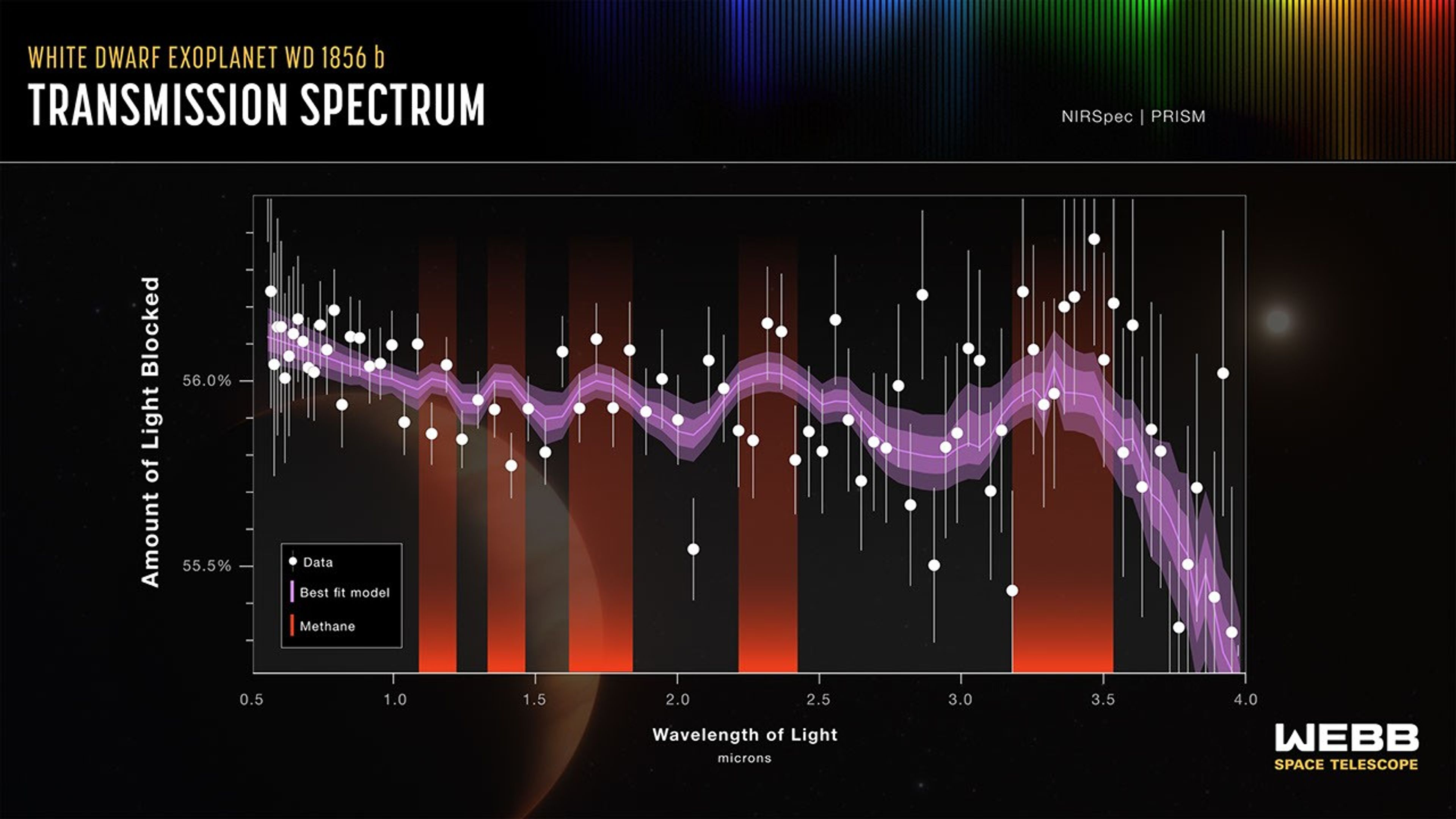
Light from the star passing through the planet’s atmosphere also picked up information about its chemical composition. “We saw the telltale signatures of small cloud particles and hydrocarbons, most likely methane, which is the first time we have seen an atmosphere on a planet transiting a dead star,” said co-author Victoria Boehm of Cornell University. “We recently observed four more transits of WD 1856 b with Webb to take a deeper look into its atmospheric chemistry and can’t wait to see the results.”
Image: Exoplanet WD 1856 b (Transmission Spectrum) NASA’s James Webb Space Telescope measured the constituents of exoplanet WD 1856 b as it passed in front of its star, finding signs of methane. WD 1856 b orbits a white dwarf star the size of Earth. As a result, the planet blocks more than half of the star’s light. Illustration: NASA, ESA, CSA, Joseph Olmsted (STScI) Solar system’s possible futureIn approximately five billion years, the Sun will run out of hydrogen fuel in its core and swell up more than 100 times larger than it is now into a red giant star. It will then shed its outer layers and end its life as a white dwarf star. Mercury, Venus, and possibly the Earth will be destroyed by the red giant. However, the fate of the more distant planets, particularly the gas giants, is unclear. Finding and studying planets in orbit around the remnants of Sun-like stars after their death is a means of learning what might happen in our own solar system in the far future.
“We’re used to looking back in time when we use telescopes, but this is the first time we have been able to look forward to what might happen to the outer planets around the remnant of a Sun-like star,” said MacDonald. “It’s like using a time machine to peer into the distant future of our solar system.”
The James Webb Space Telescope is the world’s premier space science observatory. Webb is solving mysteries in our solar system, looking beyond to distant worlds around other stars, and probing the mysterious structures and origins of our universe and our place in it. Webb is an international program led by NASA with its partners, ESA (European Space Agency) and CSA (Canadian Space Agency).
To learn more about Webb, visit:
Downloads & Related InformationThe following sections contain links to download this article’s images and videos in all available resolutions followed by related information links, media contacts, and if available, research paper and Spanish translation links.
Related Images & Videos Exoplanet WD 1856 b (Artist’s Concept)Exoplanet WD 1856 b, shown in this artist’s concept, is a gas giant that orbits its star at a distance 50 times closer than Earth orbits the Sun. Observations by NASA’s James Webb Space Telescope determined the planet’s temperature and detected molecules in its atmosphere.
Exoplanet WD 1856 b (Transmission Spectrum)
NASA’s James Webb Space Telescope measured the constituents of exoplanet WD 1856 b as it passed in front of its star, finding signs of methane. WD 1856 b orbits a white dwarf star the size of Earth. As a result, the planet blocks more than half of the star’s light.
Related Links
Read more: Webb’s Impact on Exoplanet Research
Explore more: ViewSpace | Exoplanet Variety: Atmosphere
Explore more: How to Study Exoplanets: Webb and Challenges
Watch: Giant World Circles a Tiny Star
Explore more: ViewSpace | Star Death: Helix Nebula
More Webb: News | Images | Science | Home Page
Laura Betz
NASA’s Goddard Space Flight Center
Greenbelt, Maryland
laura.e.betz@nasa.gov
Bethany Downer
ESA/Webb
Baltimore, Maryland
Christine Pulliam
Space Telescope Science Institute
Baltimore, Maryland
Keep Exploring Related Topics James Webb Space Telescope
Webb is the premier observatory of the next decade, serving thousands of astronomers worldwide. It studies every phase in the…
Exoplanets
Exoplanet Stories
Stars
Curiosity Blog, Sols 4934-4940: In the Land of the Polygons
- Curiosity Home
- Science
- News and Features
- Multimedia
- Mars Missions
- Mars Home
2 min read
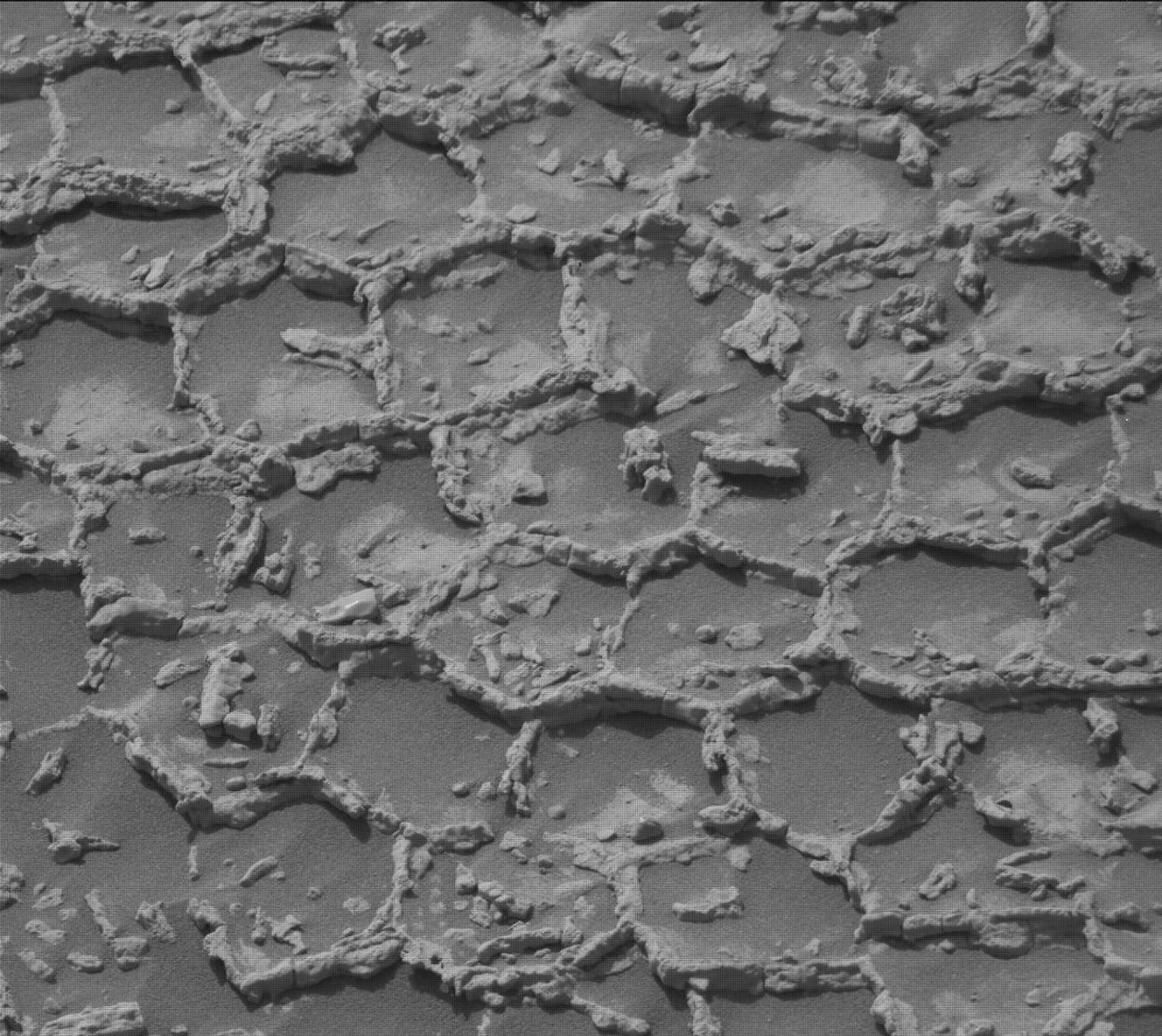
Curiosity Blog, Sols 4934-4940: In the Land of the Polygons NASA’s Mars rover Curiosity acquired this image of polygonal structures using its Mast Camera (Mastcam) on June 21, 2026 — Sol 4932, or Martian day 4,932 of the Mars Science Laboratory mission — at 14:57:55 UTC. NASA/JPL-Caltech/MSSSWritten by William Farrand, Senior Research Scientist, Space Science Institute
Earth planning date: Friday, June 26, 2026
There were two planning cycles over this span of sols. The Monday planning took place with Curiosity situated within a unit that from orbital imagery appeared light-toned, and from earlier rover positions appeared smooth. Reaching this unit, the rover team was surprised to see the unit covered with polygonal structures like the top of a giant Martian honeycomb. Driving further into the unit, the polygonal ridges were more eroded. Littered about this unit are pebble to cobble-sized dark-toned rocks. A still-to-be-resolved question is whether these are bits of Mars that “floated” down from higher in the stratigraphy, were ejected from distant impacts outside of Gale crater, or are meteorites from beyond Mars altogether. Examination of some previous dark “float” rocks indicated the presence of nickel, common in meteorites but less so in Martian rocks, but are all of the dark-toned pebbles and cobbles meteorites? Further investigations should help in answering this question.
Monday’s four-sol plan had APXS and MAHLI investigations looking at the ridges and centers of the polygons. The plan also included ChemCam Remote Micro-Imager (RMI) views of the “Miraflores” small knob and of the “Cordillera” mesa. Similar to the contact science activities, ChemCam LIBS measurements were focused on the polygons, with two measurements on different ridges and one on a polygon center. A ChemCam passive reflectance measurement of one of the aforementioned dark cobbles was also carried out. Environmental activities included a Navcam dust-devil search and atmospheric opacity (“tau”) measurements.
After driving further towards the upper boundary of the light-toned, polygon-covered unit, the three-sol Friday plan included APXS and MAHLI measurements of another polygon ridge and one of the dark-toned cobbles, “Cortadera.” ChemCam LIBS was also targeted on “Cortadera” and on a polygon ridge. ChemCam RMI was targeted on the top and base of the “Cordillera” mesa. Mastcam mosaics were planned of “Cordillera,” nearby troughs, part of the nearby “Valle Grande” channel, and documentation of LIBS targets and the Mastcam calibration target.
In the coming week, Curiosity will cross over into another band of materials which appear darker-toned in orbital images and rougher-textured, as viewed currently by the rover.
-
Want to read more posts from the Curiosity team?
-
Want to learn more about Curiosity’s science instruments?
Article
1 week ago
3 min read Curiosity Blog, Sols 4920-4926: Surveying the Bands
Article
2 weeks ago
3 min read Curiosity Blog: Sols 4913-4919: Planetary Explorers, Freewheeling to the Yardang Unit!
Article
3 weeks ago
Keep Exploring Discover More Topics From NASA Mars
Mars is the fourth planet from the Sun, and the seventh largest. It’s the only planet we know of inhabited…
All Mars Resources
Explore this collection of Mars images, videos, resources, PDFs, and toolkits. Discover valuable content designed to inform, educate, and inspire,…
Rover Basics
Each robotic explorer sent to the Red Planet has its own unique capabilities driven by science. Many attributes of a…
Mars Exploration: Science Goals
The key to understanding the past, present or future potential for life on Mars can be found in NASA’s four…
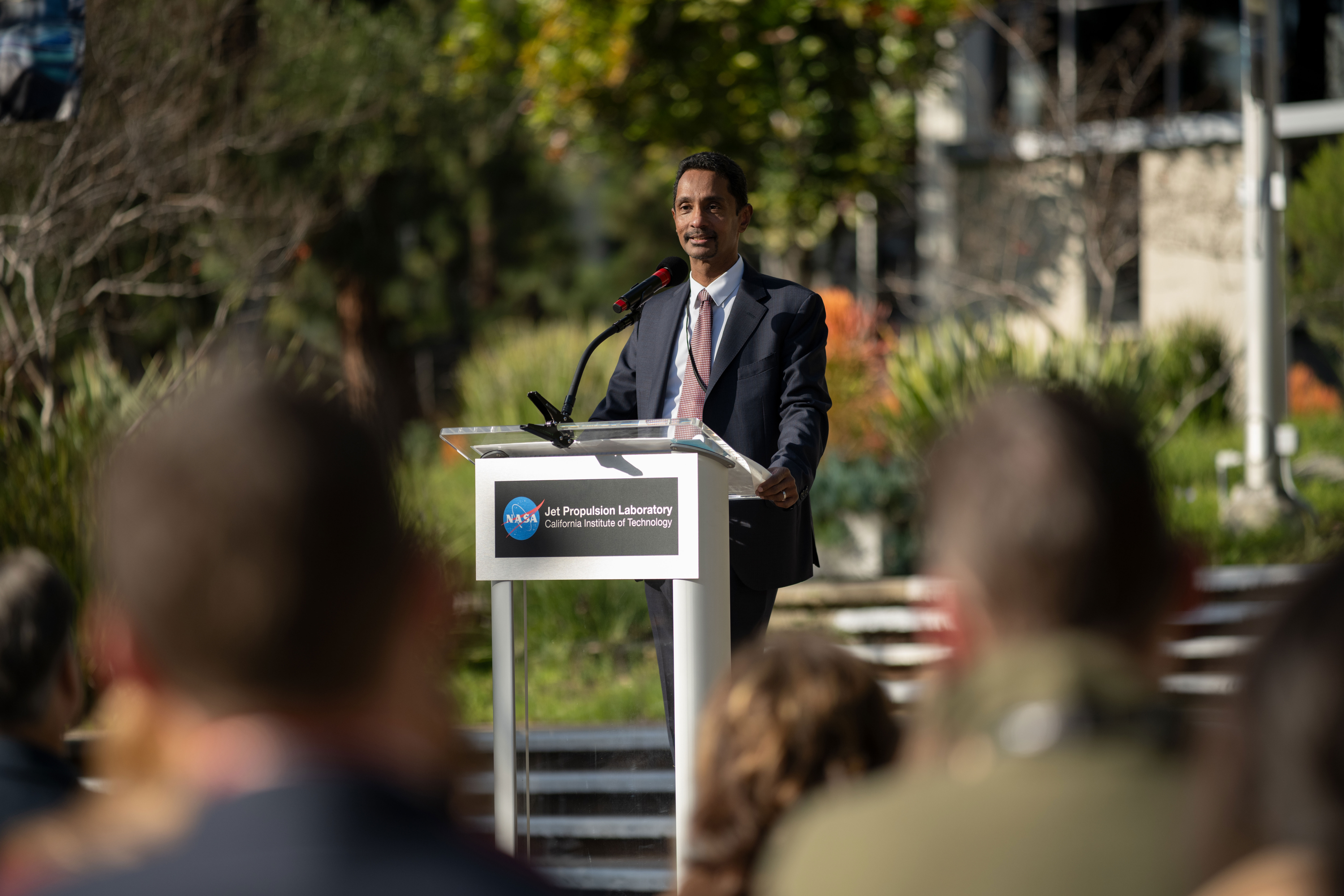
Caltech Welcomes Astrophysicist Ray Jayawardhana as New President
Ray Jayawardhana begins his tenure today as the 10th president of the California Institute of Technology. His selection as Caltech’s president, and as the Sonja and William Davidow Presidential Chair and professor of astronomy, was announced Jan. 6. Jayawardhana succeeds Thomas Rosenbaum, who had served as Caltech’s president since 2014.
Founded in 1891, Caltech manages the Jet Propulsion Laboratory for NASA. The lab traces its origins to 1936, when a group of Caltech graduate students and other rocket enthusiasts began pioneering work in rocket propulsion. Once NASA was established in 1958, JPL became the space agency’s first and only federally funded research and development center.
“Today, I’m honored to begin my service as Caltech’s 10th president,” Jayawardhana wrote in his first message to the Caltech community. “Long before this day appeared on the horizon, Caltech and JPL have held a special place in my mind as beacons of humanity’s most ambitious acts of exploration and discovery.”
Looking ahead, Jayawardhana said he will be a fierce advocate for the Institute’s mission and the people who advance it, partnering with Caltech and JPL colleagues and other stakeholders to ensure the Institute will continue to have transformative impact on humanity. He also said he aims to pursue bold, catalytic investments in “blue-sky” ideas on campus, at JPL, and across the Institute’s suite of global observatories; enrich the educational experience of undergraduates, graduate students, and postdoctoral scholars; and expand the Institute’s engagement with the public.
“Dr. Jayawardhana steps into this role at a pivotal moment for Caltech, JPL, and NASA,” said Dave Gallagher, director of JPL. “We look forward to working closely with him on missions that will help define a new era of U.S. exploration — extending humanity’s reach into the solar system, unlocking extraordinary scientific discovery, and inspiring future generations to dare mighty things.”
Jayawardhana comes to Caltech from Johns Hopkins University, where as provost he oversaw the university’s 10 schools as well as an expansive portfolio of interdisciplinary programs, academic centers, and core administrative and operational units.
Prior to Johns Hopkins, he served as the Harold Tanner Dean of the College of Arts and Sciences and the Hans A. Bethe Professor and professor of astronomy at Cornell University. Earlier in his career, he was on the faculty at the University of Toronto, where he held a Canada Research Chair and served as senior adviser on science engagement to the university’s president. Jayawardhana earned his Ph.D. in astronomy from Harvard University and a B.S. in astronomy and physics from Yale University.
A pioneering astrophysicist, Jayawardhana investigates the origin and evolution of planets and planetary systems, as well as the formation of stars and brown dwarfs. Using the largest telescopes on the ground (including the W. M. Keck Observatory, which Caltech co-manages with the University of California) and in space (especially NASA’s James Webb Space Telescope), he and his collaborators use remote sensing to characterize planets outside our solar system, or exoplanets, with an eye toward assessing the prospects for life beyond Earth. He is a core science team member for the Near Infrared Imager and Slitless Spectrograph instrument aboard the Webb telescope, and his research group has led Gemini Observatory large programs on high-resolution spectroscopy of exoplanetary atmospheres.
Jayawardhana will continue his research alongside his presidential responsibilities as a Caltech professor of astronomy in the Division of Physics, Mathematics and Astronomy.
“Time and again, I’ve been struck not only by the audacity and brilliance of the work underway here, but also by this community of creative and original thinkers who seem constitutionally incapable of leaving the hardest questions unanswered,” Jayawardhana wrote in his note to the Caltech and JPL community.
The appointment marks a return to an early source of inspiration for the astrophysicist. Growing up as a self-described “space-obsessed kid” in Sri Lanka, Jayawardhana wrote to JPL asking for images from NASA’s Voyager and Viking missions (JPL manages Voyager and played a major role in Viking). A few weeks later, a package arrived at his childhood home.
“I still remember the thrill of finding the manila envelope waiting for me … with the unmistakable JPL logo,” he recalled in remarks to the JPL community in January. Inside was a viewbook filled with images of Jupiter and Saturn. “Holding it in my hands, I felt a rush of amazement, as if I were sharing in the grand quest to explore other worlds despite growing up in a remote corner of this one.”
Now, as Caltech’s president, that childhood inspiration has come full circle. “As an astrophysicist, I have the deepest respect for JPL’s enduring contributions to humanity’s quest to explore the solar system and beyond. And as Caltech’s president, I’m excited to work alongside you in that quest.”
Media Contact
Matthew Segal
Jet Propulsion Laboratory, Pasadena, Calif.
818-354-8307
matthew.j.segal@jpl.nasa.gov
2026-041
Explore More 6 min read NASA Testing Advanced Capabilities for Moon, Mars Rovers Article 2 weeks ago 4 min read El Niño Is UnderwaySatellite observations of sea surface height indicated that the 2026 event continued to strengthen in…
Article 2 weeks ago 5 min read NASA’s Quantum Lab Aboard Space Station Gets Chilly Upgrade Article 2 weeks ago Keep Exploring Discover More Topics From NASAJet Propulsion Laboratory
VoyagerThe twin spacecraft Voyager 1 and Voyager 2 were launched by NASA in separate months in the summer of 1977…
Perseverance RoverThis rover and its aerial sidekick were assigned to study the geology of Mars and seek signs of ancient microbial…
Deep Space Network
NASA’s TESS Mission Finds Planetary System in New Way
NASA’s Goddard Space Flight Center
For the first time, NASA’s TESS (Transiting Exoplanet Survey Satellite) mission has identified a planet orbiting a distant star thanks to ripples in space-time. Unlike the star-hugging transiting planets TESS regularly reveals, the newfound world is a super-Jupiter orbiting far from its host star.
“When TESS launched, no one expected it to ever be capable of finding this kind of planet,” said Diana Dragomir, a professor at the University of New Mexico in Albuquerque and co-author of a paper describing the results. At 1.6 times Jupiter’s mass and a similar orbital distance, it would be extremely unlikely to find such a planet via the primary detection method TESS was designed for. “The discovery implies that there are probably other so-called microlensing planets hiding in TESS’s data that we hadn’t previously thought to look for.”
This artist’s concept visualizes Gaia23bra b, the first microlensing planet orbiting a distant star found by NASA’s TESS (Transiting Exoplanet Survey Satellite). This super-Jupiter orbits an orange dwarf star at a distance similar to Jupiter’s distance from the Sun. NASA’s Goddard Space Flight CenterAstronomers found the first hint of the planet, called Gaia23bra b, in 2023 using ESA’s (European Space Agency) now-retired Gaia space telescope. Gaia’s alert system flagged a star that brightened — something that can happen when a foreground star passes in front of a more distant one and magnifies its light through gravitational microlensing.
Researchers later looked back through archived TESS data and found TESS had caught it too.
“Gaia’s observations were too sparse to pick up on the planet,” said Mallory Harris, a Ph.D. candidate at the University of New Mexico, who led the study. “The TESS spacecraft happened to be monitoring the same area of the sky during the event, and its denser time coverage showed extra features in the light curve caused by a planet.”
The team’s analysis, published July 1 in The Astrophysical Journal Letters, revealed that Gaia23bra b, which orbits an orange dwarf star that’s about 80 percent of the Sun’s mass, is nearly 40,000 light-years away from Earth, far exceeding TESS’s usual search radius of about 150 light-years.
Microlensing 101Out of more than 6,000 known exoplanets (worlds outside our solar system), about three-fourths were discovered via the transit method, TESS’s typical planet-hunting technique. Astronomers monitor hordes of stars, watching for ones that periodically dim as orbiting planets cross in front of them — an event called a transit.
This animation illustrates the concept of gravitational microlensing. When one star in the sky (shown in the center of the animation) appears to pass nearly in front of another (located in the dashed circle at the right) from our vantage point, the light rays of the background star become bent due to the warped space-time around the foreground star. This star acts like a virtual magnifying glass, amplifying the brightness of the background star and causing its position to appear to slightly shift. If the nearer star harbors a planetary system, then those planets can also act as lenses, each one producing a short deviation in the brightness of the source. When astronomers find planets this way, they can measure their mass and orbital distance from their host star. NASA’s Goddard Space Flight Center/CI LabMicrolensing has revealed less than 5% of known exoplanets. This light-bending phenomenon occurs when two stars align closely from our vantage point. Light from the more distant star curves as it travels through the warped space-time caused by the nearer star’s mass.
If the alignment is especially close, the nearer star acts like a cosmic lens, focusing and magnifying light from the background star. Planets orbiting the foreground star may also modify the distant star’s light, acting as their own tiny lenses. Astronomers see the effect as a spike in the star’s brightness.
The transit method is best at finding large planets orbiting very close to their host stars; large planets block the most starlight, while close-in planets are more likely to pass in front of the host star. These gargantuan, steamy worlds are fascinating to scientists, but astronomers want to find planets like those in our solar system, too. That’s microlensing’s specialty.
With microlensing, we can find smaller planets with greater orbital distances, including worlds in the habitable zone of their star and even farther away.Mallory harris
Ph.D. candidate at the University of New Mexico
Microlensing isn’t well suited to finding huge, close-in planets because their gravitational signals would just blur together.
“Transits and microlensing are complementary because they each reveal a category of planet the other may not be able to detect,” Dragomir said. “And they offer different details. Transits give us the size of a planet, and in concert with other methods we can determine its mass and density. Microlensing gives us masses and orbital distances for planets we’d otherwise never see.”
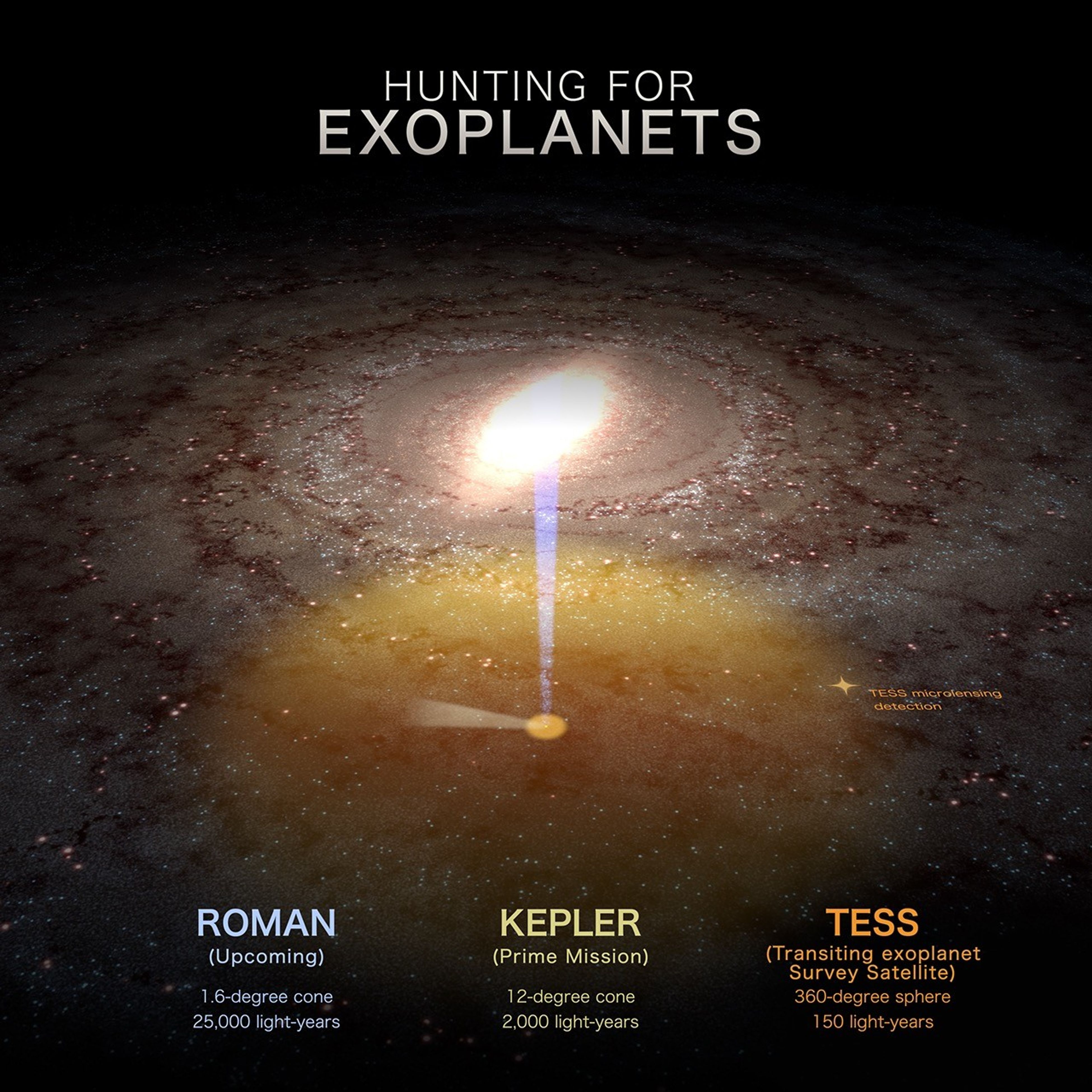
This graphic highlights the search areas of three planet-hunting missions: NASA’s upcoming Nancy Grace Roman Space Telescope, the retired Kepler Space Telescope, and NASA’s TESS (Transiting Exoplanet Survey Satellite). While TESS discovers transiting planets within a 150-light-year radius of Earth, it recently detected a planet about 40,000 light-years away (marked by the star symbol) via another method, called microlensing. NASA’s Goddard Space Flight CenterBut microlensing observations are time-limited opportunities.
Microlensing events happen once and they’re gone — they don’t repeat. I like to joke that we’ll probably find the first Earth analog with microlensing, and then wave at it as it goes by because we’ll never see it again.Mallory Harris
Ph.D. candidate at the University of New Mexico
That makes detailed observations of microlensing planets tough. However, the method can serve as a powerful demographics tool that offers broad information about planetary populations.
“This is a bit like a preview of the microlensing NASA’s Nancy Grace Roman Space Telescope will do,” said Michael Fausnaugh, a professor at Texas Tech University in Lubbock and a co-author of the study. On track for launch on August 30, 2026, Roman will observe the center of the Milky Way galaxy for one of its core surveys, revealing an estimated 1,000 microlensing planets and around 100,000 transiting planets.
Roman will specifically target the heart of the galaxy because stars are packed so tightly together there, increasing the odds of seeing microlensing events. While that crowding would make many stars blend together in TESS’s larger pixels, TESS looks at nearly the whole sky, where stars are more spread out.
“Since TESS looks elsewhere in the galactic plane, it can naturally find microlensing planets in other parts of the galaxy, as demonstrated by this first microlensing planetary system,” Dragomir said. “That means it could help us study planets in regions with different conditions.”
That could have implications for the search for habitable worlds. The bustling galaxy center is rife with radiation from more frequent supernova explosions, which could sterilize planets. And gravitational encounters between crowded stars may disrupt planetary systems. Observations from TESS focus on a milder part of the galaxy.
“The key to Roman’s microlensing survey is its dense time coverage targeting the galactic bulge,” Fausnaugh said. “The TESS mission uniquely provides these rapid observations for stars in other parts of the galaxy, and pairing the two opens up prospects for understanding planet formation in a diverse population of stars. Since microlensing finds solar system-like planets, this offers a new chance to understand how planetary systems like our own vary in different regions of the galaxy.”
To learn more about the TESS mission, visit:
Media contact:
Claire Andreoli
NASA’s Goddard Space Flight Center, Greenbelt, Md.
301-286-1940
Ashley is the lead science writer for NASA’s Nancy Grace Roman Space Telescope.
Share Details Last Updated Jul 01, 2026 Editor Ashley Balzer Contact Ashley Balzer ashley.m.balzer@nasa.gov Location Goddard Space Flight Center Related Terms Explore More 9 min read Citizen Scientists Spot Jupiter-like Planet in NASA TESS DataArticle
4 years ago
3 min read NASA’s Planet-Hunting TESS Reveals Dazzling Night Sky
NASA’s TESS has released its most complete view of the starry sky to date
Article
2 months ago
7 min read Journey to Center of Milky Way With Upcoming NASA Roman Core Survey
At the heart of our own galaxy, there is a dense thicket of stars with…
Article
5 months ago
6 min read Why NASA’s Roman Mission Will Study Milky Way’s Flickering Lights
NASA’s Nancy Grace Roman Space Telescope will provide one of the deepest-ever views into the…
Article
3 years ago
5 min read NASA’s TESS Finds Intriguing World Sized Between Earth, Venus
Article
2 years ago
Keep Exploring Discover More Topics From NASA
Missions
Humans in Space
Climate Change
Solar System
NASA’s Chandra Reveals ‘Red, White, Blue’ Universe for US 250th
In celebration of the 250th birthday of the United States, NASA has unveiled four cosmic images from its Chandra X-ray Observatory rendered in red, white, and blue that represent the wonders of the universe the agency explores. The images are accompanied by a trio of new sonifications – a technique that translates astronomical data into sounds.
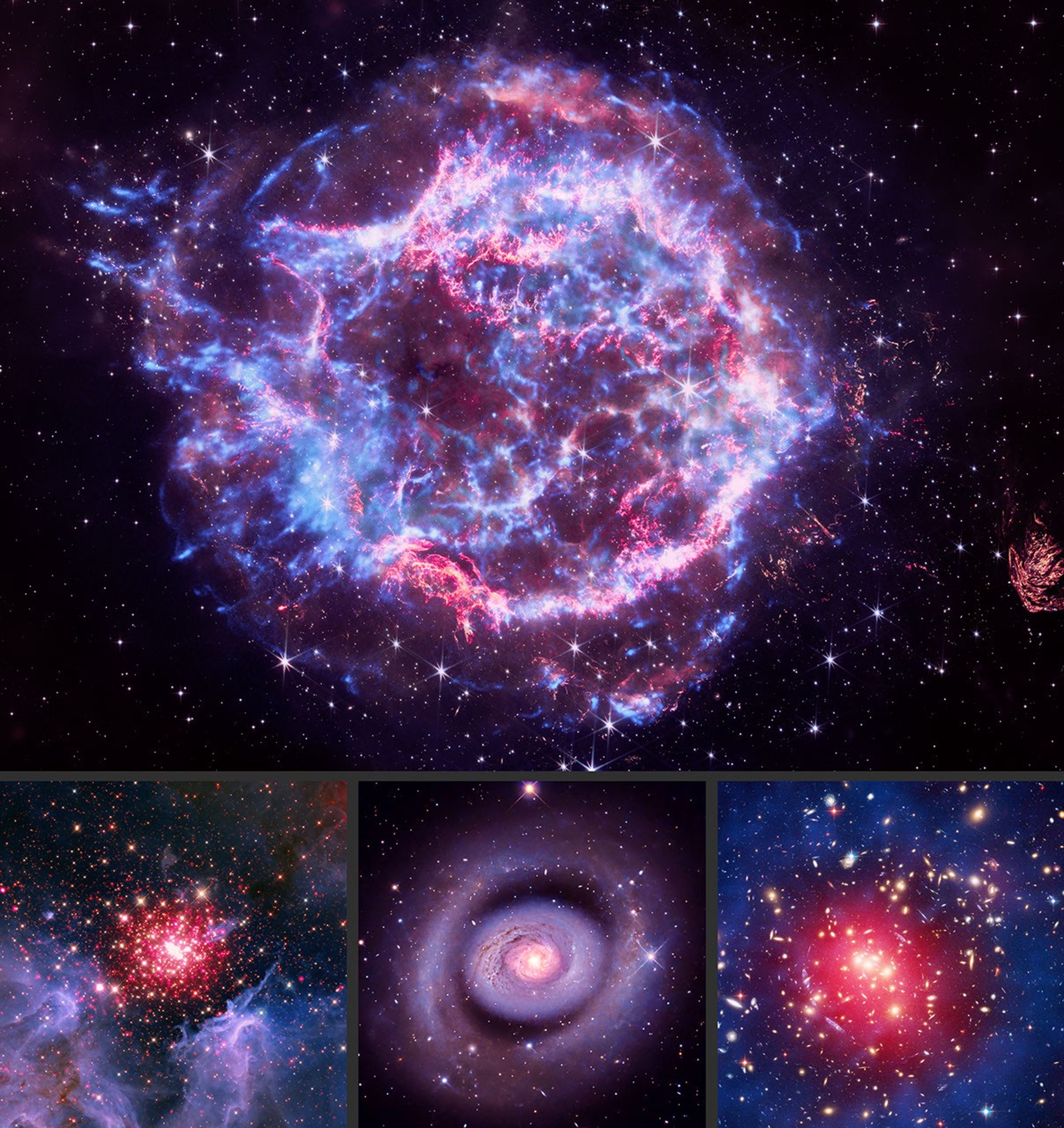
In celebration of the 250th birthday of the United States, NASA’s Chandra X-ray Observatory has unveiled four cosmic images rendered in red, white, and blue that represent the wonders of the universe that NASA explores. NASA/CXC/SAOThe image set begins with Cassiopeia A in the top panel, where X-rays from Chandra (represented in blue and purple) have been combined with an infrared image from NASA’s James Webb Space Telescope (red and white). Chandra’s X-ray vision reveals the blast wave that tore through the star, as well as elements in the debris field like iron, calcium, and oxygen. Webb’s infrared data also shows the expanding shell of material from the explosion and cosmic dust throughout the remnant.
In the bottom row, the first image on the left is the nebula NGC 3603, which contains a massive cluster of stars and is located in the Milky Way Galaxy. This new composite image contains Chandra’s X-ray data (red and white) and shows diffuse emissions near the galaxy’s center along with point-like X-ray sources throughout the middle of the image. Optical, infrared, and ultraviolet light from NASA’s Hubble Space Telescope (red-orange, green, blue, and yellow) reveal stars in the center of the image and dust and gas toward the bottom. The combined layering of the colors makes this nebula and the stars forming within it appear primarily red, white, and blue, with X-rays showing the sparkling lights of young stars.
The middle panel of the bottom row is a new look at the galaxy NGC 4736, also known as Messier 94. In this image, X-rays of different wavelengths from Chandra (red, orange, and blue) are layered with a visible light image from astrophotographers using their telescopes on the ground (red, green, and blue). Messier 94 is a spiral galaxy with a bright inner ring around it, called a starburst ring, where new stars are forming, perhaps fueled by gas driven in the unique oval-shaped structure seen here.
The final image in this red, white, and blue quartet features ZwCl 0024+1652. This is a distant galaxy cluster in which astronomers have found evidence for dark matter by using specially processed data from Hubble (blue). Another image from Hubble reveals the individual galaxies in the cluster (appearing as yellow and white). X-ray data from Chandra shows the enormous reservoir of superheated gas that pervades this galaxy cluster (red) with much more mass than all the galaxies taken together.
New sonifications of the three images along the bottom row of this mosaic are also available, allowing listeners to experience data through sound.
The translation of NGC 3603 into sound begins with a left to right scan, where the brightnesses of the sources once again dictate volume. Chandra’s observations of compact sources sprinkled throughout the galaxy are heard as piano notes, while the diffuse X-ray emission is mapped to a range of audio frequencies. The Hubble optical data is played as sustained tones and acoustic guitar harmonics.
In the sonification of NGC 4736, the radar-like scan moves clockwise, and the brightness of the sources dictates the volume of the sounds. X-rays from Chandra have been turned into wind-like sounds that follow the shape of the X-ray emission. Neutron stars and stellar-mass black holes (known as “compact sources”) detected by Chandra are mapped to pitched tones on a glass marimba. Optical data from ground-based observations is mapped to musically pitched tones, creating a low drone, while stars and background galaxies are heard as a soft piano.
For ZwCl 0024+1652, the sonification begins as a circle on the outside of the image and moves inward. The volume is linked to the brightness of the data, reaching one peak as the circle passes over the dark matter detected by inference from Hubble optical observations and another as it reaches the core. The background stars are heard as a swelling glockenspiel-like sound, and the galaxies are played on a piano. Chandra’s X-rays, which dominate the center of the galaxy cluster and reveal superheated gas, are represented by airy synthesizer notes.
The sonification program is led by the Chandra X-ray Center (CXC) and included as part of NASA’s Universe of Learning program. The collaboration was driven by visualization scientist Kimberly Arcand, (CXC), Matt Russo, astrophysicist; and Andrew Santaguida, musician, SYSTEM Sounds project; along with Christine Malec, consultant. Previously released sonifications of data from Cassiopeia A can be found at chandra.si.edu/sound.
NASA’s Marshall Space Flight Center in Huntsville, Alabama, manages the Chandra program. The Smithsonian Astrophysical Observatory’s Chandra X-ray Center controls science operations from Cambridge, Massachusetts, and flight operations from Burlington, Massachusetts.
To learn more about NASA’s Chandra mission, visit:
Visual DescriptionIn celebration of the 250th birthday of the United States, this release includes a series of images featuring four wonders of the universe, rendered in red, white, and blue. The images contain X-ray data from the Chandra X-ray Observatory, optical and infrared data from the Hubble Space Telescope and the James Webb Space Telescope, as well as ground-based telescopes.
The main image set features composite images of the four individual objects; Cassiopeia A, NGC 3603, M94/NGC 4736, and ZwCl 0024+1652.
Cassiopeia A occupies the top panel of the frame, significantly larger than the other images in the set. The cloudy blast-wave of the supernova remnant is ring-like in shape, streaked with veins of iron, calcium, and oxygen. Here, presented in red, white, and blue, the remnant resembles an electrified donut, crackling with marbled veins of strawberry and blueberry icing.
At our lower left of the image set is the nebula NCG 3603, which contains a massive cluster of stars on the other side of the Milky Way galaxy. Here, a tight cluster of neon red and white stars packs the center of the image, dissipating as it reaches the outer edges of the panel. Sweeping in at the lower corners of the image are hazy blue clouds resembling sheets of gauze.
Centered at the bottom of the image set is the galaxy NGC 4736, also known as Messier 94 (M94). Here, the spiral galaxy is seen face on, with concentric pale violet cloud rings flecked with scores of stars in white, pale blue, soft red, and golden yellow. The inner ring of the galaxy is bright, and rosy yellow in color. This is a starburst ring, where new stars are forming.
At our bottom right of the image set is the distant galaxy cluster ZwCl 0024+1652. The image is packed with streaks and specks in golden yellow and brilliant white. Upon close inspection, each streak and speck is revealed to be an individual galaxy, some with discernible spiral shapes. At the center of the image is a round pool of bright red light, surrounded by royal blue haze. The red light represents X-ray observations by Chandra, which reveal an enormous reservoir of superheated gas pervading the cluster. The blue haze represents specially-processed data from Hubble, suggesting evidence of dark matter.
This release also includes new sonifications of the three images presented in the bottom row of this data set, allowing listeners to experience the data through sound.
Read more from NASA’s Chandra X-ray Observatory
News Media ContactMegan Watzke
Chandra X-ray Center
Cambridge, Mass.
617-496-7998
mwatzke@cfa.harvard.edu
Joel Wallace
Marshall Space Flight Center, Huntsville, Alabama
256-544-0034
joel.w.wallace@nasa.gov
Article
3 weeks ago
1 min read Pretty in Pink
Saturn and its rings are prominently shown in this color image, along with three of…
Article
22 years ago
Keep Exploring Discover More Topics From NASA
Chandra X-ray Observatory
James Webb Space Telescope
Hubble Space Telescope
Since its 1990 launch, the Hubble Space Telescope has changed our fundamental understanding of the universe.
The Swift Spacecraft
A Day of Flight Testing at NASA Armstrong
3 min read
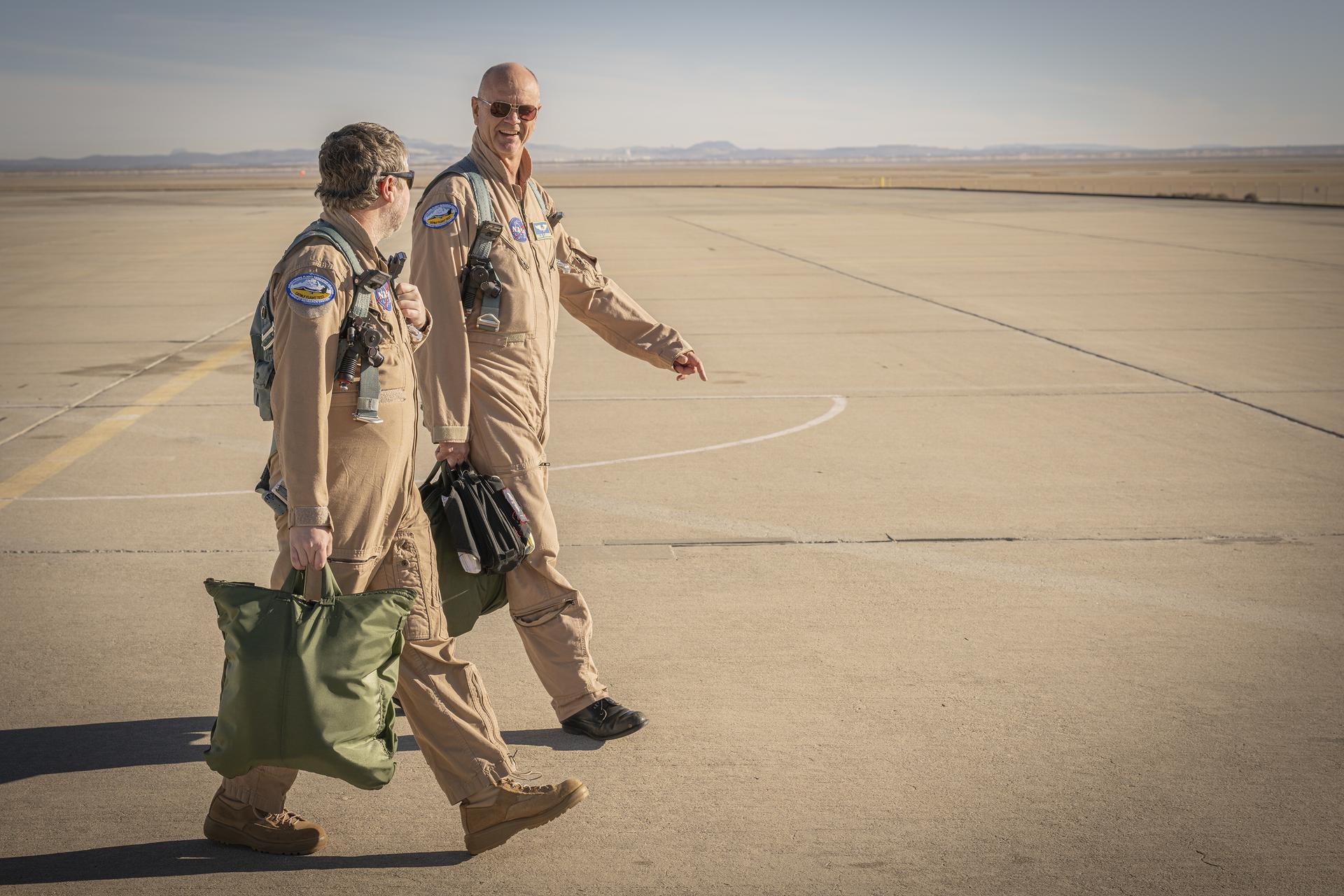
Preparations for Next Moonwalk Simulations Underway (and Underwater) NASA flight test engineer A.J. Jaffe and pilot Nils Larson walk on the ramp before a flight Tuesday, Jan. 13, 2026, at NASA’s Armstrong Flight Research Center in Edwards, California. The two support the agency’s Crossflow Attenuated Natural Laminar Flow (CATNLF) project, which aims to lower fuel costs for future commercial aircraft by testing a scale-model wing designed to improve laminar flow.NASA/Christopher LC ClarkFlight testing is a team sport. For nearly 80 years, teams at NASA’s Armstrong Flight Research Center in Edwards, California, have used flight testing to push the limits of aerodynamics and advance aviation.
Earlier this year, NASA’s Crossflow Attenuated Natural Laminar Flow (CATNLF) initiative tested a wing concept that would maximize the smooth flow of air known as laminar flow, which could lower fuel costs for future airliners. During flight testing, researchers strapped a scale-model CATNLF wing to the bottom of a NASA F-15 aircraft.
Here’s what a day of CATNLF flight testing looked like.
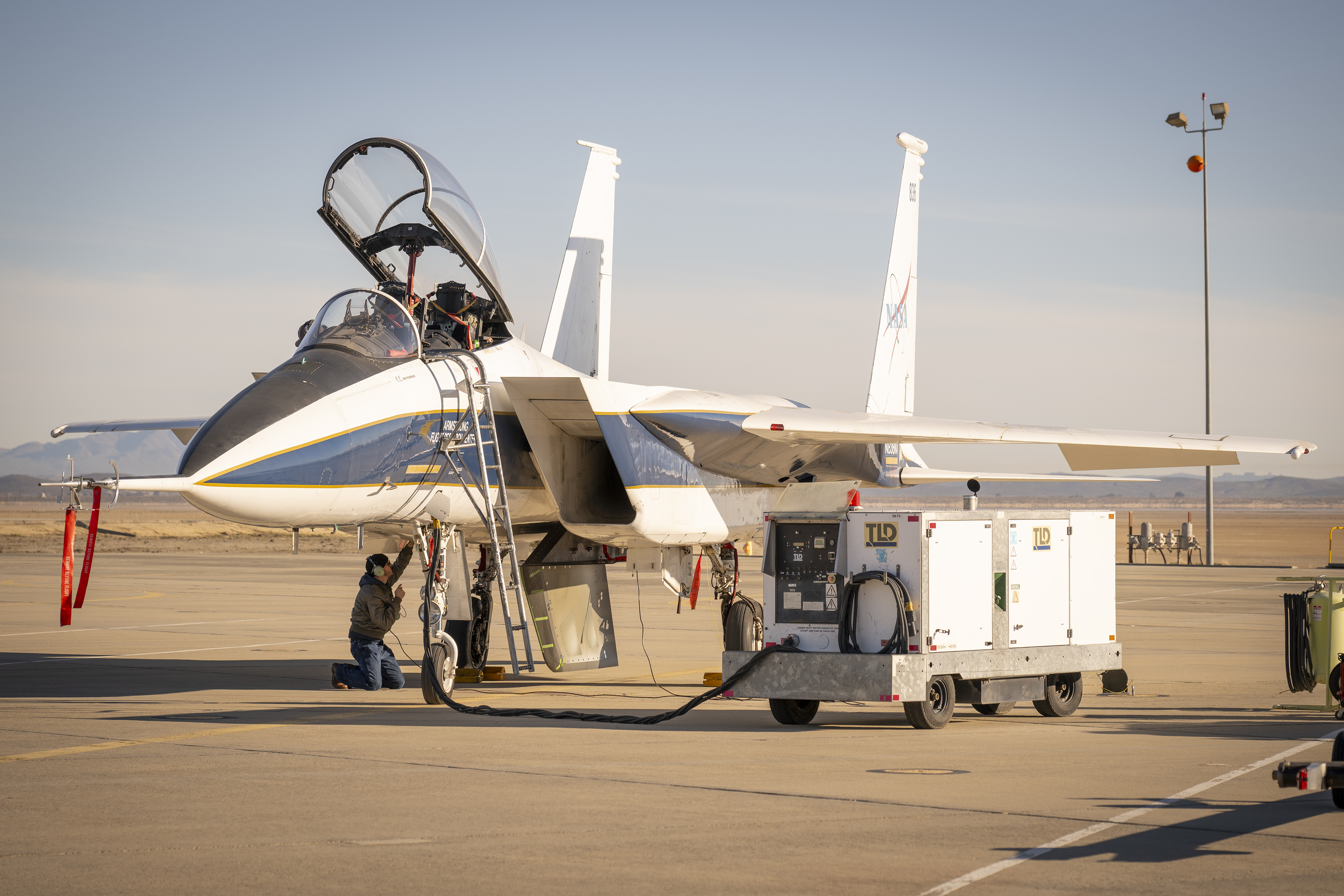
NASA ground crew prepares the agency’s F-15 research aircraft and Cross Flow Attenuated Natural Laminar Flow (CATNLF) test article ahead of its first high-speed taxi test on Tuesday, Jan. 12, 2026, at NASA’s Armstrong Flight Research Center in Edwards, California. The CATNLF design aims to reduce drag on wing surfaces to improve efficiency and, in turn, reduce fuel burn.NASA/Christopher LC Clark 5 a.m. — Aircraft stagingGround crews ready the aircraft for the mission. If the operation involves a chase plane — a second aircraft to monitor the test flight — it would also be prepared, along with its crew.
6 a.m. — Crew briefPilots, engineers, maintenance techs, project leads, researchers, photographers, and videographers meet to review the flight’s goals, weather reports, and final details.
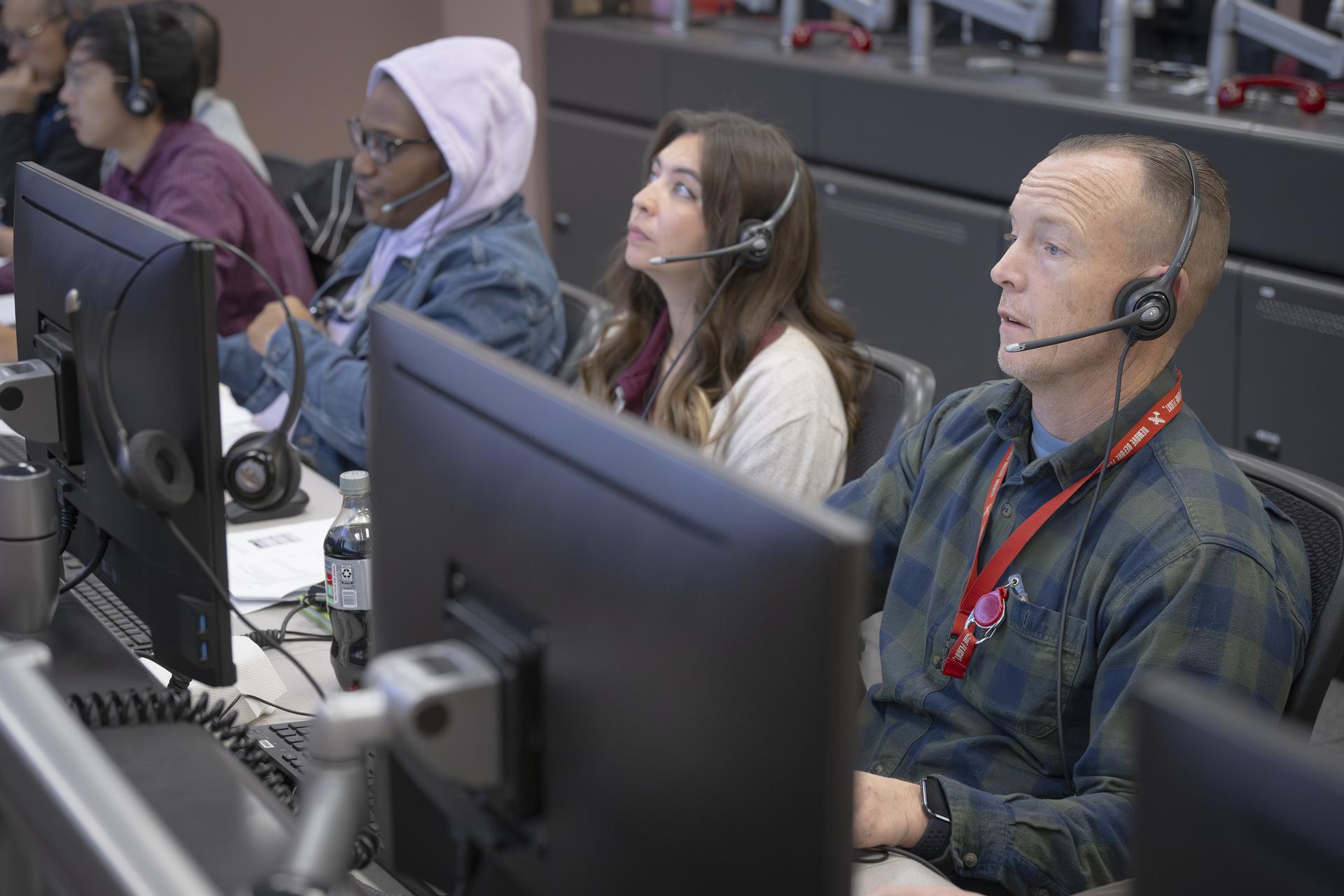
NASA researchers Mike Frederick, right, and Michelle Banchy, left, along with Ashante Jordan and intern Phillip Nguyen, sit in a control room and prepare for a flight test Thursday, Jan. 29, 2026, at NASA’s Armstrong Flight Research Center in Edwards, California. The agency’s Crossflow Attenuated Natural Laminar Flow (CATNLF) project aims to lower fuel costs for future commercial aircraft by testing a scale-model wing designed to improve laminar flow.NASA/Christopher LC Clark 6:30 a.m. — Control room checks, air crew suit-upResearchers head to the control room to complete day-of checks, confirming all communications, displays, and instruments are functioning.
Pilots suit up in life support, including custom‑fit pressure suits, harnesses, helmets, and masks. If a photographer, videographer, or flight test engineer will be in the aircraft’s back seat, they do the same.
6:45 a.m. — Air crew steps, control room preparationsThe pilot completes preflight checks with the crew chief and technicians for the aircraft’s electrical systems. The pilot and the crew chief sign a flight preparedness report confirming the aircraft is ready to fly.
Inside the control room, the team prepares to monitor the flight using the same set of test cards, a step-by-step plan for the flight.
7 a.m. — Pilot secured in jetThe pilot and backseat crew member climb into their seats, strap in, and secure any gear they’ve brought for the test. The pilot completes preflight ground checks.
7:15 a.m. — Aircraft taxiThe pilot communicates with the control tower and taxis to the runway. Control room teams at NASA Armstrong monitor the aircraft via radio.
7:30 a.m. — TakeoffThe pilot accelerates down the runway and, at the proper speed, pulls back on the stick to take off. Once airborne, the pilot coordinates with air traffic control at Edwards Air Force Base and the NASA Armstrong control room while flying to the designated test area.
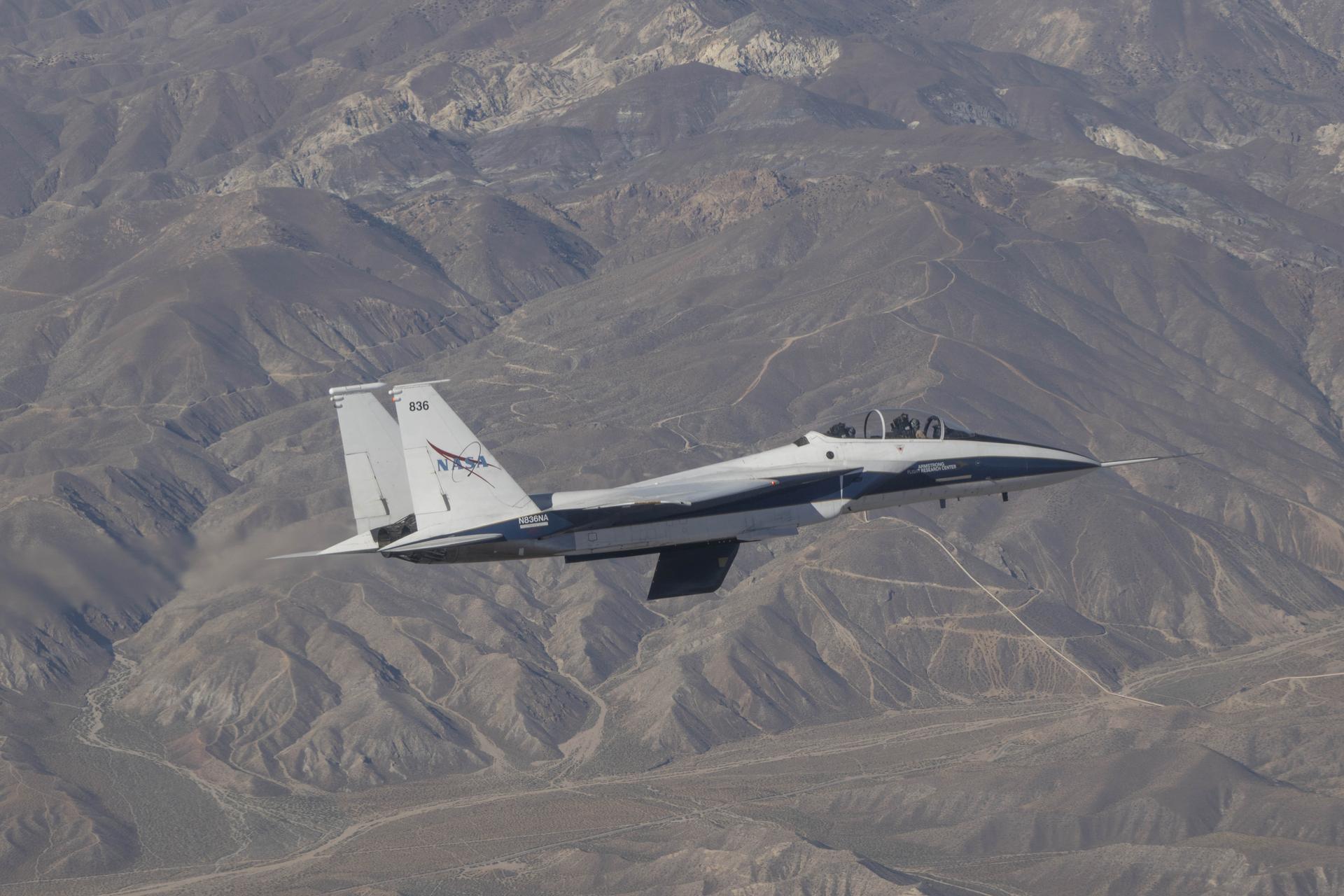
A F-15 aircraft owned by NASA’s Armstrong Flight Research Center in Edwards, California, flies above a mountain range on Tuesday, April 21, 2026. The agency’s Crossflow Attenuated Natural Laminar Flow (CATNLF) test article is attached to the bottom of this F-15. This project aims to lower fuel costs for future commercial aircraft by testing a scale-model wing designed to improve laminar flow. NASA/Jim Ross 7:30 to 8:30 a.m. — FlightAt the test location, the team coordinates with the pilot on altitude, speed, and maneuvers. The test conductor relays each task, and the pilot completes them one-by-one. The pilot and control room monitor the performance of the hardware, instruments, aircraft, or software throughout the sequence. After completing the test points, the pilot returns to base.
8:45 a.m. — Landing, towingThe pilot lands and taxis to the ramp at NASA Armstrong, where the crew chief meets the jet. After the pilot exits, the aircraft is towed into the hangar for maintenance.
9:30 a.m. — Crew debriefThe pilot, project team, and mission controlstaff return to the briefing room tocapture lessons learned and document items for follow-up.
10 a.m. — Data download, second flight prepTeams download flight data for analysis. If two flights are scheduled, preparations begin immediately for the second.
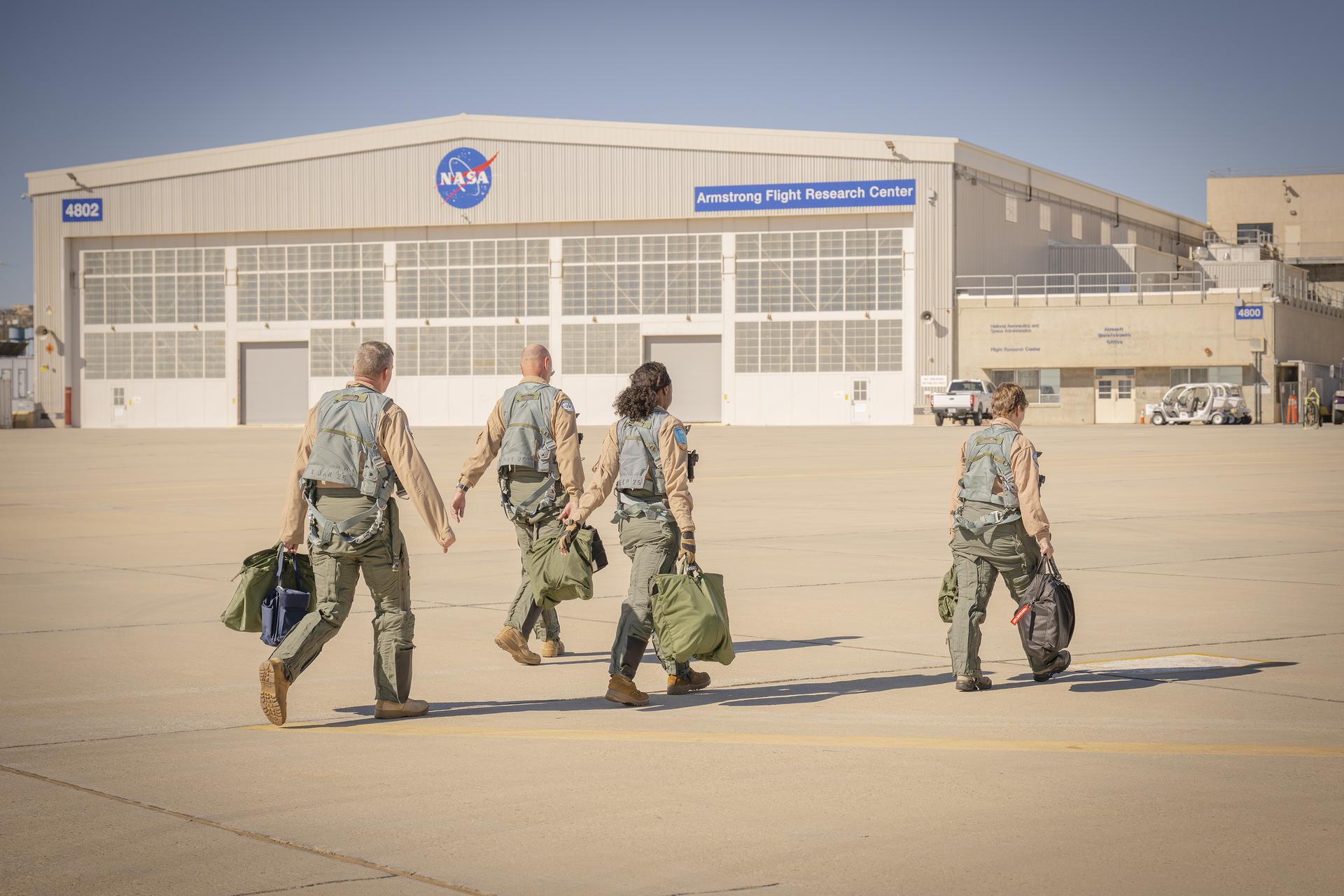
Four NASA employees walk toward a hangar after a flight Thursday, Feb. 4, 2026, at NASA’s Armstrong Flight Research Center in Edwards, California. The team supports the agency’s Crossflow Attenuated Natural Laminar Flow (CATNLF) project, which aims to lower fuel costs for future commercial aircraft by testing a scale-model wing designed to improve laminar flow.NASA/Christopher LC Clark Share Details Last Updated Jun 30, 2026 EditorDede DiniusContactTeresa Whitingteresa.whiting@nasa.govLocationArmstrong Flight Research Center Related Terms Explore More 5 min read NASA’s Newest Wind Tunnel Builds on Legacy of Innovation Article 2 days ago 3 min read This is How NASA Flight Tests New Technology Article 1 week ago 9 min read ARMD Research Solicitations (Updated June 23) Article 1 week ago Keep Exploring Discover More Topics From NASAArmstrong Flight Research Center
Aircraft Flown at Armstrong
Quesst: The Aircraft
Aeronautics
La NASA adjudica nuevas misiones científicas para Base Lunar y adelanta nuevas oportunidades
Read this news release in English here.
Nota del editor: Este comunicado se actualizó el 30 de junio de 2026 para aclarar la versión de desarrollo de ingeniería del rover PROMISE.
La NASA anunció el martes la selección de tres empresas para llevar a cabo cuatro nuevas misiones a la Luna a finales de 2028 como parte del programa Base Lunar de la agencia. Astrobotic, Firefly Aerospace e Intuitive Machines entregarán cargas útiles científicas de la NASA a la superficie lunar mientras la agencia construye el primer puesto de avanzada en otro mundo.
“Estas nuevas adjudicaciones a nuestros socios comerciales, que suman casi 600 millones de dólares para enviar más misiones a la Luna con cargas útiles científicas, demuestran nuestro compromiso de acelerar el esfuerzo para establecer una presencia a largo plazo en la superficie lunar, y nos brindan más oportunidades para desarrollar las capacidades que necesitamos para prosperar allí”, dijo Lori Glaze, administradora asociada de la Dirección de Misiones de Vuelos Espaciales Tripulados de la sede central de la NASA en Washington.
A Astrobotic se le adjudicaron 297,9 millones de dólares en total para dos entregas, mientras que Firefly Aerospace e Intuitive Machines recibieron 144,2 y 148,3 millones de dólares, respectivamente, para una entrega cada una, como parte de la iniciativa de Servicios Comerciales de Carga Útil Lunar (CLPS, por sus siglas en inglés) de la agencia, uno de los pilares de Base Lunar. Cada una usará versiones actualizadas de diseños de módulos de aterrizaje que ya han volado, para permitir la mayor cadencia de misiones de la NASA.
“Estamos construyendo un campo de pruebas para las operaciones de Base Lunar”, dijo Ryan Stephan, director interino de módulos de aterrizaje de carga del programa Base Lunar de la NASA. “Acelerar la cadencia con la que adjudicamos nuevas misiones a la Luna y las oportunidades de lanzamiento nos permite avanzar rápidamente para aprender, repetir y mejorar”.
Con 17 misiones de entrega a la superficie lunar a cargo de múltiples proveedores, la NASA también anunció nuevas oportunidades para que la industria estadounidense contribuya a la Base Lunar. La agencia está barajando planes para enviar a la Luna el Vehículo de Exploración Polar para Observación, Cartografía y Exploración In Situ (PROMISE, por su acrónimo en inglés), una versión de desarrollo de ingeniería del rover Perseverance en Marte. Los expertos de la agencia definirán las posibles oportunidades de PROMISE para caracterizar la superficie lunar y el subsuelo, y para prospectar recursos.
Además, la NASA tiene previsto solicitar propuestas en los próximos meses para módulos de aterrizaje lunar que transporten una demostración de tecnología de energía y aviónica, otro conjunto de cargas científicas y un generador de imágenes ópticas del Polo Sur. La NASA también publicará una convocatoria abierta para demostraciones tecnológicas de la Base Lunar y solicitará propuestas para una constelación de retransmisores de comunicaciones y navegación lunar para mejorar la comunicación entre los elementos de la Base Lunar y la Tierra.
Las adjudicaciones anunciadas el 30 de junio desempeñarán un papel fundamental en el establecimiento de la infraestructura para las operaciones en la superficie lunar. Las empresas son responsables de iniciar y ejecutar los procesos de contratación proporcionar una evaluación de un módulo de aterrizaje lunar previo similar e incorporar las lecciones aprendidas para mejorar la fiabilidad general de la misión.
Cada entrega llevará tres cargas útiles de la NASA a la superficie lunar:
- Instrumento Cámara estéreo para el estudio de los chorros de propulsión en la superficie lunar (SCALPSS, por sus siglas en inglés): un conjunto de cuatro cámaras que utiliza una técnica llamada fotogrametría estéreo para producir una vista tridimensional del impacto del penacho de gases del motor sobre el polvo lunar a medida que el módulo de aterrizaje desciende sobre la superficie de la Luna. Al recopilar datos de una variedad de motores de distintos tamaños, combustibles y lugares de aterrizaje, estas imágenes estéreo de alta resolución ayudarán a crear modelos para predecir la erosión del polvo lunar y las características de los materiales eyectados, lo que desempeñará un papel vital a medida que se entreguen en la Luna naves espaciales y equipamiento más grandes y pesados cerca unos de otros.
- Conjunto de retrorreflectores láser (LRA, por sus siglas en inglés): refleja los haces láser transmitidos por orbitadores lunares o naves espaciales en fase de aterrizaje para ayudarles a determinar su posición orbital o a navegar hacia la superficie. Es un pequeño dispositivo del tamaño de una galleta, formado por ocho prismas de cuarzo en forma de esquina de cubo colocados en un marco de aluminio en forma de cúpula. El conjunto es pasivo, no requiere energía ni mantenimiento. Estos conjuntos han volado en anteriores módulos de aterrizaje del programa CLPS y en módulos de aterrizaje lunar internacionales, y se seguirán utilizando para construir una red de marcadores permanentes de ubicación en la Luna para la exploración futura.
- Espectrómetro de transferencia lineal de energía (LETS, por sus siglas en inglés): ayuda a comprender mejor el entorno de radiación a partir de distintas trayectorias de tránsito lunar y en diferentes lugares de la superficie lunar. Derivado de equipamiento ya existente, este monitor de radiación utiliza un diminuto y avanzado detector de silicio para medir la energía que transporta la radiación espacial entrante. Proporcionará información sobre la intensidad de la radiación y el tipo de radiación que impacta en la superficie lunar, y brinda la clase de datos detallados sobre radiación que la NASA necesita para diseñar misiones más seguras, proteger a los astronautas y planificar la exploración de larga duración.
La agencia también está estudiando opciones para que estos módulos de aterrizaje entreguen otras cargas útiles a la Luna.
“Al enviar los mismos instrumentos científicos en varios módulos de aterrizaje, comprenderemos mejor los posibles peligros durante el aterrizaje y crearemos una red global de datos ambientales y marcadores de ubicación en la Luna”, dijo Joel Kearns, administrador asociado adjunto para la exploración de la Dirección de Misiones Científicas en la sede central de la NASA. “Es similar a tener estaciones meteorológicas en distintos lugares de la Tierra. Estas tres cargas útiles han demostrado su fiabilidad en vuelo y sus datos son fundamentales para apoyar la exploración segura de la superficie lunar con seres humanos”.
La NASA avanza en el desarrollo de la Base Lunar, una iniciativa a largo plazo de exploración e infraestructura lunar diseñada para permitir una presencia humana sostenida y ampliar la actividad científica y comercial en la superficie de la Luna.
Como parte de una edad de oro de innovación y exploración, la NASA enviará astronautas en misiones cada vez más difíciles para explorar más de la Luna con fines de descubrimiento científico y beneficios económicos, y para continuar sentando las bases para las primeras misiones tripuladas a Marte.
Para obtener más información sobre la Base Lunar, visite el sitio web (en inglés):
https://www.nasa.gov/moonbase
-fin-
Rachel Kraft / Molly Wasser / María José Viñas
Sede central, Washington
+1 202-358-1600
rachel.h.kraft@nasa.gov / molly.l.wasser@nasa.gov / maria-jose.vinasgarcia@nasa.gov
Ivry Artis / Kenna Pell
Centro Espacial Johnson, Houston
+1 281-483-5111
ivry.w.artis@nasa.gov / kenna.m.pell@nasa.gov
NextSTEP-3 B: Moon Base Demonstrations
Notice ID: Coming Soon
- July, 2026 – Anticipated Synopsis Release [System for Awards Management]
NASA’s Human Spaceflight Mission Directorate is seeking innovative ideas from industry partners through a new solicitation appendix under the NextSTEP-3 Omnibus Broad Agency Announcement. Appendix B: Moon Base Demonstrations calls for industry-led demonstrations, risk reduction, and special topic activities that enable an enduring human presence on the lunar surface.
NASA’s Moon Base, located in the lunar South Pole region, will serve as the premier proving ground for deep space exploration, empowering scientific discovery and the development of advanced space technologies. To accelerate phased implementation of the Moon Base, NASA is working with its partners to bridge the gap between technology development and mission operations.
This solicitation seeks industry proposals for concept demonstrations, risk reduction opportunities, and studies that address Moon Base architecture gaps. Awards will focus on the integration, demonstration, and maturation of concepts beyond component technology development.
NASA Administrator Jared Isaacman and Carlos García-Galán, Moon Base program manager, announced this new opportunity during a discussion with media on Tuesday, June 30. NASA anticipates the solicitation will be posted to the System for Awards Management in early July.
The solicitation’s first directed topic call will be on surface power. Follow-on directed topic calls will solicit innovations in other topic areas listed below.
Solicitation Topics- Infrastructure
- Power Systems
- Communications & Positioning, Navigation, and Timing (C&PNT)
- Transportation
- Mobility
- Habitation
- Autonomy & Robotics
- Lunar Science
- Concepts of Operations
Ignition
Moon Base
Artemis
NextSTEP
NASA Awards More Moon Base Science, Previews New Opportunities
Editor’s note: This release was updated on June 30, 2026, to clarify the engineering development version for the PROMISE rover.
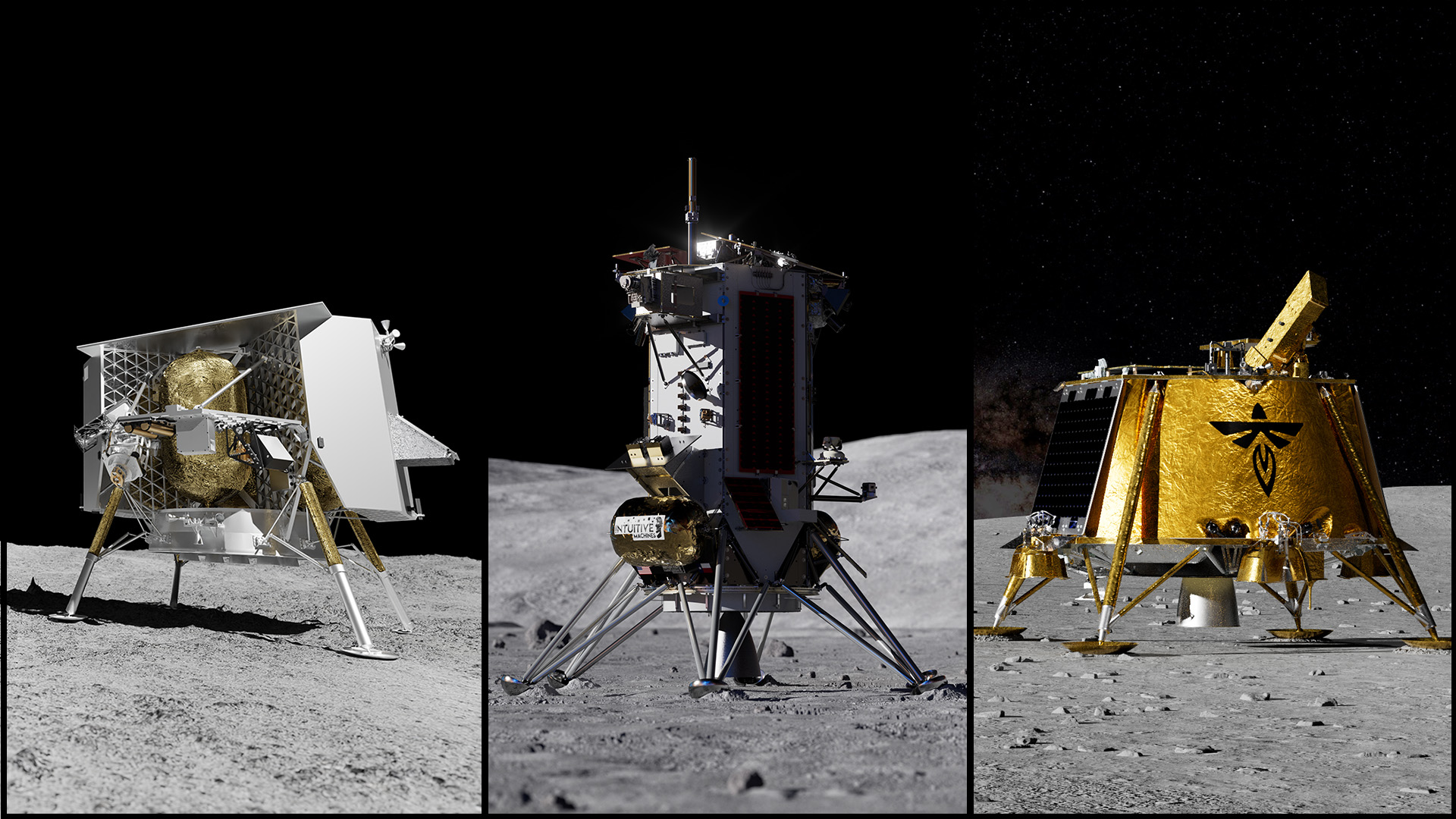
NASA announced Tuesday the selection of three companies to land four new missions on the Moon in late 2028 as part of the agency’s Moon Base Program. Astrobotic, Firefly Aerospace, and Intuitive Machines will deliver NASA science payloads to the lunar surface as the agency builds the first outpost on another celestial world.
“These new awards to our commercial partners, totaling nearly $600 million to land more missions on the Moon with science payloads, demonstrate our commitment to accelerating our effort to build a long-term presence on the lunar surface, and give us more opportunity to develop the skills we need to prosper there,” said Lori Glaze, associate administrator for the Human Spaceflight Mission Directorate at NASA Headquarters in Washington.
Astrobotic is awarded $297.9 million total for two deliveries, as well as Firefly Aerospace $144.2 million and Intuitive Machines $148.3 million for one delivery each as part of the agency’s CLPS (Commercial Lunar Payload Services) initiative, a backbone of the Moon Base. Each will use updated versions of already-flown lander designs to enable NASA’s increased mission cadence.
“We’re building a proving ground for Moon Base operations,” said Ryan Stephan, NASA’s Moon Base acting director of cargo landers. “Accelerating our Moon mission ordering cadence and launch opportunities enable us to move quickly to learn, iterate, and improve.”
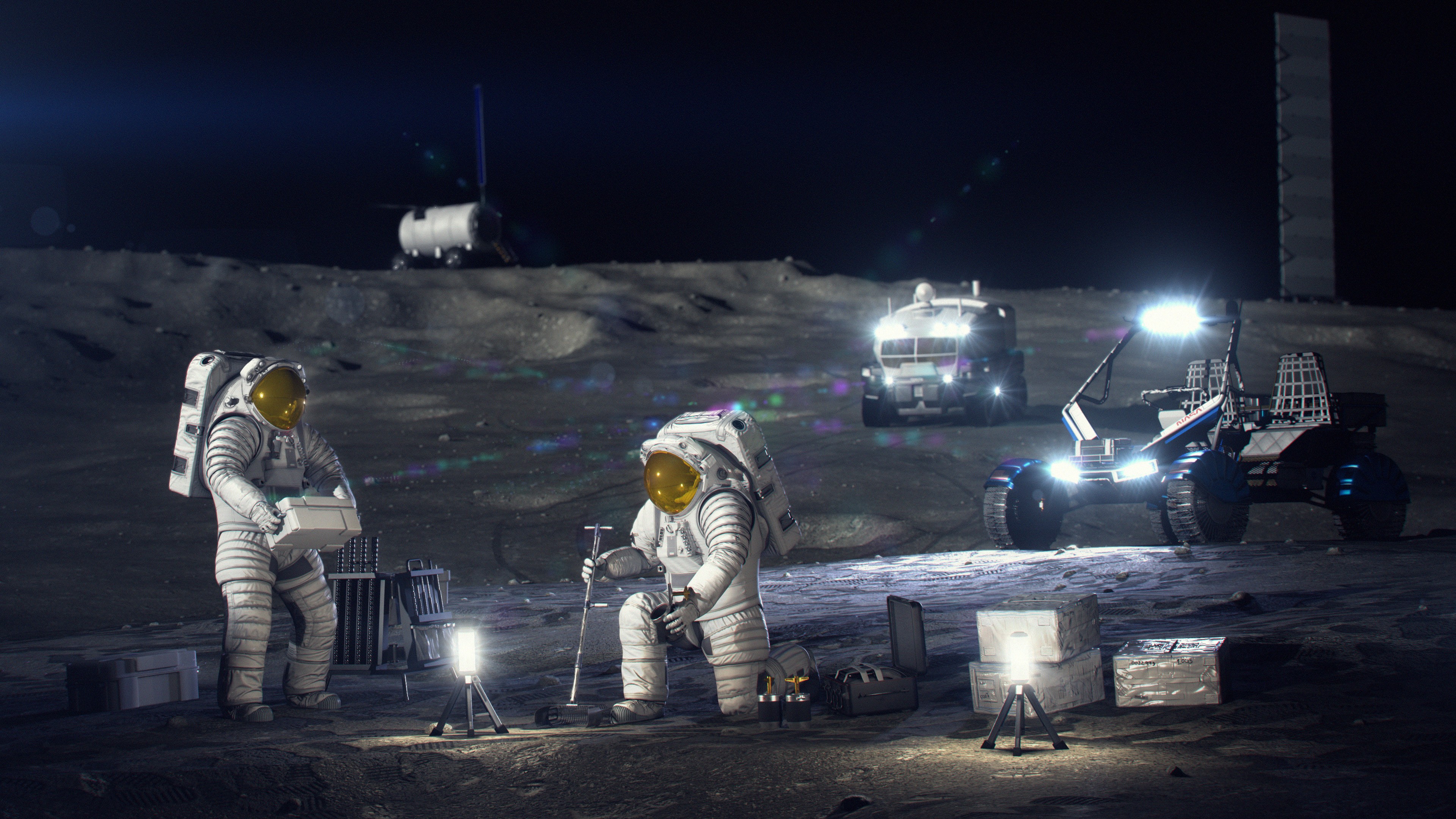
With 17 lunar surface deliveries across multiple providers, NASA also announced new opportunities for American industry to contribute to the Moon Base. The agency is considering plans to send to the Moon, PROMISE (Polar Rover for Observation, Mapping, and In-Situ Exploration), a hybrid engineering development version of the Mars Perseverance and Curiosity rovers. Agency experts will define potential opportunities for PROMISE to characterize the lunar surface, subsurface, and prospect for resources.
In addition, NASA plans to solicit proposals in the coming months for lunar landers to deliver a power and avionics technology demonstration, another science manifest, and a South Pole optical imager. NASA also will share an open solicitation for Moon Base technology demonstrations and seek a lunar communication and navigation relay constellation to enable improved communication between Moon Base elements and Earth.
The awards announced June 30 will play a critical role in establishing the infrastructure for lunar surface operations. The companies are responsible for initiating and executing procurements, providing an assessment of a similar previous lunar lander, and incorporating lessons learned to improve the overall mission reliability.
Each delivery will carry three NASA payloads to the lunar surface:
- Stereo Camera for Lunar Plume Surface Studies (SCALPSS): An array of four cameras that uses a technique called stereo photogrammetry to produce a 3D view of the impact of an engine’s exhaust plume on lunar dust as the lander descends on the Moon’s surface. Collecting data from a variety of engine sizes, propellants, and landing locations, these high-resolution stereo images will aid in creating models to predict lunar dust erosion and ejecta characteristics, playing a vital role as bigger, heavier spacecraft and hardware are delivered to the Moon near each other.
- Laser Retroreflector Array (LRA): Reflects laser beams transmitted by Moon orbiters or landing spacecraft to help them determine their orbit position or navigate to the surface. A small cookie-sized device made of eight quartz corner-cube prisms set into a dome-shaped aluminum frame, the array is passive, requiring no power or maintenance. These arrays have flown on previous CLPS landers and international lunar landers and will continue to be used to build a network of permanent location markers on the Moon for future exploration.
- Linear Energy Transfer Spectrometer (LETS): Helps to better understand the radiation environment from a variety of lunar transit approaches and at different locations on the lunar surface. Derived from heritage hardware, this radiation monitor uses a tiny, advanced silicon detector to measure the energy carried by incoming space radiation. It will provide information about how strong radiation is and what kind of radiation is hitting the lunar surface, and provides the kind of detailed radiation data NASA needs to design safer missions, protect astronauts, and plan long‑duration exploration.
The agency also is reviewing options for these landers to deliver potential additional payloads to the Moon.
“By flying the same science instruments on multiple landers, we will better understand potential hazards during landing and build out a global network of environmental data and location markers on the Moon,” said Joel Kearns, deputy associate administrator for exploration, Science Mission Directorate, NASA Headquarters. “It’s akin to having weather stations in different locations on Earth. These three payloads are flight-proven and their data is critical to supporting safe human exploration of the lunar surface.”
NASA is advancing development of the Moon Base, a long-term lunar exploration and infrastructure initiative designed to enable sustained human presence and expanded scientific and commercial activity on the lunar surface.
As part of the Golden Age of innovation and exploration, NASA will send astronauts on increasingly difficult missions to explore more of the Moon for scientific discovery, economic benefits, and to build on our foundation for the first crewed missions to Mars.
For more information about NASA’s Moon Base plans, visit:
-end-
Rachel Kraft / Molly Wasser
Headquarters, Washington
202-358-1600
rachel.h.kraft@nasa.gov / molly.l.wasser@nasa.gov
Ivry Artis / Kenna Pell
Johnson Space Center, Houston
281-483-5111
ivry.w.artis@nasa.gov / kenna.m.pell@nasa.gov
Starry Chandelier Cluster
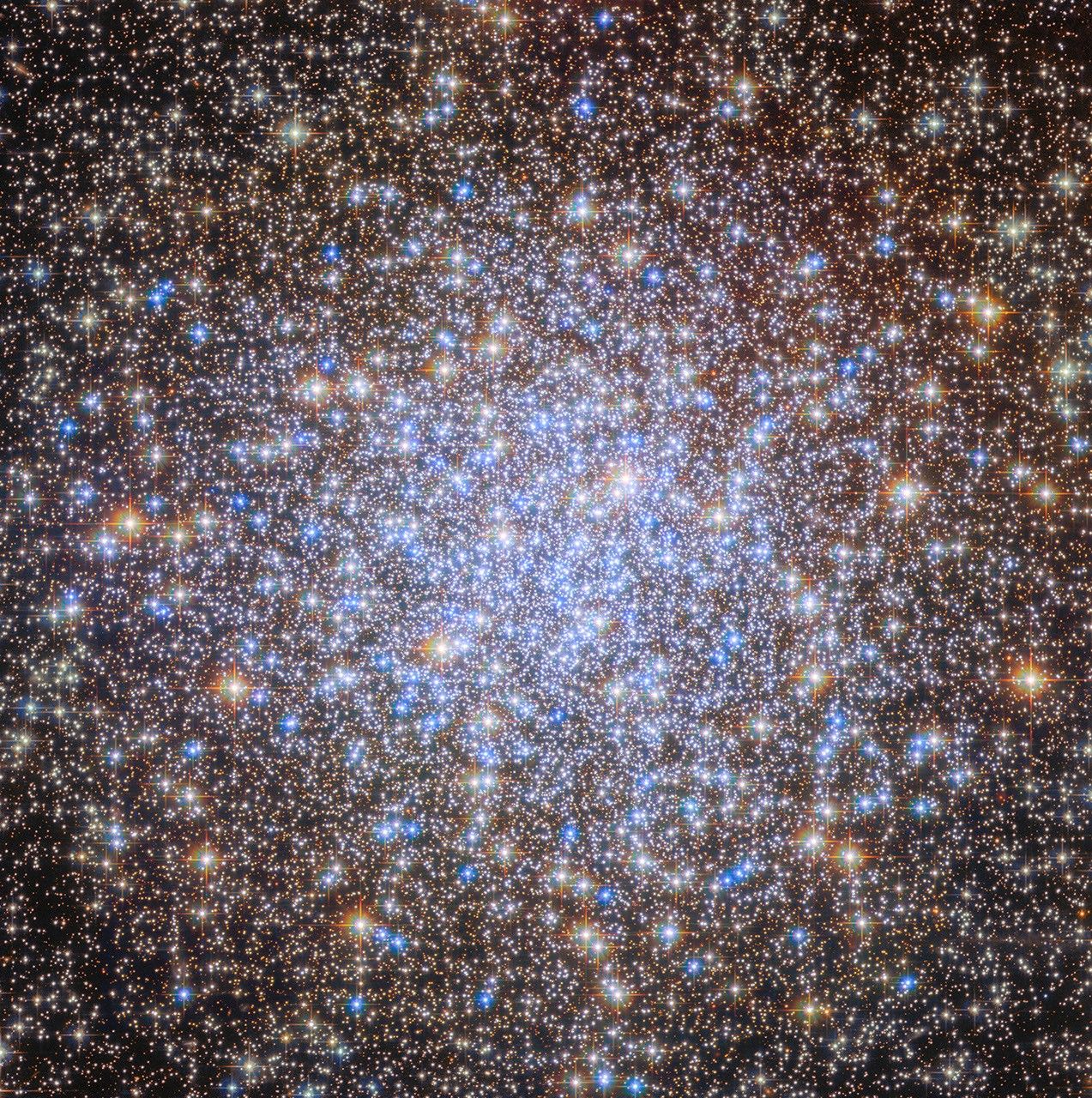
This image released on June 26, 2026, features the globular cluster NGC 6723, sometimes called the Chandelier Cluster. Like its namesake, it sparkles with countless lights. However, each ‘lightbulb’ in this chandelier is an individual star 27,000 light-years away in the constellation Sagittarius (the Archer).
Globular clusters like NGC 6723 contain some of the oldest stars in our galaxy. These clusters have ages that often exceed 10 billion years old, and some are nearly as old as the universe itself. Astronomers think globular clusters are some of the first structures that formed in our galaxy, coalescing potentially billions of years before the thin disk of stars in which our Sun orbits. The details of how globular clusters formed, however, are not yet certain.
Learn more about the Chandelier Cluster.
Image credit: ESA/Hubble & NASA, A. Sarajedini, G. Piotto
Ames Science Stars of the Month July 2026
The NASA Ames Science Directorate recognizes the outstanding contributions of (pictured left to right) Sungshin Choi, Yi-Chun Chen, Emma Yates, Eduardo Bendek. Their commitment to the NASA mission represents the entrepreneurial spirit, technical expertise, and collaborative disposition needed to explore this world and beyond.
Space Biosciences Star: Sungshin ChoiSungshin Choi is a Project Scientist with Amentum in the Space Biosciences Division. Sungshin is recognized for her enduring support of many space biology flight investigations past, present and future, including CBIOMES, ODYSSEY, and Space Algae II more recently. She is a tireless advocate for high-quality science and the principal investigators whom she represents.
Space Biosciences Star: Yi-Chun ChenYi-Chun Chen is a Project Scientist with Amentum in the Space Biosciences Division. Yi-Chun is recognized for her exemplary support of multiple space biology activities including the MeF1, GEARS, and ELISA MABL (Enzyme-Linked Immunosorbent Assay – Microgravity Associated Bone Loss) flight investigations. She is a dedicated and determined problem-solver that enables her teams to achieve success.
Emma Yates Earth Science Star: Emma YatesEmma Yates is a research scientist with the Bay Area Environmental Research Institute in the Earth Science Division. She has been instrumental in advancing NASA’s Ozone Where We Live (OWWL) project by leading community engagement, citizen-science partnerships, and field deployments across California. Her efforts are expanding access to NASA science while building innovative community-based air quality monitoring networks that support Earth science research and public engagement.
Space Science Star: Eduardo BendekEduardo Bendek is an optical scientist with the SETI Institute in the Astrophysics Branch in the Space Science and Astrobiology Division. In support of the Ames Coronagraph Testbed (ACT), Eduardo developed several options for ACT first light experiments, reviewed them with various stakeholders, and delivered a comprehensive presentation to project management for how to proceed. Eduardo’s excellent support of the ACT project is critical to its success as Ames develops this near-infrared testbed for the Habitable Worlds Observatory.
Northwest Earth and Space Science Pathways Project Celebrates Student Innovation Through ROADS from Earth to Venus National Challenge
4 min read
Northwest Earth and Space Science Pathways Project Celebrates Student Innovation Through ROADS from Earth to Venus National ChallengeThe Northwest Earth and Space Science Pathways (NESSP) project recently concluded its 2025–2026 ROADS (Rover Observation And Discoveries in Space) from Earth to Venus National Challenge, a NASA Science Activation program student challenge that engaged more than 500 students on 120 teams from eight states in authentic science and engineering experiences inspired by Venus exploration.
The challenge began with educator professional development in August 2025, preparing teachers and mentors to guide students through the ROADS experience. Registered teams then worked through challenge checkpoints from January through May 2026, with in-person Hub events held in April and May 2026 to give students opportunities to showcase their work, connect with peers, and engage with NASA-inspired STEM (Science, Technology, Engineering, and Mathematics) activities.
NESSP, led by Central Washington University in Ellensburg, Washington, creates opportunities for students and educators to connect with NASA science through hands-on STEM learning. The ROADS framework challenges upper elementary, middle, and high school students to work collaboratively on mission-inspired activities that mirror the ways NASA scientists and engineers investigate planetary environments and prepare for future exploration.
Throughout the academic year, ROADS from Earth to Venus teams completed eight Mission Objectives focused on science, engineering, teamwork, and communication. Students documented their work in Mission Development Logs, designed mission patches, modeled carbon movement on Earth and Venus, investigated the greenhouse effect, collected remote sensing data using kite-mounted cameras, programmed robotic rovers to navigate Venus-inspired terrain, explored NASA-related careers, and presented their final mission stories through virtual submissions and regional Hub events.
In addition to completing the challenge virtually, many students participated in in-person Hub events hosted by NESSP partner institutions, including Central Washington University, Montana State University, and Northern Arizona University. These events gave teams the opportunity to showcase their work, exchange ideas with peers, interact with mentors, and experience college campuses as part of a broader STEM learning community.
“The ROADS Challenge gives students the opportunity to do more than learn about NASA missions – they become part of the mission,” said Dr. Darci Snowden, Director of NESSP. “I am especially proud of this year’s teams. Students took on an exceptionally broad set of mission objectives, from modeling carbon cycles and designing experiments to conducting remote sensing operations with kites and programming rovers to navigate challenging terrain while collecting scientific data. These students participated because they were curious, motivated, and eager to learn. By investigating authentic mission challenges, collaborating with teammates, and sharing their ideas with others, students develop the confidence and skills needed to see themselves as future scientists, engineers, educators, and explorers.”
NESSP recognized top teams across elementary, middle, and high school divisions for outstanding participation and exemplary Mission Development Logs.
In the Elementary School Division, NESSP recognized The Evil Twins, The Acid Clouds, Flaming Asteroid Nebulas, and The NASA Intelligence, all from Silverdale, Washington.
In the Middle School Division, NESSP recognized Venus Ascenders from Mukilteo, Washington; Project Fuego Venus from Safford, Arizona; Galaxy Dragons from Sequim, Washington; The Four Folds from Hardin, Montana; and Crater Lake Crusaders from Medford, Oregon.
In the High School Division, NESSP recognized Laborantem from Columbus, Montana; Velocity to Venus from Sequim, Washington; Puget Sound Propulsion from Mukilteo, Washington; and Evergreen Explorers from Mukilteo, Washington.
Highlights from this year’s challenge, including student presentations and special recognitions, are available through the ROADS from Earth to Venus Virtual Recognition Ceremony on the NESSP YouTube channel, @nwessp.
Educators, families, and community organizations can continue to access ROADS from Earth to Venus activities and educational resources, along with materials from previous ROADS challenges, through the NESSP website at www.nwessp.org.
NASA’s Northwest Earth and Space Science Pathways project is supported by NASA cooperative agreement award number 80NSSC22M0006 and is part of NASA’s Science Activation Portfolio, which connects learners with authentic NASA science experiences through partnerships with educators and community organizations.
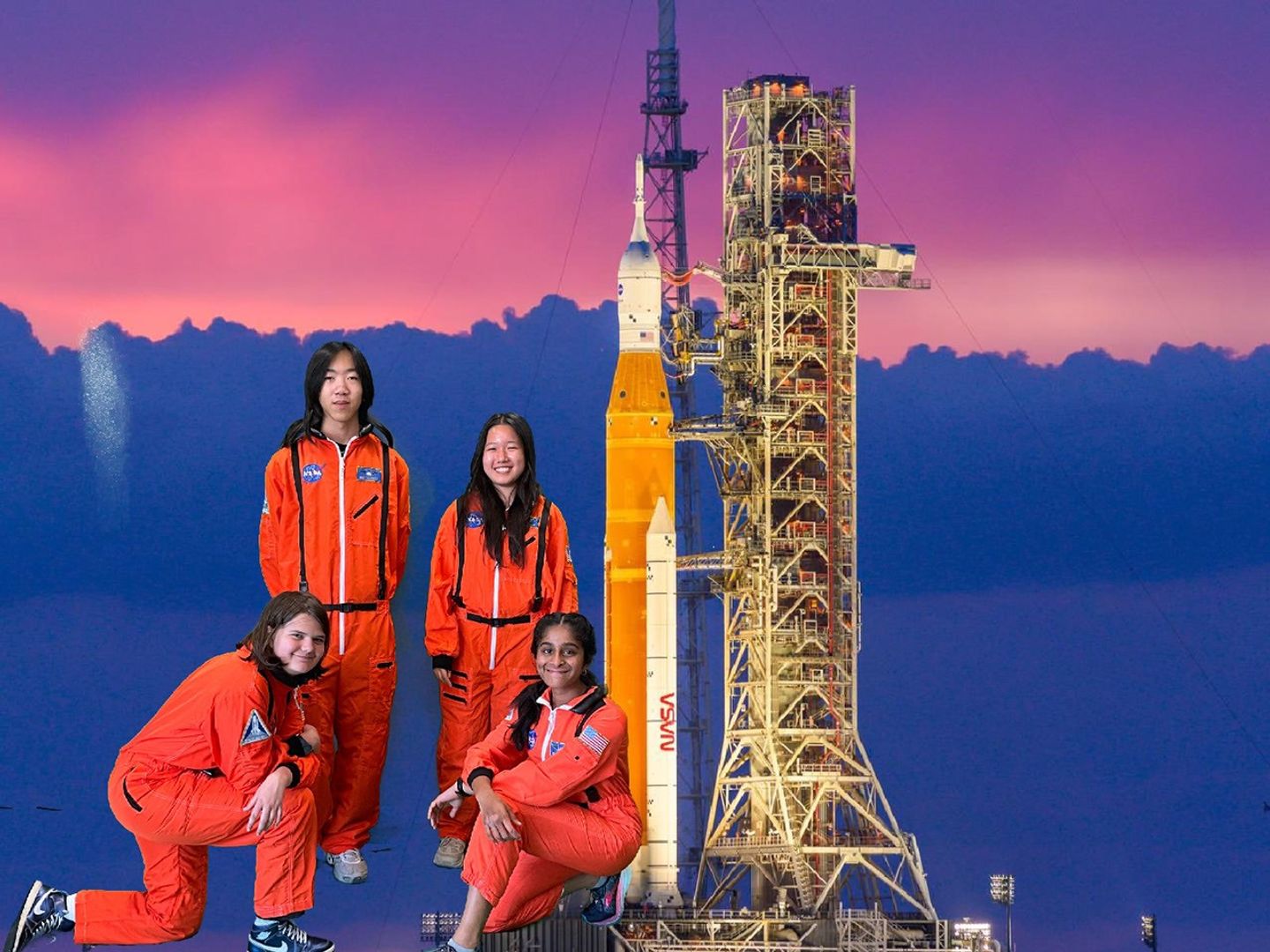
Challenge participants at the Washington challenge event pose in NASA-inspired flight suits. Share Details Last Updated Jun 29, 2026 Editor NASA Science Editorial Team Related Terms Explore More 4 min read Star-Spangled CityTwo hundred years ago, a battle in the port city of Baltimore inspired the writing…
Article
19 hours ago
3 min read NASA’s PACE Mission Studies Smoke, Fires
Article
3 days ago
5 min read The Battle for Sullivan’s Island
Marshy, sandy terrain and an impassable inlet helped colonial forces repel British forces during a…
Article
4 days ago
Keep Exploring Discover More Topics From NASA James Webb Space Telescope
Webb is the premier observatory of the next decade, serving thousands of astronomers worldwide. It studies every phase in the…
Perseverance Rover
This rover and its aerial sidekick were assigned to study the geology of Mars and seek signs of ancient microbial…
Parker Solar Probe
On a mission to “touch the Sun,” NASA’s Parker Solar Probe became the first spacecraft to fly through the corona…
Juno
NASA’s Juno spacecraft entered orbit around Jupiter in 2016, the first explorer to peer below the planet’s dense clouds to…
NASA, SBA Announce New Initiative to Scale American Space Economy
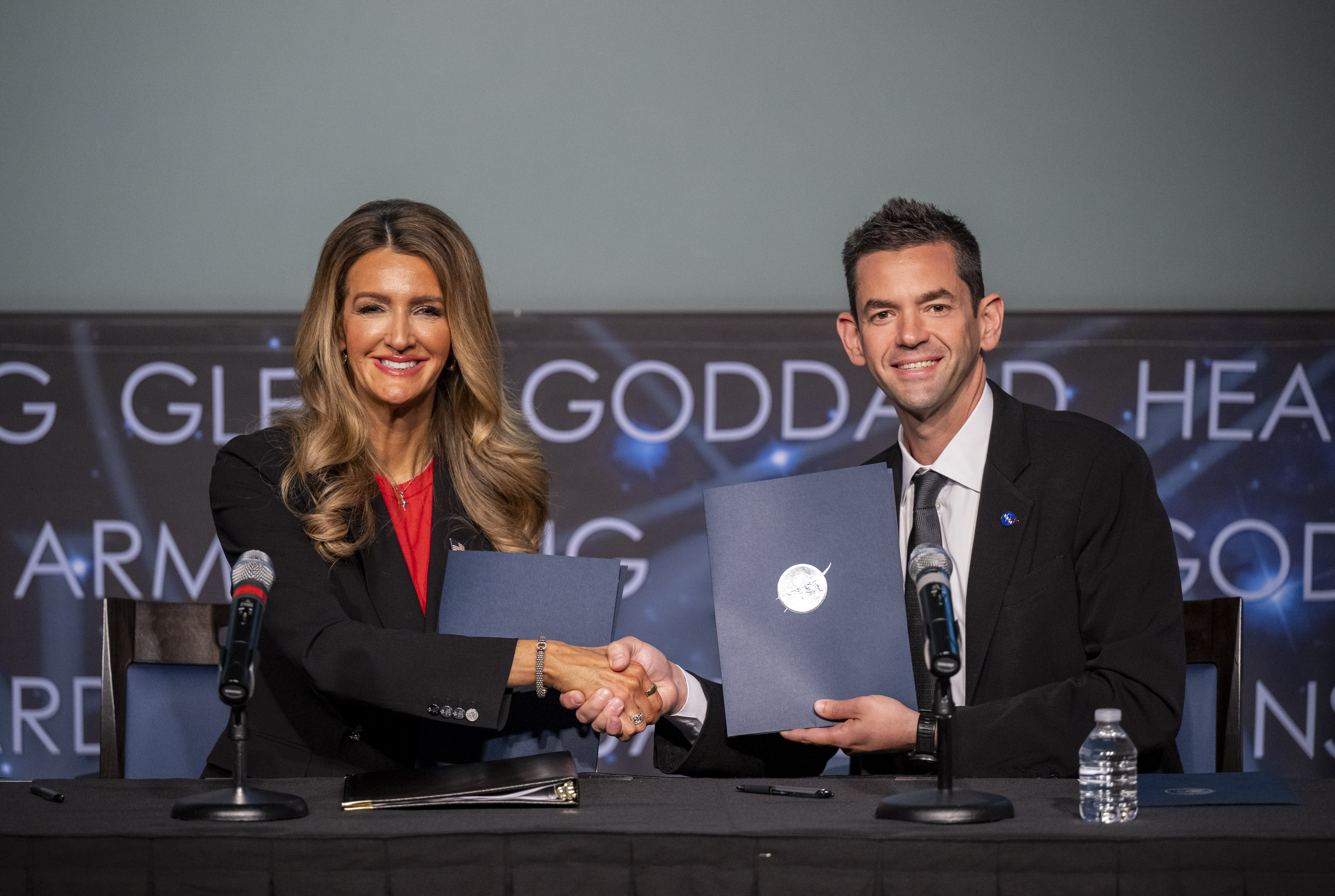
NASA and the U.S. Small Business Administration (SBA) launched the SBIC-NASA Initiative on Monday to increase investment in American manufacturers of industrial components and providers of technologies critical to space exploration to support a sustained presence on the Moon and Mars.
Under the Memorandum of Agreement, NASA will identify technology priorities and connect businesses to funding opportunities through the agency’s new NASA Office of Strategic Capital. The initiative also will be a part of SBA’s Small Business Investment Company (SBIC) Program, which provides leverage that matches private capital raised by investment funds and is designed to enhance fund-level investment returns.
“To achieve President Trump’s National Space Policy, NASA needs a stronger industrial base capable of moving at the speed this new space race demands,” said NASA Administrator Jared Isaacman. “Through the NASA Office of Strategic Capital, this partnership with the SBA will help small businesses access the capital they need to scale, strengthen critical supply chains, rebuild America’s industrial might, and deliver the outcomes necessary to ensure the United States leads the next era of space exploration.”
By augmenting the investable capital for investment funds licensed by the SBA under this SBIC-NASA Initiative, the new initiative expands access to capital for small businesses within the space industry.
“To meet President Trump’s objective of securing American leadership on every frontier, the SBA and NASA are partnering to supercharge the industrial base behind our space program and connect the innovators building critical technologies with needed capital,” said SBA Administrator Kelly Loeffler. “Through this partnership with NASA, the SBA is mobilizing private sector investment to fuel the small businesses, manufacturers, and innovators that are driving American space dominance. By aligning capital with strategic national priorities, this exciting effort will help launch the next great era of space exploration.”
Under the agreement, NASA will define strategic aerospace technology focus areas and identify supply chain needs. The SBA will use those priorities to attract and license qualified private investment funds that commit to invest at least 60% of their capital into NASA-identified focus areas, including:
- Energy production, infrastructure, and storage
- Nuclear power and propulsion
- Advanced software, avionics, and communications systems
- Specialized materials and components
- Inhospitable environment infrastructure
- Scaled launch infrastructure
- Biomedical and life support technology
Through this partnership between NASA and SBA, capital will flow into space industry sectors and upstream supply chain components vital to the National Space Policy and critical to national and economic security.
For details about the new initiative and NASA’s Office of Strategic Capital, visit:
https://www.nasa.gov/strategiccapital
-end-
Camille Gallo / Cheryl Warner
Headquarters, Washington
202-358-1600
camille.m.gallo@nasa.gov / cheryl.m.warner@nasa.gov
NASA’s Newest Wind Tunnel Builds on Legacy of Innovation
5 min read
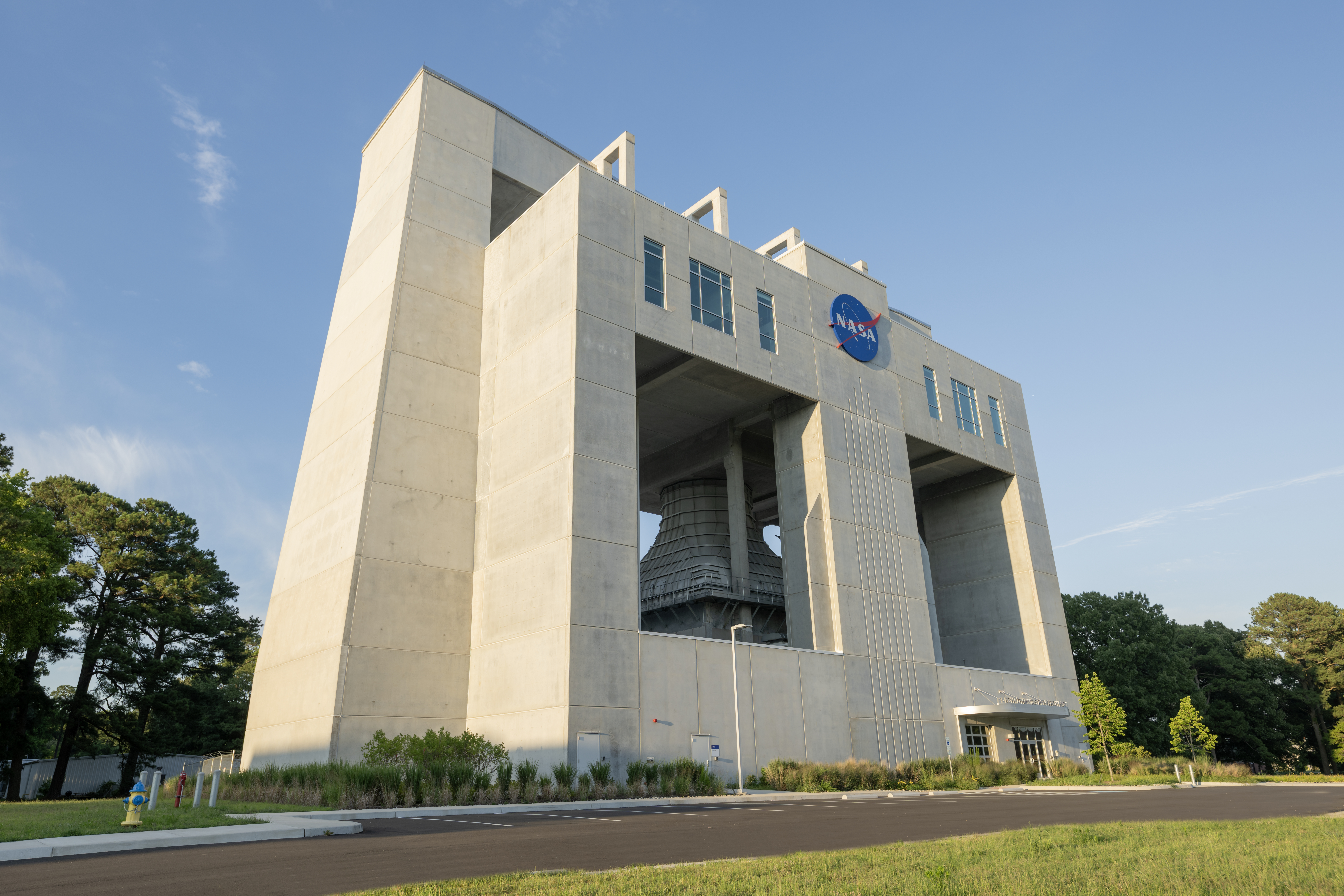
Preparations for Next Moonwalk Simulations Underway (and Underwater) The Flight Dynamics Research Facility, located at NASA’s Langley Research Center in Hampton, Virginia, is the agency’s first major wind tunnel built in more than 40 years. NASA/Mark KnoppFor more than 100 years, wind tunnels at NASA’s Langley Research Center in Hampton, Virginia, have helped shape the future of flight.
Now, two of NASA’s longest-serving facilities — the 12-Foot Low-Speed Tunnel and the 20-Foot Vertical Spin Tunnel — will pass the torch to the Flight Dynamics Research Facility (FDRF), the first major NASA wind tunnel built in more than 40 years.
“The FDRF has a combination of features found in no other single facility in the world,” said Mike Fremaux, retired chief engineer for the Intelligent Flight Systems division at NASA Langley. “It’s a high-performance vertical wind tunnel with a large test section capable of conducting all manner of tests to assess the dynamics of flight vehicles.”
When the FDRF opens later this year, it will provide enhanced versions of the capabilities offered by the two legacy facilities. The FDRF’s test section will allow researchers to drop models into a rising vertical airflow. This will offer researchers the ability to conduct spin tests of aircraft and free-flight tests of vehicles designed to re-enter Earth’s atmosphere from space.
The FDRF will play an integral role in conducting research that supports NASA’s aeronautics, science, and space exploration missions. Like many NASA facilities, the FDRF’s story is rooted in a history of innovation.
When the 12-Foot Low-Speed Tunnel began operations in 1939, aviation looked very different than it does today.
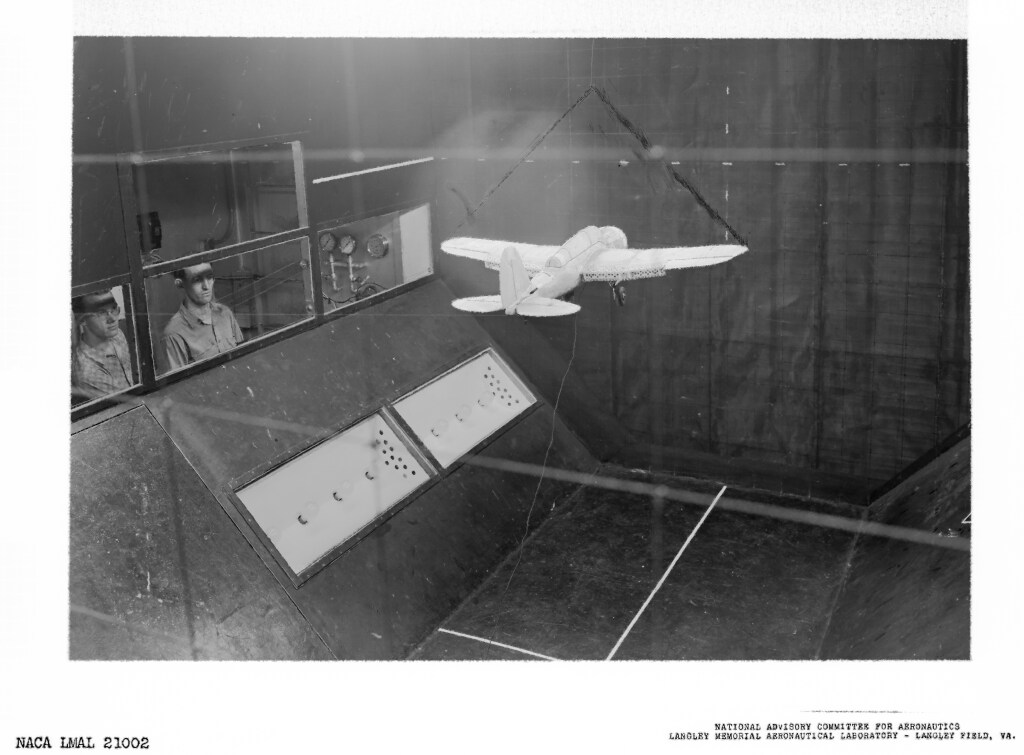
It was built for NASA’s predecessor agency, the National Advisory Committee for Aeronautics (NACA) to study the controllability of airplanes using free flight. Aircraft models flew unsupported in the wind it generated, instead of being mounted to supports. Multiple operators used rudimentary remote controls to operate the models in the tunnel.
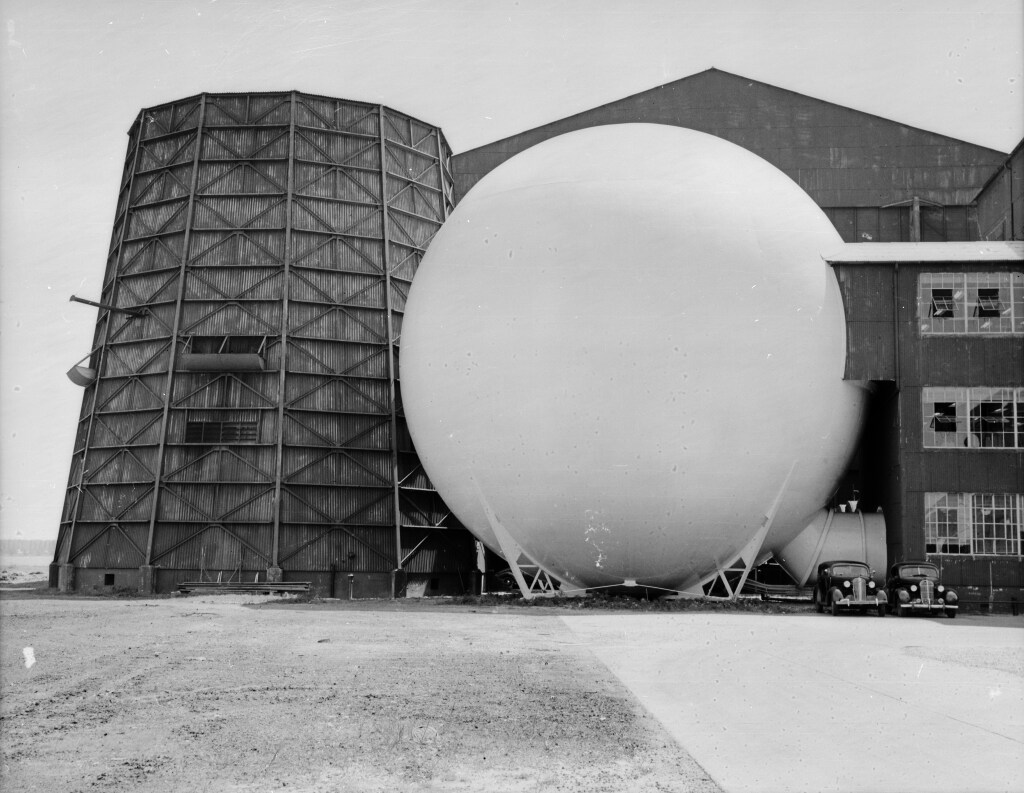
The facility that housed the tunnel boasted a unique design: a 60-foot diameter sphere. The configuration allowed the tunnel to move and adapt to the flight paths of free flying models. “Pilots” could use hydraulic actuators, pivoting the tunnel’s test section to match the models’ movements. The spherical design made it easy for air from the facility’s fan to recirculate through the tunnel, regardless of the pitch angle of the test section.
In 1958, NASA moved the free-flight tests to another Langley tunnel. The agency deactivated the 12-Foot’s hydraulic actuators, fixing its test section into a horizontal position, and began using it for more conventional testing, looking at how aerodynamic force affected the stability and control of strut-mounted models.
The 12-Foot supported major projects throughout its 86 years of service, from the transition from bi-planes to monoplanes between two world wars, through the development of supersonic aircraft. Revolutionary designs saw testing in the 12-Foot, from the forward-swept-wing X-29 and the X-31 Enhanced Fighter Maneuverability Demonstrator, to the more recent X-59 quiet supersonic research aircraft, and the aeroshell for NASA’s Dragonfly, a unique rotorcraft designed to explore Titan, Saturn’s largest moon.
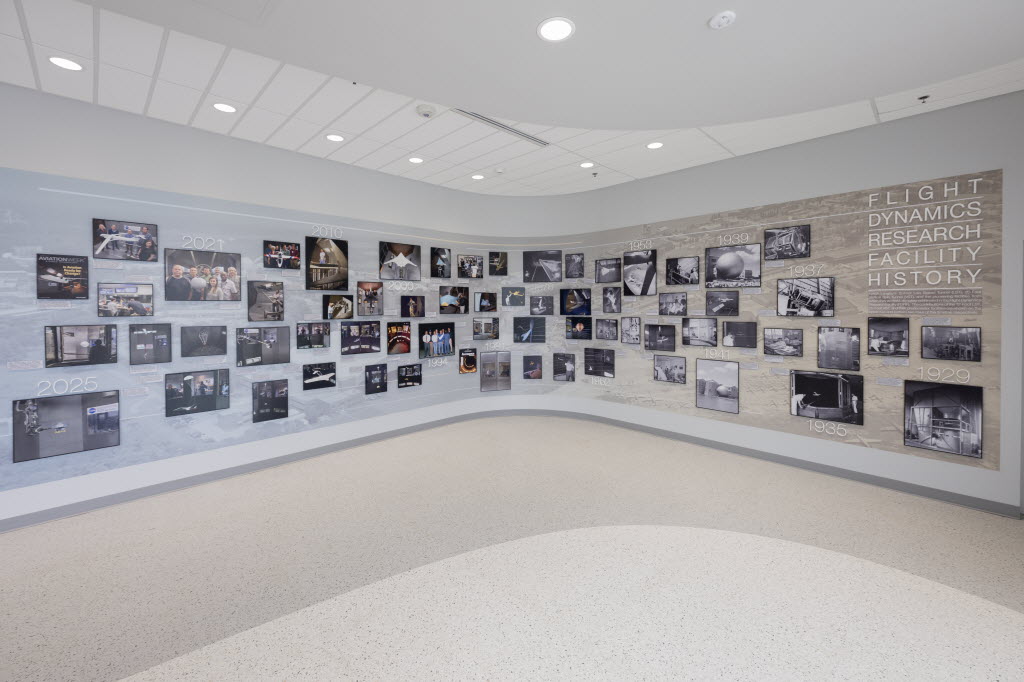
The 12-Foot closed in 2025, but its legacy will be both felt and seen at the FDRF. Six wooden fan blades and the central metal fan hub from the 12-Foot are on display inside the FDRF’s control room.
Researchers at NASA’s Langley Research Center in Hampton, Virginia test a Mercury capsule model in 1959.NASA 20-Foot Vertical Spin TunnelWhile the 12-Foot tested new ideas for aircraft and components, the 20-Foot Vertical Spin Tunnel played a critical role in aviation safety.
Opened in 1941, the Vertical Spin Tunnel was designed to study aircraft stall and spin characteristics. Its aim was to prevent deadly accidents in which an aircraft enters an uncontrolled spin. The vertical design allowed models to fall into the rising airflow, simulating how aircraft behave during a spin. Researchers hand-launched models into the tunnel’s vertically rising airstream to evaluate those characteristics.
The tunnel quickly became one of the most important spin-testing facilities in the world. Research supported commercial aviation, parachute design systems, NASA space missions, and the development of nearly every U.S. military aircraft designed since World War II.
Models from many of those tests will be on display in the FDRF’s lobby, a testament to the Vertical Spin Tunnel’s rich history.
“It is great to showcase the legacy of work that started in the NACA days and will continue going forward for decades to come,” Fremaux said.
The FDRF will continue NASA’s commitment to world-class facilities and the unique expertise of the agency’s workforce.
“That’s what kept those other facilities going,” Fremaux said. “Not just the buildings, the fans, and the motors, but also the expertise associated with those facilities. You can’t have one without the other.”
The FDRF will build not only on the history of the 12-Foot tunnel and the Vertical Spin Tunnel, but on their equipment, including many of their major test rigs, instrumentation, and data systems, were repurposed for use in the FDRF, reducing costs and development time.
As NASA returns astronauts to the Moon through the Artemis program, the FDRF will play a vital role in testing the technologies for entry, descent, and landing that will ensure a safe return to Earth. Research within the FDRF also will support science missions to planets and moons with atmospheres, such as Venus and Saturn’s moon, Titan. The 25,000-square-foot facility will play a major role in experimental research for NASA’s development of X-planes, autonomous flight vehicles, and drones.
“For me, seeing FDRF come alive and being prepared to begin supporting important agency missions, after 30 years of working on the concept behind the scenes with formal and informal teams of motivated, innovative coworkers, is the most rewarding capstone I could have in my career,” Fremaux said.
Just as the 12-Foot Low-Speed Tunnel and the 20-Foot Vertical Spin Tunnel supported decades of aerospace innovation, the FDRF is ready to shape the future of flight.
Kimiko Booker
NASA Langley Research Center
NASA Astronaut Chris Williams Preps for Spacewalk
Flight engineer Sophie Adenot of ESA (European Space Agency) helps flight engineer Chris Williams of NASA as he tries on his spacesuit on June 23, 2026, testing its comfort and mobility as well as its communications and life support systems inside the International Space Station’s Quest airlock.
Williams will go on a spacewalk on June 30 with fellow NASA astronaut Jessica Meir. They will replace a malfunctioning wrist joint on the Canadarm2 robotic arm.
Image credit: NASA/Jessica Meir
Mapping Earth’s Observations, featuring Betsy Ford
NASA’s Earth-observing satellites track an enormous range of phenomena: how aerosols move through the atmosphere, how moisture descends through soil, how land-cover shifts over decades. It’s some of the most consequential data NASA produces, informing science, policy, agriculture, and climate research around the world.
As NASA’s Earth Science Division (ESD) manages this vast portfolio, they operate within an environment marked by significant complexity. This system-of-systems is continually evolving as mission requirements develop, new capabilities come online while others are retired, and international partnerships shift over time. All of this happens against a backdrop of deep uncertainty in technology readiness, launch opportunities, and resource availability.
Decision analyst Betsy FordCredit: NASA“It reaches more people than most realize. The farmers who are growing your food use the data from these satellites.”
“ESD leadership is constantly navigating this complicated landscape,” says Betsy Ford, a decision analyst and Deputy Team Lead for the NASA Earth Science Strategic Integration Environment (NESSIE) team within the Systems Analysis and Concepts Directorate (SACD) at NASA’s Langley Research Center. “Our work focuses on integrating information across the broad system-of-systems so that these decision-makers can visualize the current state, how things could evolve, and how all of it lines up against NASA’s long-term scientific priorities.”
A Detour Through DetroitFord’s path to this work runs through two vastly different worlds, and it all started before she could even drive.
Both of her parents spent their careers at NASA Langley and recently retired from it. Growing up, Ford attended the center’s daycare and its summer picnics. “It always felt like a college campus and a big family,” she says. “I really loved that.”
Betsy Ford (in blue gown) and family celebrate her kindergarten graduation at NASA Langley.Credit: Betsy FordStill, when she graduated from Virginia Tech with a mechanical engineering degree, she chose to branch out first. She joined General Motors’ engineering rotation program in Michigan, spending time as a mass integration engineer for Corvette before moving to work as a vehicle occupant safety engineer performing crash testing. She was also finishing a master’s in engineering management at the University of Nebraska, where she was introduced to risk analysis and strategic decision making.
When a position opened in the Space Mission Analysis Branch (part of SACD), she applied, hoping her experience in systems engineering and master’s might offset the gap between the hardware testing of running vehicles into walls and the analytical work NASA needed. “Leadership saw potential in my background and gave me a chance to apply it in a new context,” she says.
Betsy Ford (second from right) and family gather at NASA Langley’s front gate.Credit: Betsy Ford Finding the Story in the DataAt its core, NESSIE addresses an information architecture problem. Hundreds of Earth-observing satellite missions, both NASA’s and its partners’, each observing specific phenomena, from cloud cover to land use. That data has always existed. The challenge was making sense of it all in one place.
NESSIE’s main web application page presents a heat map showing which missions are addressing 34 science observables alongside a mission timeline. Additional views drill down further, such as which specific instruments on which spacecraft cover a given measurement, and how international partner collaborations have evolved over the years.
This graphic shows the fleet of NASA Earth Science missions, which provide hundreds of measurements and data products to understand the Earth system.Credit: NASA“We focus on continuous improvement,” Ford explains. “Each iteration aims to give our stakeholders a clearer, more useful product than they had the day before.” While supporting NASA headquarters in its strategic planning, the team is working toward making NESSIE available to the National Academies to help inform the next decadal survey, a document that will define national science priorities and guide government investments into the next decade. It’s a milestone that Ford describes as a significant step toward “using NESSIE to more fully support the scientific community through clearer data-driven planning of future missions.”
Ground TruthFord had always cared about Earth science in the abstract. It took a visit to her family’s farm in Nebraska to make it concrete.
She was explaining her work with satellites, observables, and web applications, when her relatives pulled out their phones and showed her satellite data they use every day to monitor soil moisture across their fields. Then they showed her the tool it had once replaced: a metal rod they used to shove into the ground by hand to measure moisture levels.
“That’s just one example of how impactful this work can be,” she says. “It reaches more people than most realize. The farmers who are growing your food use the data from these satellites.”
When Ford wonders why the work matters, that moment is a powerful reminder for her. The satellites are the visible part of the story. The decisions about which ones to build, launch, and sustain, and the tools that make those decisions smarter, are what her work is about.
Growing the TeamFord recently stepped into the deputy lead role on the NESSIE team, staffed primarily by early-career engineers. She credits mentors in her NASA tenure, particularly team lead Marie Ivanco, who modeled a method to looking at complex problems that shaped how Ford works now.
“If you’re faced with a challenge, Marie asks, ‘What is your process?” Ford says. “She championed really decomposing a problem and approaching it systematically. That wasn’t natural to me at that point, but I really admired it.”
Now Ford’s doing the same for others. “Finding that balance of providing the opportunities to grow along with some structure and guidance, that’s the job.”
She also believes that NASA offers anyone entering engineering the freedom to define problems and solutions rather than to just execute known processes, and to exercise research instincts in ways that more prescriptive industry environments rarely allow. “It prompts a lot more creativity,” she says. “Getting to flex those research muscles is an opportunity I didn’t really have at other jobs.”
On Ford’s Sci-Fi ShelfStar Wars — the film franchise
Ford grew up in a Star Wars household: her father was a devoted fan, and she still remembers her first PG-13 movie in theaters, one of the newer films in the series. These days her husband keeps the tradition going, and with a 15-month-old son, Saturday morning Star Wars cartoons may already be on the calendar.
“He’s very excited to get him started.”
NextSTEP-3 A: Lunar Enabling Technology
1 min read
Preparations for Next Moonwalk Simulations Underway (and Underwater)Solicitation Number: 80GRC026R0008
May 19, 2026 – Synopsis issued
June 29, 2026 – Draft BAA and Appendix A Issued | News Release
NASA issued a draft Broad Agency Announcement under NextSTEP‑3, Appendix A, on June 29, 2026, to advance concepts that accelerate the technological readiness of critical systems for lunar surface and cislunar architecture.
This solicitation seeks to close key technology gaps and mature capabilities in vertical solar arrays, ISRU oxygen production systems, Stirling radioisotope generators, in‑space manufacturing, and advanced nanomaterials production.
It focuses on identifying technology areas that require further risk reduction and ground‑based testing to mature competing solutions to Technology Readiness Level (TRL) 5–6. Funded efforts will advance the technology objectives of NASA’s Moon Base by demonstrating critical systems and accelerating the development of transformative capabilities needed for near‑term mission success.
For more information, read the Lunar Enabling Infrastructure Accelerator (LEIA) Broad Agency Announcement (BAA) NextSTEP-3 Appendix A – Draft Solicitation on SAM.gov.
Facebook logo @NASATechnology @NASA_Technology Share Details Last Updated Jun 29, 2026 EditorLoura Hall Related Terms Explore More 6 min read NextSTEP-2 H: Human Landing System Article 7 years ago 2 min read NextSTEP-2 C: Power and Propulsion Element Studies Article 9 years ago 2 min read NextSTEP-2 A: Habitation Systems Article 9 years agoNASA Seeks Industry Input to Accelerate Lunar Surface Technologies
3 min read
Preparations for Next Moonwalk Simulations Underway (and Underwater) Artistic concept of lunar surface technologies and infrastructure capabilities, including in-situ resource utilization oxygen production systems, surface power systems, in‑space manufacturing tools, and advanced nanomaterials production.NASALong-term lunar exploration requires technology, infrastructure, and operations that function together cohesively on the surface of the Moon. To accelerate the development of key lunar surface systems and reduce risk, NASA and industry must work together in the design, development, testing, and evaluation of innovative solutions that support U.S. space priorities.
NASA is seeking feedback on a draft solicitation for the Lunar Enabling Infrastructure Accelerator, an effort to help develop emerging capabilities in surface power, in-situ resource utilization, advanced manufacturing, and innovative nanomaterials. The draft is available for review by U.S. organizations, including industry, educational institutions, and non-profits.
Investments in space technology development unlock the near-impossible for NASA and the nation. A sustained human presence at the Moon requires breakthrough ideas from a competitive U.S industrial base, and we are proud to work toward that vision with our commercial partners.Greg Stover
Director of the Advanced Research and Technology Division, Research and Technology Mission Directorate at NASA Headquarters in Washington
This review period allows NASA an opportunity to gather feedback on the draft solicitation, including the requirements, schedules, proposal instructions, and evaluation approaches. NASA strongly encourages industry to carefully review the draft and identify any areas of ambiguity, or concerns. Industry input will help inform the solicitation’s final requirements, acquisition planning, and solicitation parameters.
The Lunar Enabling Infrastructure Accelerator includes five topics that address gaps in technology needed for exploring the Moon and the cislunar region between Earth and the Moon as identified in NASA’s Civil Space Shortfalls. The topics focus on near-term mission priorities:
Surface power: Access to continuous, localized, and scalable power generation throughout the lunar day and night is essential for initial phases of the Moon Base plan. NASA’s needs include power generation, power management and distribution, and energy storage.
Radioisotope power: A type of nuclear energy technology that uses heat to produce electric power for operating spacecraft systems in the darkest, dustiest, and most remote places in our solar system.
In-situ resource utilization: As a sustained presence grows at the Moon, opportunities to harvest lunar resources could lead to safer, more efficient operations with less dependence on Earth. Advancing in-situ resource utilization technologies could support production of fuel, water, and oxygen from local materials, expanding exploration capabilities.
In-space advanced manufacturing: Long-term human presence beyond Earth orbit requires autonomous in-space production of essential tools and materials. Advancing in-space manufacturing will be critical to reducing reliance on Earth resupply, as well as optimizing mission flexibility and resilience at the Moon, Mars, and elsewhere in deep space.
Innovative nanomaterials: U.S. objectives related to the commercialization of low Earth orbit, building a sustained presence on the lunar surface, and pursuing deeper space exploration will involve work in demanding operational environments and under stringent mission constraints. To meet the agency’s most ambitious space exploration goals, this topic seeks to advance the commercial availability, performance, quality, and uniformity of nanomaterials to address environmental, mass, and performance challenges.
Lunar Enabling Infrastructure Accelerator awardees will be expected to design, develop, and demonstrate prototype systems and generate validated performance data, analytical models, and operational insights through testing and demonstration activities to mature technology and manufacturing applications.
The solicitation, Next Space Technologies for Exploration Partnerships-3 (NextSTEP-3) Appendix A Lunar Enabling Infrastructure Accelerator (Solicitation No: 80GRC026R0008), is available on SAM.gov and is open for comment through July 17, 2026.
For more information about NASA’s space technology website as a reference for current technology strategy and priorities, visit:
https://www.nasa.gov/resources/
Facebook logo @NASATechnology @NASA_Technology Share Details Last Updated Jun 29, 2026 EditorLoura Hall Related Terms Explore More 1 min read NextSTEP-3 A: Lunar Enabling Technology Article 9 hours ago 3 min read NASA Tests New Refuel Device for Future In-Space Refueling Missions Article 3 days ago 2 min read Department of Health and Human Services Digital Stockpile & Manufacturing Response Network Challenge Article 2 weeks agoNASA Announces Winners for 2026 Human Lander Challenge
NASA has announced the top student-developed solutions for environmental control and life support systems in future crewed lunar landers from participants in the 2026 Human Lander Challenge. The announcement marks the culmination of months of research by university teams working to advance technologies supporting the agency’s Artemis program that will return American astronauts to the Moon in 2028.
The challenge concluded June 25 following final technical presentations near NASA’s Marshall Space Flight Center in Huntsville, Alabama. Since September 2025, student teams from across the nation have designed systems‑level approaches to enhance the performance and reliability of environmental control and life support technologies essential for astronauts during deep space missions.
University students and advisors from 11 finalist teams gathered in Huntsville, home to NASA’s Marshall Space Flight Center, June 23-25 for the agency’s third annual Human Lander Challenge. This year’s competition challenged students to consider solutions for environmental control and life support systems for long duration spaceflight. These technologies are essential for maintaining breathable air, potable water, and thermal stability for astronauts during deep space missions. NASA/Charles Beason“As NASA continues preparing for sustained lunar exploration and future human missions to Mars, the development of robust, efficient, and reliable life support systems remains a critical focus area,” said Natalie Martinez-Vlasoff, mission capabilities and risk reduction advanced capabilities integration lead at NASA Marshall. “The 2026 student teams demonstrated a strong understanding of the range of design choices for these systems, and how well-considered, systems-level approaches can improve reliability and crew safety for astronauts using future human landing systems. It is encouraging to see students contributing ideas that help make long-duration lunar exploration more achievable.”
The finalist teams gathered at the U.S. Space & Rocket Center in Huntsville on June 22 to present their research to a panel of NASA and aerospace industry experts, as well as to their peers, during a collaborative poster session. The annual competition concluded with an awards ceremony recognizing the top-performing teams out of the 12 finalists.
NASA announced California Polytechnic State University as the overall winner and recipient of the $10,000 top prize award for their Peltier-based Hydration Accumulation Terminal project. Purdue University won second place and a $5,000 award for work on an Enhanced Potable Water Dispenser, followed by Embry-Riddle Aeronautical University, Daytona Beach, in third place with a $3,000 award for their Advanced Quality Orbital Rehydration Assembly project.
The Human Lander Challenge is designed to inspire and engage the next generation of engineers and scientists as NASA and its partners prepare to send astronauts to the Moon in preparation for future missions to Mars. The human landing system is the mode of transportation that will take astronauts to the lunar surface and back to lunar orbit under Artemis.
Through competitions like the Human Lander Challenge, NASA fosters the next generation of engineers and researchers while advancing the technologies needed for astronauts to explore deep space. These initiatives support the agency’s exploration goals while cultivating hands-on, problem-solving and systems thinking among future aerospace professionals. Student solutions from the Human Lander Challenge could be incorporated into current work for the next-generation Artemis landers.
NASA’s Human Landing System Program, managed by NASA Marshall, sponsors the challenge, which is administered by the National Institute of Aerospace.
Through the Artemis program, NASA will send astronauts to explore the Moon for scientific discovery, economic benefits, and to build the foundation for the first crewed missions to Mars – for the benefit of all.
For more information about the Artemis program, visit:
Share Details Last Updated Jun 26, 2026 EditorLee MohonContactCorinne Beckingercorinne.m.beckinger@nasa.govLocationMarshall Space Flight Center Related Terms Explore More 1 min read NASA 2026 Human Lander Challenge Article 10 months ago 3 min read NASA Opens 2026 Human Lander Challenge for Life Support Systems, More Article 9 months ago 3 min read NASA Challenge Seeks ‘Cooler’ Solutions for Deep Space Exploration Article 2 years ago 4 min read NASA Names Finalists to Help Deal with Dust in Human Lander Challenge Article 2 years ago Keep Exploring Discover More Topics From NASAHuman Landing System
Artemis
Marshall Space Flight Center
Space Launch System (SLS)